At Florence’s menswear stronghold, the Paris-based designer sharpens his study of form, identity, and proportion
At this season’s Pitti Uomo, where menswear tradition often reigns supreme, Hed Mayner arrives with a proposal that is both reverent and quietly disruptive. The Paris-based, Israeli-born designer stages his Fall 2026 men’s show in Florence, bringing his signature language of twisted tailoring and gender-fluid proportion into a context steeped in sartorial history. Long praised for his sculptural approach to clothing—and recognized early on with the Karl Lagerfeld Prize at the 2019 LVMH Prize—Mayner uses the Pitti platform not to abandon classicism, but to stretch it, blur it, and recompose it into something newly felt.
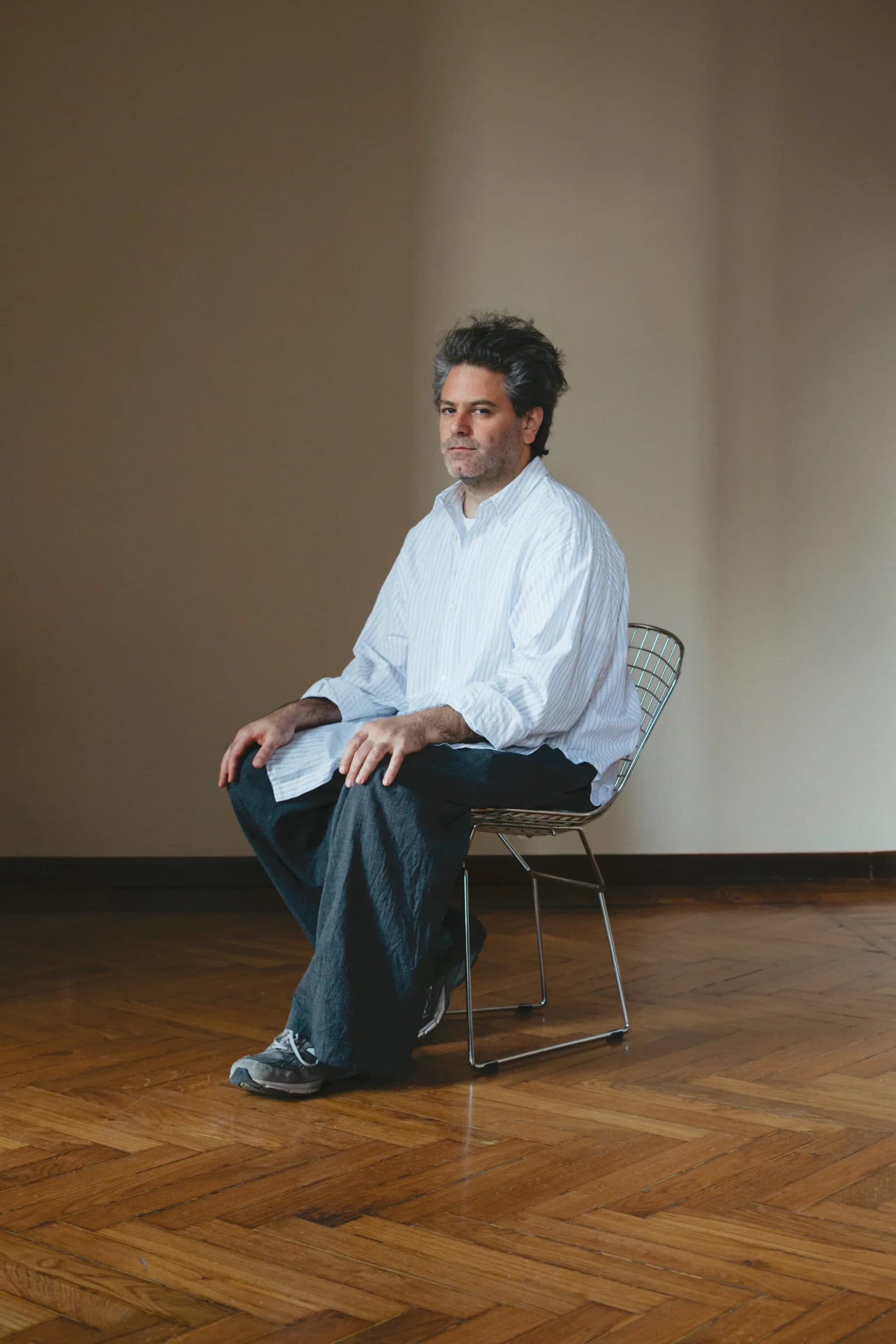
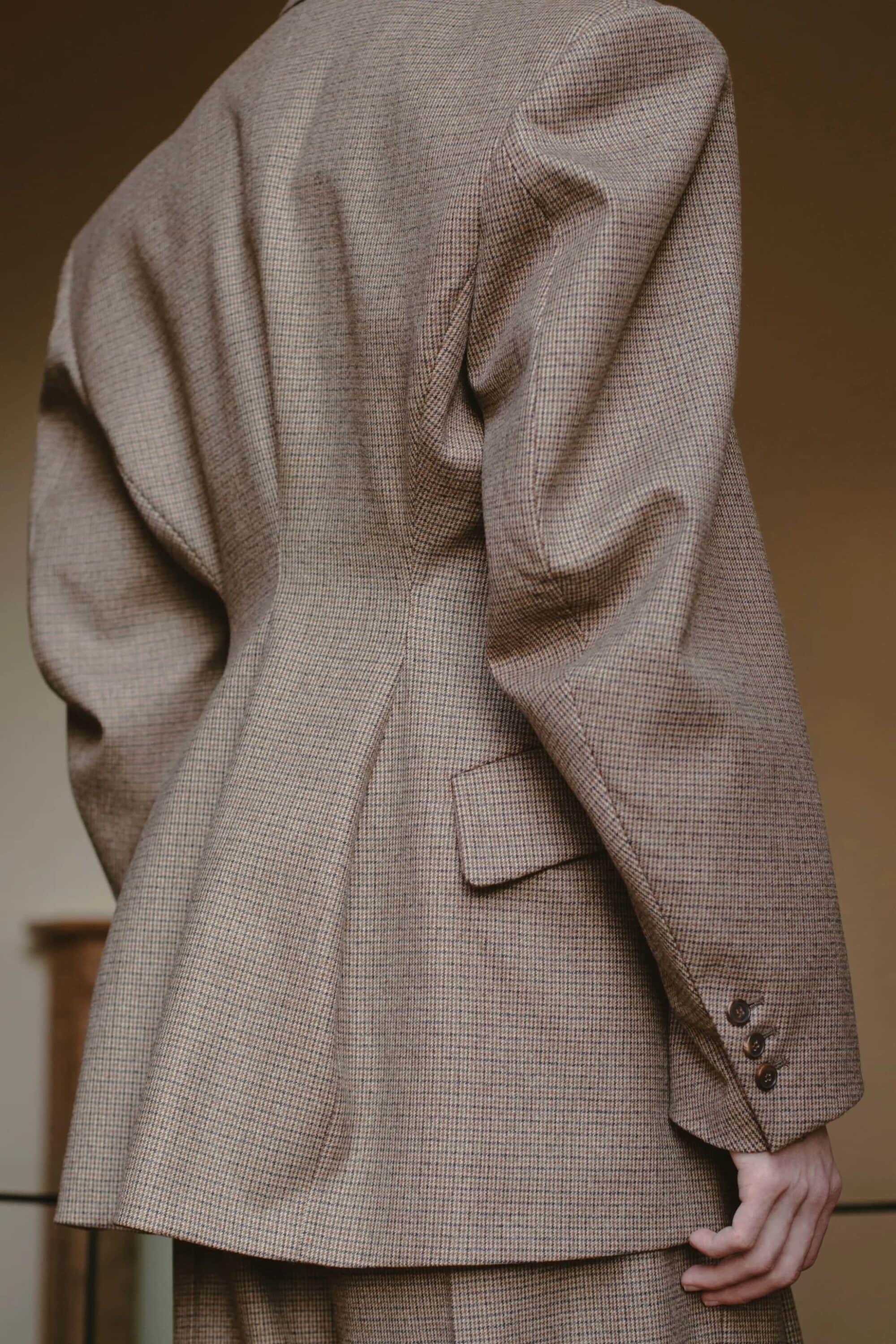
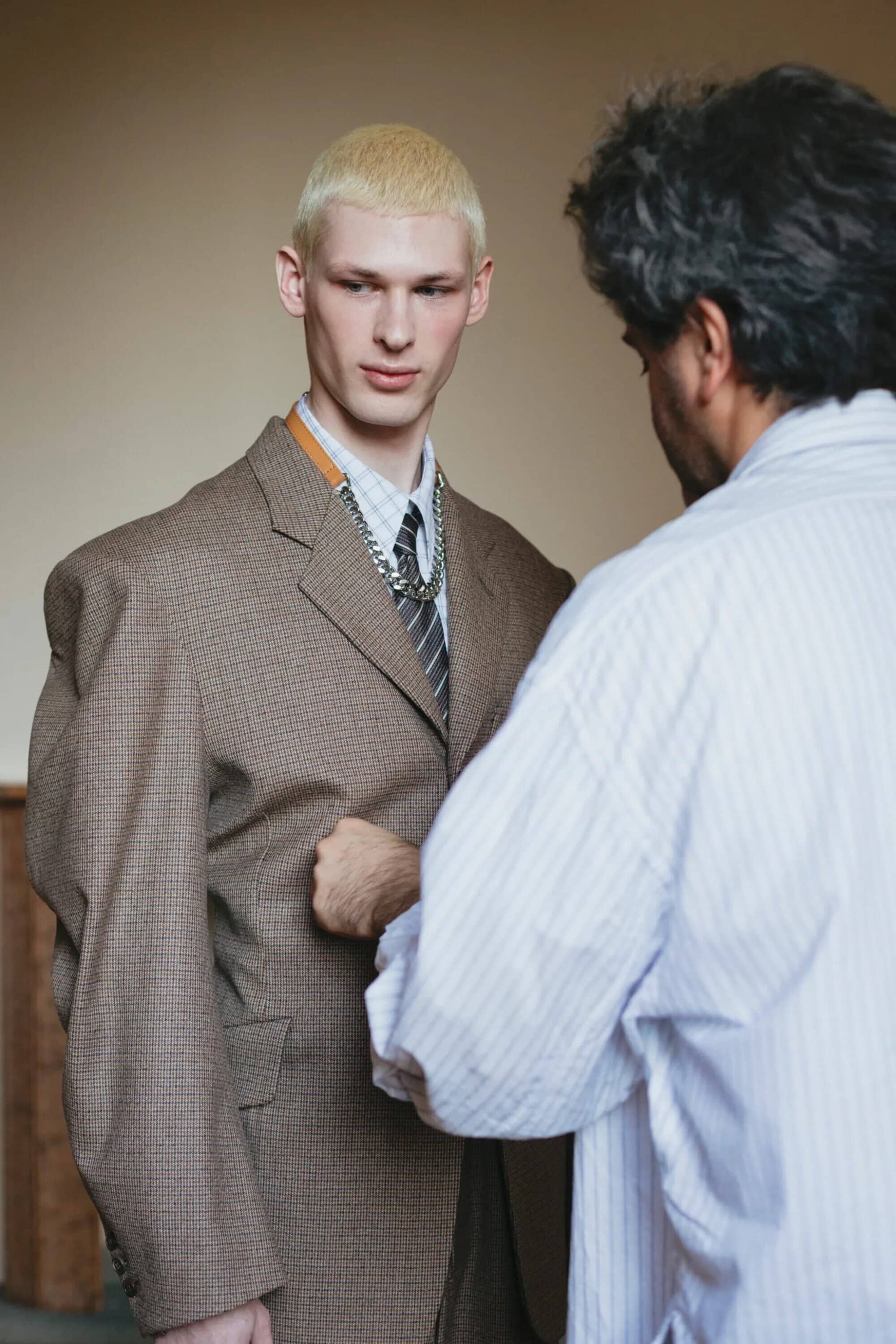
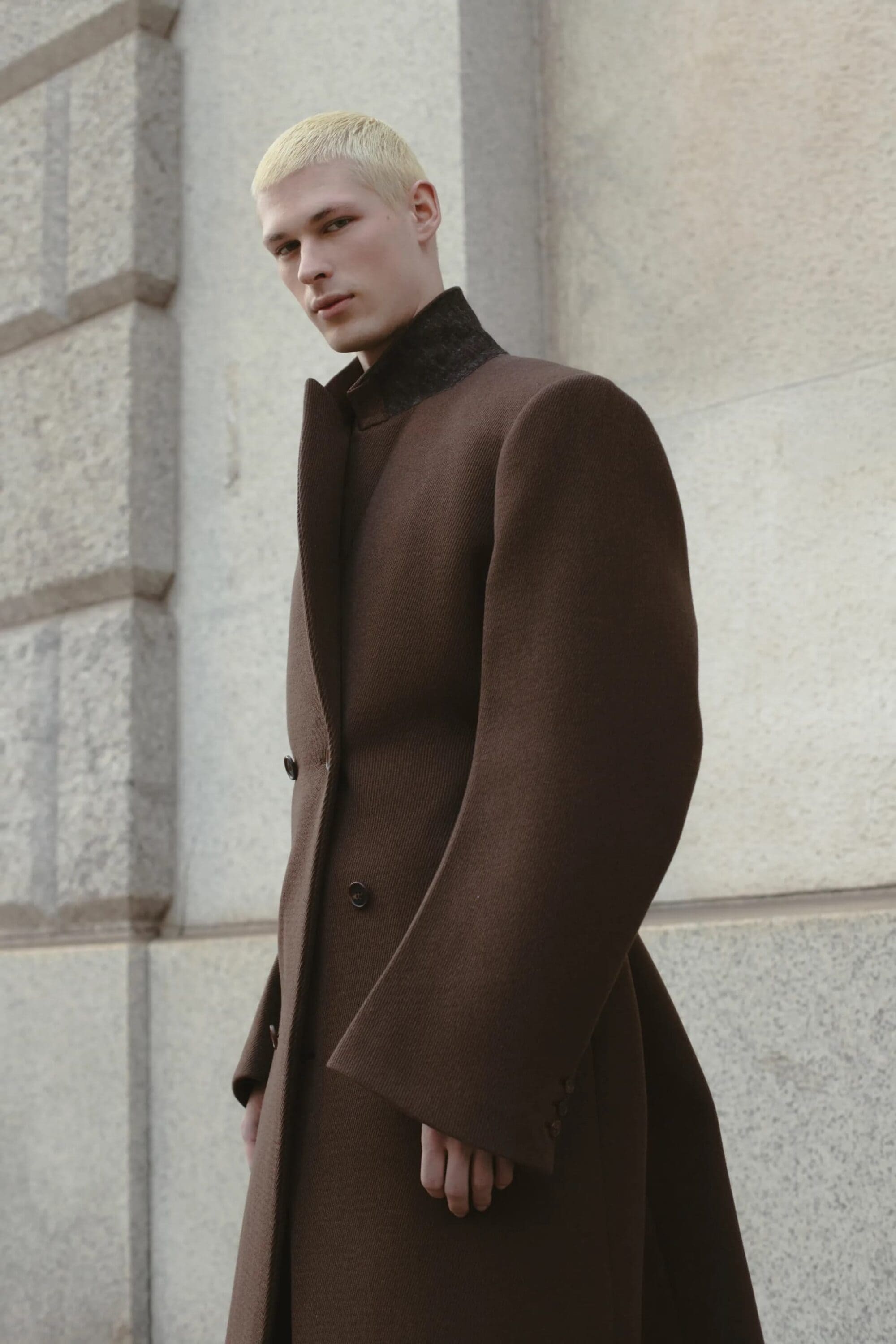
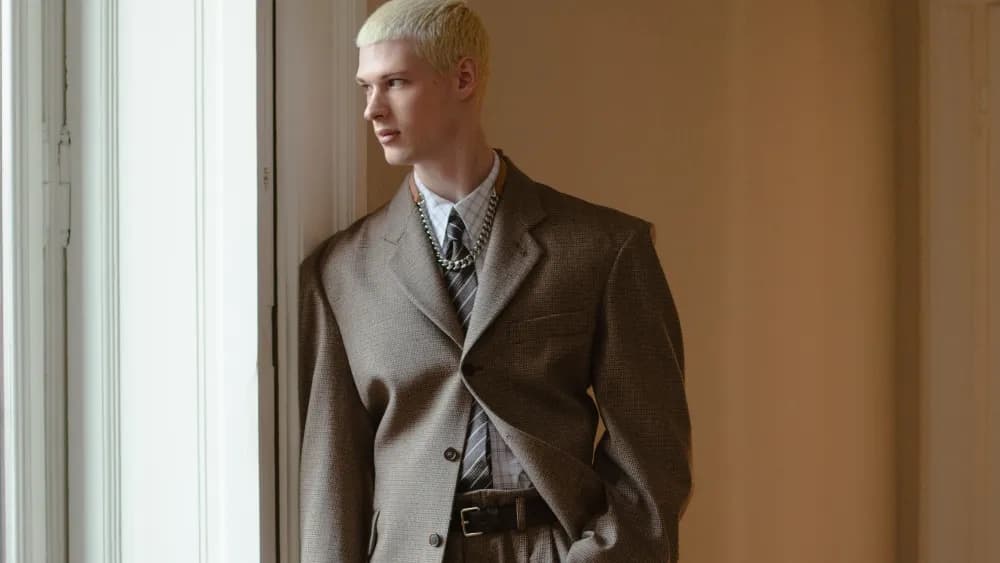
Rather than leaning on explicit narrative, Mayner’s work operates as a meditation on form and attitude. “There really isn’t narrative storytelling,” he said of the collection. “My work hinges on the idea of identity always — and blurring it.” Tailoring becomes his primary instrument, shaping silhouettes that hover between closeness and distance from the body, precision and release. Rounded shoulders meet cinched waists; pleated garments take on a near-object quality; coats appear narrow from the front and expansive from behind. A muted palette of browns, navy, and gray is punctuated with jolts of purple, Klein blue, and mirror silver, underscoring a tension between restraint and eccentricity that runs through the collection.
The setting reinforces that dialogue. Mayner chose the Palazzina Reale di Santa Maria Novella, a 1930s marble building adjacent to Florence’s train station, deliberately sidestepping the city’s museum-like grandeur in favor of something more lived-in and kinetic. “I didn’t want that for the show,” he said, explaining his desire to keep the work connected to the city’s daily rhythm rather than its monuments. It’s a fitting gesture for a designer who sees clothing as a tool for shaping not just silhouette, but character. At Pitti Uomo, Mayner’s intervention feels less like provocation than precision—an assertion that menswear’s future may well be forged by those willing to reexamine its foundations, one proportion at a time.