Holding Beauty in an Uncomfortable World, the Designers Trace an Archaeology of Emotion, Elegance, and Evolving Codes
By Kenneth Richard
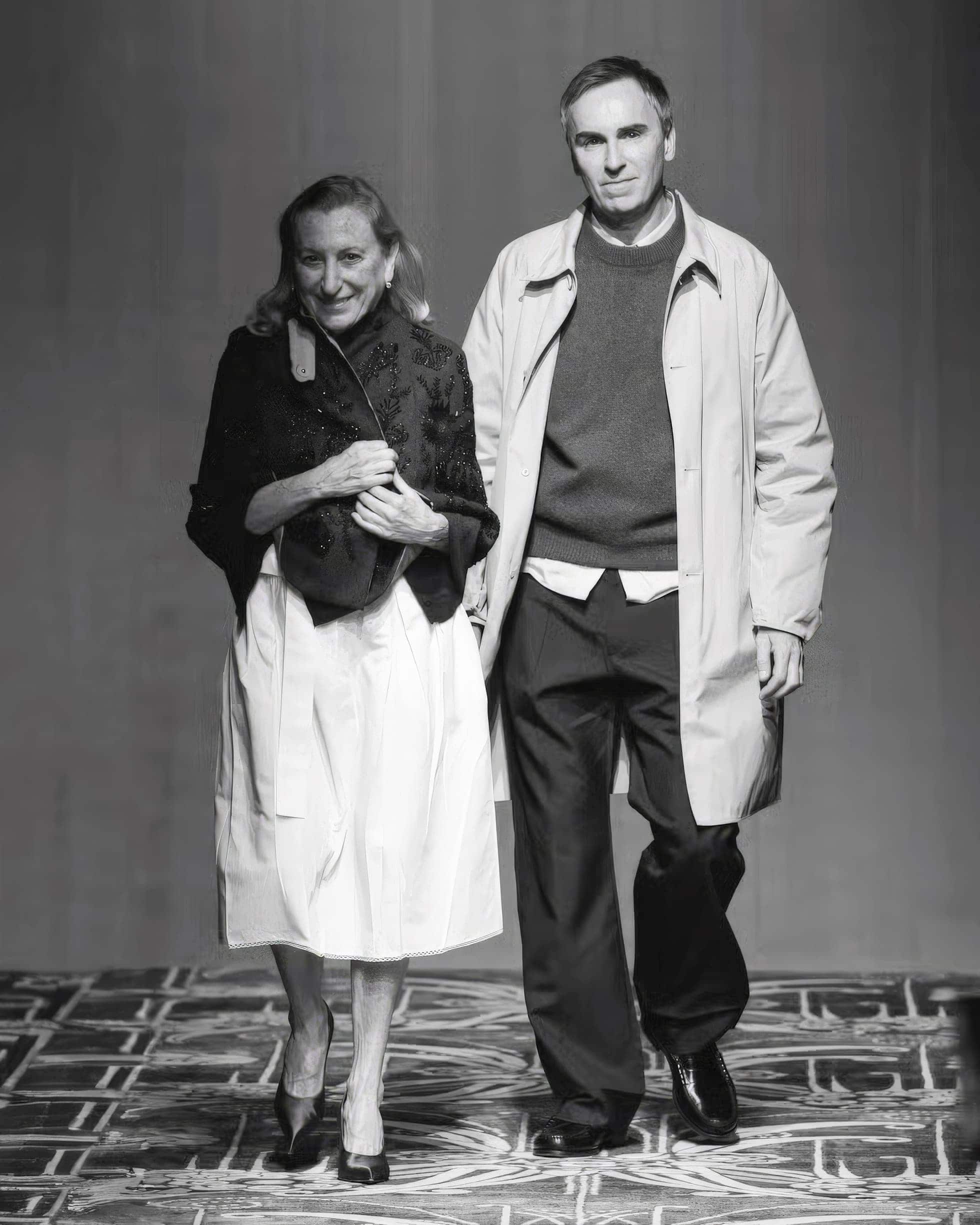
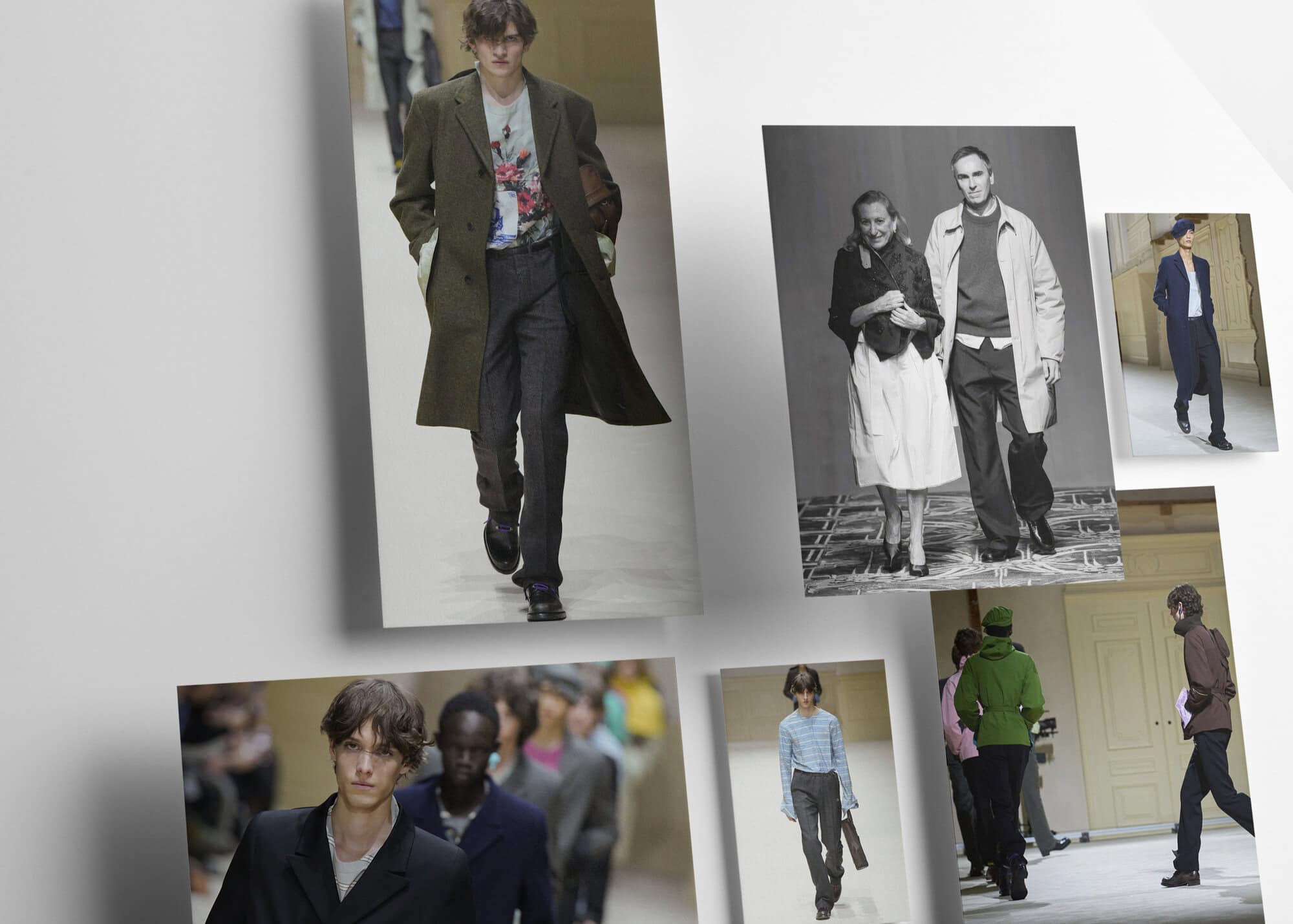
It’s easy to forget, in the ritual of runway seasons, how rare it is to sit with two designers who remain as driven, questioning, and intellectually honest as Miuccia Prada and Raf Simons. The Fall 2026 men’s collection from Prada — spare, sharp, and emotionally loaded — was not just a proposal for how men might dress, but a quietly radical meditation on the role of fashion in uneasy times.
And the times, as both designers emphasized in a private post-show conversation, are nothing if not uncomfortable. “That’s why we wrote it in the notes,” Miuccia Prada said. “It’s an uncomfortable situation. Because with everything happening in the world, you’re not thinking a week ahead. You’re searching, expecting, working — trying to put things together in the moment we have.”
There was no glossy remove in how they described the creative process. This wasn’t fashion in a vacuum. It was fashion made in full awareness of a fractured world, a world full of contradictions — beauty and brutality, privilege and precarity, memory and erosion. And it was this tension, this refusal to resolve the discomfort too neatly, that gave the collection its emotional charge.

Raf Simons put it plainly:
Very often in history, people reacted to world situations through the way they dressed. You can look at the ’60s, the ’70s, or even further back. This collection is not a direct reaction — but we feel we shouldn’t sit still or be frozen. We want to continue. We want to work.
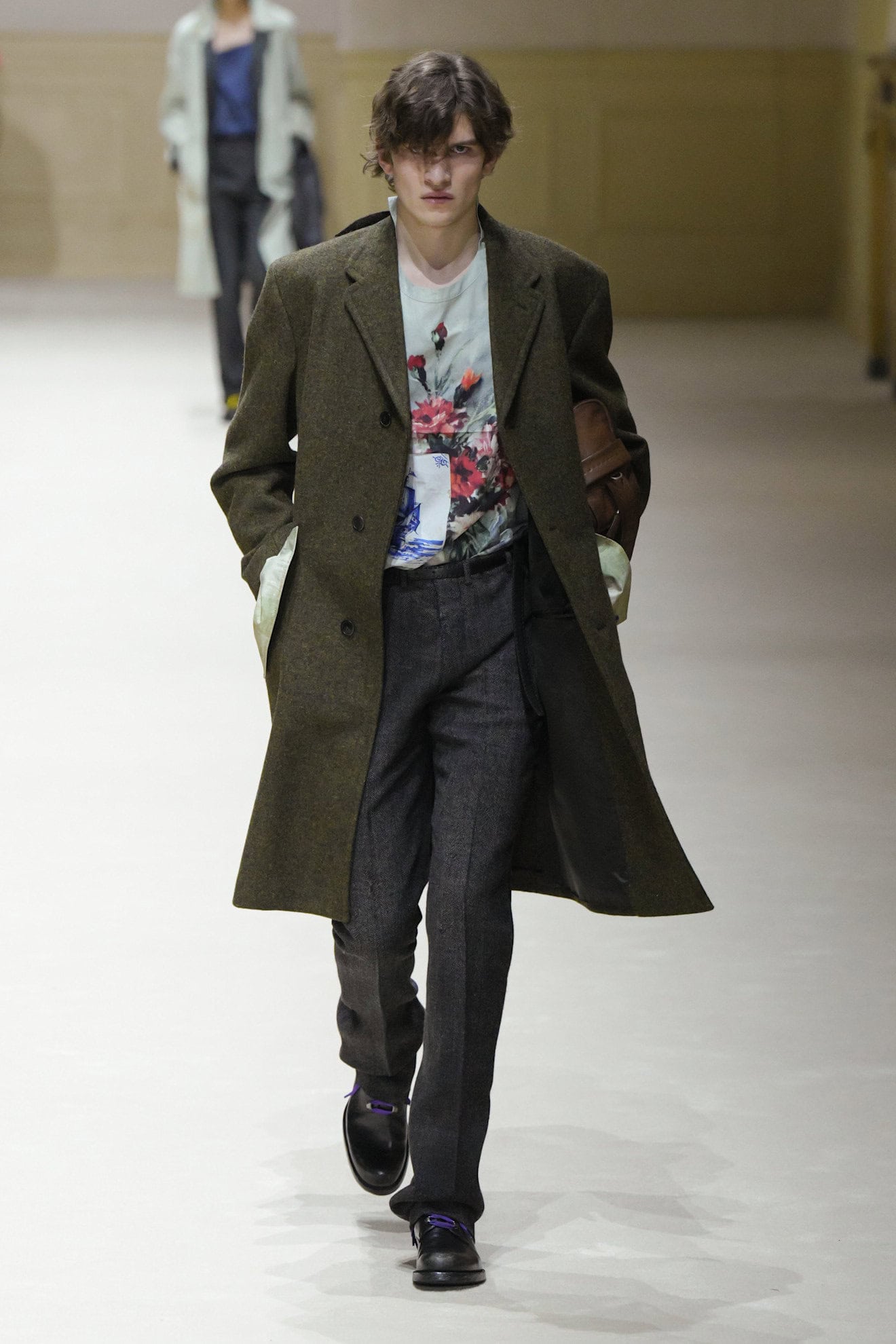
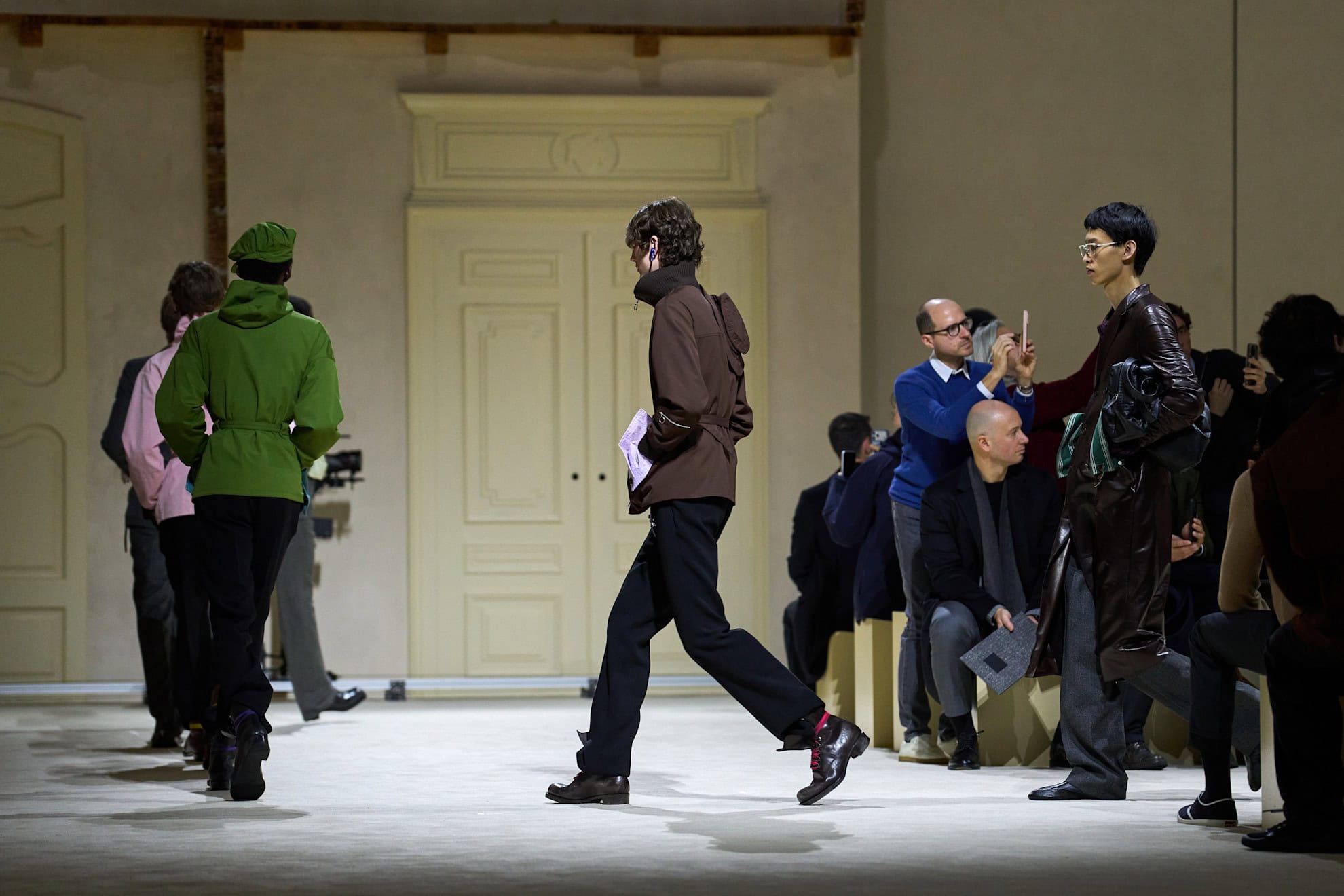
The silhouettes were strikingly slim and elongated — a direct contrast to the oversized volume that’s dominated much of menswear’s recent memory. “There’s been so much exaggeration, so many shoulders and constructions,” Simons said. “Here, the shoulder is soft. Comforting. Not aggressive. We wanted to make that statement.”
But this wasn’t minimalism. It was archaeology. Layers of reference — from American businessmen to aristocratic leisurewear, from classic suits to deconstructed archetypes — were excavated and reimagined. “Almost every icon of the men’s wardrobe is there,” Simons noted. “But used differently. A suit becomes a twin set. The gesture remains, but everything else is transformed. You keep what you respect. Then you ask: what can evolve?”
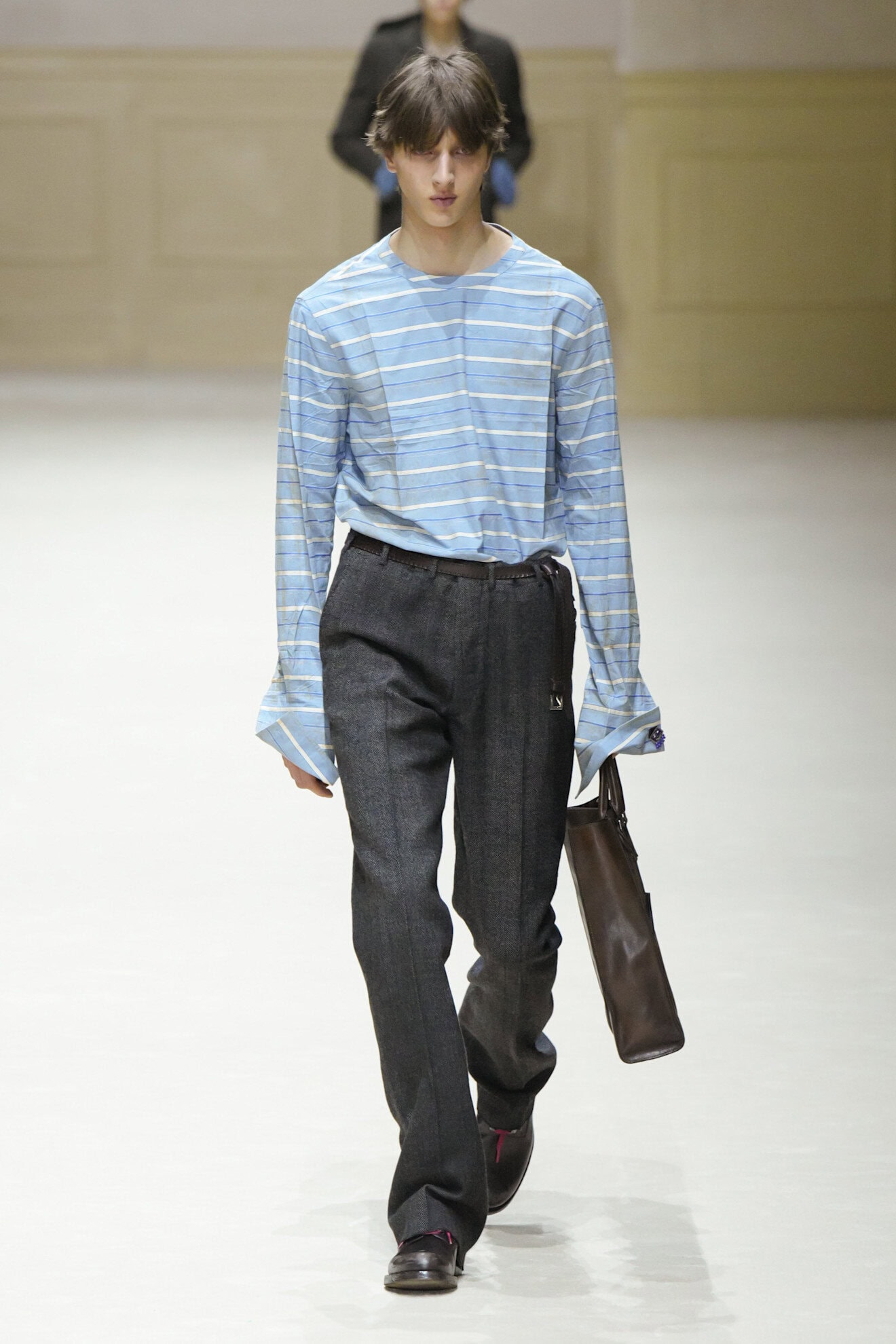
In one look, the stripes ran horizontally. In another, a distorted neckline pulled the eye off-axis. The tailoring was impeccable, but carried a sense of softness — as though the garments had lived lives before being inherited. “Sometimes beauty exists in ruin,” Simons added. “I don’t want perfection. That’s what makes it challenging.”
That word — inheritance — lingered throughout the conversation. For both designers, legacy is a living thing, not a fixed image. It demands reengagement. “If you take the layers away,” Simons said, “you always find something beautiful: love, respect, knowledge. That’s what we wanted to celebrate and use — but also challenge.”
And yet, even with all the cerebral intention, there was no sense of detachment. Both designers returned again and again to the real-world purpose of what they do — making clothes, yes, but also making meaning. “Sometimes I think, ‘We’re just making clothes,’” Simons admitted. “But then you meet someone — a stranger — who connects to what you’ve done. Someone who has bought the brand for 27 years, passing it down through generations. That’s when you feel the emotion. That’s when you understand the meaning.”
It’s this collision of emotion and intellect that continues to make Prada not only relevant but essential. The clothes are precise, but never cold. The vision is sharp, but never cynical. And as the designers themselves pointed out, it is not about offering easy answers — it’s about offering a frame through which we might see the present more clearly.
“The world can be terrible,” Simons said. “But fashion can be beautiful.”
Miuccia Prada and Raf Simons don’t try to resolve the contradictions of now. Instead, they honors it — holding past and future, hope and ruin, tradition and innovation, all in the same breath.
