Inside Diesel’s Restless Optimism And The Designer Who Refuses To Surrender To Fashion’s Anxiety
By Kenneth Richard

There is a steadiness to Glenn Martens that feels increasingly rare in fashion.
He is animated — eyes bright, quick to smile, expressive in gesture — but not scattered. Warm without being performative. Upbeat without denying the weight of the moment. In a season where the industry seems preoccupied with recalibration, caution, and creative reshuffling, Martens projects something closer to clarity.
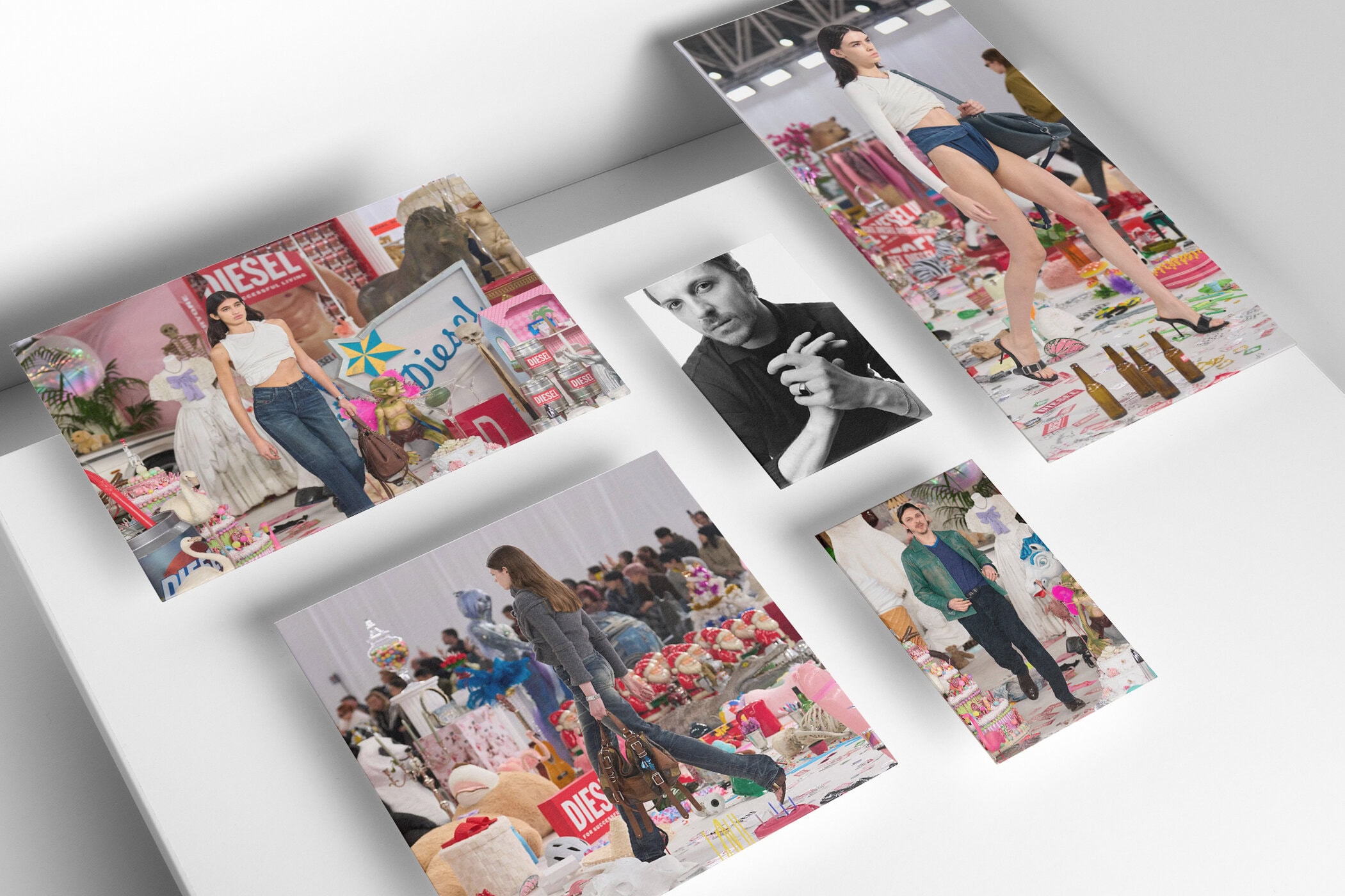
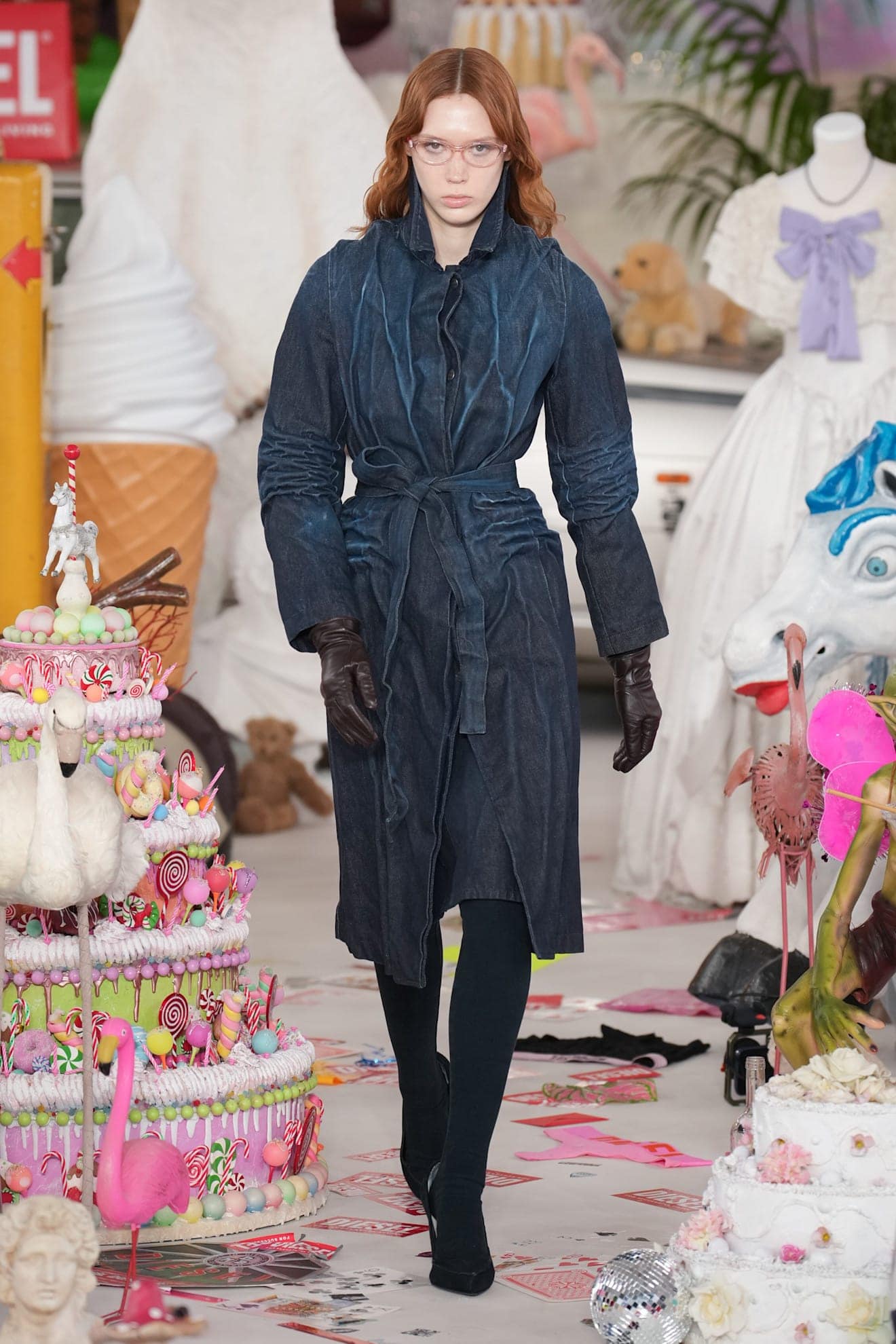
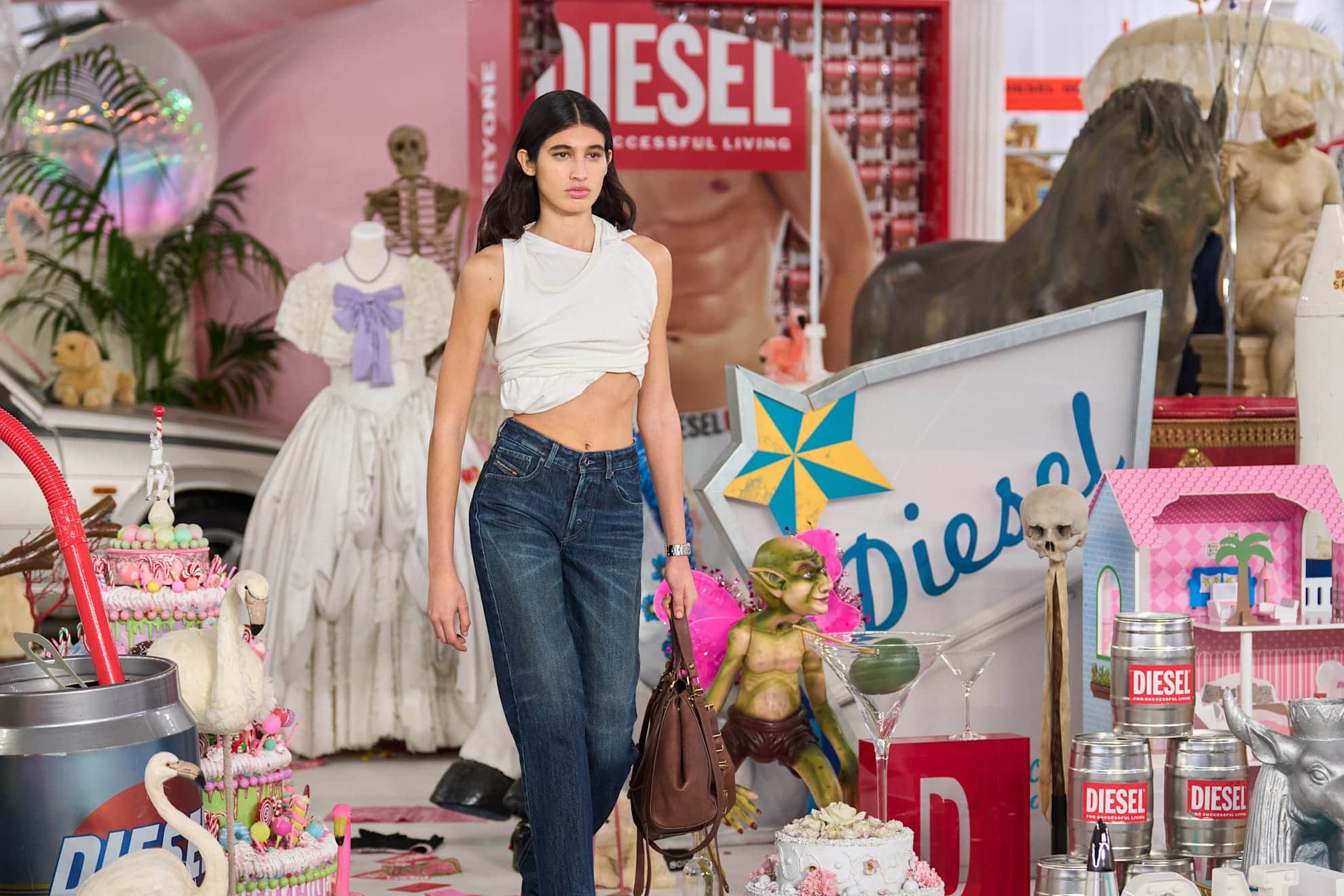
The collection he has just presented for Diesel revolves around the morning after a party — that disoriented, slightly defiant walk into daylight. Clothes are twisted deliberately off-axis. Jerseys are engineered into bodysuits that cannot be worn “normally.” Skirts wrap around the leg only to reveal themselves as trousers. Jumpsuits collapse categories. Denim is resined and cracked as if dried stiff after a night of sweat and excess. Satin dresses are foiled like wrapping paper and then broken open again. Confetti prints bleed as though memory itself has blurred.
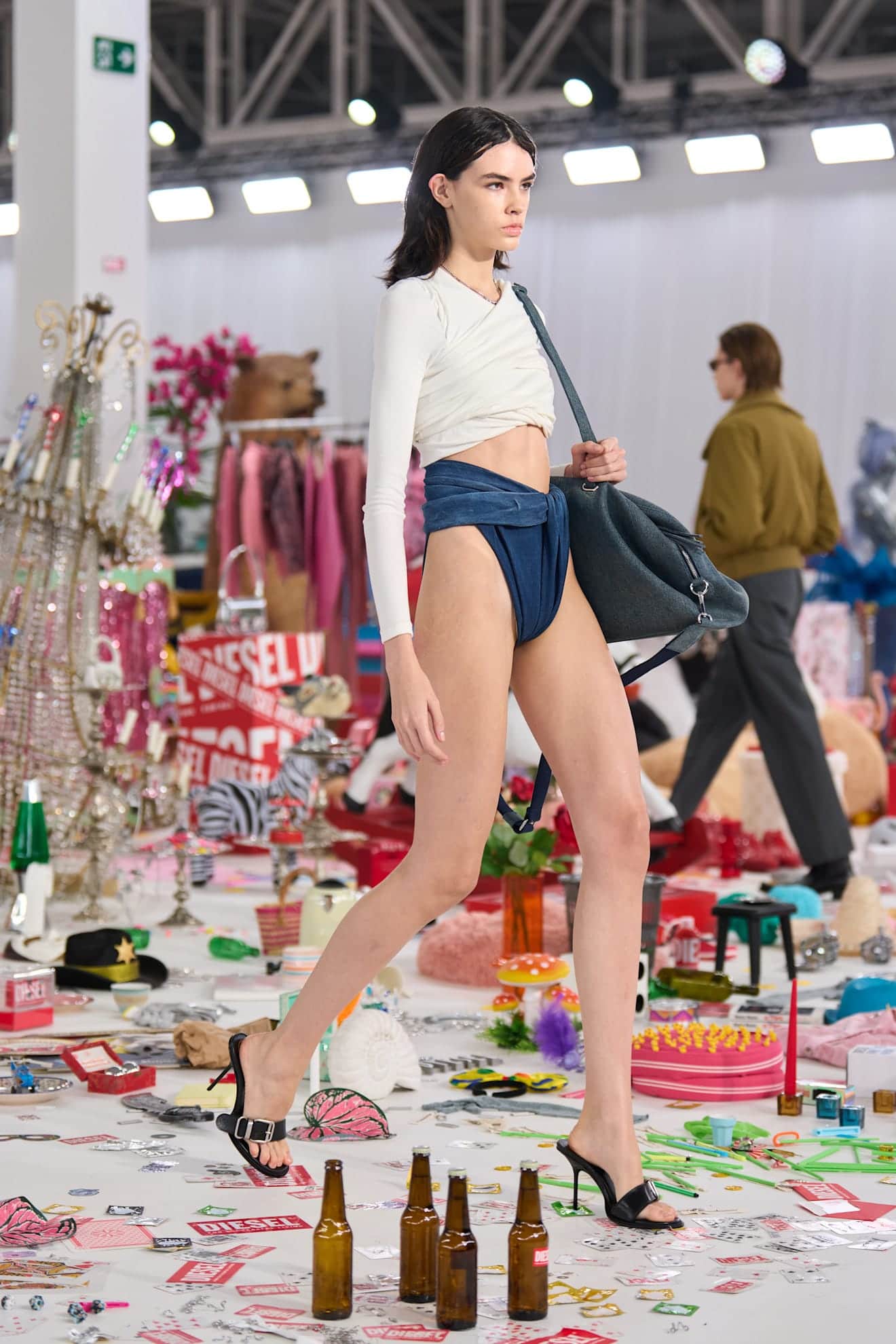
“It’s about having your most shameful walk of shame,” he says, smiling at the phrasing, “but really enjoying it, nailing it, making it fun.”
The idea is less about chaos than about ownership. Waking up unsure of the details, but certain it was worth it. The clothes may appear undone, but they are meticulously constructed. The disorder is engineered. Every twist calculated.
That tension — between disruption and control — defines Martens’ Diesel.
“This is a lifestyle brand,” he says plainly. “It’s wardrobe, wardrobe, wardrobe.” Even the most complex pieces reduce to archetypes: a slip dress rewrapped, archival denim blocks recolored and treated, leather cut in shapes that have existed in the store for years. Nothing is costume. Everything must live.
The set drew from four decades of Diesel memorabilia — objects unearthed from the brand’s own storage, artifacts of its rave-heavy, rule-breaking past. Renzo Rosso, who famously kept everything, provided the raw material. Martens reframed it as celebration rather than nostalgia. A reminder that Diesel has always thrived on a certain irreverence.
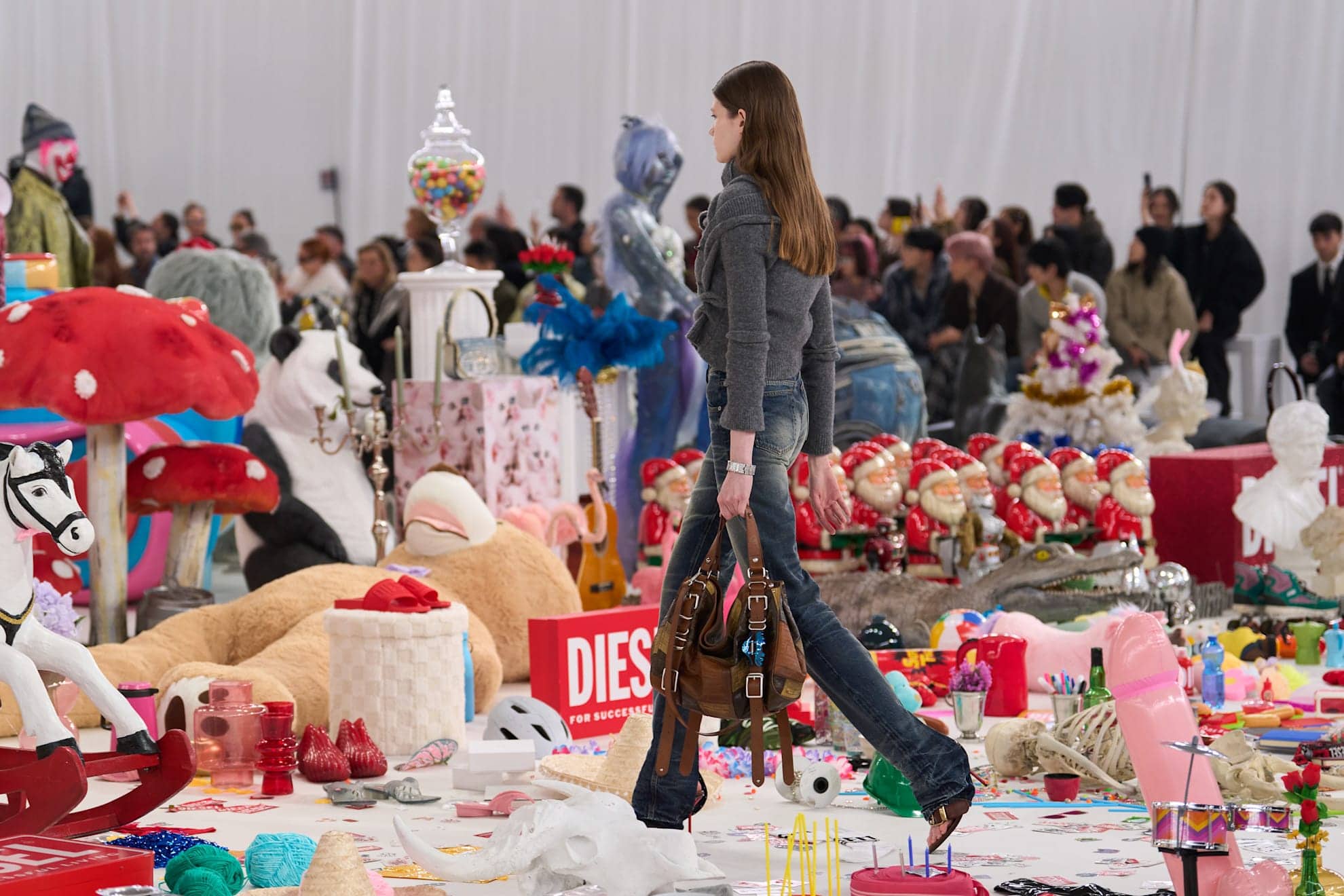
“It’s a brand about joy and happiness,” he says, without irony.
In a climate where many houses are leaning into solemnity or over-intellectualization, that position reads almost rebellious. Fashion, he believes, has a responsibility to offer release. “Make people feel happy and sexier in a pair of denim,” he says. “Maybe make them dream away when they see shows like this, so they’re not confronted to the reality of everyday life.”
He pauses when the conversation turns toward the state of the world. “I try not to look too much at the world today,” he admits. “It’s very difficult.”
It is not avoidance. It is boundary-setting. Martens understands that Diesel’s strength lies in mood — in granting permission to enjoy oneself, to feel slightly larger than circumstance. Joy, in this framework, is not frivolous. It is strategic.
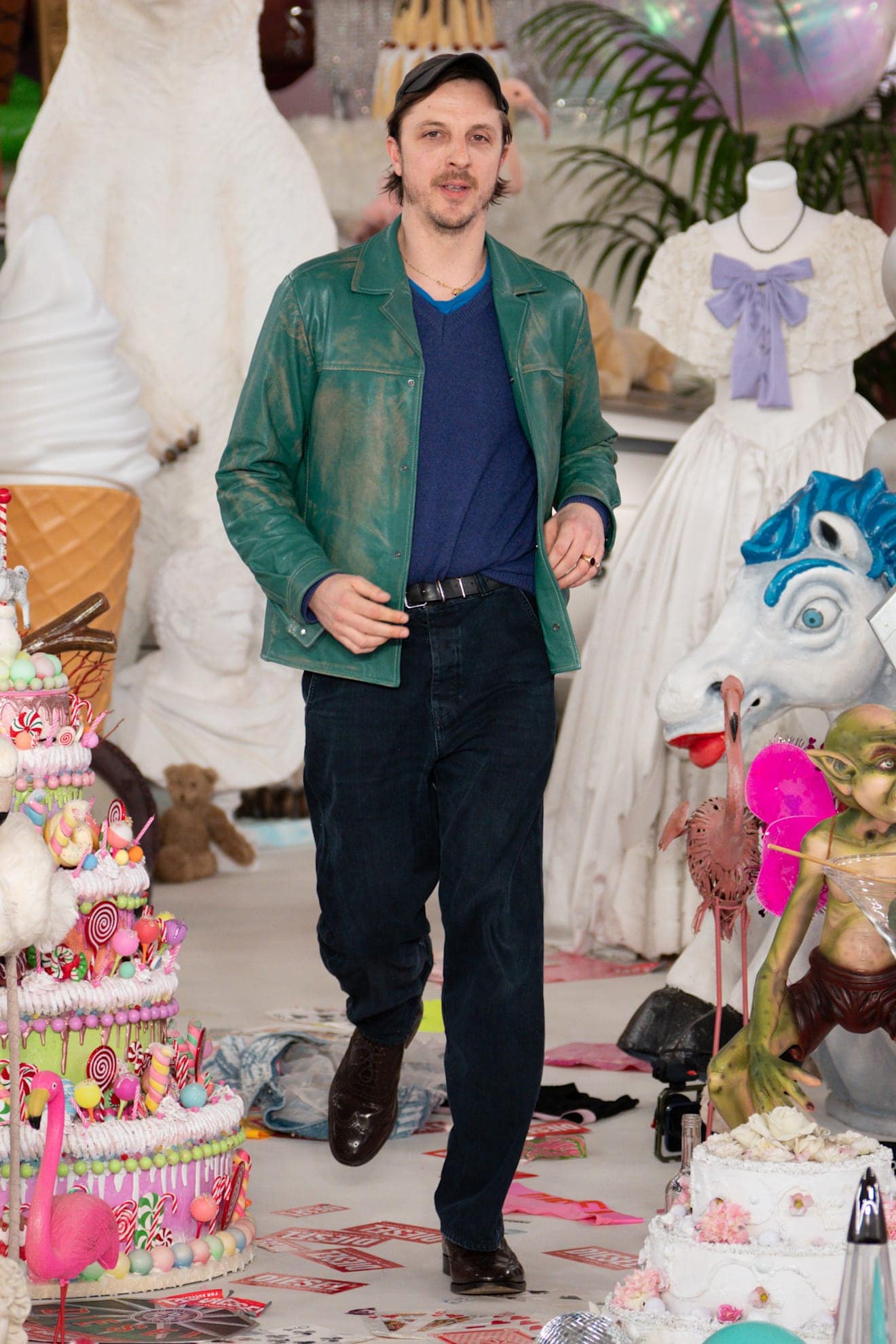
What often goes unspoken is that Diesel under Martens has grown significantly — commercially and culturally. Growth, particularly in today’s environment, buys leverage. It buys trust. It buys creative autonomy.
“I’m very blessed,” he says, almost casually. “When it grows, it means you have less CEOs and presidents annoying you because everything was wrong.” The line lands lightly, but its implication is clear. Results create space. Space protects vision.
That protection matters even more now.
Across the industry, creative directors are being installed, replaced, repositioned at remarkable speed. Heritage houses search for reset after reset. Conglomerates recalibrate expectations amid a broader slowdown. The atmosphere is one of movement — sometimes forward, sometimes lateral, often uncertain.
Martens occupies an unusual position within that landscape. He is one of the few designers currently entrusted with two culturally significant houses: Diesel and Maison Margiela. The former thrives on accessible provocation; the latter remains one of fashion’s most conceptually protected institutions.
He speaks of the dual responsibility with ease. “It’s very easy,” he says. “Both of them are so different universes.”
Diesel is about youth, disruption, successful living. Owning your “craziness,” as he describes it, while still delivering garments people can build a life in. Margiela operates in another register entirely — more conceptual, more investigative, less concerned with immediacy.
The distinction is clean in his mind. There is no visible tension between the roles. If anything, the contrast sharpens each.
That clarity — and the market confidence behind it — signals something about his standing. In a period when stability feels scarce, Martens has become a quietly stabilizing force. Not by softening his ideas, but by executing them with discipline.
The cracked denim in this collection is not random distressing; it is resined into shape. The oversized knits are boiled to hold their form. The twisted jerseys resist normalcy because they were built to. The party is constructed with architectural precision.
Underneath the laughter, there is method.
Five years into his tenure at Diesel, he knows the machinery intimately — the teams, the rhythms, the codes. The dance is no longer tentative. It is practiced. At Margiela, where the choreography is newer, the excitement lies in exploration rather than scale.
He works, he says, in silence. No music in the studio. The noise comes later.
There is something telling in that detail. The collections may celebrate excess, but their creation is controlled. The optimism he projects is not naïve; it is chosen. In a moment when darkness can become aesthetic shorthand for seriousness, Martens insists on brightness. On sexiness. On pleasure.
Fashion is currently wrestling with growth ceilings, cultural relevance, generational shifts in consumption. It is asking whether disruption still resonates, whether joy still sells, whether youth can be engaged rather than manufactured.
At Diesel, the answer appears to be yes — provided it feels authentic.
Martens does not frame himself as a savior. He does not dramatize the weight of dual leadership. He returns, instead, to wardrobe. To happiness. To the idea that fashion’s power lies in how it makes someone feel when they step outside.
The discipline of joy may sound light. It is not. It requires clarity, restraint, and confidence in one’s own tempo.
As the conversation winds down, his energy remains steady — animated, generous, unmistakably optimistic. In uncertain times, that steadiness feels less like cheerfulness and more like resolve.
At Diesel, the celebration continues. But it is guided by a designer who understands exactly how much structure joy requires.