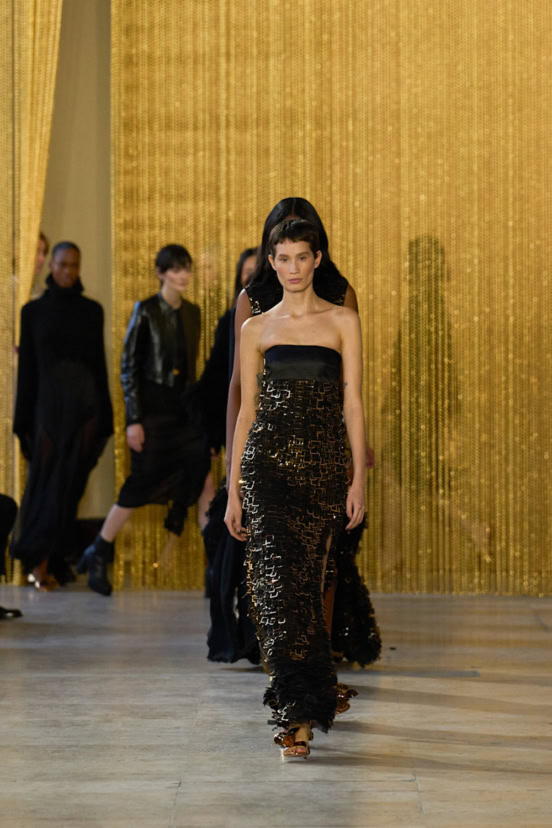
Weaving Worlds
Review of Akris Fall 2026 Fashion Show
By Mackenzie Richard Zuckerman
At Akris, the language of fashion has long been rooted in material intelligence. Under the direction of Albert Kriemler, the house has consistently built its collections through the patient refinement of fabric, construction, and craft rather than spectacle. This season continued that philosophy, unfolding as a dialogue between Kriemler’s atelier and the work of Colombian textile artist Olga de Amaral.
The collaboration emerged slowly. Nearly a decade ago, Kriemler had first attempted to work with Amaral, drawn to her extraordinary manipulation of fibers and surface. The idea was initially declined by the artist’s family, only to resurface years later after Kriemler traveled to Bogotá to visit Amaral at her Casa de Amaral following her major exhibition at the Fondation Cartier in Paris.
What he encountered there revealed a deeper connection between their practices. Amaral, now in her nineties and still working daily, produces her monumental woven works with the assistance of a small group of women she affectionately calls her “fourteen hands.” The phrase resonated strongly with Kriemler, who immediately recognized a parallel with the collaborative labor of his own atelier. In both worlds, the work emerges not from solitary authorship but from a collective environment where patience, craft, and repetition shape the final result.
From that shared philosophy grew a collection that sought not to replicate Amaral’s works directly, but to translate the spirit of her textile experimentation into clothing.
THE COLLECTION
THE VIBE
Craft, Materiality, & Luminosity
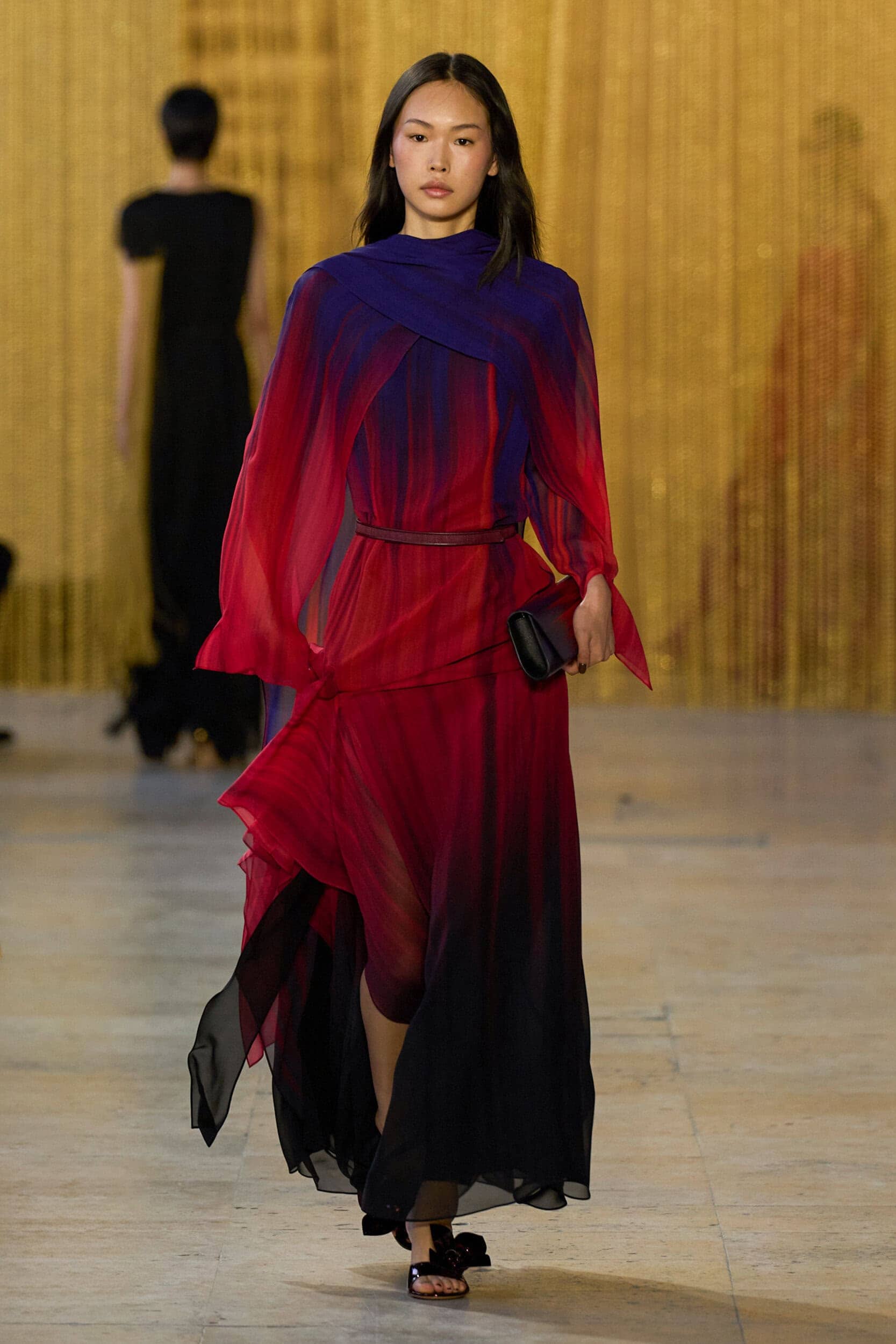
Kriemler described the collection backstage as an effort to build what he called a “dense material world.” Rather than adapting Amaral’s artworks literally, he approached the project by translating the vocabulary of weaving, layering, and fiber manipulation that defines her practice.
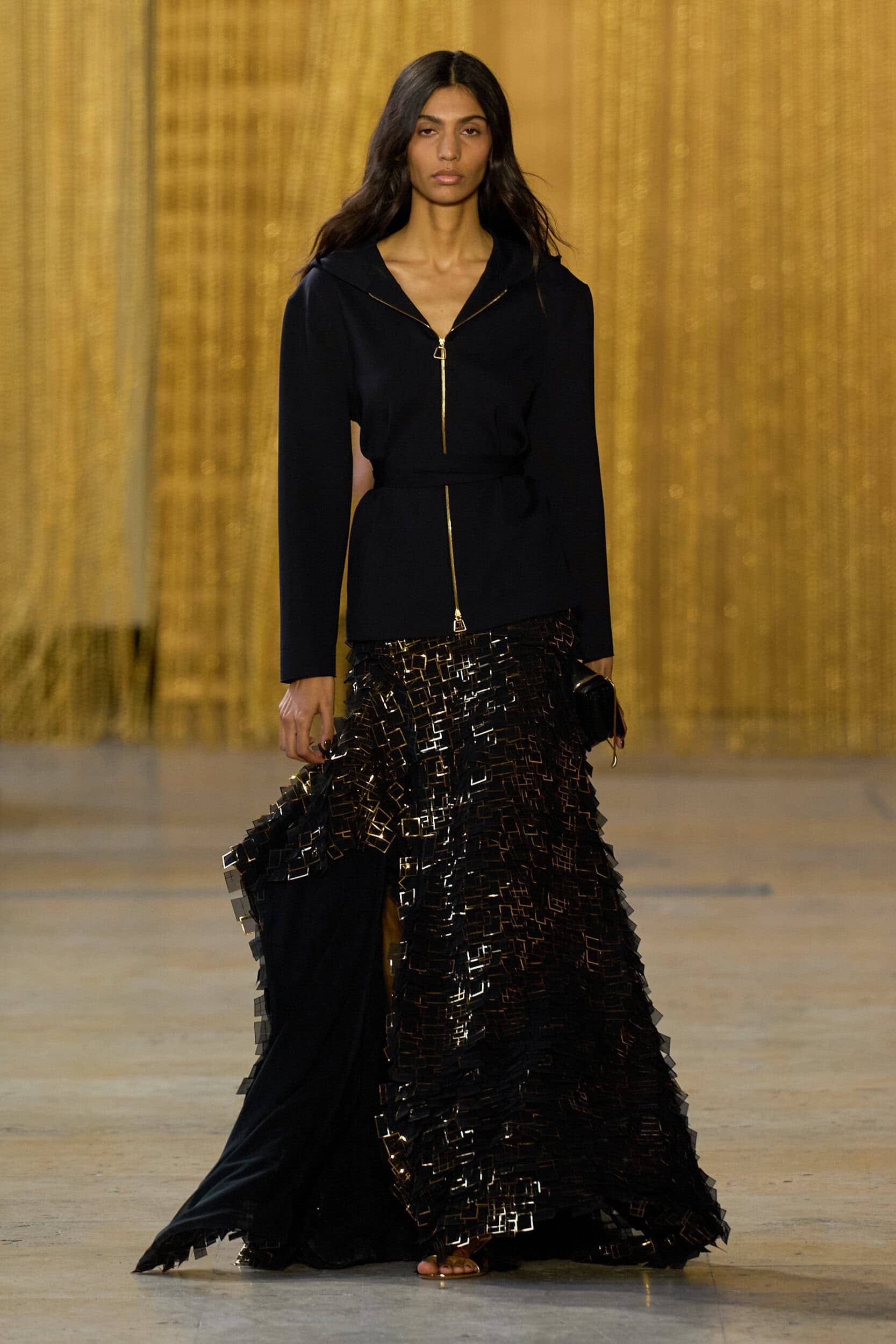
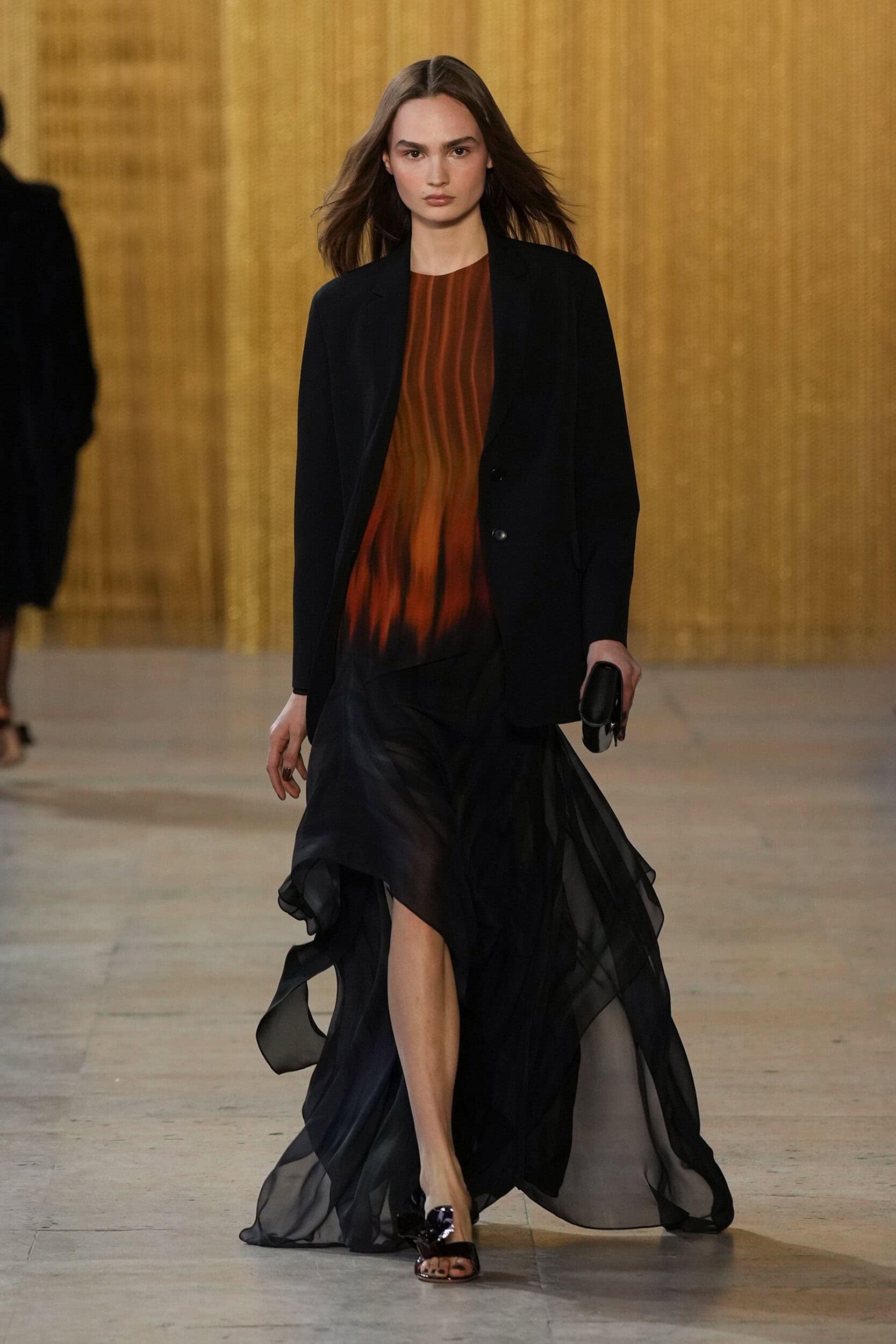
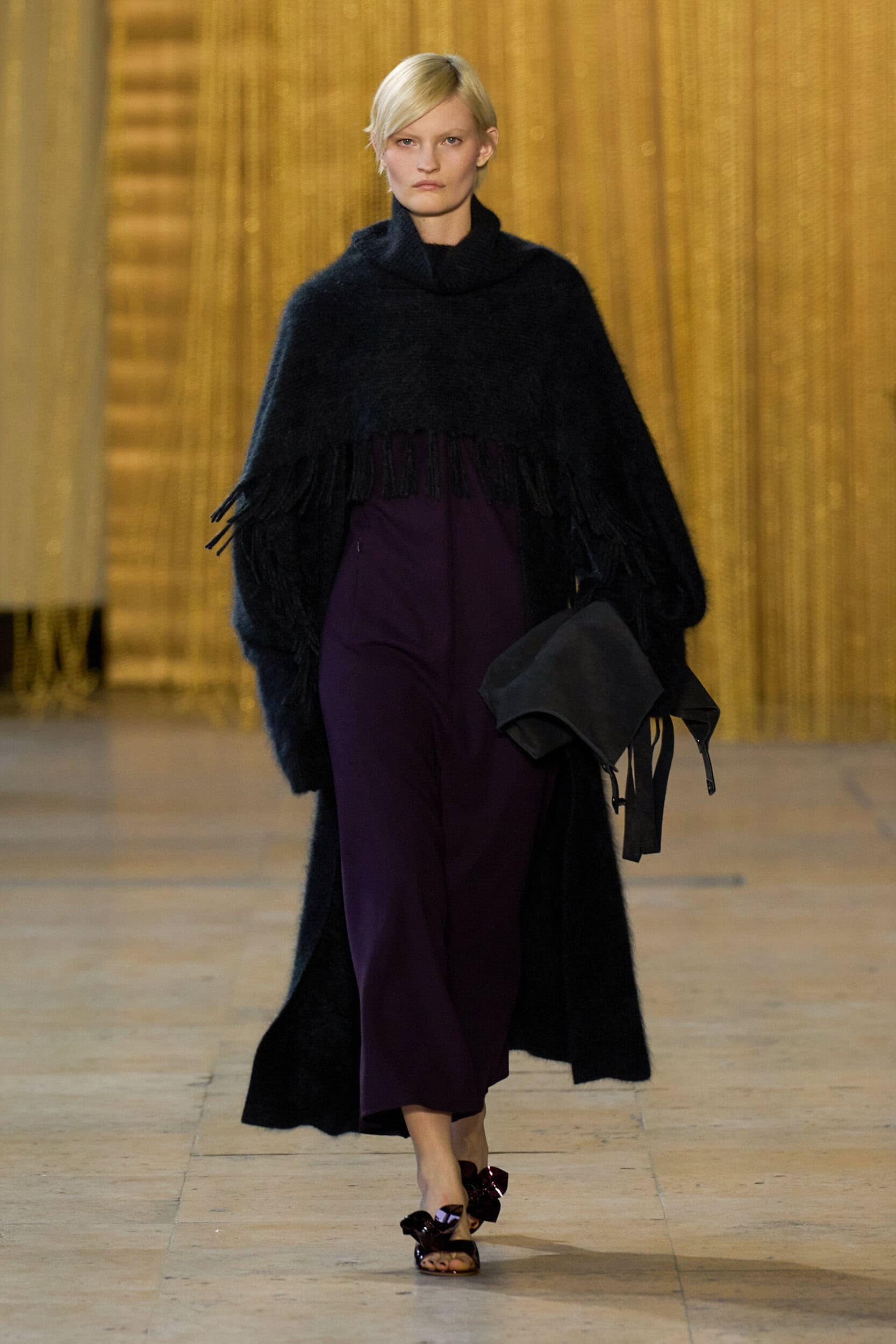
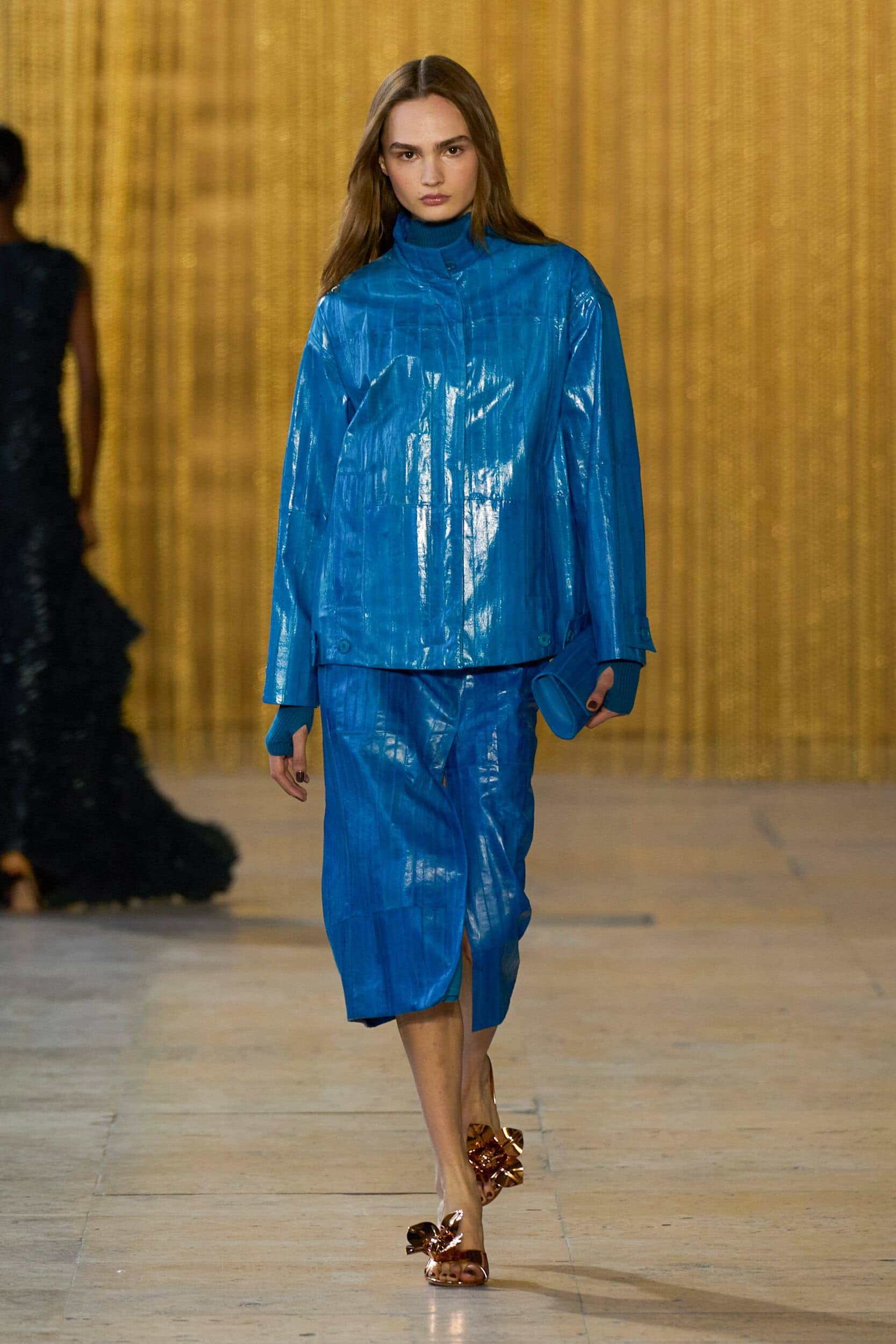
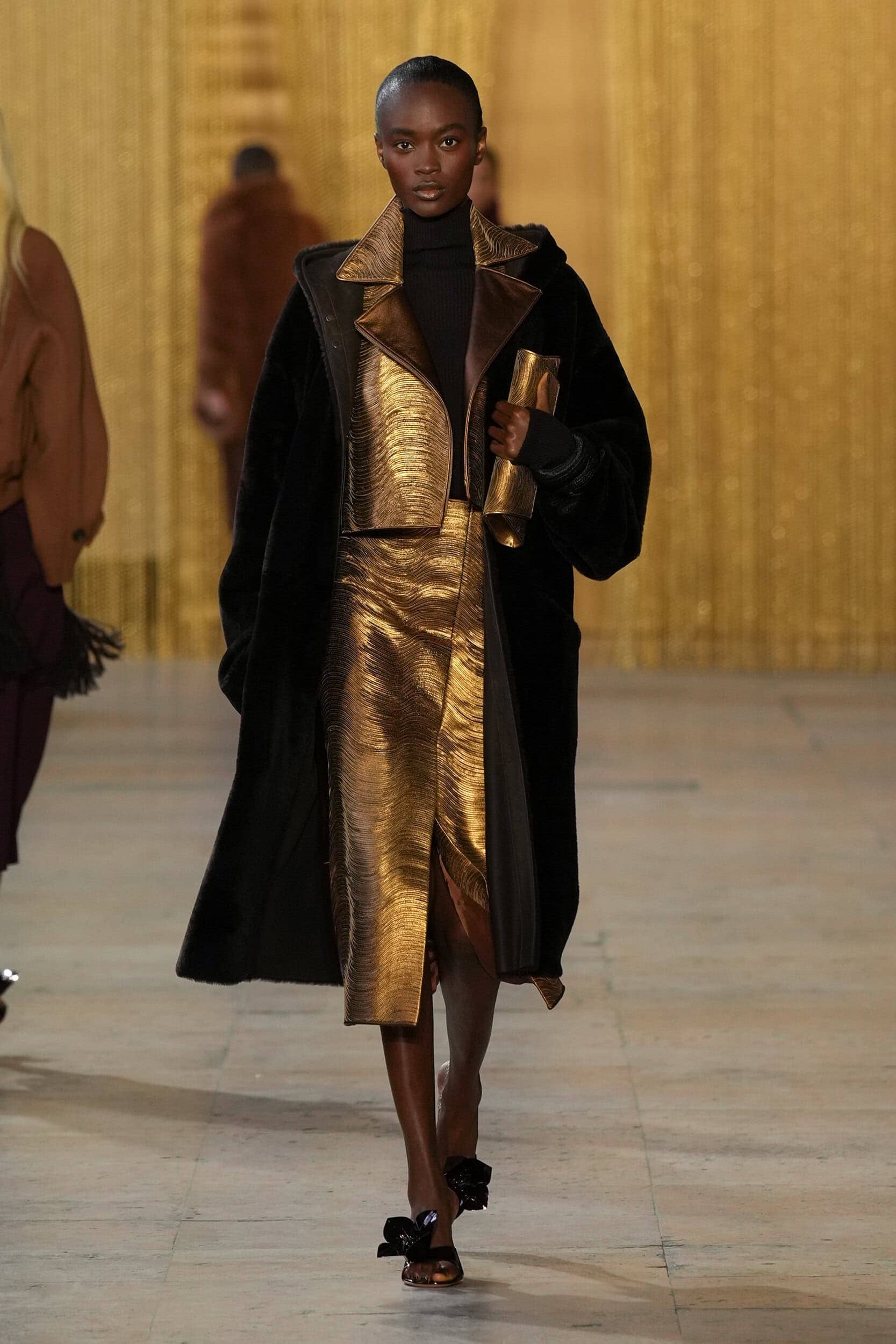
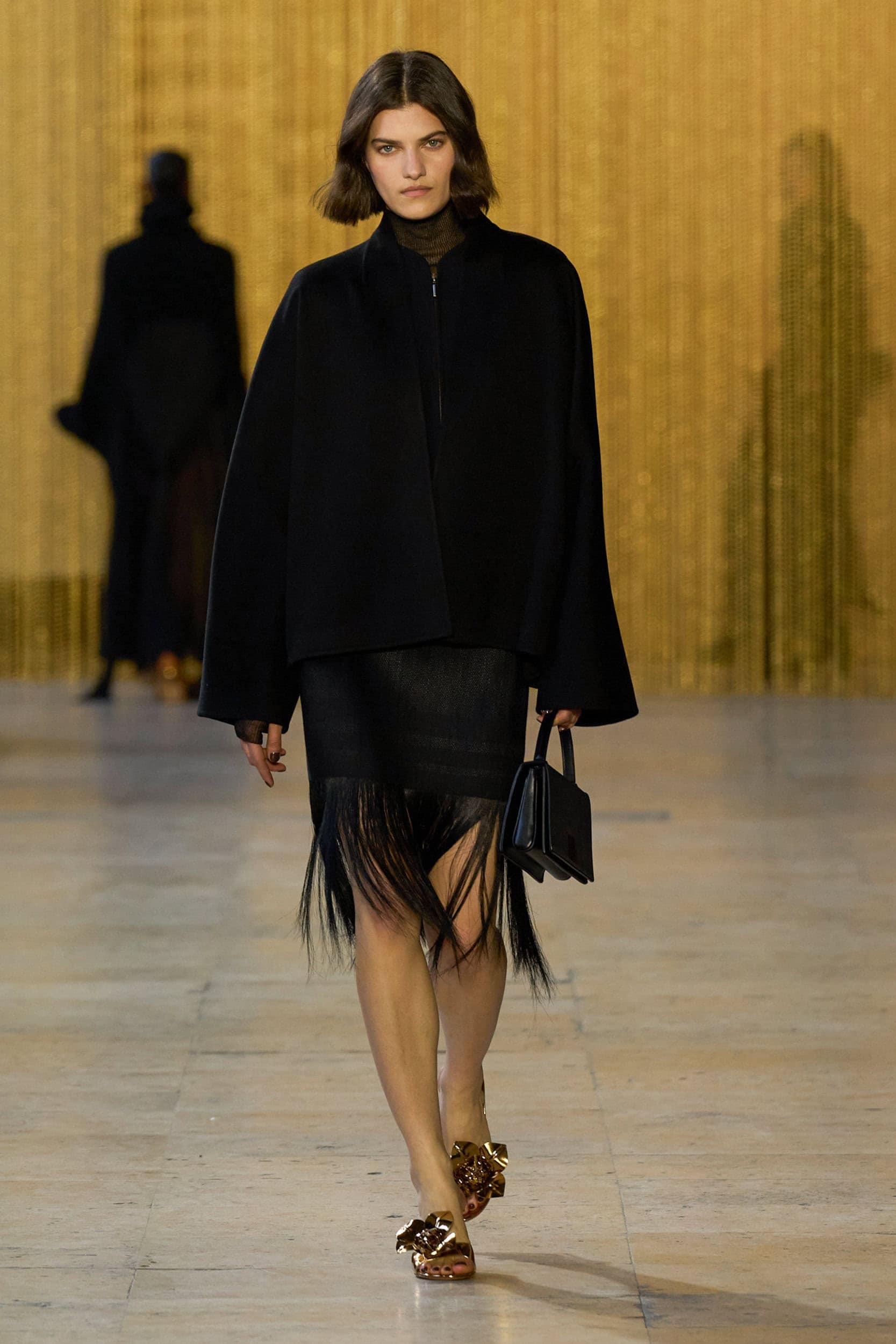
Textile development therefore became the true protagonist of the collection. Brocades were engineered to feel unusually soft. Fabrics layered onto temporary tulle structures were later washed away, leaving intricate fringed surfaces behind. Plaited constructions and woven horsehair pieces introduced sculptural movement while retaining a surprising fluidity.
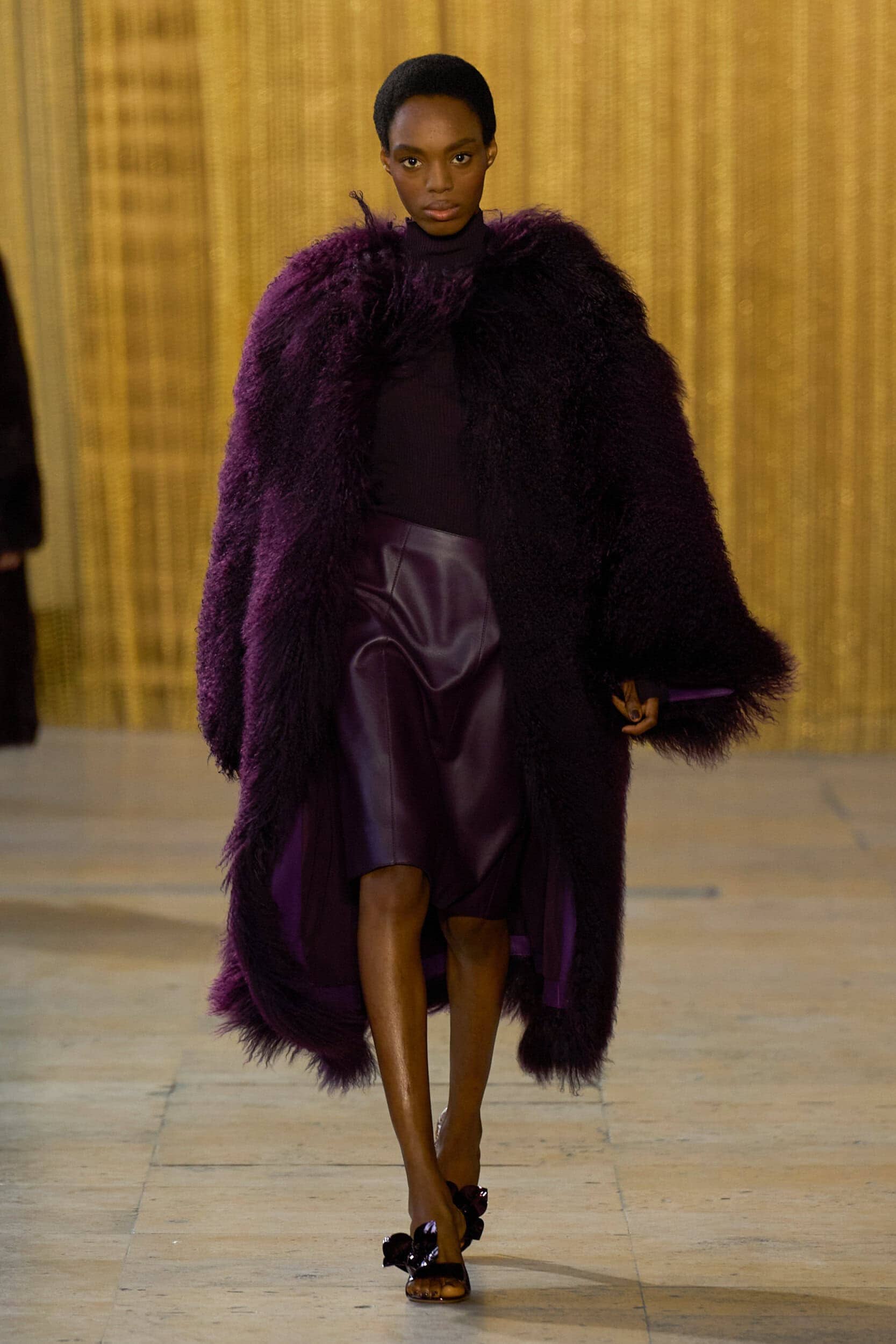
Horsehair became one of the most striking material experiments. In skirts and structured garments, the fiber allowed Kriemler to achieve an unusual balance between architecture and motion—pieces that hold shape yet remain animated when worn.
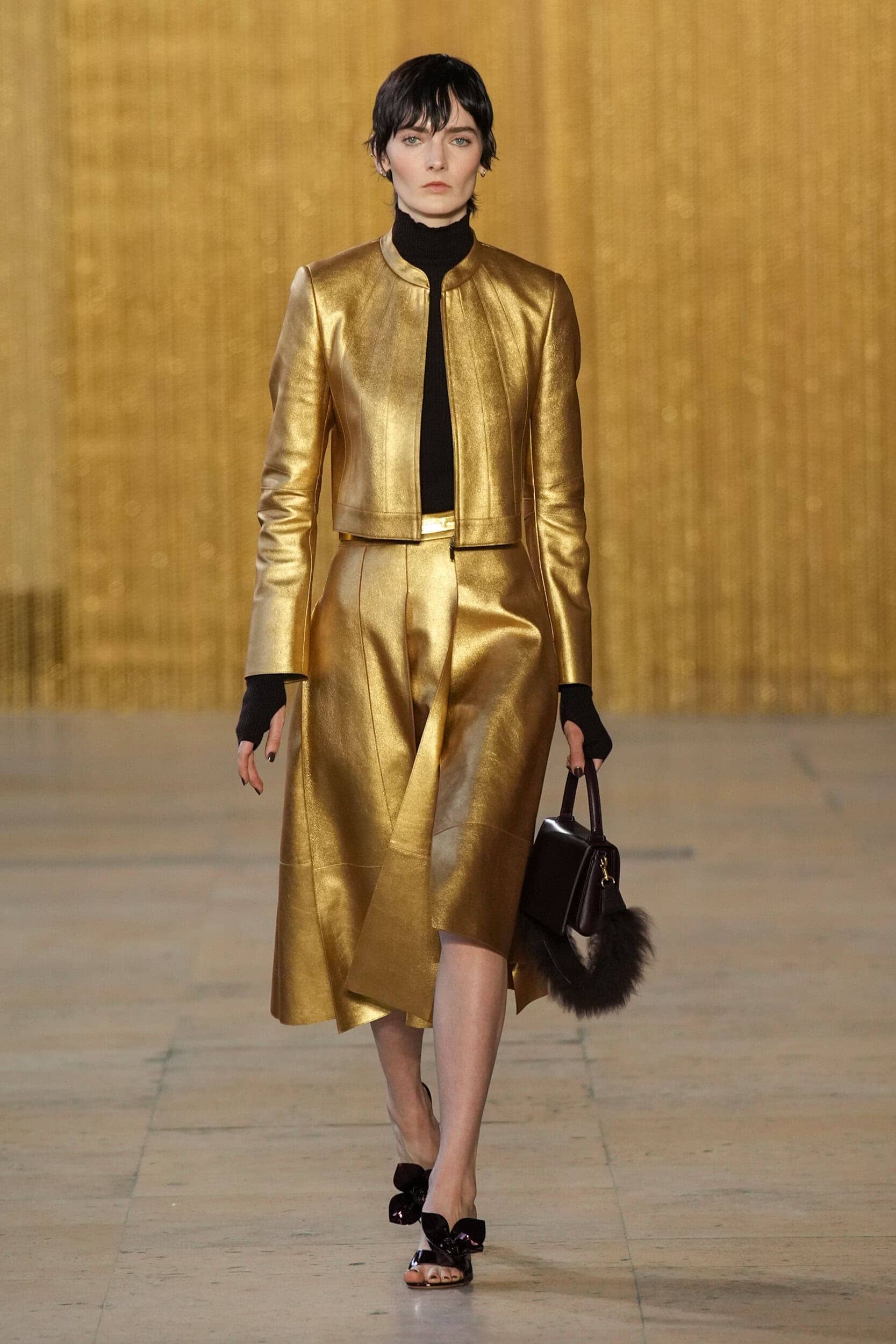
Gold, a defining element in Amaral’s artistic vocabulary, also played a central role. Raised in the Andes, Amaral has often described gold not as ornament but as a form of luminosity—a way of capturing and reflecting light within woven surfaces. Kriemler responded with gold textiles that remain deliberately restrained. Rather than bright metallic shine, the effect appears through subdued brocades, muted paillettes, and layered fabrics that emphasize depth and texture.
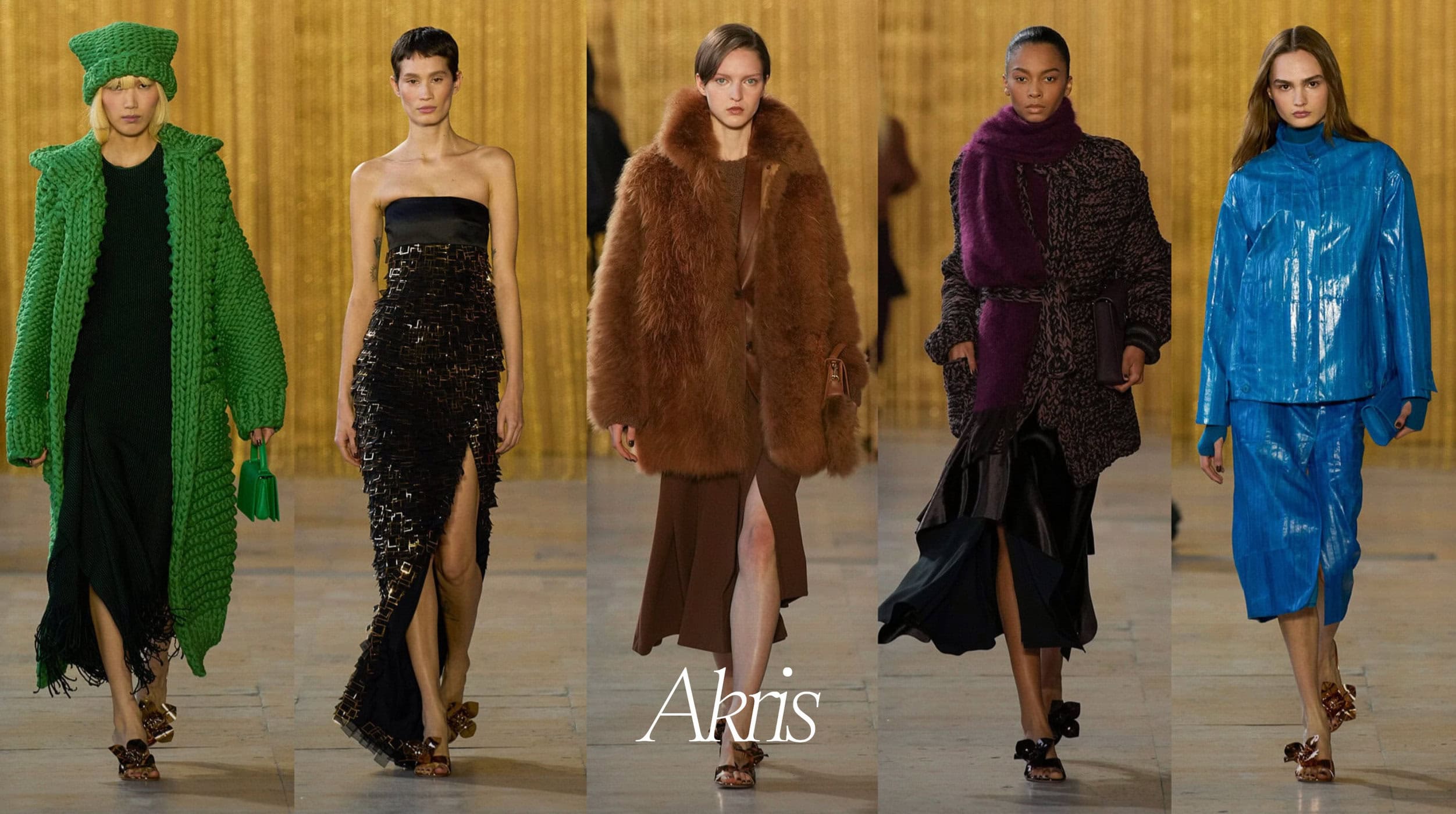
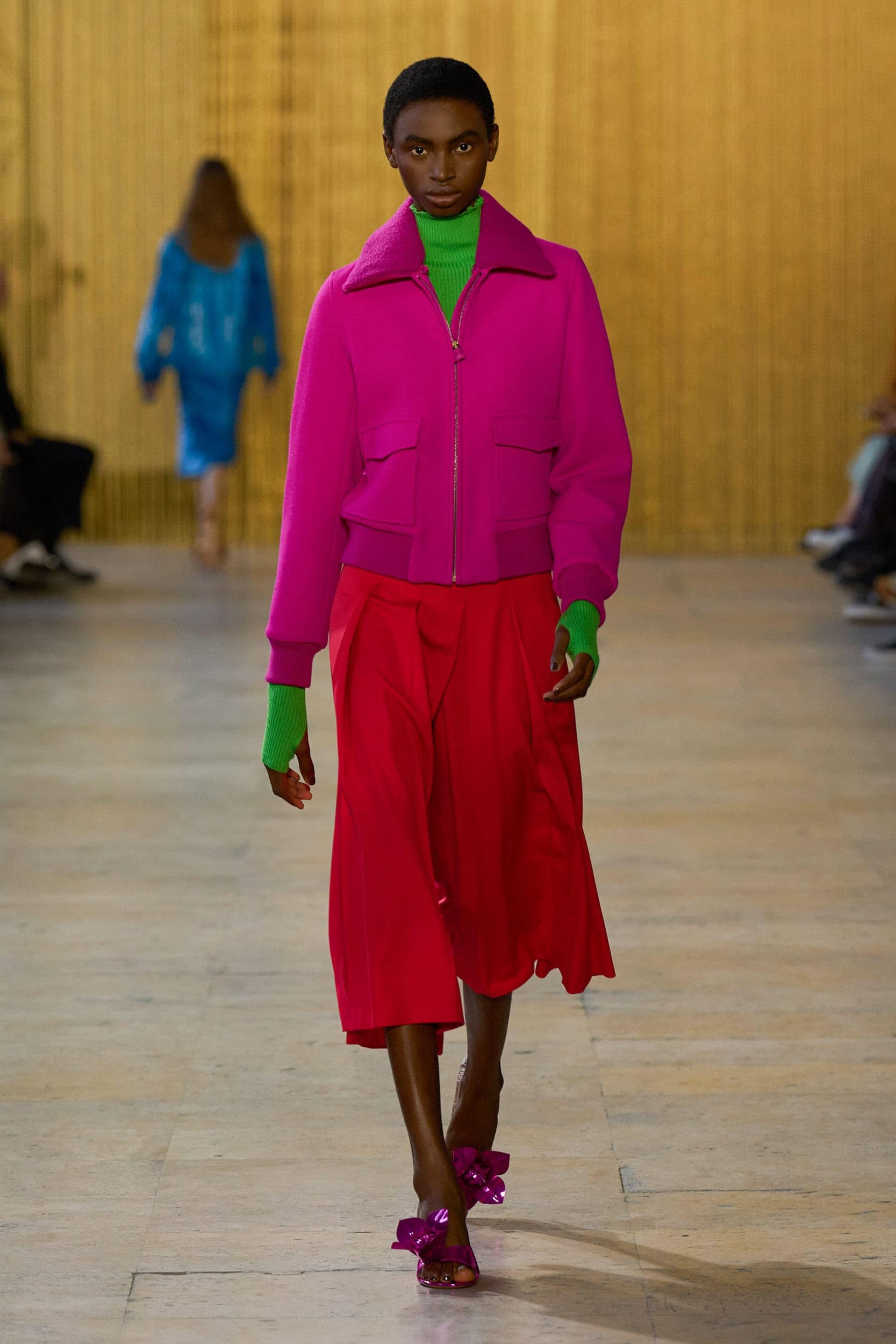
Color unfolded across the runway with similar intention. The collection opened in luminous gold tones before transitioning into a landscape of neutral shades—greys, flax, and browns—eventually deepening into greens and magentas. The progression echoed the tonal movement often found in Amaral’s works, giving the show the feeling of a woven visual narrative rather than a conventional palette shift.
These garments reveal themselves most fully at close range. From a distance, the silhouettes appear controlled and understated; up close, the intricacy of the textiles and the intelligence of their construction become unmistakable. It is a reminder that the strength of Kriemler’s work often resides in the subtleties of material.
THE QUOTE
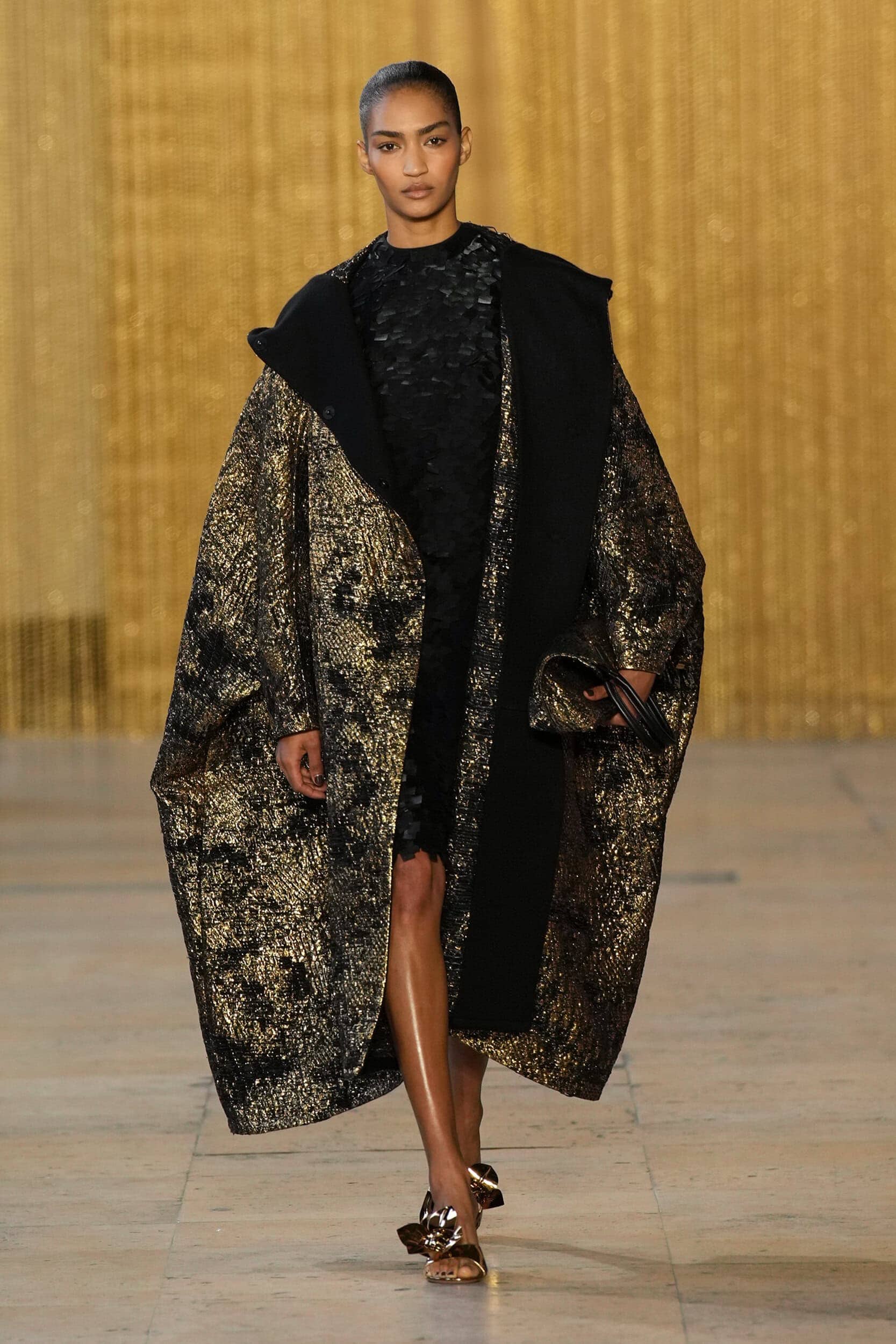
I didn’t want to reproduce Olga de Amaral’s work, but to translate her way of thinking about materials—to build what I would call a dense material world. In her studio she speaks about her ‘fourteen hands,’ which reminded me very much of the atelier and the way craftsmanship becomes a shared process.
– Albert Kriemler
THE WRAP UP
In translating Olga de Amaral’s philosophy into fashion, Albert Kriemler ultimately reaffirmed the identity of Akris itself. The house has long operated at the intersection of fashion and textile exploration, where garments become vehicles for material innovation.
This season reinforced that commitment through an emphasis on collective craft. Just as Amaral’s works are shaped by many hands, the collection reflects the shared expertise of the atelier—where weaving, experimentation, and construction come together to create something quietly complex.
The result is a collection that resists quick consumption. Instead, it invites the viewer to slow down and engage with the physical richness of fabric itself. In a moment when fashion often favors immediacy, Kriemler’s Akris offers something different: a reminder that clothing can still function as a deeply tactile form of art, built through patience, precision, and the intelligence of materials.