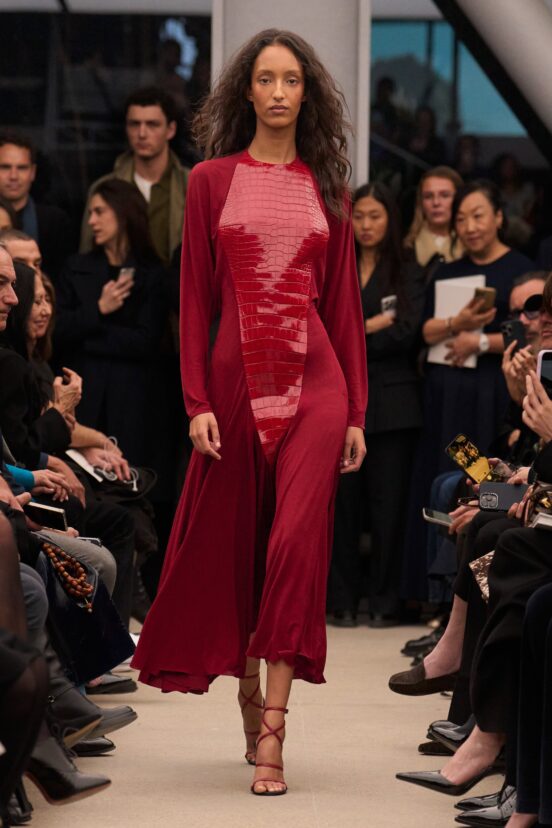
Making Space
Review of Alaïa Fall 2026 Fashion Show
By Mackenzie Richard Zuckerman
Under Pieter Mulier, Alaïa has become one of Paris’s most disciplined expressions of form. Season after season, Mulier has explored the house’s defining premise: clothing that begins with the body and radiates outward through structure, proportion, and material precision.
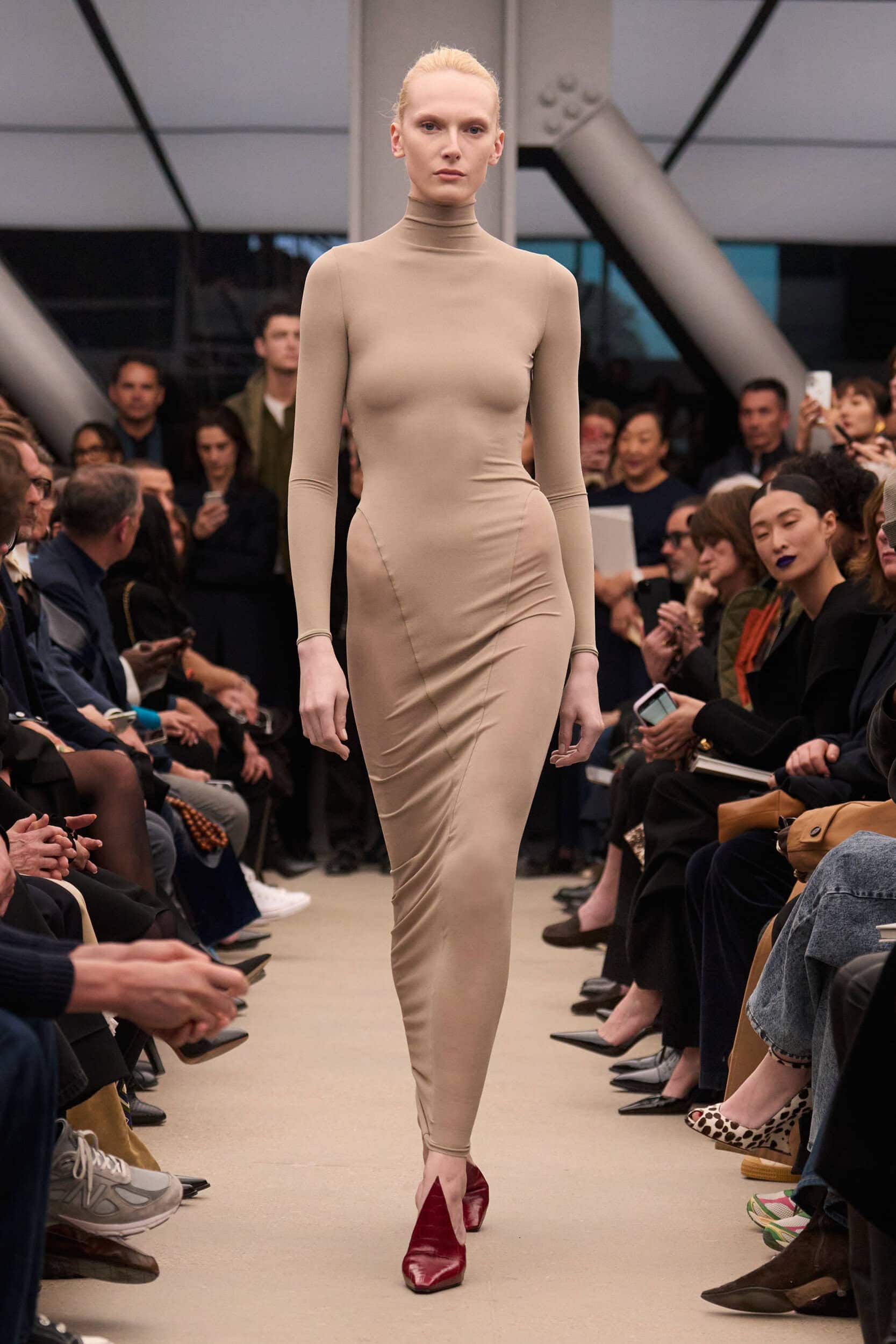
His latest collection approached that philosophy from a slightly quieter angle. Where previous outings often pushed sculptural experimentation to dramatic extremes, this show felt deliberately pared back. The silhouettes remained unmistakably Alaïa – second-skin dresses, sculpted tailoring, and protective coats – but the overall gesture felt more restrained, almost contemplative.
For some observers, the collection may register as unusually straightforward for a designer who has often demonstrated such striking technical virtuosity. Yet that restraint may also be read differently. Rather than competing with the house’s legacy through ever-increasing spectacle, Mulier appears to be refining the language itself – clarifying its essentials and allowing the architecture of Alaïa to stand with greater calm. In that sense, the collection raises a quiet but intriguing question: could this measured approach be less about limitation and more about longevity?
THE COLLECTION
THE VIBE
Discipline, Refinement, & Longevity
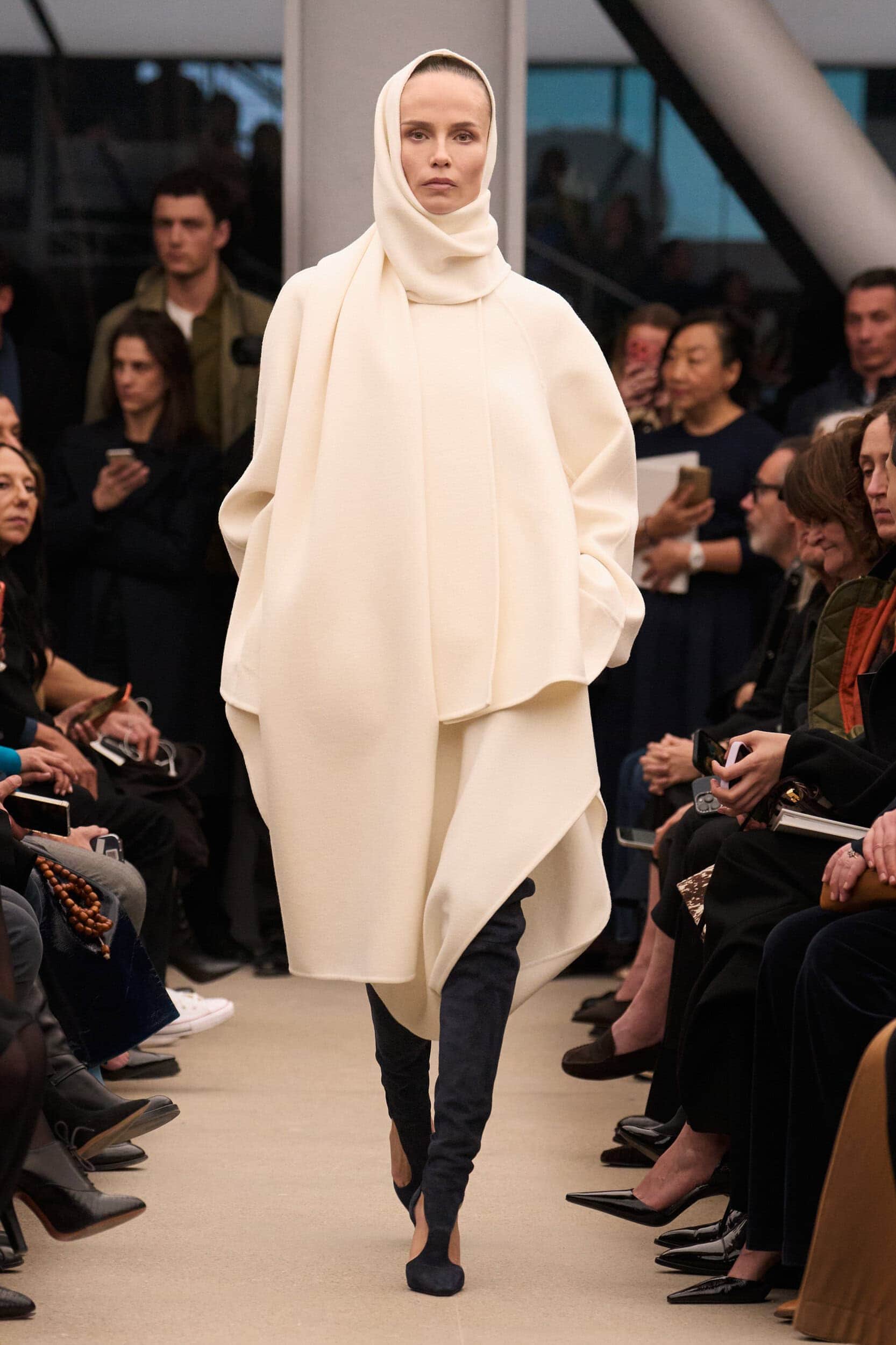
The show unfolded through a series of silhouettes that emphasized control and precision. Long, body-contouring dresses in jersey and knit traced the torso and hips with anatomical clarity, reinforcing the house’s long-standing fascination with garments that sculpt rather than conceal.
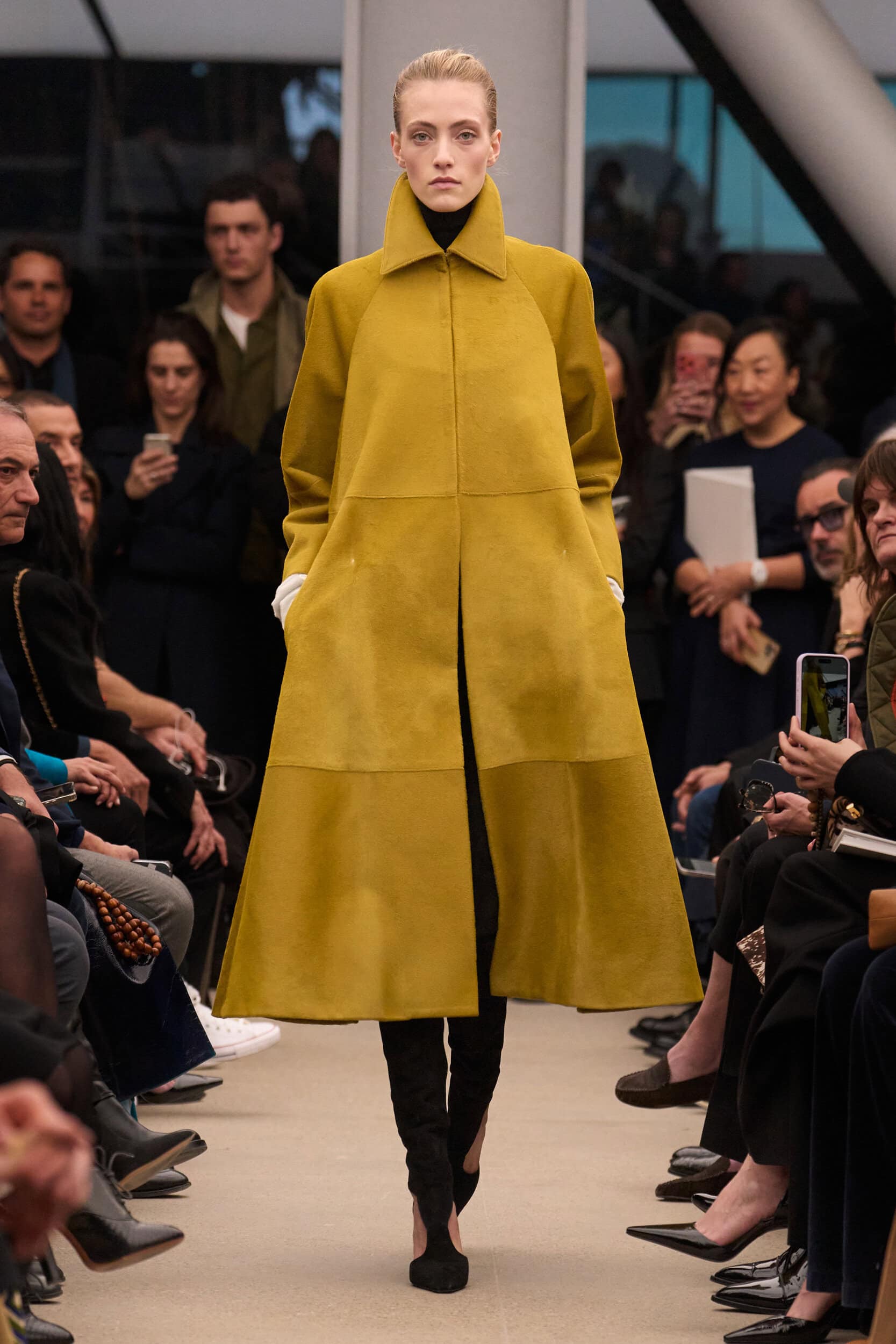
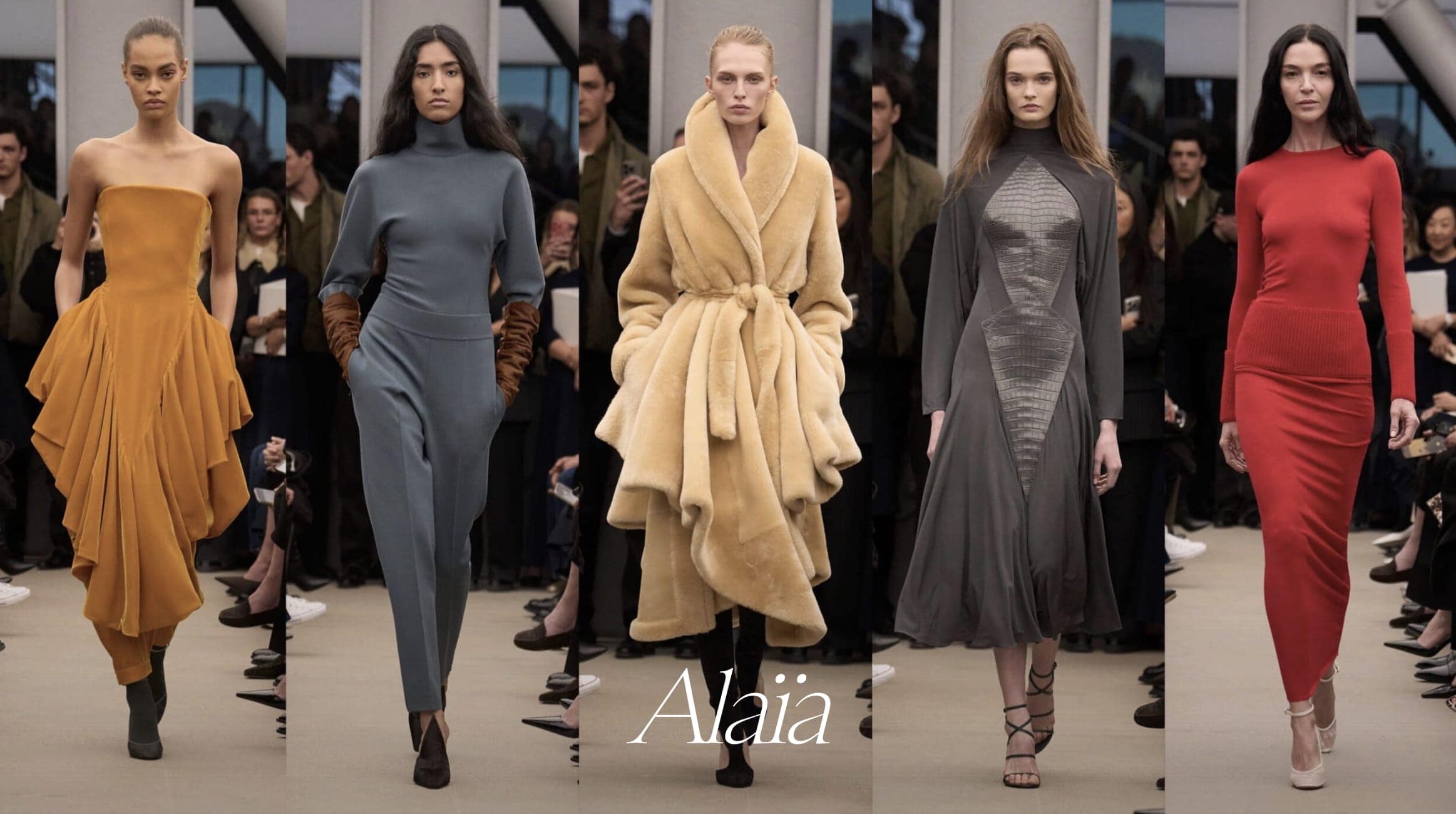
Outerwear provided the collection’s most commanding moments. Structured leather coats, cocooning wool wraps, and fur-collared pieces introduced a protective dimension that balanced the vulnerability of the body-hugging dresses beneath. Several coats flared outward in sculptural arcs, suggesting movement while maintaining an almost architectural discipline.
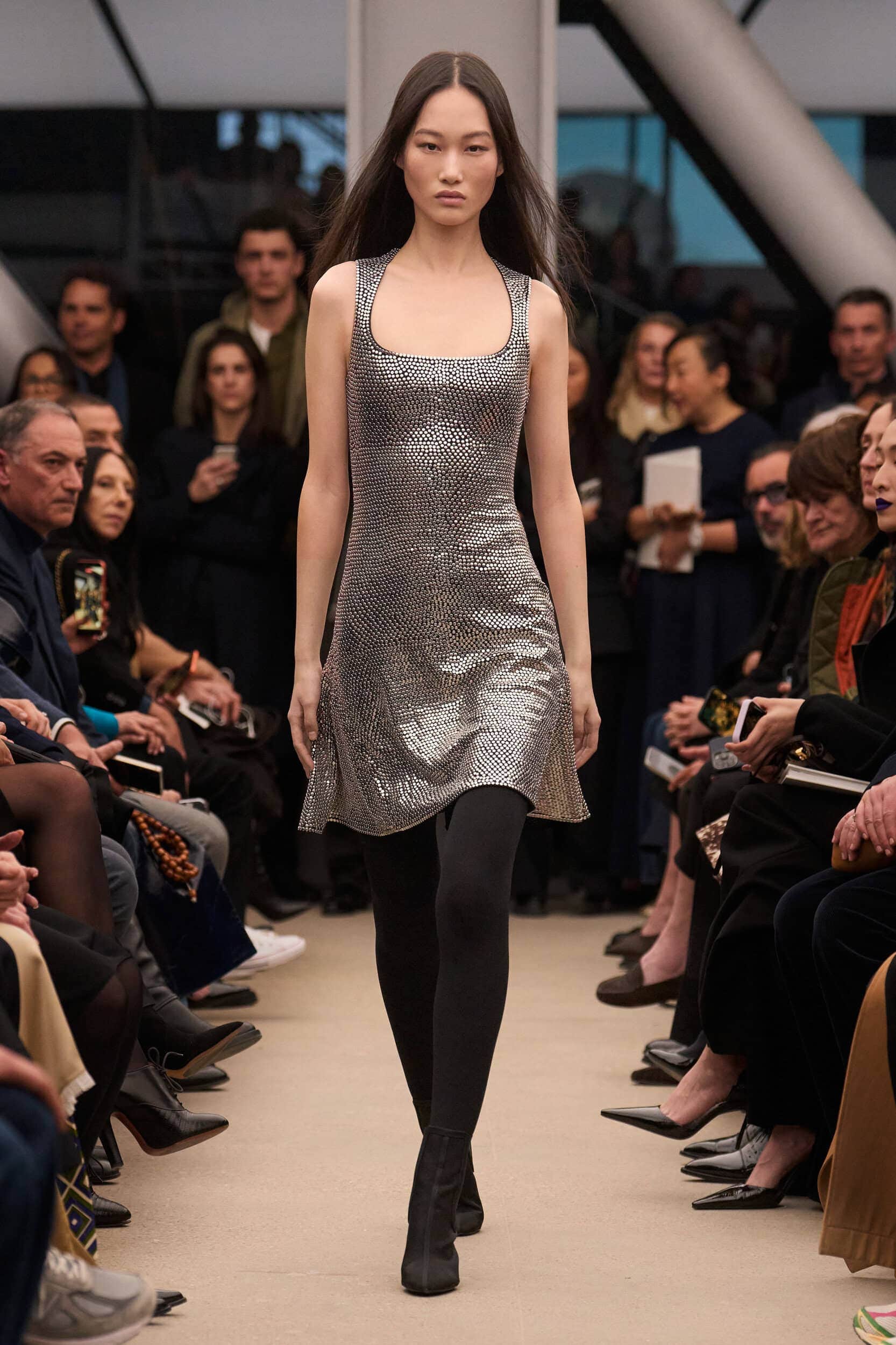
Color remained restrained, allowing silhouette to lead. Black, charcoal, cream, camel, and oxblood dominated the palette, with occasional bursts of crimson or mustard punctuating the rhythm of the show. Metallic knit dresses appeared like liquid armor, while embossed leather pieces subtly echoed the contours of the torso.
Even the more dramatic moments – tiered ruffled skirts, sculptural peplums, and layered pleats – felt carefully controlled. Rather than overwhelming the body, these volumes emerged from it, creating a dialogue between strict structure and sudden release.
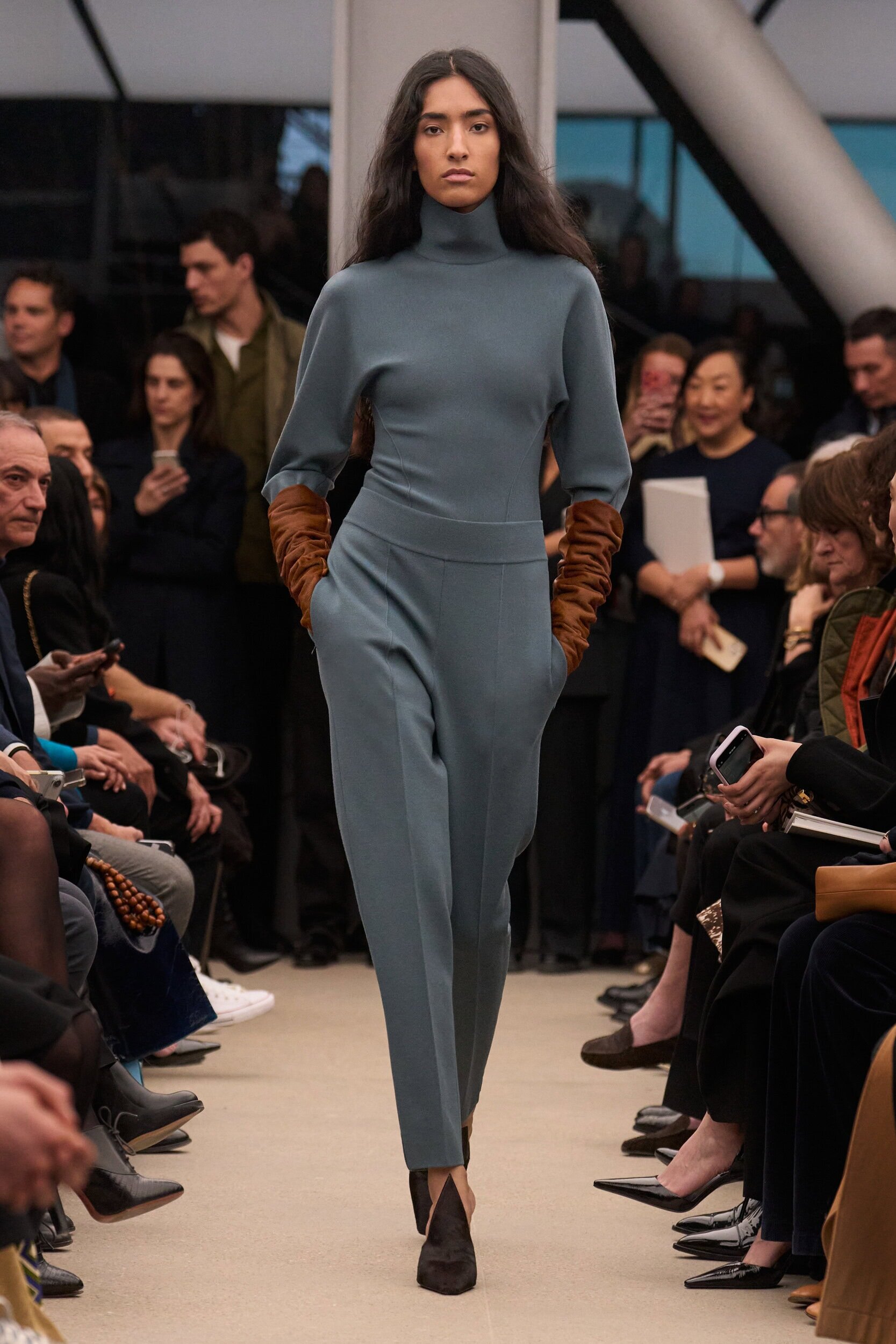
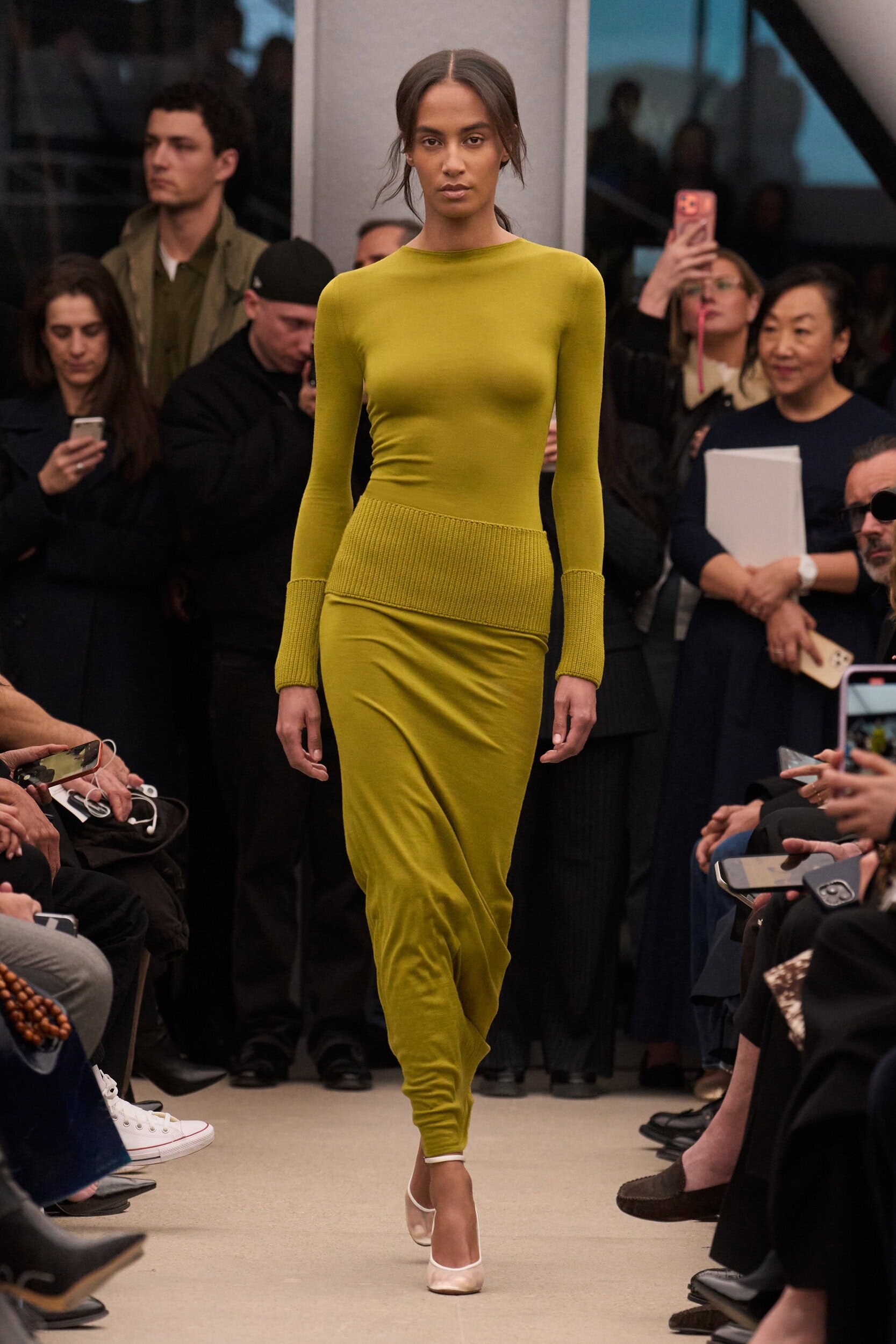
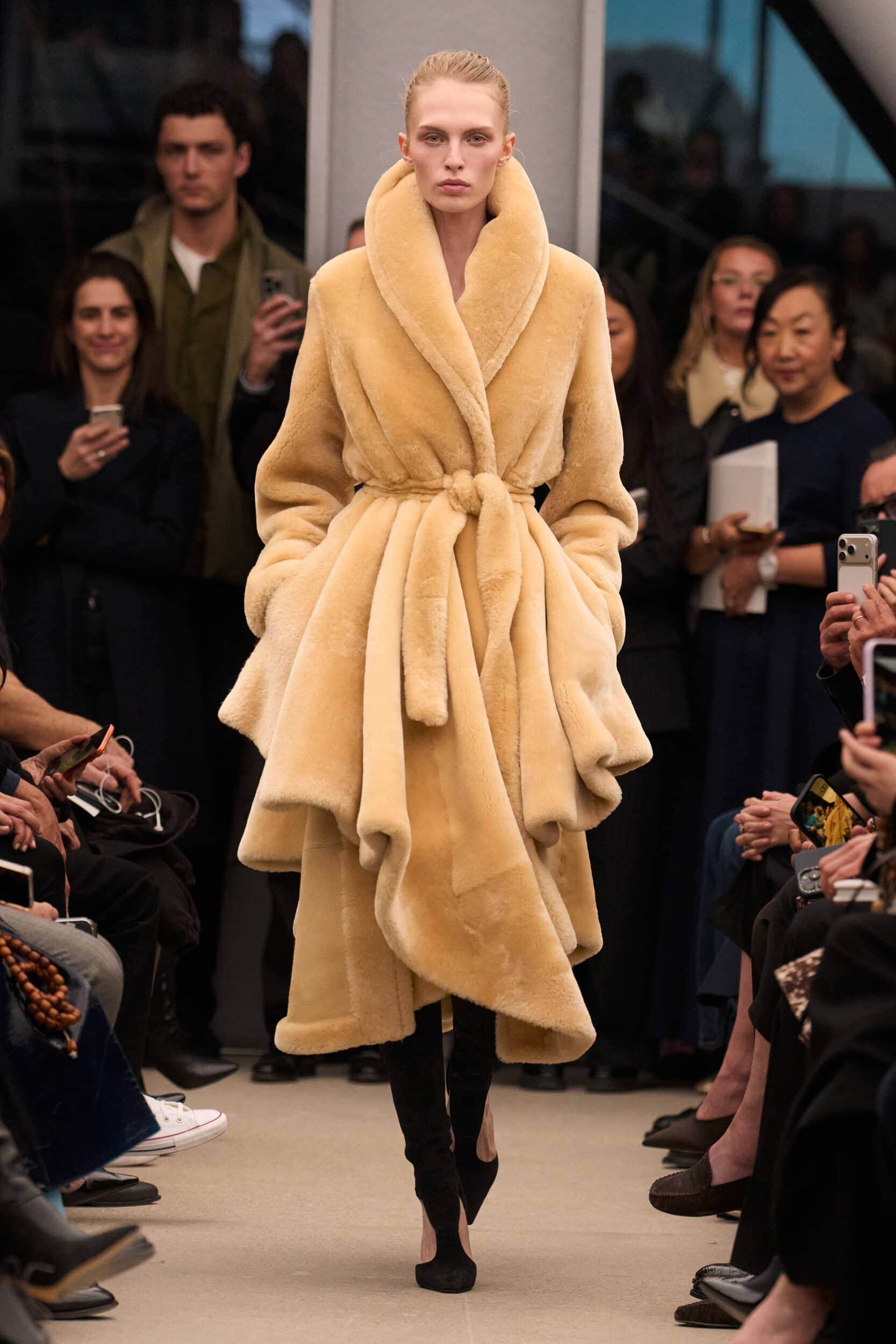
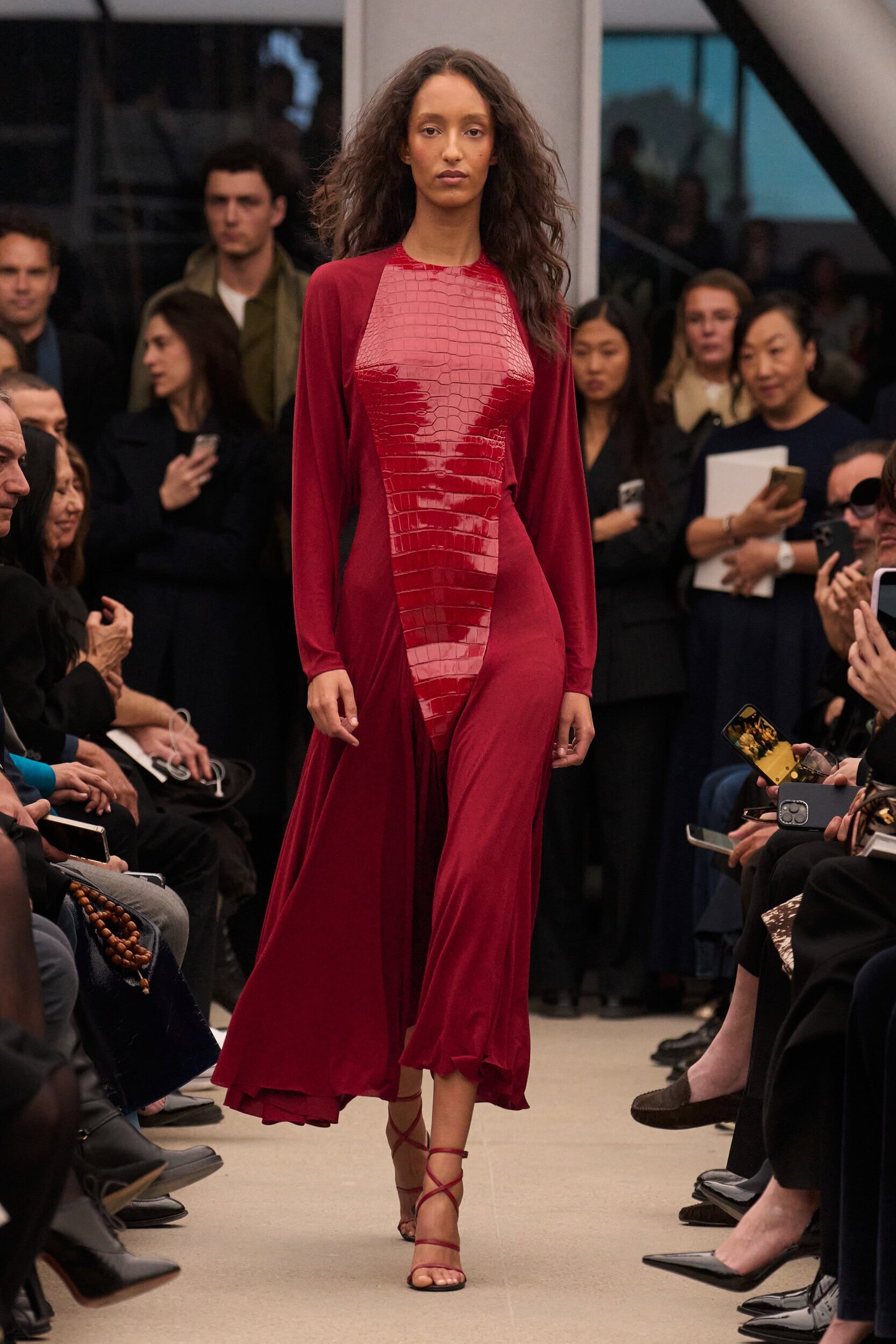
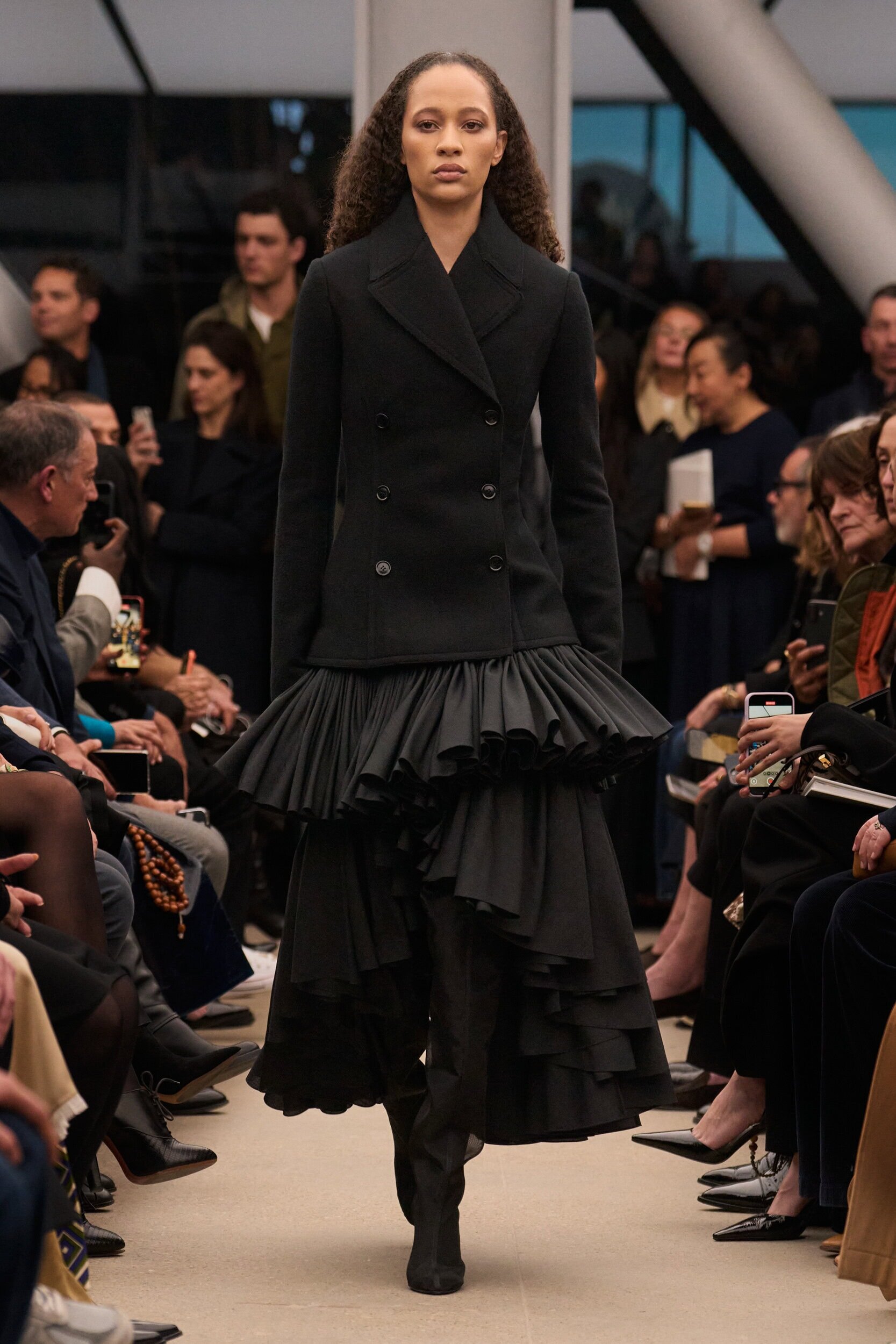
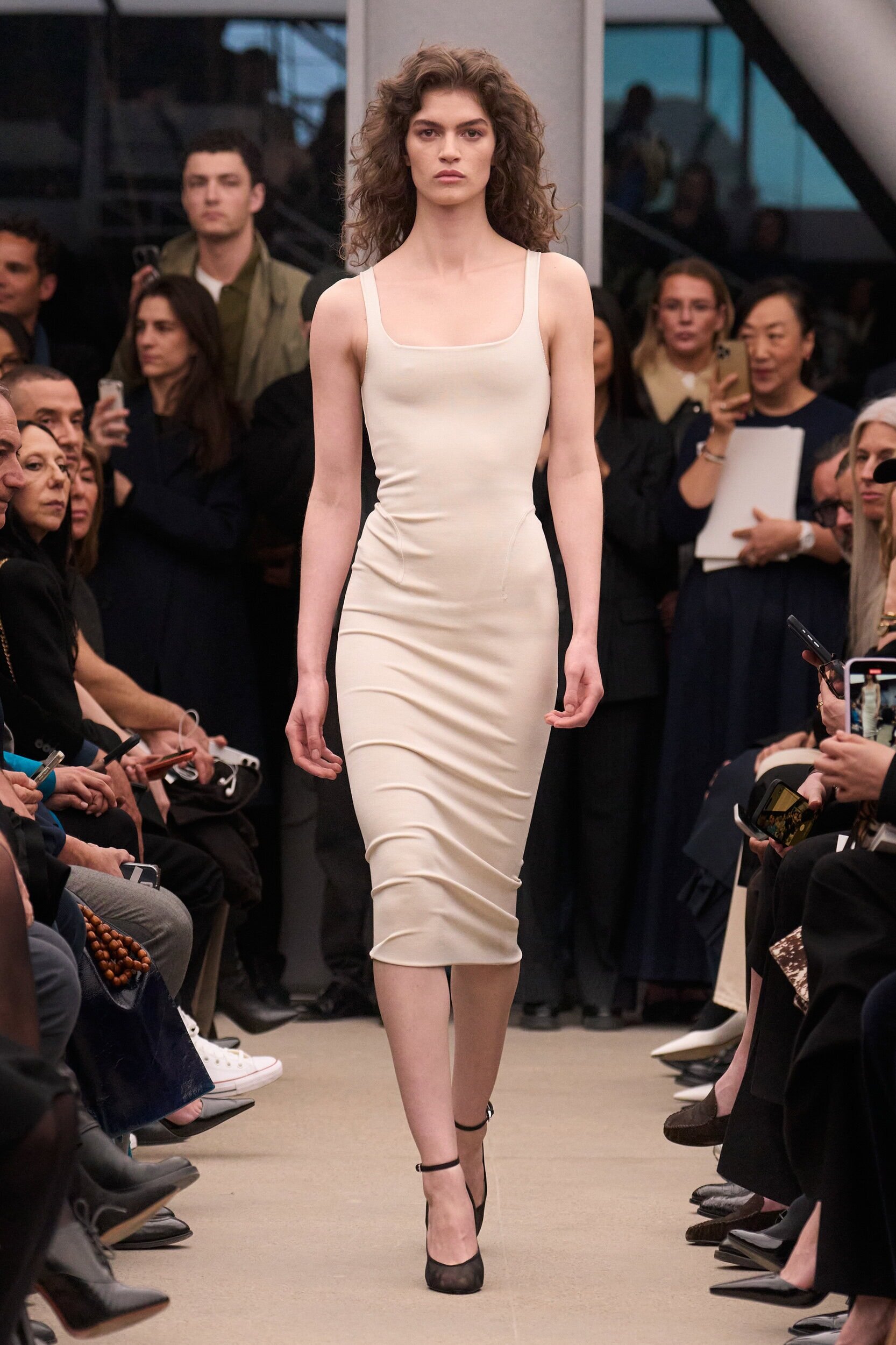
Seen within the broader arc of Mulier’s tenure, the collection suggests a designer refining a vocabulary he has already firmly established. Many of the signatures introduced in earlier seasons reappear here: second-skin dresses, architectural outerwear, and silhouettes that emphasize the hips and waist as the center of gravity.
What feels different is the degree of restraint. The show avoids pushing these ideas into new extremes, instead allowing them to settle into a more wearable and commercially grounded rhythm. Some critics may interpret that shift as a reduction in conceptual intensity. Yet there is another way to read it.
By distilling the codes of Alaïa into their most recognizable forms, Mulier may be strengthening the house’s structural foundation. In doing so, he creates a design language that feels stable and transferable – one capable of evolving beyond any single creative director.
Luxury houses often struggle with precisely this question: how to maintain a powerful identity while remaining open to future interpretation. Here, the answer seems to lie in clarity rather than reinvention.
THE WRAP UP
If previous Alaïa collections under Mulier sometimes dazzled through technical bravura, this outing impressed through confidence in restraint. The designer appeared less interested in proving his virtuosity than in allowing the house’s essential ideas to breathe.
In that sense, the collection feels almost generous. By simplifying the visual language and emphasizing the enduring codes of Alaïa, Mulier leaves behind a framework that feels remarkably durable – one that could easily accommodate new voices while remaining unmistakably itself.
For a house built on the timeless dialogue between garment and body, that kind of clarity may ultimately prove its most enduring strength.