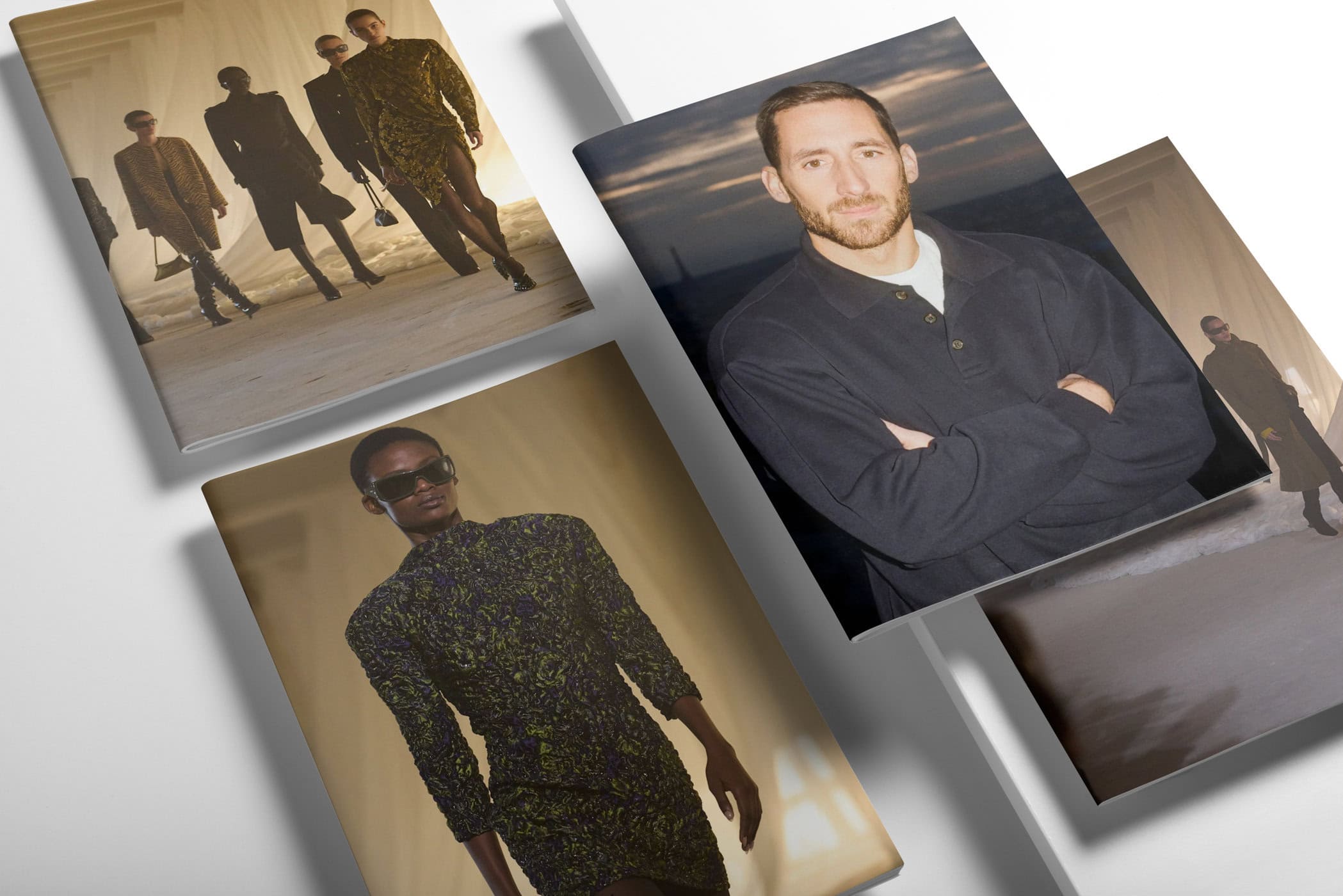
An Archive-Led Debut Grounded In Controlled Opulence
By Kenneth Richard

Fashion houses often speak of their archives as a resource. Antonio Tron speaks about them almost as if they breathe.
For his debut at Balmain, the designer did not begin with spectacle or reinvention. Instead, he began with two dresses. They were gowns from 1946, worn carefully by models in the atelier not long after Tron arrived at the house. In that moment, the past did not feel distant. It felt startlingly present.
“And so we tried on two gowns from 1946 and I was really shocked when we tried them on, how restrained and sensual they were,” he said. “There was really a sense of controlled opulence to them.”
The phrase became something of a thesis for his first collection. Balmain, after all, was born in a moment of contradiction. Pierre Balmain founded the house in 1945, at the end of the Second World War, when Paris was rebuilding itself culturally and materially. The young couturier proposed elegance in a moment still defined by scarcity, offering clothes that were luxurious but disciplined, sensual but composed.
Tron recognized that tension immediately.
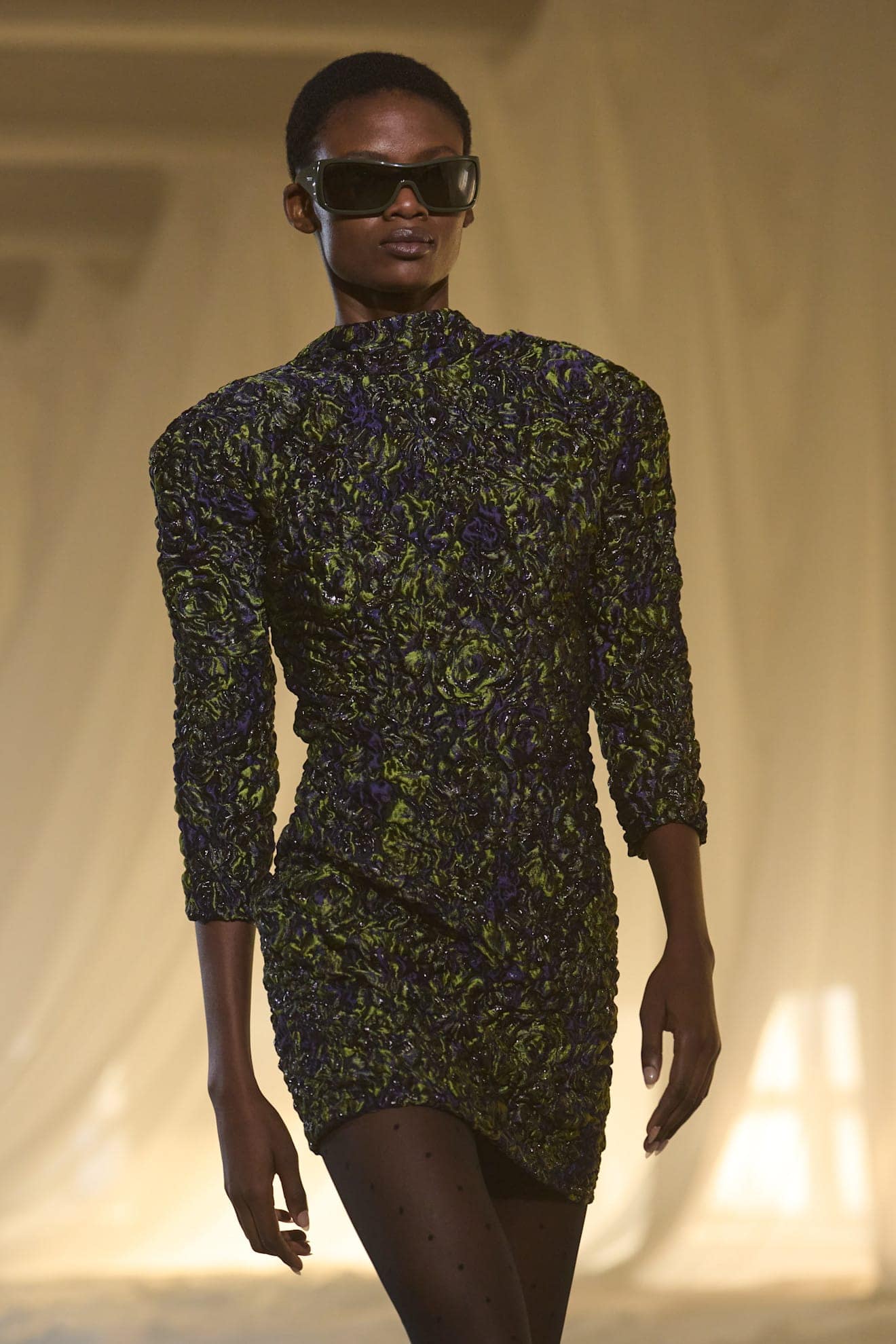
I think what I really wanted to convey with the show is this idea of this minimal opulence, very controlled opulence. The very important thing for me was to establish an emotional connection with the house. So the first thing I did when I got in was to really look at the archive.
That instinct — to begin by listening rather than declaring — suggests a quieter approach than the kind of creative reboot that often accompanies new leadership in fashion today. Tron speaks less about disruption and more about continuity. The archive, for him, is not something to mine for references but something to converse with.
When those 1946 gowns were lifted from storage and worn again, he experienced what he describes as a strange temporal shift.
“It was like a loophole, like through time,” he said. “It shows also how archives are not things that are dead. They have an agency. They’re very much alive.”
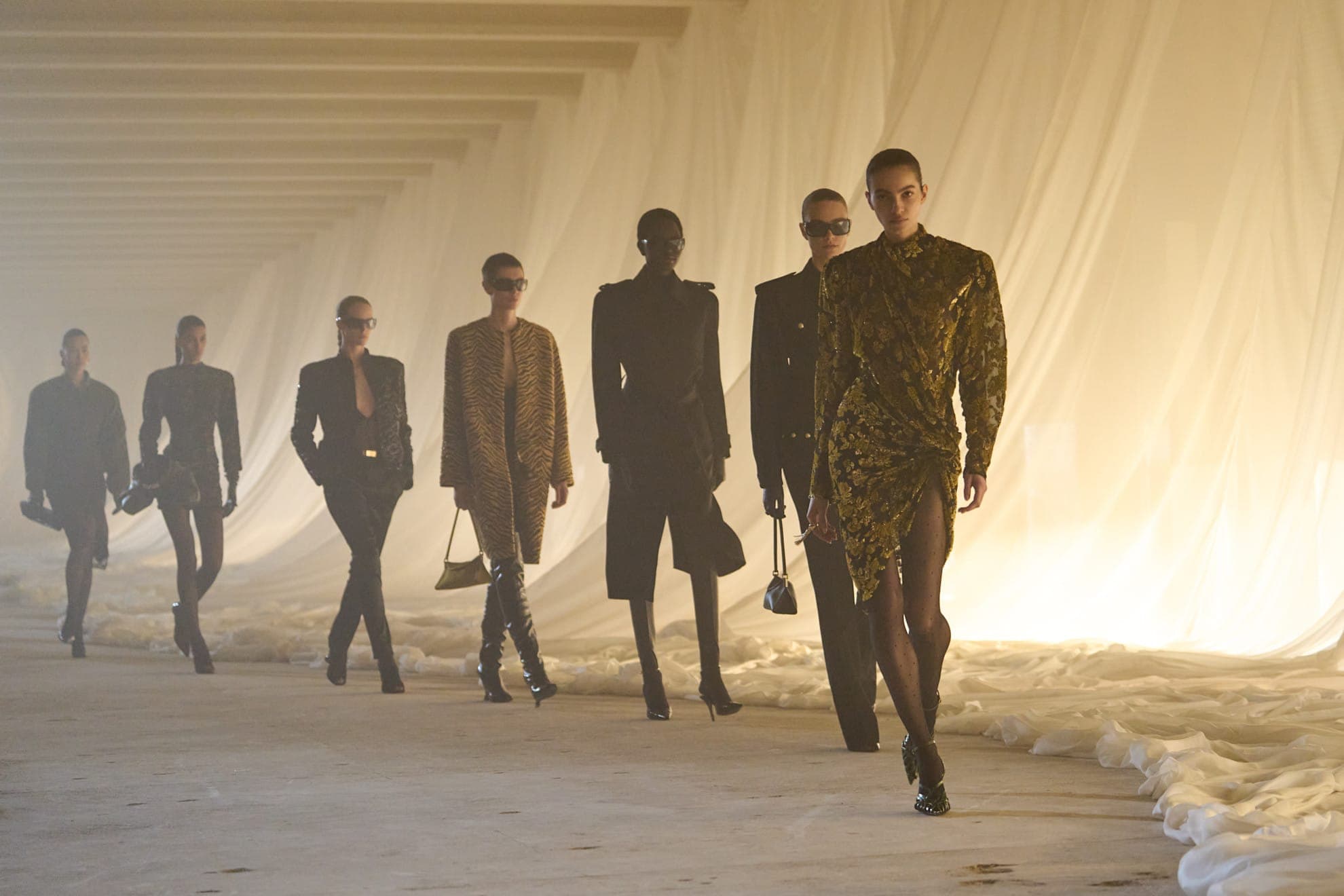
What struck him most was how modern the garments felt. The silhouettes were precise and sensual without excess. The body was defined but not overwhelmed by decoration. For Tron, it suggested a different idea of Balmain than the one most people recognize today.
“There was a sense of a very modern body,” he noted. “Not something in the past.”
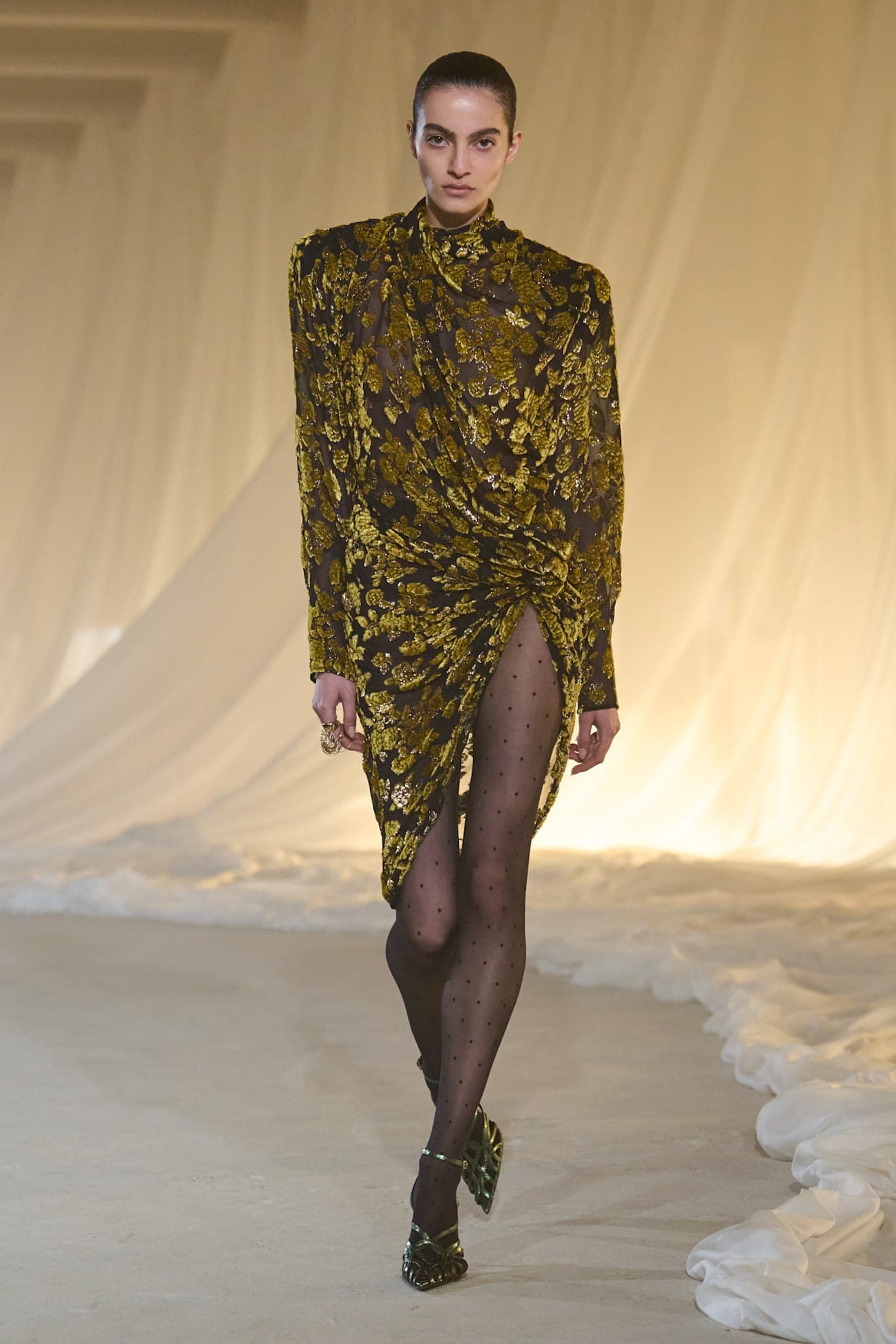
The discovery shaped the emotional tone of the collection. Instead of simply reproducing historical codes, Tron built a narrative around the kind of woman those early Balmain garments might inhabit today. The first look offered a clue: a sharply cut pilot jacket, worn with a sense of quiet authority.
The reference came from a small but telling detail in the archive. Pierre Balmain had once dressed the first female pilot in France. For Tron, the image carried symbolic weight.
“She’s a pilot,” he said of the woman he imagined. “She’s in control of whatever she’s doing. There’s this strength. She’s very unapologetic about who she is.”
Control — the word surfaced repeatedly during the conversation — became the emotional framework for the show. Not control in the rigid sense, but as a form of discipline: glamour shaped by intention rather than excess.
Cinema provided another layer to that narrative. Pierre Balmain maintained a long relationship with Hollywood, dressing actresses and contributing to film costume during the mid-twentieth century. Tron returned to that connection, exploring the visual language of film noir.
“I was looking at the birth of glamour in the 1940s,” he explained. “You know, film noir. And also the heroine of film noir carried through the twentieth century — the 80s, the 90s — almost like this Lynchian glamour.”
The atmosphere was less about nostalgia than about a lineage of cinematic femininity: mysterious, confident, occasionally dangerous. When Naomi Watts appeared at the show, Tron noted with a quiet smile, the reference suddenly felt tangible.
“I mean, we had Naomi Watts here,” he said. “So this is kind of perfect.”
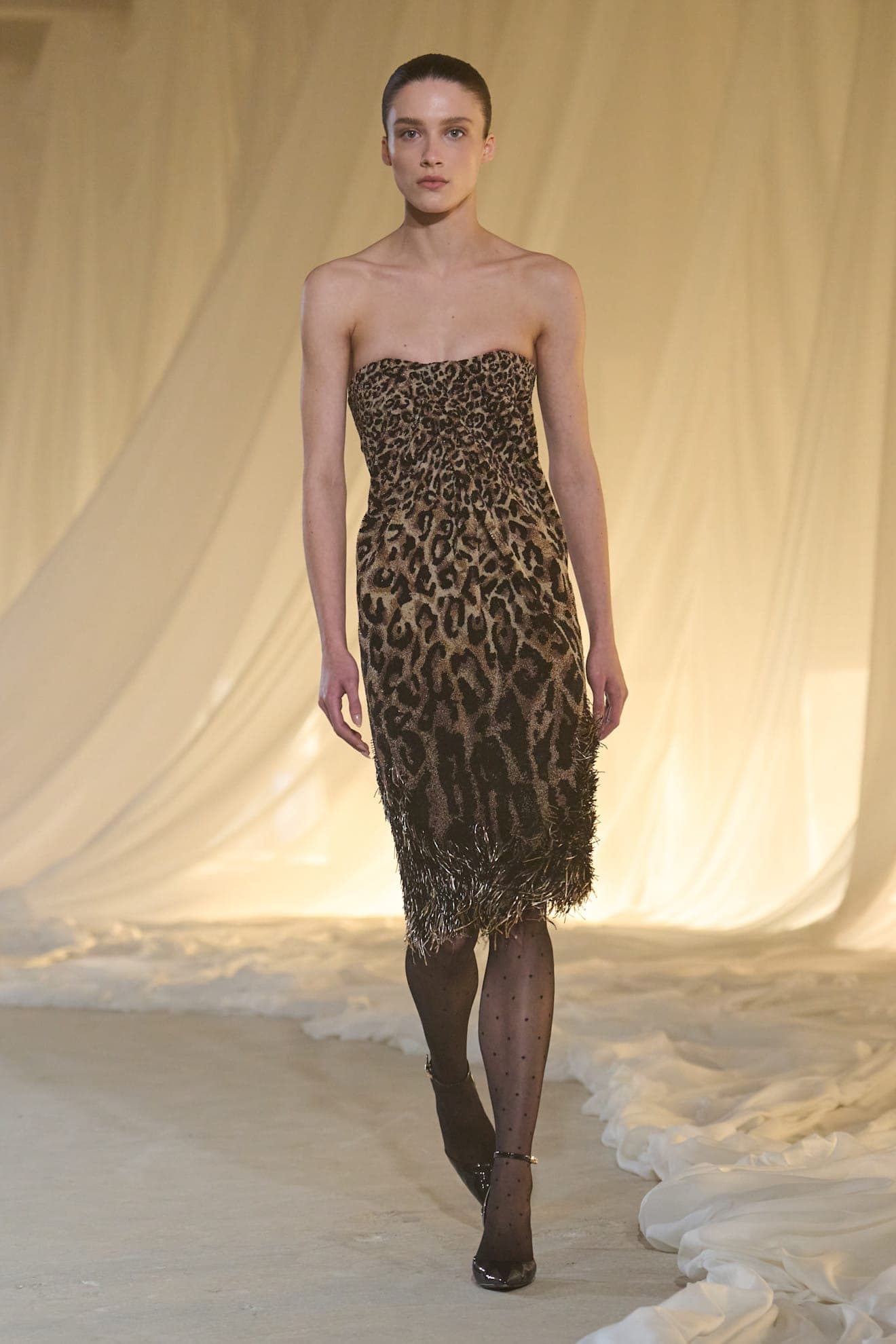
Another discovery in the archive introduced a slightly more unexpected motif. Tron came across a photograph of Pierre Balmain’s Paris apartment, a stately bourgeois interior punctuated by a dramatic zebra skin rug. The image hinted at the designer’s fascination with animal textures and patterns — a detail that resurfaced subtly throughout the collection.
“There was a lot of animal,” Tron said. “There’s this picture of his apartment in Paris, this kind of bourgeois apartment with this giant zebra skin.”
Yet even here the guiding principle remained restraint. The animal elements were less about spectacle than about structure and surface — another expression of that idea of controlled opulence.
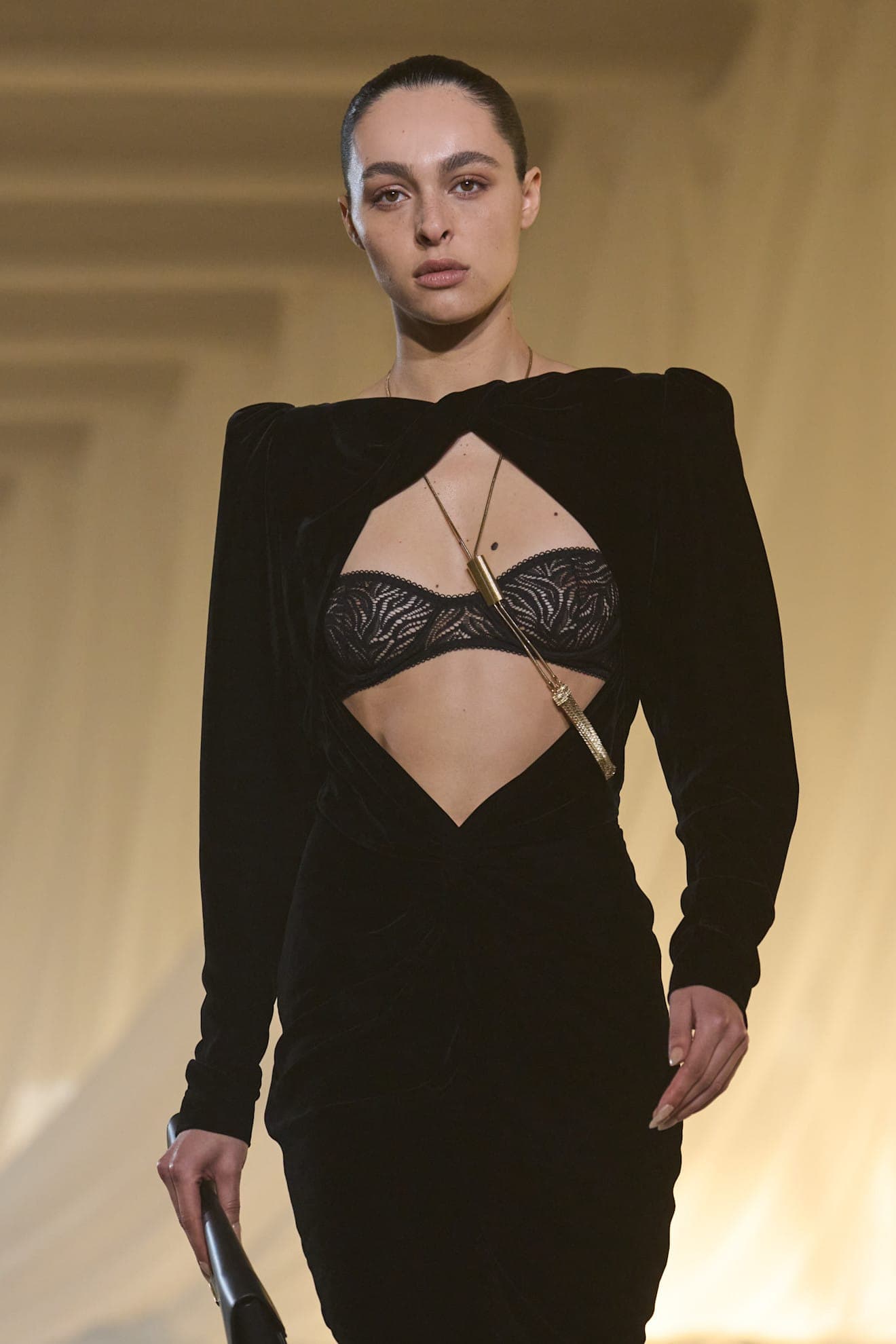
The collection culminated in eveningwear, including a black velvet gown that echoed the archival pieces that had first inspired Tron. Deep, sculpted silhouettes suggested the sensuality of those early Balmain designs while remaining unmistakably contemporary.
“These gowns at the end,” he said, “they’re very much a reference to that.”
For Tron, the goal was not to replicate the past but to reestablish the emotional logic of the house. Balmain, he believes, occupies a particular place in fashion culture — one that is defined as much by its relationship with its clients as by its visual identity.
“It’s a couture house, so there’s a long history of relationship with the clientele,” he said. “It’s an amazing house because it also sells ready-to-wear to amazing clients.”
The task ahead, then, is not simply aesthetic but relational: reconnecting those clients — existing and future — with the spirit of the brand.
“I think it’s about establishing this emotional connection for the existing clients and the future clients,” Tron said.

In an era when new creative directors are often expected to arrive with immediate spectacle, Tron’s approach feels deliberately patient. His debut proposes not a radical transformation but a recalibration — a return to the disciplined sensuality that defined Balmain’s earliest years.
And if the collection’s quiet authority is any indication, the house’s future may lie not in amplifying its voice but in refining