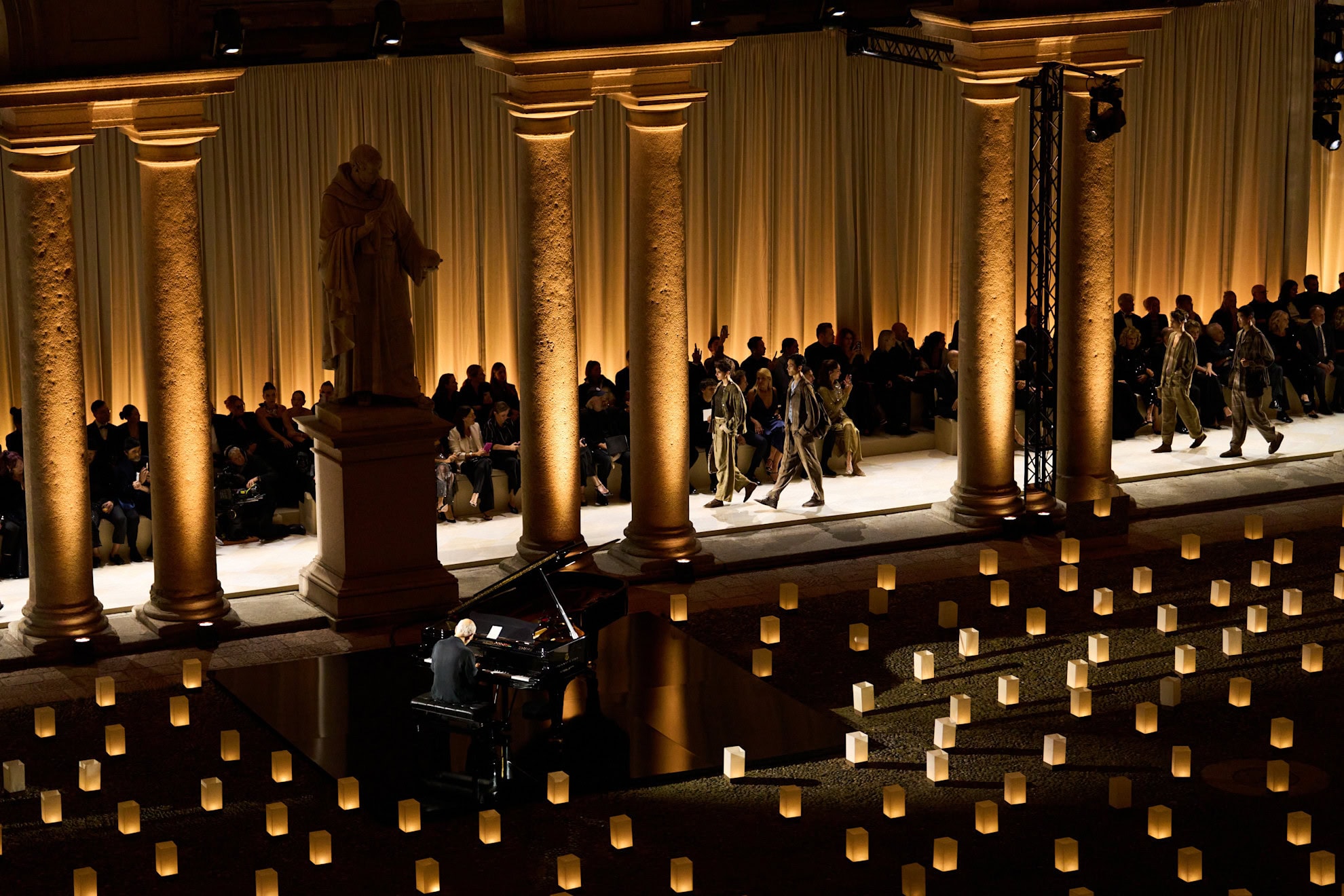
The appointments of Marco Bizzarri, Angelo Moratti, and John Hooks mark a decisive step in the house’s long-term governance and ownership transition.
Armani has appointed three new board members—Marco Bizzarri, Angelo Moratti, and former Armani executive John Hooks—signaling a formal acceleration of the governance structure outlined in Giorgio Armani’s succession plan. The move follows the designer’s passing in September and arrives ahead of a mandated sale of a 15 percent stake in the company within the next 18 months.
The appointments introduce a blend of external expertise and institutional memory. Bizzarri, formerly chief executive of Gucci, brings deep operational and brand-scaling experience. Hooks, who was instrumental in the Armani Group’s global expansion during the 2000s, returns with extensive knowledge of the company’s commercial architecture and international subsidiaries. Moratti adds a business lineage rooted in Italian industry.
They join a board that retains continuity through core figures, including chairman Leo Dell’Orco—Armani’s closest longtime collaborator—chief executive Giuseppe Marsocci, and family members Silvana Armani and Andrea Camerana. Federico Marchetti, founder of Yoox, also remains on the board.
The appointments arrive at a pivotal moment for the group. Armani’s will stipulates that a 15 percent stake be sold to a major luxury player—candidates include LVMH, L’Oréal, and EssilorLuxottica—or an equivalent peer. If no agreement is reached, an IPO becomes the alternative. A second tranche, between 30 and 54.9 percent, is slated for sale three to five years after the initial transaction. While ownership could eventually shift, the Giorgio Armani Foundation will retain no less than 30 percent of the company and preserve final authority on key decisions, ensuring the house’s founding principles remain intact.
The reshaped board must navigate a luxury sector still adjusting to slower demand. Armani’s revenue and profit softened last year, echoing industry-wide pressures, though analysts expect a tempered recovery beginning in 2026. The strengthened governance structure positions the group to manage this period while preparing for one of the most closely watched succession and ownership evolutions in European luxury.