The Art of Herrera
Review of Carolina Herrera Fall 2026 Fashion Show
By Mackenzie Richard Zuckerman
There are designers who know how to dress women, and then there are designers who understand how women want to feel when they’re dressed. Wes Gordon has increasingly proven he’s operating in the latter category. He understands the Herrera woman, but he doesn’t treat that understanding like a constraint – and that is the quiet victory of his tenure. Instead of repeating a formula, he expands the house’s vocabulary with new facets each season, protecting its polish while keeping it alive.
For Fall 2026, he brought us the art-world Herrera woman – a contour of taste and finery where his work feels entirely at home. The collection began, in his words, as an homage to “a wide community of women – past and present – whose work and influence have shaped the landscape of art,” spanning artists, muses, gallerists, curators, and collectors. His research started with Peggy Guggenheim, and the finishing touch was the most intelligent kind of casting: inviting a group of women from that world to walk the show and “bring the collection to life.” It wasn’t inspiration used as surface decoration – it was world-building made real, and it gave the room a deeper charge.
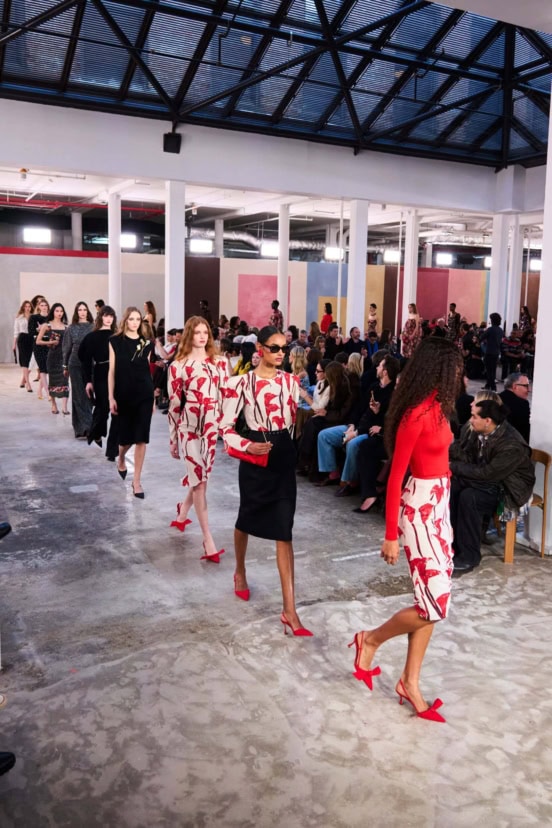
The photos, though, don’t quite do it justice. This was a collection designed to be understood in motion: how the clothes held their shape without stiffness, how they moved with ease, how each model looked like she was in something she genuinely loved – and felt loved back by. There was confidence here, but it wasn’t icy. It was warm, polished, and quietly generous.
THE COLLECTION
THE VIBE
Sculptural Pragmatism, Art-World Characters, Calla Lily Minimalism
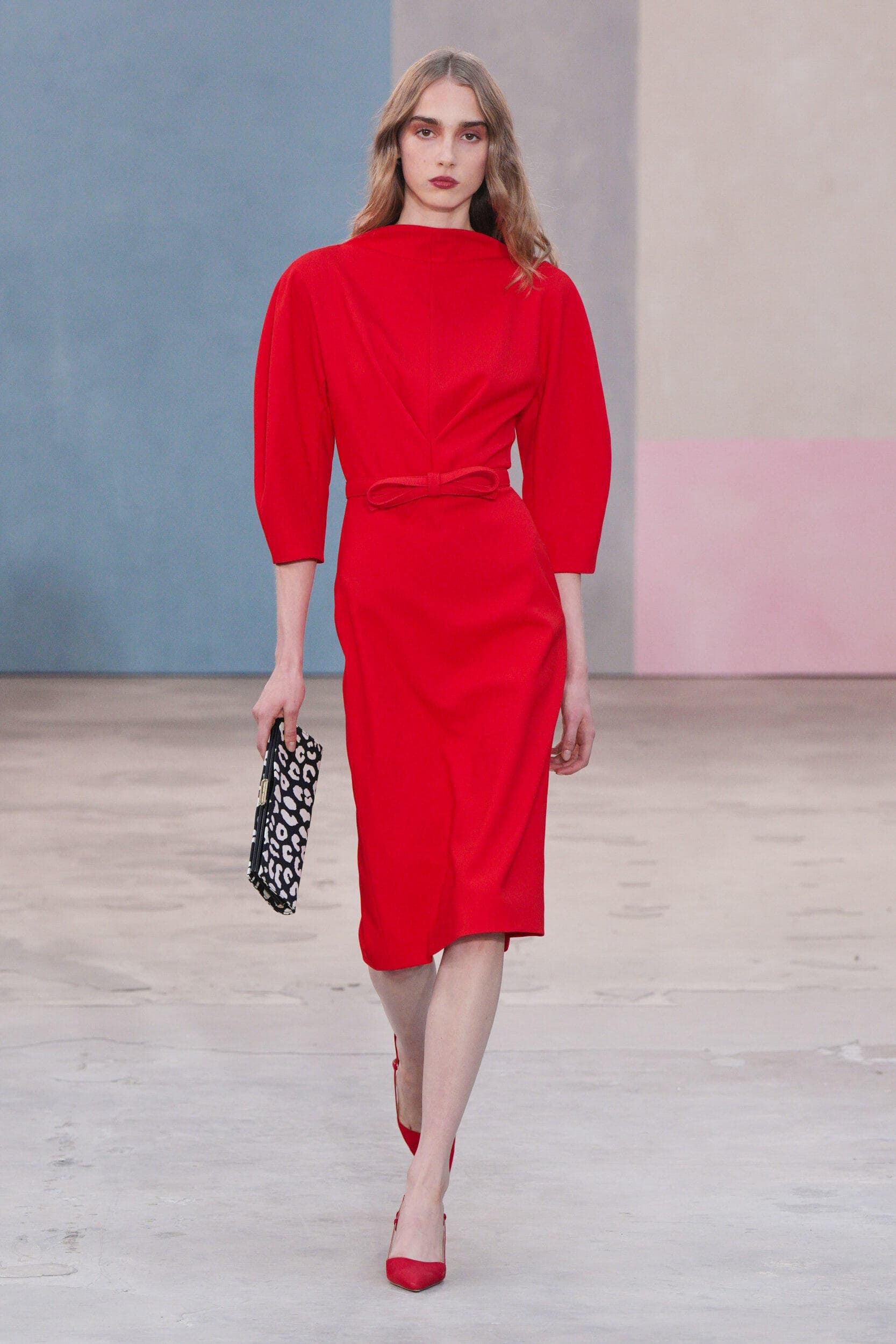
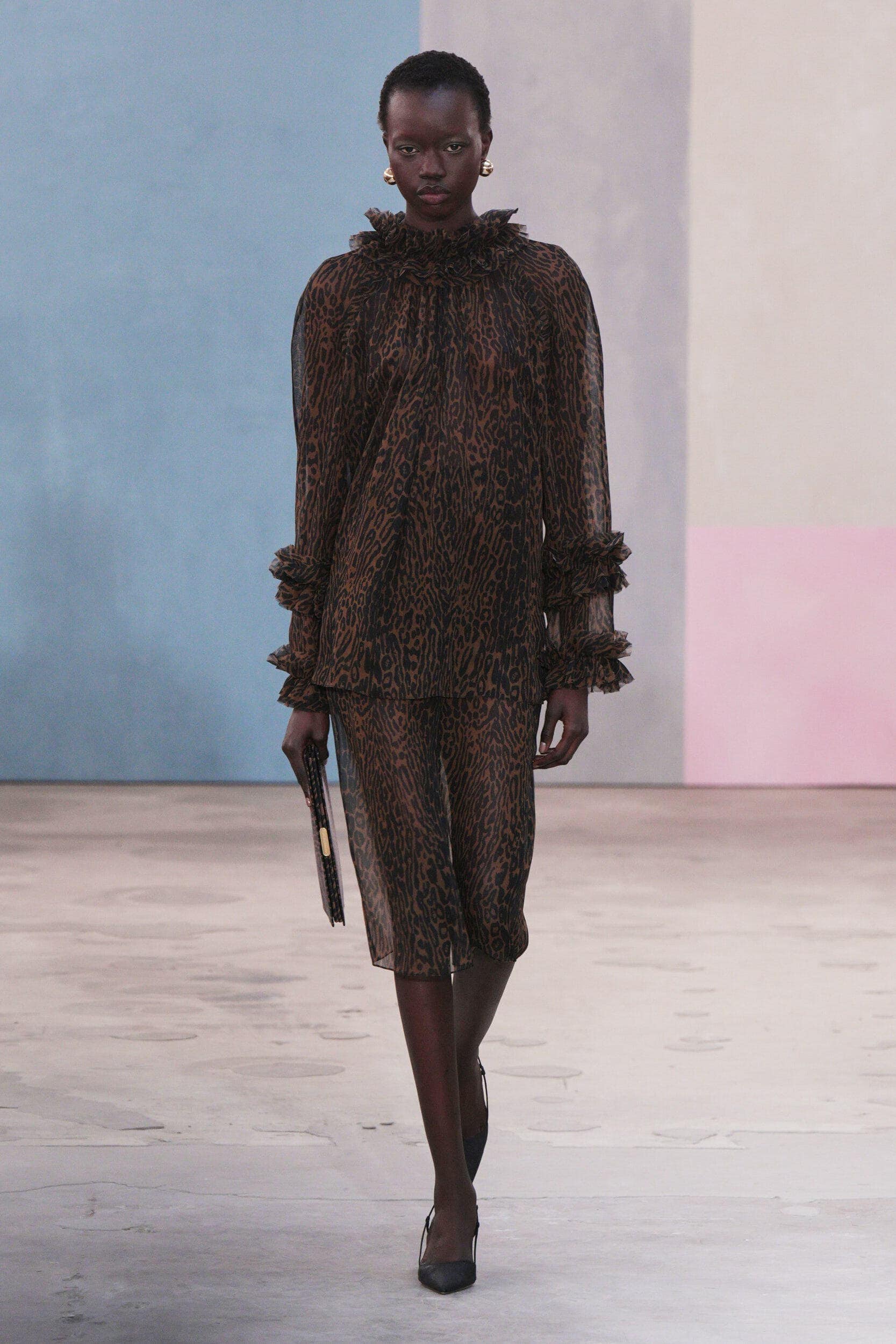
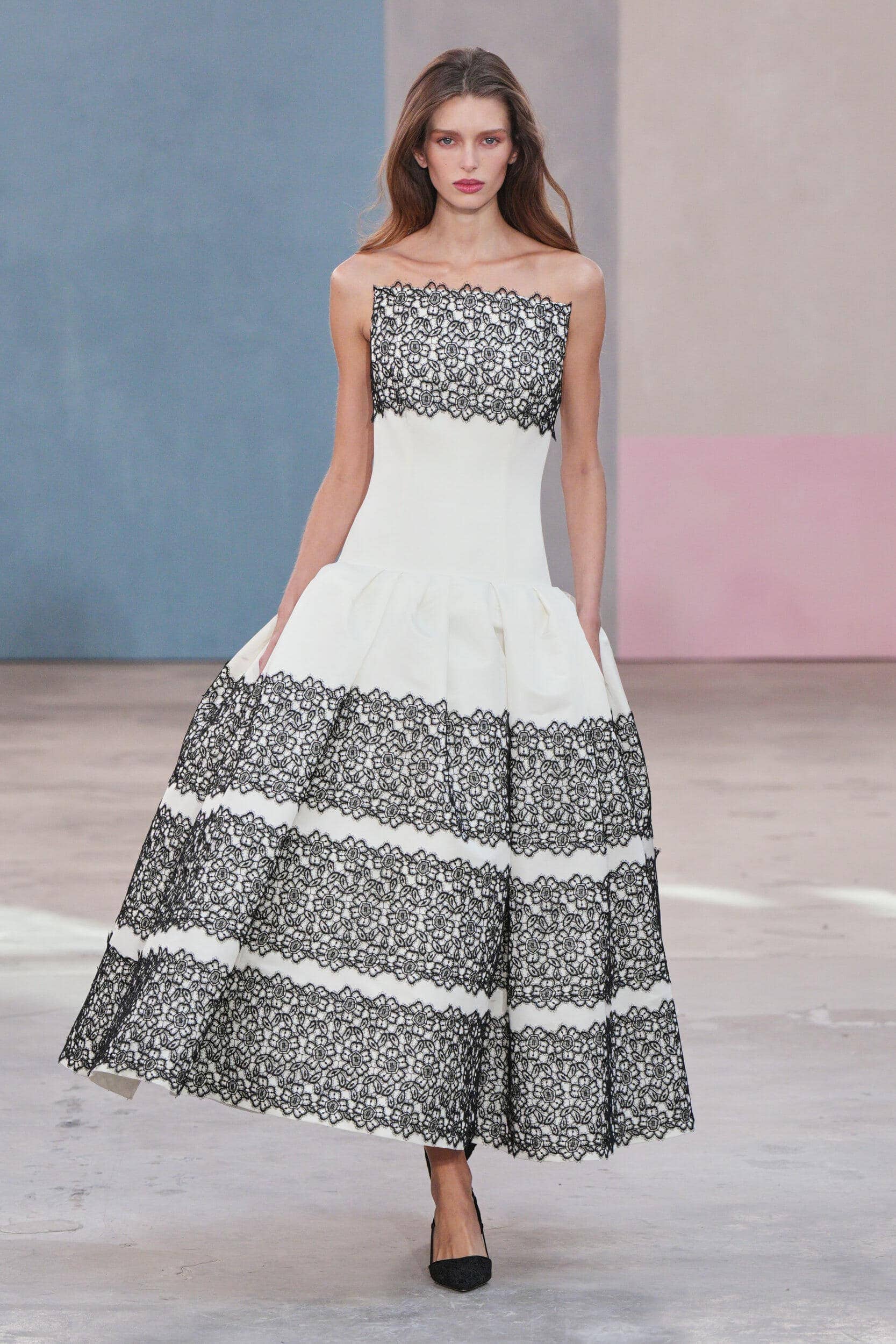
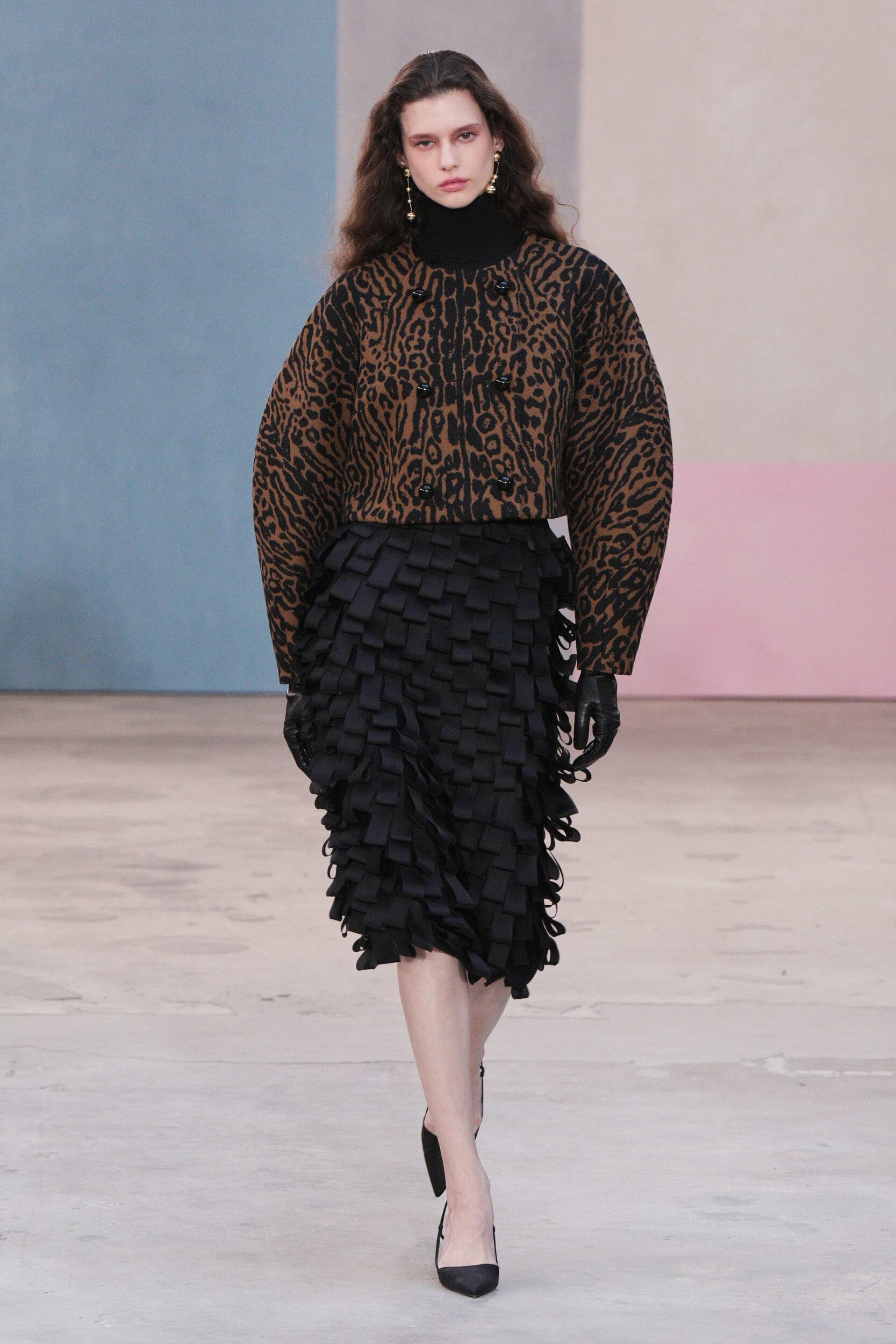
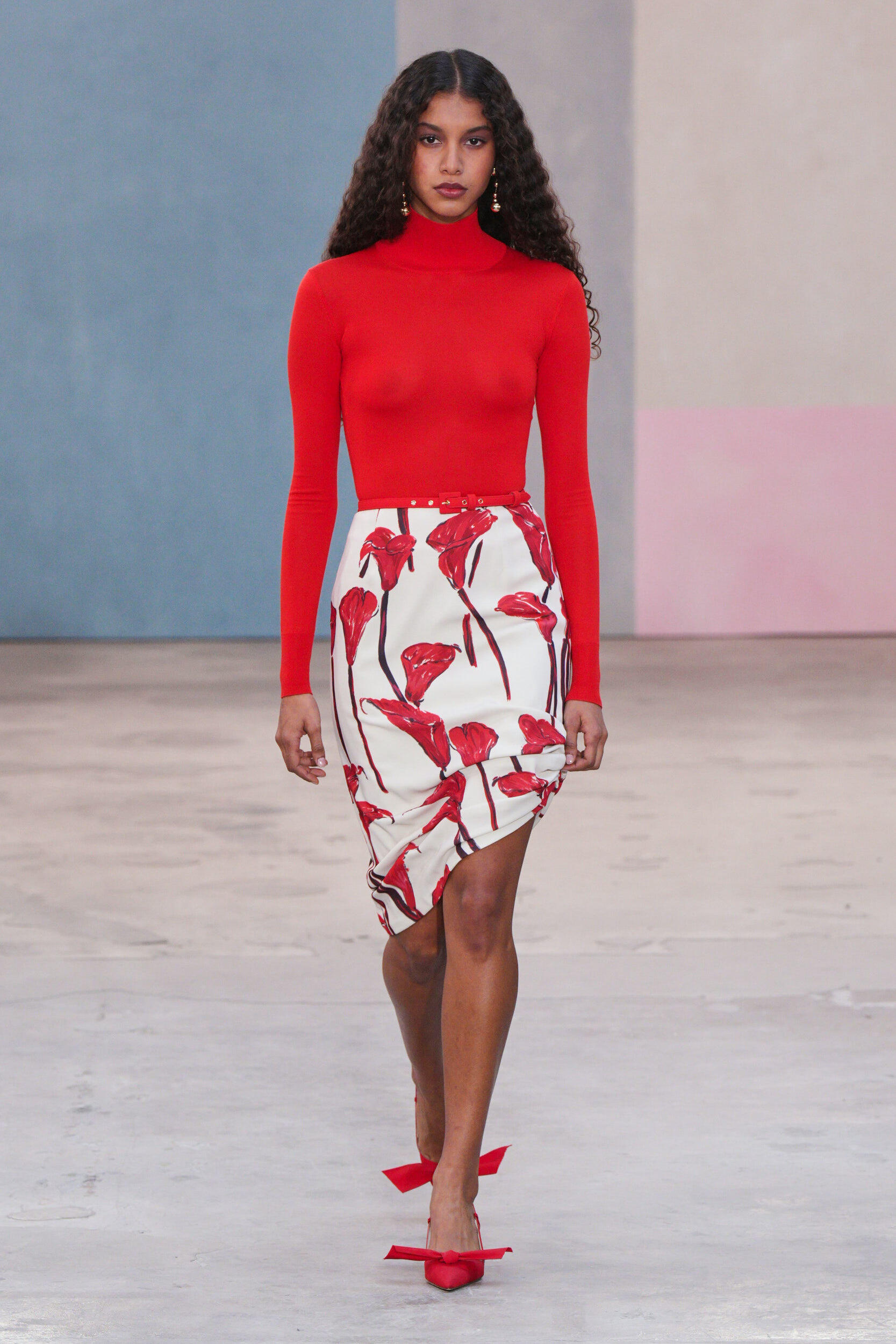
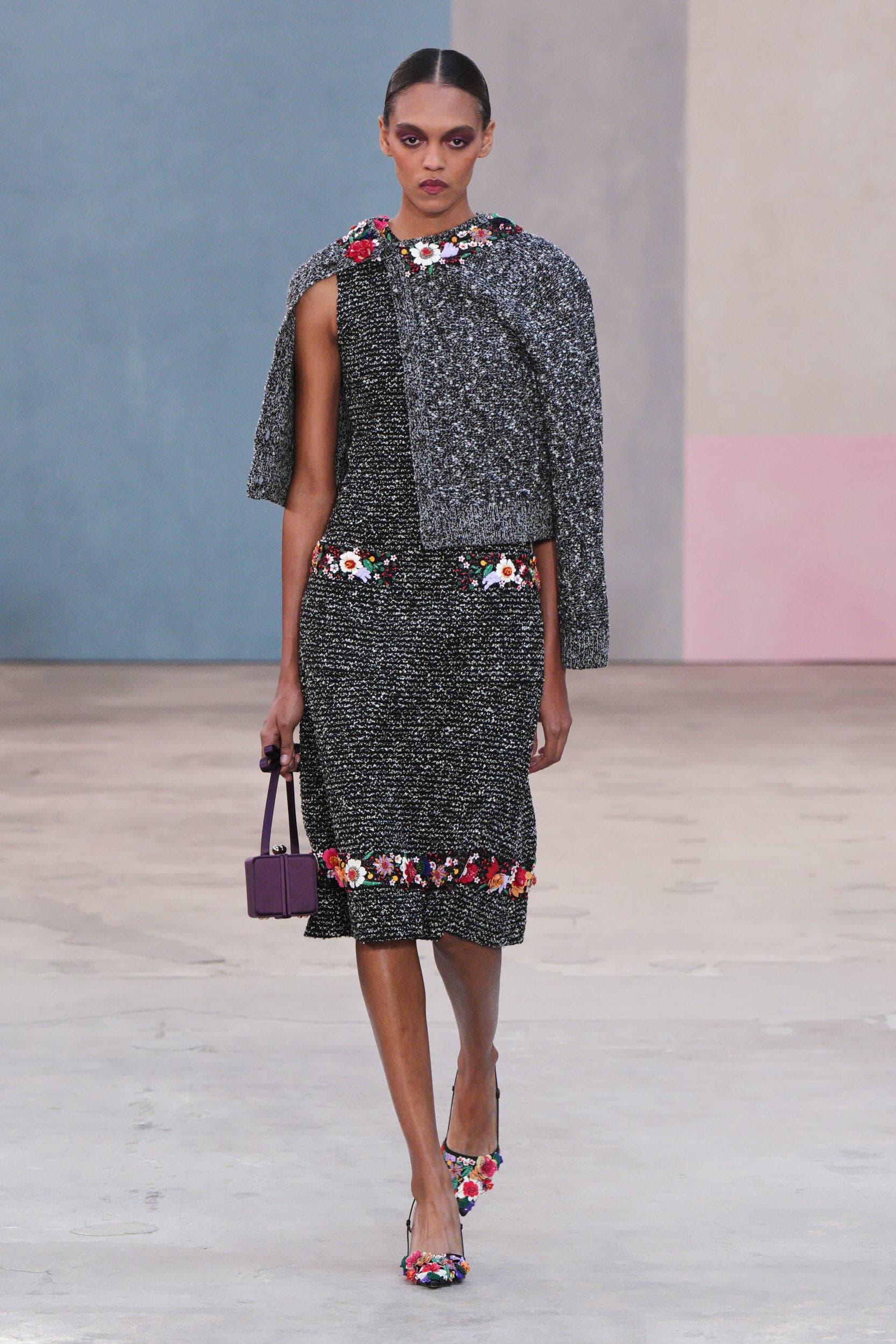
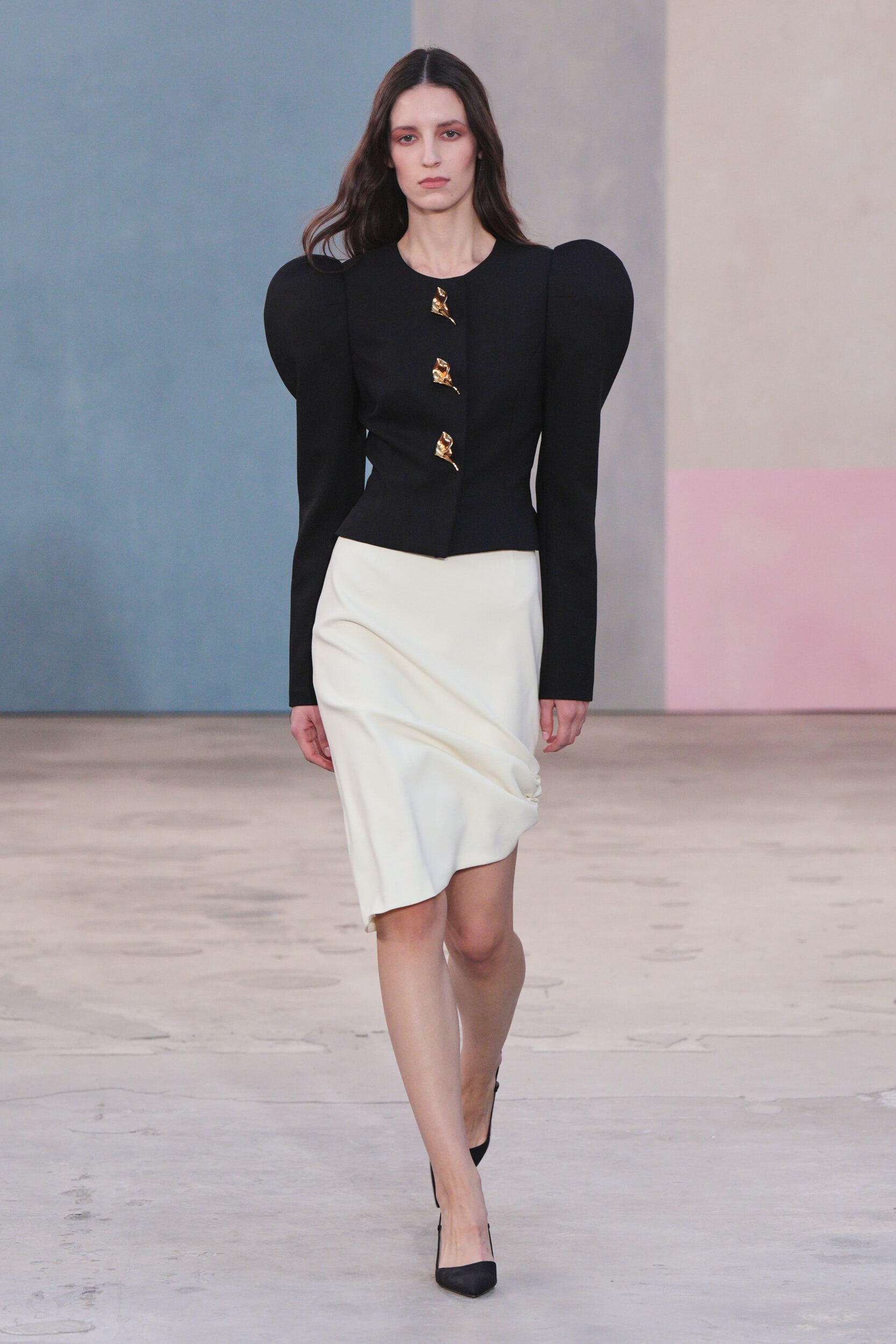
What stood out most was an elevated appreciation for form. Herrera can often be read through sweeping silhouettes and traditional evening wear; this season felt more sculptural, more attentive to structure, more interested in shape that holds its own in a room. Gordon himself spoke about building characters – she’s a collector, she’s a gallerist, she’s a painter – and that character work translated into clothing with clearer contour: rounded sleeves, more jacket-driven looks, pencil-skirt pragmatism, touches of transparency, and a sense of restraint that made the glamour feel all the more modern.
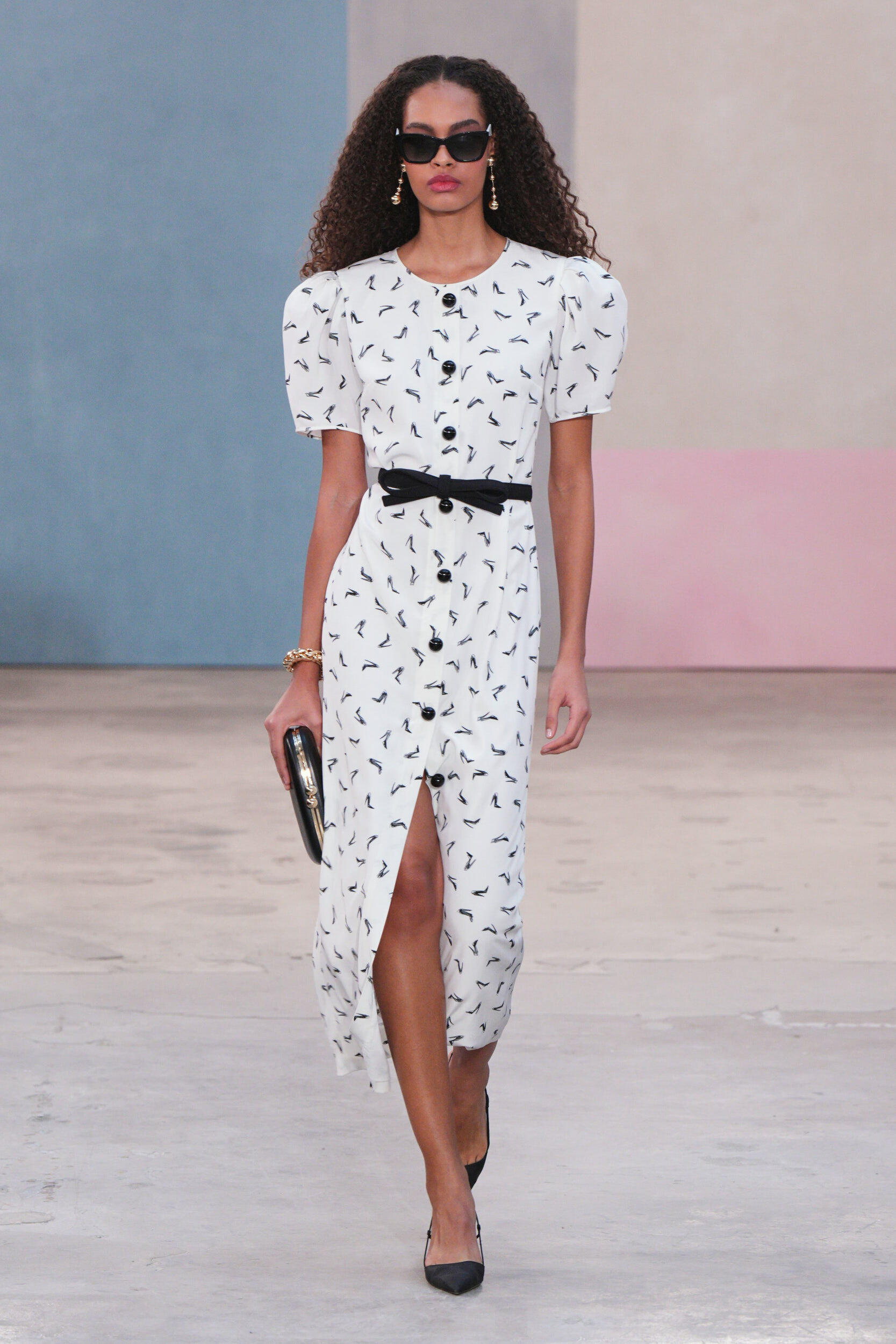
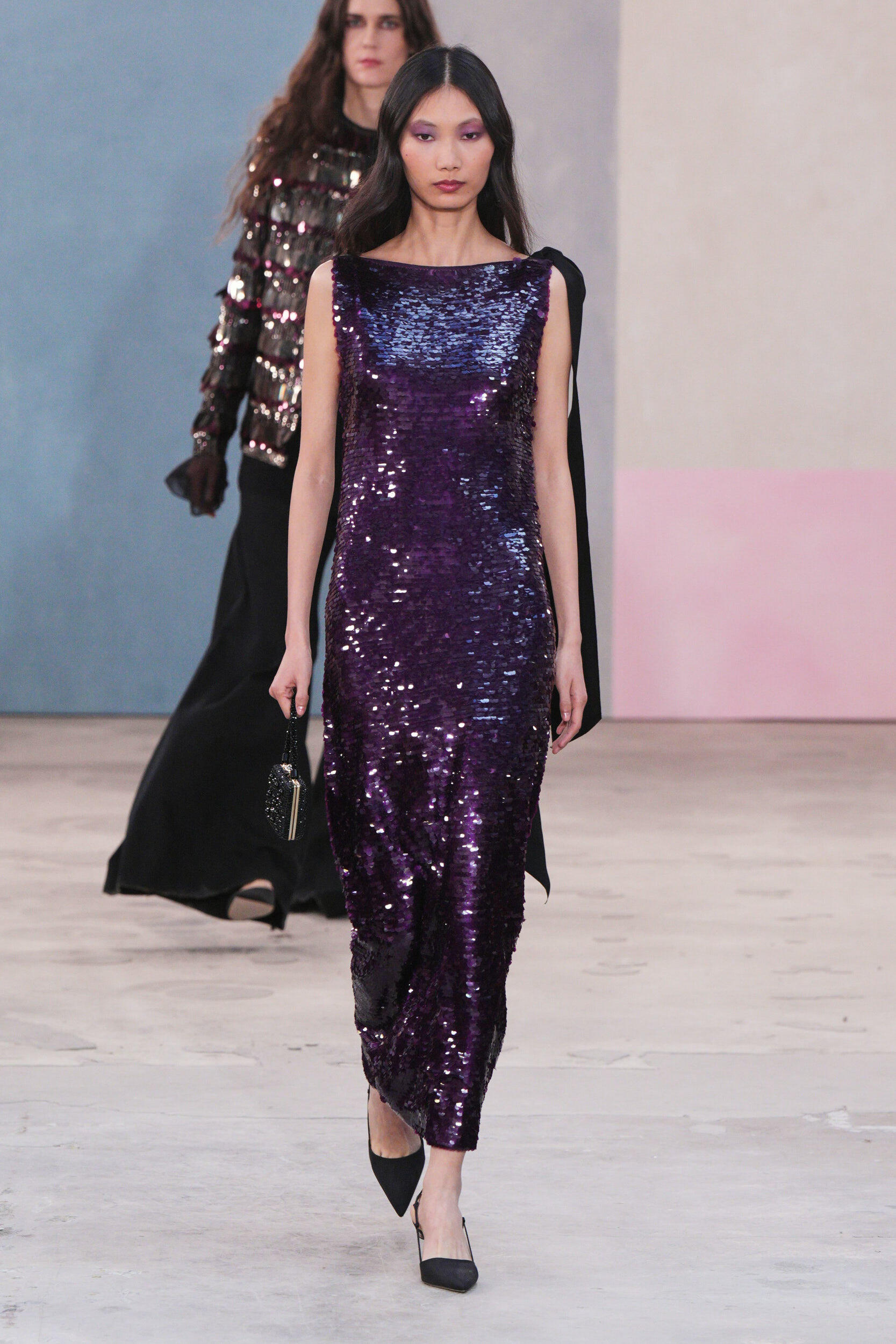
From there, the collection’s real achievement was how seamlessly that structure translated into a new kind of ease. Nothing felt intimidating. The clothes were sophisticated and undeniably event-ready, but never standoffish – you didn’t look at a piece and wonder “How?” Gordon’s glamour doesn’t ask women to perform; it meets them where they are and elevates them, which is exactly why his shift in “evening” felt so resonant. This season moved away from the traditional idea of eveningwear as floor-length and formal, and toward something more versatile – pieces designed for the reality of modern nights, where a woman might move through multiple rooms, moods, and contexts without changing her identity. Gordon articulated that pragmatism directly: he kept hems shorter, did nothing overly floor-length, and kept heels low, designing for “a woman on the go.” Even the decision to anchor the runway with one shoe silhouette throughout – a kitten-heel slingback with a pointed toe – gave the collection a grounded cohesion, like a wardrobe built with intention rather than a series of isolated statements.
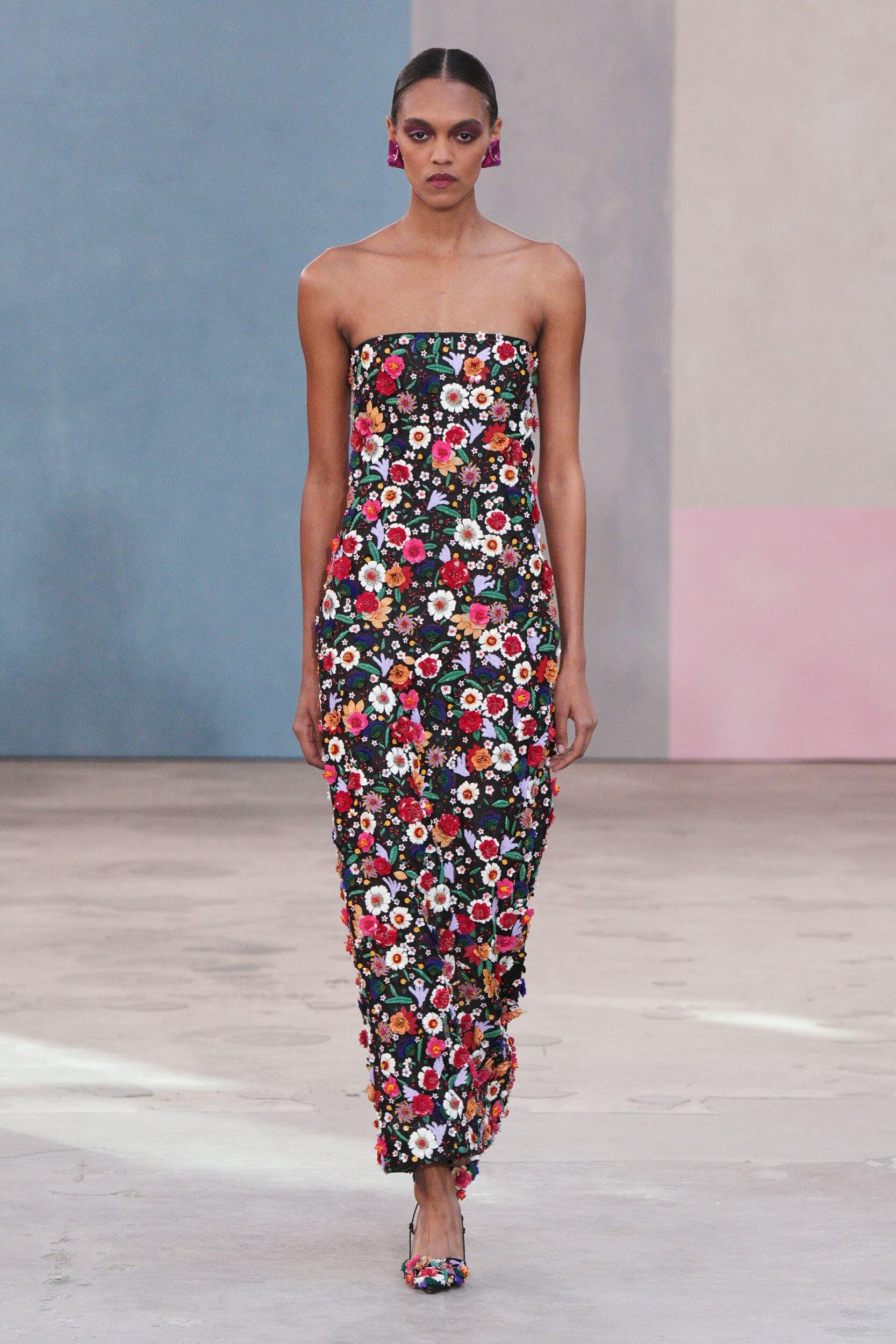
That balance carried through the palette and the surface story. There were darker tones, but they never pulled the mood into heaviness – Gordon’s instinct to avoid anything muddy kept the colors energized even when they leaned autumnal. A Herrera red landed like a poppy-chili jolt – exuberant rather than aggressive – while richer shades, including a saturated purple he described as “delicious,” added depth without dulling the collection’s warmth. Craft supplied the sense of joy: beading that felt special without feeling precious, texture play through looped surfaces that added dimension, and animal print that read as emboldened but still elegant – an accent of confidence rather than provocation.
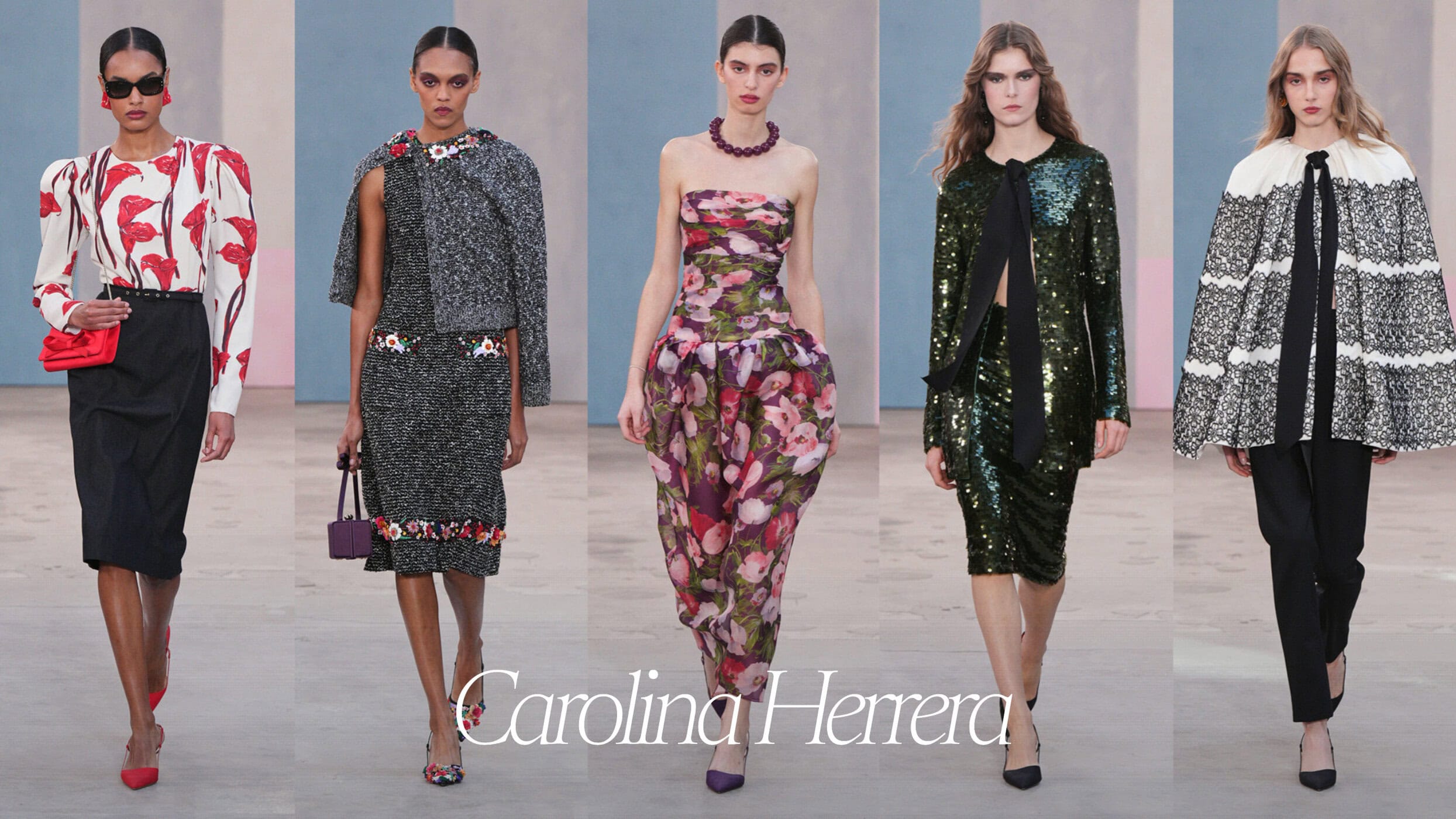
And then there was the house signature – the flower – sharpened into its most structurally apt expression yet. “We’re a house of flowers,” Gordon said, and for Fall 2026 he chose the calla lily for what it naturally embodies: something sculptural and minimalist, but still feminine and beautiful. It ran throughout as a quiet unifier – in painterly prints, in jewelry, in bags – and it matched the collection’s wider thesis perfectly. The calla lily isn’t a romantic cliché; it’s a clean line, a restrained shape, a bloom that feels like design. Accessories echoed the same philosophy, with Gordon explicitly questioning what counts as an “evening” bag versus a “day” bag, and making objects that could travel across contexts – satin clutches, bow details, gold calla-lily hardware – pieces that read like jewelry, but were still meant to be carried, used, and lived with.
THE DIRECTION
THE QUOTE
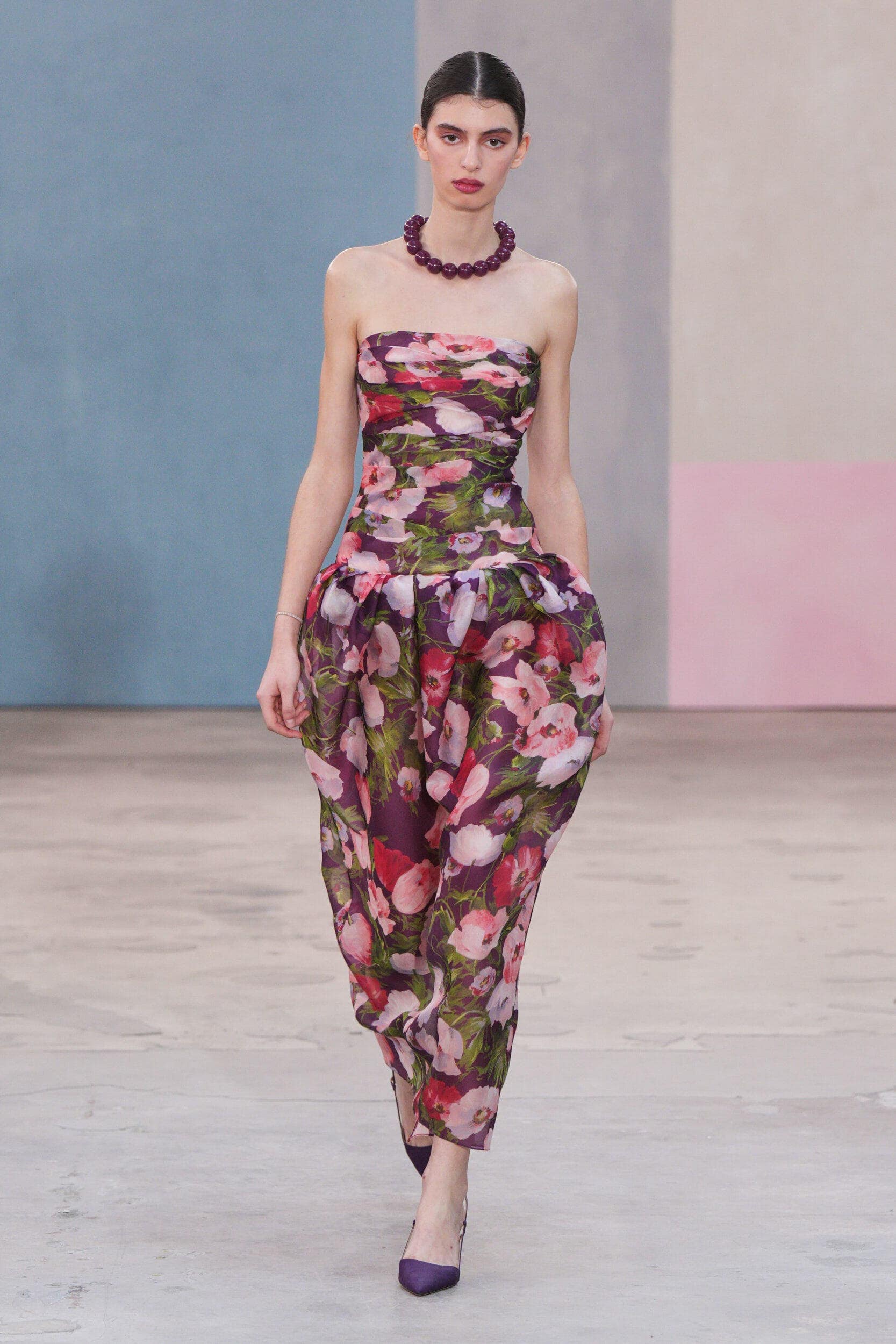
This collection began as an appreciation and homage to women in the arts – painters, sculptors, photographers, gallerists, curators, collectors – women who have this creative spirit that they often express externally through their wardrobe and how they dress. The research started with Peggy Guggenheim, and the finishing touch was asking seven women I really admired to walk in the show. I love that we’re a diverse enough product offering that seven very different women can all find a piece of Herrera that feels like them. And we’re a house of flowers – every season I really zero in on one flower – and this season it was the calla lily: something sculptural and minimalist, but at the same time feminine and beautiful.
THE WRAP UP
Fall 2026 was strong not because it tried to reinvent Carolina Herrera, but because it clarified what Herrera can be right now: a house of elegance that understands modern life, modern nights, and modern women. It delivered sophistication without intimidation – glamour that moved, craft that felt joyful, structure that didn’t calcify into stiffness.
Most importantly, it showed Gordon’s staying power. He keeps expanding the Herrera woman’s world – often through a central flower, always through an evolving wardrobe – without collapsing into sameness. This season’s art-world heroine wasn’t costume. She was a portrait: sculpted, warm, pragmatic, polished, and very much alive.
And the question it leaves you with – quietly, confidently – is the one Herrera is well-positioned to keep answering: in an era when “occasion” keeps changing shape, which houses can still make women feel unmistakably themselves… just slightly more luminous?