Review of Chloé Spring 2026 Ad Campaign by Creative Director Chemena Kamali with Photographer Sam Rock and Film Director Romain Wygas with models Awar Odhiang, Jacqui Hooper, Julia Stegner, Noor Khan, Song Ah Woo, & Stella Hanan
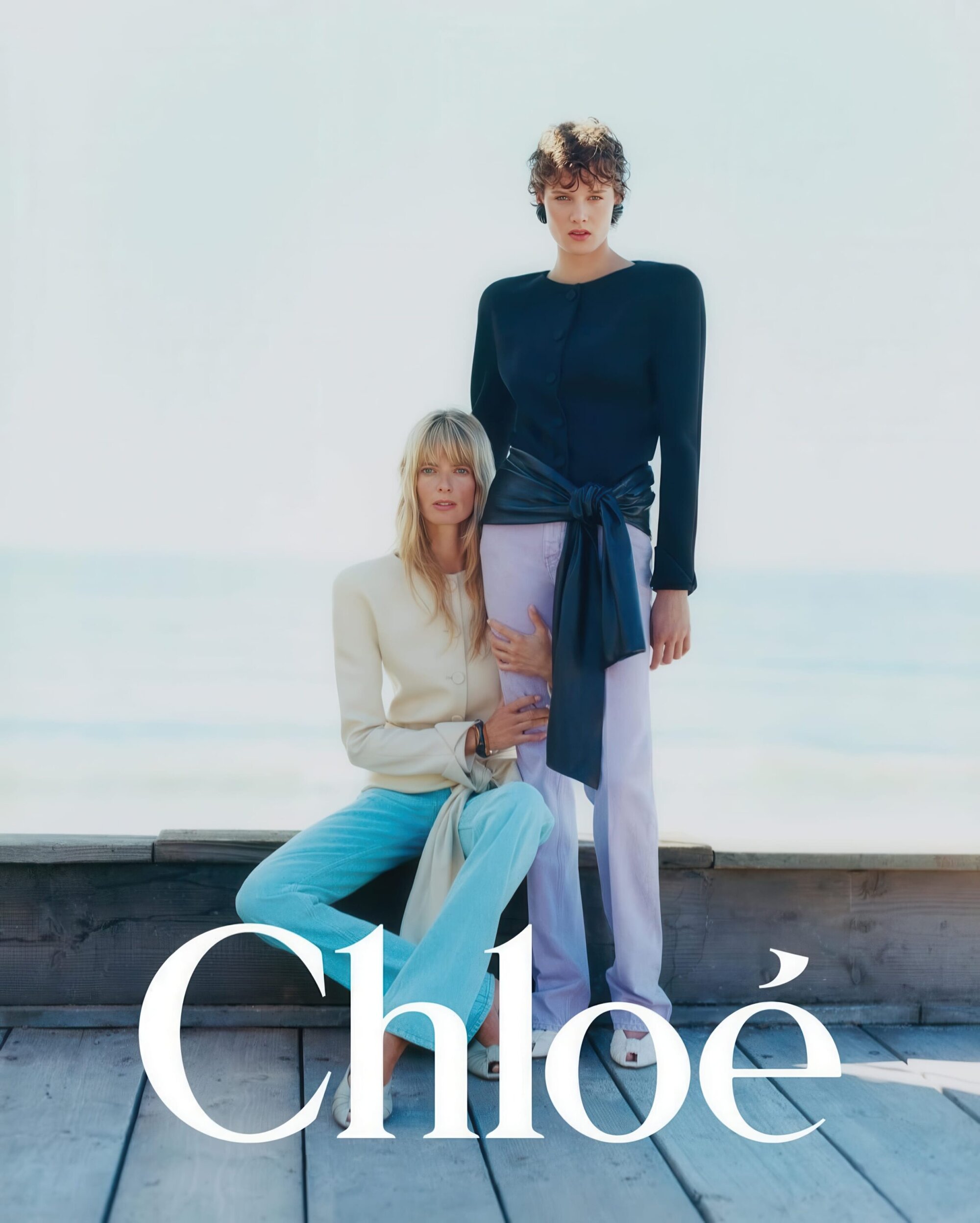
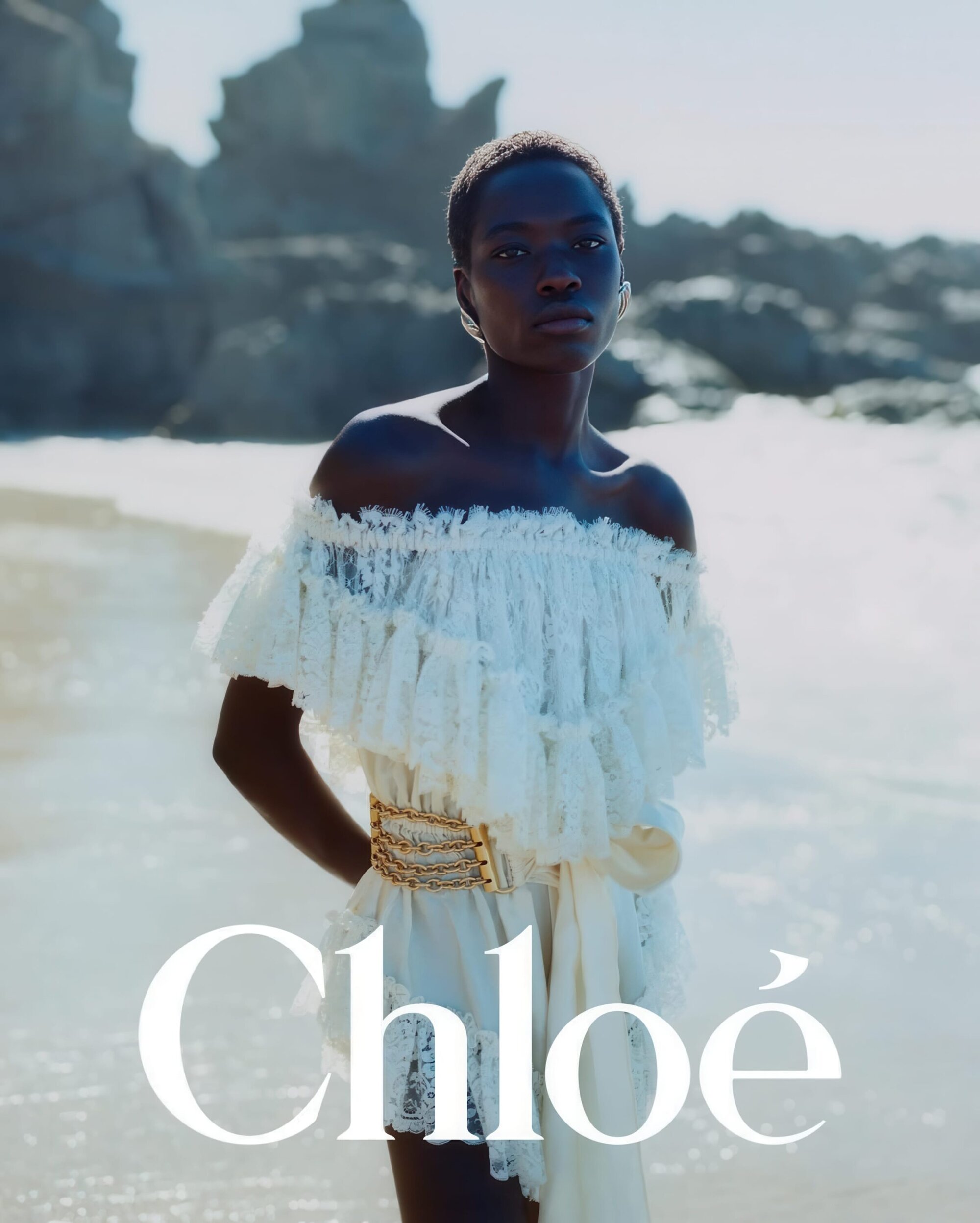
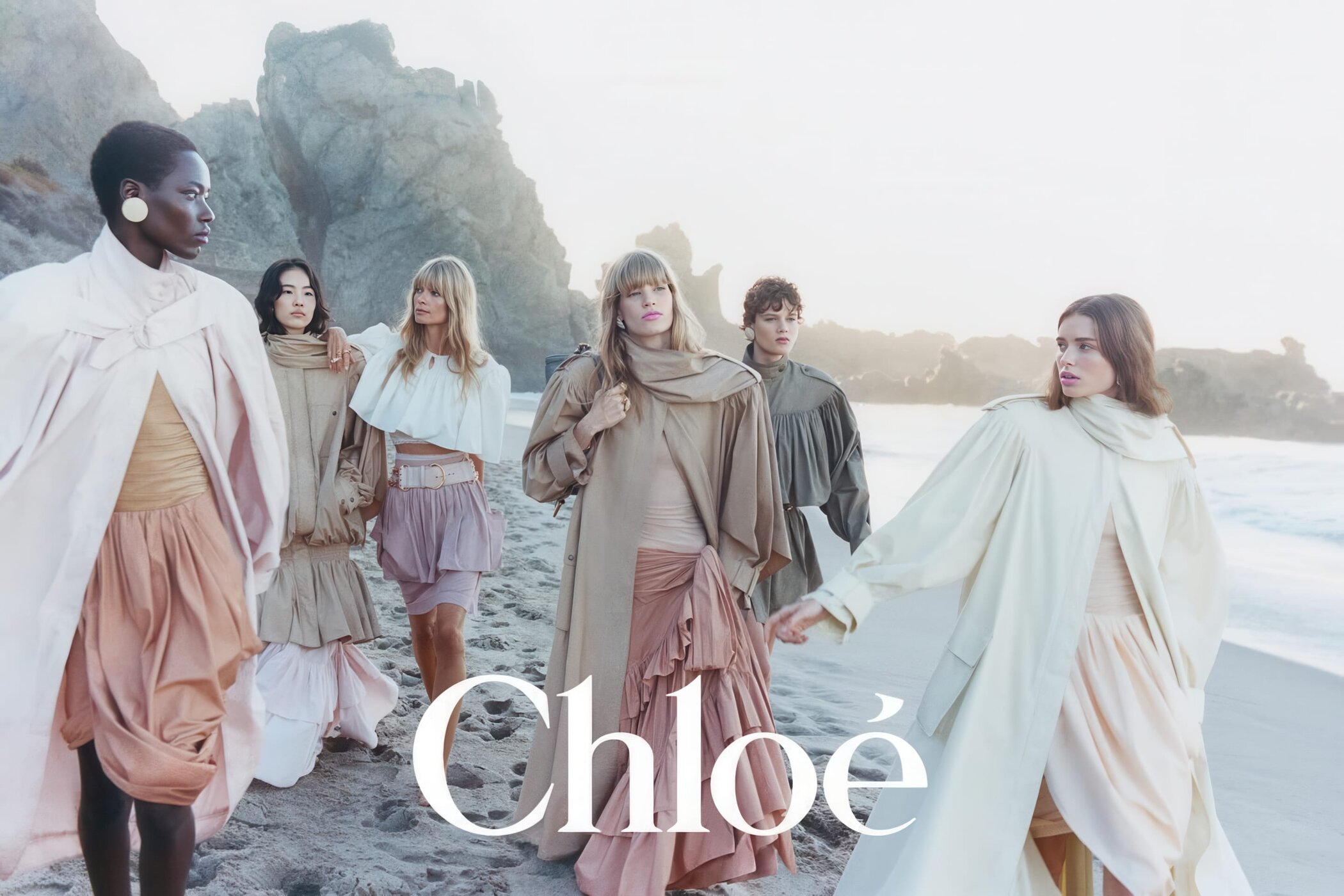
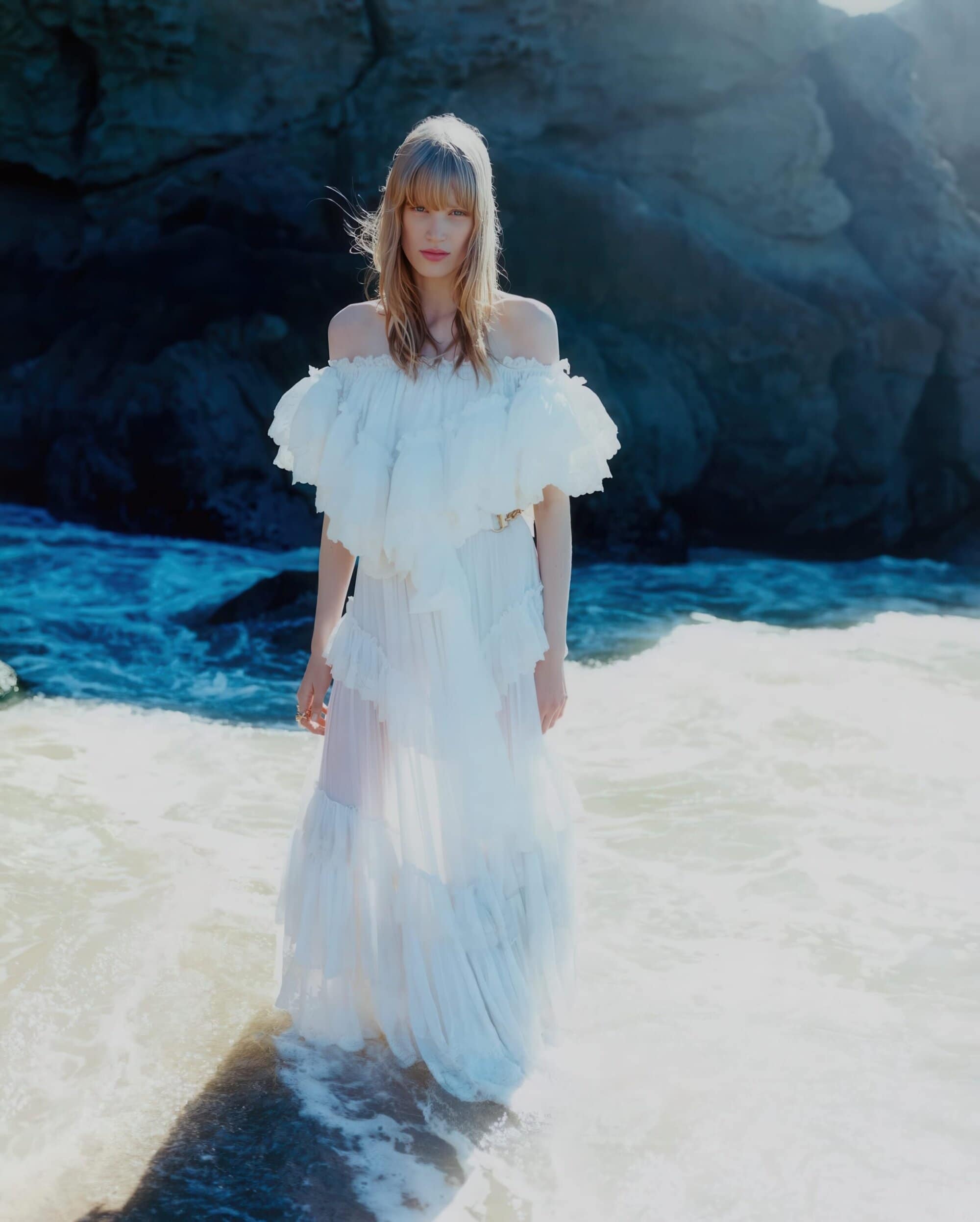
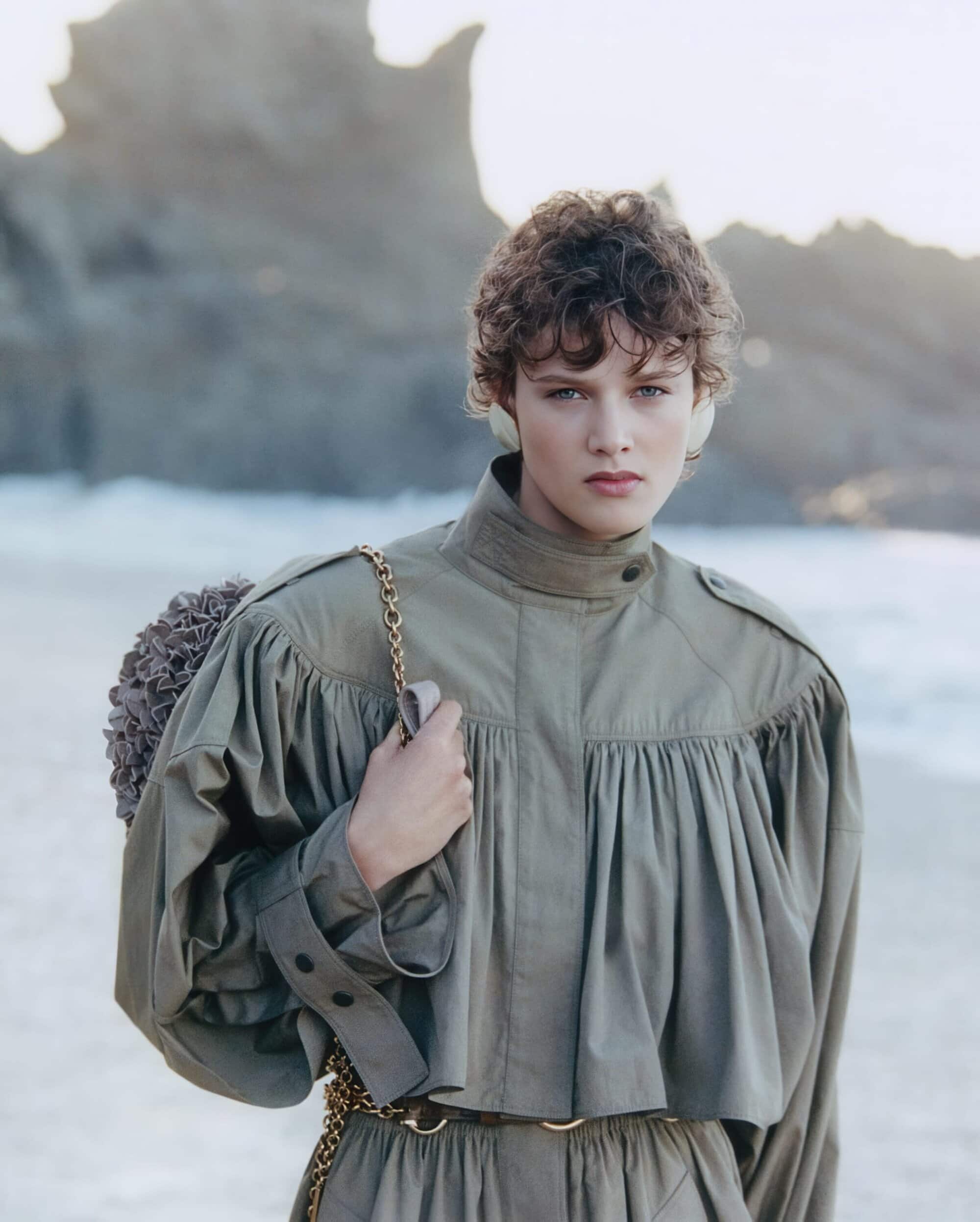
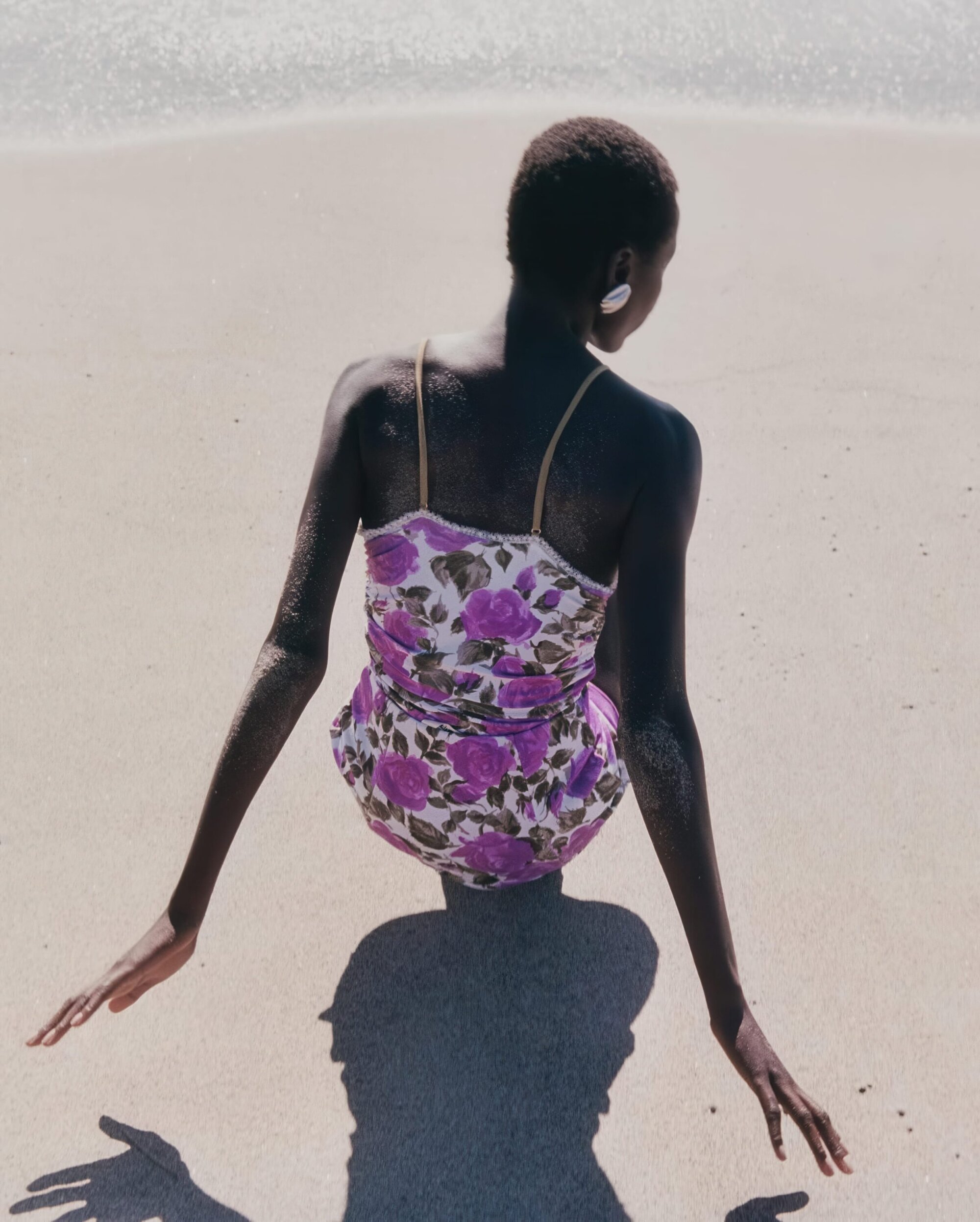
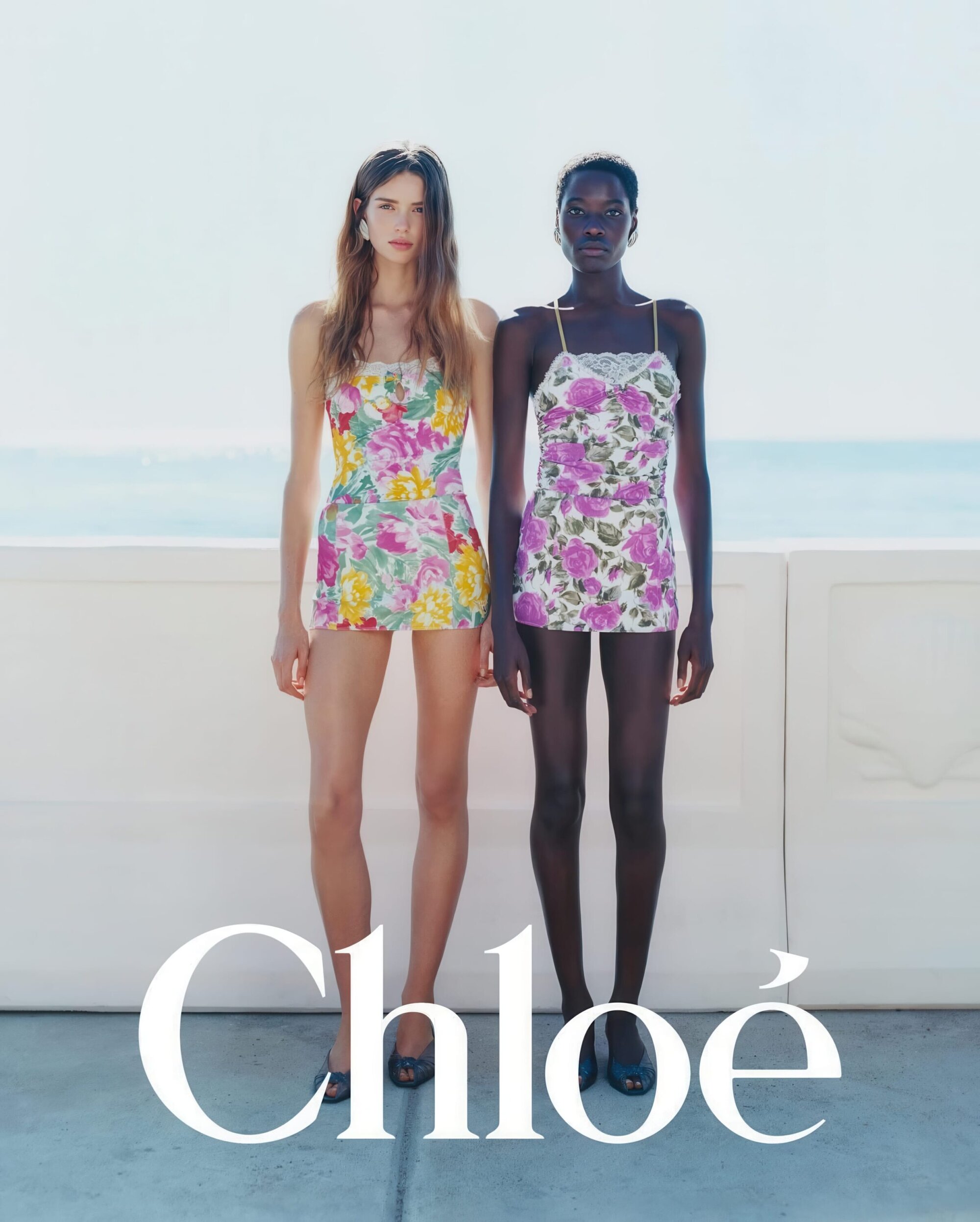
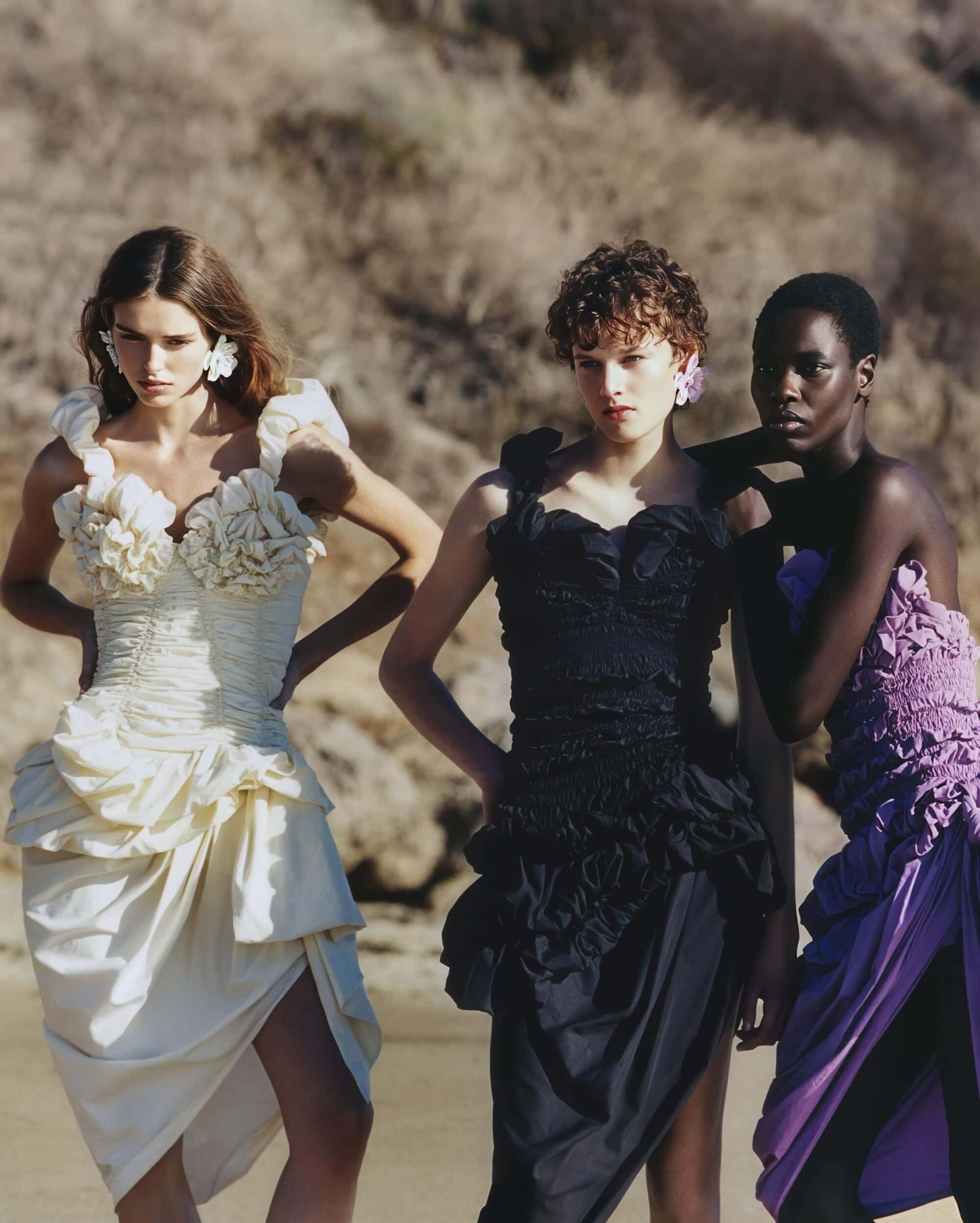
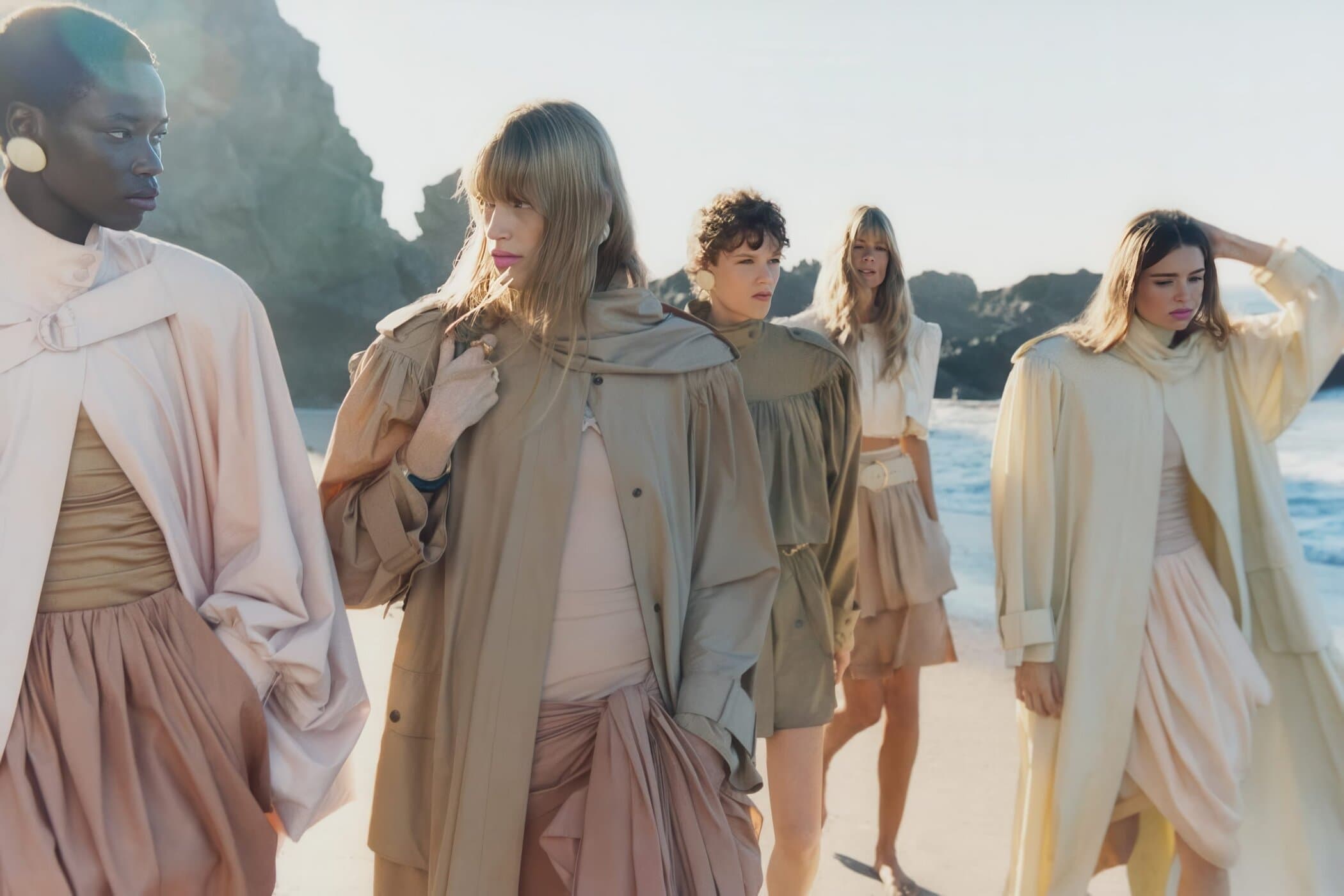
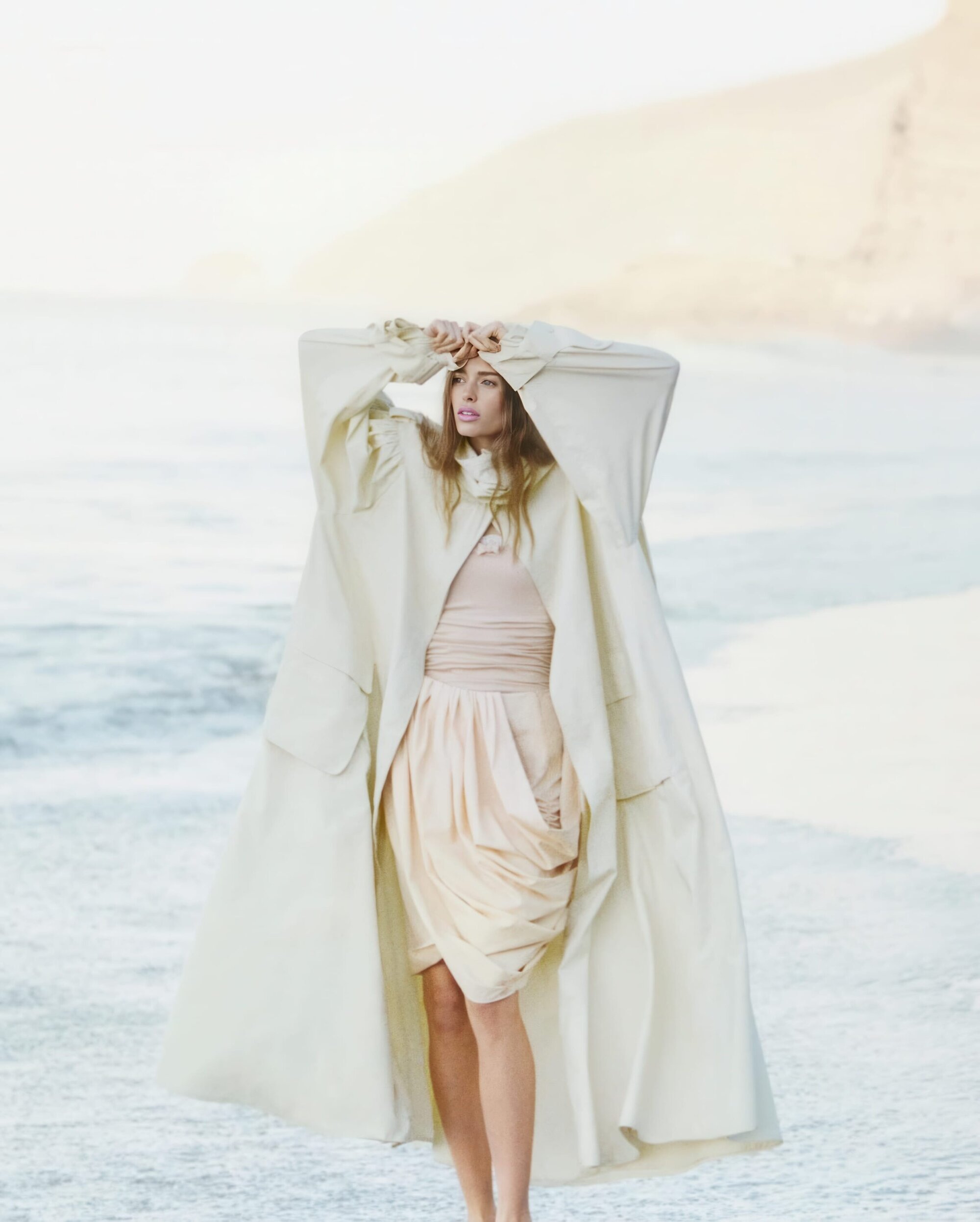
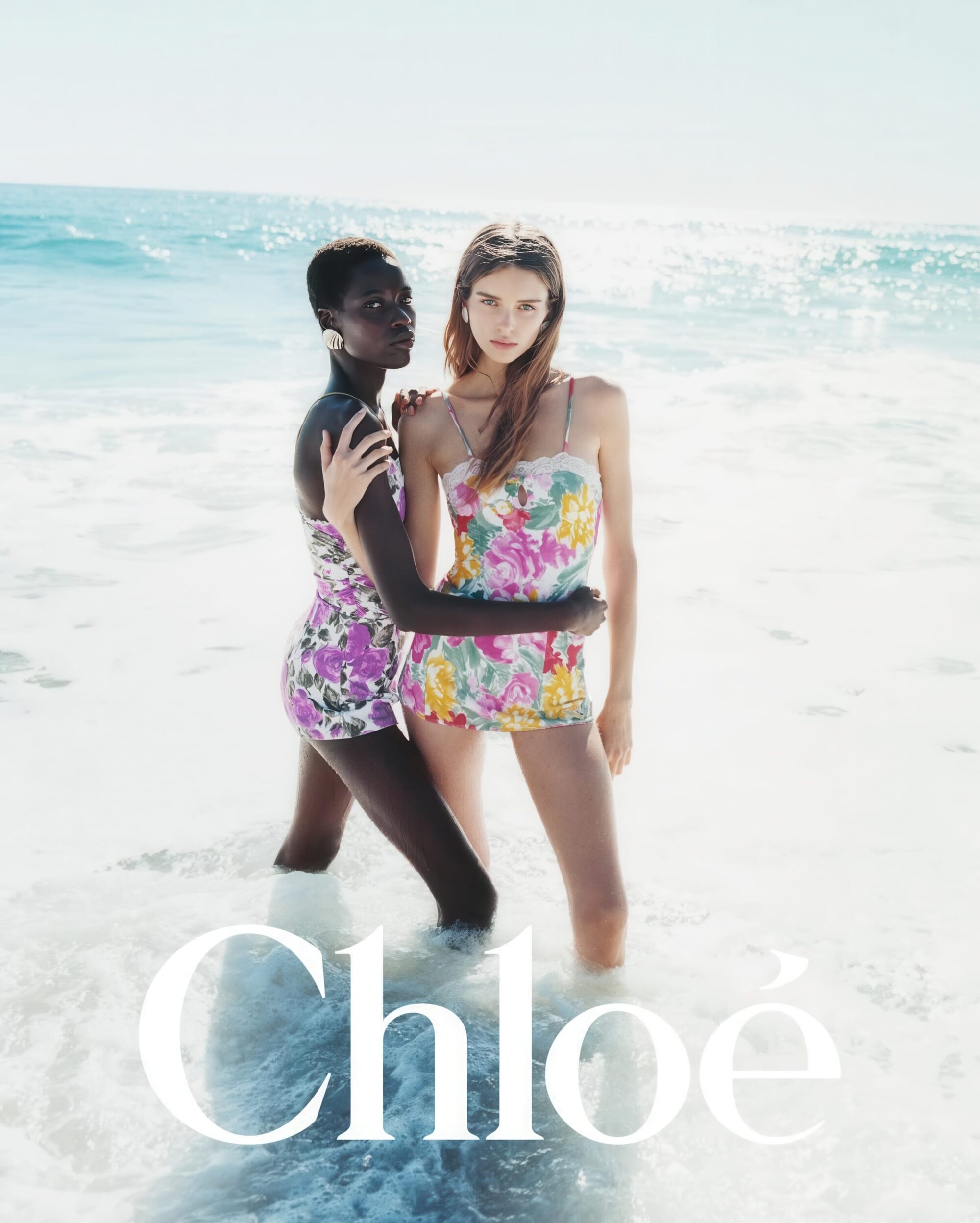
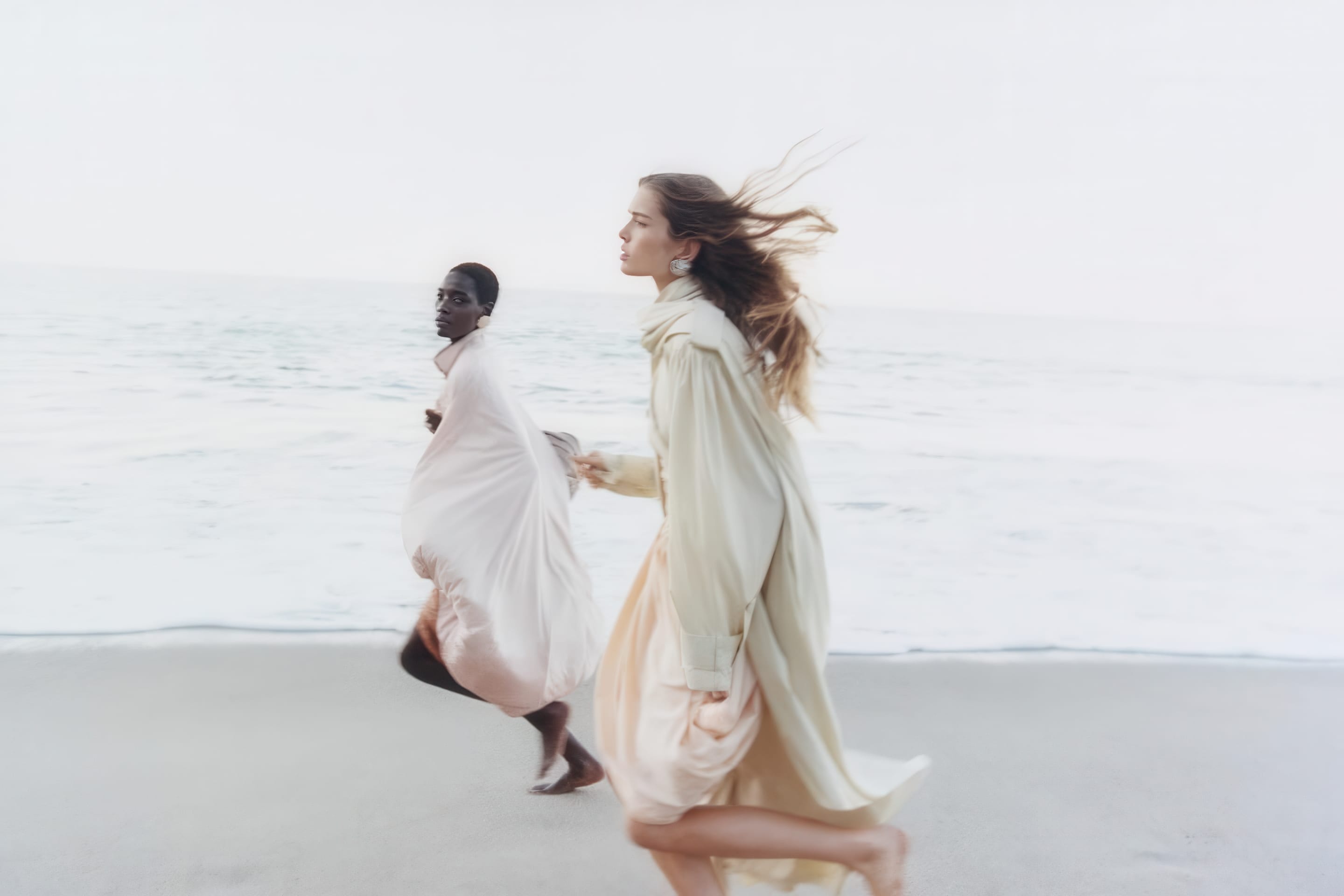
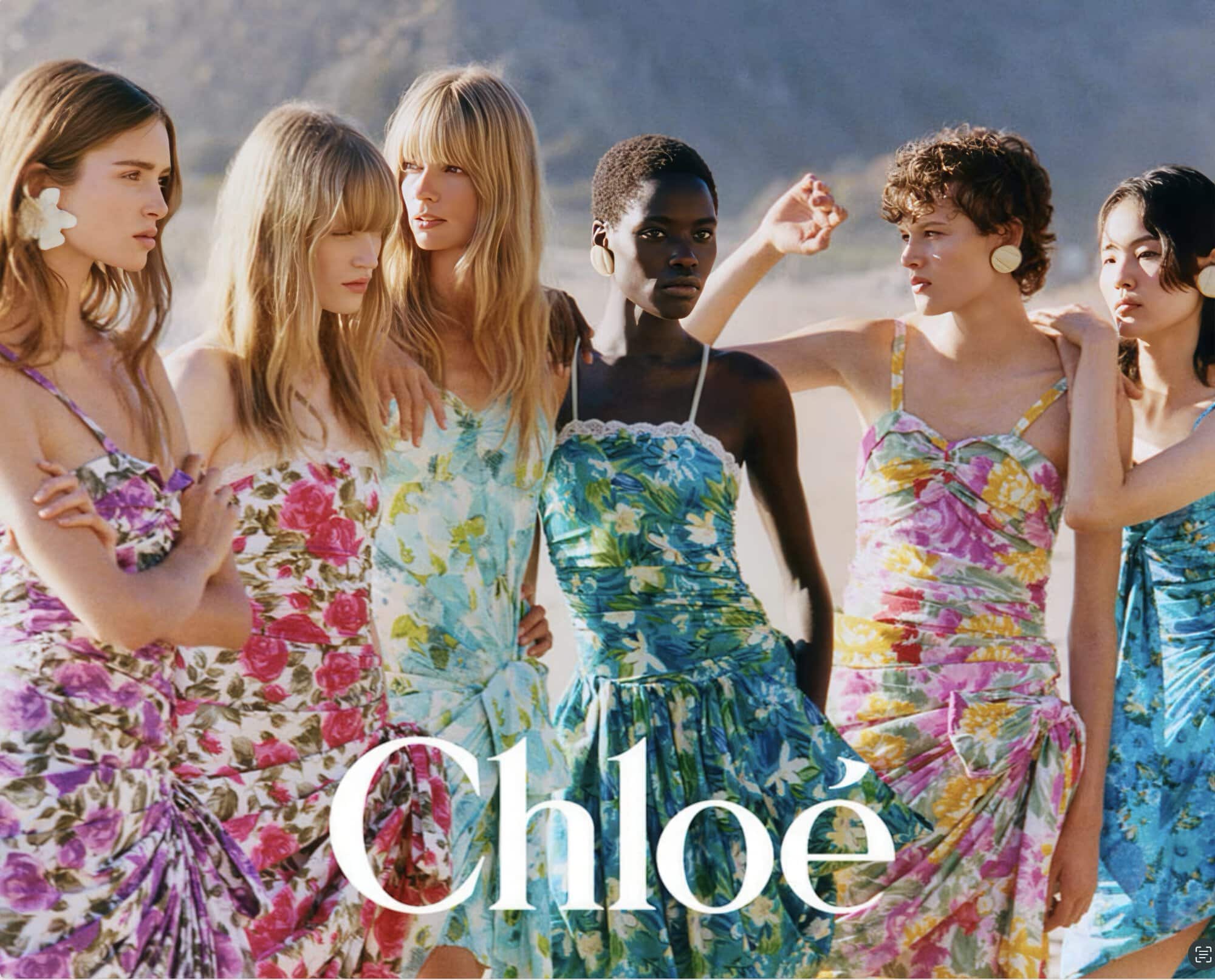
Chloé’s Summer 2026 campaign lands in a season when luxury has started to feel like a crowded room full of people repeating their own names. Everyone is visible, everyone is “present,” and yet so little of it lingers. The irony is that Chloé has never needed volume to persuade. This house was built on a quieter revolution, one rooted in the idea that a woman’s life should lead, and the clothes should follow. The campaign, photographed by Sam Rock under Chemena Kamali’s creative direction, with styling by Elodie David Touboul and film by Romain Wygas, arrives with all the right ingredients for modern Chloé, and still leaves the central craving unmet. It looks like a world. It doesn’t quite behave like one.
Chloé’s DNA has always been less about fantasy than permission. Gaby Aghion’s founding proposition was radical in its simplicity, luxury ready-to-wear with ease in its posture and refinement in its making, a wardrobe designed for living rather than posing. Over decades, that idea took on the soft-focus mythology we now shorthand as “the Chloé woman,” a figure who moved through culture with autonomy, appetite, and a certain lyrical pragmatism. Romance was part of it, so was intelligence. The house historically excelled at turning femininity into agency, then giving that agency a silhouette.
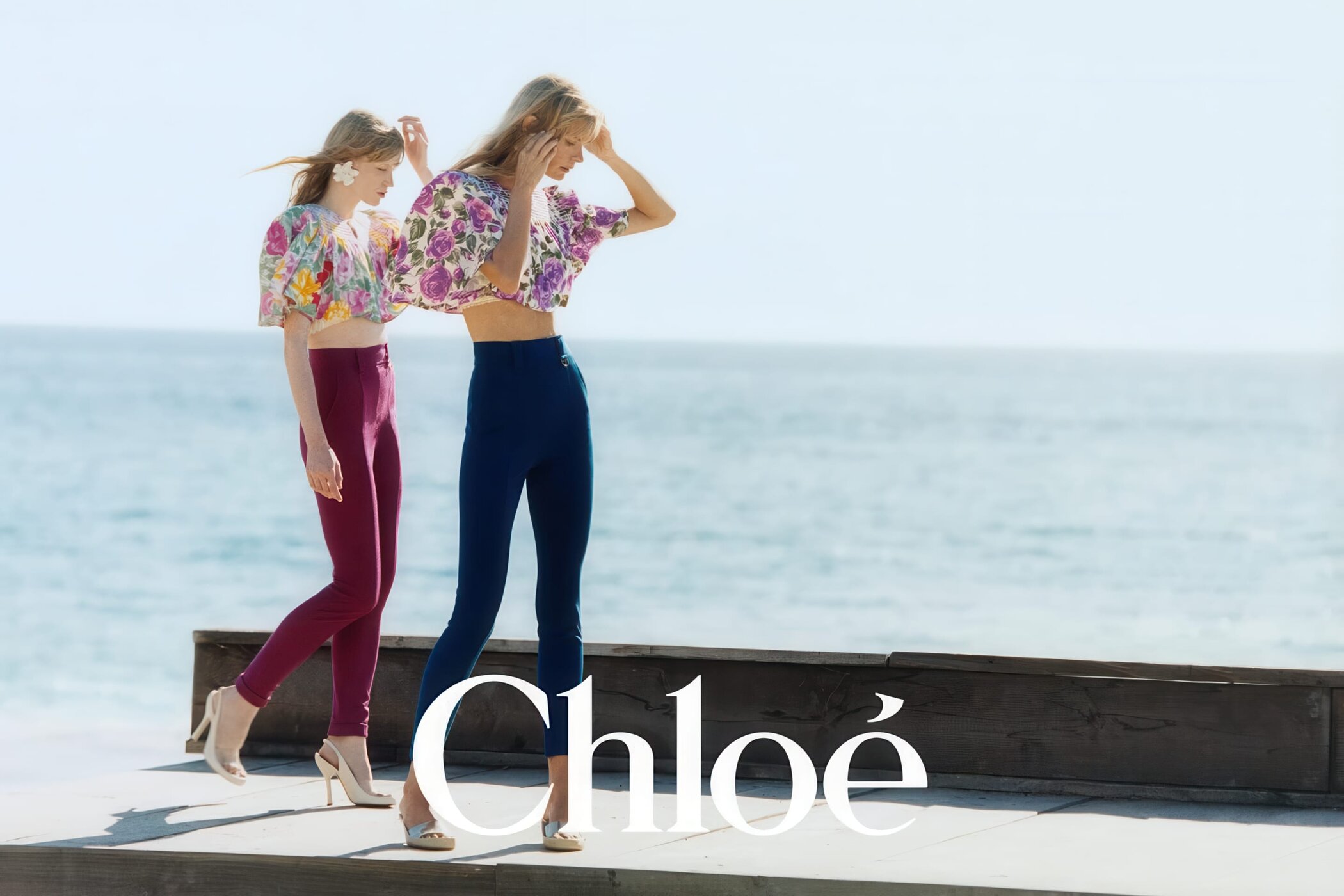
Kamali understands this. Her work has revived an airy, light, bohemian femininity that feels genuinely influential right now, partly because it restores touch and emotion to a market that has spent years mistaking restraint for substance. You can see why other labels are reacting. Her design language has a clarity that reads quickly, and it also carries real potential for depth. The clothes suggest a life in motion, a community, a mood that stretches across days, not posts. That’s exactly why the campaign’s current mode feels like a missed opportunity. The house is sitting on narrative gold and spending it like loose change.
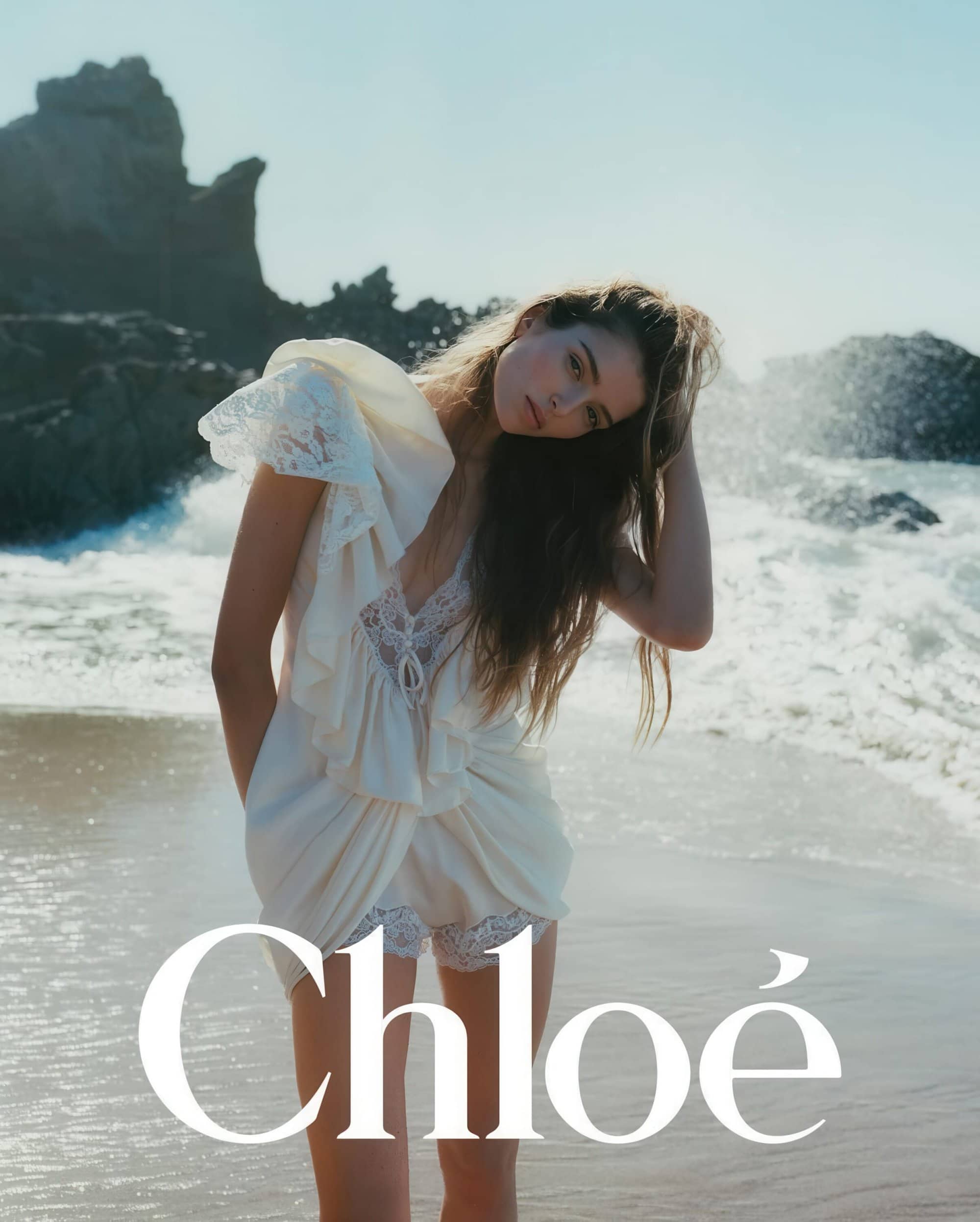
The campaign leans into a collective spirit, an atmosphere of togetherness, softness, and sunlit freedom. Those are meaningful instincts, and they align with what Kamali has opened up at Chloé. The issue is that the story stays at the level of temperature. The viewer gets the sense of a feeling, but not the reason for it, and luxury today is being judged less on aesthetic fluency than on authorship. Consumers have become attentive editors. They notice when imagery has intention, and they also notice when it’s simply the product of proximity, pretty people, pretty place, pretty light. A campaign can be beautiful and still feel anonymous.
This is where Chloé needs to push further. The house doesn’t need more spectacle, it needs a sharper internal script. What does freedom mean in Kamali’s world, in this moment, for this woman? What does she protect, what does she refuse, what does she choose? The clothes already hint at these answers. Their romance reads as lived-in, their bohemia reads as considered. The imagery could carry a deeper emotional register if the house asked more of it than mood. A story gives the viewer a way to locate themselves inside the house’s values. Without it, the campaign risks becoming a pleasant montage that sells recognition more than meaning.
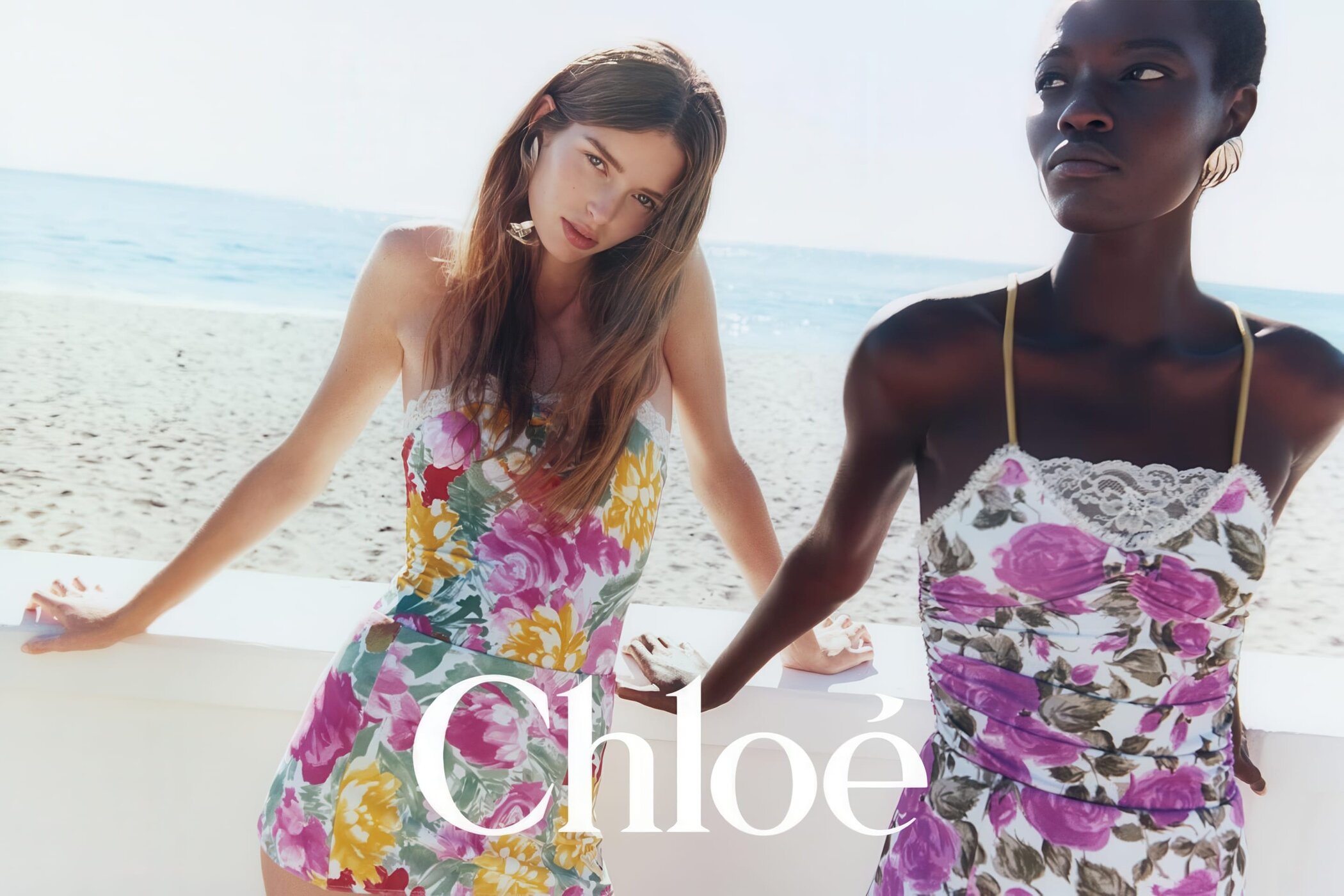
Chloé also sits in a particularly sensitive cultural lane right now. Bohemia can easily slide into aesthetic nostalgia, a familiar shorthand for freedom that asks very little of the present. Kamali’s strength is that she’s made it feel current again, which raises the stakes for the image-making. The house has an opening to define a modern femininity that feels expansive without feeling vague. That takes world-building. Recurring characters. A sense of ritual. A social context that signals who these women are beyond their silhouettes. Luxury audiences are hungry for credibility, and credibility is built through specificity.
There’s a strategic opportunity in slowing down. Immediacy, overproduction, and overexposure have flattened too much of luxury’s visual culture into noise. The houses that feel most compelling right now treat campaigns like chapters, building a language over time and letting desire accumulate. Chloé is well-positioned for that kind of pacing. Aghion’s original proposition was never about the single image. It was about the ongoing life. If Kamali is reviving desire, the campaign should protect that desire by giving it patience, by making us wait a moment for the next page.
The most exciting version of this campaign would treat Chloé as a cultural argument about women’s interior lives. The house has always done its best work when femininity carries intelligence, and softness carries will. Kamali is already designing in that direction. The image-making simply needs to meet her there, with a world that feels authored rather than assembled.
In all, Chloé’s Summer 2026 campaign raises a question the house will want to answer quickly, before the market turns Kamali’s bohemia into a shared mood-board. What does Chloé want women to feel beyond “beautiful,” and what does it want them to recognize about themselves when they step into this house’s idea of freedom? The answer is in the clothes. Now the storytelling has to catch up, and give that freedom a name that lasts longer than a season.
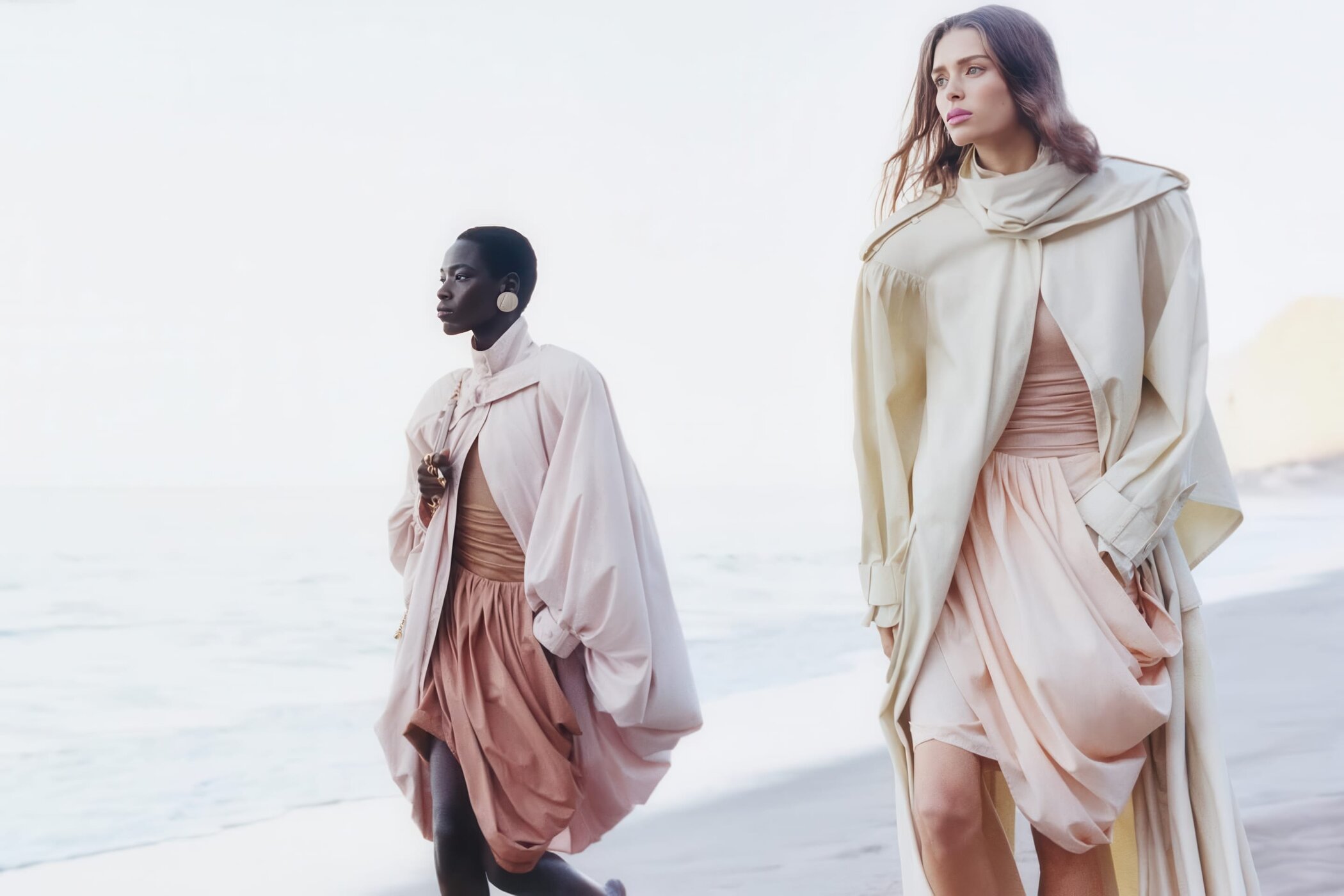
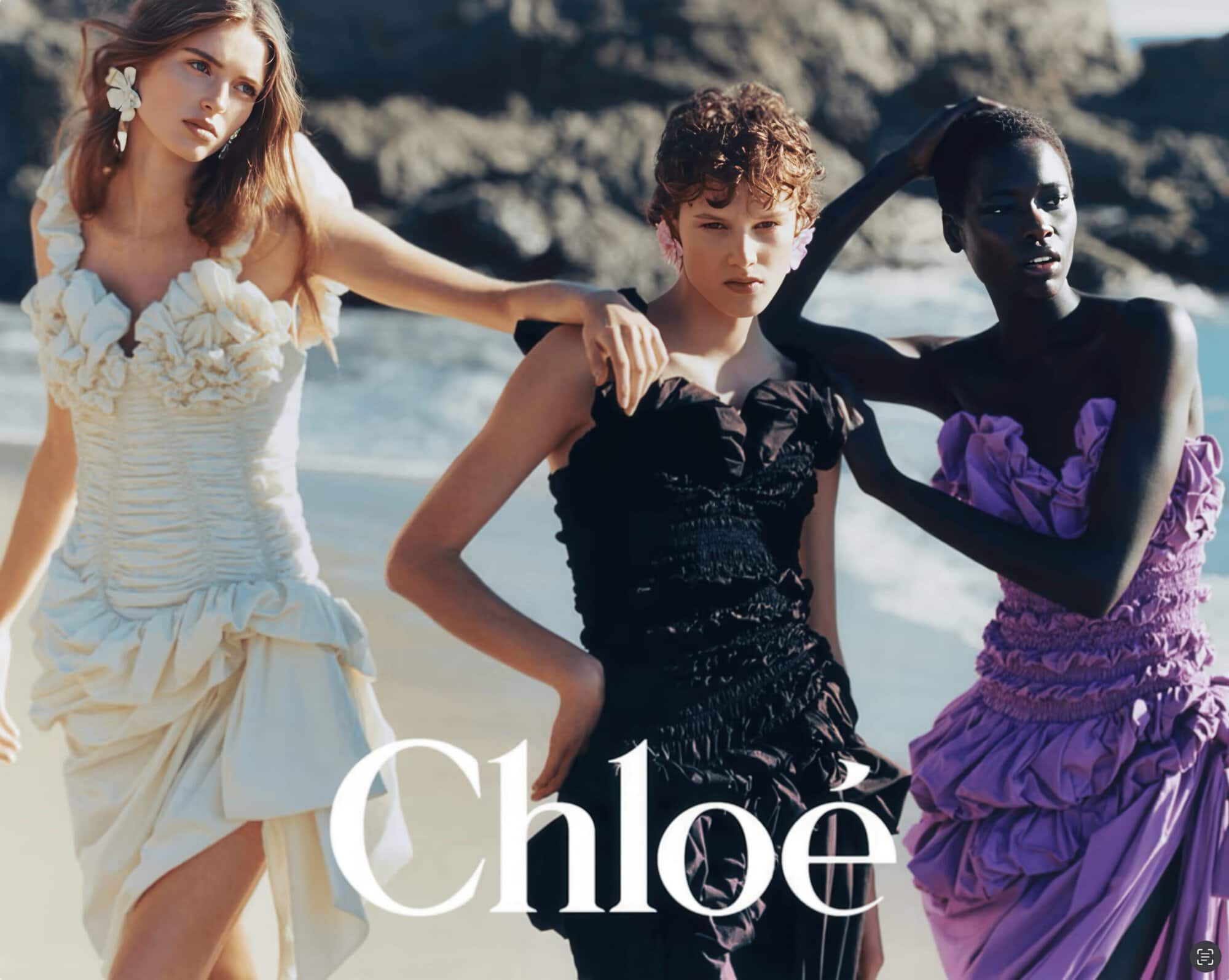
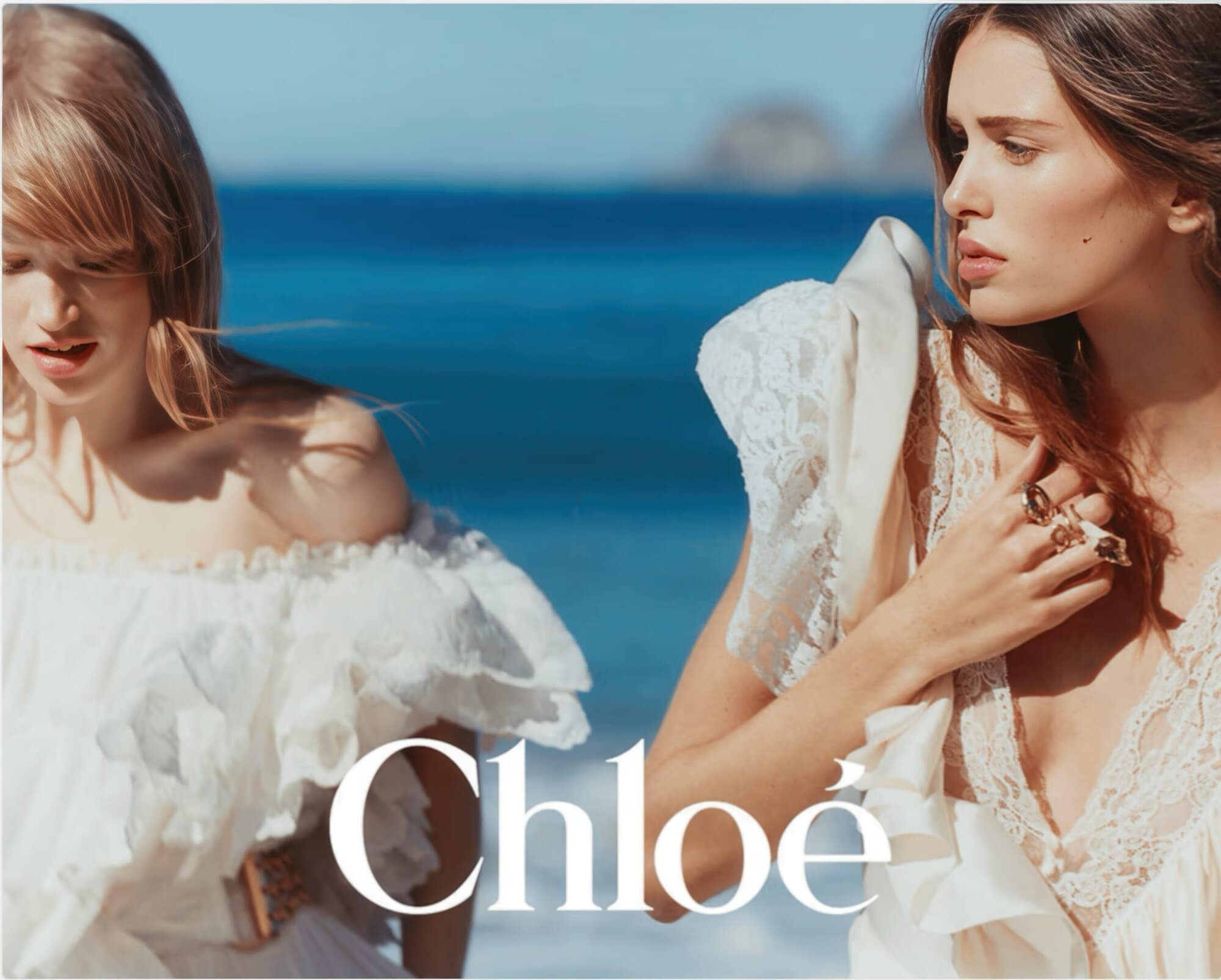
Chloé Creative Director | Chemena Kamali
Photographer | Sam Rock
Videographer | Romain Wygas
Models | Awar Odhiang, Jacqui Hooper, Julia Stegner, Noor Khan, Song Ah Woo, & Stella Hanan
Stylist | Elodie David Touboul