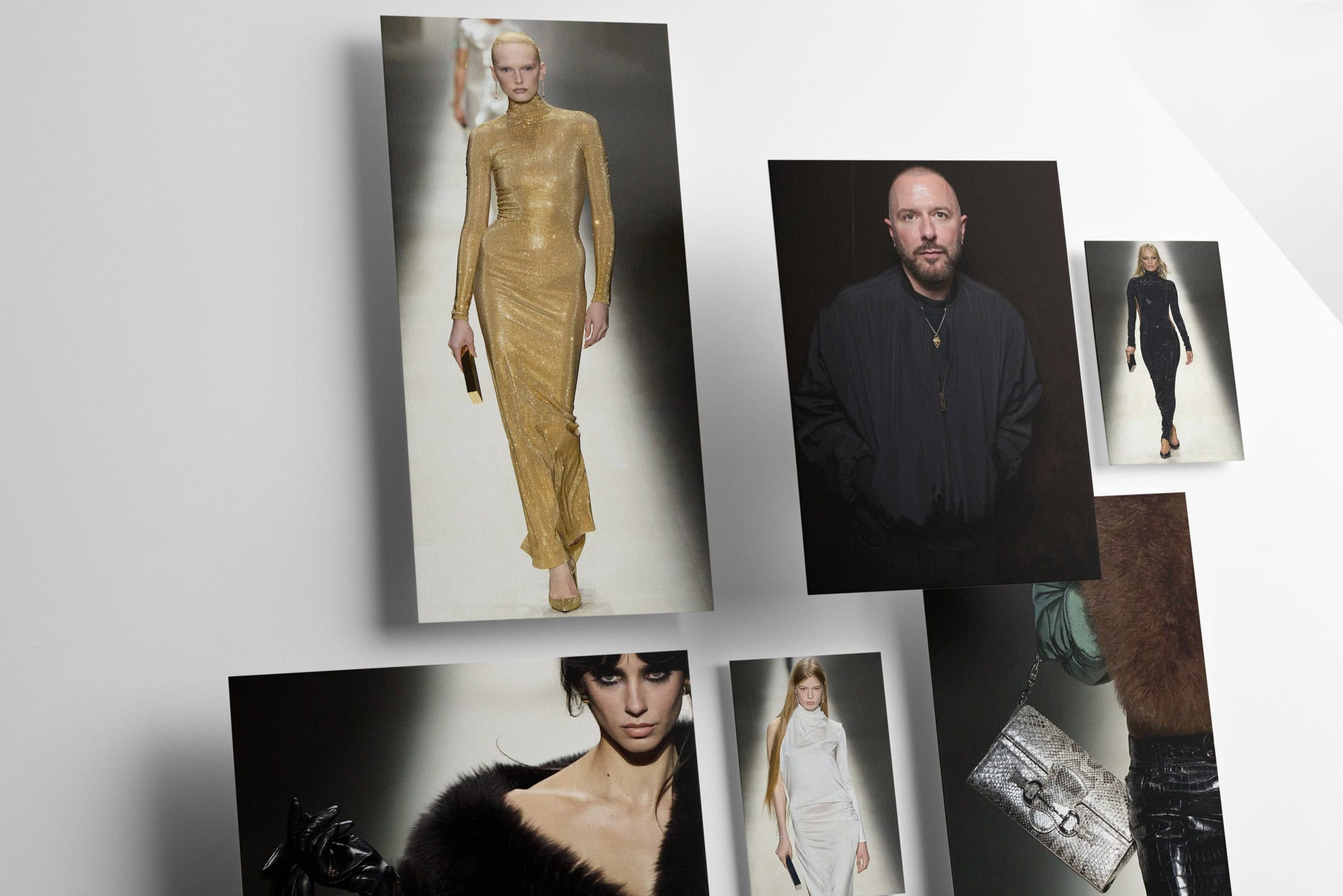
On sex, self-acceptance, and putting the house back at the center of culture
By Kenneth Richard
“It’s very weird for me to stand alone,” Demna says, half-laughing, half-exhaling, as the cameras finally quiet. The spectacle has just ended. The lights are still hot. He looks both exhilarated and slightly stunned by what he has set in motion.

“I’m so happy this is done,” he says. “But I don’t know how I can do it every time.”
What he has done is launch, unequivocally, his Gucci. Not a respectful preface. Not a transitional chapter. His version — and it is very sexy.
I hope I made you feel Gucci today,” he says, leaning forward with genuine urgency. “That was my main purpose with this show and with this collection.”
To feel Gucci, in his vocabulary, is not about logos or nostalgia. “Feel the energy, the passion, the fun, the sexy,” he explains. “People keep asking me, how do you feel? I’m like, I feel like I’m falling in love. It’s this feeling I cannot really understand. I’m a bit anxious, I’m a bit afraid, but I’m also very into it and very excited, and I want to do it.”
Butterflies, essentially — though on a global stage.
The collection pulses with that emotion. Bodies are present. Silhouettes curve and hold. There is polish, but also heat. After years of intellectual armor — first at Vetements, then through the rigorous conceptualism of Balenciaga — Demna has allowed himself proximity to the body.
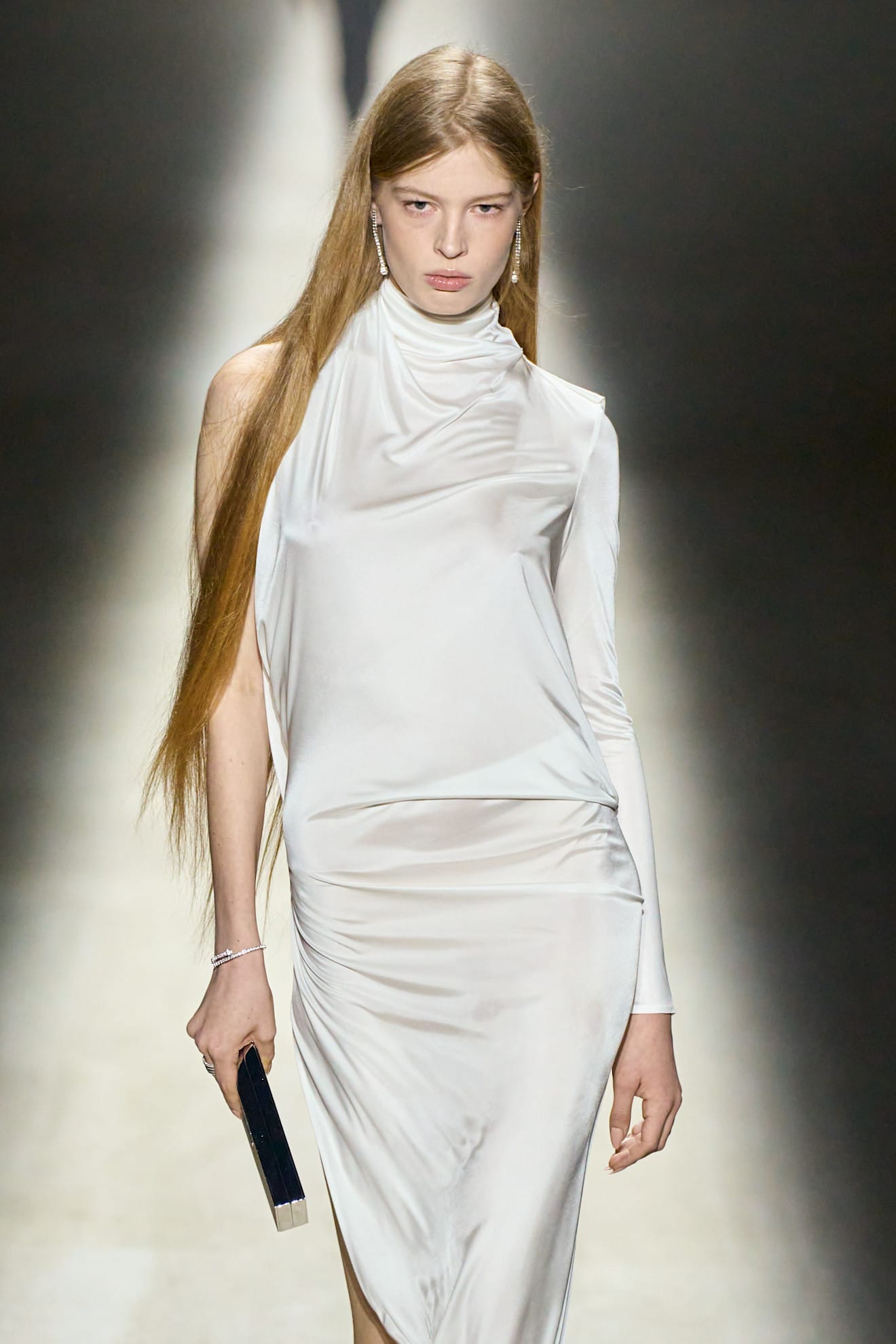
“It feels actually very liberating,” he says of designing sexy clothes. “I think I finally allow myself to do that. It’s also because of my relationship to myself, to my own body, to the way I see myself. I wanna feel like that. I wanna feel sexy. I wanna feel attracted. If I want to like myself, maybe I’m also partly falling in love with myself in this moment.”
There is no irony in his tone. If anything, there is relief.
“For 10 years, I tried to impress,” he continues. “Try to impress myself that I’m like a smart designer. And at Gucci, I suddenly got this carte blanche for emotion. I realized that I can actually create from an emotional standpoint, rather than intellectual standpoint. So either you love it or you hate it. Fashion that triggers emotion, you know?”
At Gucci, he is less interested in proving his intelligence than in provoking feeling. That shift alone recalibrates the house’s temperature.
The set traced that recalibration back to Florence. Demna recounts a visit to the Uffizi, standing before Botticelli’s Primavera, overwhelmed not only by Renaissance proportion and the choreography of bodies, but by a realization about culture itself.
“Gucci is such a big part of Italian culture, as well as Botticelli and Michelangelo,” he says. “Everybody knows Gucci is part of the culture.”
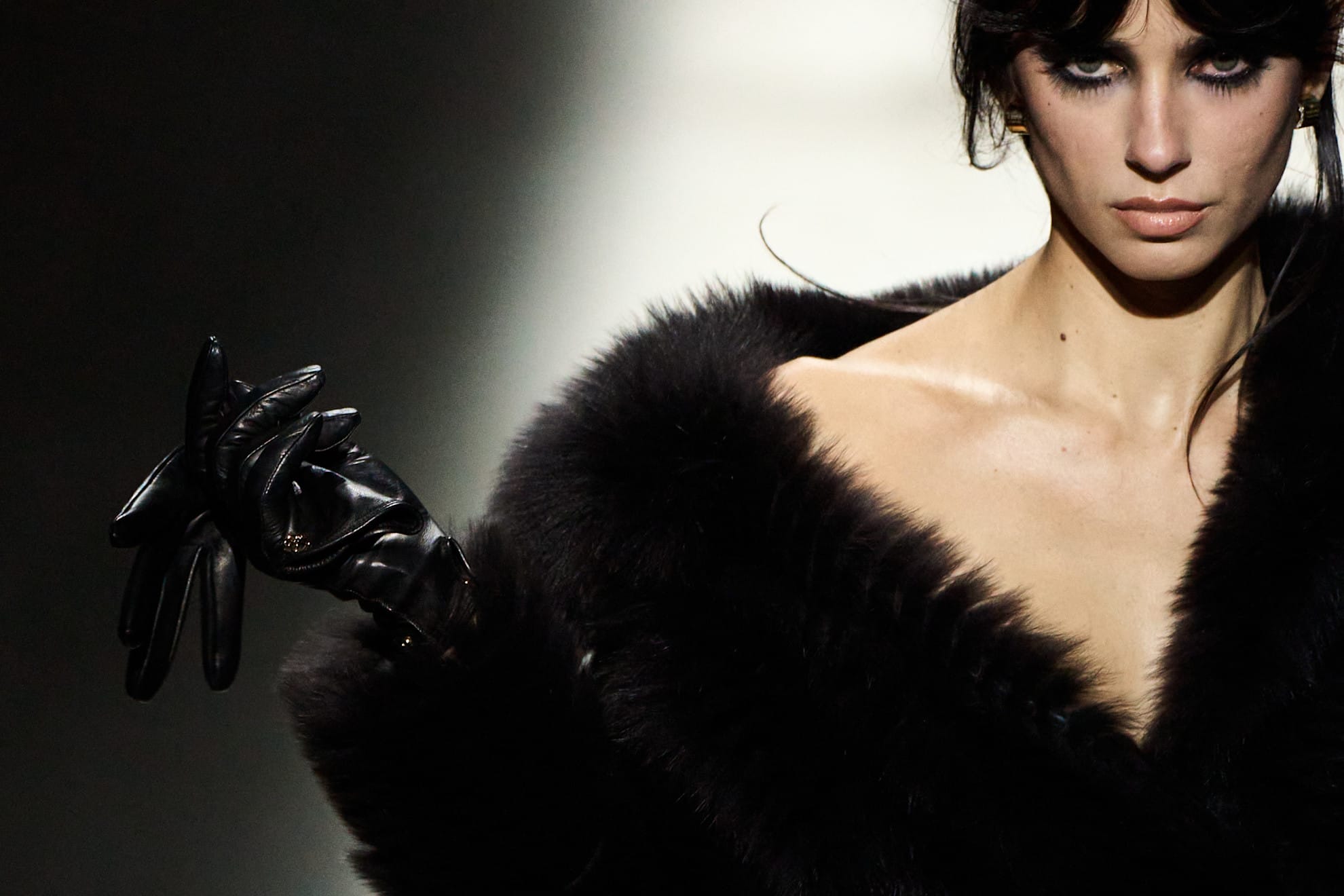
Leaving the gallery and seeing Palazzo Gucci in the square crystallized something. The show’s original set design was scrapped. “I had to go back to Milan and change it,” he explains. “I want to put Gucci back into the spotlight of what culture is — relevance and cultural relevance.”
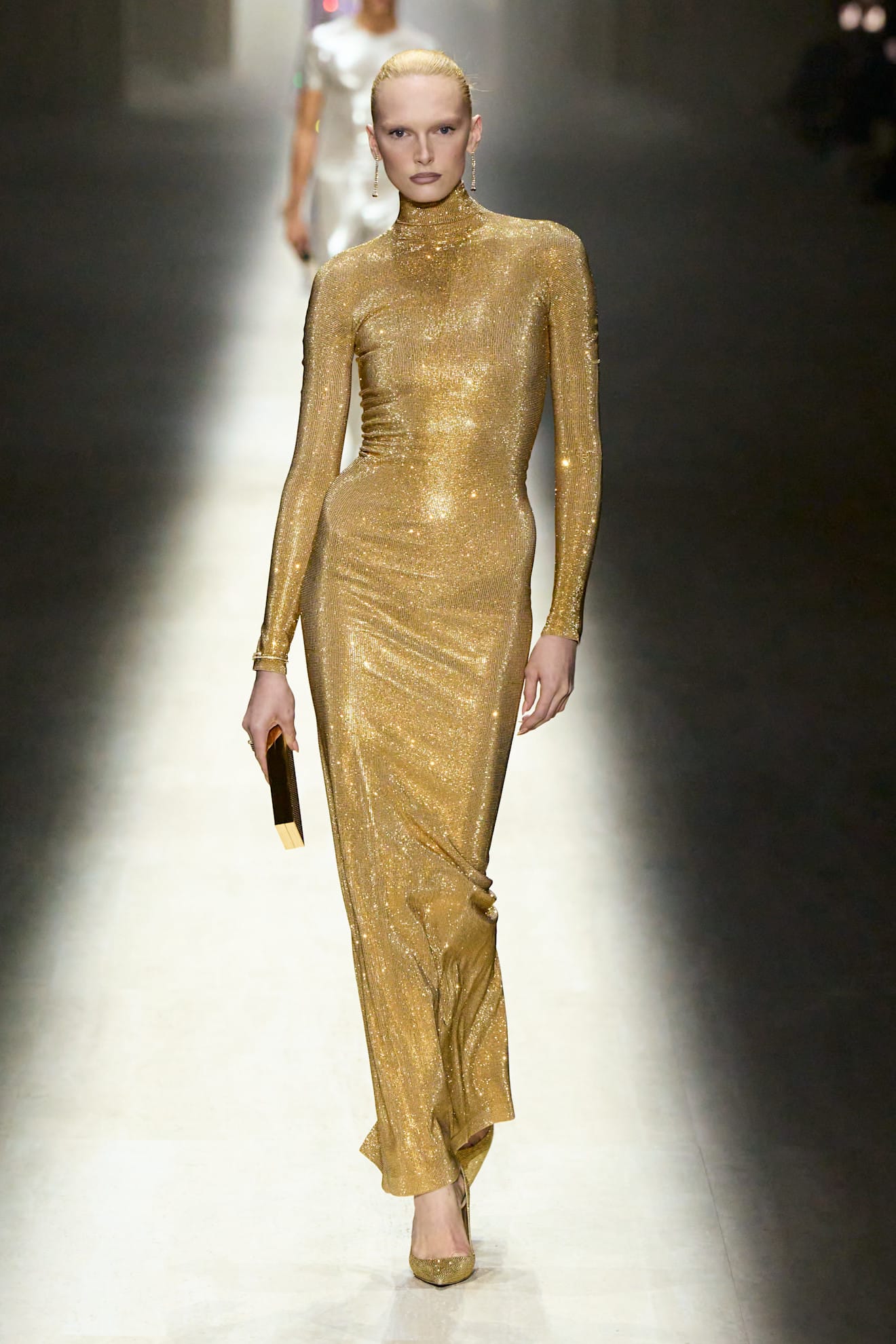
For Demna, cultural relevance does not originate in corporate messaging. It comes from people. From musicians, artists, the figures whose work he consumes and admires. Many were present on the runway and in the audience.
One of my responsibilities at Gucci is also trying to bring the cultural relevance to it. And the cultural relevance always comes from underground culture, not from mainstream, even for a big brand.
The casting reflected that ethos. Models were instructed not to mute themselves but to heighten who they already are. “We told each of them to kind of be themselves, how they are, but exaggerated,” he says. “To really not try to hide their personality and to go for it. To really see what the limit is with exaggerating who they are.”
The result was less procession, more presence.
The silhouettes themselves surprised many who anticipated oversized bombers and heavy irony. Demna is aware of the assumption. “I mean, ChatGPT thought that, apparently,” he jokes. But he did not come to Gucci to replicate a signature. “I was actually going to Gucci to discover new dimensions in me as a creative.”
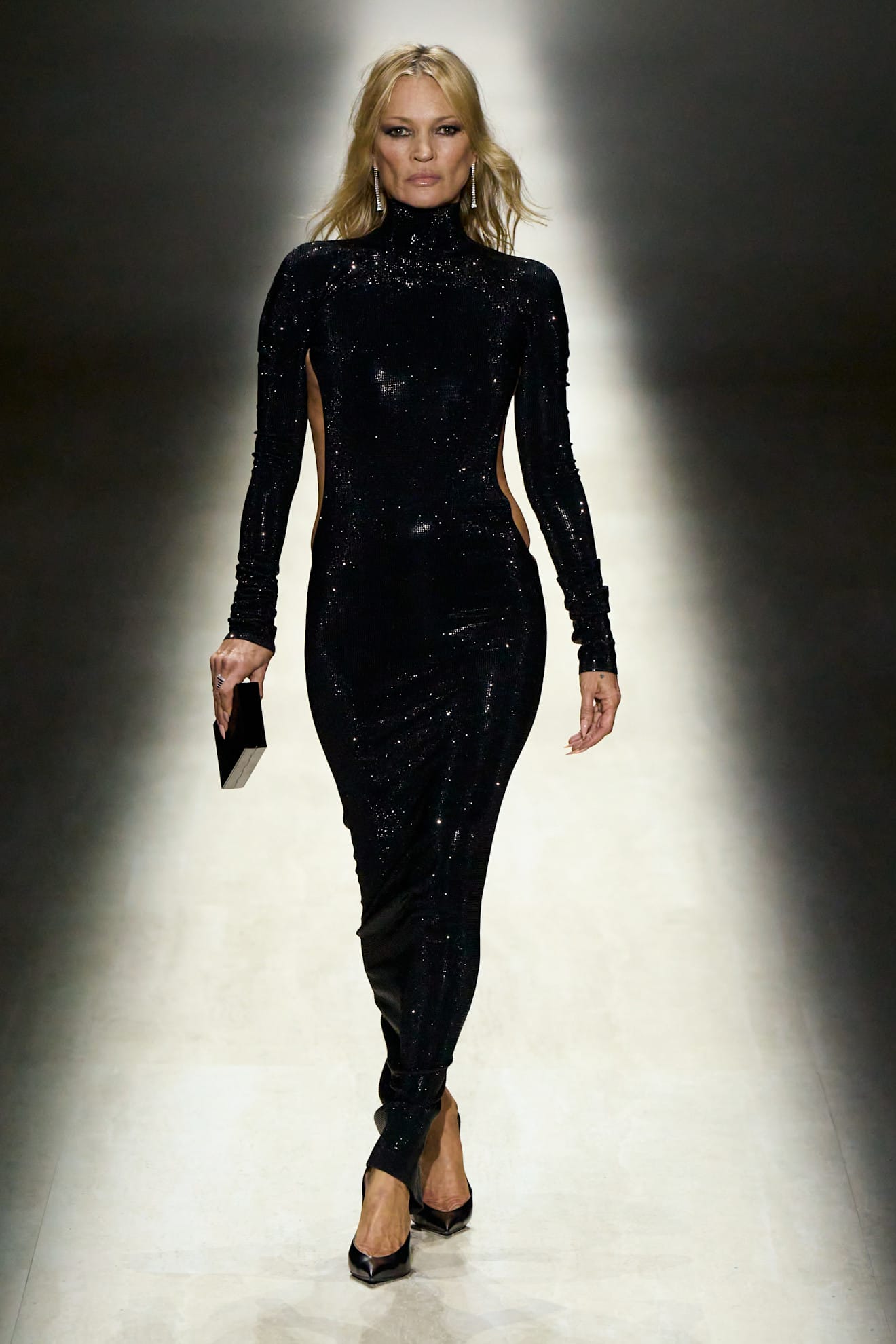
That exploration led him toward sensuality — not as provocation, but as affirmation. In a world that feels fractured and defensive, he frames seduction as something deeply human.
“It’s a very human quality,” he says. “Feeling attractive, feeling seductive. It’s part of a human being. I want to put that out there as something that we need, especially in the world in which we live right now. That kind of beauty and love that we can see in ourselves.”
Sex appeal, in his view, is simply one expression of self-acceptance. The collection’s charge lies in that generosity. It invites the wearer not to perform for the algorithm, but to enjoy themselves.
When asked what defines the new Gucci, he answers without hesitation: “New Gucci is looking forward.”
Looking forward does not mean abandoning the house’s DNA. It means activating it — the flirtation, the boldness, the fearless pleasure that have long animated Gucci at its best. In Demna’s hands, those qualities feel personal again.
As the room empties and the adrenaline begins to settle, he circles back to that initial hope: that we felt it.
Energy. Passion. Fun. Sexy.
For a designer who once built his reputation on critique, this is something far more direct. Demna’s Gucci is not a thesis. It is a sensation — and he is clearly, unmistakably in love.