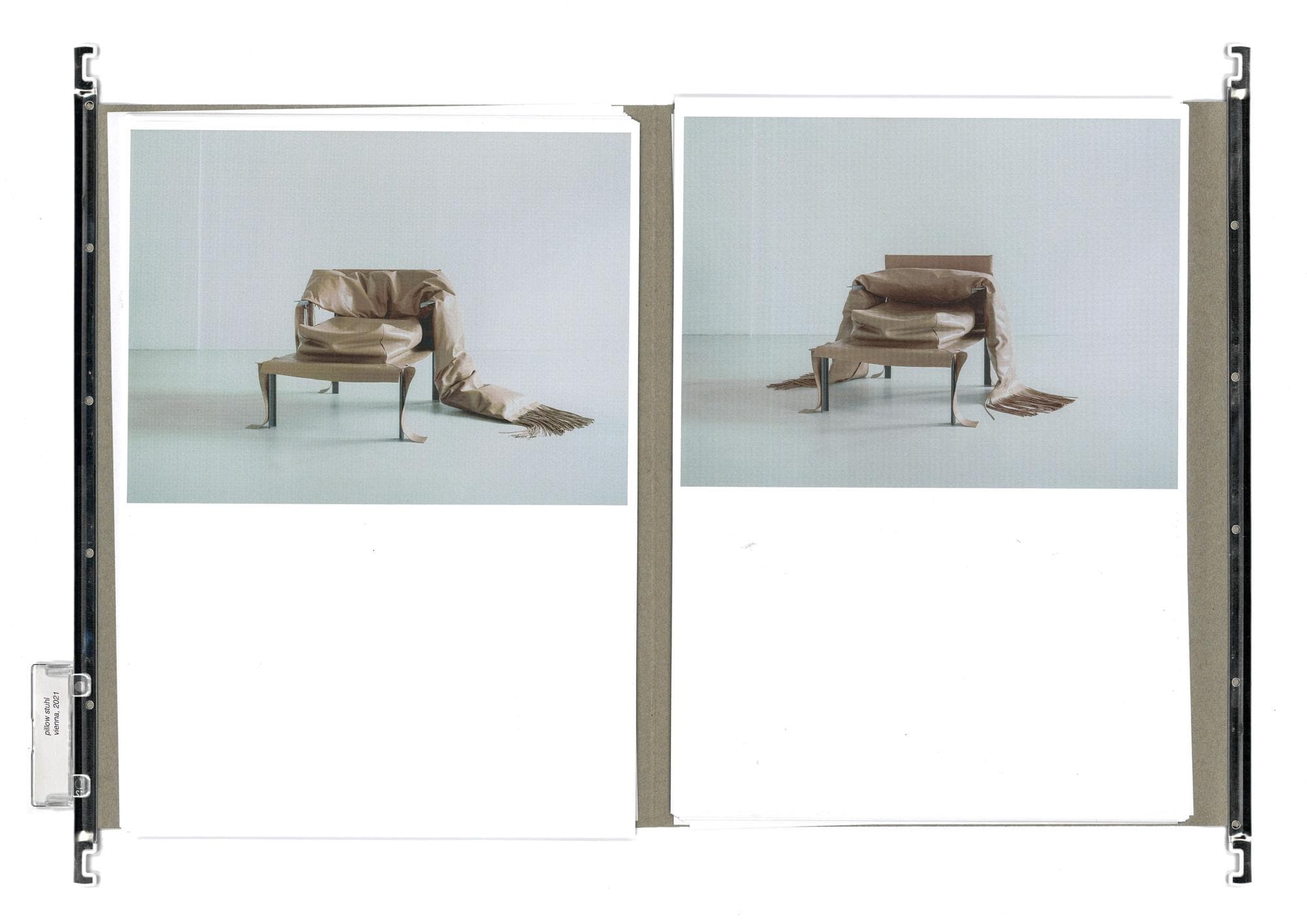
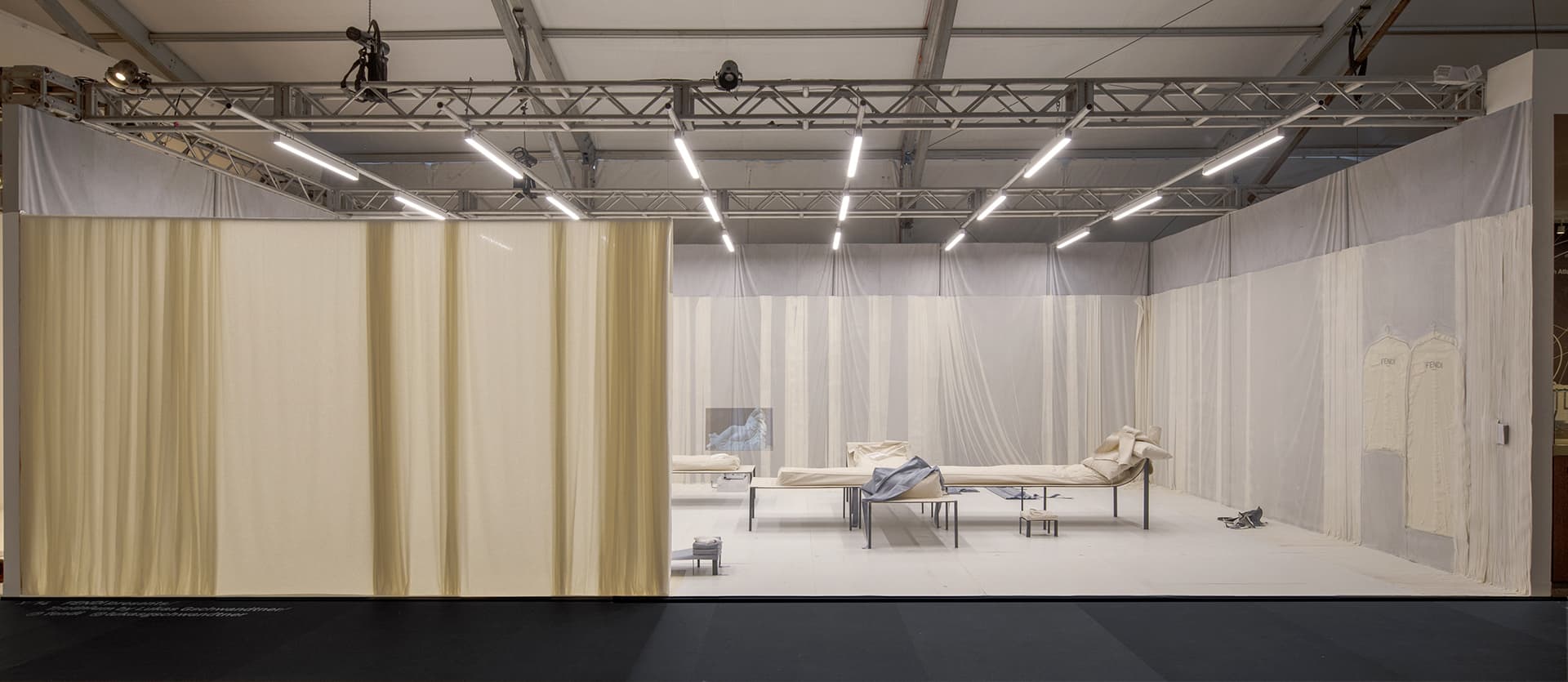
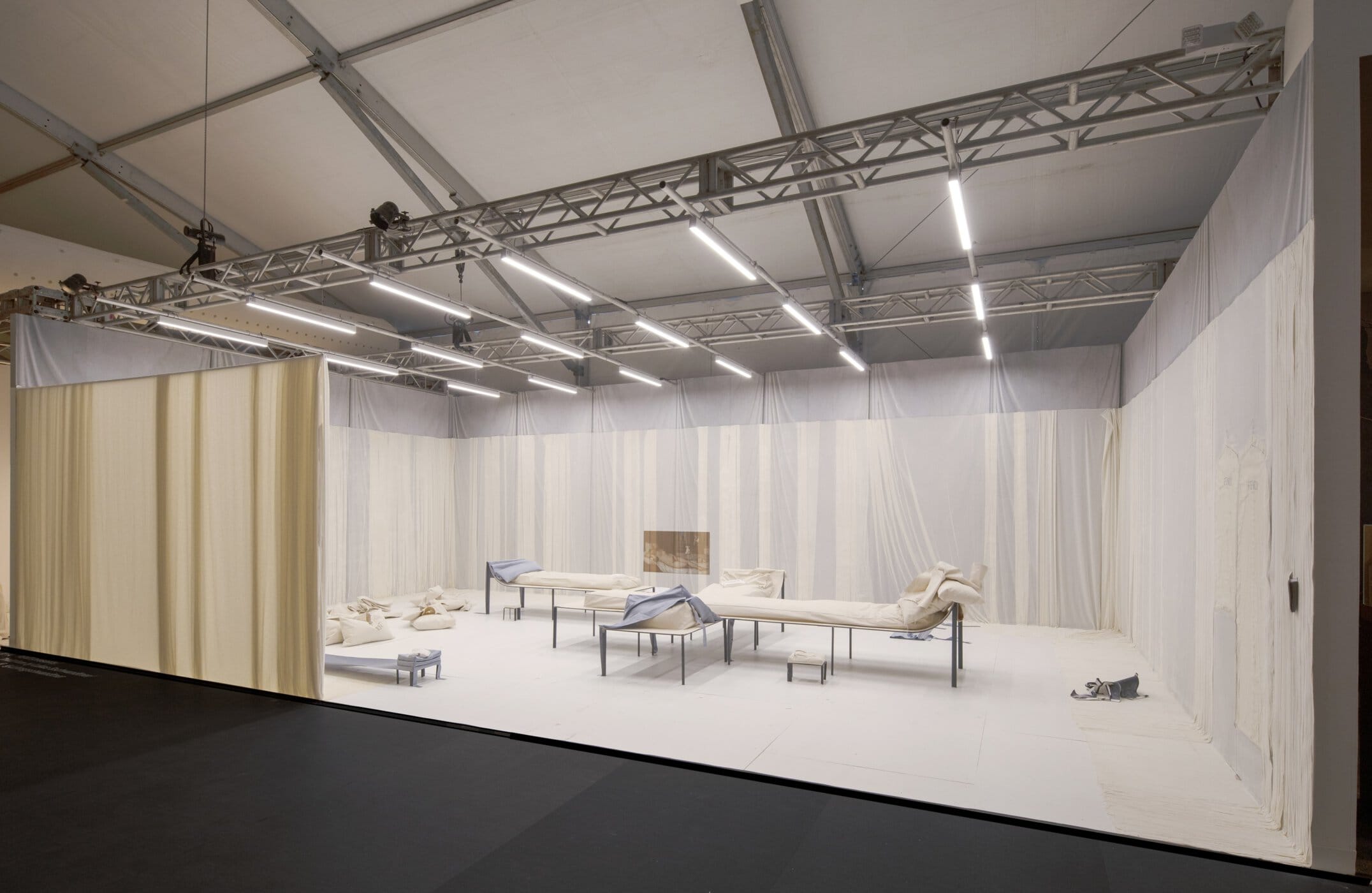
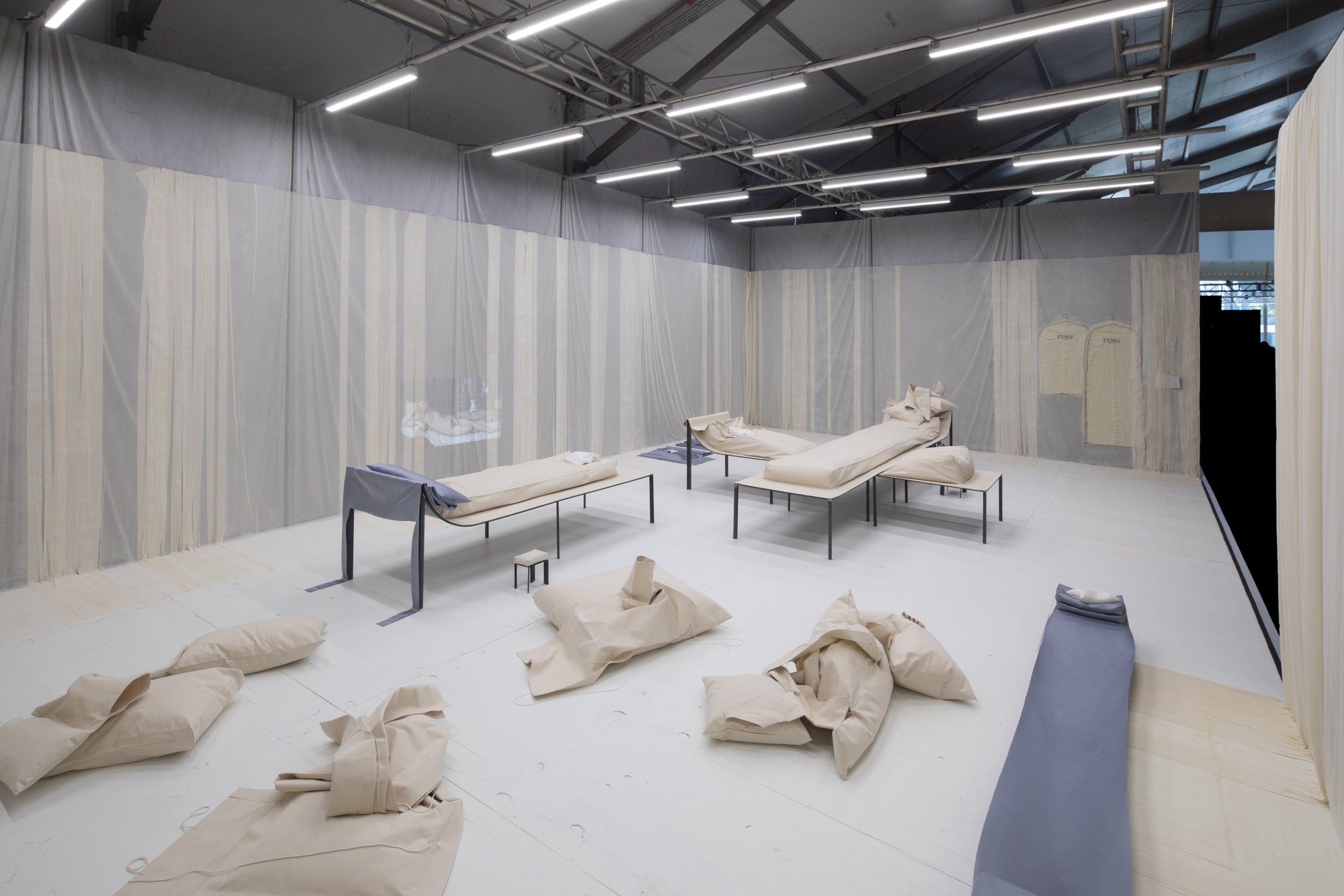
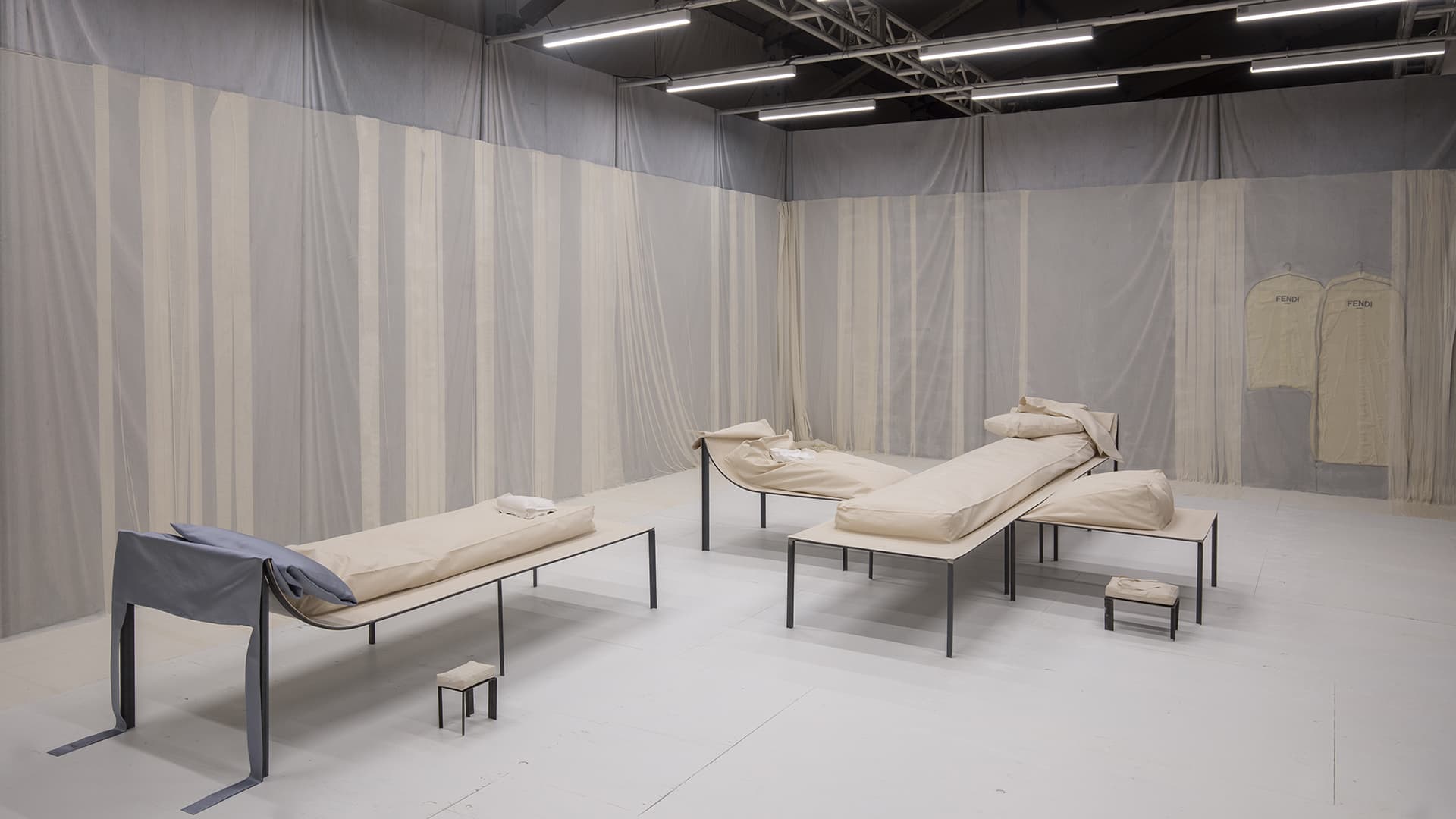
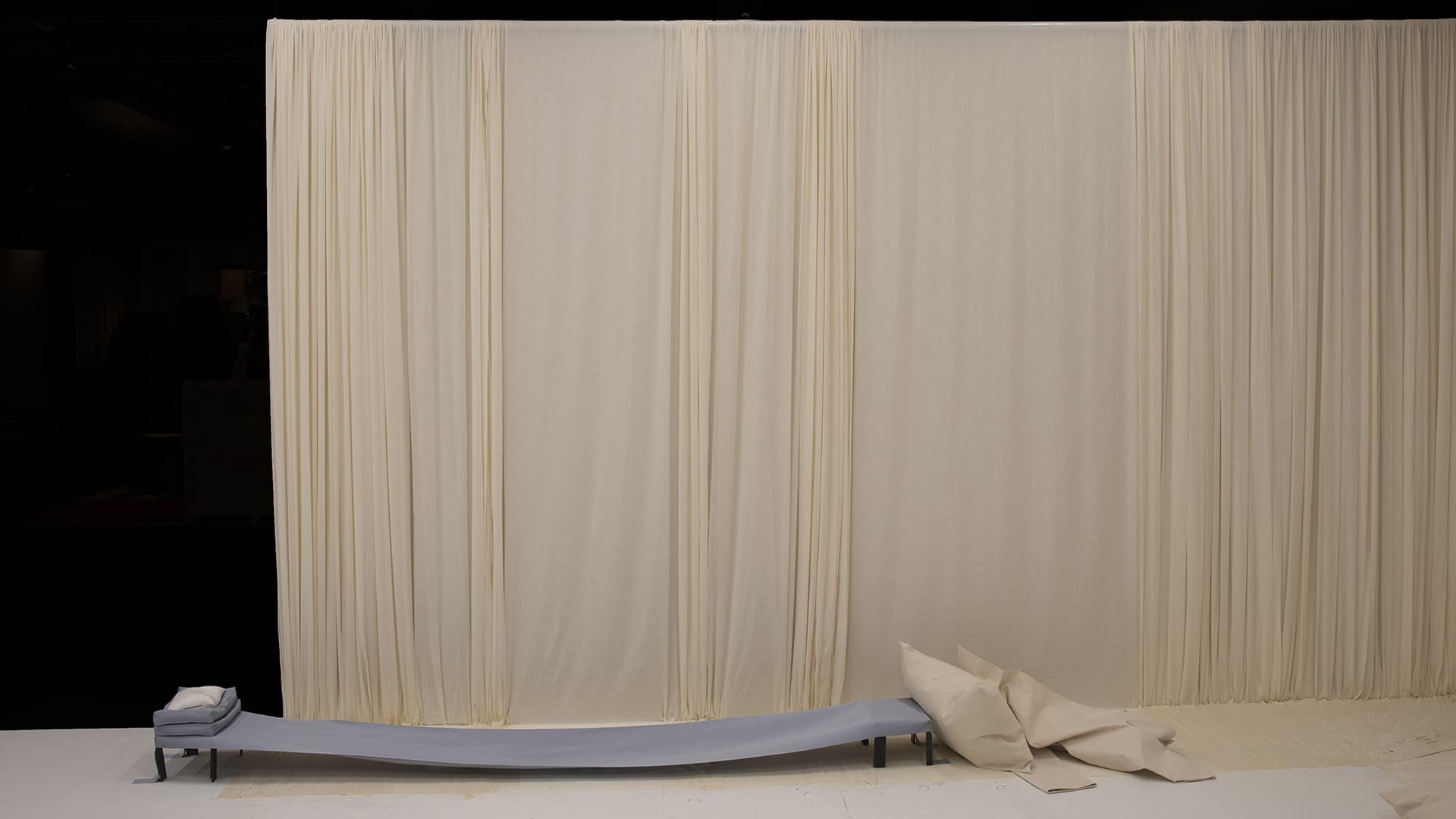
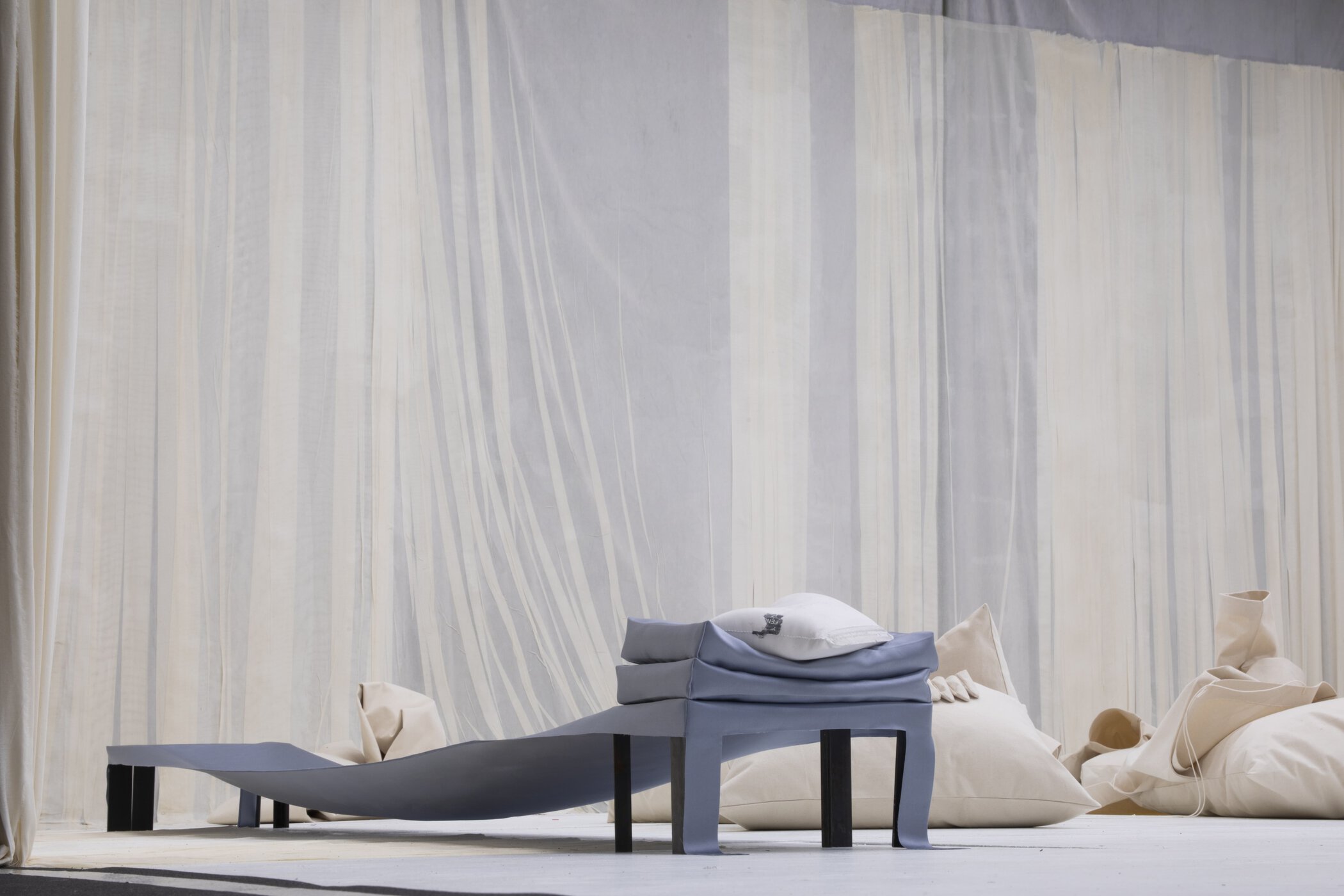
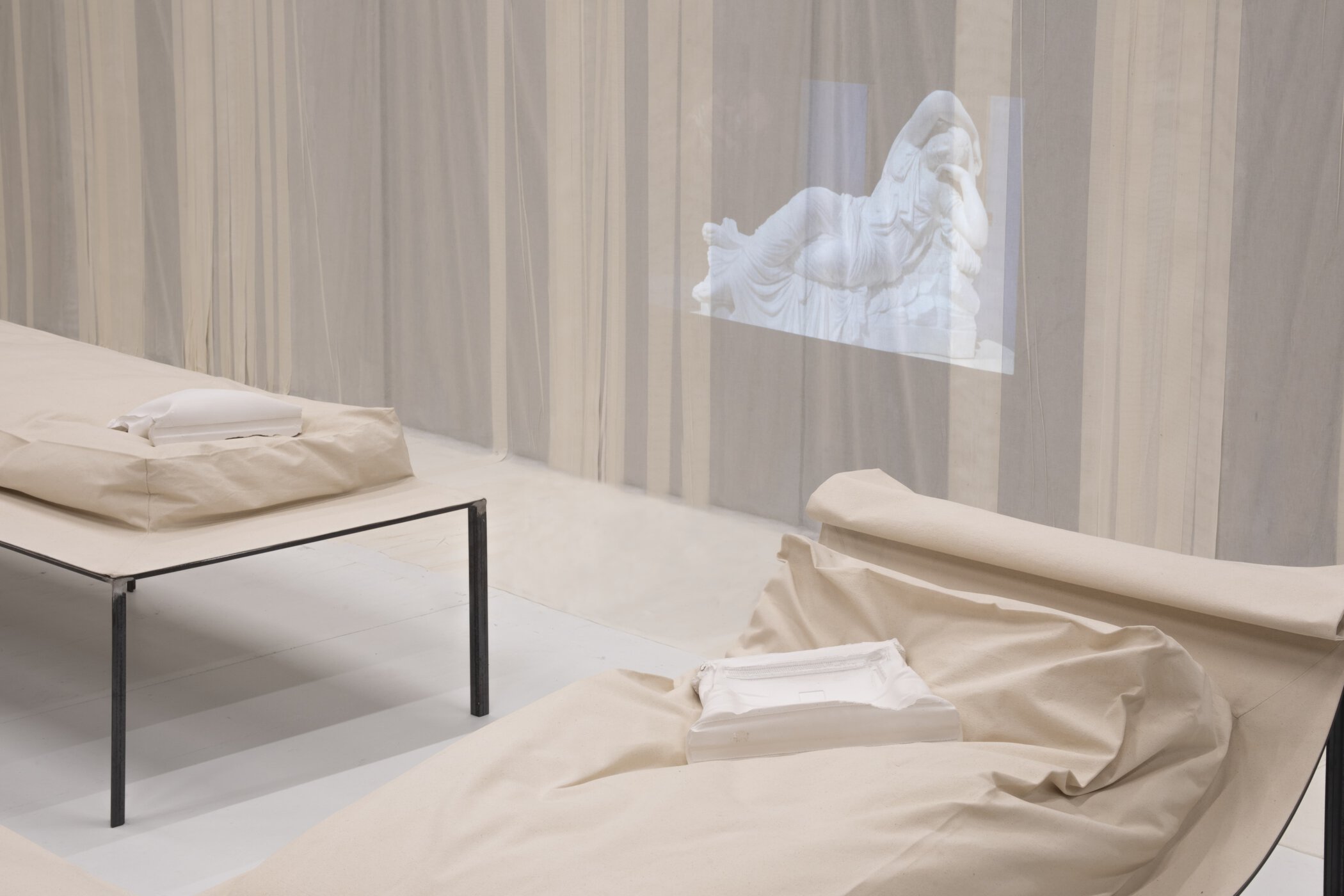
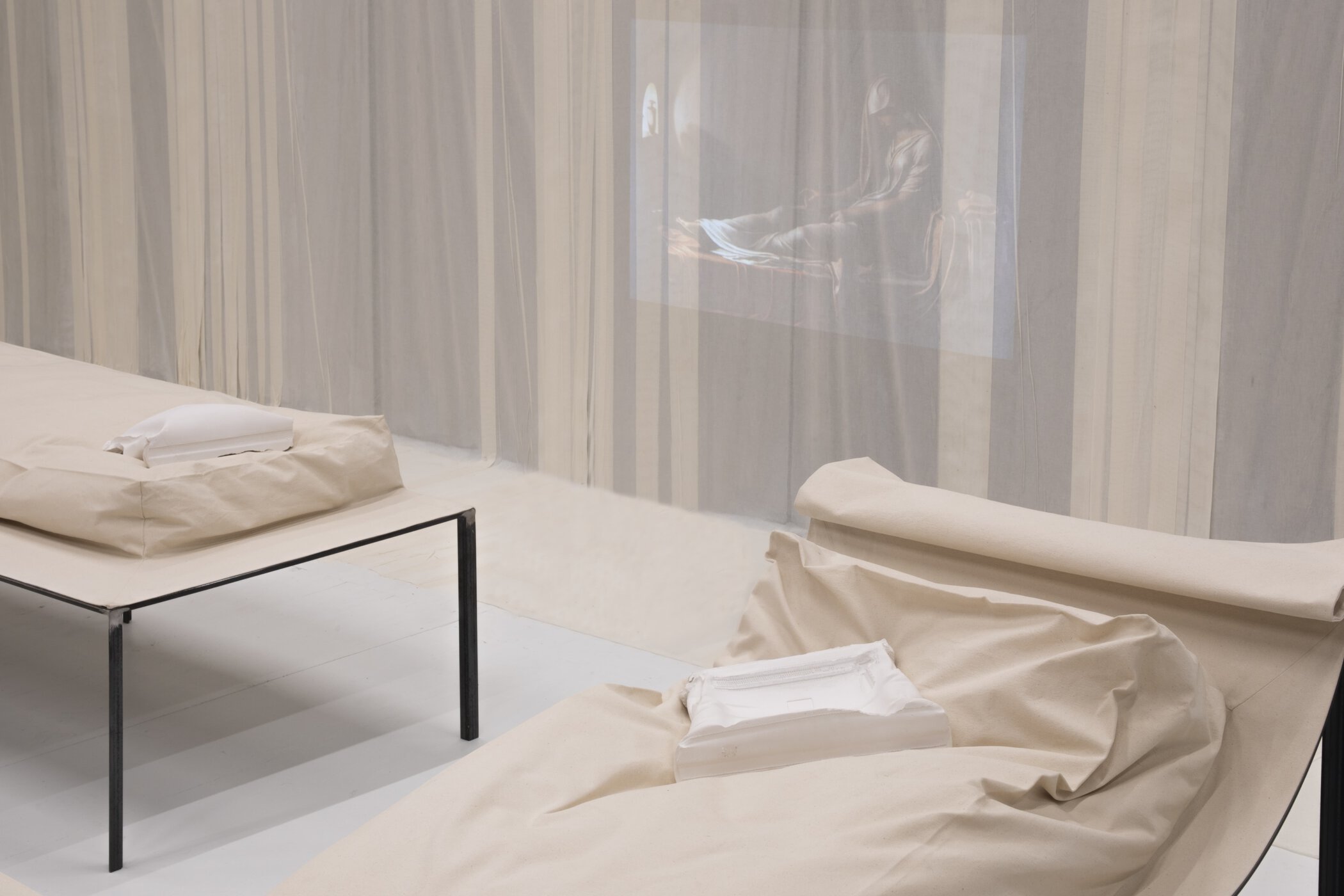
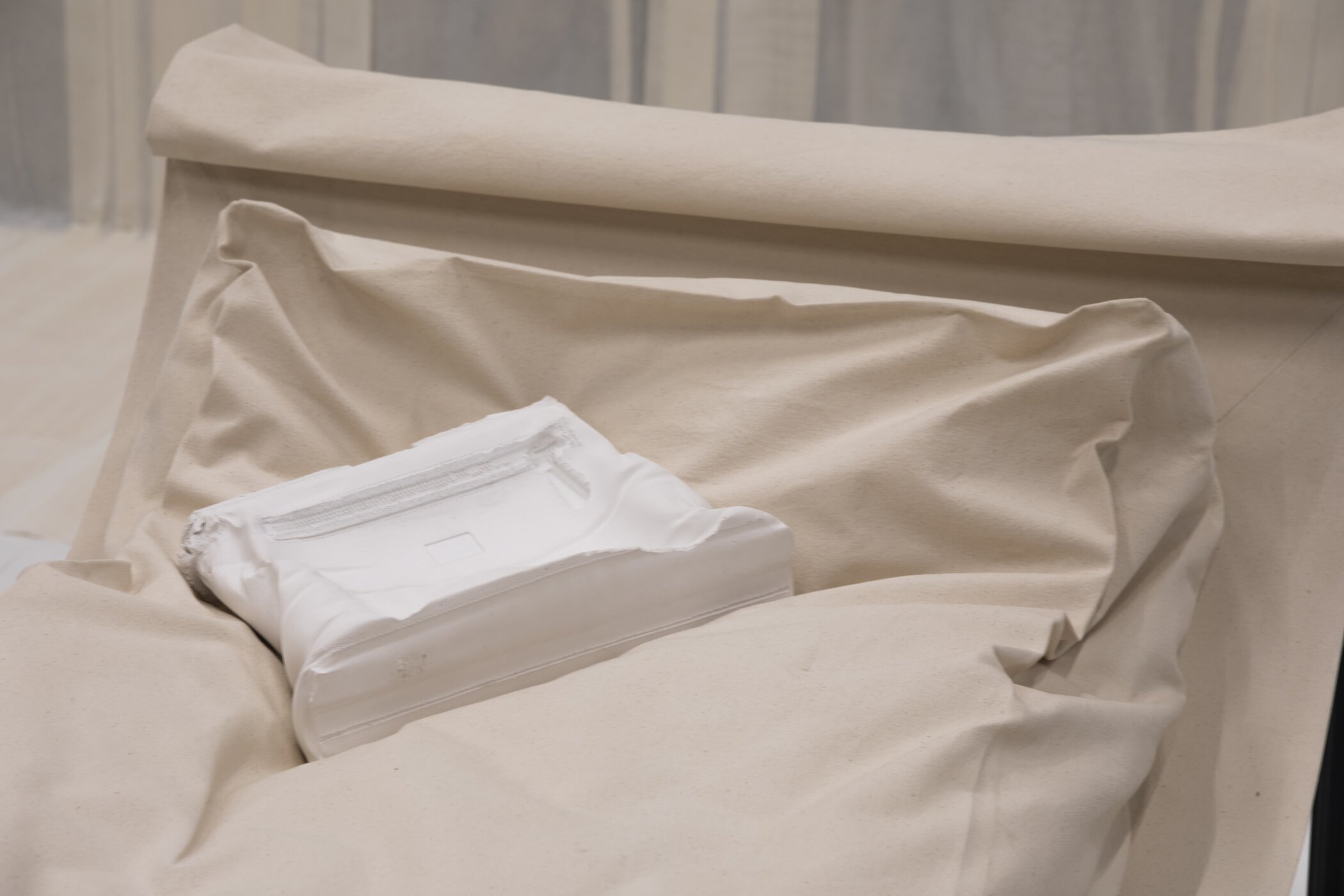
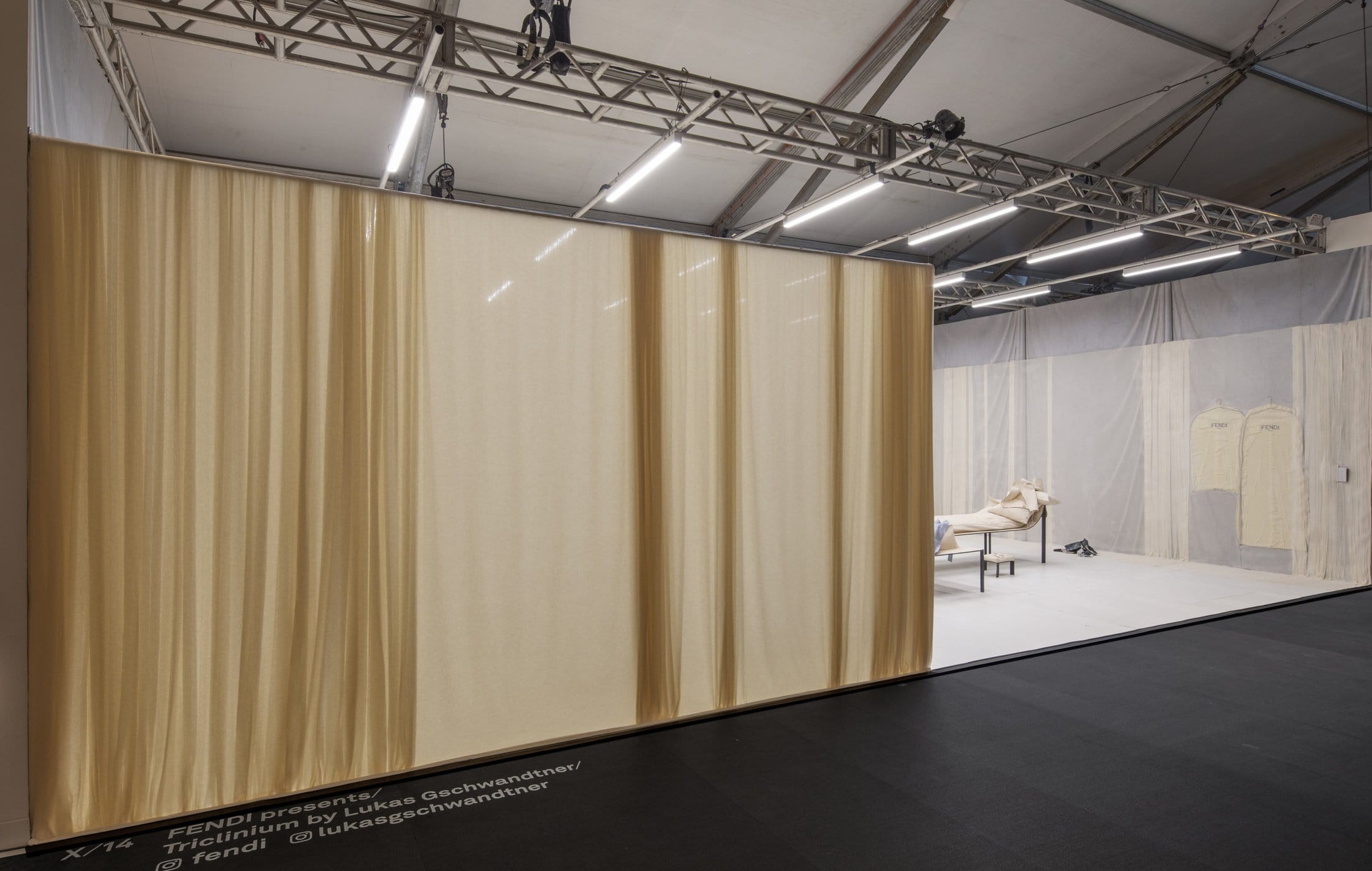
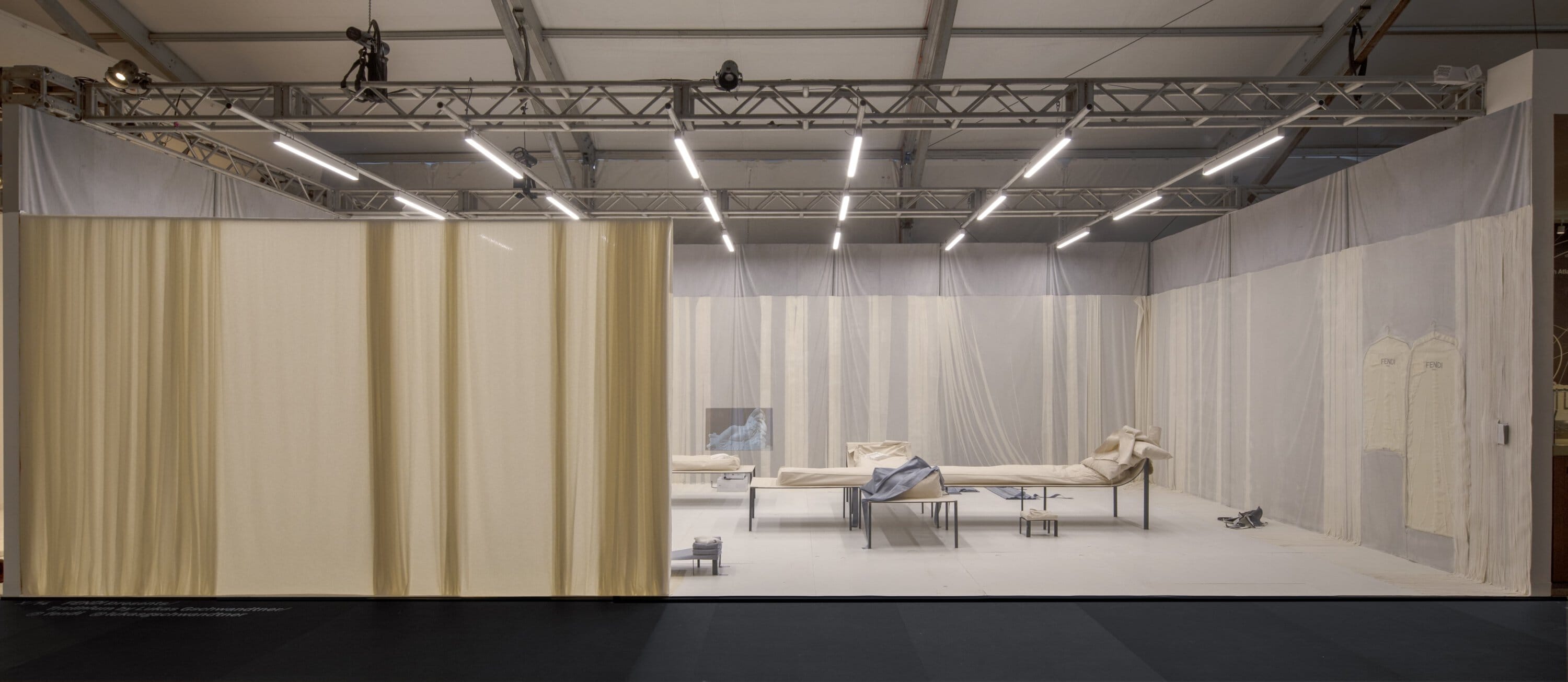
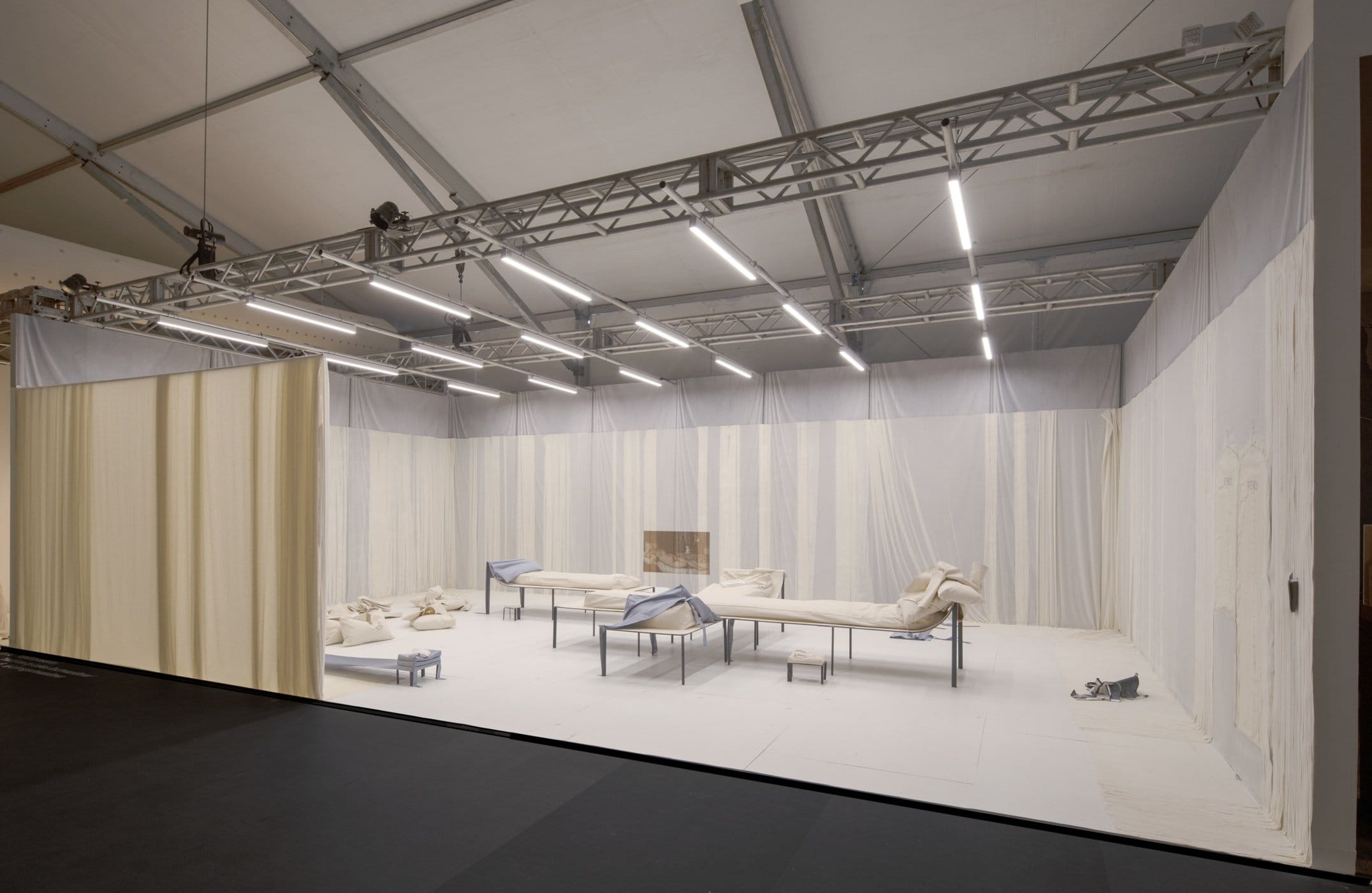
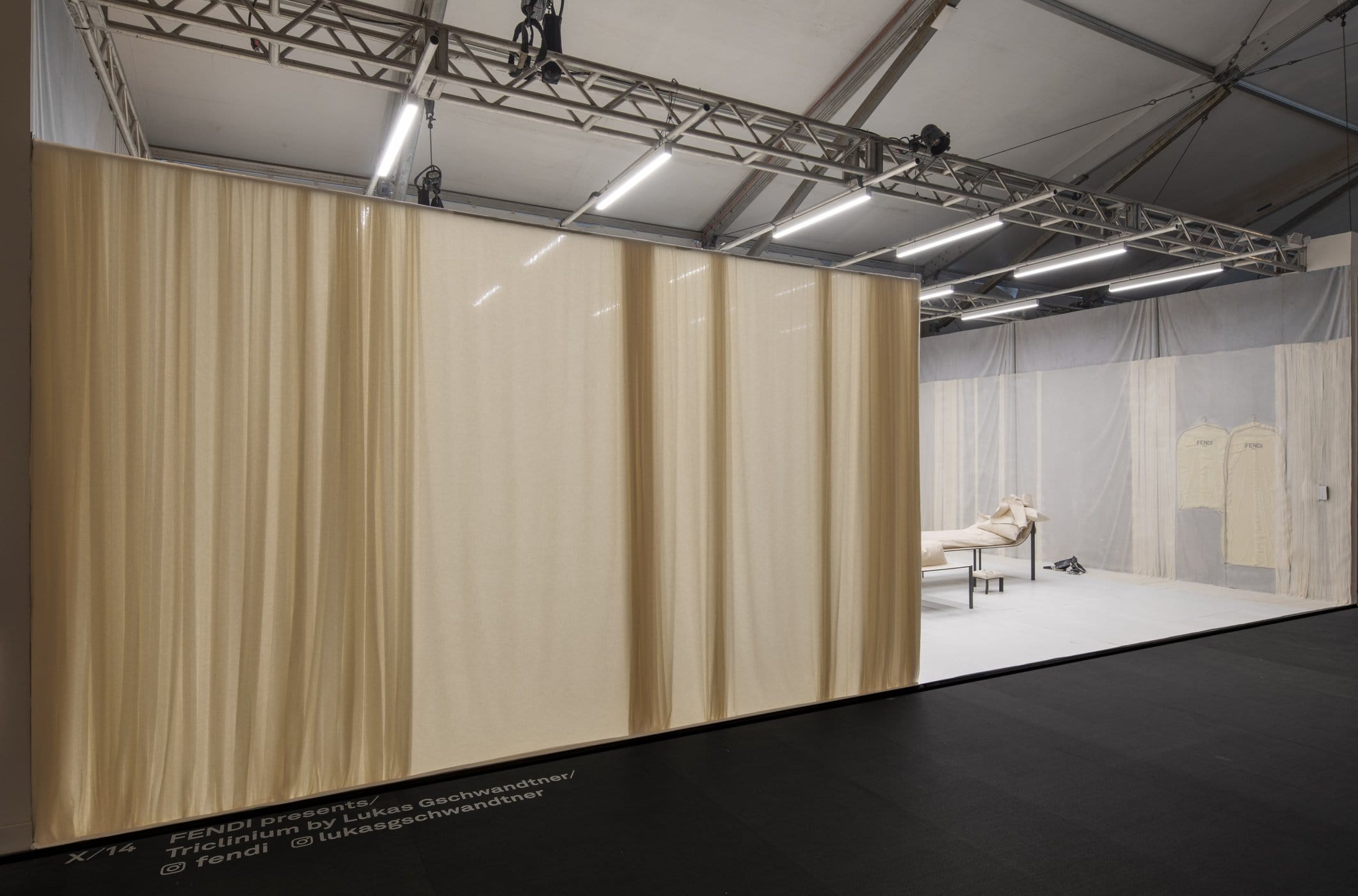
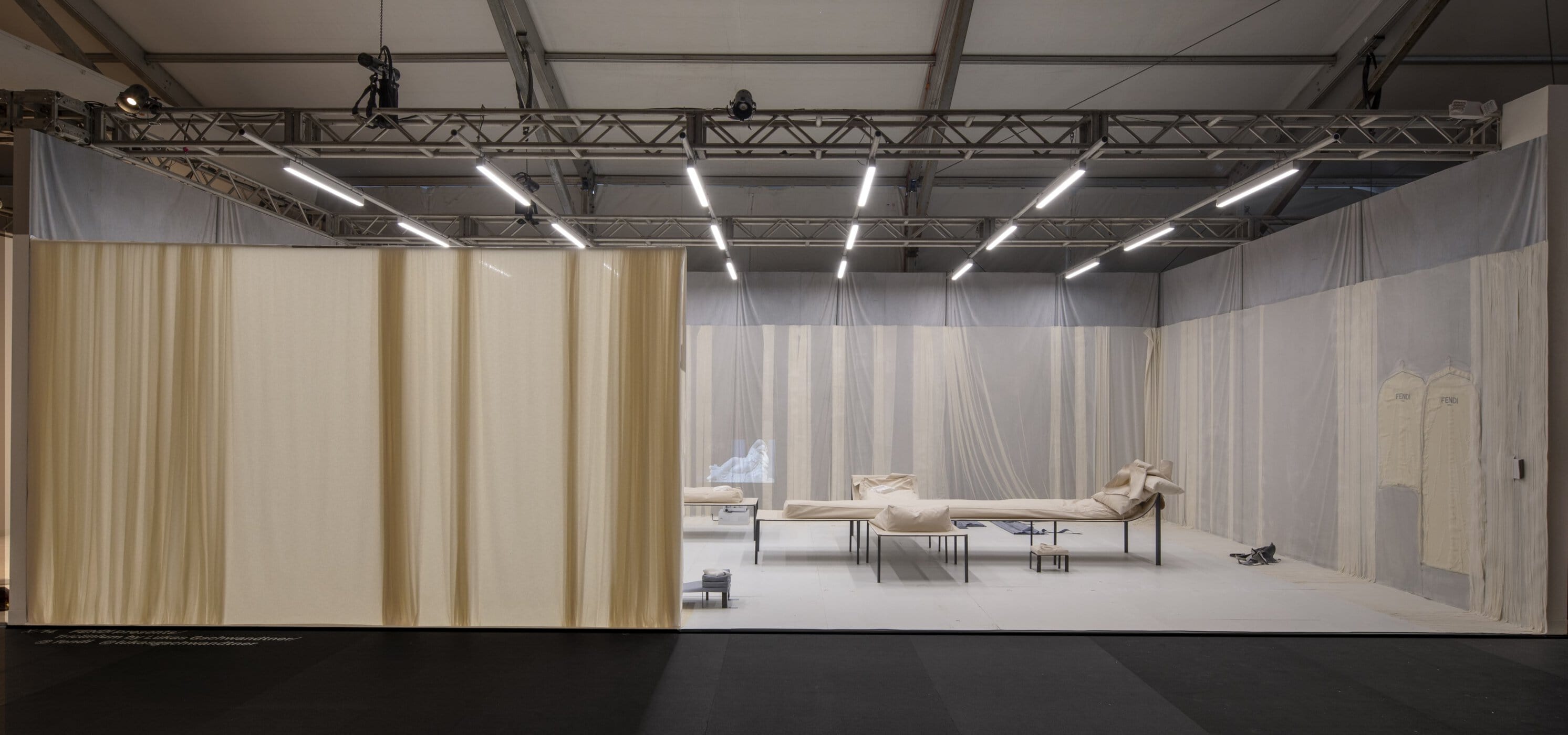
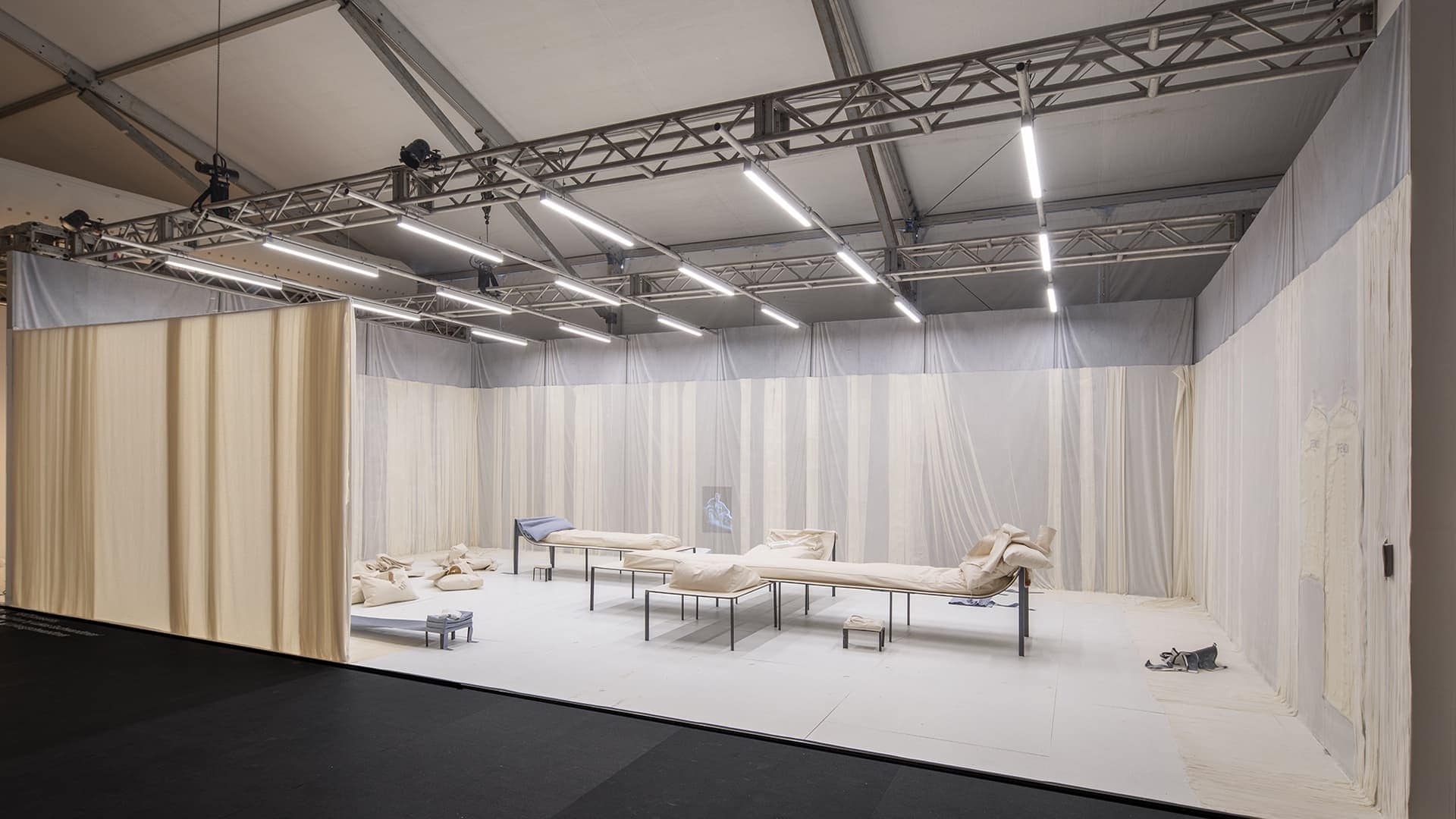
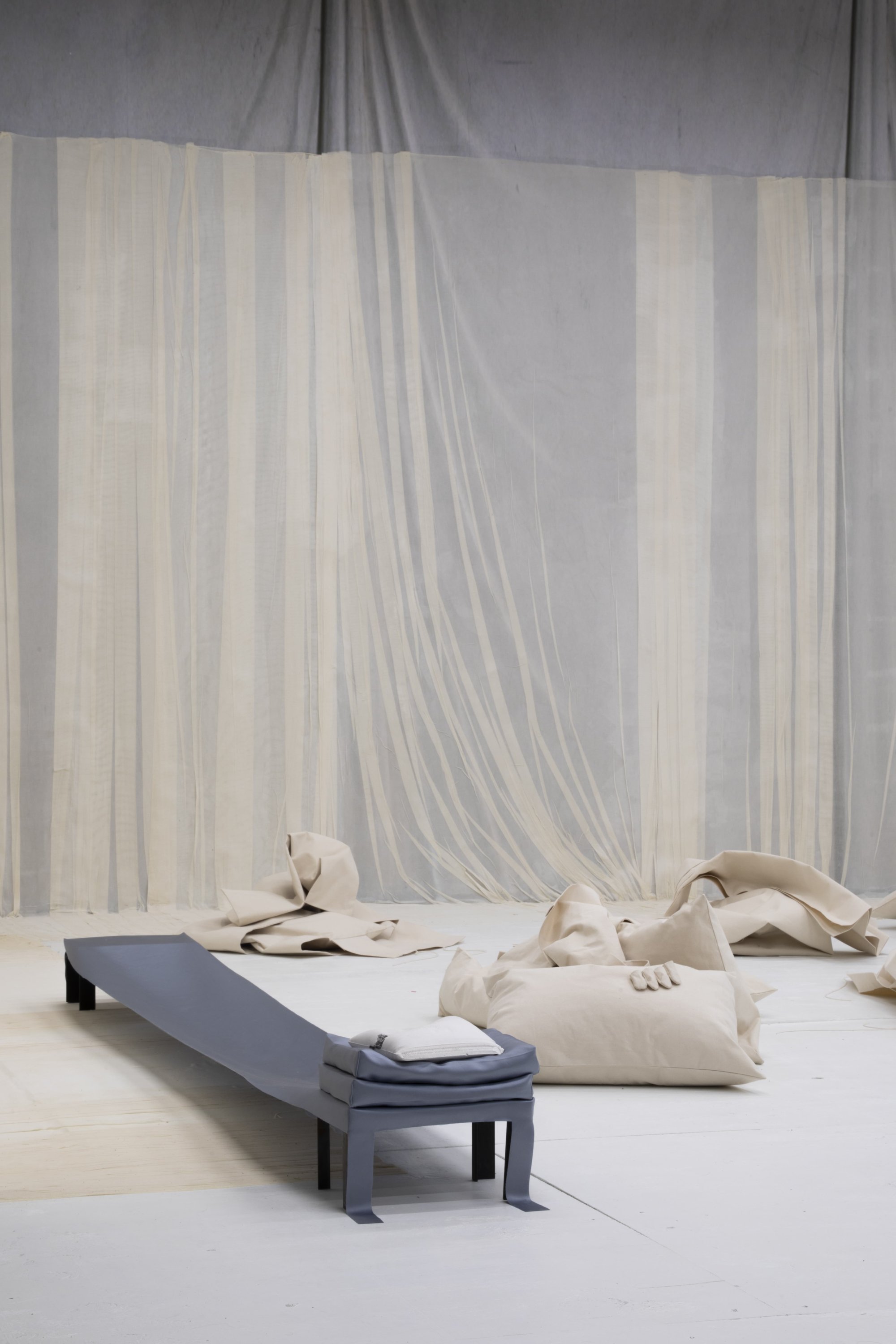
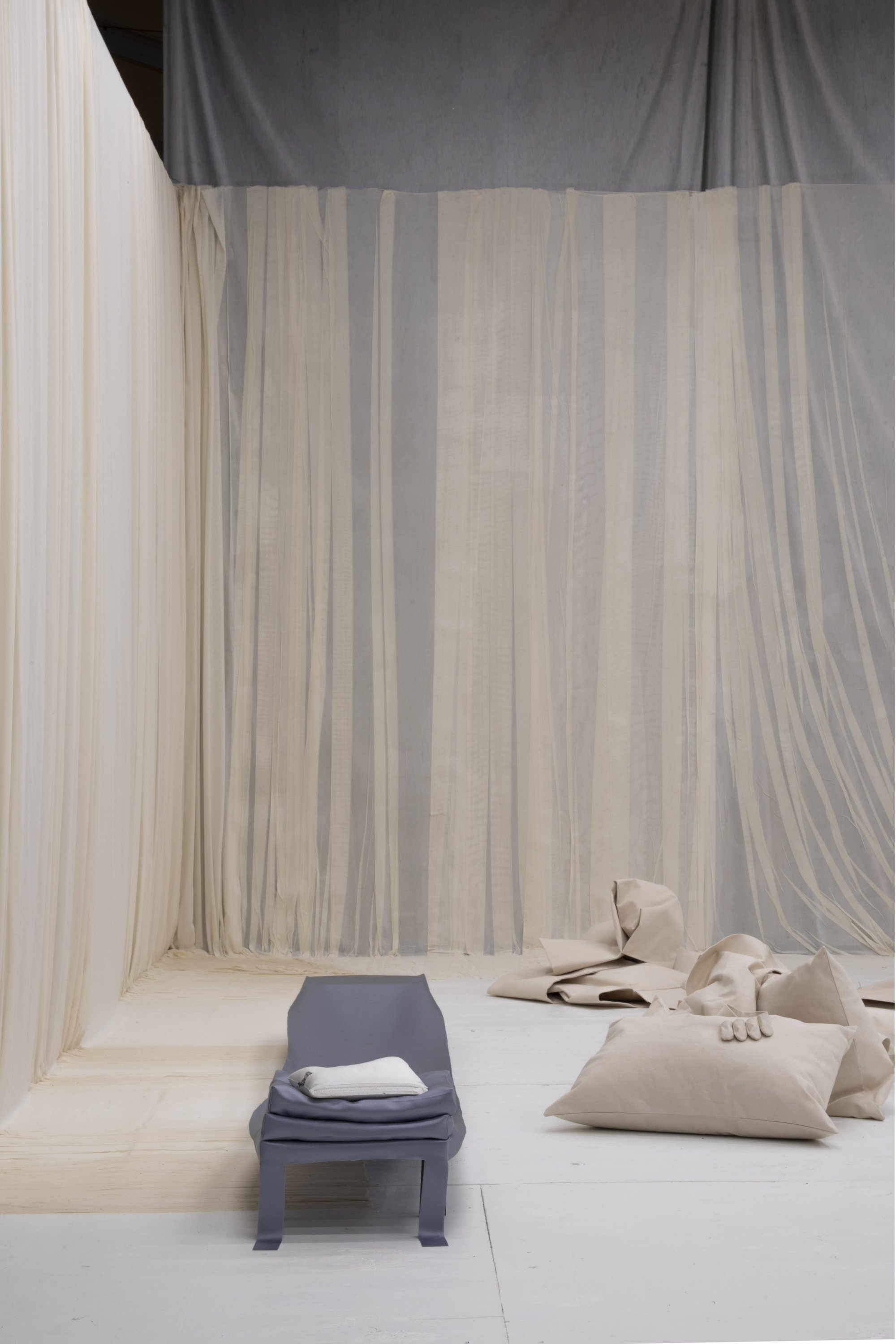
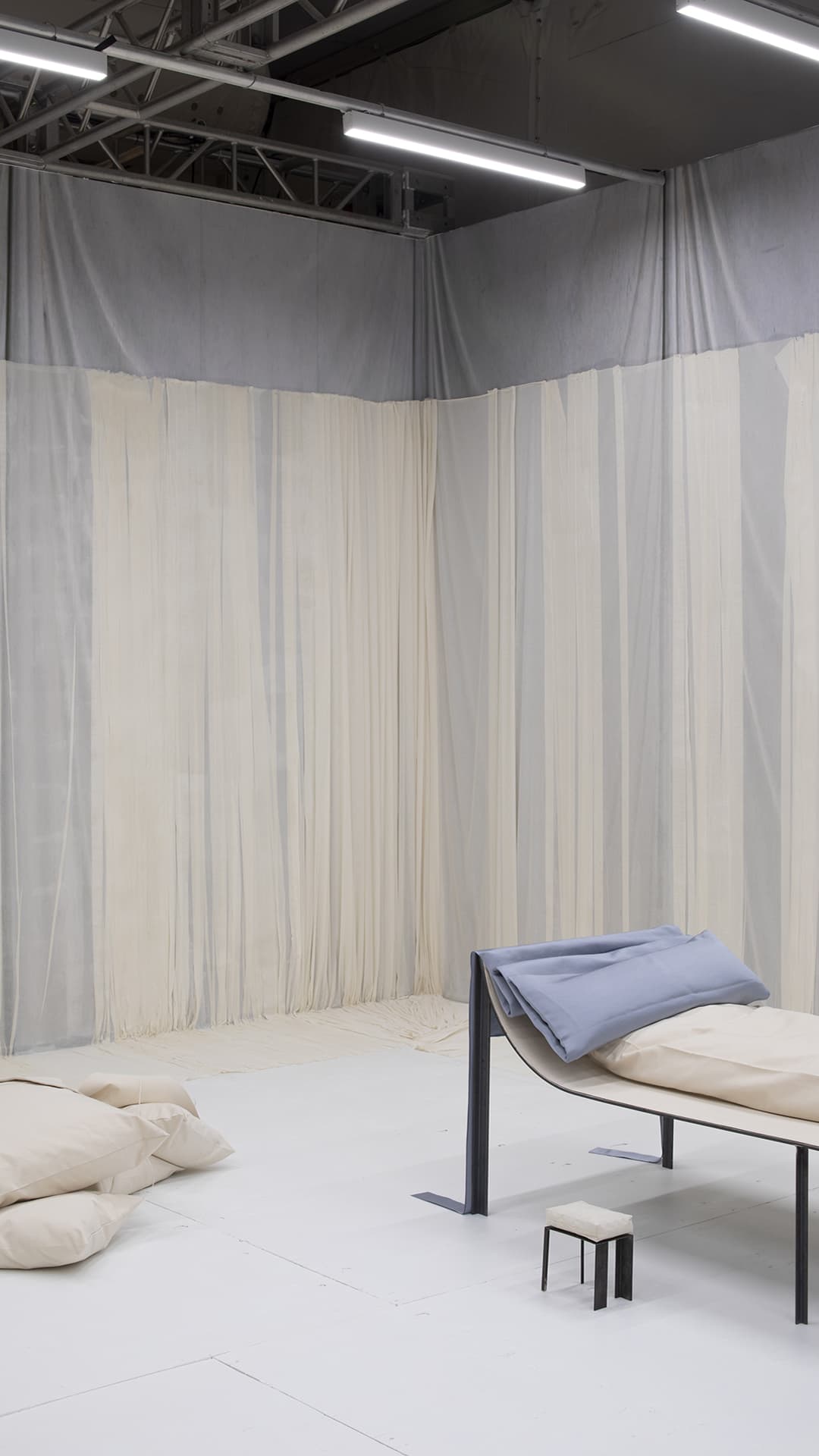
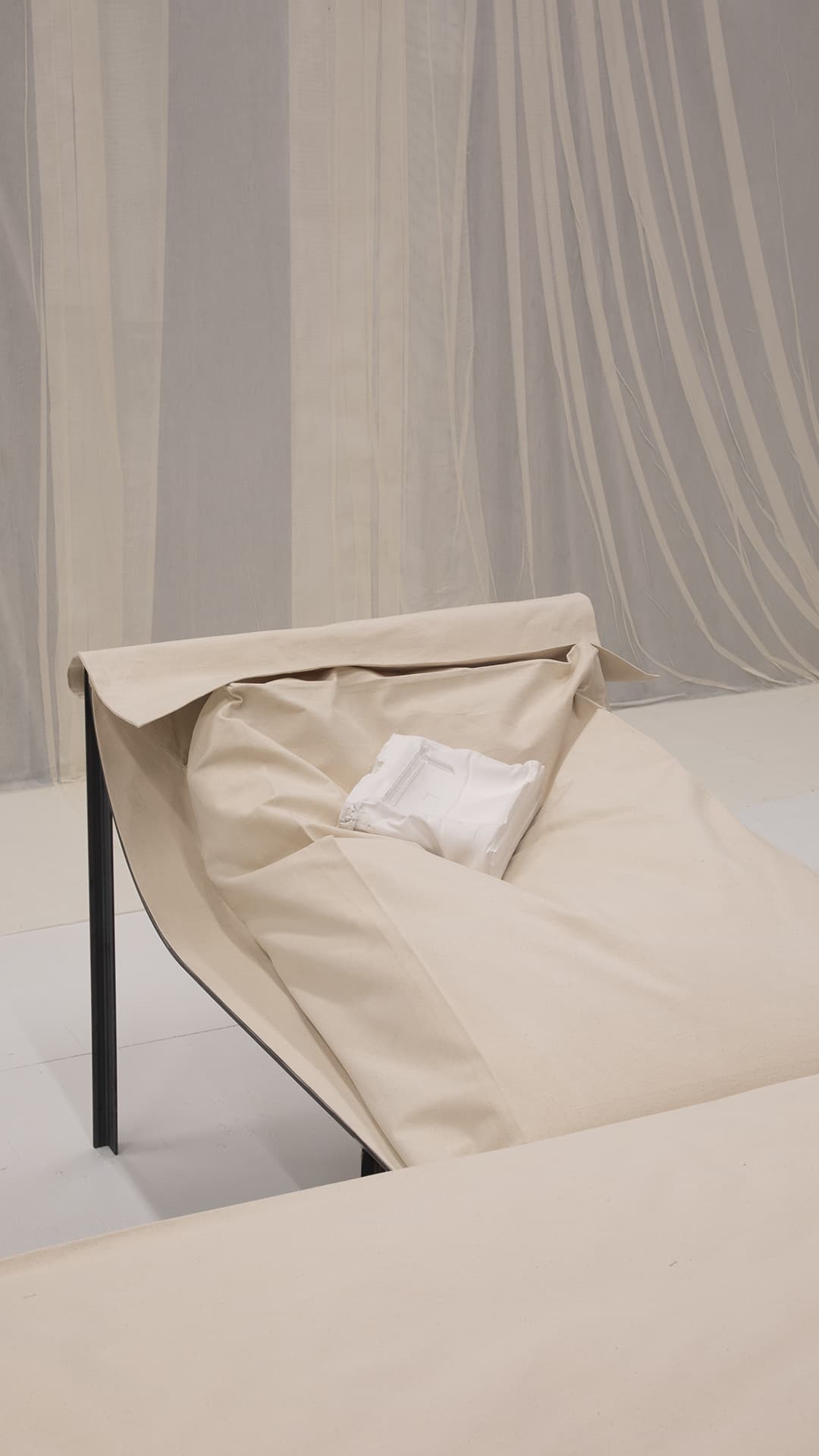
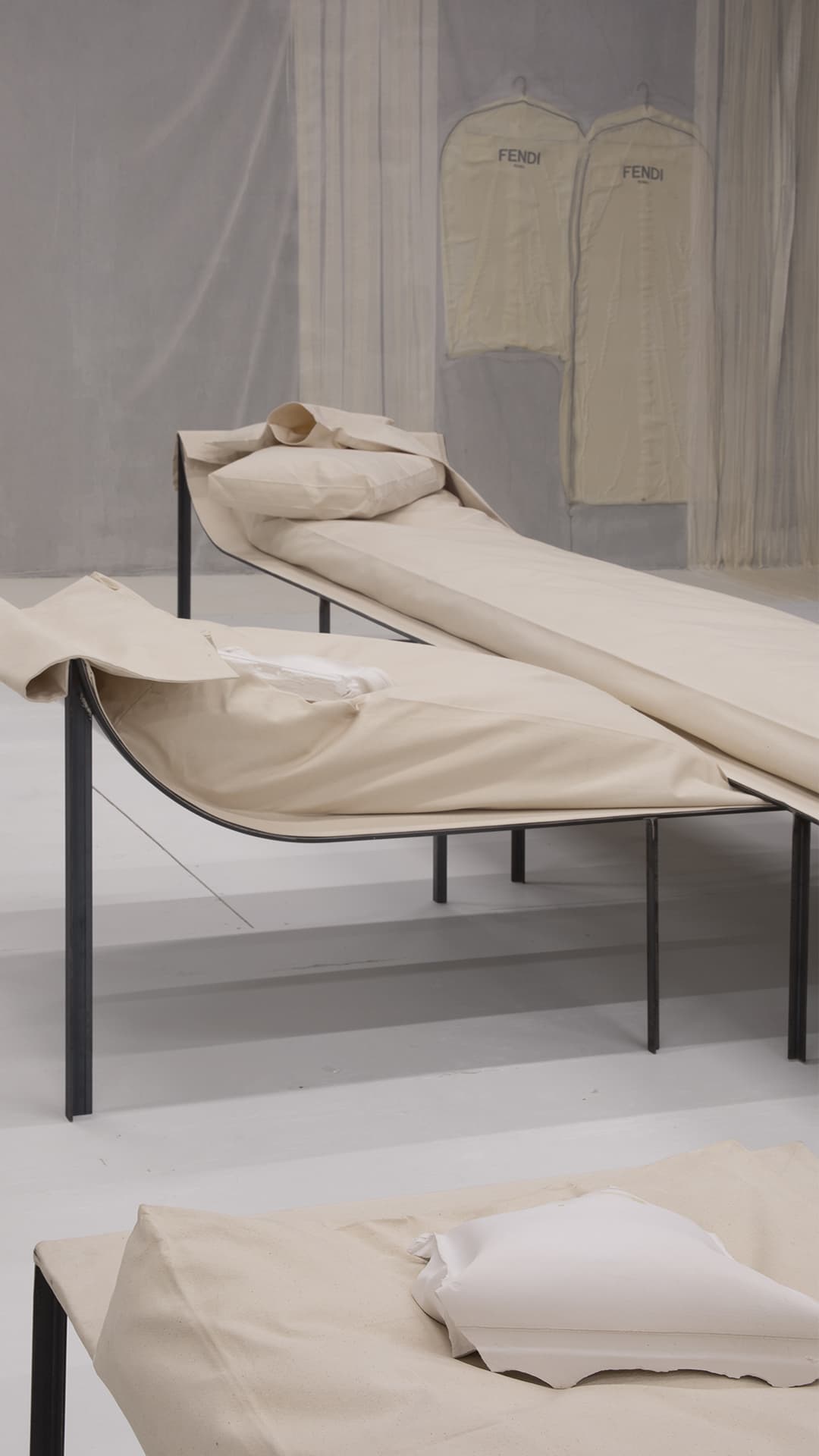
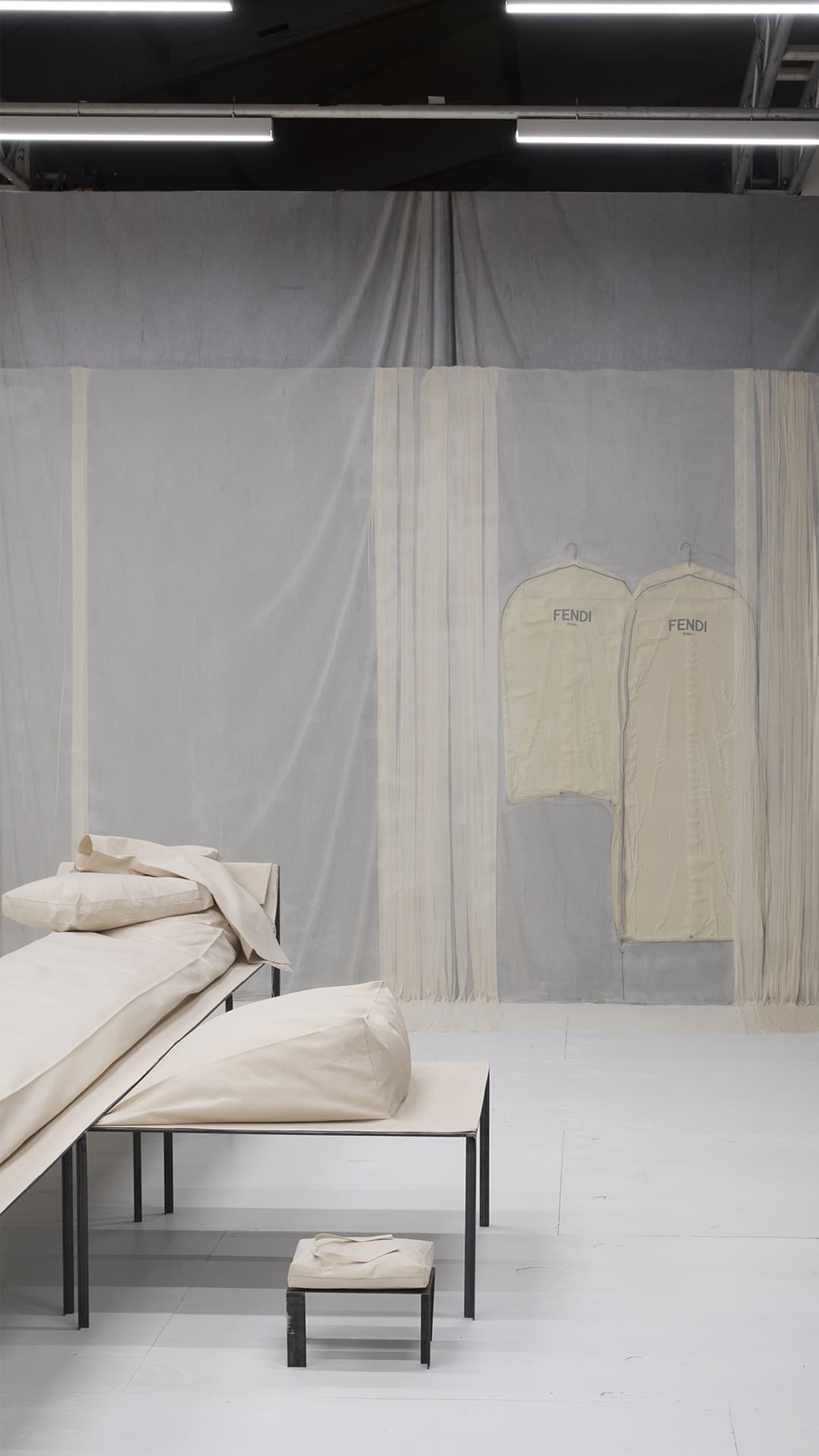
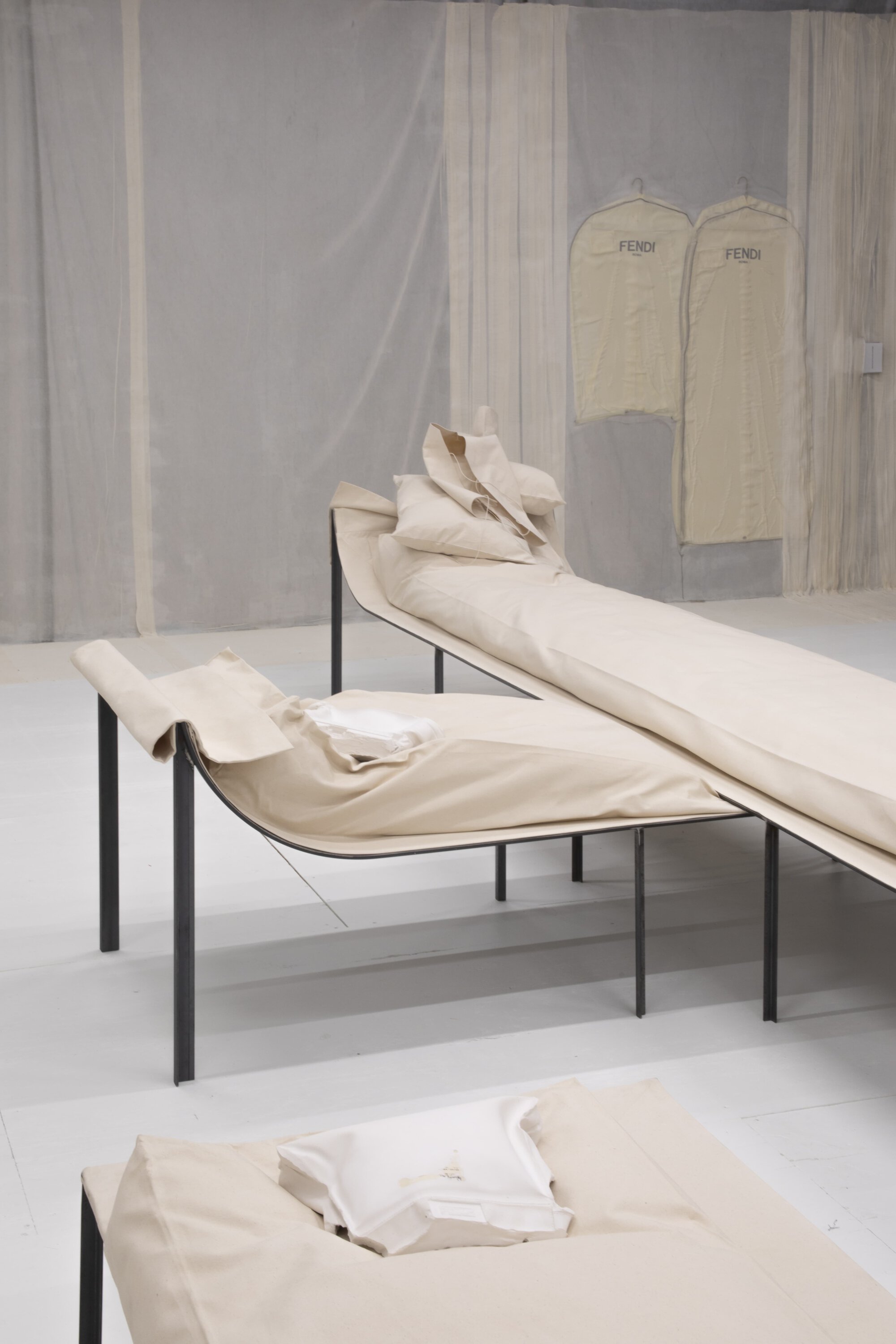
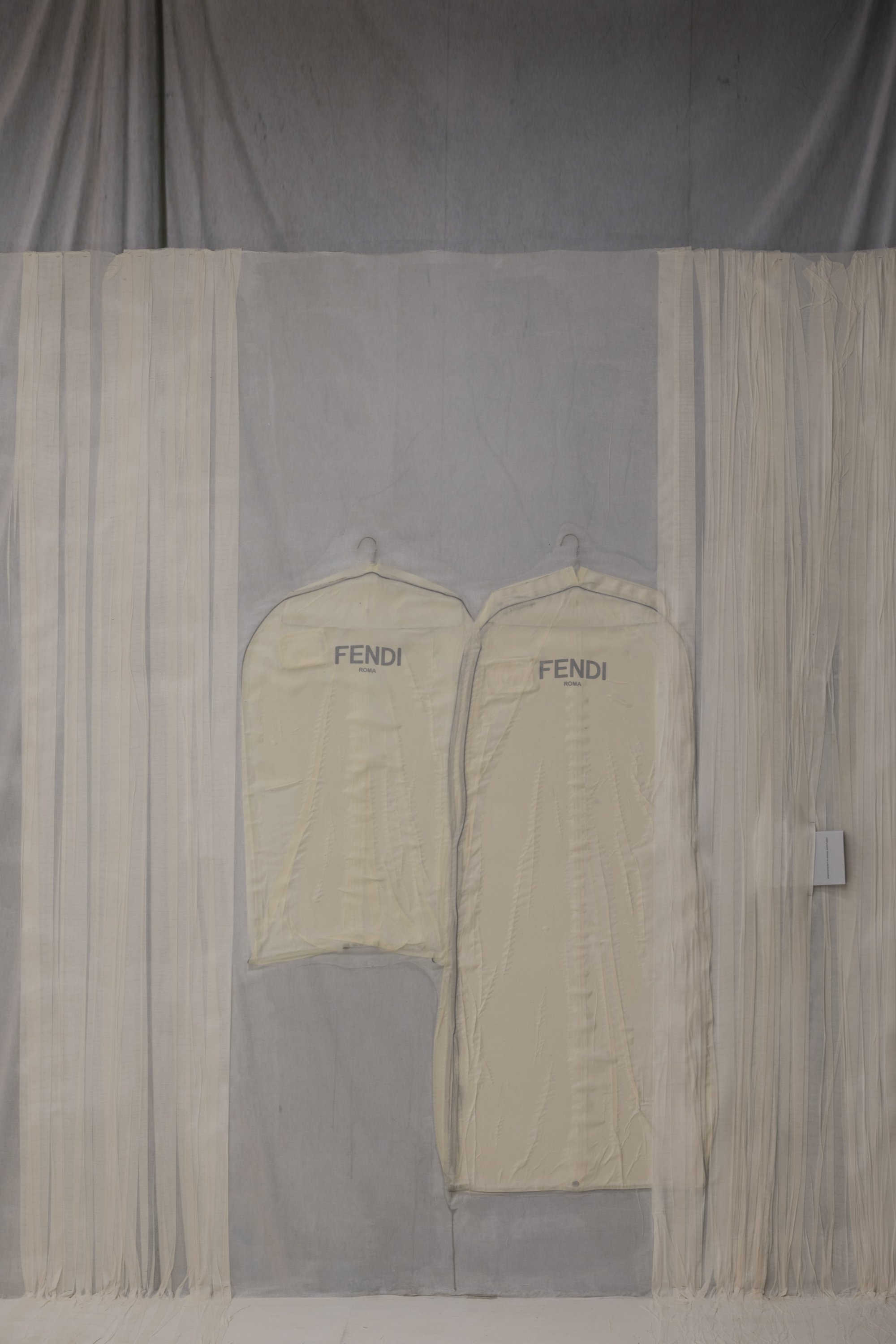
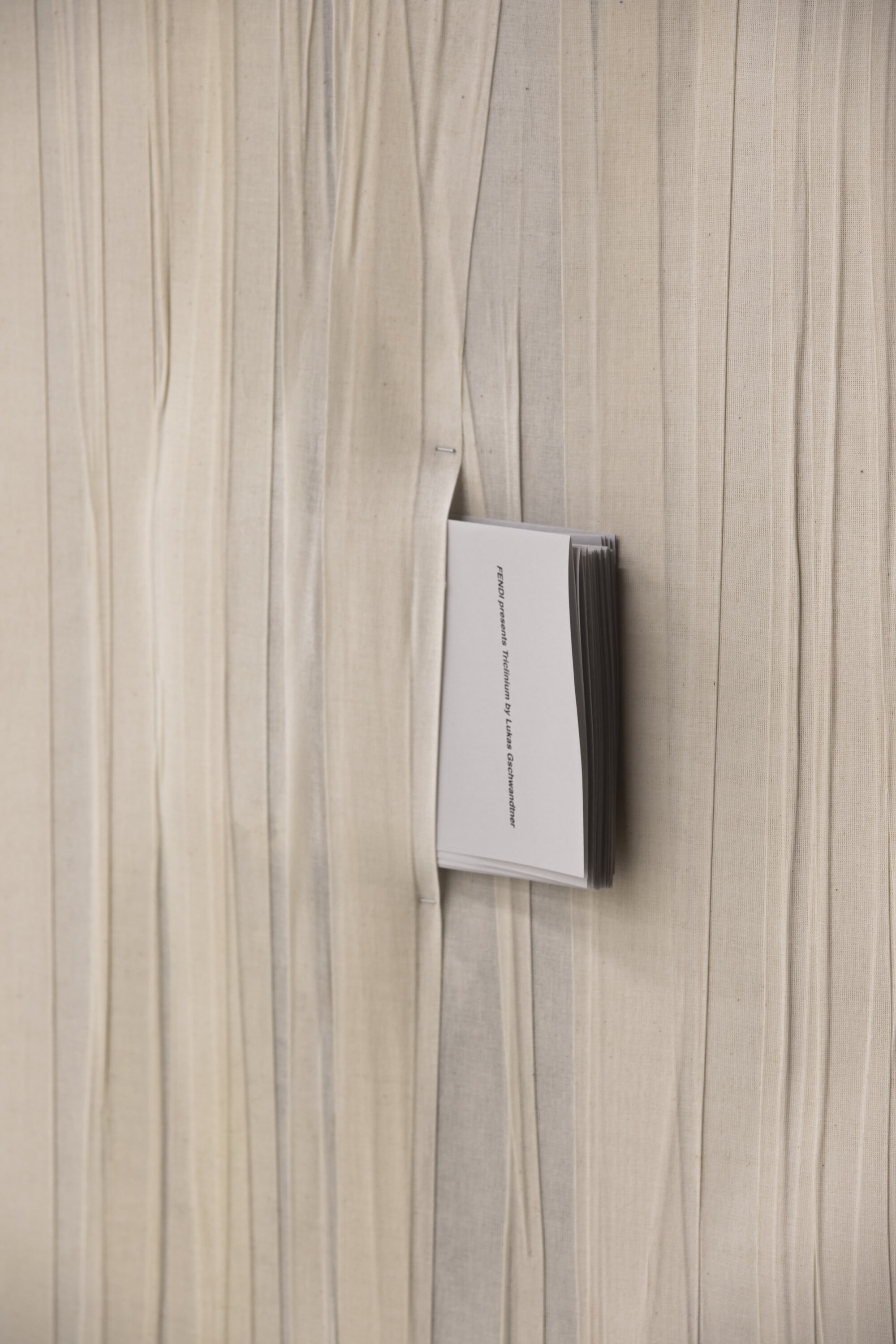
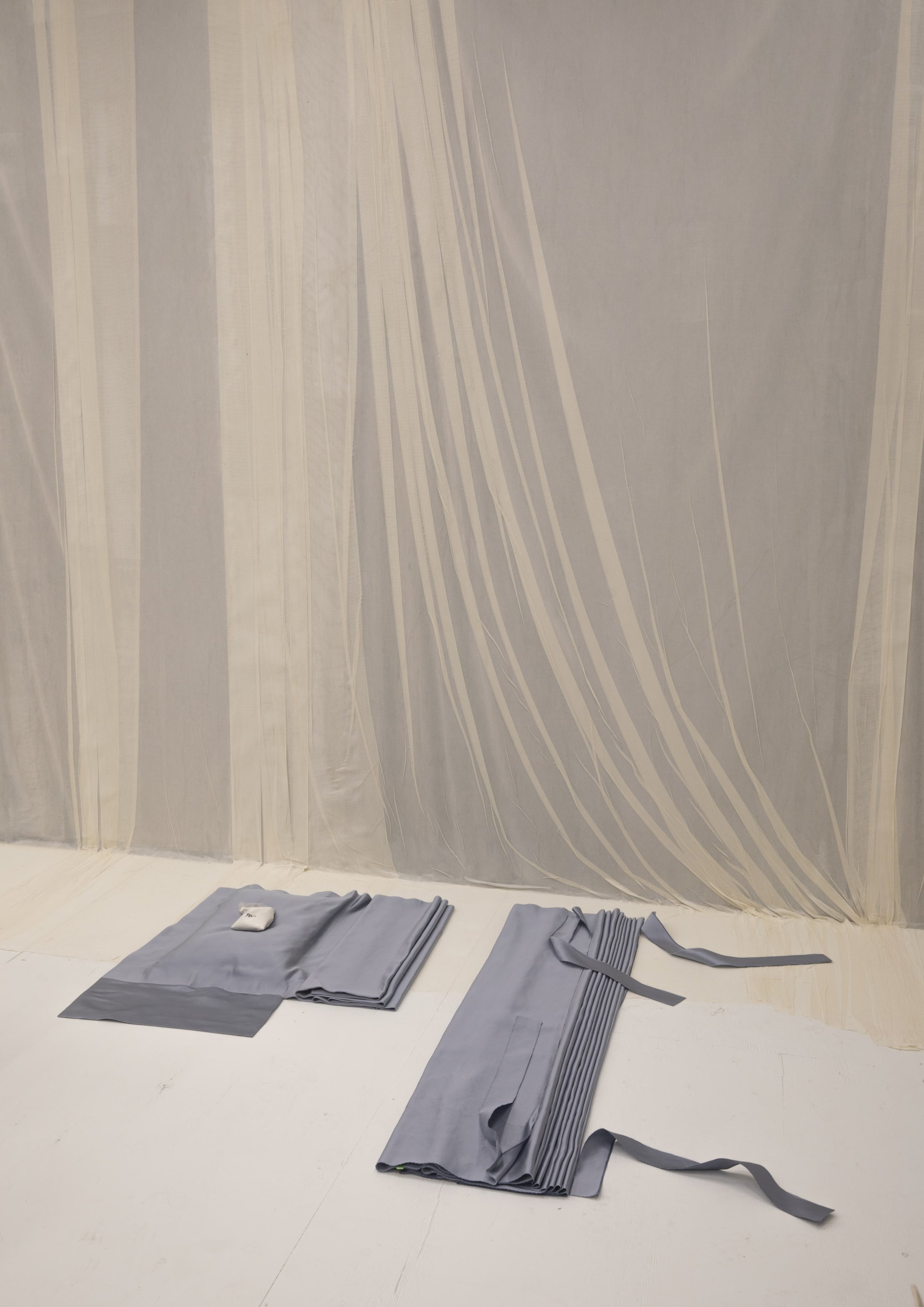
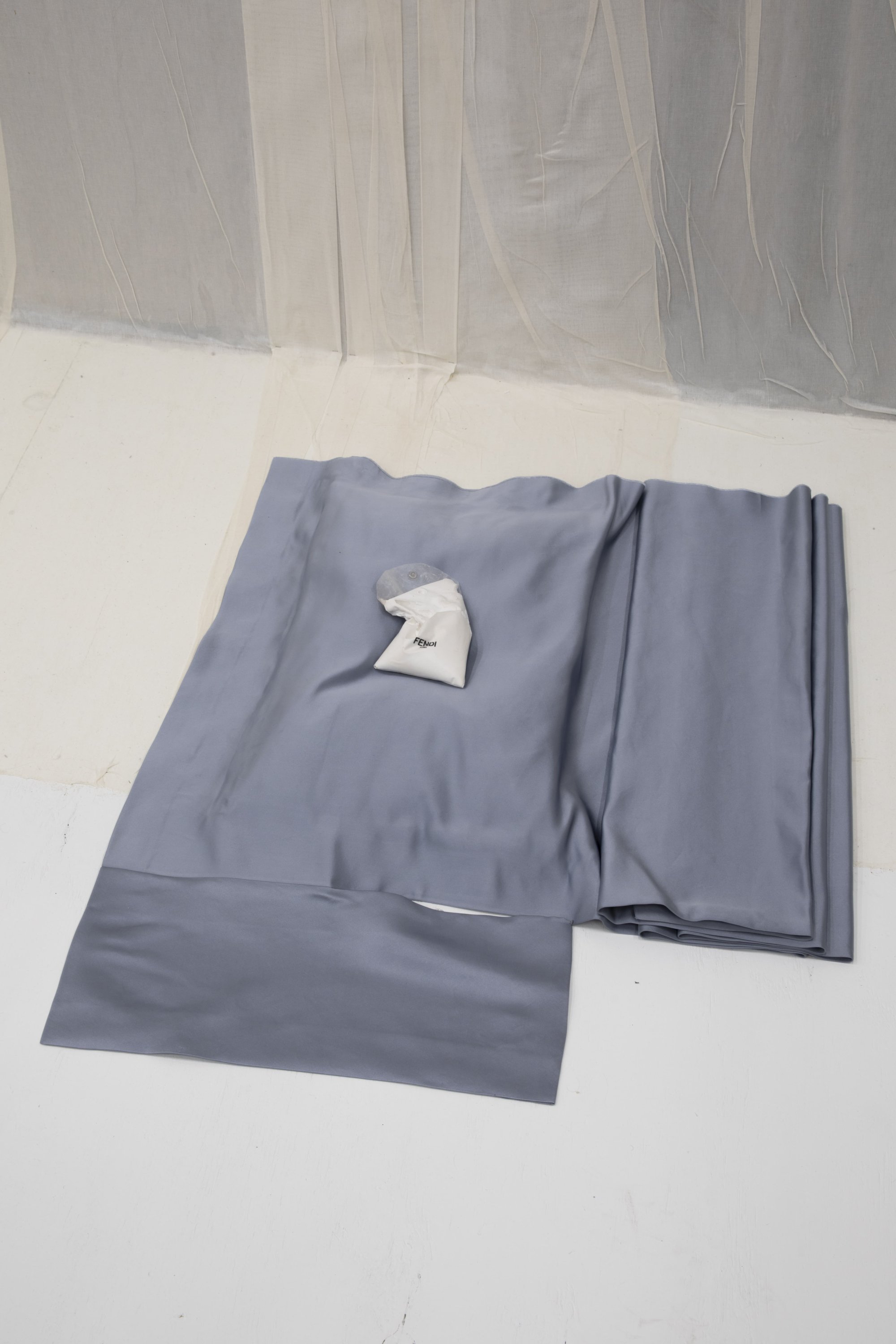
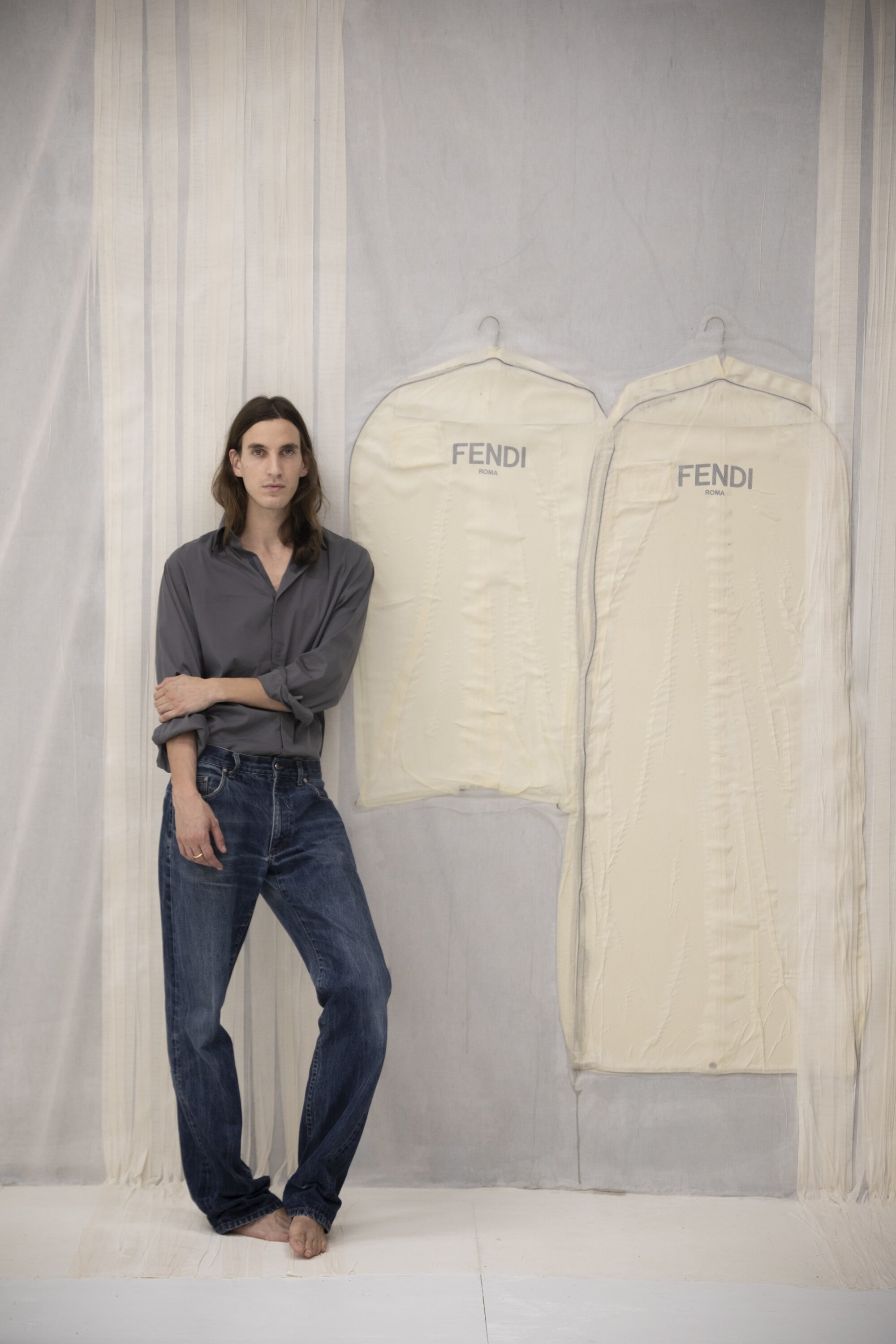
Fendi has commissioned a new body of work from Vienna-based artist Lukas Gschwandtner this year. Gschwandtner has proposed a triclinium formation of chaise longue chairs, as well as an iteration of his case study series Pillow Portraits, as a way for people to engage with one another’s boundaries and experiences.
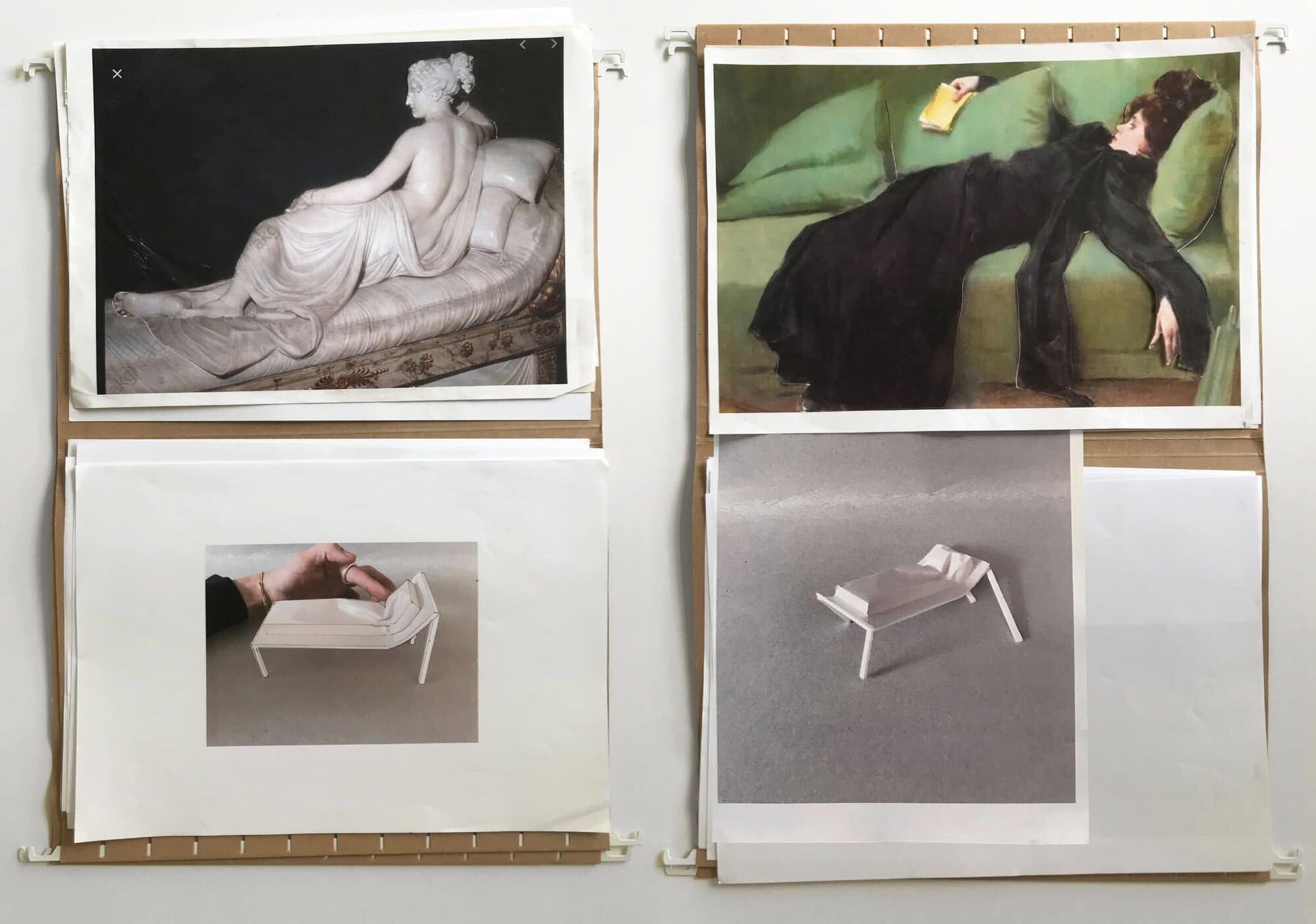
Gschwandtner’s interest and attachment to the history of ancient Rome, ‘The Eternal City’ where Fendi was founded, its art and architecture as translated through mediated imagery has now infused the series, which consists of wearable canvas sculptures referencing historical portraits of women reclining on furniture.
Lukas Gschwandtner’s work is concerned with the scale and measurement of the human body and its interaction with space, furniture, and objects in both historical and contemporary contexts.
He investigates the body language a piece of furniture suggests and how its use interrupts and repurposes this proposal.
Lukas Gschwandtner’s work is concerned with the scale and measurement of the human body and its interaction with space, furniture, and objects in both historical and contemporary contexts. He investigates the body language a piece of furniture suggests and how its use interrupts and repurposes this proposal.
Gschwandtner discovered a personal connection between Fendi’s historic relationship with leather manufacturing and his background in leather craftsmanship in Vienna, where he trained in leather accessories at Schloss Hetzendorf from the age of 14. He also saw a material significance in the atelier’s use of Calico, a heavy, plain-woven textile made of unbleached cotton. It was commonly used in the fashion industry for toiles — a first version of a garment made to test a pattern. It was already established within Gschwandtner’s practice as a key motif, allowing him to concentrate on pure form.
Canvas is viewed as an undergarment in this body of work, and additional textile layers as ‘dresses,’ their material relationship allowing him to experiment with proportion and visual weight. When worn, the Pillow Portraits direct the wearer’s body to assume the posture of a corresponding artwork, such as Antonio Canova’s Pauline Bonaparte as Venus Victrix, Titian’s Venus of Urbino and Sleeping Ariadne, the reclining Roman Hadrianic sculpture also evoked in Giorgio de Chirico’s painting “Solitude,” where she is set against arches reminiscent of Fendi headquarters at Palazzo della Civiltà Because his canvas sculptures abstract historical, class, and gender contexts from paintings and artworks, they allow for personal interpretations and democratized experiences.
Gschwandtner creates a subconscious and physical space for conversation in Triclinium, in dialogue with the work, oneself, and others. He considers how museums are increasingly being experienced, as well as how ancient surfaces are read in relation to a contemporary proclivity for documentation and dissemination.
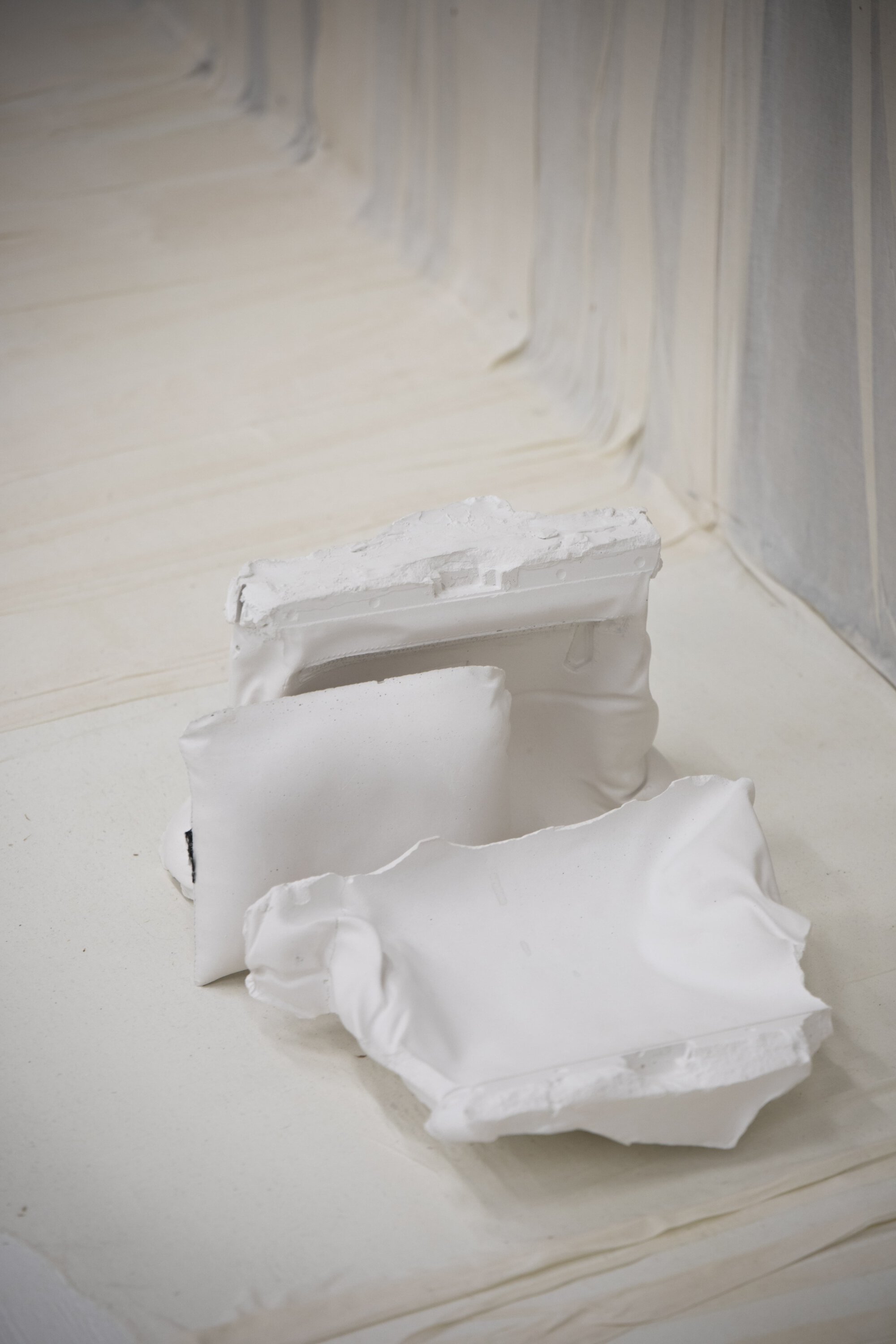
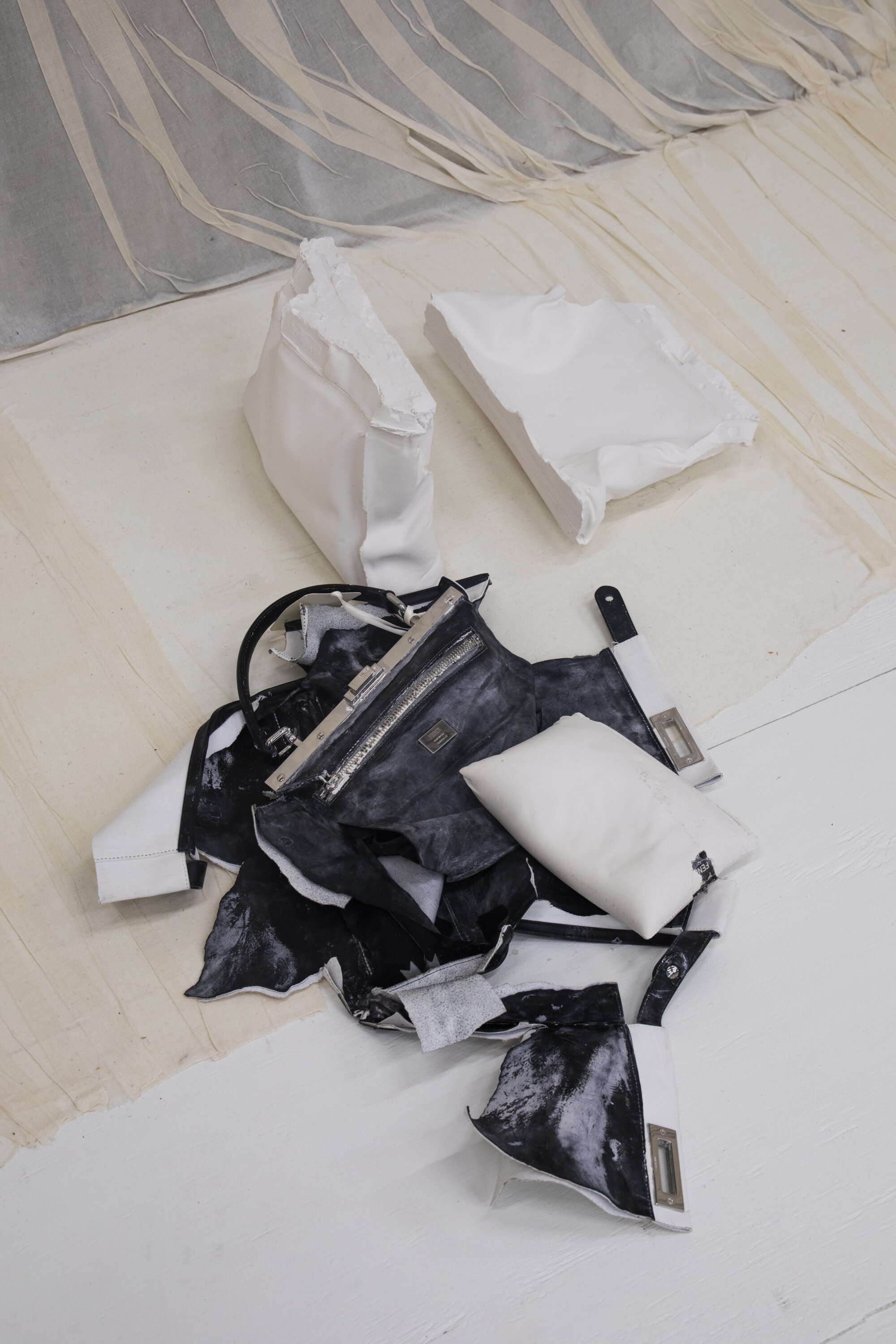
The final piece shown at Design Miami/ is Lukas’ interpretation of Fendi’s iconic Peekaboo handbag, which he filled with plaster before cutting away the original material to reveal the bag’s inner construction imprinted on the cast.