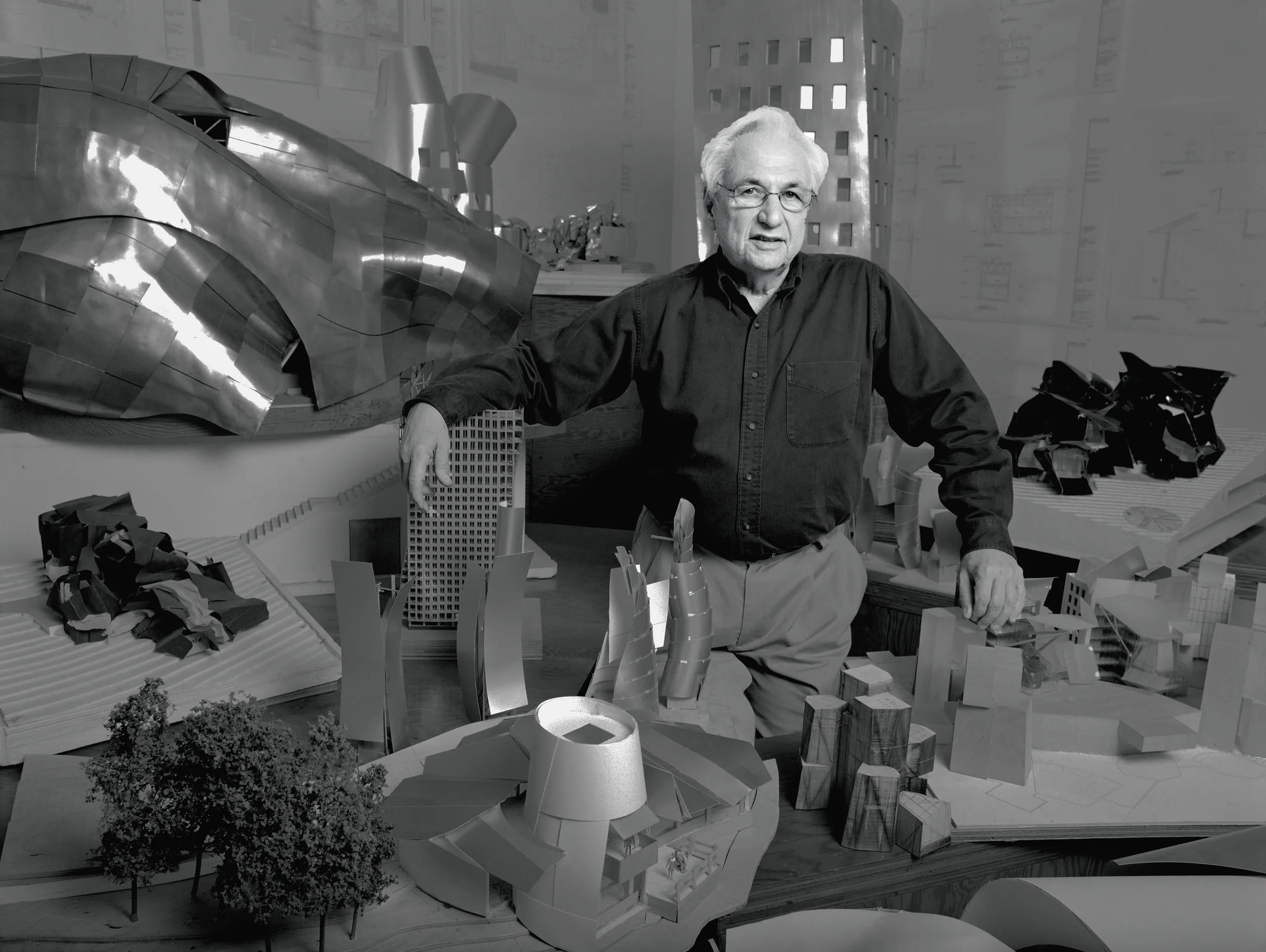
From Bilbao to Beverly Hills, Gehry’s projects bridged art, commerce, and design innovation
Frank Gehry, the influential architect who died Friday at 96, maintained long and significant ties with the luxury sector, particularly through his collaborations with Bernard Arnault and the LVMH Moët Hennessy Louis Vuitton group. Gehry designed the Louis Vuitton Foundation in Paris, one of the city’s most prominent cultural buildings, and produced numerous design projects for LVMH over the years.
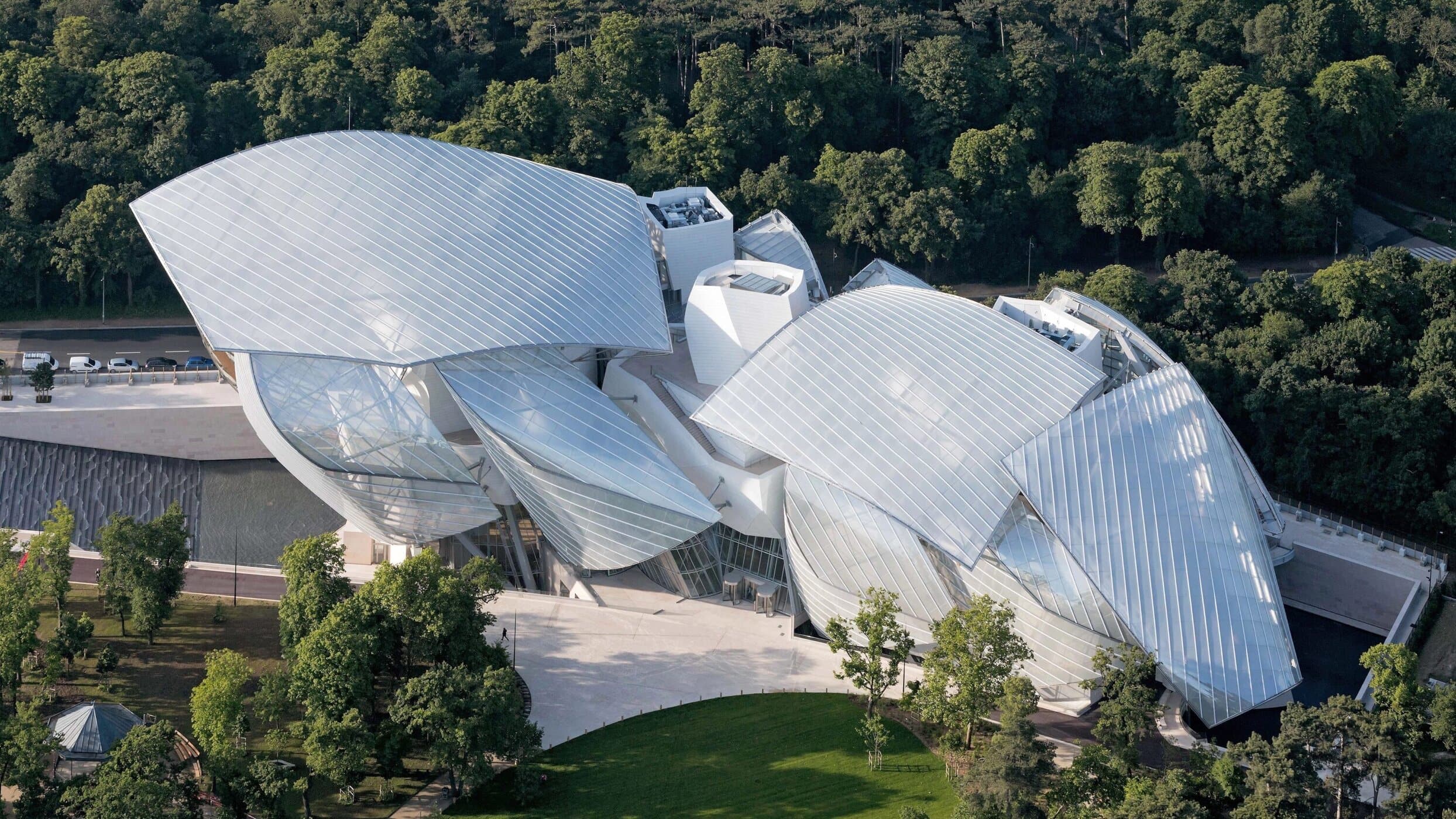
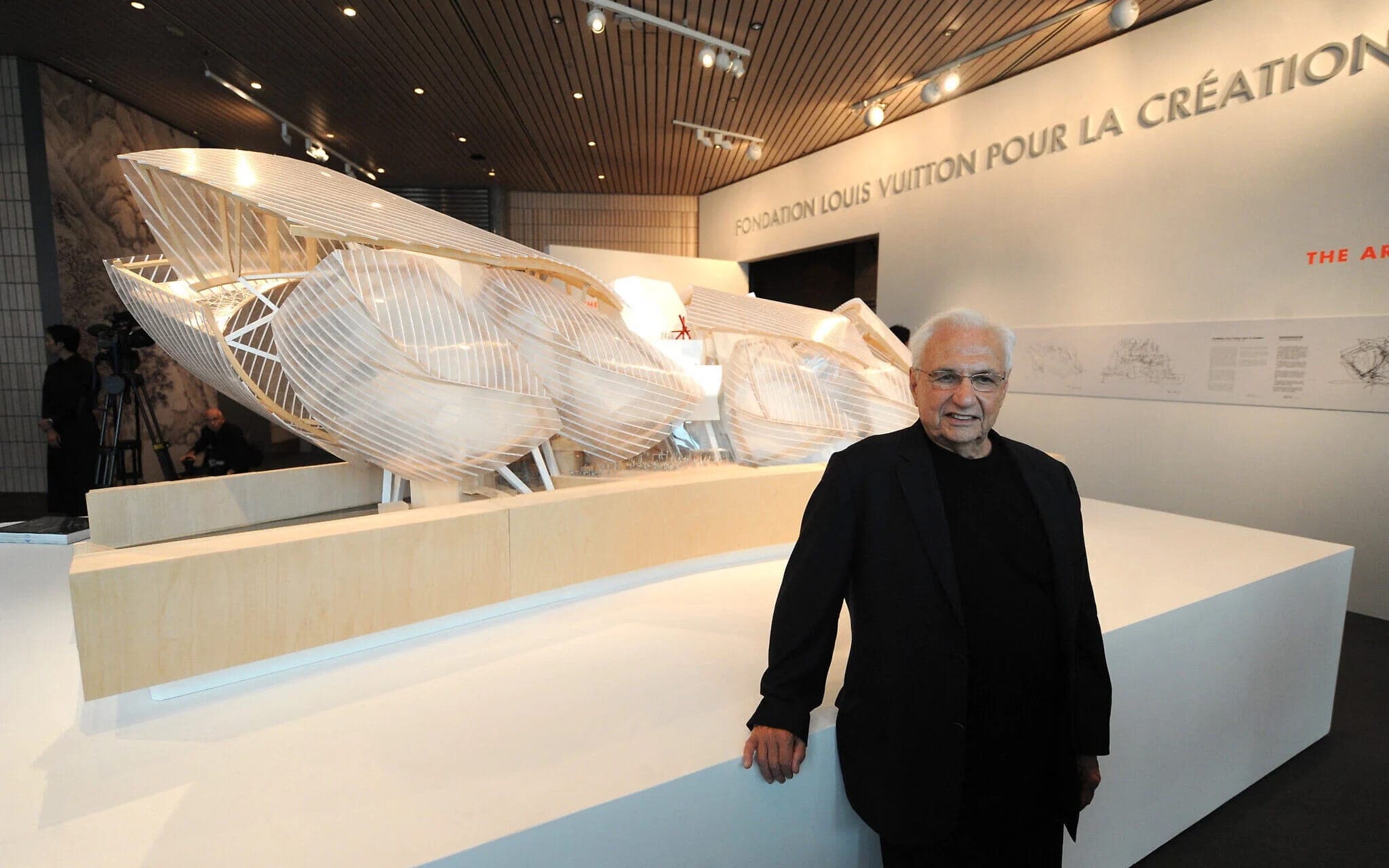
Arnault, chairman and chief executive officer of LVMH, said in a statement that he was “profoundly saddened” by the architect’s death, describing their partnership as one of his most sustained and meaningful. The Louis Vuitton Foundation, which opened in 2014, became a landmark museum that has hosted major exhibitions featuring Gerhard Richter, Jean-Michel Basquiat, Mark Rothko, and David Hockney. Arnault praised Gehry’s ability to manipulate glass and form, noting that the architect’s work would remain an ongoing source of inspiration for LVMH brands including Dior, Givenchy, Fendi, Loewe, and Marc Jacobs.
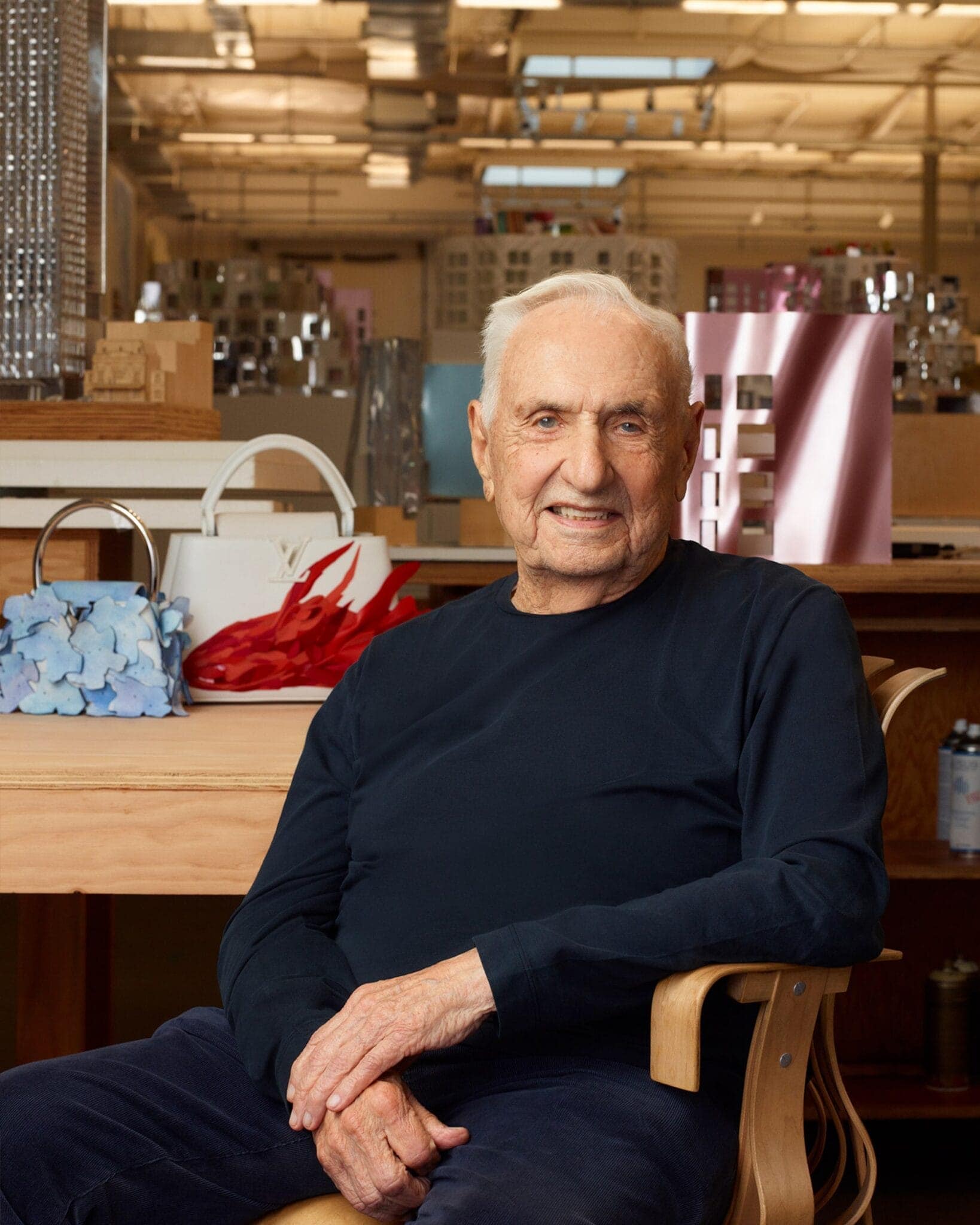
Pietro Beccari, chairman and CEO of Louis Vuitton, also offered condolences, calling Gehry’s architectural approach transformative for the built environment. Gehry maintained an active relationship with LVMH until his death. At the time of his passing, he was working on an 82,000-square-foot Louis Vuitton flagship planned for Beverly Hills and an exhibition and events space near the Louis Vuitton Foundation. He also collaborated on fragrance bottles, store windows, watches, and handbags for the brand. In 2014 and again more recently, he reinterpreted the Capucines handbag, adapting ideas from his architectural sketches into accessories. He previously collaborated with Tiffany & Co. on a jewelry line worn by Maria Sharapova at the 2009 U.S. Open.

Gehry’s connection to cultural and commercial design extended across decades. Born Frank Owen Goldberg in Toronto in 1929, he moved to Los Angeles in 1947 and became part of an artistic community that included designers such as Rudi Gernreich. After graduating from the University of Southern California in 1954, Gehry worked at Victor Gruen Associates and later studied urban planning at Harvard University. He returned to Gruen before launching his own practice in 1962, gravitating toward ordinary materials such as chain-link fencing and plywood.
Gehry renovated his Santa Monica home in 1977, creating an angular structure with corrugated steel and glass that became one of his early defining works. His first large-scale commission was Santa Monica Place, an enclosed mall completed in 1980. He later designed the Walt Disney Concert Hall in downtown Los Angeles, commissioned before he received the Pritzker Prize for architecture in 1989. Gehry became known for using fish forms as a recurring motif, drawing on childhood memories. His Guggenheim Museum in Bilbao, which opened in 1997, became a major cultural and economic catalyst for the region, attracting millions of visitors and generating hundreds of millions of euros in revenue.
Gehry forged professional and personal relationships throughout the creative industries. Ted R. Arnell, a close friend and collaborator, recalled Gehry’s encouragement to pursue photography and described the architect as one of the most consequential figures of the last century. Gehry also maintained close ties with architect Zaha Hadid, and the two periodically taught concurrent studios at Yale University. Both had work featured in the Museum of Modern Art’s 1988 “Deconstructivist Architecture” exhibition.
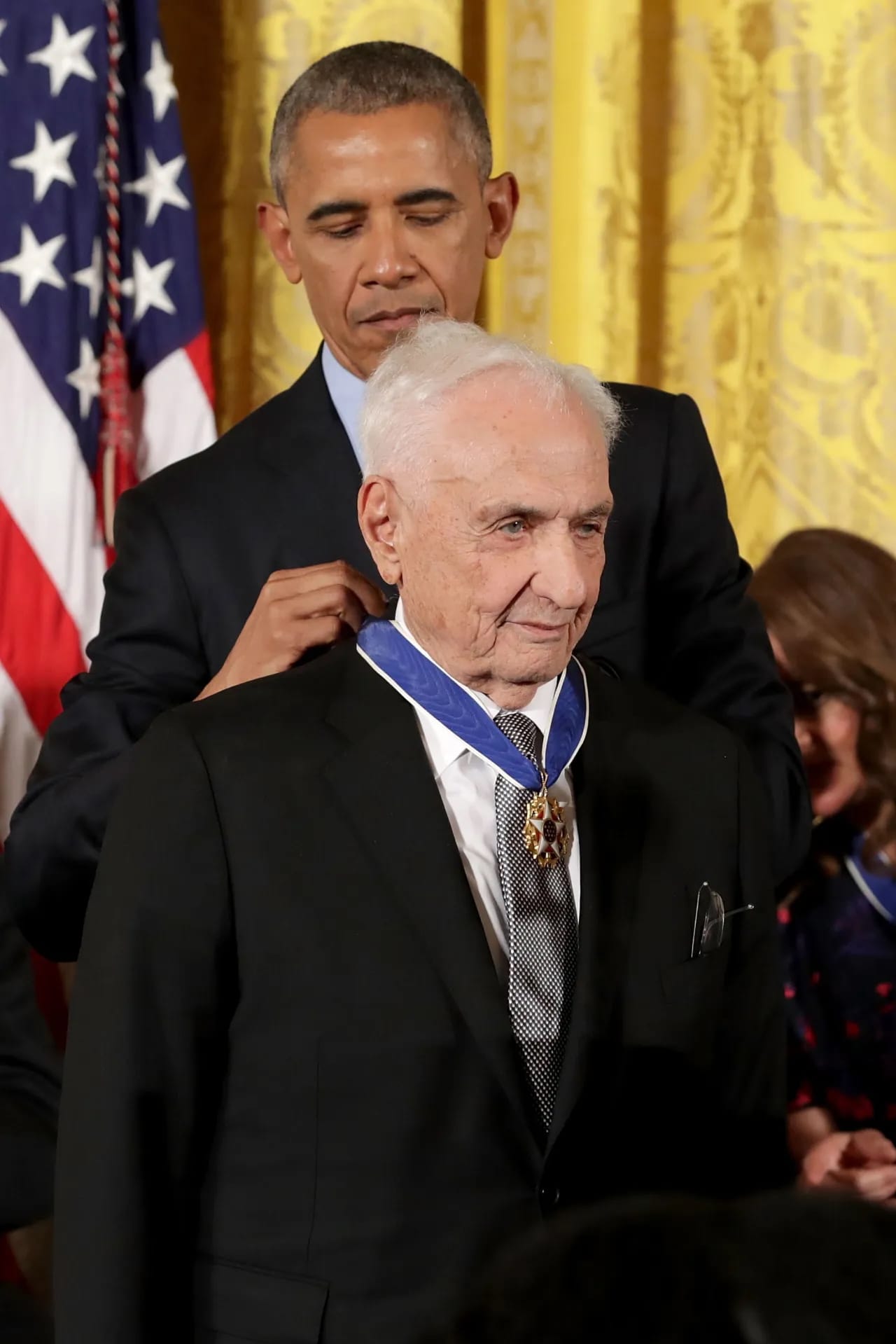
Gehry received more than 100 awards during his career, including the National Medal of Arts, the Presidential Medal of Freedom, and the French Legion of Honor. His commissions in New York included the Condé Nast cafeteria, completed around 2000, and the IAC headquarters finished in 2007. Barry Diller, chairman of IAC and Expedia, said Gehry’s work on the IAC building represented a rare contribution to New York’s architectural landscape.
In interviews, Gehry acknowledged his reputation for being exacting and selective with projects, noting that he often turned commissions down. Late in his career, he focused on mentoring younger architects within his firm. At the time of his death, Gehry was working on the long-delayed Guggenheim Abu Dhabi, a large cultural project expected to open next year.