A New Era of Emotion-led Dressing via Desire
Review of Gucci Fall 2026 Fashion Show
By Angela Baidoo
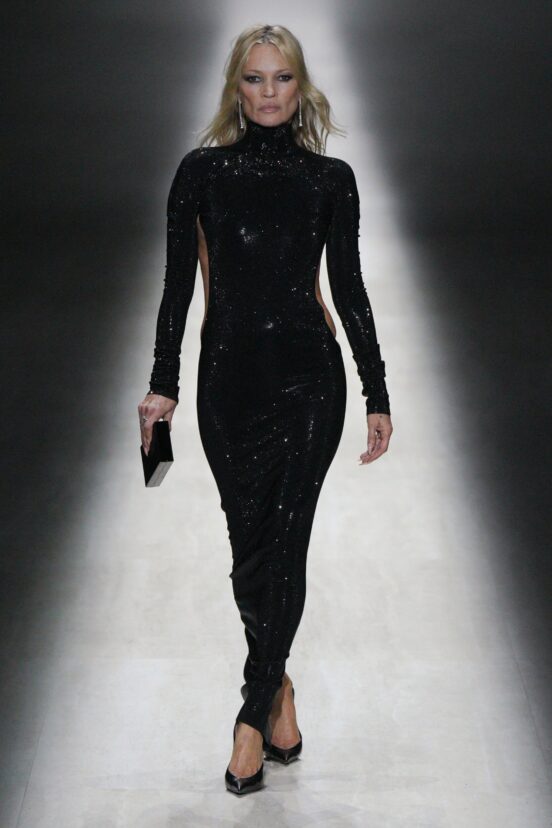
Teased out over a year of capsule collections and a star-studded film Demna’s debut finally arrived on the penultimate day of Milan fashion week. And just as the final model (none other than Kate Moss wearing the now iconic Gucci G-string from Tom Ford’s spring 1997 collection in white gold) exited the runway the internet was ablaze with opinions and hot takes. Never one to shy away from creating cultural discourse through the medium of fashion, if the week opened with a return to fun at Diesel, the tail end made one thing abundantly clear – sexy is back!
THE COLLECTION
THE VIBE
Body Aware, Desire to be Desired, Emotion Over Everything
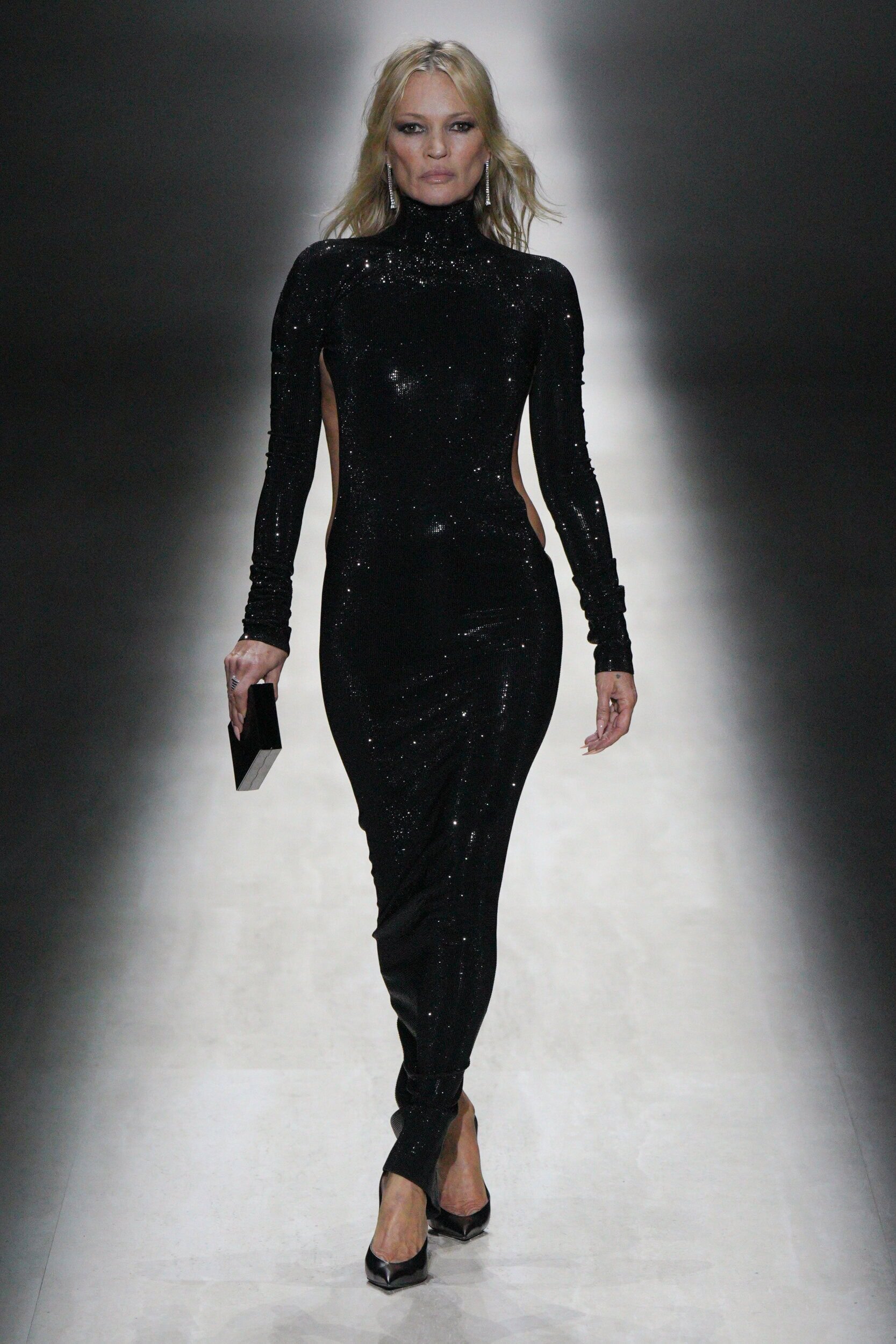
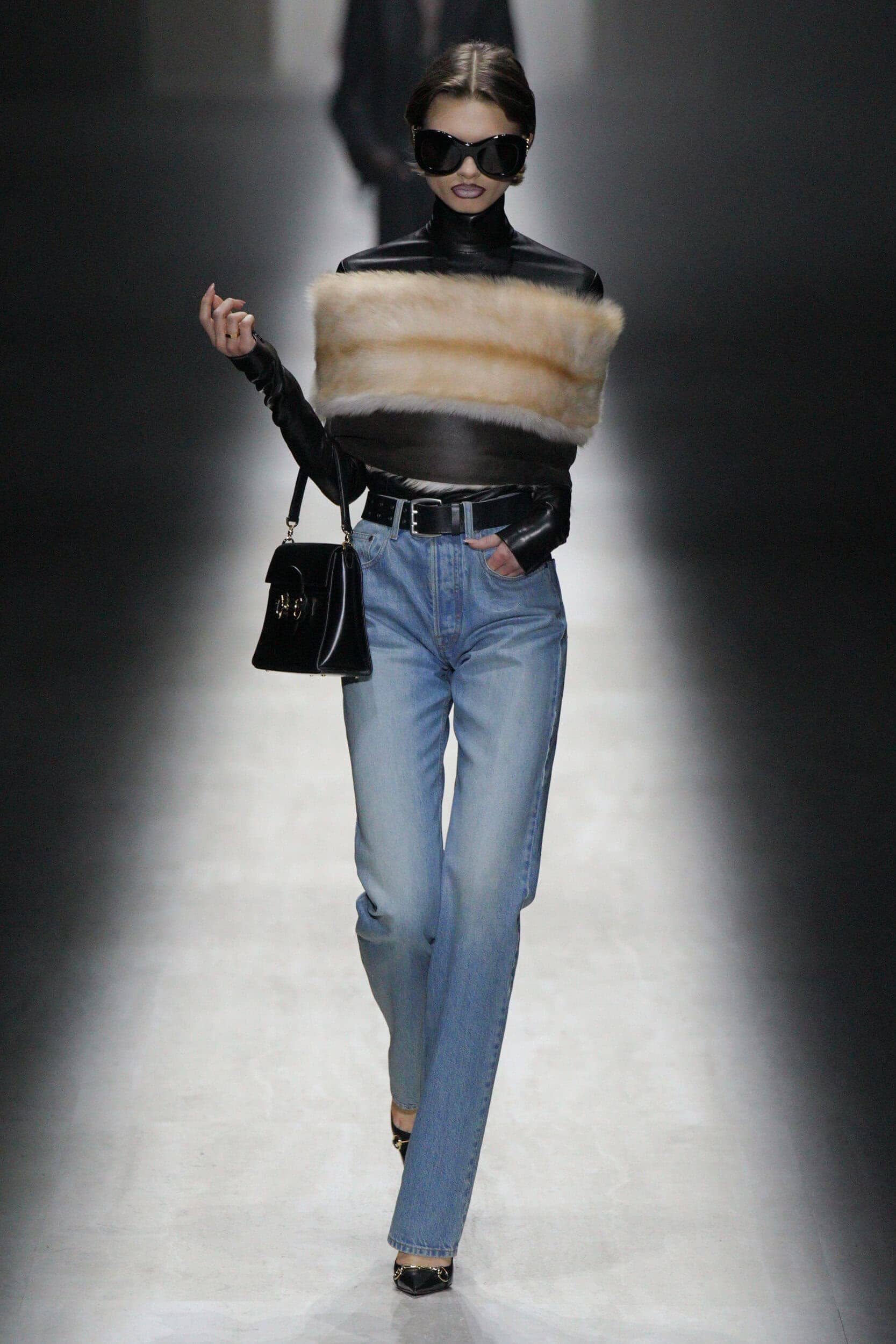
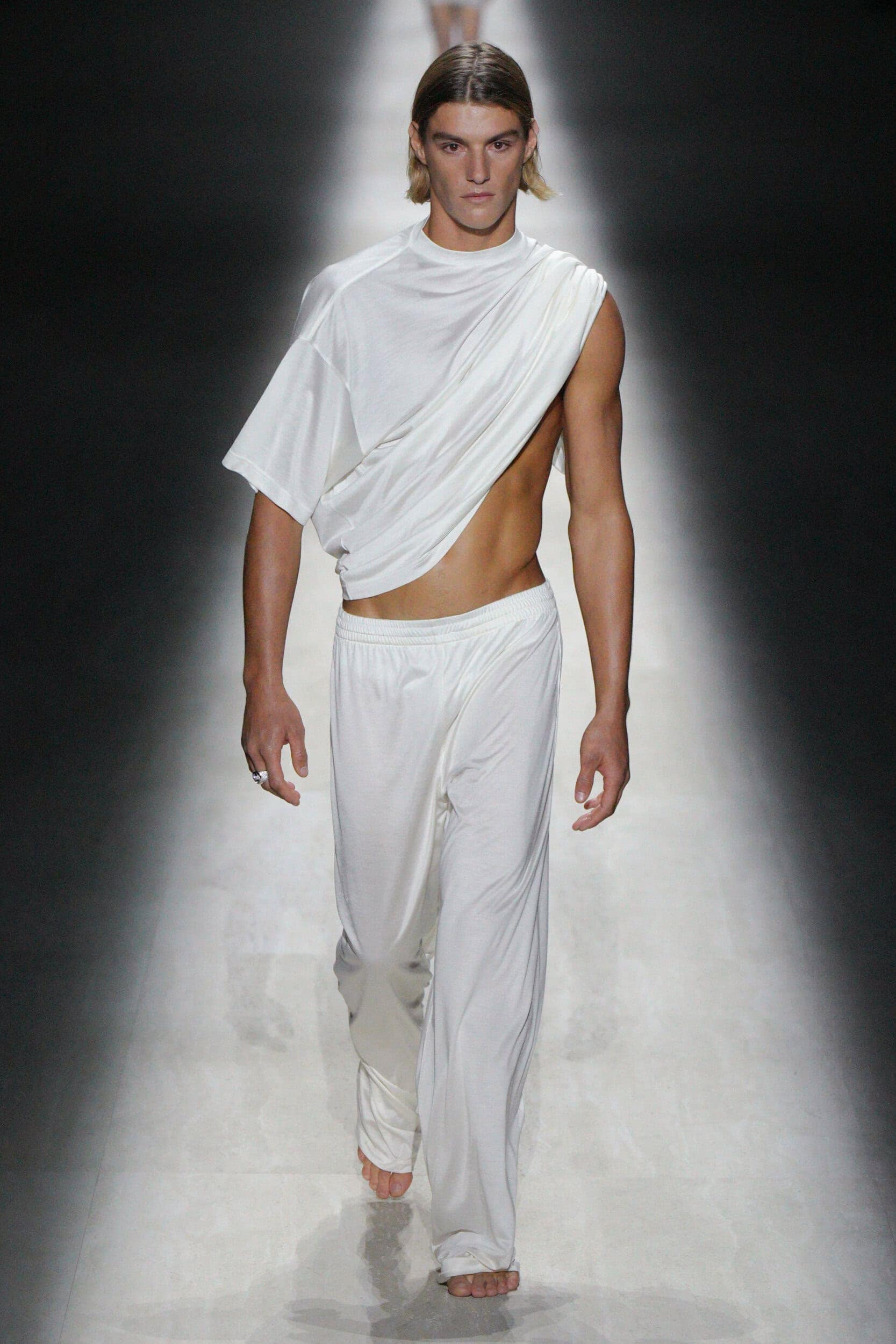
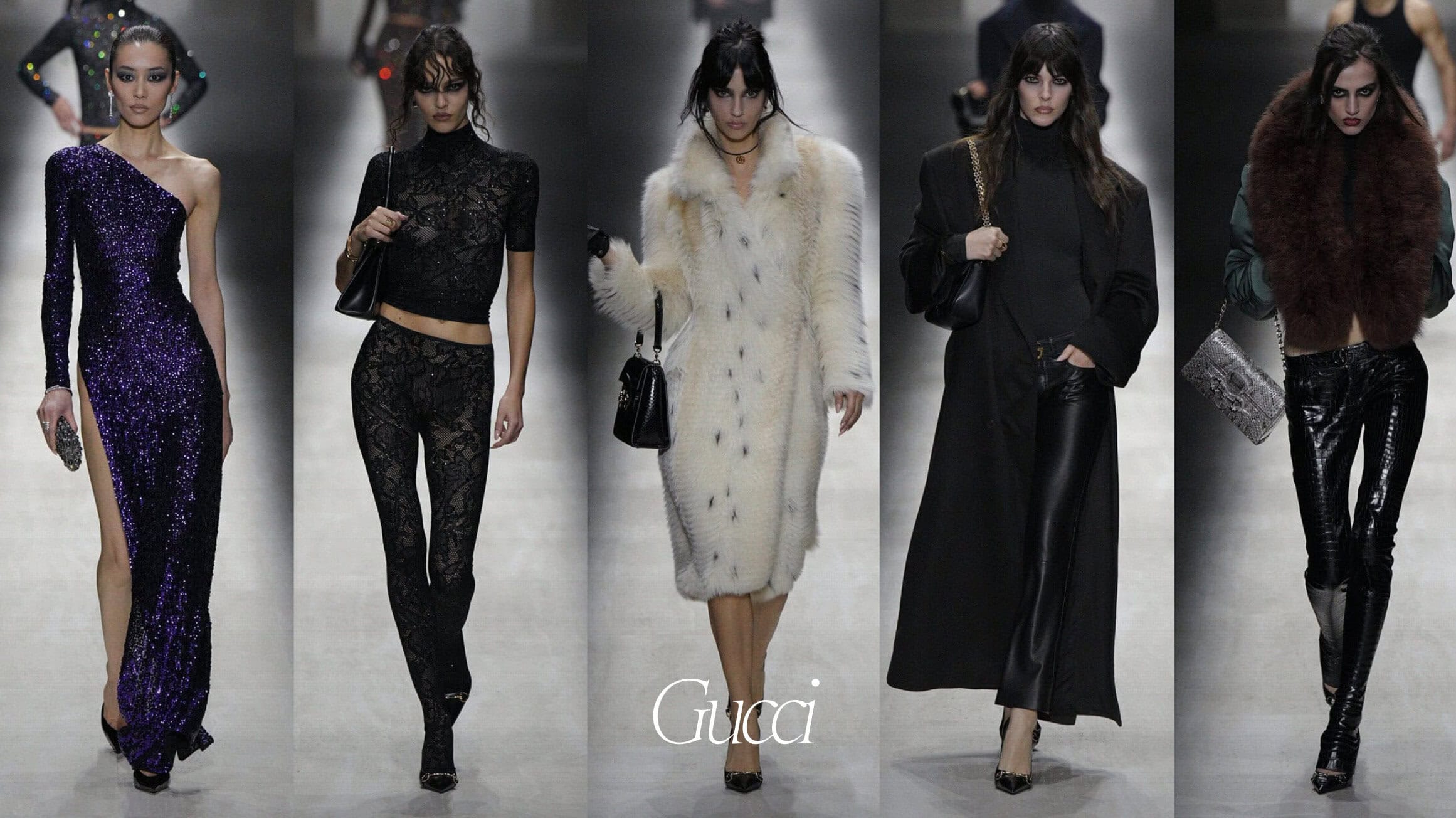
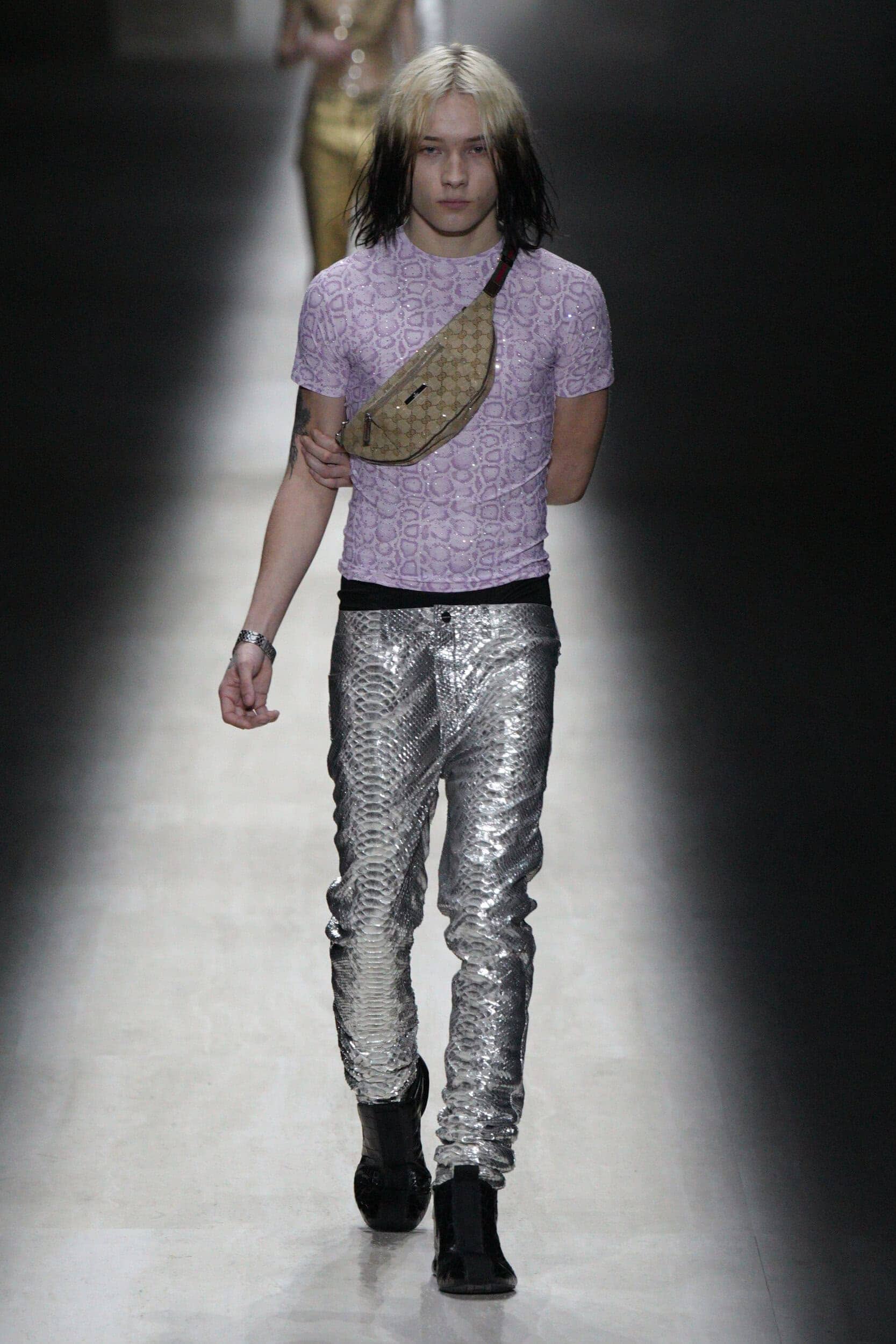
Freeing himself from the shackles of what constitutes good taste in certain sectors of society, the creative director dove head first into an unrestrained representation of Italy’s ultimate archetypes. And yes, the comparisons to the Tom Ford-era Gucci will be bandied about, but this collection was pure Demna. From the Muscle T-shirts to the super skinny leggings (and models for that matter), the knowing streetwear nods and even the floral midi dresses. The designer said backstage that above all else “I hope I made you feel Gucci today.”
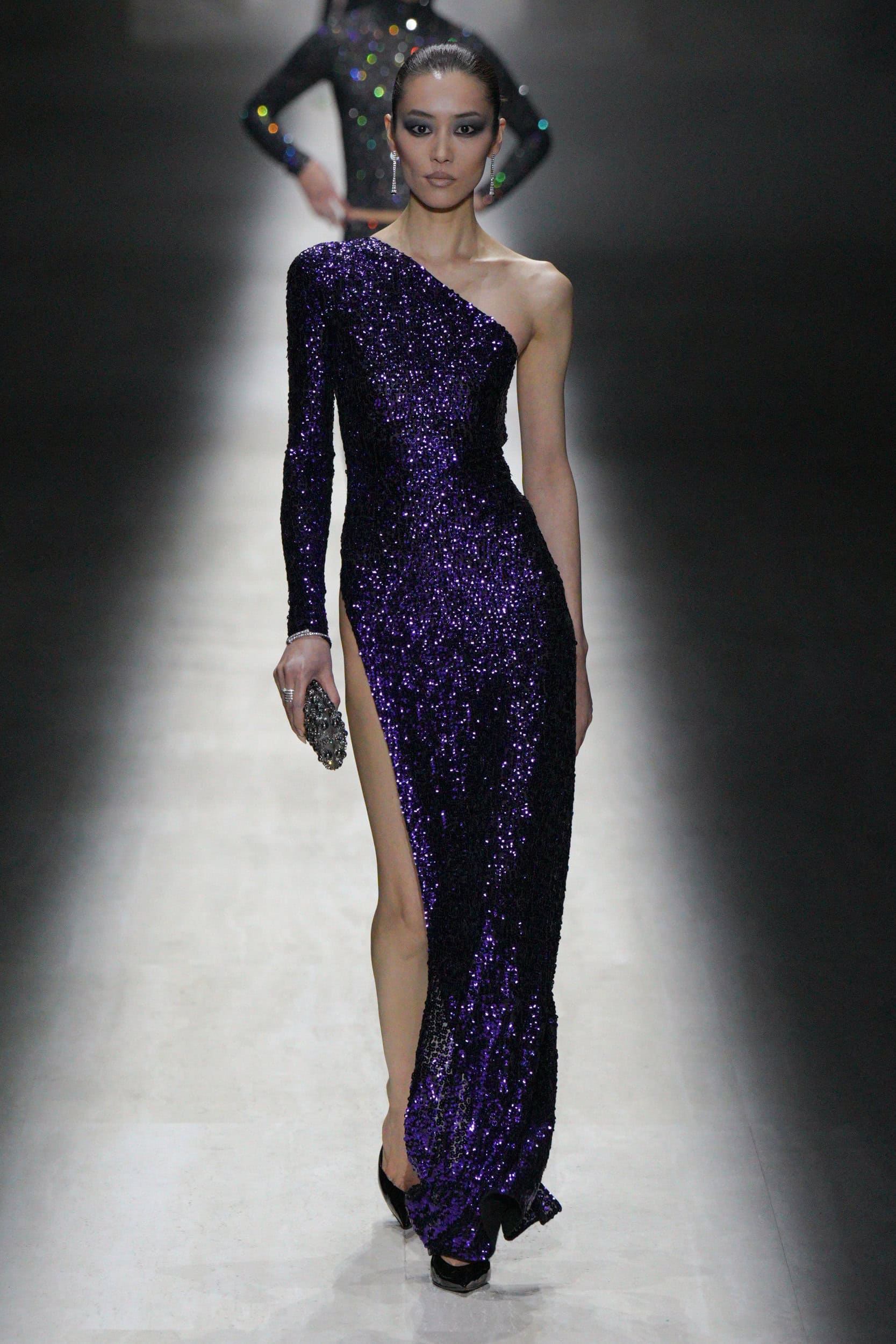
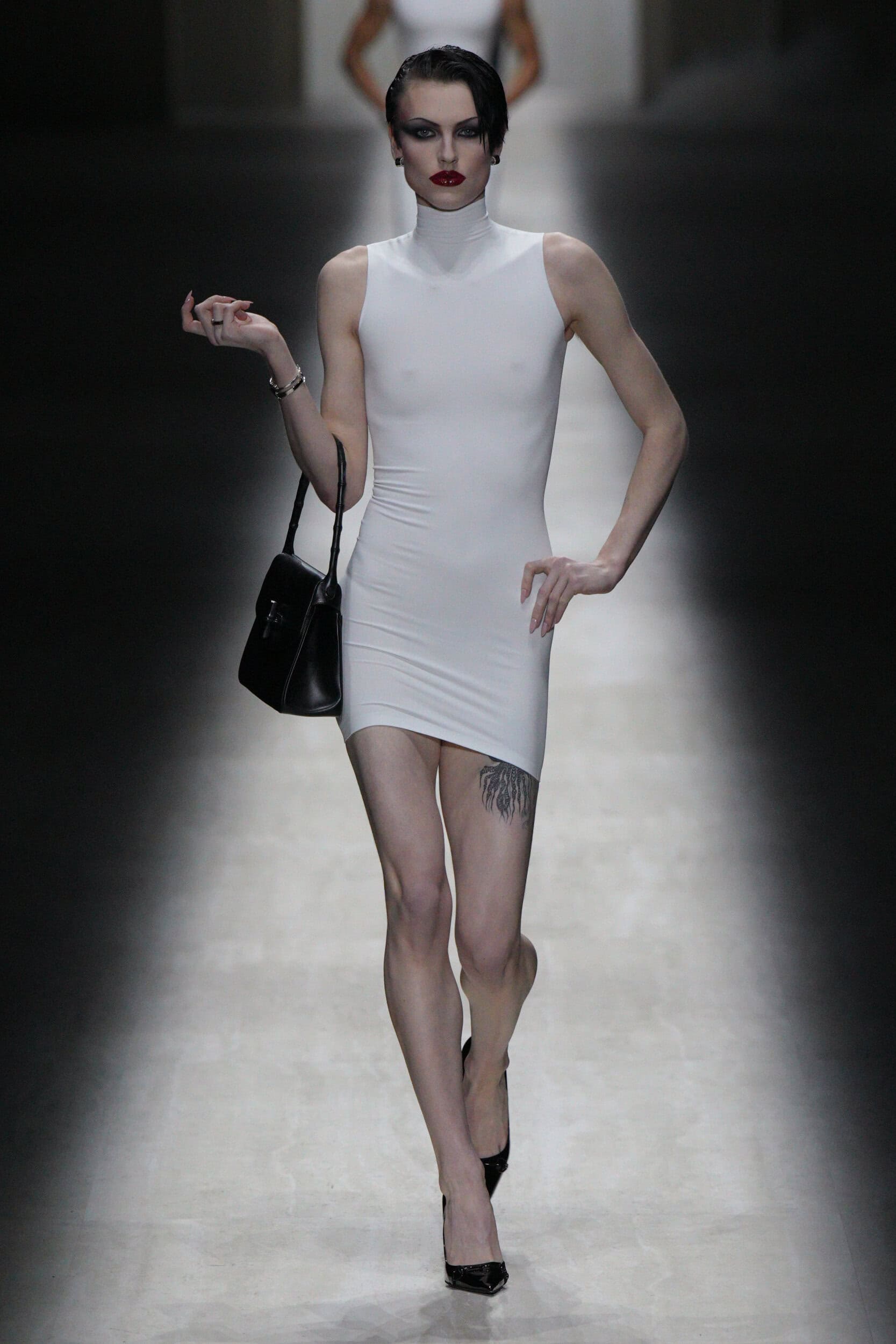
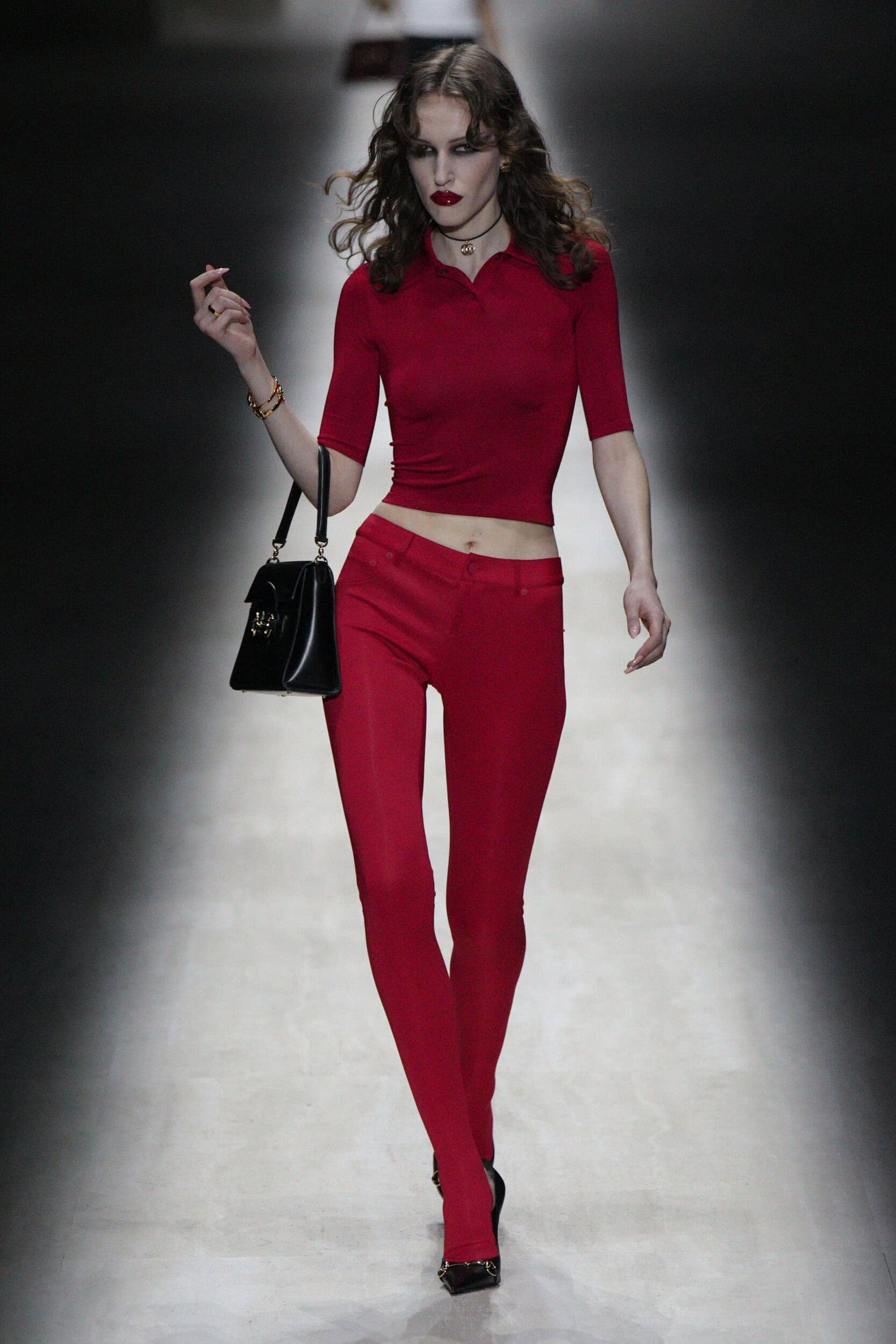
Describing ‘Feeling Gucci’ as “the energy, the passion, the fun, the sexy” this collection – when taken at face value – will appear as if it just caters to the next generation of club kids. An easy assumption to make as Alex Consani, Gabriette, Nettspend and Fakemink were part of today’s show eco-system, either walking in or appearing front row. But having left a void when he exited his last position as creative director of Balenciaga the Gen Z/Alpha co-hort will now likely flock to the New Gucci. Now that Demna has made it a safe space for them to live out their high-fashion fantasies. And speaking of fantasy, Gucci Primavera firmly put a nail in the coffin of the wholesale adoption of hyper-casualisation. Here, shapes were super slick and second-skin even, ultra-short or split high on the thigh. There was to be no mistaking at what his intentions were, as it was clear that Demna finally felt free to design sexy clothes after years converting us to the cult of the oversized, telling The Impression “It feels actually very liberating, finally allowing myself to do [sexy clothes]. It’s also because of my relationship to my own body, to the way I see myself. I want to feel sexy, to feel attractive.”
In a pragmatic moment for the designer, he admitted to being fully aware that the collection would either be loved or hated, but in leading with his emotions over his intellect – something he has had to sideline over the last decade – he had to be open to the possibility that not all will ‘get’ the vision. “Fashion triggers emotion” he acknowledged, and rather than head down the path of homogenous designs that satisfy the house codes or pay homage to the past with replicas for the present, Demna infused Gucci with a new energy that felt thrilling, rather than a pandering to market expectations.
Not all who buy into luxury fashion desire to be defined by an understated aesthetic that gives them the ability to operate with stealth. A large demographic of aspirational and HNWI customers desire to wear their labels and their desirability where everyone can see them – on their sleeves. And this is a lane that Gucci has long since owned unapologetically. In reflecting the ‘needs, tastes, identities, and dress codes’ of these archetypes Demna is tightening up (both literally and figuratively) the next era for the House. A new vocabulary of body aware (not body conscious) silhouettes are rooted in the history of the house, but here they were not simply formed from slinky jersey, stretch lace, hosiery or wet look fabrics, they were in fact engineered (a process the designer can’t help but incorporate into his work, even when applying it to partywear) to create a seamless fit with ‘invisible heat-sealed edges and engineered curved hems’ as disclosed in the notes.
On first look the most statement-making looks appear most suitable for after dark and after parties, but across the 80+ looks there were also ‘multiple modes of dressing.’ Exploring the possibilities of ‘new garment types’ felt like a reframing (rather than inaccessible innovation). Shrink-to-fit jackets were worn as tops, trackdresses formed of – you guessed it – tracksuits and dresses, sequin sets will make lounge wear an infinitely dressier proposition for ‘party boys’, and one of his favoured design tropes i.e. the legging-cum-trouser has found a new home.
Spending a year immersing himself in the Gucciness of Gucci, Demna came to the realisation that beyond the products it is famous for – and there are many – Gucci is culture. An integral part of Italian culture, but more so global culture, touching the worlds of gaming, music (especially hip hop), sport, art, and entertainment. And in this, his first show that sets out his intentions for world-building, the foundation of archetypes from the aforementioned that will become part of the Gucci community were introduced. A community that includes the next generation of digital and music stars who will, the designer projects, give the brand a new relevance. Concluding backstage he said “I feel like one of my responsibilities at Gucci is bringing a cultural relevance to it. And the cultural relevance always comes from underground culture, not from mainstream, even for a big brand. I felt like it made sense for me to build my vision and start to create this Gucci community by including these people (Gabriette, Nettspend, EsDeeKid, Fakemink) in it.”
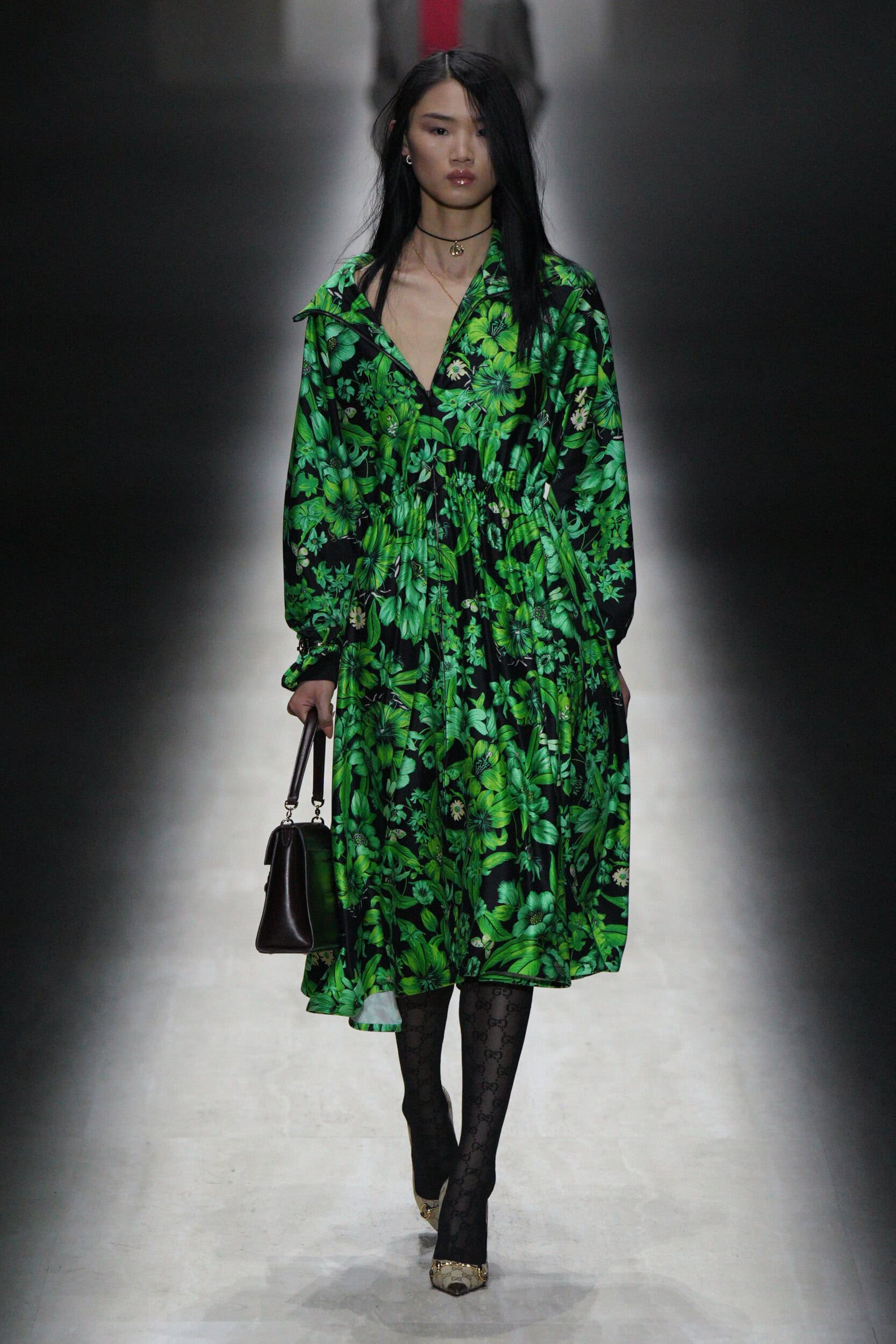
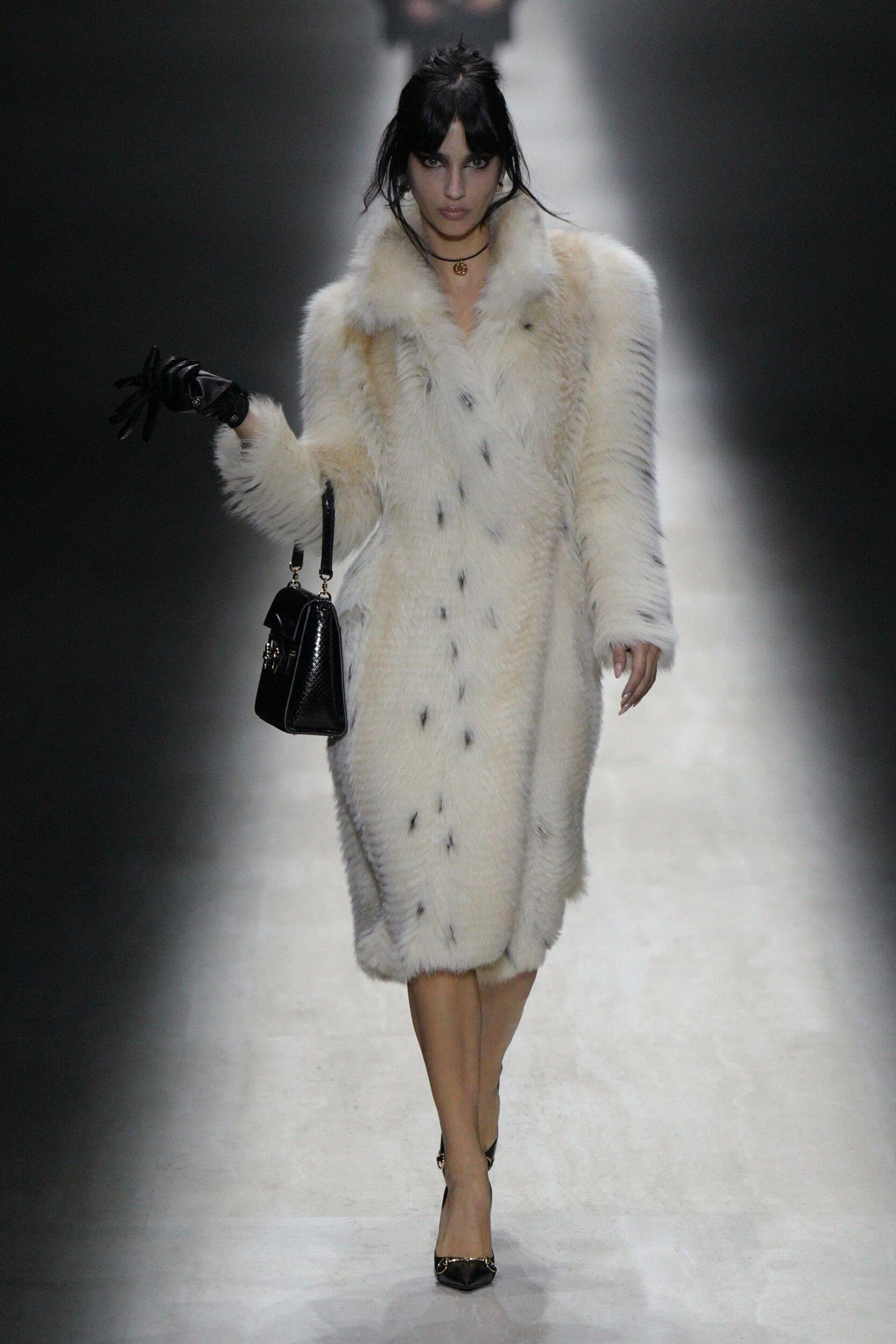
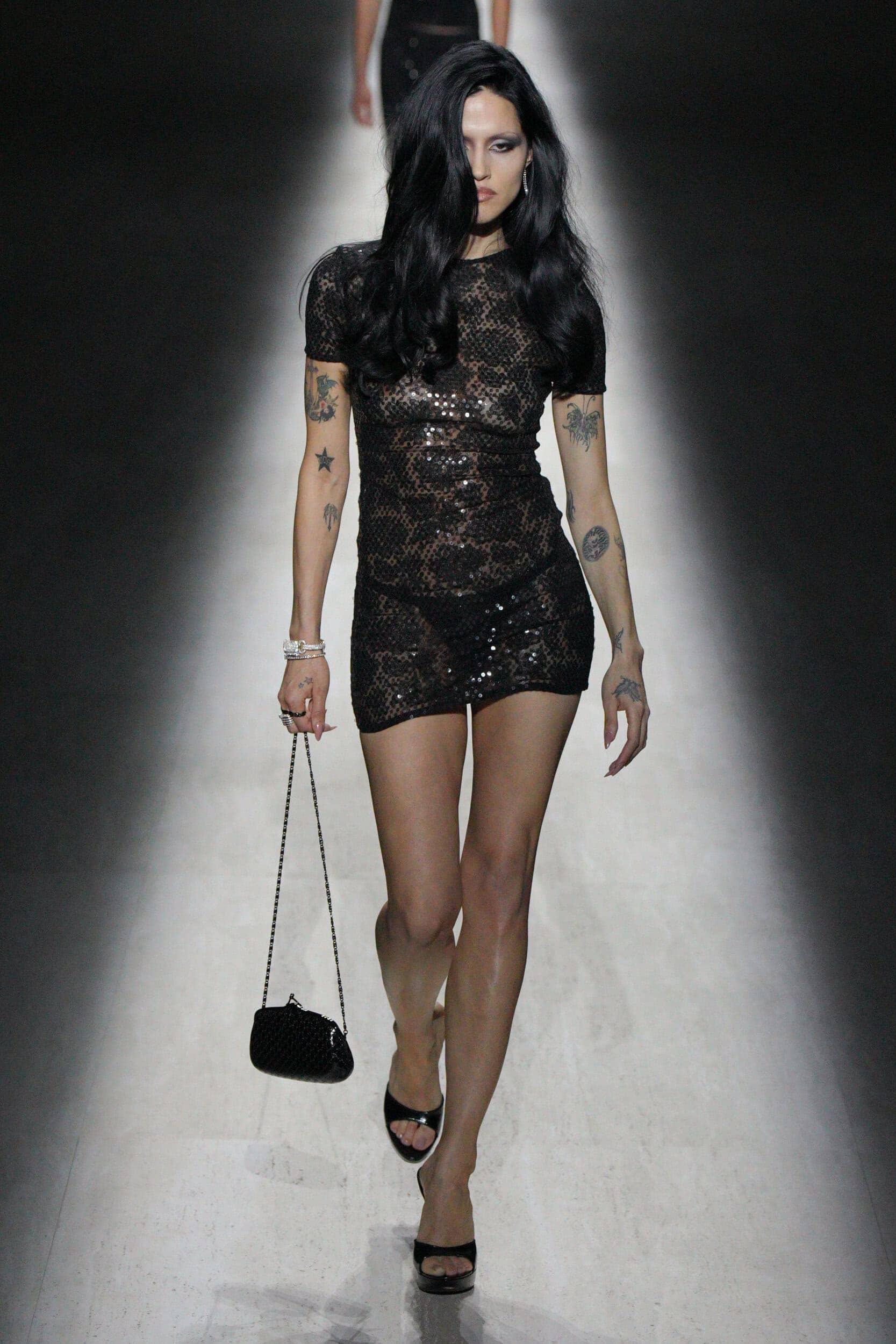
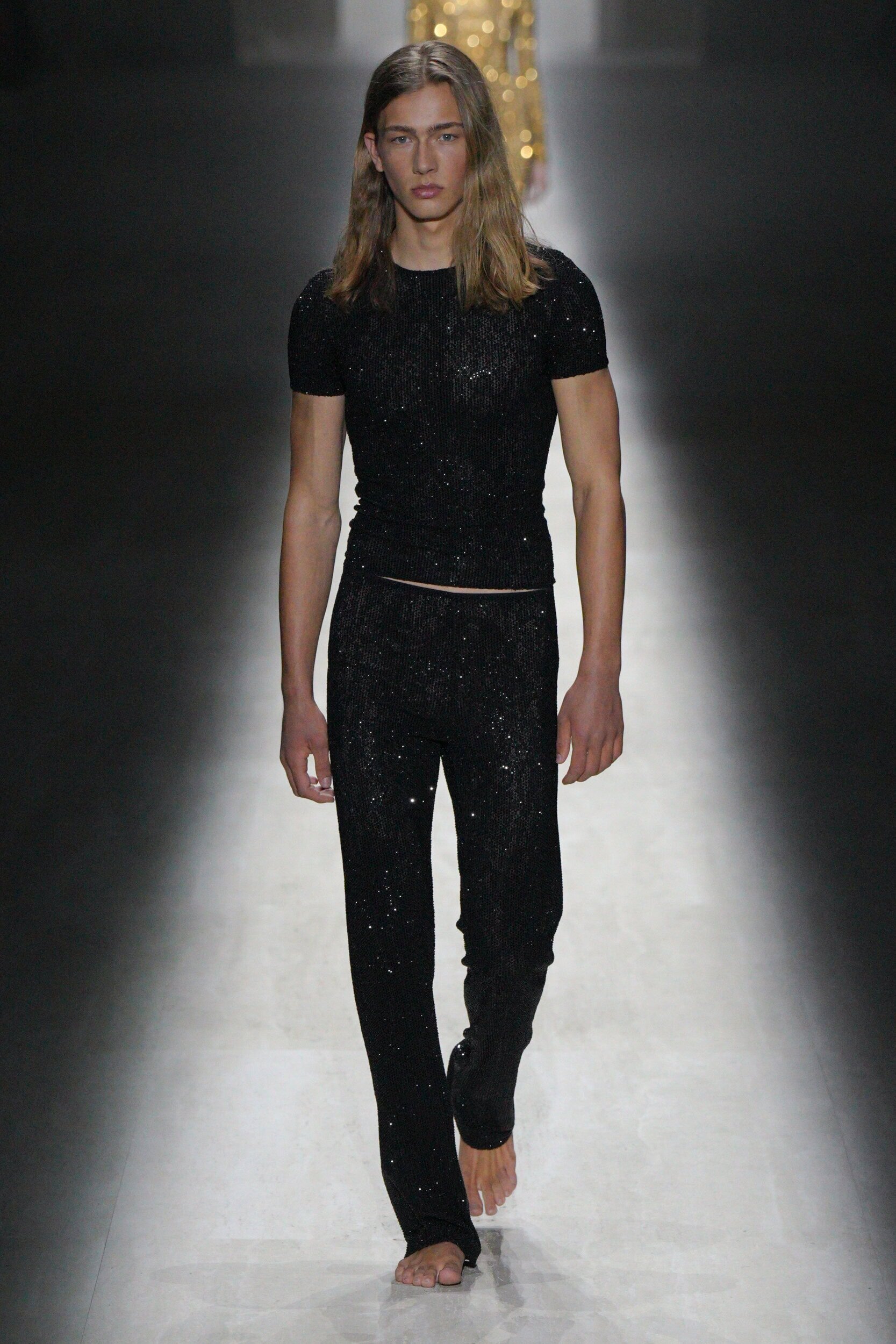
THE QUOTE
It feels actually very liberating, finally allowing myself to do [sexy clothes]. It’s also because of my relationship to my own body, to the way I see myself. I want to feel sexy, to feel attractive. I really felt like there was so much more that I had not done because I didn’t want to get closer to the body. I didn’t want to get closer to the emotional aspect of my work, which was very intellectual. For like for 10 years, I tried to impress and try to impress myself that I’m like a smart designer, and at Gucci, I suddenly got this carte blanche for emotion.”
Demna, Creative Director, Gucci
THE WRAP UP
Demna all but declared that he had given up pseudo-intellectualising the clothing he designed. And beginning with this new era at Gucci, he is determined to be emotion-led, to look to the body as muse and in turn build his collections around desire, and more pragmatically, as clothes “that can be enjoyed by a variety of people, that enrich their lives and make them feel great.”
A lightning in a bottle feat that every designer who will show on the fall 2026 schedule is trying to master. So credit has to be given to Demna, who is facing into the reality of a cooling luxury market and proposing not what he thinks the customer wants to wear (to project an elevated societal positioning), but instead taking it back to our baser instincts of desire and to be desired.