New beginnings but …also endings
BY LONG NGUYEN
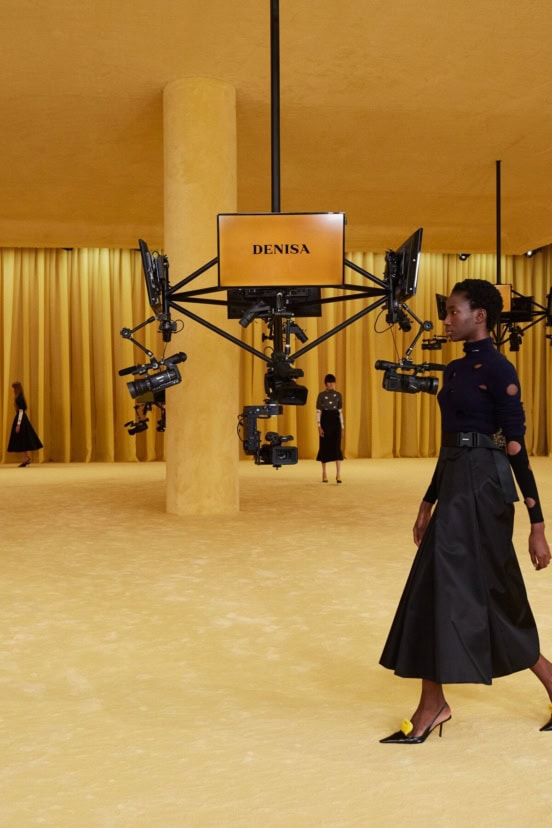
Of course the biggest news this season from Milano was the Miuccia Prada/Raf Simons joint show that reset not only Prada but fashion in general in such a meteoric manner.
In the unique post show Livestream chat answering question submitted by the public, Prada and Simons explained their beginning and how this collection was only the start of a conversation that will surely enriched fashion for many years to come. Both Prada and Simons spoke about their heritage, about how they looked at their own history and built from that to arrive at their new meeting point. In my review of the show, I spoke about the Prada Spring 1996 (Banal Eccentricity) show and about Simons’ Spring 1998 (Black Palms) show. Both of these shows early in their careers were foundational for their aesthetics.
It is from understanding their past that they can enhance their understanding of the present and as they prepare the new collections going forward that both designers emphasized the importance that the collections connect with today’s reality.
“Whether it’s information or an aesthetic, it only makes sense when it works in that moment in time,” Simons explained.
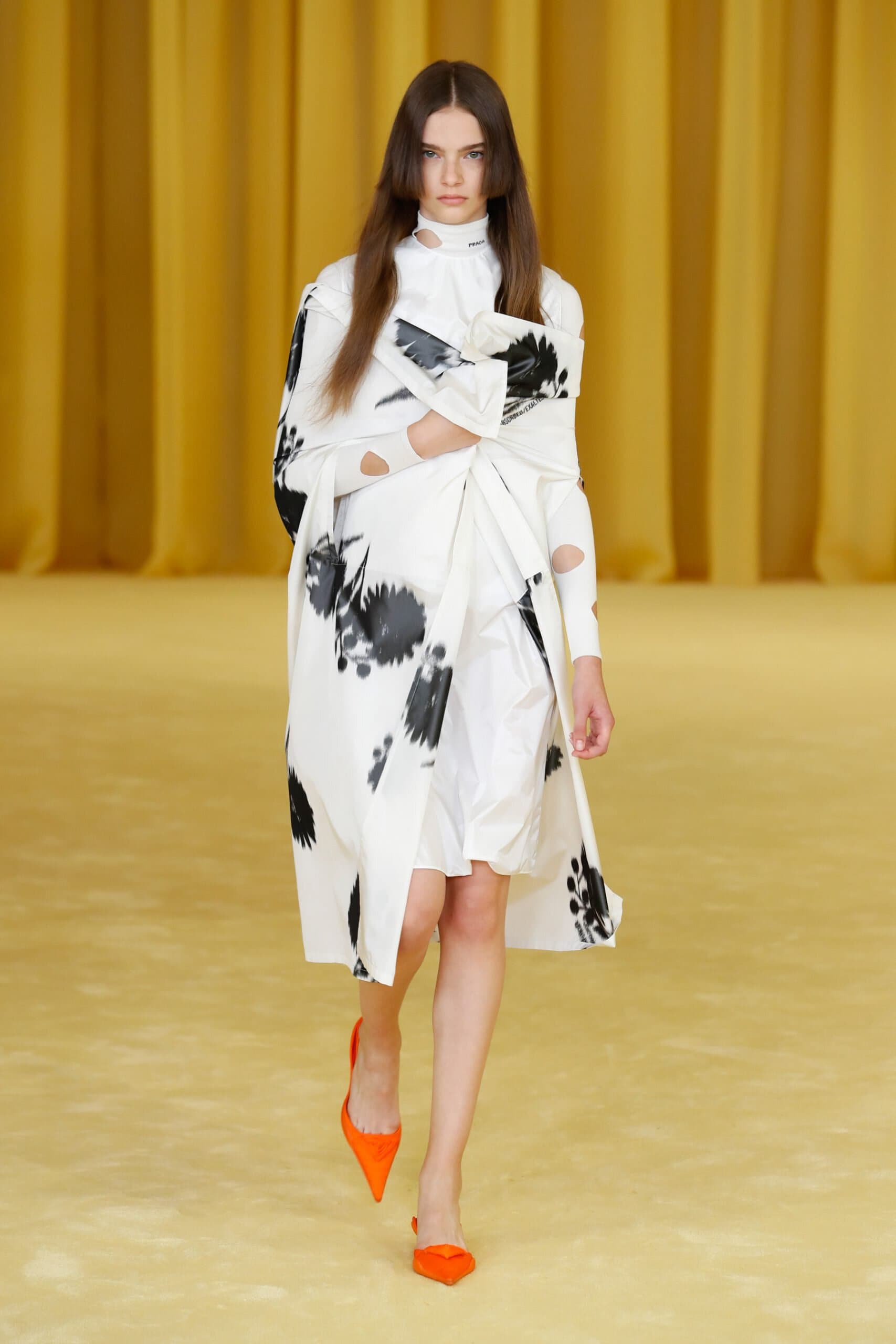
The clothes were pure Prada and pure Simons at the same time – a slim dress over pants and a couture shape nylon parka that the model clutched with her hands, an oversize sweatshirt with art graphics over a long fold skirt, and an all pink nylon shirt, pants and coat uniform look – simple but technically advanced collection that’s a reflection of the now.
(from the archive of Long Nguyen)
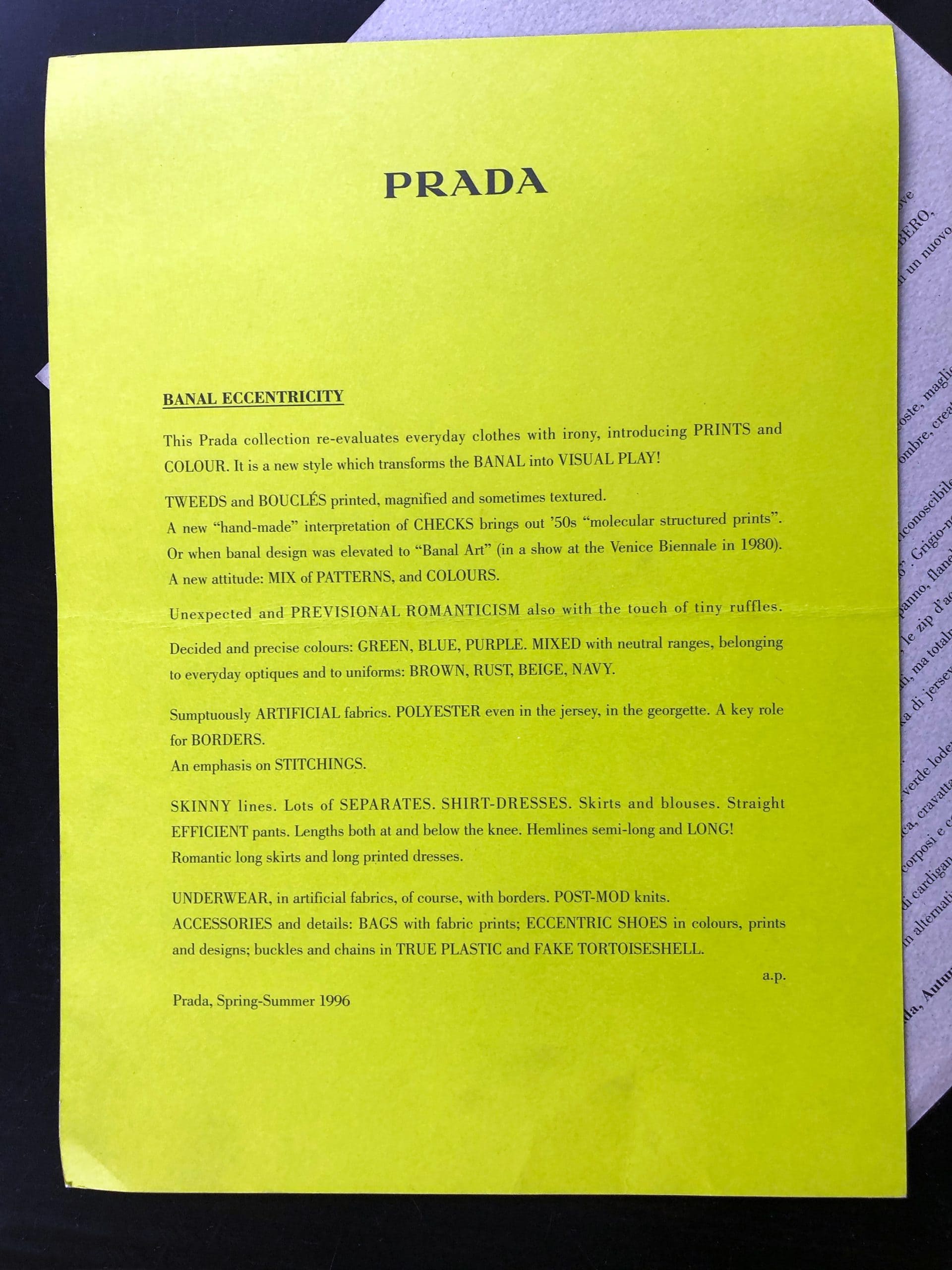
It is not without a hint that the sub headline for the Prada Instagram account reads – ‘Thinking Fashion since 1913.’ Here is a copy the Prada show notes from a folder on the seats at the Spring 1996 show in Milano in September 1995 from my archive. Just take a look at some of the words used then and see how those same words can also be used now.
All talks about changes and transformations seemed to have stopped at the entrance of the via Bergognone compound, the headquarters of the Armani brand.
Armani broadcasted his full collection spring show taped at the company’s Teatro without an audience on Saturday night primetime on Italian TV. Beforehand viewers were treated to a new documentary ‘Timeless Thoughts’ that showed who and what Armani means to fashion and to society-at-large and how he changed the way men and women dressed in the last four decades. No other fashion shows this season in Milano or elsewhere has yet to command this much mass public access. The spring show was a reminder of why Armani had written a public letter decrying the fashion industry’s need for speed and for so many collections each year which even when the letter was published late year the situation was already at a boiling point.

The spring collection was above all the Armani ethos that have been built over all these years in a controlled, calm and confidence execution of the flawless clothes.
The models in the taped fashion show exude this sense of worth and the clothes fit them and not vice versa.
In his own way, Giorgio Armani has also been building his own community by connecting his firm sense of aesthetics to the consumer who buys his clothes year-after-year, decade-after-decade in constant messaging with the consistency of the clothes that his audiences can easily understand. At Armani, it is the clothes that are the language of shared ideas and shared values, long before there was an Internet and decades before there were social media. And the designer is continuing to expand his community his own way.
There were two earthquake shows in Milano this season, Prada and Marni. Both used their own language, symbols and vocabulary to commune with their audiences.

The Marni community experimentation proved that brand marketing is a tool of the 20th century now. During lockdown, the designer Francesco Risso managed to put together what he and his small team could by using available fabrics and creating most of the garments by hand. Often they painted on plain cotton cloths since there were no means to create prints as manufacturers were closed. Risso sent these completed looks to friends and family of the brand for them to wear however they chose and gathered them for a YouTube town hall fashion presentation. It was a singular and unique outreach moment and one for other fashion brands to learn from.
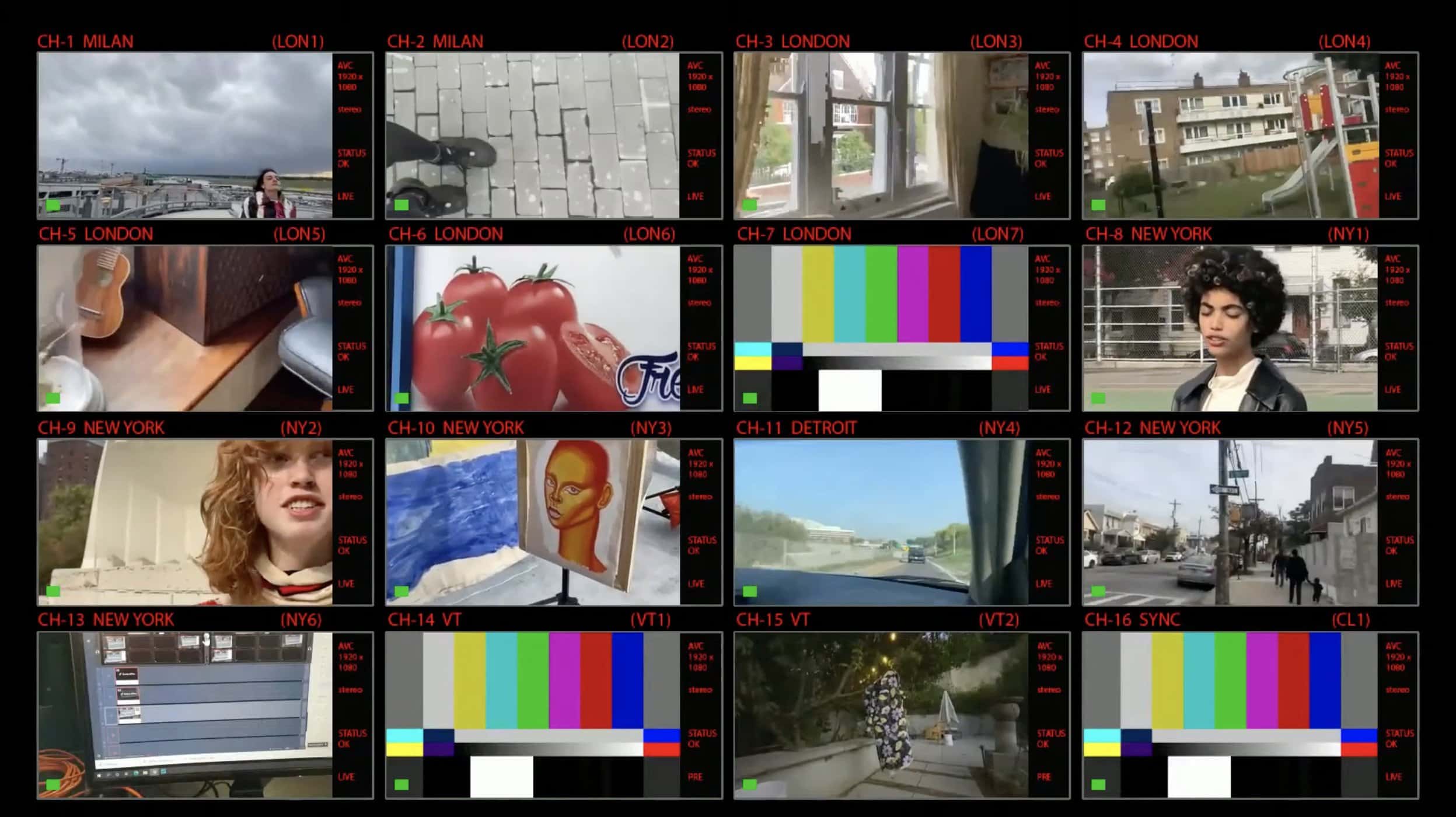
How is it that a spontaneous communion of kids on a multiscreen YouTube channel exchanging chats for 90 minutes while never minding for a second they were being watched with little discernible activity at Marni was so much more of a fashion moment than the ten minutes high gloss, high power and high display of craftsmanship with the most expensive linen, furs, and cotton available that didn’t sway more than a few hard core followers at Fendi.
It is amazing to see one of the largest global luxury brands, Prada, talking about relating to current times at the same time as a middle-age brand under new leadership relating to current times, Marni.
At Fendi, Silvia Venturini Fendi’s farewell show as the house’s womenswear designer to concentrate on menswear and accessories while Kim Jones, her successor, watched the proceeding from a white couch had all the accouterments of Fendi with the amazing display of the Roman house command of craftsmanship in a live show at its Milano loft showcasing the finest linens, laces, fine furs, fine leathers, and fine cottons. But the show concluded at the same moment as it started leaving Fendi without any signature look that anyone in the ever larger and larger segment of the educated fashion public that encompass the most of the young consumer could discern.
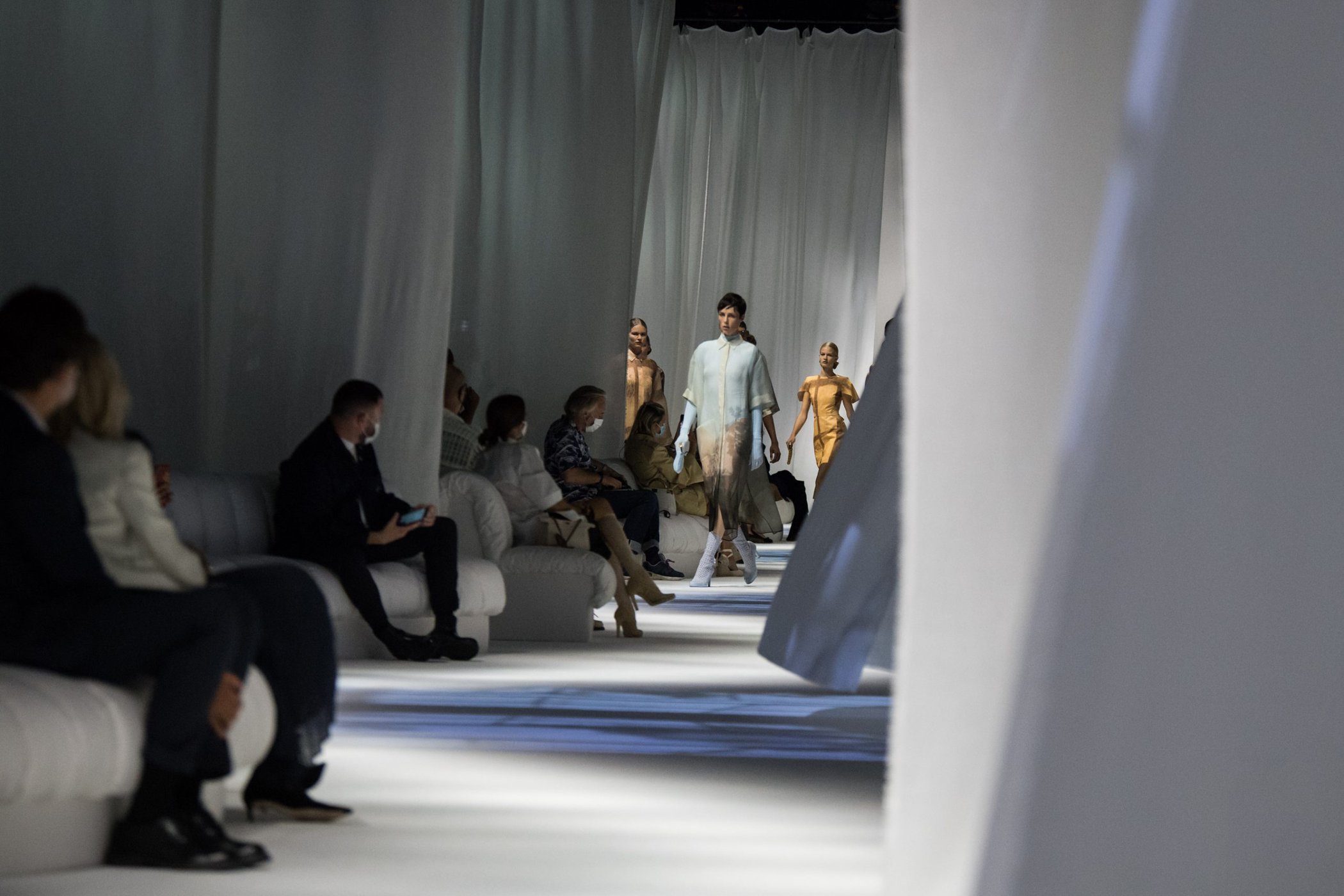
The Karl Lagerfeld years created fashion moments but as a legacy nothing in terms of a recognized Fendi look or style. As such, much will depend on the pace Jones and Venturini Fendi can create in the next few seasons. Perhaps with it products that can be identified as Fendi, and that does not mean the proliferation of the FF double logo in head-to-toe outfits, the duo can do it. The recent hunger to collaborate with rap musicians and visual artists on FF logo clothing are a sure sign of Fendi not having a real fashion foundation to mine. Jones built his recent success at Dior Men on the heritage of Dior’s haute couture heritage, adapting the intricacies of couture to craft his men’s clothes and imbued the collections with a mystique. Jones won’t have that kind of heritage to inherit and to expand as he begins at Fendi.
The road ahead at Fendi won’t be as easy and as smooth as the brand would like to imagine – not only do the designers need to build new collections and a signature look but also build a community.
While the display of craftsmanship at Fendi has few rivals, the brand must recognized that the coveted young consumers – a must investment – don’t really care so much for either heritage or crafts or arts for that matter. What these young people care about is whether these luxury brands shares their values and speaks their language.
Community can’t be manufactured; it isn’t a marketing process. Community is earned.
Speaking of community, Pierpaolo Piccioli showed a buoyant live show for the first time in Milano with an immersive experience – live performance by Labrinth, set by plant artist Satoshi Kawamoto – that allowed a communion of a different sort: a connection to the emotion that remains the backbone of the Valentino brand over nearly seven decades. Piccioli is embarking on expanding the Valentino community by associating values to the brand not with its fashion outings but connecting with common words that are now becoming part of the brand, words like ‘empathy’, ‘strength’, and ‘kindness.’

For many Milanese designers, the lockdown were a period for rest, for movies, and for thinking both great thoughts that and small thoughts and for figuring out what and how to do the spring season. Exploring new thoughts and ideas lead to many outcomes – it was and still is a roll of dice.
At times though many of the video presentation seemed nothing more than prolonged commercials with little meaning or little addition to the thought process. Online is great for something when there are real creative force shaping the visuals. Infomercials can’t replaced real shows that convey real ideas with real clothes on real people.
Fashion designers and all the brands must recognize the urgent needs not just about shows and platforms but about who they are and who are their constituencies. That is today’s prime directive.
See you in Paris.