Fashioning Future Folklore
Review of Louis Vuitton Fall 2026 Fashion Show
By Angela Baidoo
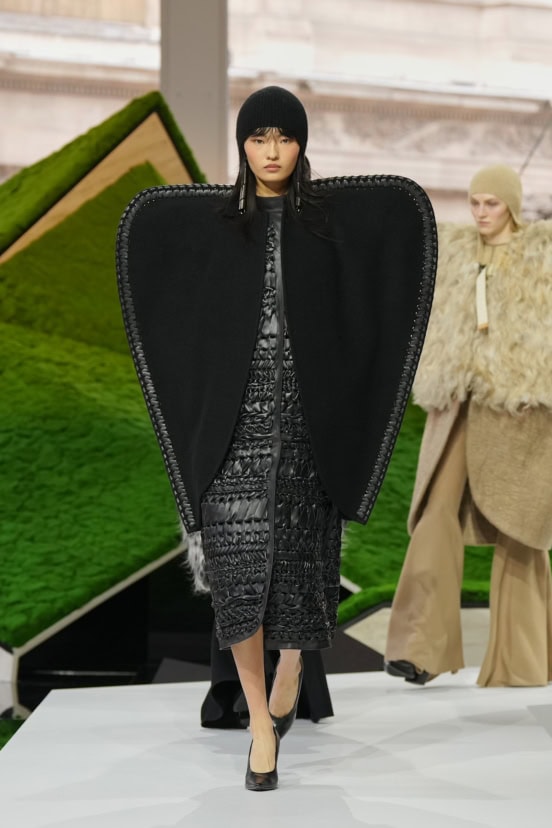
Louis Vuitton’s fall 2026 show unfolded like the opening chapter of a mythic quest. Set within a sculptural landscape of grass-covered monoliths developed by production designer Jeremy Hindle (Severance), the runway transported guests somewhere between an ancient past and an imagined future.
Creative director Nicolas Ghesquière framed the collection – titled Super Nature – as an alternative view of man’s relationship with the land, drawing a through-line back to the founder’s origins in the Jura Mountains that inspired today’s set. Vuitton’s early years exposed to transformative craftsmanship became the starting point for a show that exalted nature as the ‘greatest fashion designer.’
THE COLLECTION
THE VIBE
Future Folklore, Pastoral Provenance, Climate Couture
At Louis Vuitton an epic adventure awaited for fall 2026. Set in a world that could be repurposed for a 2096 version of a JRR Tolkien saga, grass covered monoliths appeared as if they had erupted from the ground. Jagged and looming the ‘sculptural landscape’ was designed by Jeremy Hindle, who created the dystopian workplace that houses the ‘severed’ characters of sci-fi series Severance. The collaborations aim was to suspend the audience in a place between the past and the future, in a ‘pastoral tableau’ designed to mimic the hometown of the Houses’s founder and the Jura Mountains where he spent his formative years. Developing an appreciation for craftsmanship from observing his family working the watermill to produce grain and timber, before leaving for Paris aged 14.
In a set of digital artworks created by Nazar Strelyaev-Nazarko for the show teasers, a set of lambs playfully don a pair of working boots, alluding to the show’s theme that would see the uniform of pastoral workers revered and reimagined for the luxury market.
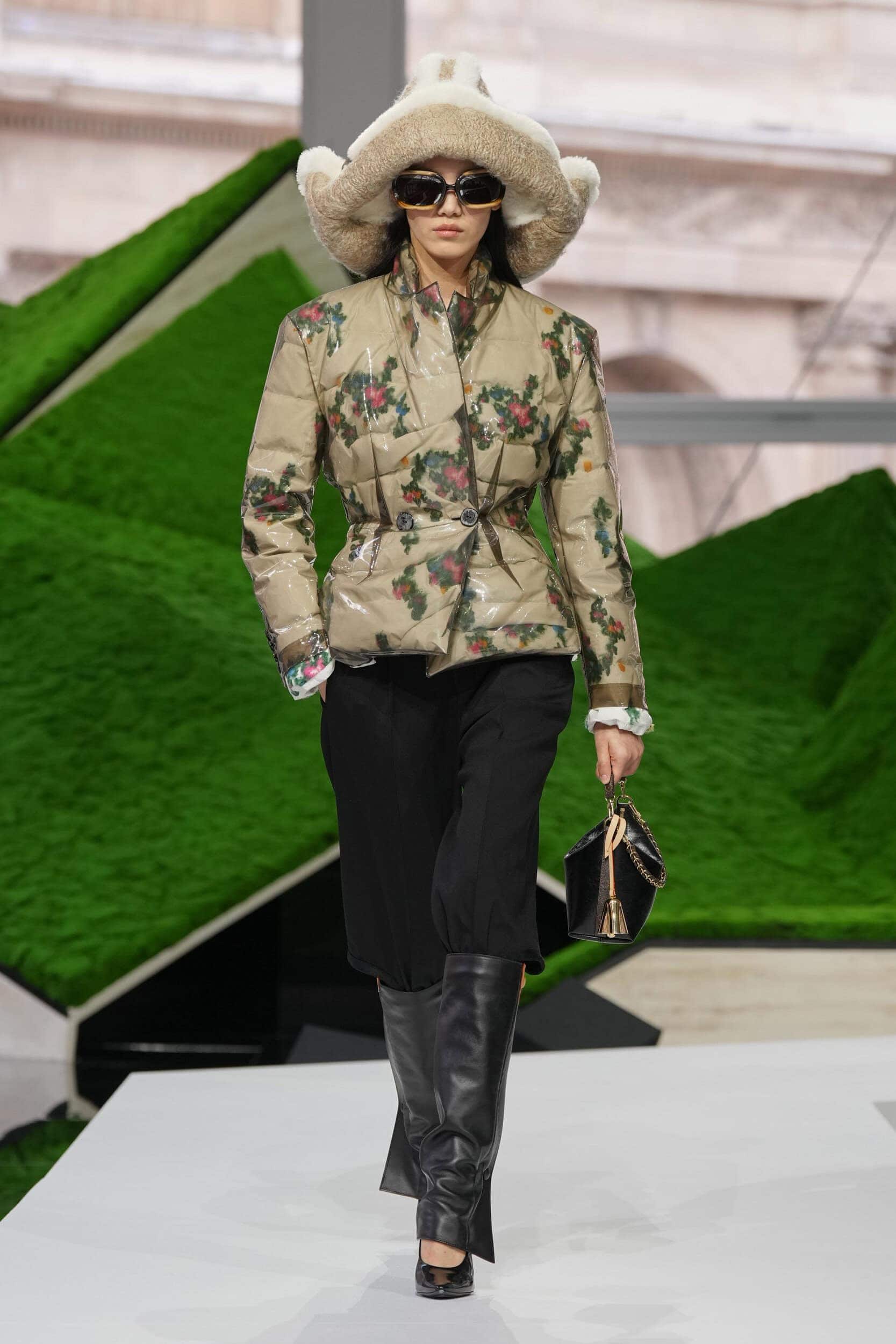
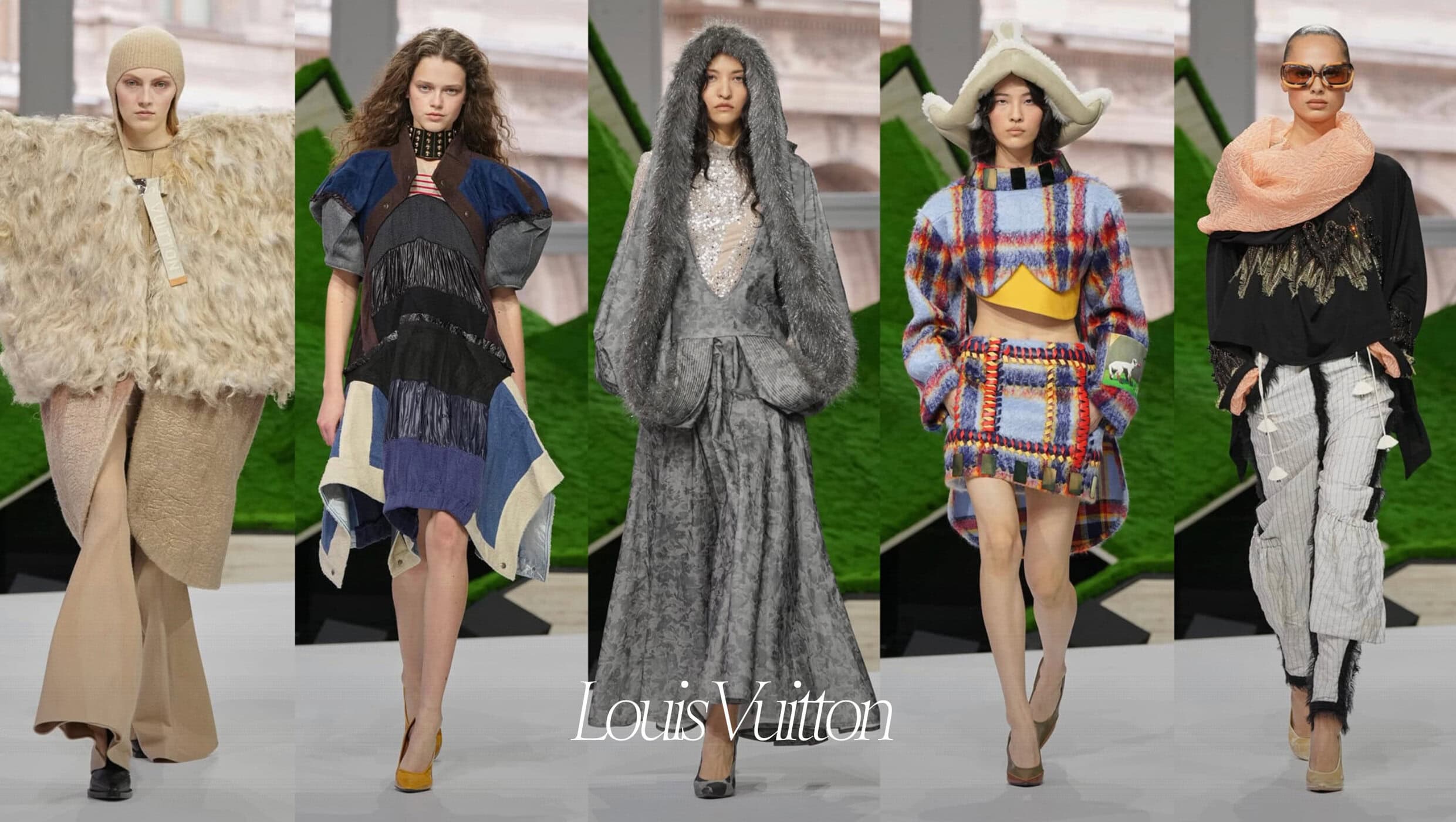
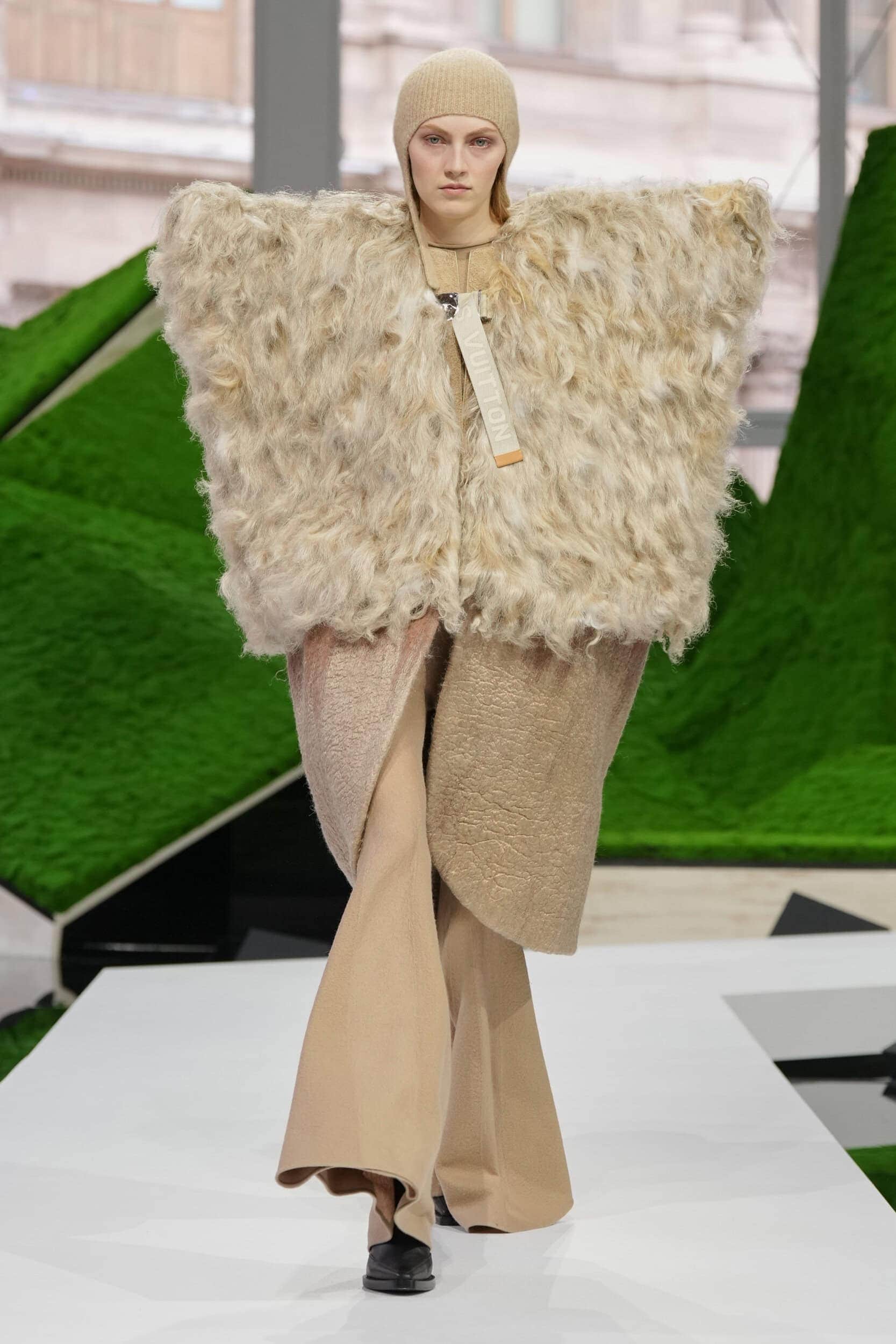
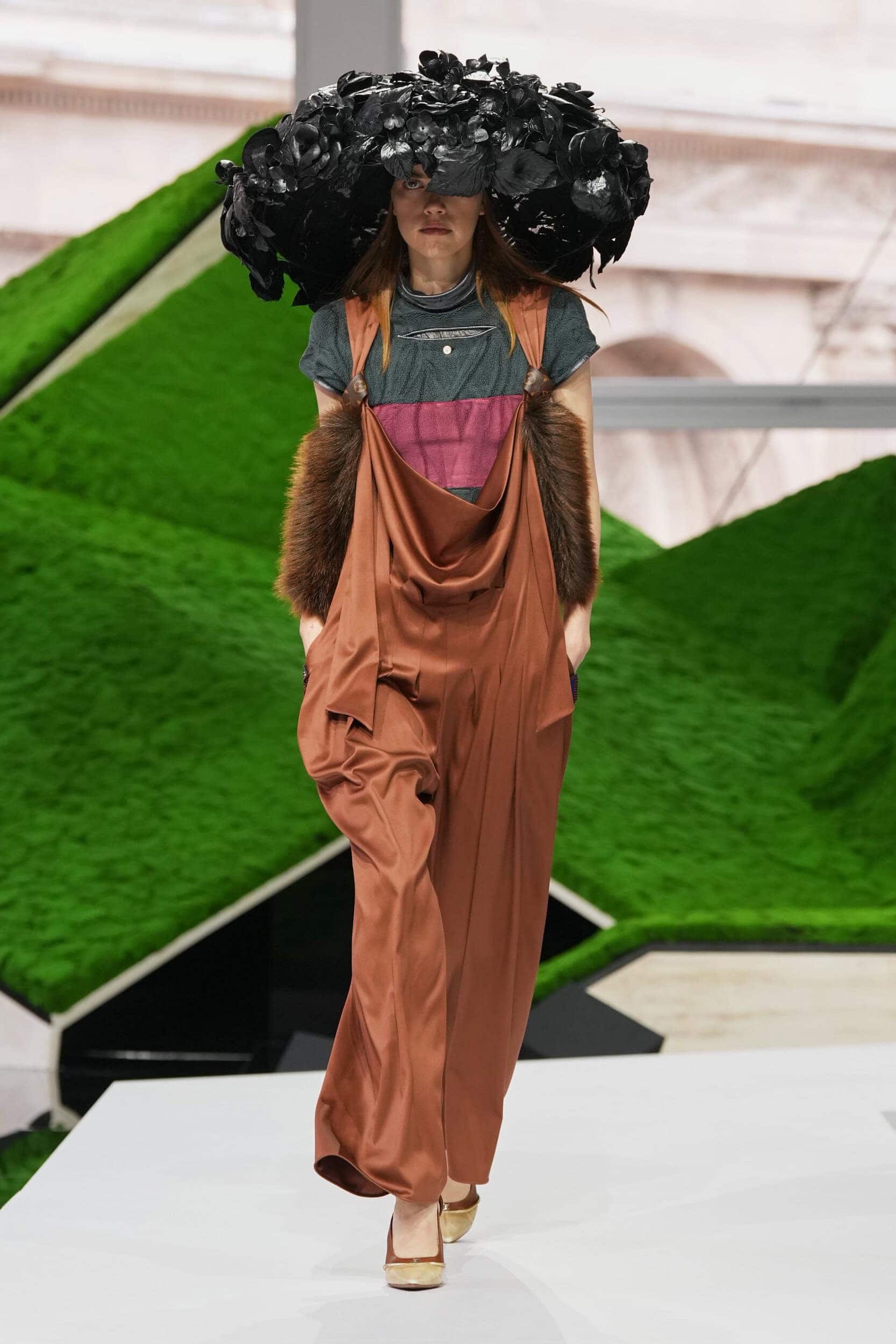
In a collection shaped by the natural world – the title of which was ‘Super Nature’ – Nicolas Ghesquière took creative licence with what he imagined a future society of land custodians would wear. Adapting his atelier-based skills to face outward the notes spoke of the creative director evolving clothes to interact with “our climate and surroundings.” Barring the opening looks that were Ghesquière’s interpretation of a ‘Shepherd’s coat’ worn by shepherds from the Kurdistan Region (made from felt it’s designed with exaggerated shoulders to ward off predators and adapts to a shelter when required), the collection was inherently wearable and a timely analysis of man’s relationship with nature.
Led by the elements of the wind, rain, and sun and travelling through different timelines (past, present, imagined future) these clothes were a play on the ‘traditional costumes’ worn by those who worked the land. Reinterpreting what we would need for a landscape forever changing by digital intervention (air, land, water), Ghesquière proposed ‘a new folklore, for the future’ according to today’s notes.
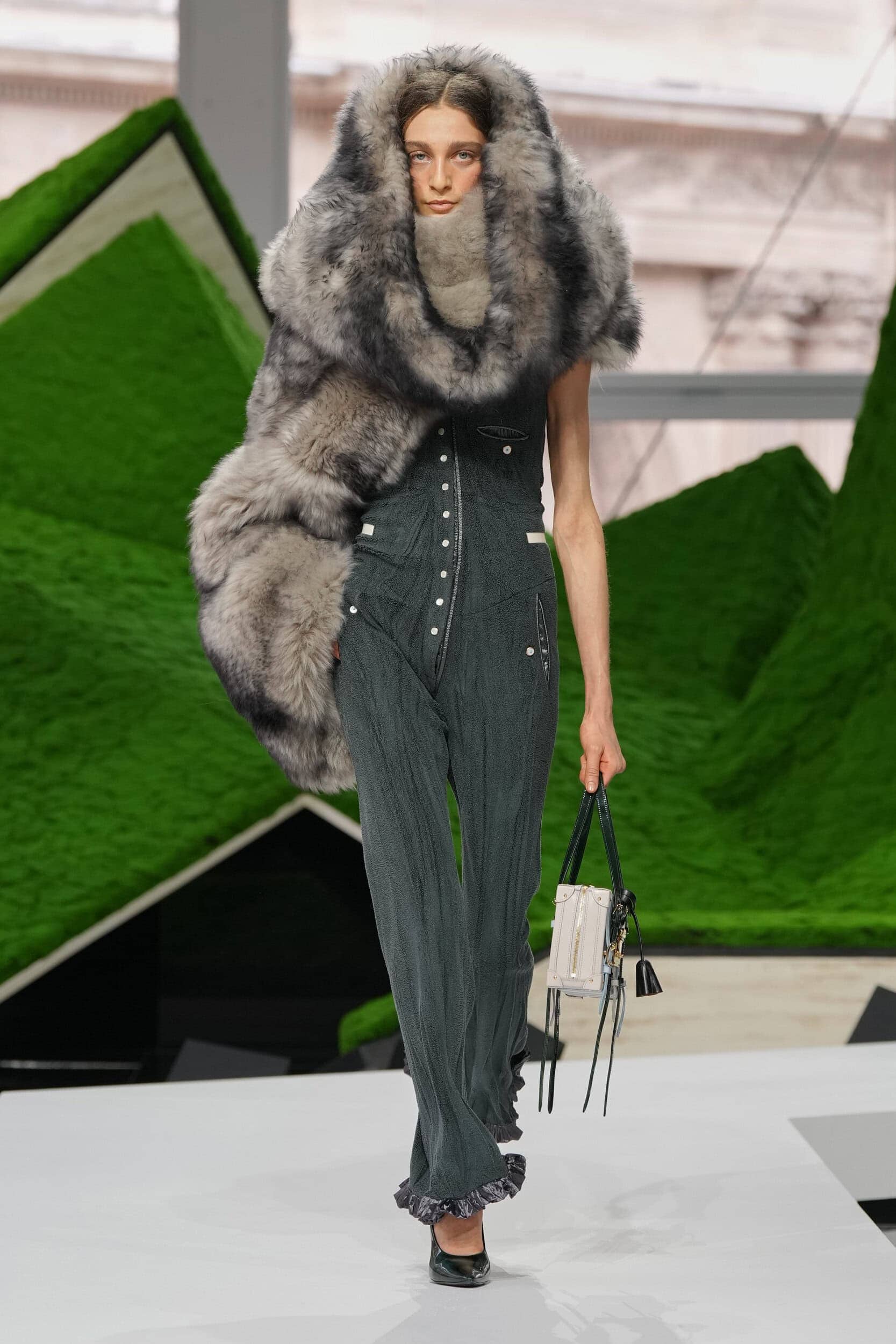
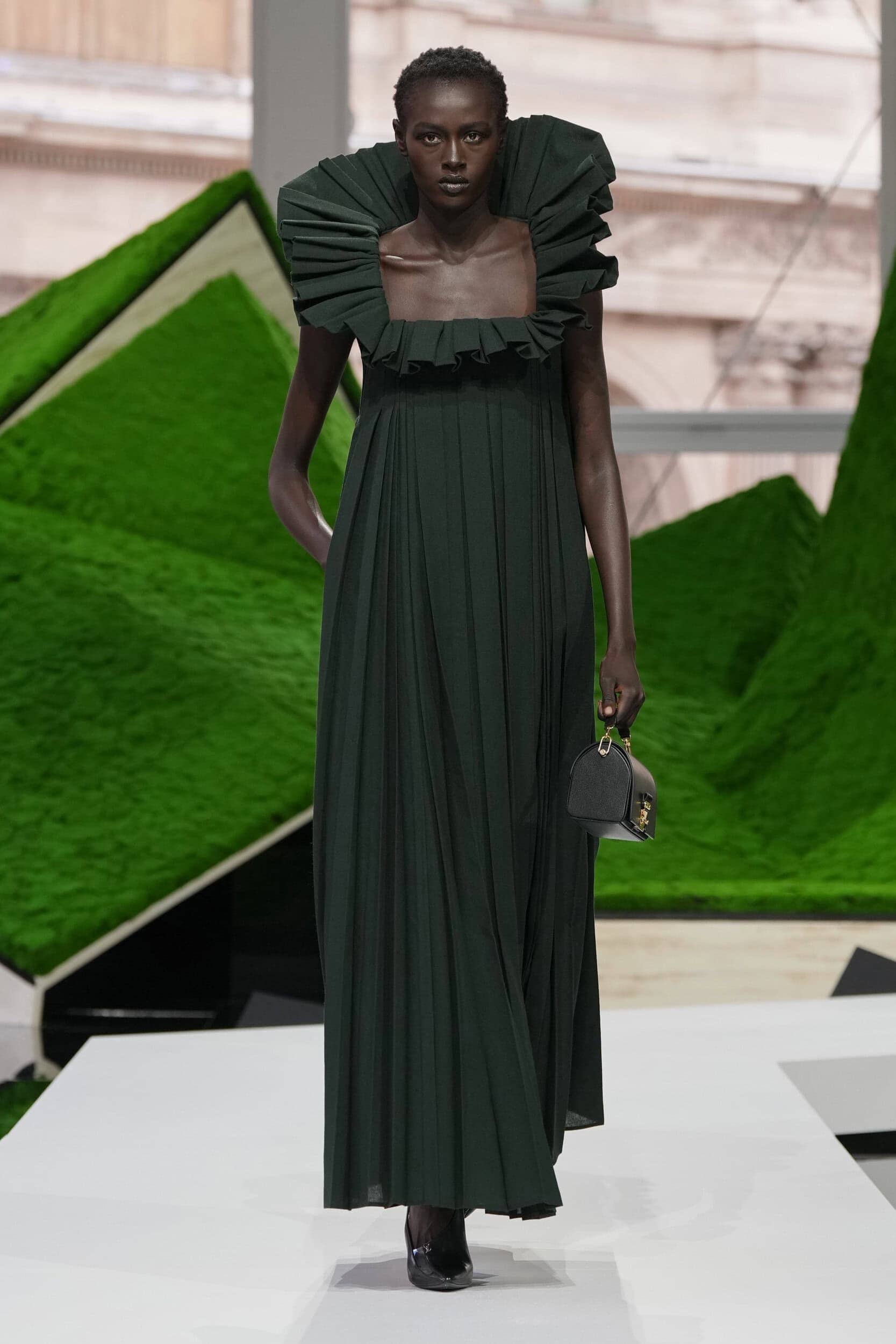
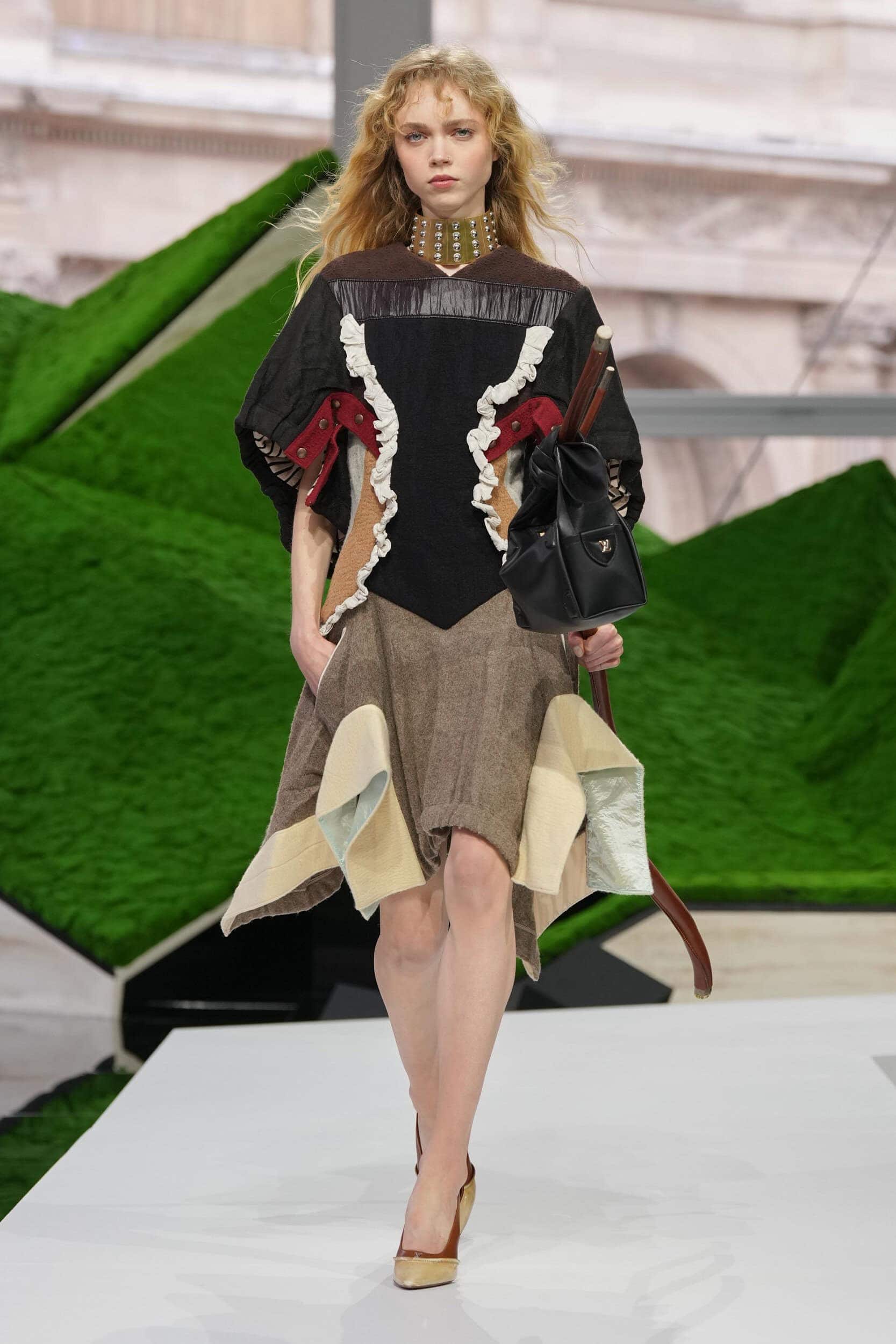
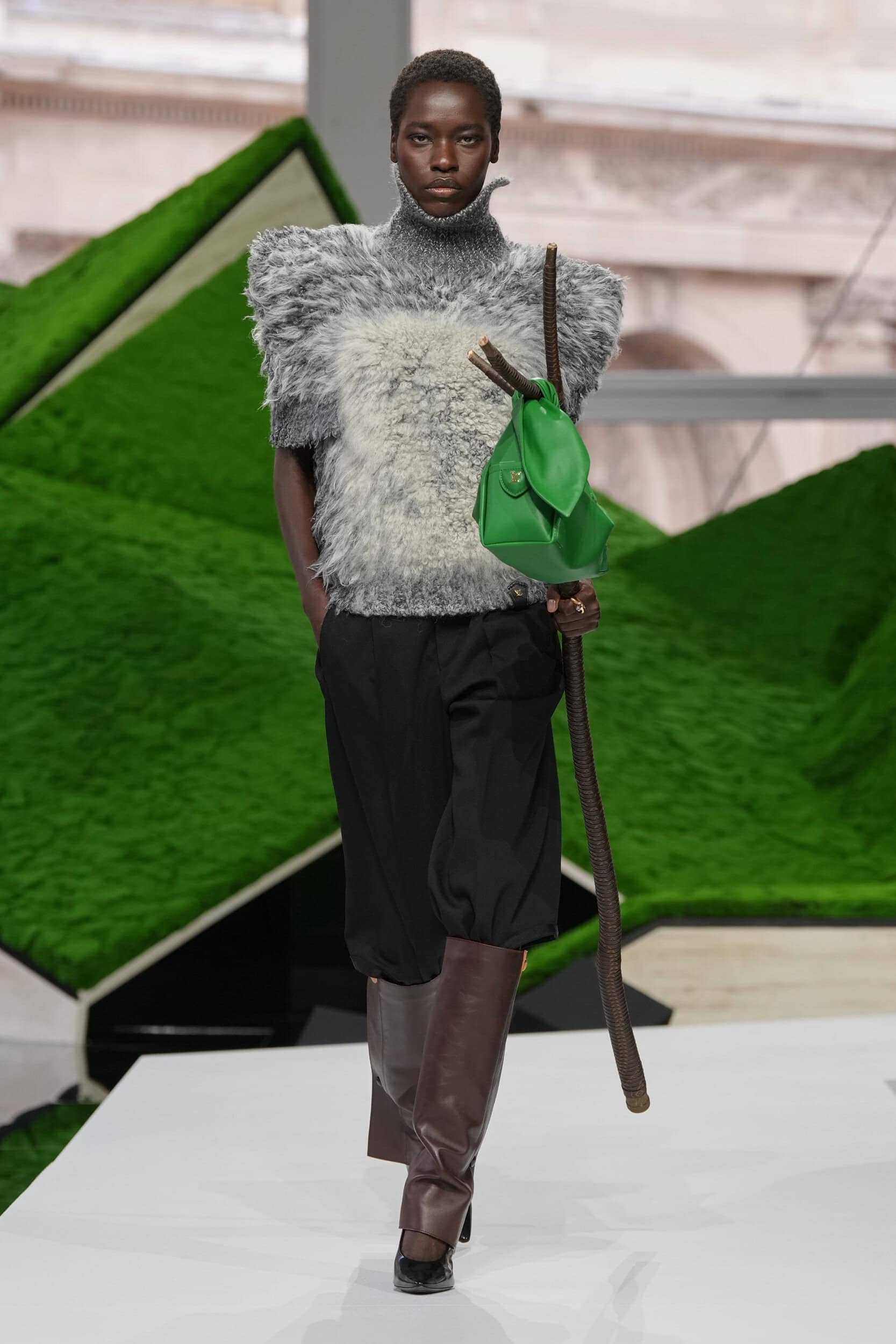
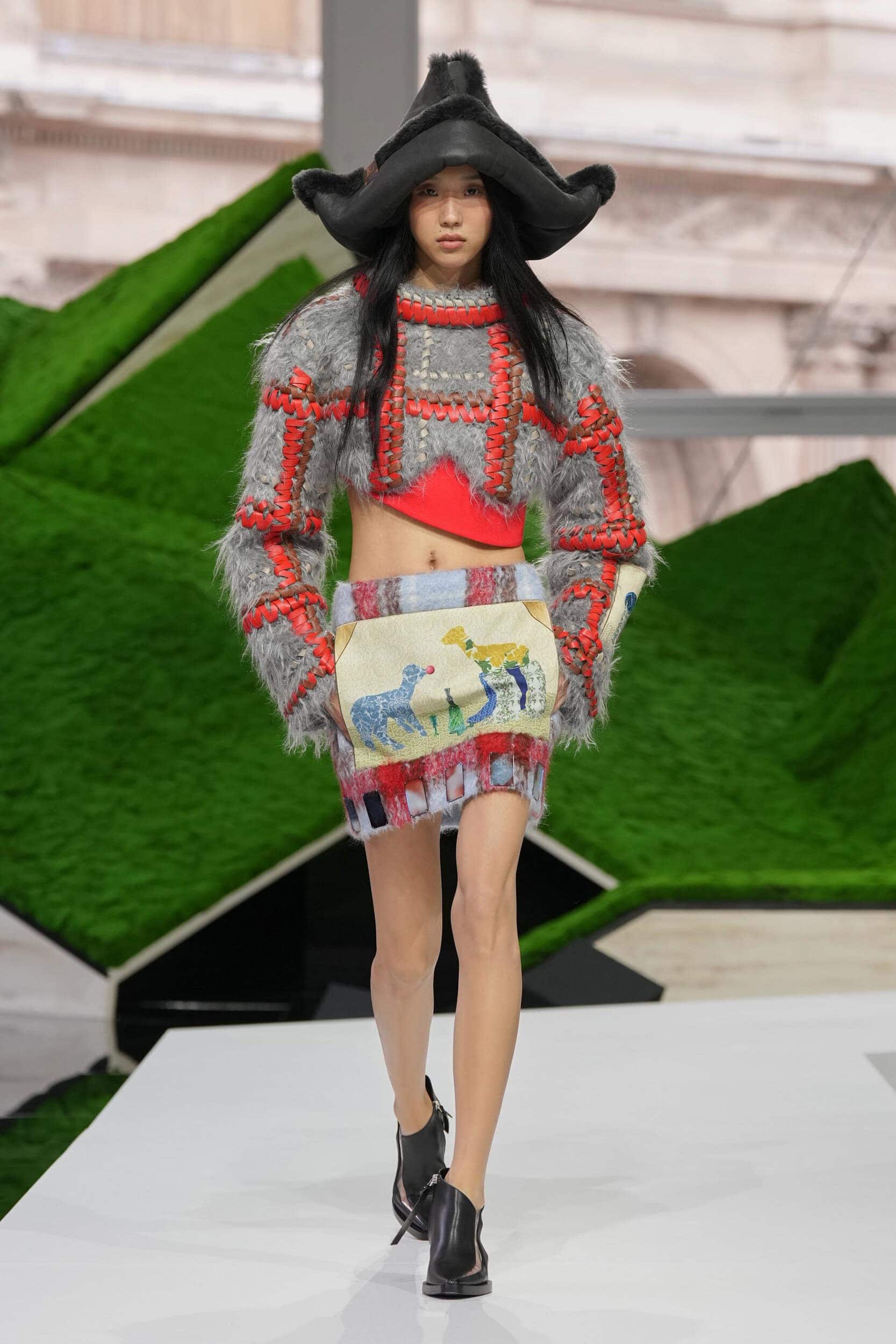
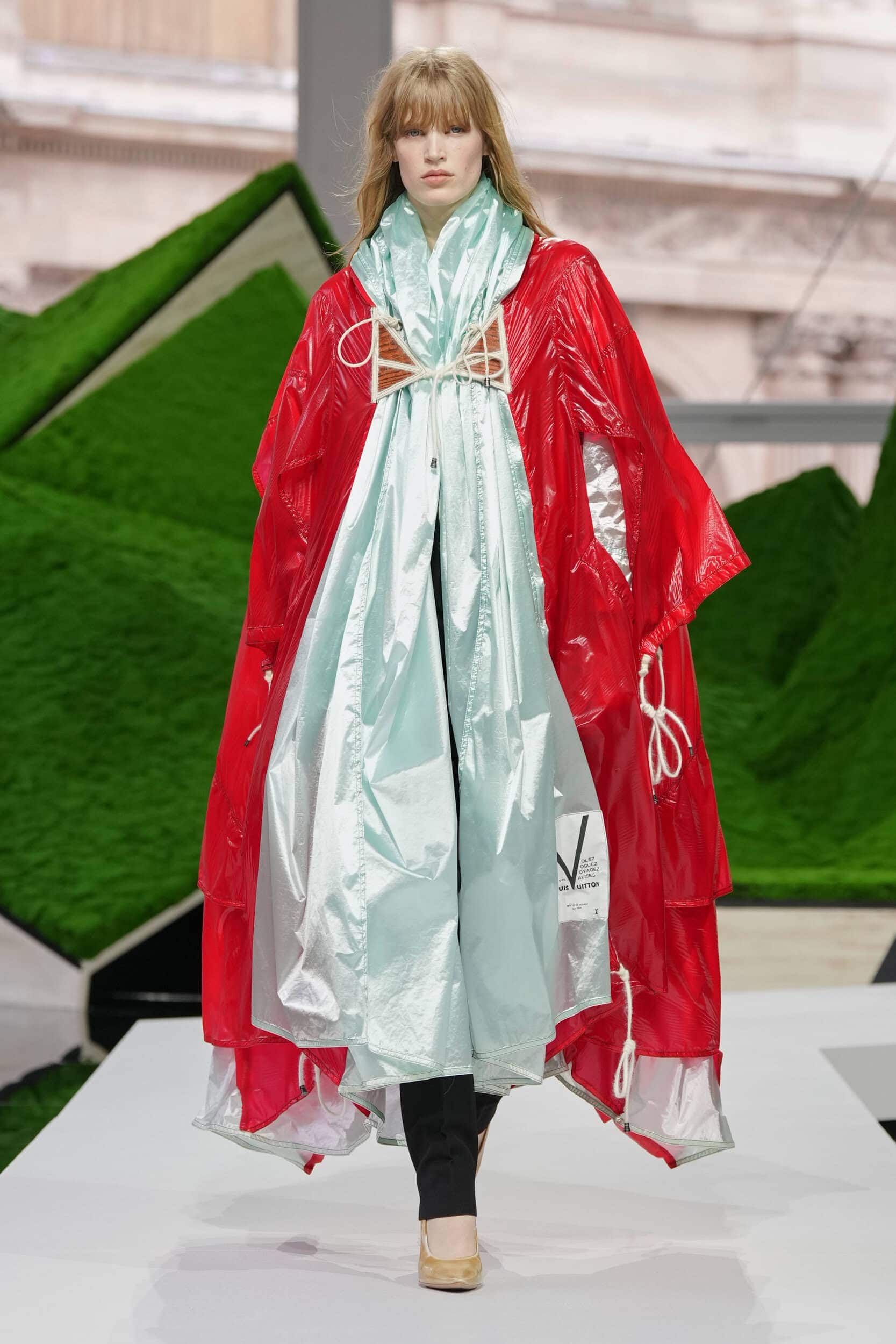
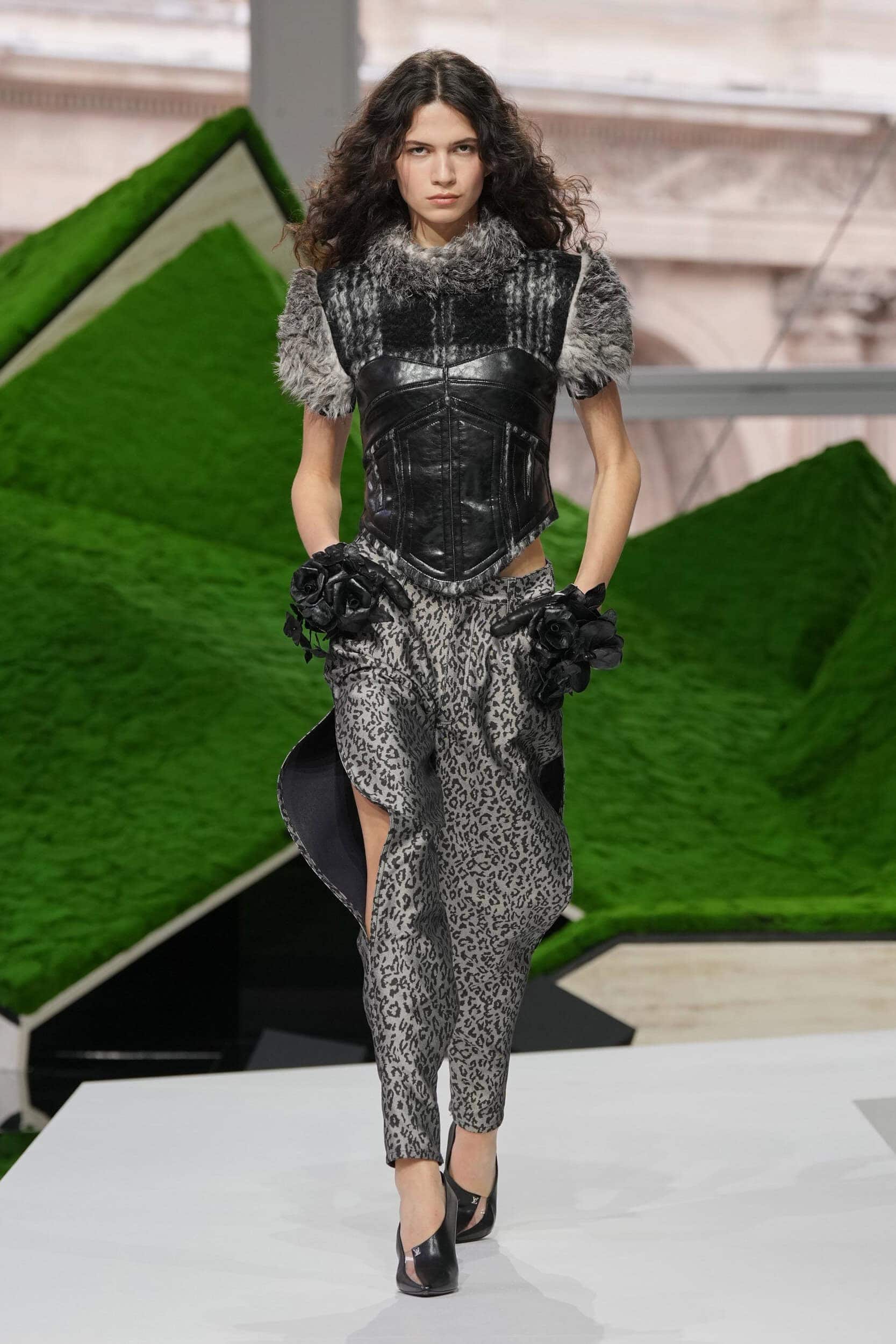
Hyper-crafted fabrications were inspired by nature and were both decorative and protective – brushed animalistic ‘vegetal fur’, weatherproof nylons patchworked with cloque and hardwearing suede, quilting overlaid with vinyl, and leather bomber jackets with regal yokes of ‘Mongolian’ fur. Mapping out the shared histories of the global collective, the design of these clothes was shaped by the people who, at an imagined time before our own, would have worn them. Modern-day coats for shepherdesses, wrapped padded jackets with fringed yarns inspired by Nepalese Sherpas, swaddling furs layered over a practical jumpsuit, silky overalls, and colourful nylon cape-cum-windbreakers fastened with a yarn and wood hand-crafted closure. The Noé bag from 1932 also made a return and was perched on the end of a makeshift stick for the show, reiterating the House’s history of travel, the Noé bag was adapted for the nomadic lifestyle. Hats performed a key role in today’s show, protect as they do from the elements, worn in the form of extra-large straw baskets complete with handles, shearling tricorn-style hats, knitted sherpa beanies, and a medieval-inspired conical headdress.
Each of the models in today’s show appeared as if on her own quest. Traversing the land (with respect to nature) on her voyage of discovery to pastures new. This was pastoral living inspired by the past, for the present, yet reimagined for a tomorrow not yet a reality.
THE WRAP UP
Fall emerged as Ghesquière’s vision for a nomadic wardrobe that faces into a world where survival instincts must coexist with luxury craftsmanship. The creative directors imagined custodians of the land wore clothes that felt both folkloric and practical.
Hyper-crafted fabrics, protective layers, and futuristic silhouettes merged to face the elements. From shepherd-inspired coats to reworked archival bags like the Noé, each look suggested a traveller charting her own path through the ever-shifting global terrain.