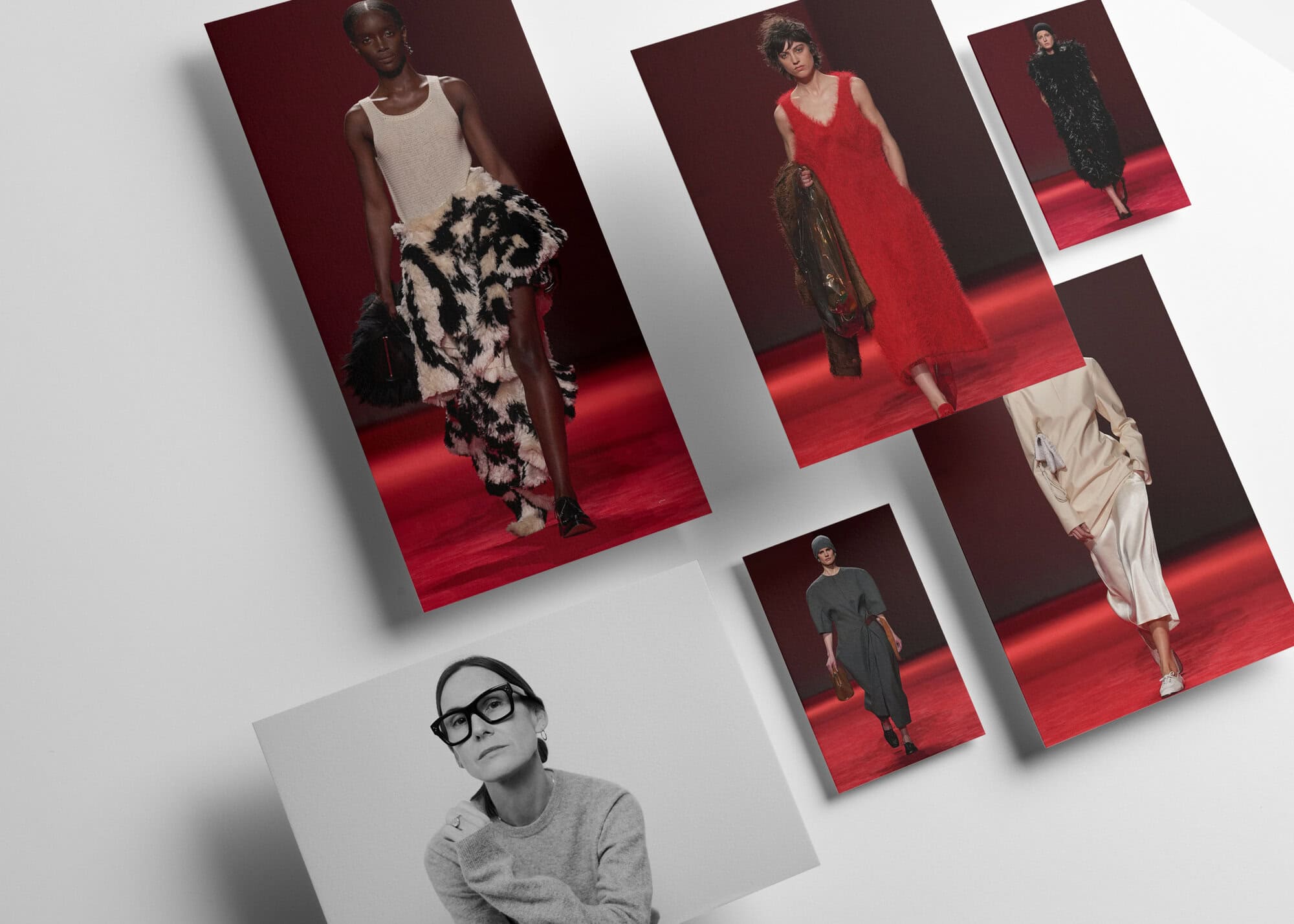
Where Armor Softens And Seduction Begins
By Kenneth Richard
Sophomore collections carry expectation. They arrive with scrutiny sharpened and patience shortened. Louise Trotter understands that. But nearly a year into her tenure at Bottega Veneta, she speaks not with defensiveness, nor with bravado, but with clarity. The study period, she suggests, is over.
“I’ve been in Milan for nearly one year,” she says, measured and reflective. “When I first arrived, I was studying in a way. Now it feels less studied and more natural for me.” The shift is subtle but meaningful — observation has given way to instinct.
She greets us with familiarity and warmth — focused, contemplative, astute. There is nothing hurried in her manner, even if the show she has just sent down the runway moved at an accelerated clip. That tension — control and speed, restraint and release — mirrors the collection itself.
For Fall 2026, Trotter turned deliberately to what she calls the house’s Milanese roots. Bottega Veneta was born in Venice, she reminds us, spent its adolescence in New York, and came into its adulthood in Milan.
I see a brand as a human, as a living thing. Its history, like all of us — where we were born, where we live, our footprint in life — is part of who we are.

Milan, then, is not just headquarters. It is identity. It is temperament.
What fascinates her is the city’s duality. Its severity. Its seduction.
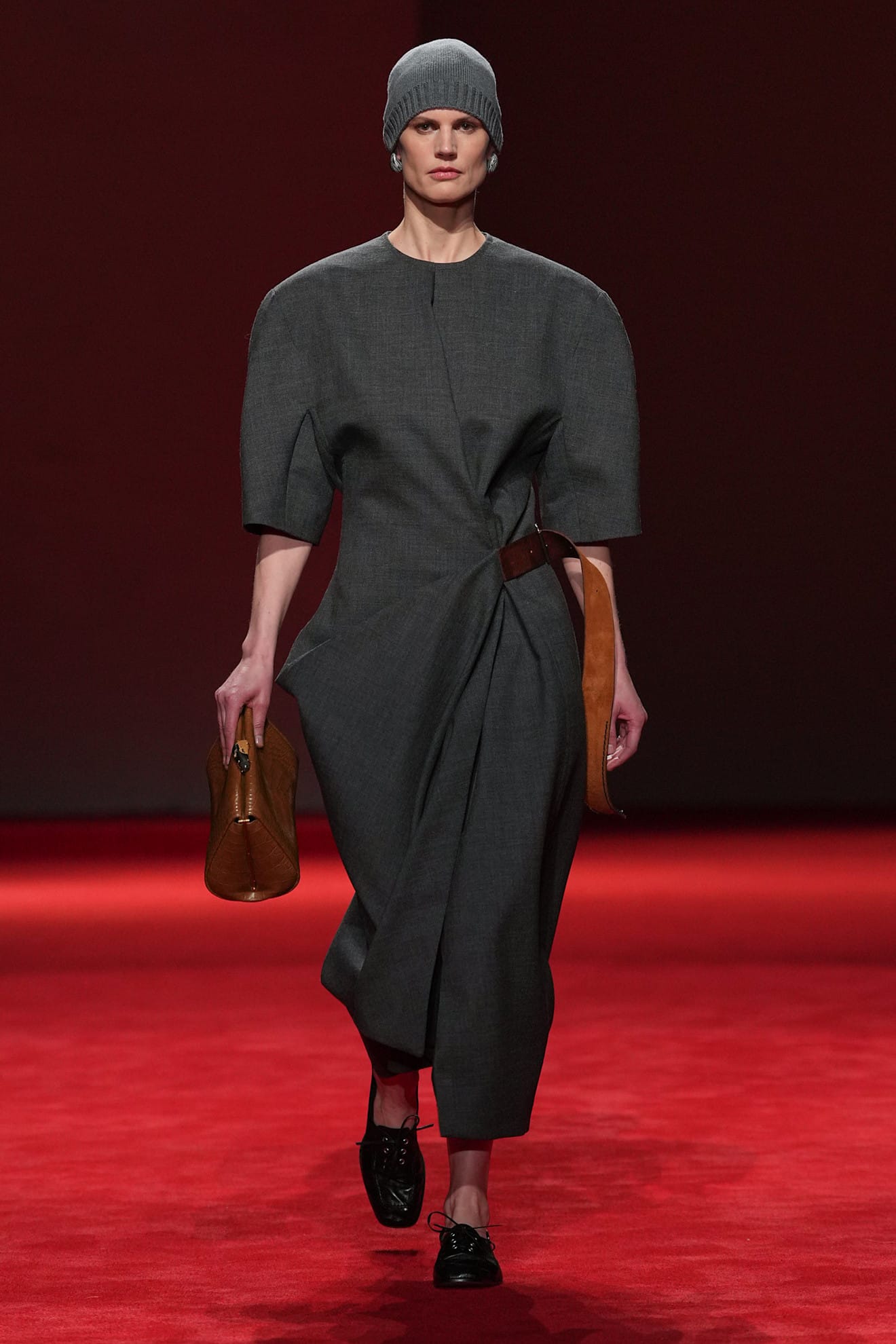
“There’s this brutalism — in the architecture, in the grey, in the feeling,” she says. “But then there’s this sensuality and seduction behind it. You have the key to the building and you go into something very beautiful in the courtyard. It’s a little bit like the people. Things feel cold at first, but then you discover warmth.”
That push and pull shaped the collection’s emotional register. Tailoring opened the conversation — precise, controlled, almost armored. “When you put on tailoring, it’s a form of armor,” she notes. “Even though it’s actually constructed with a very rounded shoulder and it’s soft.” The contradiction is intentional. Protection without rigidity. Authority without harshness.
Some observers felt last season carried weight — literal and metaphorical. Trotter does not bristle at the suggestion. “We have to always reflect,” she says evenly. “Our work is to try and improve, to go back and see what can I learn from that, and what can I take forward and do better.” This season, she lightened everything she could. The suiting is stripped back internally, engineered for movement. “It’s as light as I could make it,” she adds. The difference is felt rather than announced.
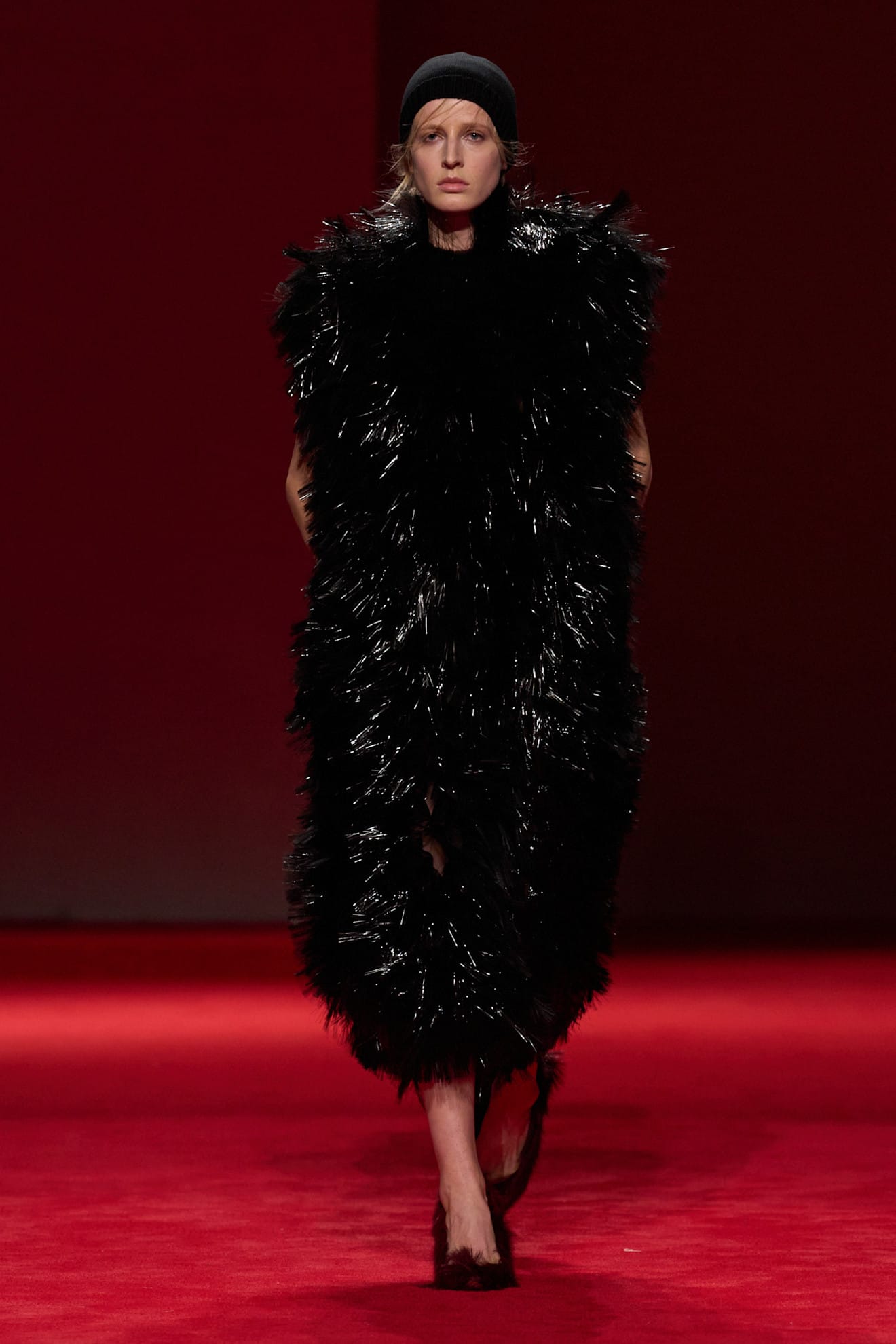
The pace of the show — deliberately fast — reinforced that shift. “Life in Milan is quite fast,” she says. “People are on the go.” But speed here was not about aggression. It was about energy. About letting the fabrics reveal their motion. “I wanted you to see the movement of those textures,” she explains. “They’re not solid.” What may appear severe at a glance softens once in motion — much like the city itself.
If there was opulence, it came through texture rather than embellishment. Bottega Veneta is a house of leather — skin as material, skin as metaphor. Trotter expanded that idea into what she calls “skin and skins,” pairing technical fibers with natural ones until distinctions dissolved. A fiber used last season reappeared, woven differently; beside it, interwoven silk, recycled and engineered to echo the same hand and movement.
“What I wanted to try and do is that you can’t really distinguish between the two,” she says. “What’s natural and what’s not?” The question lingers. In an age of material innovation, the emotional response matters more than the category.
“Craft is really our technology. Technique is our logo.”
It is perhaps the clearest articulation of her philosophy. There is no appetite for nostalgia here, no desire to retreat into retrospective comfort. “It’s not nostalgic, it’s not retrospective,” she says of the house. The artisans she works alongside are eager to experiment. “There’s this willingness to explore and to try ideas.” The mind, the hand, and the heart operate collectively. Exploration is not disruption; it is continuity.
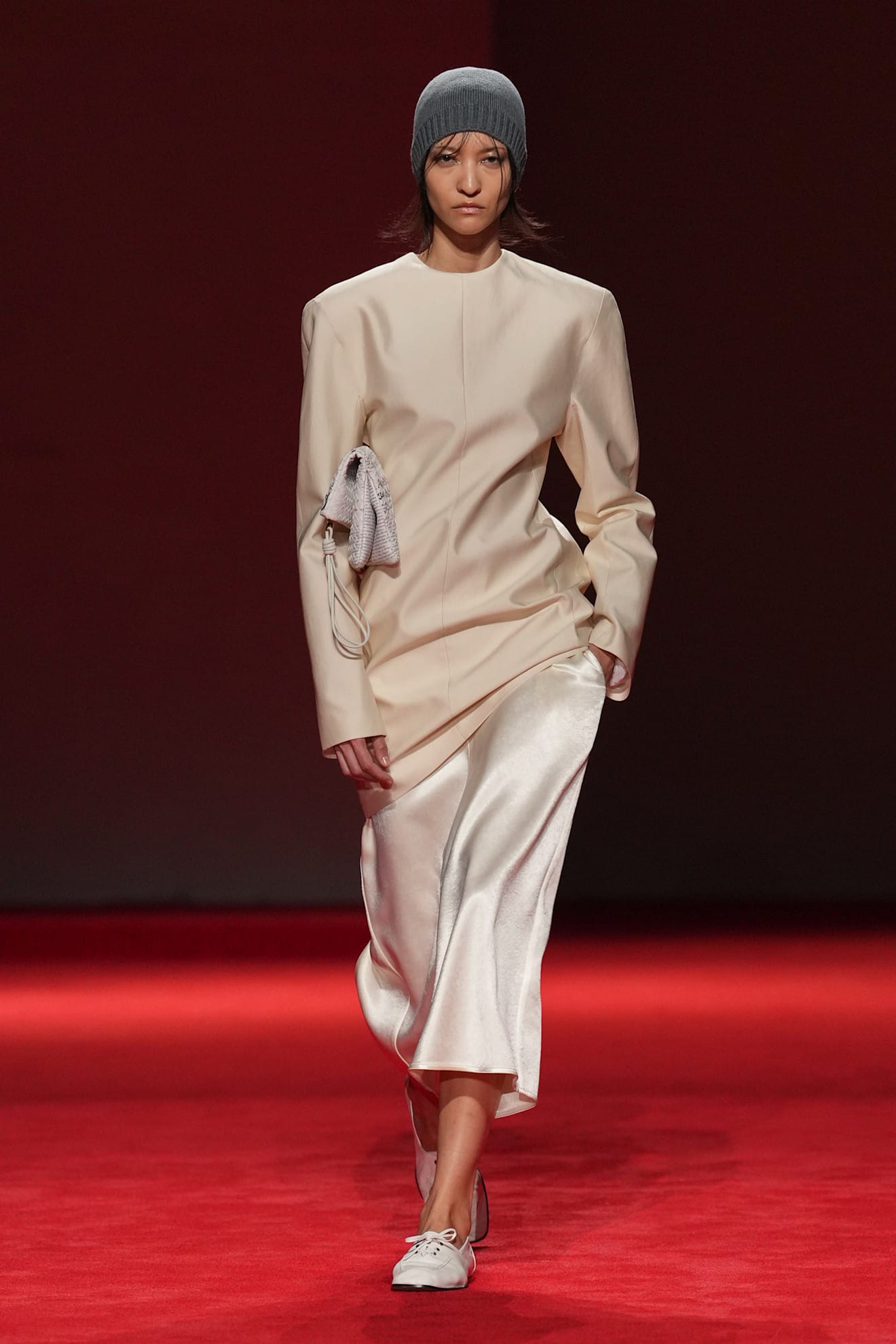
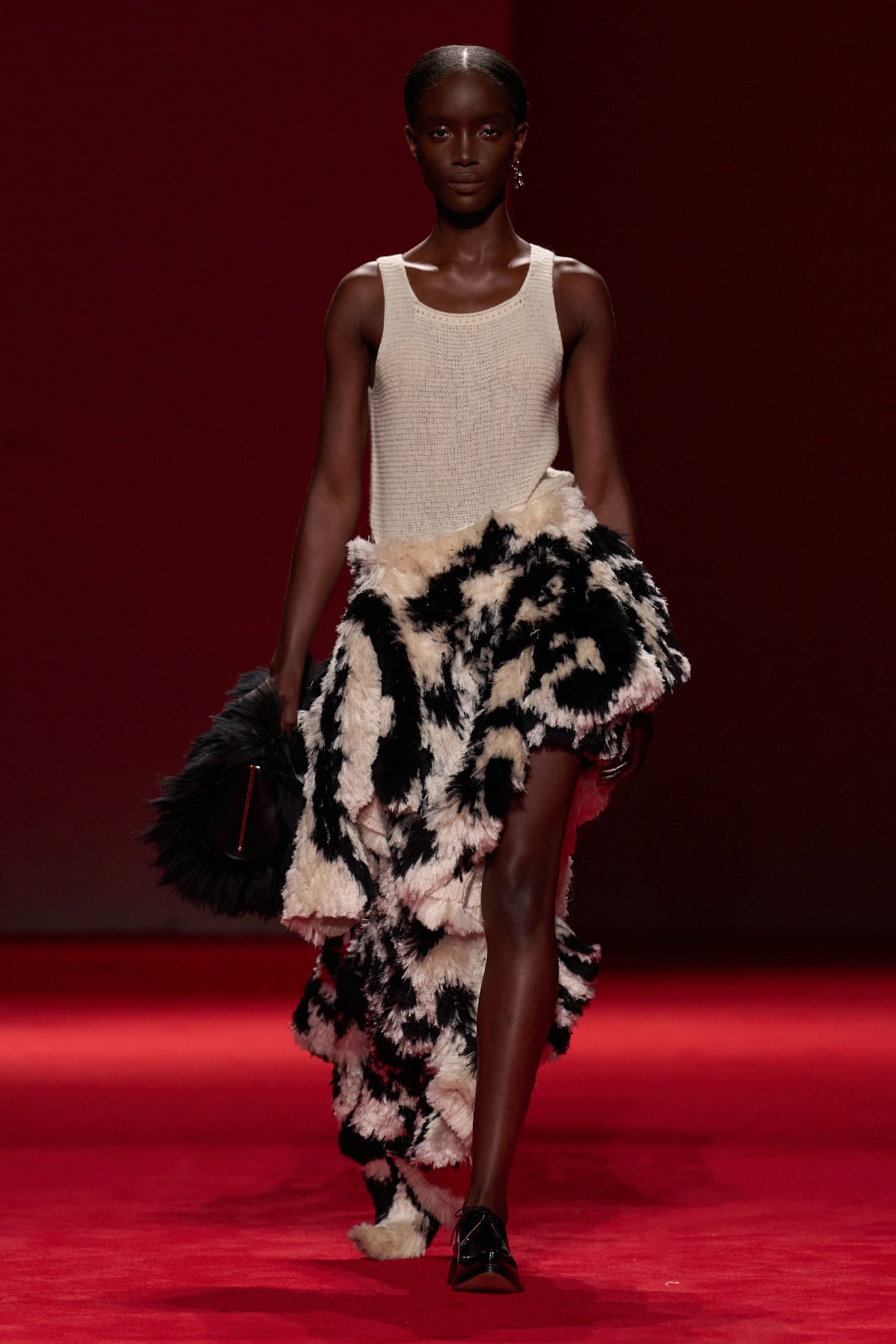
The theatricality of the setting — neighboring La Scala — was no coincidence. Italy, she observes, still believes in dressing up. “People really dress up,” she says with quiet admiration. “It’s quite rare today.” Not for spectacle, but for oneself and for community. “It’s a sign of pride and respect.” Clothes here are not costume. They are participation.
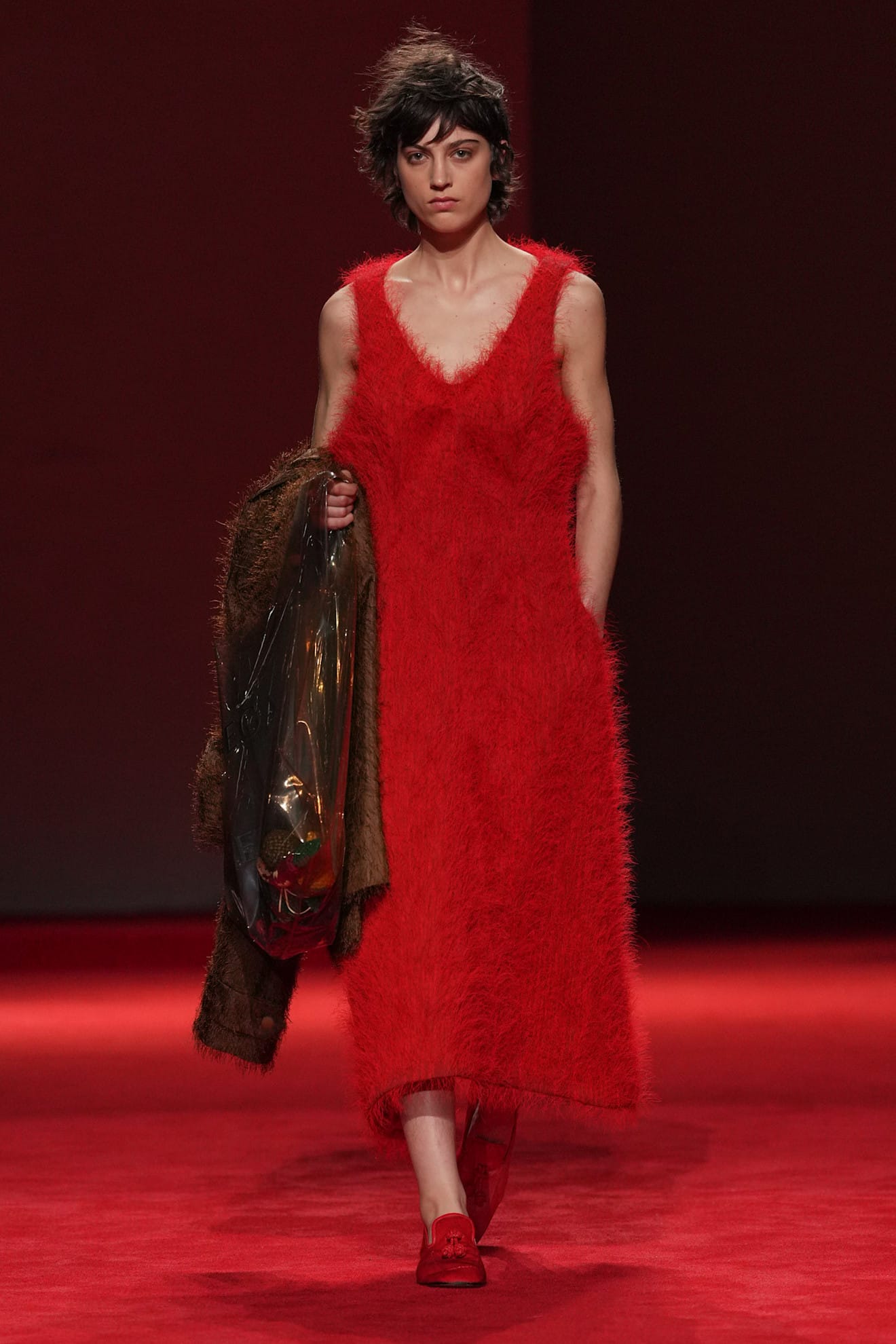
When asked how she maintains focus in a world that often feels fractured, her answer is disarmingly simple. “I create clothes,” she says. “Clothes bring joy and confidence. You put them on and you feel better.” There is no grand manifesto attached. No attempt to position fashion as geopolitical solution. Her conviction is quieter: dignity can begin with how you dress.
She recalls an early conversation with Renzo, one of the company’s founders, who once described wanting to create a bag that a woman could carry to work and then, with a change of shoes, go dancing. Function and freedom. Discipline and pleasure. “I wanted to say that with this show,” she reflects.
That idea lingers over the collection. Brutalism at the door; seduction inside. Armor that moves. Texture that deceives. A woman who works, and then dances.
Nearly a year in, Louise Trotter no longer sounds like a visitor interpreting Milan. She sounds like someone who has found its rhythm — and is refining it, with lightness and quiet confidence, into her own.