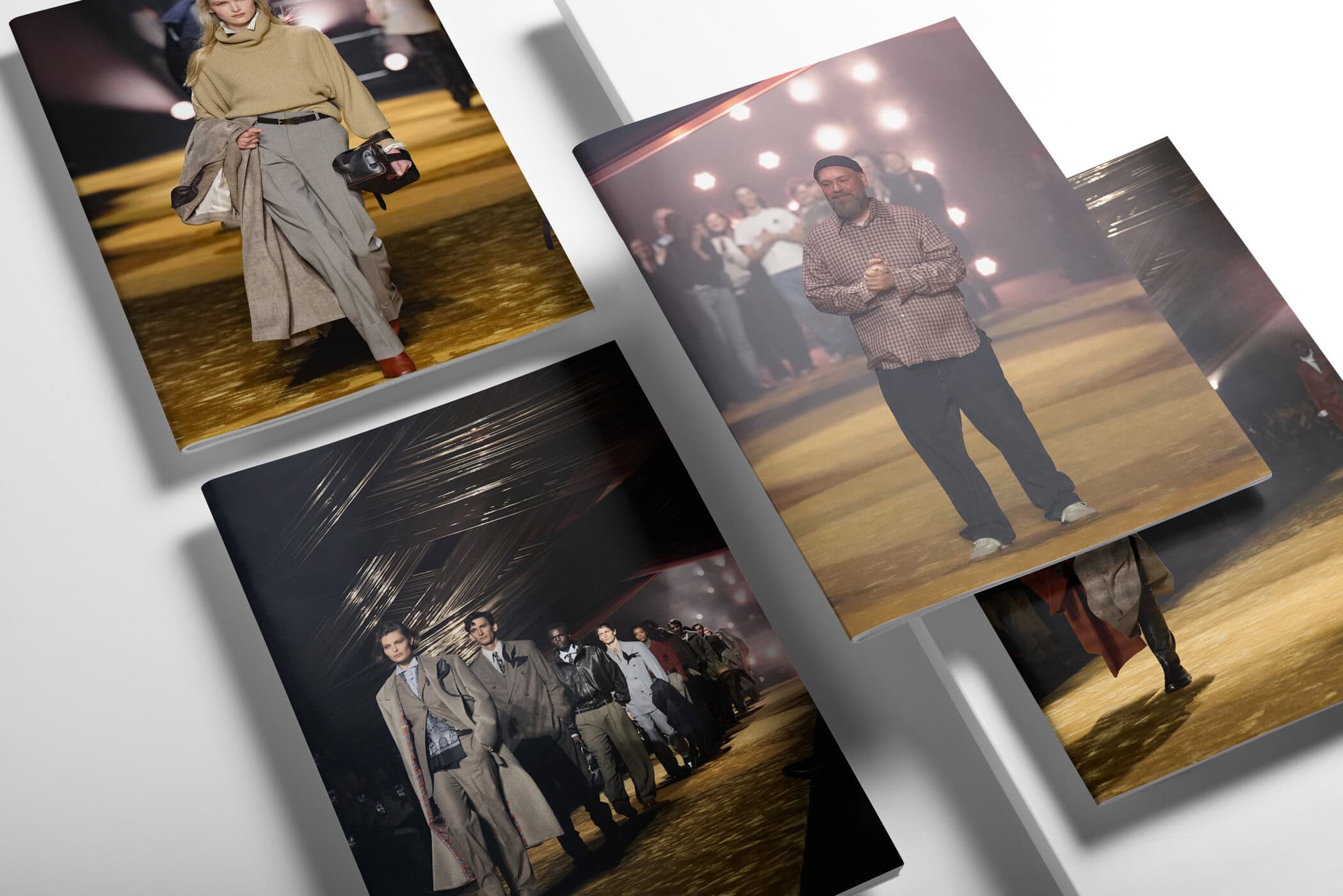
Reframing tailoring as freedom for Fall 2026
By Kenneth Richard
Marco Falcioni does not speak in slogans. He speaks in constructions. Ahead of his Fall 2026 show in Milan, the Senior Vice President of Creative Direction at BOSS sat calmly, a black knit cap pulled low over a micro-plaid button-down, toggling between memory and intent as if they were fabrics to be matched.
“I throw this challenge to my team and to myself every season,” he says. “How do we make tailoring relevant, new, yet wearable and believable?”
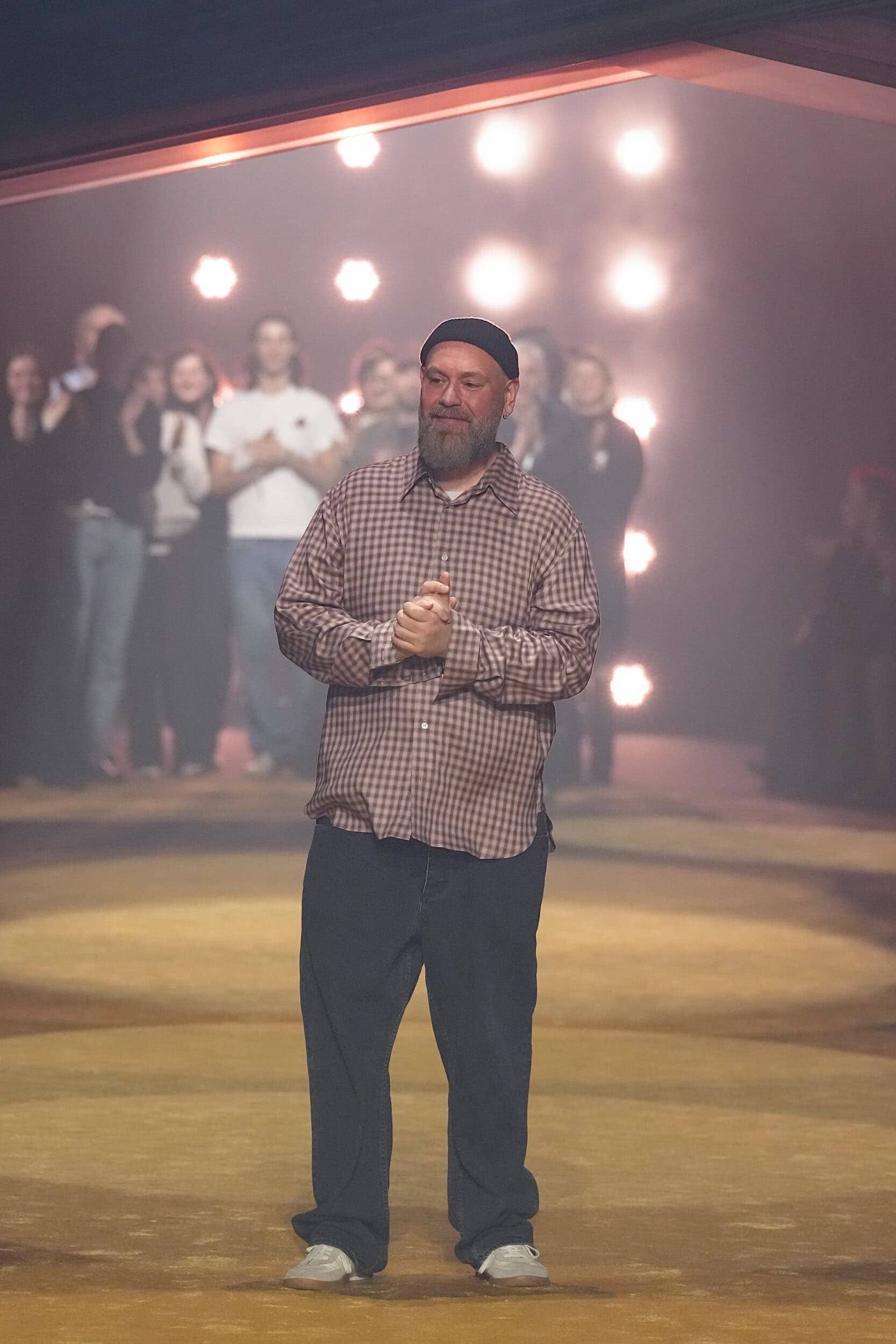
For Falcioni, tailoring is not an abstract ideal. It is something that must live. “We don’t do tailoring for the sake of it. People have to use it. Not for one season, not for two seasons, but for many years.” The distinction is subtle but critical. In an era when runway statements often evaporate by the following quarter, he is interested in longevity — not nostalgia, but durability of attitude.
His starting point this season was unexpectedly archival. Old BOSS wholesale catalogs from the late ’90s revealed something he feels the industry has misplaced: joy. “There was a very positive attitude,” he notes, “a joy in texture and in the art of putting together.” The phrase he returns to is “the art to dress up.” But this was not about strict suiting. The images showed men mixing a tie and pocket square with a blazer in one fabric, trousers in another, a topcoat in yet another.
The result for Fall 2026 is what he calls “broken suits.” There are barely any traditional, matched two-pieces. Instead, tailoring is split, recomposed, made fluid. “To me, this is the new way to modernize the men’s wardrobe.” A suit, in his framing, should not be a uniform. It should not be a safe space — grey suit, white shirt, blue tie, done. “I don’t like to think of a suit as a uniform,” he says. “Now we’re back to a time where the suit is an expression of freedom and personality.”
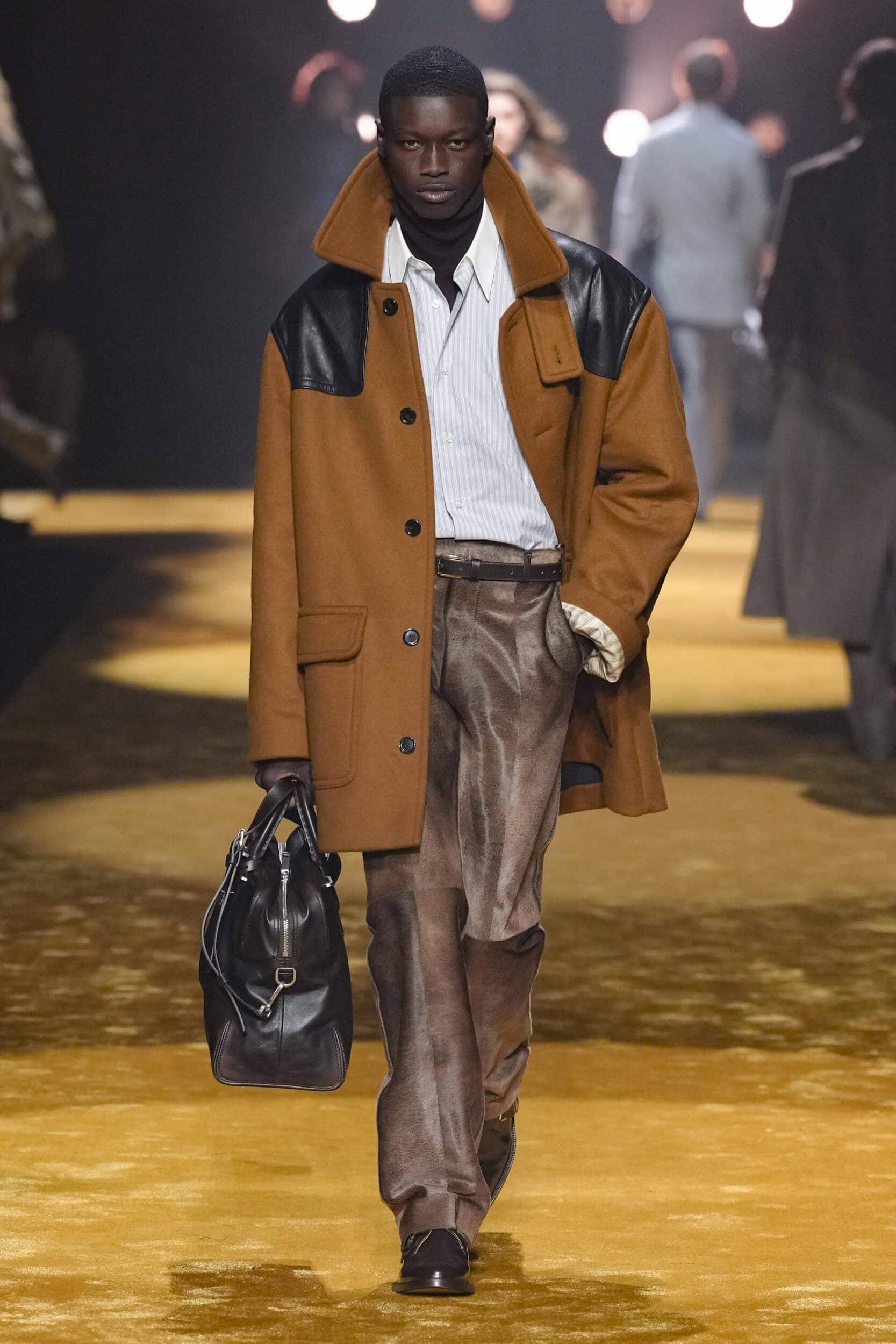
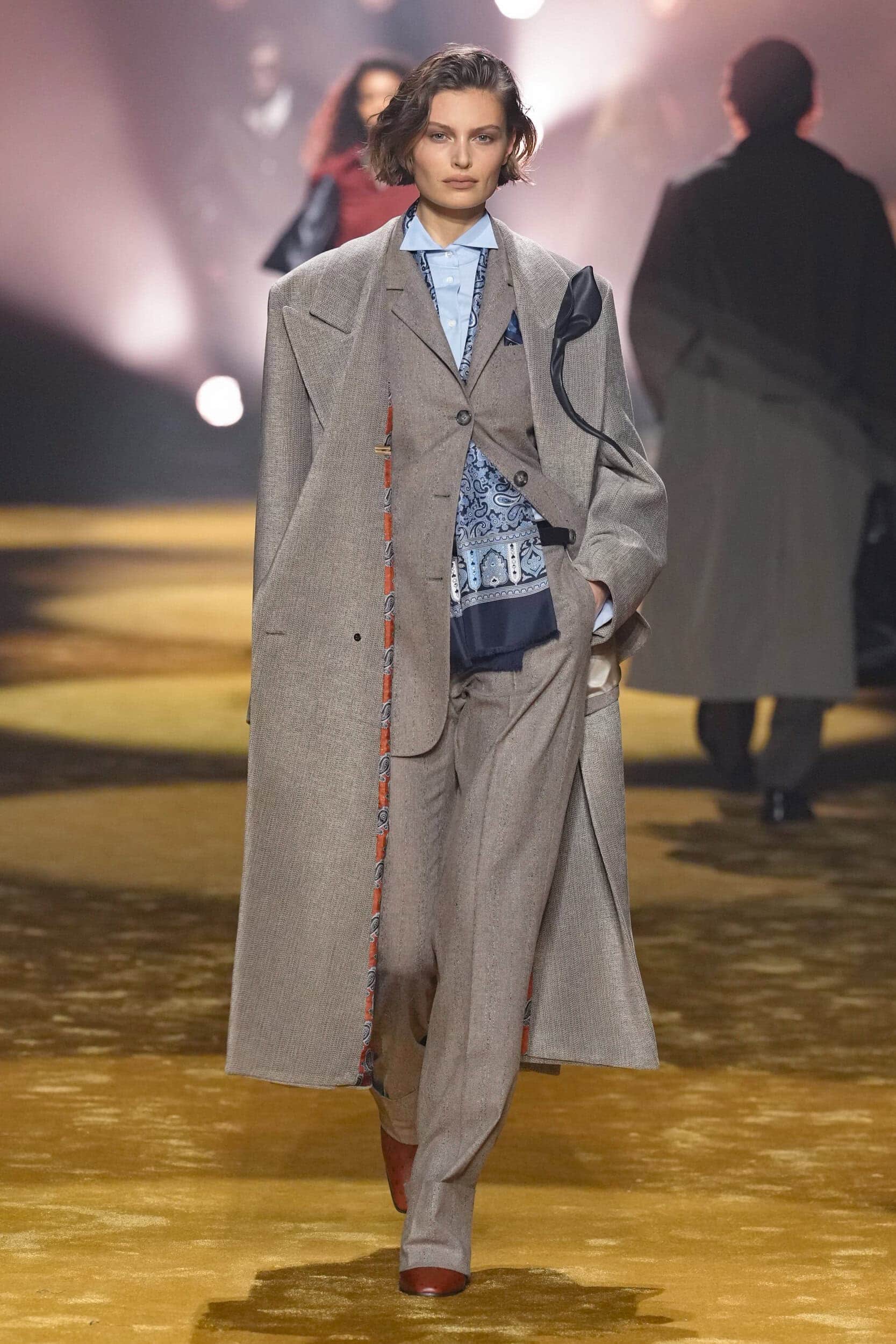
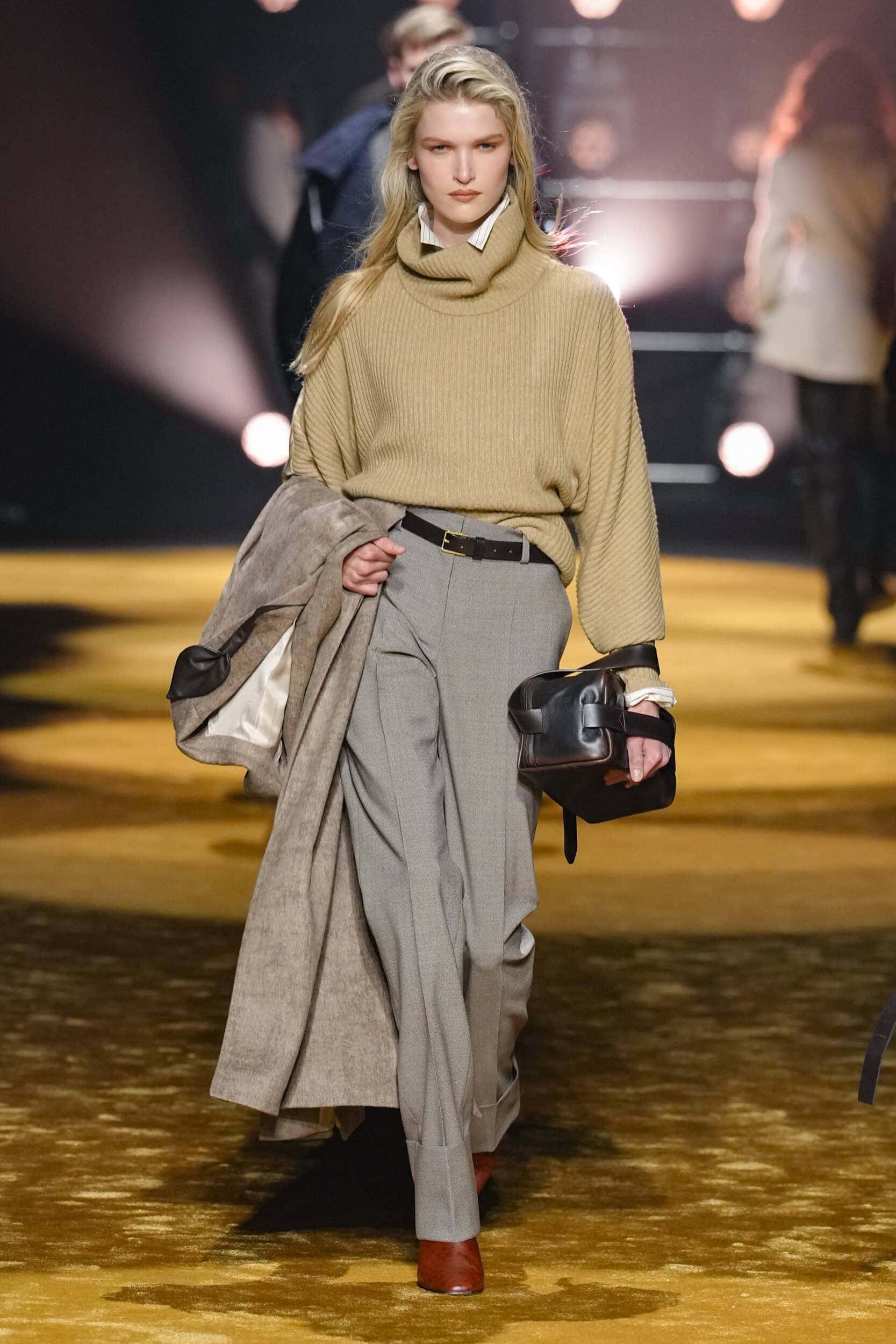
This idea of freedom extends into lifestyle, an area where BOSS has steadily expanded its vocabulary. Stuttgart, the brand’s home, becomes more than a headquarters. “Stuttgart means stable in German,” Falcioni reminds us. The equestrian tradition that surrounds the city offered a local point of departure. “Let’s be global thinking local,” he says, smiling at the inversion. “We don’t need to get inspired on the other side of the world. Let’s spend on the lifestyle and steal from what is nearby us.”
But this is not literal equestrianism. The boots that will walk the Milan runway are softened, developed from the structure of a loafer and crafted in BOSS’s own Italian factory. Traditional riding boots are rigid; his are supple, urban. Bags are scaled like weekenders but rooted in utility — the kind once meant to carry boots or riding gear. The references are there, but abstracted, refined.
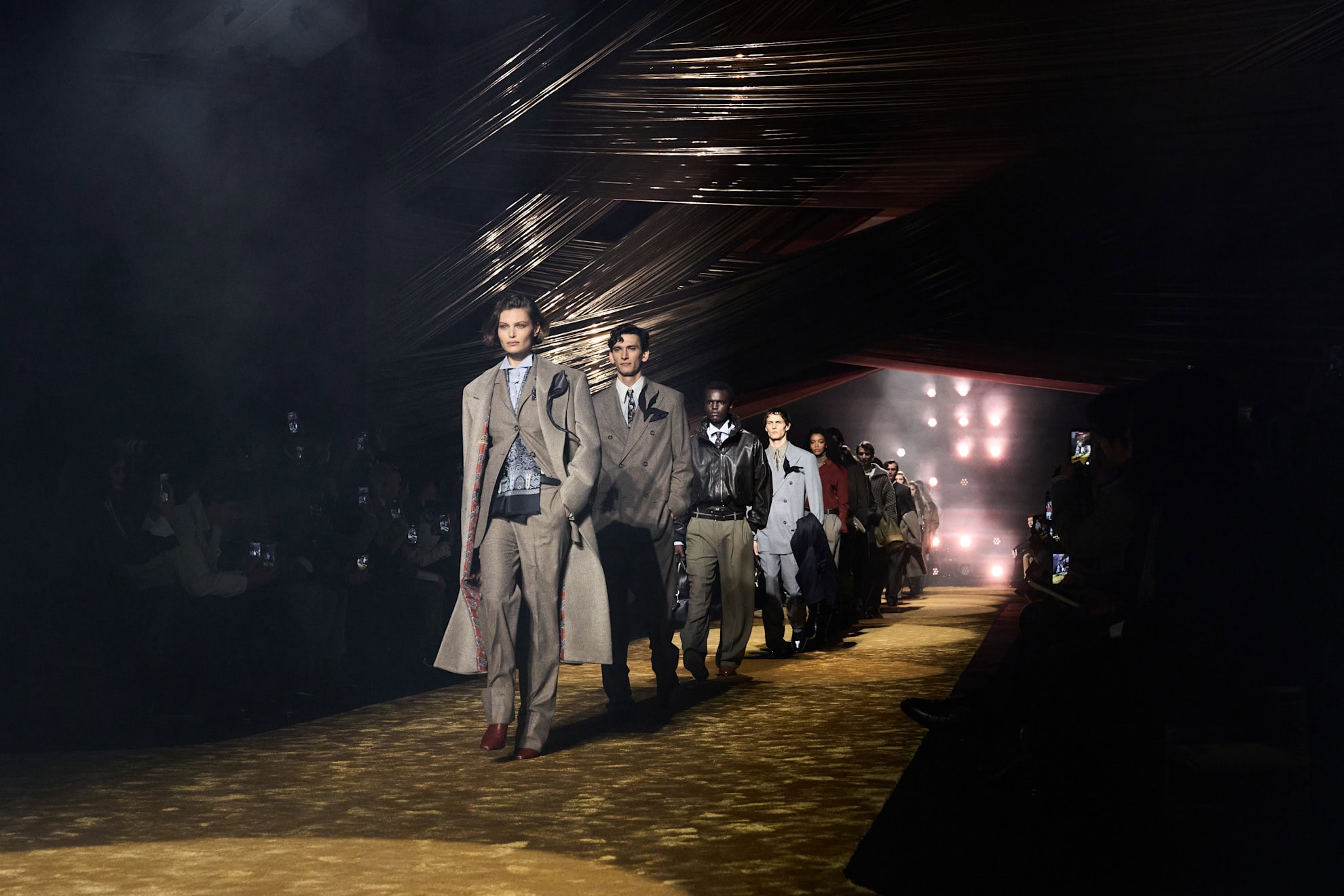
If the product begins in craft, the image moves toward cinema. Falcioni speaks reverently of the era when photography defined BOSS as persona as much as product — when Richard Avedon and Peter Lindbergh helped shape a visual mythology that still resonates. “The brand moved from being all about product into a persona statement,” he reflects. That tension between object and identity is something he is actively rebalancing.
For Fall, he blends the confidence and statement of that photographic legacy with the ease and texture of the early ’90s and late ’90s styling. The show’s scenography and soundtrack lean into what he calls a reclaimed “cinematography appeal.” The characters he imagines could be actors, or simply individuals who carry themselves with that same studied nonchalance — people walking toward a film festival premiere, perhaps, but grounded in reality.
When asked how he sees men today, his answer is unexpectedly optimistic. “Men are way more accurate,” he says. After a period in which the suit became a protective shell — something worn to avoid thinking — he senses a return to deliberateness. Men, once again, are taking time.
That, ultimately, is Falcioni’s proposition for BOSS: not revolution, but recalibration. Tailoring that breathes. Lifestyle rooted in place. Cinema without costume. And a suit that feels less like armor and more like choice.