A Moss Covered Runway And Towering Floral Columns Frame Prada’s Humanist Meditation On Presence, Nature, And The Quiet Strength Of The Individual
By Kenneth Richard
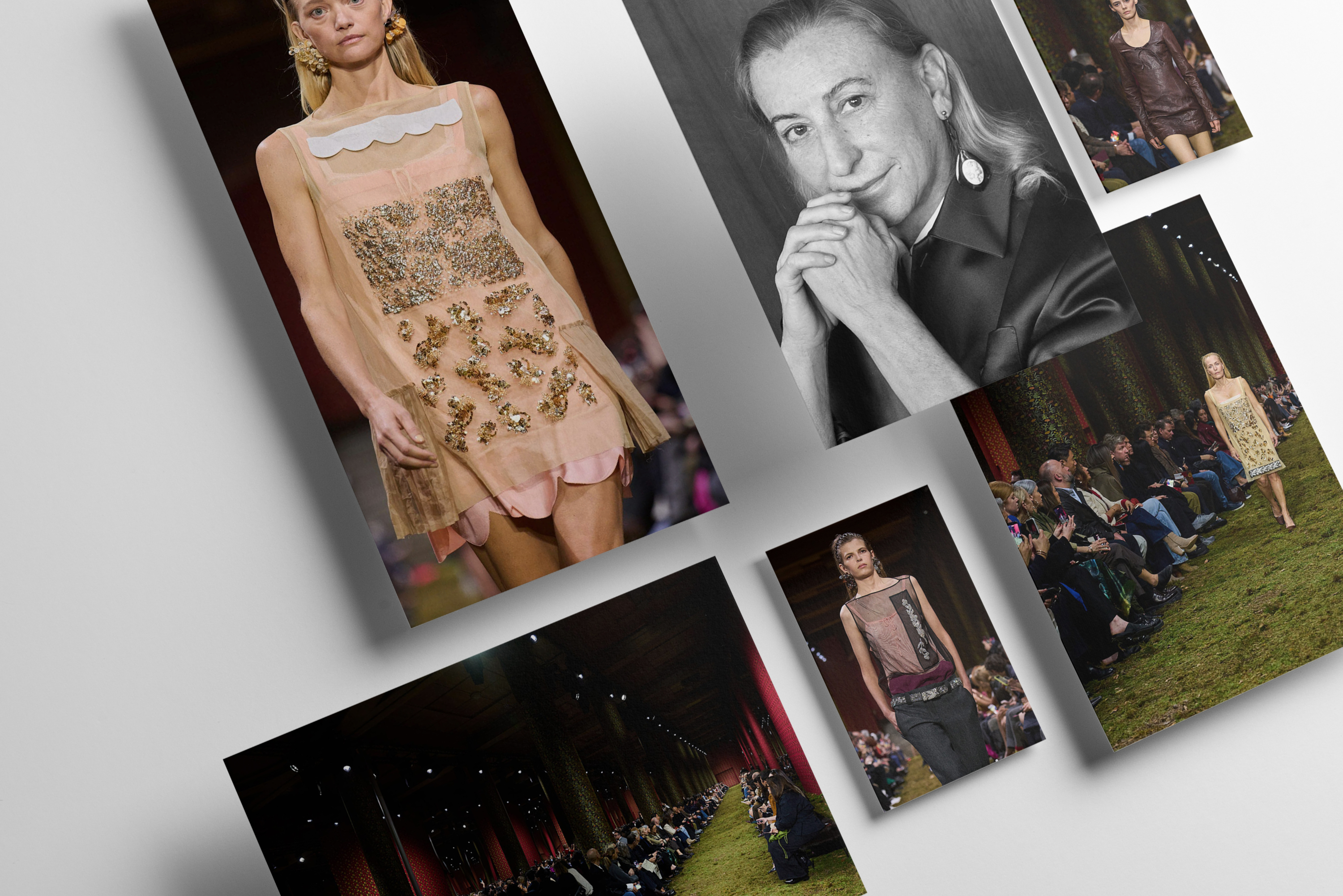
The room felt immense. Moss covered the floor like a quiet field while towering columns wrapped in dense florals rose into darkness, their patterns climbing higher than the eye could comfortably follow. Between them ran a narrow path of green where models moved slowly through the space, their silhouettes appearing almost fragile against the overwhelming scale of the environment.

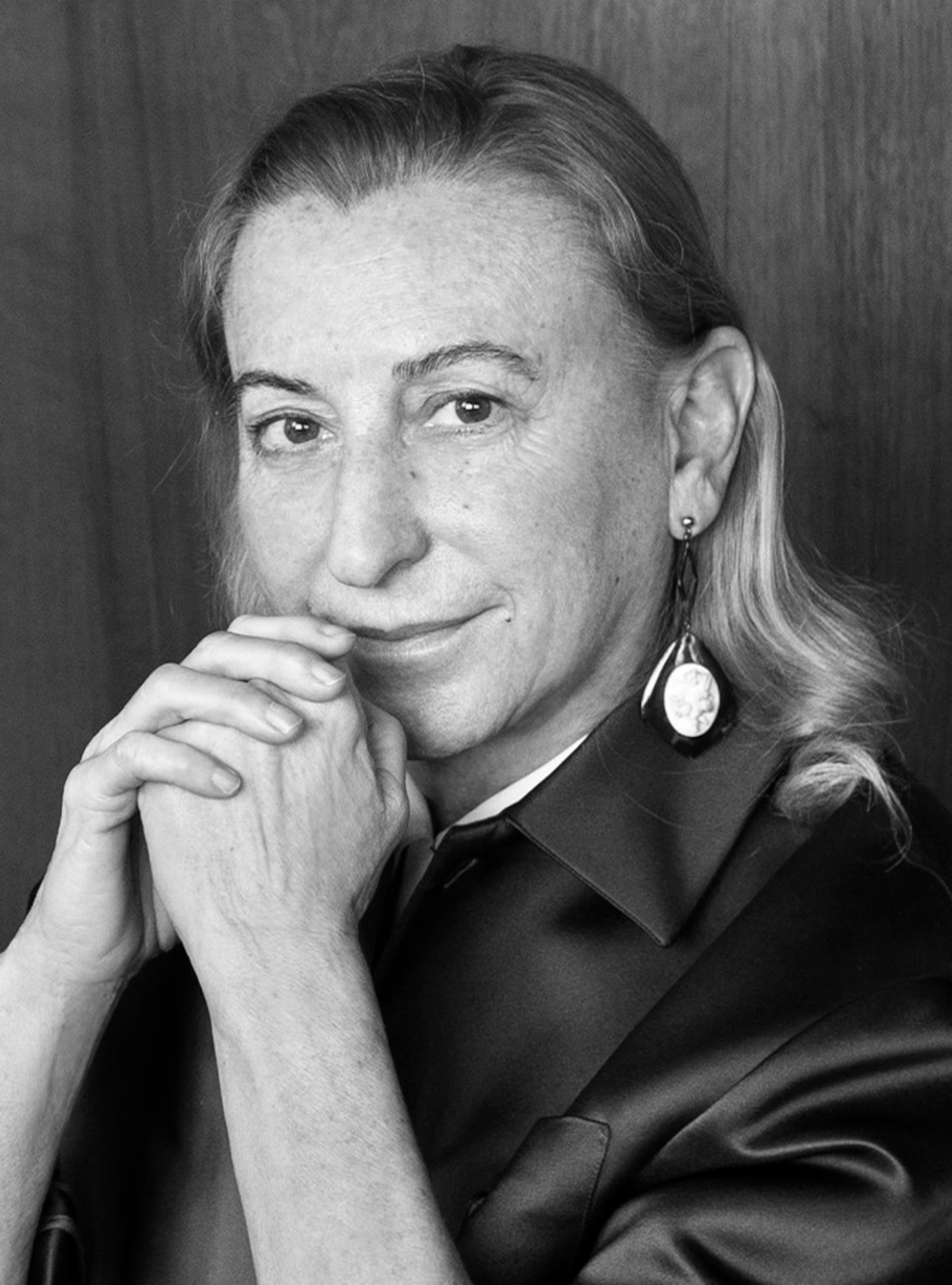
It was an unusual inversion of fashion’s typical spectacle. Here, the set was monumental, almost engulfing, while the clothes themselves remained restrained and intimate. The effect was intentional. For Miuccia Prada, her Miu Miu show began with a simple thought: the human body, small within the vastness of the world.
“Basically, it was the idea of a small human body compared with the vastness of the world,” she explained after the show. “So this did symbolize the smallness… we are small in the world, but we are.”
Basically, it was the idea of a small human body compared with the vastness of the world. So this did symbolize the smallness… we are small in the world, but we are.
The set suggested a park enclosed within architecture, a landscape where nature quietly overtook structure. Moss softened the runway while botanical prints climbed the towering columns like vertical gardens. Prada described the environment as a reflection on scale—how easily a person can feel diminished by the enormity of the world around them.
Yet the clothes responded with quiet assurance rather than spectacle. The collection was deliberately pared back. Leather dresses skimmed the body with minimal intervention. Slips appeared almost elemental in their simplicity. Embroidered pieces introduced moments of decoration but never overwhelmed the form beneath them.
“I did it quite minimal this season,” Prada said. “Little is enough. After you can decorate it. But also, if you are disadorned, you are enough.”
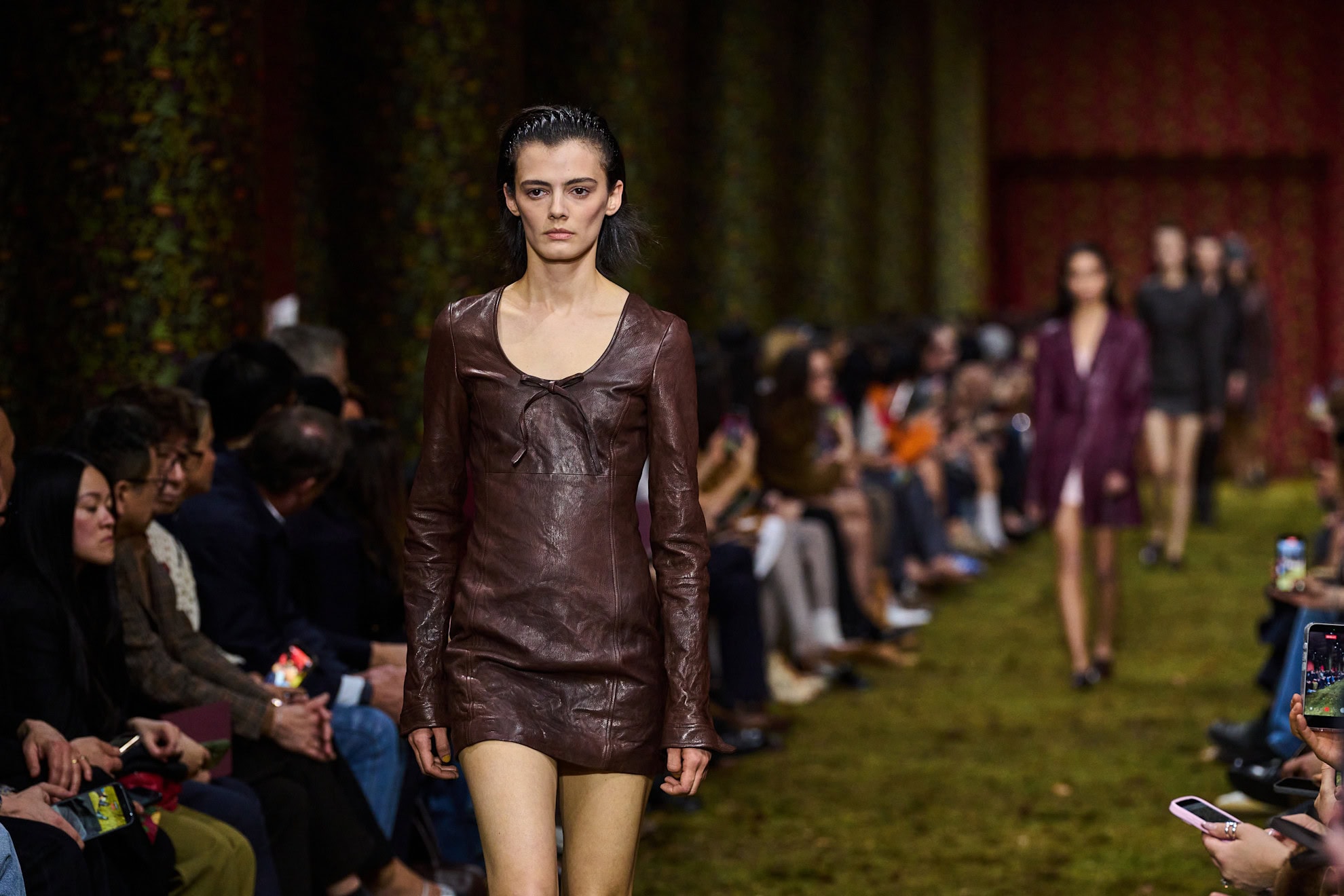
That idea guided the entire collection. The garments rarely competed with the body; instead, they traced it. Prada spoke about clothing as something that could remain simple or become expressive through accessories—hats, shoes, and subtle embellishments layered onto otherwise stripped silhouettes.

“This small body—you can leave it simple, or you can decorate it,” she said. “Both ways.”
The tension between the maximal set and the restrained clothes sharpened the message. Around the models, the environment exploded with pattern and scale. On the runway, the silhouettes remained intimate and direct. The contrast emphasized the vulnerability—and resilience—of the individual figure moving through the space.
Prada rejected the idea that the collection carried melancholy. Instead, she described it as something closer to affirmation.
“Did you feel melancholy?” she asked rhetorically. “No. Actually reinforced by the idea that still we exist. We are there. Whatever happens.”
There was romance in that sentiment, but also practicality. Prada spoke about warmth, sensuality, and poetry as qualities inherent to the body itself rather than the clothes that cover it. The garments simply revealed that presence.
“I wanted to give value to the body without anything,” she explained. “To give value to yourself… you as a human person, you are enough.”
Nature reinforced that message. The moss-covered runway and botanical environment suggested a return to something elemental—a reminder that the human body, like the landscape around it, exists within a broader natural world.
“It’s nature,” Prada said. “Always going back to nature.”

For Prada, the idea carries a deeply humanist dimension. She recalled a thought she once encountered about communities with few possessions yet an unshakable sense of identity.
“Whatever happens, we have our body, we have our mind,” she reflected. “And it’s enough.”
I wanted to create with humanity. With gentleness. With poetry.

And on that moss runway, beneath towering walls of pattern and nature, the smallest presence in the room—the human body—felt quietly monumental.