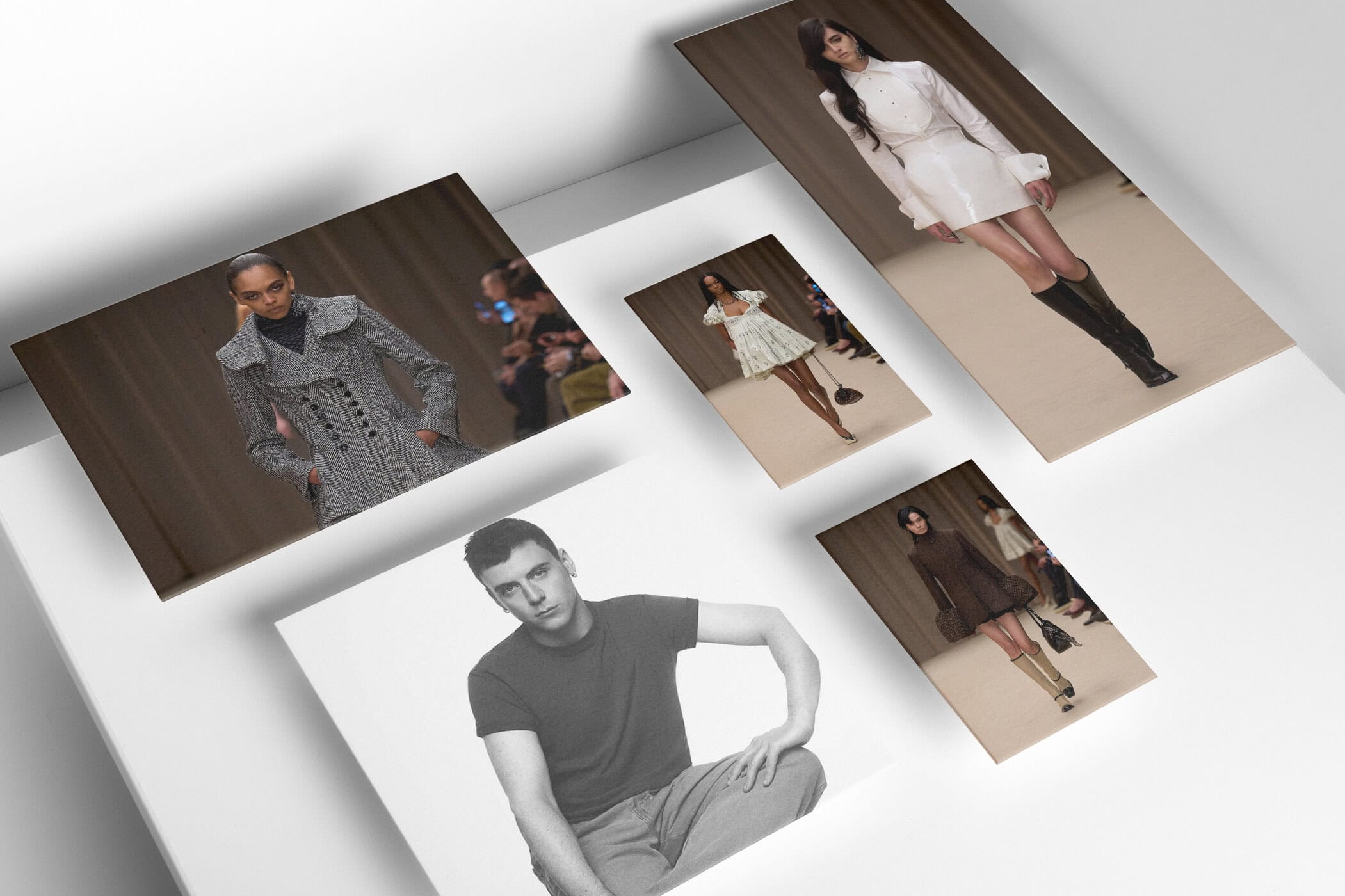
Through Razor Tailoring, Trapped Lace, And Fractured Florals, The Designer Explores The Tension Between Performance And Freedom
By Kenneth Richard
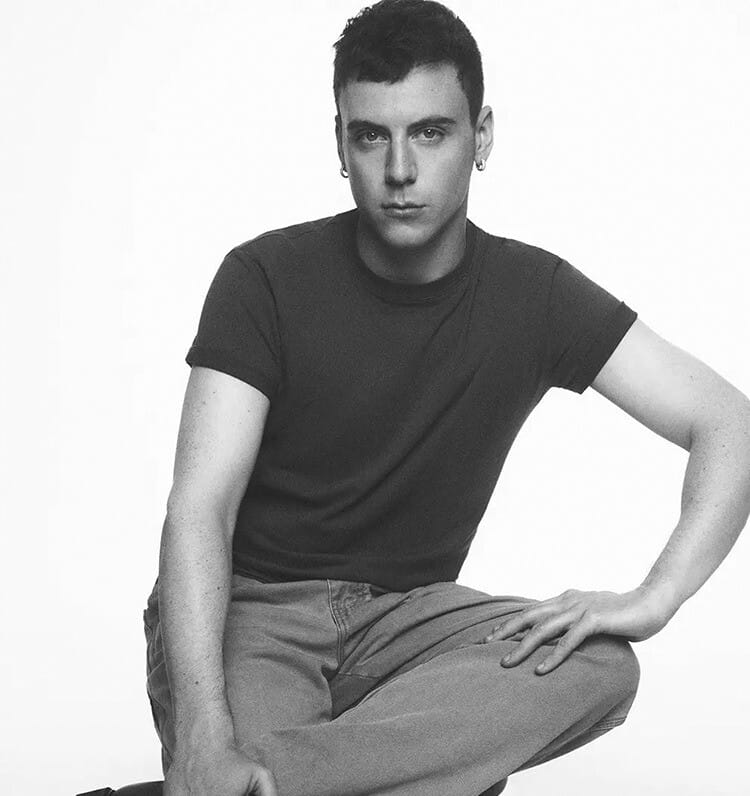
At McQueen, clothes have always carried a certain psychological charge. From Lee Alexander McQueen’s theatrical provocations to Sarah Burton’s poetic romanticism, the house has long explored fashion not merely as dressing but as narrative. In his continuing tenure as creative director, Seán McGirr is beginning to define his own chapter in that lineage—one rooted less in spectacle and more in atmosphere. His latest collection unfolds like a study of modern tension: the pressures of performance, the claustrophobia of perfection, and the quiet hope of release.
McGirr approached the season through fabric before sketch.
We just actually worked on the body so much this season, more than ever. So I didn’t really sketch. I just worked on the body and the form and drapes and stuff.
That instinctive process produced a wardrobe shaped directly on the form—leather molded into sharp mini skirts, tailoring twisted slightly off the expected line, surfaces built through layered textiles that seem to press inward.
Texture became the central language. Lace, traditionally decorative, was reimagined as something more contained. “I like this idea of lace trapped in between two layers of organza,” McGirr explained. “So it’s not about lace as a surface decoration. It’s more about treating fabrics in the sense that they’re sort of claustrophobic.” The notion of containment echoed across the collection—an emotional metaphor rendered materially in garments that appear compressed, suspended, or held within themselves.
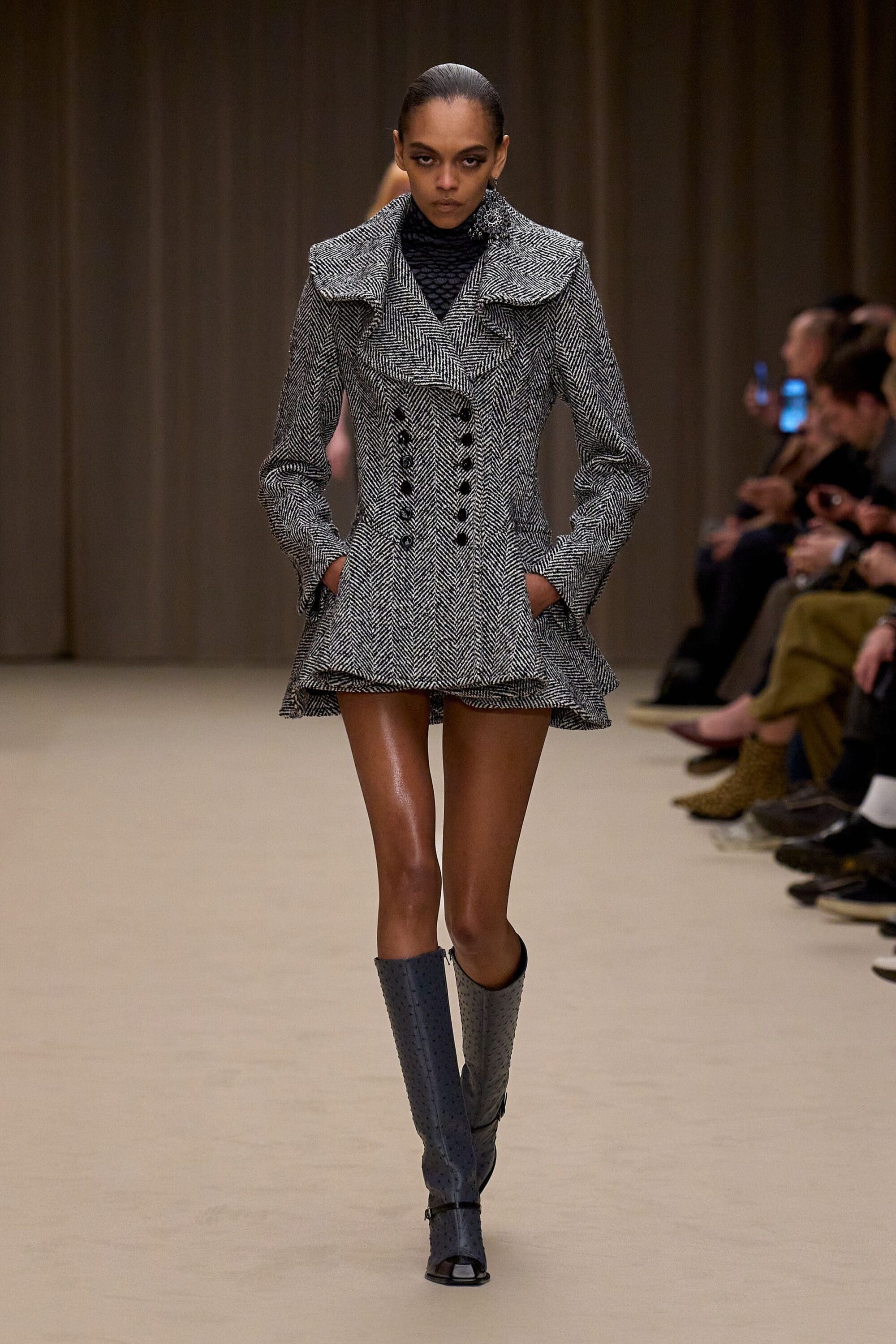
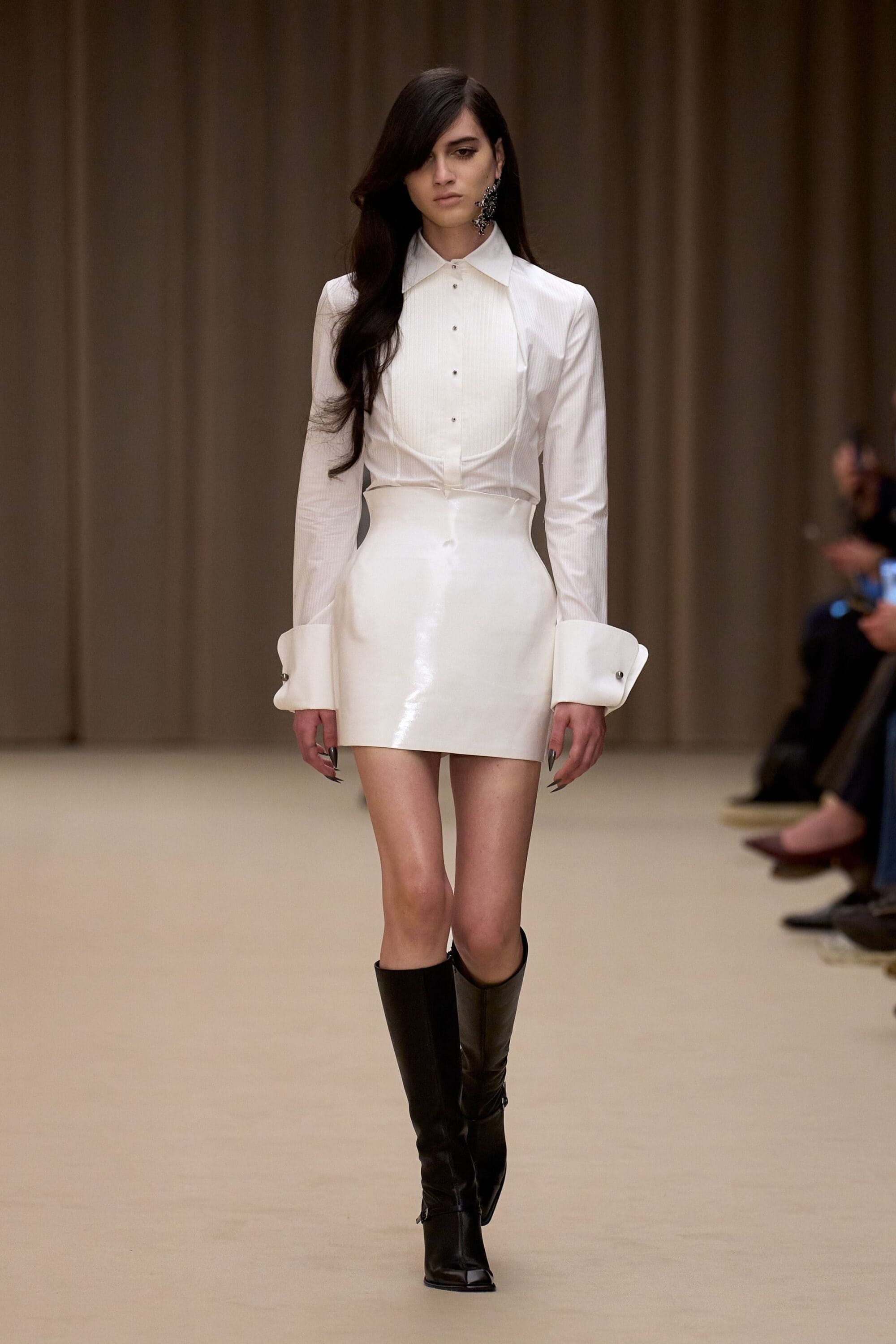
Tailoring provided the structural counterpoint. McGirr leaned into tuxedo shapes and sharp silhouettes, experimenting with iridescent surfaces and subtle draped twists that softened the rigidity of the cut. “The tailoring for me I was really excited by,” he said. “I wanted to explore something with new textural fabrics and with a little drape twists and a lot of the collars as well.” The result was a series of shrunken jackets paired with molded skirts—modular fragments that nodded to McQueen’s archives without slipping into nostalgia.
References surfaced in coded ways. McGirr revisited the house’s 1996 La Poupée collection for tailoring cues, while the haunting romance of Widows of Culloden informed intricate embroideries. Feathers—an iconic McQueen signature—were reinterpreted through craft rather than literal use. “We don’t use feathers,” he noted, “but we hand embroidered all the feathers to make it look like the archive piece. So it became a little bit more animated.”
Underlying the craft was a darker psychological thread. McGirr spoke openly about the sense of performance that defines contemporary life. “We’re really on, you know, and curated, and we’re constantly performing,” he said. “So there was something there that I really wanted to look at.” That tension—between authenticity and the masks we wear—appeared throughout the collection in veils, hoods, and silhouettes that evoked characters as much as individuals.
Cinema also shaped the mood. McGirr cited Todd Haynes’s Safe, the unsettling 1995 film starring Julianne Moore, as a touchstone. Its themes of perfectionism, toxicity, and domestic unease filtered into the fabrics themselves. Flowers were frozen in blocks of ice, smashed, and photographed to create the collection’s jacquards—a process that mirrored the layered lace treatments. Beauty was preserved, fractured, and transformed.
Yet the collection never felt entirely oppressive. McGirr balanced the darkness with flashes of London’s restless energy. “I’m obsessed with London,” he said. “The girls—I really take inspiration from the streets every day.” The resulting beauty felt familiar yet heightened: a mix of West End polish and Camden attitude that gave the runway its living pulse.
The staging reinforced that tension between intimacy and spectacle. Working with Broadway and theater designer Tom Scutt, McGirr created an environment of sheer curtains and veils, hinting at voyeurism and hidden worlds beyond the runway.
This idea of veils and sheer curtains and voyeurism, sort of weird eroticism added to this sense of maybe a new kind of glamour that I really wanted to explore.
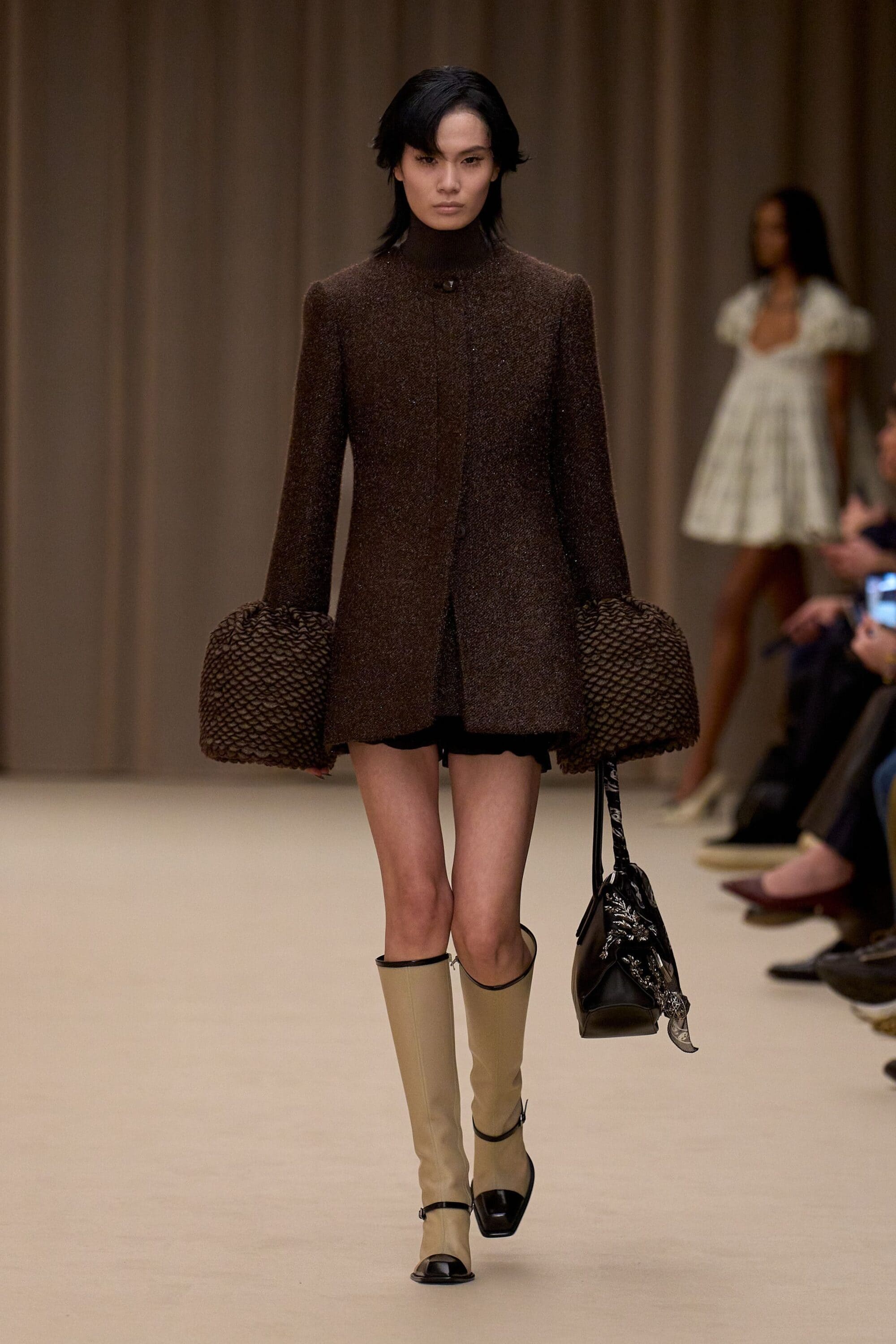
That glamour, however, was not about uniformity. McGirr insisted on a sense of individuality in the styling. “It was really important for me that the girls looked like they kind of dressed themselves,” he explained. “The styling felt kind of personal and not like a kind of new uniform.” In an era increasingly defined by curated identities, that small rebellion felt quietly radical.
And then, in the end, release.
The final look shifted the narrative entirely. After the masks, the darkness, and the controlled silhouettes, the collection opened into a moment of freedom. “So you go out into the garden and you’re free,” McGirr said. “I think in the end it’s hopeful. Even though it’s super dark and the future is a bit broken right now in the world, I like that the last look made you feel like she’s just free and she’s in the garden.”
It was a simple image—but a powerful one. In McGirr’s McQueen, the tension remains. But so does the possibility of escape.