A Best in Show Performance
Review of Simone Rocha Fall 2026 Fashion Show
By Angela Baidoo
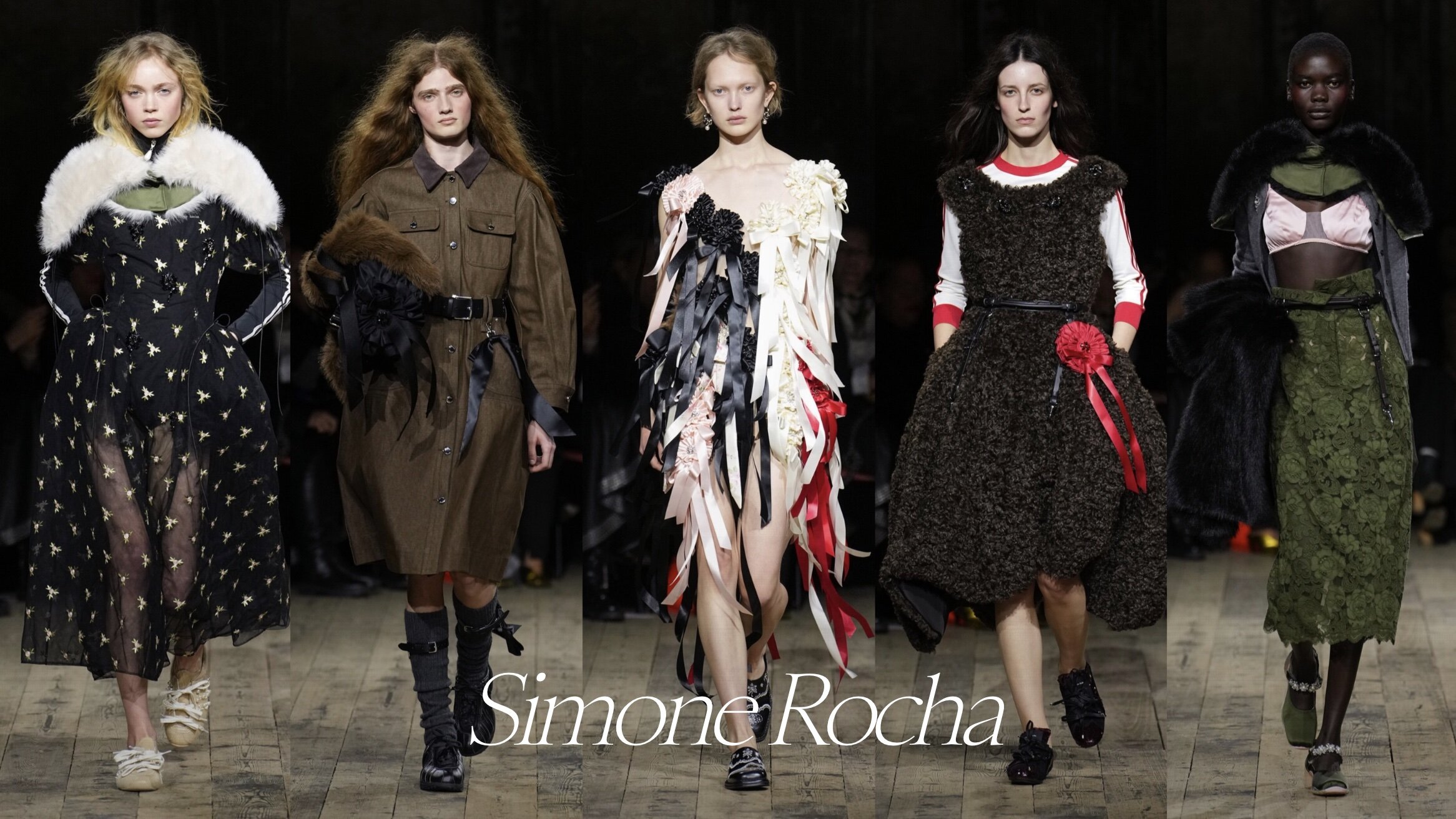
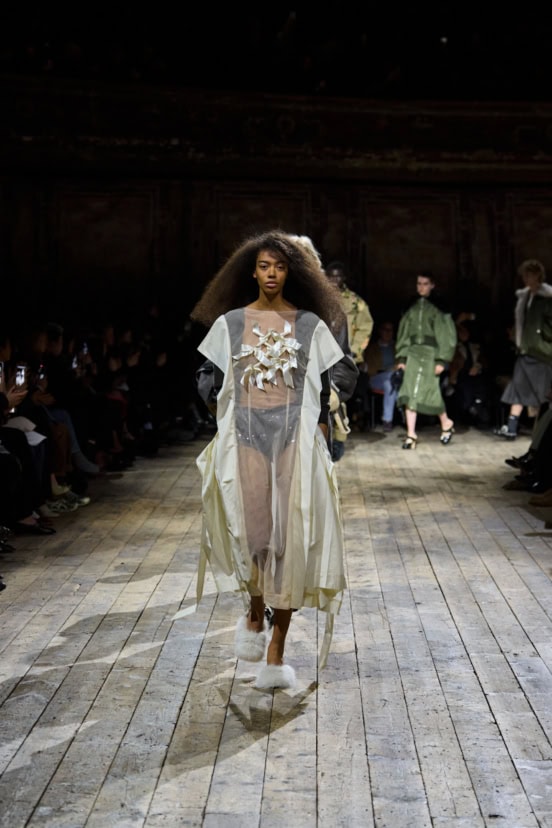
Simone Rocha staged a sweeping meditation on mythology, communities on the fringes, and defiant womanhood inside the faded grandeur of the Alexandra Palace Theatre. The recently restored yet purposefully timeworn space became the perfect backdrop for a collection that unfolded in three parts: mythic Celtic folklore, the domestic realities of Dublin’s Irish Traveller community, and a tribute to the radical Yeats sisters. Tied together by an unexpected collaboration with Adidas Originals.
THE COLLECTION
THE VIBE
Best in Show, Sports hybridisation, Radical Lives Re-lived
Unfolding in three parts the fall 2026 show, taking place on the outskirts of London in the iconic Alexandra Palace Theatre (an abandoned space recently restored, but keeping an element of the decay from its years of being dormant), was a story of mythic Celtic lore, the domestic lives of Irish Traveller children on Dublins estates, an unexpected yet perfectly aligned partnership with Adidas Originals, and the radical Yeats sisters Elizabeth and Lily who were key figures in the Irish Arts and Crafts scene as owners of the Culia Press that boasted of an all-female workforce.
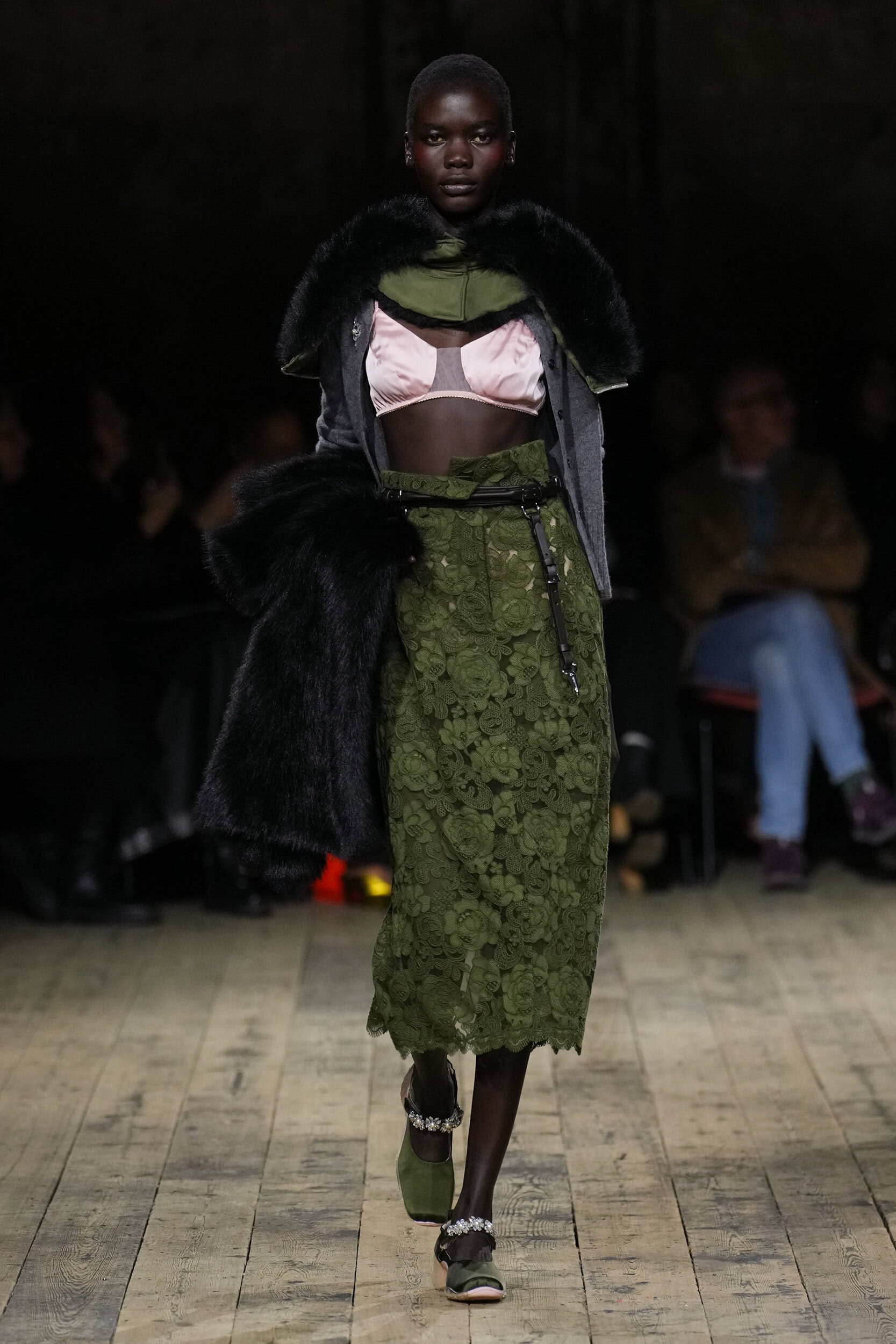
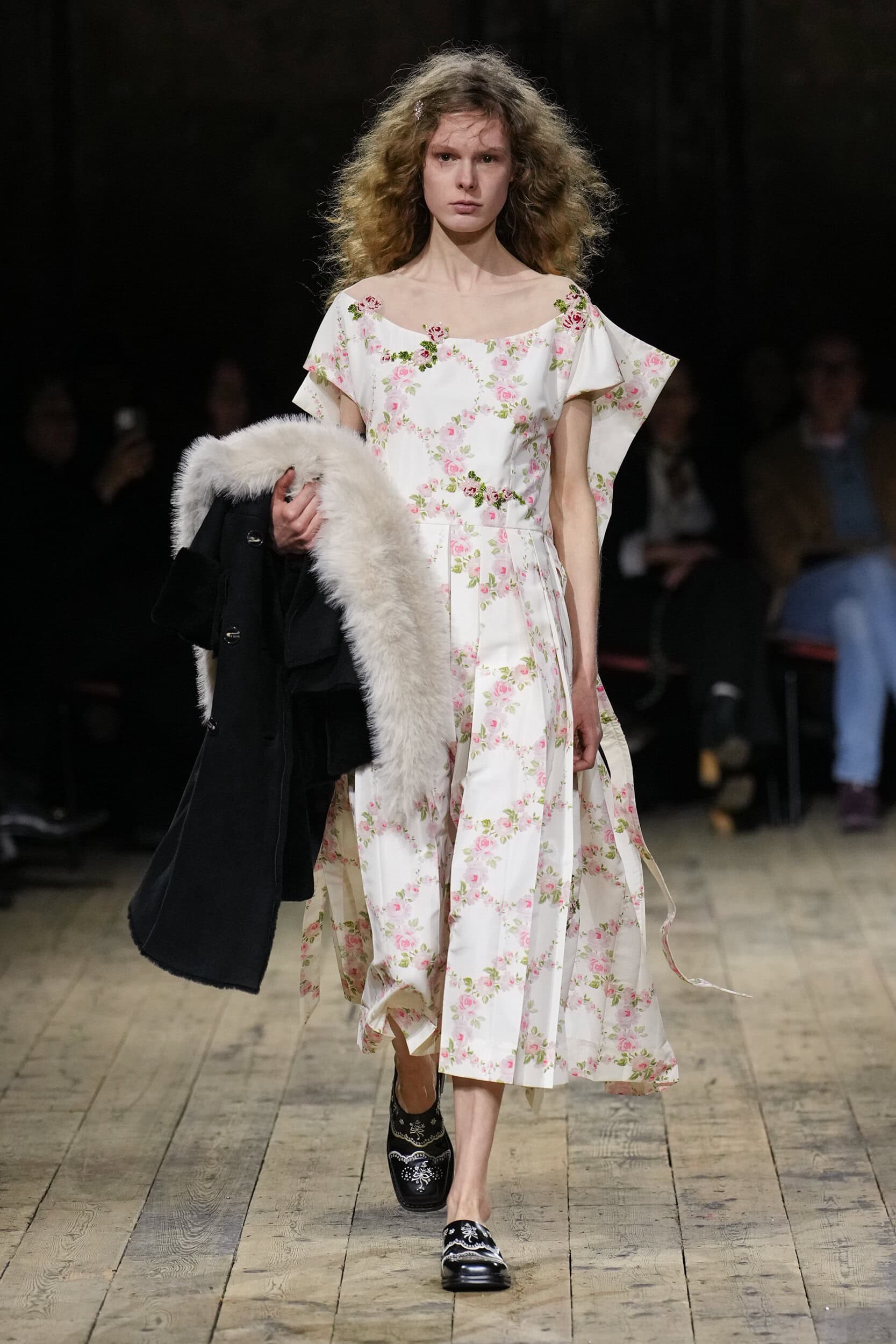
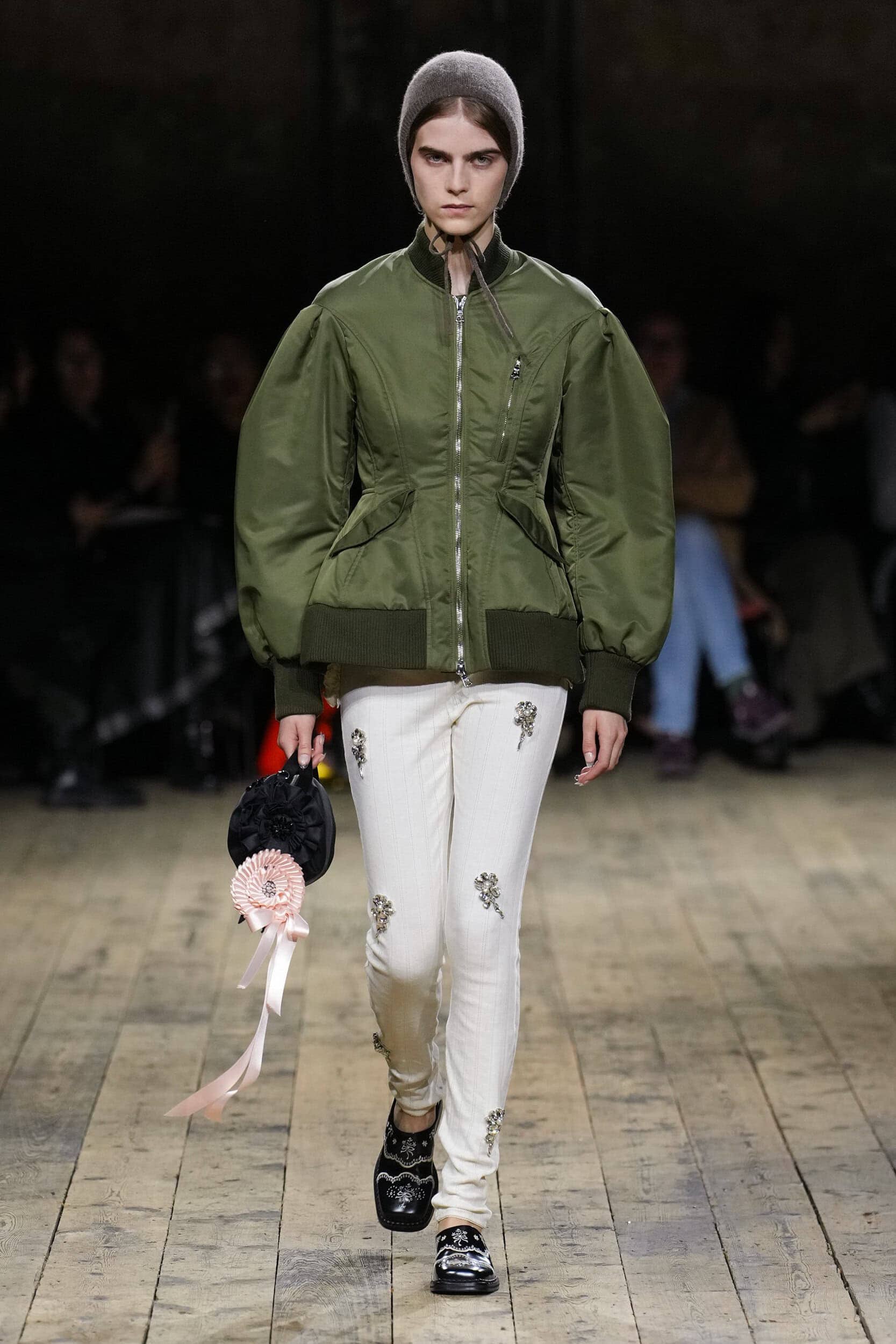
The supernatural Celtic tale of Tir na nÔg (translated to Land of the Young) that depicts a warrior who loses his immorality manifested in the designer considering the ‘immortality of clothes.’ The opening looks were a patchworking of cosy shearlings and tweeds woven with sparkly yarns. Tapestries and florals were repurposed as utilitarian separates with the first part an exploration of clothes handed down across the generations. Clothes that have been both loved and lovingly lived in.
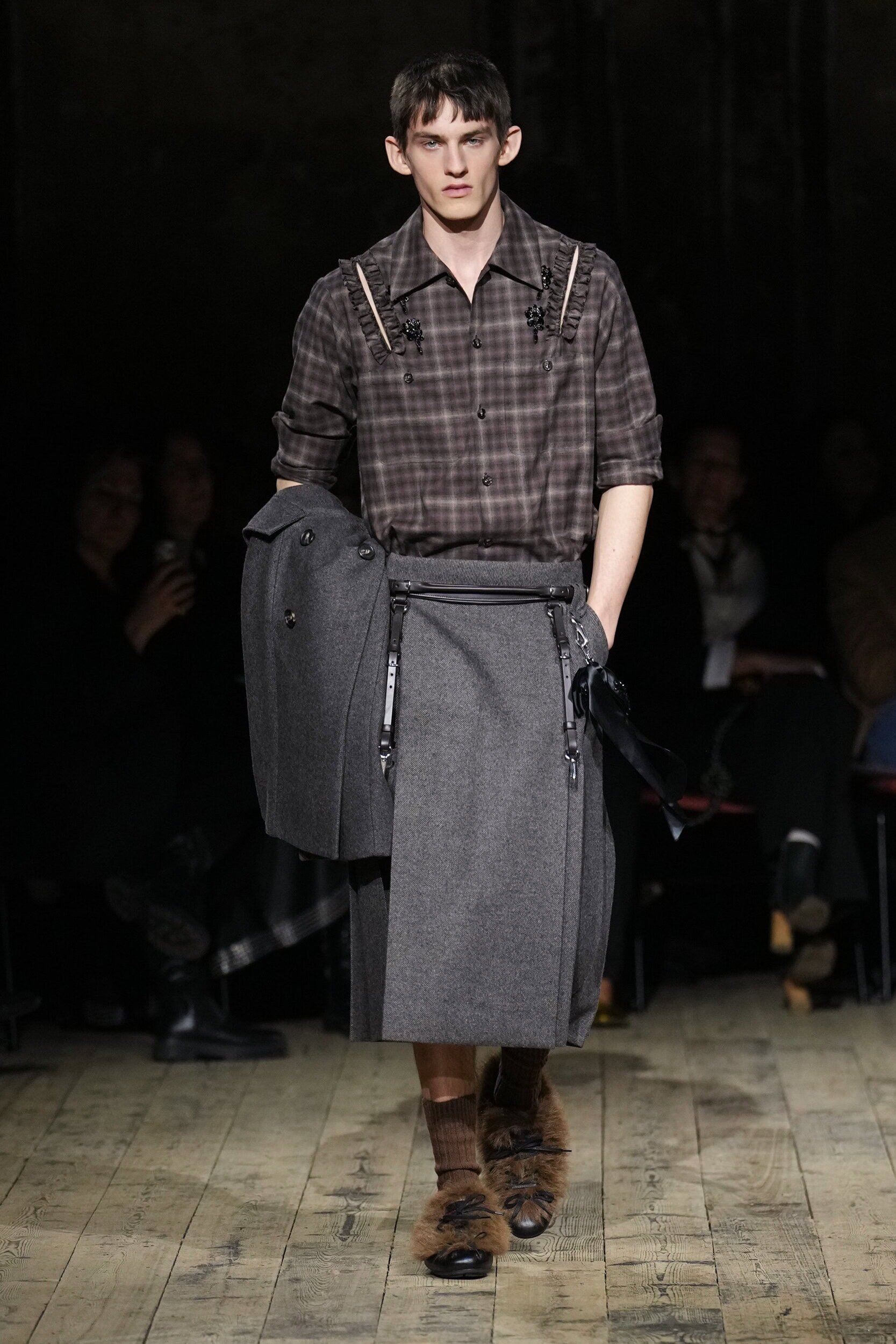
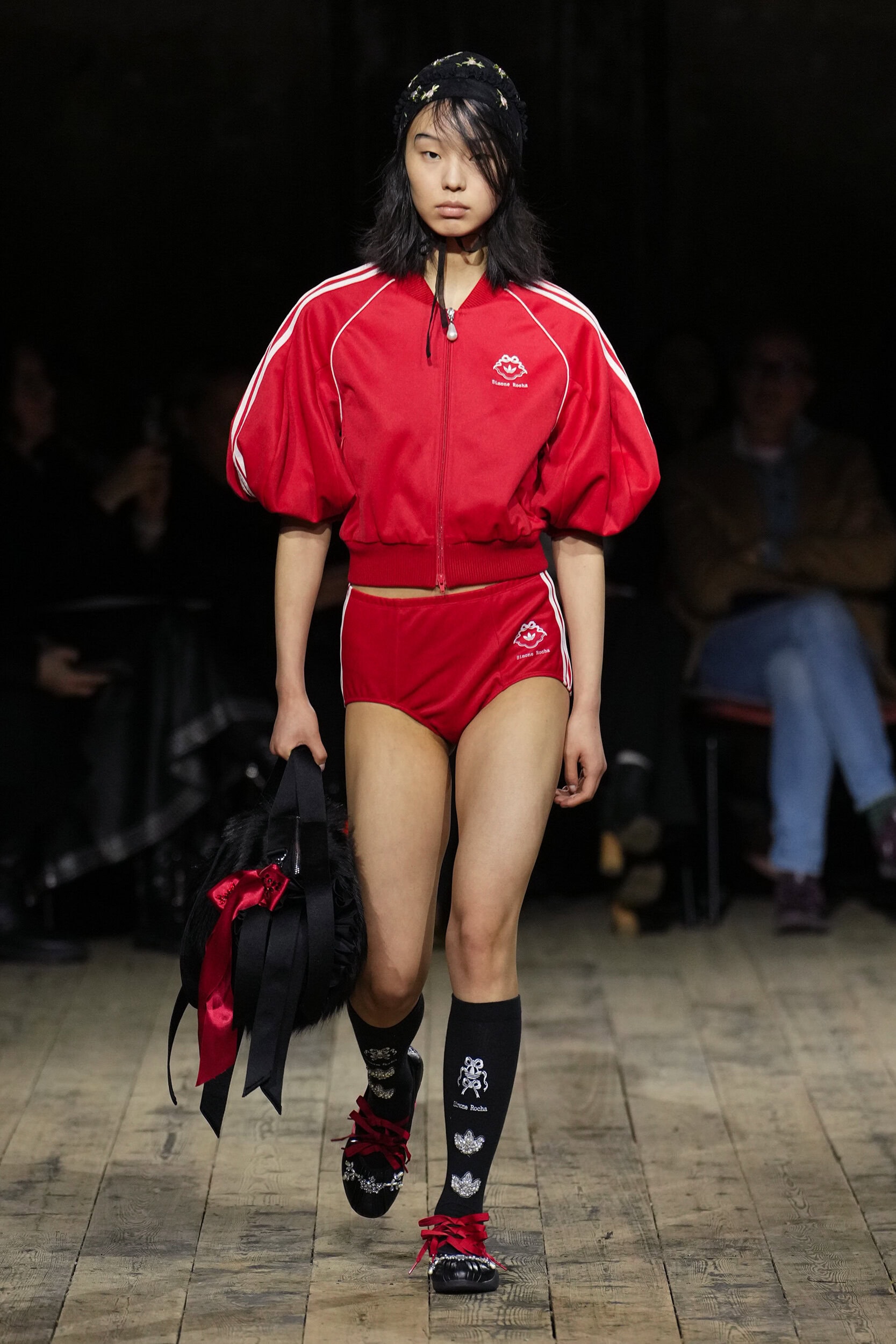
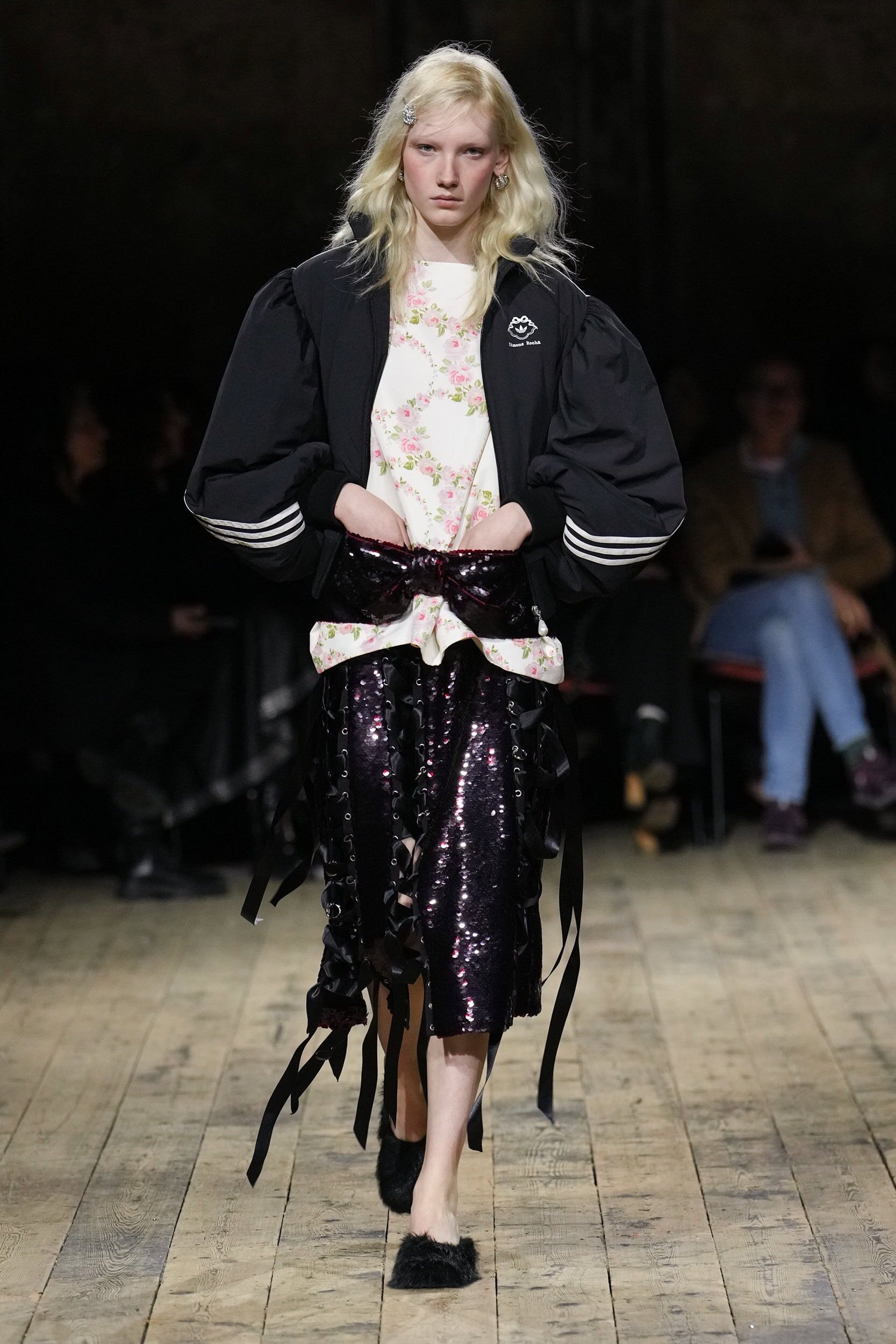
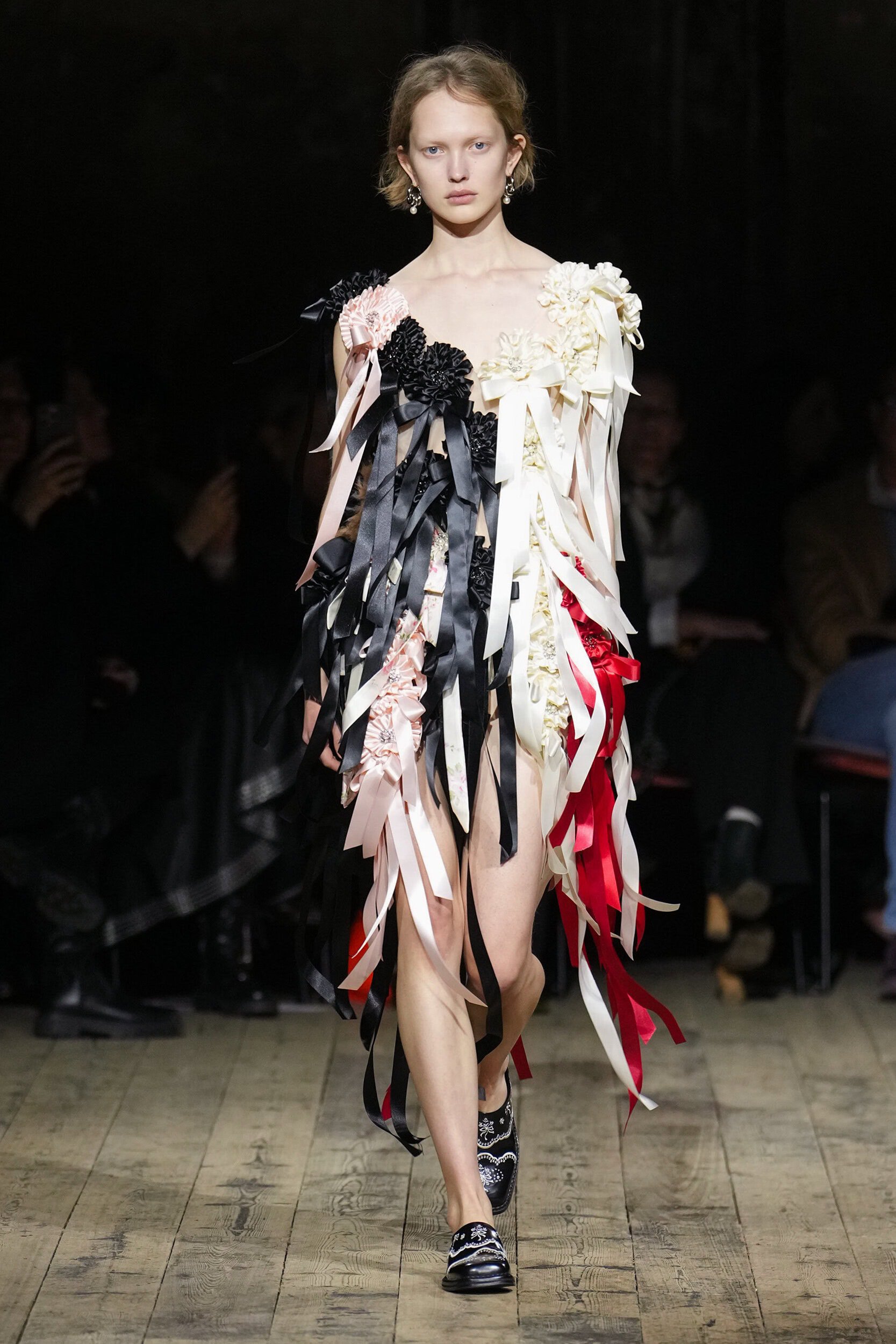
Part II, titled ‘Pony Kids’ took the photo-essay book by Dublin-based photographer Perry Ogden as its starting point. Merging with the announcement of the designers partnership with Adidas Originals. A hybridisation of typical sports looks paired embellished vests with volume sleeve track jackets and cut-out frilled tracksuits that make Rocha a lucrative addition to the sportswear brands roster. Especially as the romanticisation of the category has been an emerging theme over the last few years. Think of the sneakerina – a sneaker, ballet shoe mash-up – and the sold-out ruched football jerseys from Conner Ives. The rosettes that were multiplied and decorated a number of looks across the collection were also a knowing reference to the Traveller community. Renowned for their annual gatherings at Horse fairs (including the Appleby Horse Fair) where rosettes are a hard won trophy for participants.
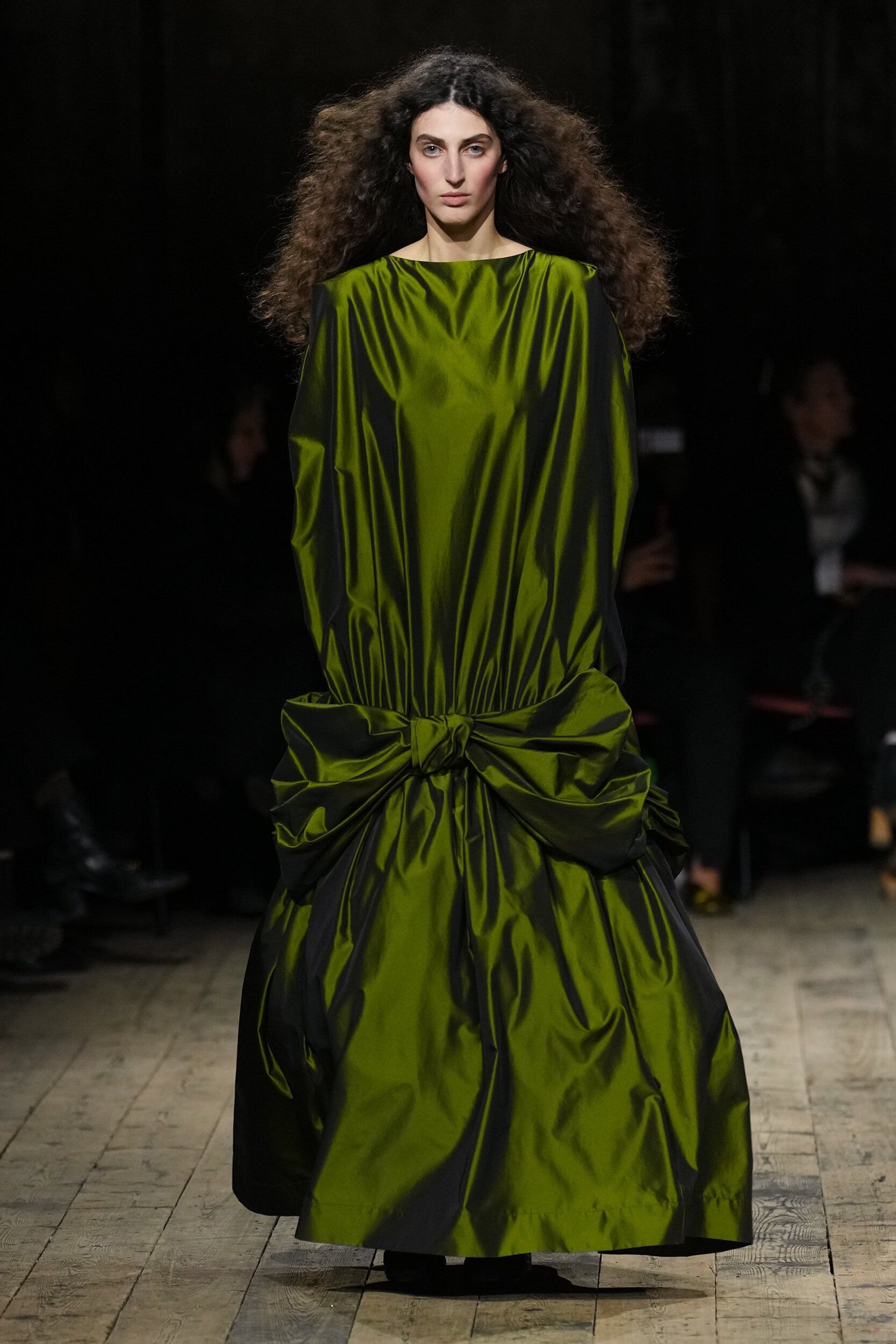
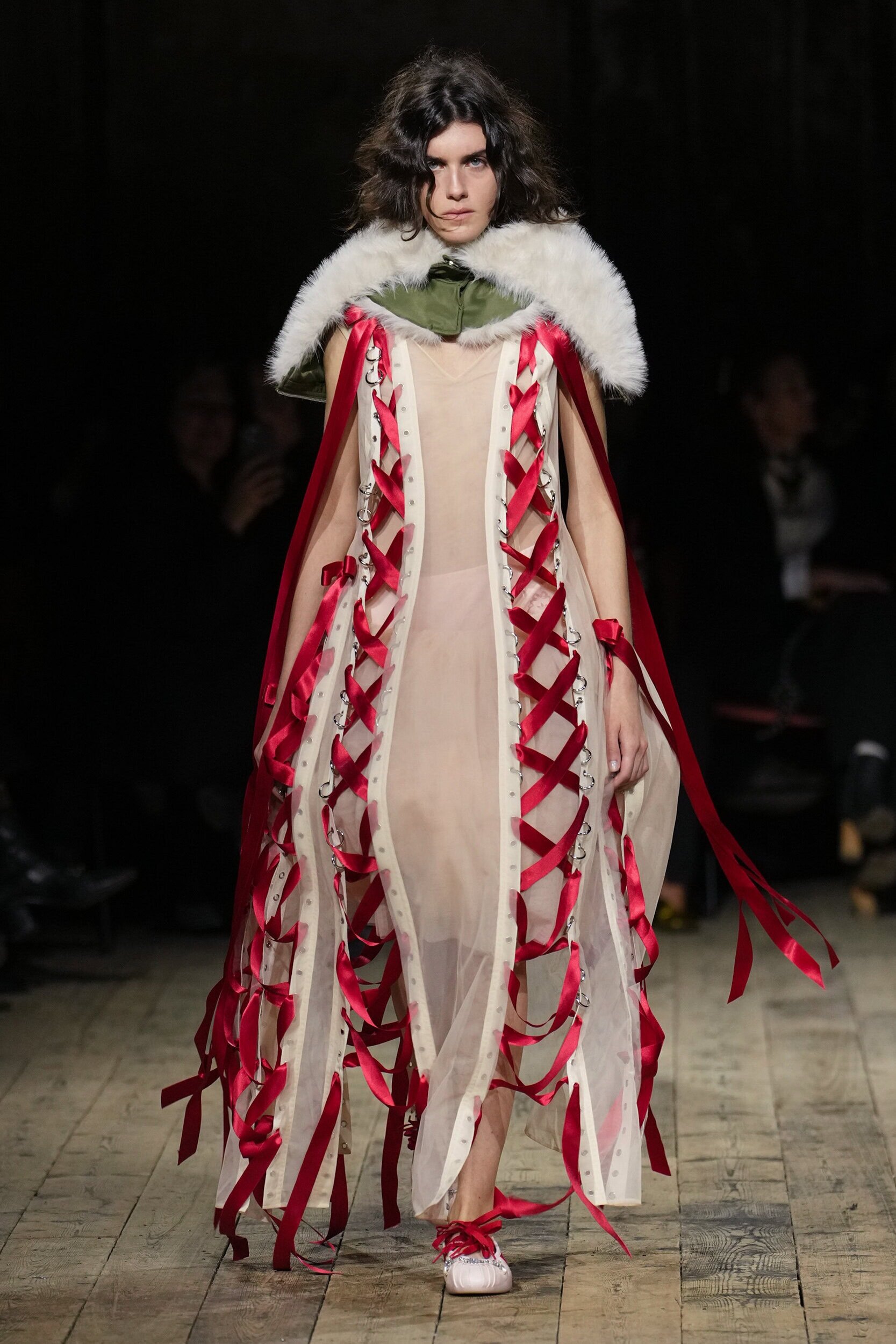
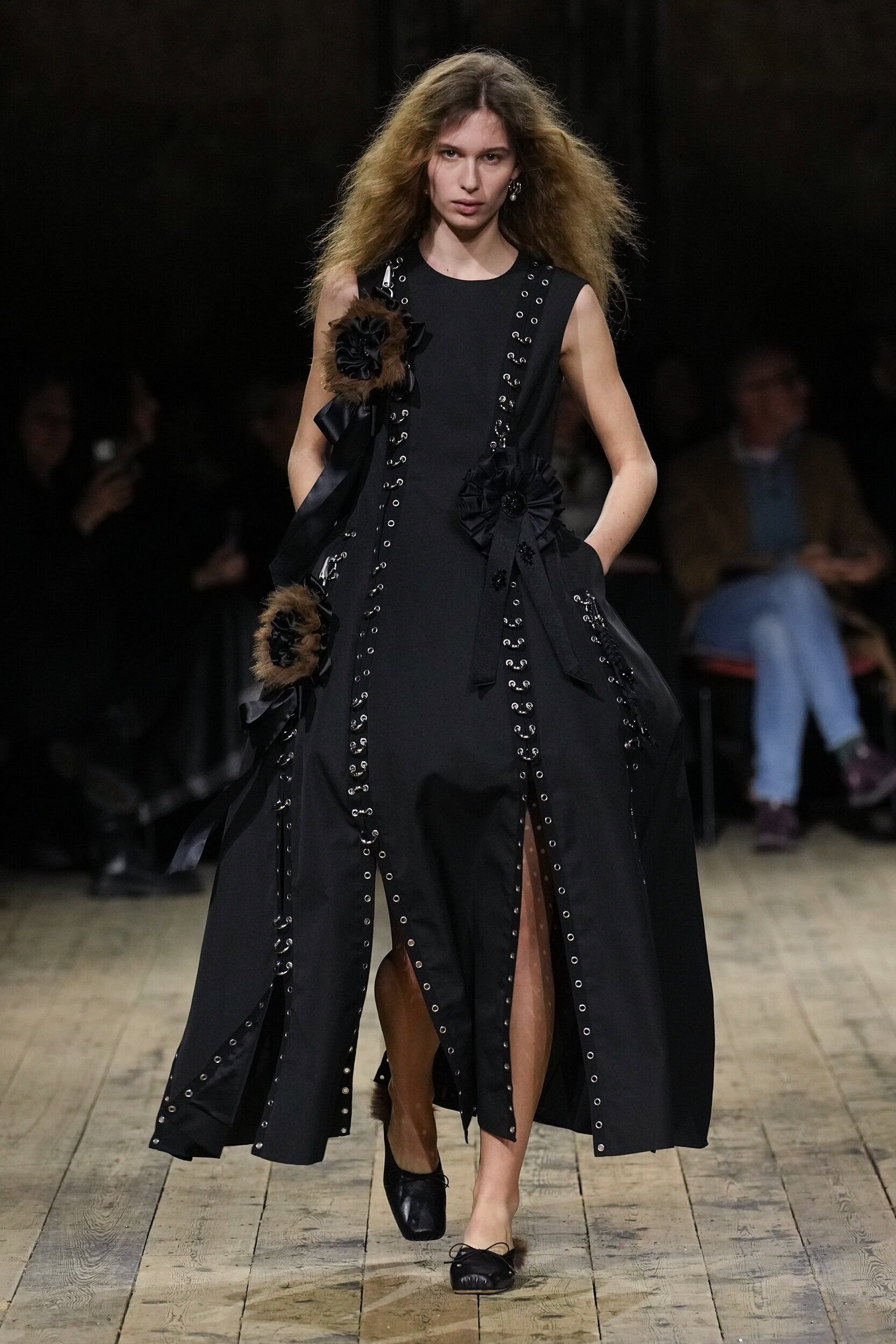
The ‘Weird Sisters’ of Part III concluded the show as an homage to Elizabeth and Lily Yeat’s grit and punkish support of women. Horse’s were again alluded to and the bridles and blinkers used to tame them, but the way in which they were spoken of in the notes, an assumption could be made that Rocha meant to compare it to the control of women – a common attitude of the time the sisters were born into. But as is her way, there was a subversion of these tropes, as piercings and twisted metal trims were used to create ‘Monster Ballgowns’.
Today, Rocha presented another in her ongoing series of tripling up on her references. But rather than spreading them out over three seasons, as she has done in the past, for fall she encompassed a trilogy of supernatural lore, literary radicals, and the documentation of a marginalised community. Managing to seamlessly weave together a cohesive collection of looks that were at once Rocha but carried a deeper meaning in the immortality of well-loved clothes (part I), mysticism (part II) and the woman unbridled (part III).
THE WRAP UP
By tripling her references within a single season rather than across several, the designer achieved a new tool for storytelling cohesiveness: clothes as heirlooms embedded with immortality, sportswear romanticised through Traveller culture, and femininity defiantly unbridled. The result was a collection unmistakably Simone Rocha – romantic, subversive, and steeped in lived experience.