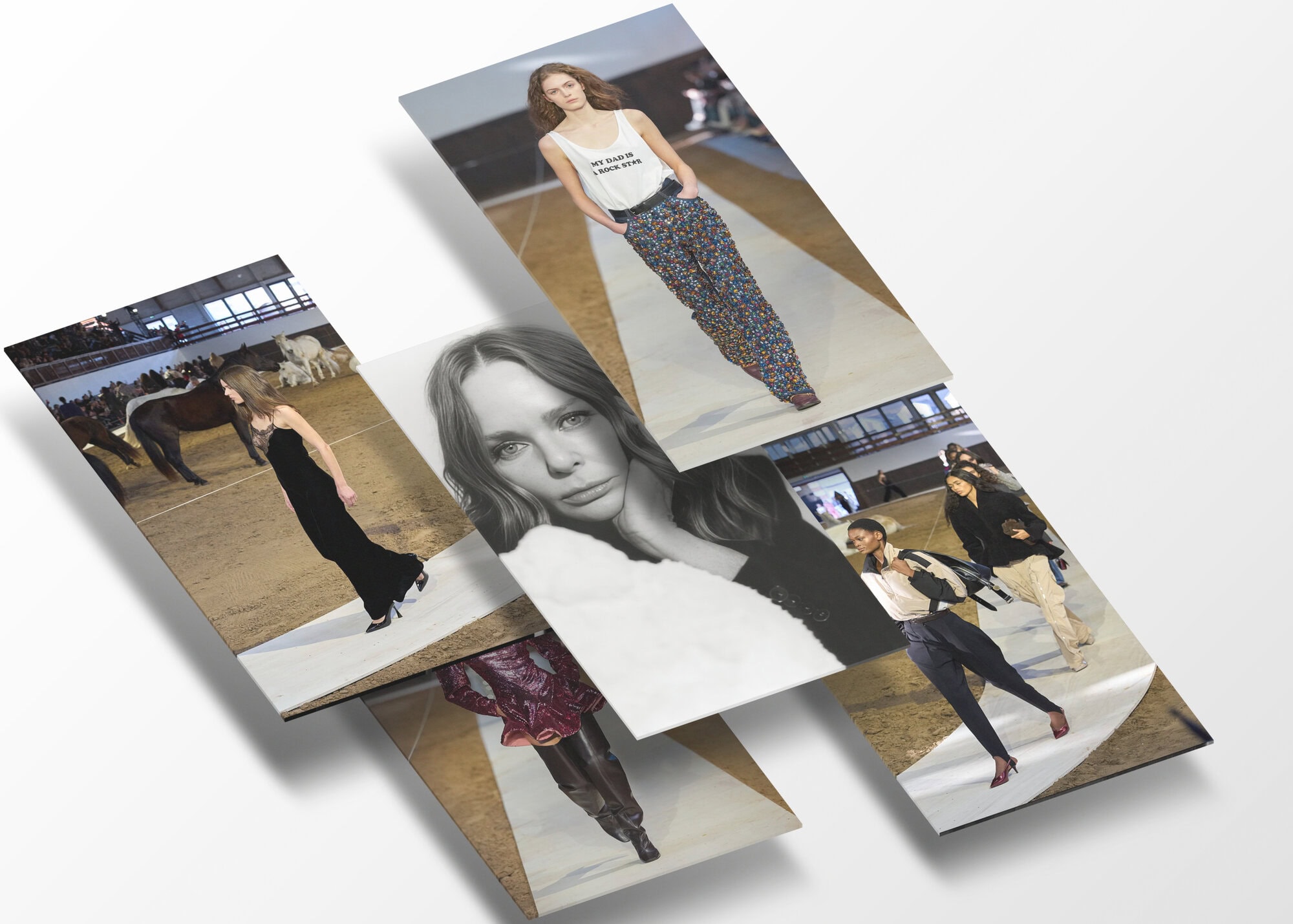
A collection rooted in memory, nature, and the designer’s long fight to reshape fashion
By Kenneth Richard
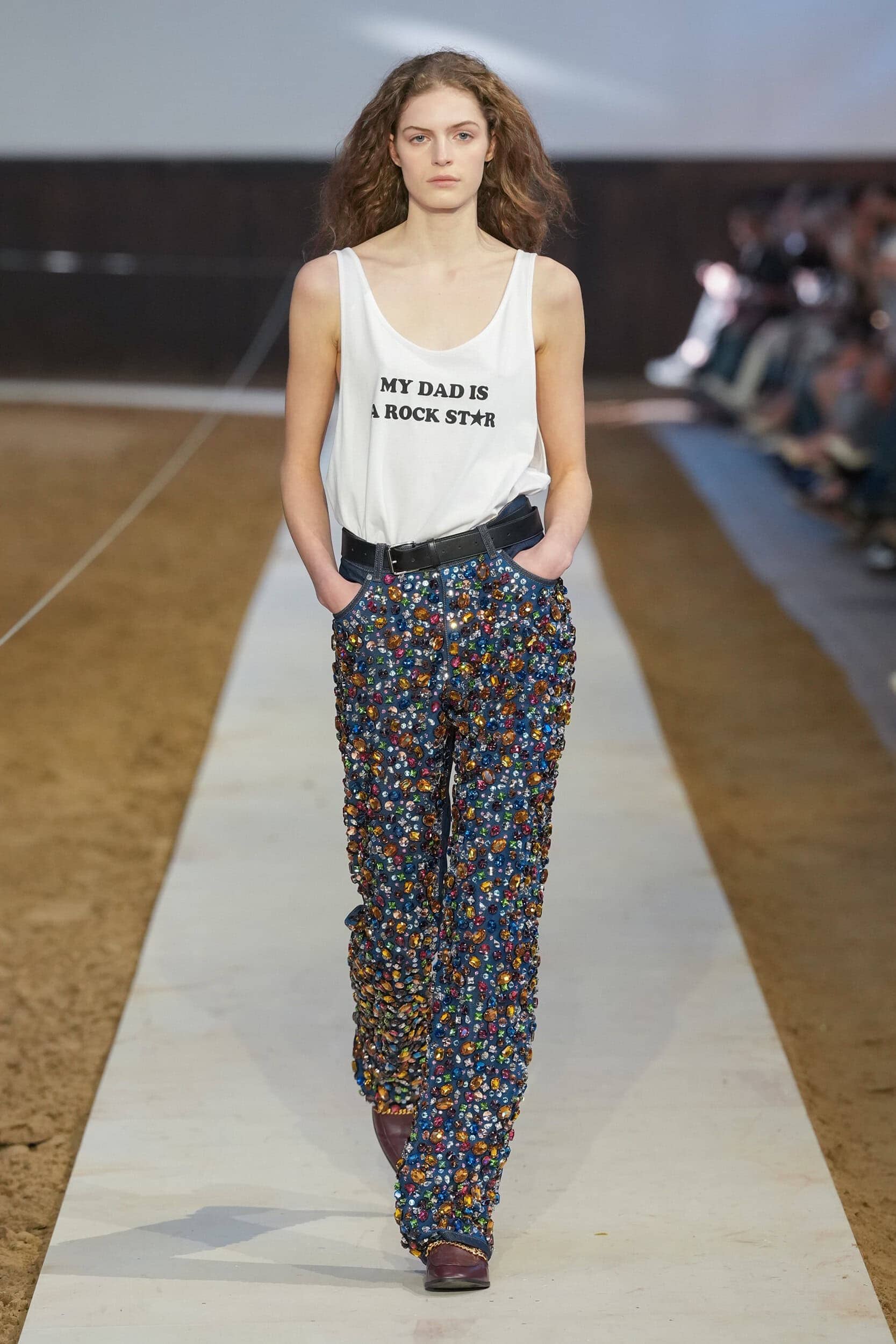
Stella McCartney did not so much end her show as wink at the room. The final look — a model in a simple white T-shirt reading “My Dad Is a Rock Star” — might have felt like a punchline if it weren’t so disarmingly true. In the audience sat Paul McCartney, watching his daughter close a collection that, in many ways, had begun with him. The moment landed with the sort of humor Stella McCartney has long used as a disarming tool. Fashion often takes itself with severe seriousness. McCartney rarely does, except when it comes to the environment.
“I was actually trying, who can I get to wear that T-shirt?” she laughed afterward. “I was sort of scrolling through other people that had rock stars as dads, and think I’m one of the very few. Quite frankly. I mean, there’s a lot of people with rock stars, but my dad’s a rock star.”
The line, delivered with her characteristic mix of cheek and candor, neatly summed up a collection that was less about spectacle than biography. “You know what — this show really started with my birth, actually,” she said with a smile. “I think I was just really inspired to talk about my life in clothes and the wardrobe and the journey of the beginning and the middle and the now.”
For McCartney, whose career has always been unusually intertwined with her personal story, the idea of a wardrobe as autobiography felt natural. The show moved through phases of her life almost like chapters. There were nods to her childhood in Scotland — scarves, ease, a certain pastoral softness. Then the Paris of her teenage years appeared, referencing the formative moment when she interned at Christian Lacroix and Yves Saint Laurent couture.
“When I was 15, I interned for Lacroix and Yves Saint Laurent for couture here in Paris,” she recalled. “So that whole kind of beginning is very 80s, kind of that moment that really had a massive impact on me wanting to be a fashion designer.”
The collection ultimately circled back to the present — and perhaps to what comes next. “Then the end is like, what’s going to happen next?” she said. “So it was just the coming together of a Stella wardrobe.”
But if the narrative arc was personal, the message remained unmistakably McCartney’s: fashion can evolve without abandoning its responsibility to the planet. The runway itself made that point visually. At the center of the show stood horses — living reminders of the designer’s longstanding commitment to animal welfare. “Well, it’s the year of the horse, and I’ll do anything I can to get near a horse, to be honest with you,” she joked. “So I thought I’d bring them to my day job and have some equine therapy.”
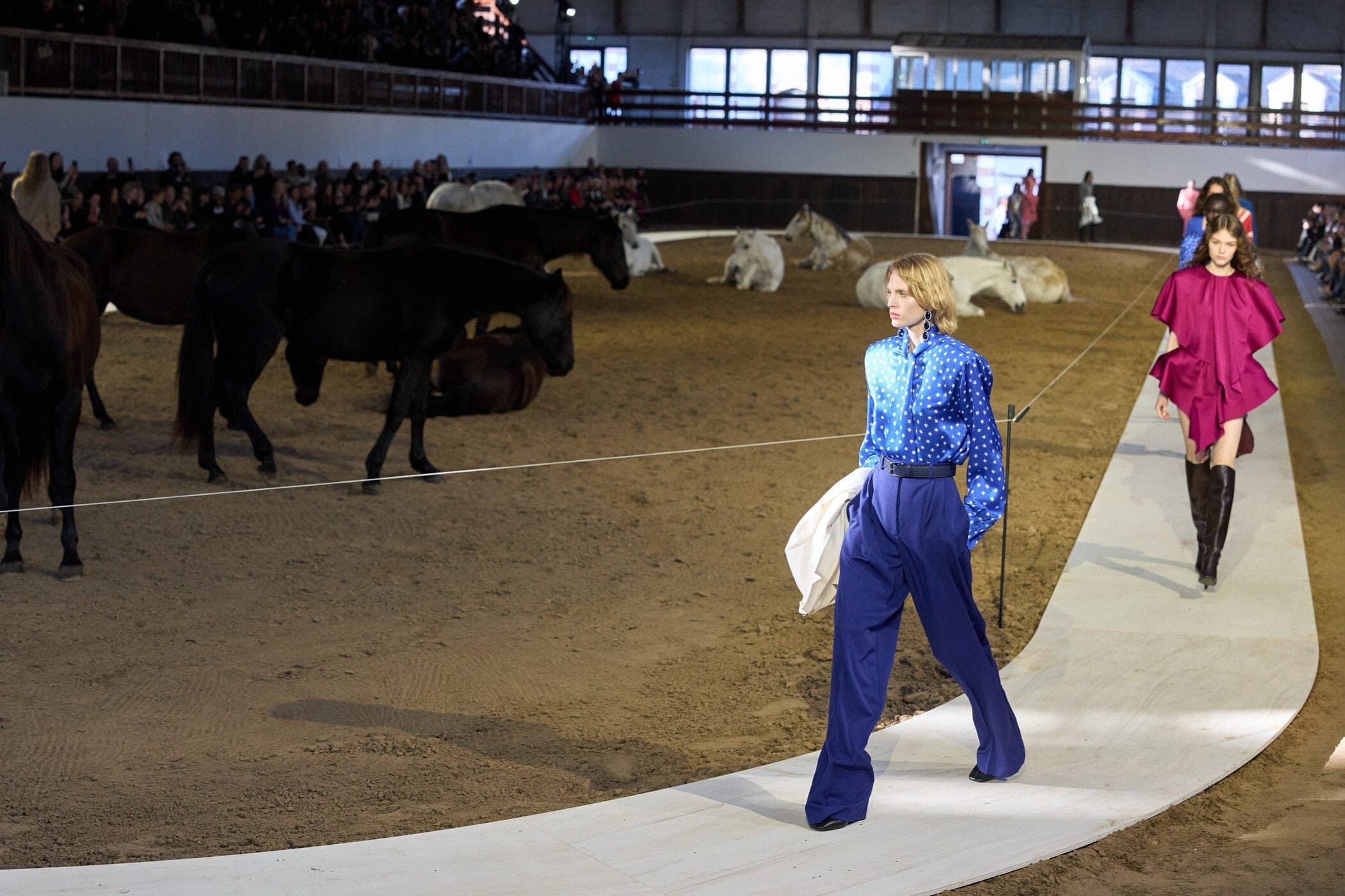
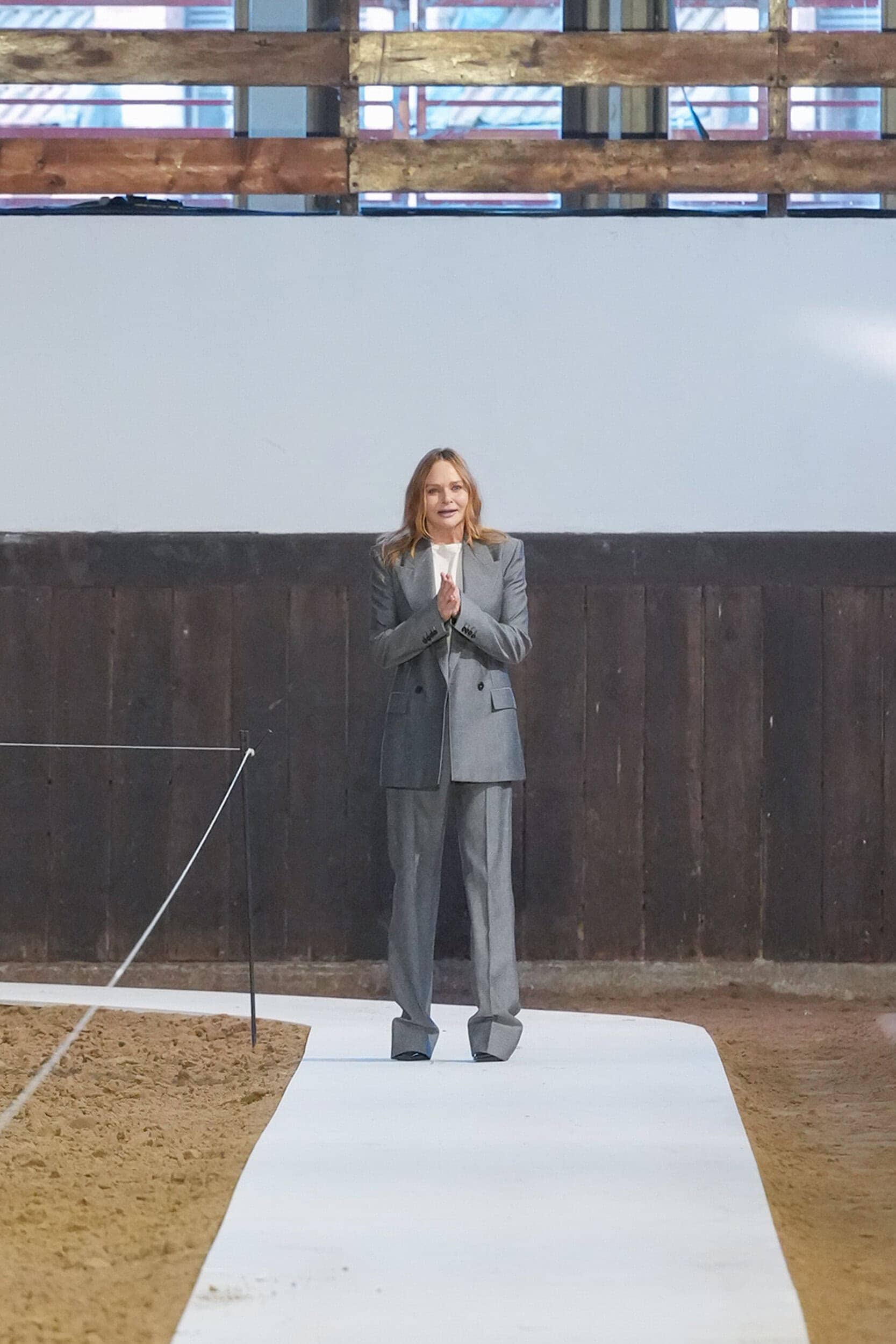
The effect, she admitted, was unexpectedly emotional. “It is very emotional, actually. When we were doing the rehearsals, the models were getting quite emotional,” she said. “I have a real love for nature and a real respect for nature. So I try to remind people in the world of fashion that we don’t have to kill animals and we can work with them.” That philosophy extended through the materials in the collection itself. McCartney continues to push fashion toward alternatives that reduce harm while still delivering the glamour the industry demands.
“We have a lot of non-plastic sequins, a lot of biodegradable materials,” she explained. “That denim is an amazing denim that basically is all recycled. Because even if you have an organic denim, it can still be quite harmful, just the kind of journey from A to Z.”
Innovation, she suggested, increasingly comes from places that sound more like laboratories than ateliers. “We’re using a lot of crazy innovations grown in labs, yeasts and things like that. Yeast seems to be a word for innovation.” The goal, she said simply, is to bring the future a little closer.
The entire show really is trying to just bring the future of fashion a little bit closer to sustainability.”
That ethos has been the backbone of McCartney’s brand since its founding in 2001. Long before sustainability became an industry buzzword, she was arguing that luxury fashion could exist without leather, fur, or unnecessary environmental damage. Two decades later, she still sounds slightly surprised that more companies haven’t followed. “I think that the next generation thinks it’s our responsibility — and it is our responsibility — to give that message, but to provide solutions,” she said. “I think there’s enough talking going on, and there’s not a lot of actually doing.” McCartney paused before adding, with a quiet conviction earned through years of persistence.
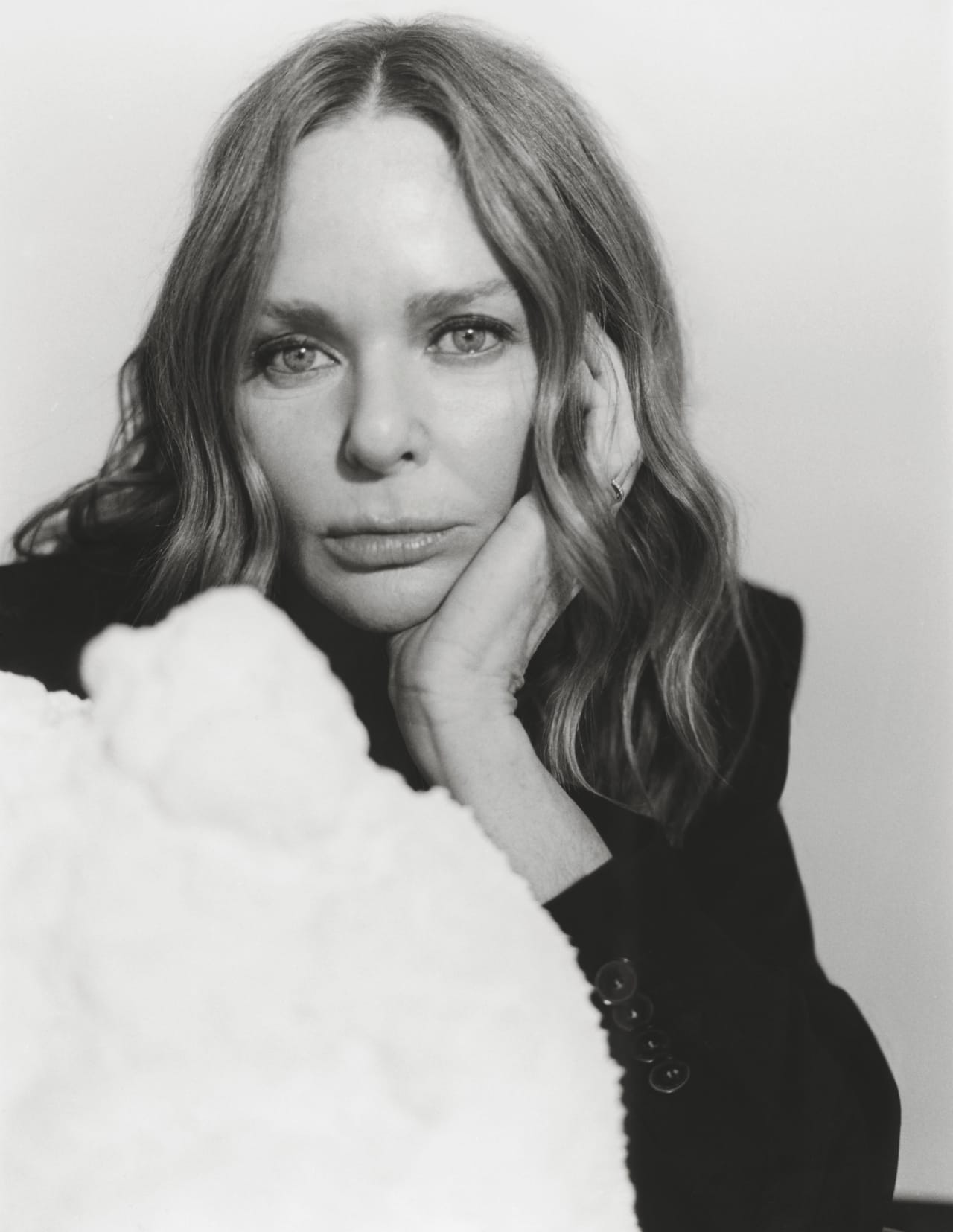
I think I’m probably one of the only brands really delivering on a promise to try and have more sustainable fashion in the industry.”
If the industry can sometimes feel fickle, McCartney remains steadfast. “It’s not like I’m going to stop now,” she said with a grin. “I’m a little committed.” The show itself, however, was far from solemn. McCartney insisted on joy — for the audience, the models, and her team. “It’s a very joyous show,” she said. “I wanted people to enjoy the show. I wanted the models to enjoy it and my team to enjoy it. I wanted all you guys to enjoy it.”
Her approach to design, she noted, is also deeply personal as a woman designing for women — a perspective still surprisingly rare at the highest levels of fashion. “I forget that I’m one of the few women designing for women,” she said.
When we were doing the fittings I was like, I just want to wear the clothes. I want to feel like I’m actually really embracing women through these collections more and more.”
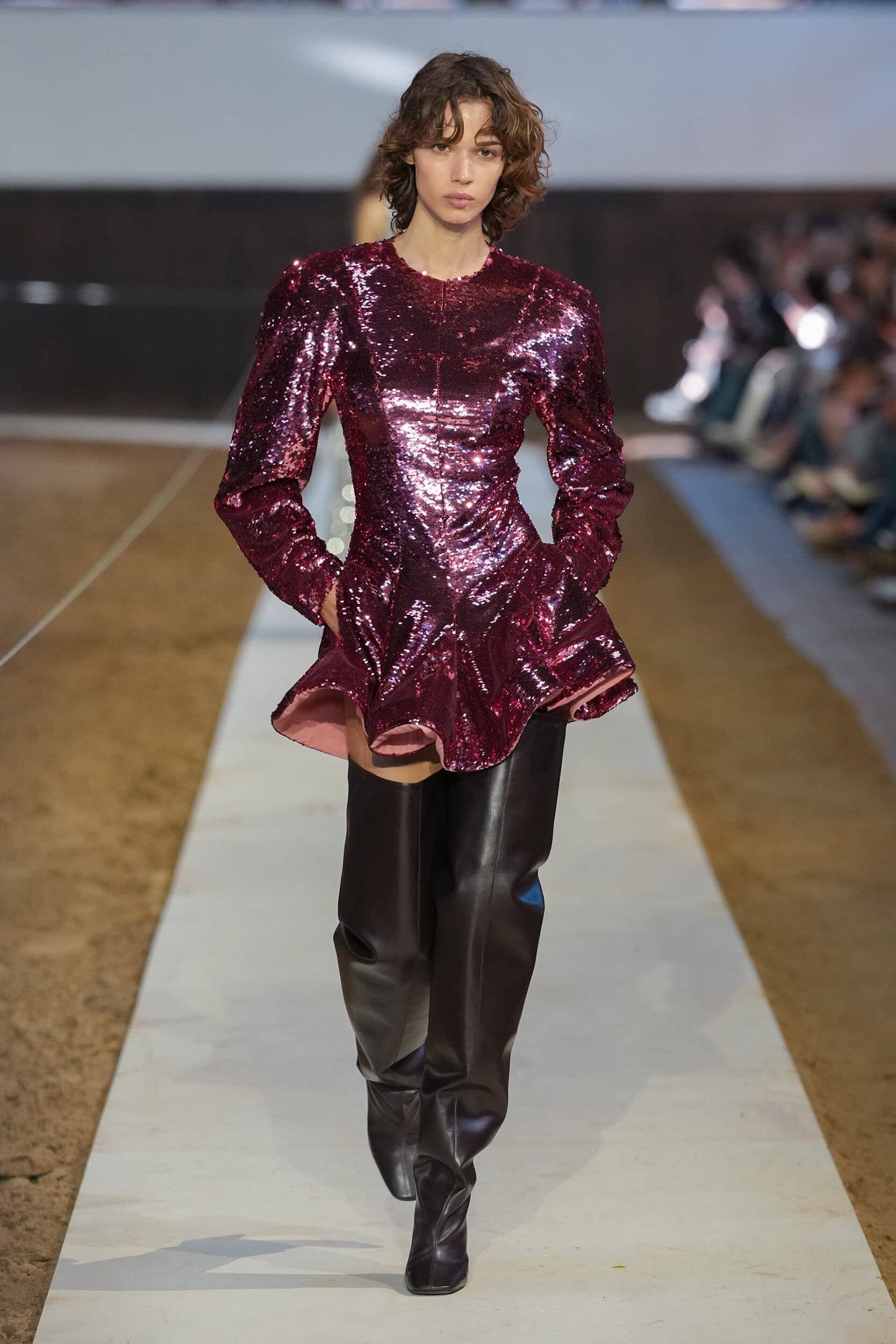
Around her, the room buzzed with post-show excitement. Oprah Winfrey had attended the show — a moment that left McCartney momentarily starstruck. “I can’t believe it when she said she would come, especially for me,” she said, laughing. “She’s one of my icons. She takes my breath away.”
The timing of the show also coincided with another milestone: the following day McCartney would receive France’s prestigious Legion of Honor. “I feel very honored,” she said, still processing the moment. “I feel very proud actually.” Proud not only of the recognition, but of the work that led there. “I think that I’ve been doing it so long,” she said. “And it’s in every single thing that we do at Stella — every single moment from beginning to end.”
Which brings us back to that final T-shirt. A small joke. A family nod. A reminder that fashion, for all its seriousness, can still smile at itself. And occasionally — if you’re Stella McCartney — you can end a runway show by reminding everyone of a simple truth. Your dad really is a rock star.