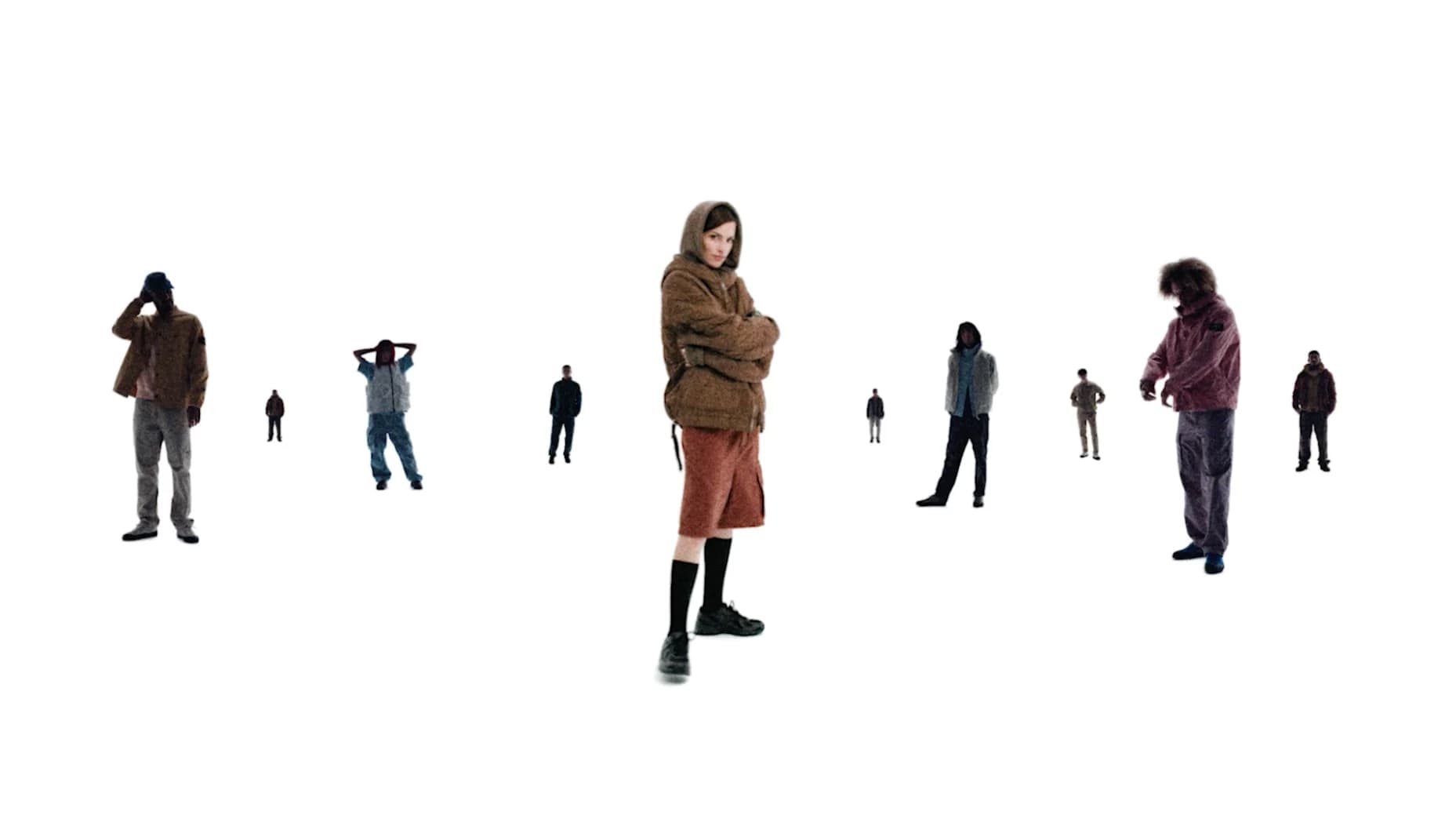
100 Questions, Infinite Control
Review of Stone Island Spring 2026 Ad Campaign by Creative Director Ferdinando Verderi with Photographer David Sims with models Paolo Maldini, Chito Vera, Garance Vallée, and Shivas
Stone Island continues its ongoing “Research Project in 100 Questions” for Spring 2026, with Creative Director Carlo Rivetti and Creative Direction by Ferdinando Verderi, lensing once again entrusted to David Sims. The formula is by now unmistakable—portraits paired with tightly structured personal questionnaires curated by Hans Ulrich Obrist—but like any well-engineered garment, the intrigue lies in its consistency. The hook here is almost paradoxical: when everything stays the same, what actually changes?
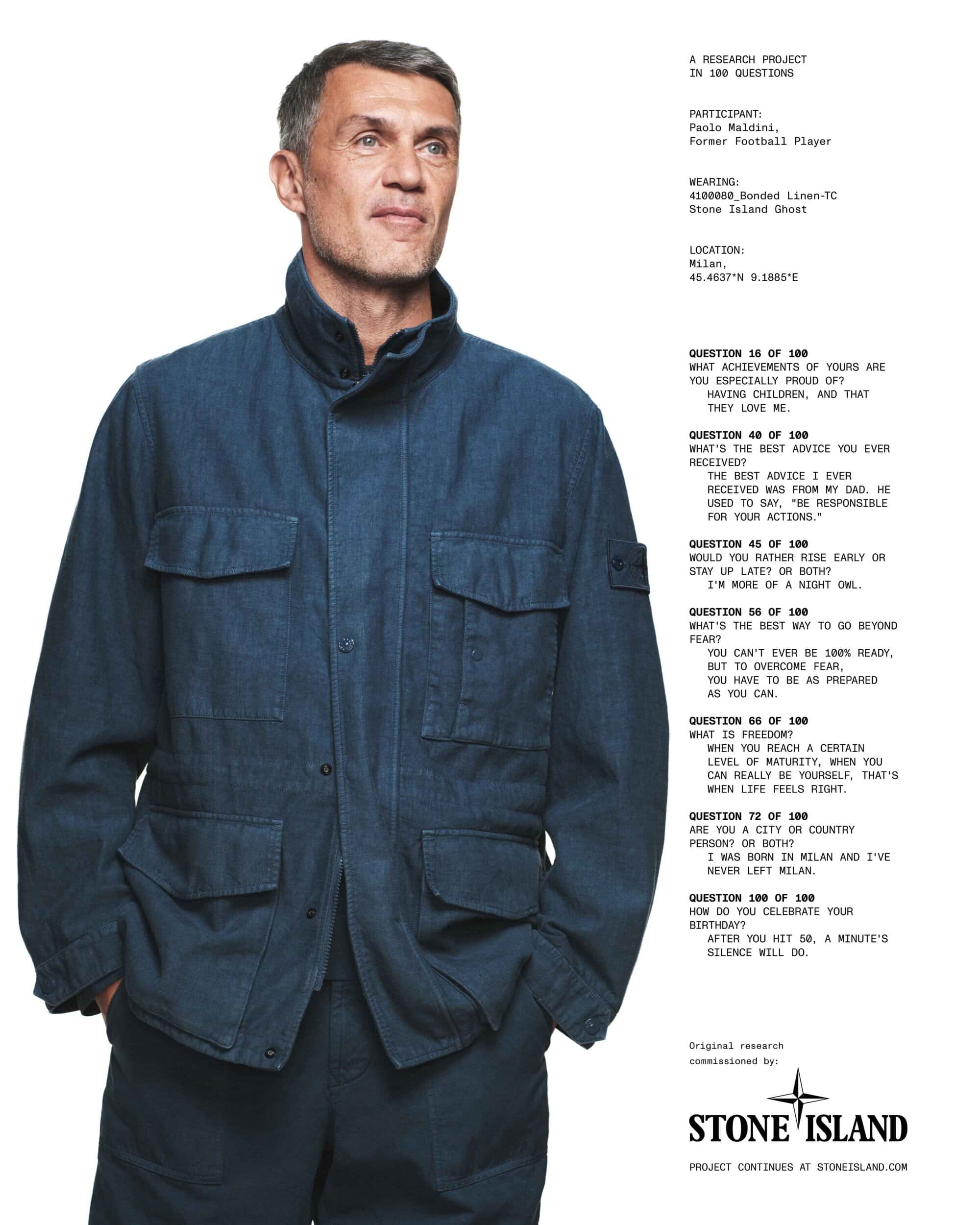
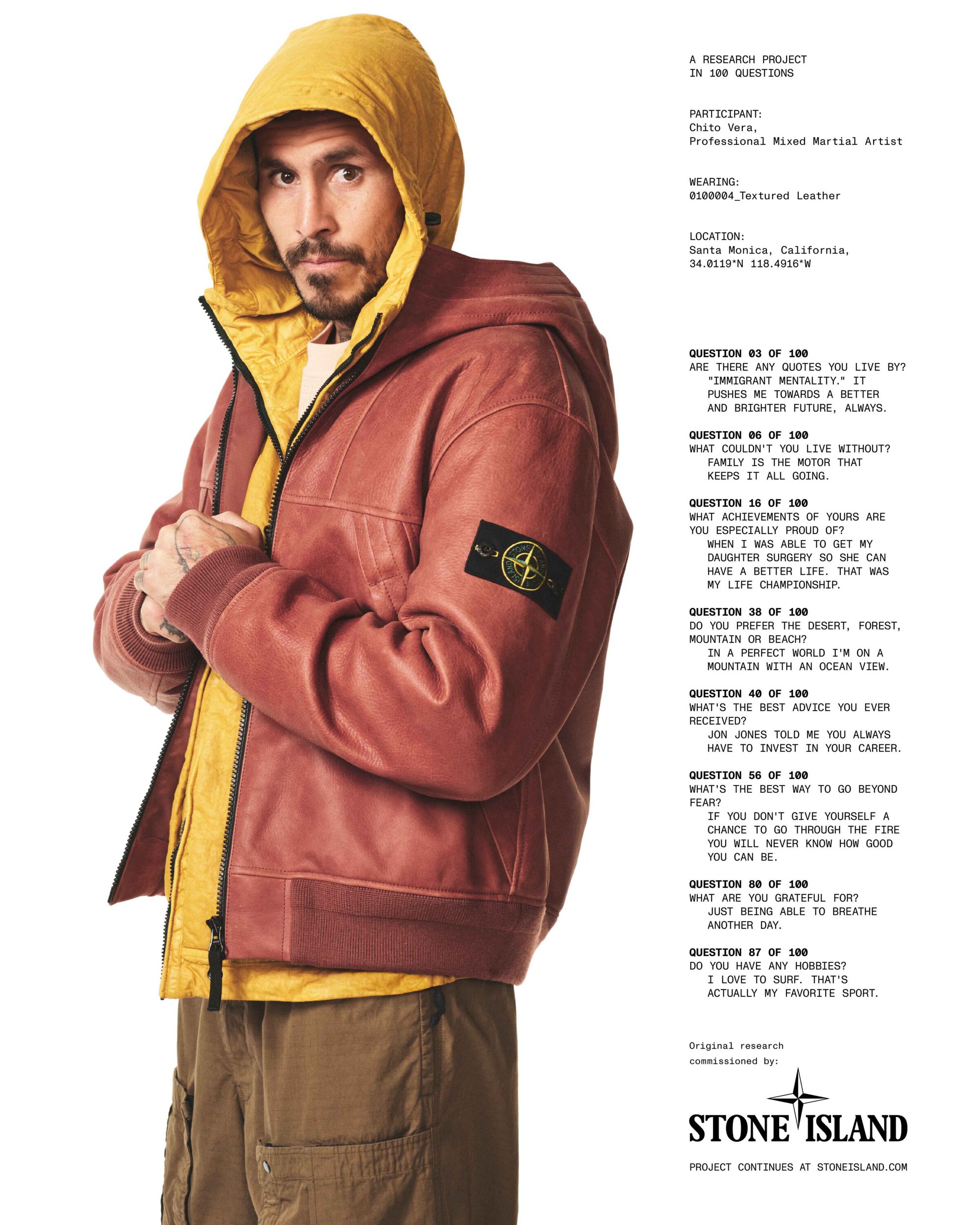
The imagery is stripped to its most functional core. Sims delivers his signature neutrality—clean, shadowless backdrops that remove any sense of distraction or narrative excess. Each subject stands alone, framed almost clinically, allowing the garment and the individual to coexist without hierarchy. Paolo Maldini appears composed, reflective; Chito Vera, quietly intense; Garance Vallée, intellectually poised; Shivas, disarmingly open. The Stone Island badge punctuates each look like a quiet thesis statement—an emblem not of fashion, but of methodology.
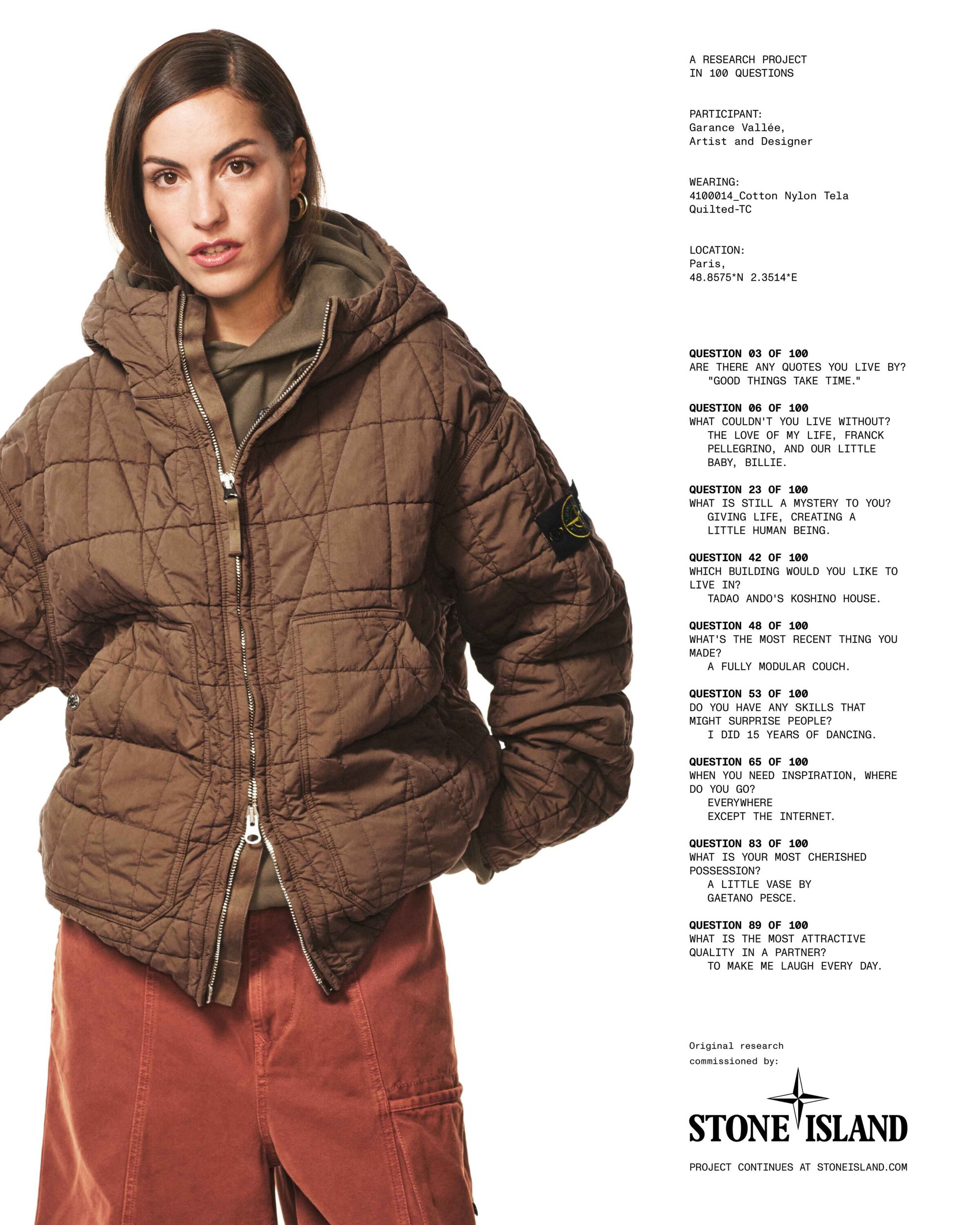
But it is the text—dense, deliberate, and unwaveringly structured—that defines the campaign’s rhythm. The questionnaire format transforms each subject into both participant and artifact. Questions oscillate between the philosophical and the mundane: “What is freedom?” sits comfortably beside “What’s on your Spotify playlist?” The answers are unpolished, sometimes profound, sometimes intentionally banal. Maldini’s reflection on responsibility, Vera’s note on family, Vallée’s meditation on creation—these fragments accumulate into something resembling portraiture through language rather than image.
What’s remarkable is how Stone Island has built a campaign language that resists the traditional seduction of fashion imagery. There is no overt storytelling, no cinematic flourish, no attempt to mythologize the subject. Instead, the brand leans into a kind of intellectual documentation—half archive, half anthropology. In an era where campaigns often chase immediacy, Stone Island opts for endurance. It asks the viewer not just to look, but to read, to pause, to consider.
And yet, there is an inherent tension in repetition. For those familiar with the series, the visual and conceptual framework offers little deviation. The sameness is both the strength and the risk. It reinforces brand identity with almost scientific rigor, but it also flirts with predictability. The question becomes whether the evolving cast of participants is enough to sustain curiosity, or if the format itself might eventually require disruption to maintain its edge.
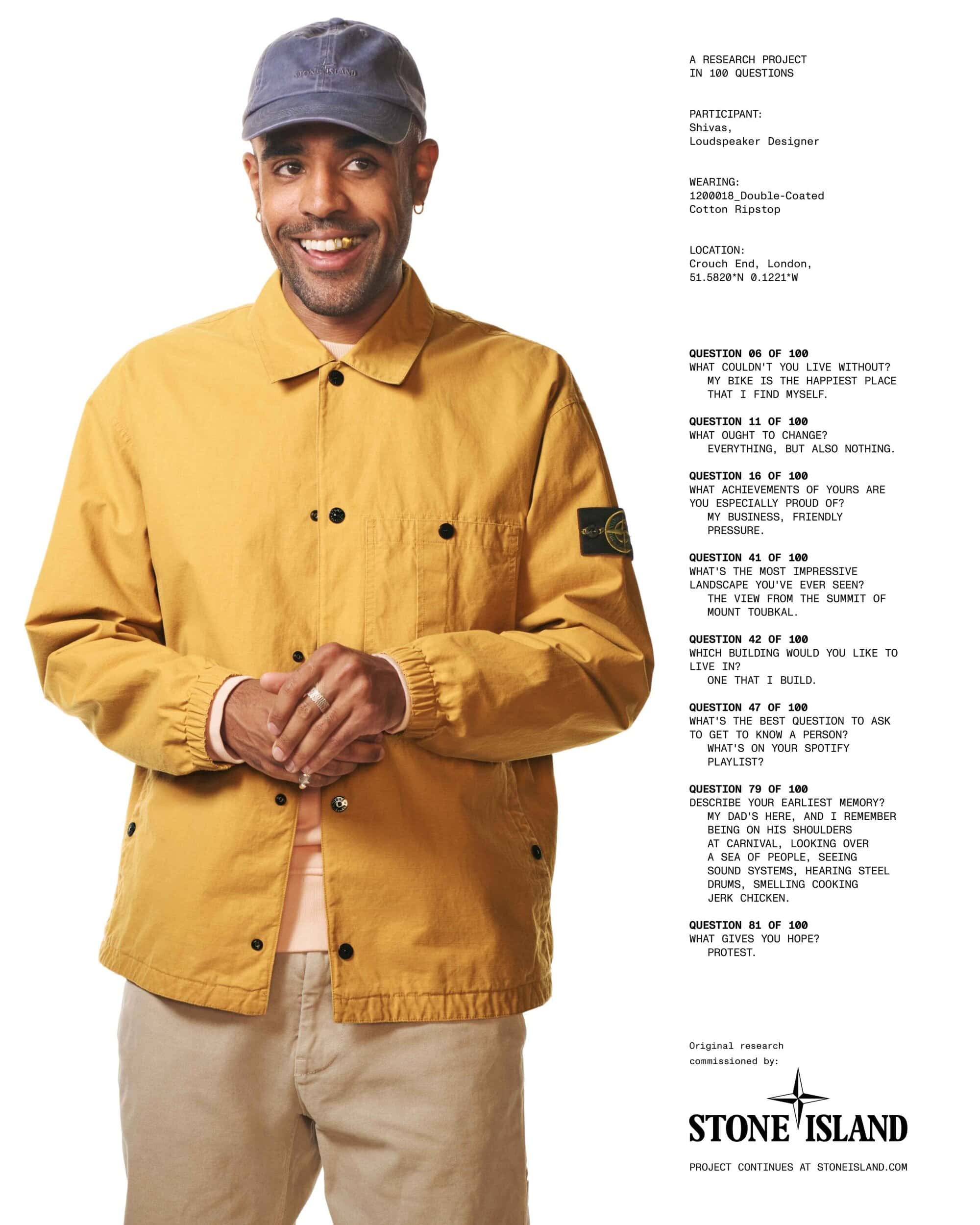
Still, there is something quietly radical in this refusal to entertain. Stone Island does not chase attention—it calibrates it. By stripping away spectacle, the brand positions itself as a thinker within a market of performers. And in doing so, it reminds us that innovation is not always about reinvention; sometimes, it is about refinement to the point of conviction.
After all, when you commit to asking 100 questions, the real statement isn’t in the answers—it’s in the discipline of continuing to ask.
Stone Island Creative Director | Carlo Rivetti
Agency | If there is one
Creative Director | Ferdinando Verderi
Photographer | David Sims
Models | Paolo Maldini, Chito Vera, Garance Vallée, and Shivas
Stylist | Max Pearmain
Interview Questions | Curated by Hans Ulrich Obrist