Fall 2026: A Season of Continuity, Future-Proofing and Flamboyancy
By Angela Baidoo
If there was one key theme which tied up the Men’s Fall 2026 season across Milan and Paris, it was a return to structure.
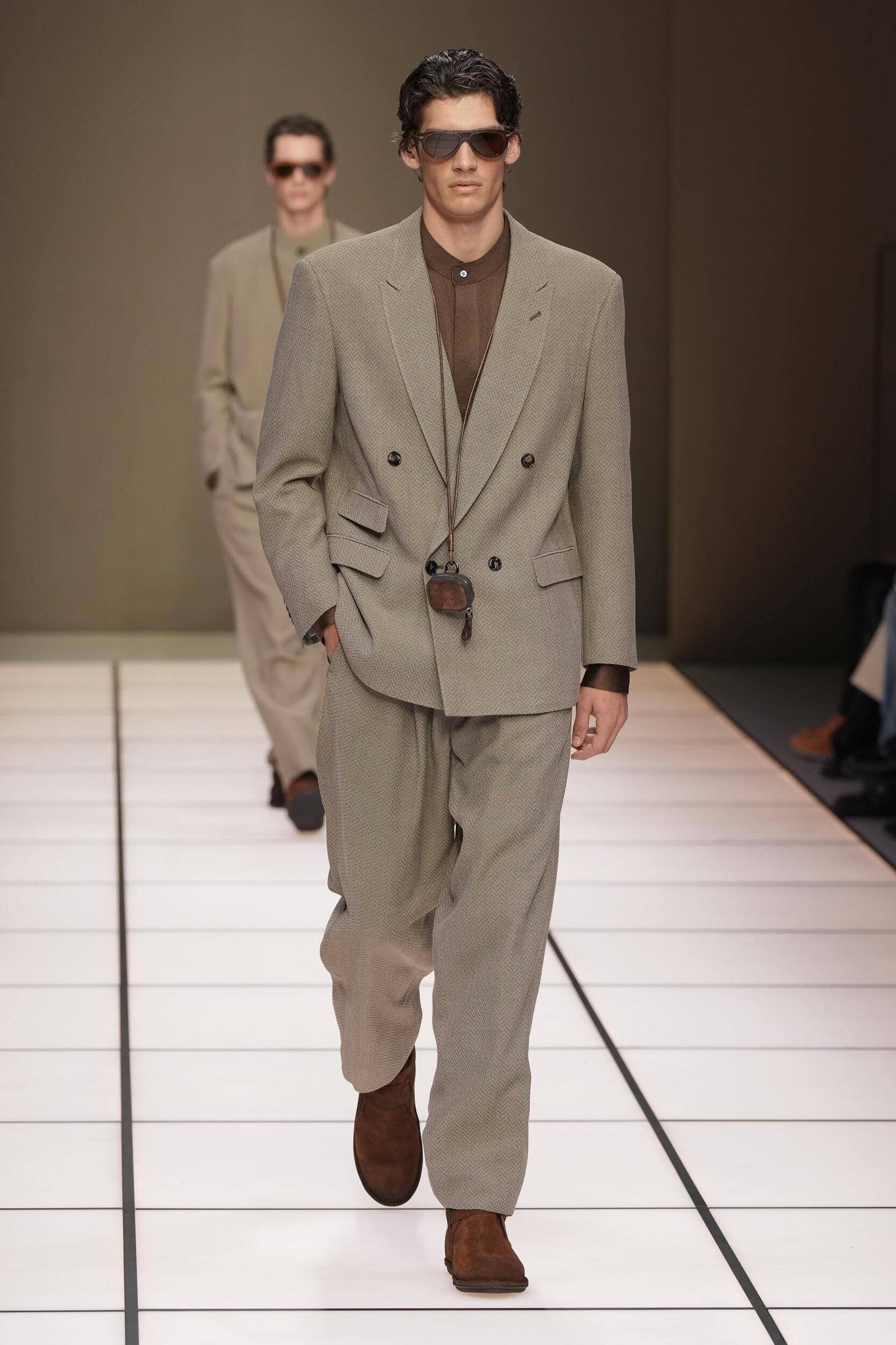
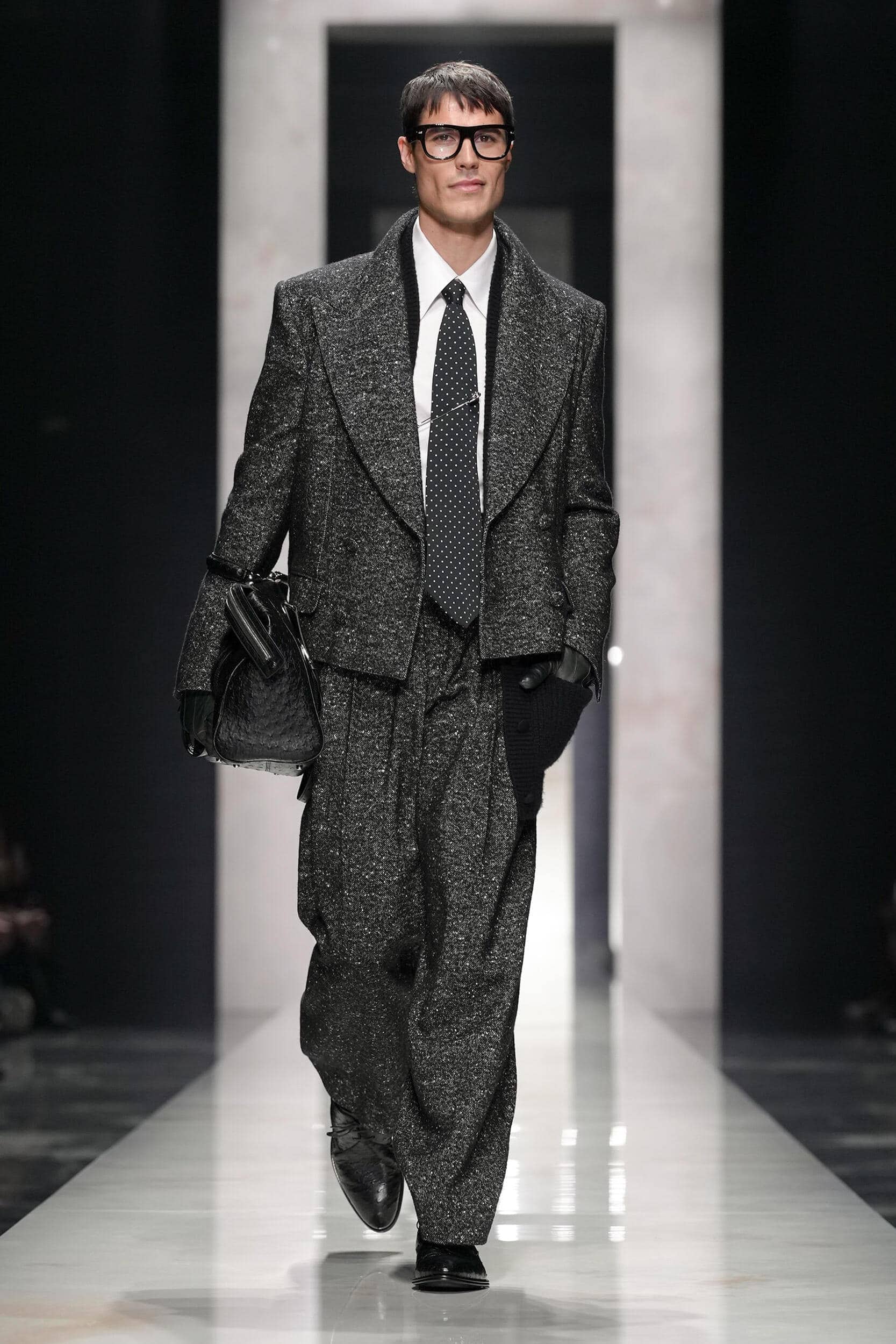
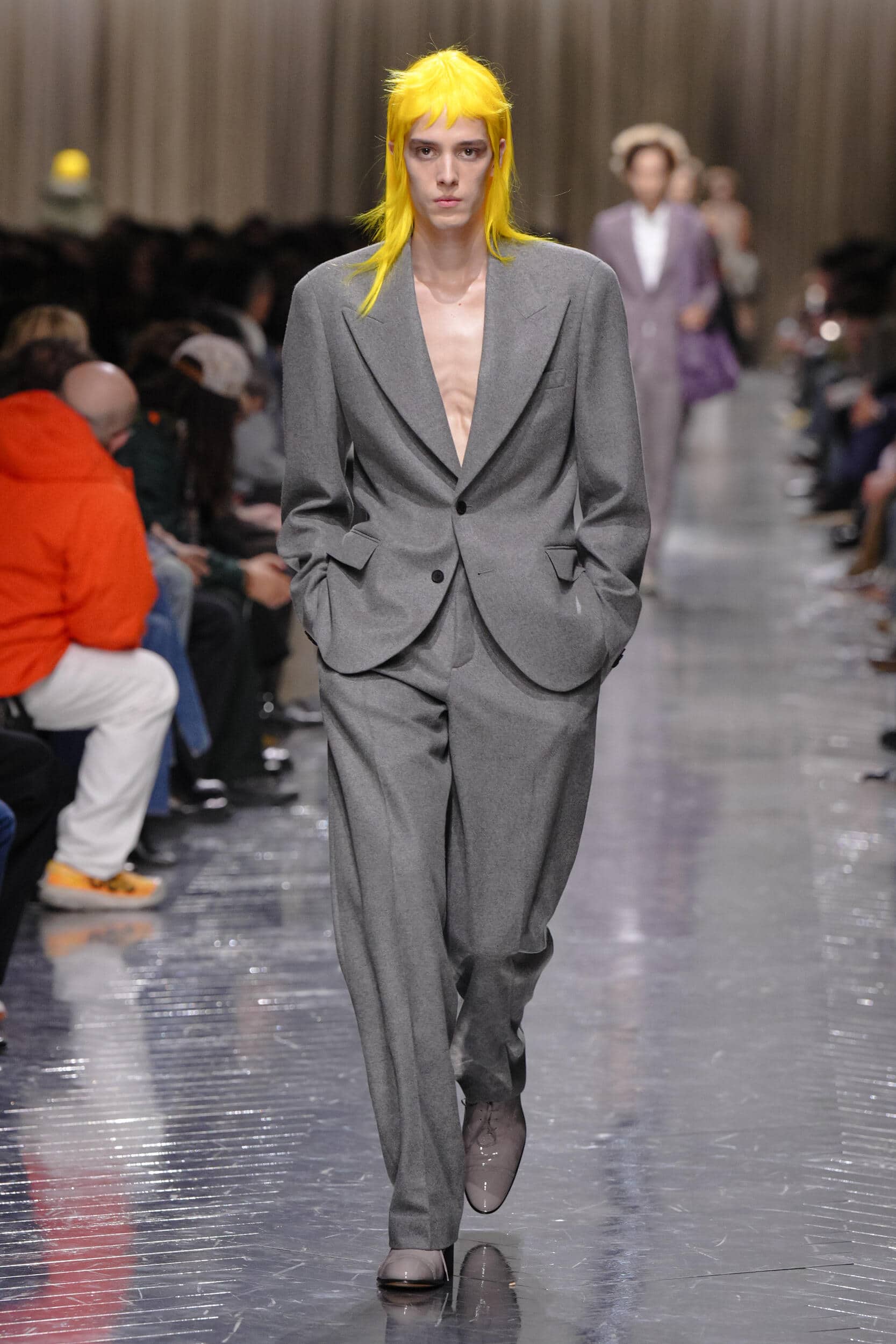
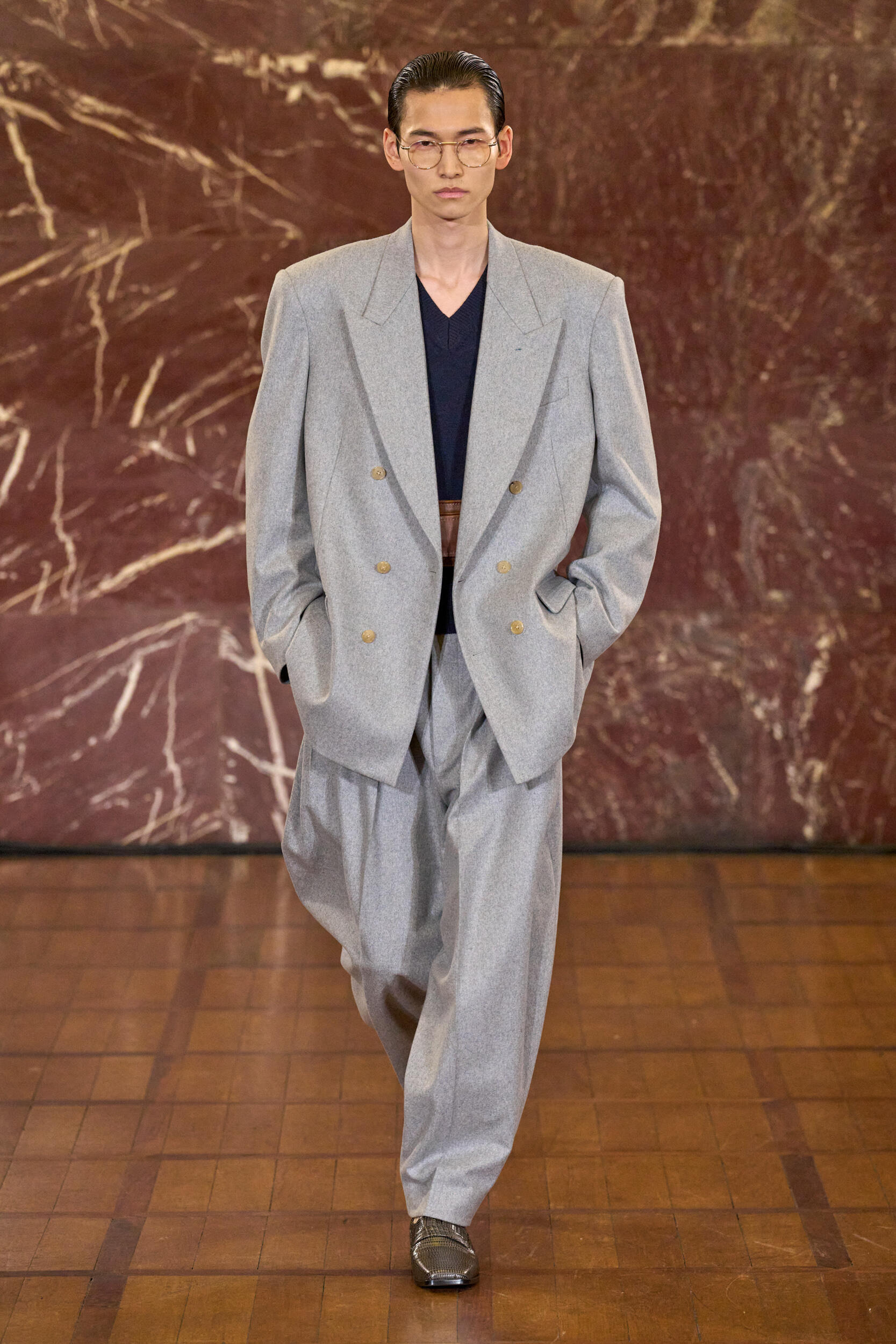
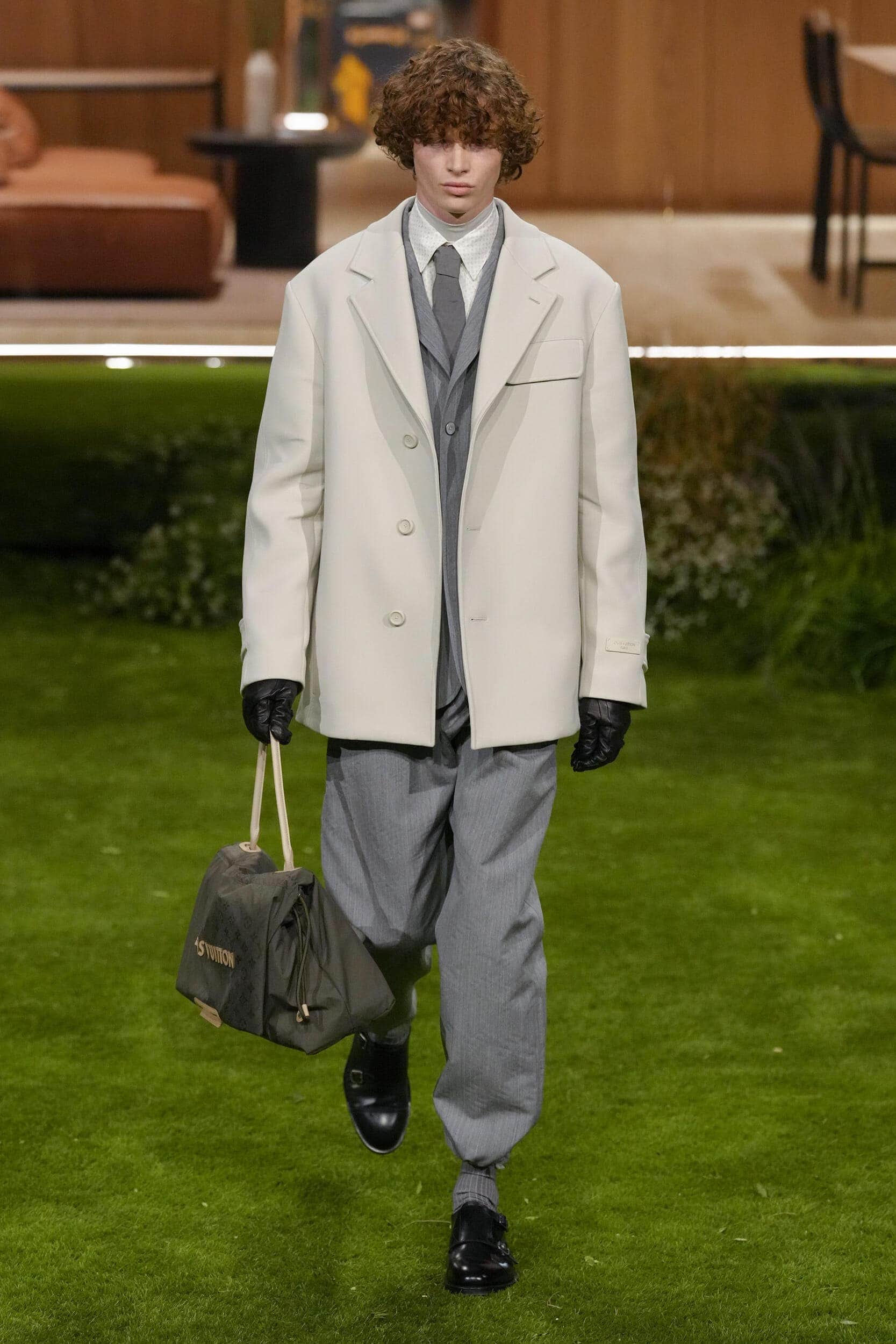
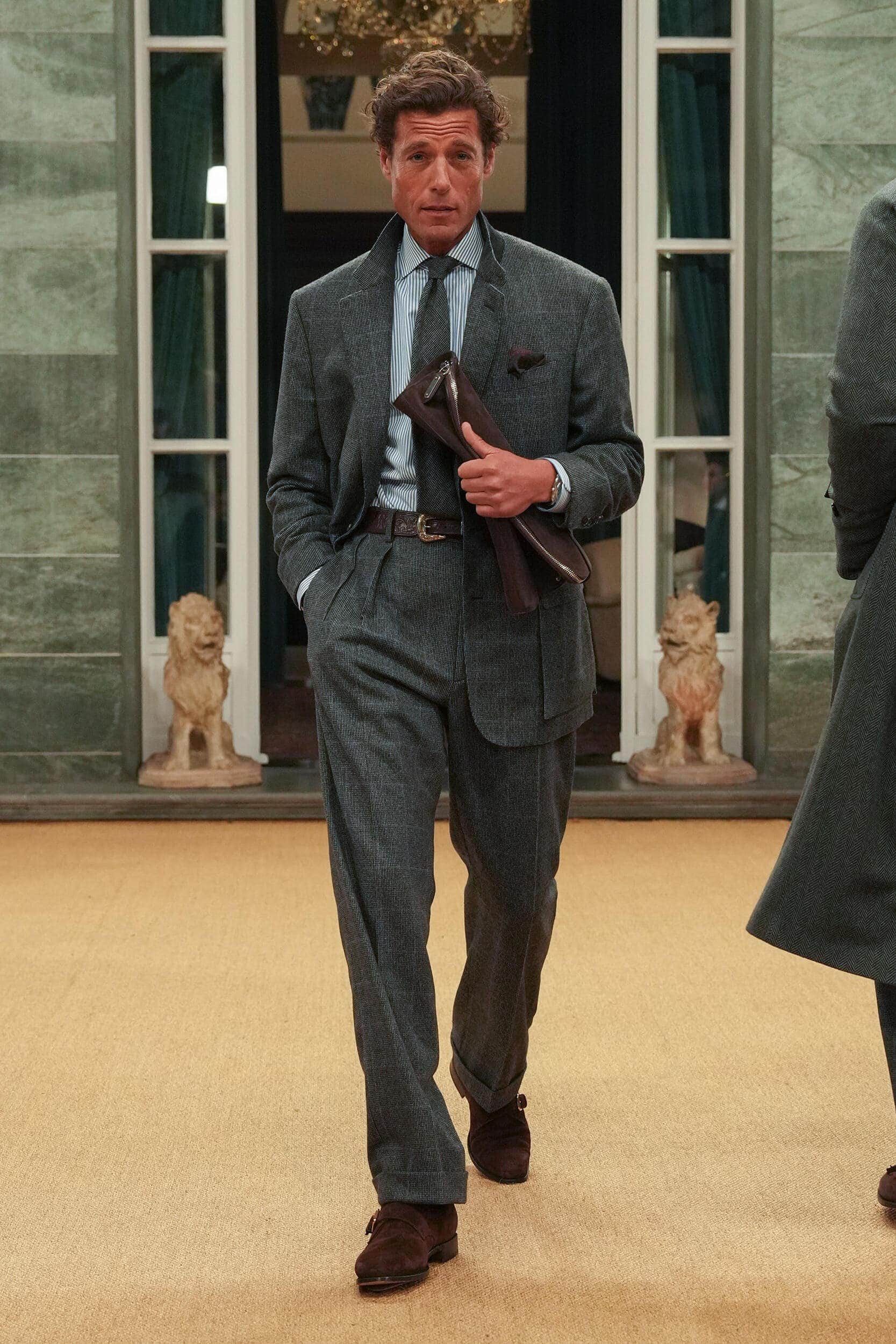
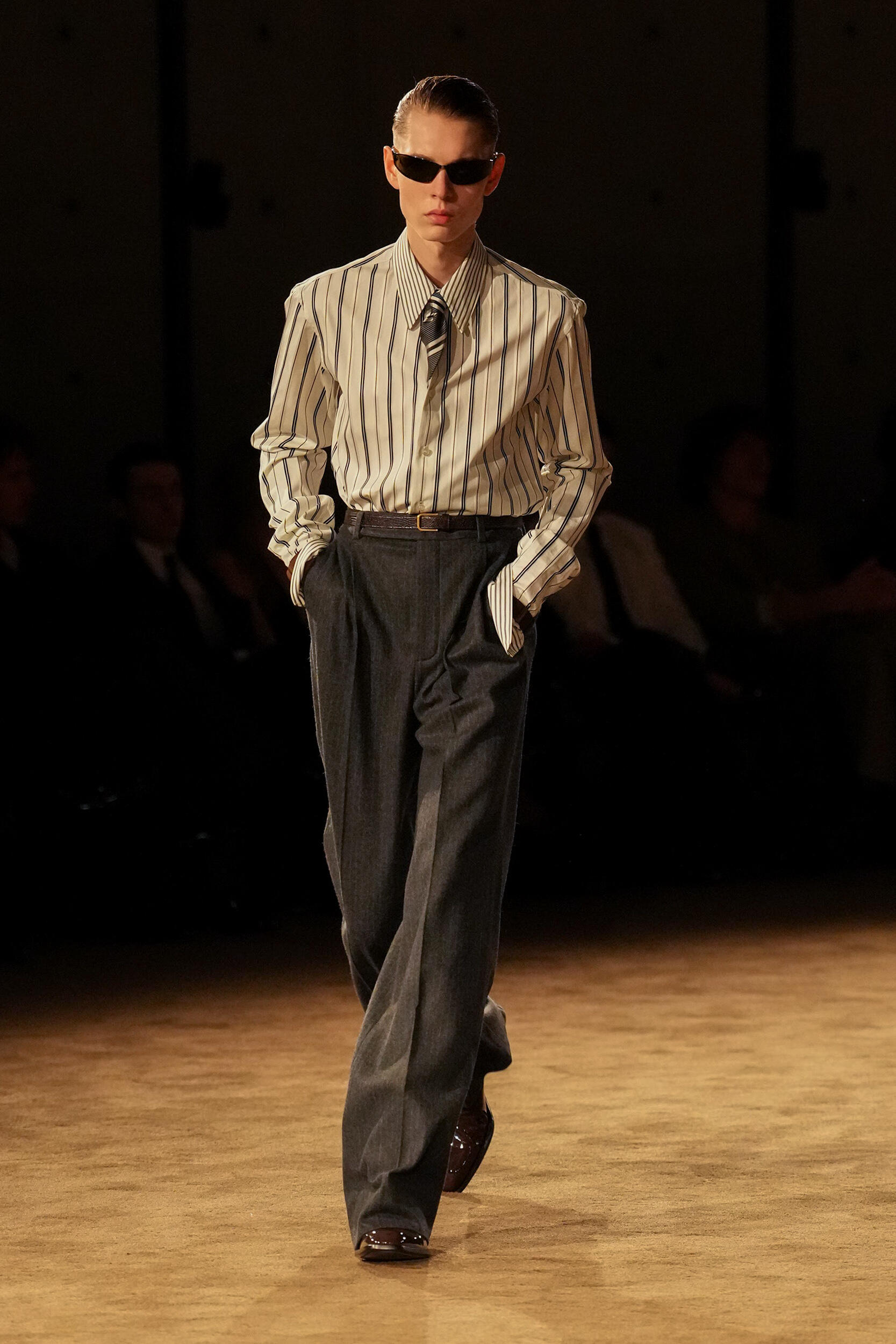
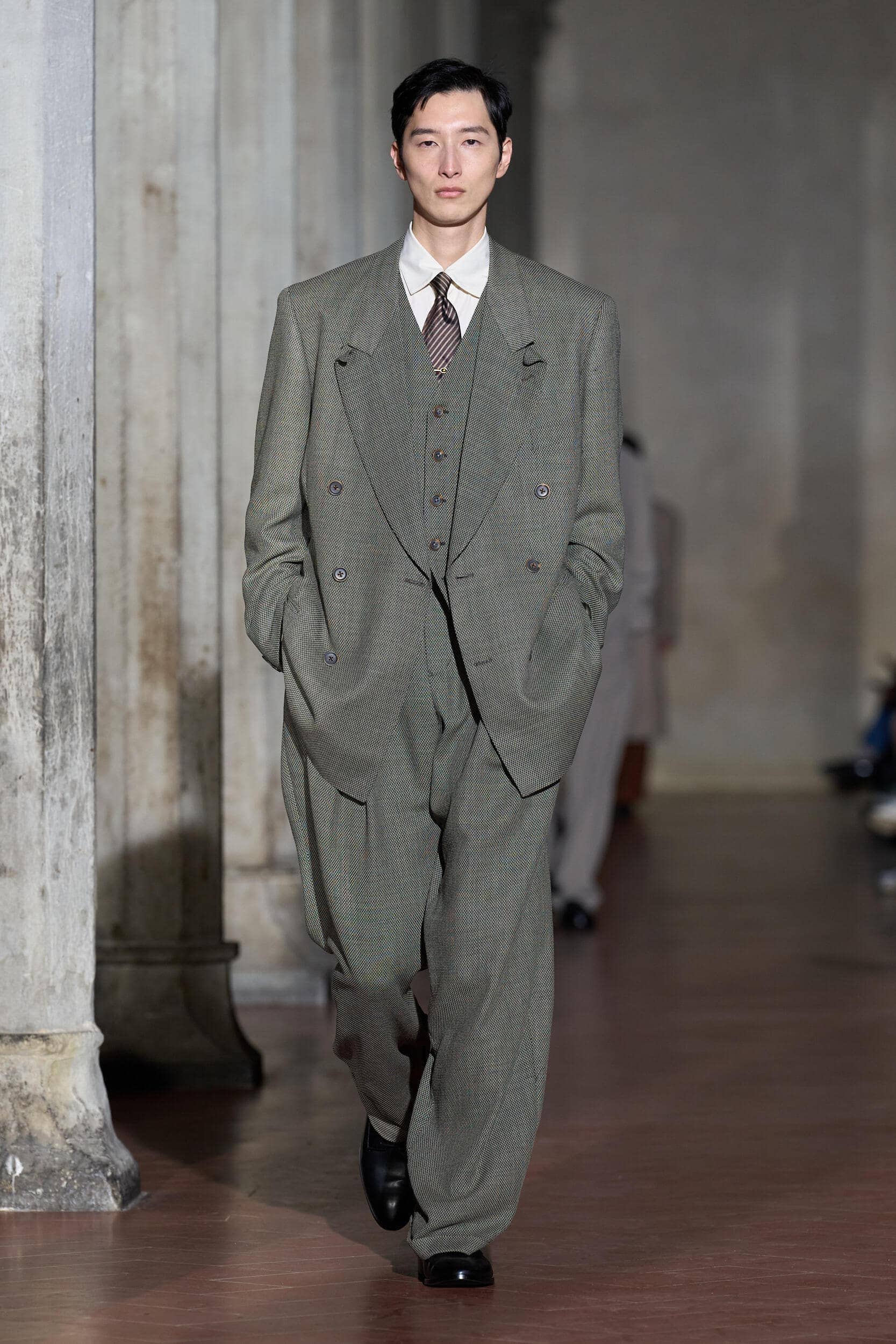
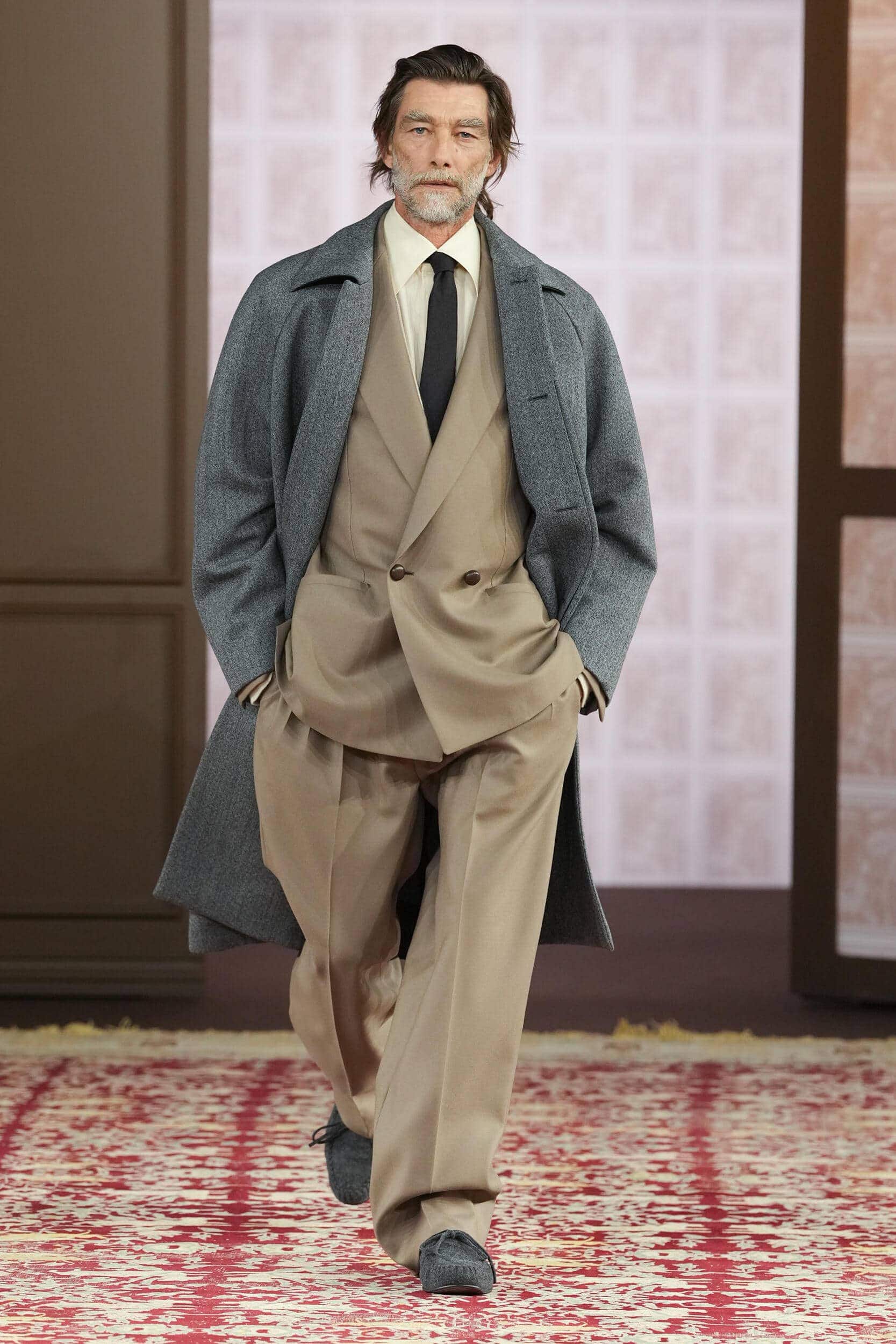
Menswear has always built its foundations on the benefits of a good suit, but this season the classic two (and three) piece tailored staple didn’t just re-emerge at Dolce and Gabbana, Zegna, Saint Laurent and Giorgio Armani, it reasserted itself with a dominance not seen since the streetwear takeover of the 2010s. The softening of the silhouette that has defined recent years appears to be over, and in its place, brands from Prada to Louis Vuitton presented clean lines and sharper shoulders with a whiff of Gordon Gekko about them, all rendered in the grey-on-grey palette of corporate uniformity. Accessories also followed suit with a more businesslike approach to bags and small leather goods, signalling that the era of dressing for escapism is being replaced by dressing for the reality of the world outside the runway.
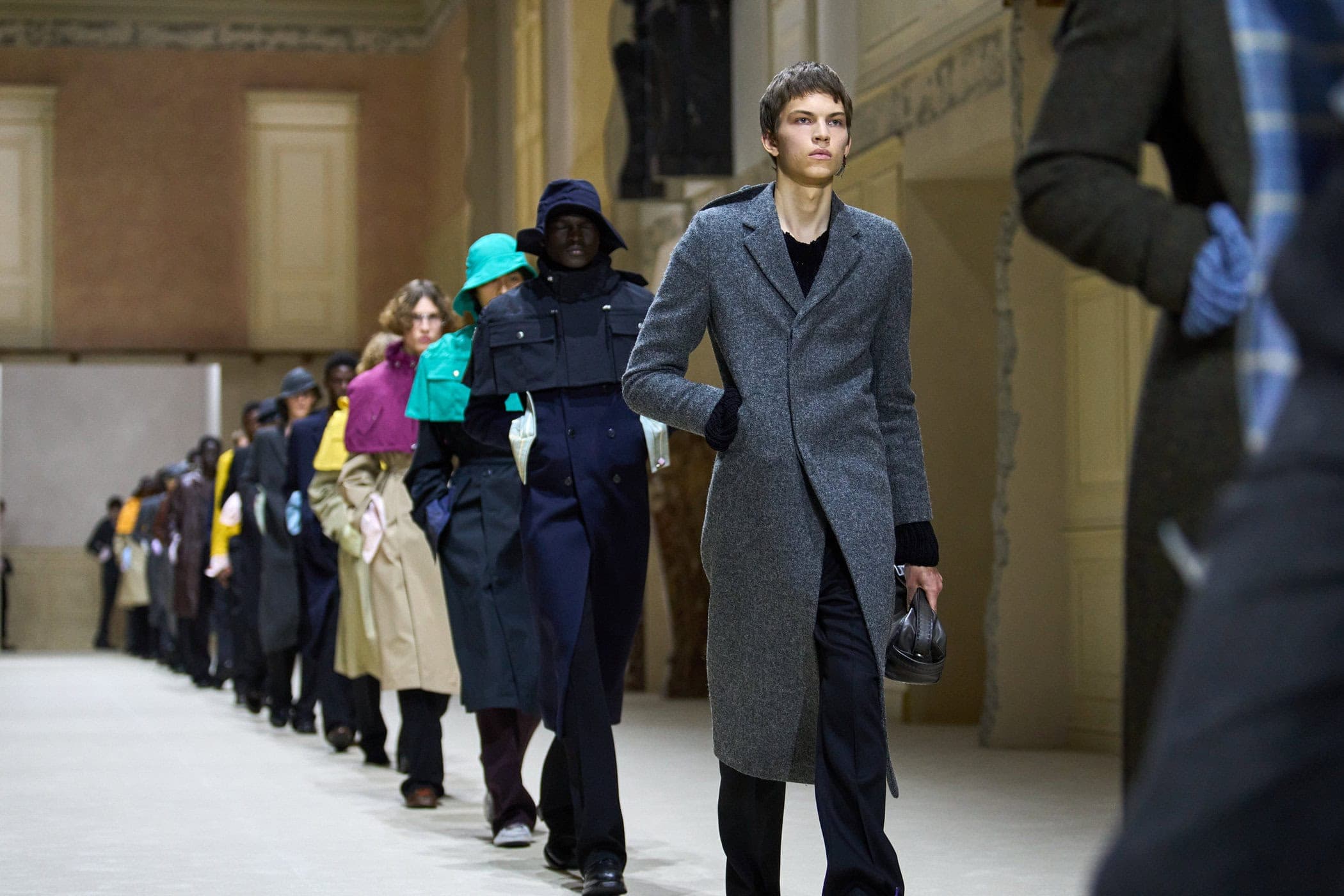
Yet, Fall 2026 still managed to find a silver lining for those not wishing to march back into conservative dressing. In fashion there will always be a yin and yang, and alongside the back-to-business dress codes came a welcome counterbalance in the form of a cosier take on casualwear, Dandy-inspired flamboyance, and a renewed respect for the artisan.
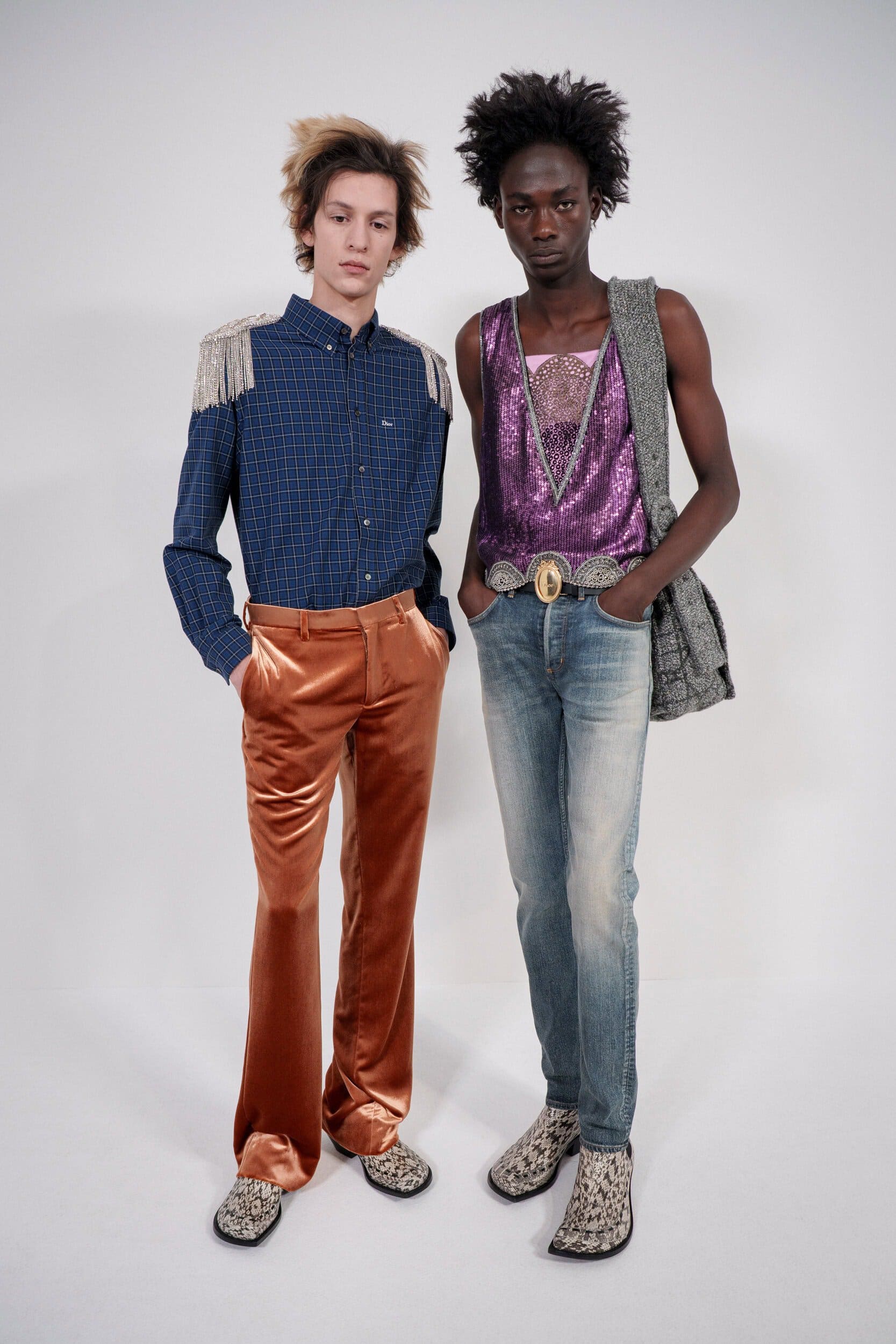
Designers found ways to inject levity into a sober season — through tactility, colour theory, poetic coming-of-age narratives, and moments of unrestrained glamour.
Designers found ways to inject levity into a sober season – through tactility, colour theory, poetic coming-of-age narratives, and moments of unrestrained glamour that felt like a decadent form of rebellion, most notably seen at Jonathan Anderson’s Dior. At the same time, practicality was retooled into something more modern: modular layers, hybridised silhouettes, and “future-proofing” details spoke to longevity, value, and the preparedness required for an increasingly volatile climate.
What emerged was a season defined by duality — familiar wardrobe fundamentals built to last were revisited, while a focus on the value of craftsmanship and emotion-led design reminded us that menswear still has room to dream.
Key Takeaways
- The suit is back — and so is sharper dressing: Fall 2026 marks the end of relaxed silhouettes, with a decidedly conservative return to clean lines, strong shoulders, and formal dress codes.
- Casualwear gets smart: Preppy and Ivy League references replaced the dominance of streetwear, with knitwear, pleated trousers, and layered textures leading the reframing of the off-duty uniform.
- Innovative functionality adds value across categories: Modularity, hybrid garments, and technical details reframe menswear and accessories for “forever” dressing — embedding longevity, flexibility, and an upholding of craftsmanship.
Back to Business
What Has Shifted This Season?
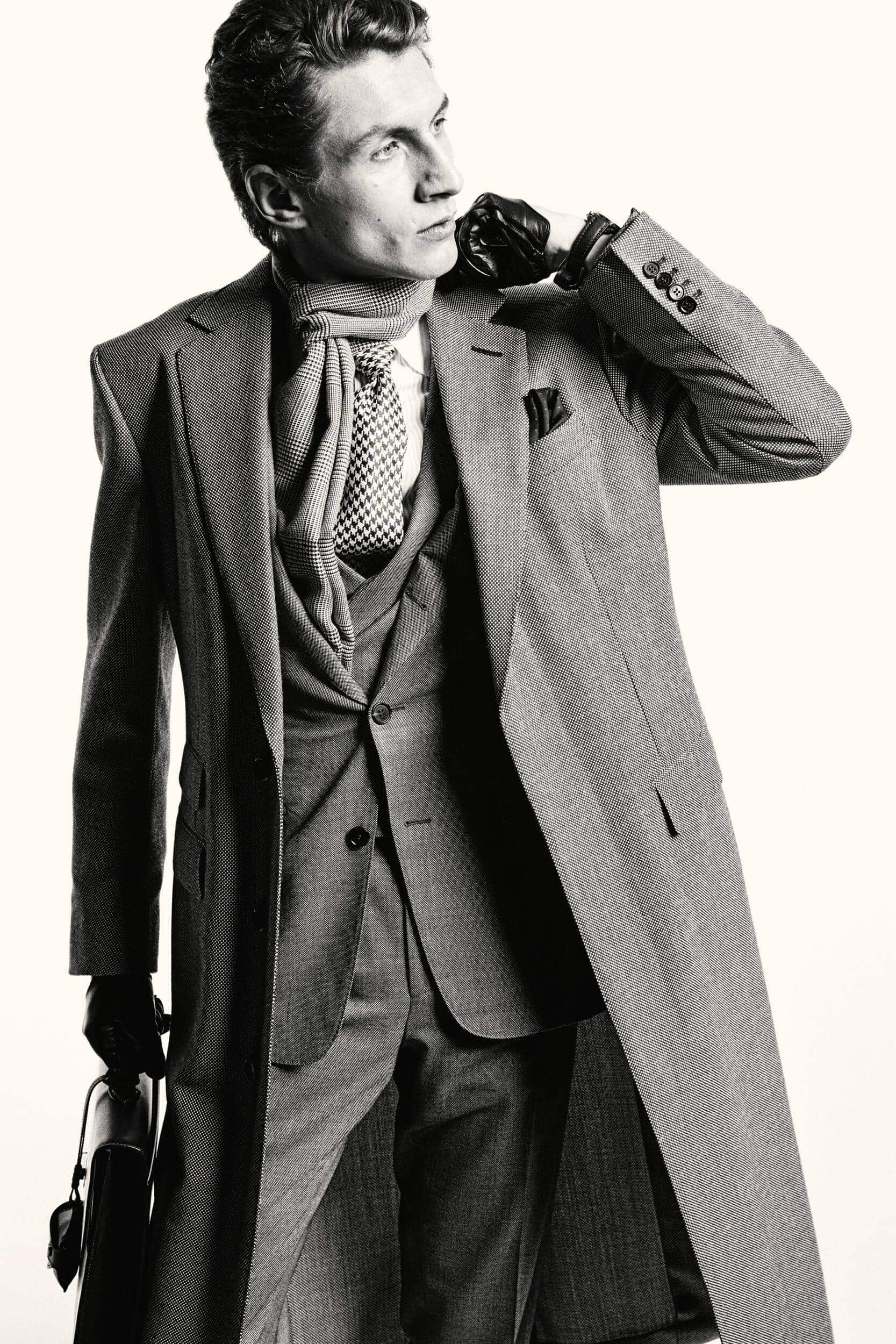
Menswear has been known to build its wardrobing foundations on the virtues of a good suit, and it was the classic two (and three) piece tailored staple that saw a resurgence for Fall 2026.
It remains to be seen as to whether the few menswear designers who will show during London and New York this coming February will follow suit (pardon the pun), but both Milan and Paris agreed that the softening of the silhouette has come to an end. So, expect clean lines, sharp shoulders, and Gordon Gecko inspired pinstripes to dominate.
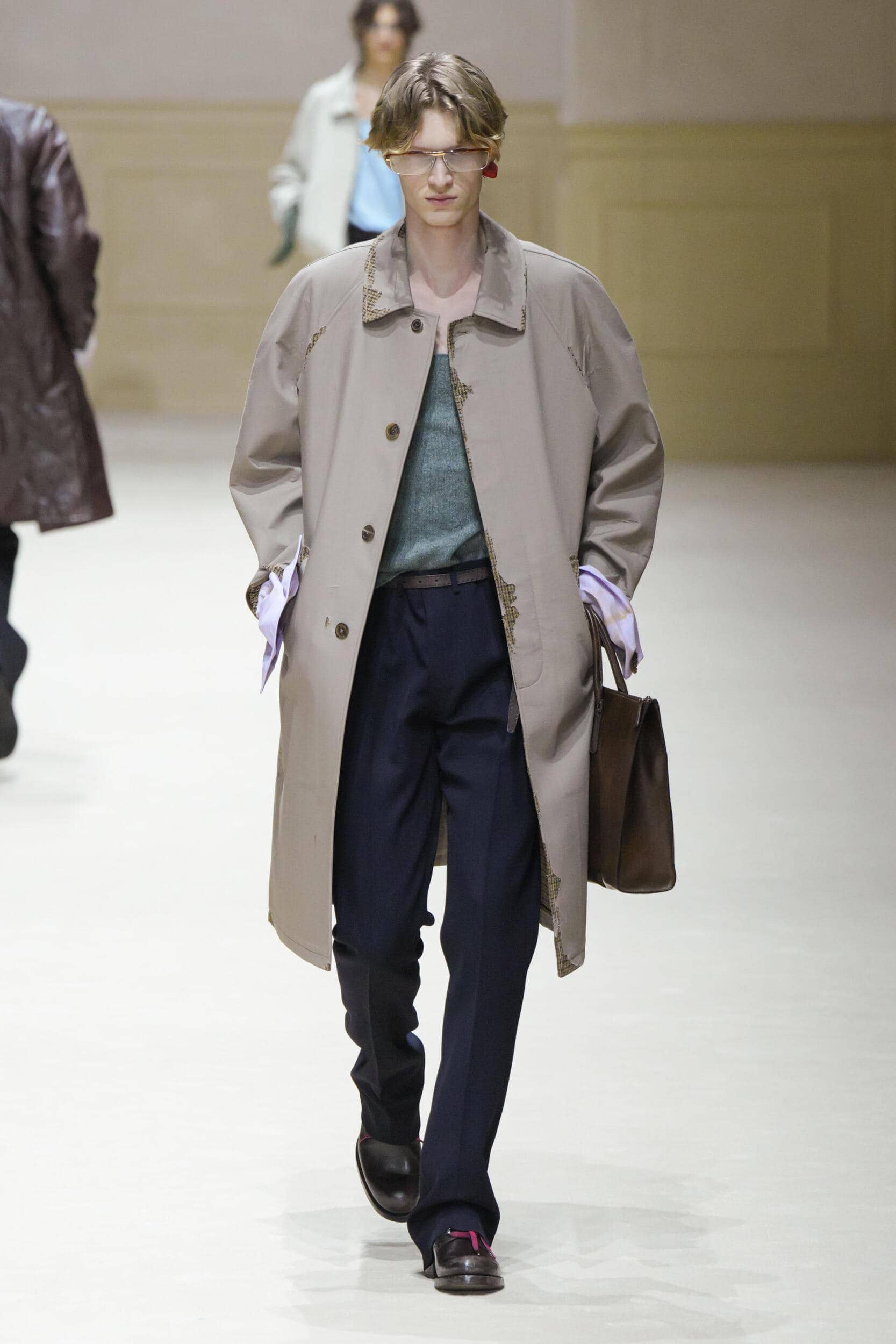
The runways of Milan and Paris also predicted a rise in briefcase-style bags, leather gloves, and a multitude of grey shades to underline the return to a more formal attitude.
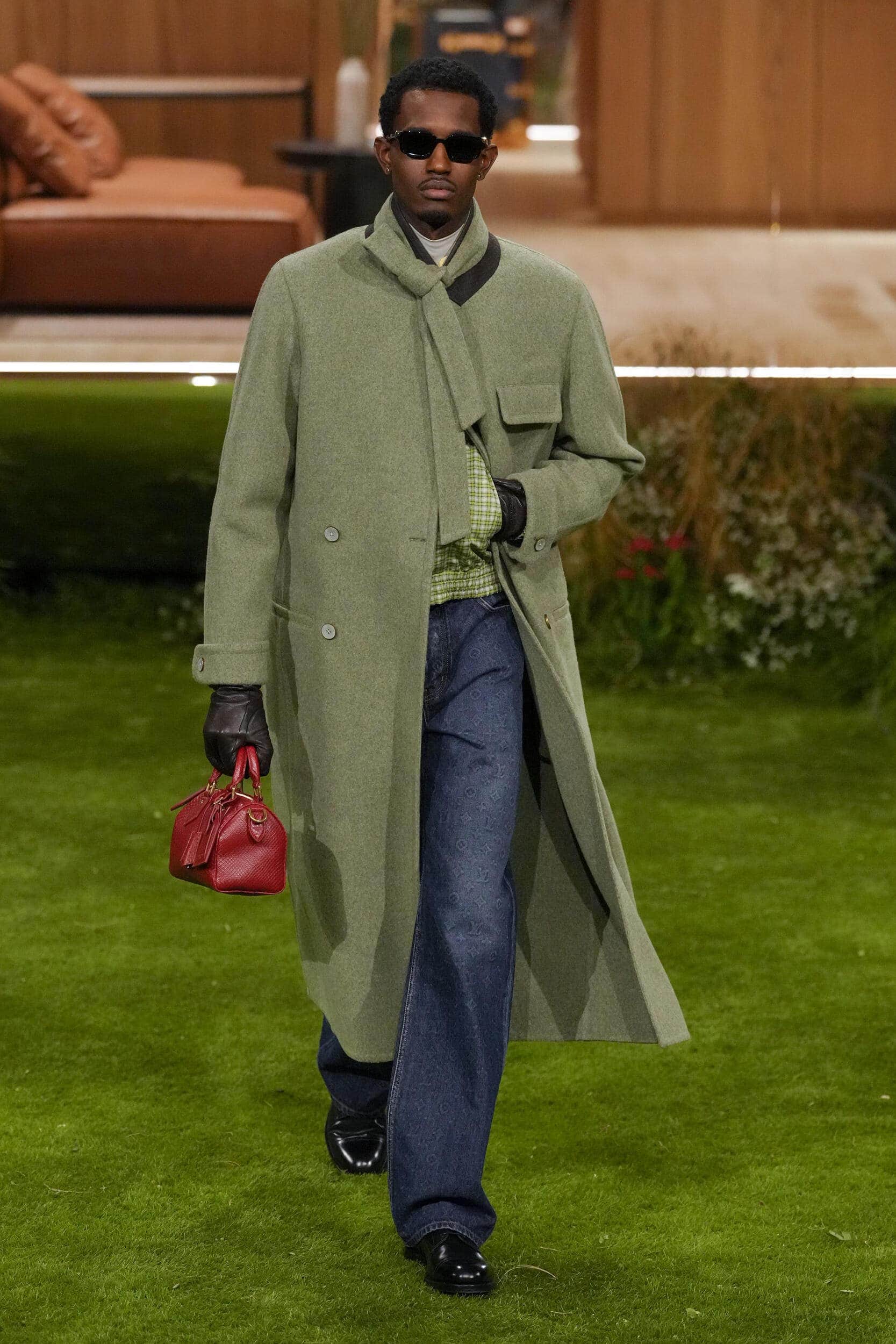
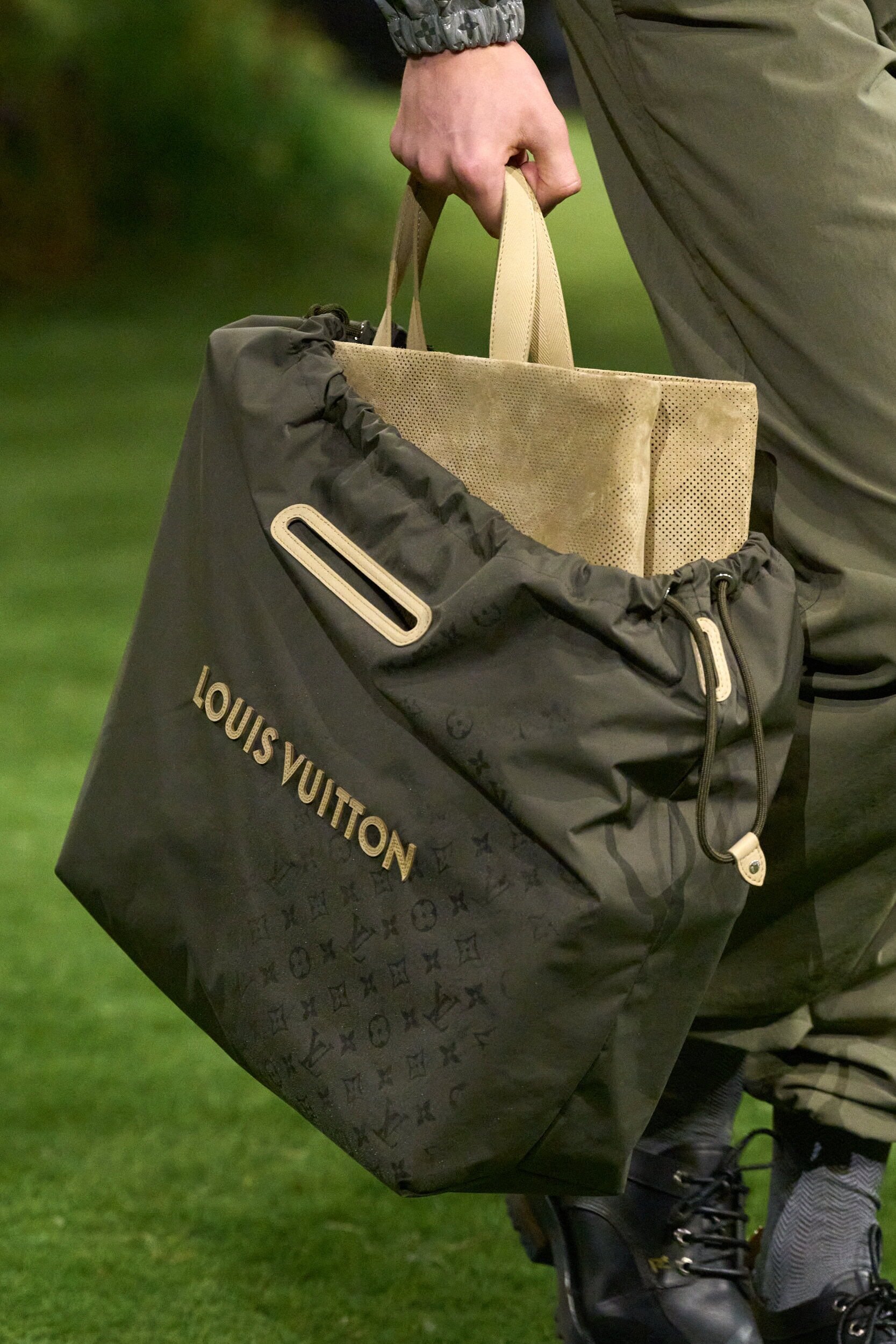
In a surprising pivot at Louis Vuitton, creative director Pharrell continued his pursuit of the Dandy, but this season filtered through a ‘Timeless’ lens. Stripping away his signature streetwear sensibilities. Conforming to the direction of travel.
Why it Matters?
Fashion is often used as a mode of escape, but designers were unable to escape the reality of a shift towards increasingly conservative views in the outside world. Return-to-work mandates, a volatile job market that favours employers, and new rules around office etiquette, mean first impressions will count for more across the generations. As a result the lean into classic menswear dress codes was adopted wholesale as a theme. Dolce and Gabbana’s ‘Portrait of a Man’ was touted as a manifesto celebrating individuality, yet the brands casting choices fell short of that vision. LVMH Prize Winner and Pitti Uomo Guest Designer Soshiotsuki’s 1980s style oversized tailoring paid homage to Giorgio Armani, a brand who presented their first collection since the passing of it’s founder last September. Remaining true to the spirit of tailoring with a light touch. And in a surprising pivot at Louis Vuitton, creative director Pharrell continued his pursuit of the Dandy, but this season filtered through a ‘Timeless’ lens. Stripping away his signature streetwear sensibilities. Conforming to the direction of travel.
Getting ‘Back to Business’ clarified that appearances will become a key concern for menswear in 2026 as more expressive forms of identity give way to uniformity.
How Did it Manifest on the Runway?
Keeping it Casual
What Has Shifted This Season?
In fashion there will always be a Yin and a Yang, and in menswear there are few essential style pillars for the fashionably-inclined to play into. Workwear, formalwear, preppy, utility, dandy, sportswear, the parameters bend, but never really break. In line with the rise in formal options there was a concerted effort to provide relief in the form of elevated casual essentials.
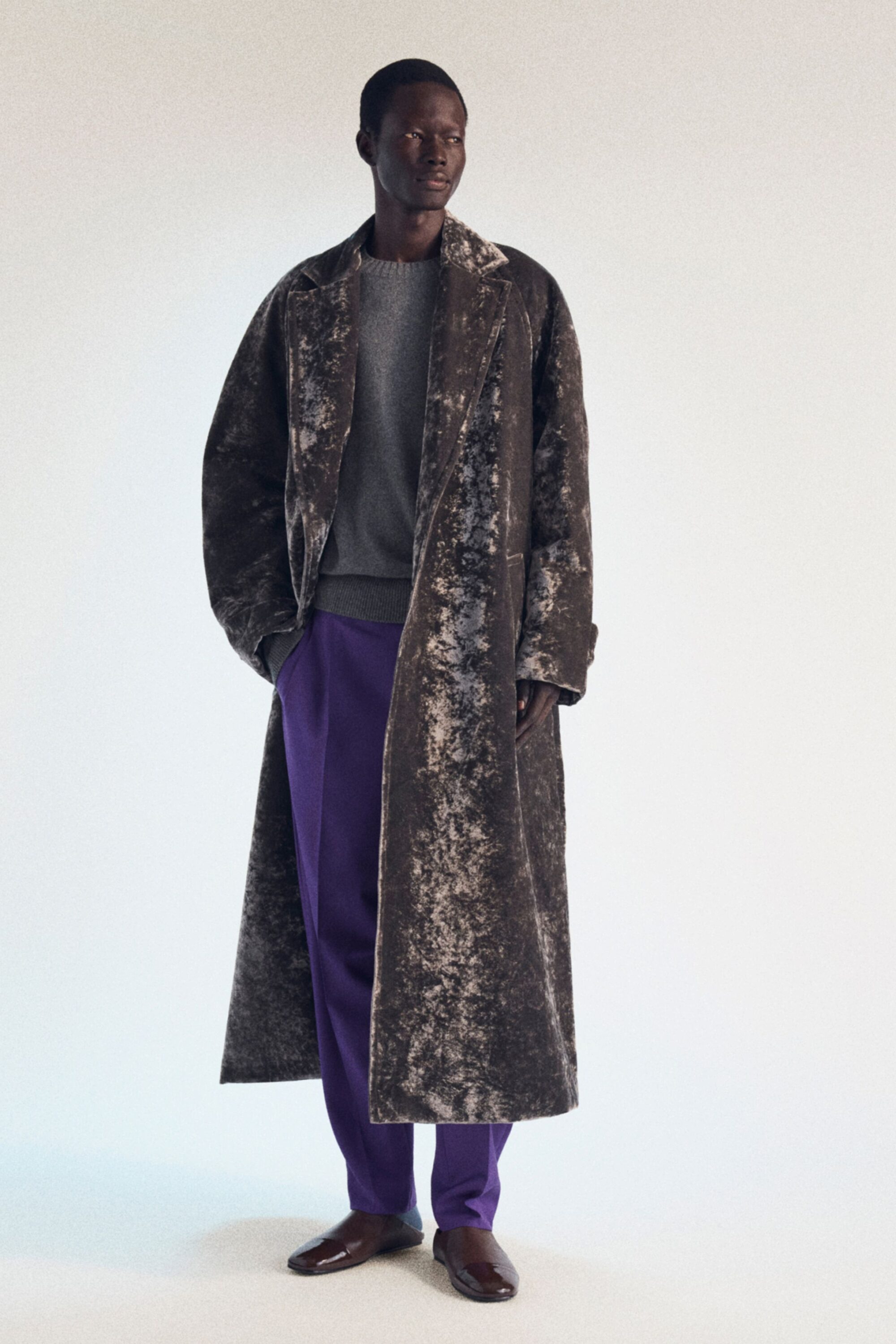
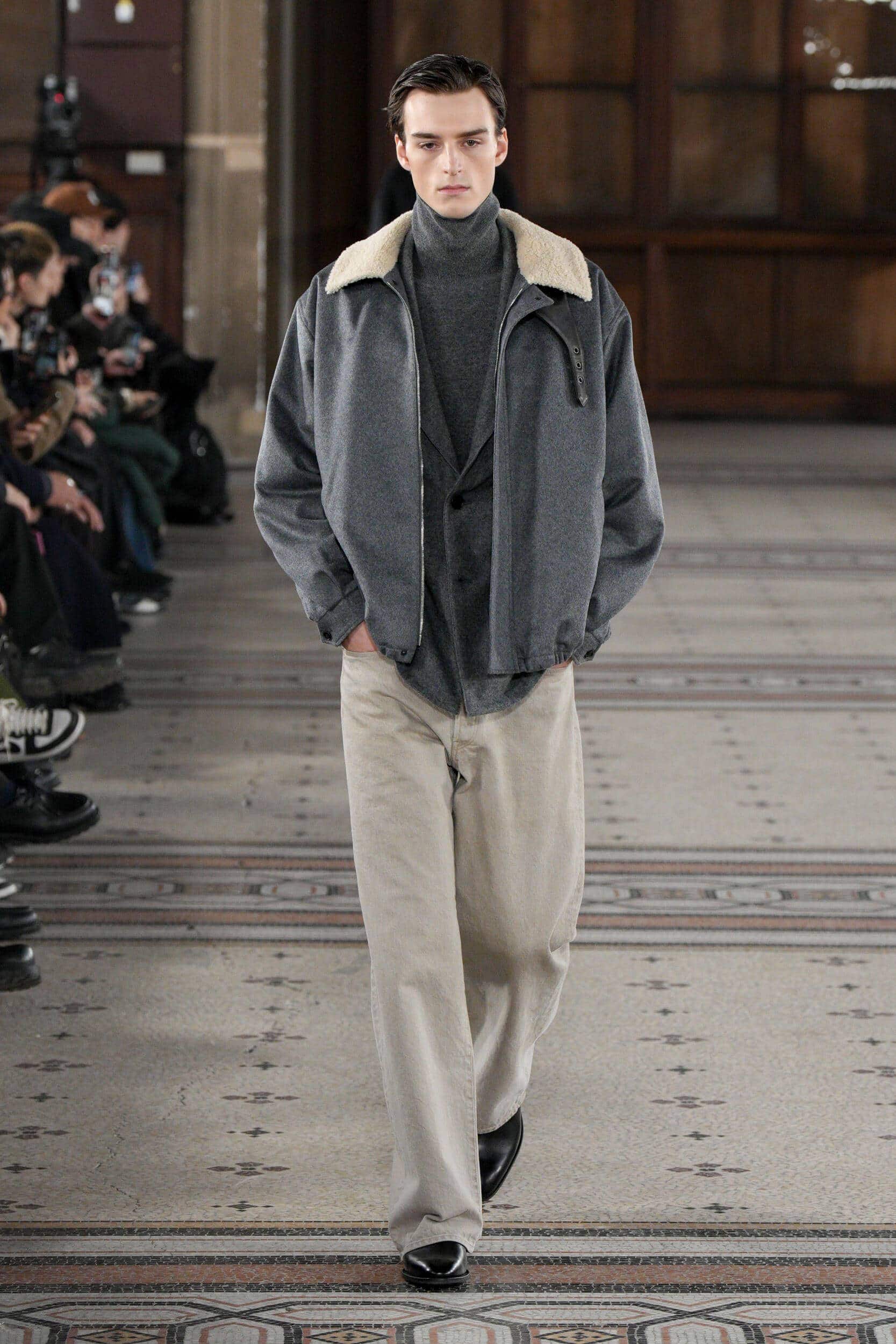
It was evident though, that the pressure had been taken out of off-duty dressing as designers demonstrated how to layer texture, bold colours, and patterns inspired by nature.
Why it Matters?
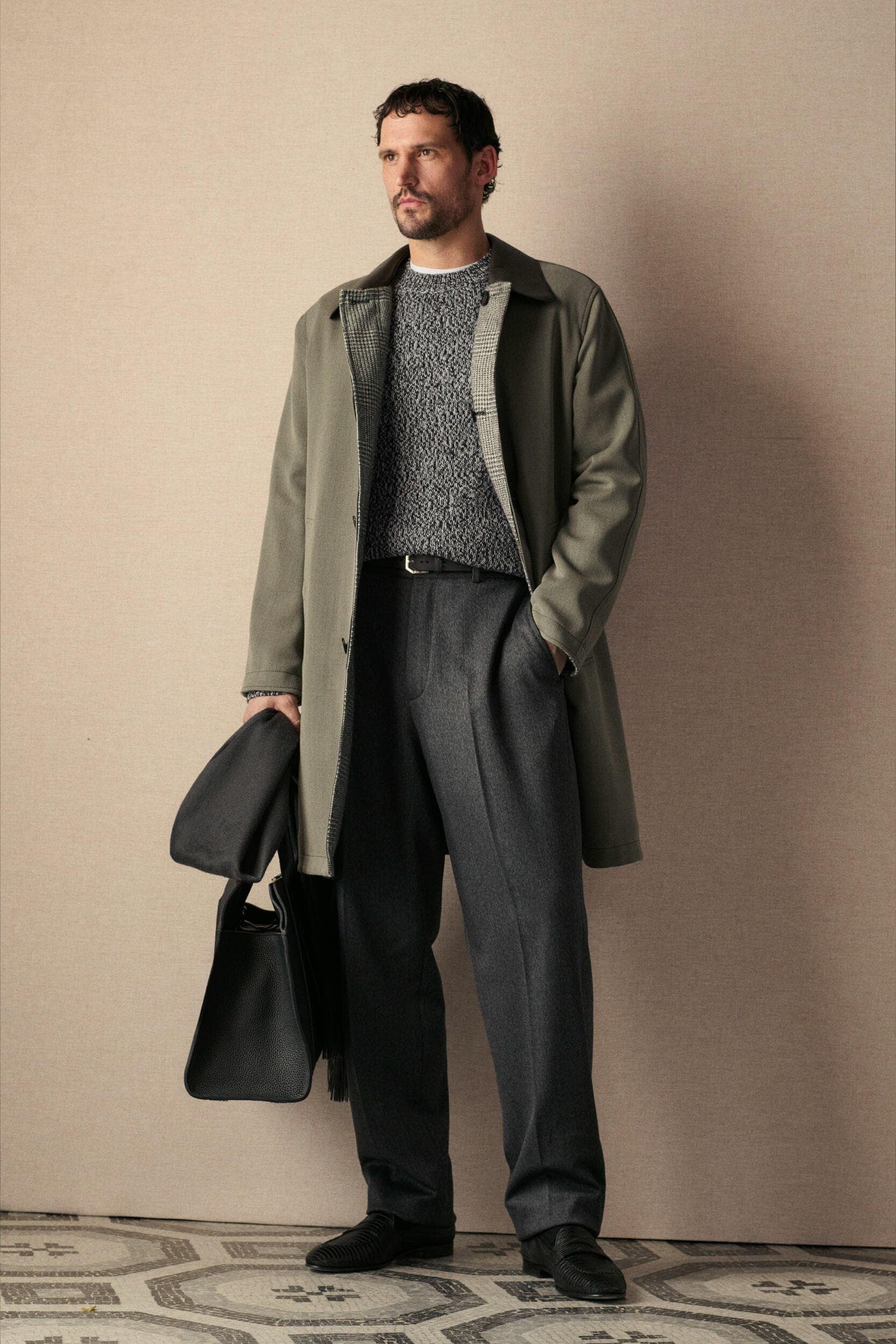
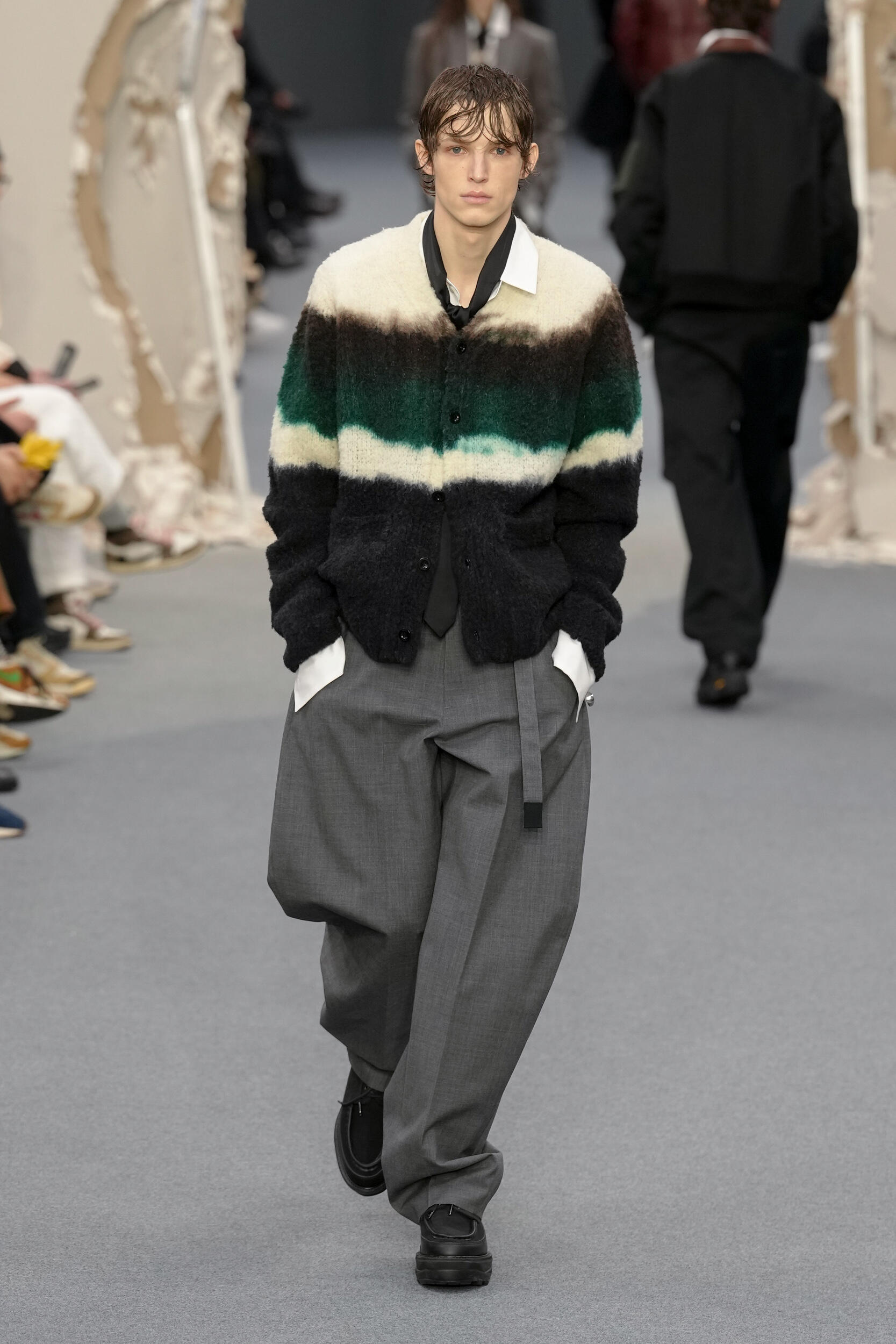
In taking its cue from Ivy League styling over sport or streetwear there was a smartening up of everyday casual options. Ralph Lauren opened what was a decidedly truncated Milan fashion week and reminded fans of contemporary luxury brands such as Aimé Leon Dore, Kith and Noah who holds the blueprint to the preppy aesthetic.
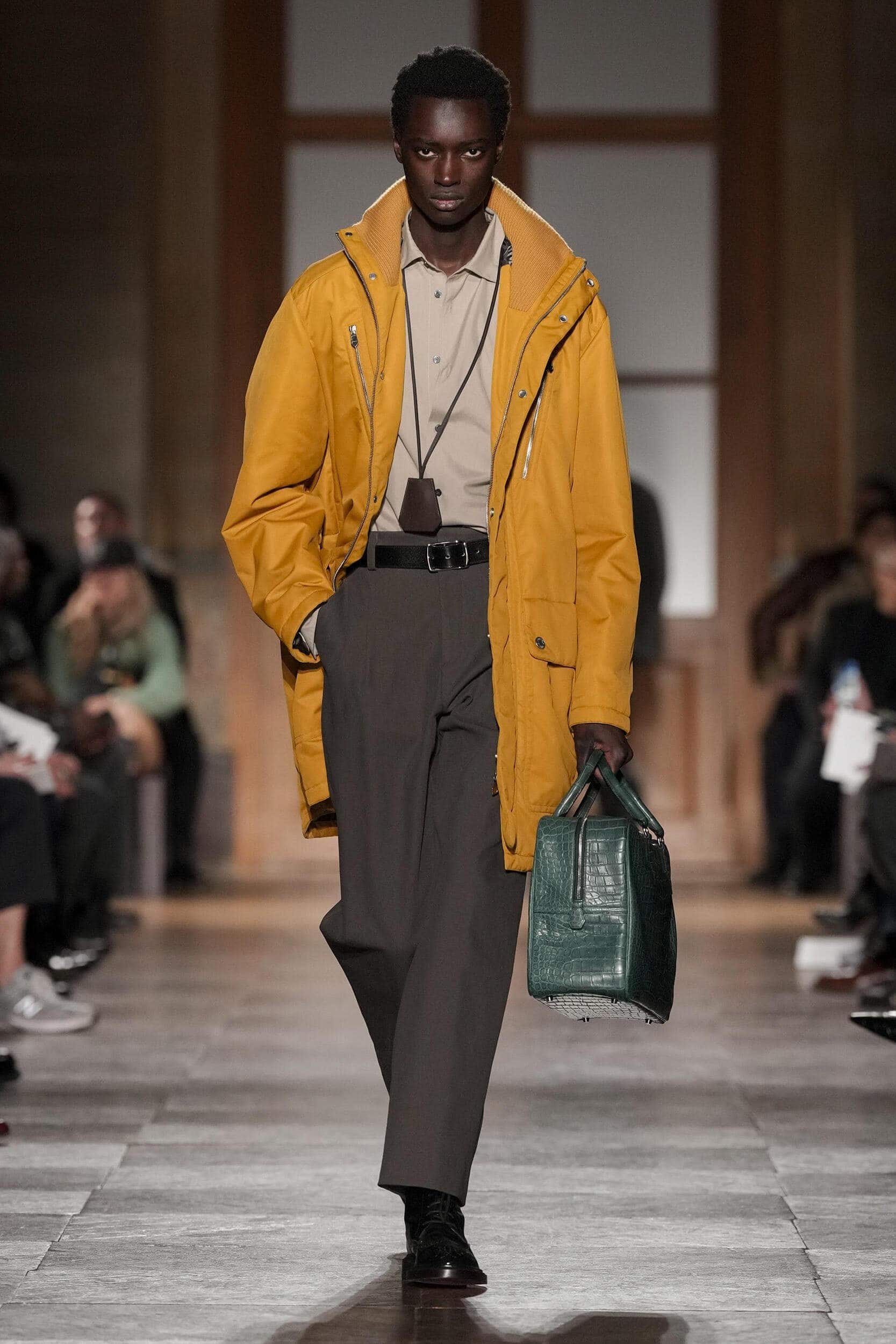
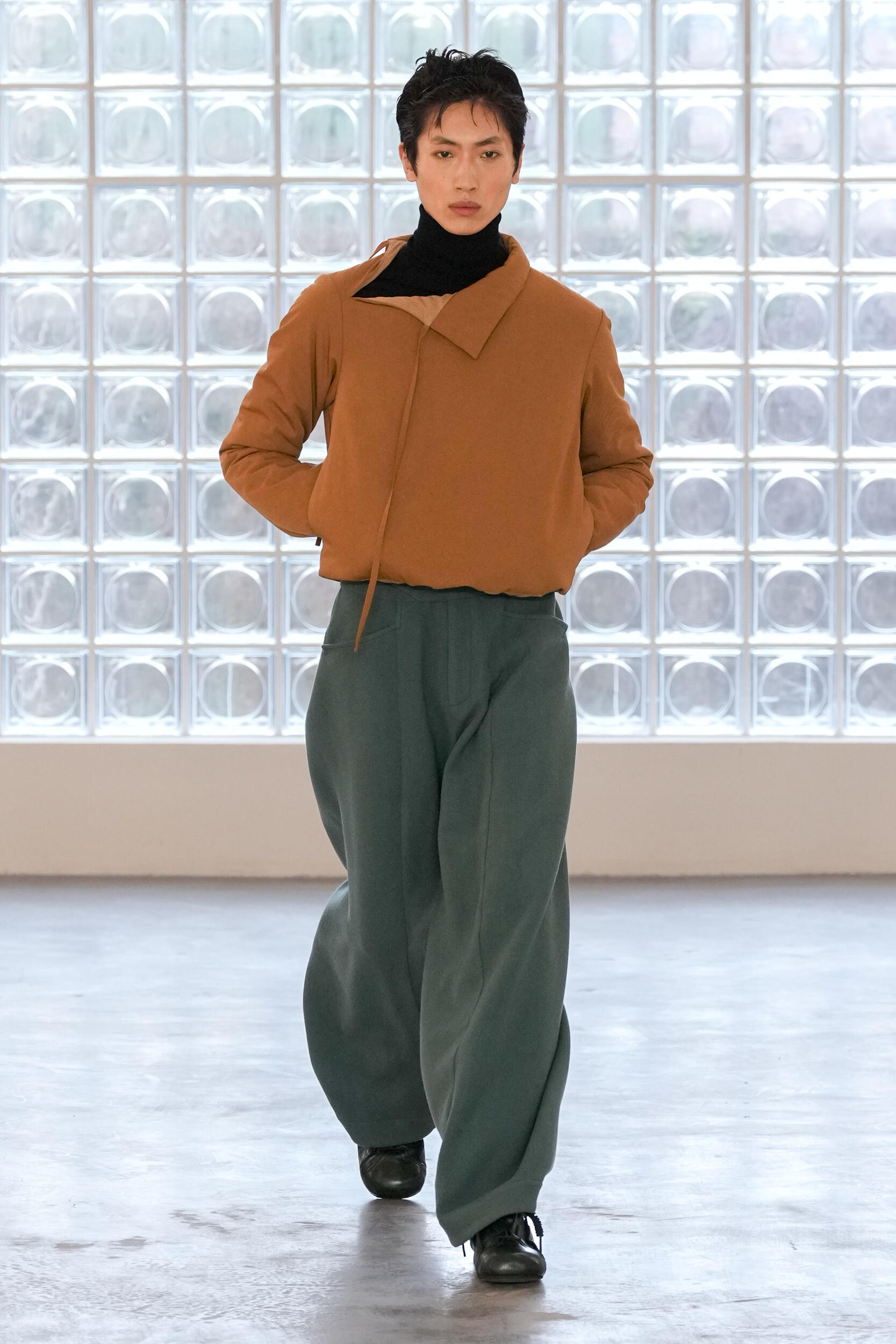
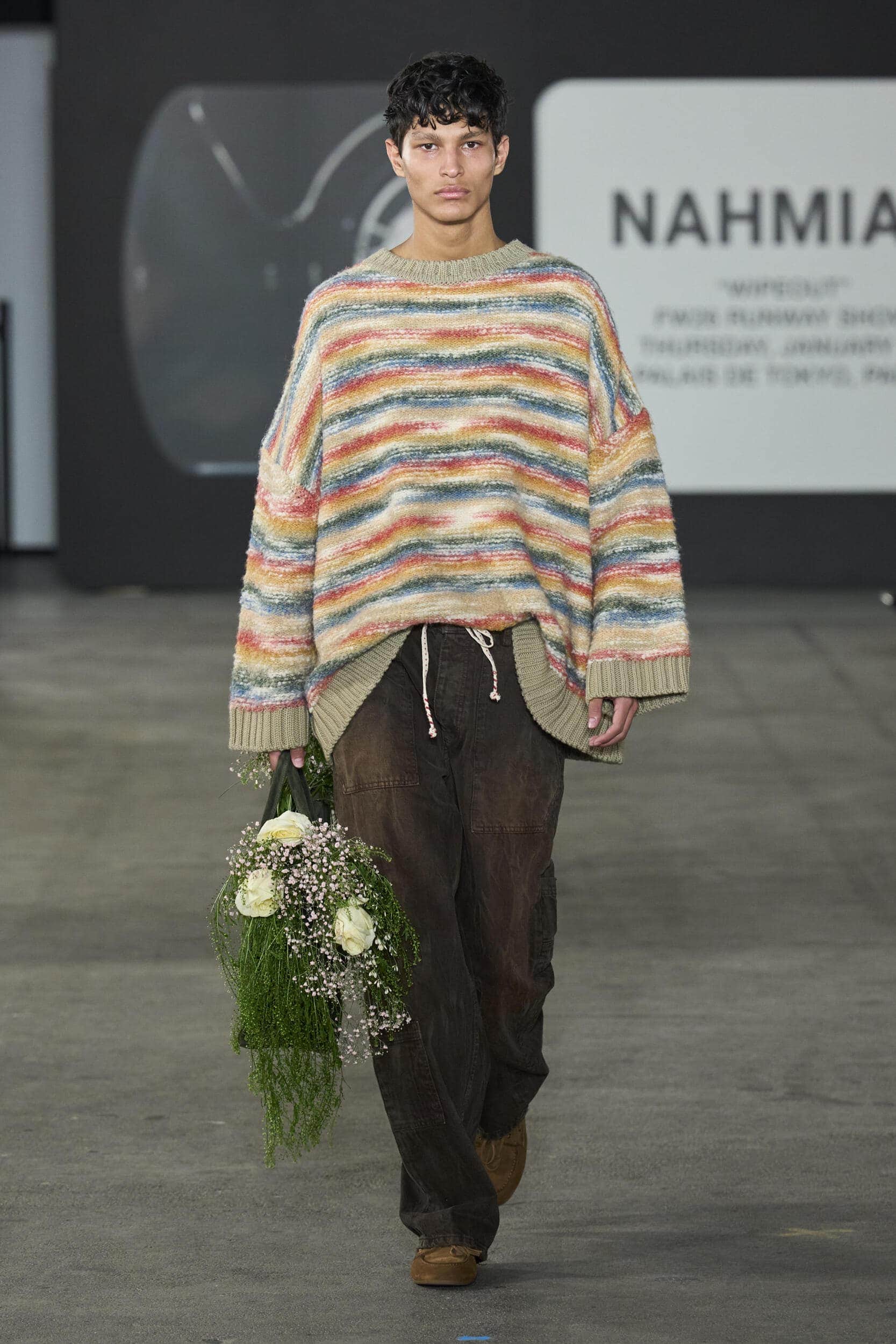
Knitwear in fair-isles and cosy cardigans provided the basis for the new smart-casual, and tailored pants in both pleat-front and straight leg were a feature at Prada and Véronique Nichanian’s swansong for Hermès, while Ryota Iwai’s Auralee and Jun Zhou and Yushan Li’s Pronounce proposed both bold and harmonious colour blocking in technical and tactile surface textures, providing a fresh perspective on preppy.
How Did it Manifest on the Runway?
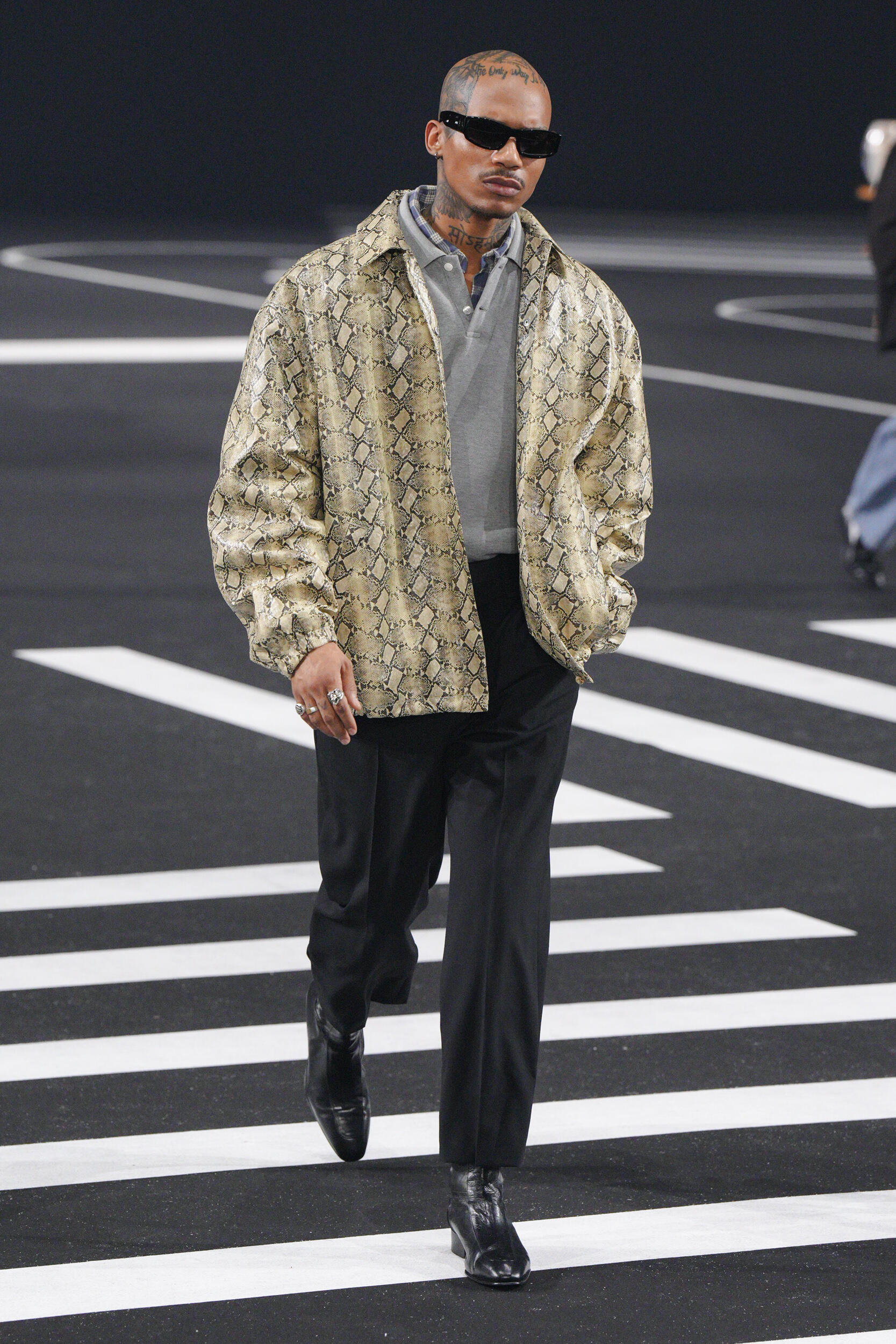
The Artist’s Way
What Has Shifted This Season?
What has been lost (or significantly flattened) in recent years is the push to evolve the avant garde within men’s fashion. Even when queer voices, creatives from the African diaspora, or South American immigrants were making their particular POV known on the global stage, their worldview appears to have been pushed to the fringes. Even when mainstream ideas took the limelight this season the influence of the artist, craftsman, poet, or independent thinker still found the light. Allowing for the possibility that a softer, gentler, more innocent even, representation of the male character could hold the same credence as traditional tropes.
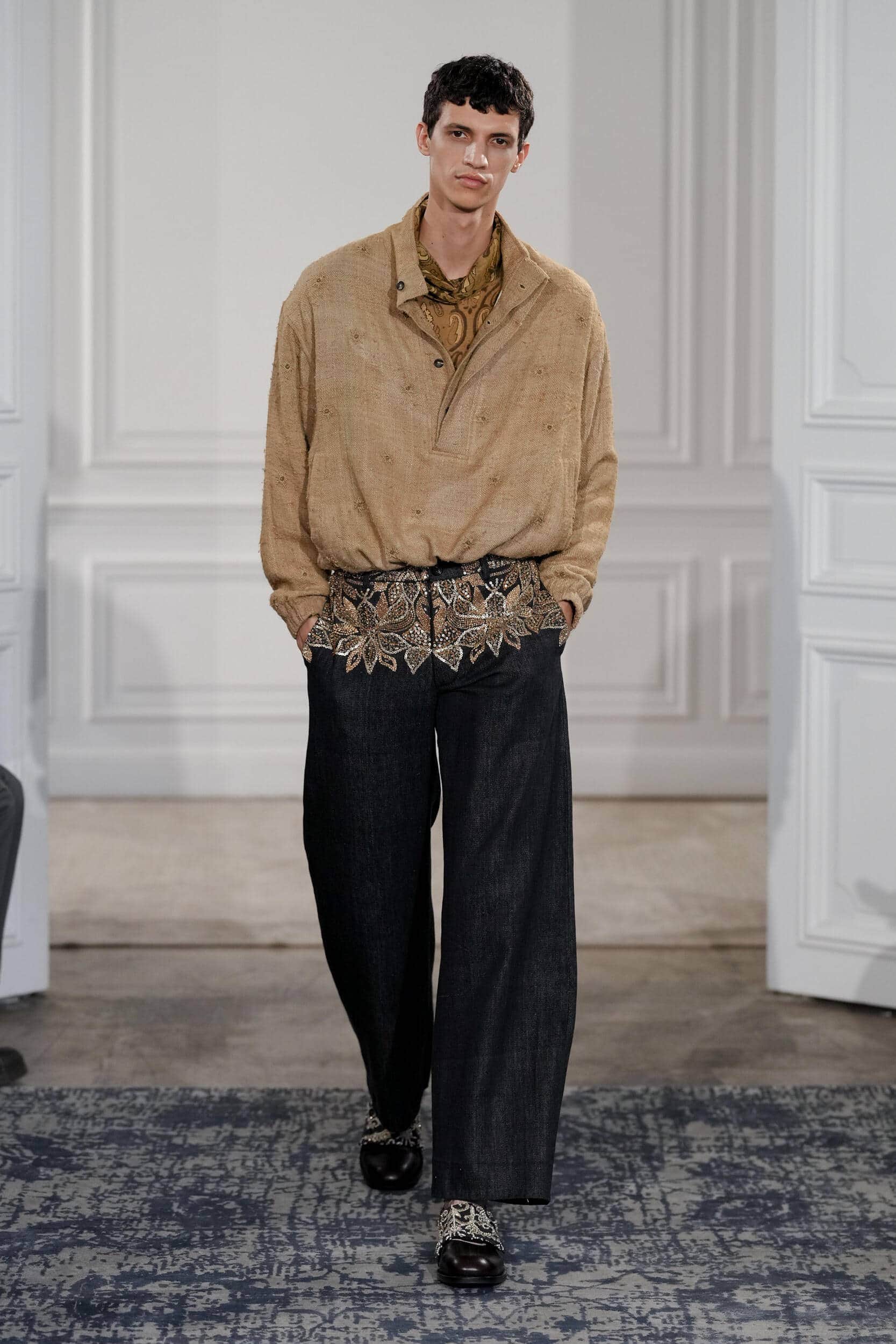
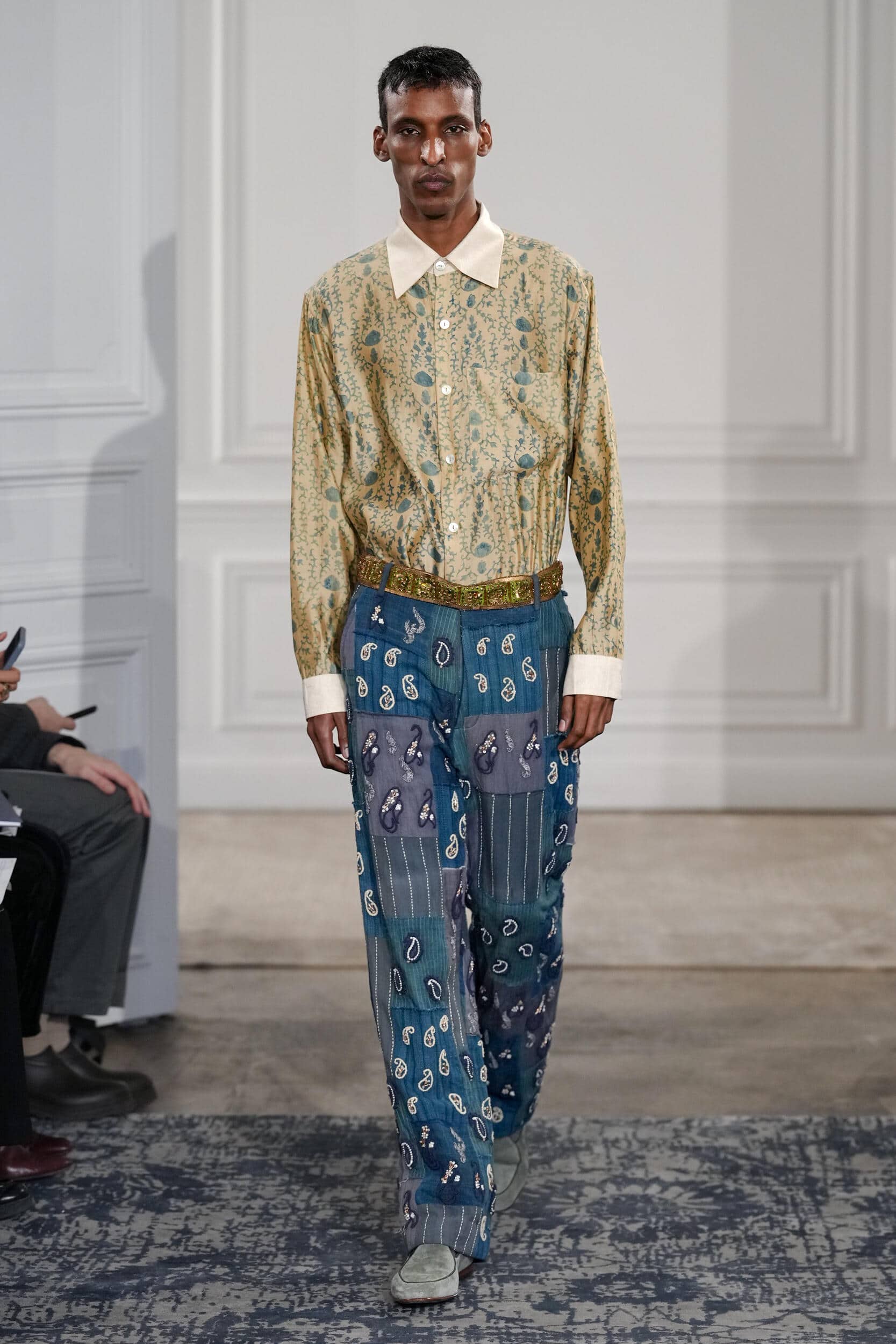
Kartik Kumra’s Kartik Research provided not just his seasonal publication for guests (titled RAAG for Fall 2026) but an appreciation for the fabric dyers, embroiderers and artisans who embed his work with a deeply rooted sense of culture and heritage.
Why it Matters?
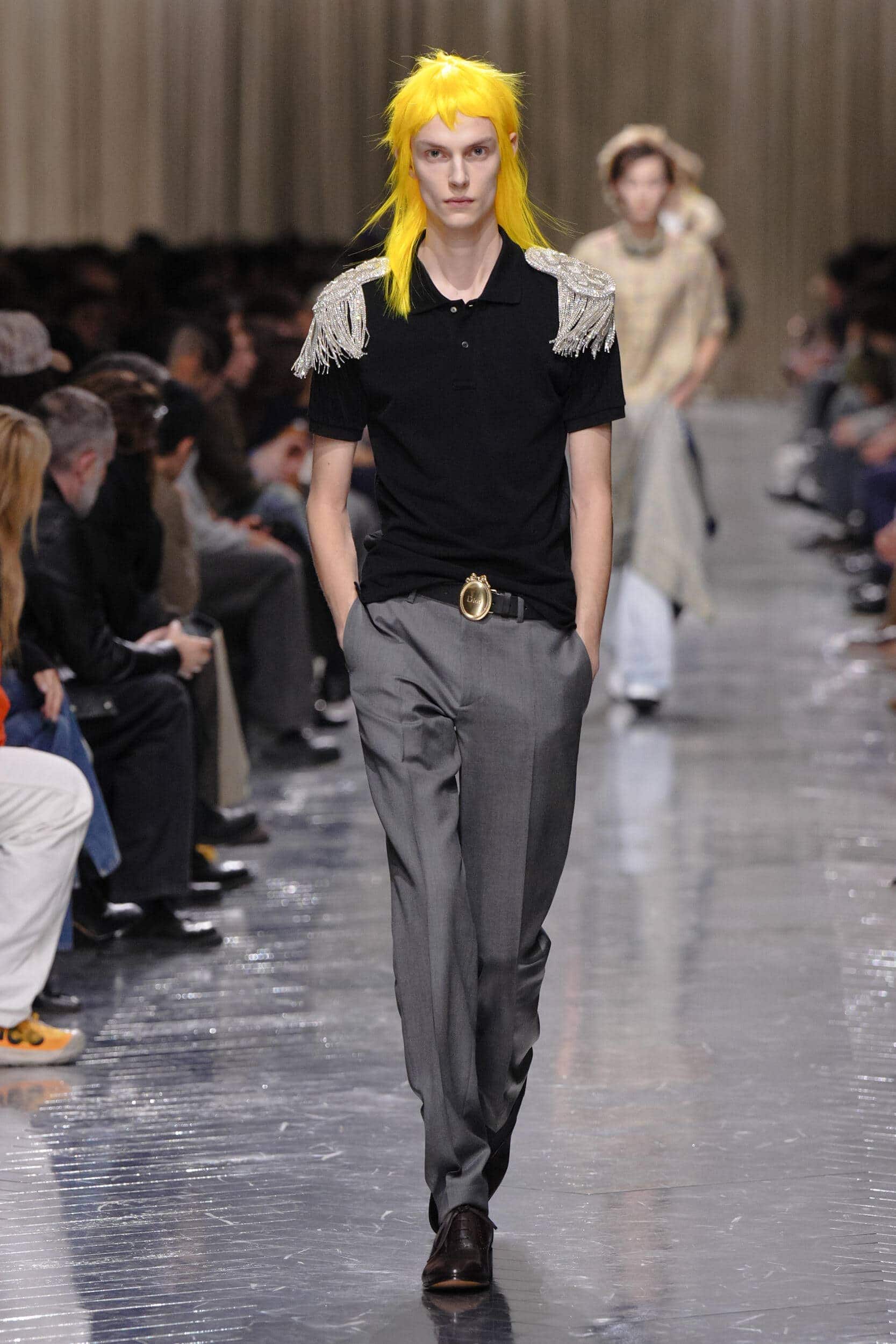
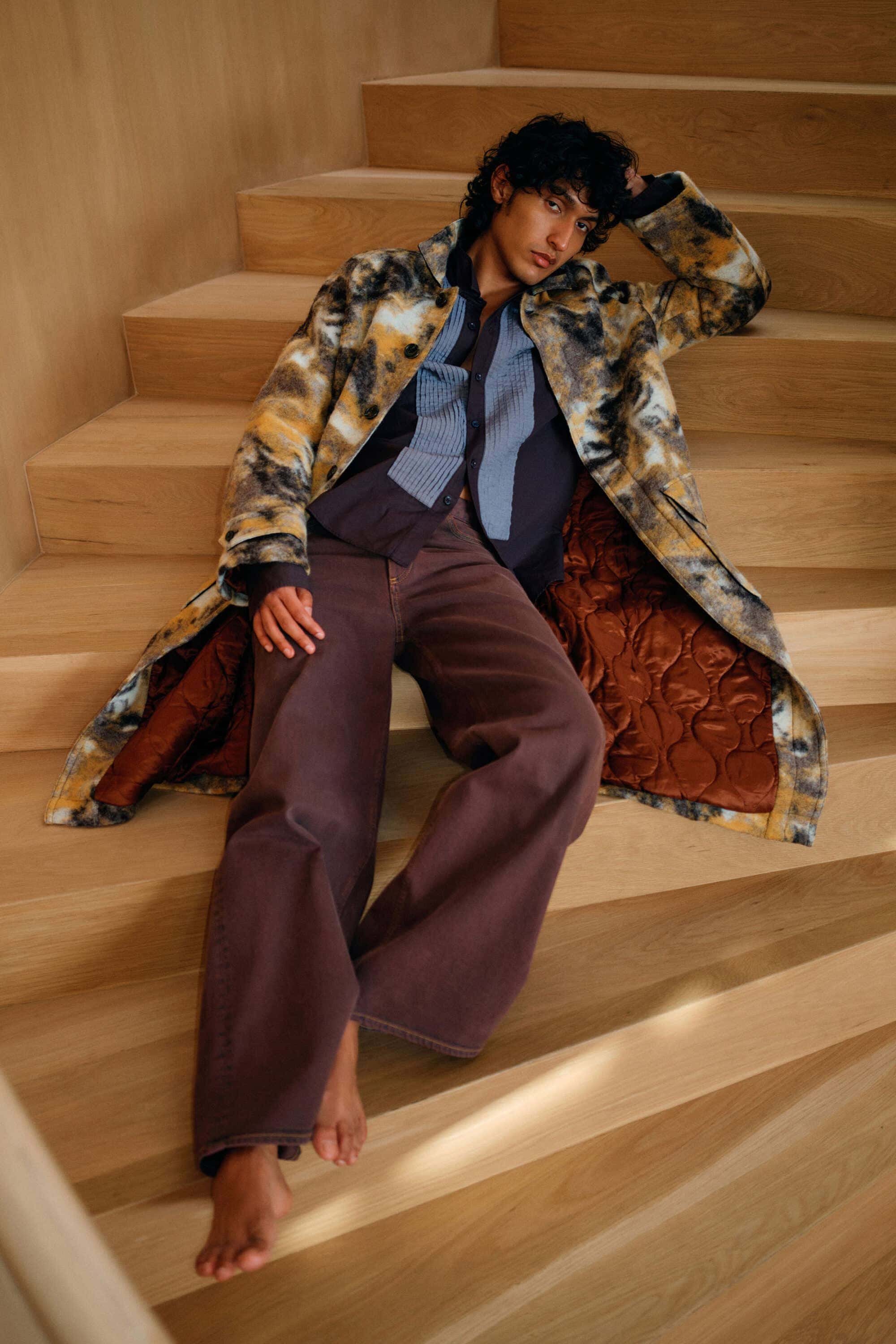
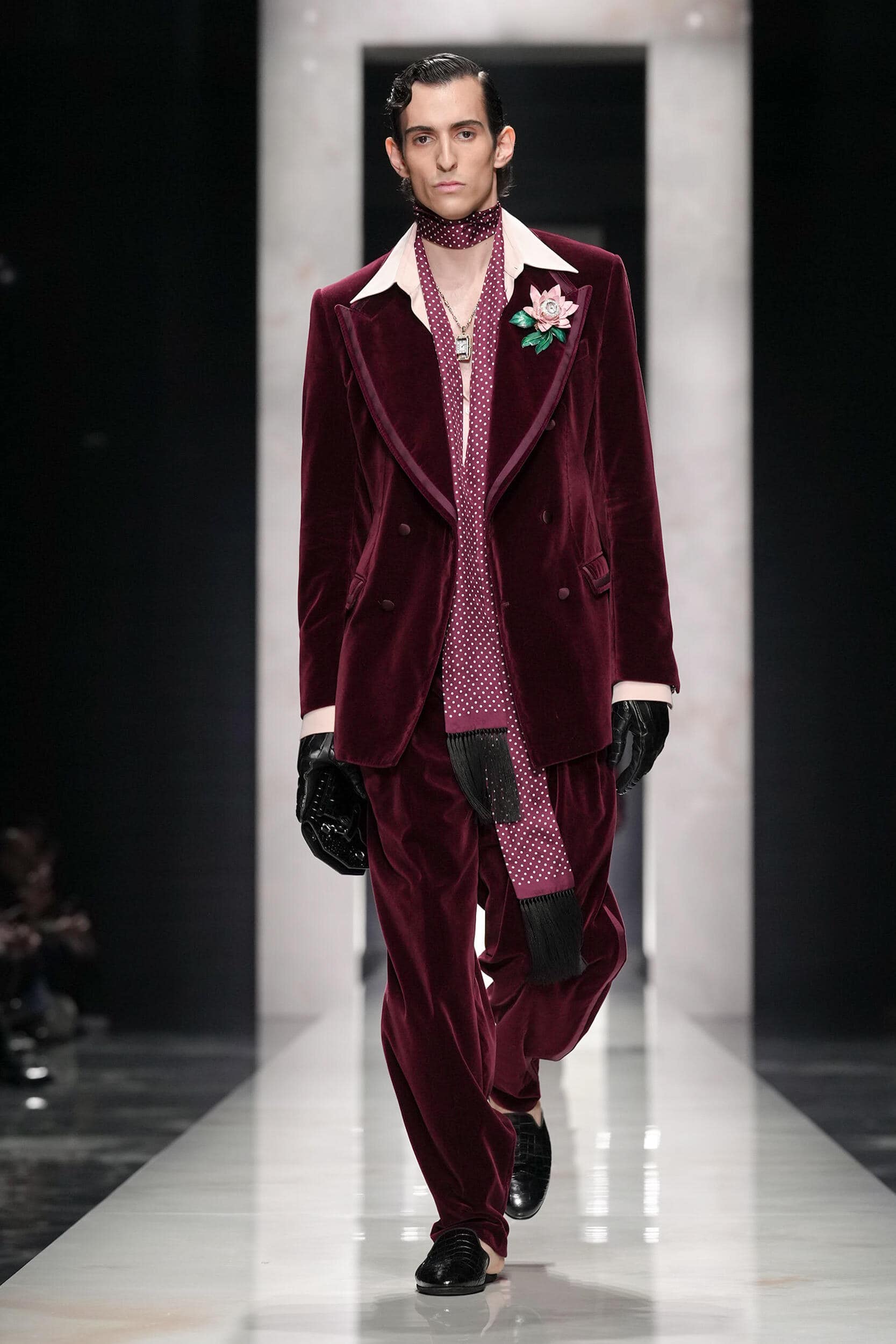
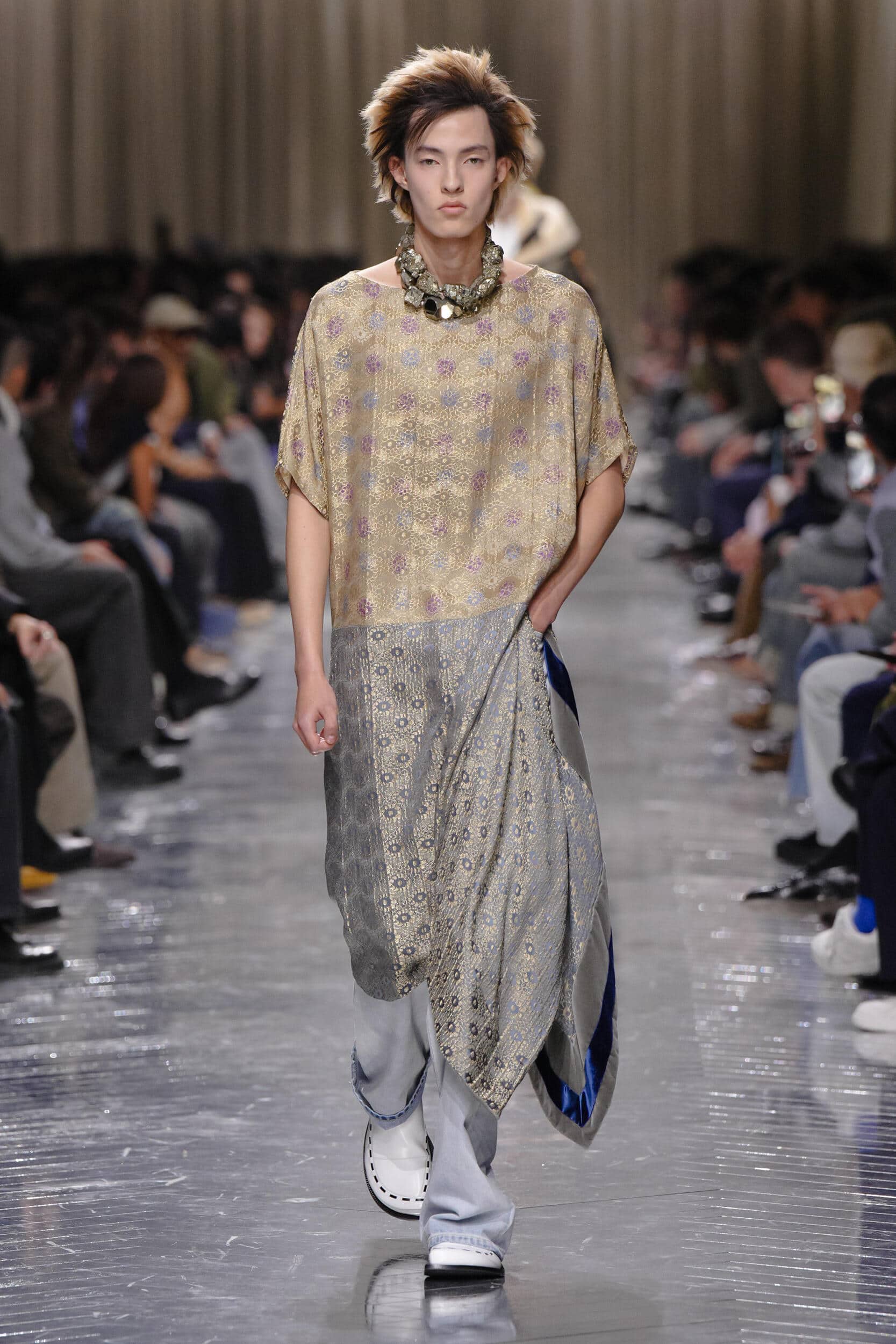
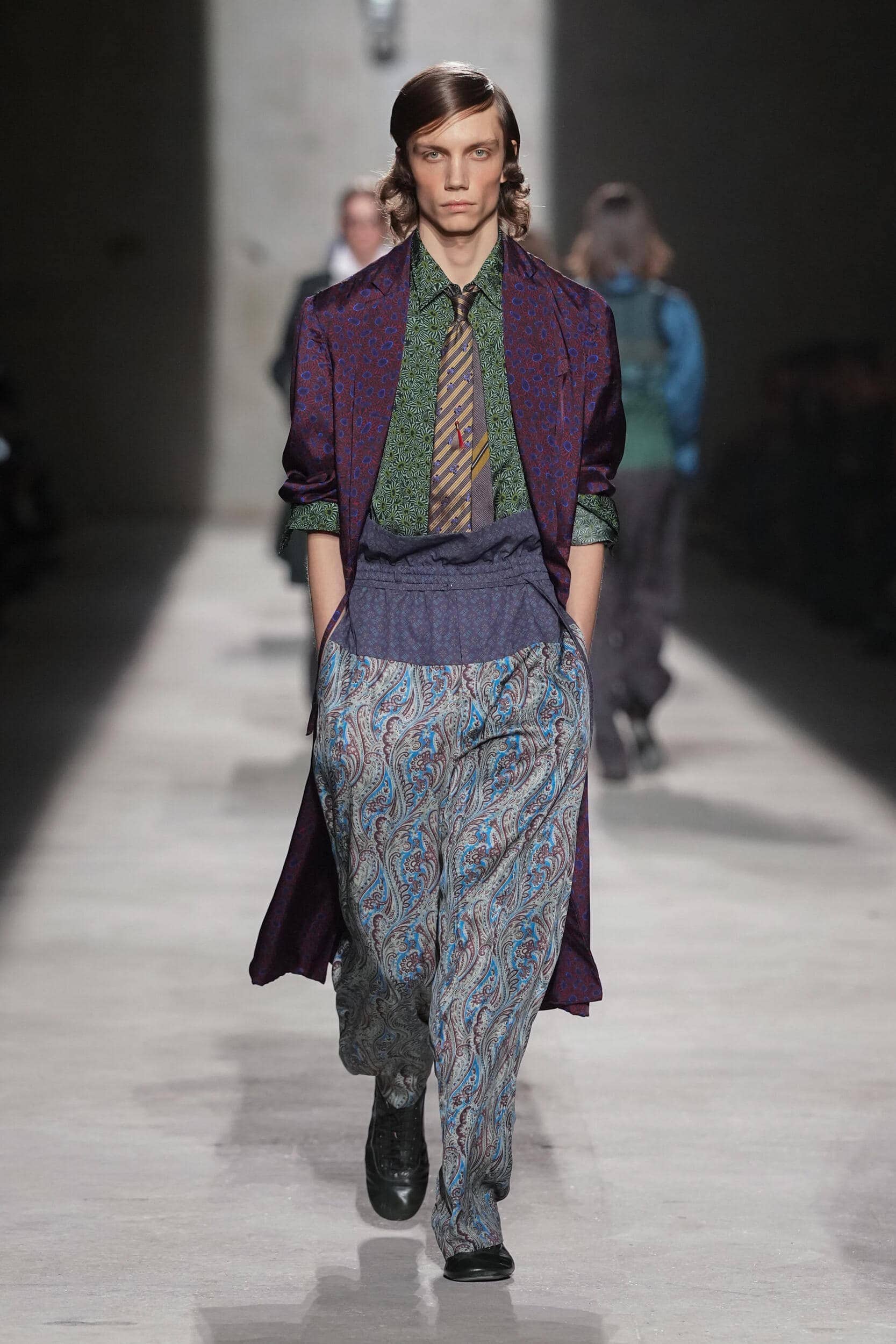
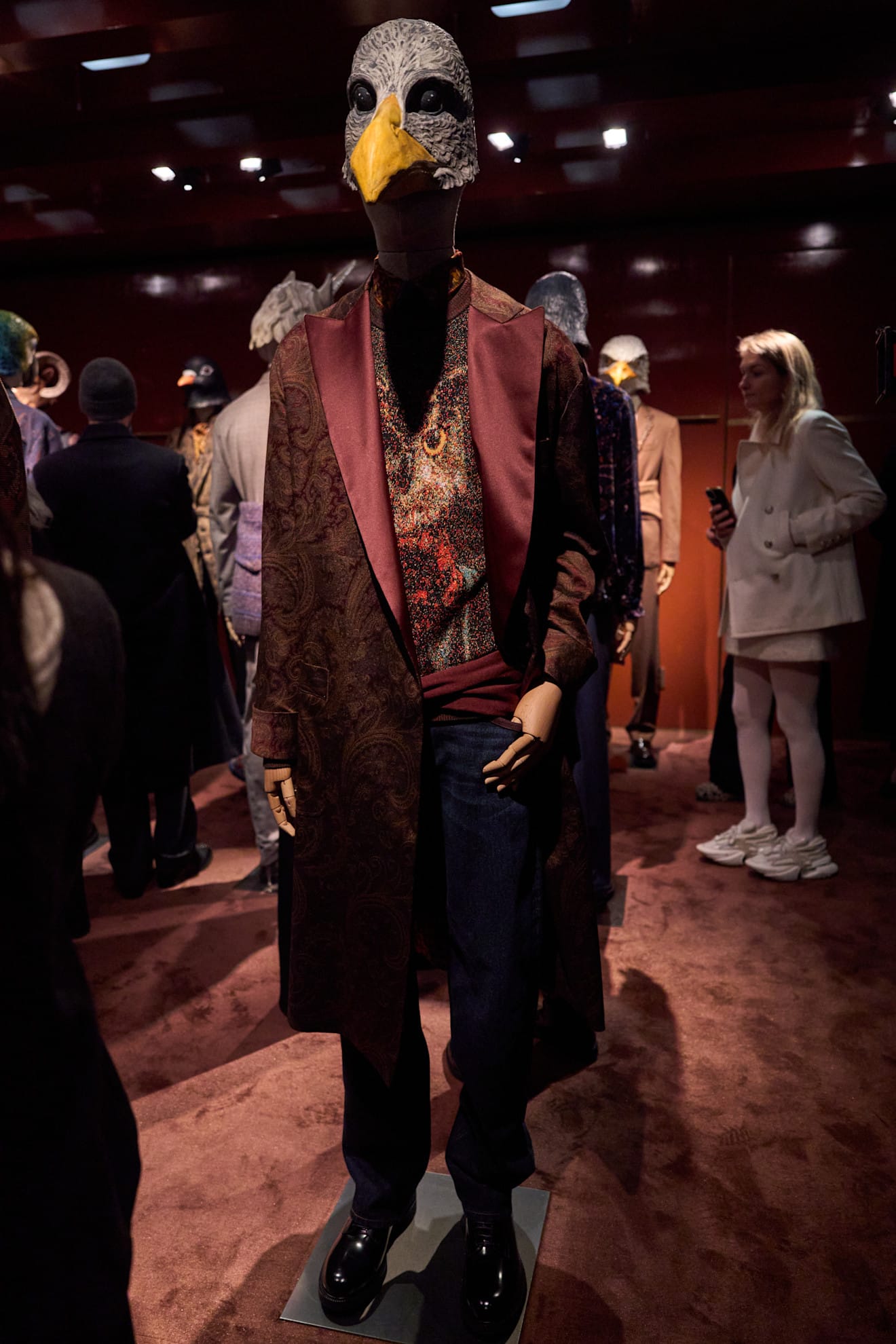
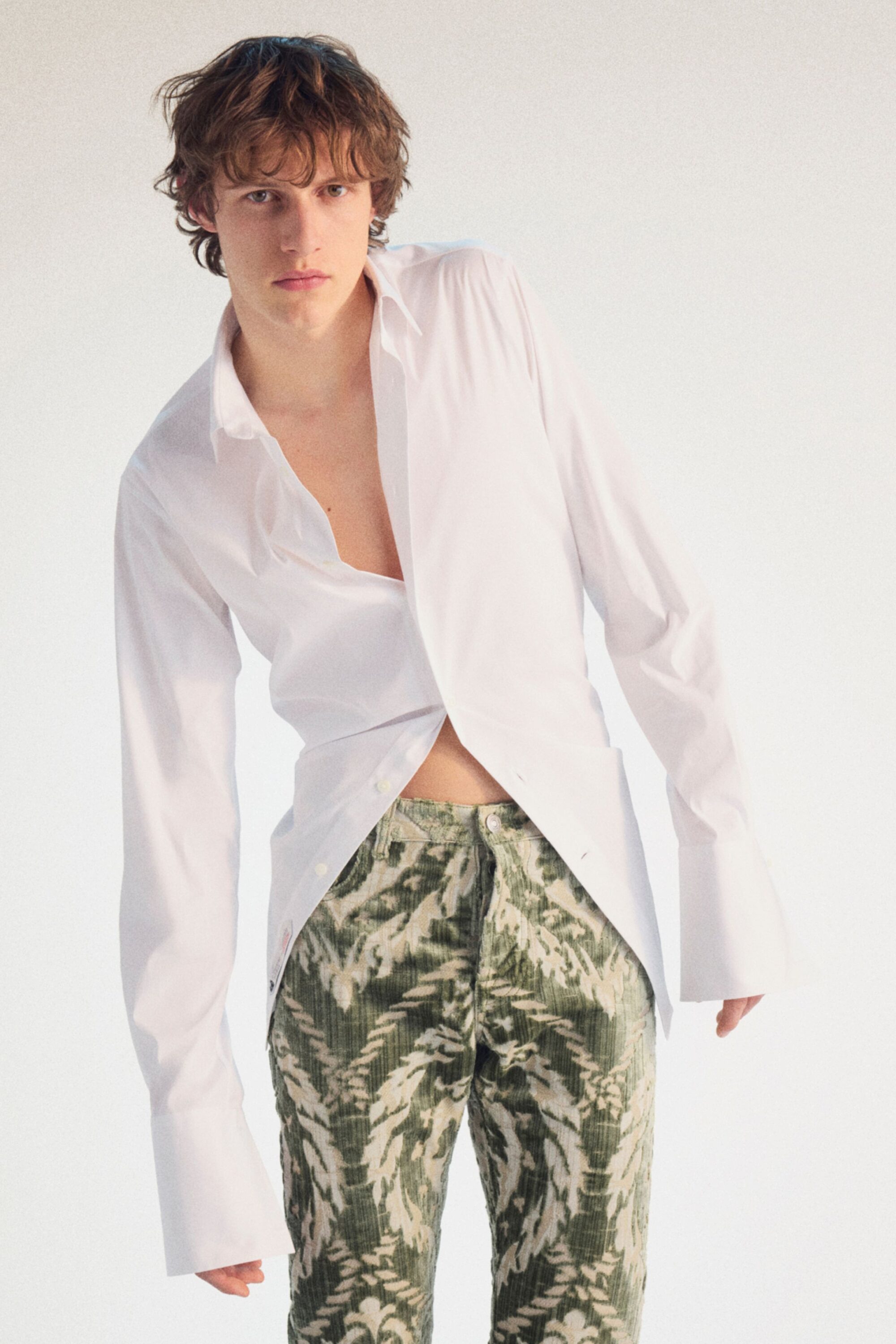
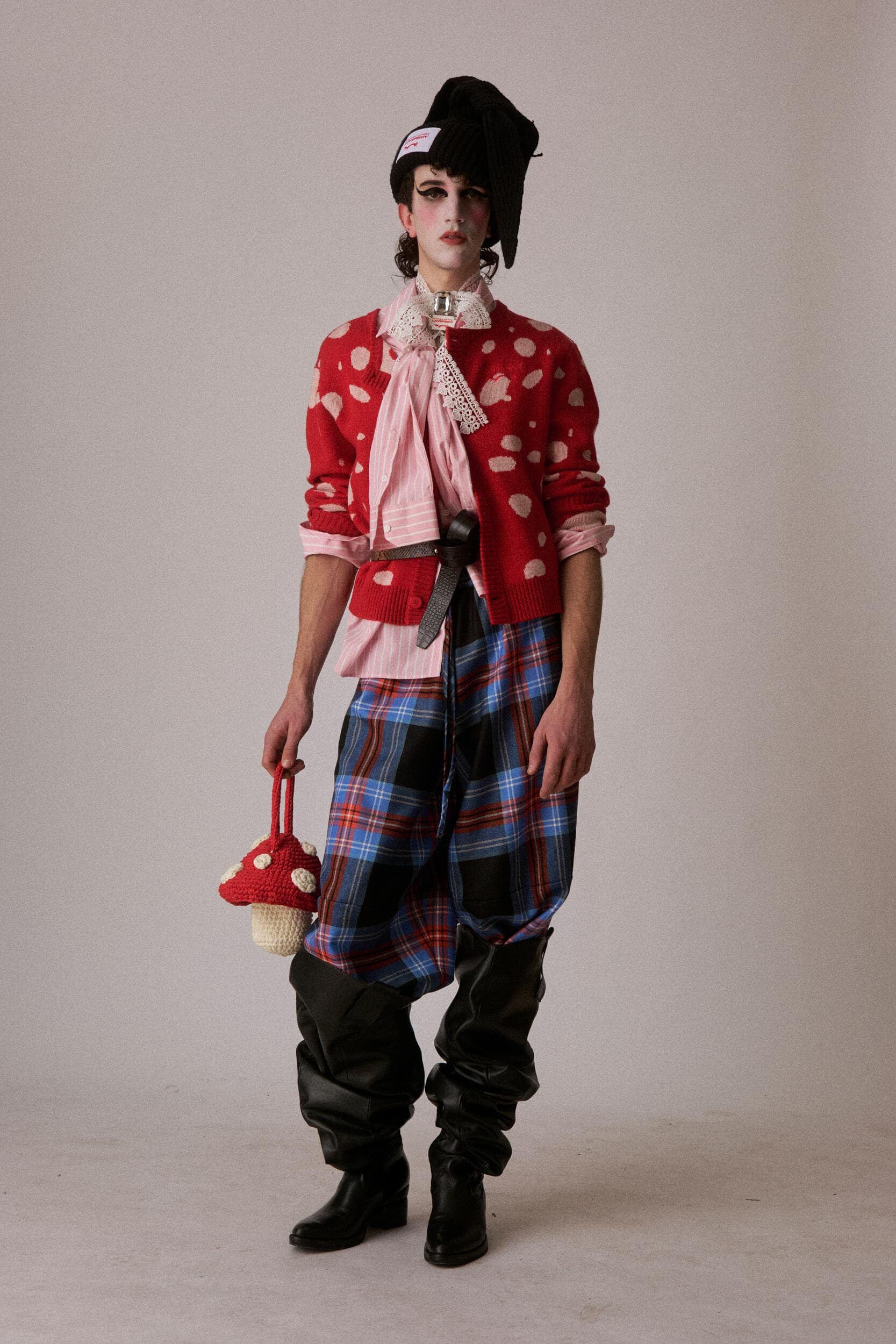
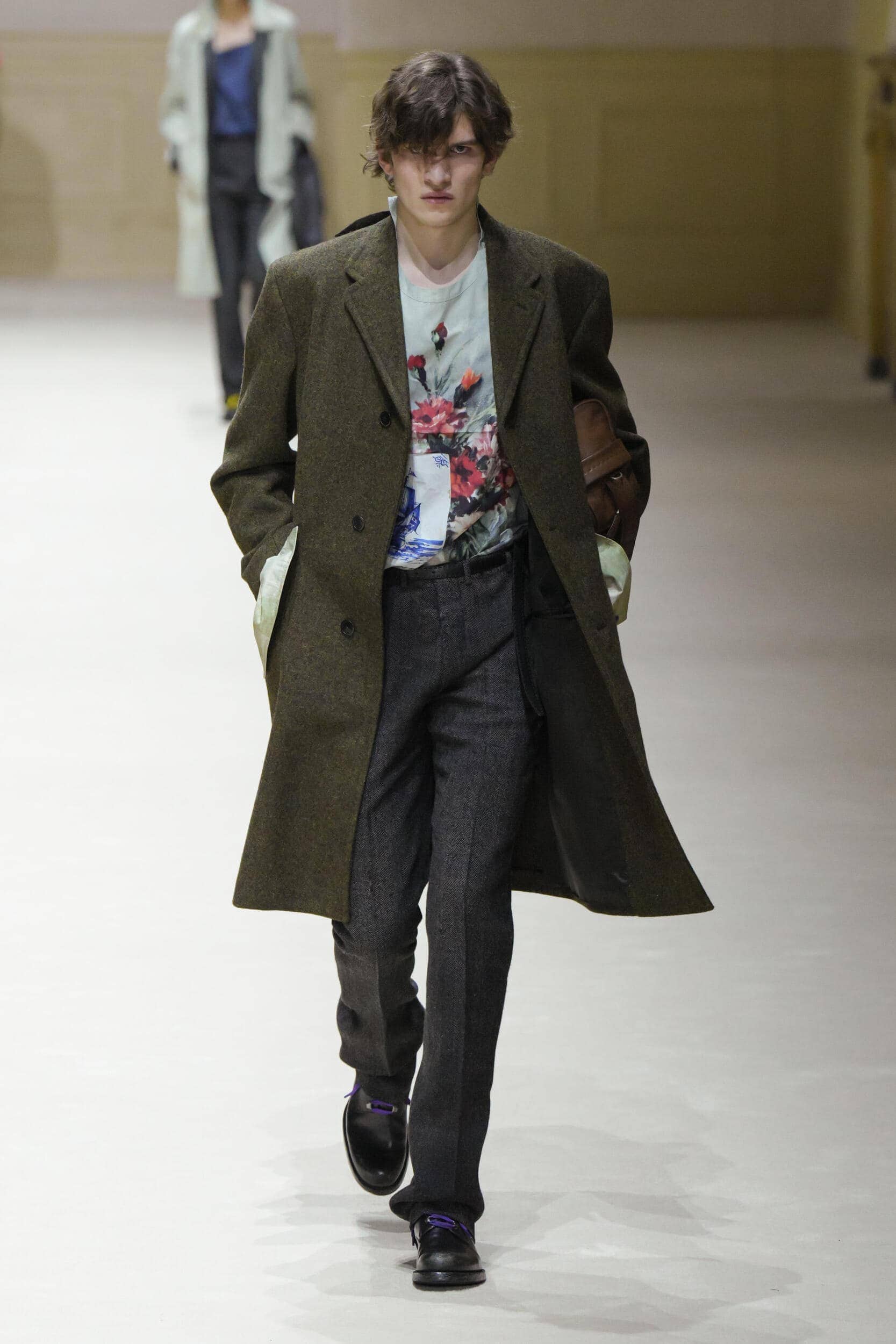
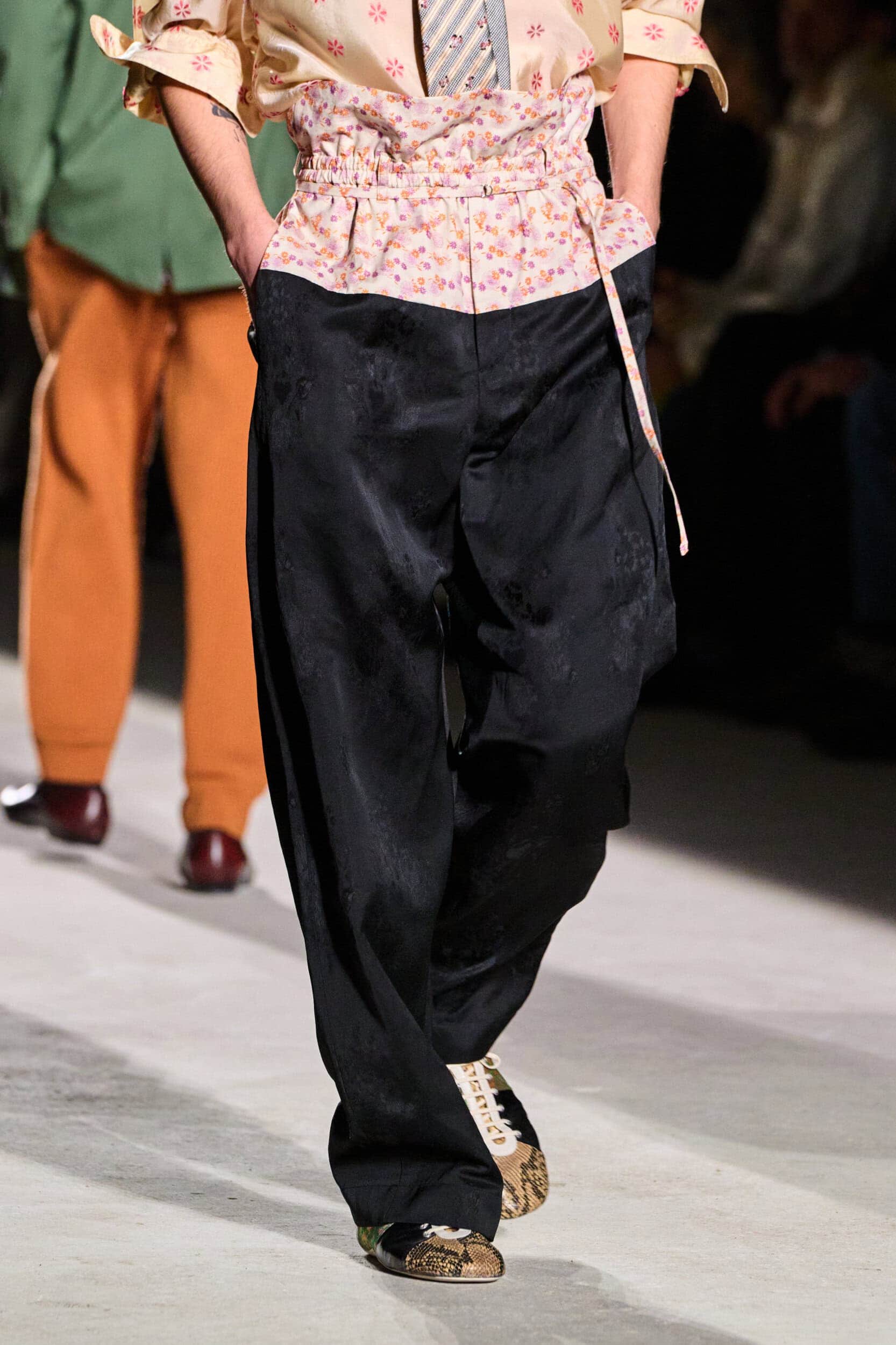
Typical masculine archetypes, rather than being challenged, are once again touted as the acceptable face of menswear. But breaking through the seemingly fixed boundaries, designers saw fit to add a healthy dose of flamboyance and levity to their collections. At Dries Van Noten, Julian Klausner found comfort in coming-of-age, going from boy to man in joyful knits and colourful vests, floral shirts and oversized satchels – the perfect attire to write prose under a tree. Marco De Vincenzo’s Etro gave us a theatrical presentation with mannequins topped with animal heads in paisley velvet shirts and sweeping scarves. Kartik Kumra’s Kartik Research provided not just his seasonal publication for guests (titled RAAG for Fall 2026) but an appreciation of the fabric dyers, embroiderers and artisans who embed his work with a deeply rooted sense of culture and heritage – ‘spiritual gravity’ is how Kumra described it.
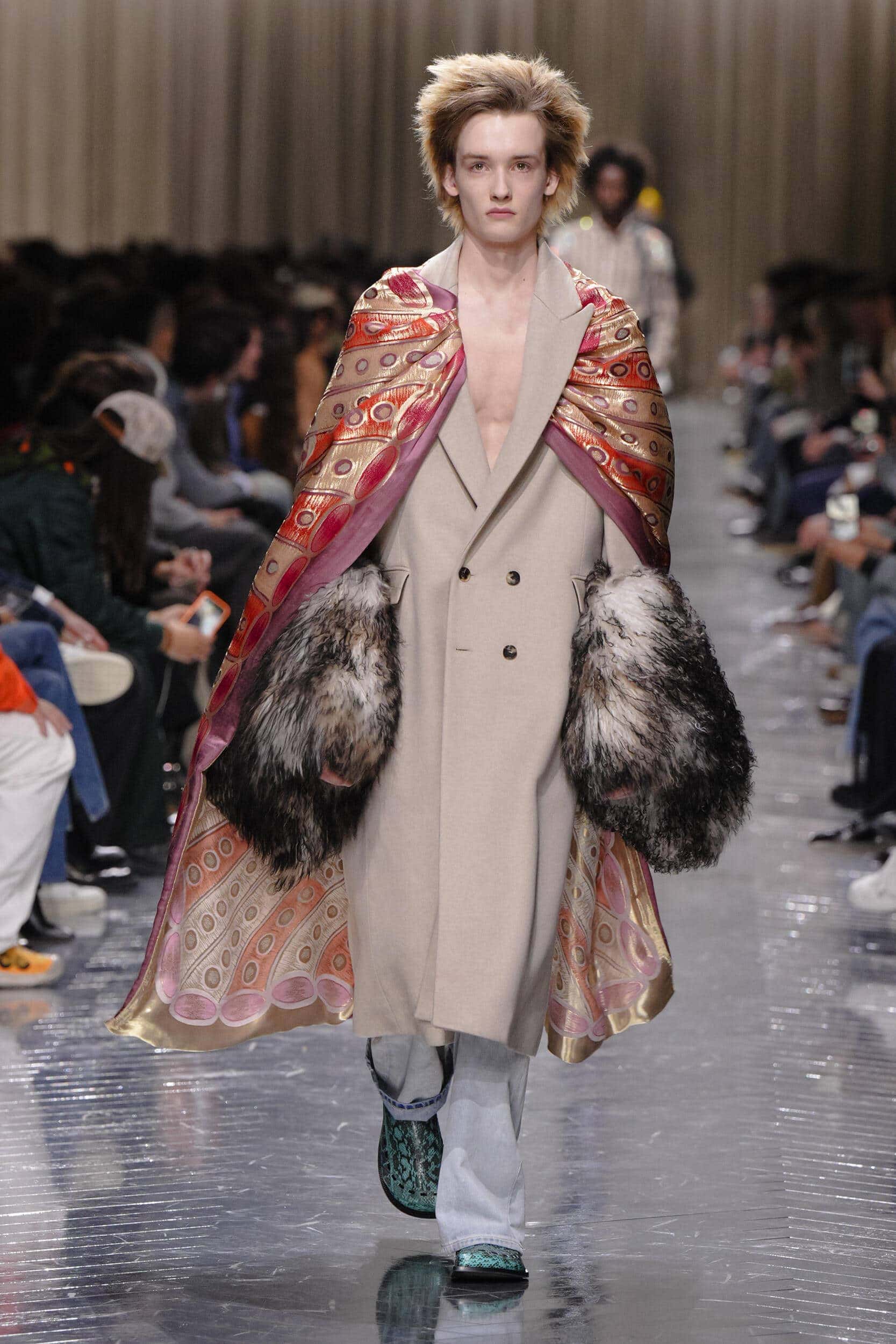
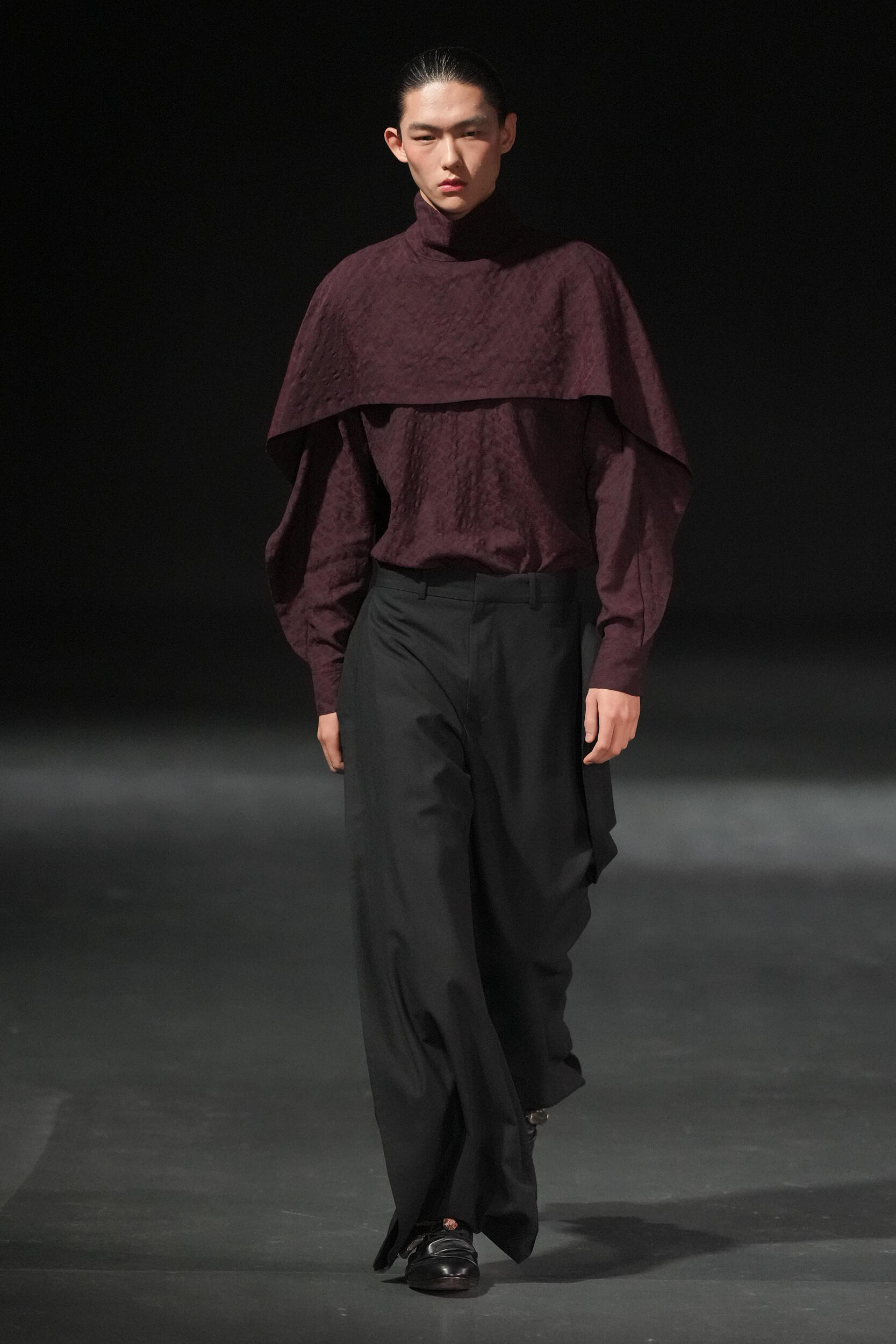
The blouse and tunic-style silhouette also featured prominently across the shows of Hed Mayner, Qasimi, and Rowen Rose. While at Jonathan Anderson’s sophomore collection for Dior Men, the couturier Paul Poiret was the starting point for a highly stylised collection of embellished tanks, metallic jacquard capes, and 3D floral embroidered bomber jackets. Dialling up the drama and offering an alternative trajectory for unconventional dressing.
How Did it Manifest on the Runway?
Doing Double Duty
What Has Shifted This Season?
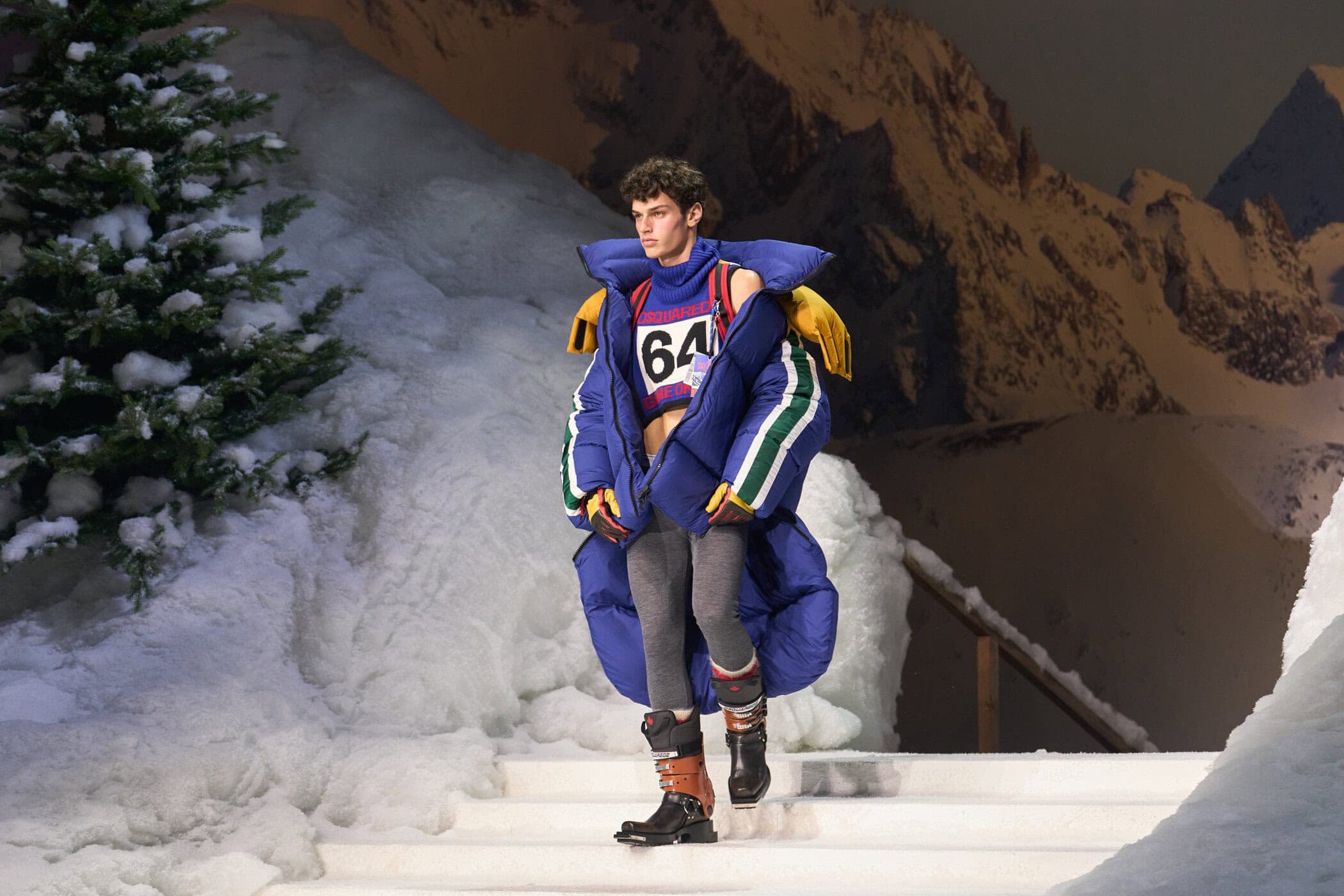
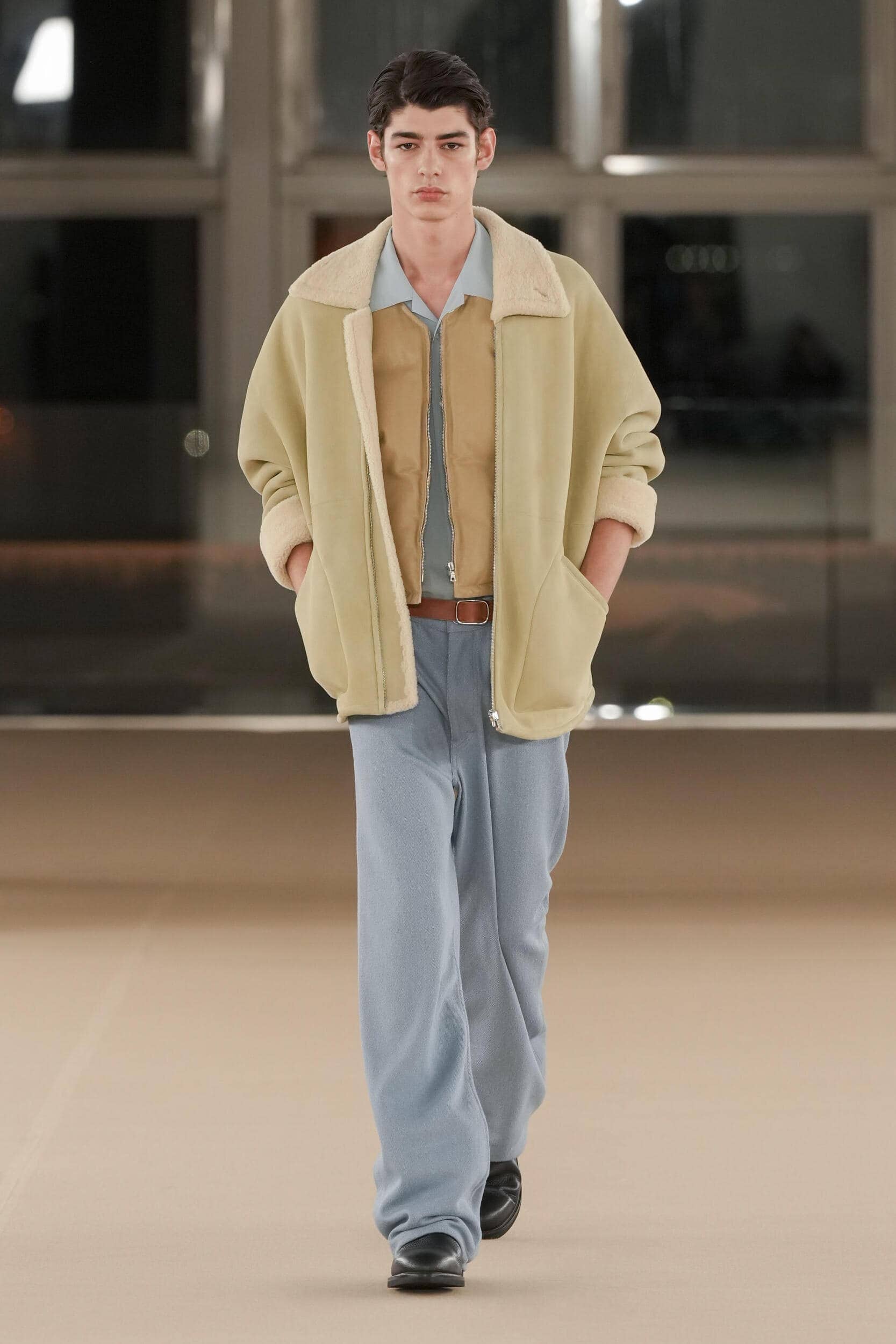
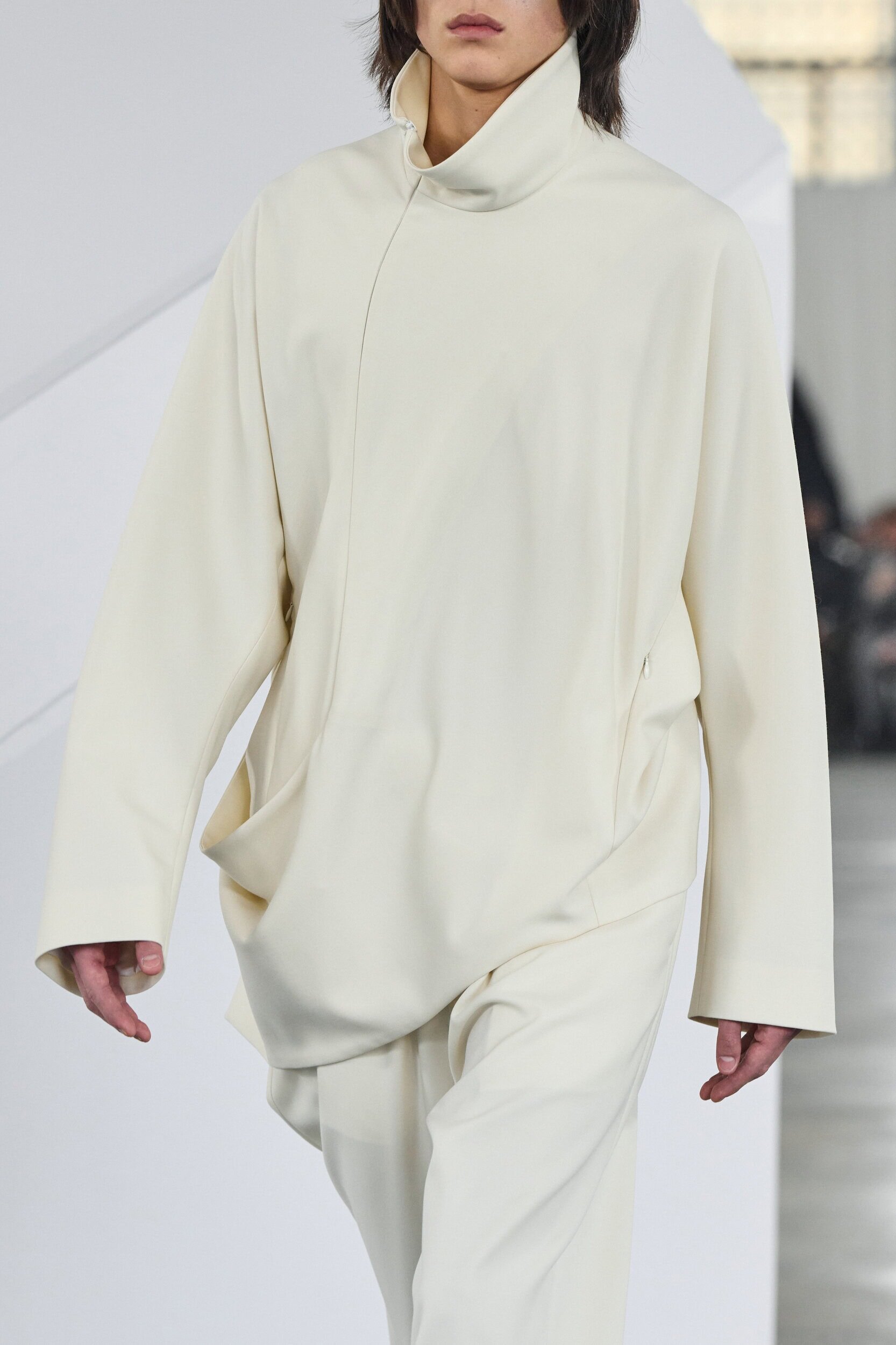
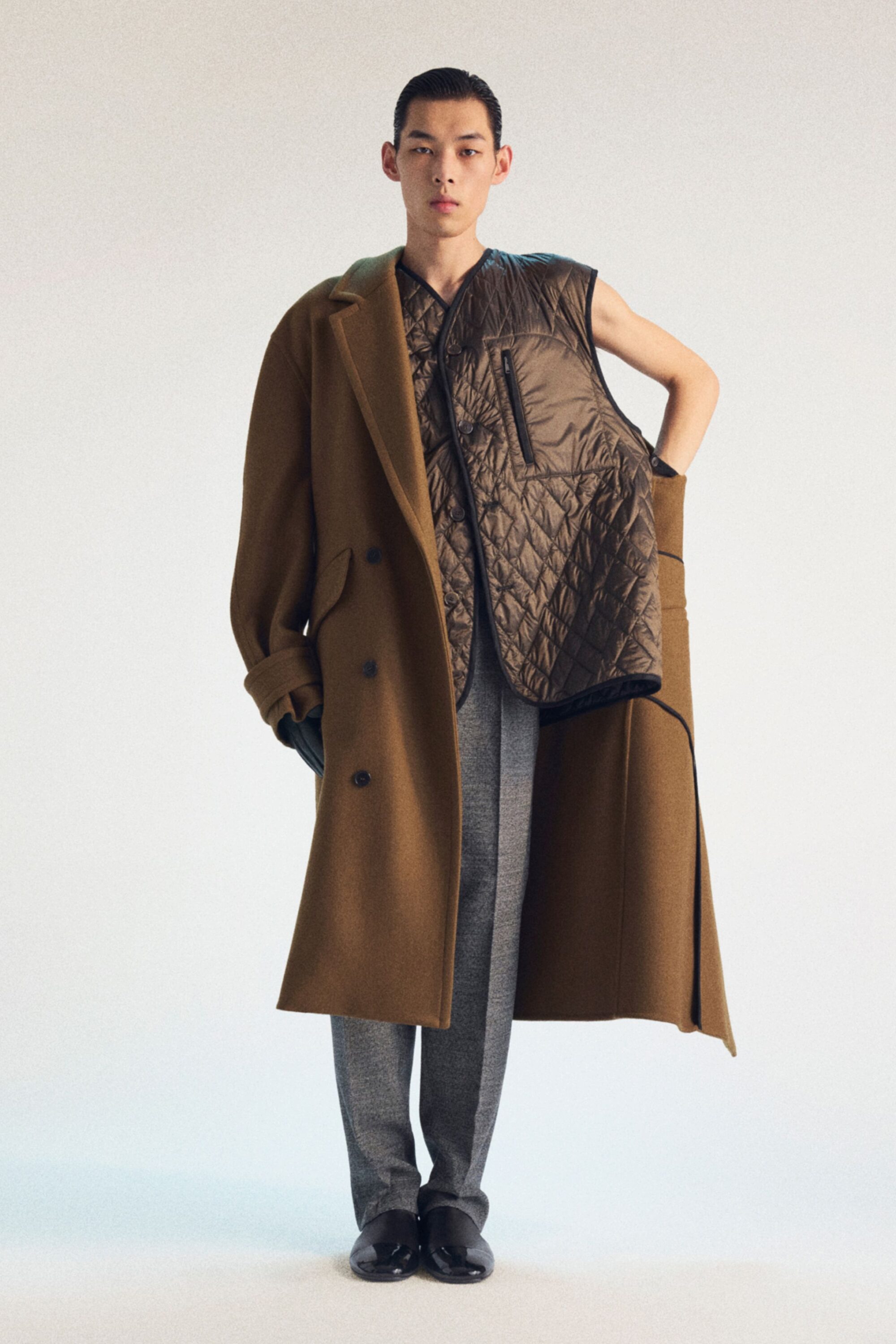
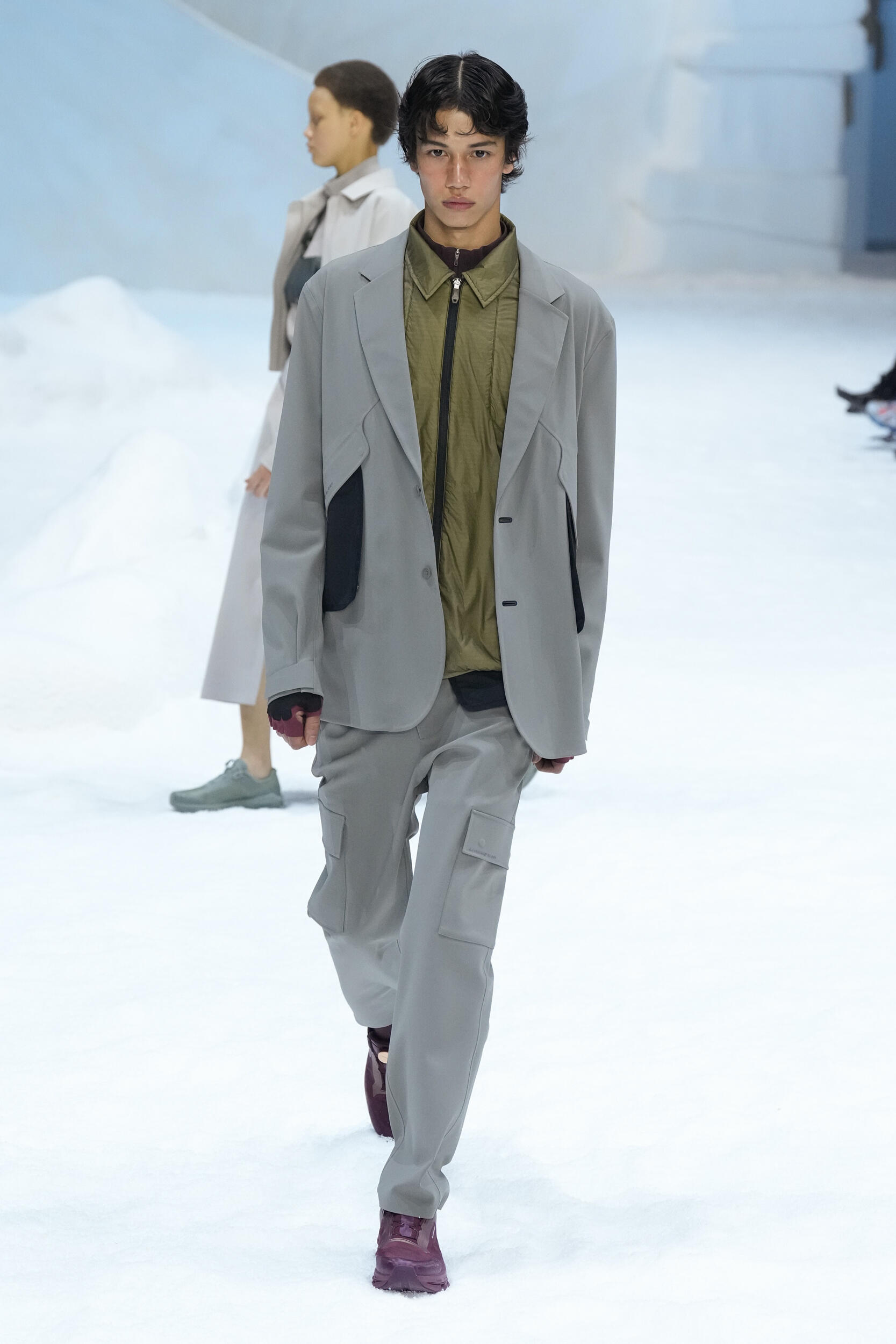
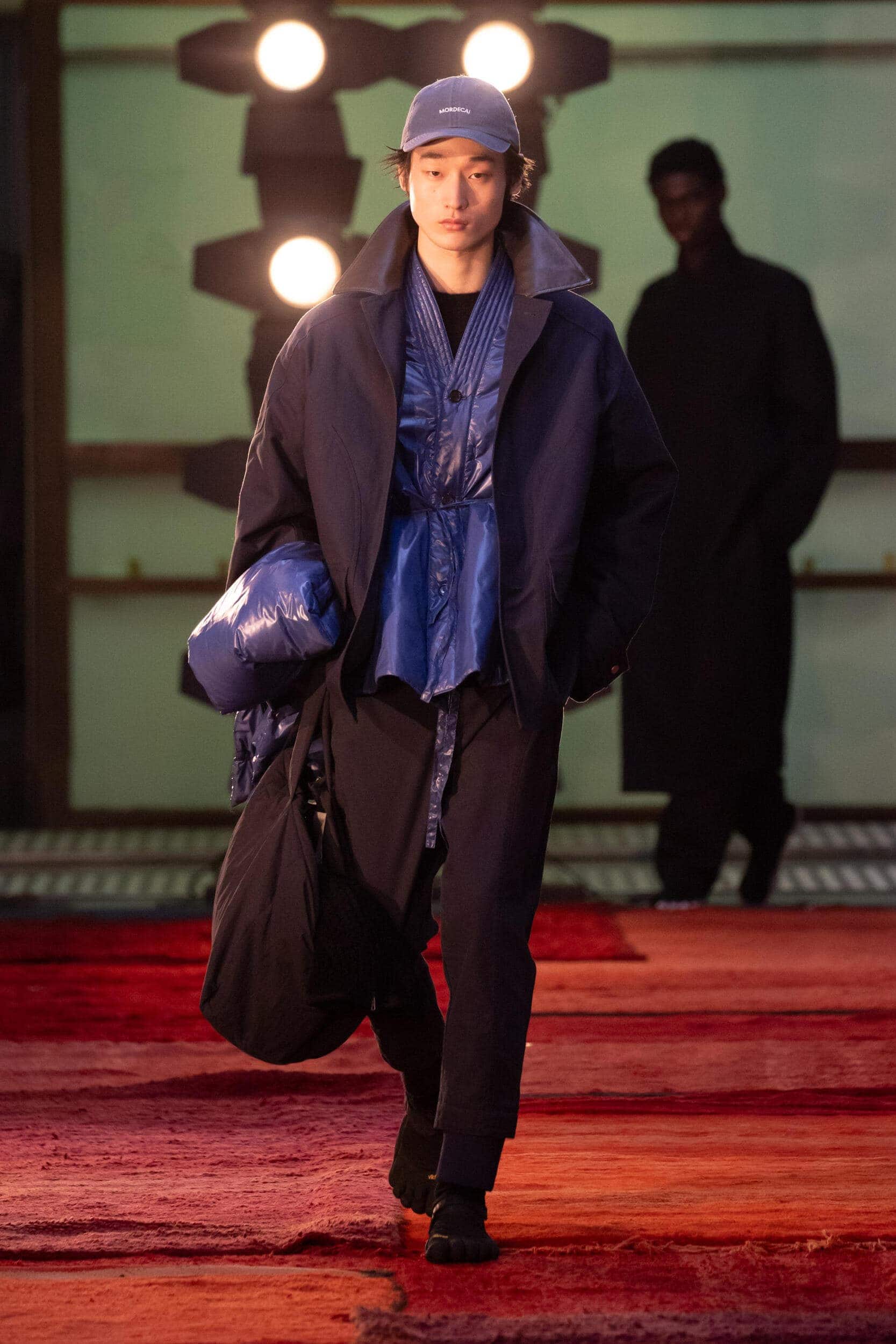
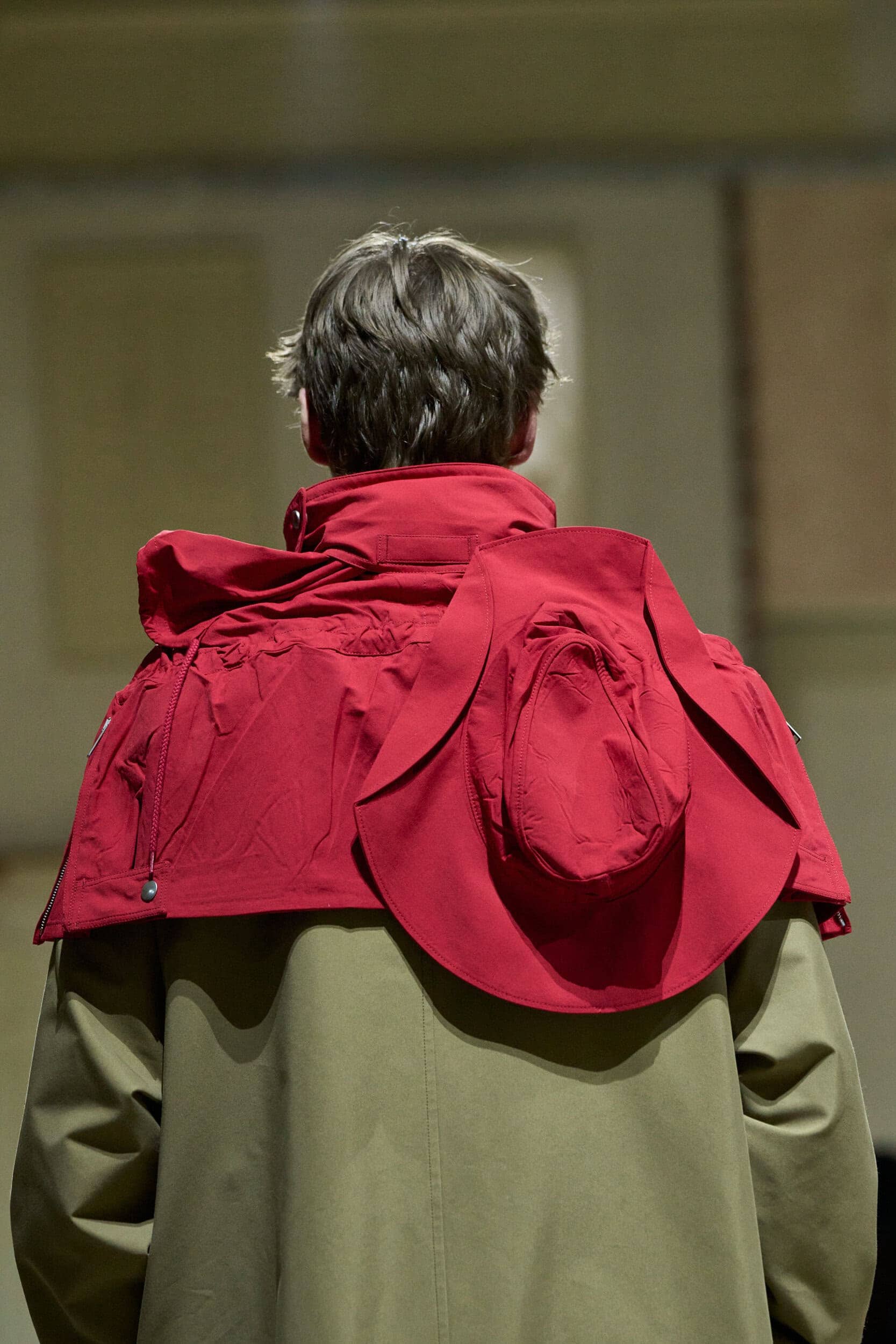
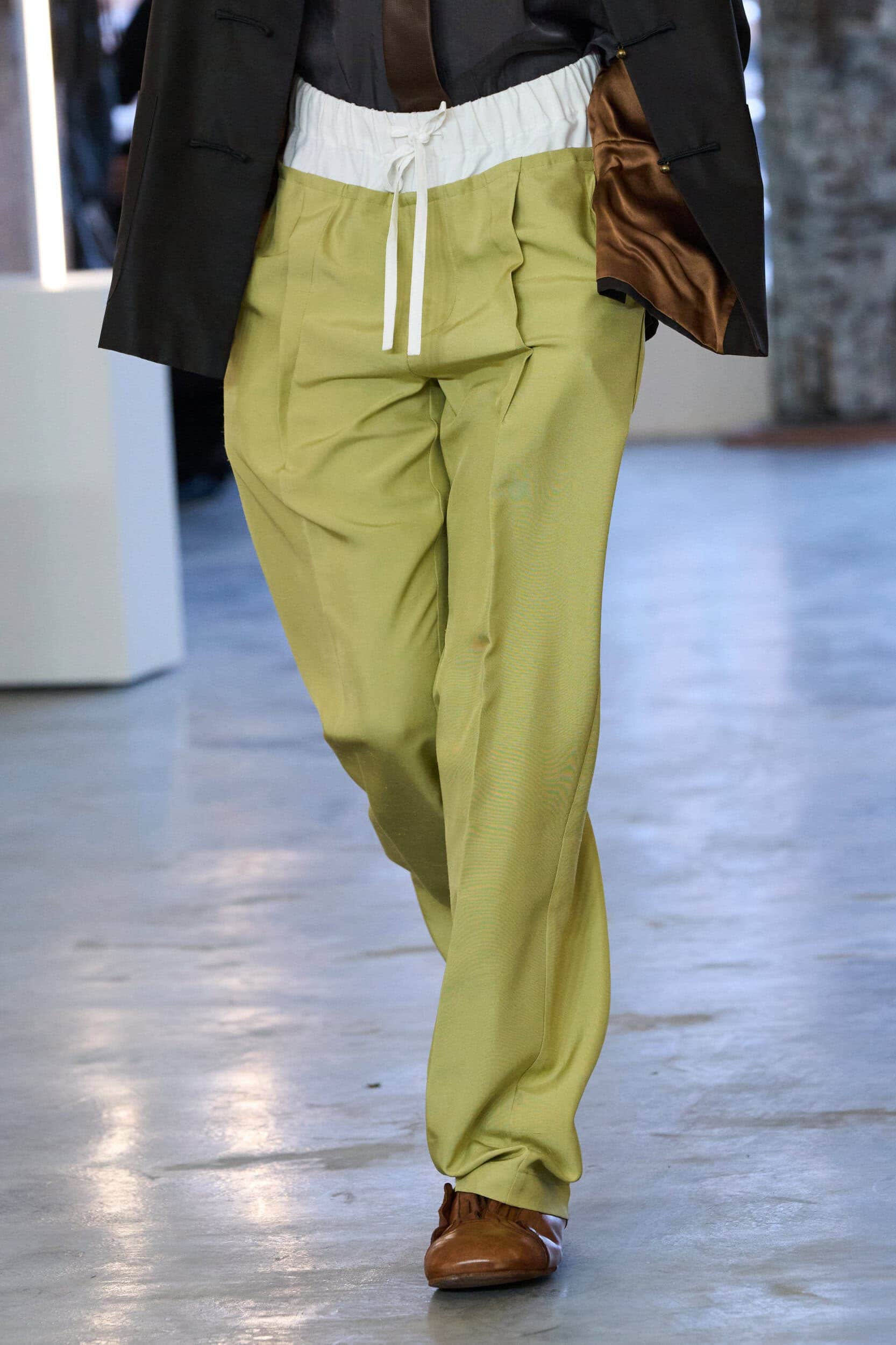
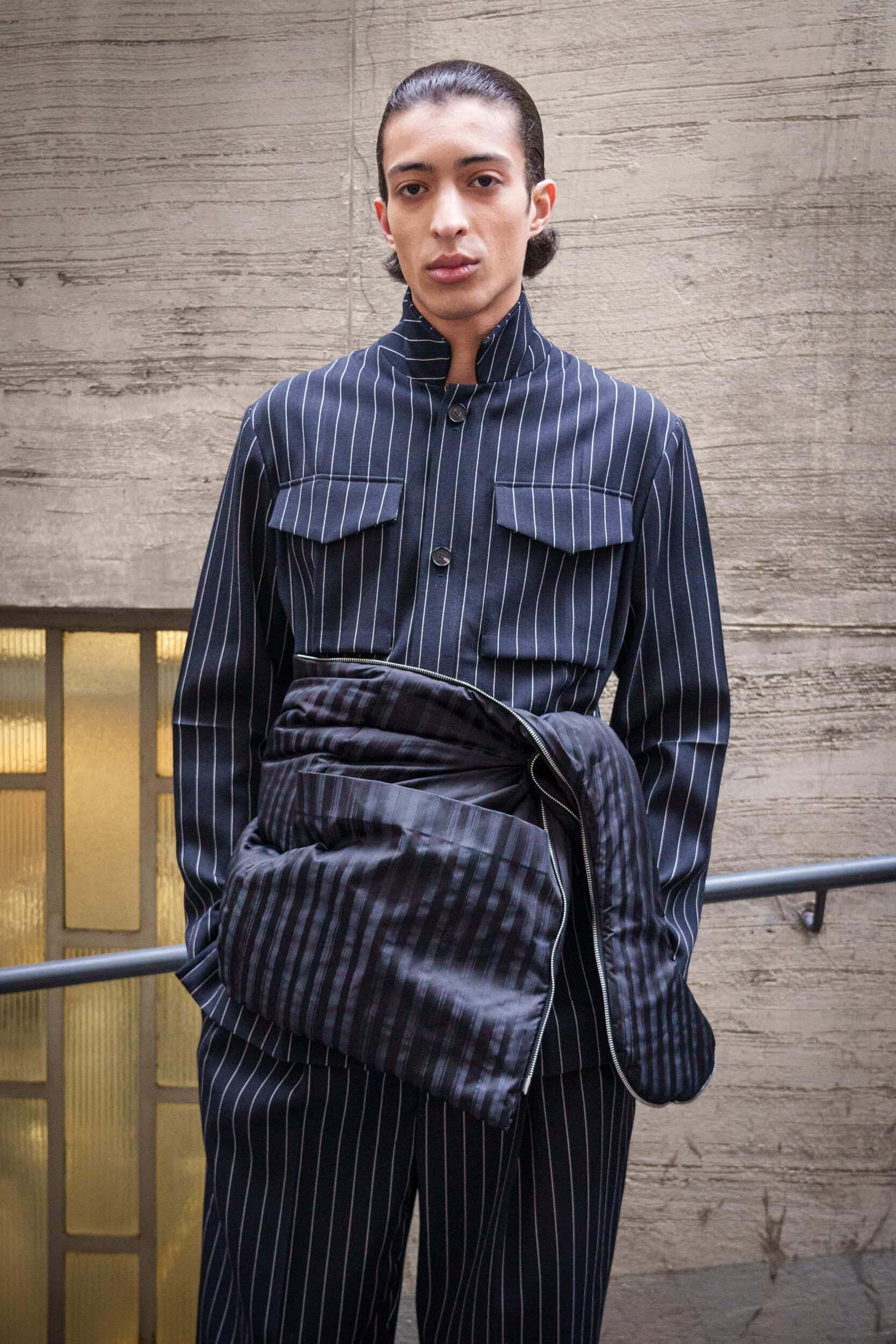
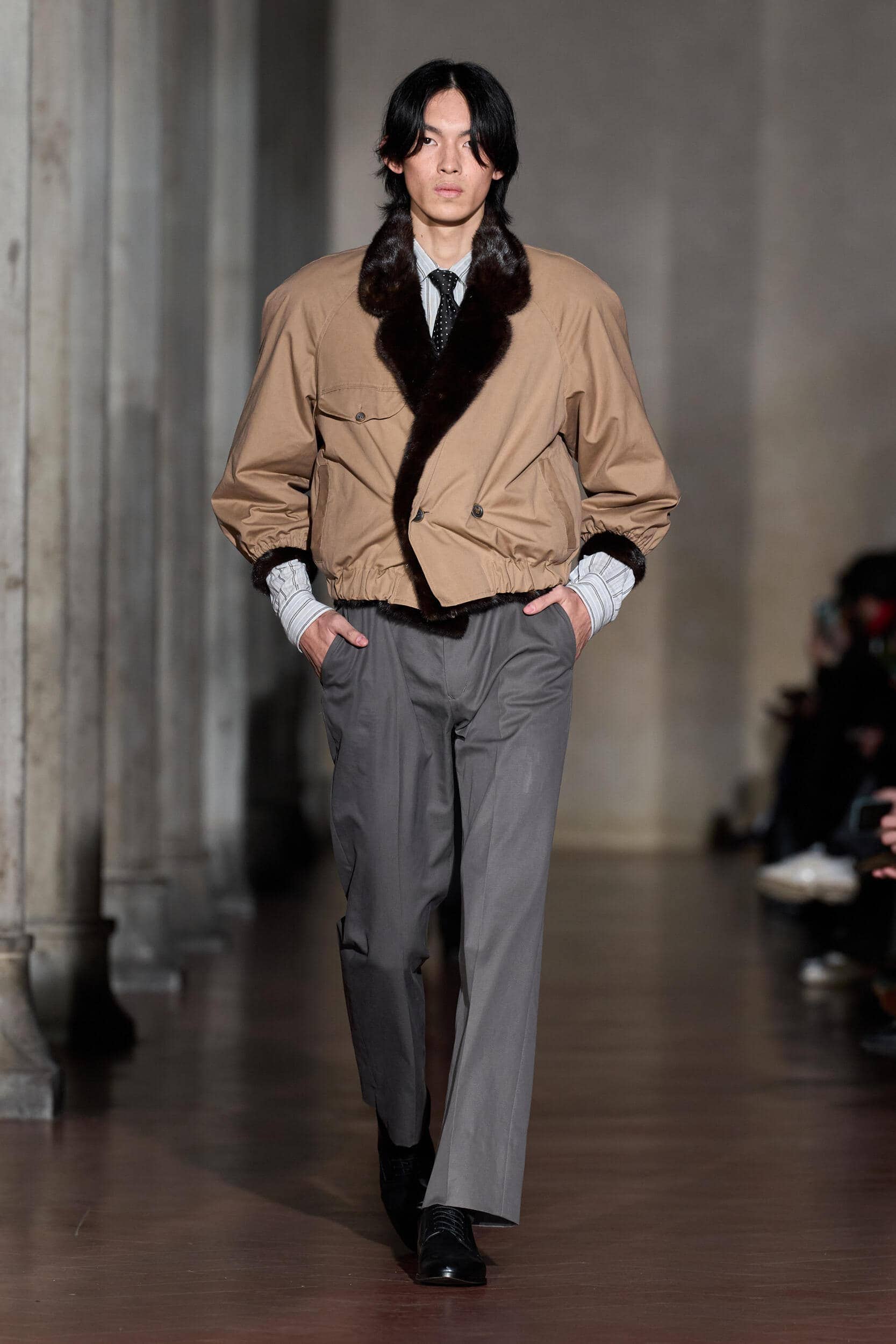
As if in response to the constant state of preparedness living through volatile times has made necessary, functionality was a built-in detail utilised by designers to add value to even the most modest of looks. But this was not utility as it has always been presented, this was a retooling of categories and a hybridising of silhouettes. Building in technical innovation for exceptional performance or layering in active layers for what trend forecasting agency WGSN dubbed the ‘Future Commuter’. Modular clothing – allowing for the construction of a forever wardrobe for any number of daily scenarios – was the intention.
Why it Matters?
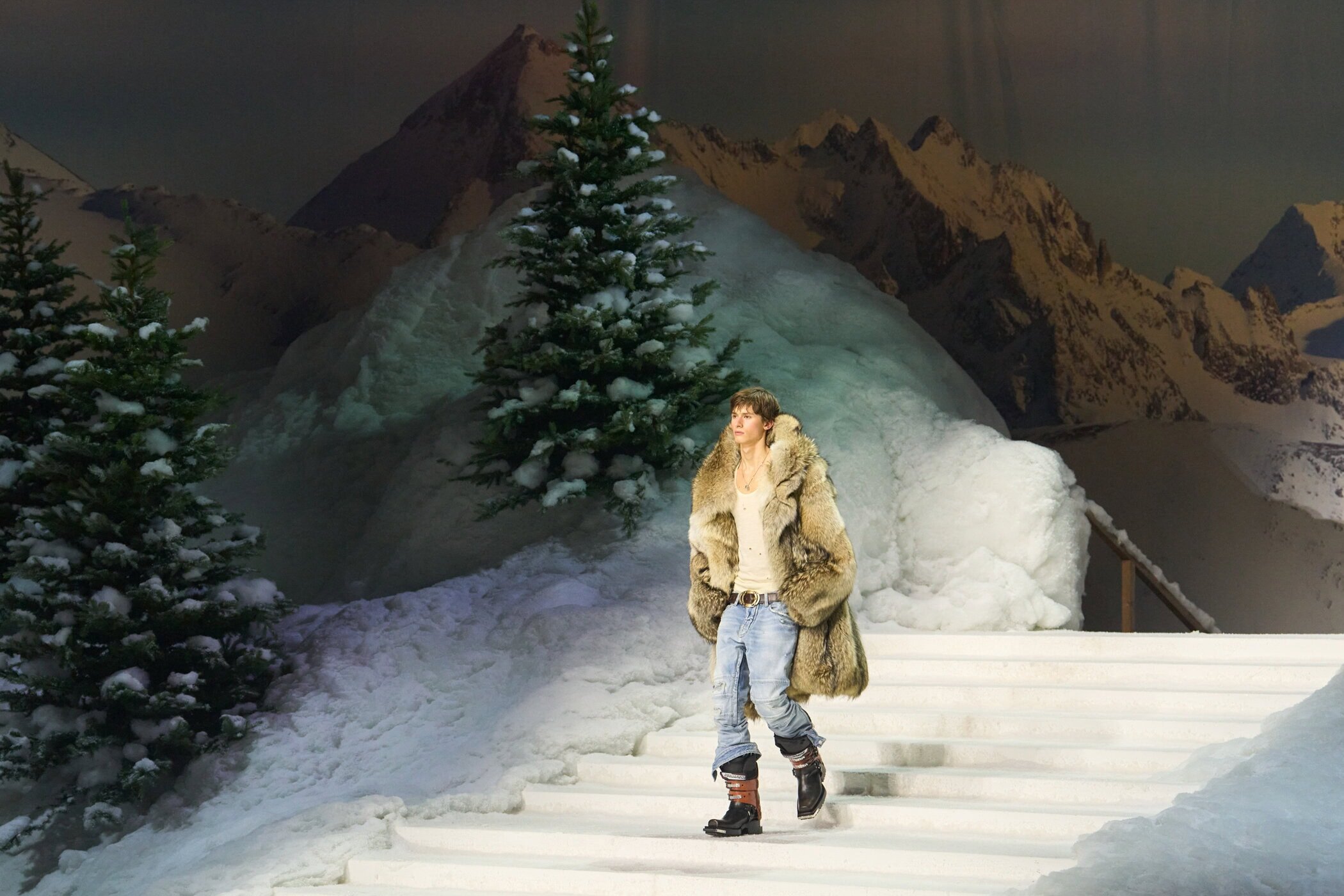
Buying for longevity has long been the calling of luxury menswear. A favourite T-shirt, the ultimate utility jacket, the custom-tailored suit bought, not as seasonal endeavours, but as long-term investments. Understanding this premise now, more than ever, due to consumers questioning what constitutes true value when it comes to their luxury purchases, designers took to deconstructing their collections and rebooting them with functionality at the forefront, not as an afterthought. Prada developed multi-coloured capelets to be worn over the already high-performance trench coat, with hats conveniently secured – or stowed – to the back of macs and blazers. At Dries Van Noten and Pronounce waistbands were spliced and constructed with drawstrings for adjustable comfort. Fur trims and linings were also used at Sacai and Soshiotsuki inside peacoats and Harrington jackets as a natural form of insulation. And Kiko Kostadinov proffered precision, folding and draping his jackets and tunics across the body in clean lines to provide multiple ways to wear, as well as conceal.
How Did it Manifest on the Runway?
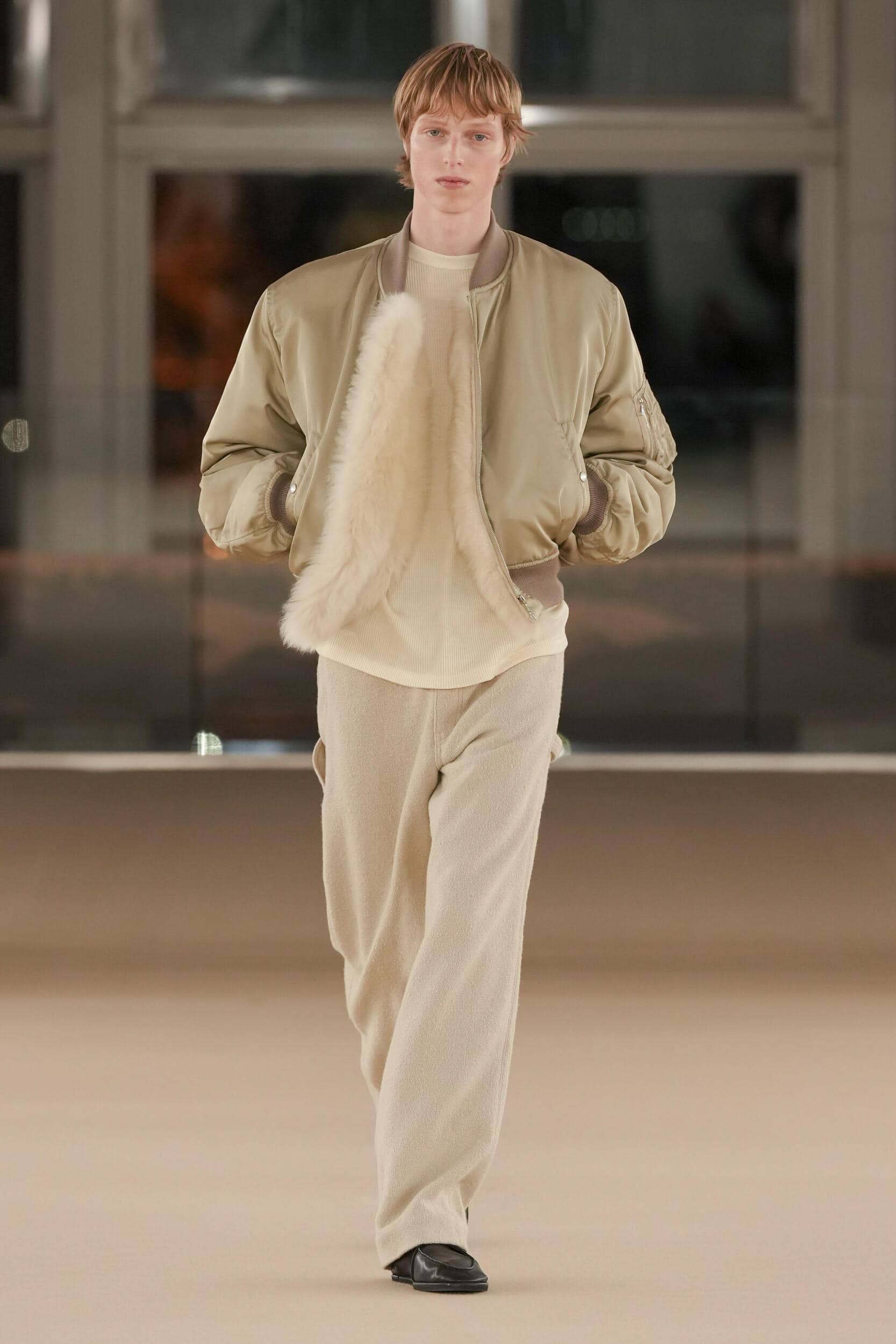
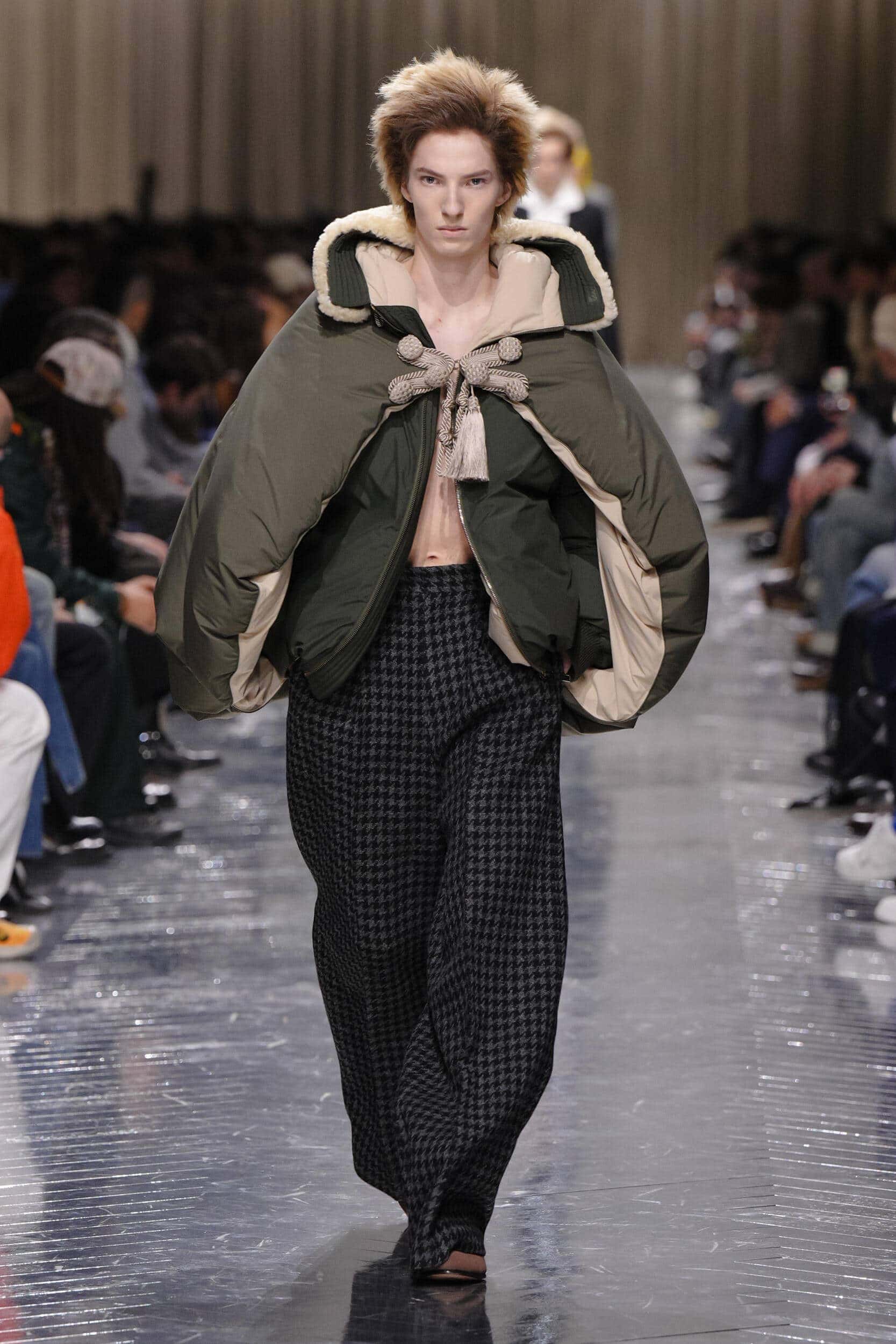
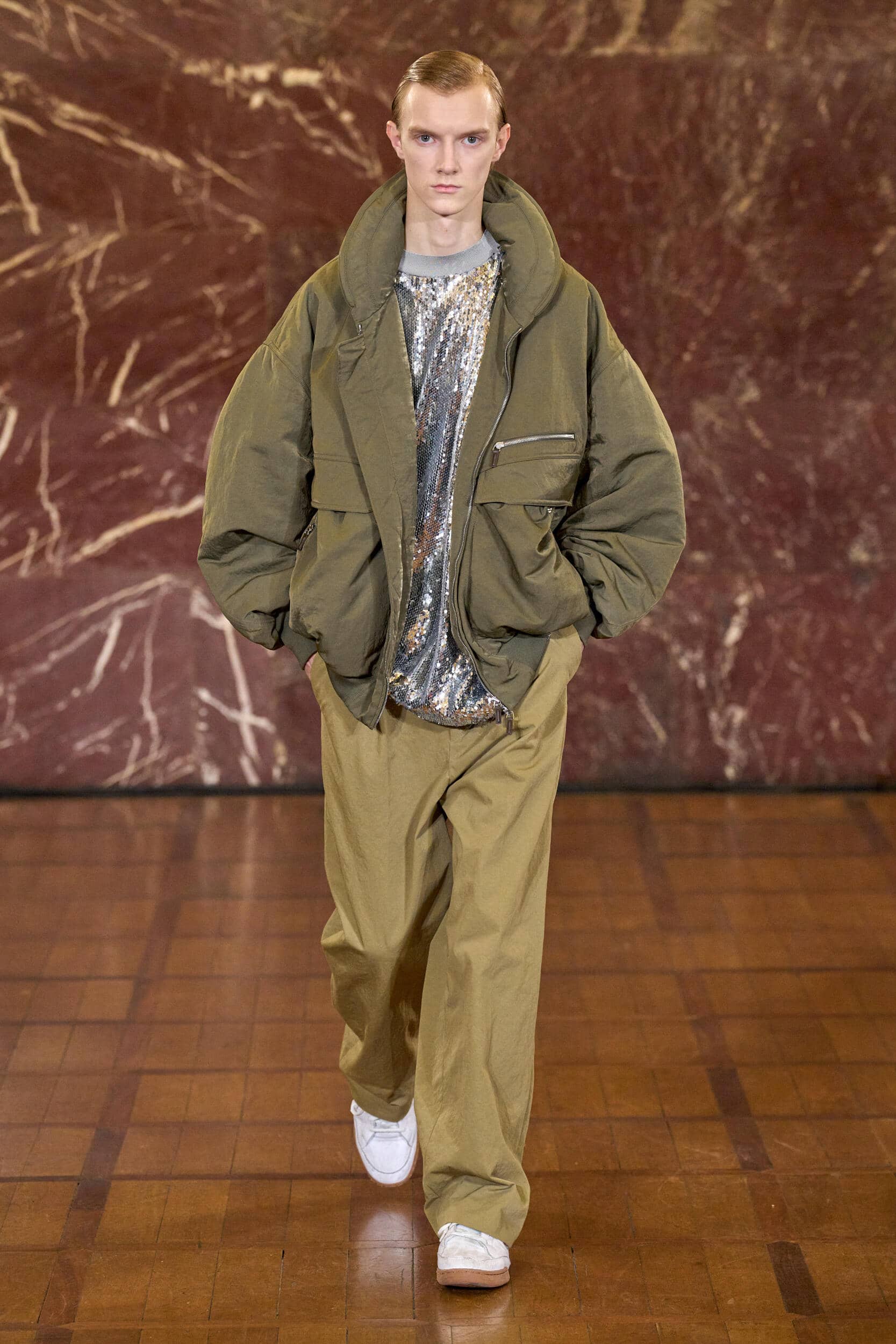
This was not utility as it has always been presented, this was a retooling of categories and a hybridising of silhouettes.
A Time and A Place
What Has Shifted This Season?
As a tool of communication, the runway show has transformed into an awe-inspiring spectacle. Whether opting for a simple white box or a mushroom-filled wonderland (à la Chanel Couture Spring 2026) the possibilities for designers to manifest imaginative concepts, or contemplative spaces which quiet the calm of the manic pace of fashion week, still remains endless.
The set is often the first touchpoint to convey what is to come in a collection. Using all five senses, our emotions and imagination, it is entirely feasible for brands to transport guests to a different place and time. A powerful, and sometimes overlooked tool, the runway set is the stage from which creative directors can set in motion how their collections are taken in. This season the focus felt personal with a shift towards representing home, heritage and the theatre of life.
Why it Matters?
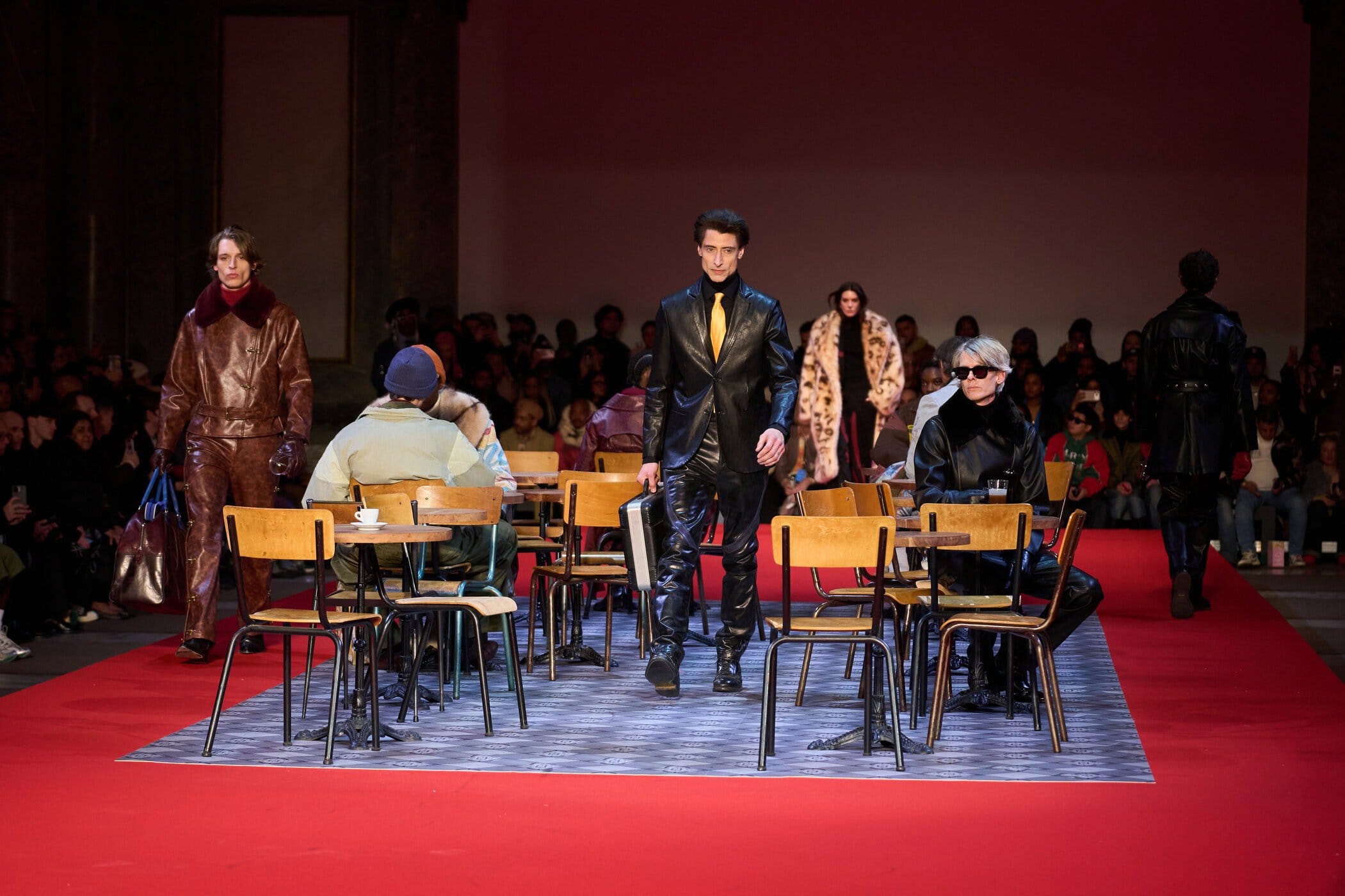
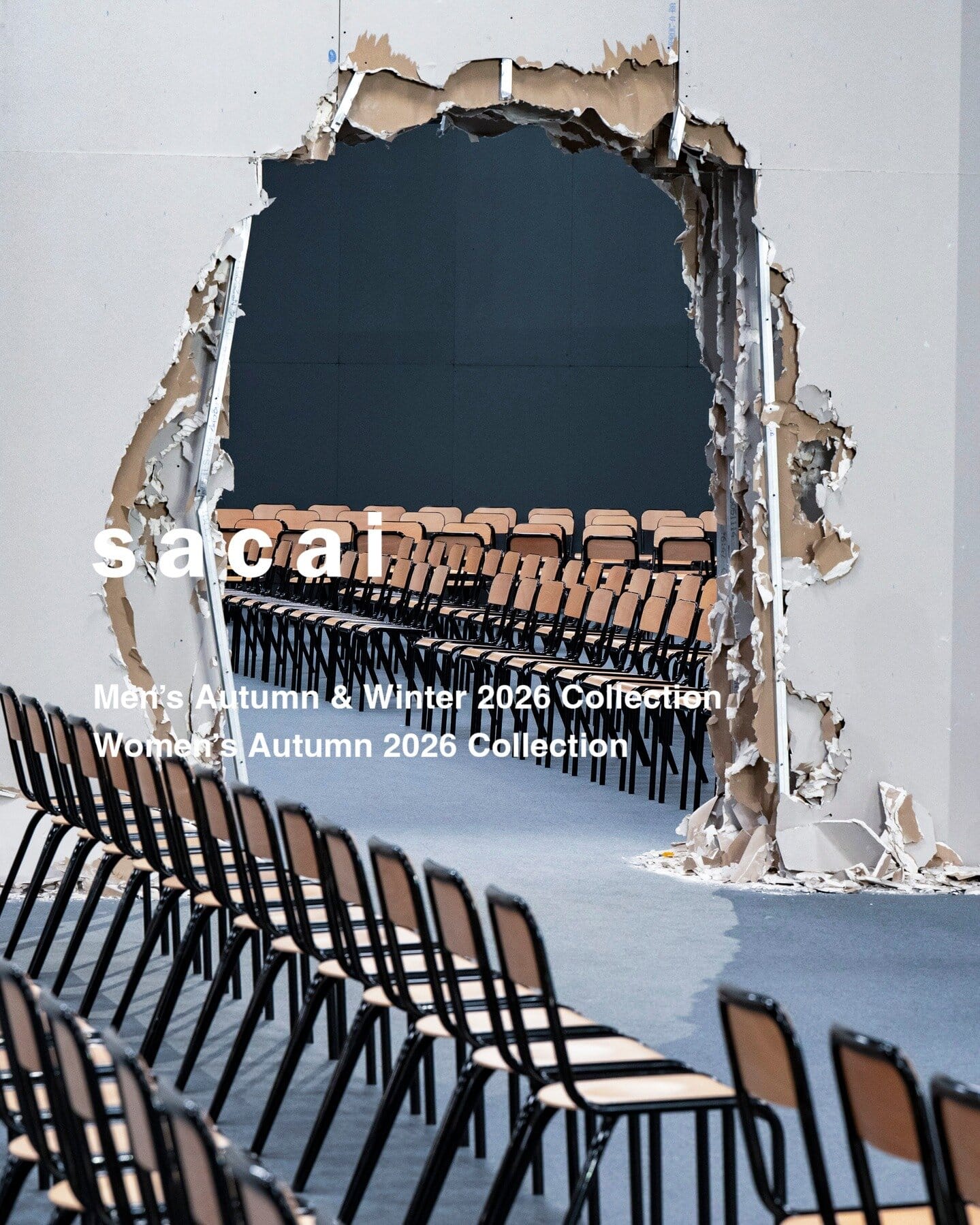
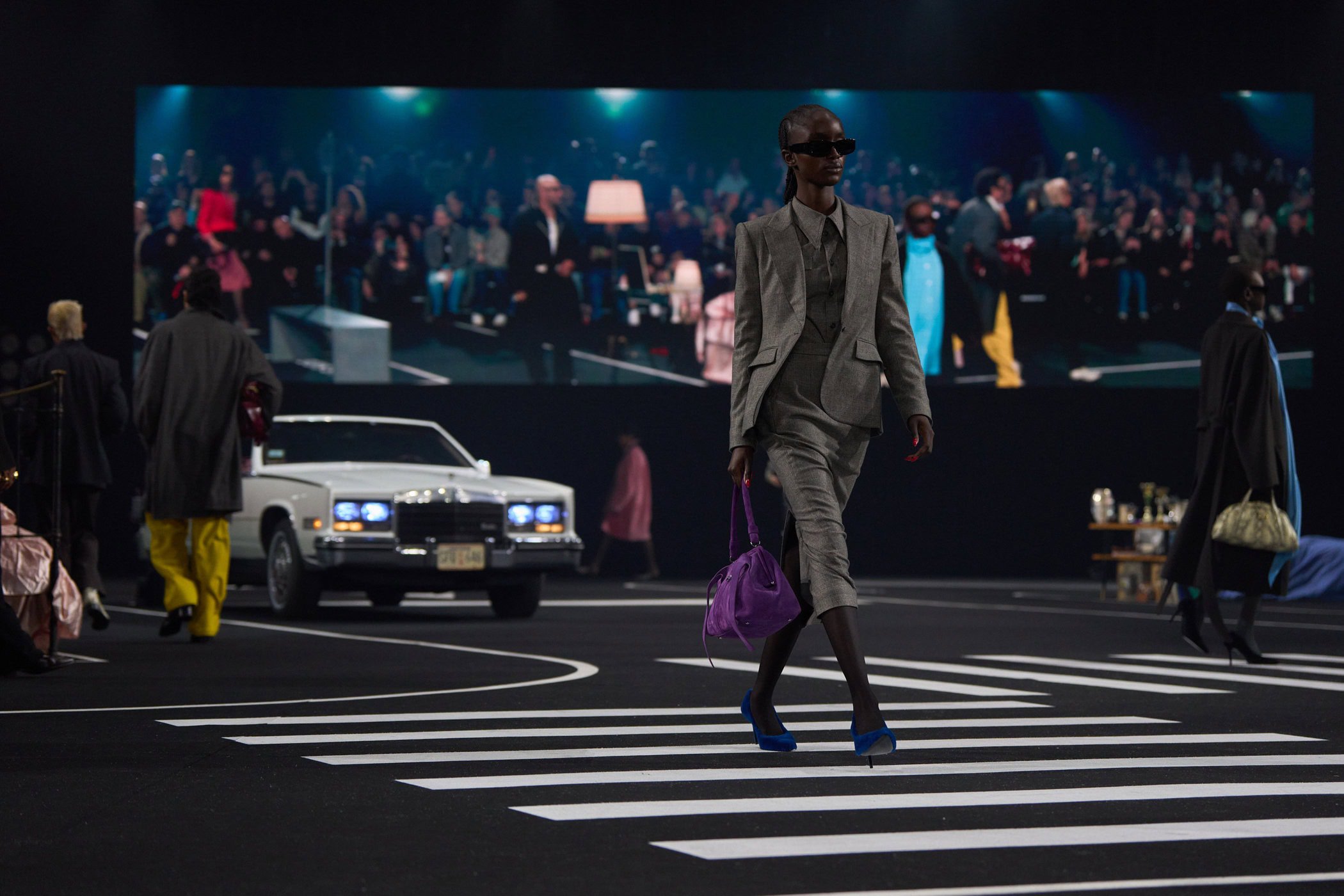
Eschewing grand statements or flights of fantasy – that was to come during Couture week – designers chose to bring the audience into their worlds. Revealing what inspired their design process, demonstrating how the clothes they design can become a part of the wearers everyday uniform, channelling pop culture moments, or speaking to decay and destruction as an acknowledgment of global unrest, they all formed part of the narrative for Fall. Willy Chavarria’s third Paris outing and Pharrell’s latest for Louis Vuitton were two of the more ambitious set designs of the season. The former blending theatre, family, and entertainment into his show, watched by a stadium-sized audience the clothes were presented in a set that metaphorically spoke to the characters we meet at the crossroads of life. While musical performances, a mini-telenovela, vintage cars and phone booths spoke to the many influences that flow through Chavarria’s world.
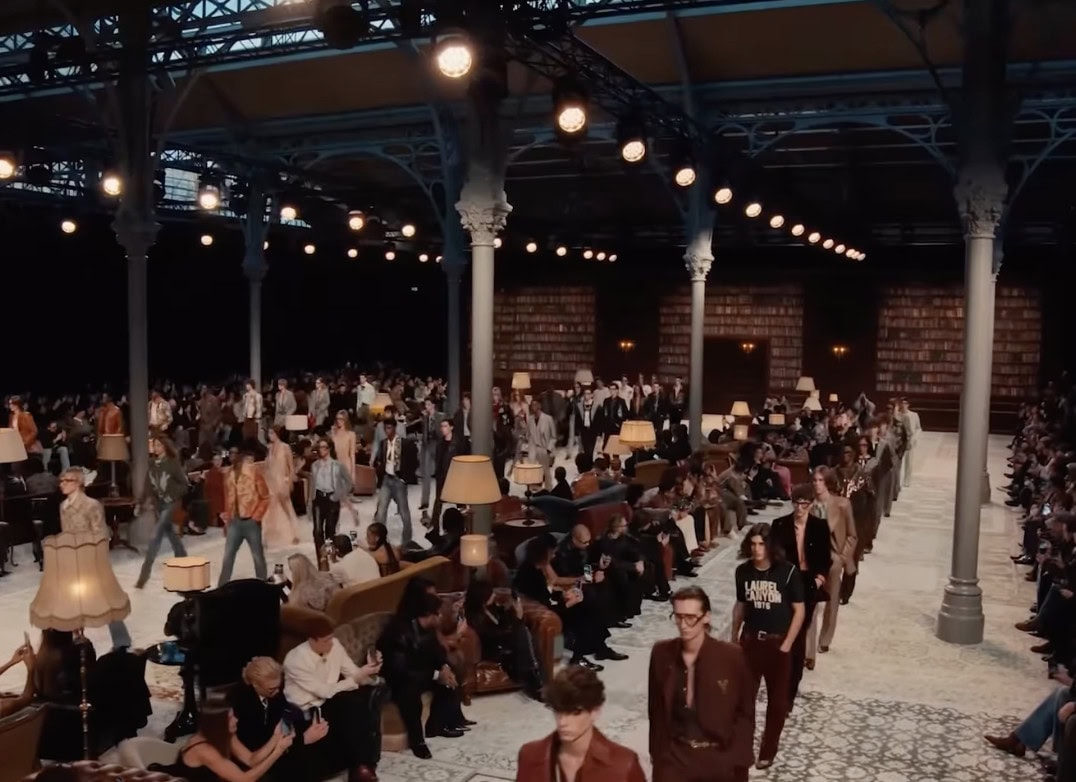
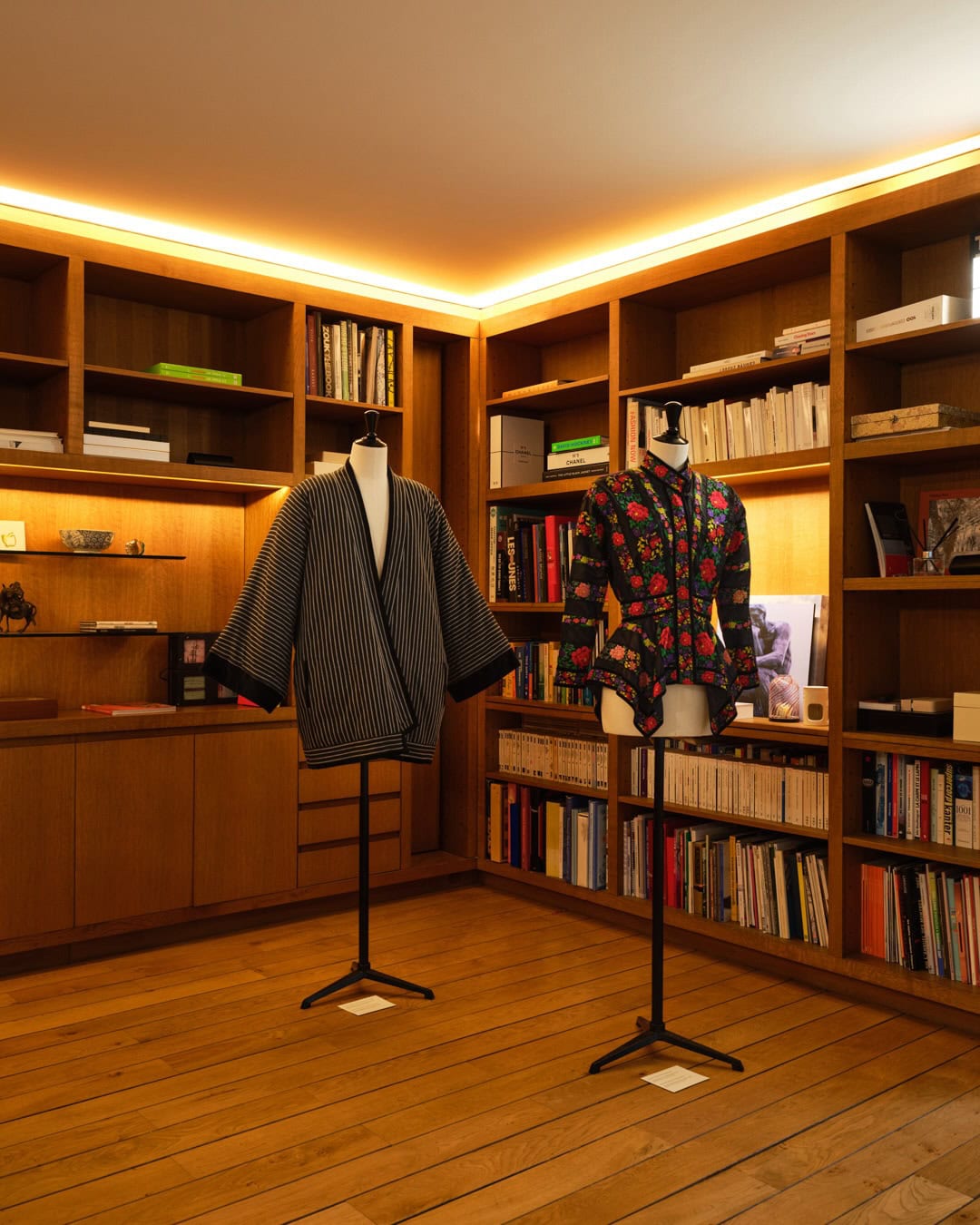
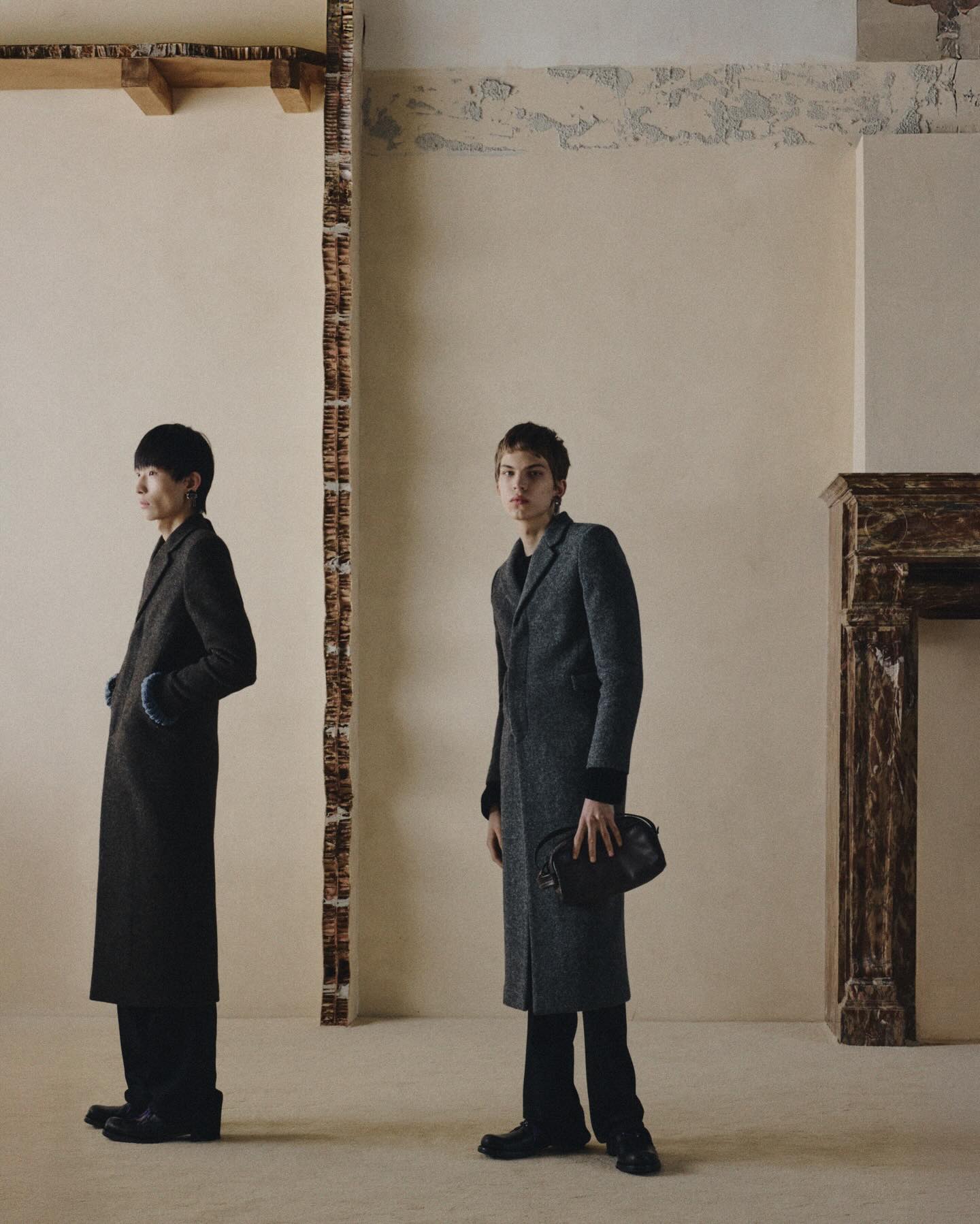
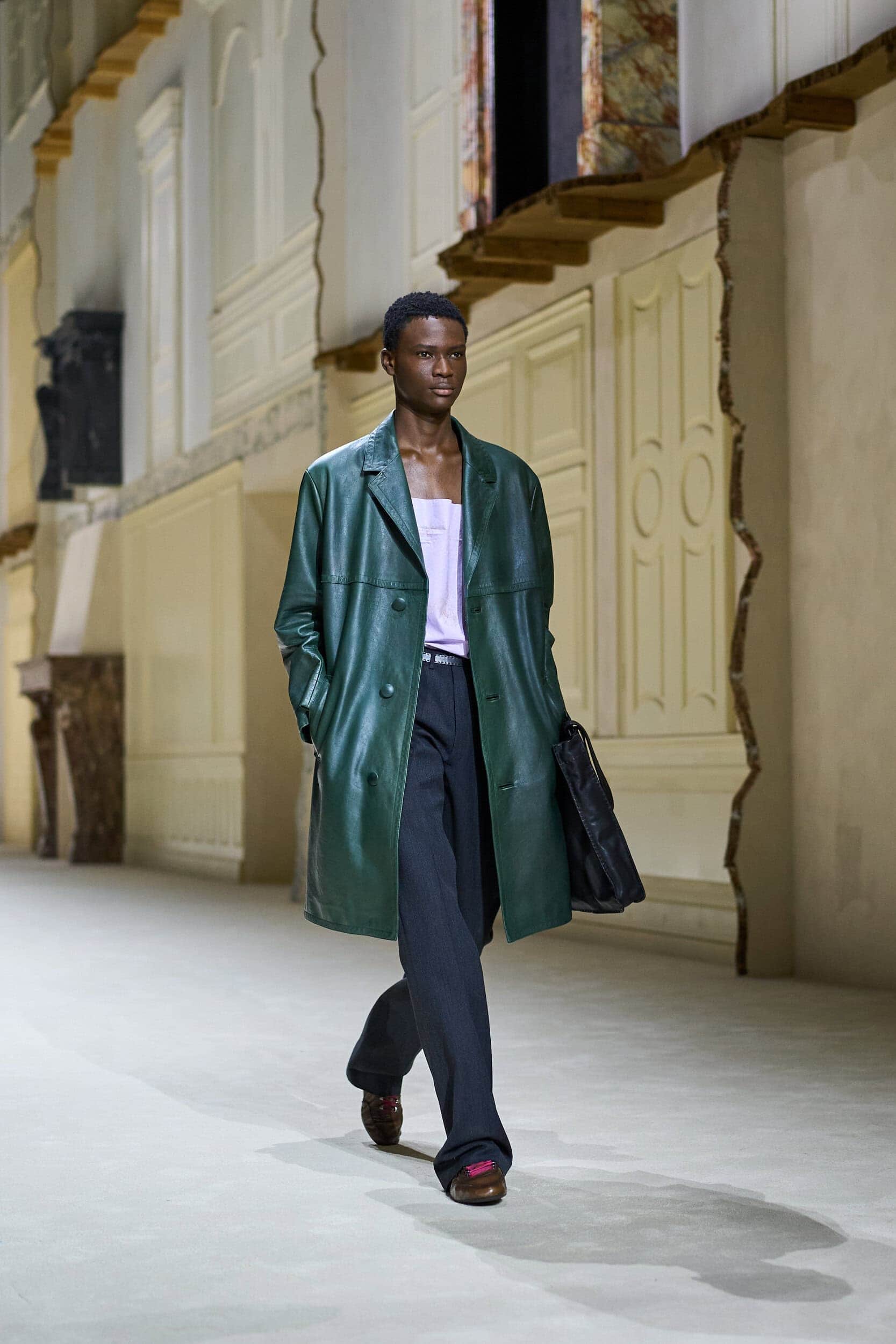
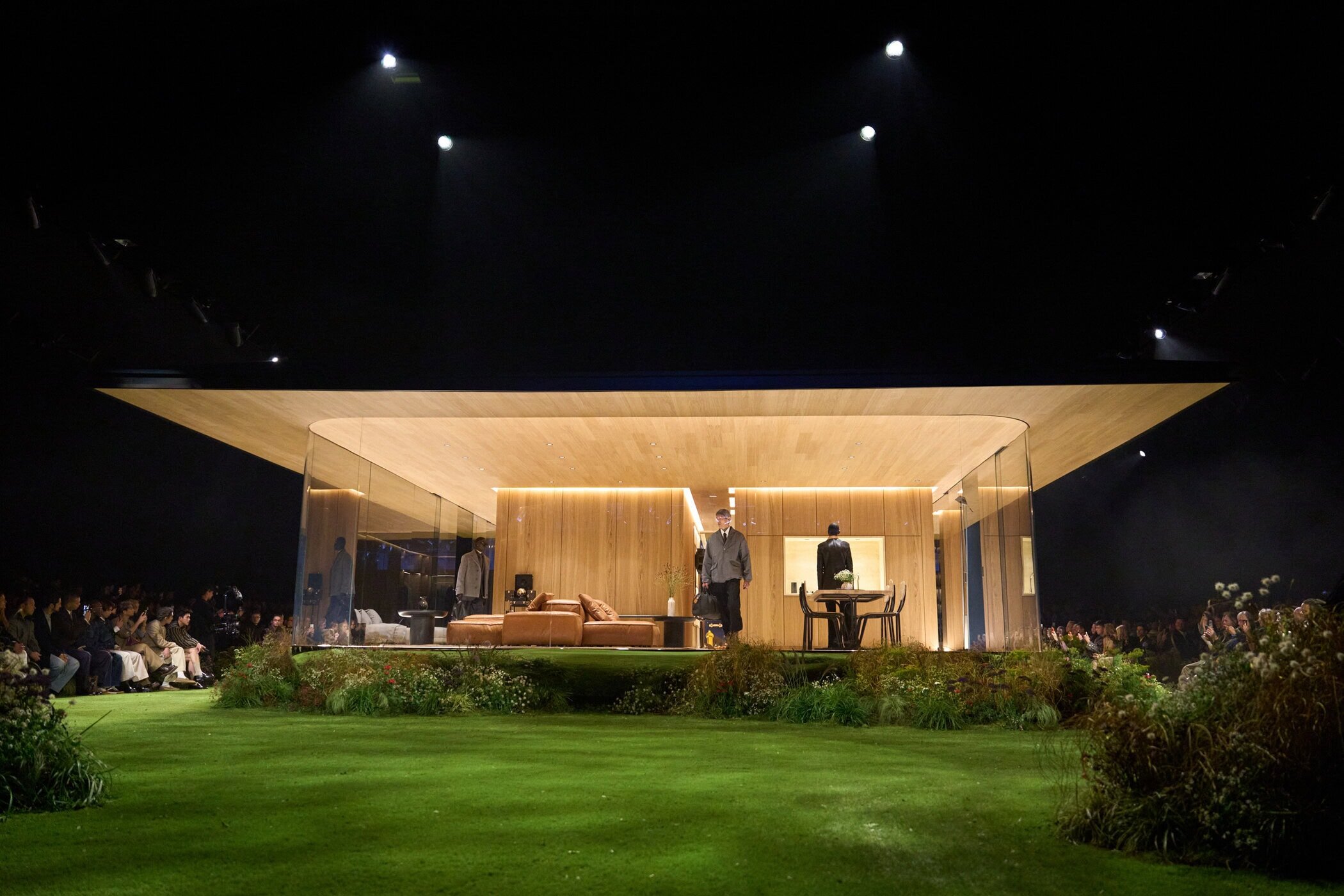
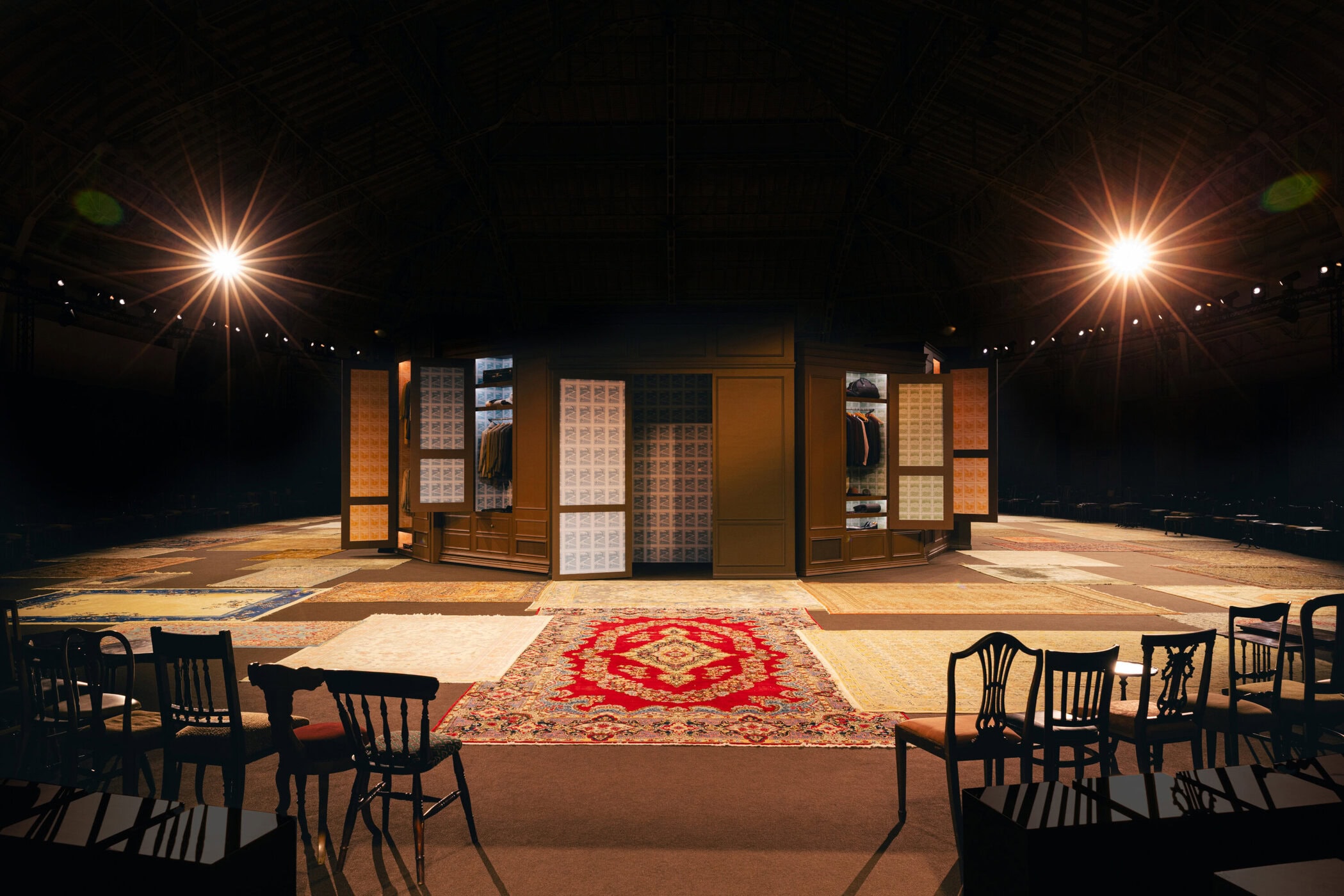
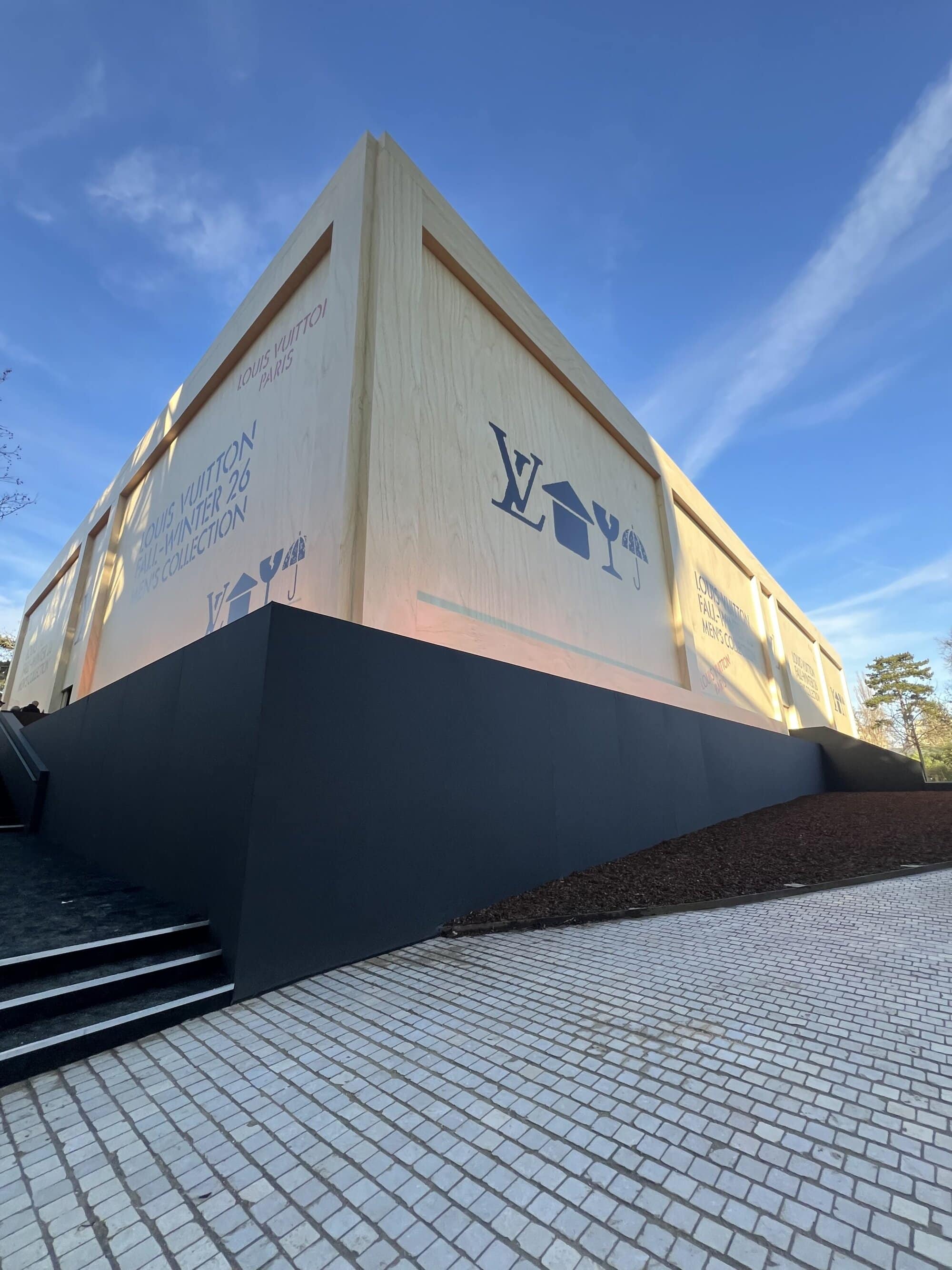
Louis Vuitton was a study in ‘Timeless Living’ with the shows set a giant-sized wooden crate housing a pre-fabricated luxury home. A metaphor for the way the brand touches all aspects of their customers lifestyle. Mike Amiri also welcomed guest to his ‘house’, that was a Lounge Lovers paradise with low-level lighting, intimate seating and Persian rugs decorating the runway. A French-style salon was emulated at Kartik Research, which was given a revamp to authentically align with the brands signature style, so show seats were ‘wrapped in Kantha fabric’ and as at Amiri, handmade Jaipur rugs were laid out for guests, with the sense of place enhanced through fragrance, as the brands signature Neroli scent greeted guests on arrival. Prada’s set also took on the concept of the home, but here there was a sense of glory’s past in a set formed of a decaying interior with mismatched marble fireplaces.
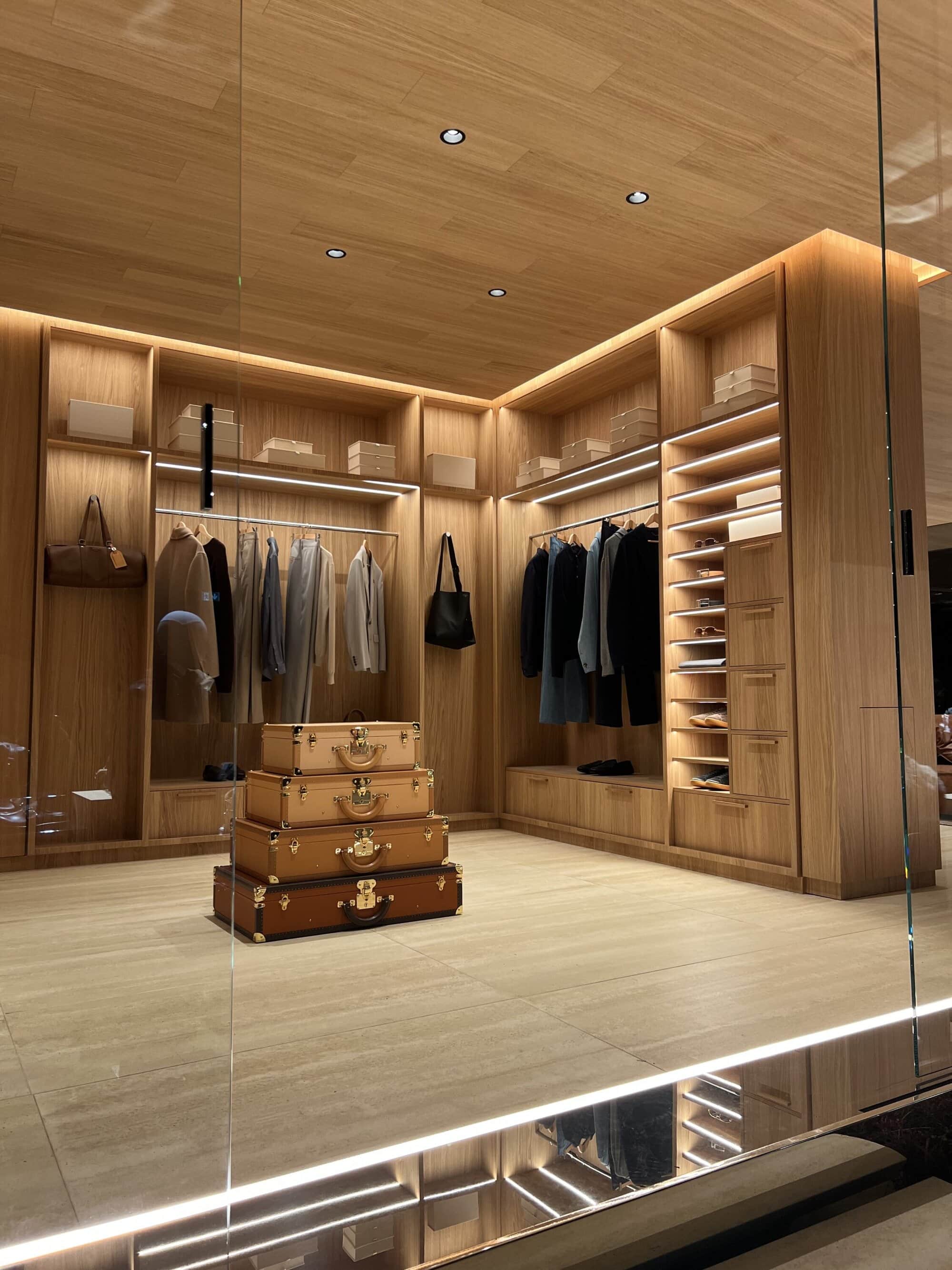
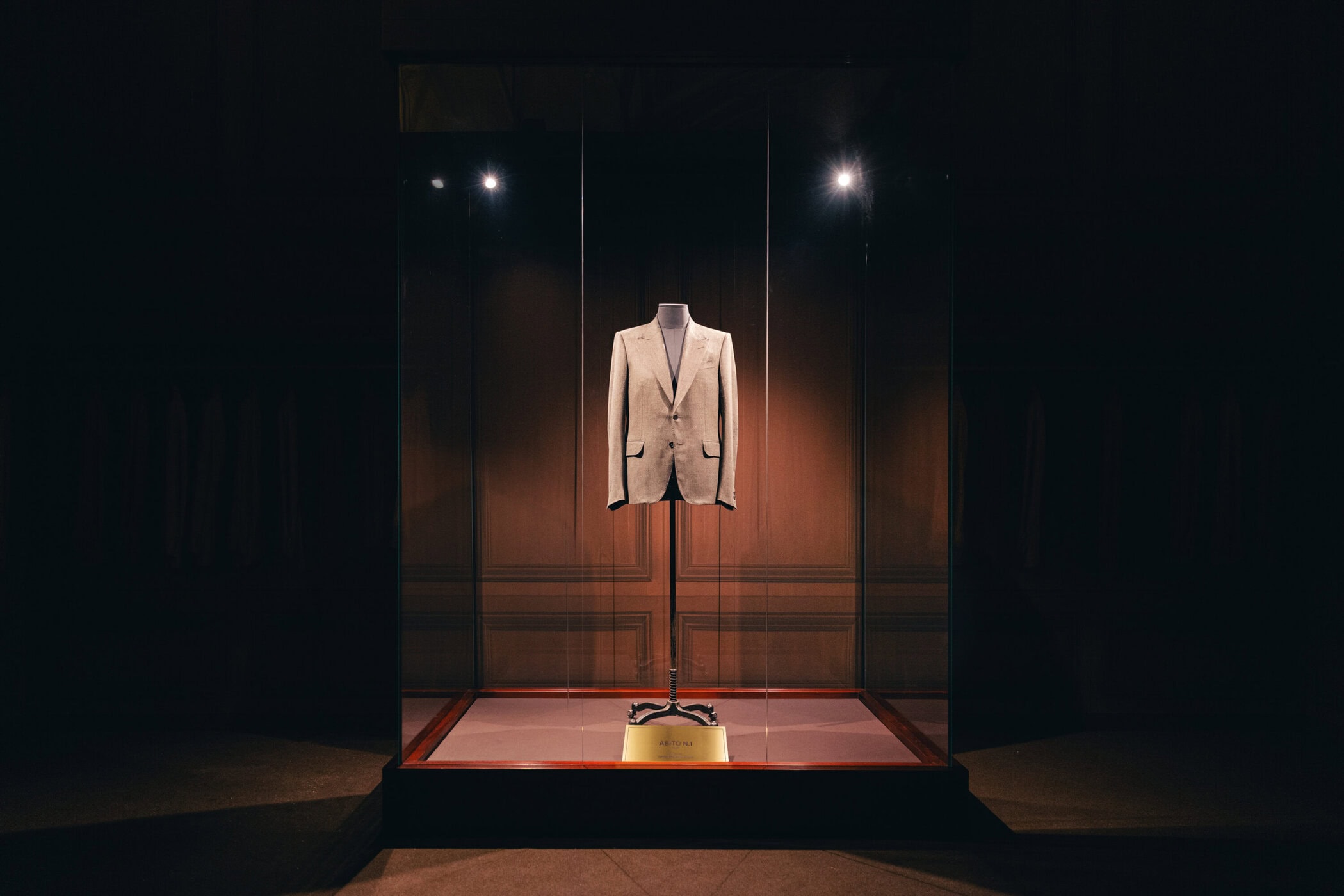
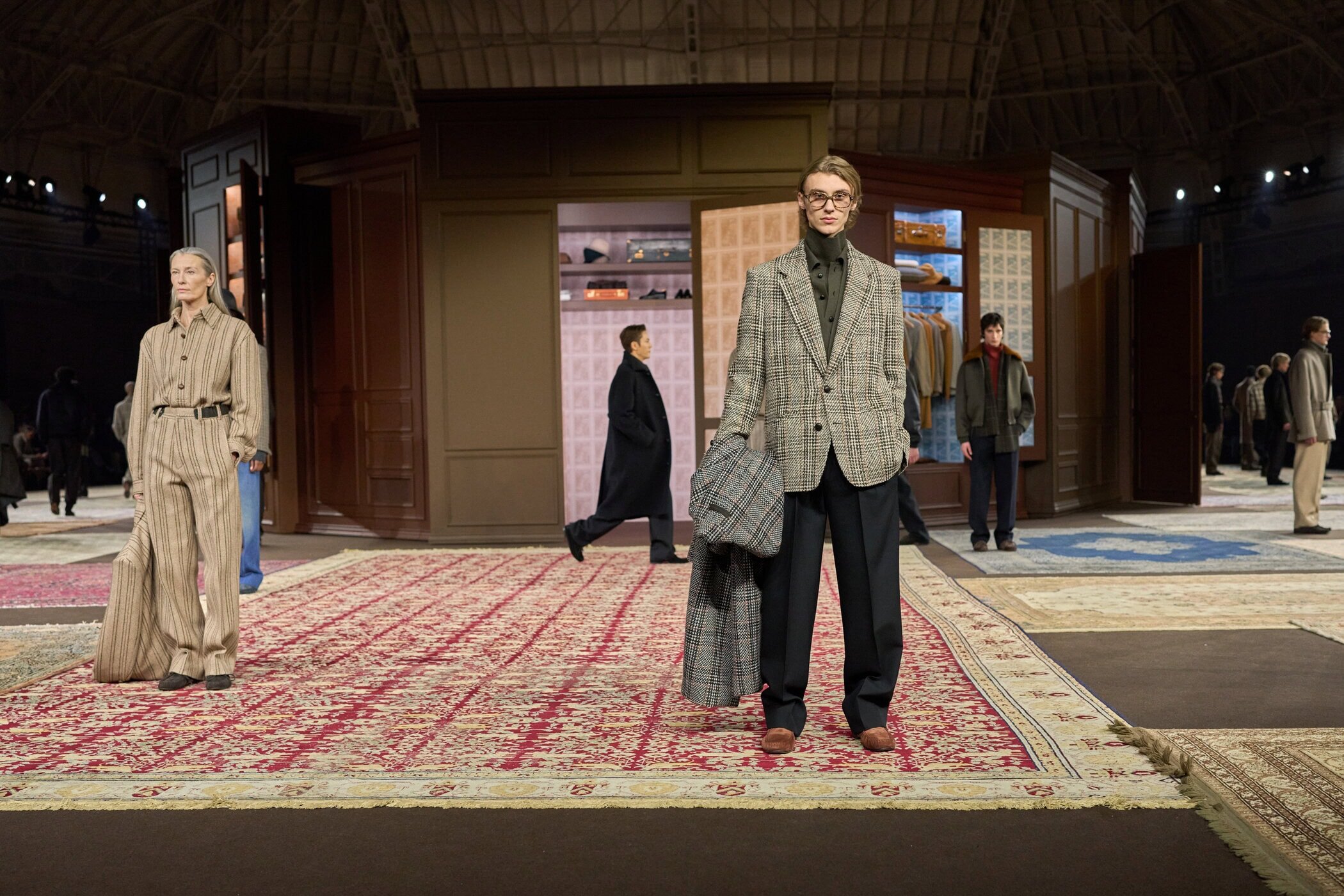
The set design envisioned by Alessandro Sartori of Zegna was possibly the most emotive. Titled ‘Family Closet’ the shows backdrop was a manifestation of how clothes can act as heirlooms, connecting across the generations. Closets holding the Zegna familys history, also became Narnia-like modes of transportation into the brands next chapter (the reigns of the house were recently handed over to the fourth generation).
Preservation and memory, a celebration of the lives clothes have lived, were all captured in the set design which included a museum-worthy glass case housing “ABITO N.1” the first suit created for Count Ermenegildo Zegna in the 1930s, bringing together past, present, and a view into the future.
How Did it Manifest on the Runway?