The Strength of Line
Review of Victoria Beckham Fall 2026 Fashion Show
By Mackenzie Richard Zuckerman
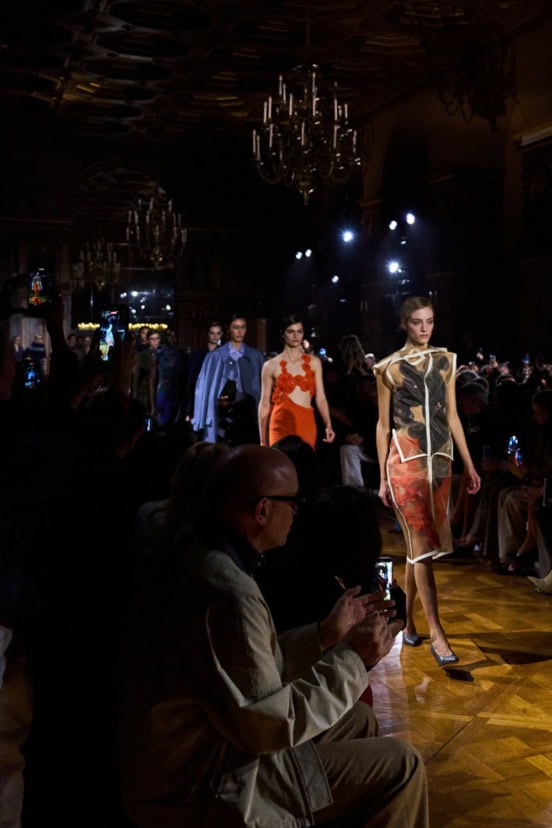
Victoria Beckham has always spoken about clothing in terms of silhouette. For her, design begins not with decoration but with the architecture of the body—how line, proportion, and construction shape the way a woman moves through the world. This season, that philosophy found an especially fitting muse in the work of the Art Deco painter Tamara de Lempicka, whose portraits of sharply defined, self-possessed women helped redefine feminine modernity in the early twentieth century.
Beckham referenced not only Lempicka’s visual language—the strong graphic lines and sculptural compositions—but also the artist’s independence. Working in a male-dominated art world, Lempicka built a career on the strength of her own vision, refusing to bend to trends. It is a philosophy Beckham clearly relates to. Over the past two decades she has built her label with similar discipline, refining a vocabulary of precision tailoring, elongated silhouettes, and controlled sensuality that continues to evolve without losing its core identity.
The result was a collection that explored the multidimensionality of modern womanhood through the language Beckham knows best: strong silhouettes, thoughtful contrasts between masculinity and femininity, and the quiet confidence of clothes designed to empower rather than overwhelm.
THE COLLECTION
THE VIBE
Composed, Architectural, & Confident
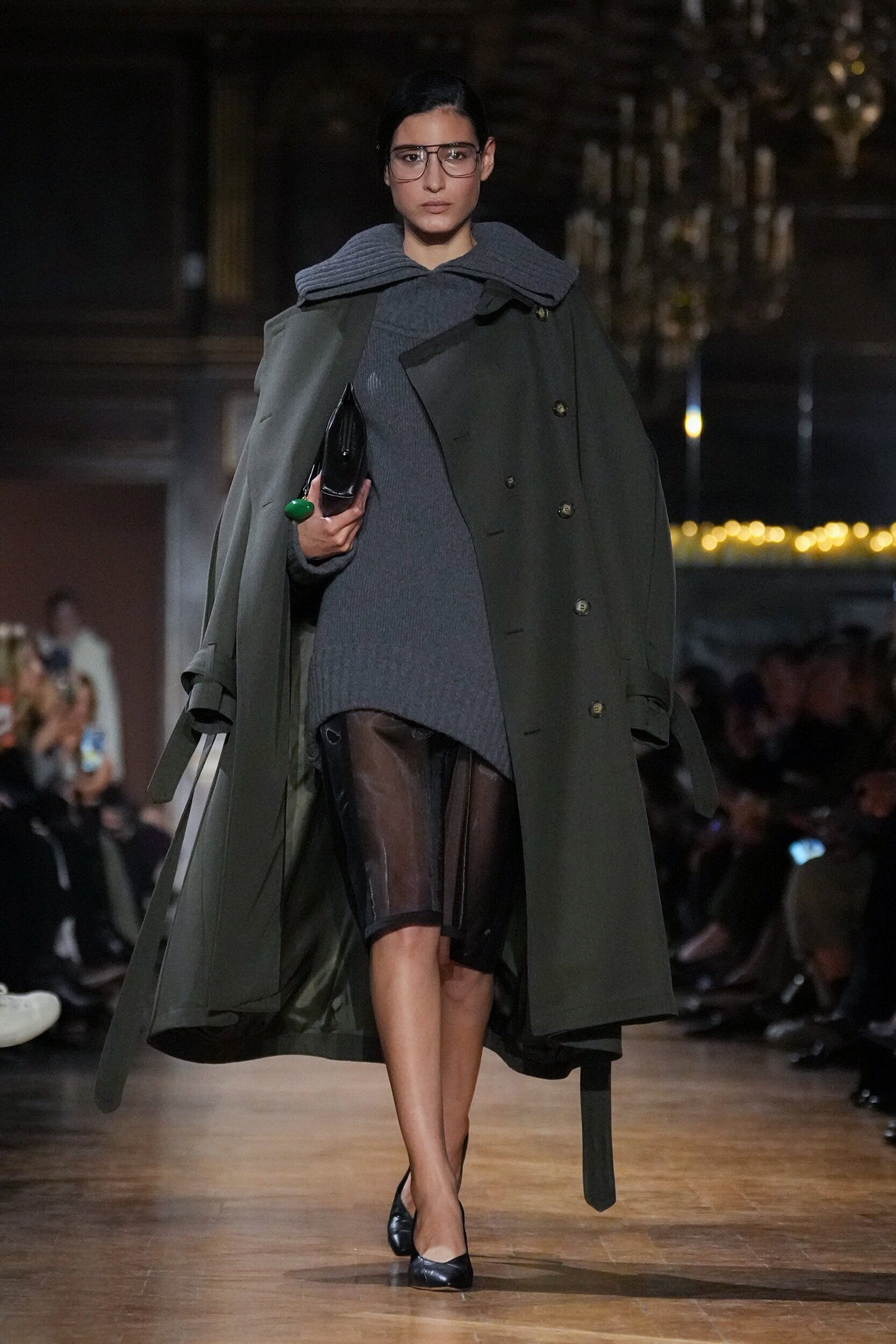
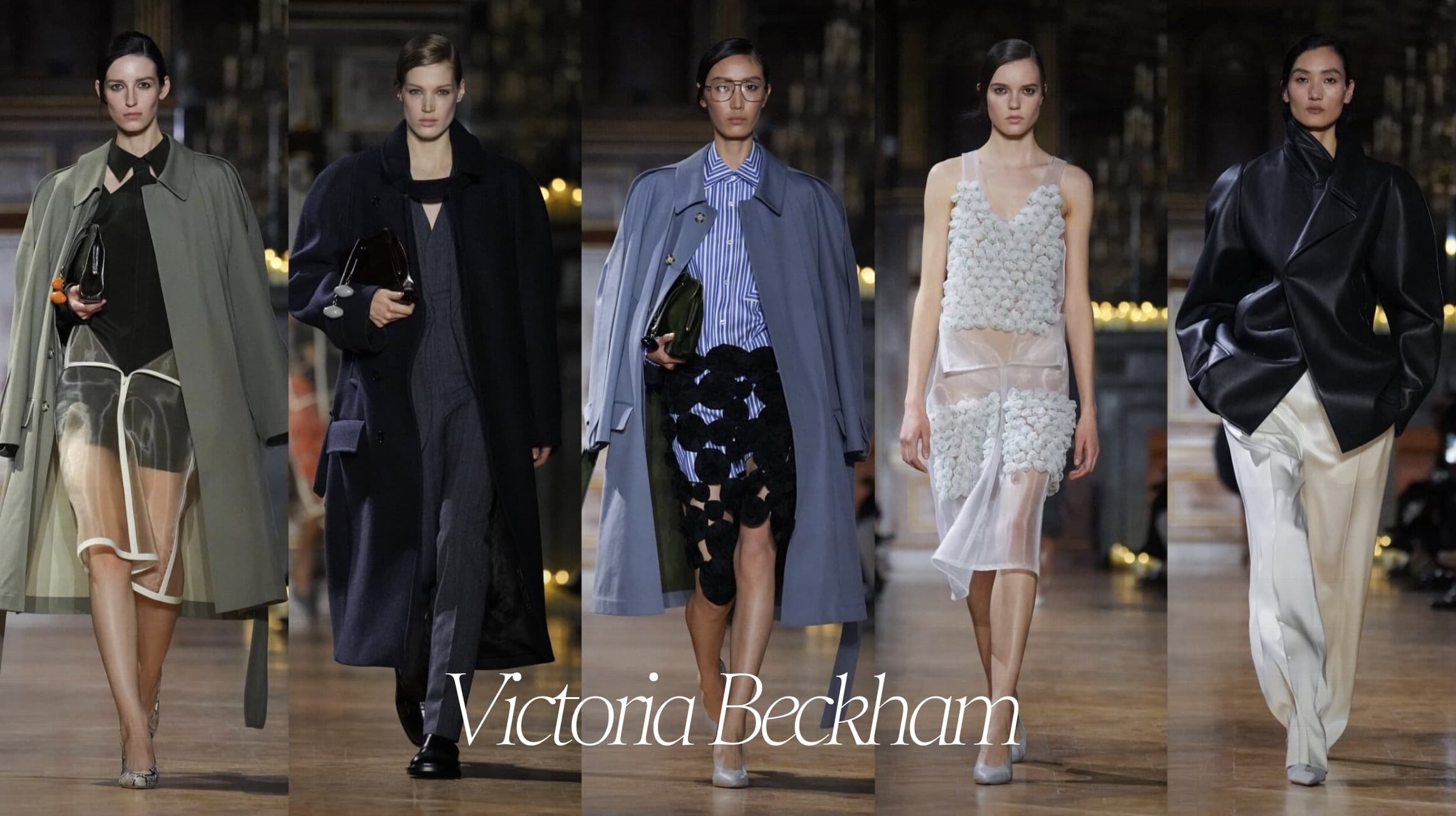
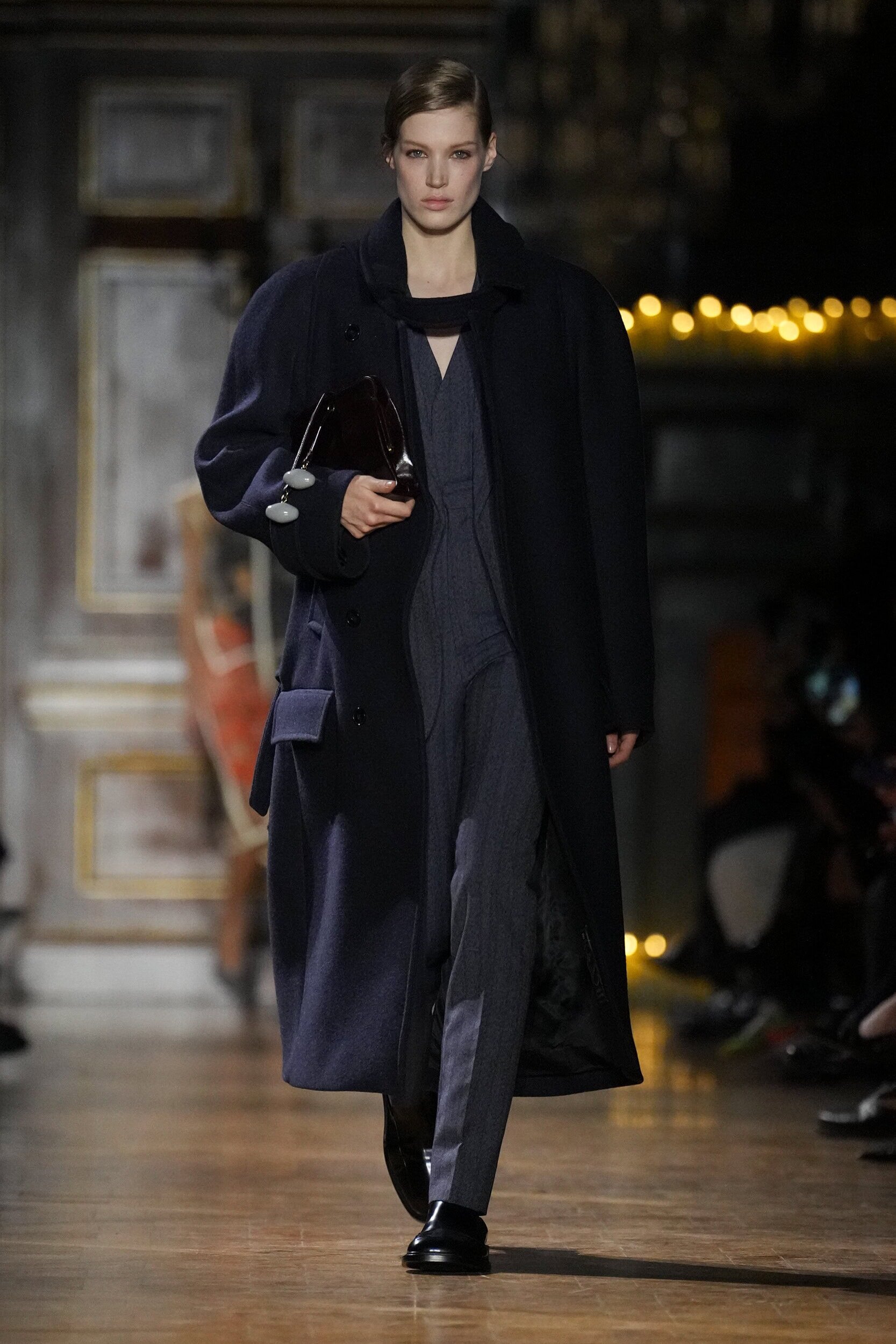
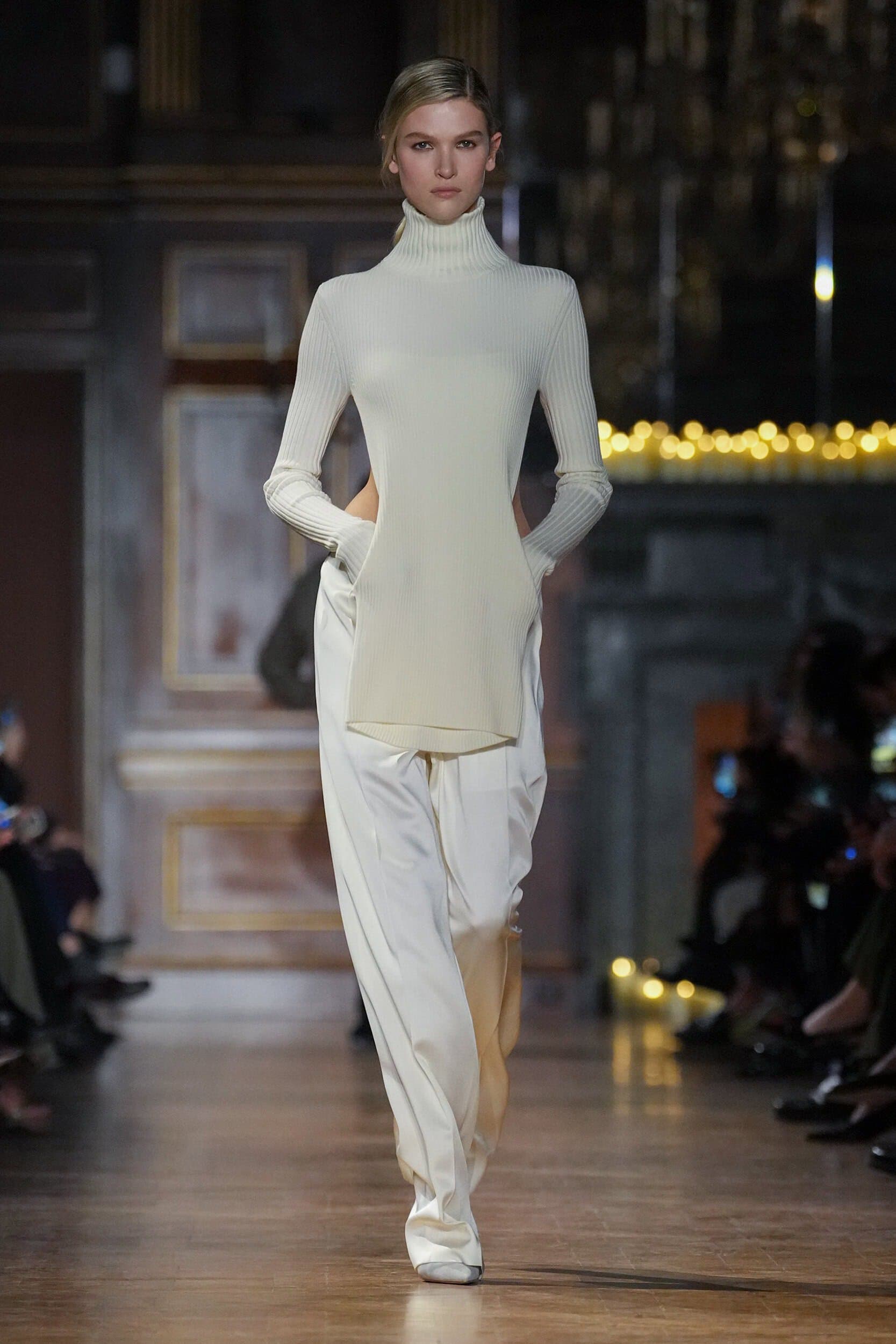
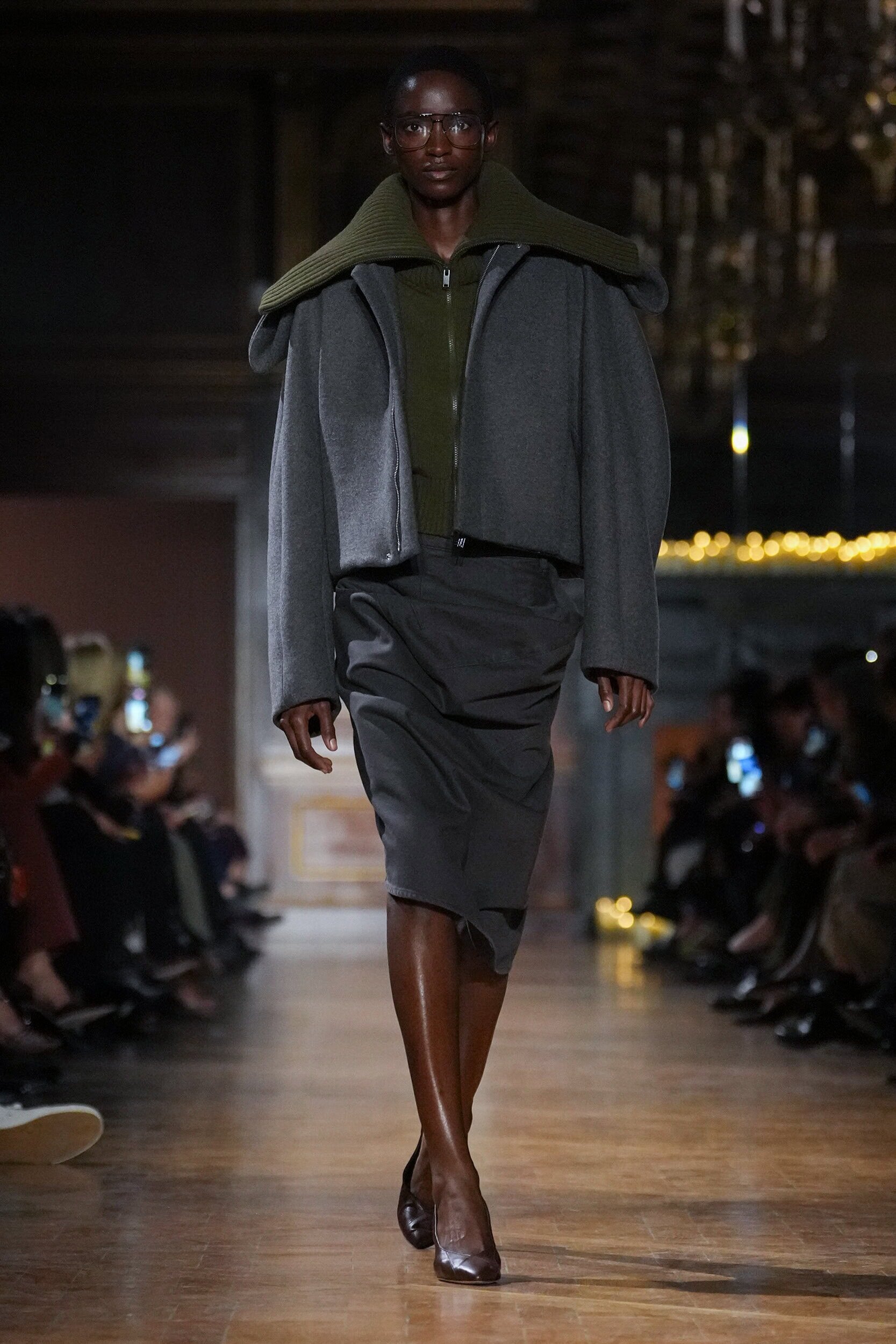
The show opened with Beckham’s signature tailoring, immediately establishing the collection’s architectural tone. Long coats in deep navy and charcoal framed narrow trousers and fluid dresses beneath, creating a silhouette that emphasized verticality and composure. Jackets were cut with strong shoulders and elongated lines, lending the body a sense of authority without feeling rigid.
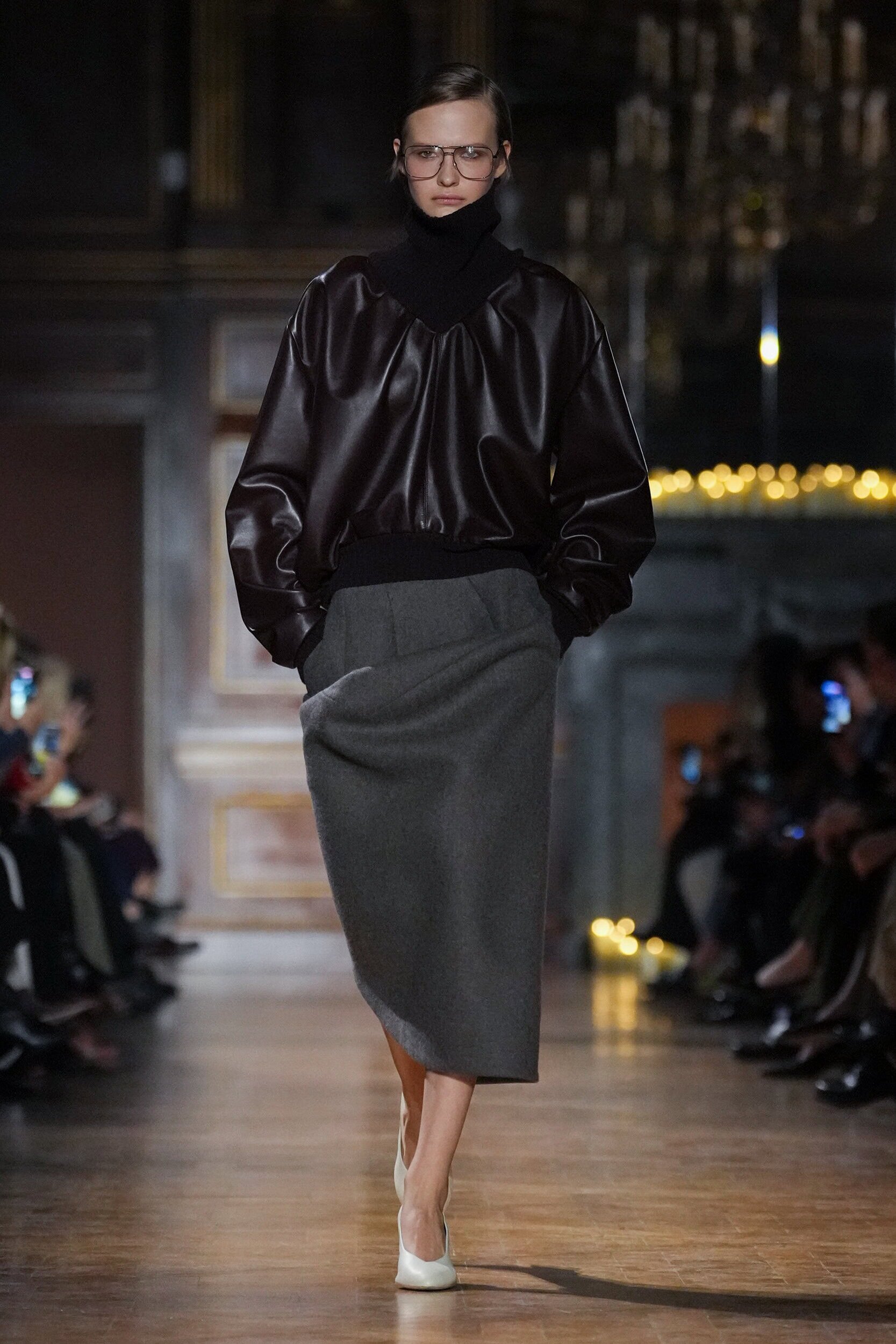
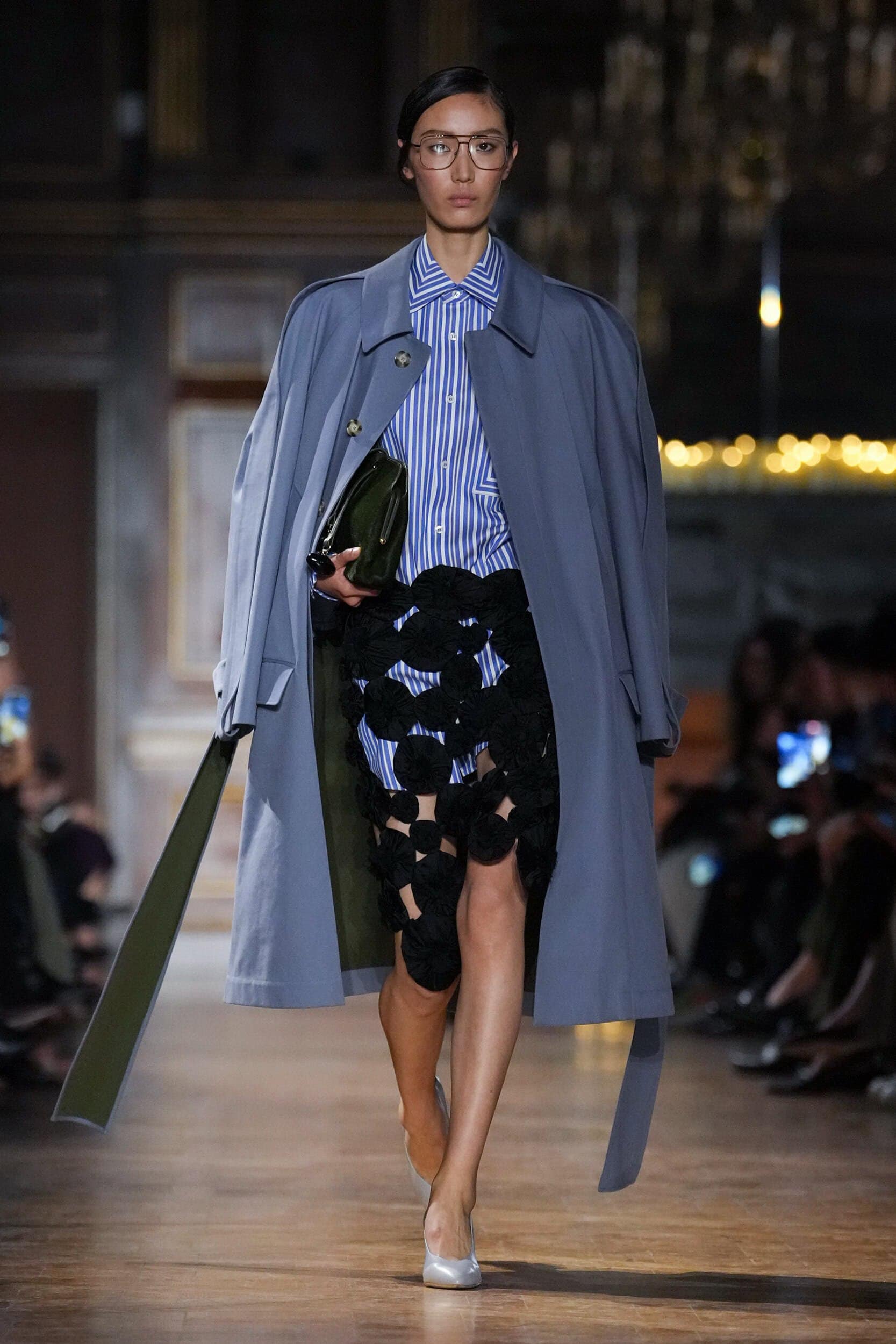
Throughout the collection Beckham continued to explore the balance between masculine structure and feminine softness—a tension she has long described as central to her design philosophy. Crisp suiting appeared alongside delicate slip dresses, while sharply tailored jackets were paired with fluid skirts that moved gently around the body. The effect was less about contrast for its own sake than about illustrating the multiple facets of a woman’s identity.
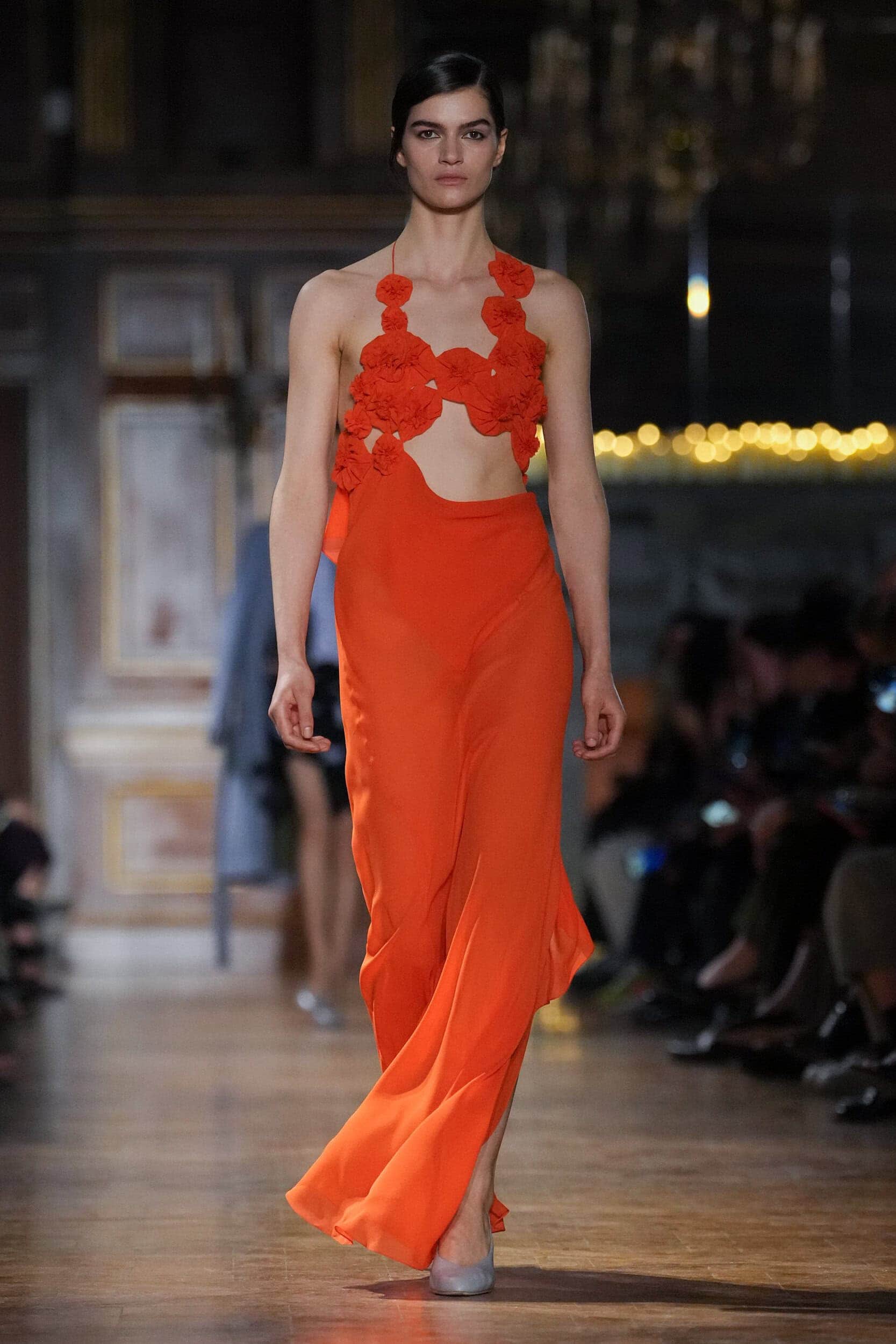
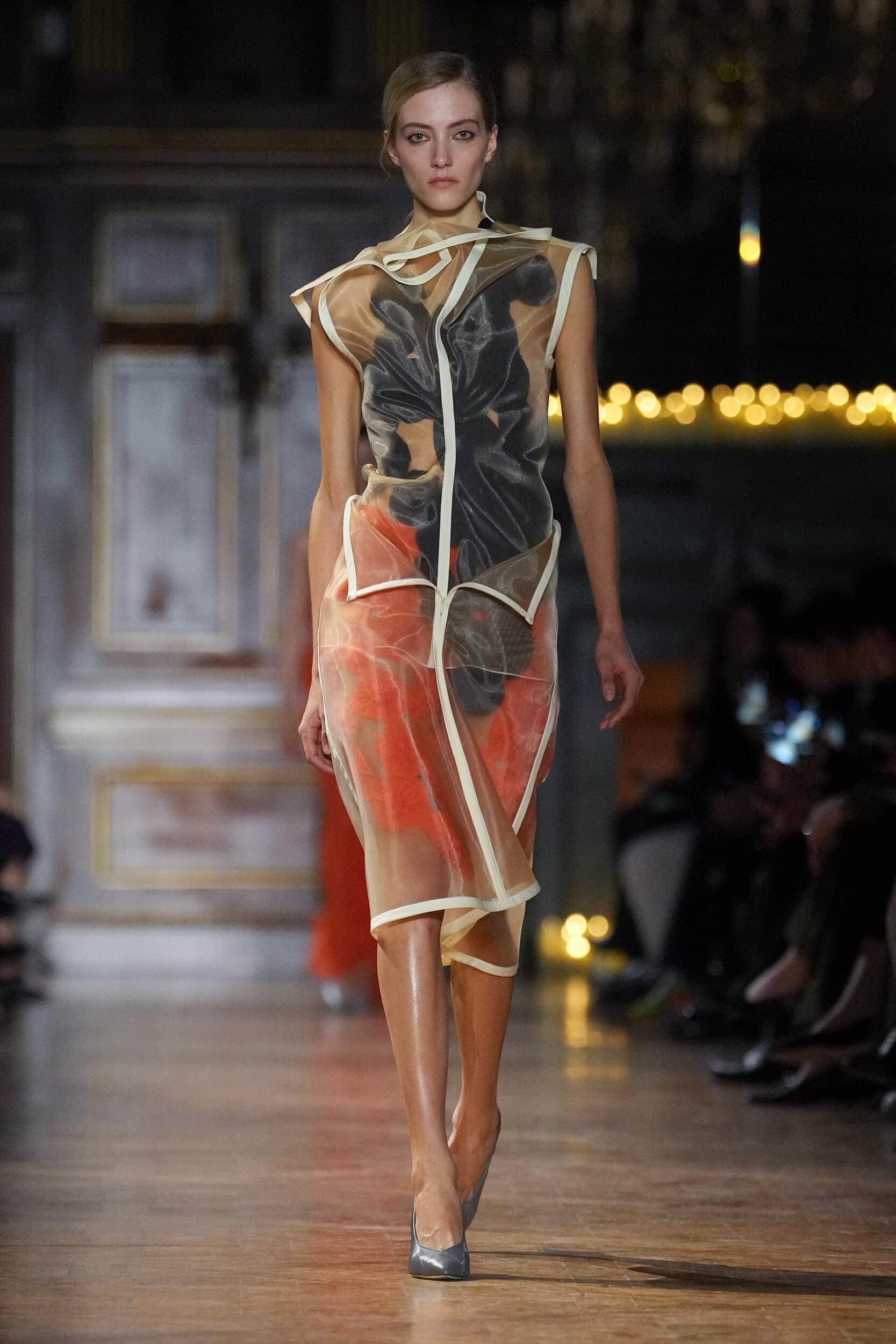
Color played a subtle but deliberate role. The palette was largely restrained—charcoal, navy, olive, and cream—allowing the collection’s precise cuts to take center stage. Against this calm foundation, Beckham introduced moments of intensity: a vivid red evening dress that flowed elegantly along the runway, or abstractly printed pieces that echoed the bold compositions of Lempicka’s paintings.
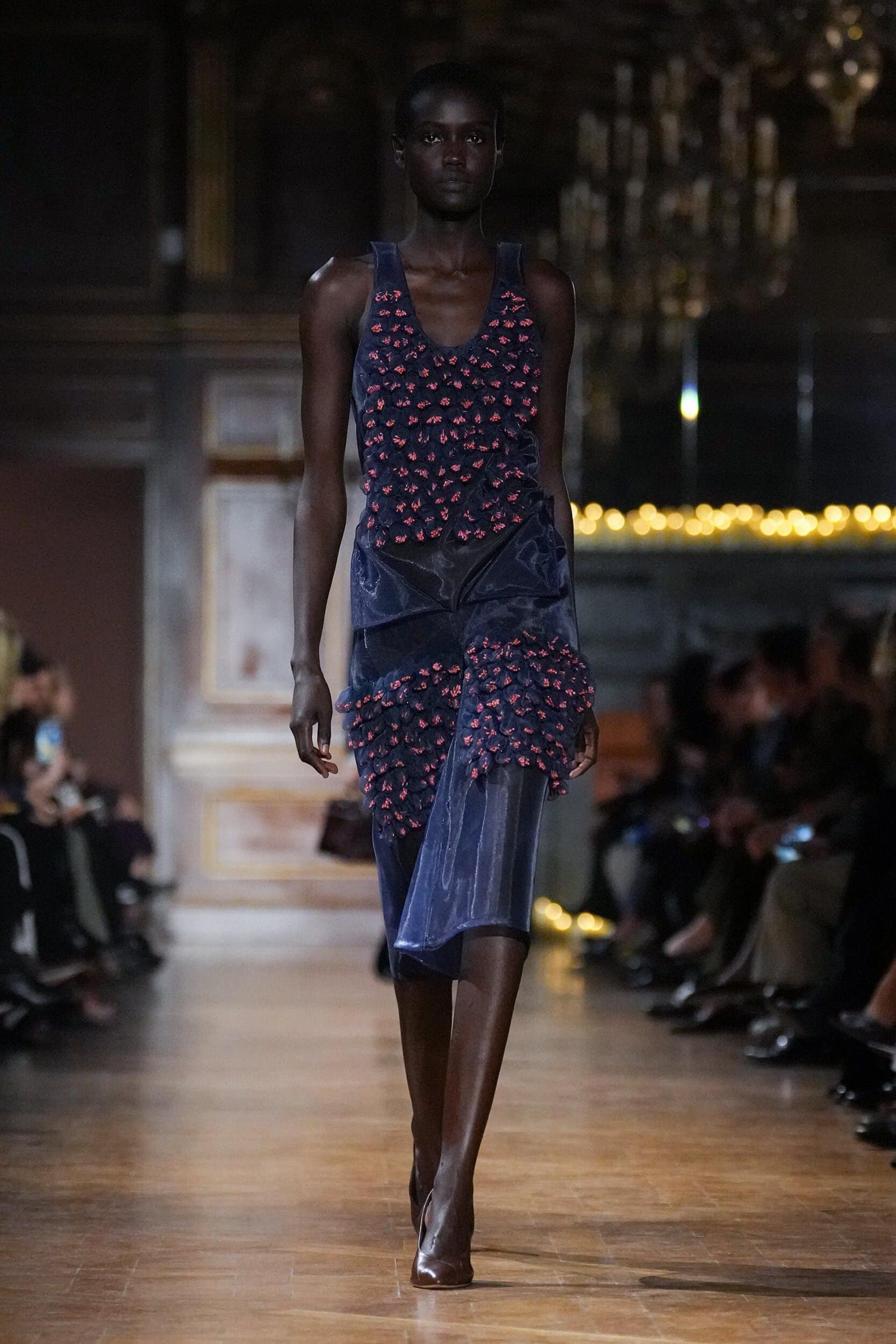
Material contrasts further reinforced the collection’s dialogue between strength and softness. Structured tailoring in wool and leather was offset by sheer layers and fluid fabrics that revealed glimpses of the body beneath. Some of the most intriguing pieces involved transparent overlays that traced the contours of the figure, offering a glimpse of Beckham experimenting with new technical territory while maintaining her characteristic restraint.
Even in the more experimental designs, silhouette remained the guiding principle. Beckham spoke after the show about her continued fascination with the illusion that clothing can create—how small details such as exaggerated pockets or subtle tucks can reshape the body’s proportions. This attention to line was evident across the collection, from the cinched waists of tailored looks to the sculptural evening dresses that closed the show.
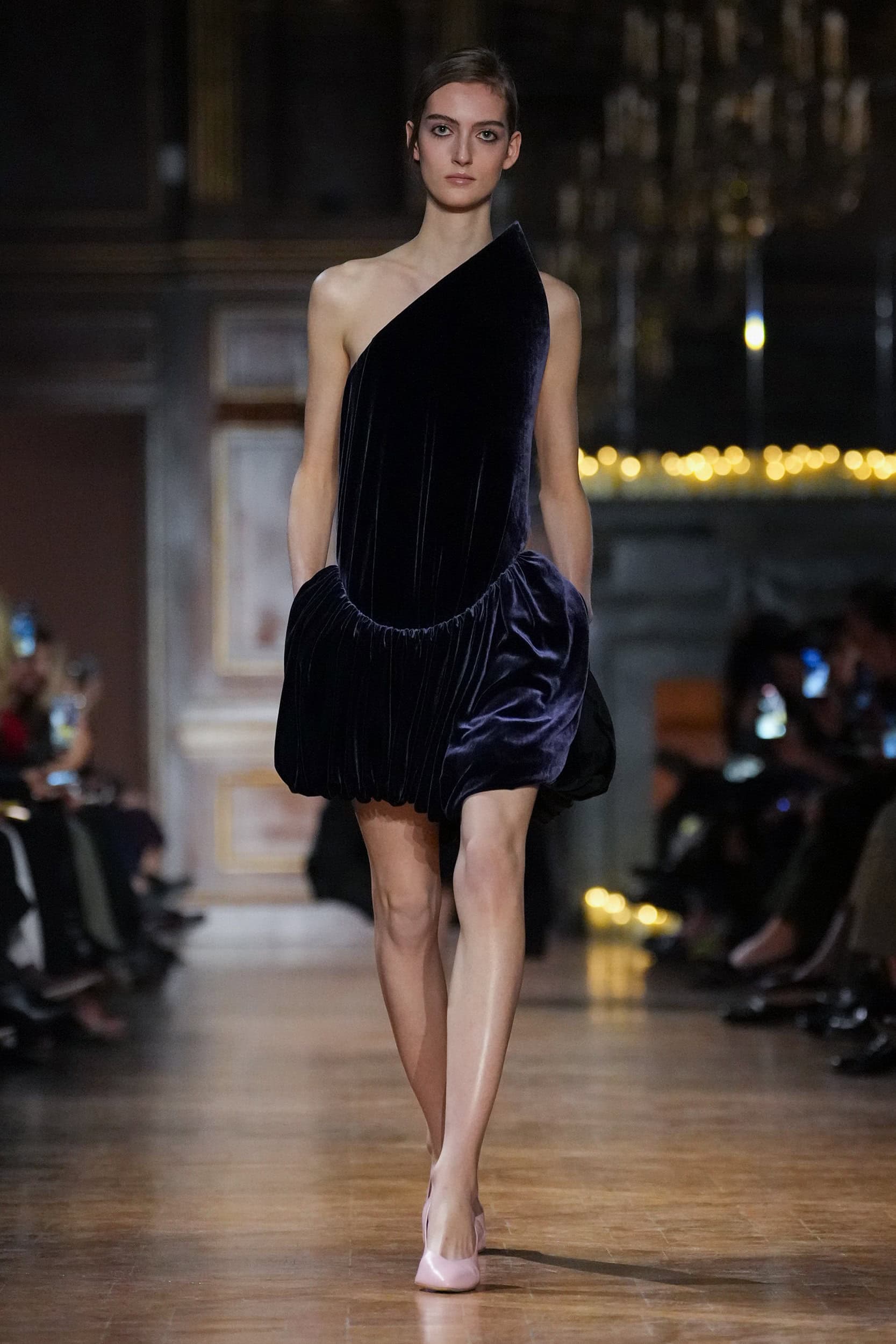
The finale brought a touch of romance to the otherwise controlled presentation, with dark velvet and sculptural black dresses introducing volume and drama. Yet even here, Beckham resisted excess. The gowns retained a sense of architectural discipline, echoing the geometric elegance of Lempicka’s portraits.
THE QUOTE
For me it’s always been about getting the balance between masculinity and femininity. I’m quite a feminine dresser, but there always has to be that element of toughness—a muscular, masculine edge as well. That’s something you really see in the tailoring.
– Victoria Beckham
THE WRAP UP
If the collection made anything clear, it is that Victoria Beckham’s greatest strength as a designer lies in her clarity of vision. Rather than chasing novelty, she continues to refine a language rooted in silhouette, proportion, and the interplay between strength and sensuality.
The reference to Tamara de Lempicka served as a fitting metaphor. Like the artist herself, Beckham’s work celebrates a form of femininity defined not by ornament but by presence—women who are self-possessed, independent, and quietly powerful.
Two decades into her career, Beckham seems increasingly comfortable inhabiting that identity both as designer and as muse. The collection did not attempt to reinvent her codes so much as deepen them, reinforcing the idea that true modernity often lies not in constant reinvention but in the confidence to stay true to one’s vision.
In that sense, the show felt less like a departure and more like a reaffirmation: a designer continuing to refine the sharp, composed silhouette of the Victoria Beckham woman.