Generations In The Making
Review of Zegna Fall 2026 Men’s Fashion Show
By Angela Baidoo
Opening what can only be described as a significantly truncated Milan men’s fashion week, Zegna Artistic Director Alessandro Sartori made the case for less, actually being more. Returning to the Milanese fold after decamping to Dubai last season, this homecoming put the emphasis back onto the importance of the home – specifically the closet – as a place for preservation.
Teasing what was to come via Instagram, a weathered closet (reminiscent of the magical portal in C.S. Lewis’s novel The Lion, the Witch and the Wardrobe) invited viewers to step through the Zegna ‘Family Closet’ and be transported into the next chapter of the family-owned brand. A chapter which involved a handing over of the reins to the next generation (the issue of succession has come into sharper focus for many design houses as founders and CEOs enter their 70s and 80s) with Gildo Zegna announcing in November that he would take on the role of contributor, leaving the floor to his sons Angela and Edoardo who became co-CEOs of the brand.
THE COLLECTION
THE VIBE
Preservation, Studied Ease, Generational Storytelling
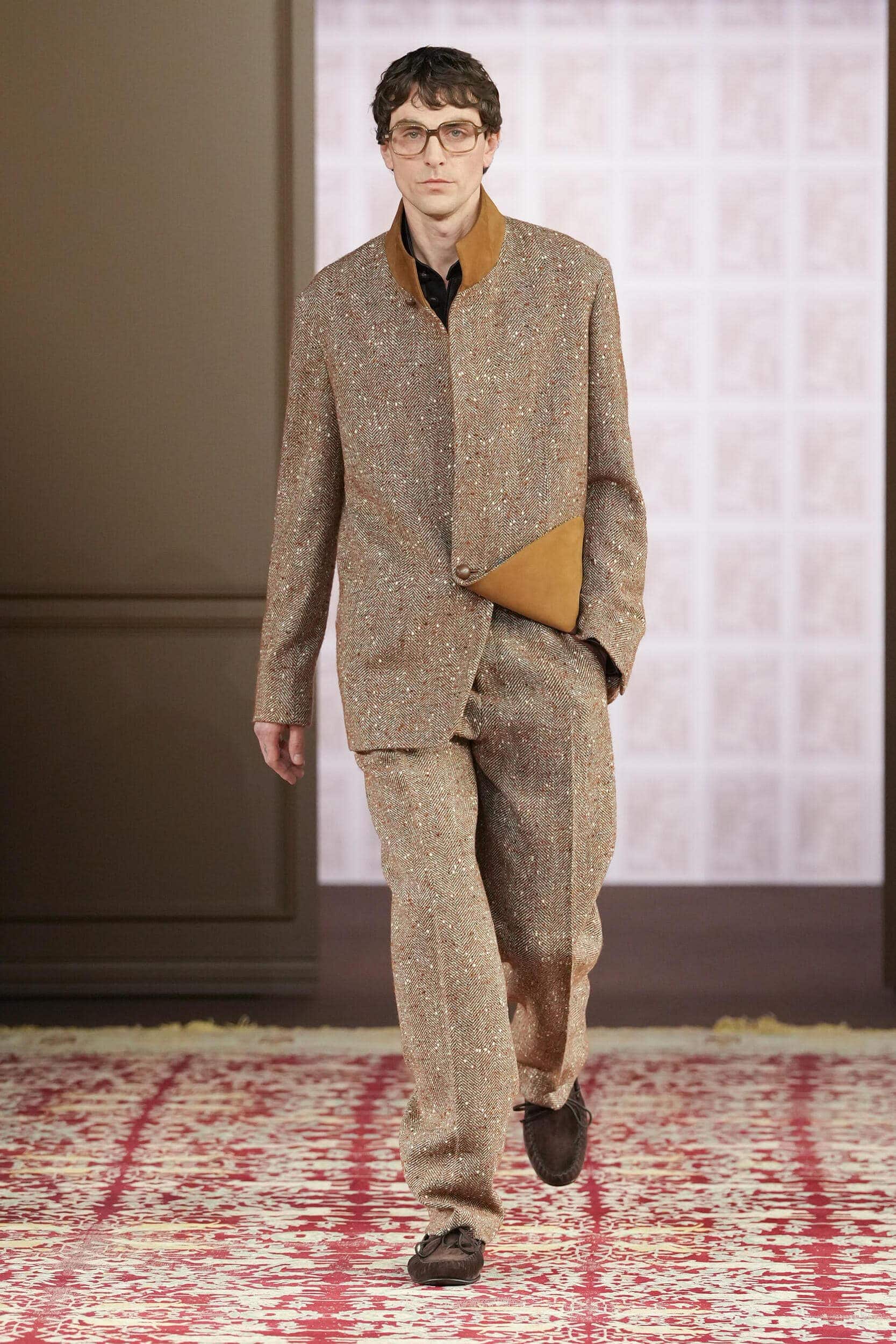
With this seismic shift of generational change in the air, Artistic Director Alessandro Sartori rightly sought to shine a spotlight on the idea of preservation. The closet, most significantly, as a home to our most treasured possessions. Whether handed down from father to son, a timeless addition that seamlessly slots into the next chapter of our story, or ‘A place where things worth remembering are kept’ as one post read.
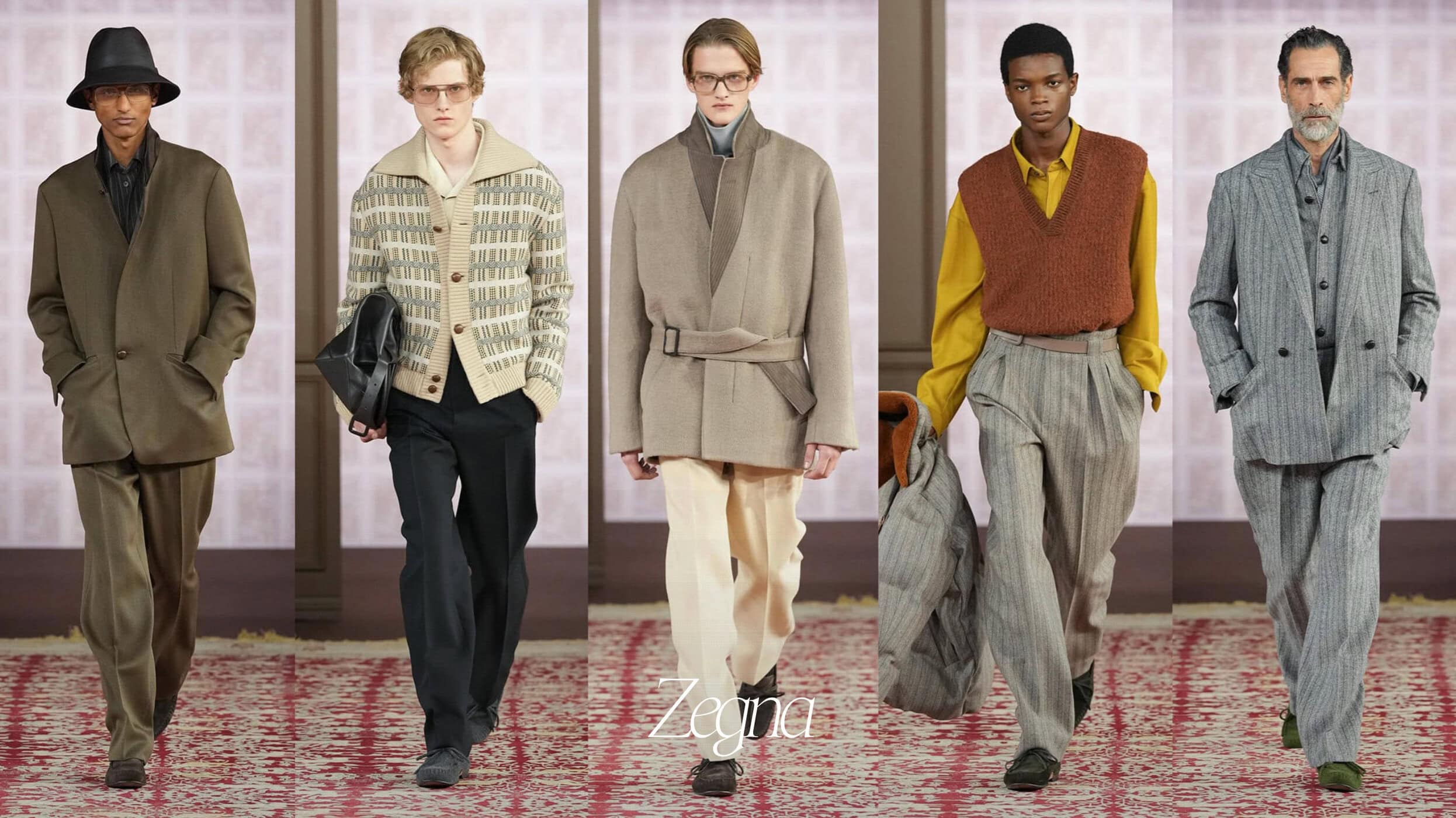
Today’s set-design brought the theme home, quite literally, with a replica of what one can only imagine is every man’s dream closet. All the ingredients were there – tailoring, accessories, footwear and luggage in a multi-angled geometric formation reflecting the customers multiple lifestyle needs – and with a myriad of Persian rugs serving as runway there was a warmth and humanity embedded into the season’s opener. And playing further into the idea of connectedness, inside this fantasy closet was a glass display case which held “ABITO N.1” the very first suit custom-made for Count Ermenegildo Zegna in the 1930s.
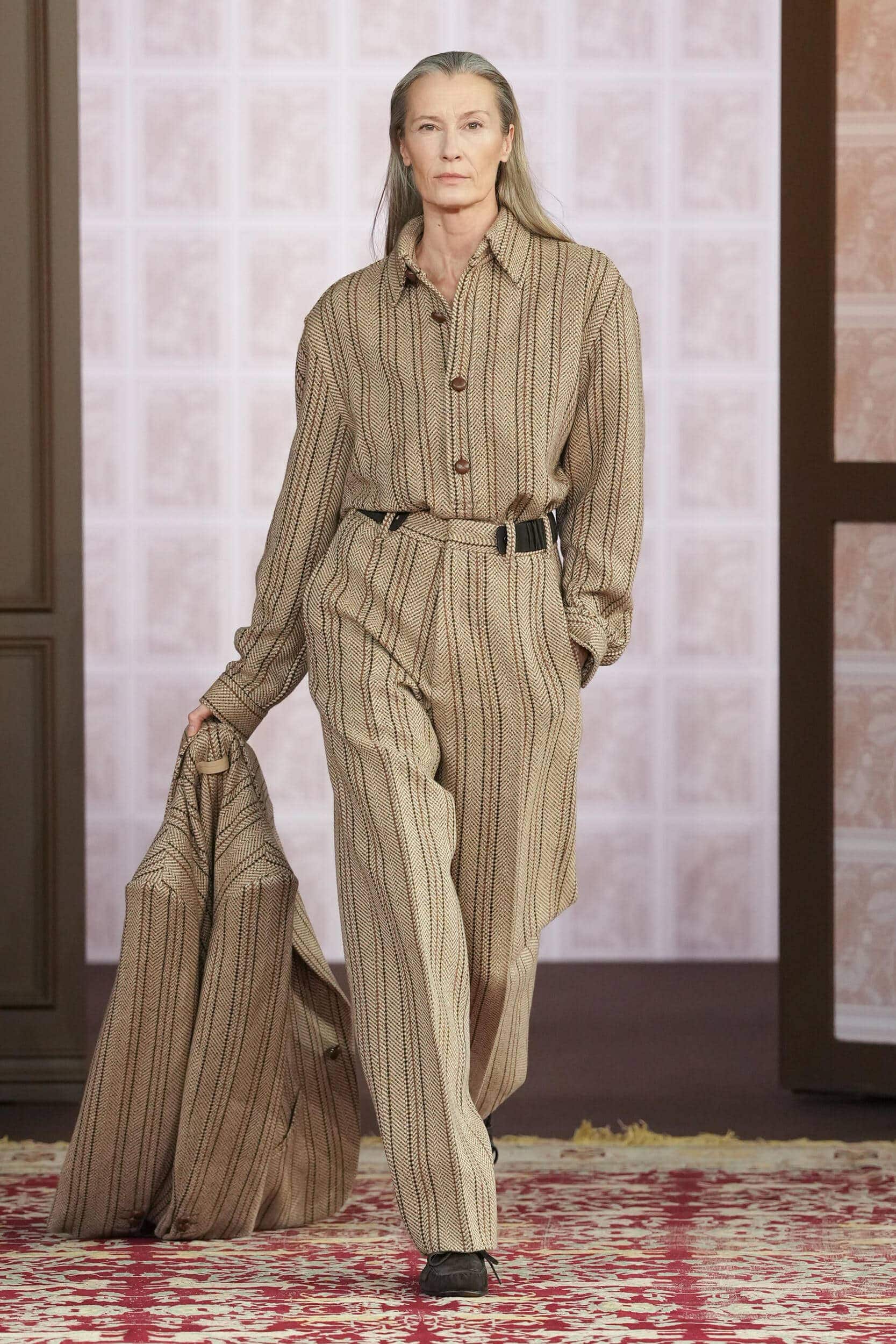
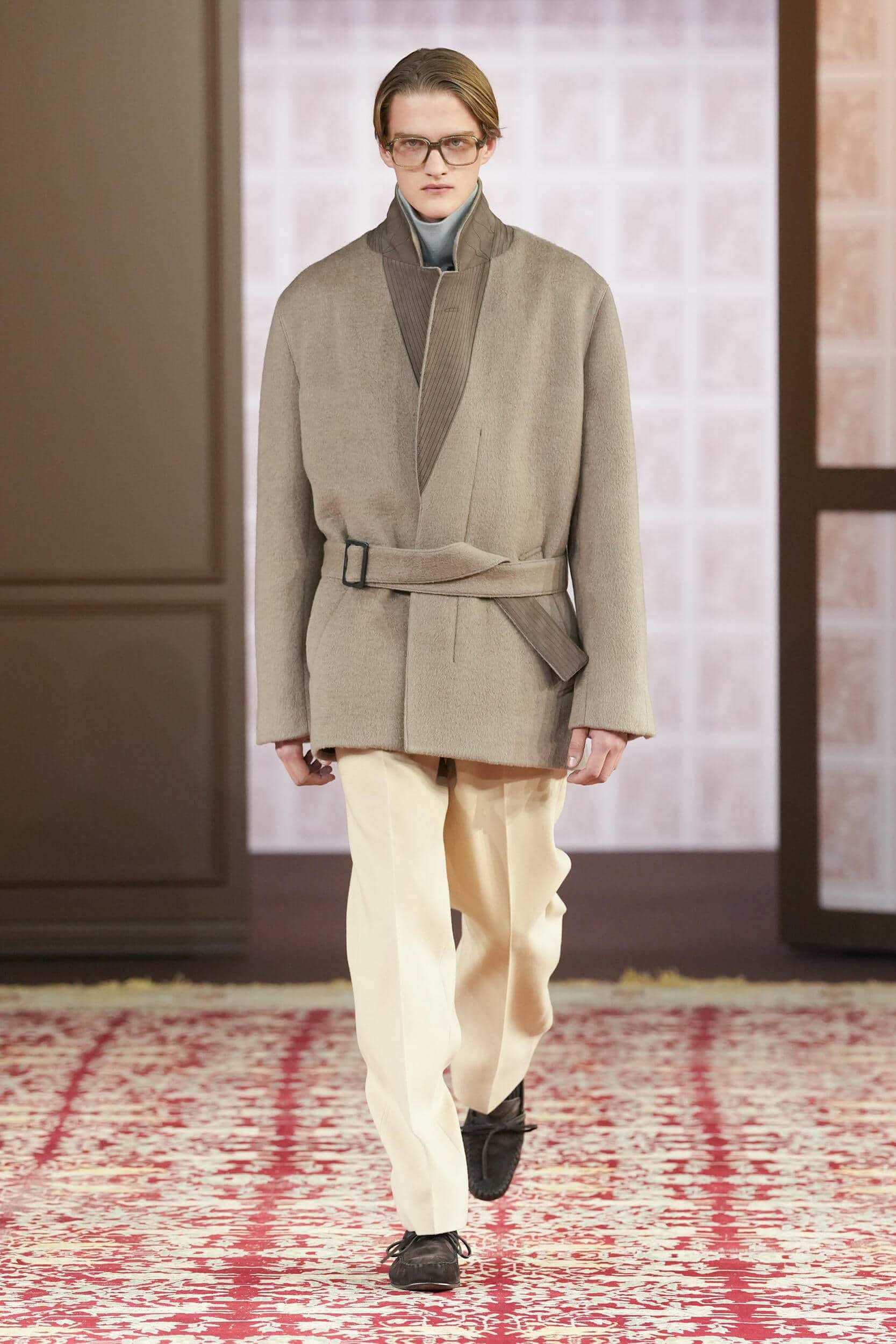
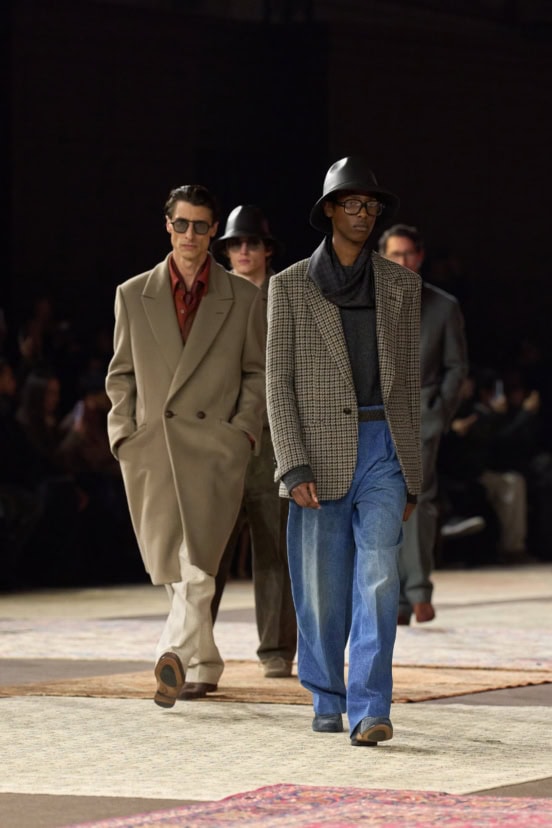
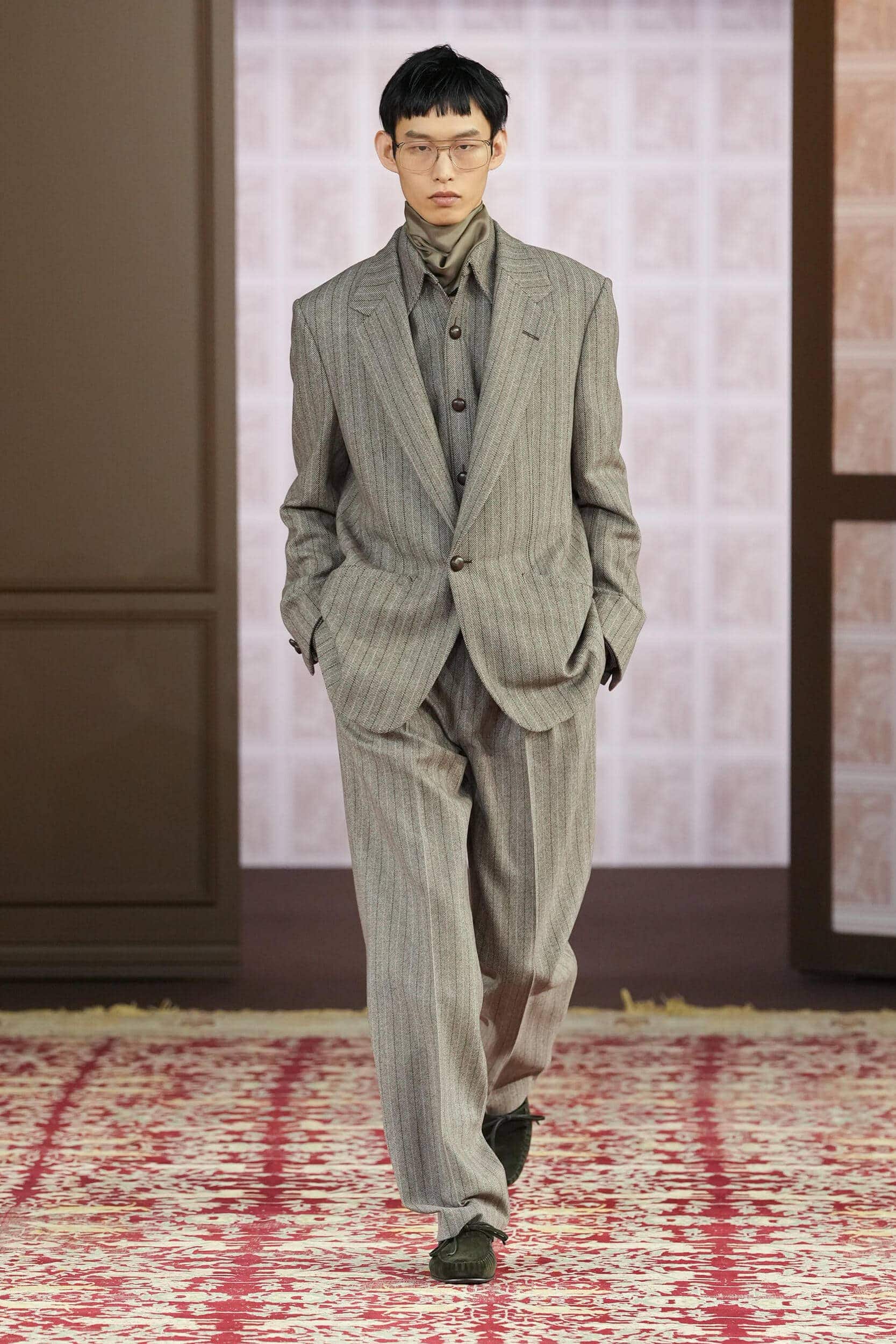
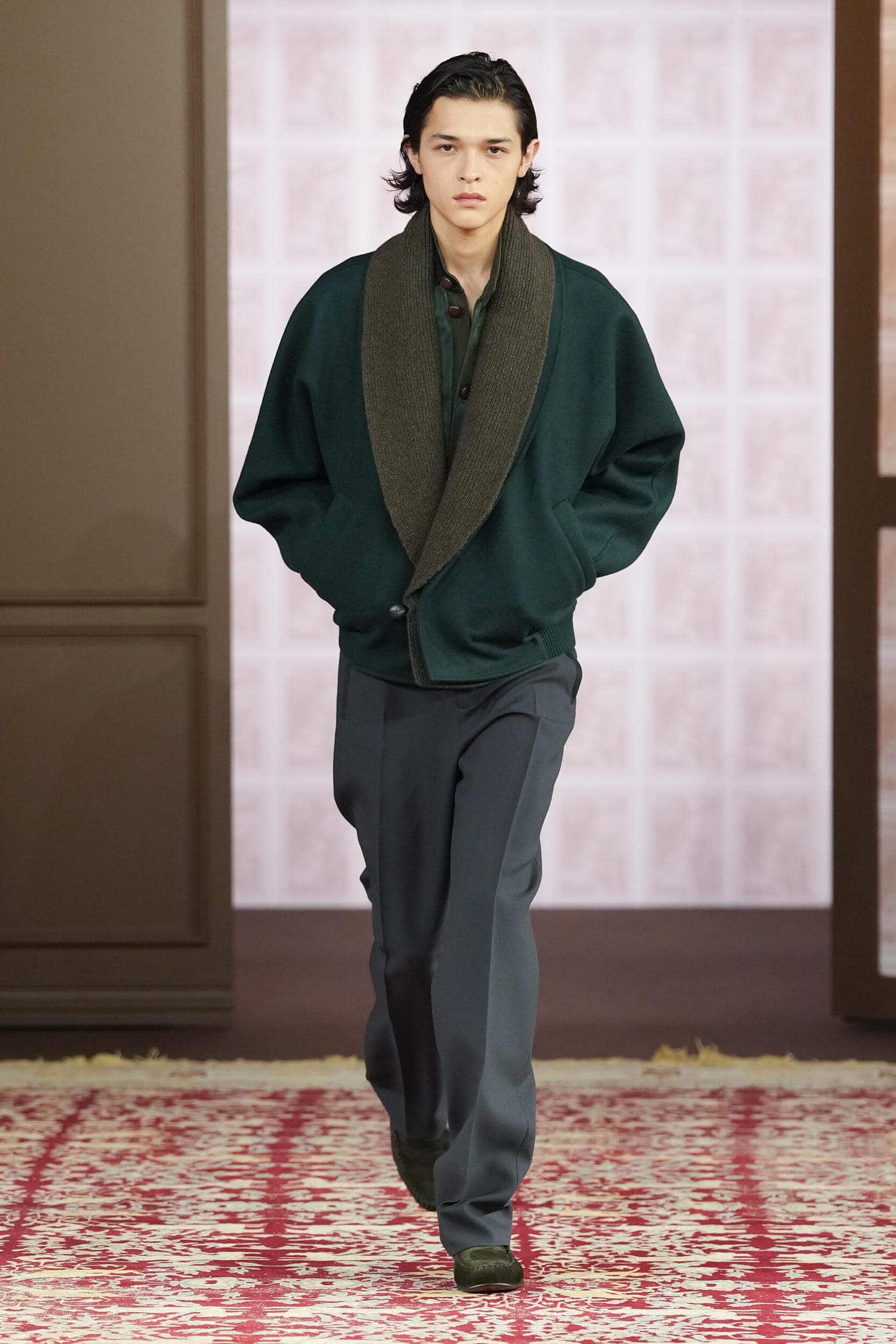
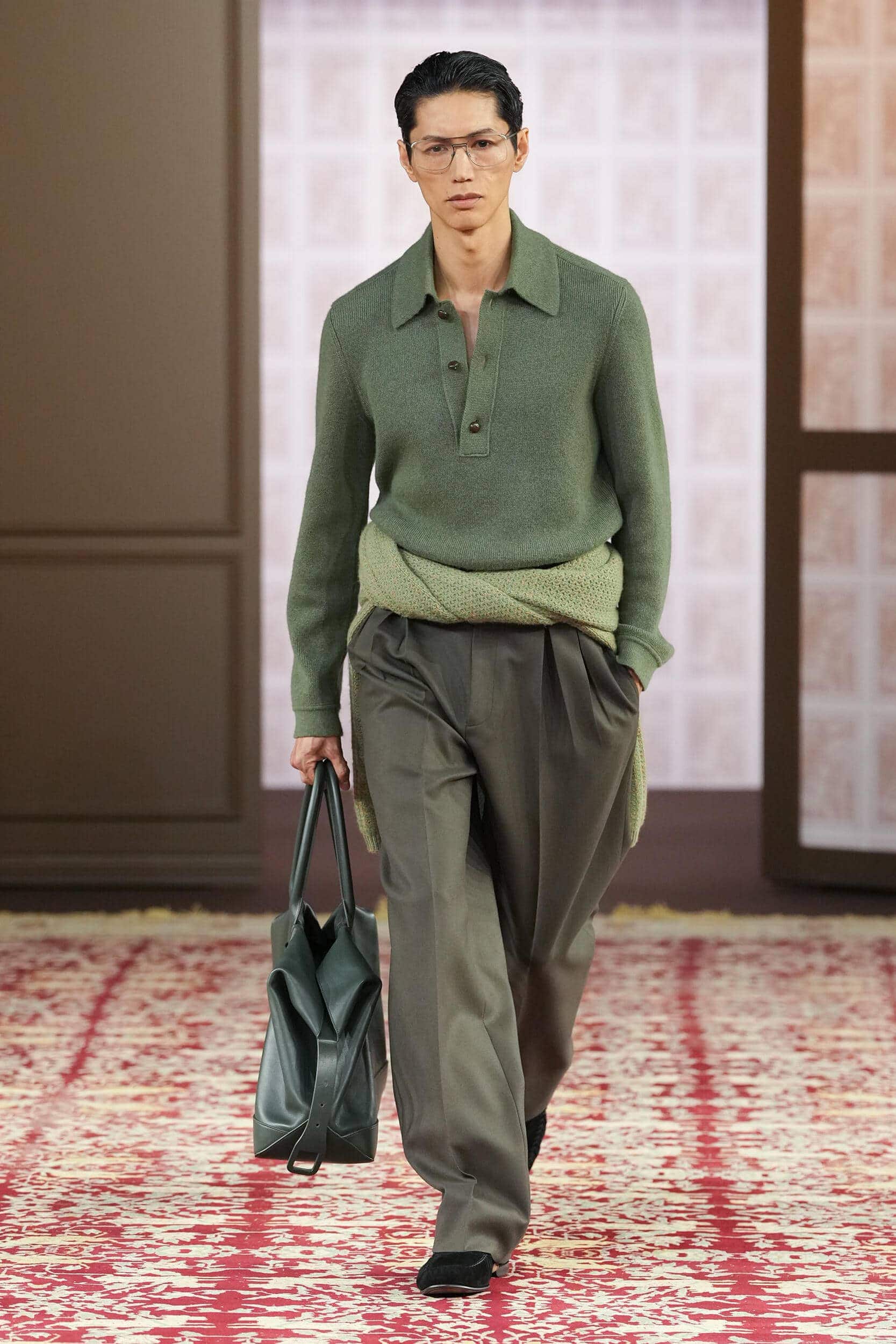
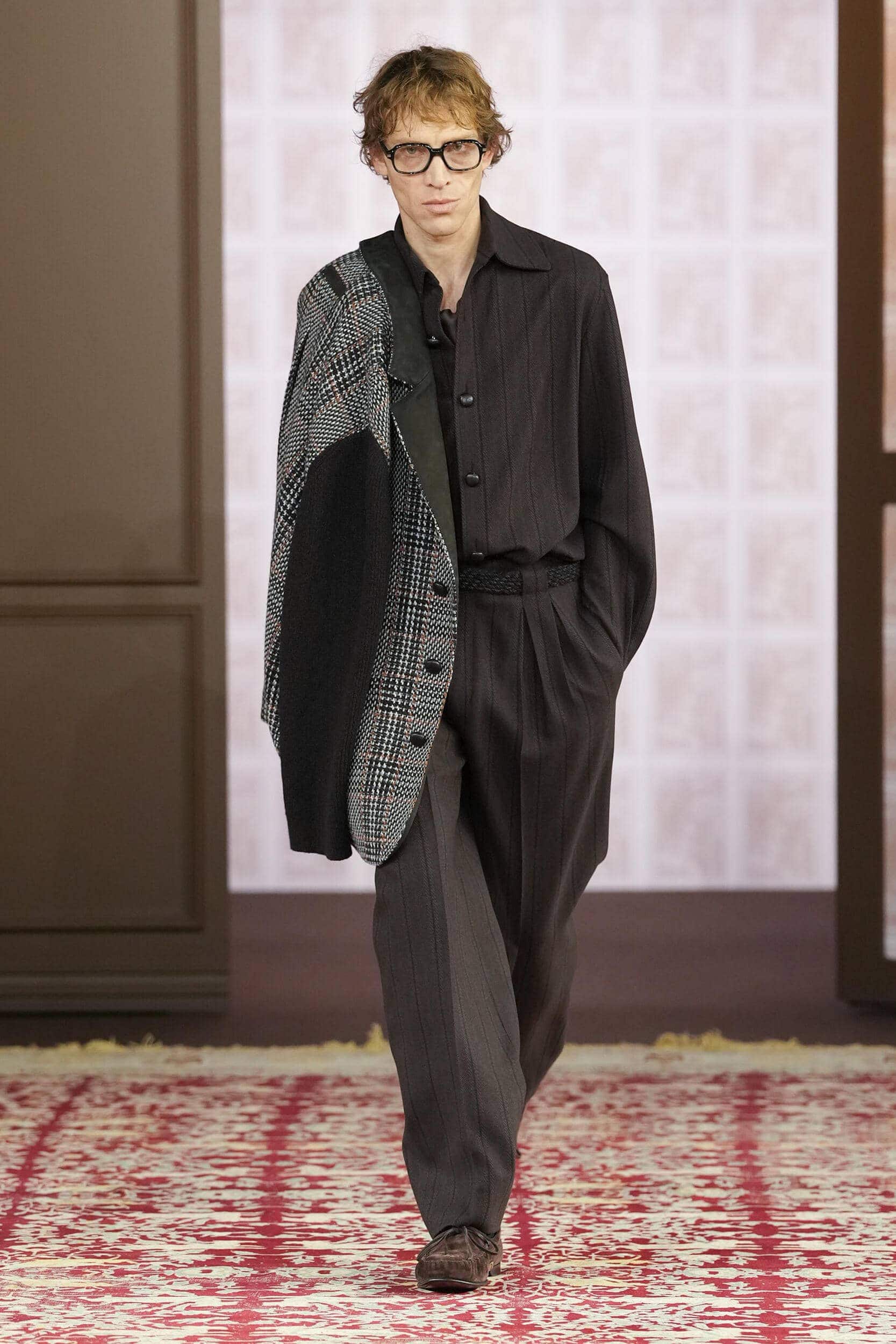
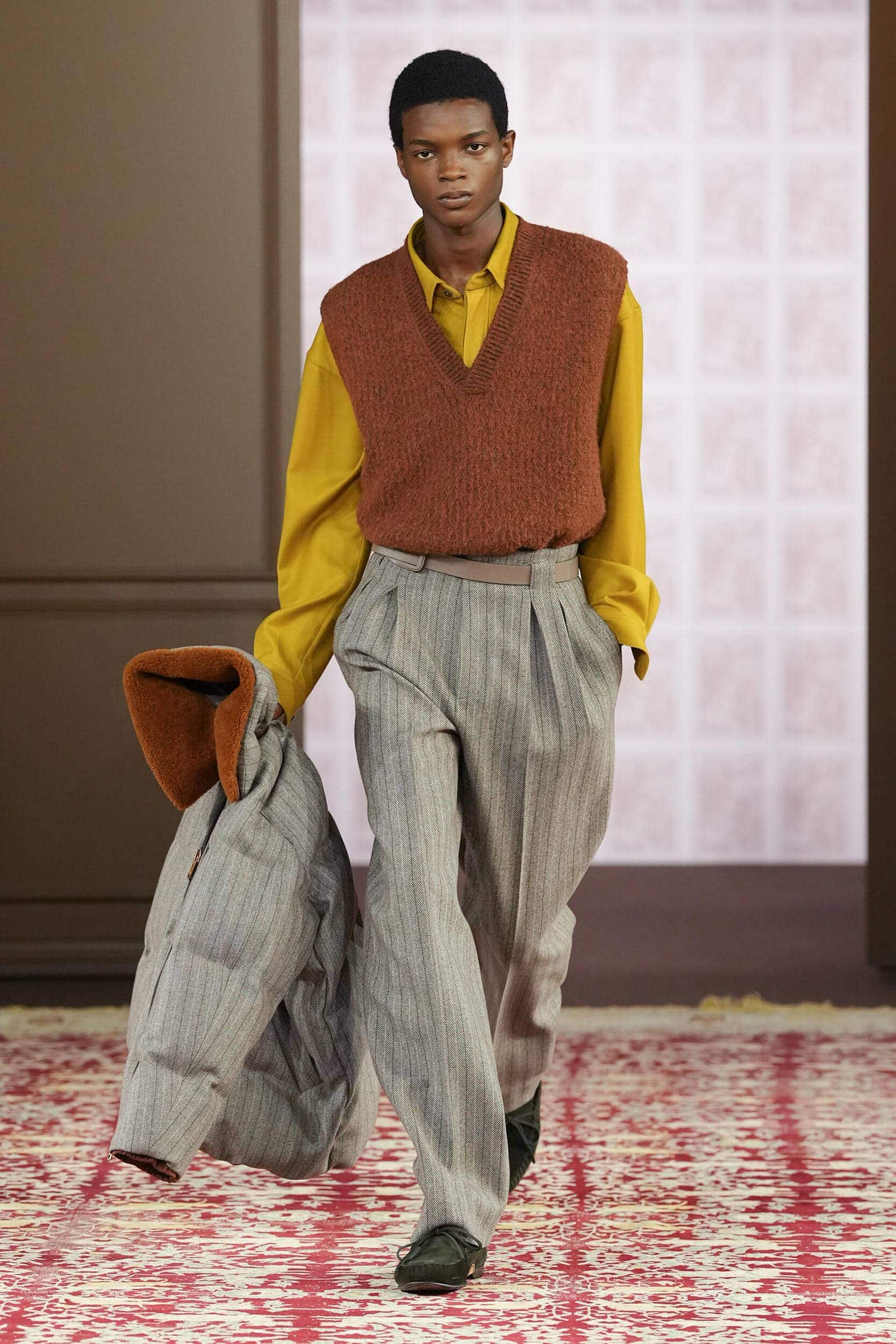
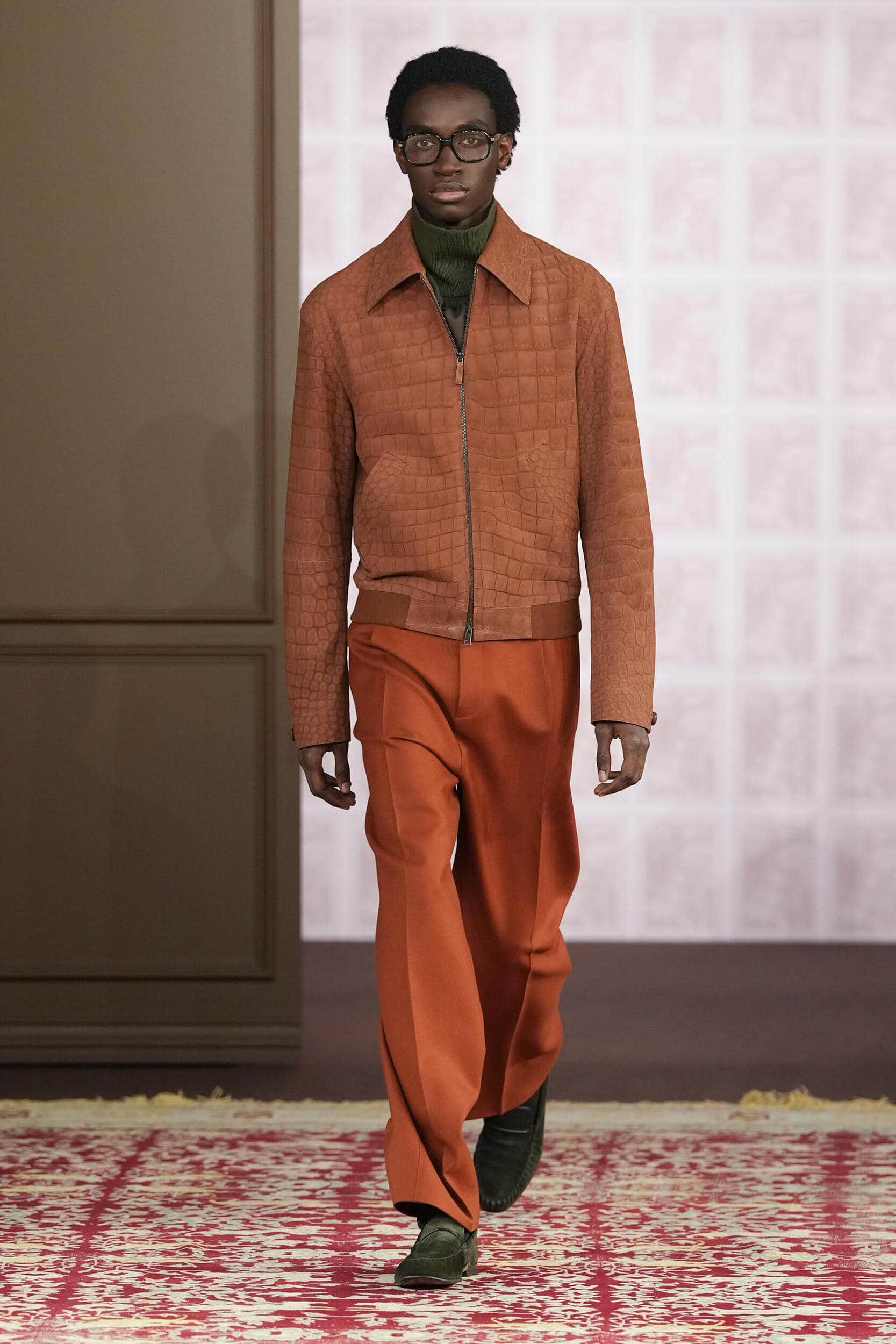
The first thing to note with Sartori’s latest collection was the sense of ease built into each look, even with something as formal as a tailored overcoat or creased pair of jeans. This goes back to the the brands continuous experimentation and investment into their textiles, as it remains a fundamental part of their story. Always staying close to his source materials (their wool mill was founded in 1910 and remains a hub of innovative development) the signature Oasi cashmere, tweed, wool, leather and paper! combined in long, languid silhouettes whose volume provided a relaxed framework for the wearer to make their own. Speaking to The Impression backstage Sartori also spoke to this idea saying “I like that you style as you like it. That’s the point, it’s not to give one rule, it’s to give a frame, and you can choose out of what I created, how you want to wear it, what suits you.”
Despite seeing a healthy profit surge of 53% year-on-year, Sartori’s message of timelessness underpinning the collection was reiterated in the fact he positively encouraged a mixing of the old with the new – although the elegant top-to-toe tonal styling could contradict that notion. The new manifested as blazers designed with a ‘double set of lapels’, pockets edited down, and an update of the horizontal 3-button closure that will allow for jackets to be worn multiple ways. Rejecting the idea of “consumismo (consumerism in Italian) and fast buying” in-line with the handover to the fourth generation of Zegna’s, these clothes are to be bought and kept forever, explaining he said “There is a totally different meaning in what we do today, and I think this is very important, it’s a strong message…like, the idea of having something that is more than a fashion piece and which is of value, like a watch has value. I want to hold pieces; to keep them forever, I want to give to my son or to my niece if I don’t have a son”.
The studied use of colour has become an understated calling card for Zegna, forgoing identikit industry standards such as Pantone, you can imagine Sartori’s palettes are sourced from nature, his travels or a swatch from a vintage silk scarf. Described as ‘creamy notes’ and ‘organic tones’ in today’s show notes, the artistic director said that the colours of Greece played a role in his selection for fall “We like these kind of Greek colours, yellow, blended with a cold palette. So, the water, the light blue, the deep green.” Each tone, carefully selected, provided a harmonious medium for which the collections rich textures became even more prominent.
THE DIRECTION
THE QUOTE
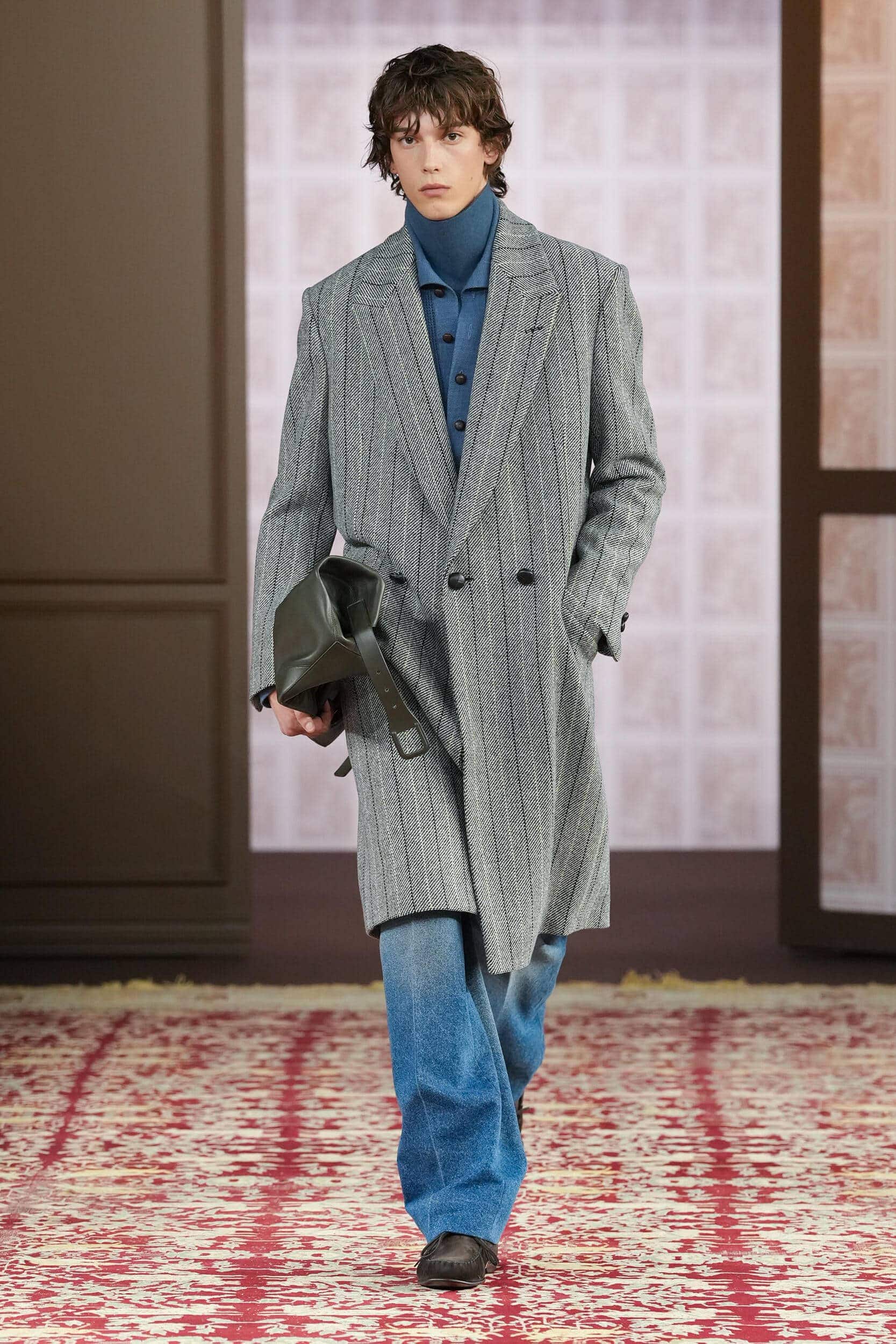
Actually, I prefer people to buy less but better – to have something that stays forever, that means that you buy less. So, I redesigned the wardrobe, all the classics, and the new silhouette, which is longer, a square shoulder, beautiful volume, a lot of pleats in the back. To us, good volume, but with the meaning of keeping them forever, and that’s the reason why we’re doing this job.”
Alessandro Sartori, Artistic Director, Zegna
THE WRAP UP
The closet was used as the metaphorical and physical vessel which can hold a family’s history, pieces passed down from father to son served as both inspiration, but also symbolic of the real-world passing of the torch from father to sons, which took place late last year. Sartori explored what gives what we own meaning, is it the stories they can tell (a graduation, a proposal, a first job) or the value that they hold? Well for the Zegna brand it is both, these are clothes that will endure, born of a love for longevity from the very first yarn to the final button, Sartori considers clothes as our chosen skin “…pages of a diary we write throughout our whole existence”, something to protect, preserve, but also to return to time and again.