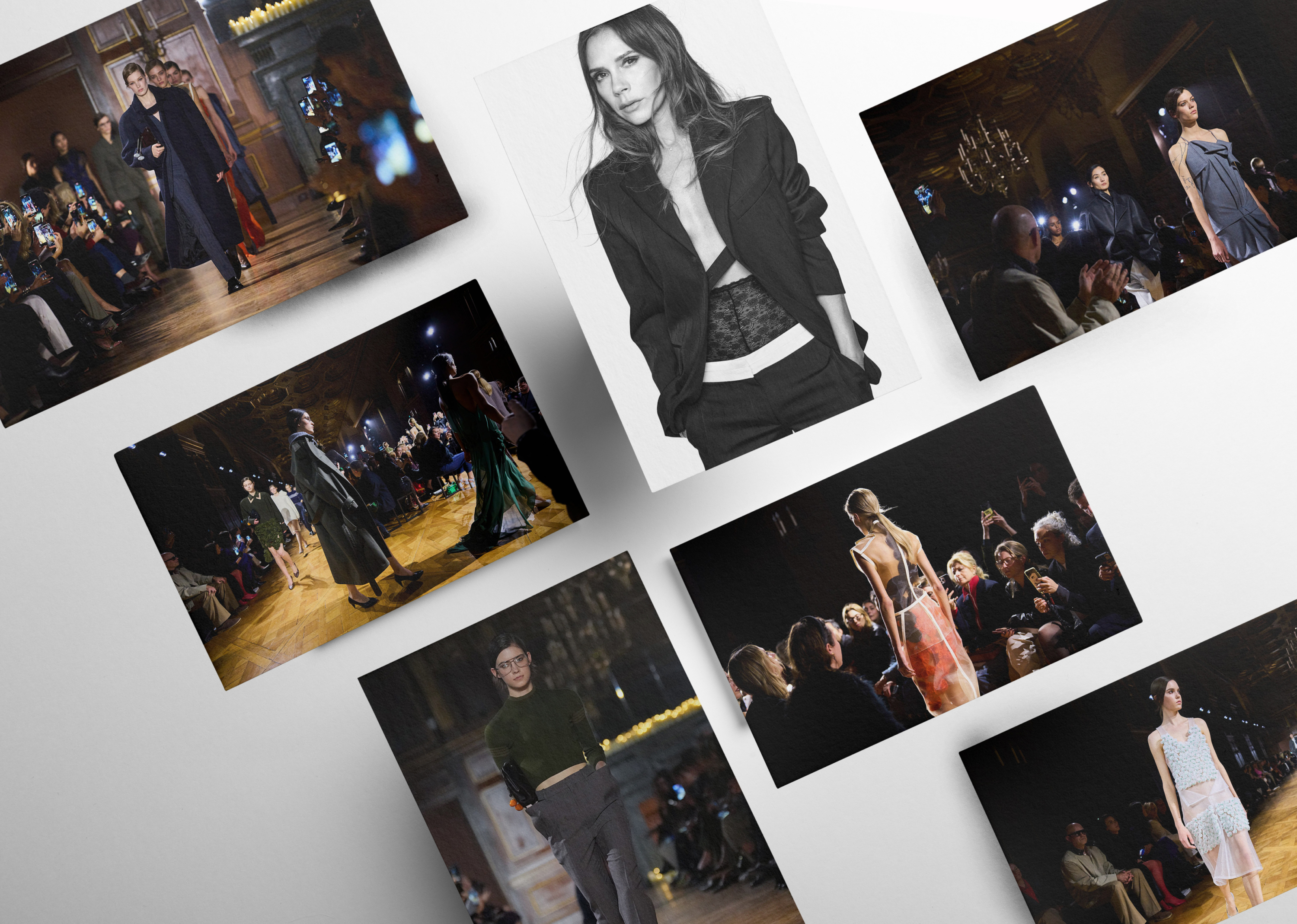
Inspired By Tamara De Lempicka, Beckham Refines Her Language Of Silhouette, Strength, And Modern Femininity
By Kenneth Richard
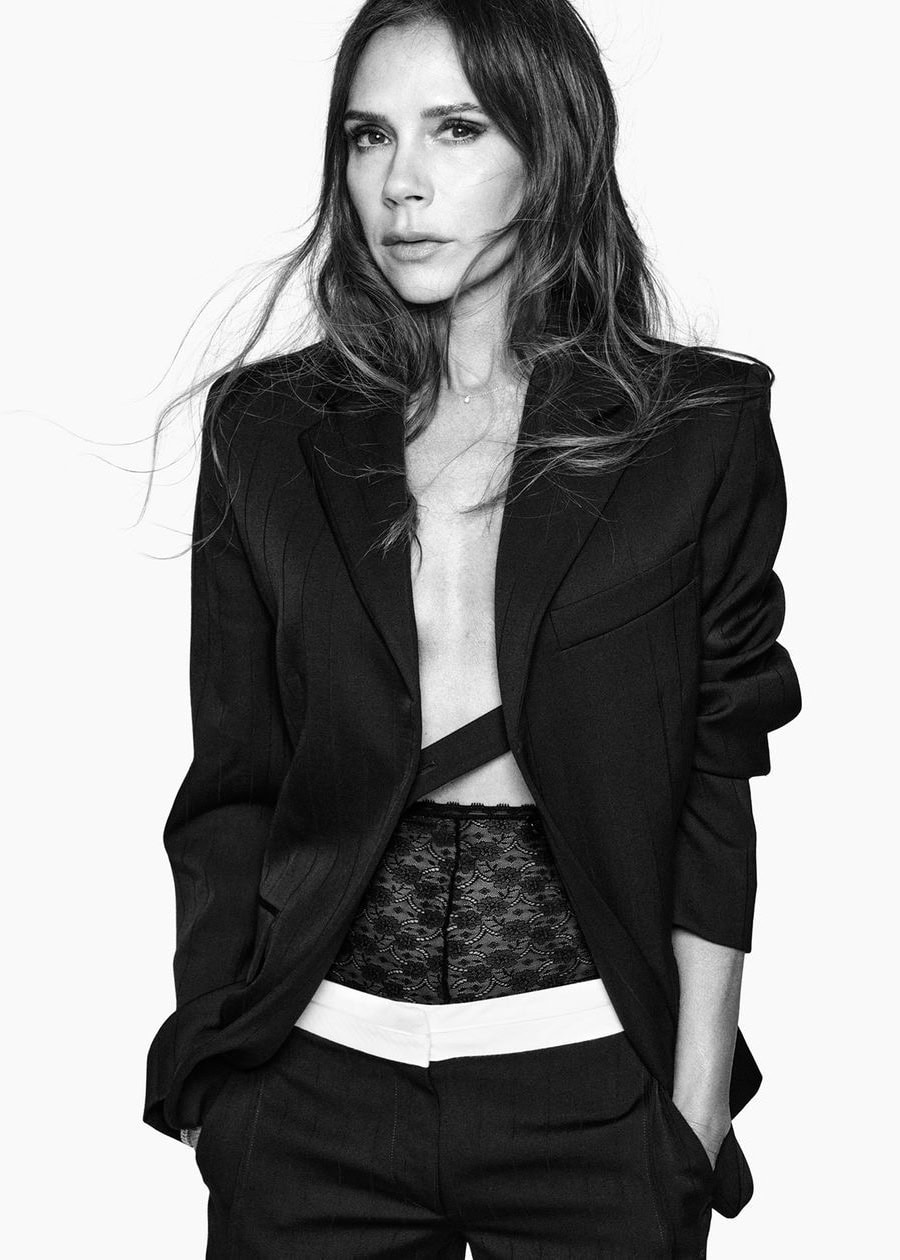
Victoria Beckham has long been a study in discipline — a designer who approaches fashion not as spectacle but as a language of control. Season after season she returns to the same quiet question: how can a silhouette sharpen a woman’s presence in the world? The answer, as always with Beckham, lies in refinement rather than reinvention.
Speaking after her latest collection, Beckham was thoughtful and relaxed, her perspective shaped less by trends than by a steady internal compass. “I always say that I’m inspired by art in some way,” she explained, citing Tamara de Lempicka, the Polish Art Deco painter whose sleek portraits of the 1930s defined a visual language of modern femininity. “It wasn’t just her work, it was how she conducted her life, what she stood for, who she was as a woman in a very male dominated industry at the time.”
De Lempicka’s influence could be felt in the collection’s confident geometry — strong shoulders, sculpted waists, and color palettes that echoed the painter’s cool glamour. Yet Beckham’s fascination with the artist ran deeper than aesthetics. She was drawn to the independence behind the work, the sense of a woman building her own creative territory. “She really stuck to her vision,” Beckham said. “She didn’t move with trends. She stuck to what she believed in.”
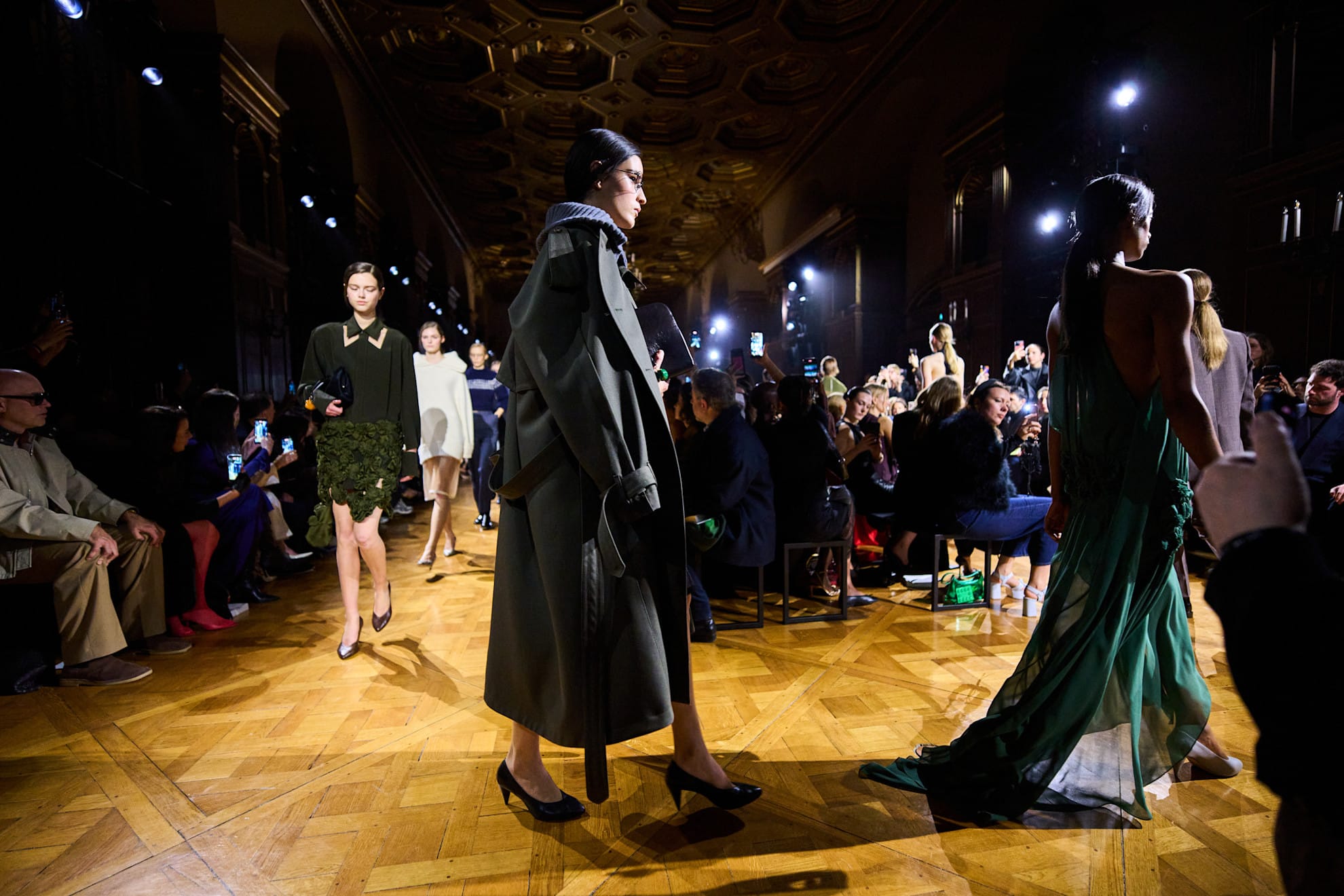
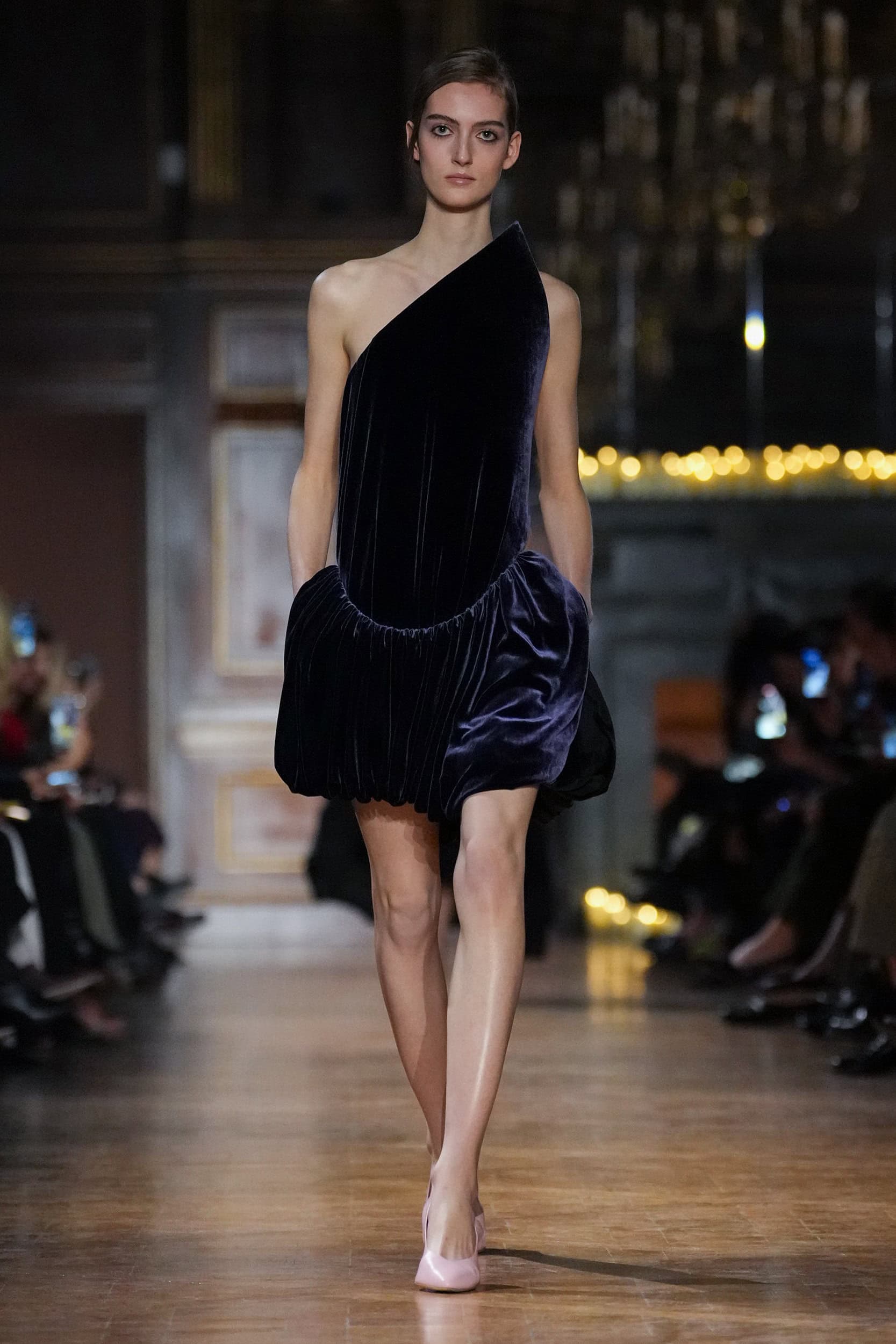
The parallel is not accidental. Over the past decade and a half Beckham has built one of fashion’s more quietly consistent brands, evolving from celebrity curiosity to a respected design house with a distinct point of view. The clothes are precise without being rigid, sensual without excess — garments that understand how women actually move through their lives.
That instinct, Beckham suggests, has always been personal. “That’s where I started from,” she said of her design process. “It was creating what I couldn’t find and what I desired.” In many ways she remains her own first client. “I feel that I really know my customer as much as my customer base is growing,” she continued. “Yes, I am my customer as well, but also experimenting each season.”
That balance between familiarity and discovery is what gives the brand its rhythm. Beckham returns repeatedly to certain codes — tailoring that frames the body, dresses that elongate the line, trousers that sharpen the leg — but each season introduces subtle technical challenges. This time it was a series of sculptural rosettes and precise construction details that pushed the atelier further.
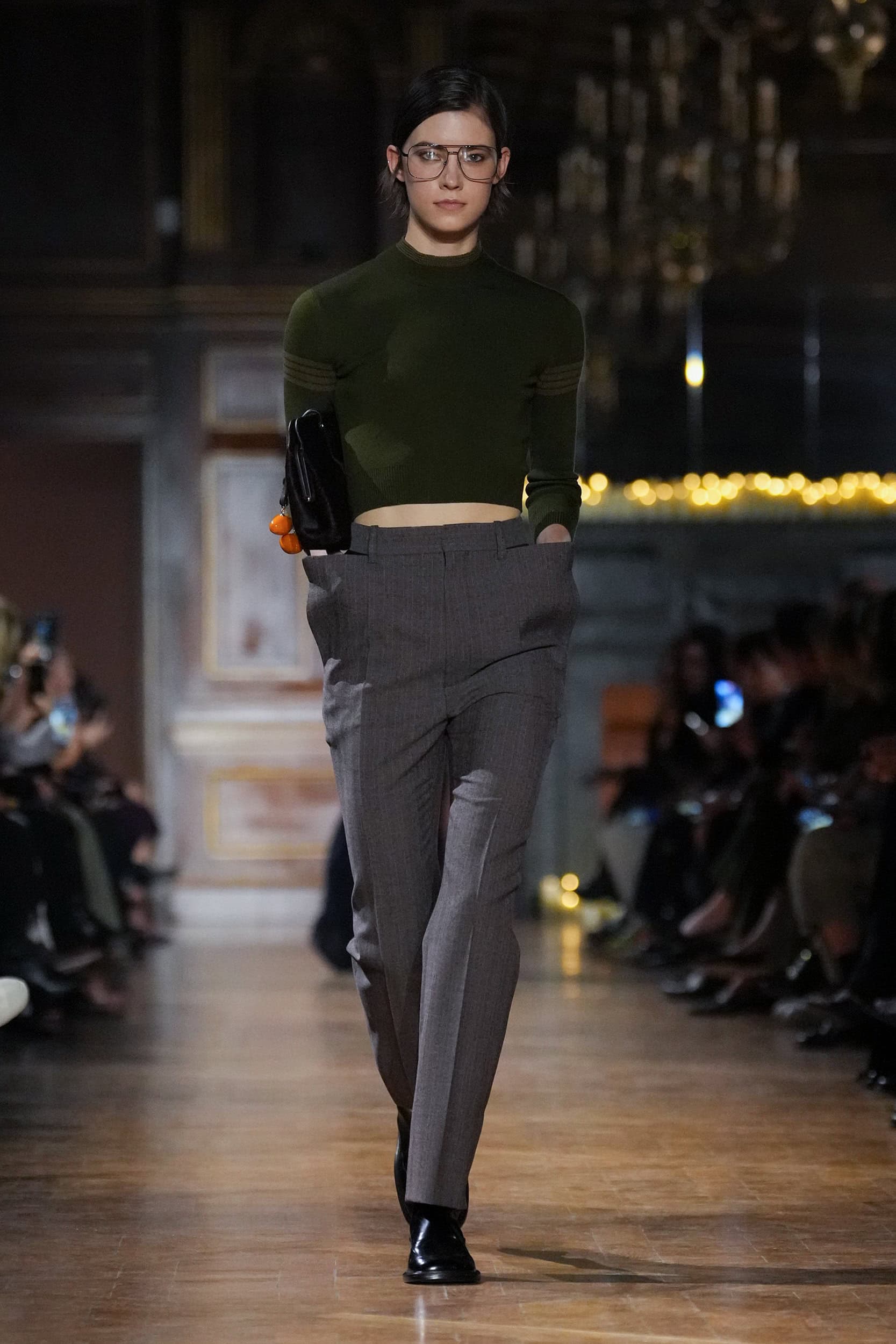
“I love to challenge myself, the design team, the atelier,” Beckham said. “Technically, really exploring and growing as a brand, as a house as well.”
Details, for Beckham, are never incidental. They are the architecture of the silhouette.
Few designers speak about pockets with as much enthusiasm as Beckham, who laughed when the subject came up. “I am a pocket queen,” she said with delight. In this collection, the pockets were built deep within tailored trousers, emphasizing the graphic line of the hip and exaggerating the narrowness of the waist.
For Beckham, the gesture is not decorative but structural. “Silhouette has always been really important to me,” she said. “I said it twenty years ago when I started and I say it now. It’s about creating a strong silhouette.”
It is also about illusion — fashion’s oldest trick and most enduring pleasure. Beckham’s clothes are engineered to flatter, to guide the eye, to suggest a kind of poised confidence. Hidden pockets, precise tucks behind the knees, seams placed with surgical care — each element quietly shapes how the body appears in motion.
“It’s really important that clothes are flattering,” Beckham said. “Creating an illusion.”
Another long-standing Beckham signature lies in the tension between masculinity and femininity. Her tailoring borrows the structure of menswear but tempers it with softness, allowing strength and sensuality to coexist.
I’ve always said from the beginning it’s about getting the balance between masculinity and femininity. I’m quite a feminine dresser, but there’s always got to be the right element of toughness and a muscular masculine take as well.
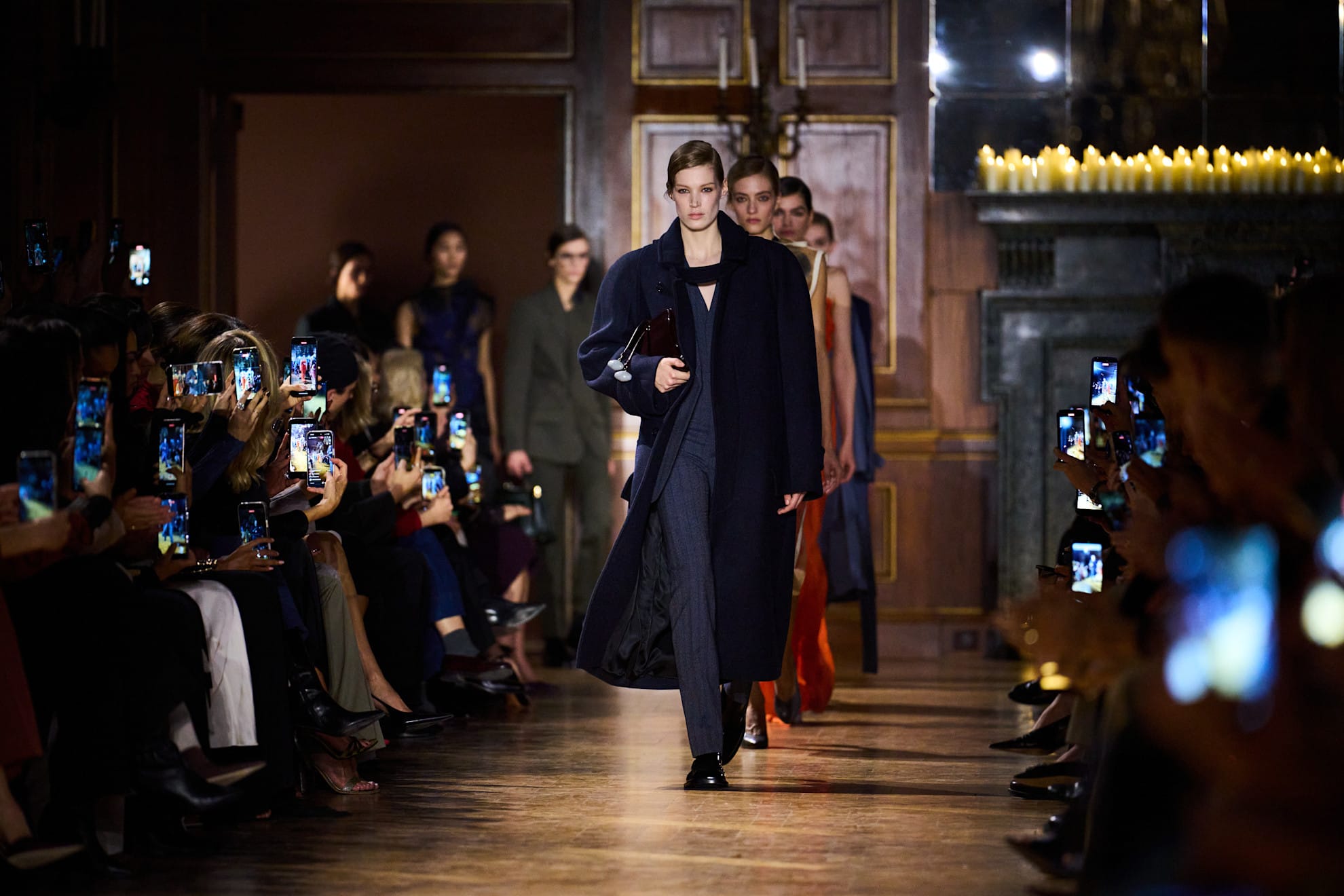
The result is clothing that feels both deliberate and effortless — the kind of elegance that hides its labor. Beckham is acutely aware of that paradox. “It’s about consideration and execution, even in the most basic thing,” she said. “When you look at those trousers, they have beautiful little tucks at the back of the knees as well. And that’s always really important to consider every single detail. And yet it looks so easy.”
That ease is perhaps Beckham’s most underestimated achievement. In an industry often chasing spectacle, she has built a brand around discipline — the quiet conviction that a perfectly cut jacket or a precisely balanced dress can say more than theatrics.
The collection closed on a gentle note of romance, a “little bit of a love story,” as Beckham described it, a fitting finale for a designer whose work has always been about the dialogue between strength and softness.
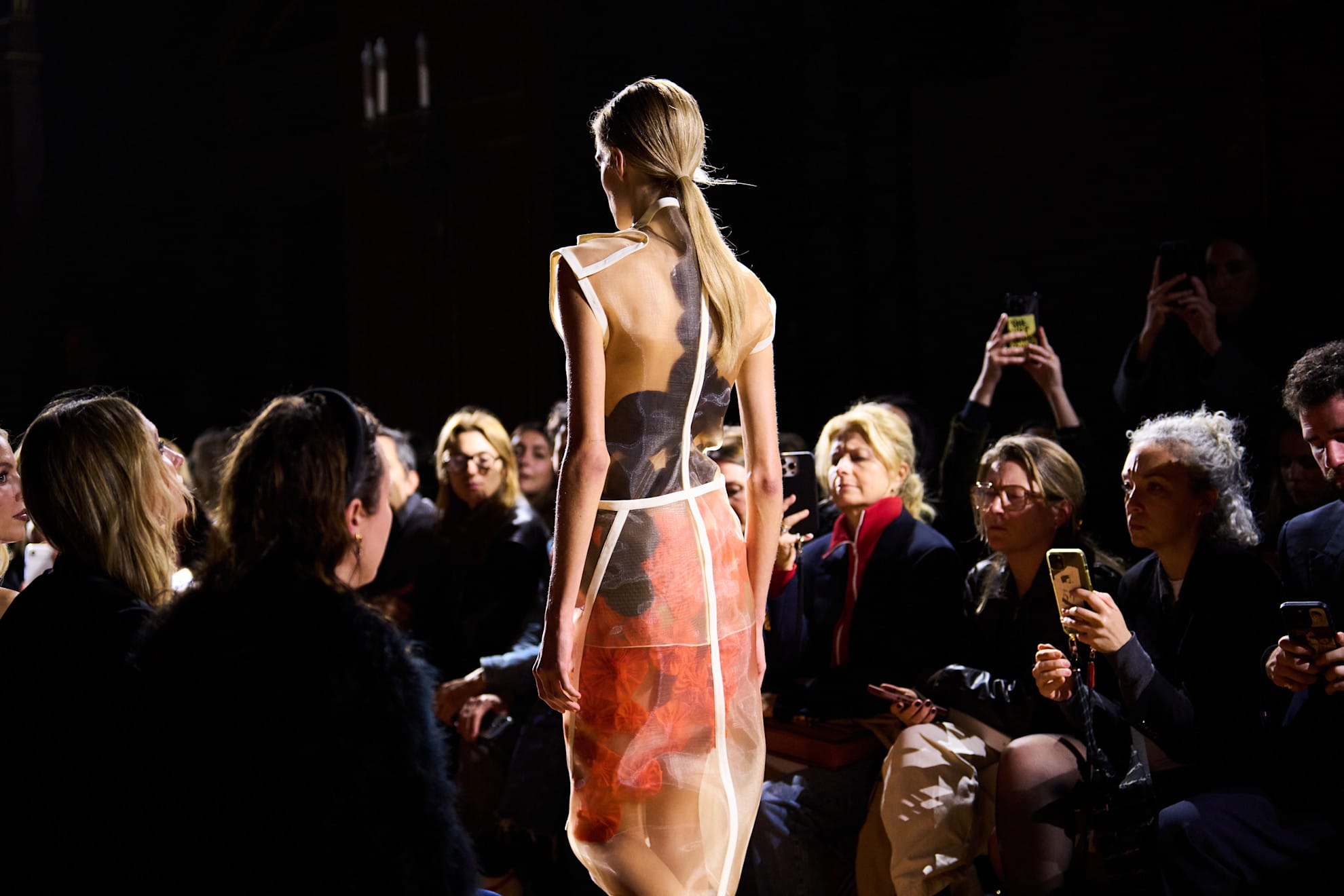
Like Tamara de Lempicka before her, Beckham seems less interested in chasing the moment than in shaping a lasting vision. Fashion may move quickly, but her approach remains patient and exacting — an artist’s discipline translated into cloth.
And in that sense, the comparison she drew may be more accurate than modesty allows. Both women, separated by nearly a century, understand the same principle: that style is not merely how a woman dresses, but how she insists on being seen.