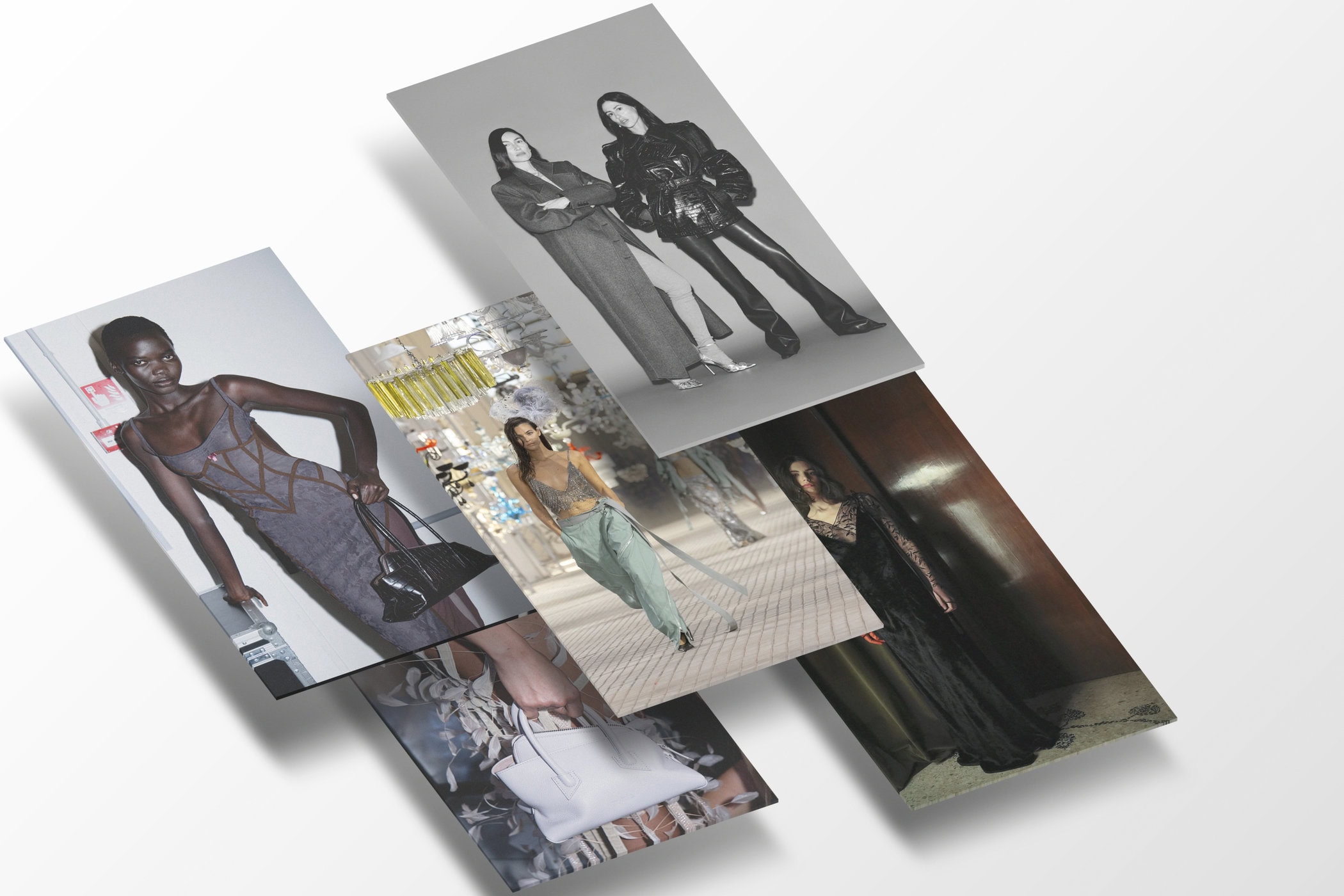
Inside the first decade of The Attico — and the brand-building philosophy that allowed it to grow beside fashion’s largest houses without losing its voice.
By Mackenzie Richard Zuckerman
Gilda Ambrosio and Giorgia Tordini have always understood the value of presence. Long before “founder-led” became boardroom shorthand, they were visible arbiters of taste—two women with complementary instincts, fluent in both restraint and indulgence, who gave glamour a contemporary edge. What they built with The Attico began as a tightly defined proposition and has matured, over a decade, into something rarer: a house with a recognizable world, a coherent woman, and the operational discipline to expand without losing its accent.

Ten years in feels like the right moment to step back and ask a larger question: what does intelligent brand-building look like in 2026? Attention is plentiful. Coherence is harder to come by. The industry has grown fluent in visibility—capsules, celebrity alignment, algorithmic timing, “moments” engineered to travel. Endurance, meanwhile, is built through less theatrical work: a point of view sturdy enough to hold under growth, a woman described with precision, and a structure capable of supporting ambition without turning the house into a commentary on the market around it.
Their ten-year mark invites celebration, and it also invites reflection. Their design language remains unmistakable—sensual, sharply cut, charged with a particular Milanese electricity. The deeper story sits in the architecture: how two founders sustain authorship while building infrastructure, evolving a signature while maintaining continuity, and holding their place on a calendar shared with legacy powerhouses.
As Tordini put it, “a lot feels different—and a lot stays the same.” The most consequential shift has been structural: “When we started, it was just the two of us. Today, we’re a company of about sixty people.” That growth has created a framework that supports a steadier kind of confidence: “In ten years, we’ve built a structure. That gives us much more security and the ability to do more—creatively… but also across every side of the business. It allows us to grow in a healthy way.”

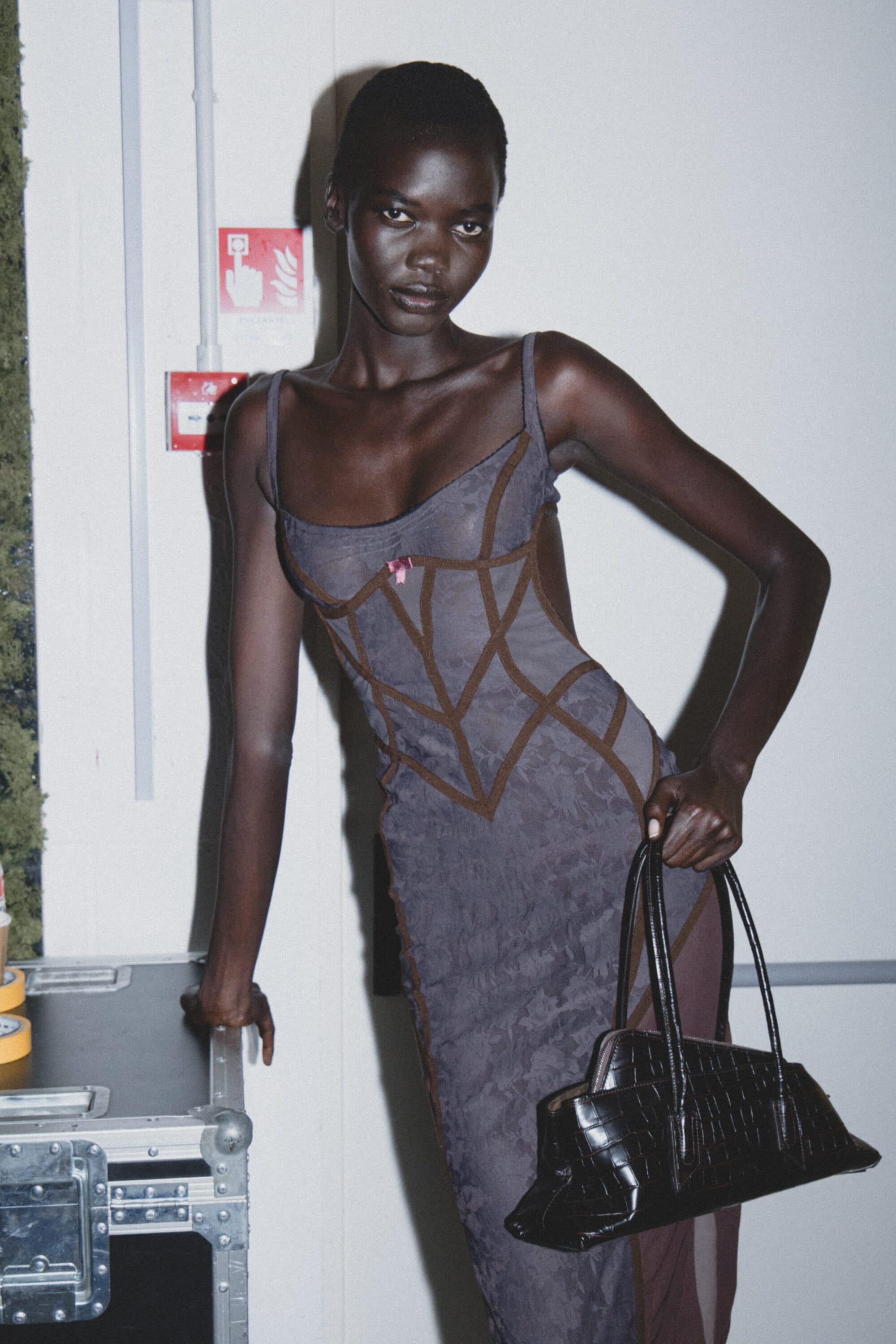
When The Attico shows in Milan, it shares airspace with houses like Gucci and Prada. That fact is neither decorative nor incidental. It defines the landscape: the calendar places emerging houses beside conglomerate machines equipped with global retail reach, expansive marketing budgets, and decades of accumulated brand equity. Many labels respond by trying to match the amplitude—bigger casts, louder ideas, faster expansion. The Attico has pursued a different kind of power: authorship.
In our conversation, it became clear that Ambrosio and Tordini embodied what intelligent brand-building can look like right now. And while I entered already convinced their design language was sound, I left struck by the organism they’ve built around it—a house that feels almost visceral, alive in the way it metabolizes growth without losing its pulse. Their observations on how the industry has operated across the past decade—and how it operates today—landed with the clarity of lived experience: practical, unsentimental in the best sense, and illuminating.
They also shed light on the questions that matter most for any founder-led house operating in today’s landscape: how to evolve while keeping your identity intact; what creative sovereignty actually requires inside a consolidated luxury market; and how to define success when you show alongside legacy houses—then consistently deliver in a way that makes you feel larger than your size on paper.
Calendar Pressure, Held in Place
There is a familiar myth that the runway is a referendum. Ambrosio and Tordini approach it more like a constitutional document: a way to codify language, reaffirm values, and keep the house legible through change.
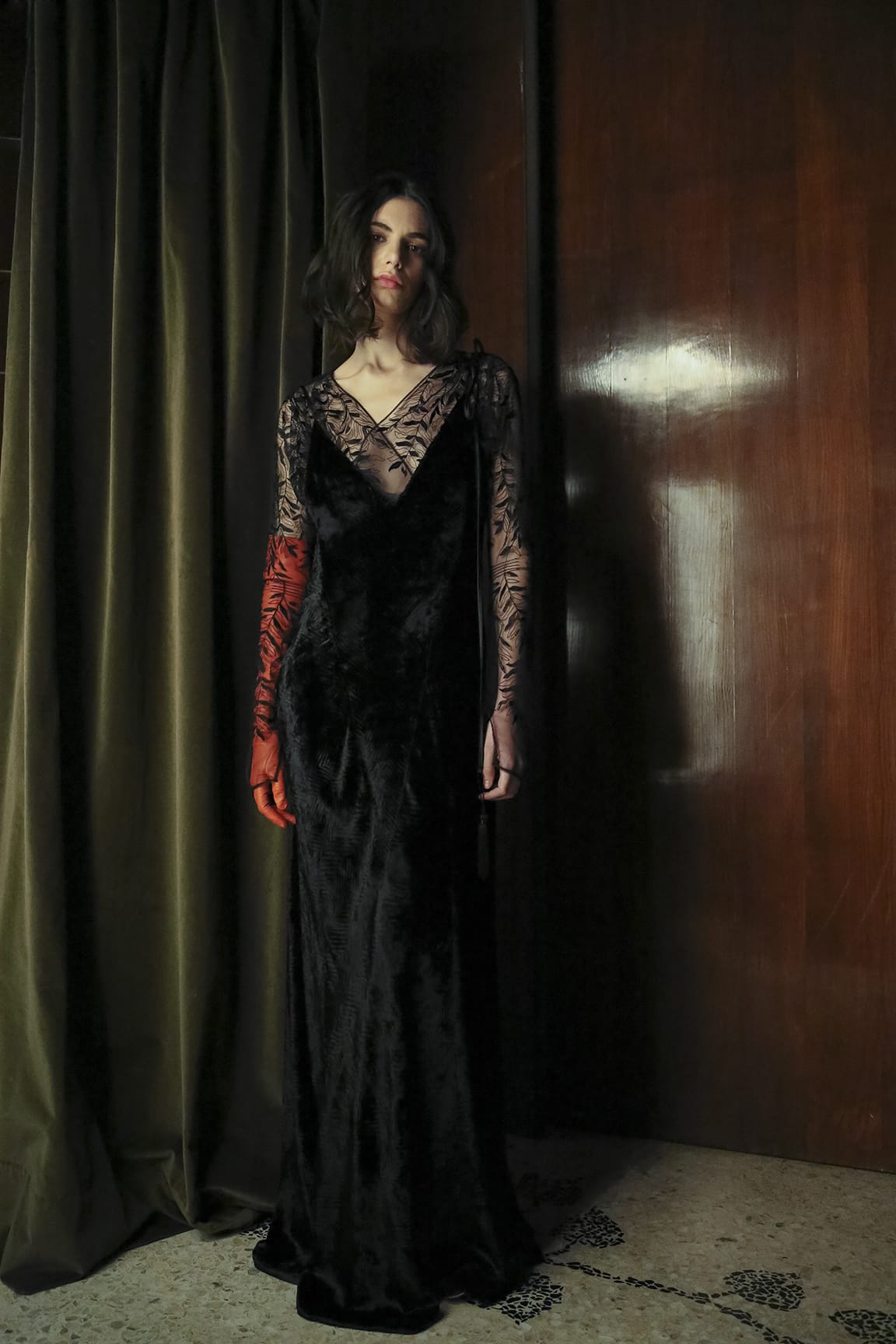
Their presence beside legacy institutions carries a particular weight. The eye of the industry loves comparisons, and comparisons flatten quickly. Still, The Attico avoids the posture of the underdog. They show with the steadiness of a house that understands its own proposition, and that specificity becomes strategy. Scale can buy distribution – but scale cannot purchase a point of view.
You hear this in how the founders describe decision-making. Their process resists committee logic: “It’s very instinctive what we do. It’s not something we decide at a table.” Instinct, in their case, functions less like spontaneity and more like an internal compass—an authorship principle that keeps the work coherent even as the categories expand.
The lesson for founders building near the conglomerates is quiet and practical: competing on magnitude turns the playing field into someone else’s home advantage. Competing on clarity shifts the terms.
Coherence as the Modern Scarcity
A brand can “go viral” and still feel conceptually thin. A brand can expand and still become harder to describe. What Ambrosio and Tordini have guarded is the rare ability to remain speakable.
Part of that comes from how they frame growth. Their expansions read like infrastructure decisions—each step designed to be absorbed by the organization rather than merely announced to the market. In their words, “everything we do is gradual and thoughtful.” Even the headline milestones—the stores, the shows—are treated as instruments inside a wider system: “Of course, growth becomes tangible when we open stores or do fashion shows. But those are tools of expression.”
For a top-tier audience, this is the key: the strongest emerging houses now operate like institutions-in-training. Their aesthetic is visible; their operating logic is decisive.
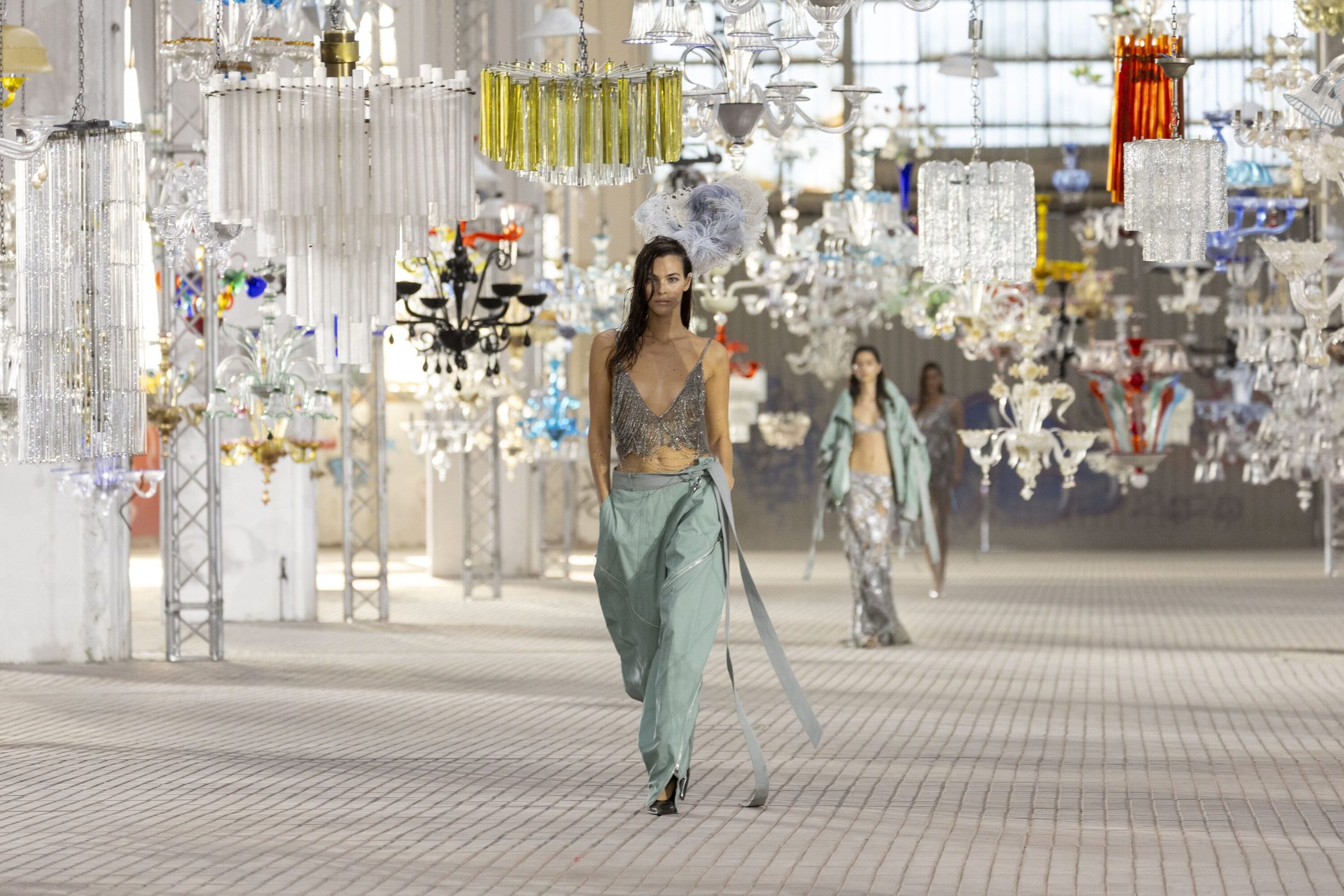
Evolution With Continuity
Many brands evolve through rupture: a sharp new direction, a reinvention narrative, a cleansing reset. Others repeat their codes until the codes lose voltage. The Attico’s evolution sits in a narrower, more demanding corridor: continuity with calibrated change.
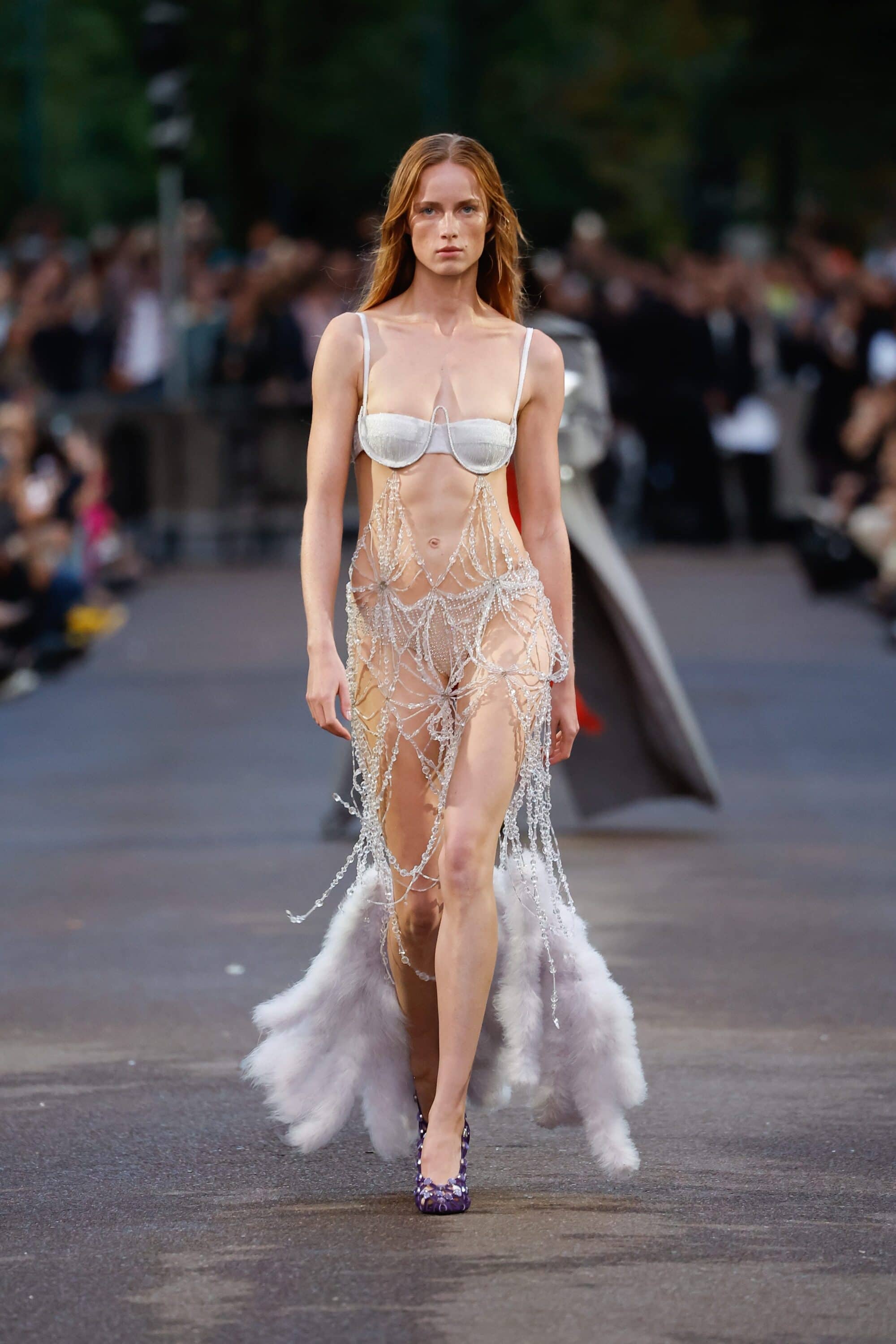
The shift from a tightly edited eveningwear proposition into a fuller ready-to-wear universe offers a clear example. Early on, the offering was precise: “When we started it was very focused—about 38 pieces, around 20 of them robes… mostly an eveningwear collection.” Over time, the range widened by design: “Today, the product range is much wider. We do ready-to-wear… more casual, more wearable for day.” It’s an evolution of identity, executed with continuity. “Through time, the two souls of the brand built the DNA of what it is today.”
That same logic shows up in their approach to femininity. They described a shift from an initially vintage-leaning idea of womanhood toward a broader register with sharper edges: “At the beginning, our woman was more nostalgic… We still are. But at some point… we brought in a different sense of modernity.” Their definition is philosophical in the most practical way—an ethos rather than a checklist: “Femininity is an attitude. It’s how you carry yourself.”
Anniversary work often reveals a label’s relationship to its own archive—whether it treats the past as a museum or as material. The Attico chooses the latter. SuperAttico10, their ten-year capsule, returns to earlier signatures with a designer’s hand rather than a nostalgic gaze: “a celebratory capsule… focused on evening pieces—embroidered, precise, special items.” Past pieces were pulled back into the present through deliberate adjustment—“revisited… and reworked,” as they put it, “refreshing them, making them more contemporary.” The capsule, titled SuperAttico10, will launch in October.
When the capsule was described in conversation as the kind of correction you make to something you still love, simply with sharper judgment now, Tordini agreed immediately: “Exactly. That’s exactly it.”
Creative Sovereignty in a Consolidated Market
The phrase “creative sovereignty” can sound romantic. In this context, it behaves like a business principle.
Ambrosio and Tordini operate with two distinct instincts that generate a third identity—an outcome that feels irreducible. It cannot be reverse-engineered from trend reports or replicated through the usual playbook of market positioning. In an era saturated with data, coherent instinct becomes a luxury resource. They recalled their beginning as a deliberate counter-positioning to a dominant ideal: “It was the years when Phoebe Philo at Céline was ruling… Since day one, we tried to bring something different and unique.” Their ambition has remained consistent in its direction: “We always try to bring something that doesn’t exist yet.”
That distinctiveness is also a collaboration model. “Gilda and I are very different,” Giorgia explained, “bringing together our aesthetics and thoughts creates something new—a mix of two personalities.” The house’s point of view emerges through dialogue: conversation, research, trying on existing pieces and “reshaping them, giving them new life.” Their process begins, tellingly, with narrative: “We often start from storytelling. We imagine our woman in that season—what she does, what she likes… It’s about mood.”
Their partnership functions like a small intellectual workshop: a shared set of principles, an ongoing exchange, and an outcome that gains definition through dialogue. Consensus matters less than clarity—the ability to produce a world that reads as singular, even when it begins as two voices.
Pace as Design
Speed sells in headlines. Rhythm builds in reality.
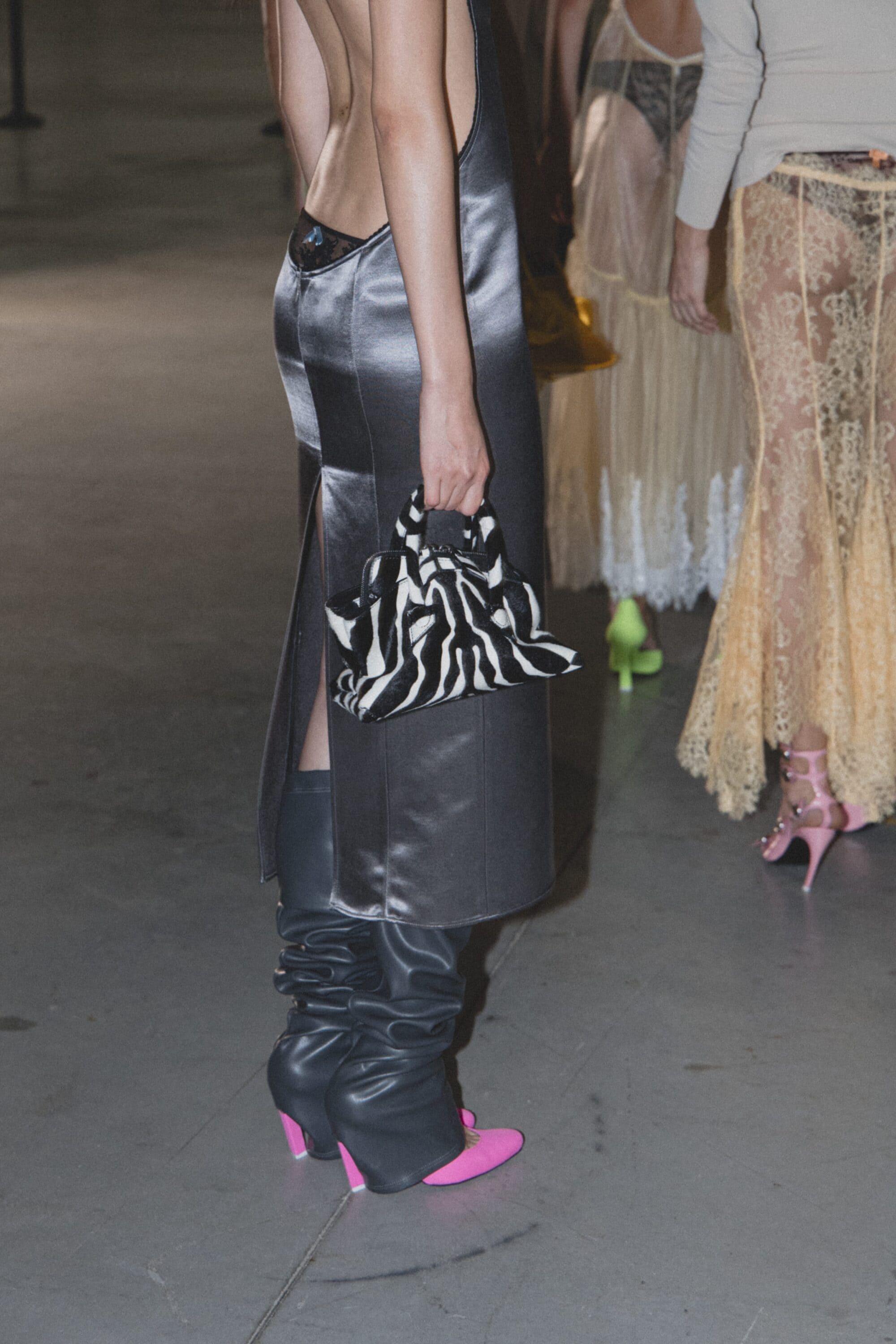
The Attico could have accelerated. More stores. More drops. More seasons of expansion dressed up as inevitability. Instead, the founders have treated pace as part of the product.
They were explicit about sequencing: “We could have started doing fashion shows much earlier, but it was important to create the right structure first—improve product quality, build a strong team, make sure we could support every activity we wanted to do.” It’s a philosophy of scale that treats readiness as a prerequisite, rather than a consequence, of visibility: “We measure growth by making sure we create a solid company before doing anything big.”
This perspective sharpens further when they speak about longevity. A decade ago offered a different kind of runway for newness: “At that time, social media was less crowded. There was more space and attention for something new.” Today’s climate demands a different stamina, and they described it with an almost moral clarity: “It’s about curating every aspect and giving everything the same level of attention.” Even the founders’ own origin story resists triumphalism. Asked about a “we made it” moment, the answer was refreshingly direct: “No. I don’t want that reassurance. I always feel we need to push harder.”
What “Success” Means Beside the Giants
For emerging houses showing alongside heritage institutions, success often slips into a familiar comparison impulse—more spend, more product, more scale.
The Attico offers a leadership framing that feels better aligned with 2026:
• Build a recognizable world that remains legible under pressure.
• Maintain authorship as the organization grows.
• Expand in proportion to structure.
• Develop continuity across seasons, allowing evolution to sharpen the identity.
• Create a customer relationship rooted in narrative and belonging rather than a single moment.
The founders articulated this in a way that doubles as advice for anyone building now: “When you launch a brand, you have to be a little reckless, a little crazy… But afterward, you have to be very mindful. You need structure, a strong team, capable people who believe in the brand.” Then, the line that feels like the thesis in miniature: “It’s not about going viral… It’s about curating every aspect and giving everything the same level of attention.”
A Diplomatic Tension Worth Naming
A house built on control carries its own risks. Control can protect coherence; it can also narrow the range of surprise. The challenge for any founder-led system is keeping the language alive—allowing new chapters to enter the story without diluting what made the story worth reading in the first place.
The Attico stands at an interesting threshold here: the structure is strong, the identity is clear, and the organization has grown into a real company. The next chapter will likely test how far the vocabulary can stretch while retaining its unmistakable accent. The founders themselves signaled the direction in a single sentence: “It’s about evolving while maintaining the same language.”
That is a compelling problem to have.
Closing Thought
In a market that often equates visibility with dominance, The Attico demonstrates a quieter form of strength: endurance built through authorship, rhythm, and internal architecture.
Ambrosio and Tordini feel less like founders chasing the calendar and more like architects expanding a house from within—room by room, proportion by proportion, with the kind of control that reads as confidence.
Modern luxury, at its most persuasive, looks a lot like that: a world you can recognize, a woman you can describe, and a system sturdy enough to keep evolving.
They offered the perfect closing image themselves: “We have friends who say every time they go out wearing The Attico, something good happens… We joke that our clothes are like lucky charms.” In an industry obsessed with scale, it’s a subtle reminder that the most durable power still comes from belief—carefully built, rigorously maintained, and made to feel good in the real world.