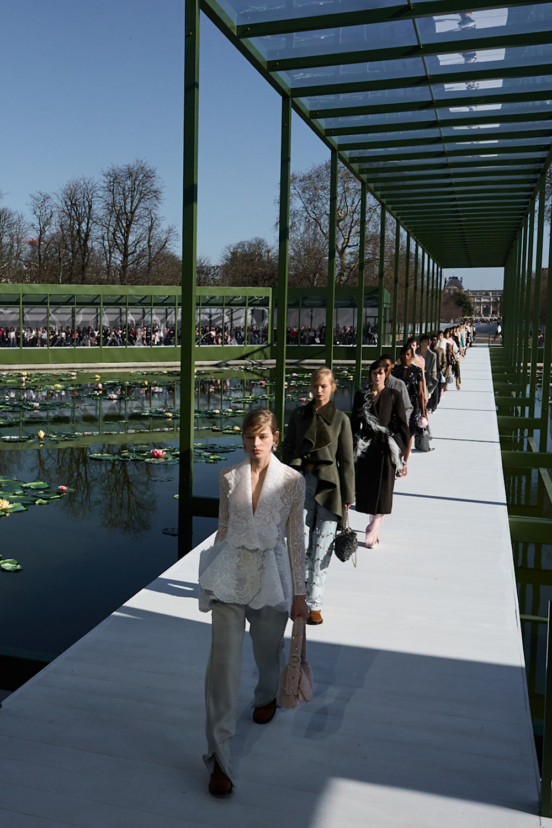
Park Etiquette
Review of Dior Fall 2026 Fashion Show
By Mackenzie Richard Zuckerman
With two menswear collections, a couture presentation, a womenswear debut, and a pre-fall lookbook already behind him, Jonathan Anderson’s vision for Dior is no longer an introduction. Instead, it’s beginning to reveal its architecture. This latest womenswear outing shows a designer moving beyond arrival and into something more deliberate: the careful construction of a new creative language for the house.
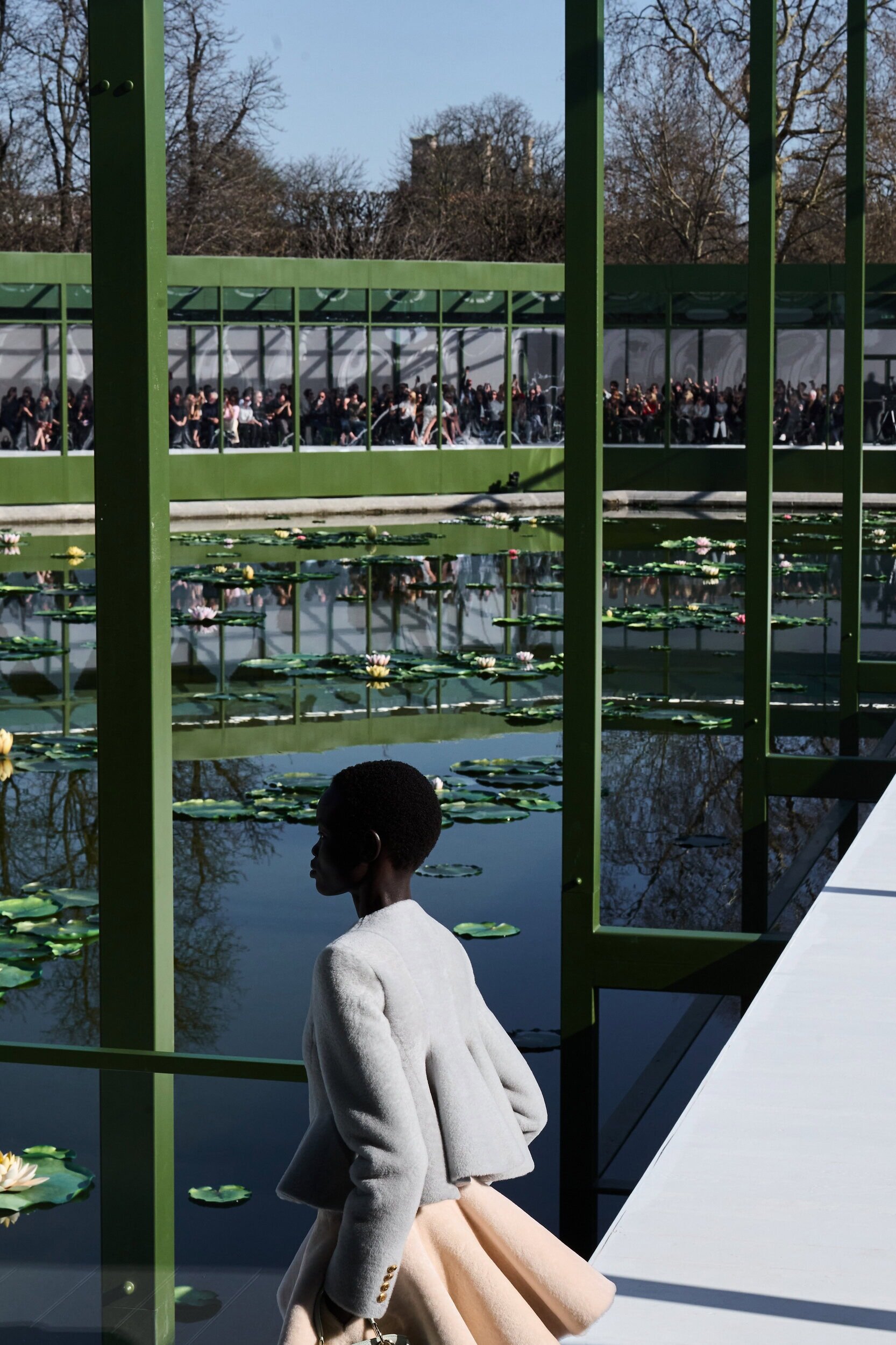
Staged in the Jardin des Tuileries – a place that for centuries has functioned as a stage for seeing and being seen – the show leaned into the subtle theater of public life. Anderson populated the runway with figures who felt less like ordinary park-goers and more like characters in a social tableau. The reference to the French court, with its rigid codes of dress and status, hovered quietly beneath the surface. Clothing here suggested not just personal expression but social position – a reminder that fashion has always operated as a language of hierarchy and spectacle.
Seen in that context, the collection reads less like a pivot and more like a continuation of the world Anderson has been building since his arrival. Across menswear, couture, and now womenswear, his Dior appears increasingly interested in character and narrative as much as wardrobe. The codes are still evolving, but the intention is becoming clear: this is Dior as a stage – one where design, identity, and social performance intersect.
THE COLLECTION
THE VIBE
Garden surrealism, & Architectural romance
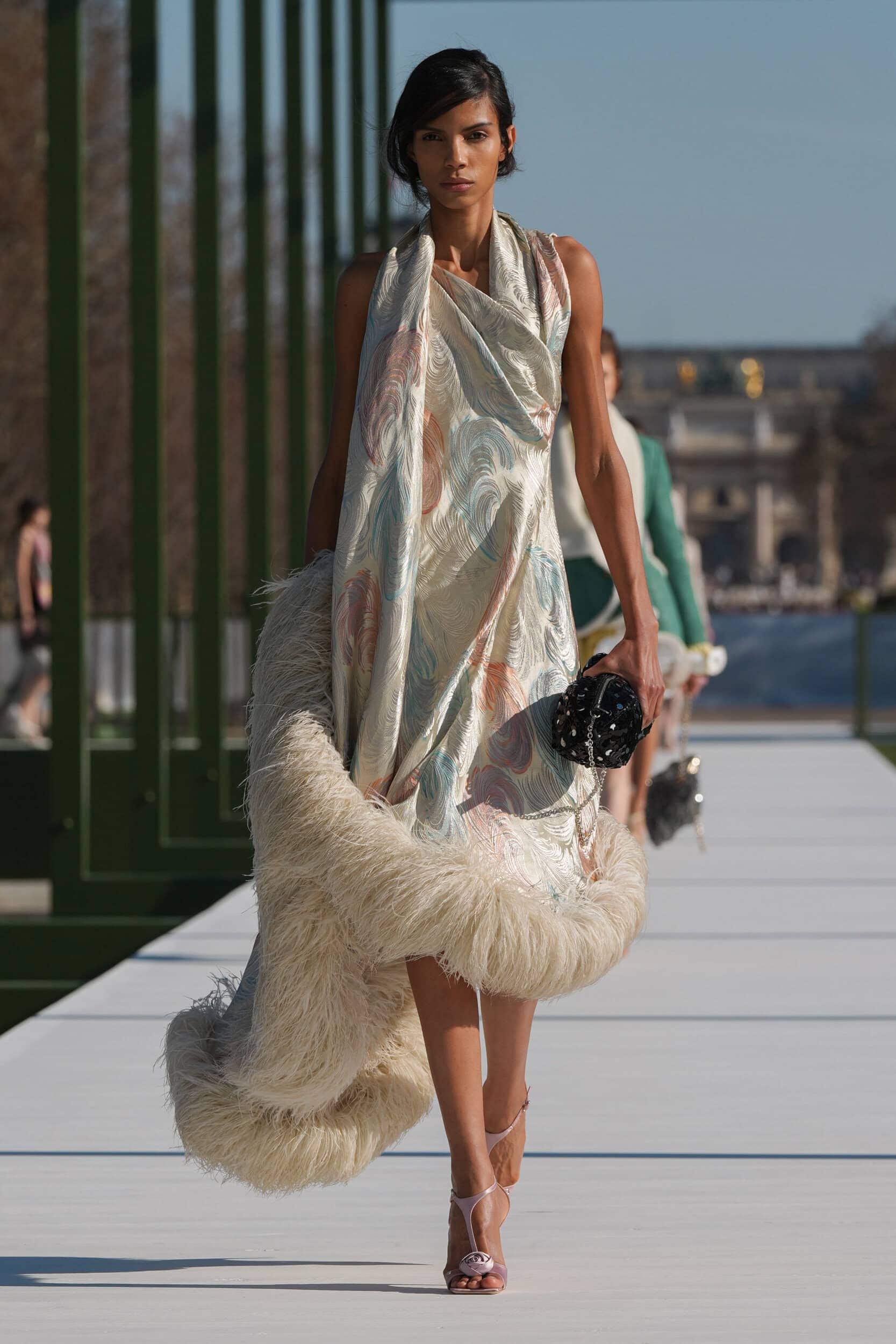
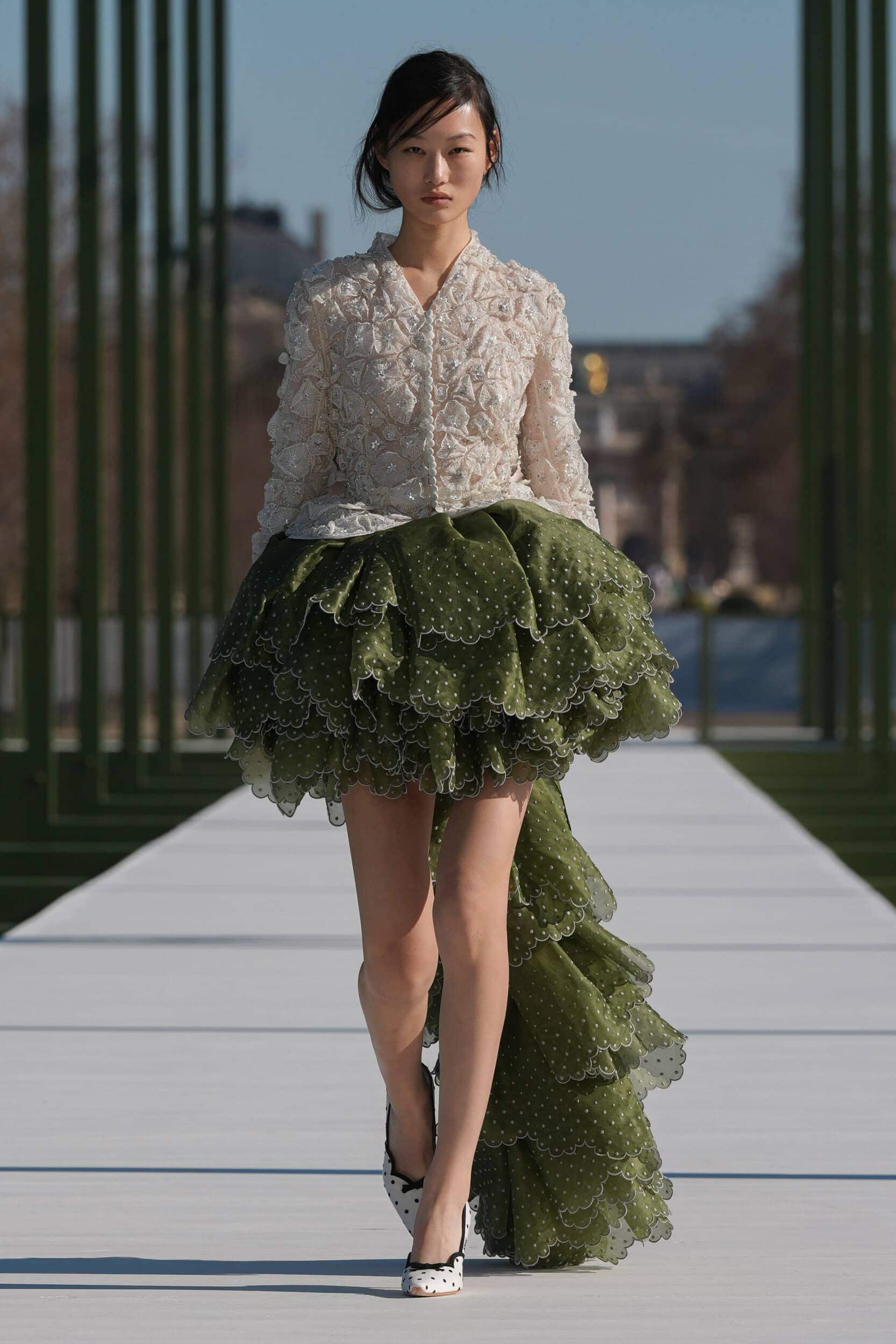
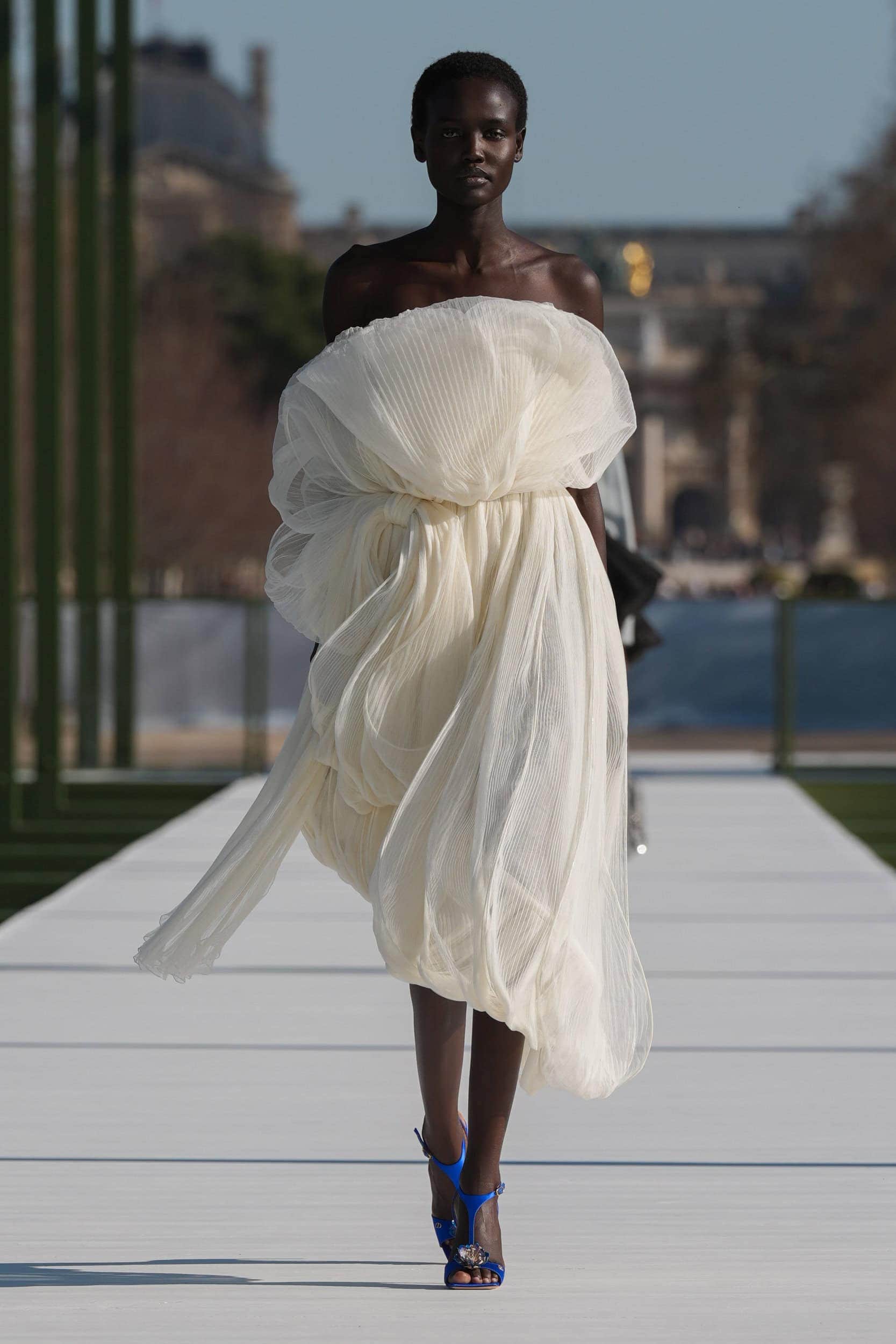
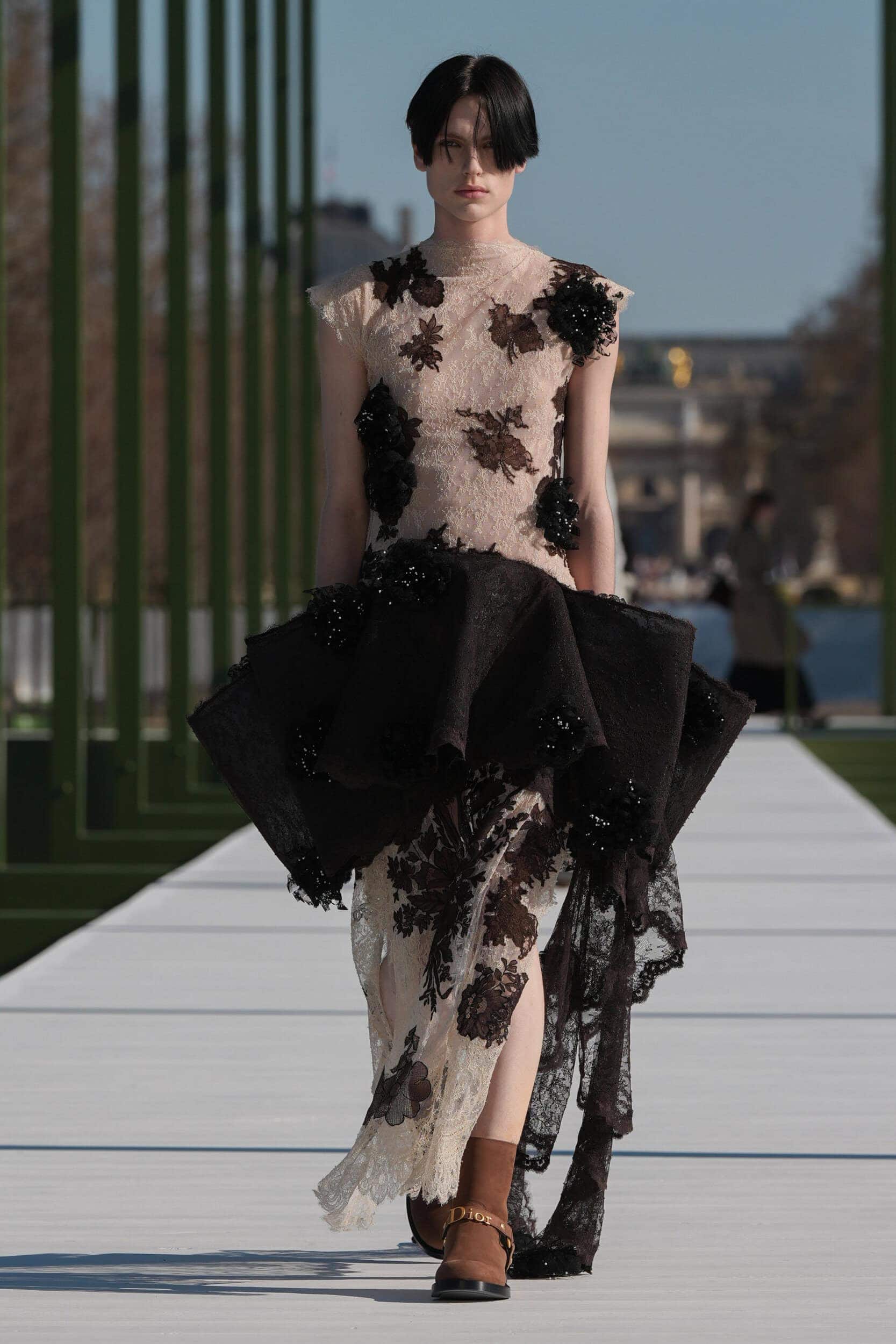
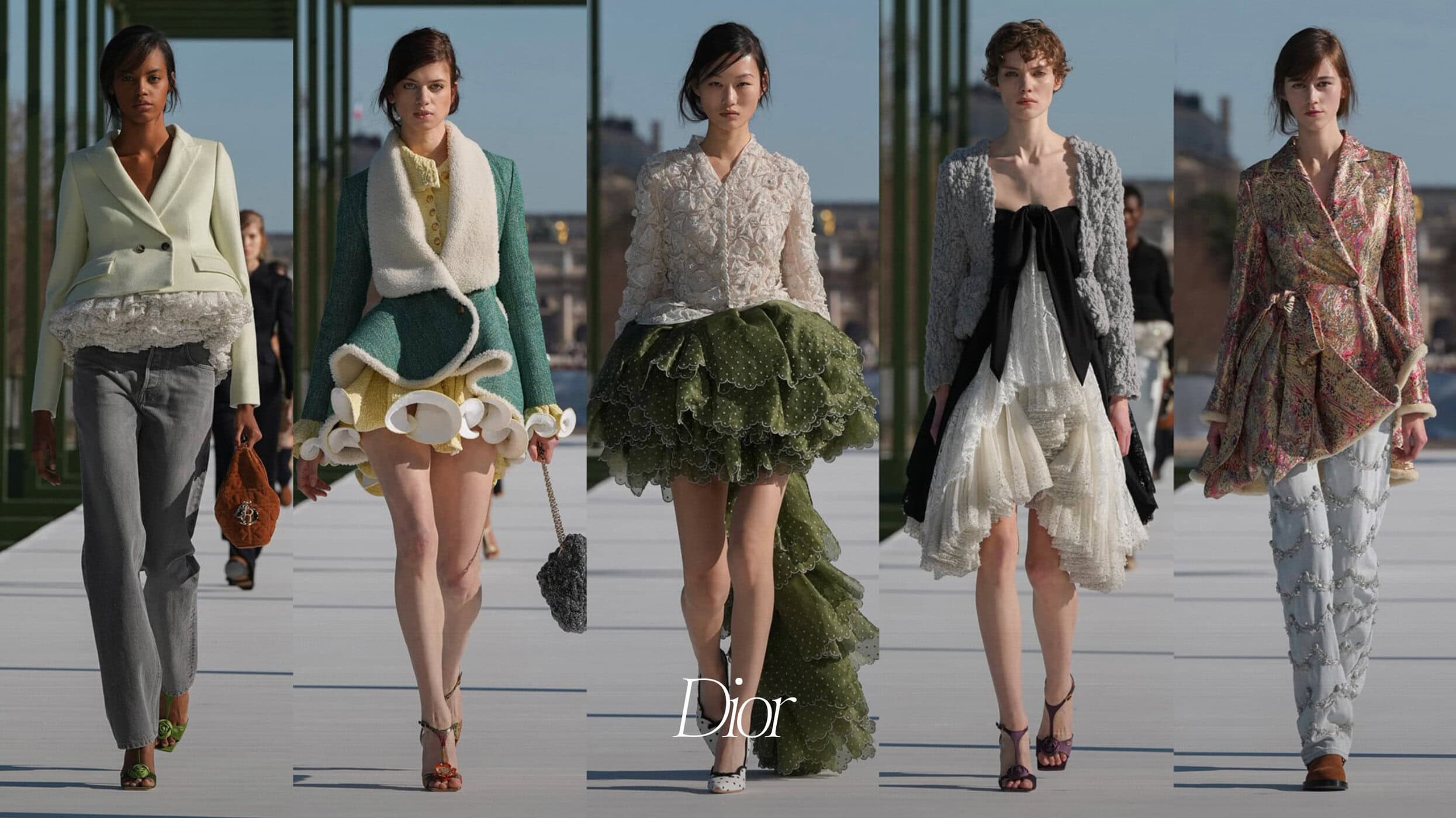
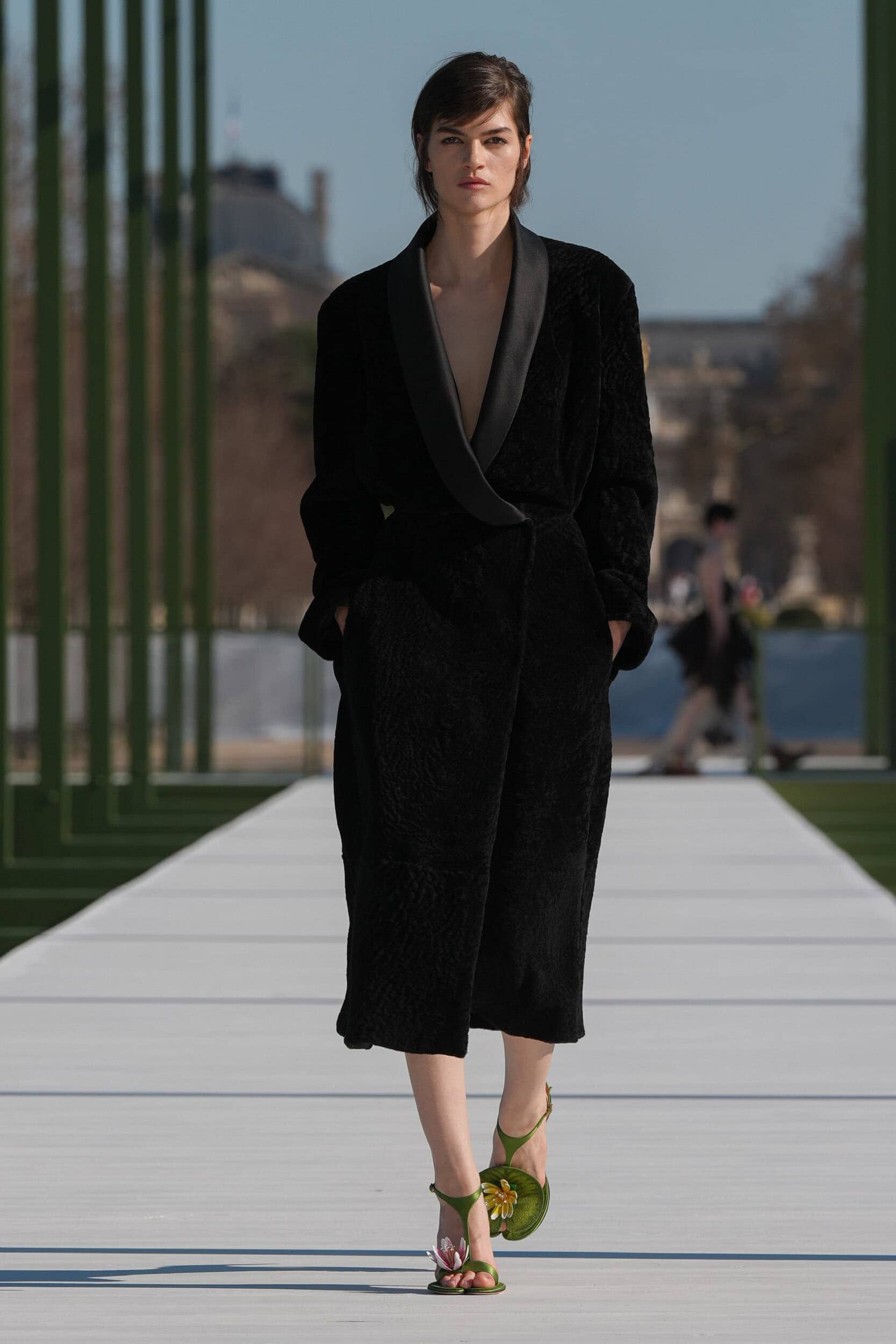
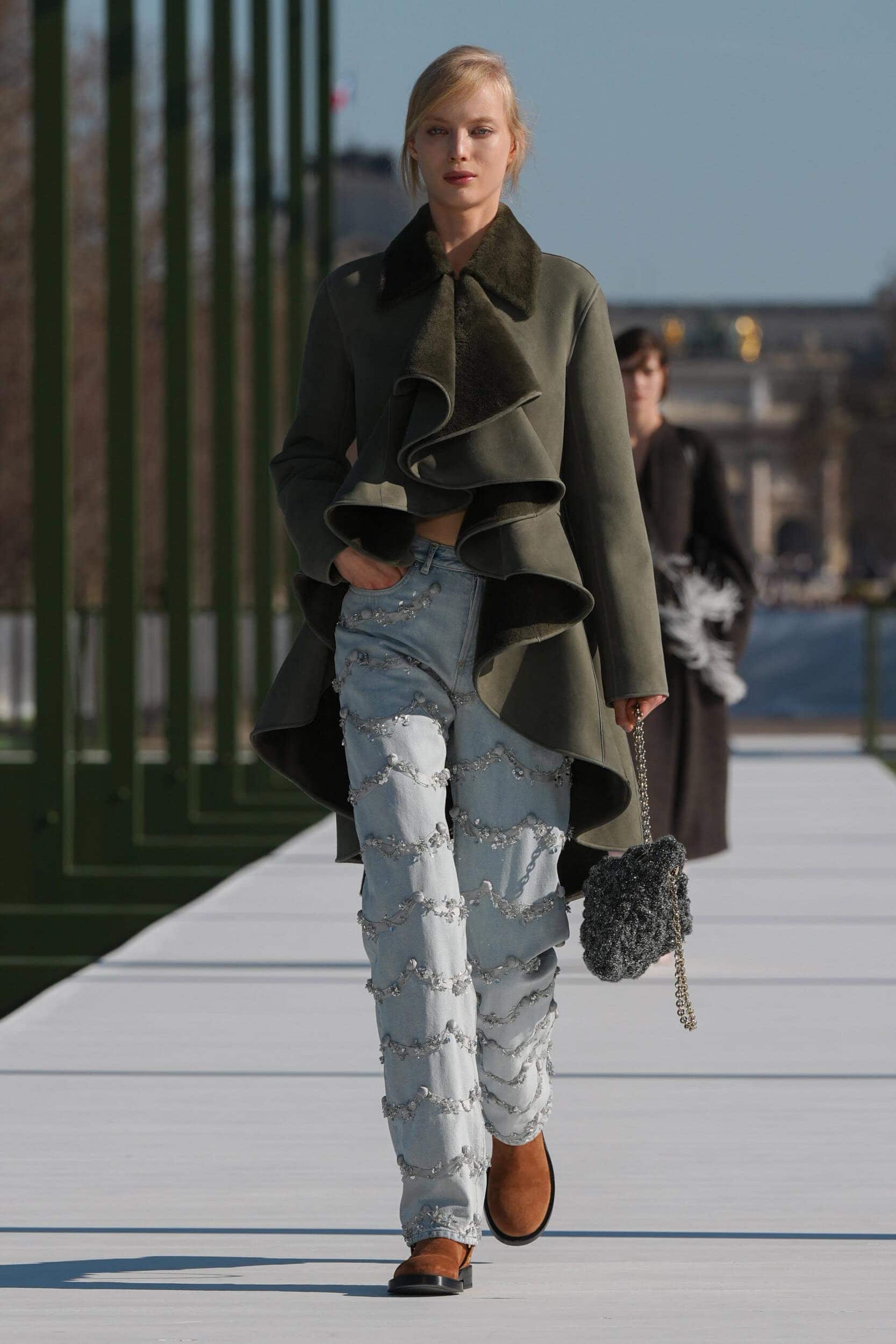
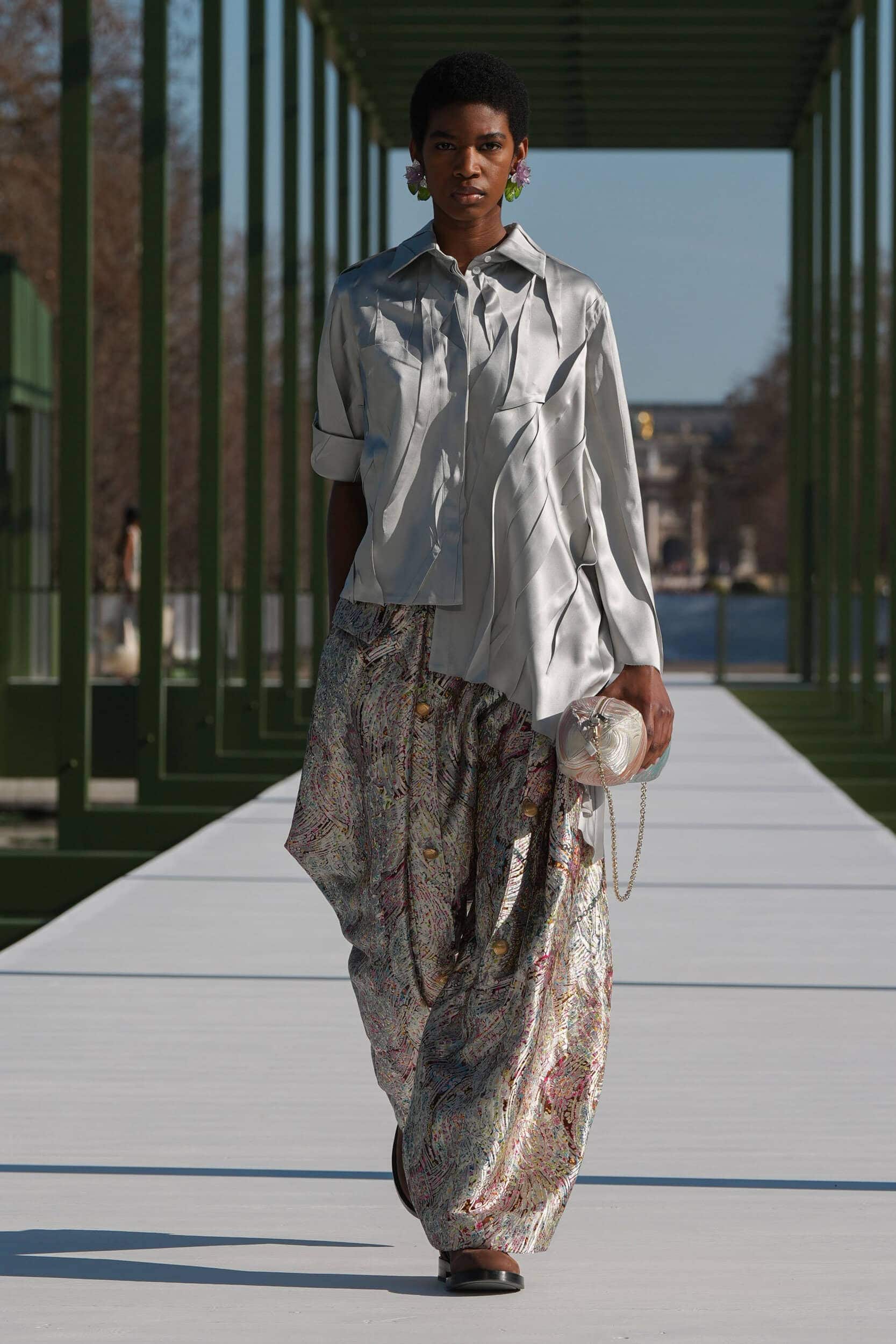
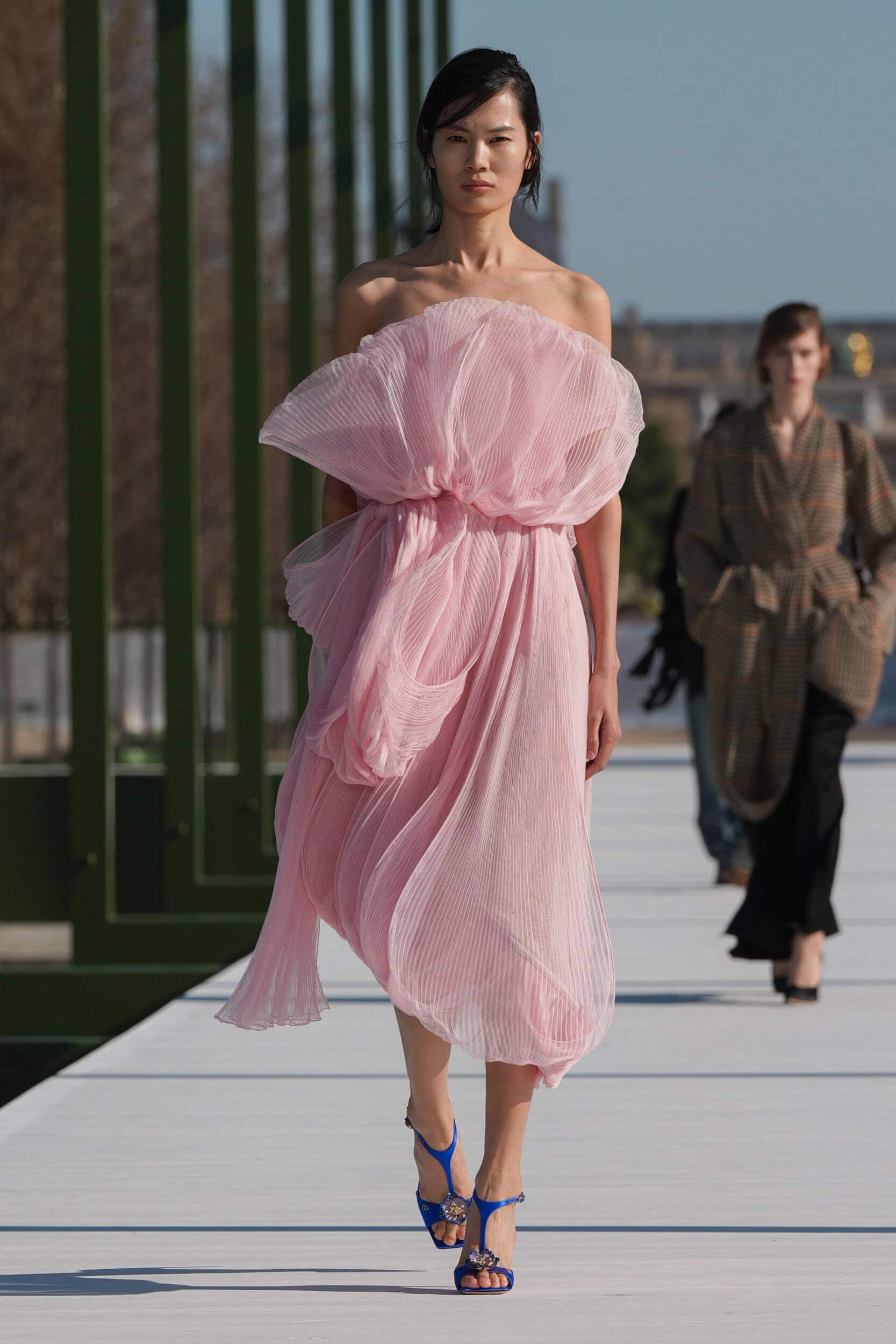
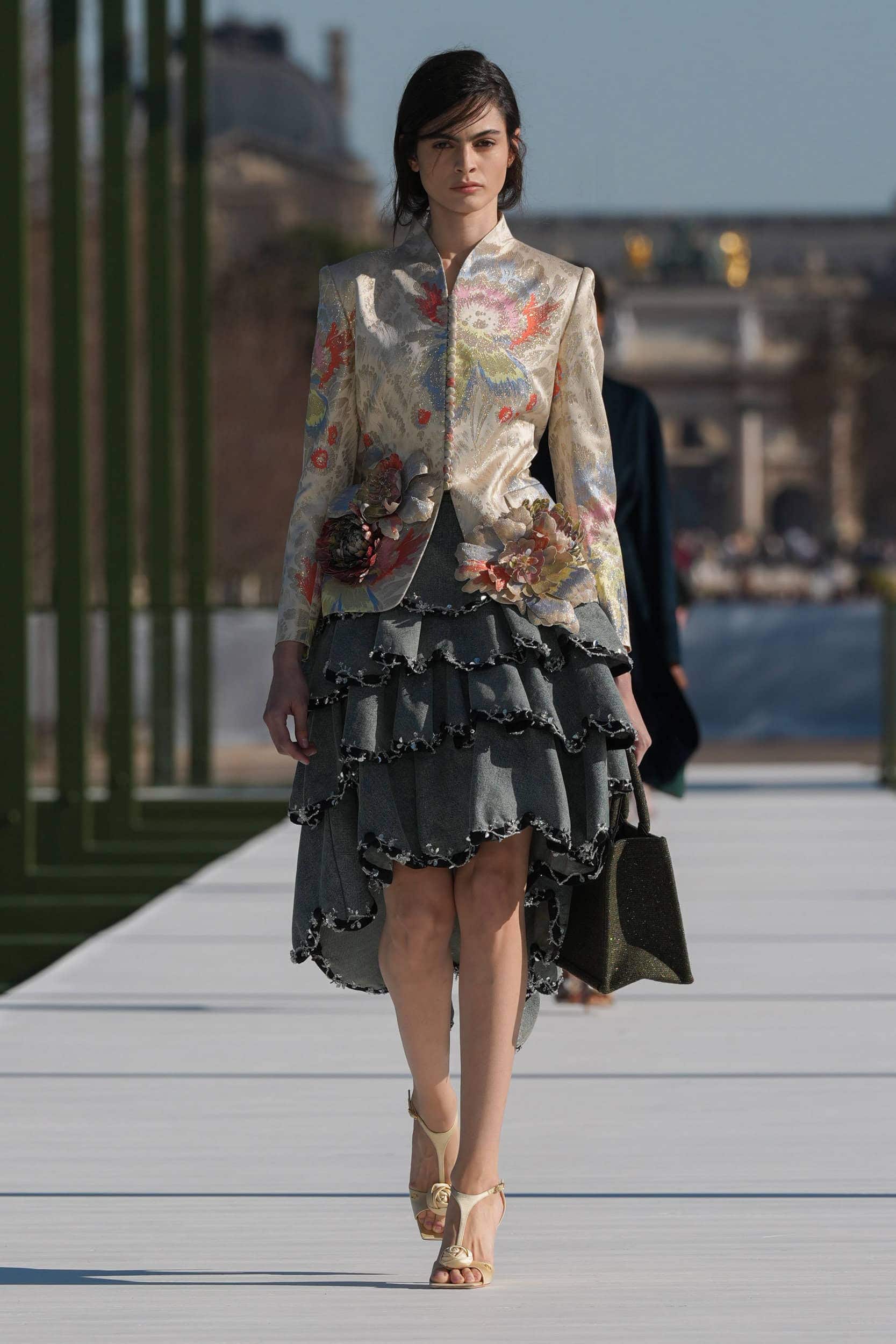
Visually, the collection worked like a translation exercise: Anderson’s familiar codes rendered in Dior’s grammar. Tailoring did the heavy lifting. Coats closed the body with controlled precision; jackets cinched and released into sculptural peplums; trousers stayed narrow and elongated, giving the line a steady vertical pull.
Softness arrived not as sentiment, but as method. Lace blouses slipped under strict jackets, and floral embroidery surfaced across dresses and skirts, treated less like decoration than structure — texture used to build shape, not simply to sweeten it.
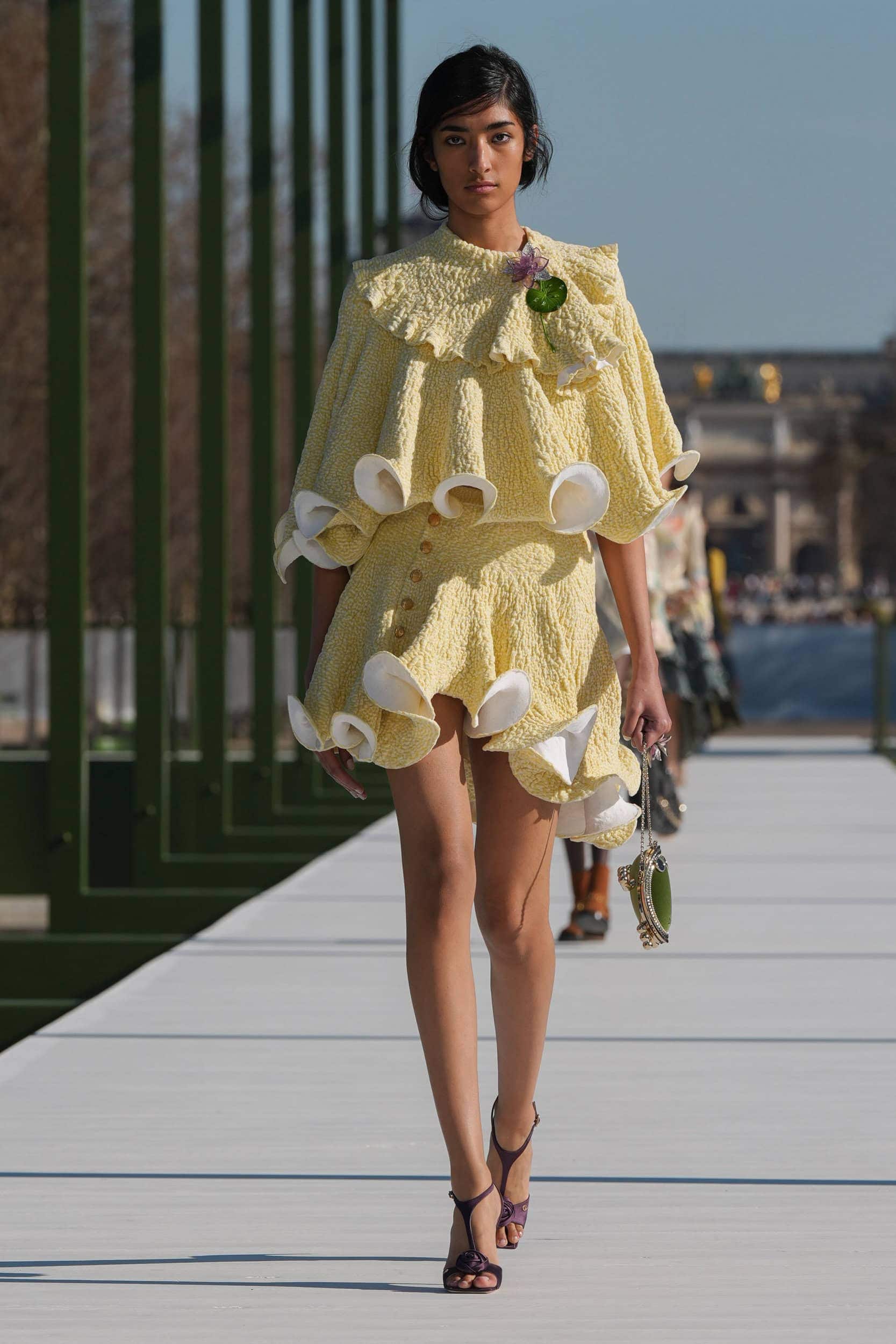
Accessories carried the clearest signature. Frog bags, lily pad shoes, and embroidered minis introduced a sly surrealism that nodded to his Loewe instincts, but they were kept in check by Dior’s commercial anchors: quilted velvet, tweeds, and chain details that kept the fantasy tethered to the house’s codes.
And crucially, the womenswear wasn’t a carbon copy of his recent menswear. Where menswear leaned into a single, tightly held narrative, this felt more elastic — still coherent, but more character-driven, more willing to let mood shift look by look.
That elasticity expands the Dior universe rather than narrowing it. Anderson seems content to build a house with multiple rooms — less a single “Dior woman” than an evolving vocabulary that can hold contradiction, humor, and elegance at once.
THE QUOTE
Jonathan Anderson worked from the archives outward, and the result felt both romantic and unmistakably Dior – modern, chic, elegant. What excited me was the continuity between men’s and women’s: it read as one language, and you could already feel it landing in the stores, from the product to the windows, with real newness – and a touch of humor.
– Delphine Arnault
Chairman and Chief Executive Officer of Christian Dior Couture
THE WRAP UP
What makes the collection compelling is not that it resolves Dior’s identity under Anderson – but that it opens the conversation.
The women on this runway felt deliberate and distinctive, each look suggesting a personality rather than a uniform. In that sense, Anderson appears less interested in defining a single Dior woman than in populating an entire Dior world.
It’s a subtle but meaningful shift. Instead of dressing a demographic, he’s constructing a narrative landscape – one where fashion operates as character, atmosphere, and expression.
For Dior, that approach feels promising. The language may still be evolving, but the ambition behind it is clear. Anderson isn’t simply continuing the house’s story – he’s expanding the stage on which it unfolds.