The Reward of Attention
Review of Christian Dior Spring 2026 Couture Fashion Show
By Mackenzie Richard Zuckerman
“There is no finished garden – only one that is continually forming.”
The thought, often associated with the writing of Gilles Clément, proved an apt entry point for Jonathan Anderson’s Haute Couture debut at Dior. The invitation itself arrived as a living gesture: bouquets of cyclamen – pink, white, purple – wrapped in black silk ribbon. Their symbolism was quietly layered: devotion, care, continuity. Their origin story, passed between designers rather than announced, gave the moment its weight. A recent gift from John Galliano, offered when Anderson arrived at the house, returned here as a sign of creative inheritance – something freshly gathered, thoughtfully given, and passed forward.
This framing mattered. From the outset, Anderson positioned his first couture collection as an act of accumulation. Meaning would not arrive instantly. It would build through repetition, material rigor, and sustained attention, and the runway made that intention clear.
THE COLLECTION
THE VIBE
Disciplined Spectacle & Floral Architecture
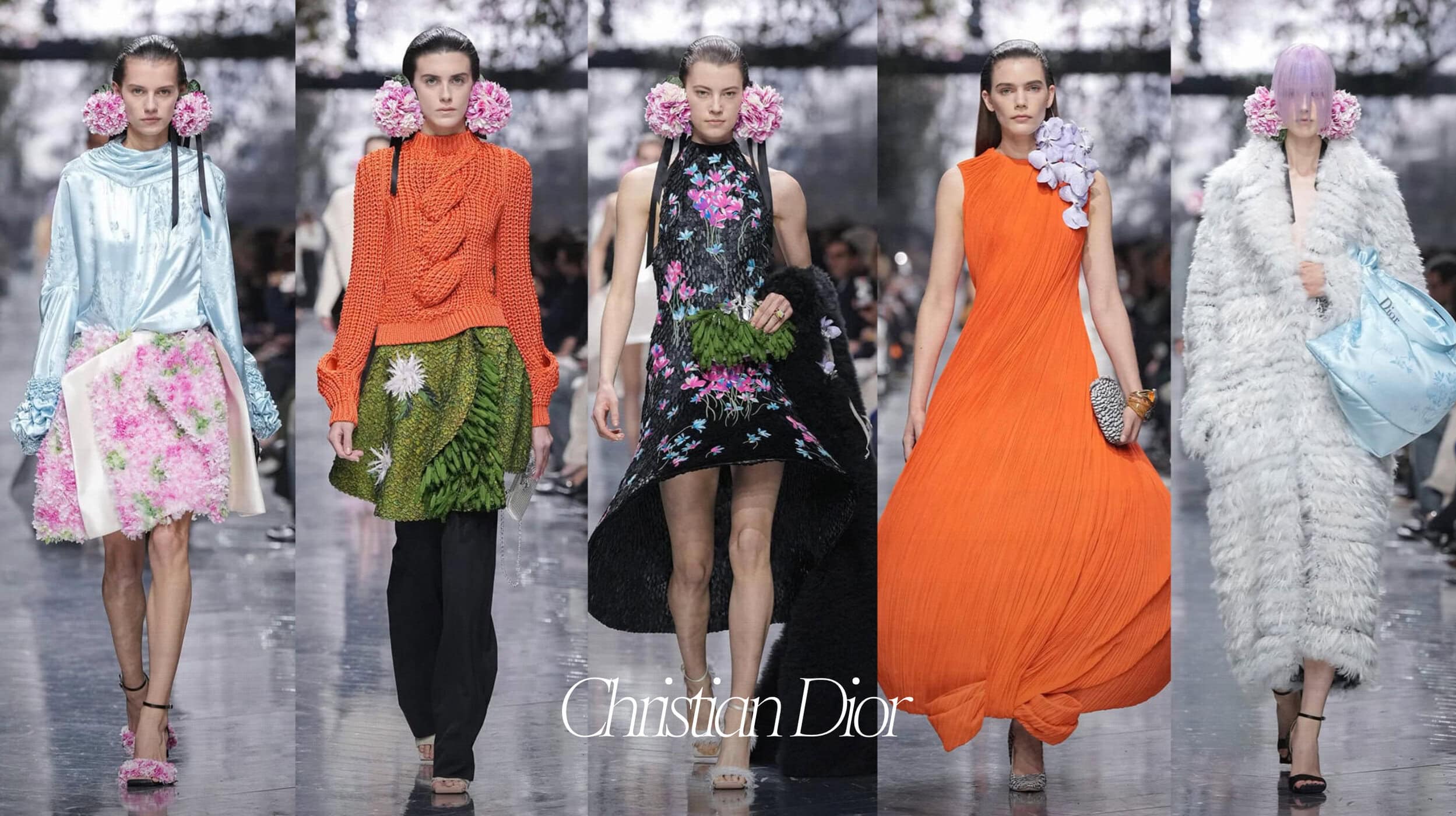
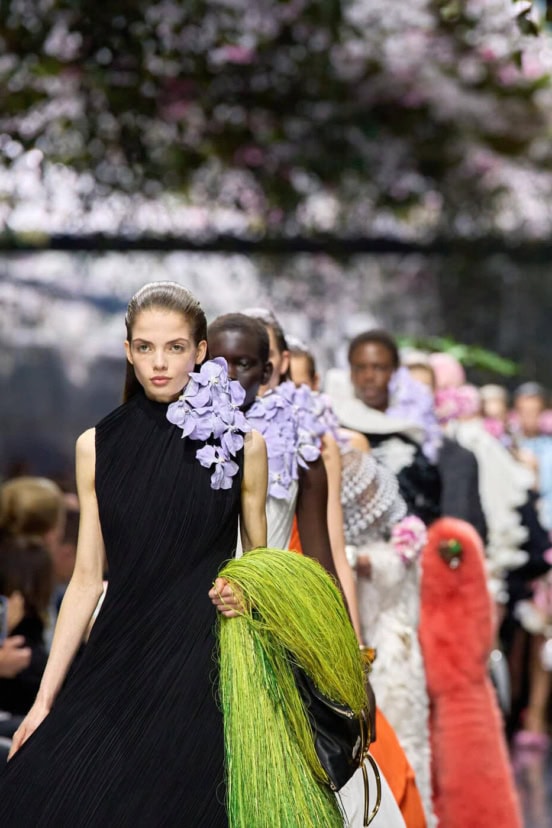
My initial response to the collection was curiosity, followed closely by overwhelm. There was a great deal to take in at once: a high number of looks, dense surfaces, recurring motifs rendered across multiple materials and scales. At first, it bordered on sensory overload. That difficulty felt deliberate. Anderson’s couture resisted immediacy. It asked for time.
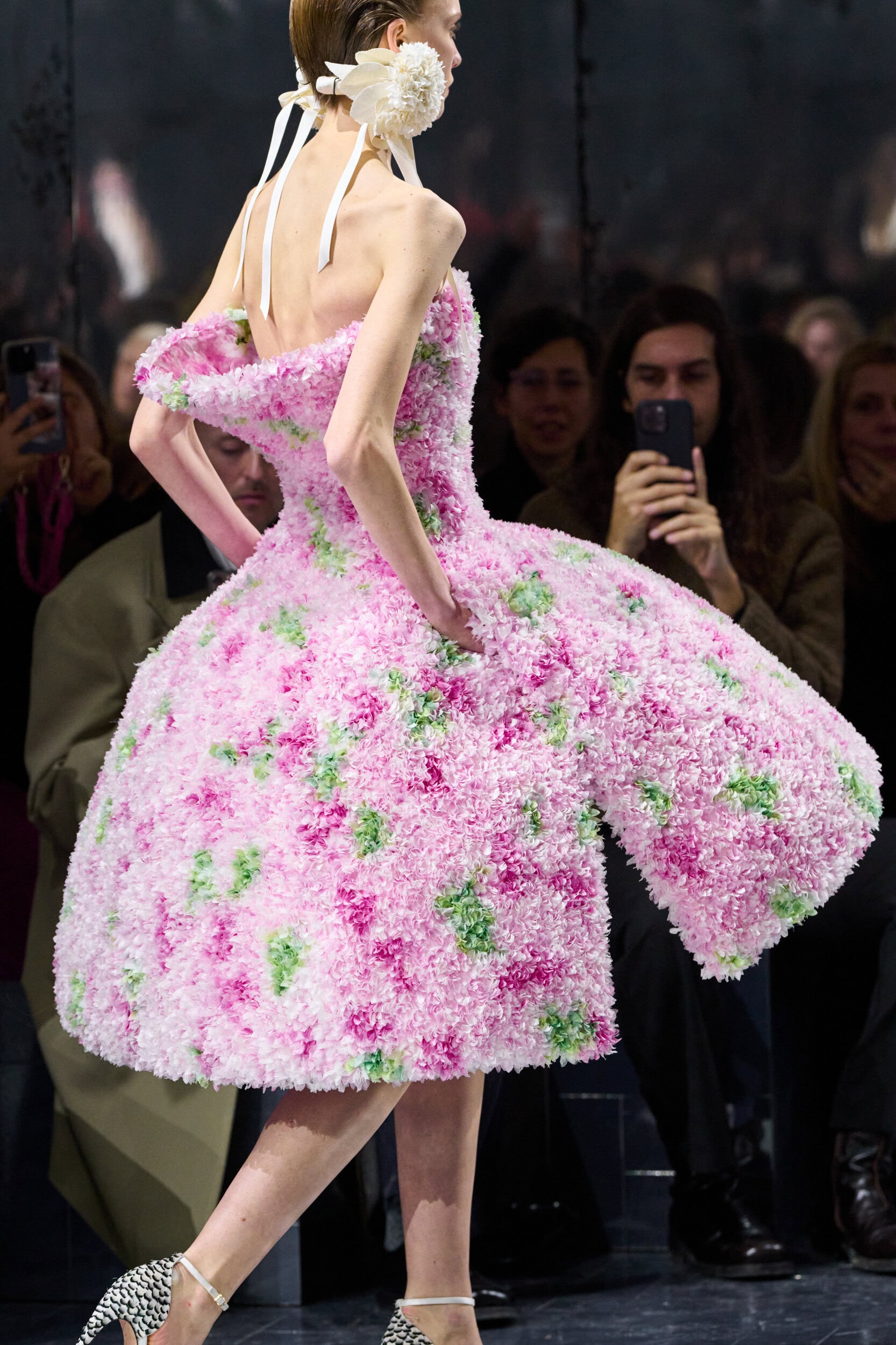
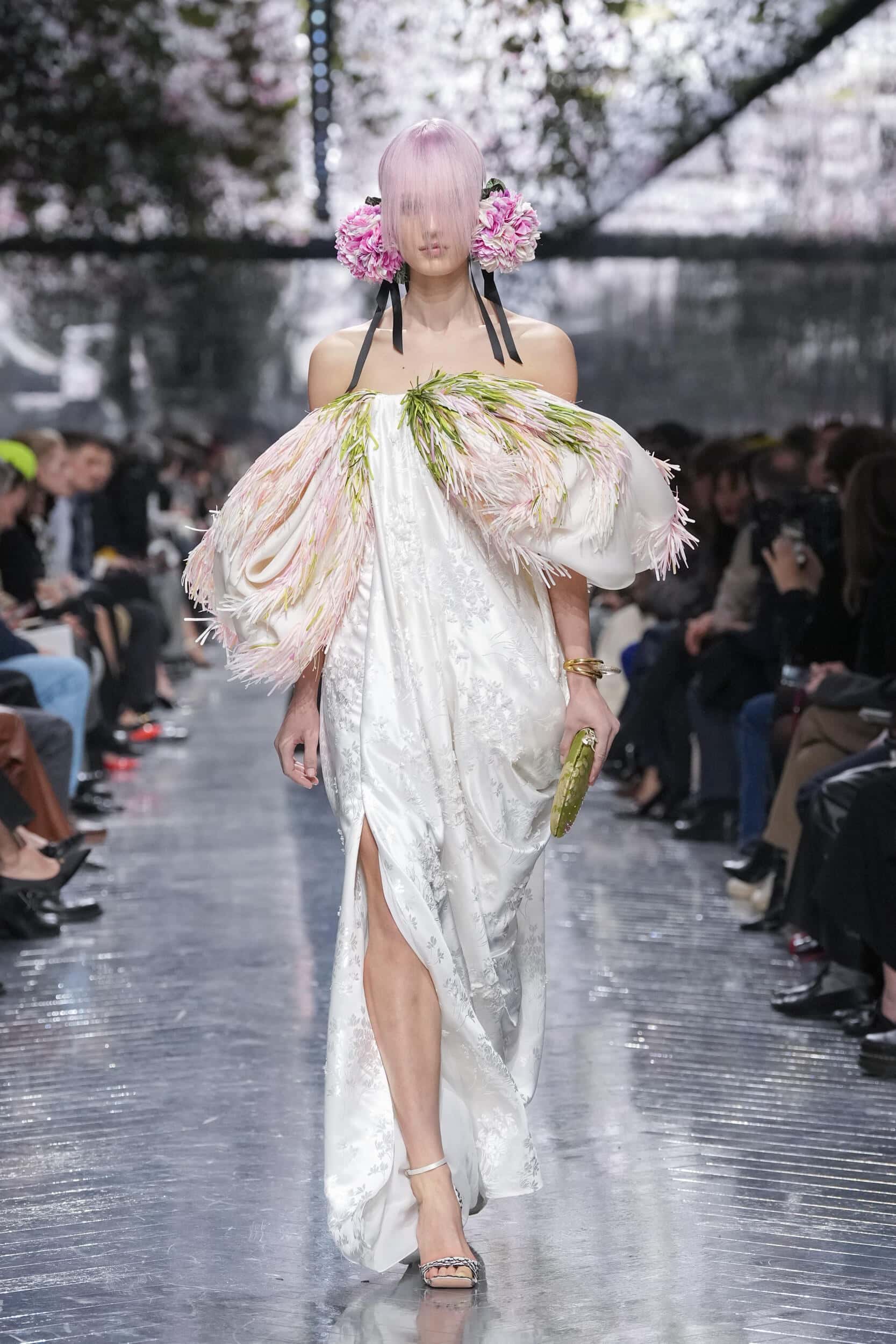
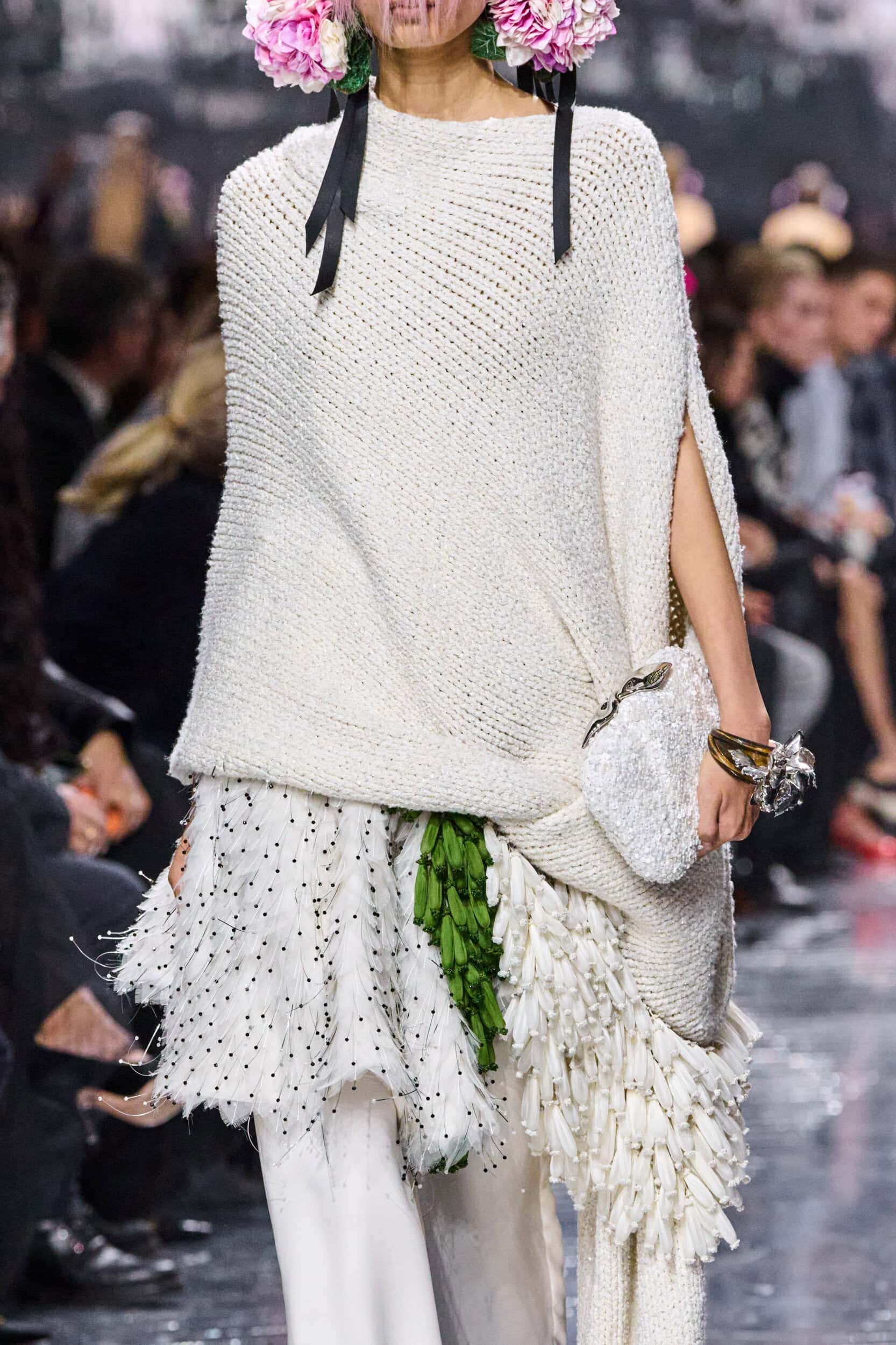
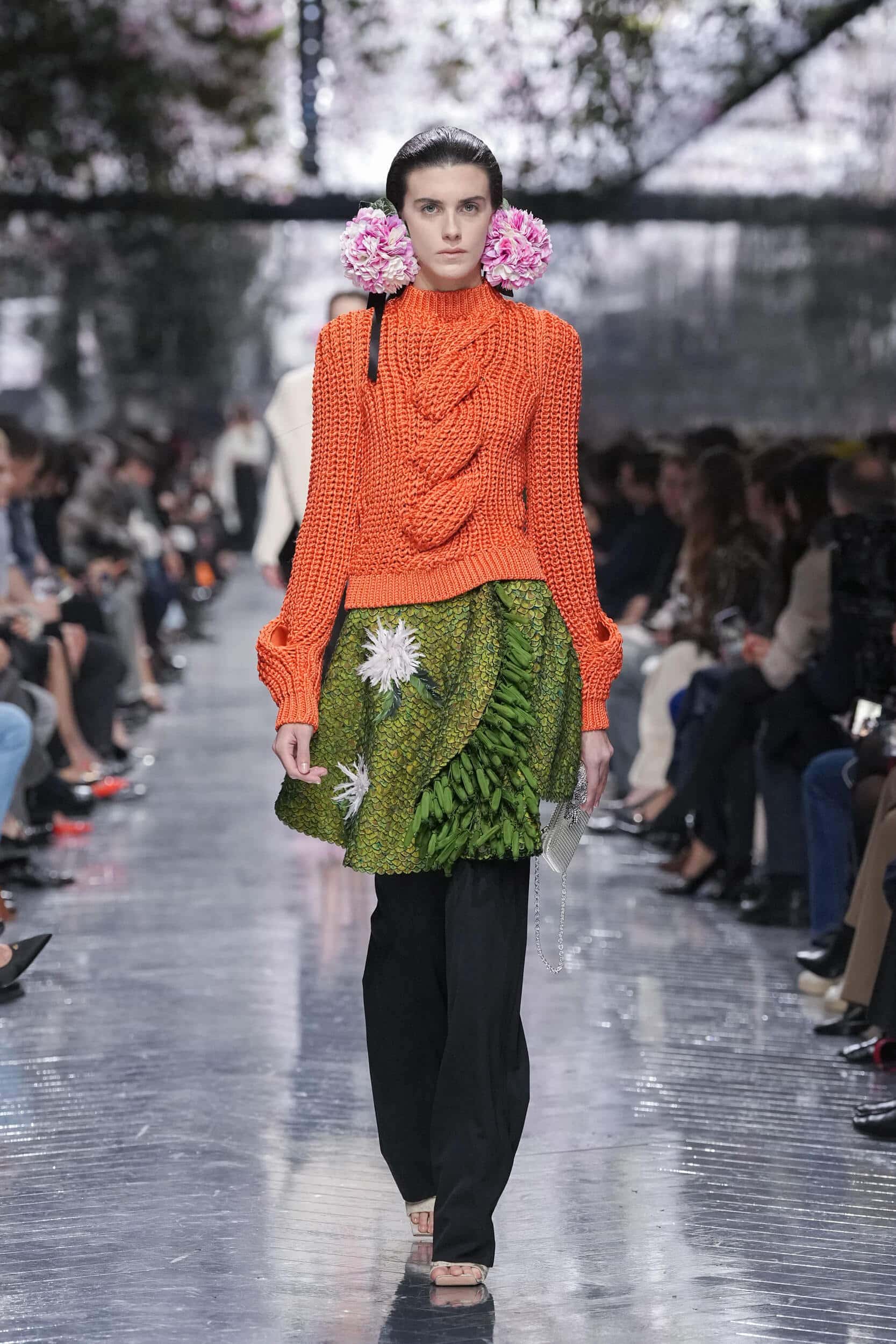
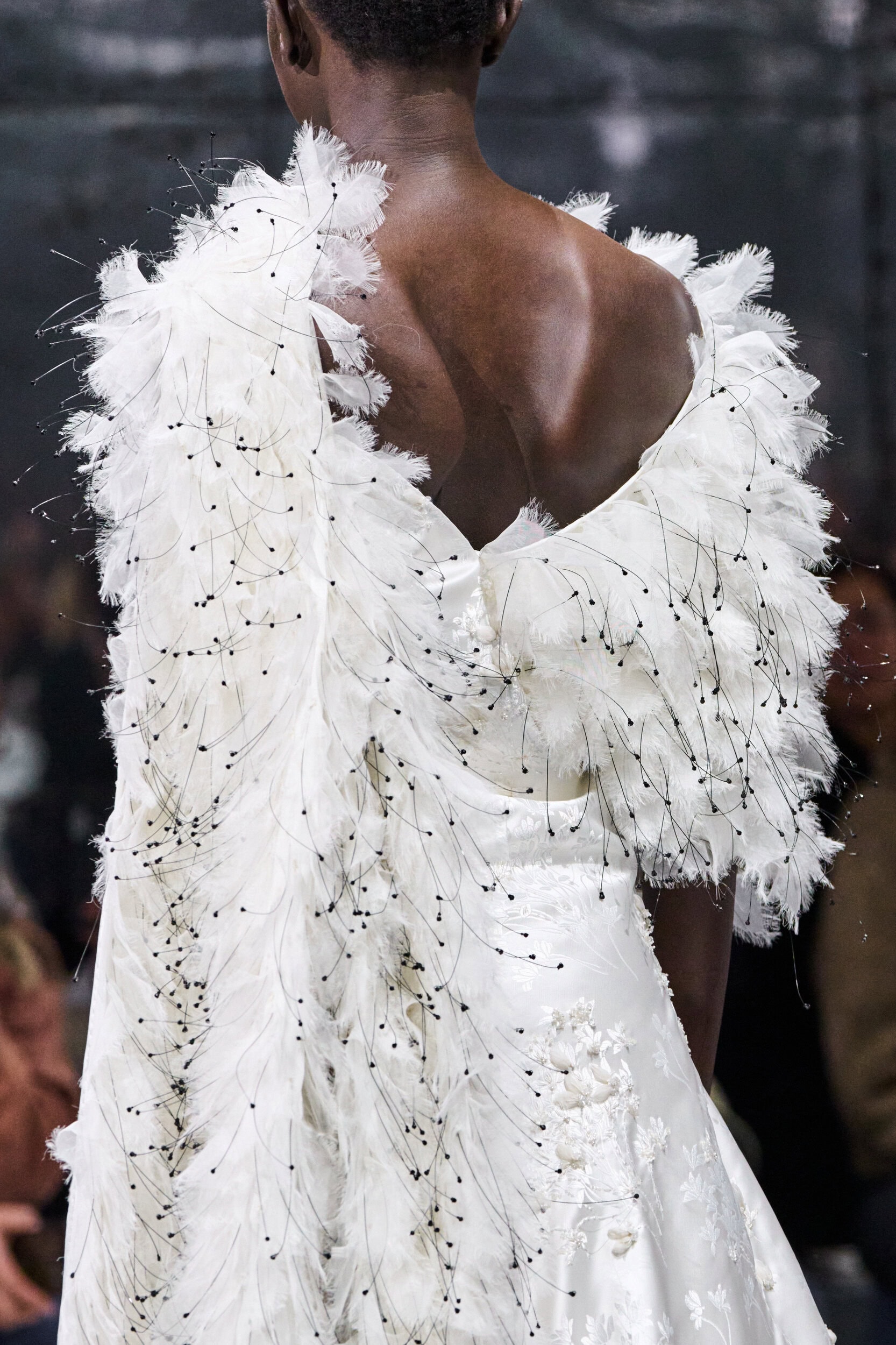
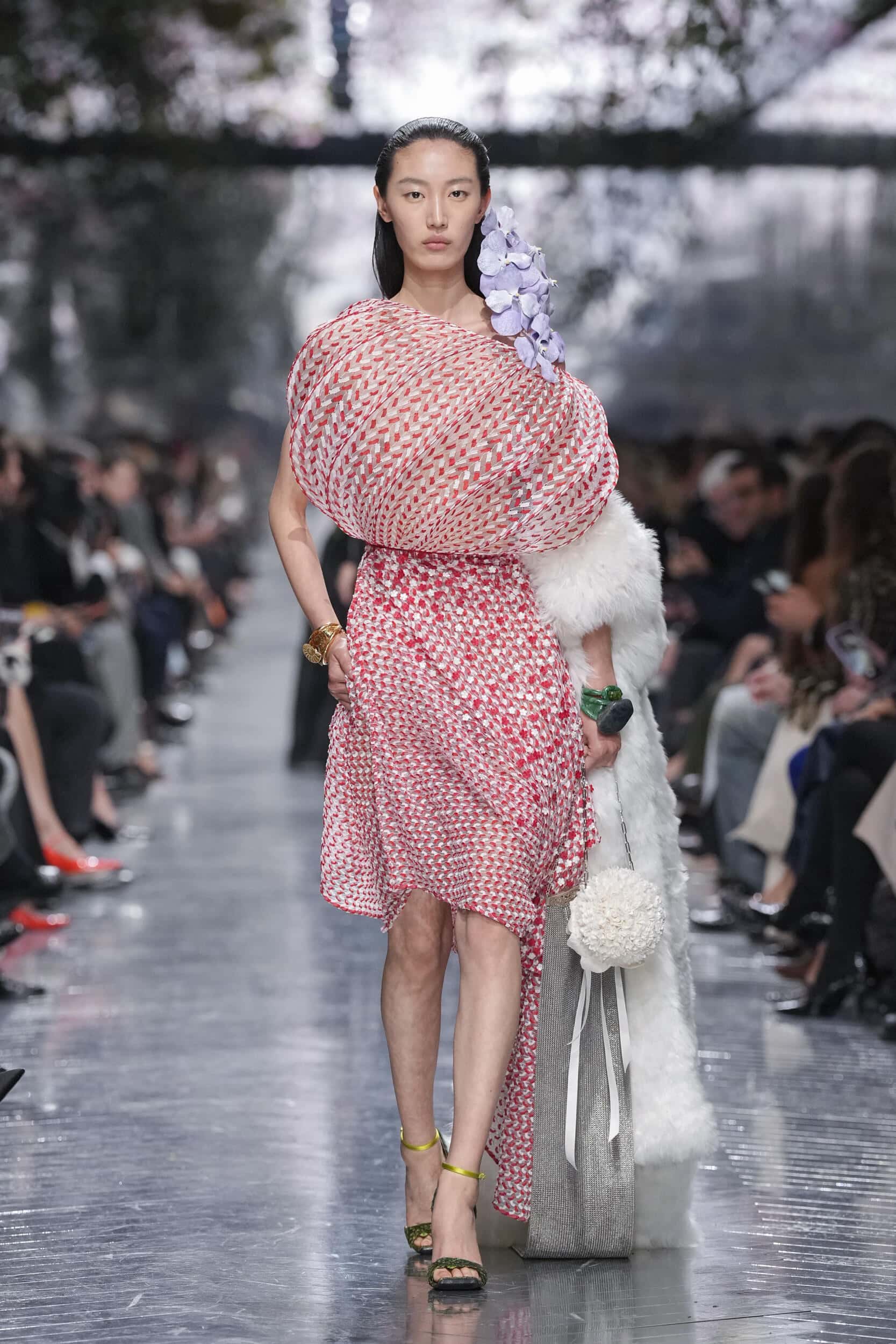
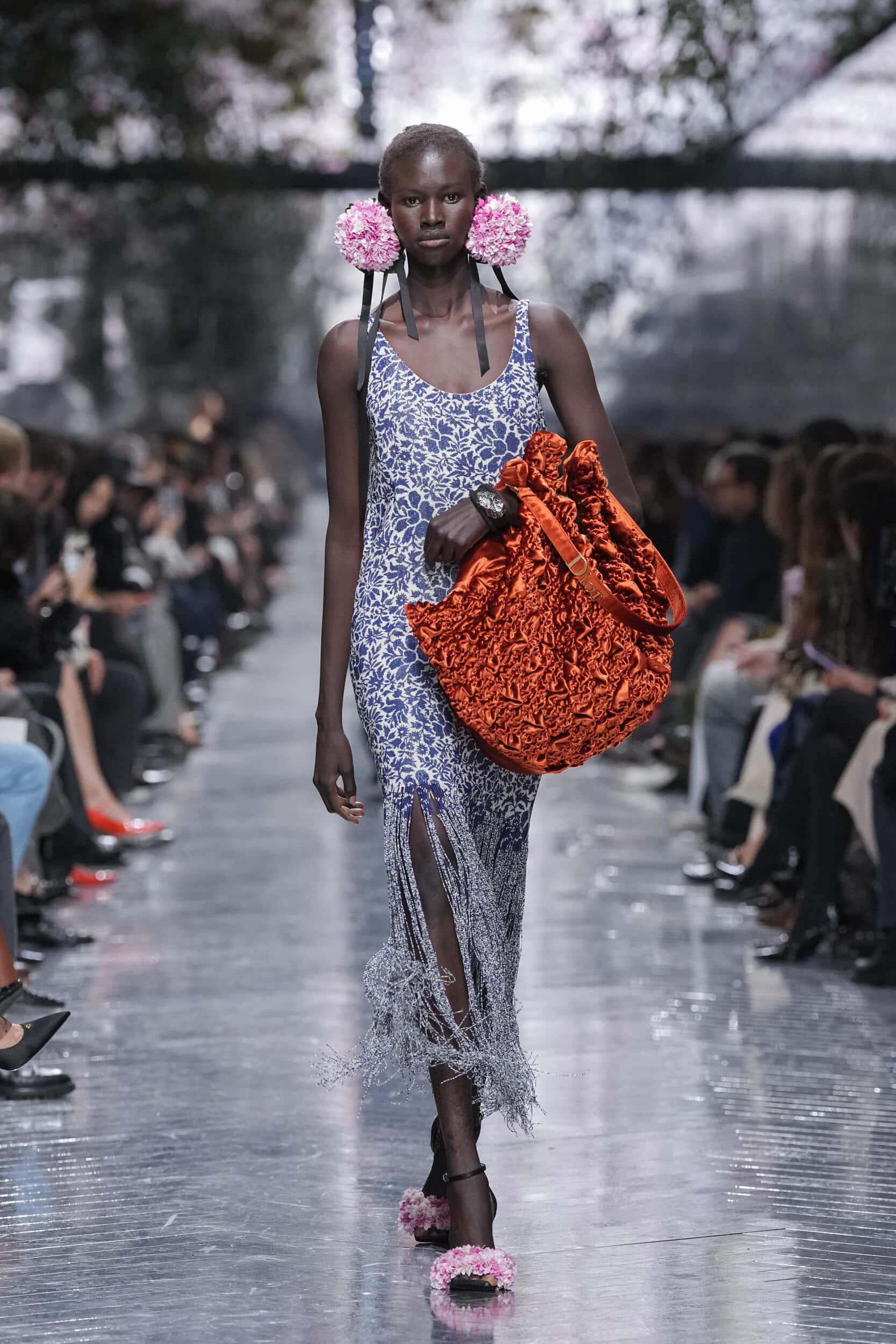
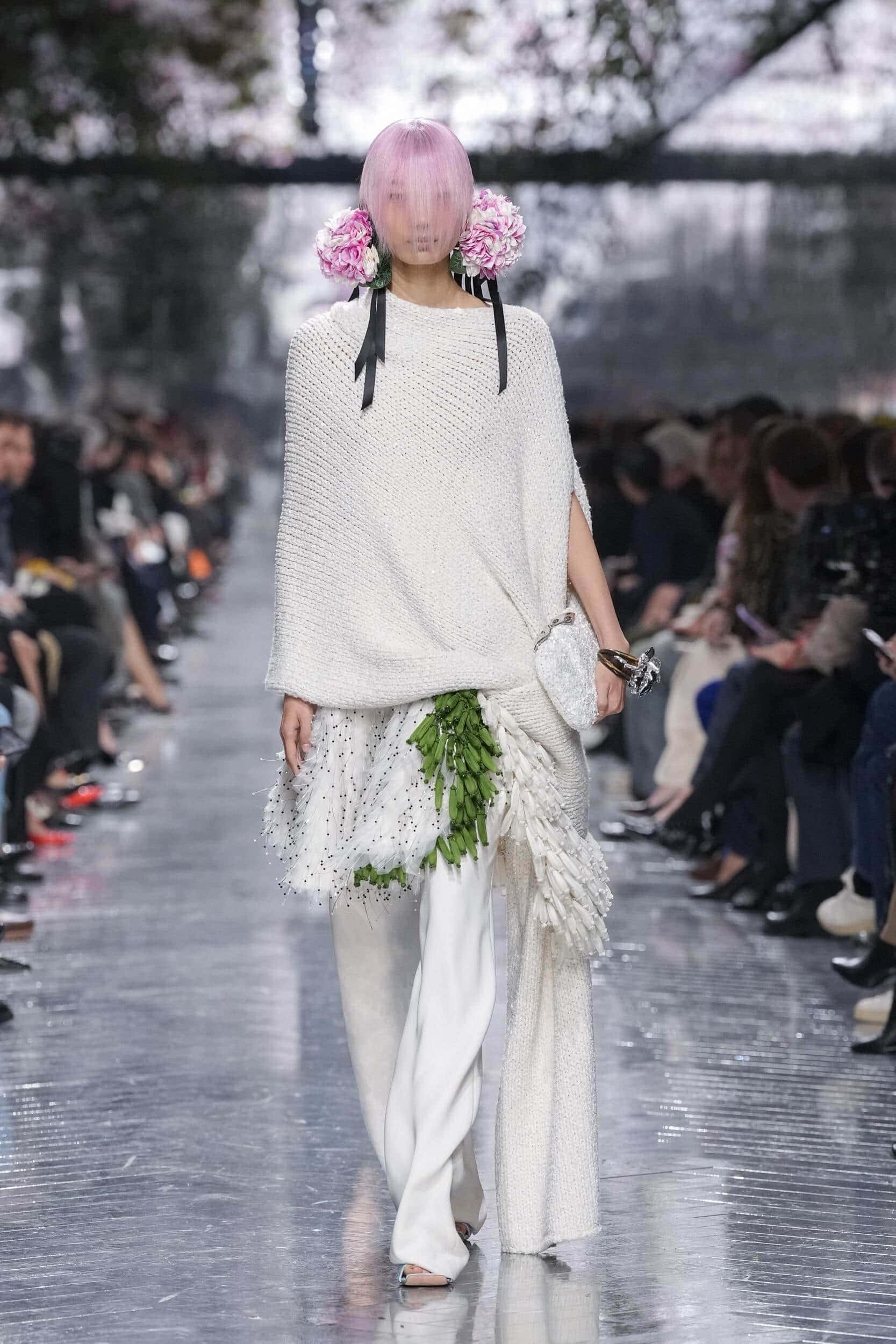
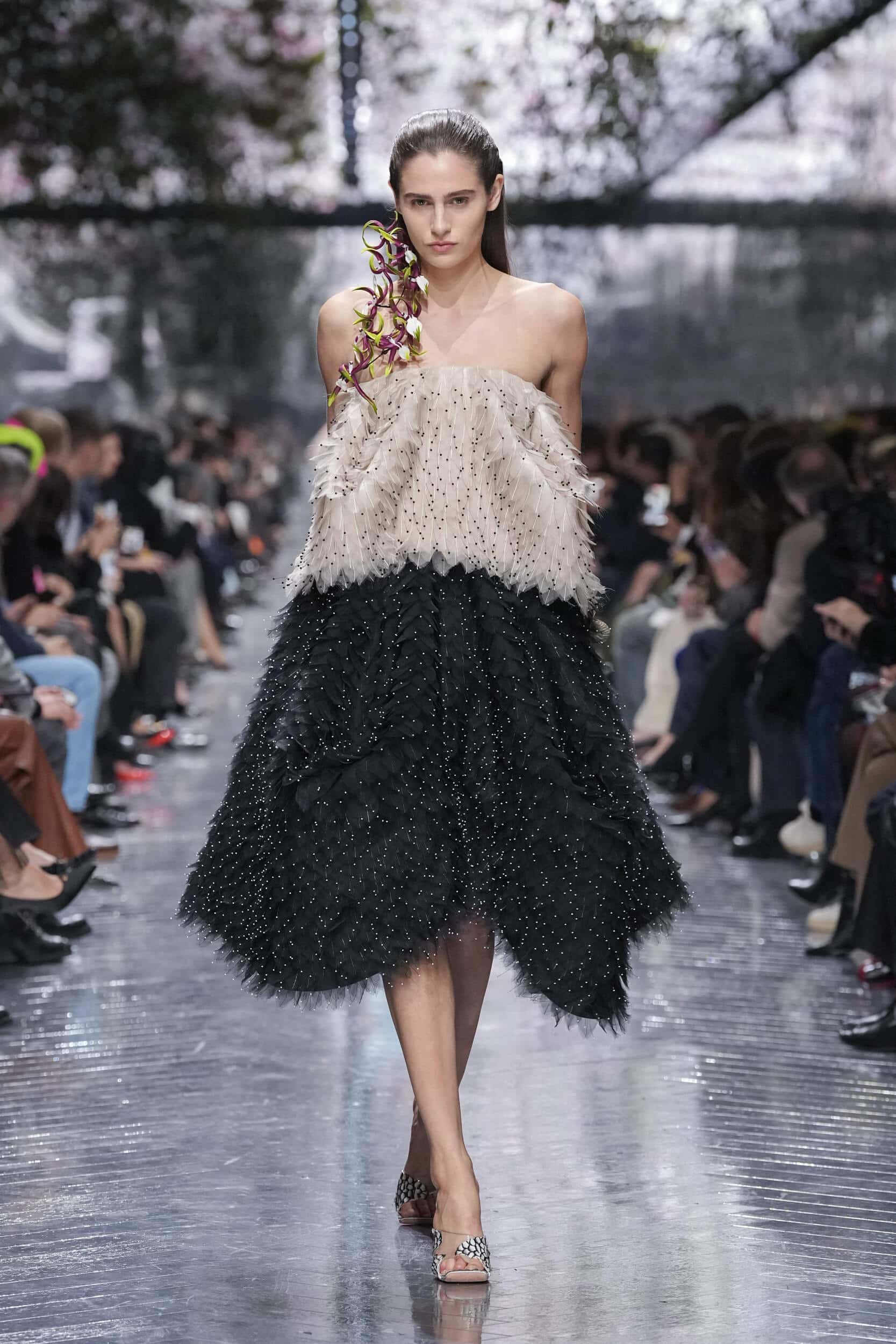
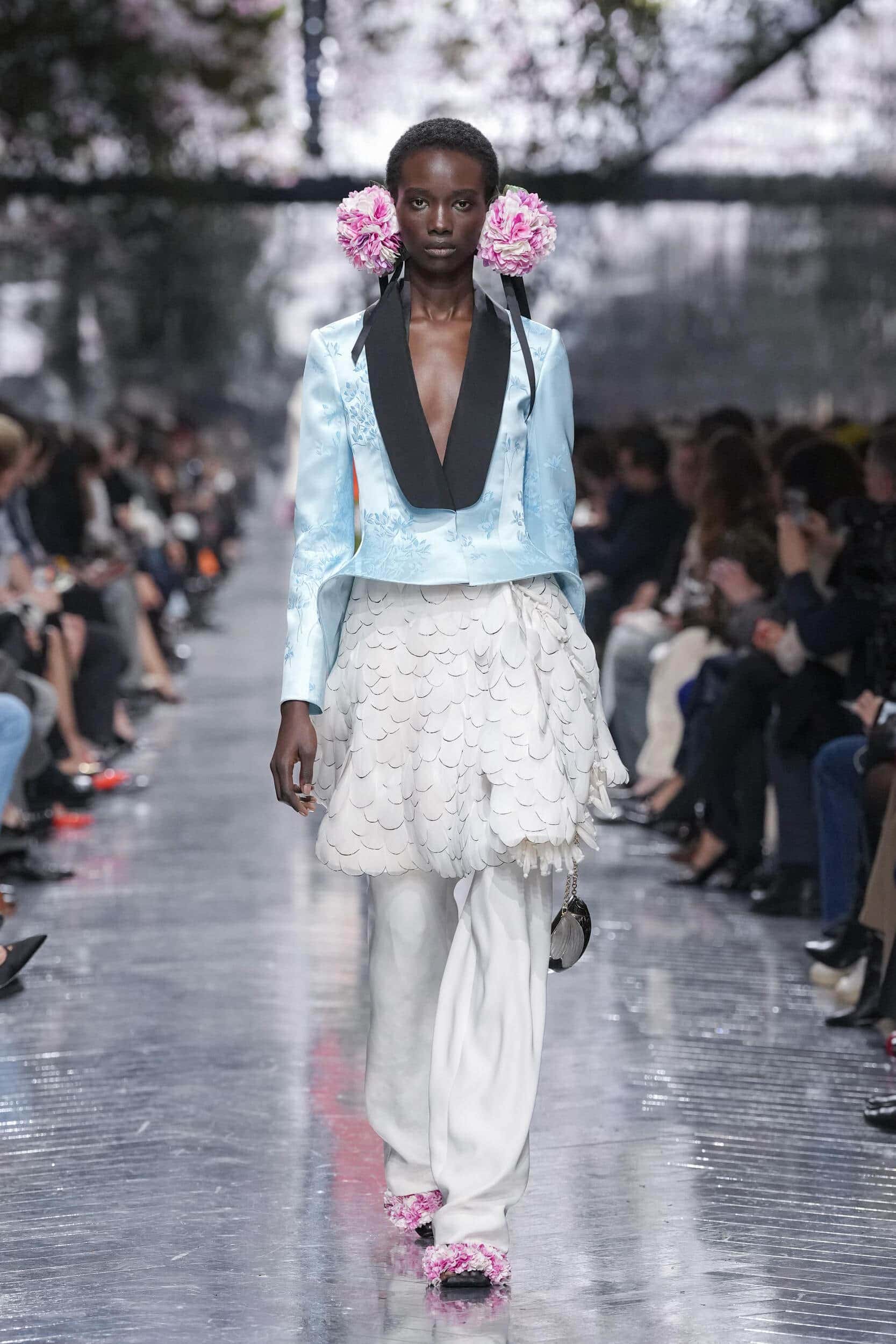
From a distance, the collection read as assertive in structure and silhouette. Up close, it revealed itself as deeply considered. Material density and handwork became the collection’s true engine, with repetition operating as a tool of clarity. Scale-cut feathers appeared repeatedly, layered into armor-like skins and mounted on horsehair and boned structures with real physical weight. Cyclamen returned obsessively – translated into velvet devoré jacquards, silk petal embroidery, micro-beading, and featherwork – each iteration slightly altered, allowing meaning to accrue through technique.
This approach reframed couture as a form of language. The strength of the work emerged through continuity – techniques revisited, refined, and extended across the collection. That choice positioned Anderson’s debut as groundwork for an evolving couture practice, one capable of sustaining itself over time.
The same discipline governed the collection’s sense of spectacle. Drama remained and tightly controlled. Spherical and corolle silhouettes relied on visible internal frameworks – tulle cages, boning, horsehair – that asserted themselves openly. Construction was a clear part of the visual logic. Garments projected, hovered, and held tension as bodies moved through them. Couture here functioned as something spatial and physical, designed to register in motion and in space.
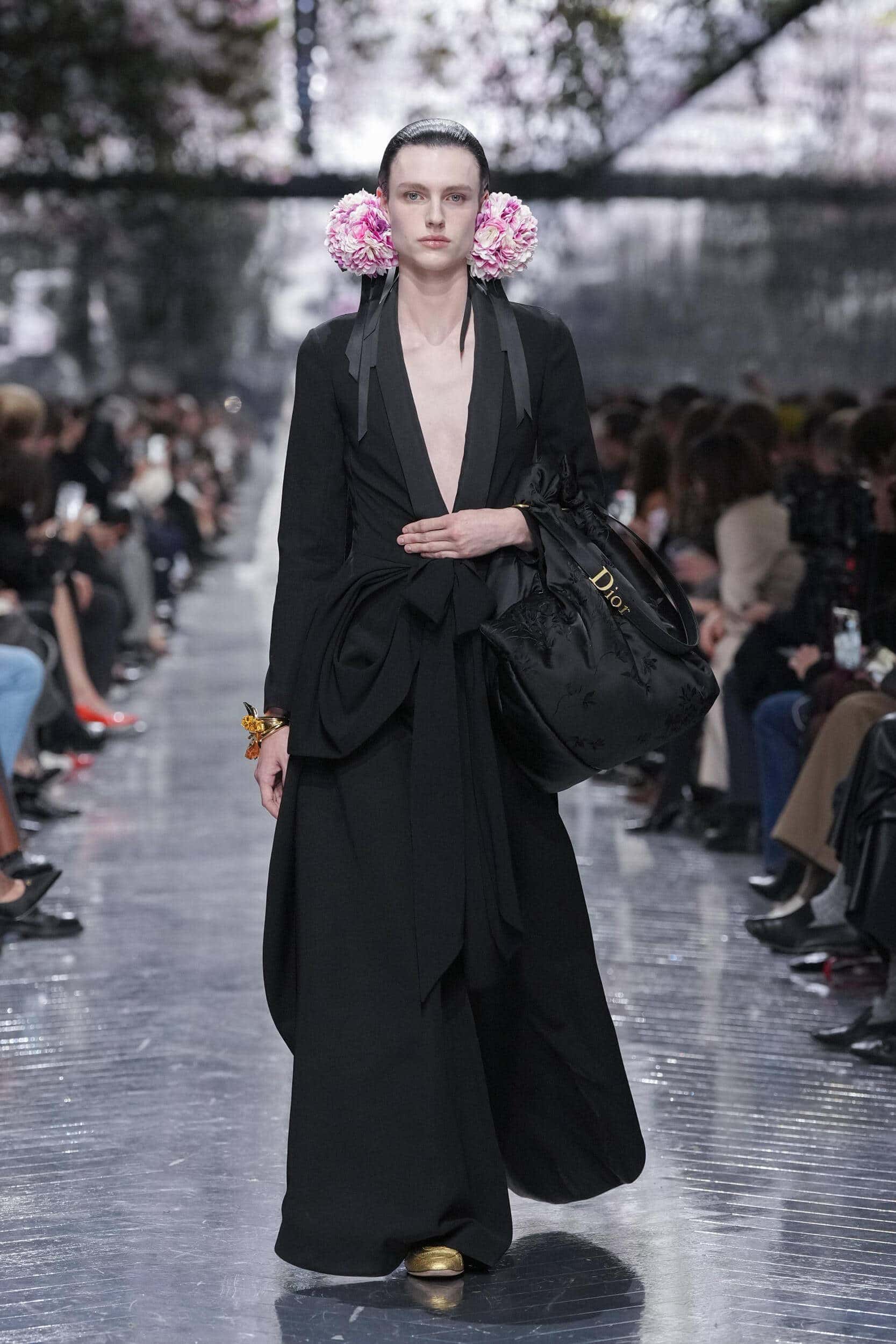
The treatment of the female form marked a clear shift from recent seasons. Under Maria Grazia Chiuri, Dior Couture often reflected an intimate understanding of the body, with a focus on natural line and proportion. Anderson arrived with a different emphasis. These garments presented themselves as statements: sculptural, intentional, at times deliberately estranged from the wearer. Proportion, however, remained carefully considered. New silhouettes emerged – some recalling the sculptural authority of Raf Simons’ tenure –suggesting an expansion of Dior’s couture vocabulary.
Where the collection felt most assured was in the cohesion of Anderson’s vision. His hand was unmistakable. Authorship was clear. This was Dior by Jonathan Anderson – confident, illustrative, and decisive in its point of view. That clarity carried both strength and risk. Familiar gestures surfaced, and traces of his previous work were visible. Anderson did not seek anonymity. He treated Dior as a place for exploration.
That philosophy extended to his handling of heritage. Bar jackets, post-war silhouettes, and archival florals were treated as usable material. They were looped, softened, stretched, armored, and reworked through contemporary processes – modern devoré, hand-woven tweeds, layered nets, and shibori organza clusters that appeared almost organic in their placement. Heritage remained active, sustained through transformation rather than static reverence.
What stood out most was how distinct this collection felt within the broader couture landscape. There was no sense of interchangeability. In an industry increasingly defined by repetition and visual monotony, Anderson’s debut asserted individuality. It was demanding, opinionated, and willing to ask for patience.
Still, the collection carried challenges inseparable from its intelligence. Anderson’s couture operated on a cerebral register, at times, asking for contemplation rather than instant recognition. The pace of the show worked against that demand. The speed made it difficult to absorb details that clearly required time, and in that sense, the format limited the work’s impact. These were pieces that wanted to be studied.
There was also the question of wearability, particularly as these sculptural forms begin to travel beyond the runway. At times, the garments appeared more committed to their own internal logic than to the bodies wearing them. That tension felt intentional. This was couture that prioritized idea and construction, designed to be looked at as much as lived with. It may not always resolve cleanly on the red carpet, yet it offered something rarer in return: garments that insist on being understood.
THE DIRECTION
THE WRAP UP
Returning again to the thinking of Gilles Clément, the line offers the clearest lens through which to understand Jonathan Anderson’s couture debut. This was a collection that did not yield itself all at once. Its meaning accumulated through repetition, craft, and time spent looking – like a garden that settles and deepens the longer one remains with it. What initially felt overwhelming softened into coherence through proximity. Details revealed themselves slowly. The reward came with patience.
The lasting takeaway, then, was a reframing – of Dior under Jonathan Anderson, and of how couture might be judged now. This debut positioned the house as a place of exploration: rigorous, demanding, and open-ended. These were not clothes designed for ease, but for engagement. Collectible rather than consumable, cerebral rather than immediately emotional, they asked to be lived with rather than lived in. In a landscape increasingly defined by repetition and visual monotony, Anderson’s couture asserted something rarer – individuality sustained by thought, craft, and the confidence to let work unfold over time.