The New Power Generation
Review of Mugler Fall 2026 Fashion Show
By Angela Baidoo
What has proven to be true this year is that the debuts of this latest crop of designer appointments should be taken as their opening statements. As time and again the sophomore collections of designers from Michael Rider at Celine, Louise Trotter at Bottega Veneta, or Jonathan Anderson at Dior have been pivotal in solidifying their creative direction for the brands they now helm.
This was also true for Miguel Castro Freitas’ Mugler which was unapologetic in its pursuit of questioning power through the lens of glamour and graphic colour.
THE COLLECTION
THE VIBE
Potent Power, Commanding Narrative, Mugler Spirit
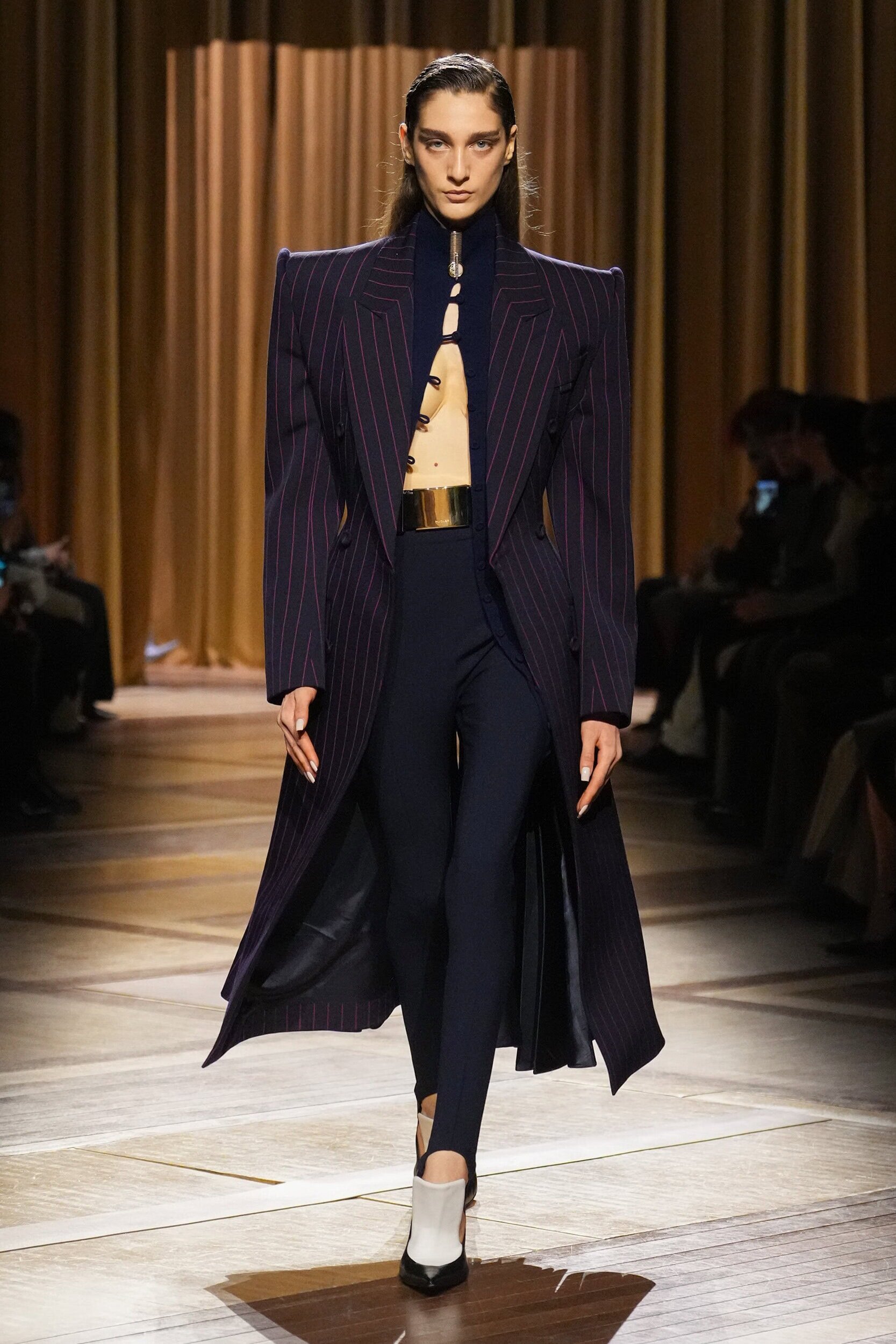
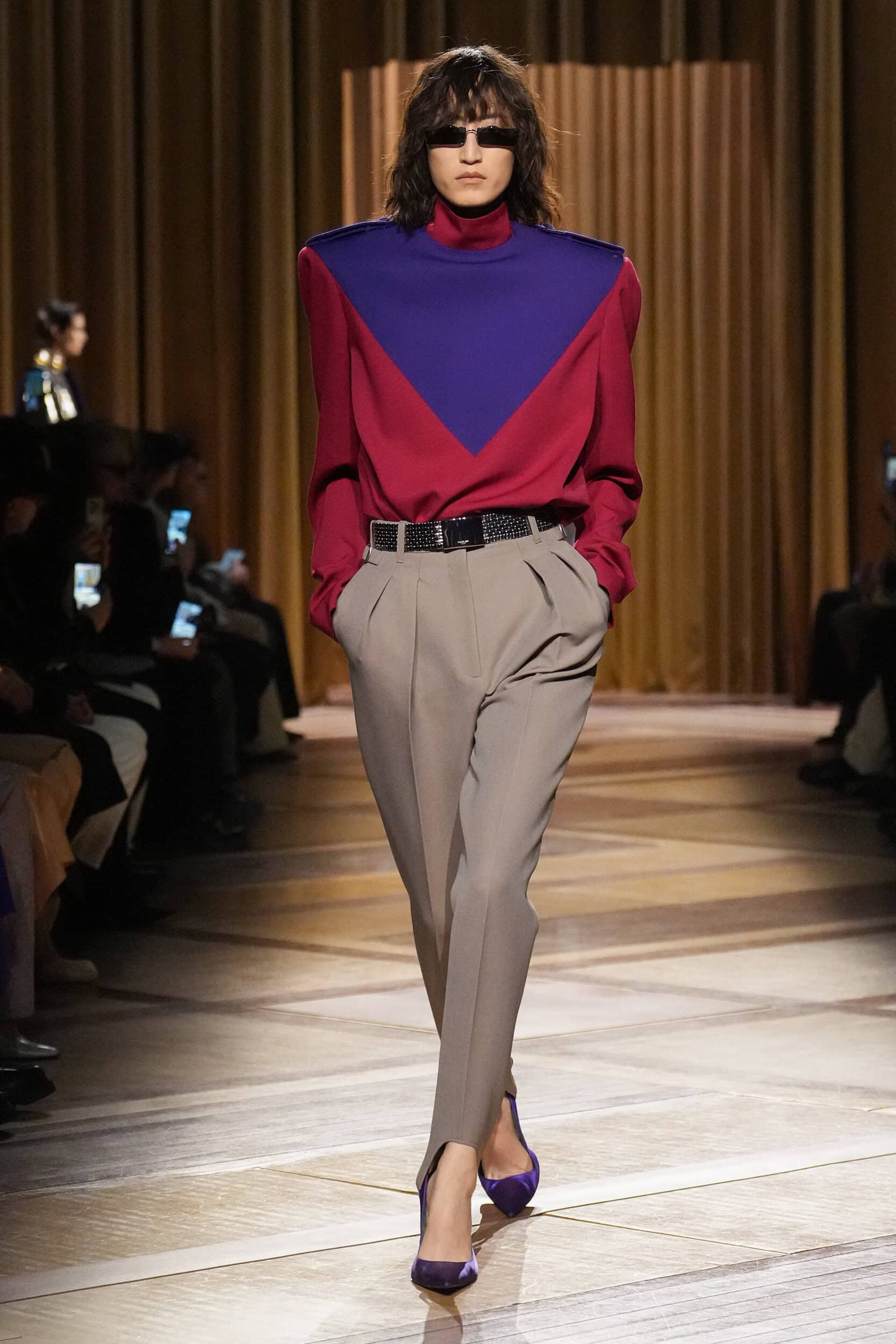
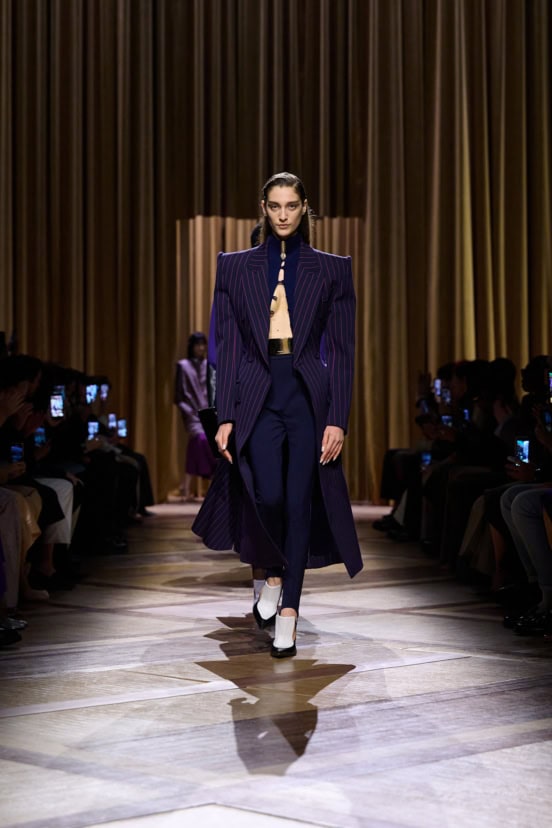
Backstage, following his sophomore collection for Mugler, Miguel Castro Freitas seemed on a veritable high. An emotion thoroughly warranted after the designer presented a collection that uncompromisingly set out to imprint on the fashion house, a modern version of the decade that brought us big shoulders, any excuse to wear lamé, and an empowered female workforce.
There has been a theme of late, for designers to take an idea for a ‘walk.’ Expanding a concept into a series over the course of several show seasons. For Freitas his fist three collections for the house are to be a trilogy. A trilogy of ‘Glorified Clichés to be exact. The first of which formed part of his debut titled Stardust Aphrodite. Taking on the traits of the Greek goddess in its exploration of love and beauty via the female form.
Part two, for Fall 2026, is titled ‘Commander’ and takes on one of the defining traits of Mugler’s heritage – power dressing. When asked about what that meant for the woman who wear Mugler today, Freitas told The Impression “This collection was an exercise to question what power represents today. We have inherited a lot of preconceptions of what power means. Not just power dressing. And that can very often take on either a negative connotation or a positive one. What we are hoping to convey here is the latter.” The designer is right in the sense that what power, actual power, means for women today has exponentially shifted, and some of the old ideas (#Girlboss, Girl Power) of what makes women powerful have been proven to be simply surface-level slogans.
As the show notes clearly lay out, we need to question ‘the fetishization of its (power) visual codes.‘ Women wearing trousers has long ceased to cause a stir in society, sharp padded shoulders do nothing to alleviate the weight placed on them by work, motherhood, and societal expectation, and the pencil skirt and stiletto heel – meant to represent a feminine, yet commanding stance when presenting at the head of the boardroom – long ago lost its potency.
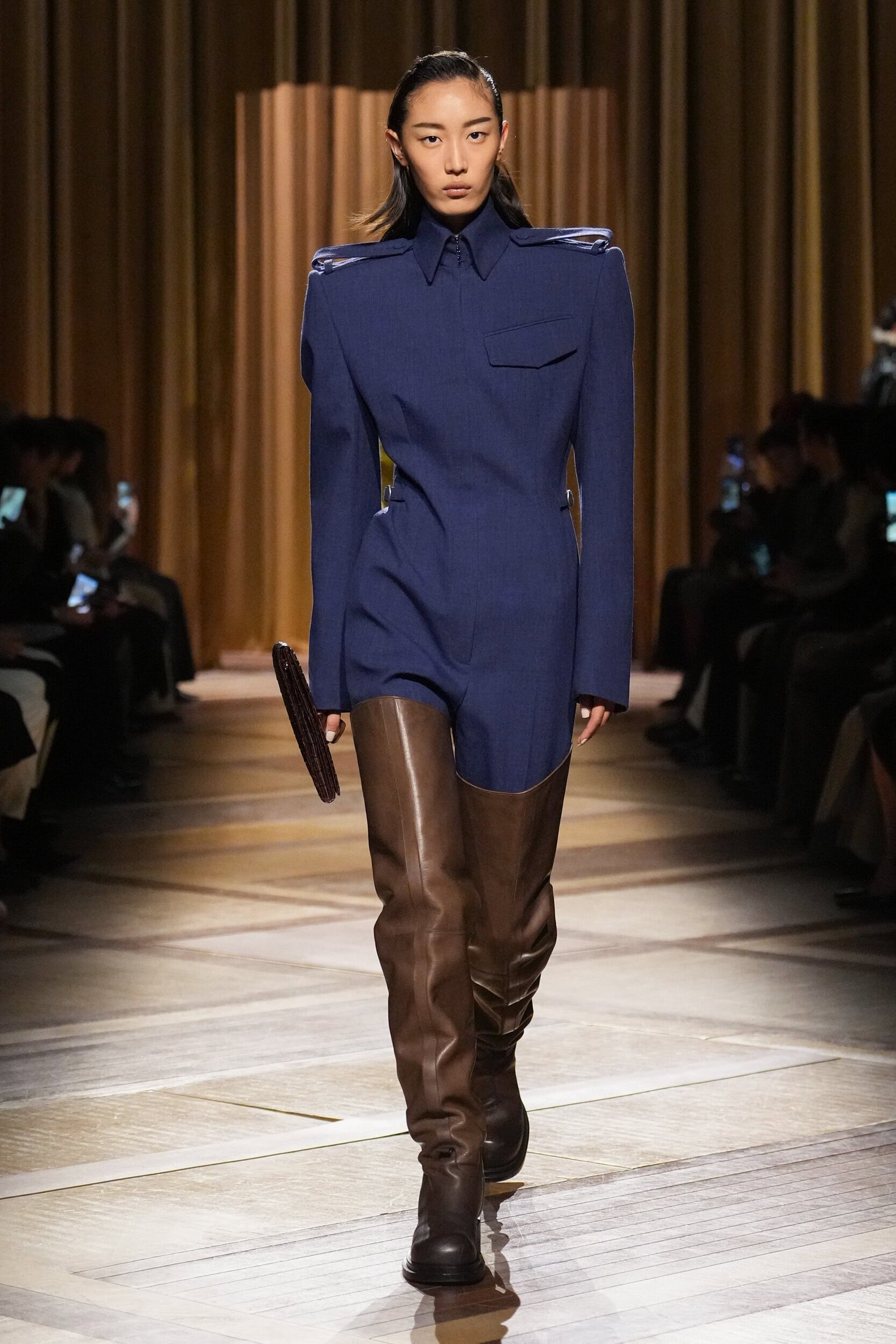
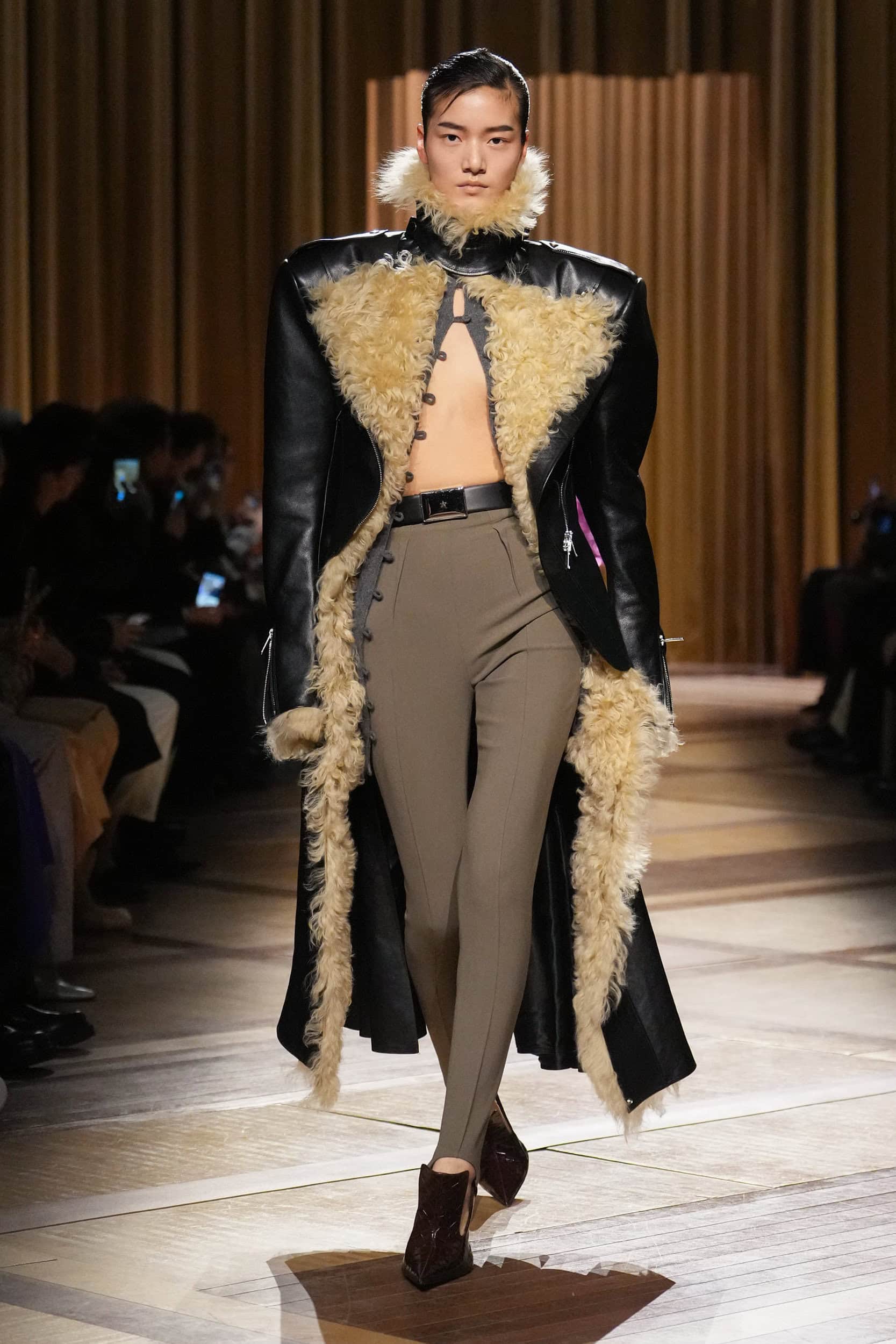
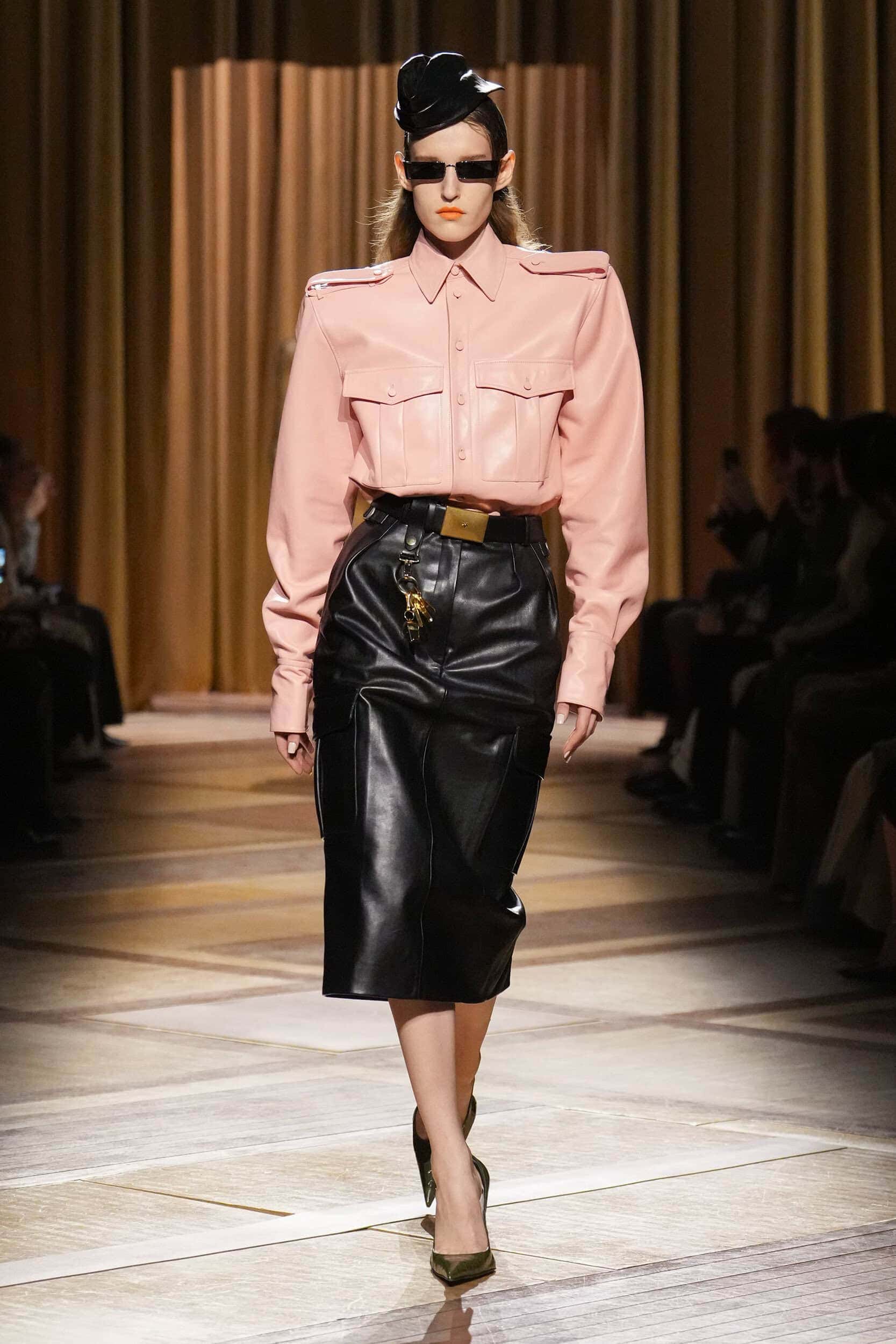
At a time when women are losing their rights to choose, their rights to an education, and their bodily autonomy a new image of power needs to arise. In fashion terms the designer went back to Mugler’s roots and revisited collections such as Les Secrétaires and Hiver Militaire that took on the themes of authoritarianism. In the over the forty years since those collections debuted their themes are still relevant today, with the new creative director explaining “self-empowerment is the most potent antidote of clarity to the oppressive forces and grey political climate that surrounds us at this very moment.” Taking military uniform codes, art deco influences and the visual feast of glamour that was the 1980s, the designer served an updated version of powerful dressing. One that was intent on fostering self-confidence through dressing boldly so women can take command of their autonomy.
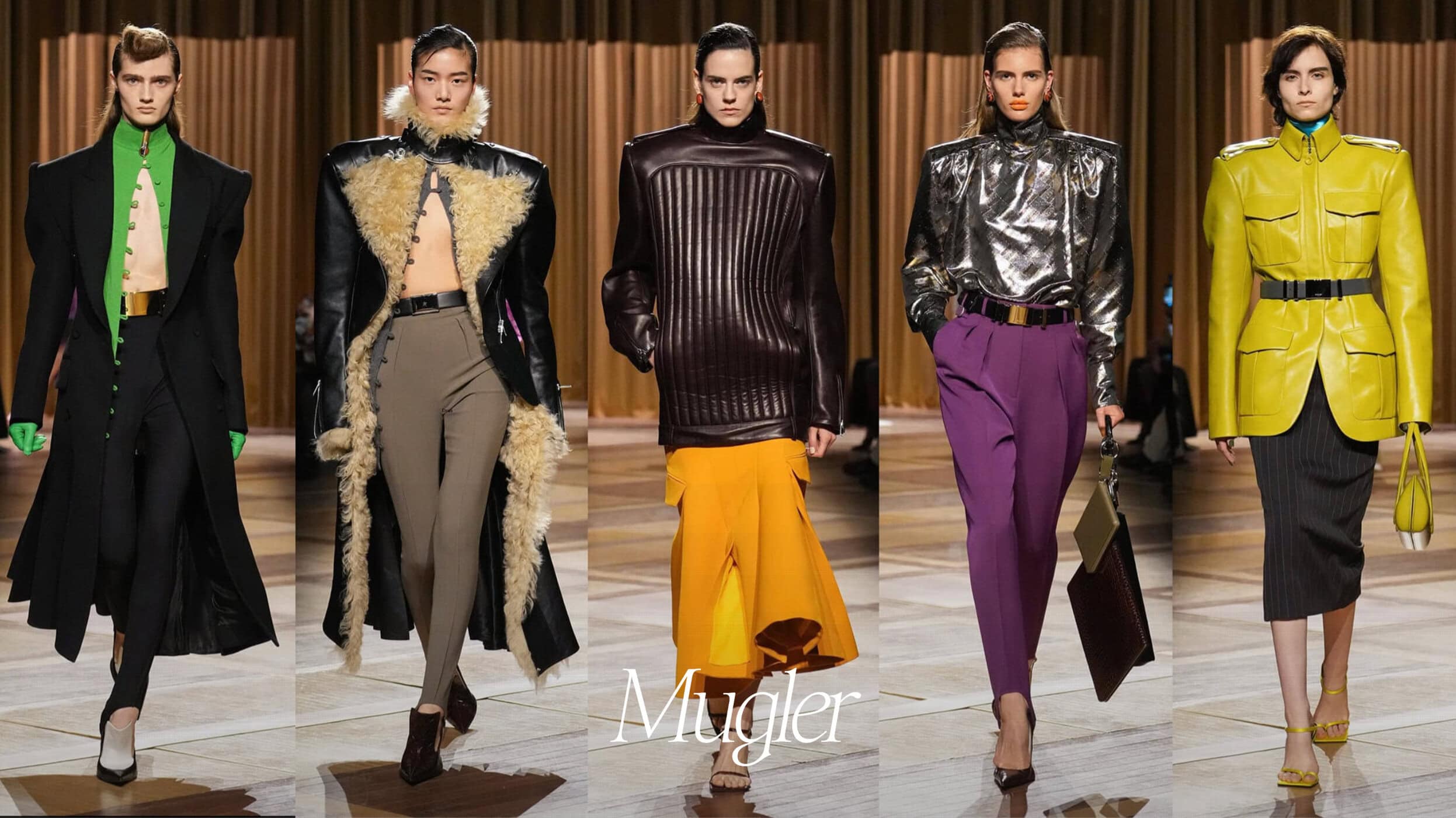
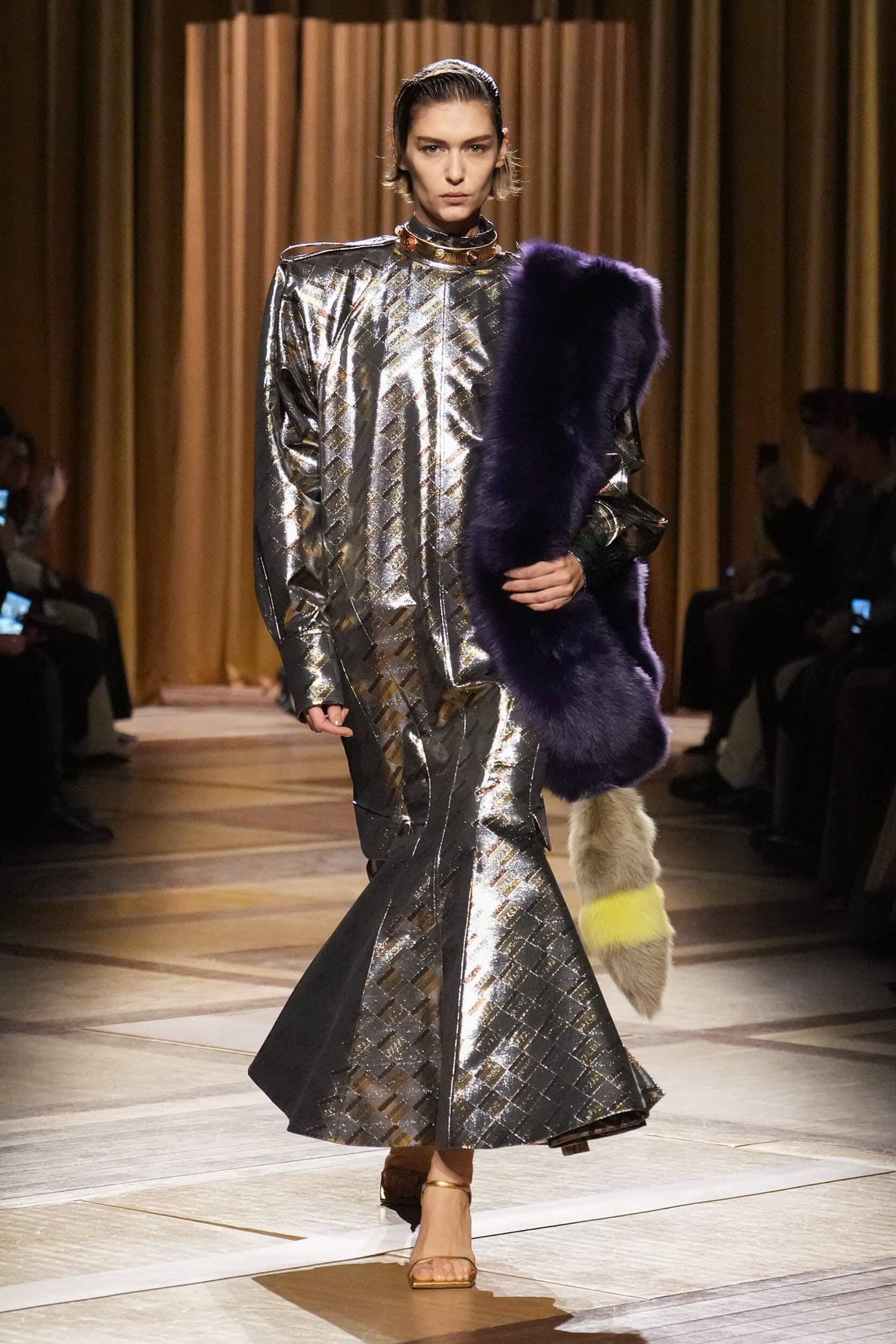
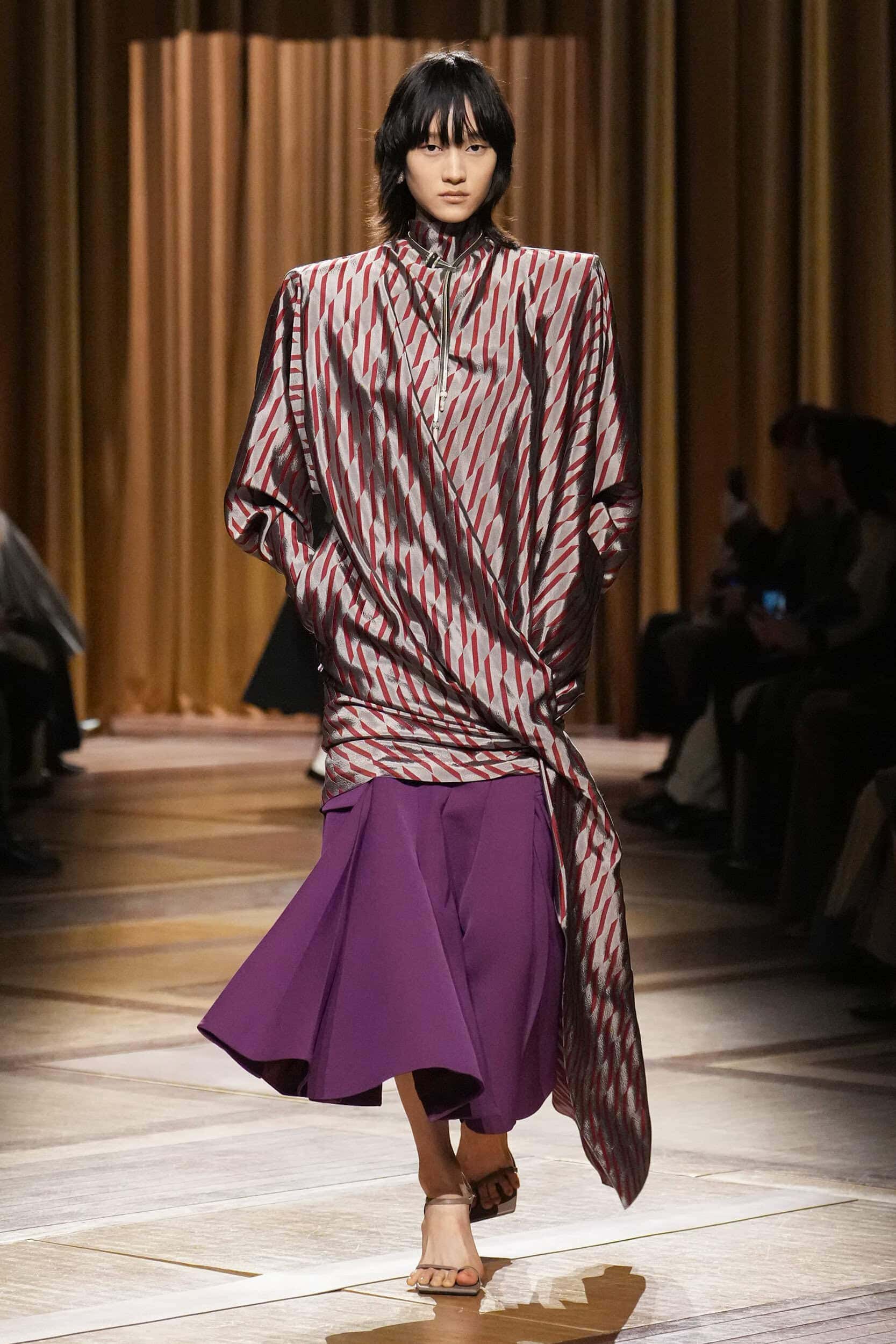
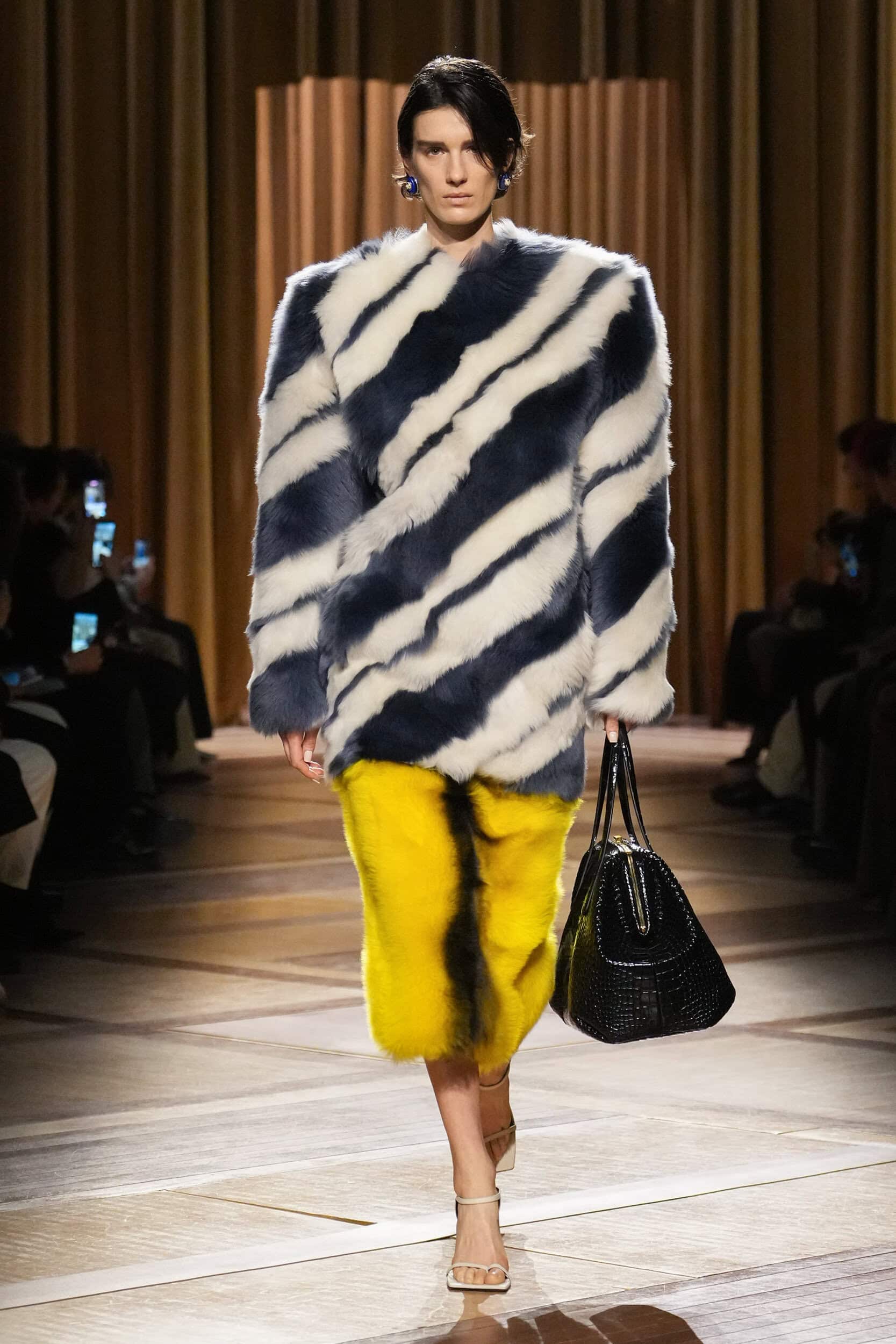
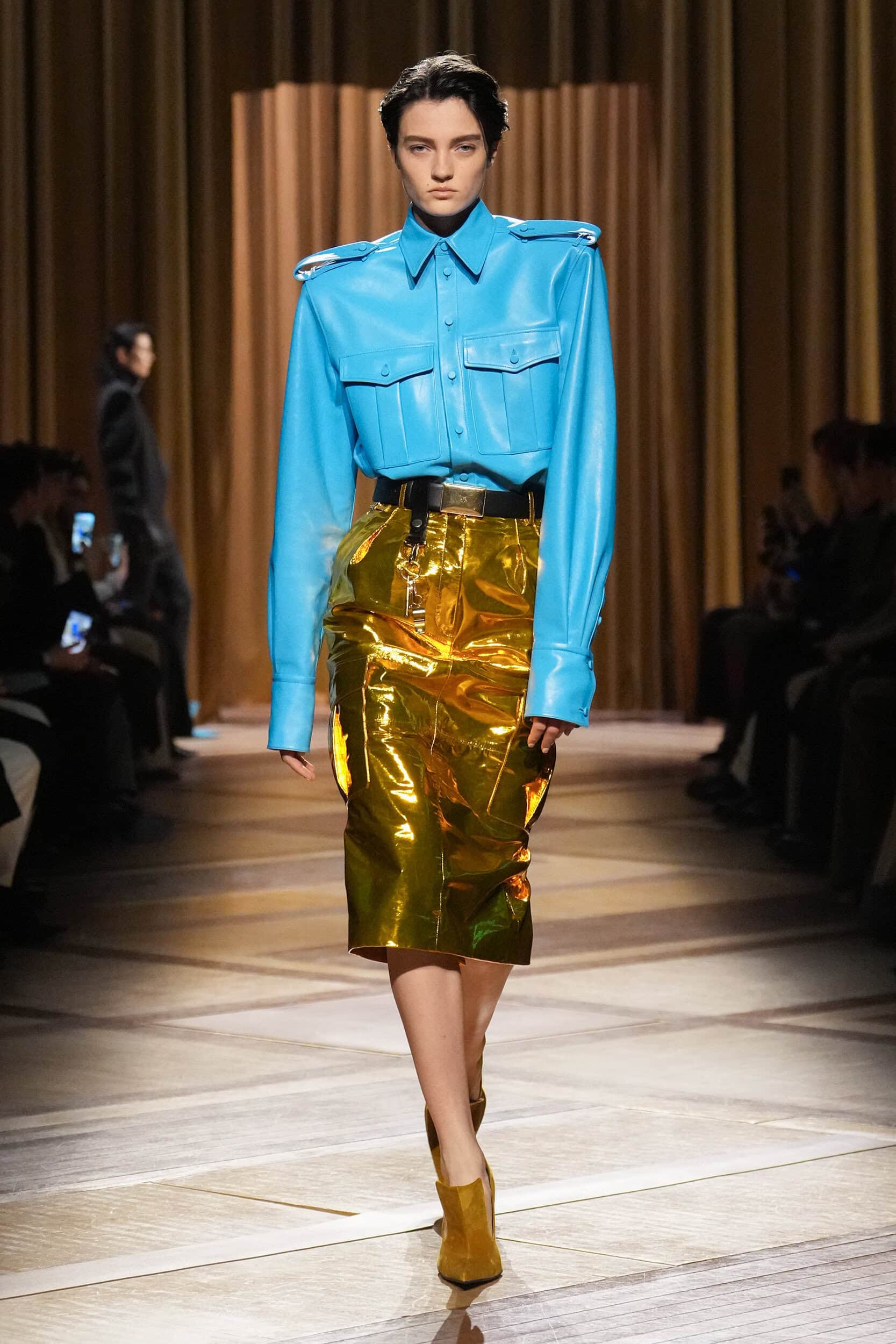
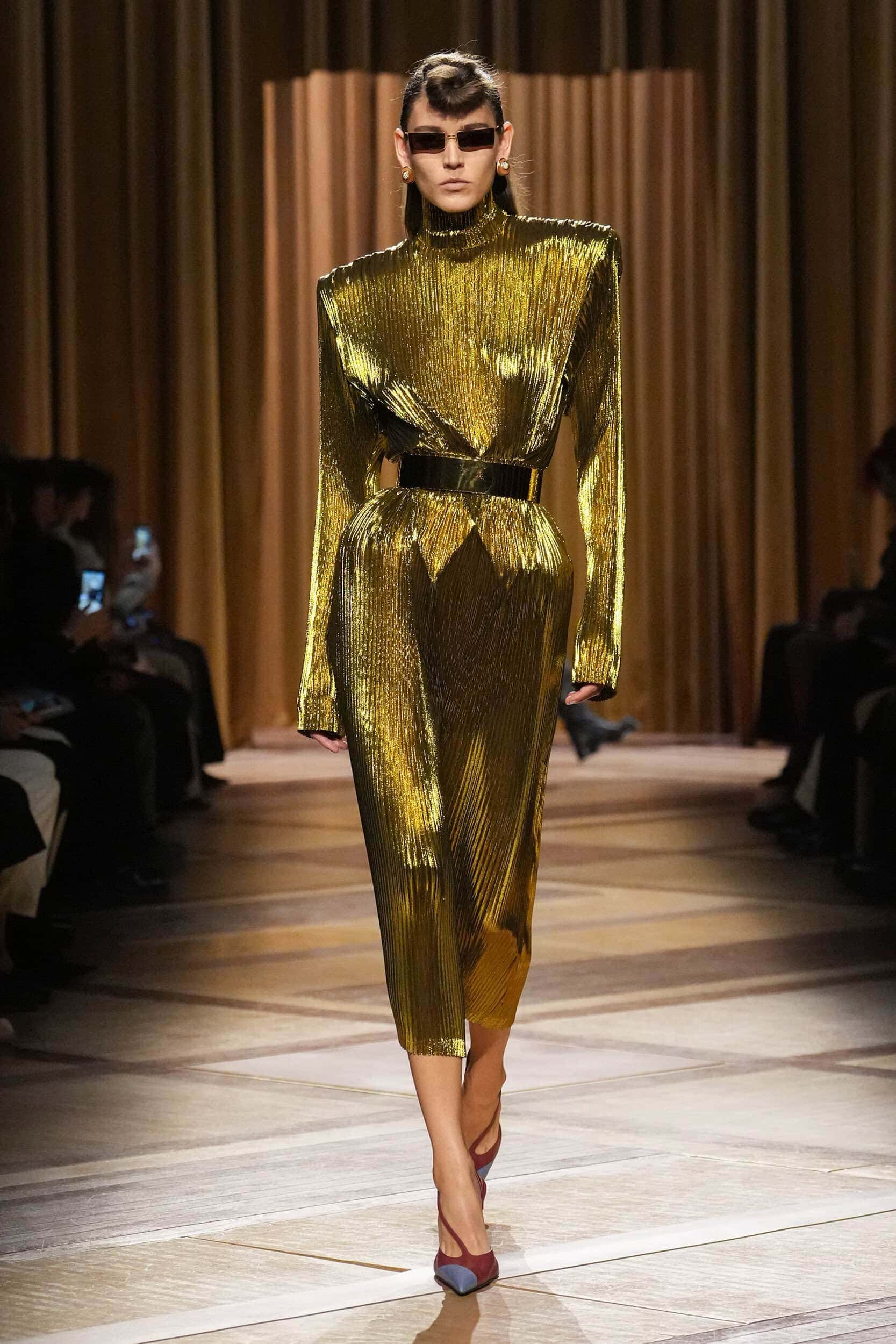
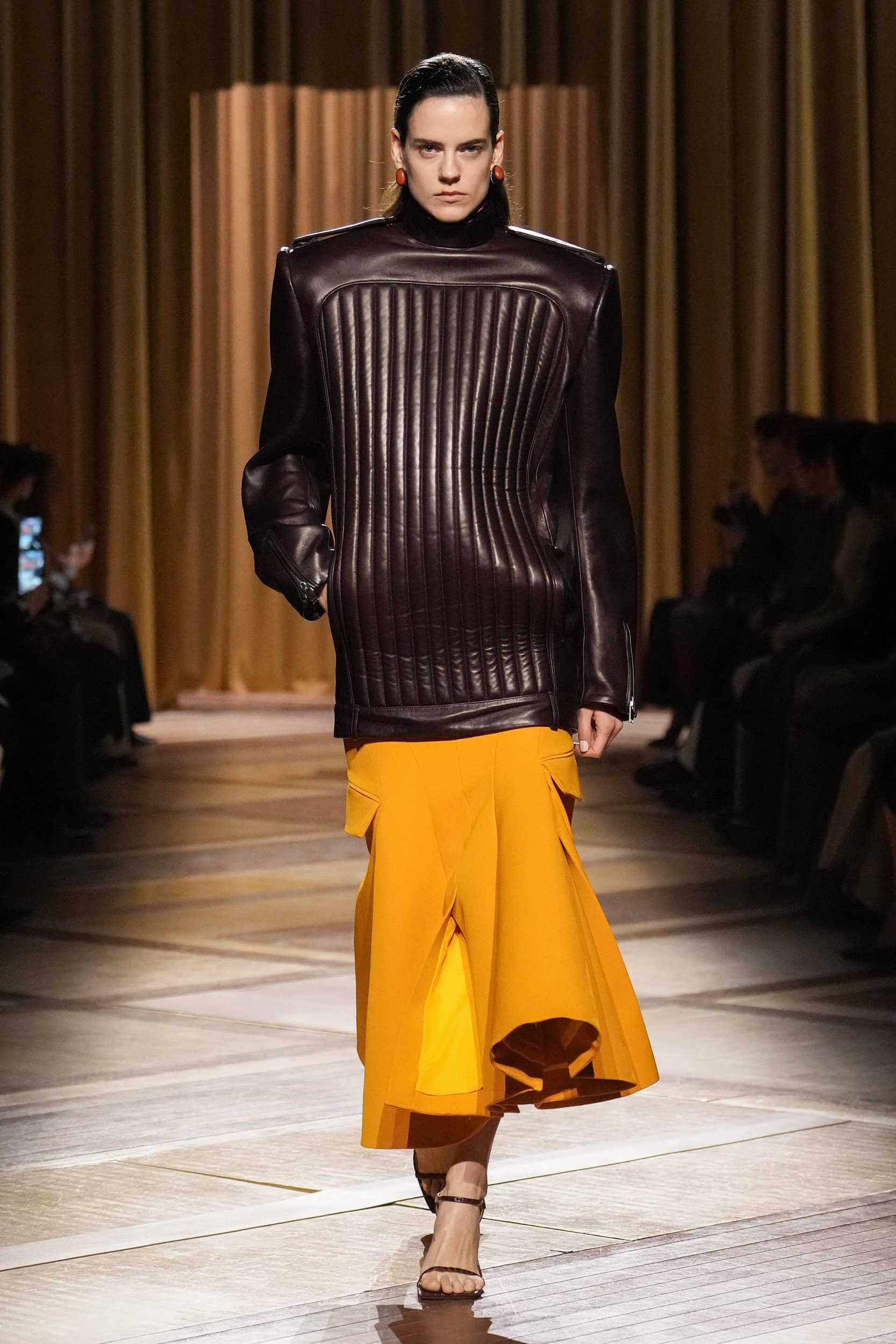
Fall was also a celebration of self-expression, where Bauhaus structures, Russian Constructivism, and the Ballet Russes came together with the established codes of Mugler to create bold statements in silhouette-form. Noting that the underlining ethos of those movements were rooted in utilitarianism. The triangle, the trapeze, and the square in primary brights formed the shapes of the season, with the undertone of military structure. From a linear padded tunic top in leather that resembled body armour (square) to the wide shoulders and whittled waists of his woven and pleated blouses that drew the gaze down (triangle), to metallic jacquard midi dresses with fishtail hems (trapeze). Military looks reclaimed the role of the ‘Commander’ by modernising the utility shirt in turquoise and peach leather, jumpsuits were also reduced in decoration, and multi-pocketed shift dresses were glamourised in pink metallic leather.
As a brand defined in the era of the eighties there were several throwbacks to the silhouettes that gave women the freedom to take up space, to be noticed unequivocally when entering any room. Liquid metallics, saturated colour in graphic patternations inspired by the aforementioned movements, and defiant silhouettes synonymous with Mugler should give Miguel Castro Freitas a shot of confidence for his new start at the house.
THE QUOTE
This collection was an exercise to question what power represents today. We have inherited a lot of preconceptions of what power means. Not just power dressing. And that can very often take on either a negative connotation or a positive one. What we are hoping to convey here is the latter.
Miguel Castro Freitas, Creative Director, Mugler
THE WRAP UP
In continuing to define his own chapter at Mugler, Miguel Castro Freitas delivered a sophomore collection that was both confident and pertinent. By interrogating the clichés of power dressing – broad shoulders, strict silhouettes – Freitas reframed them for a time when the meaning of female power feels far less, well powerful.
Through sculptural shapes inspired by key arts movements, military nods, and flashes of unapologetic eighties glamour, the designer proposed a version of empowerment rooted in the self. And if this collection was about reclaiming the role of the “Commander,” it also suggested that Freitas himself is steadily taking command of Mugler’s future.