
Building on its Re-Nylon program, the Italian fashion house introduces two initiatives transforming production waste into new cashmere and wool garments
Prada is expanding its approach to circular fashion with the introduction of Re-Cashmere and Re-Wool, two material initiatives that extend the principles established through its Re-Nylon program into natural fibers. Developed as part of the Prada Group’s broader environmental strategy, the projects transform textile waste and production surplus into new cashmere and wool garments, combining established Italian manufacturing expertise with a more resource-conscious approach to luxury production.
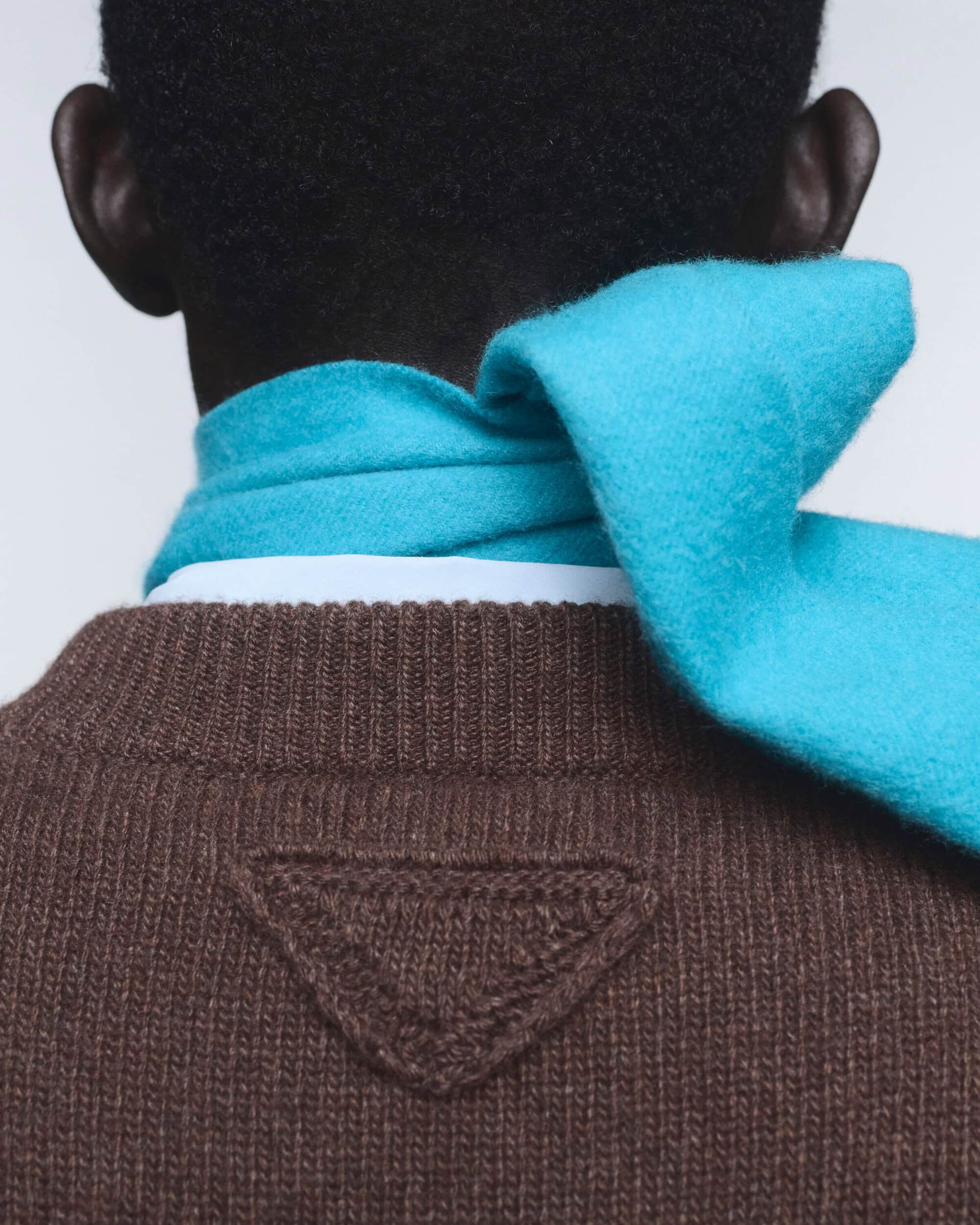
Unlike Re-Nylon, which incorporates pre- and post-consumer nylon waste, Re-Cashmere and Re-Wool focus on recovering materials generated during the production process. Spinning residues, fabric offcuts, and cutting-room remnants are collected, sorted, and recycled into secondary raw materials that can be reintroduced into the manufacturing cycle. The initiatives build on the Prada Group’s 2023 roadmap to transition its principal raw materials toward lower-impact alternatives, emphasizing traceability and waste reduction throughout its supply chain.
Re-Cashmere uses fine cashmere residues from spinning processes alongside offcuts collected from the Group’s Torgiano facility, where knitwear prototyping and select manufacturing operations take place. The fibers are separated by color to eliminate the need for additional dyeing before being carded and transformed into new yarn. Conducted entirely in Italy, the process uses cashmere certified by the Sustainable Fibre Alliance, while the resulting recycled yarn carries Global Recycled Standard certification. The finished material, composed of 100 percent recycled cashmere, is used to create sweaters for men and women.
Re-Wool follows a related process, recovering defective fabrics and cutting-room remnants from across the Prada Group’s production lines. The materials are stripped of non-wool components, sorted by color, and processed through wet shredding and carded spinning to produce new yarn. The resulting composition combines 50 percent virgin wool certified to the Responsible Wool Standard, 40 percent recycled wool, and 10 percent recycled cashmere, with the recycled components certified to the Global Recycled Standard. The material is used across women’s ready-to-wear, including trousers, jackets, skirts, and dresses.
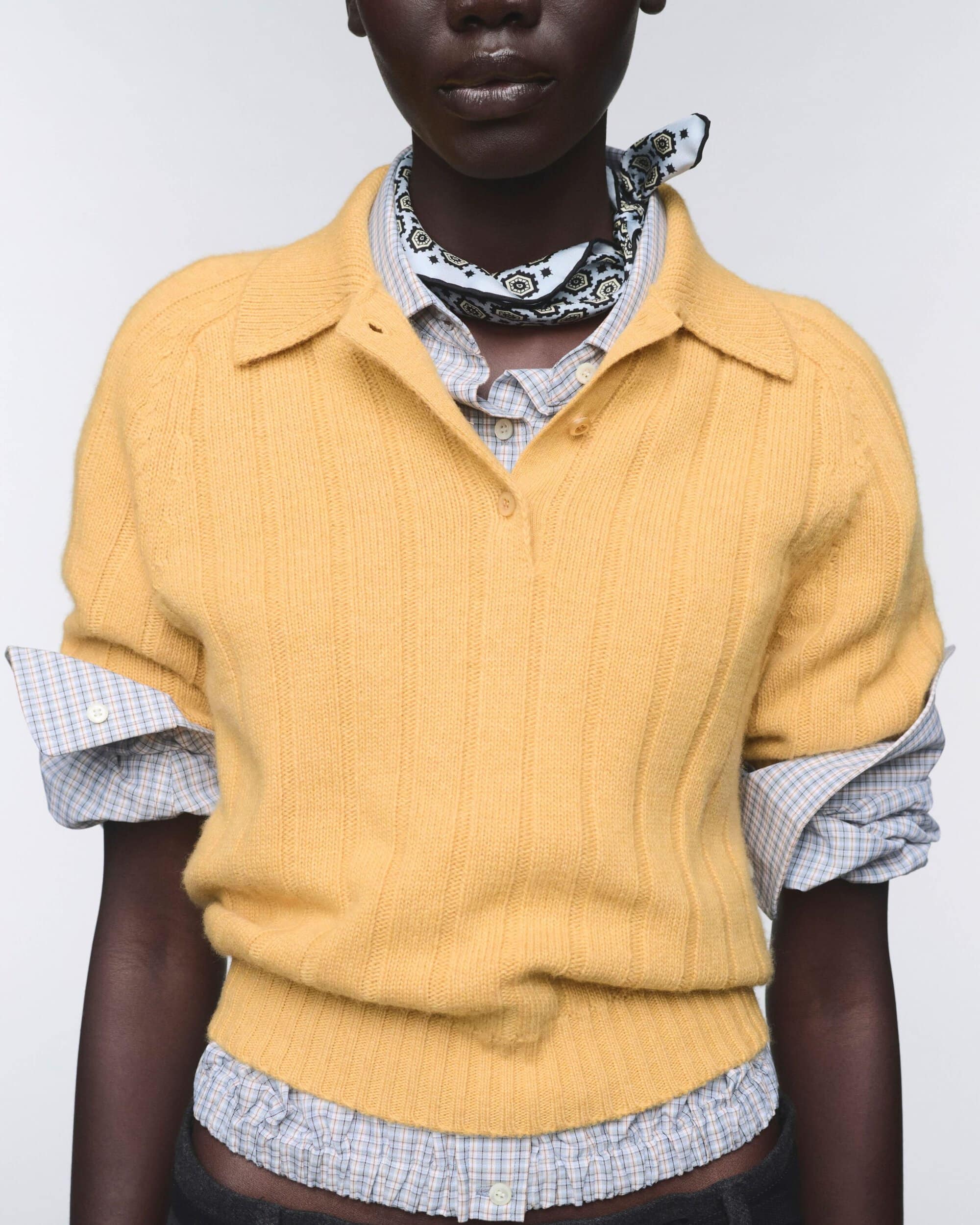
Both initiatives are produced entirely in Italy, drawing on specialized suppliers and manufacturing expertise in Tuscany and Umbria. Because production depends on the availability and characteristics of recovered materials, quantities are inherently limited, and subtle variations in color may occur between production runs. Rather than treating these differences as inconsistencies, the projects position them as expressions of the materials’ individual histories.
Transparency is another central component of the initiative. As with Re-Nylon, garments feature NFC tags connecting customers to the Aura Consortium platform, where they can access information about fiber origins, suppliers, processing locations, and production stages. The platform also provides a blockchain-secured Digital Certificate of Authenticity, extending the project’s emphasis on traceability to the consumer experience.
The introduction of Re-Cashmere and Re-Wool reflects Prada’s continued effort to integrate circular practices into its core material development rather than treating sustainability as a separate product category. By applying textile recycling processes to cashmere and wool, the Group is exploring how established luxury materials can be reintroduced into production without abandoning the quality and craftsmanship associated with them. The result is a collection of familiar wardrobe staples that places the innovation primarily in how the garments are made, offering a more understated expression of circular design.