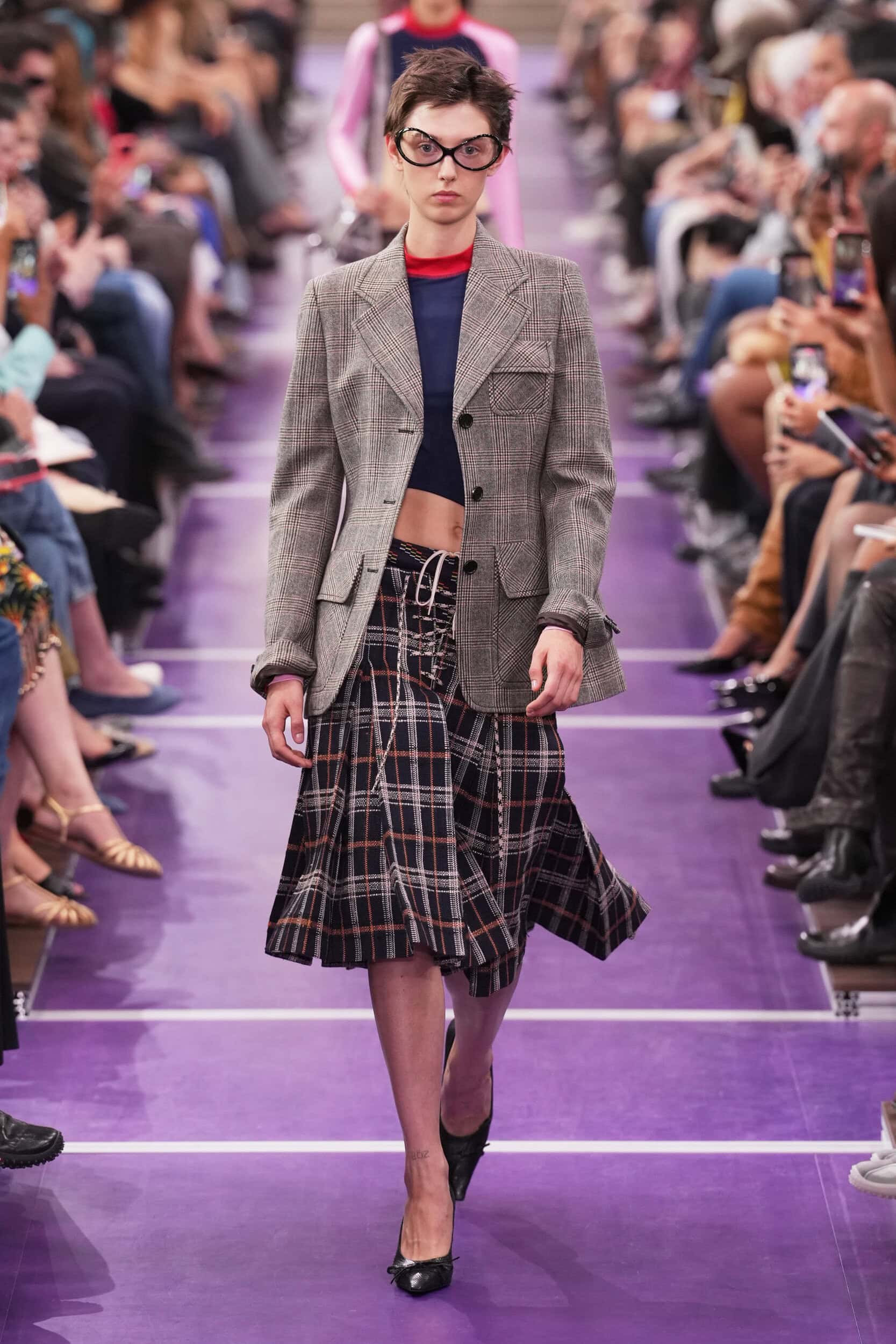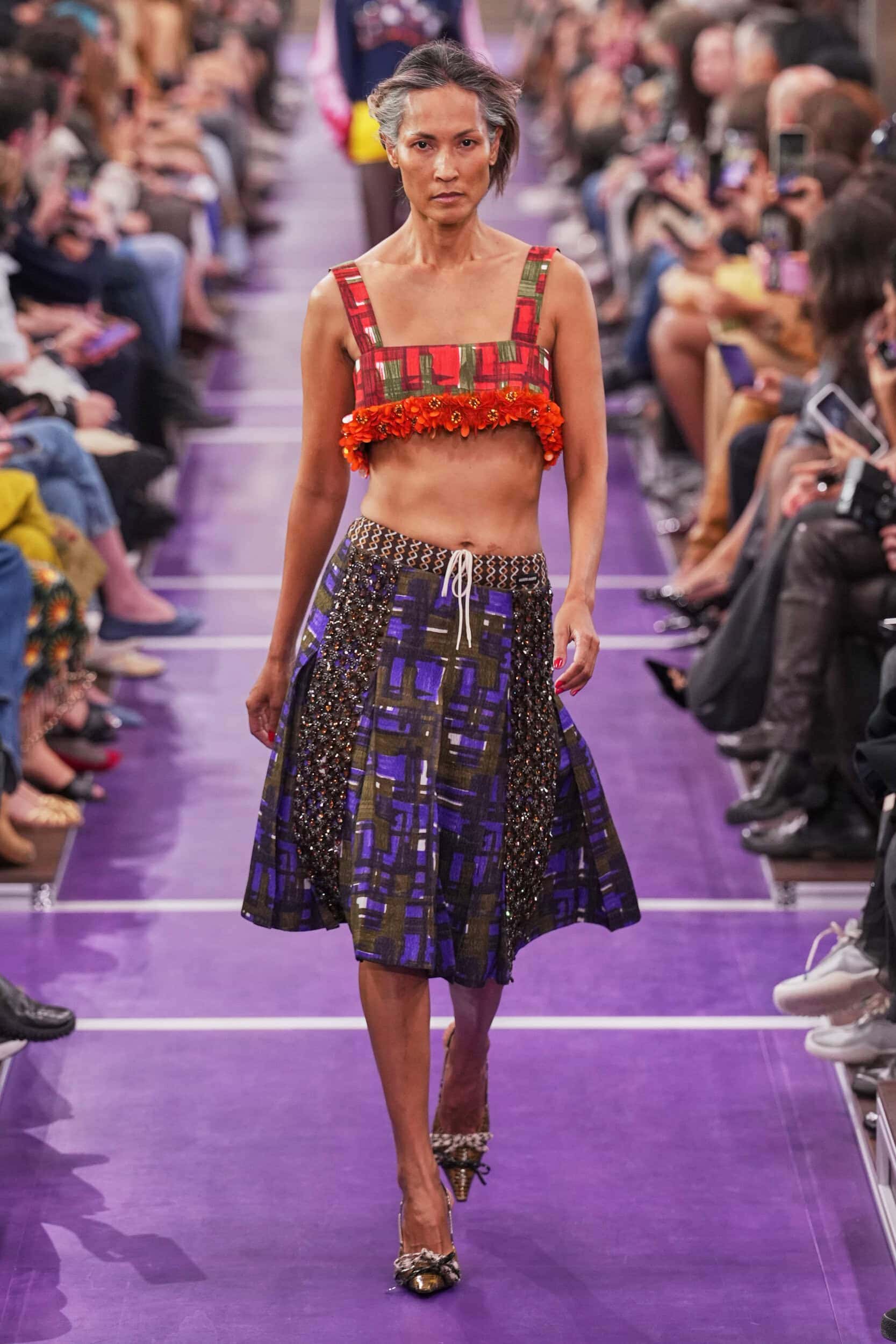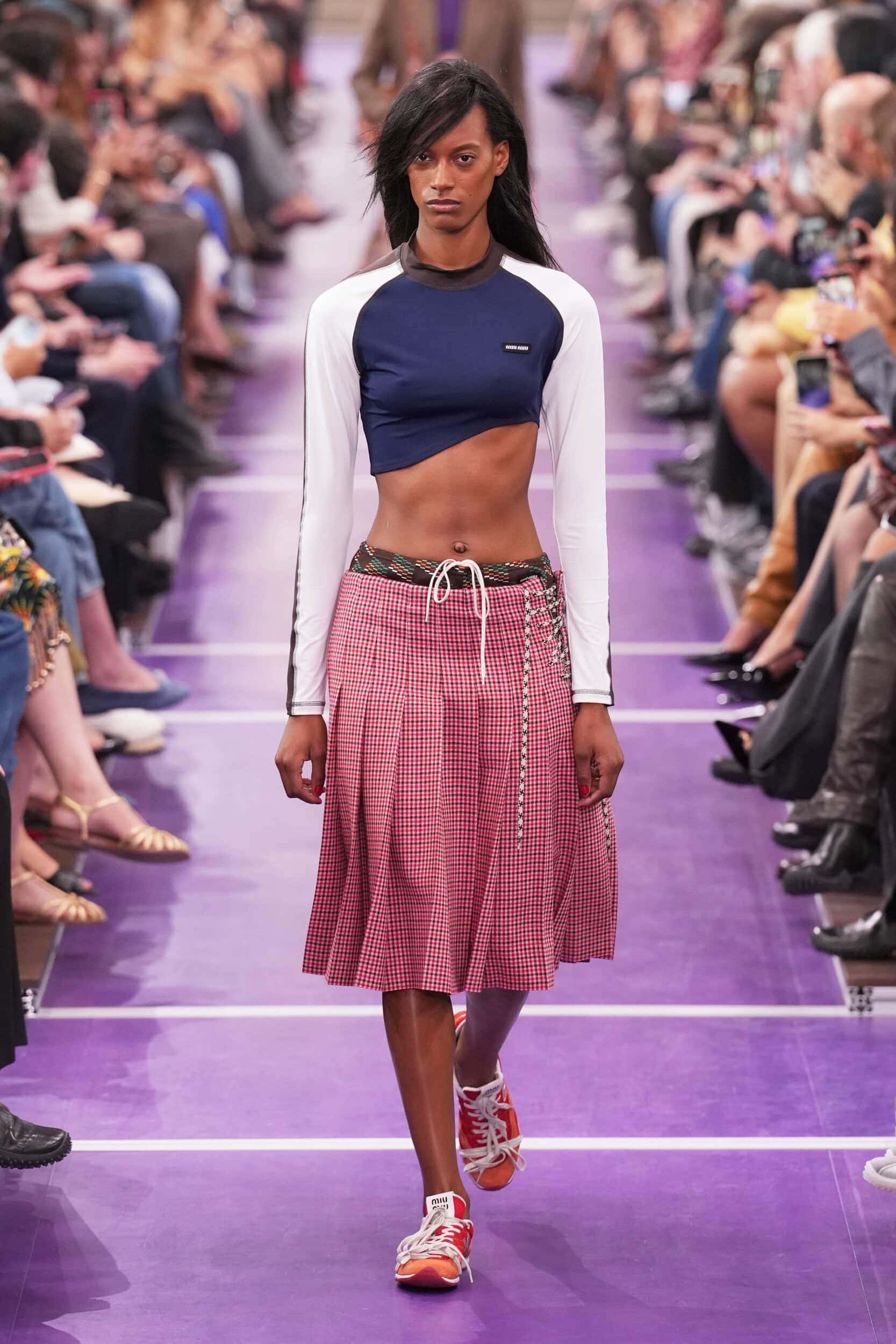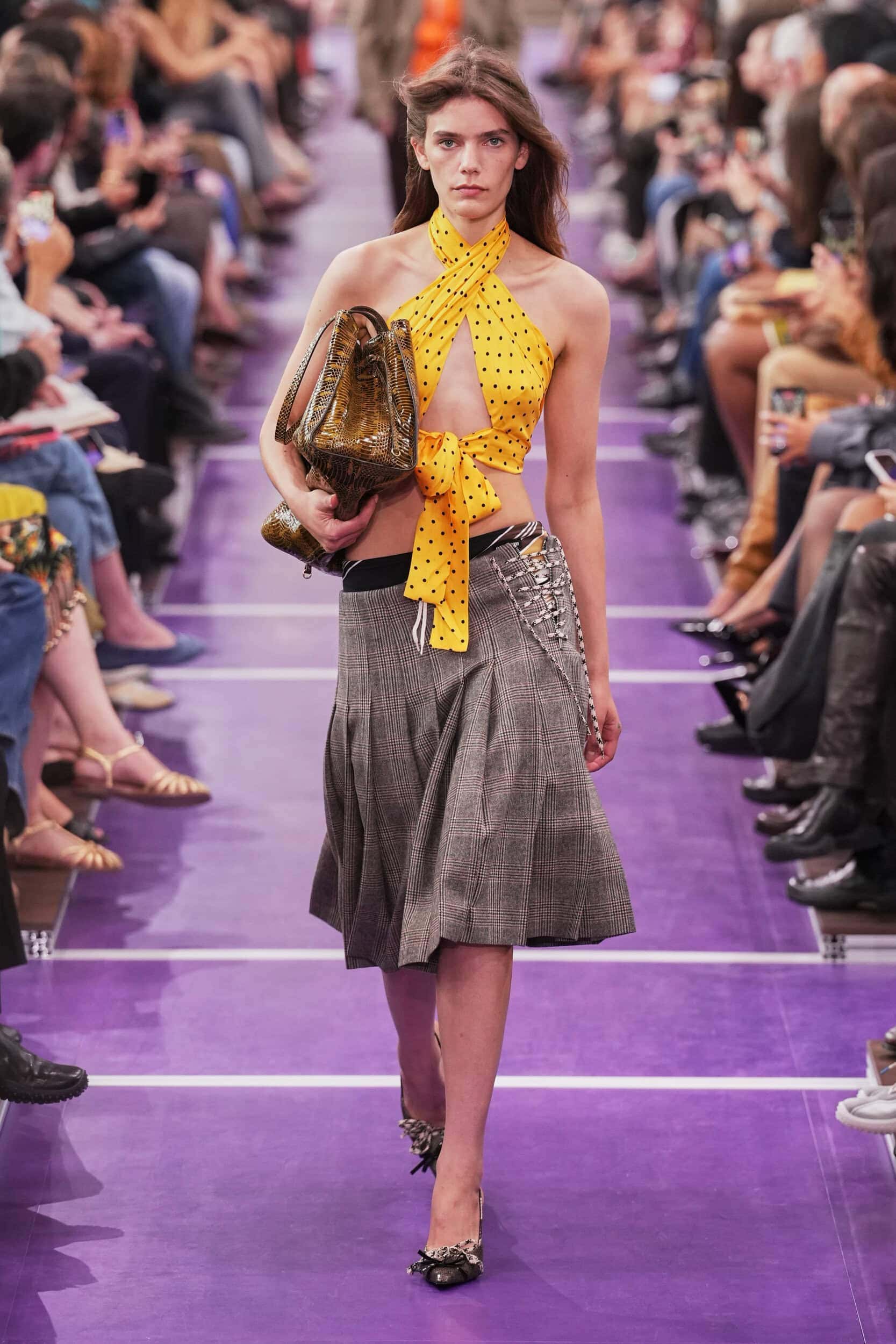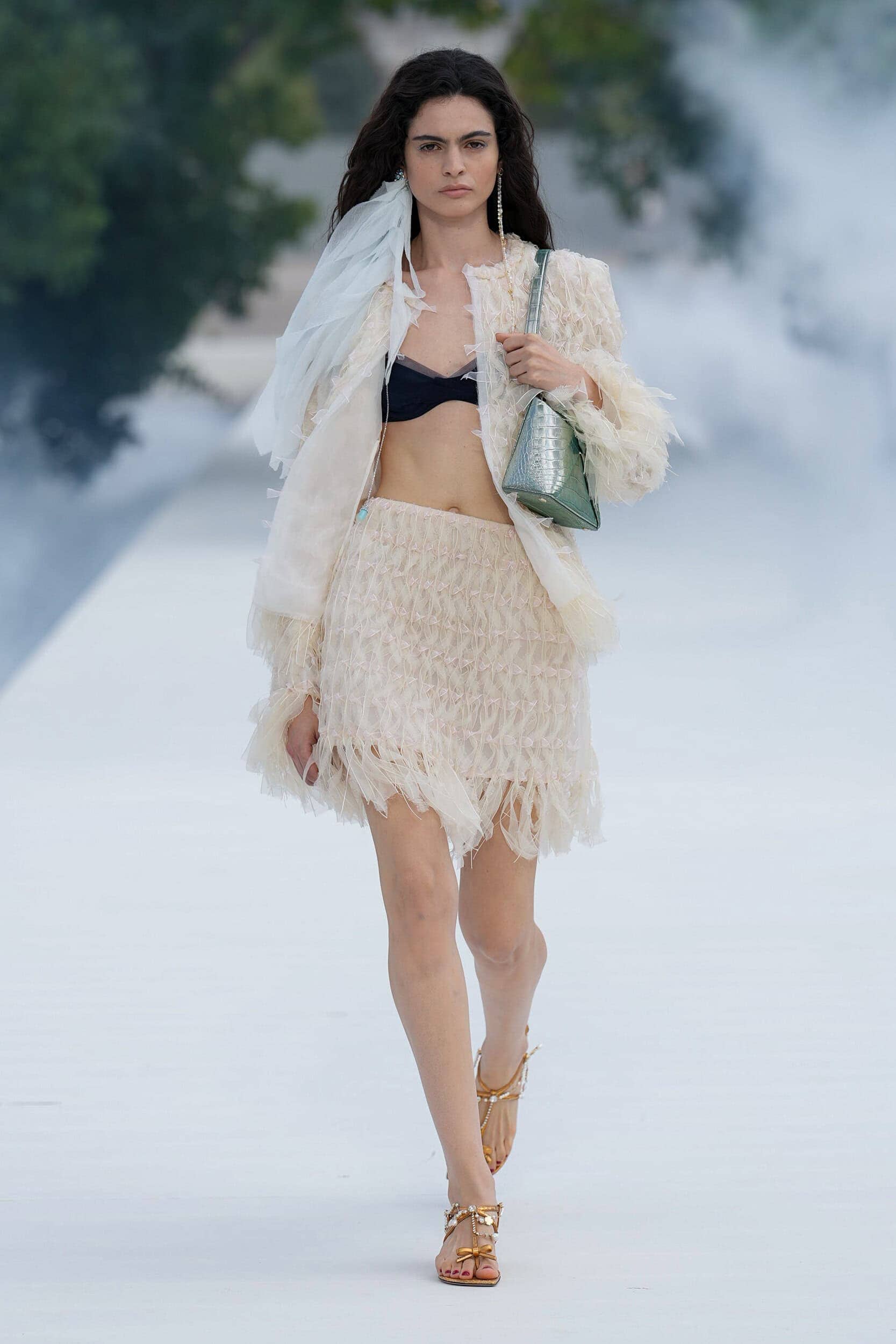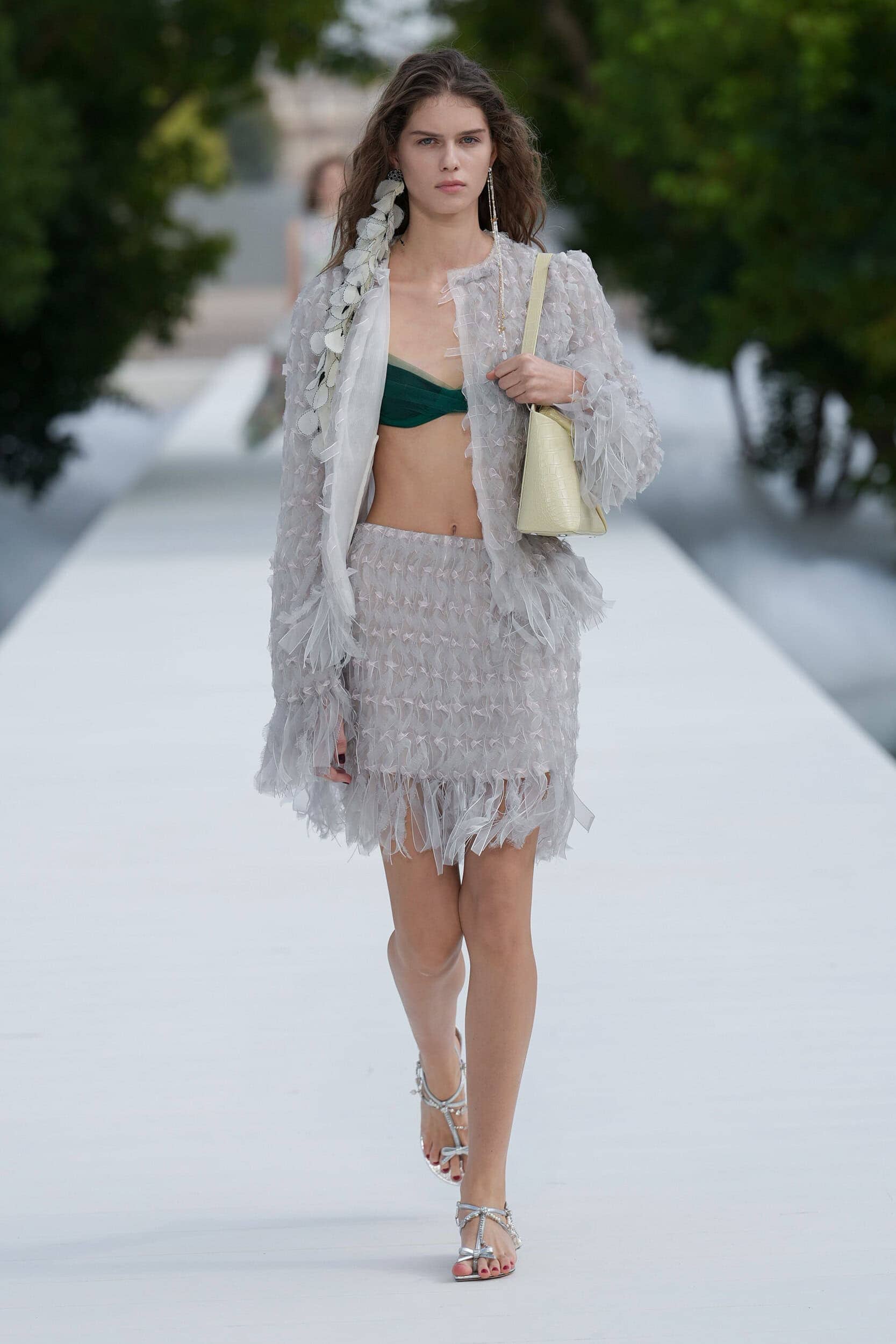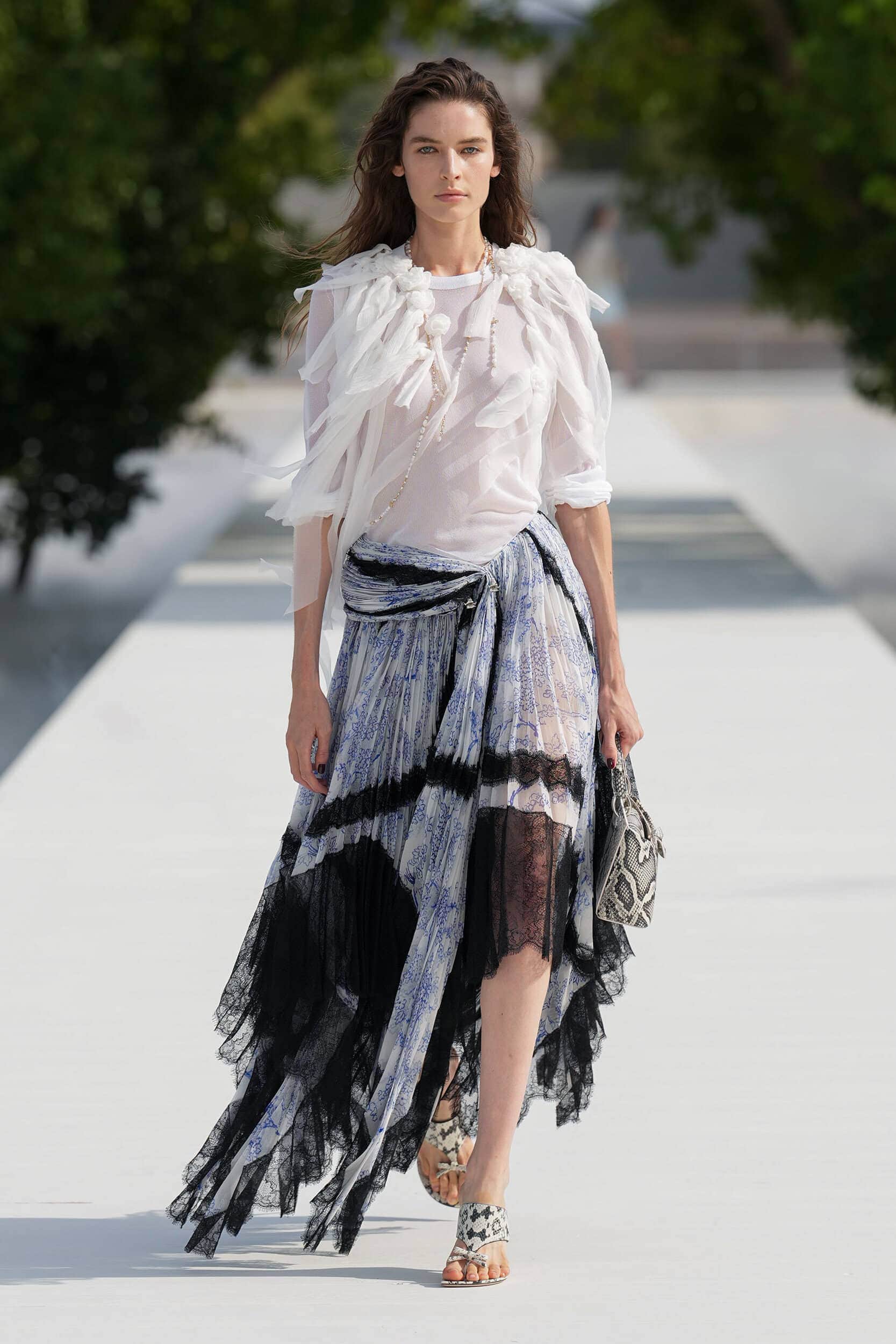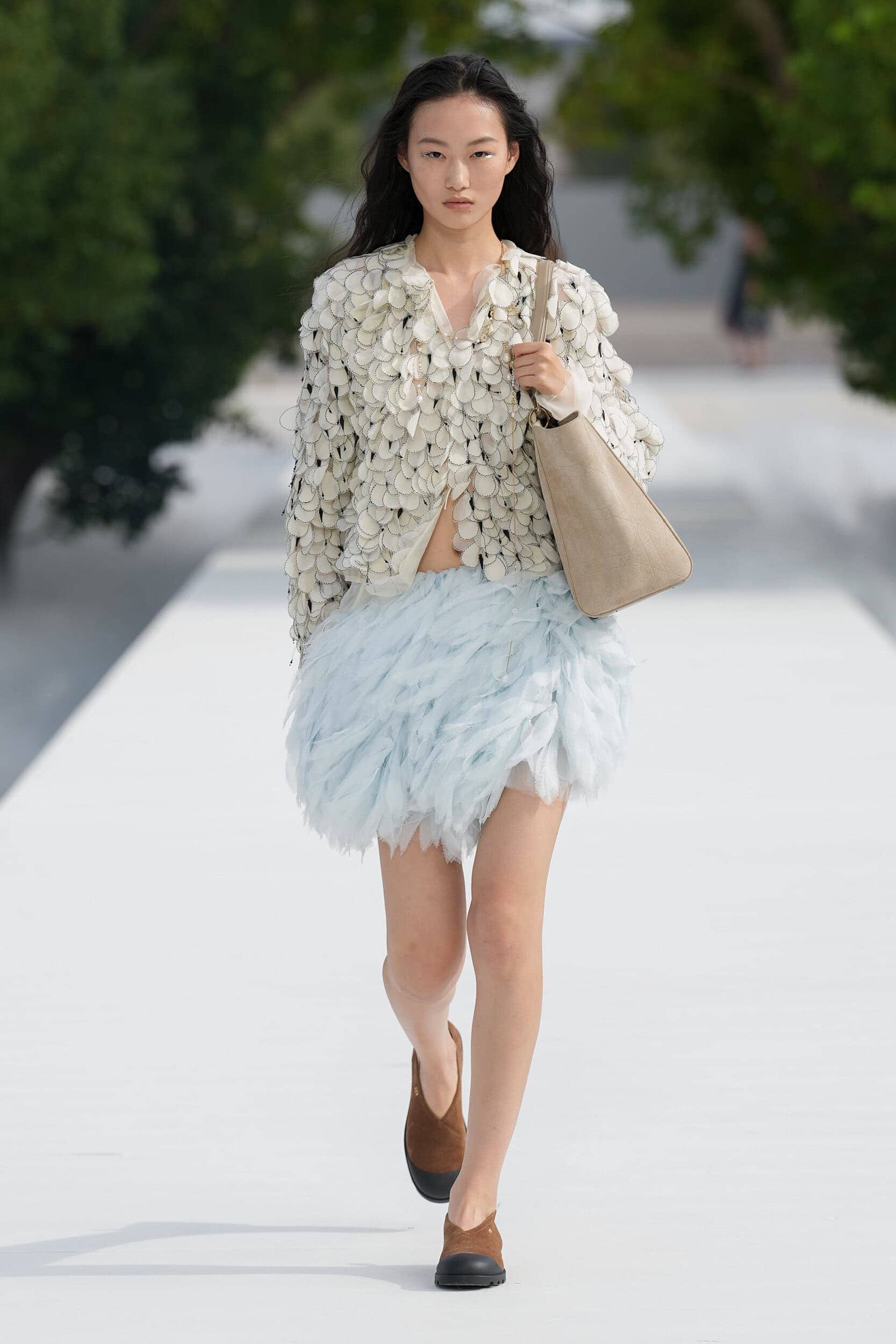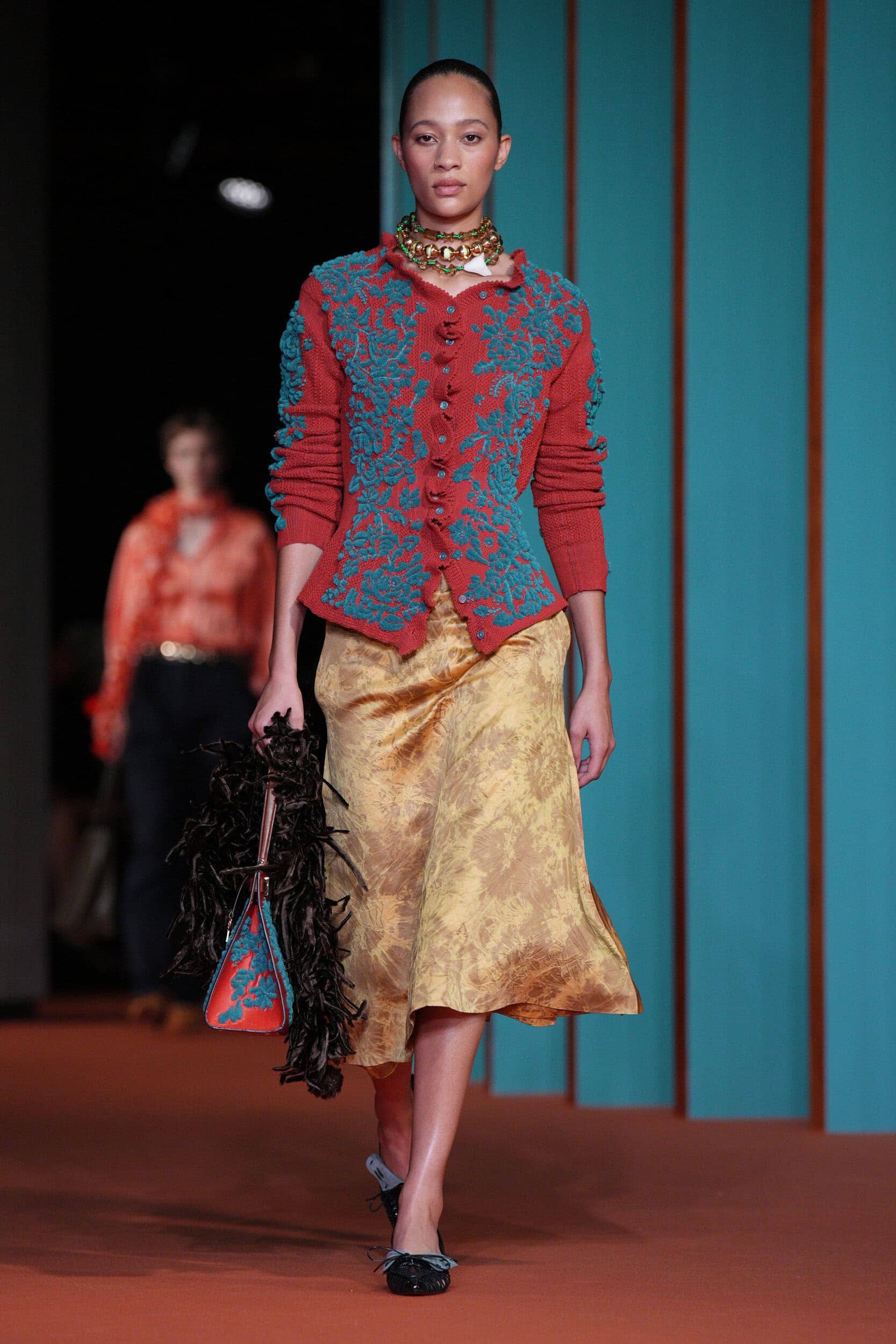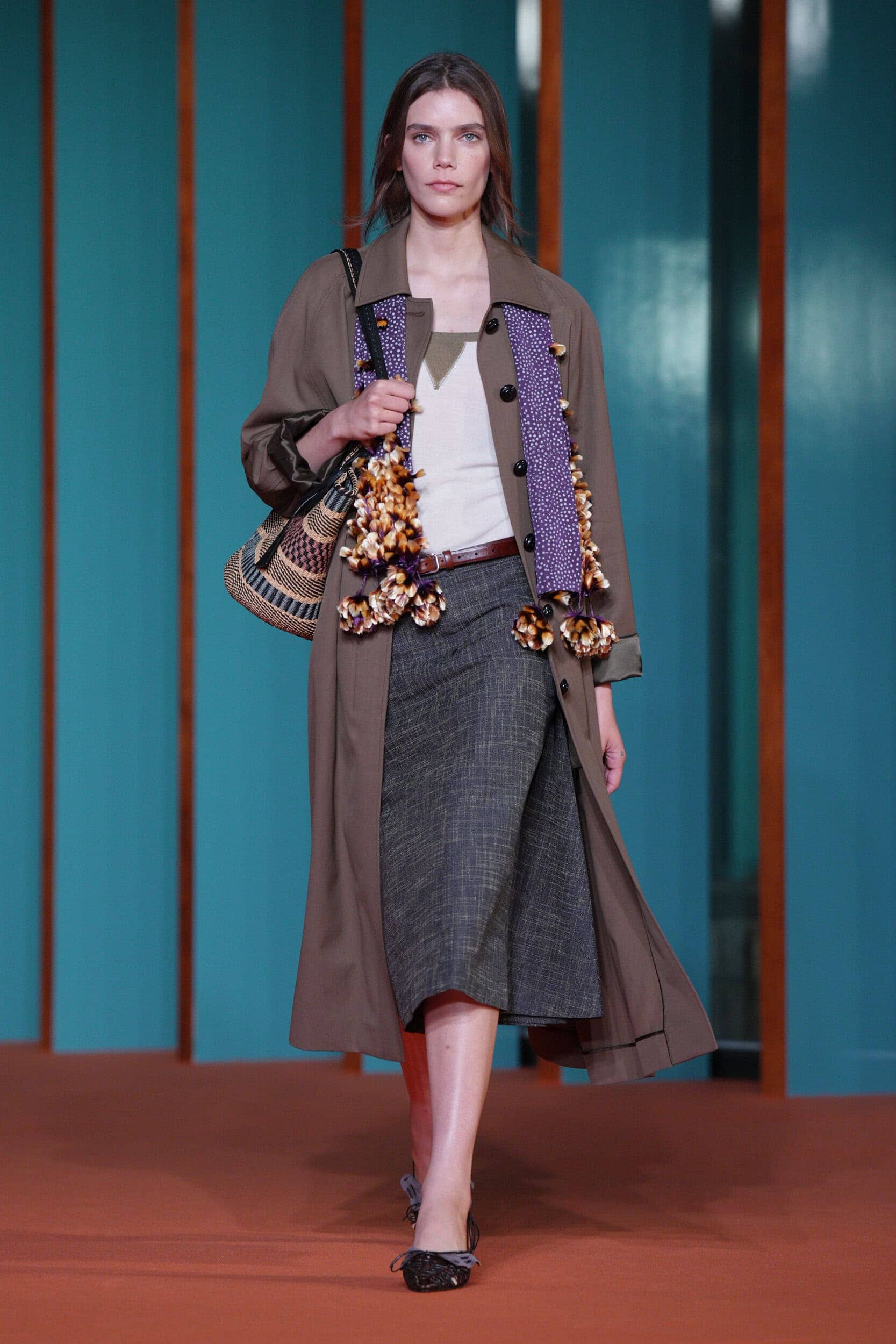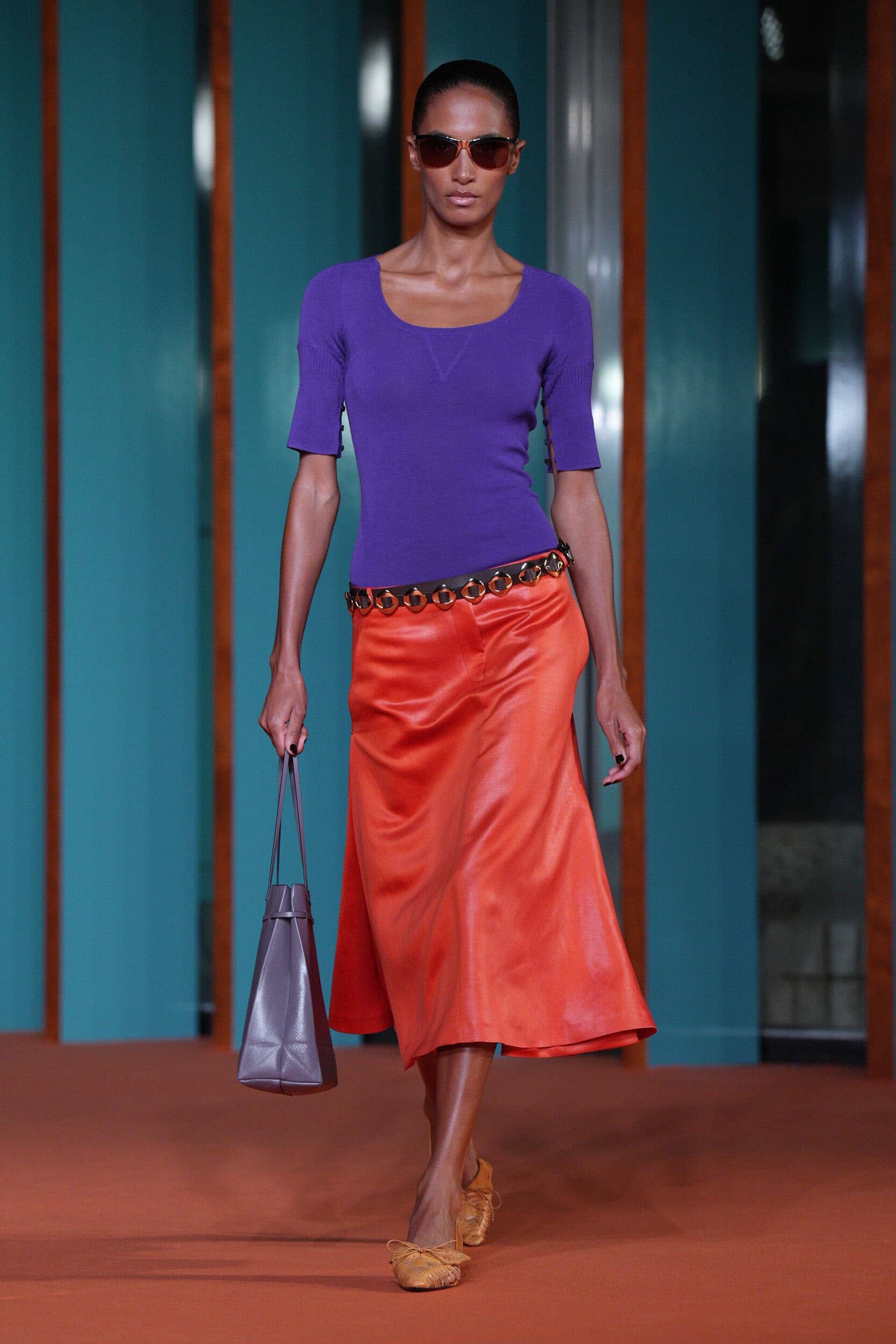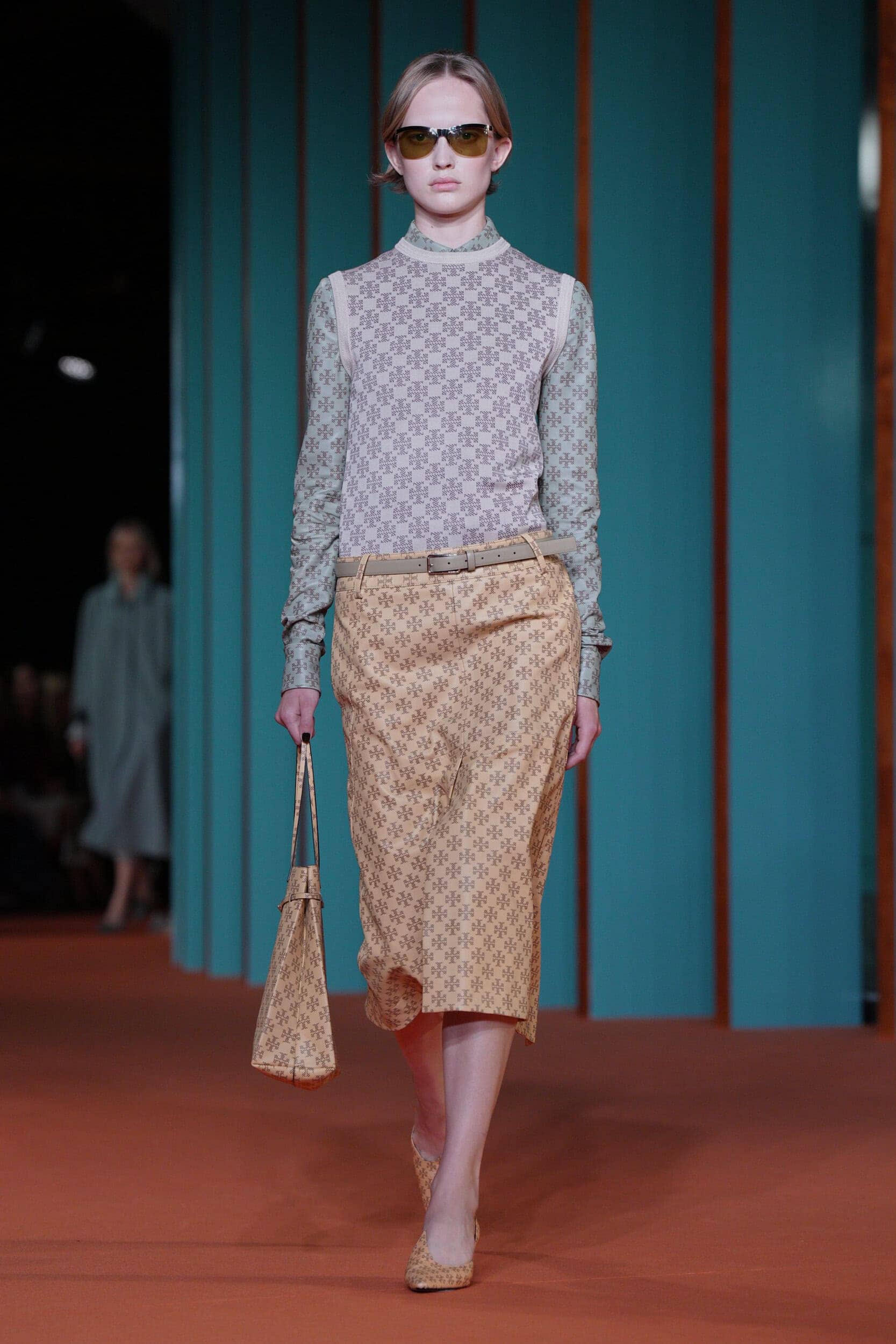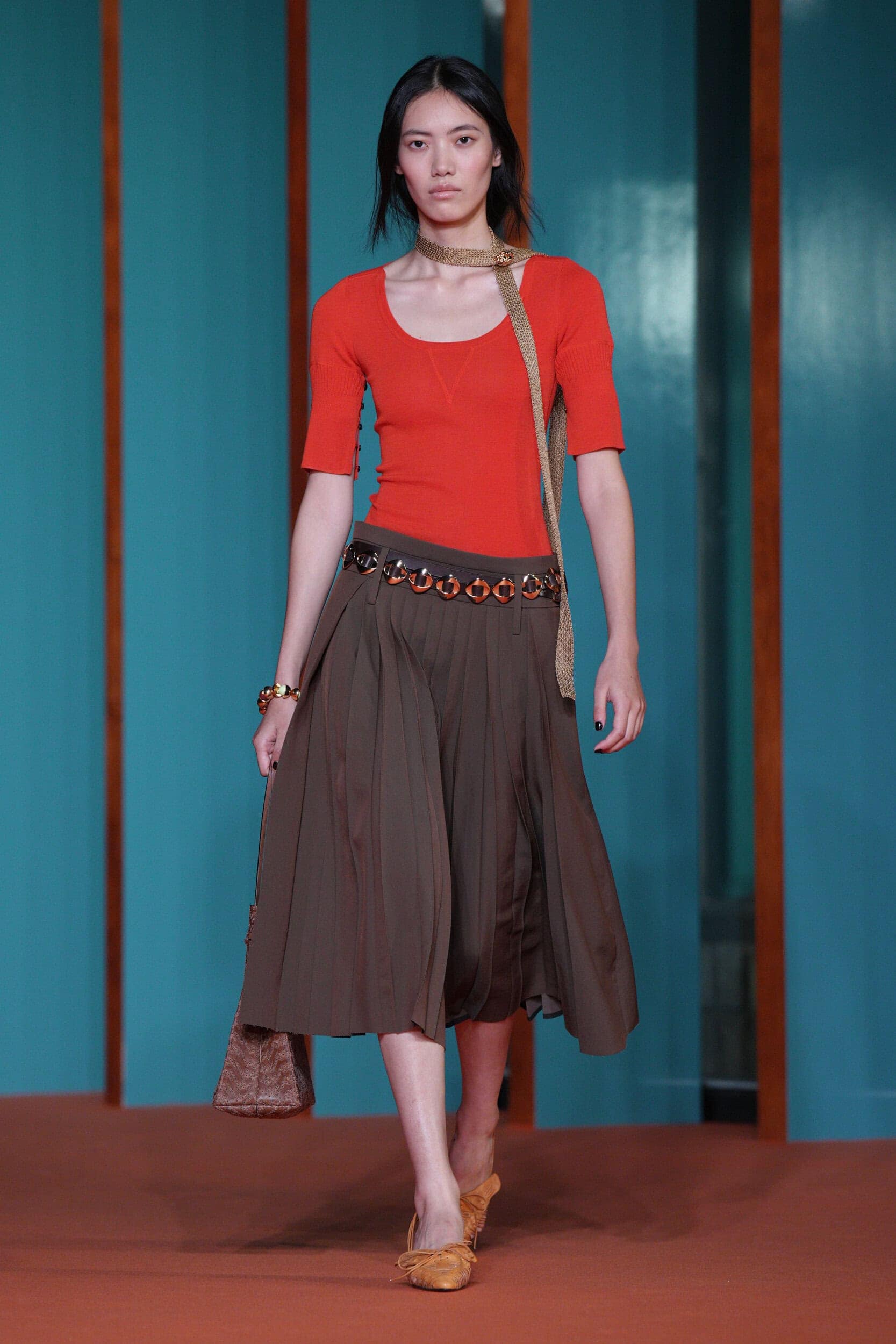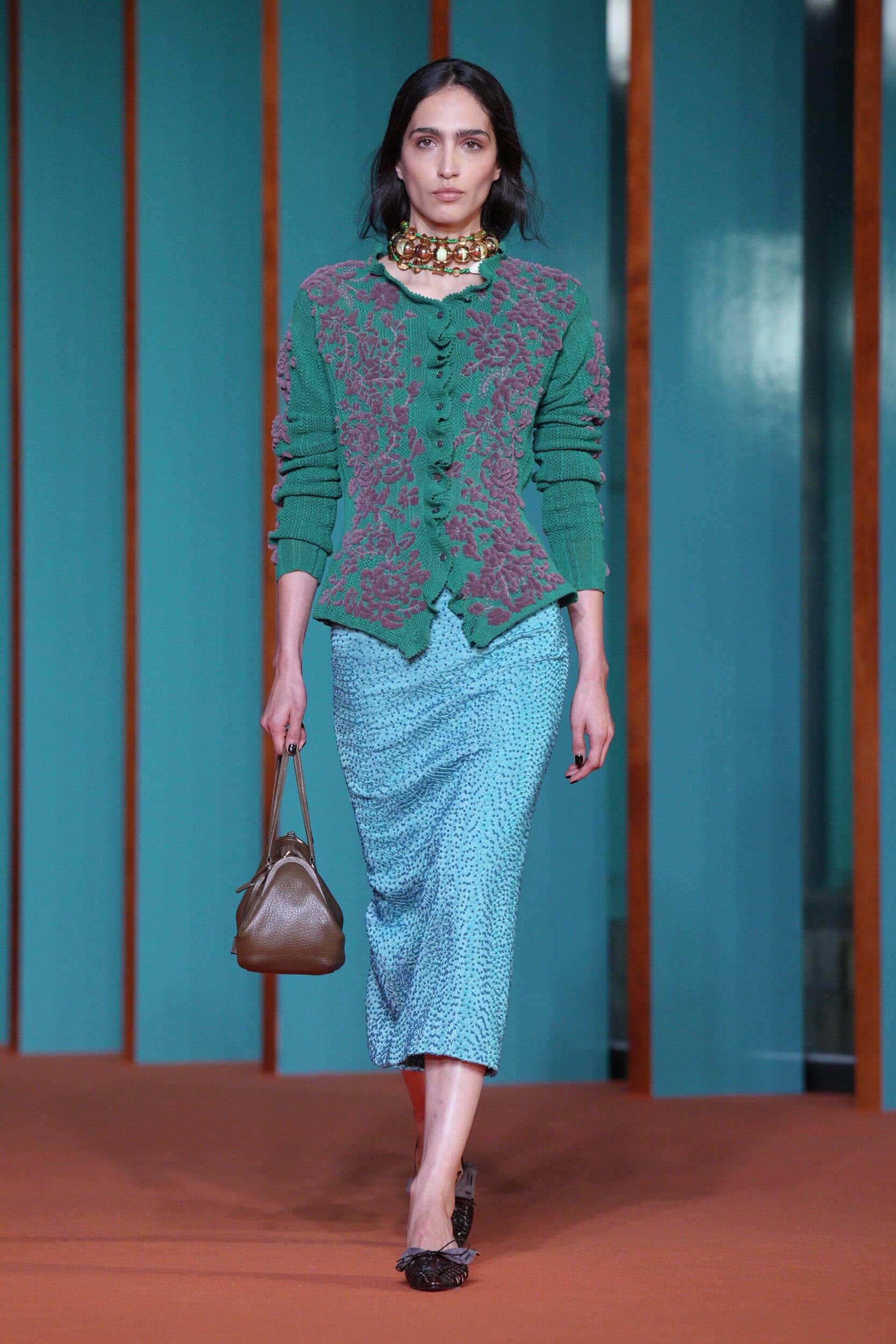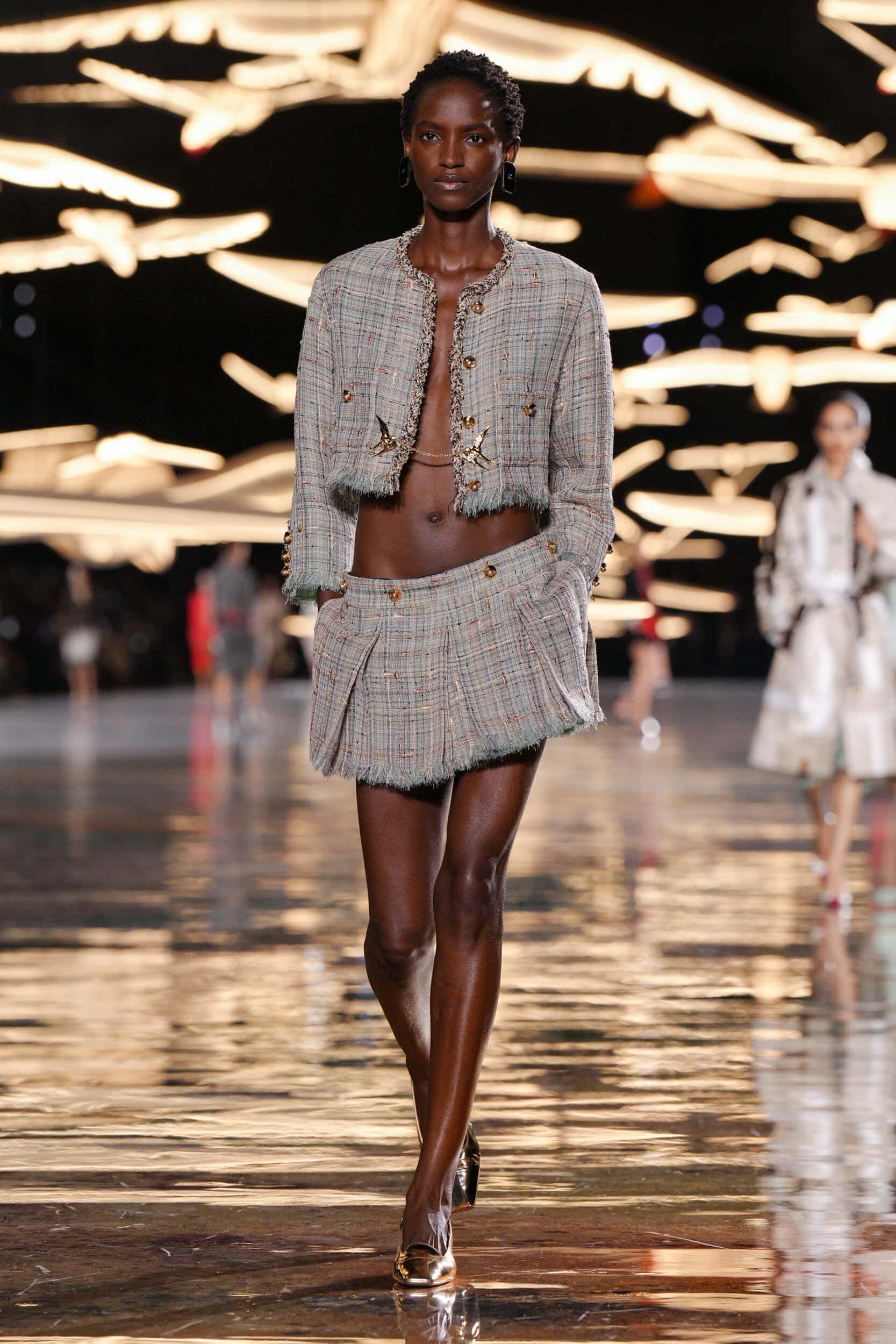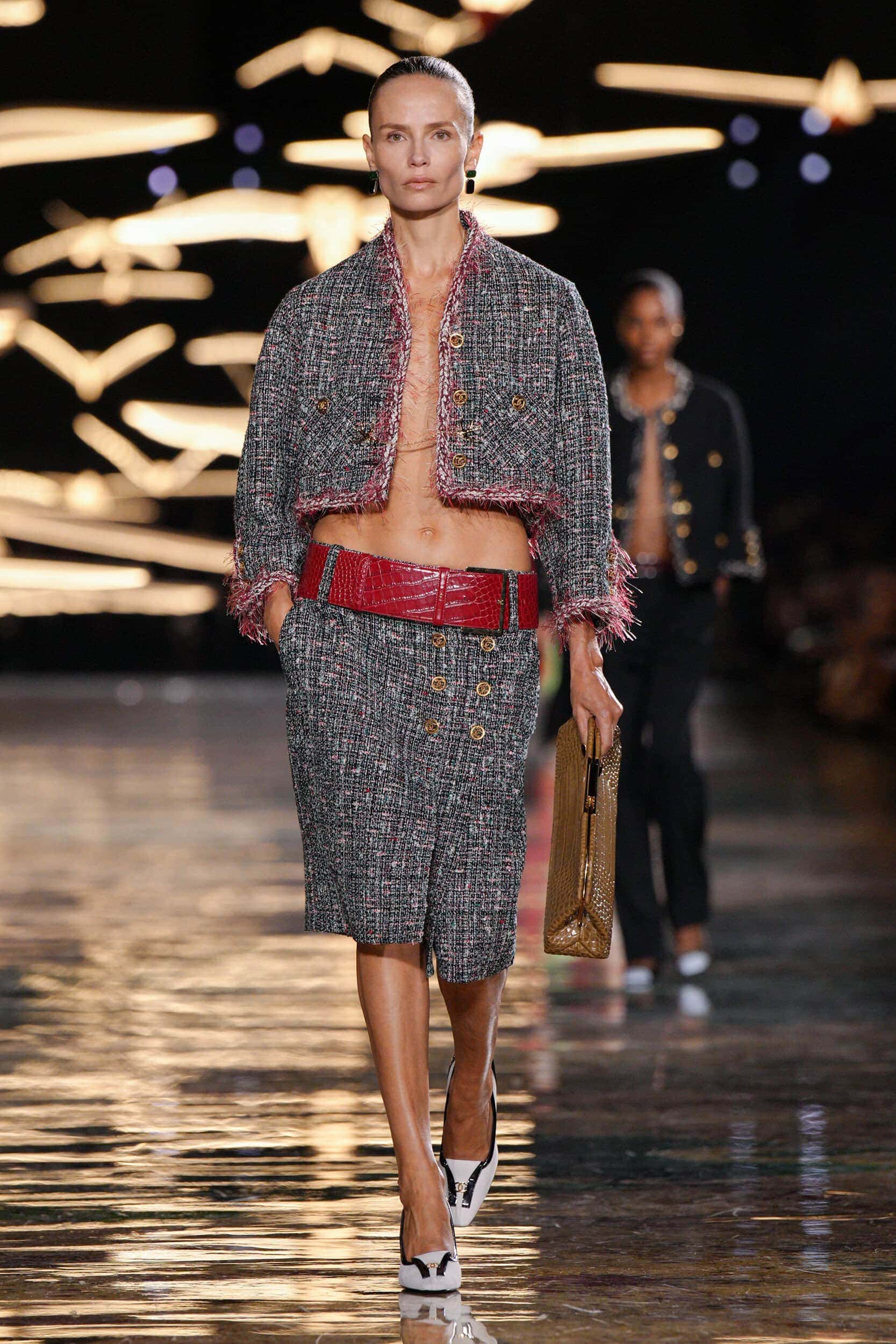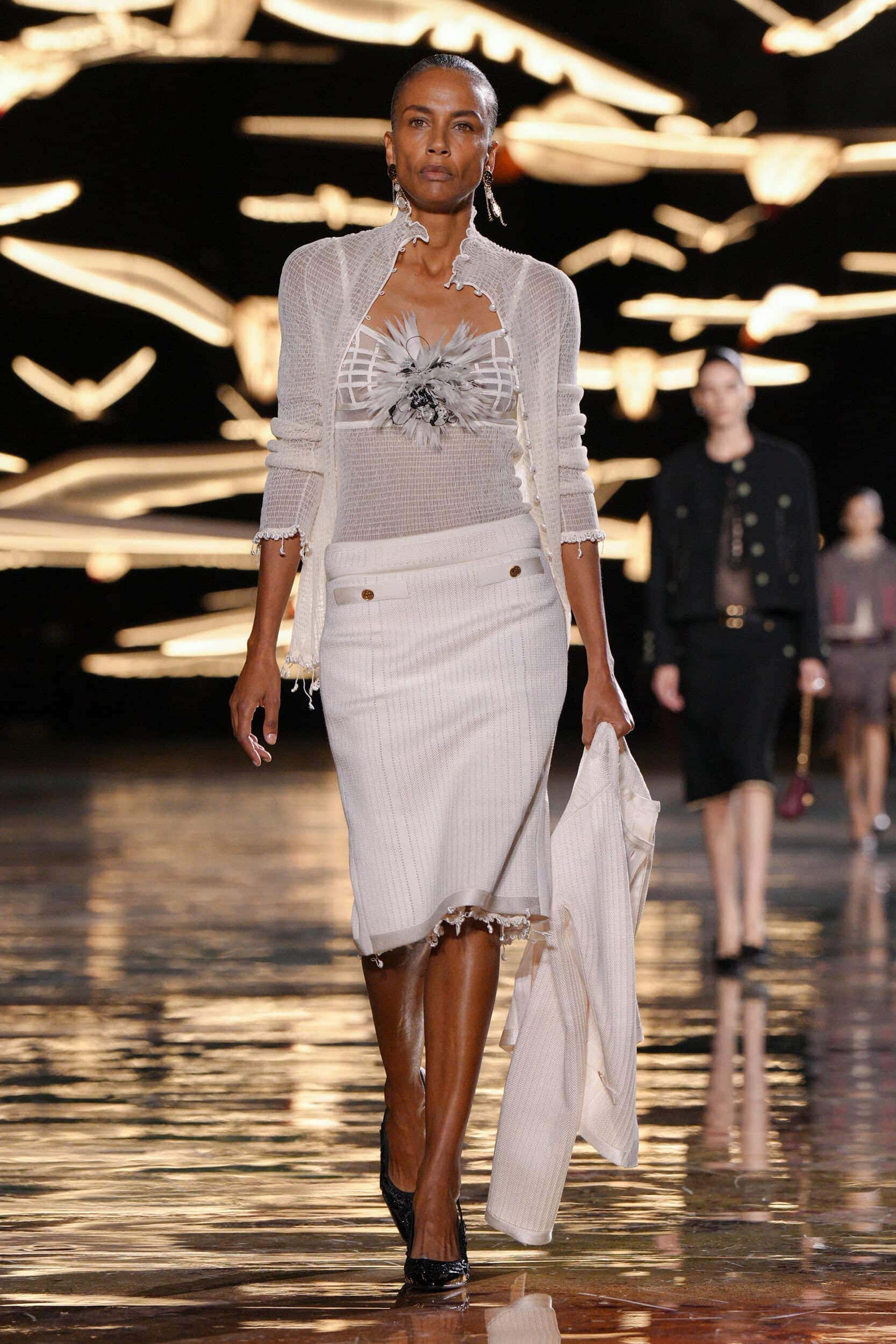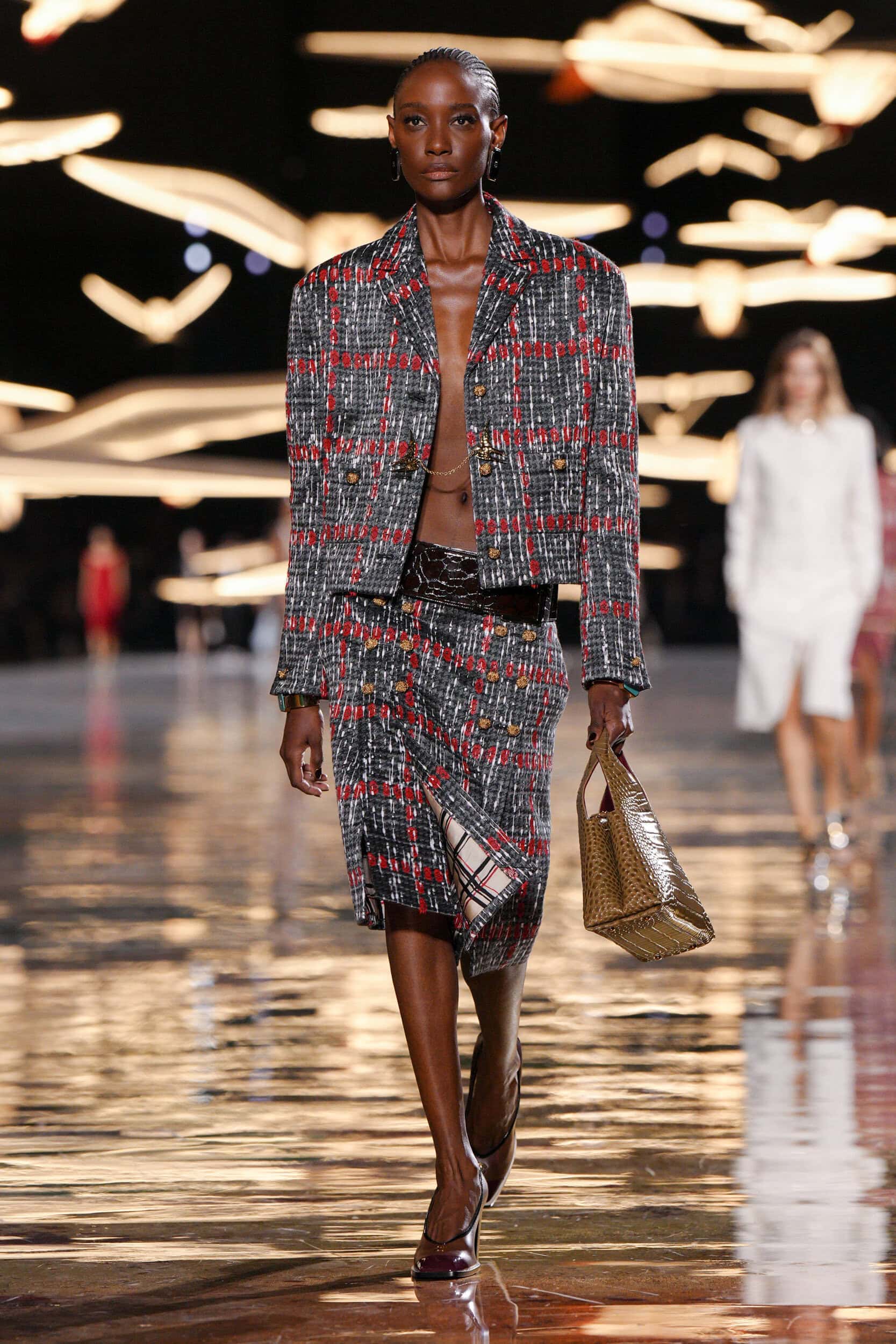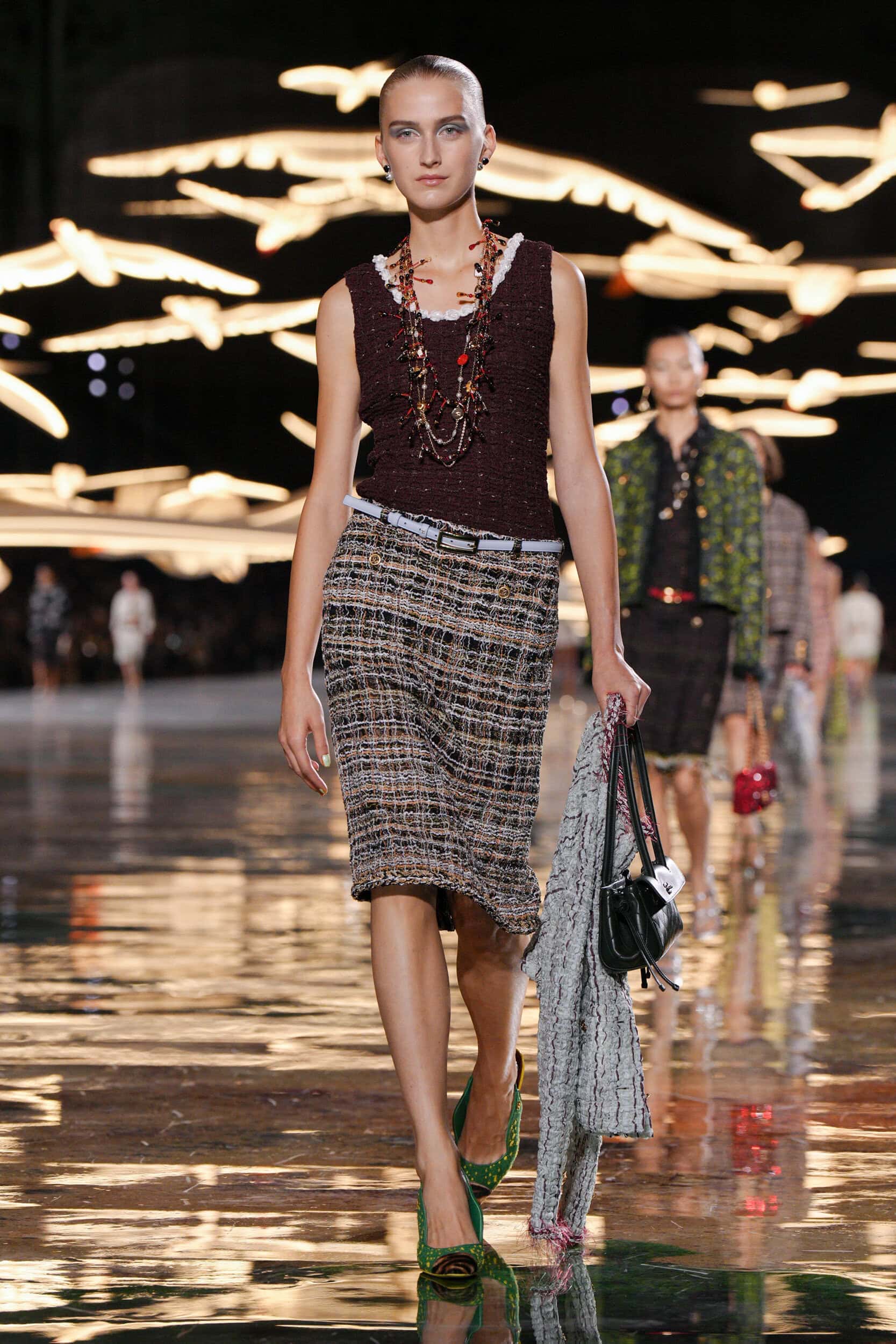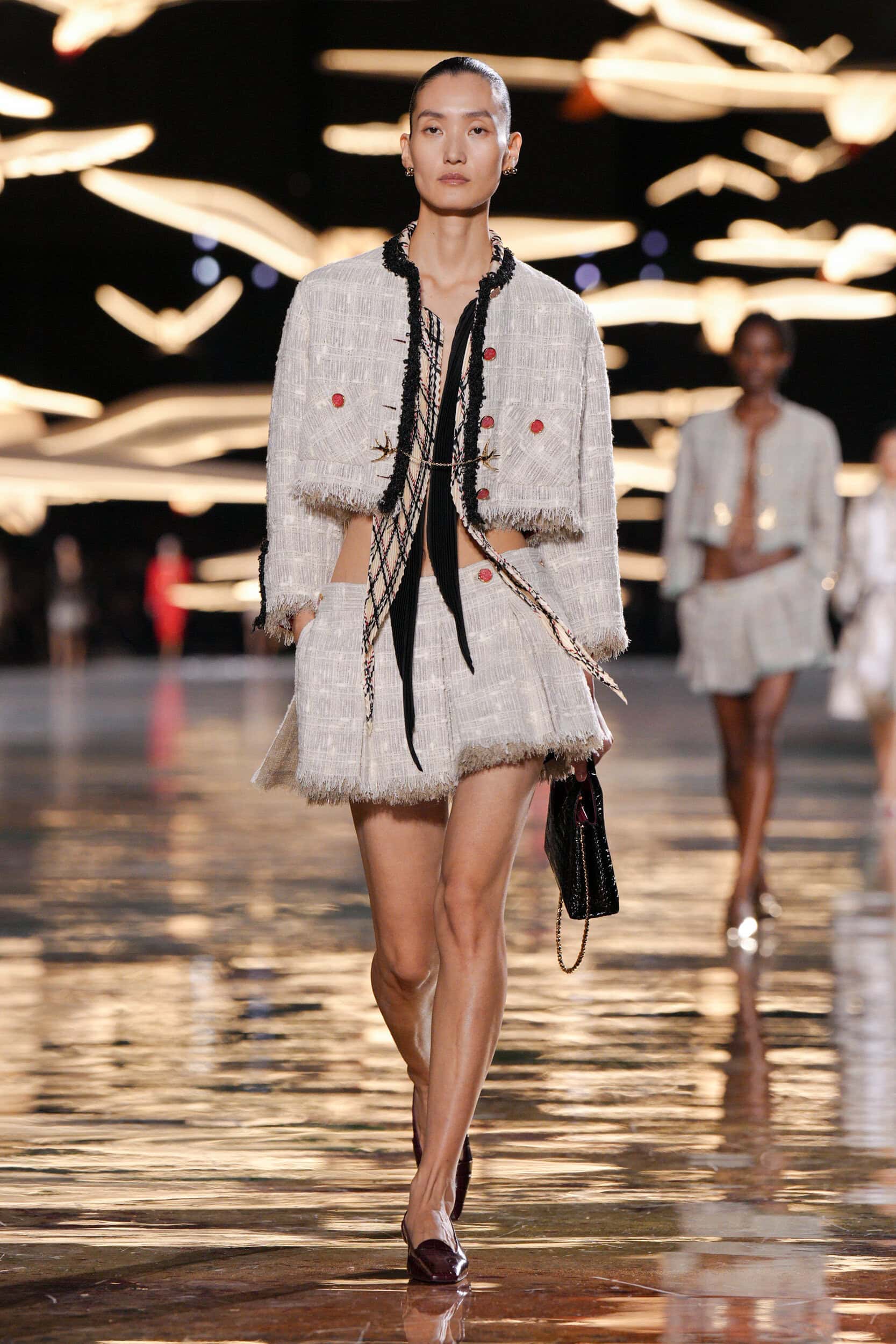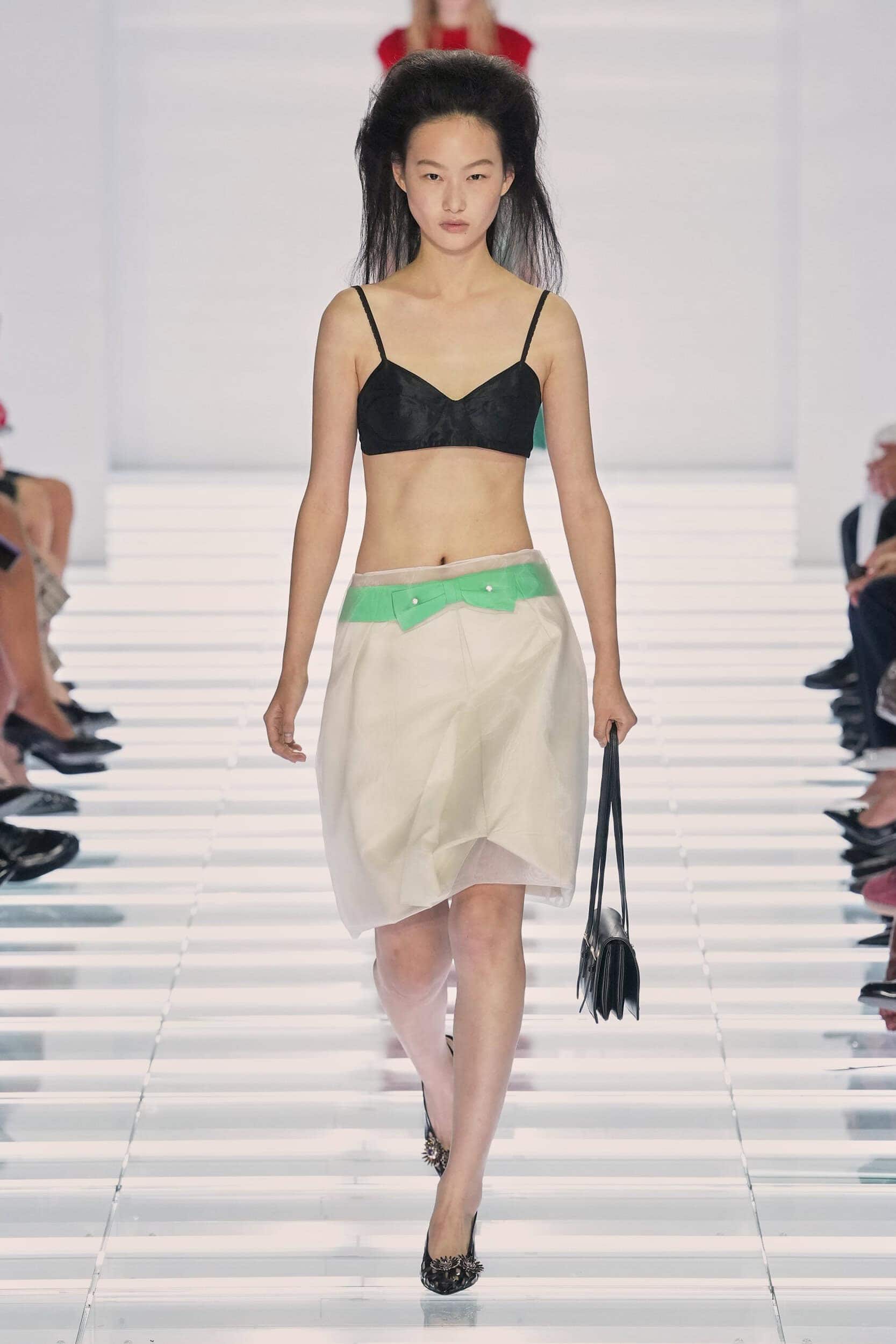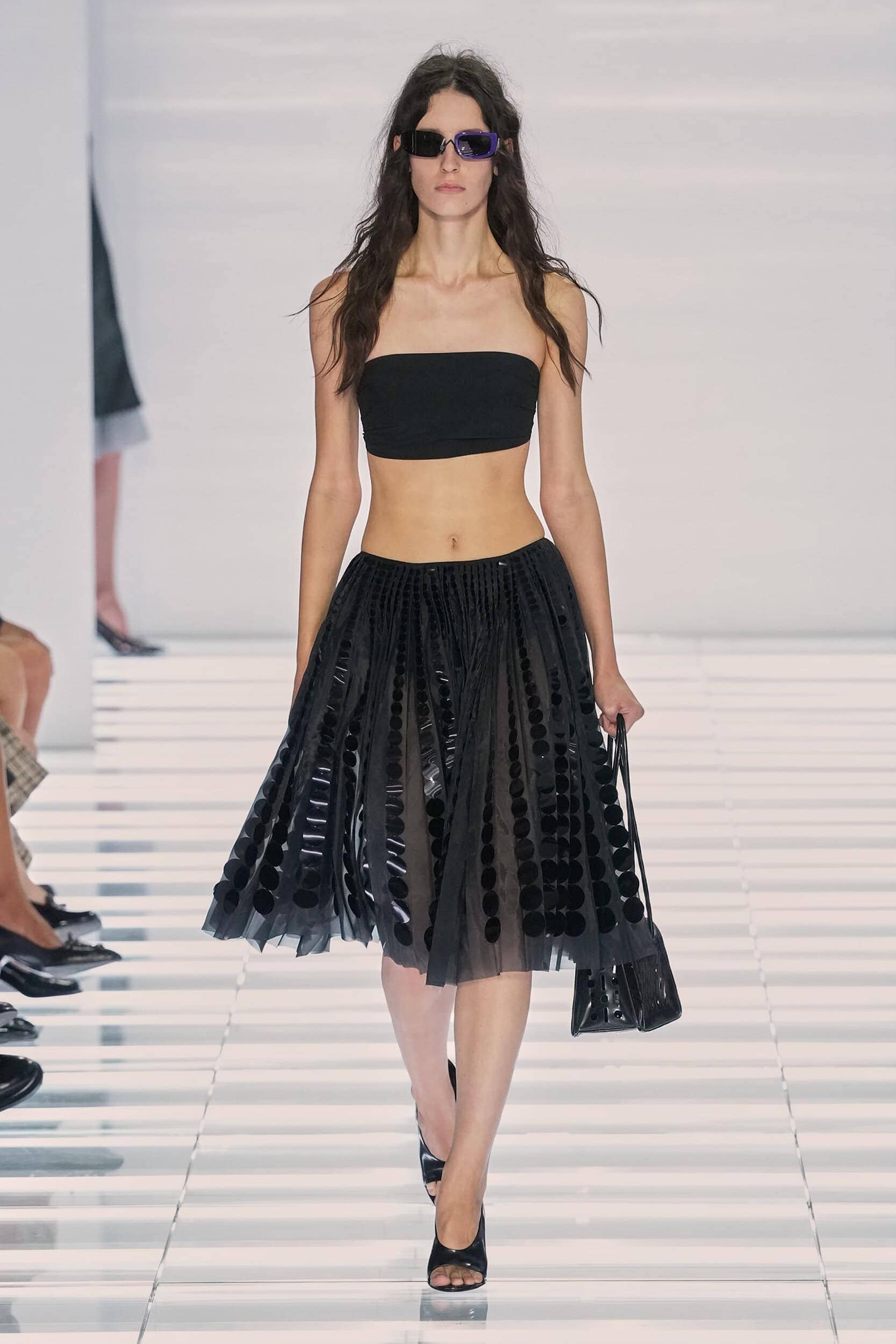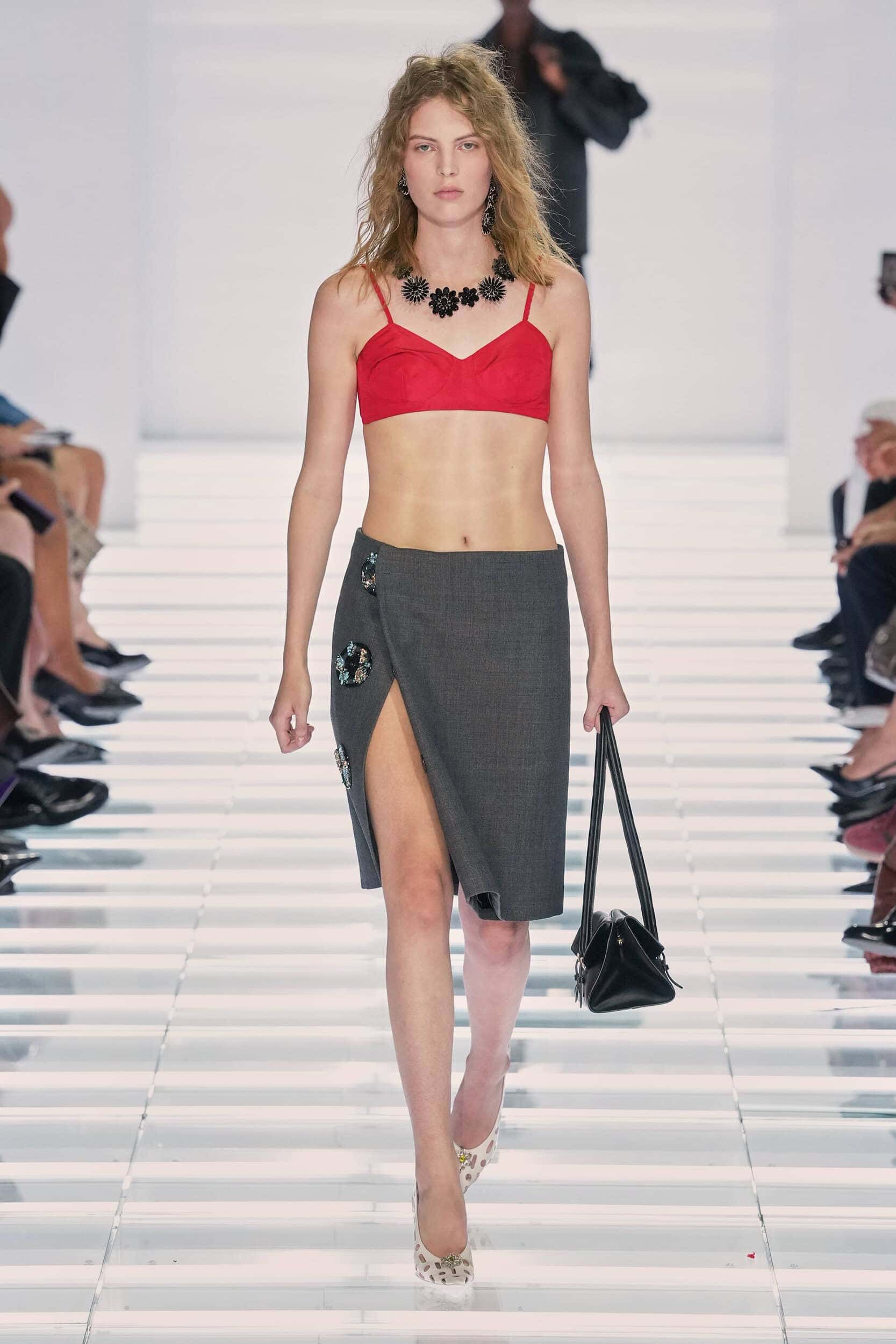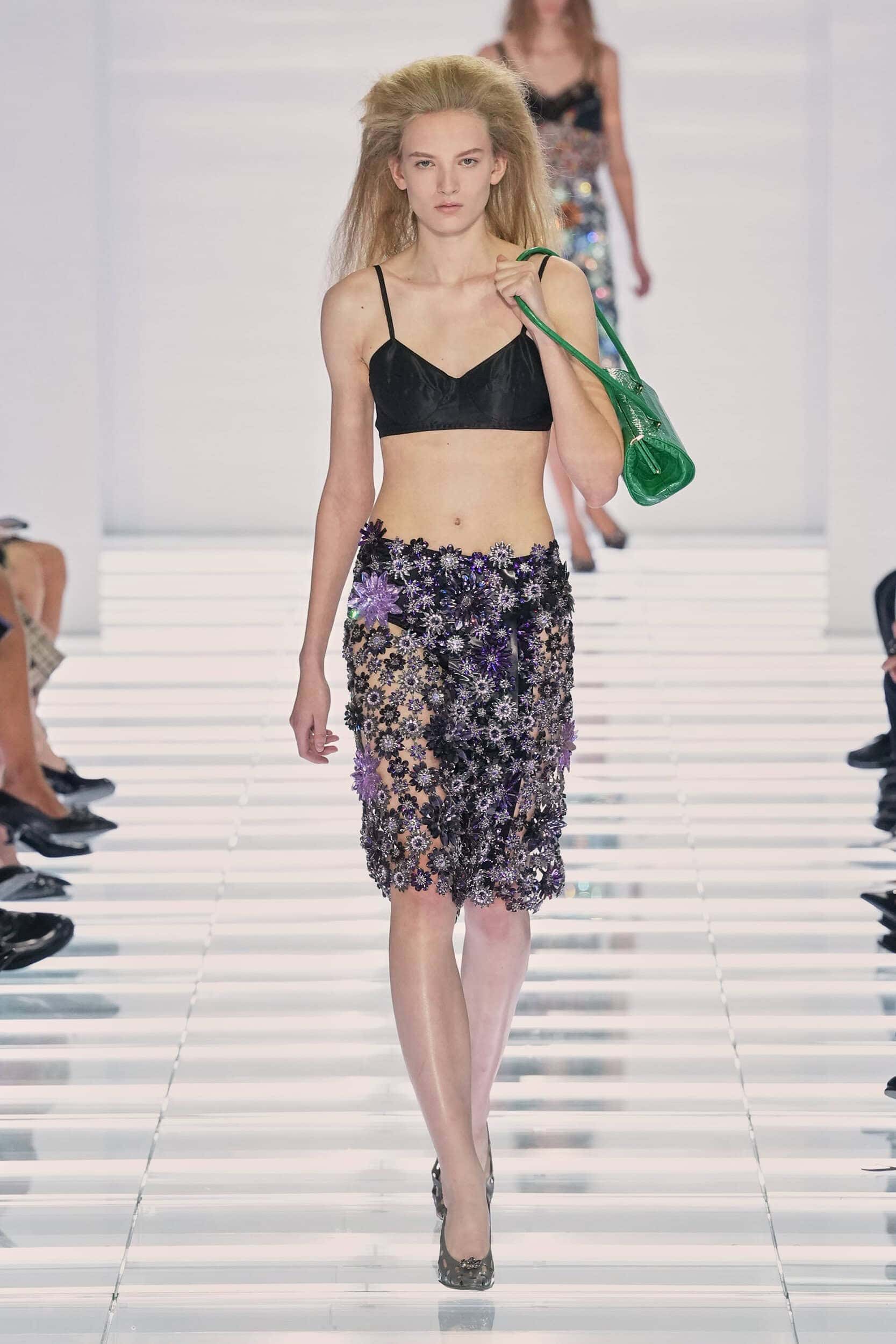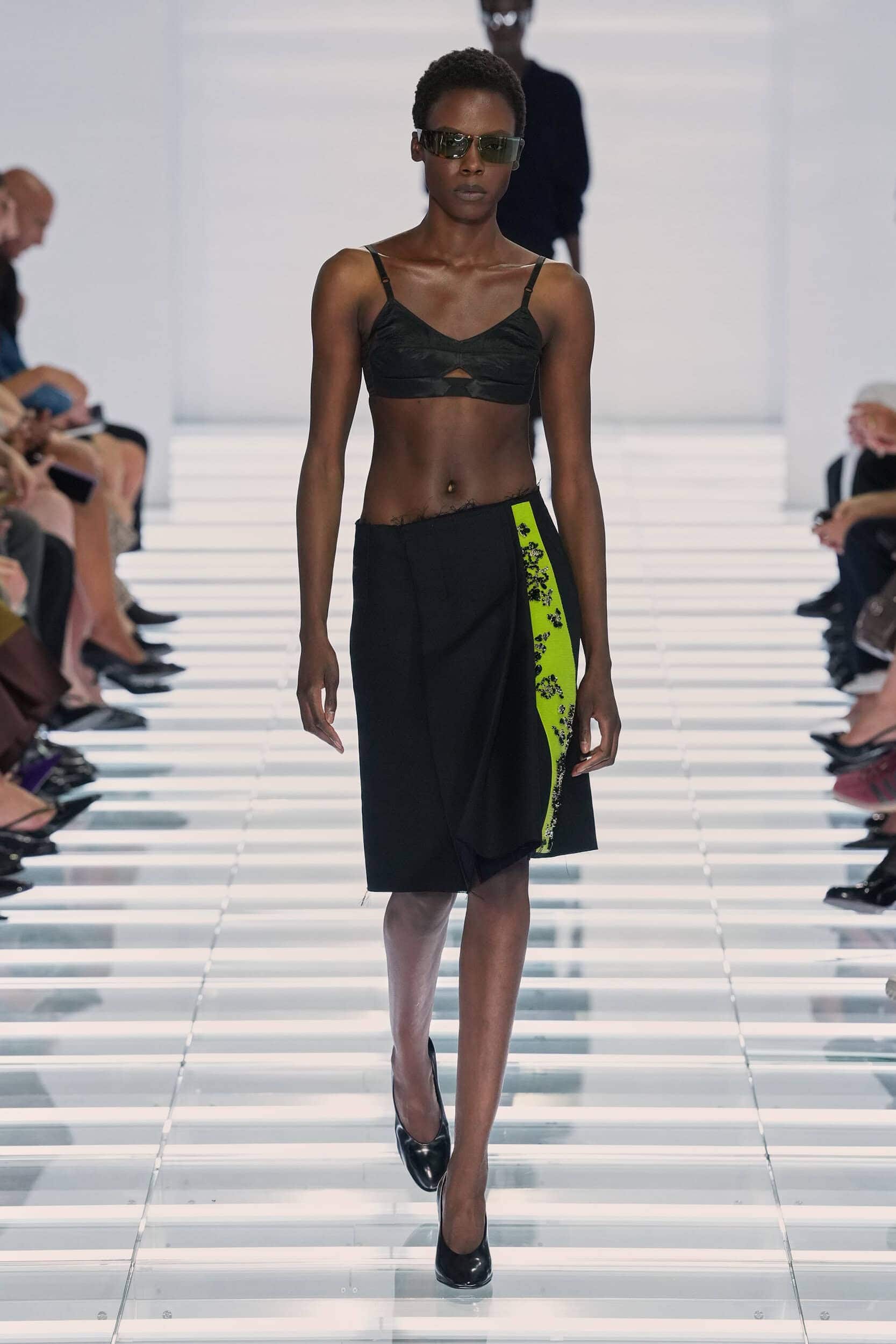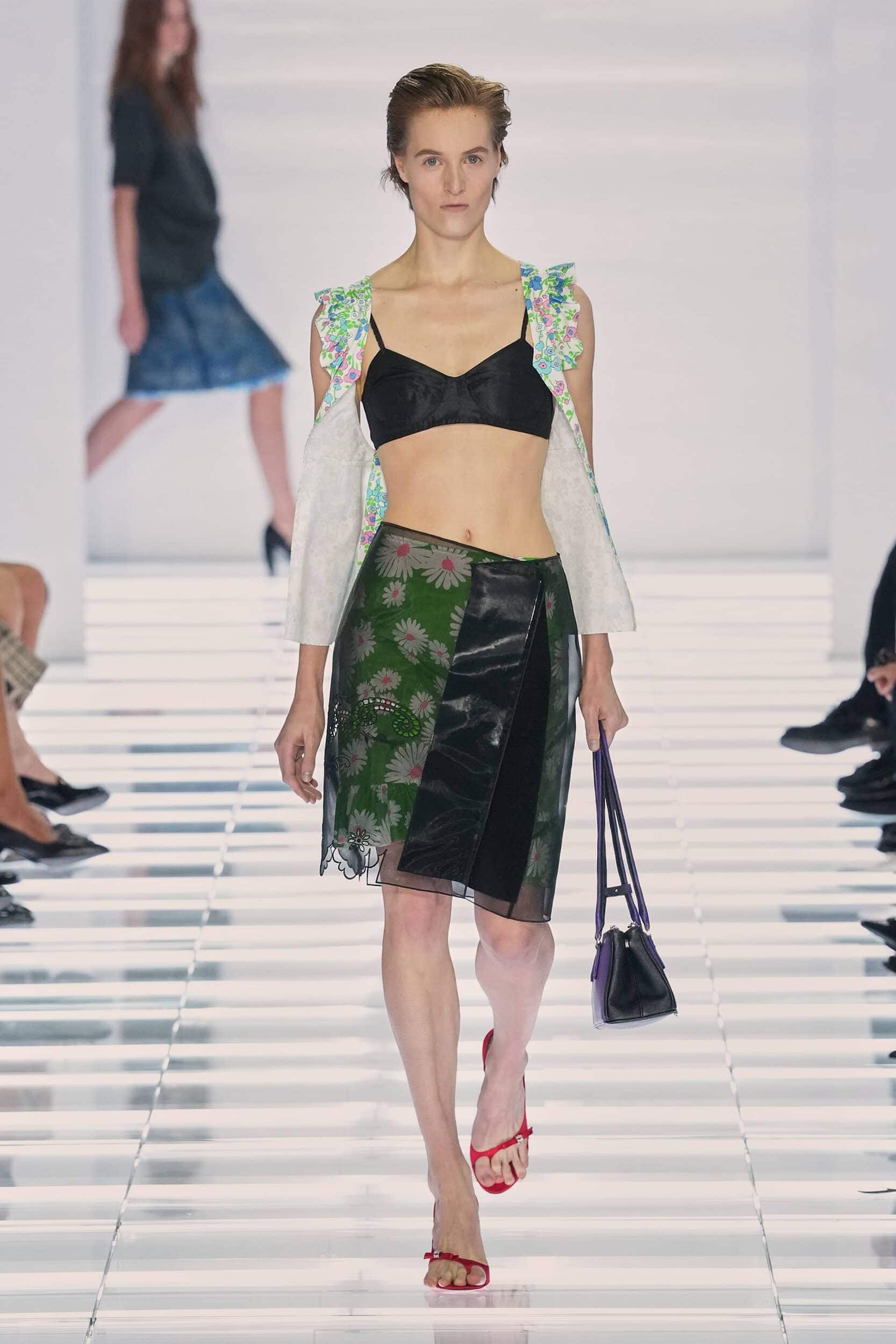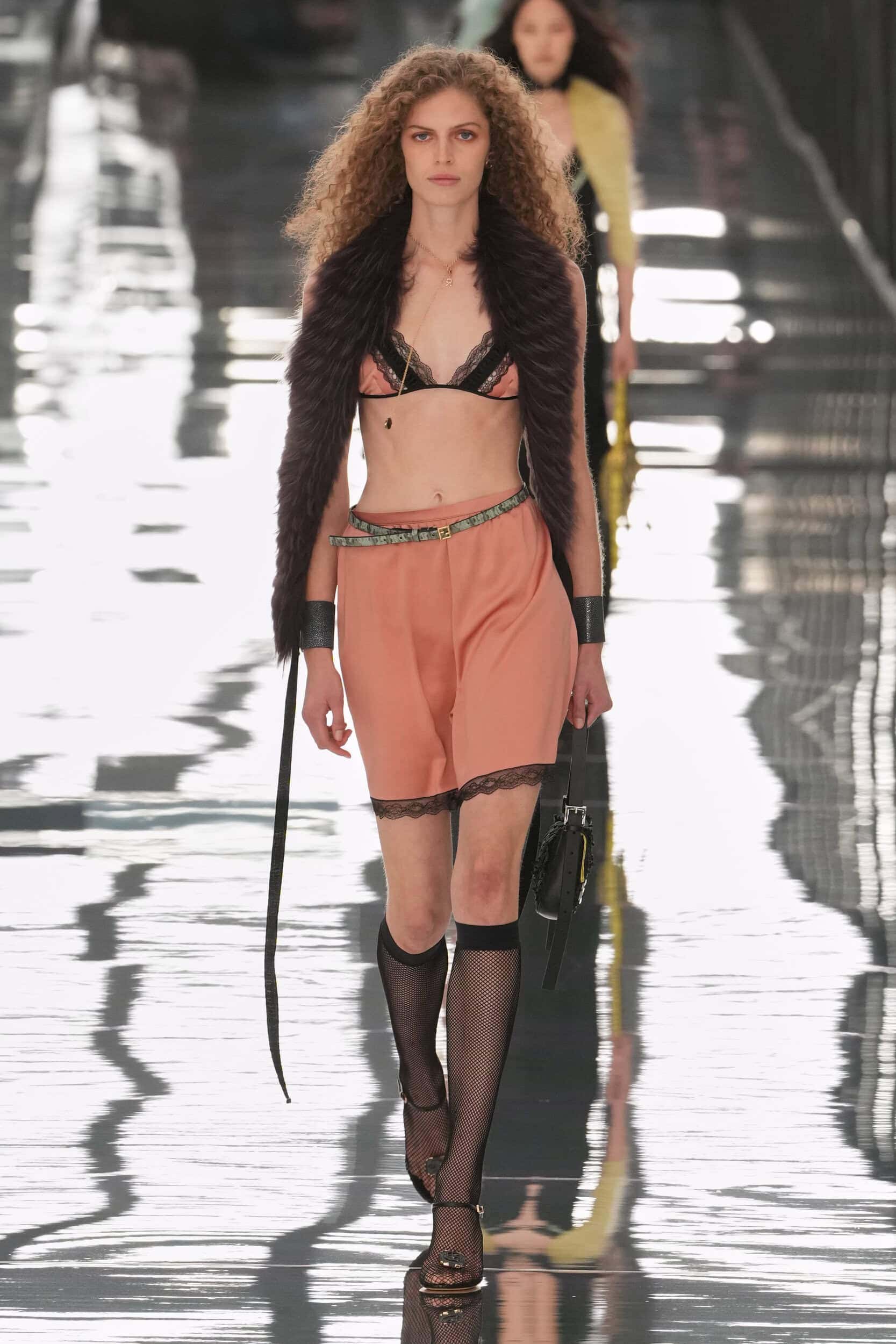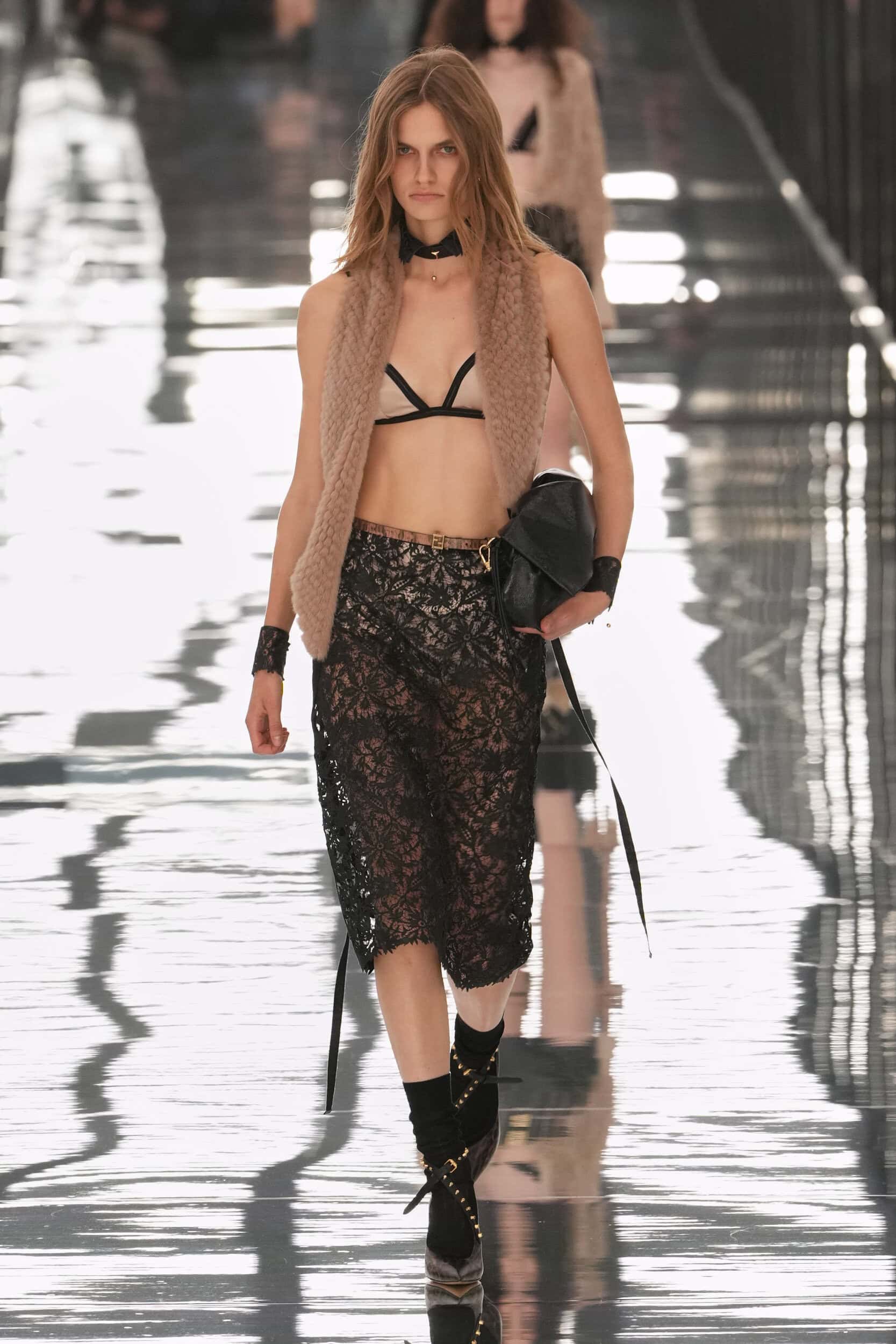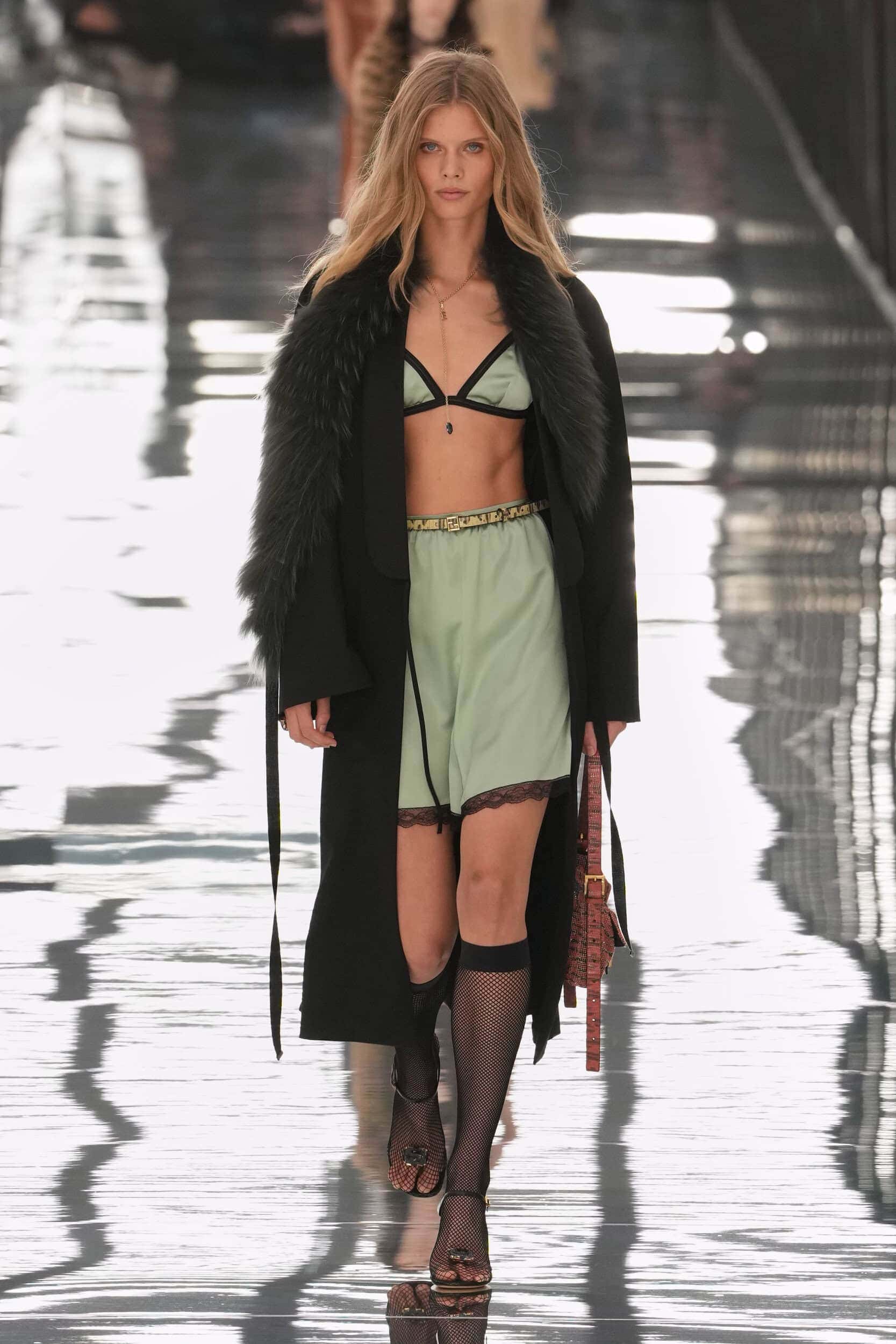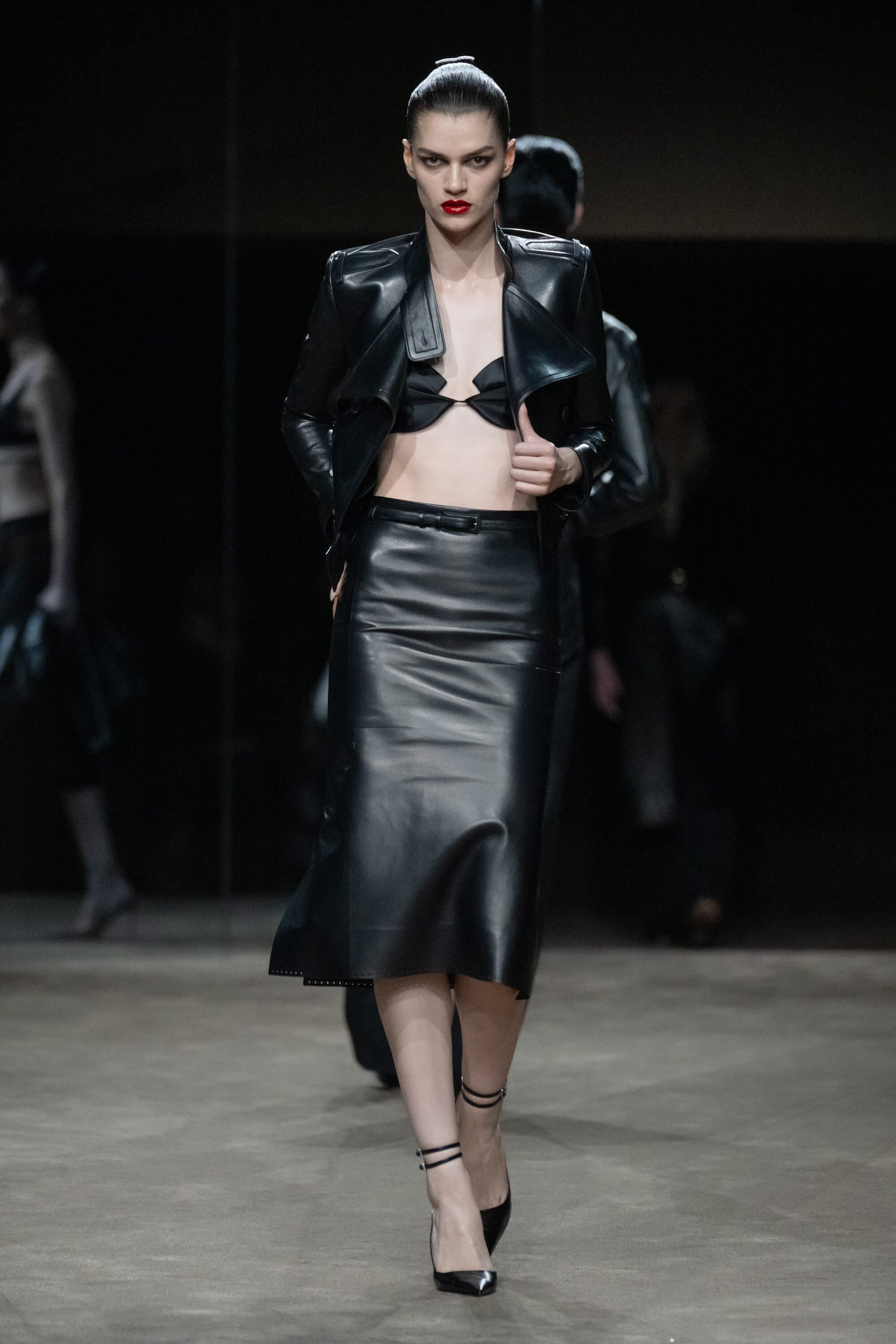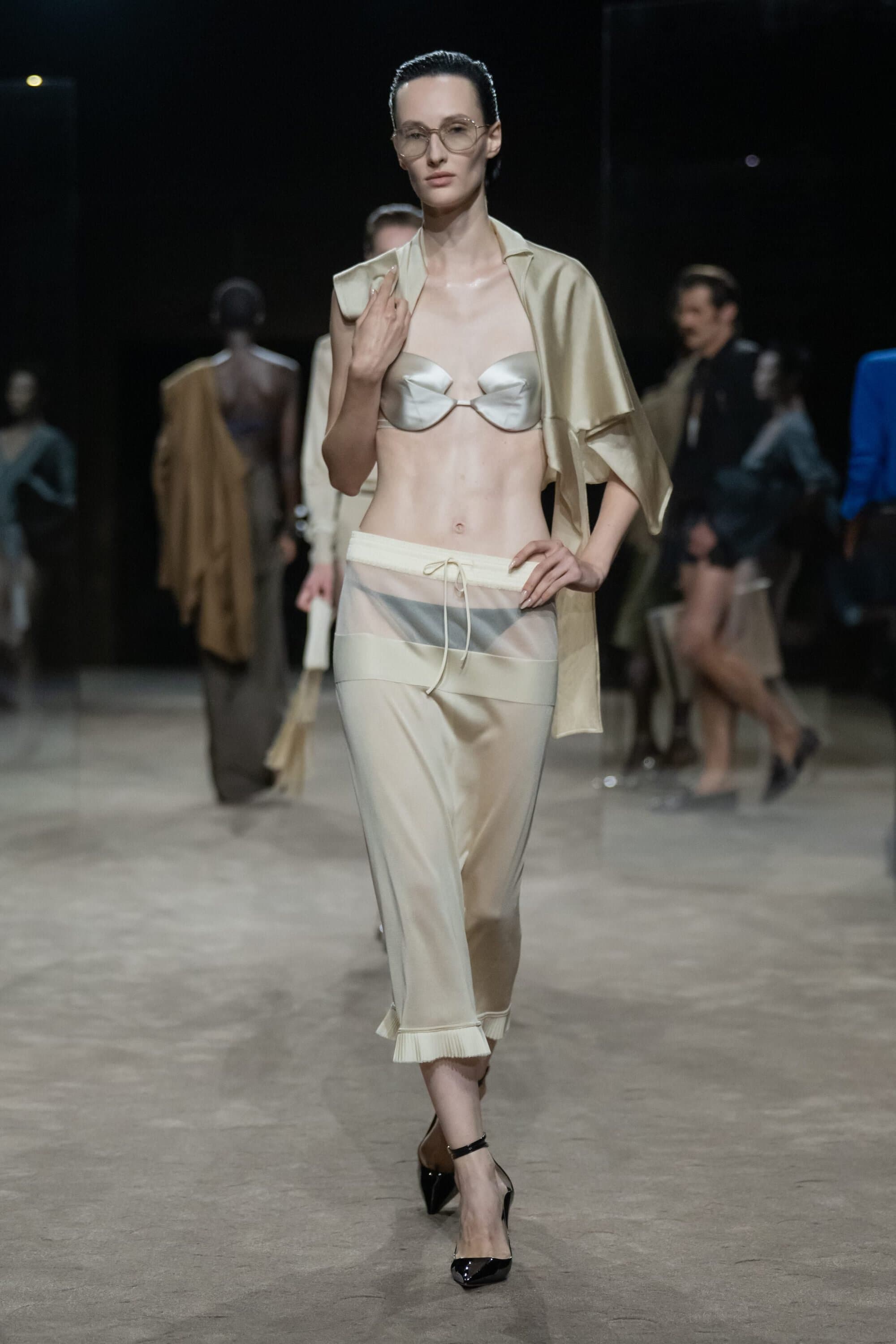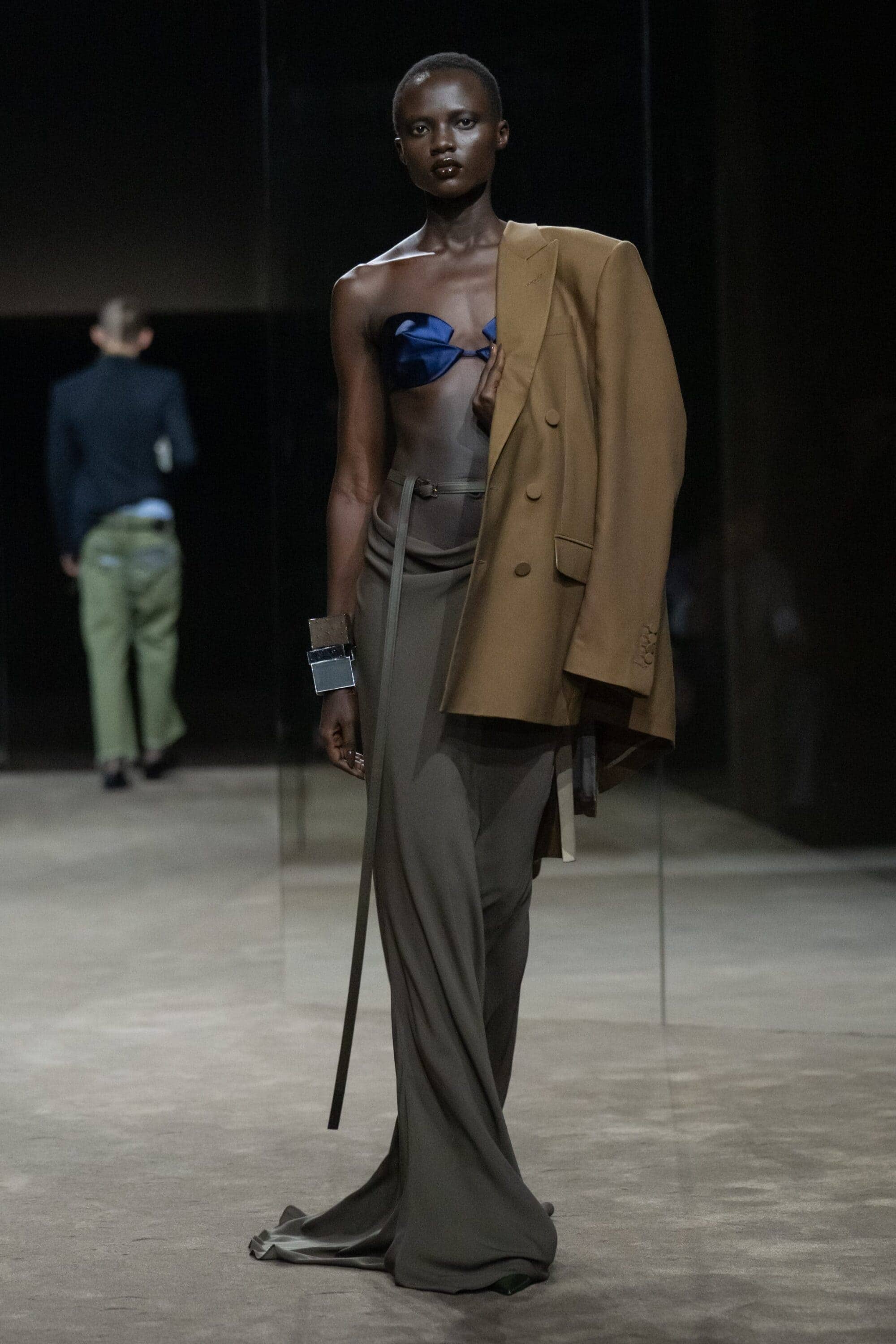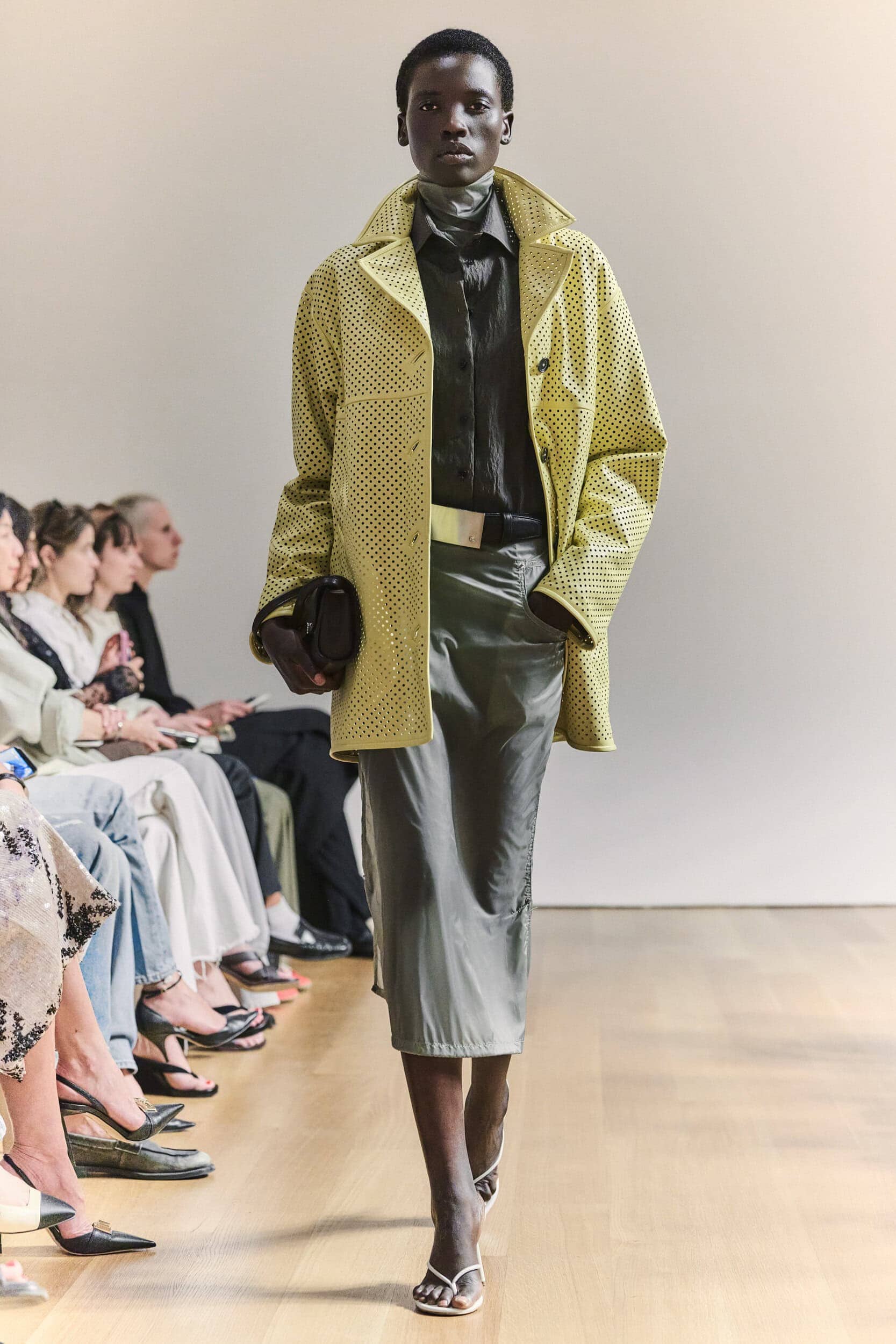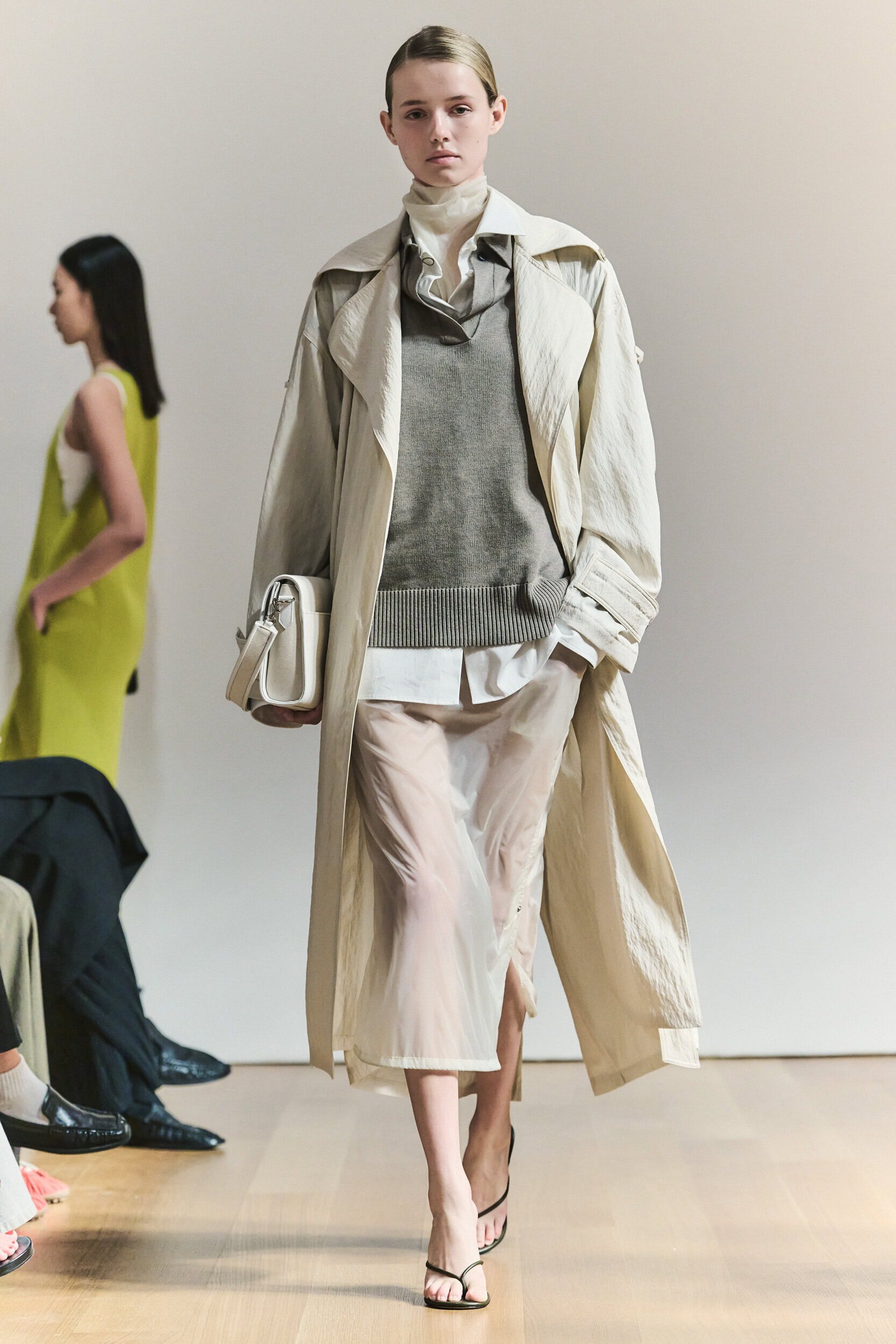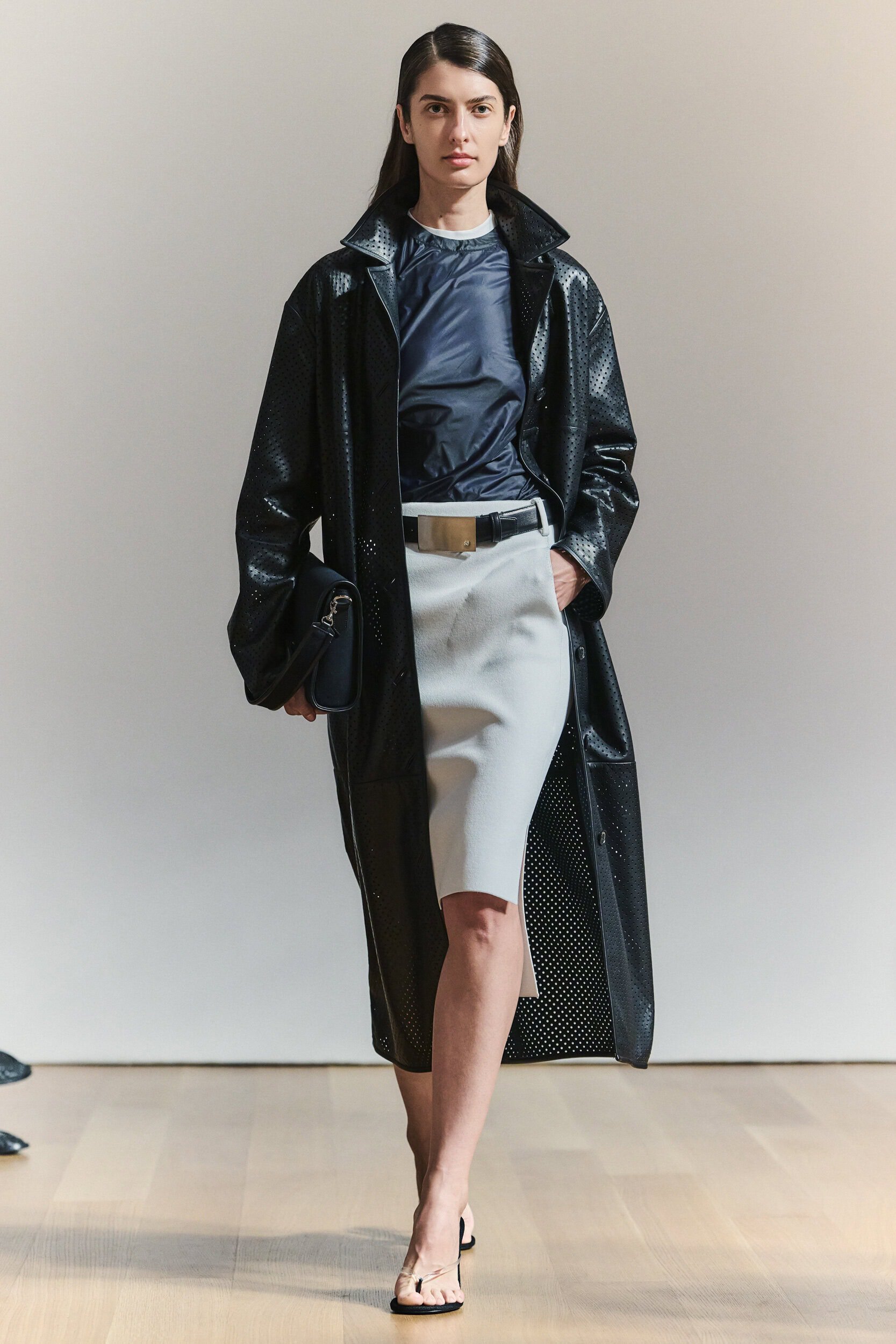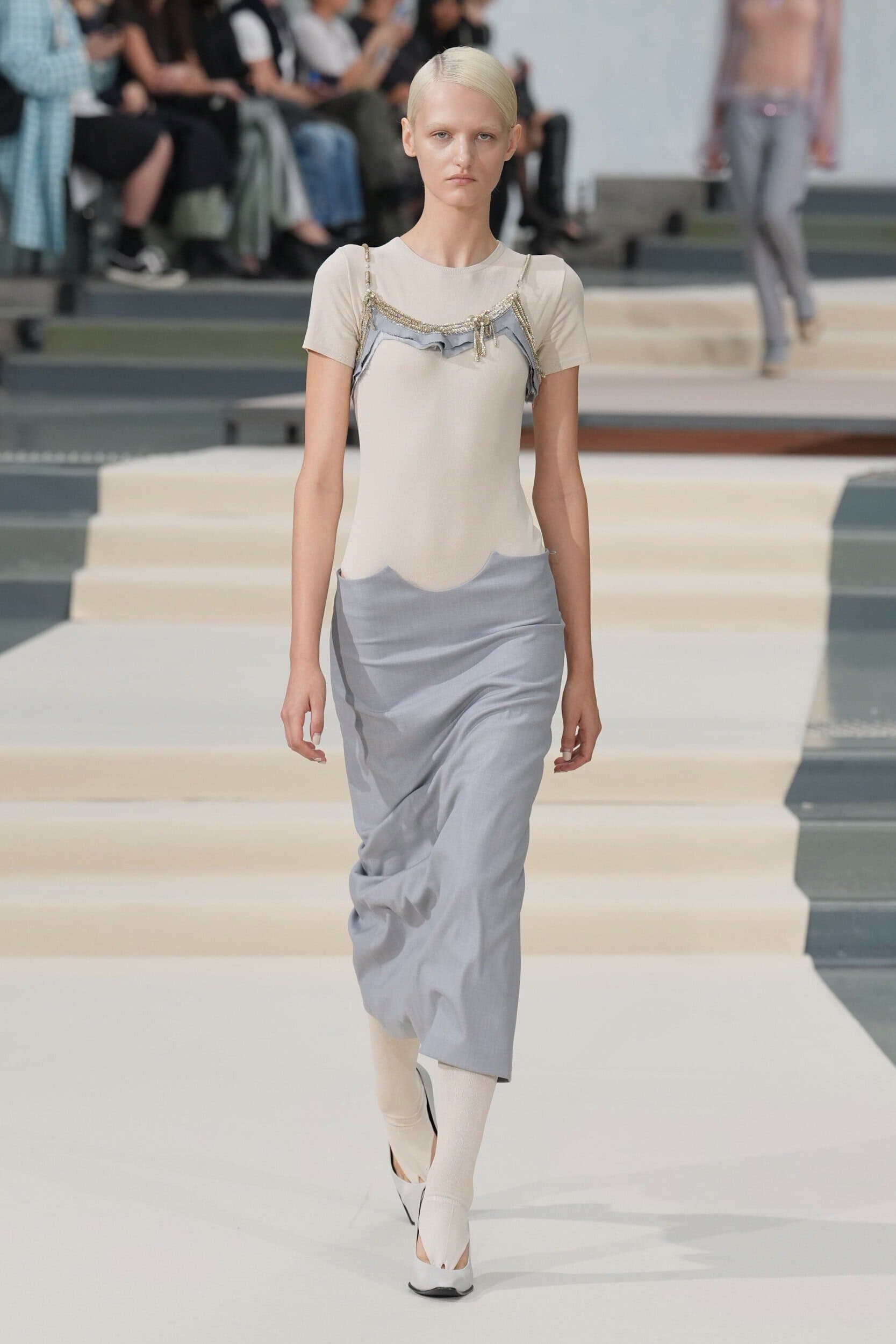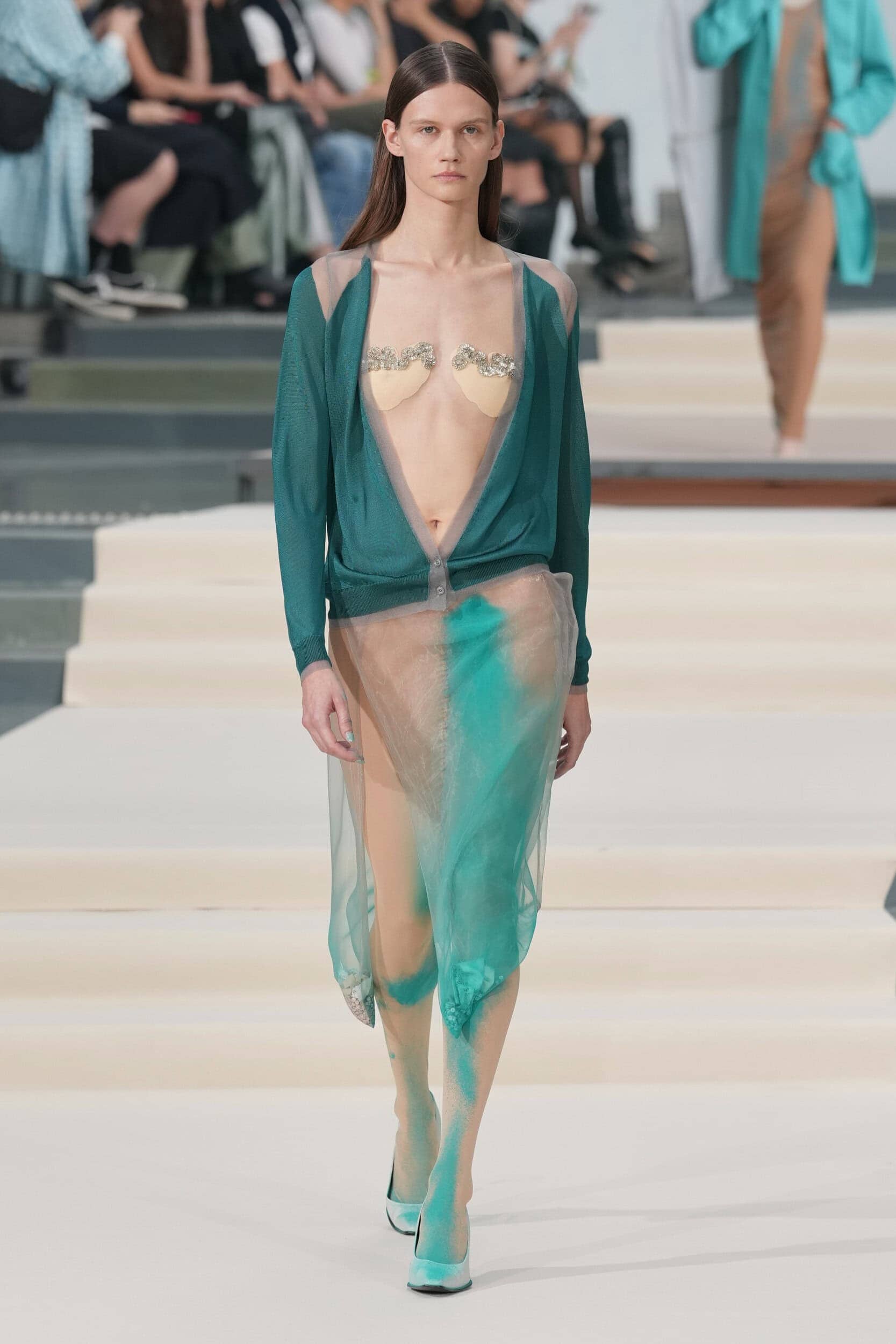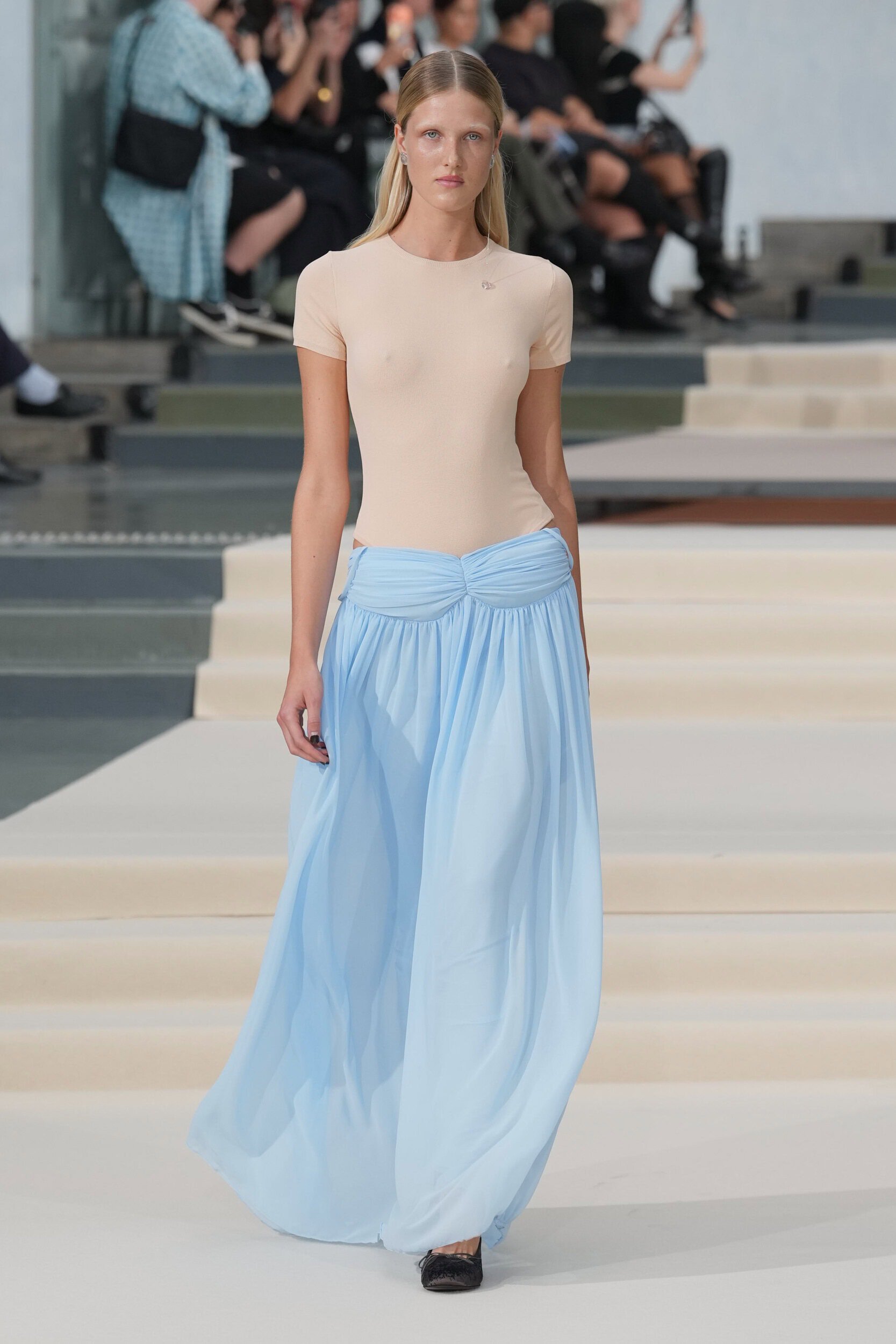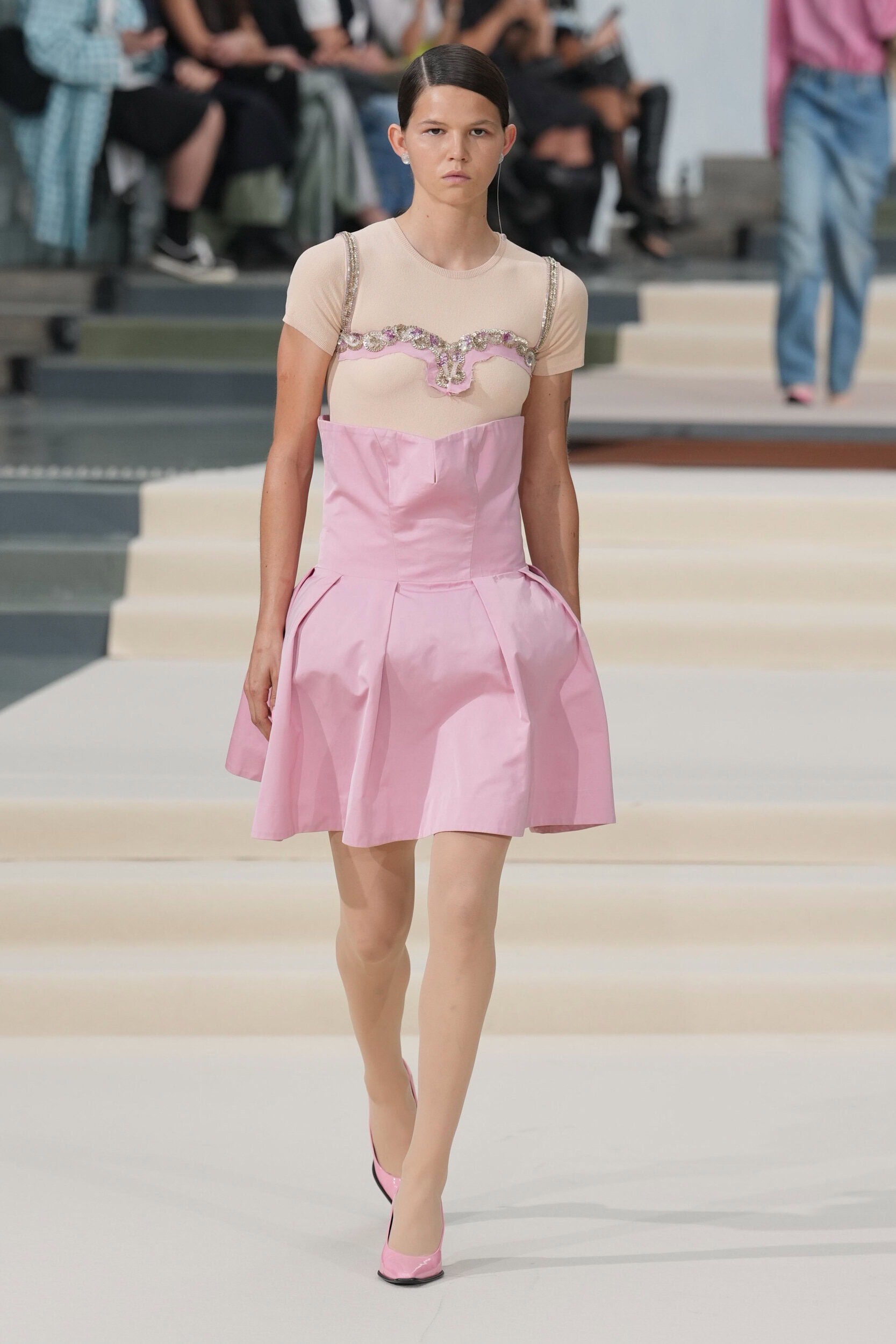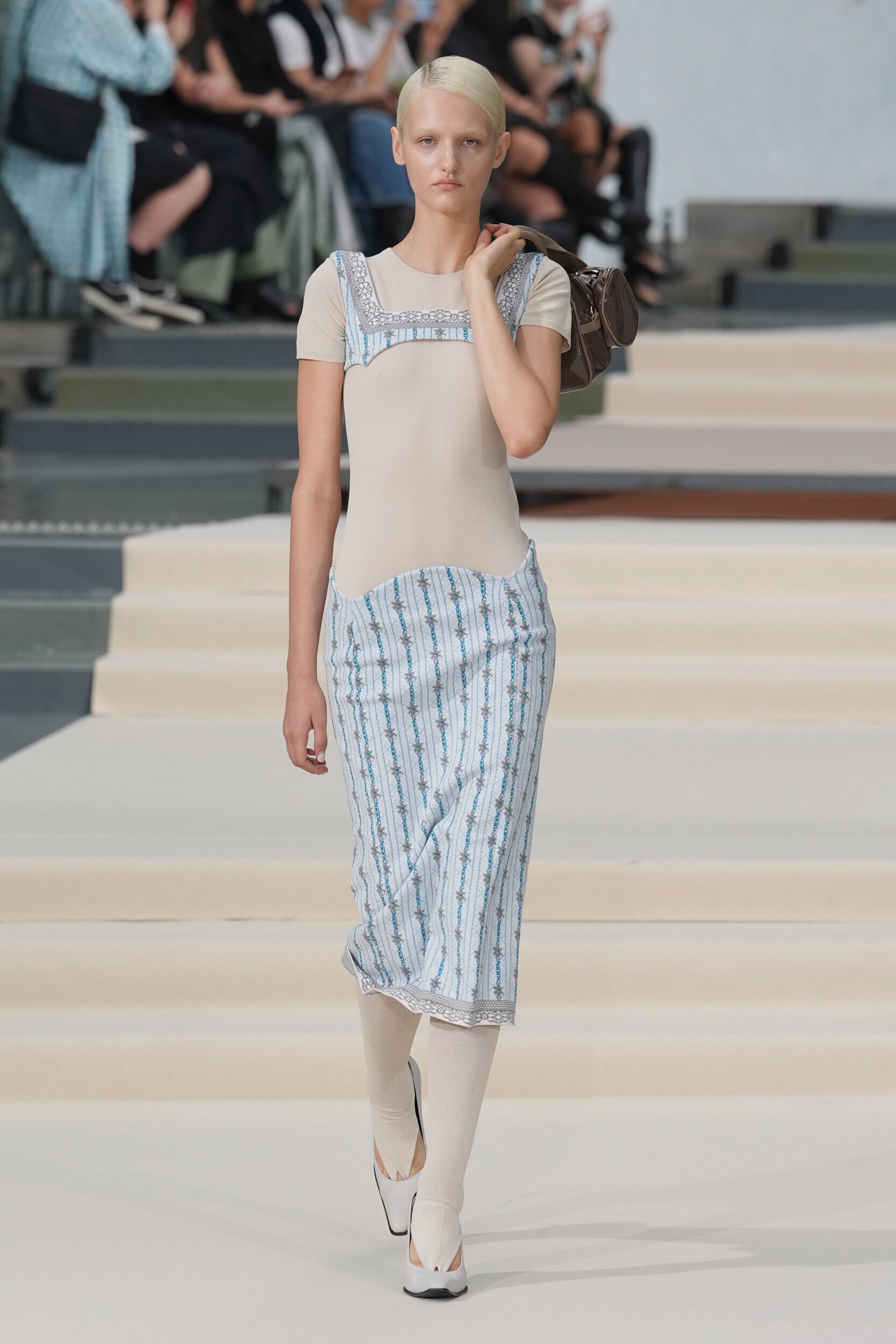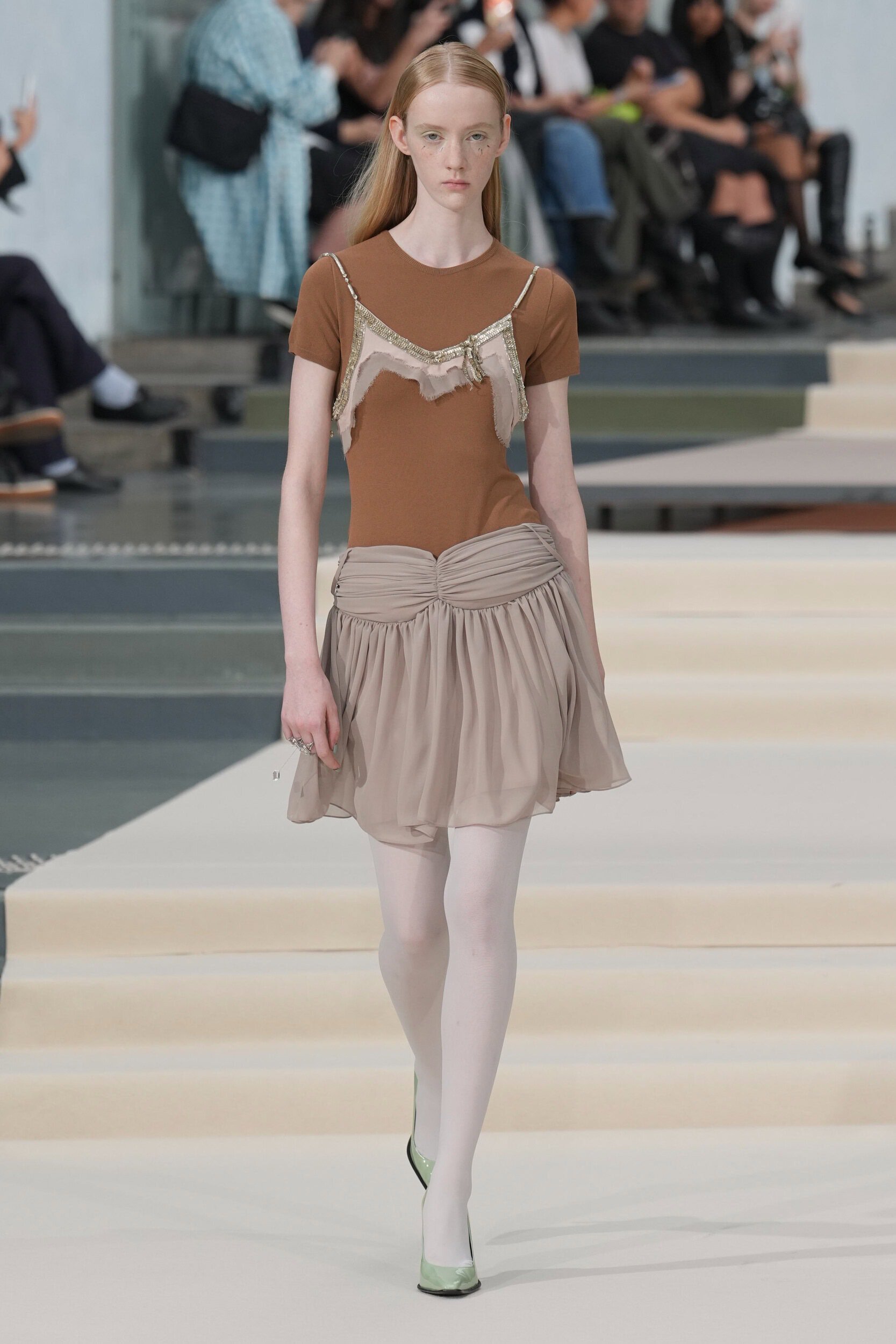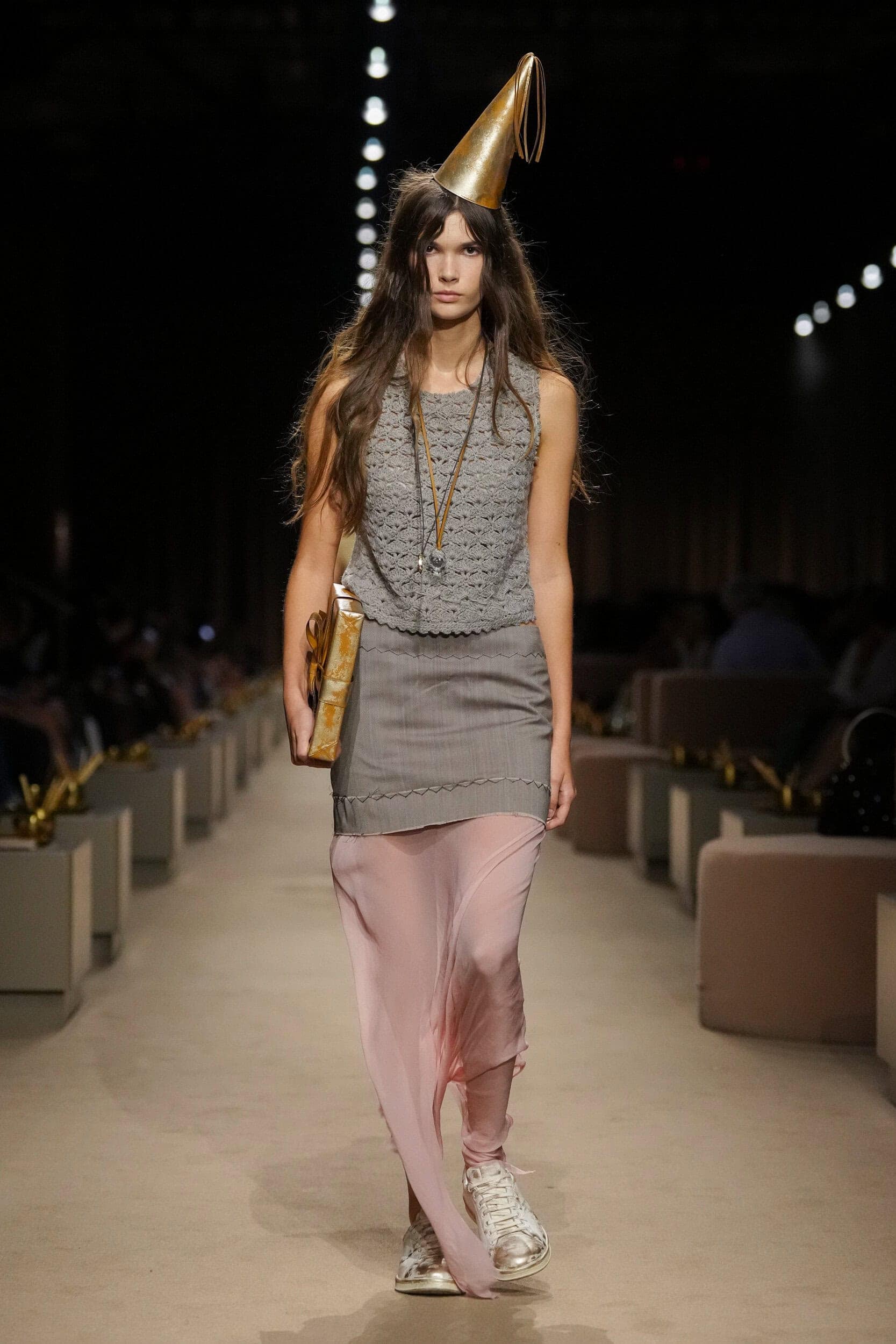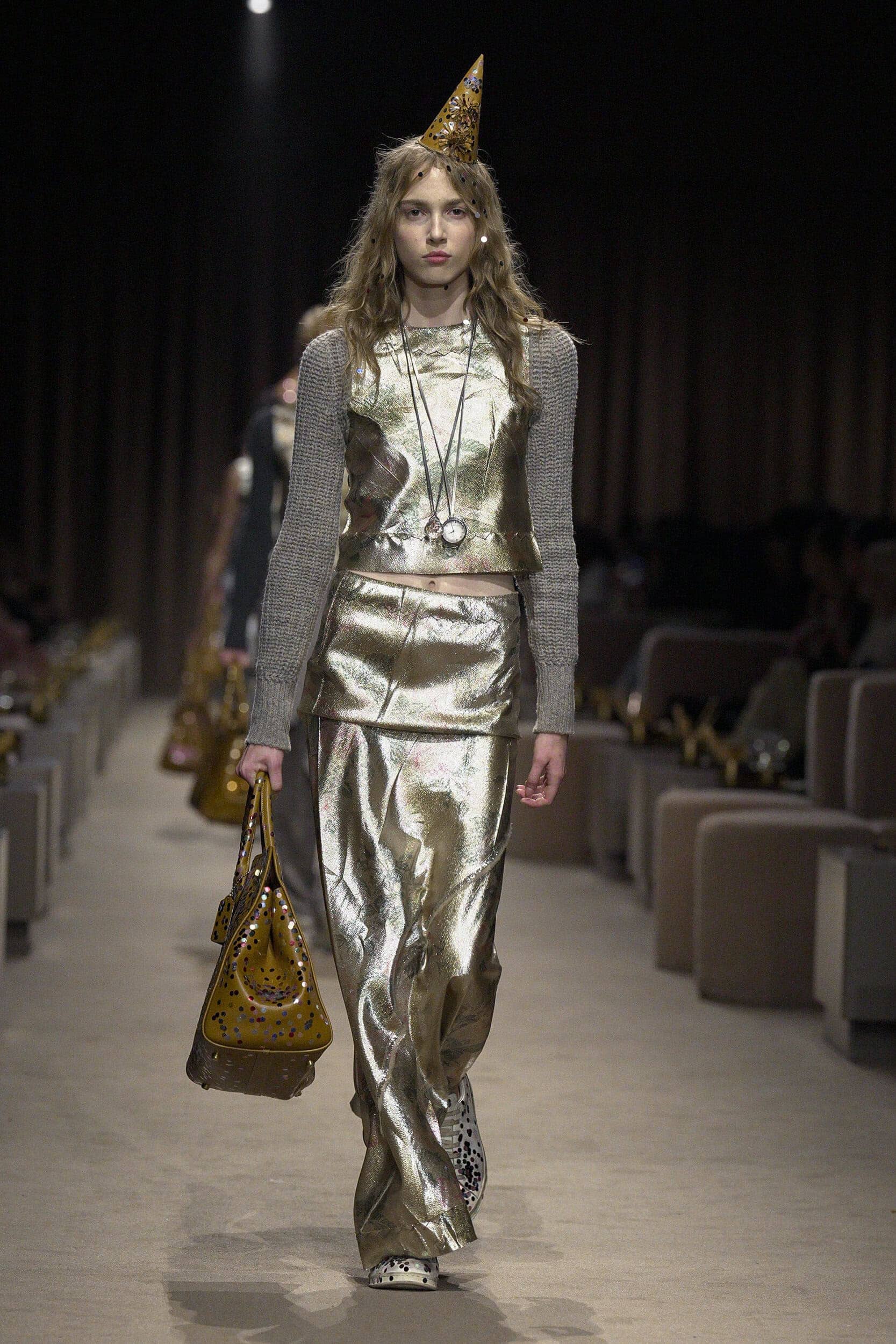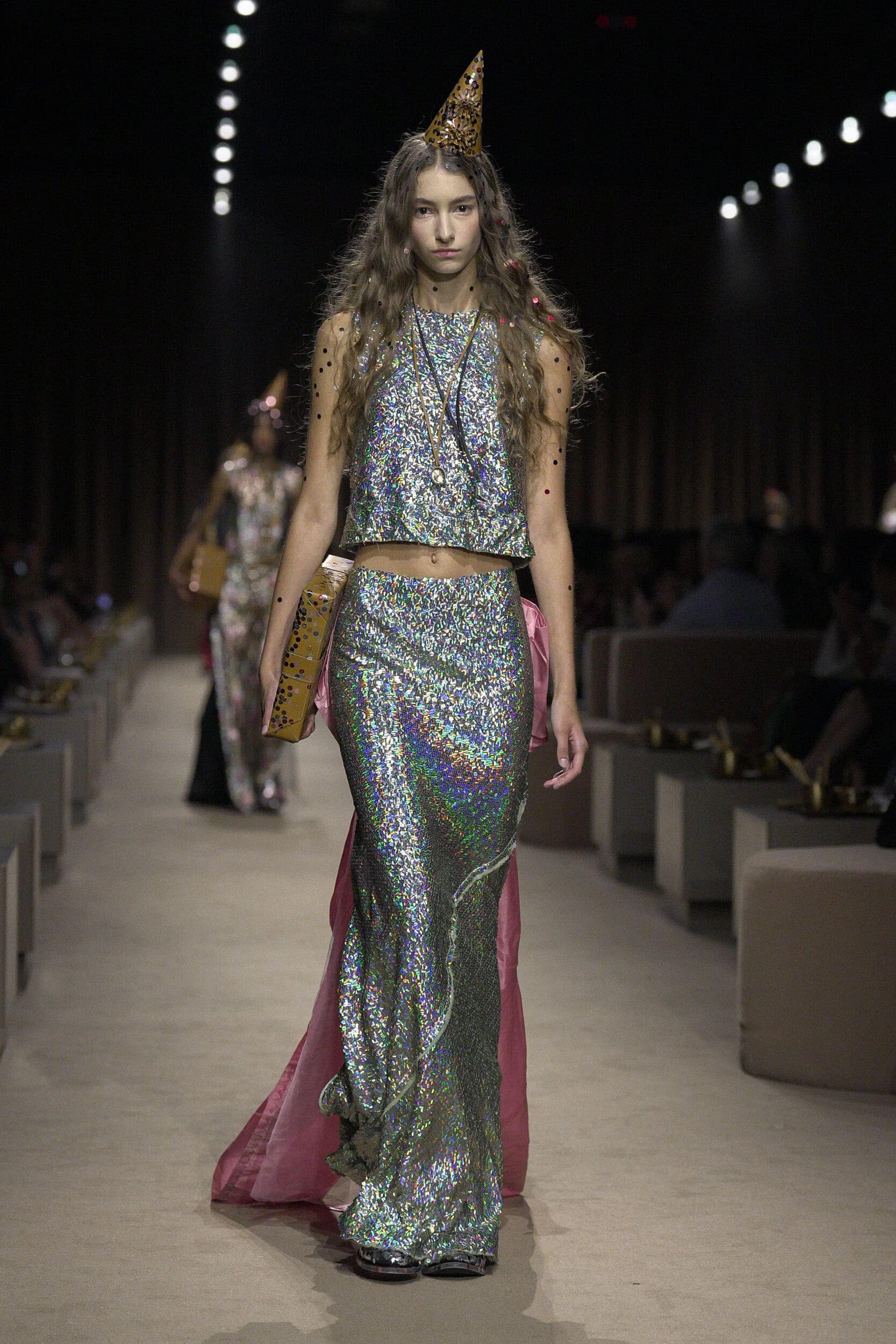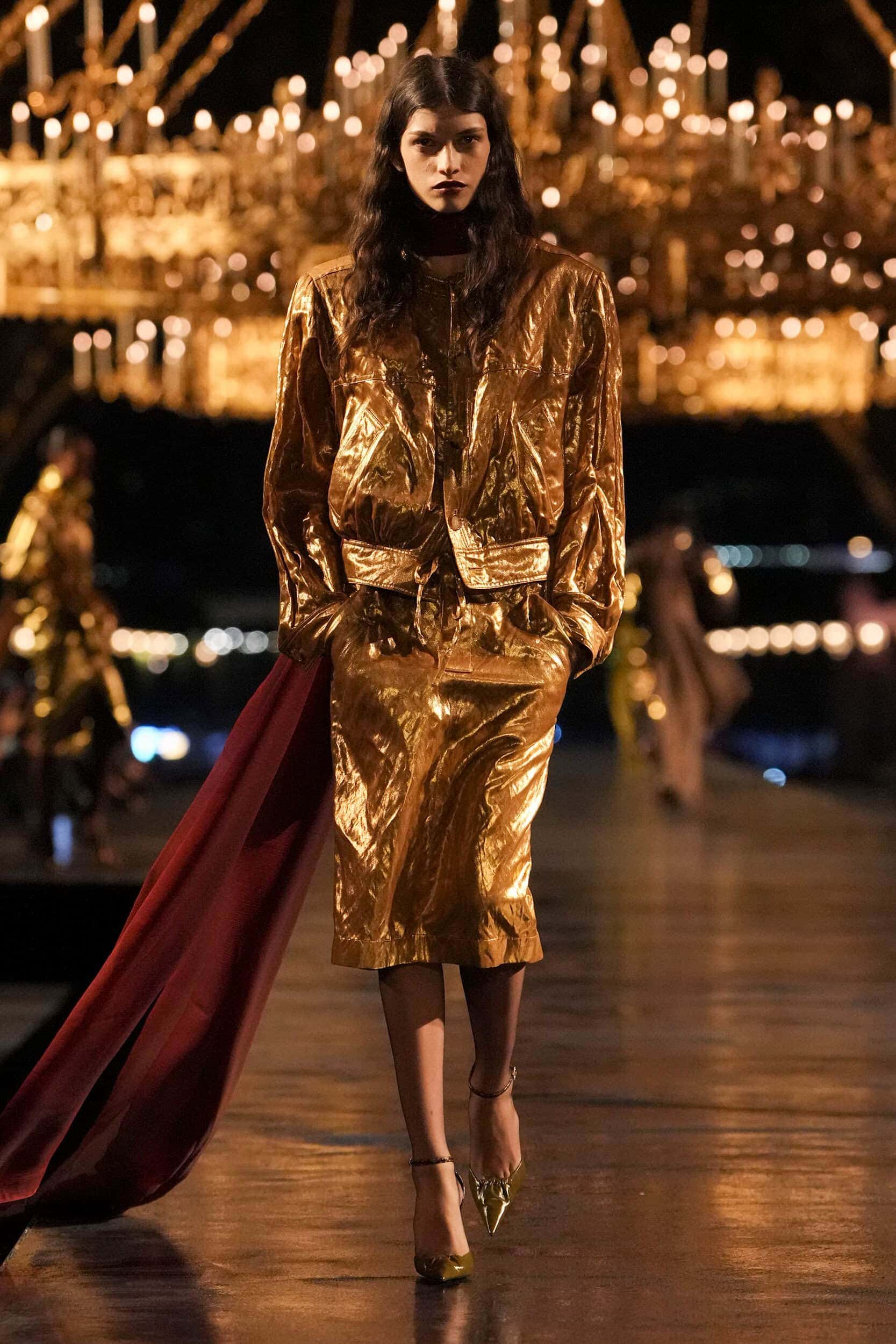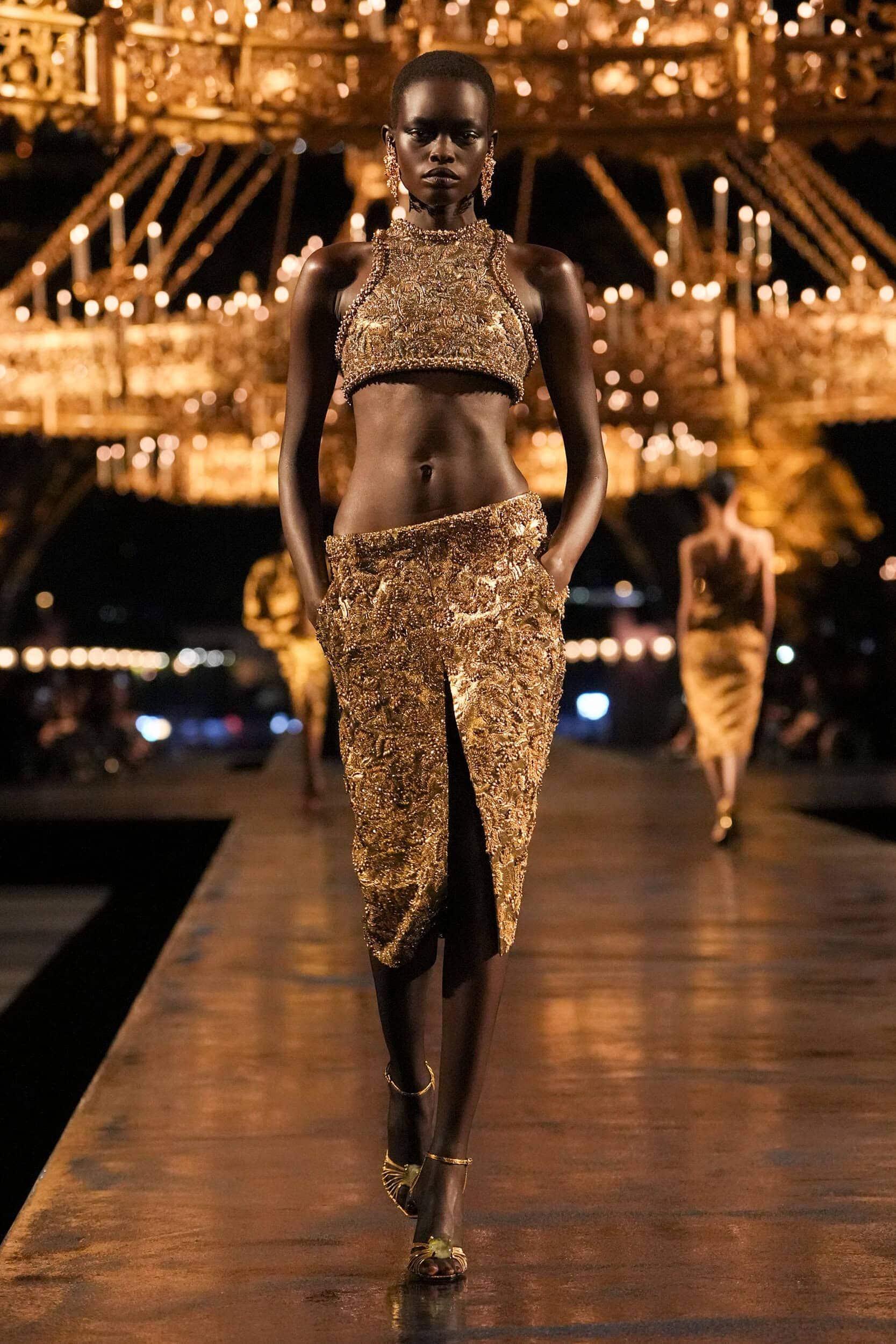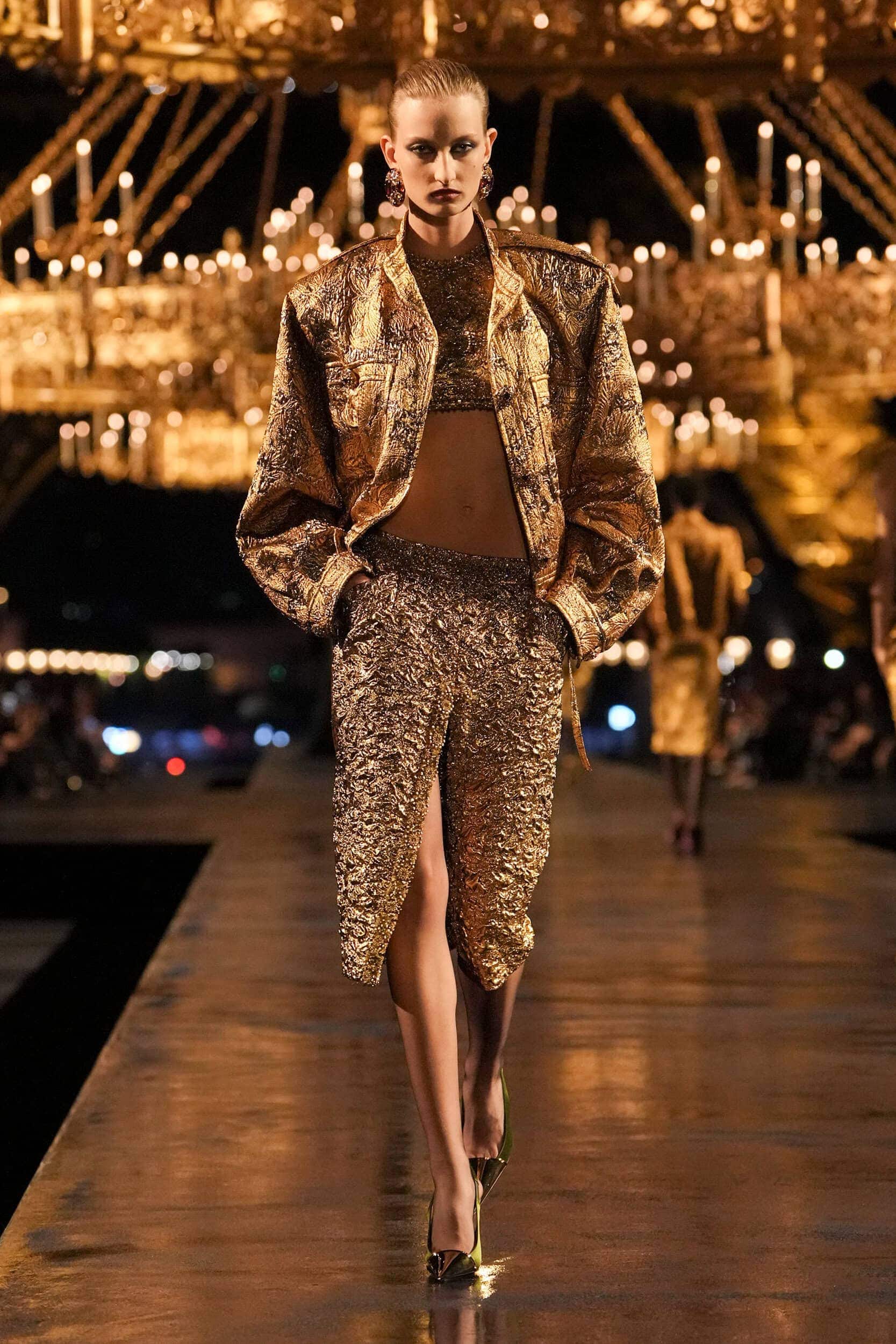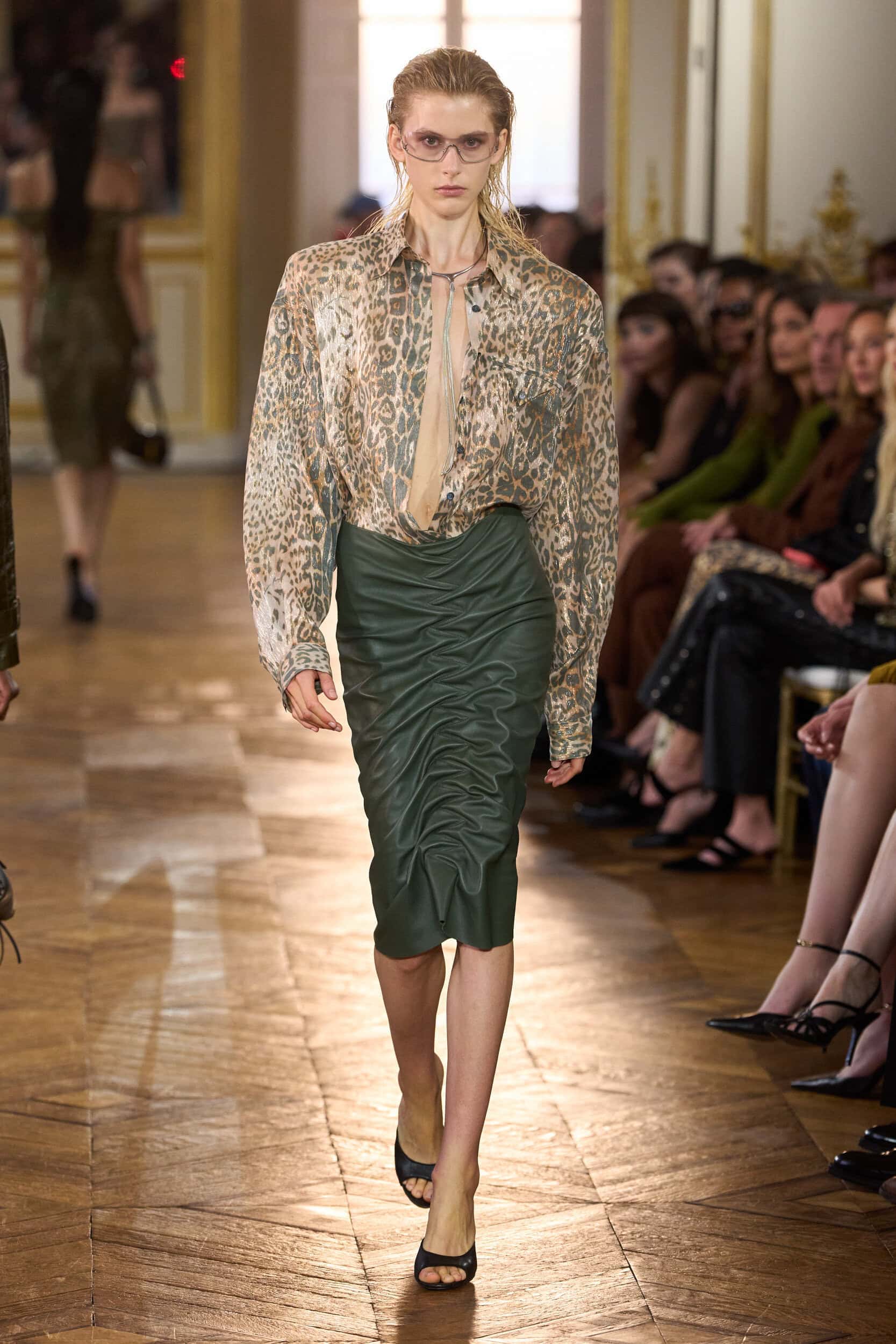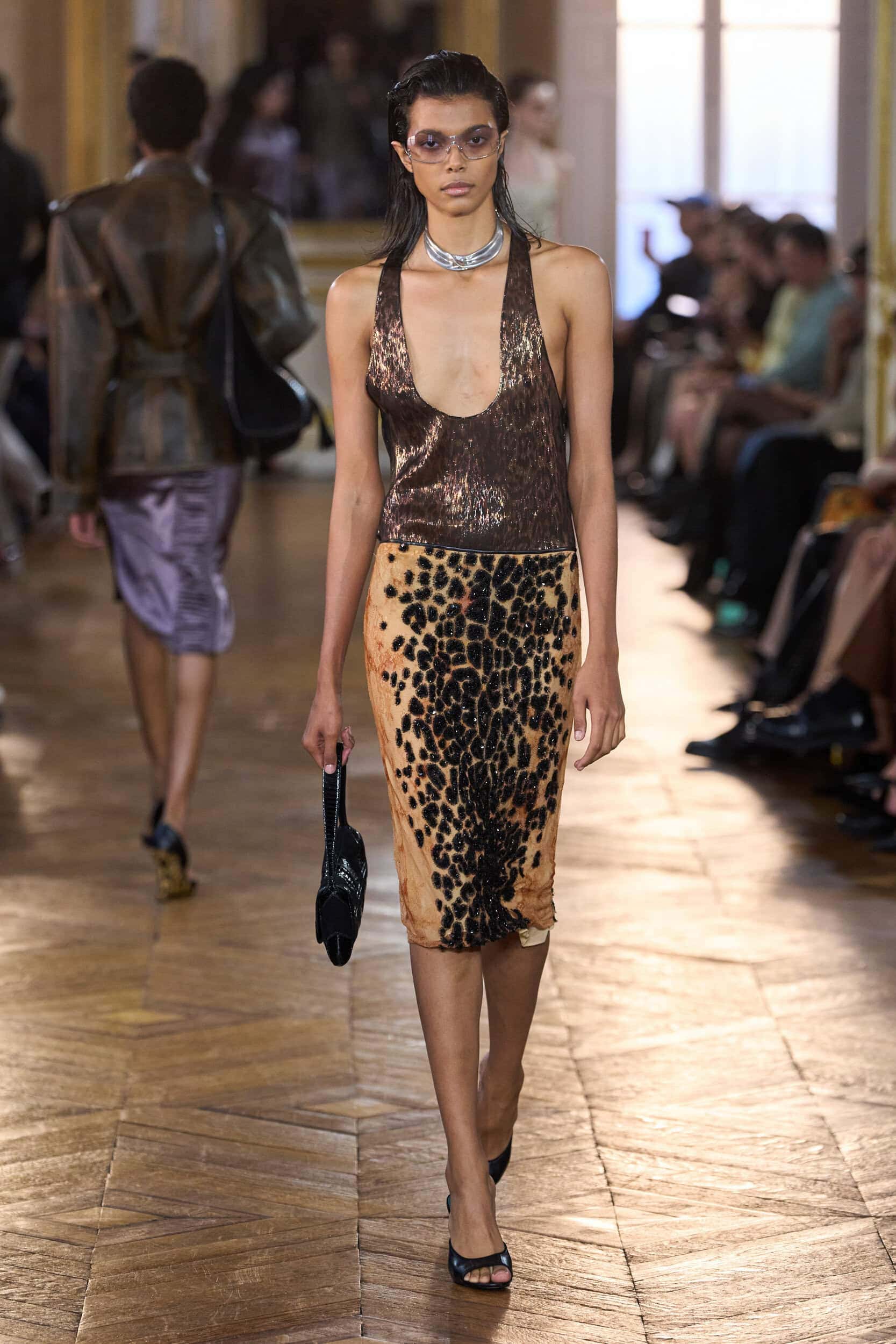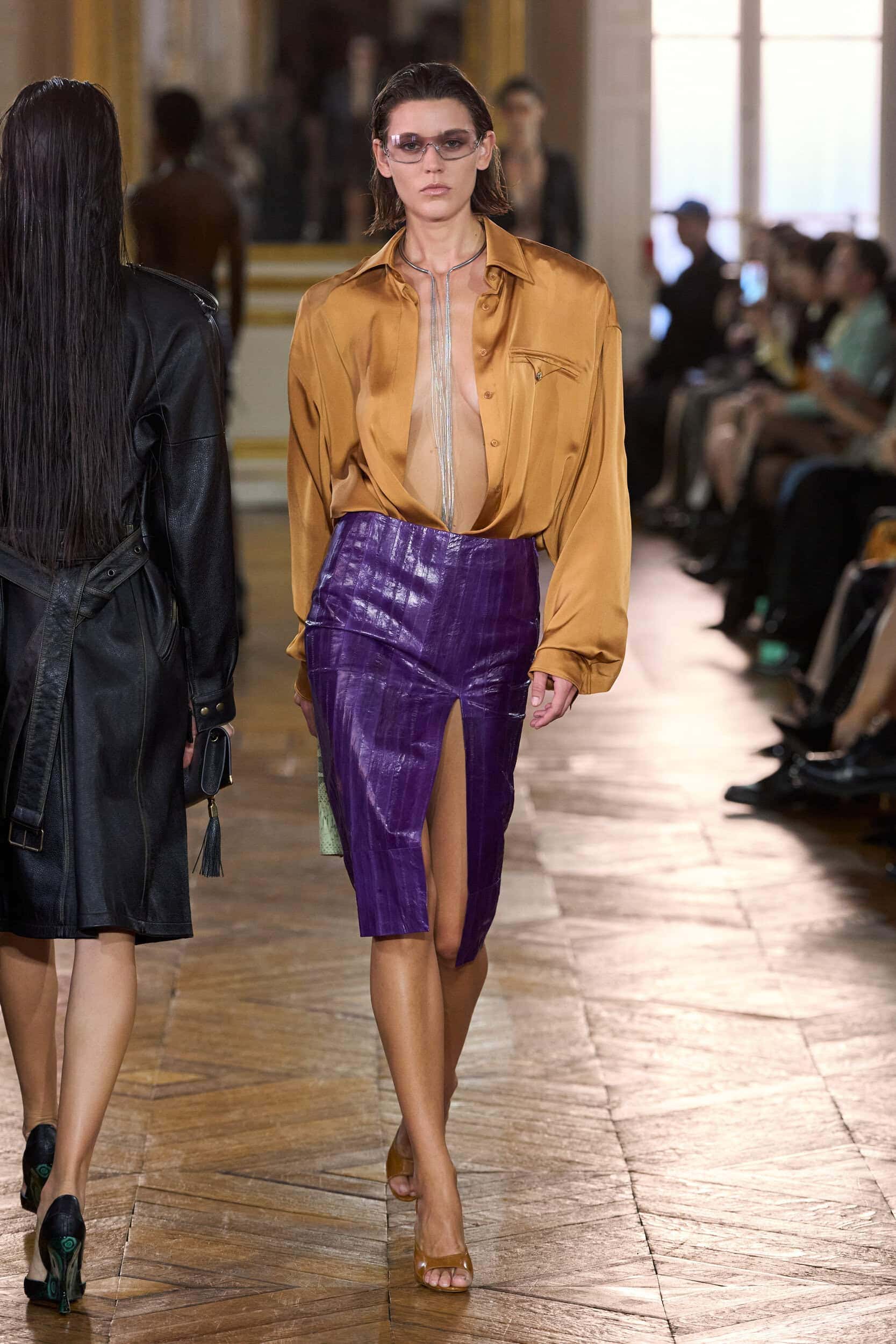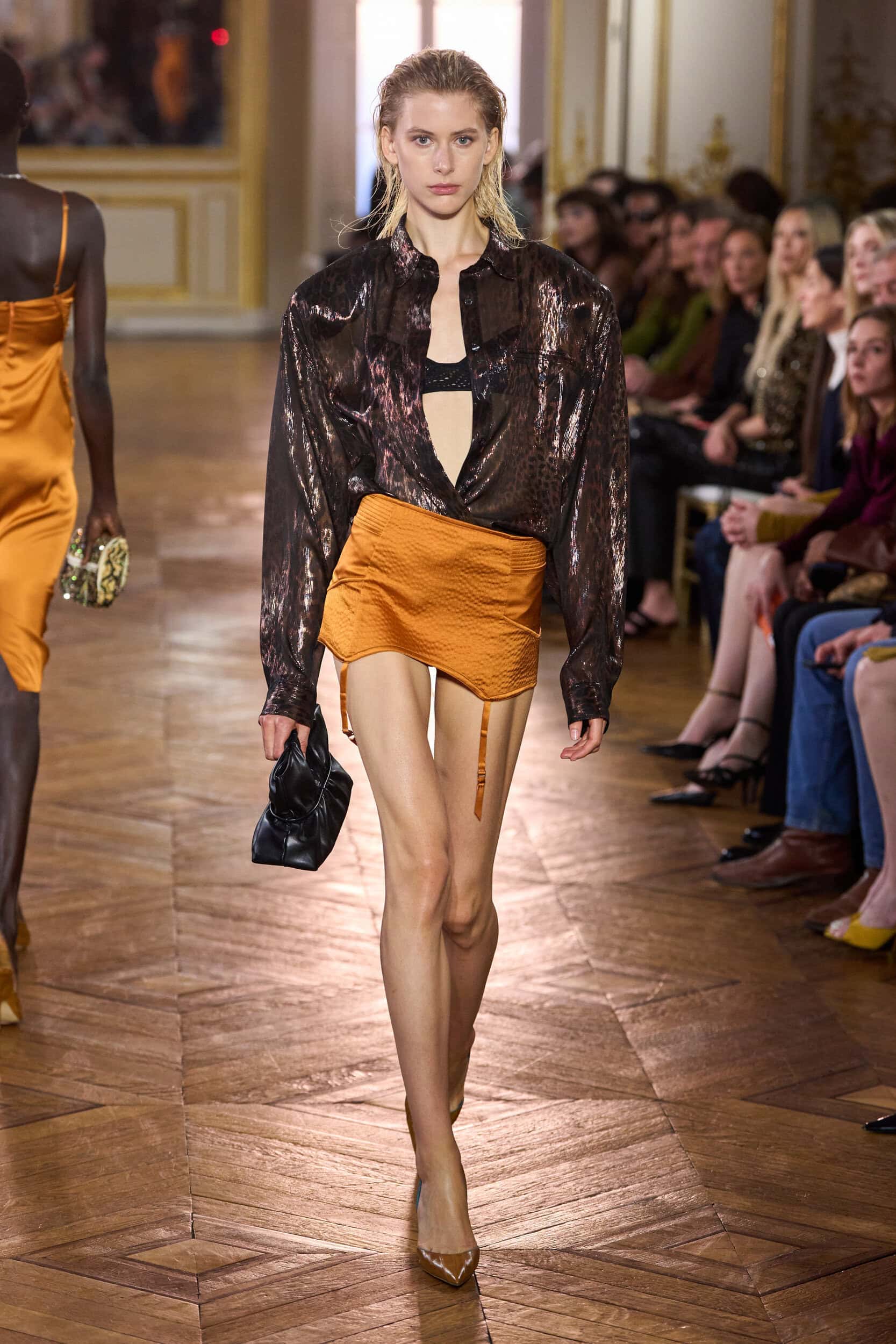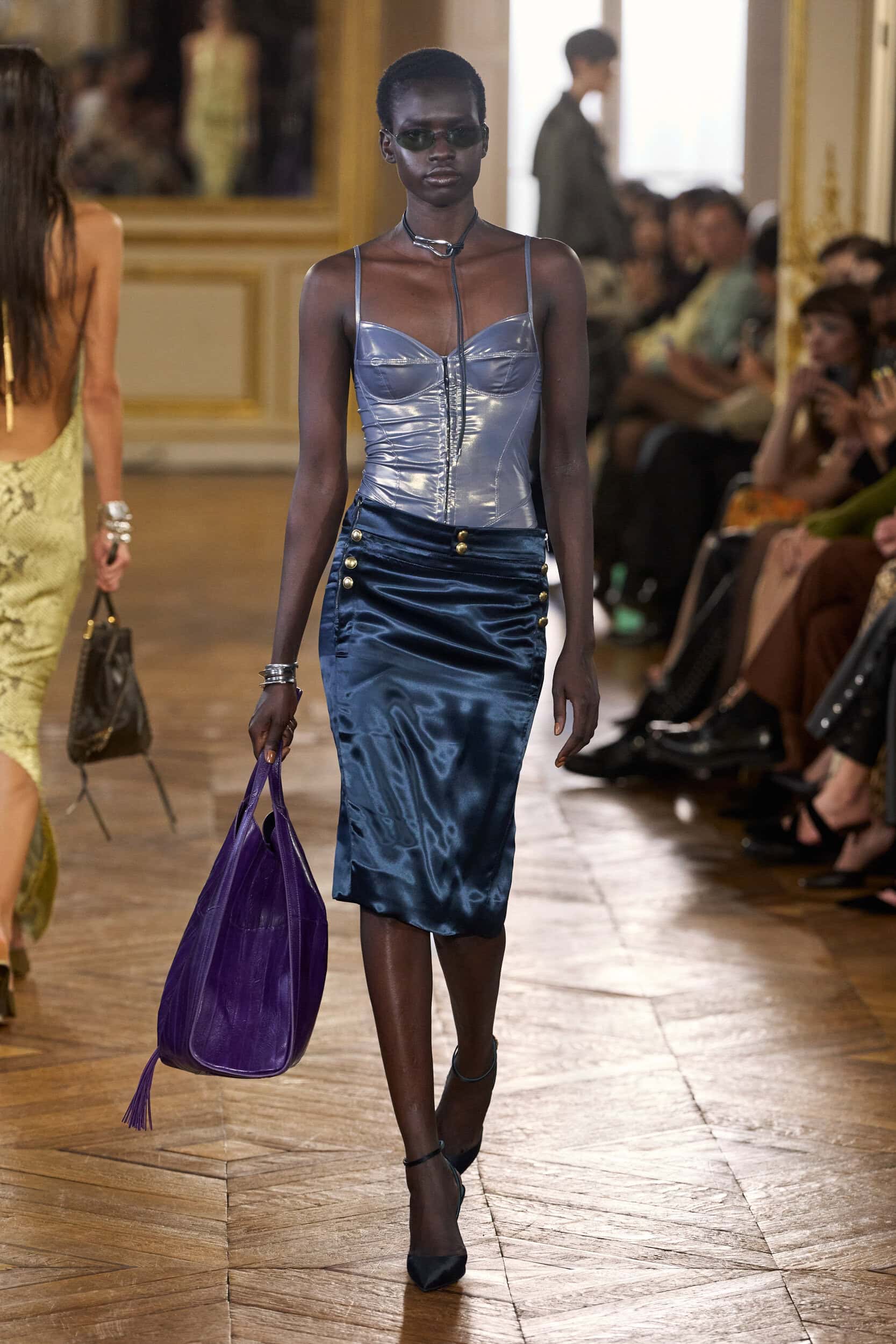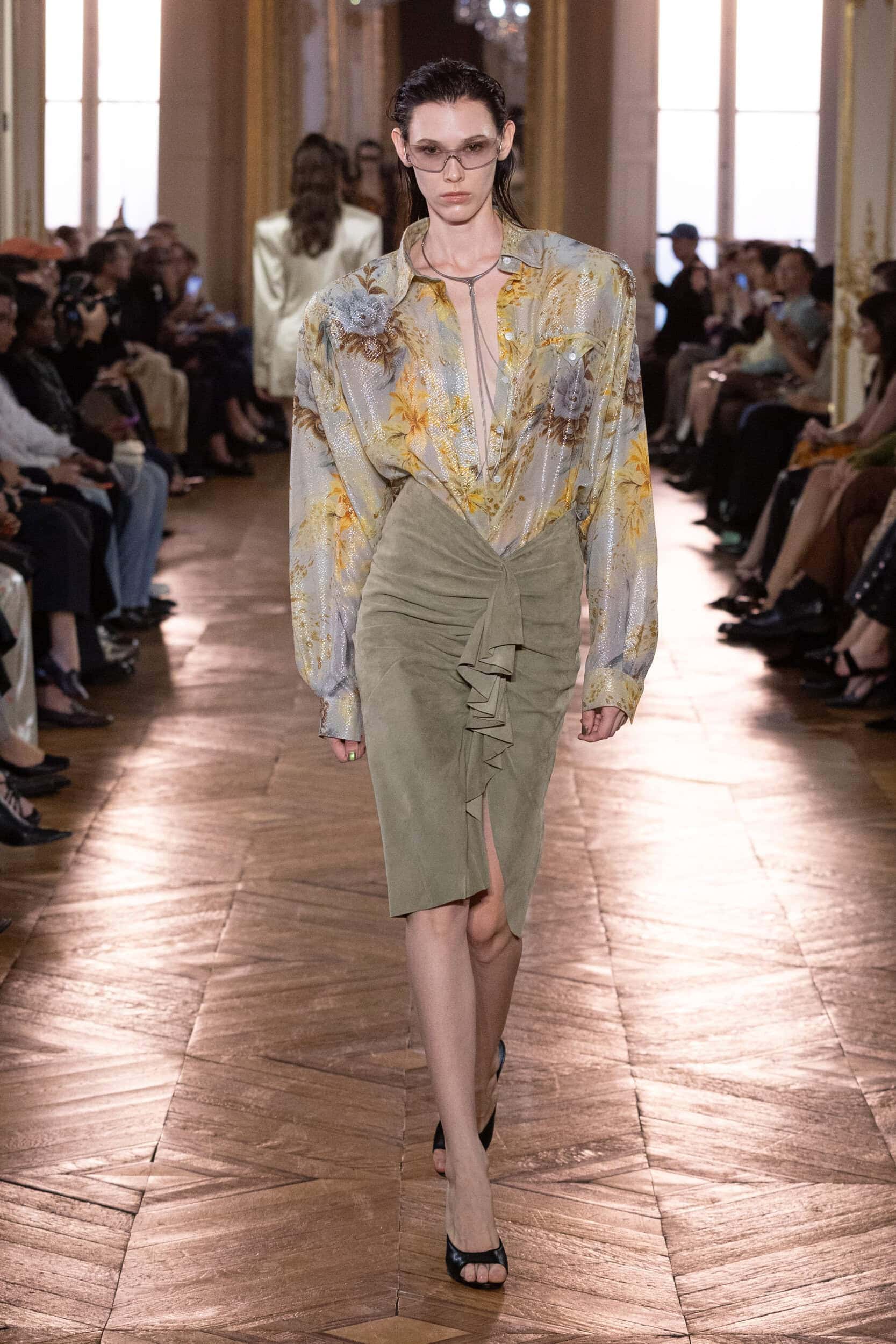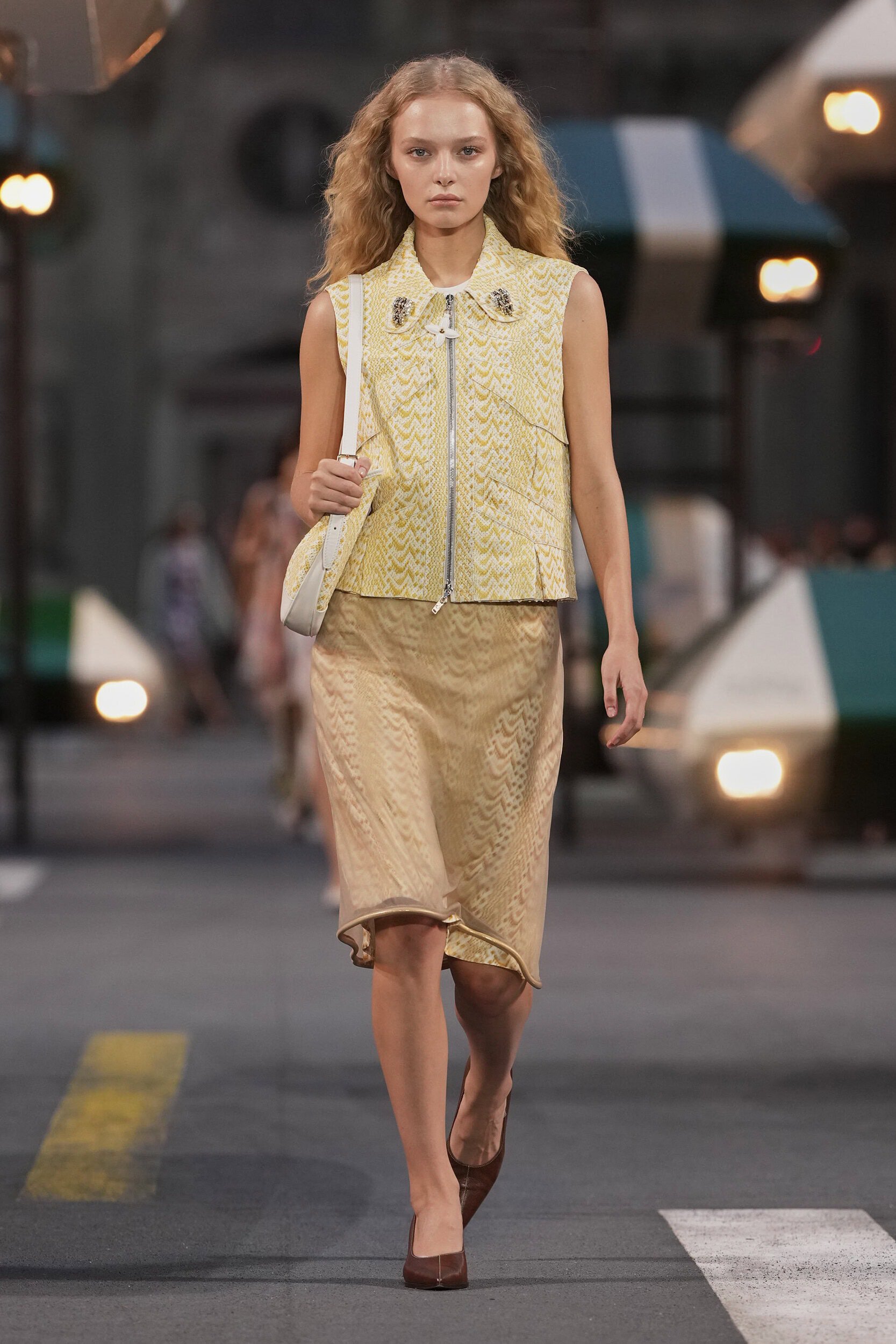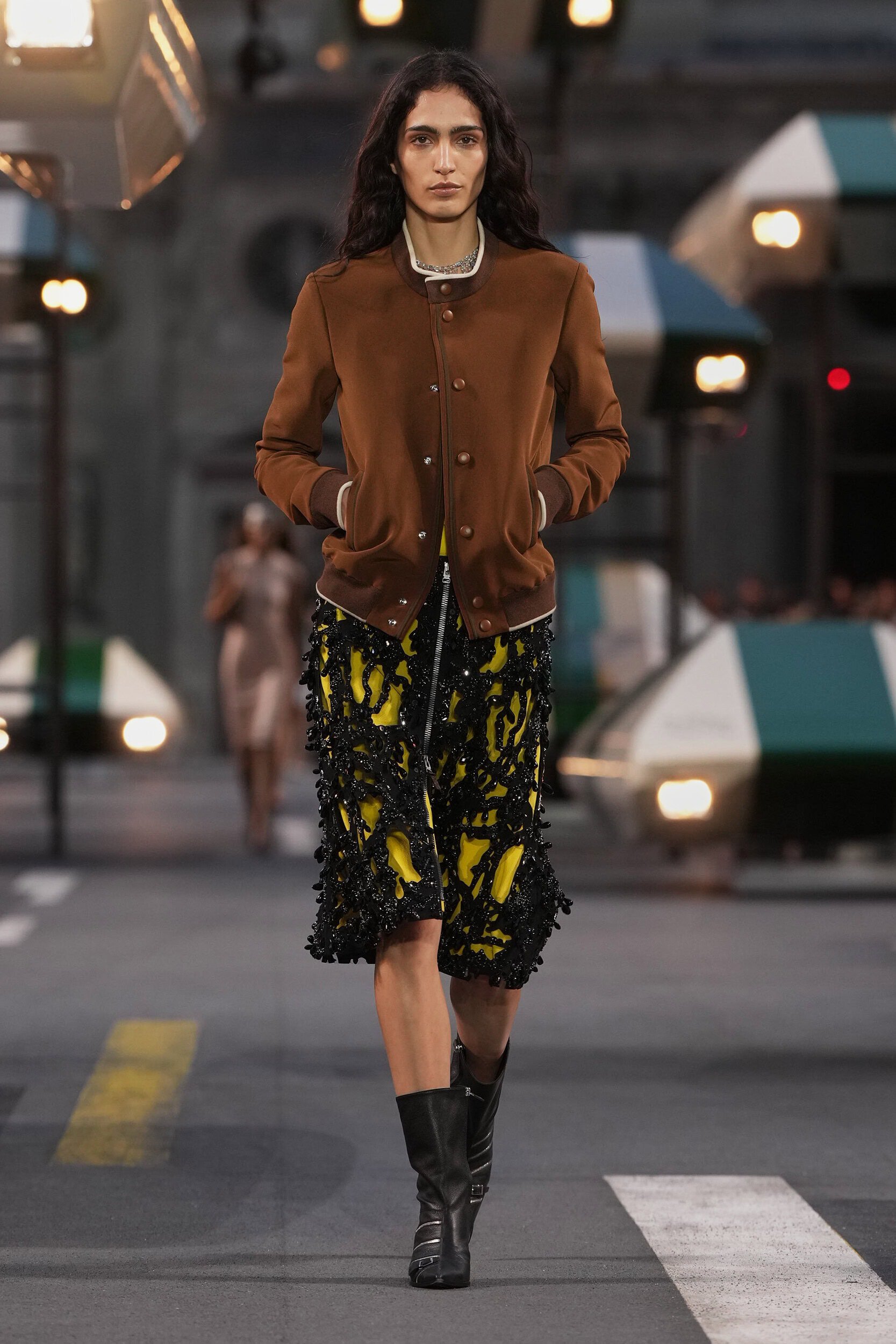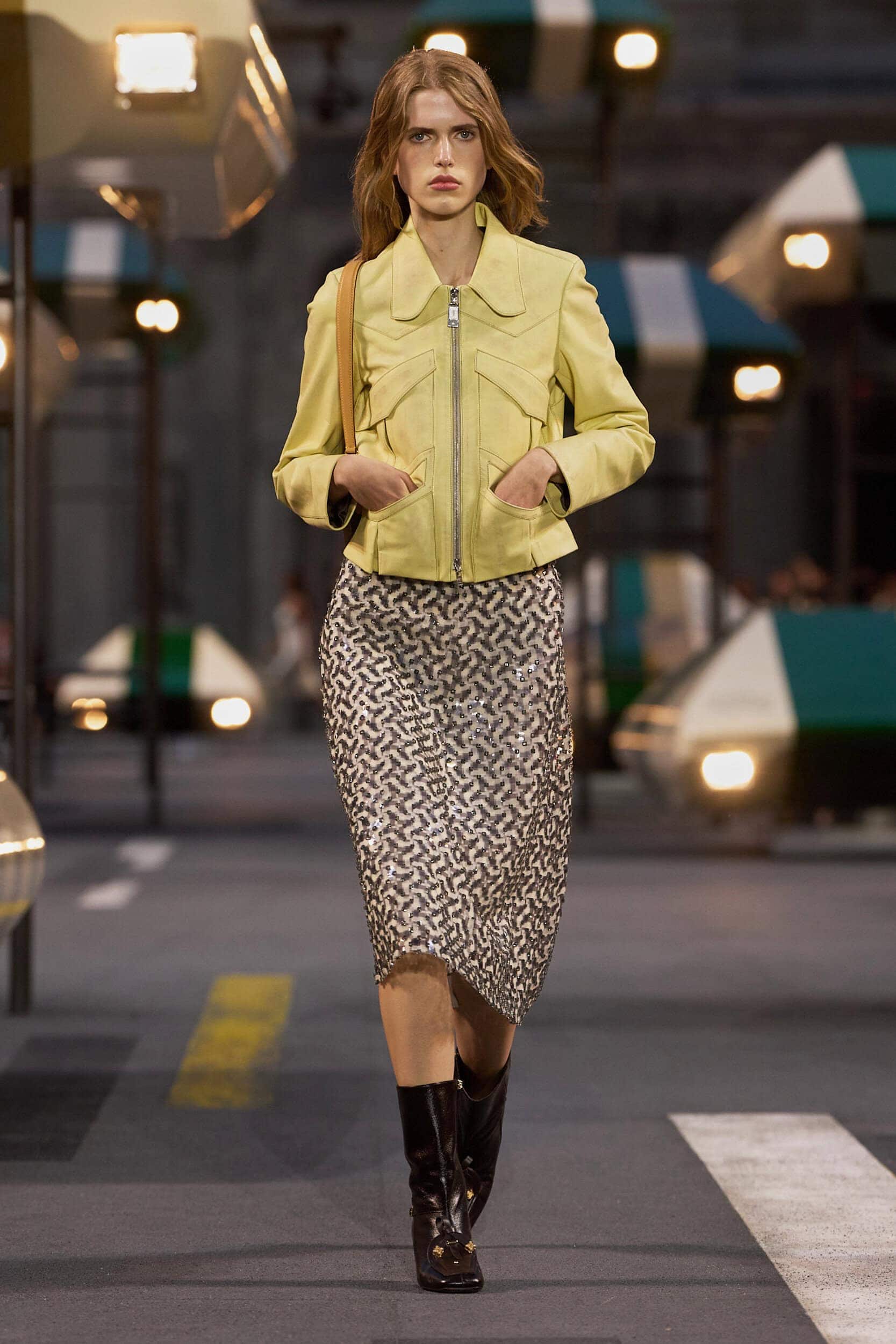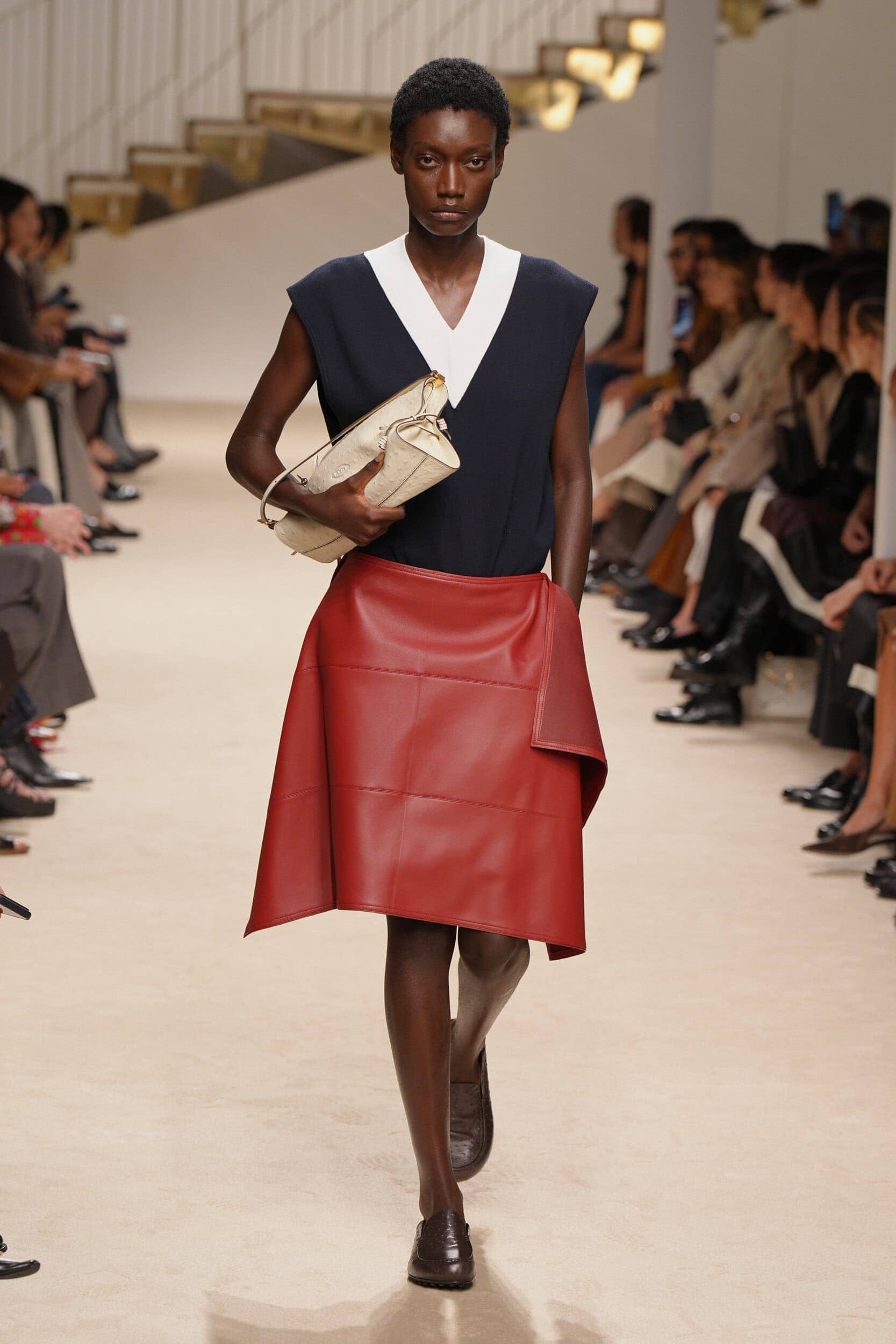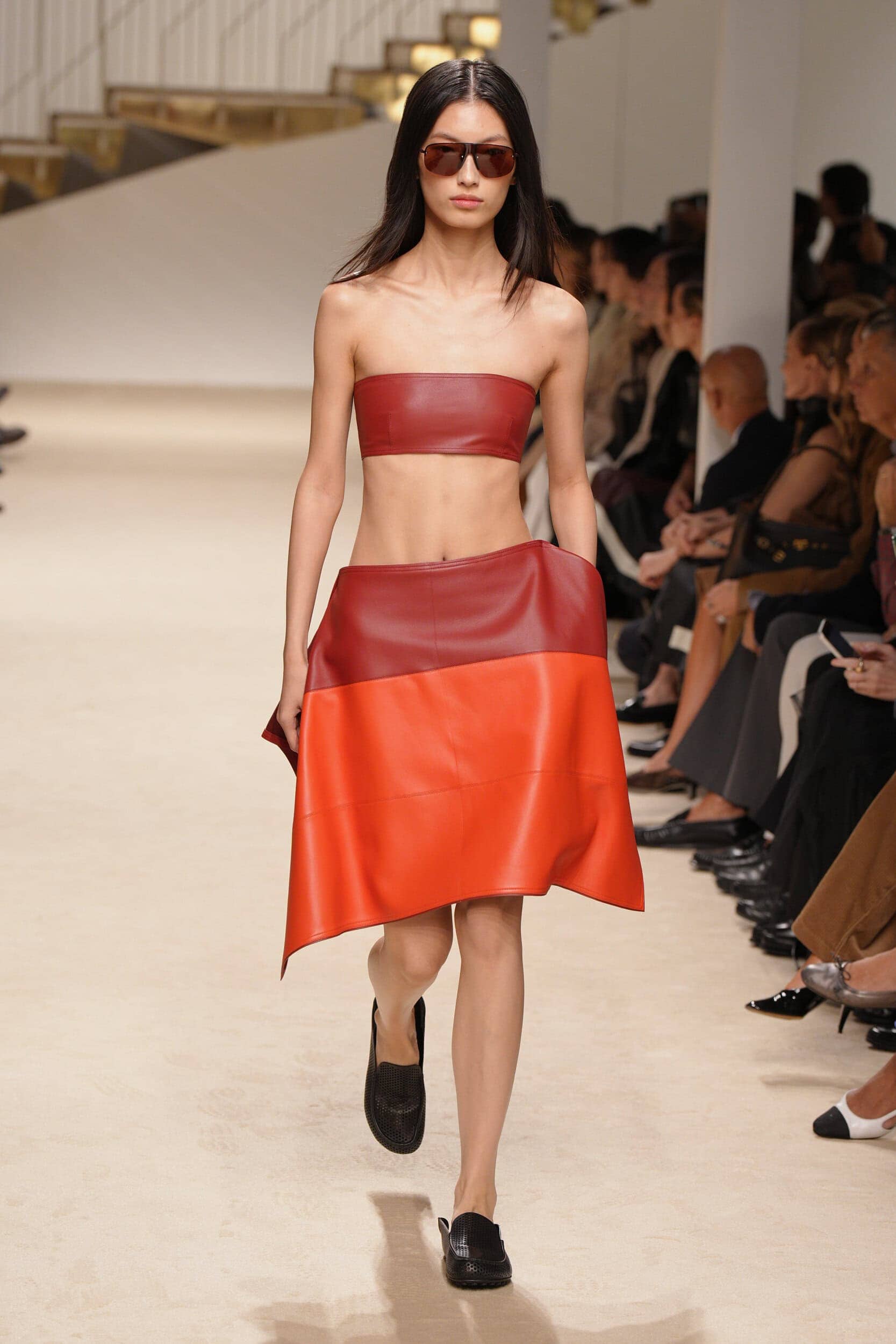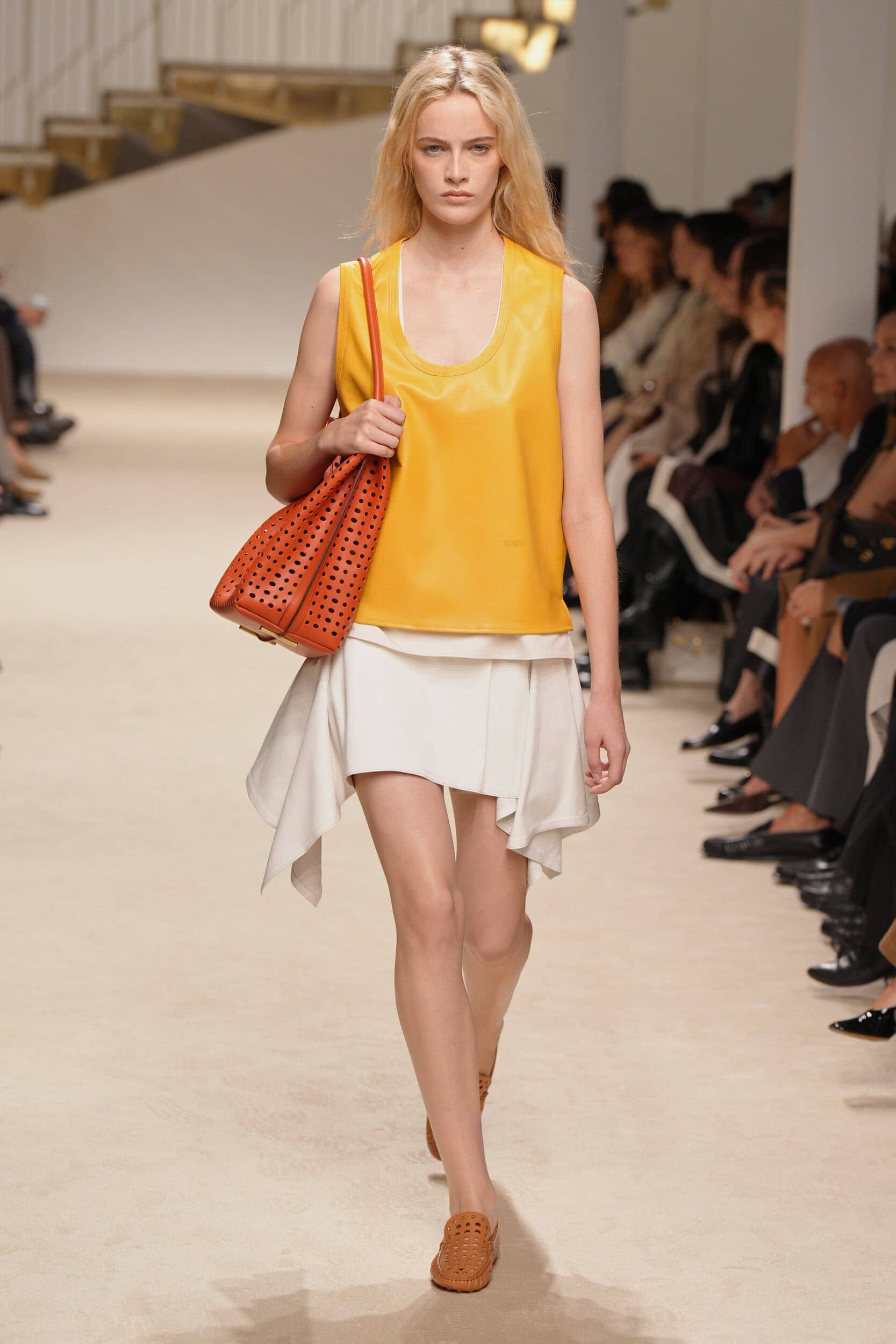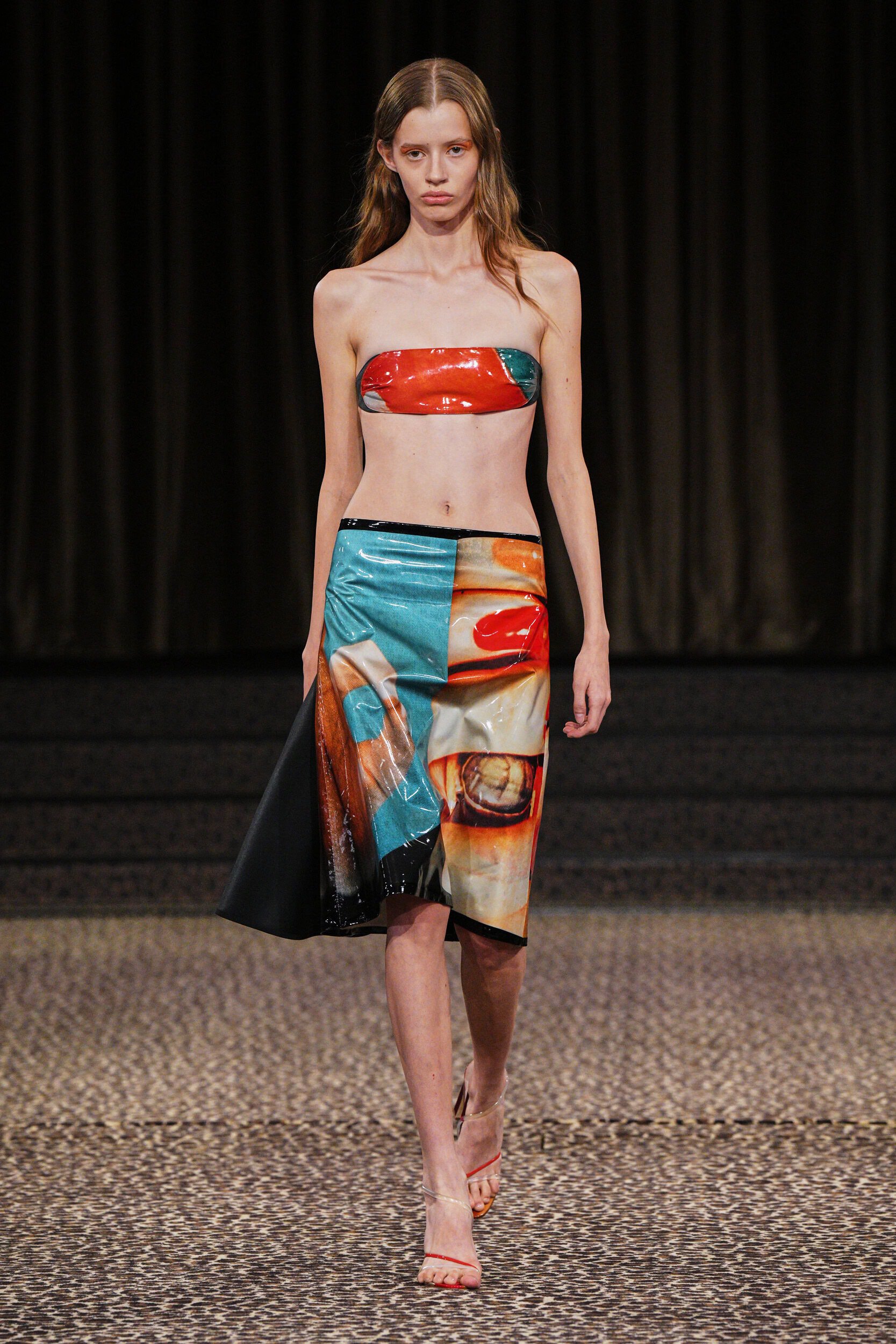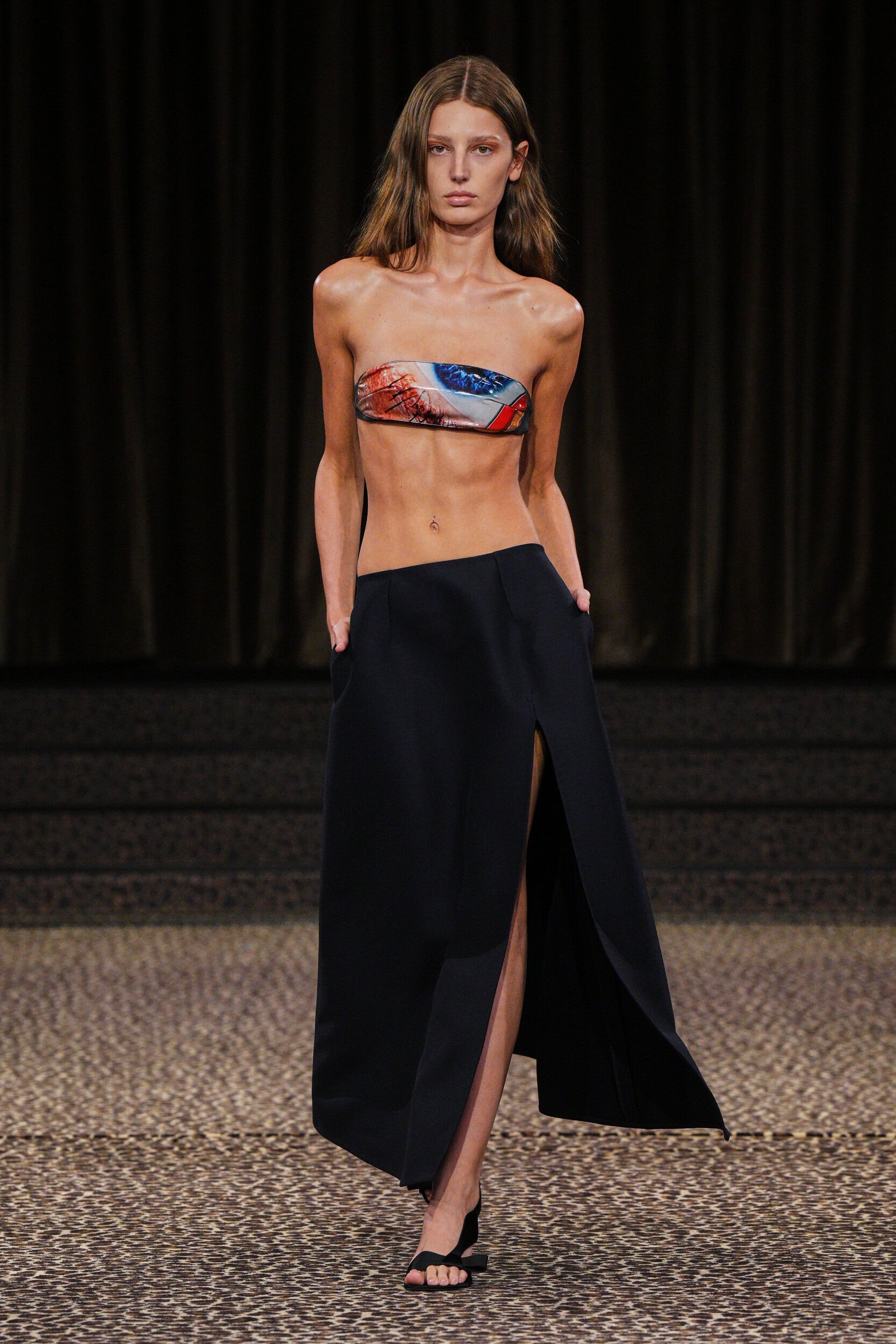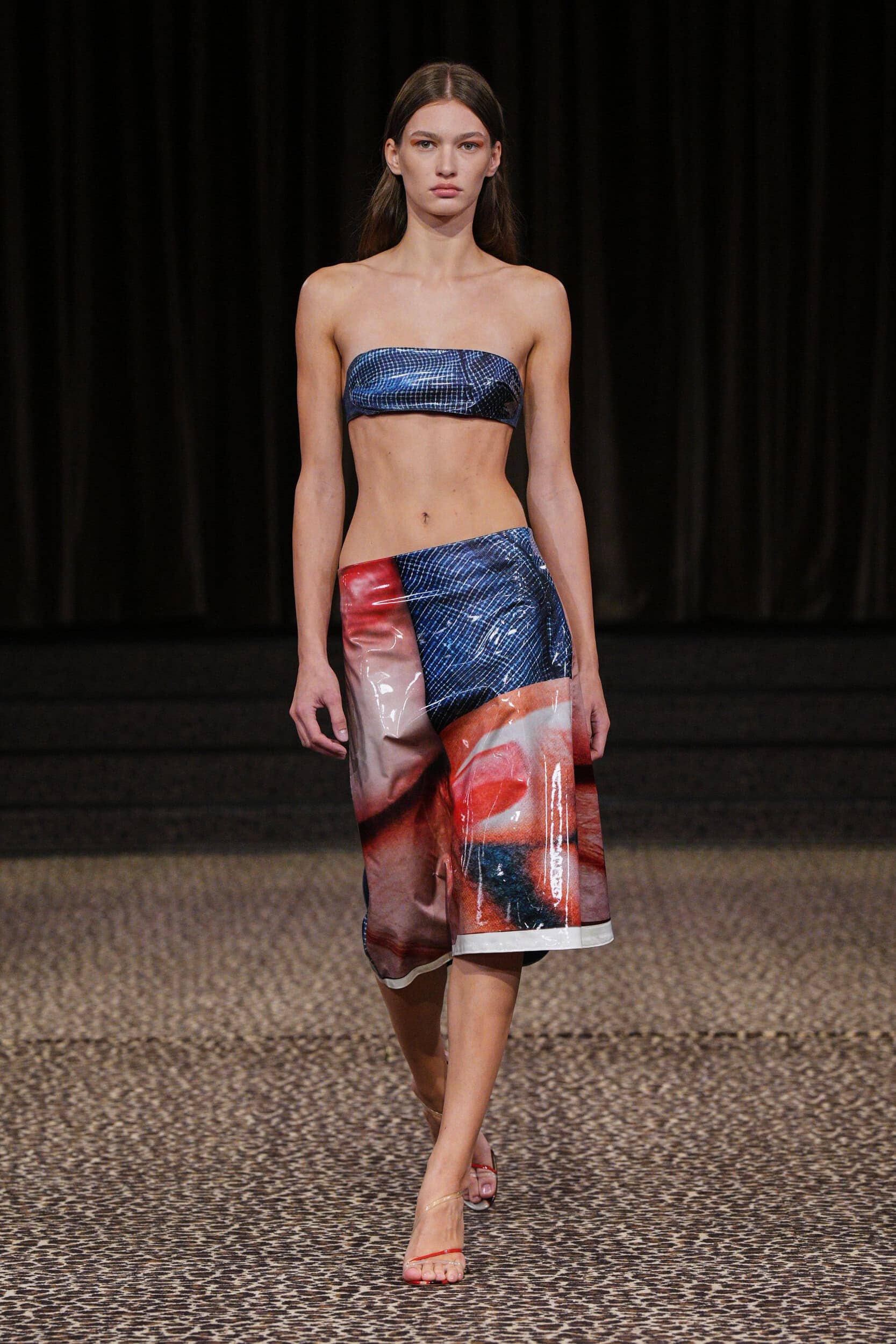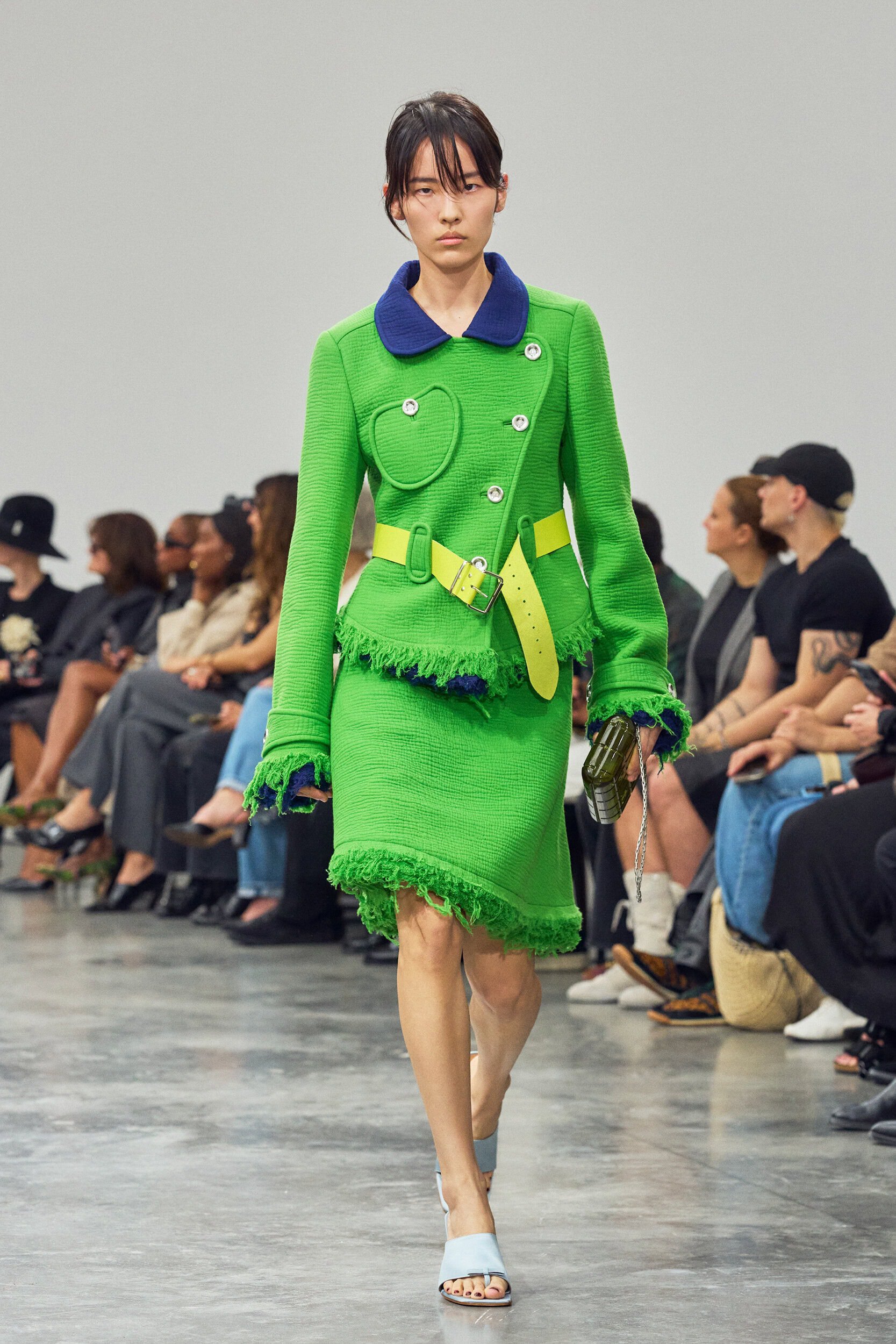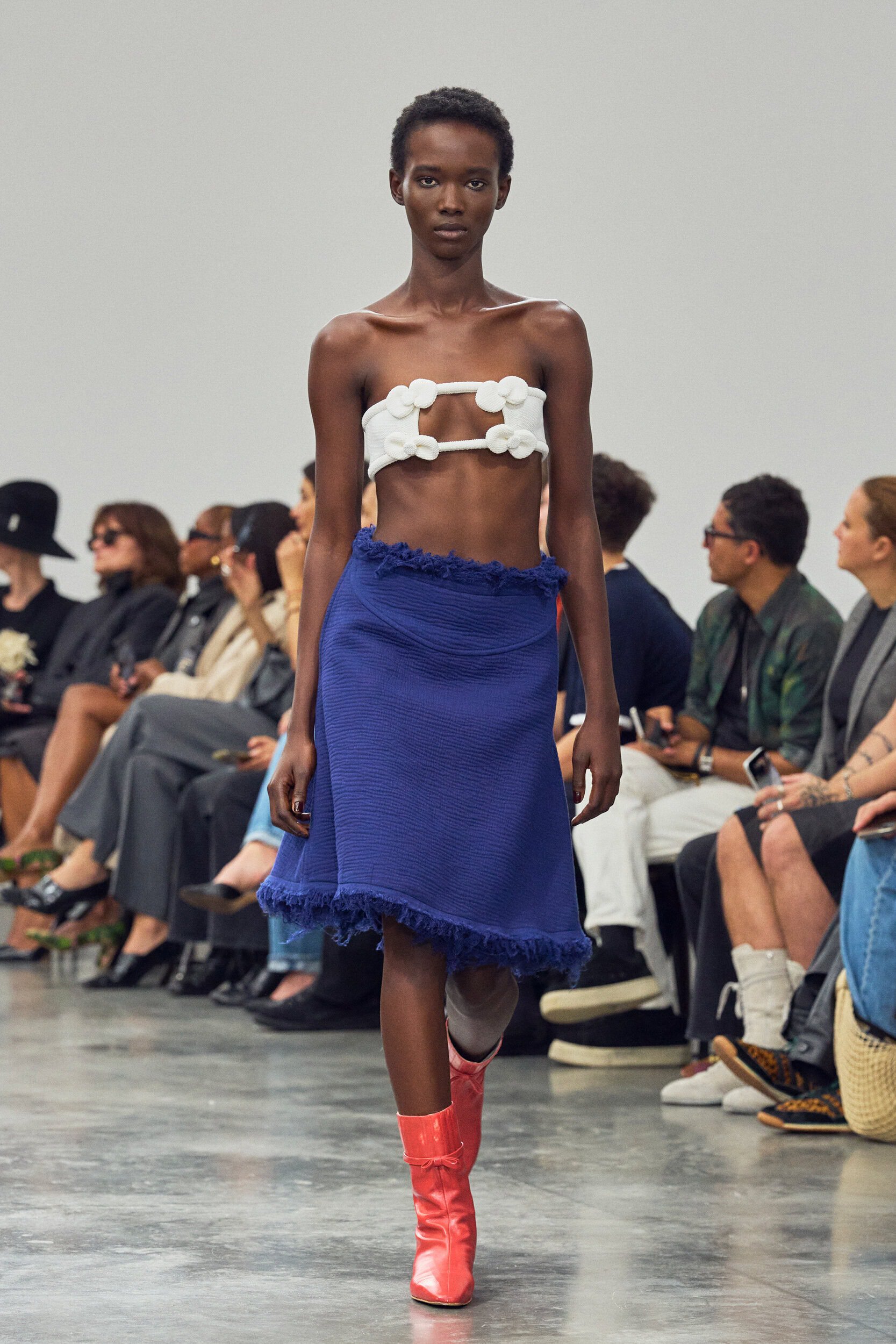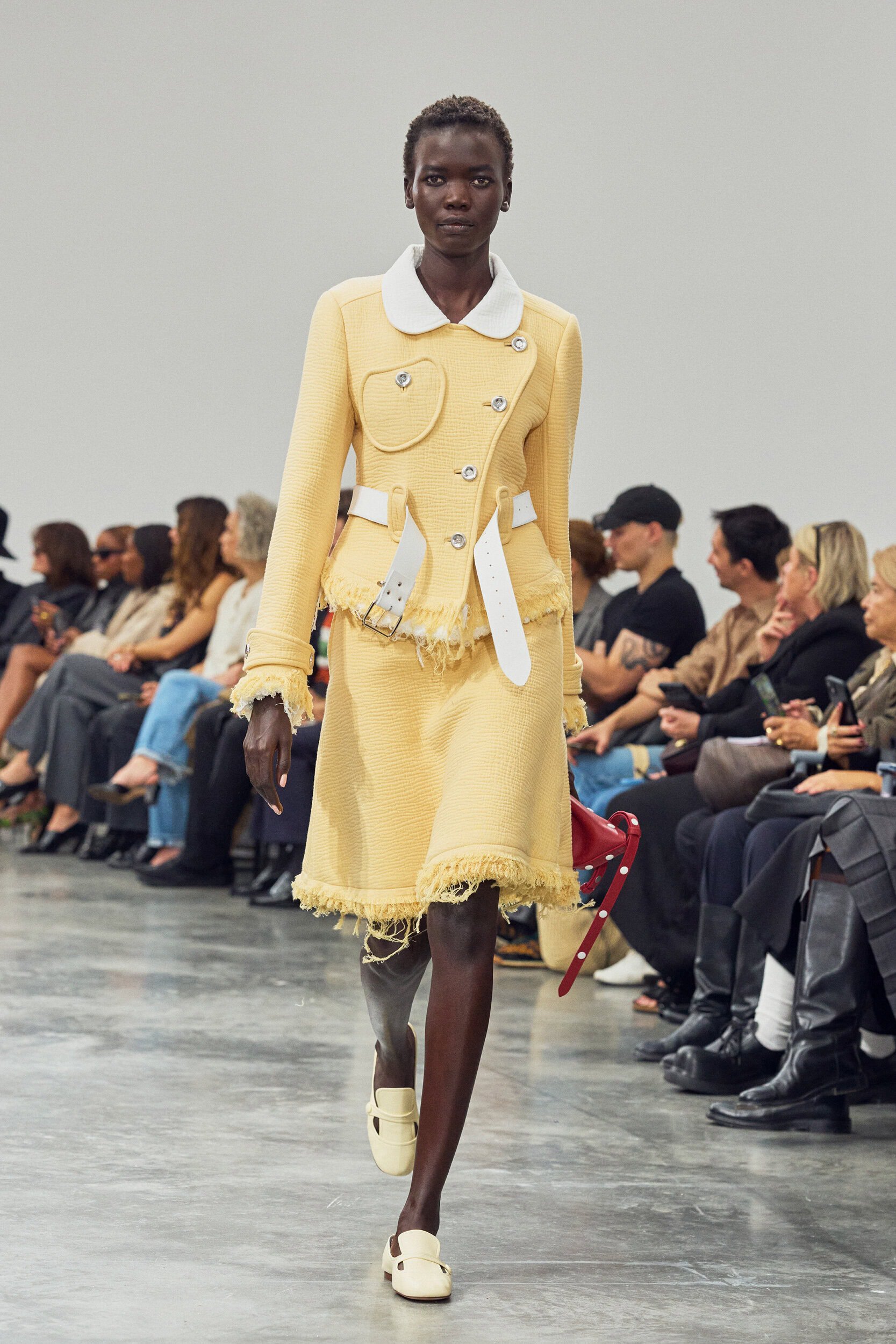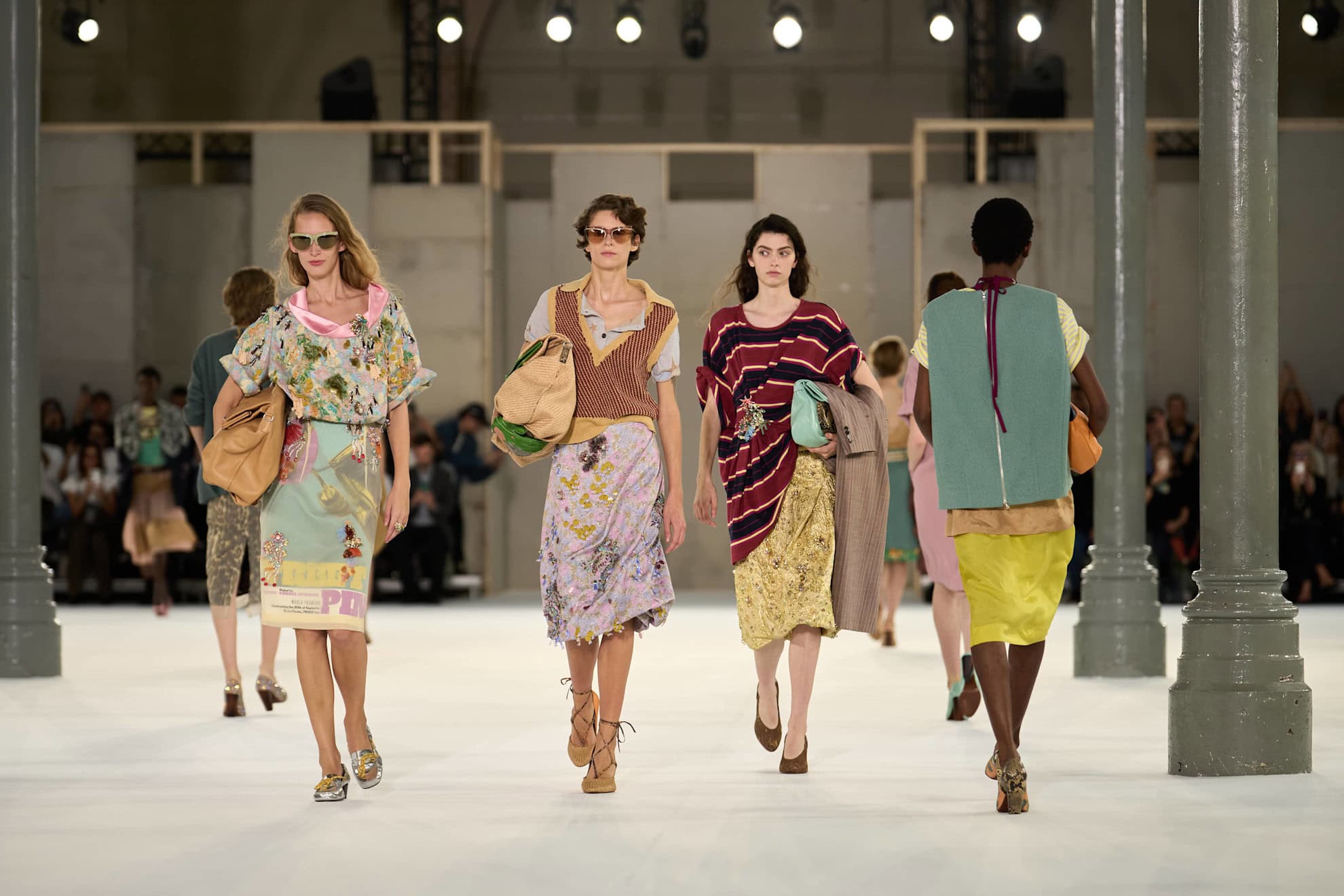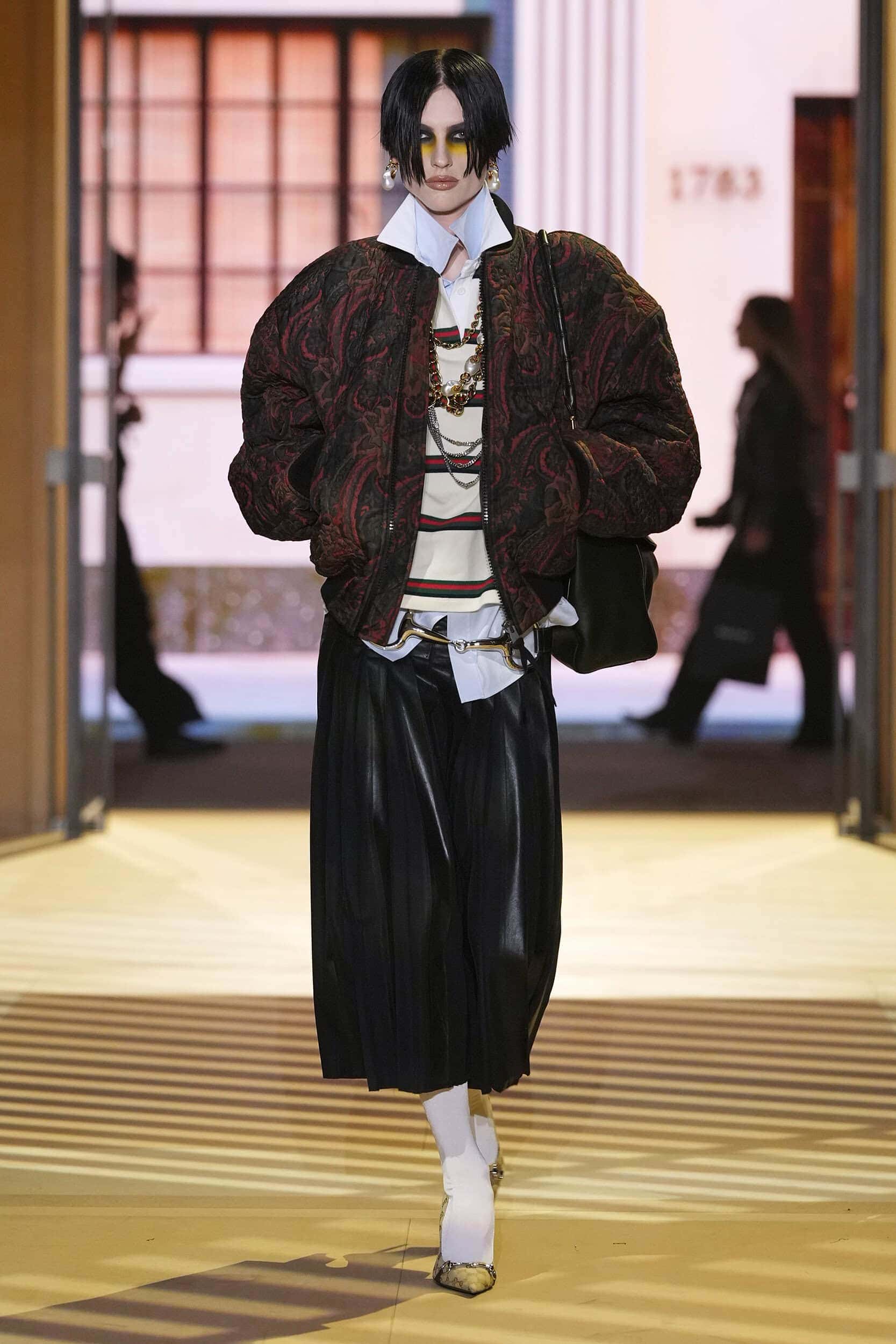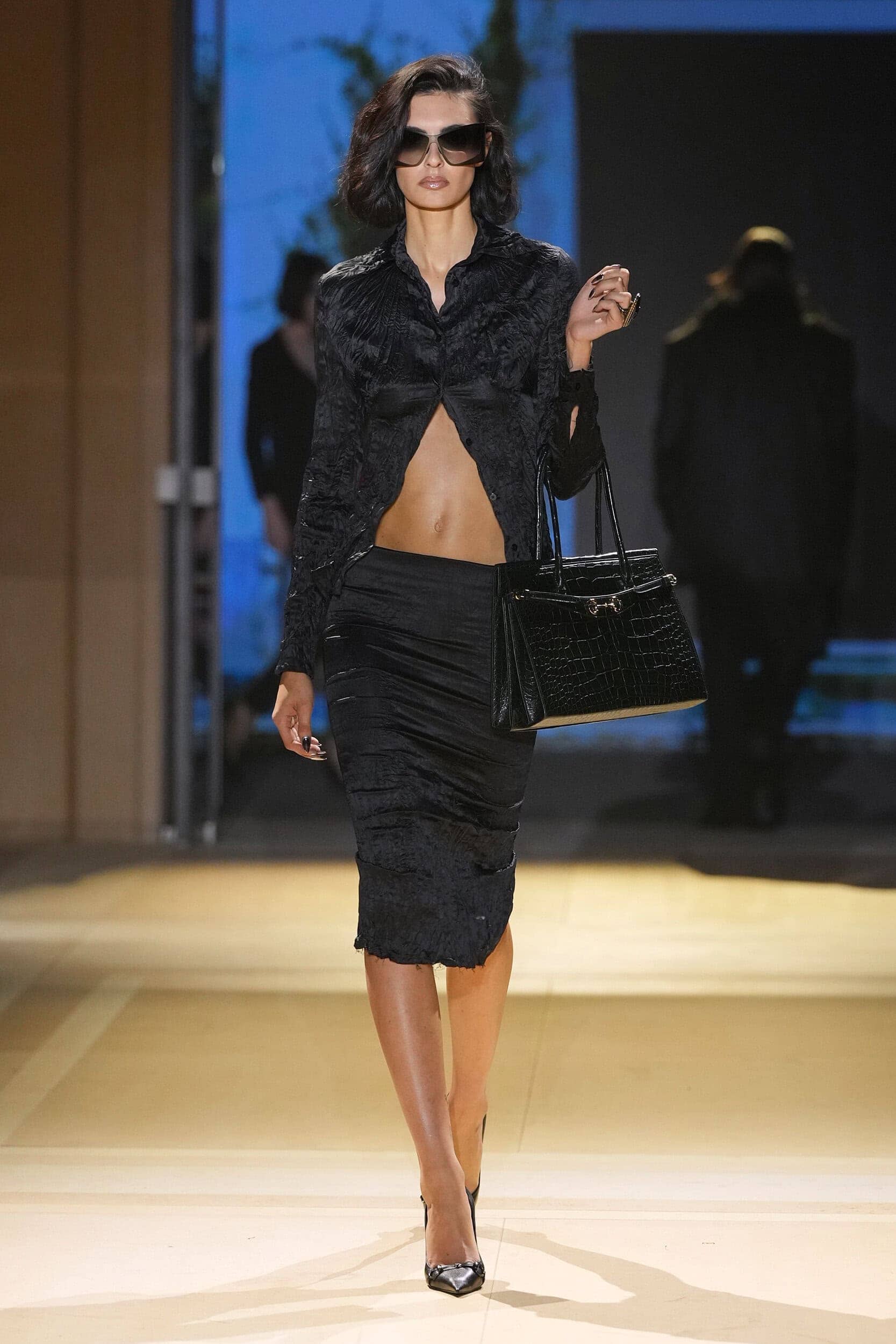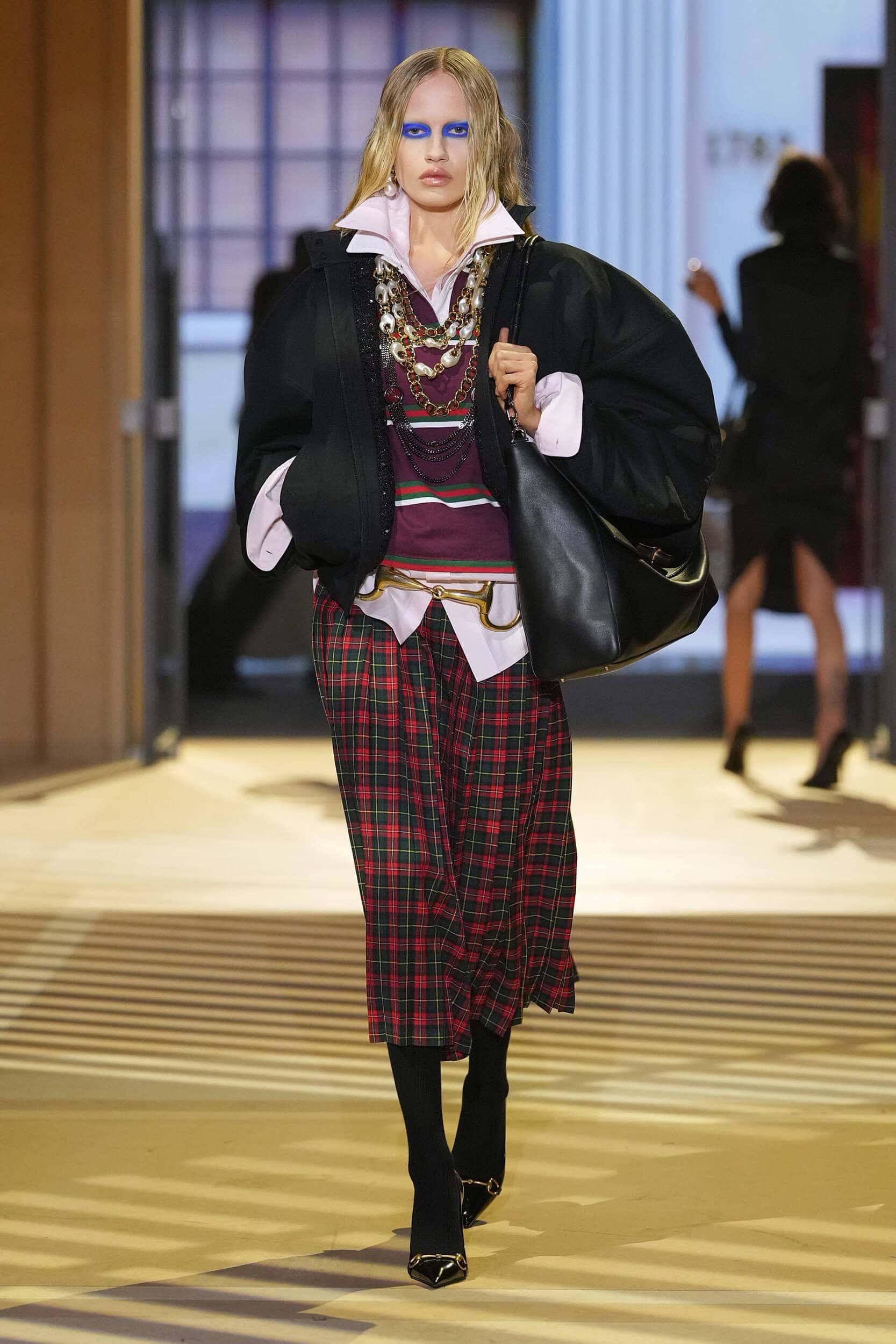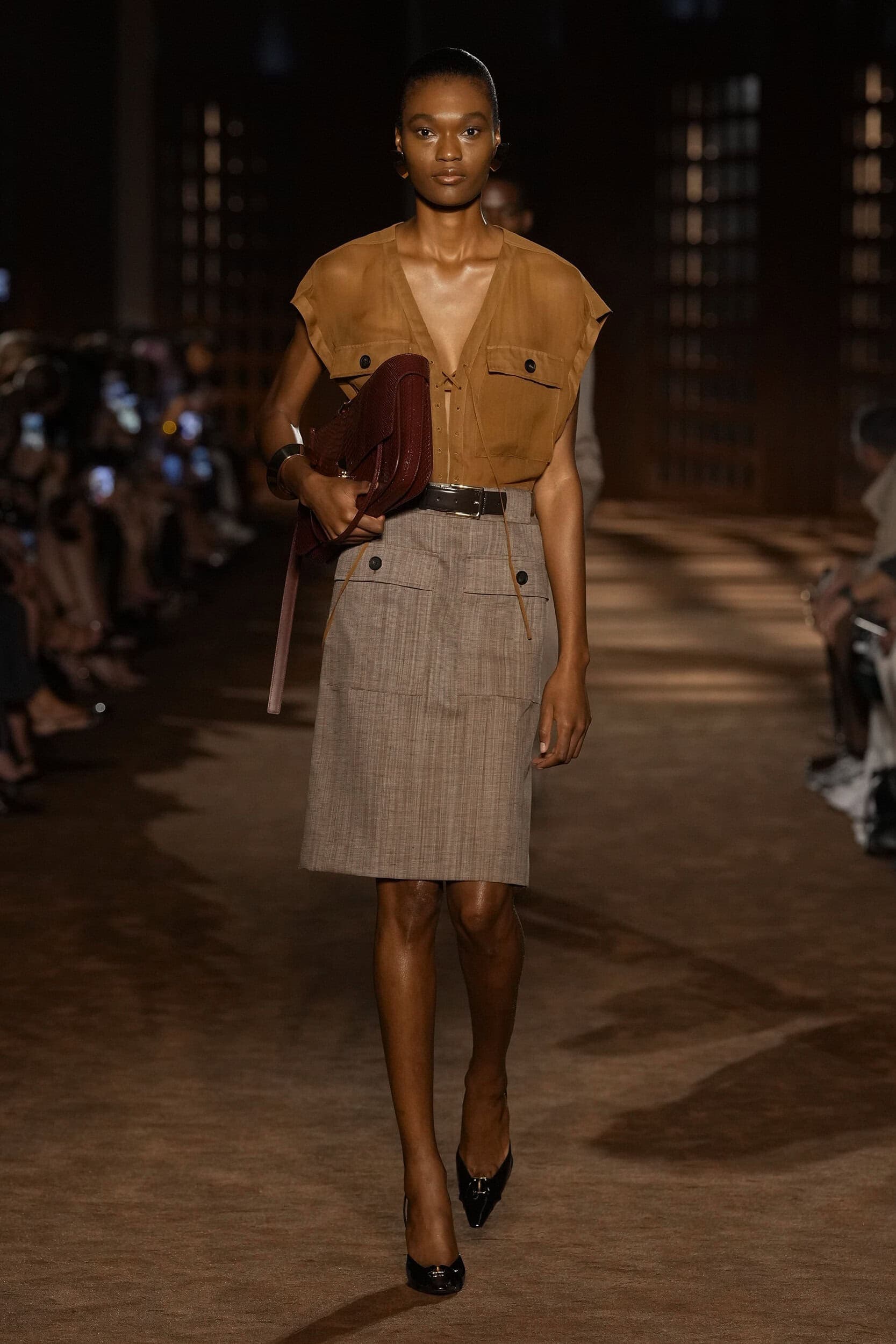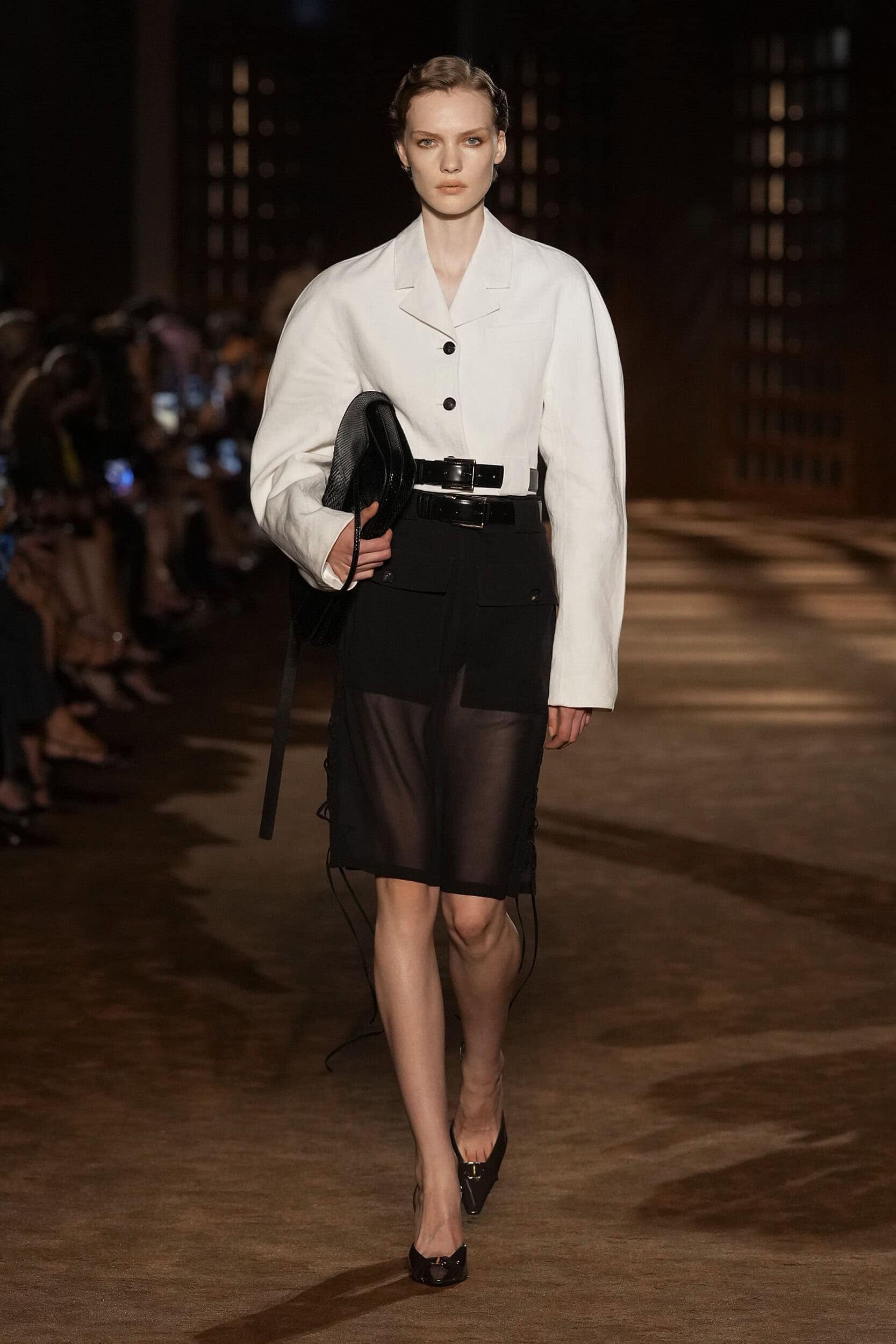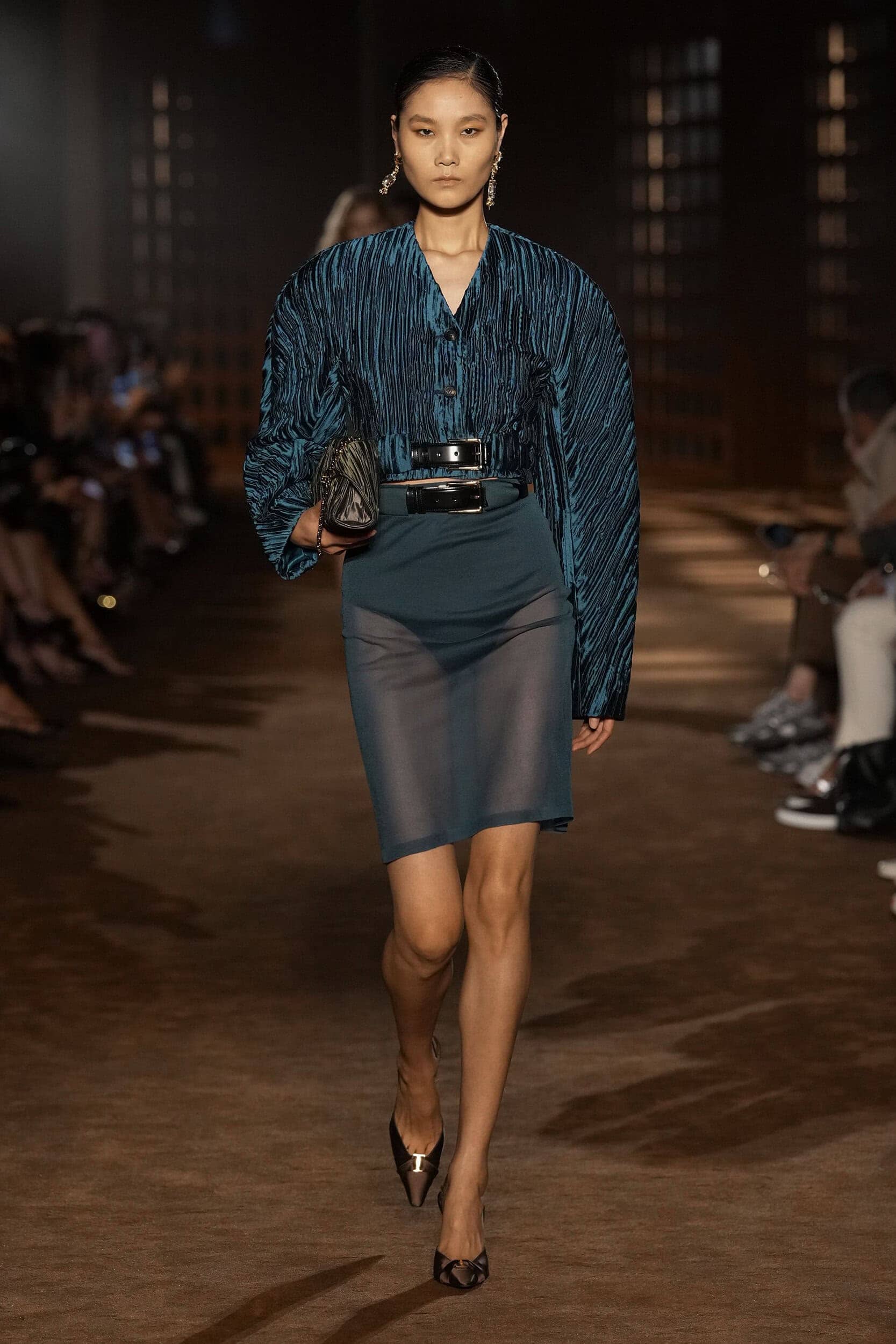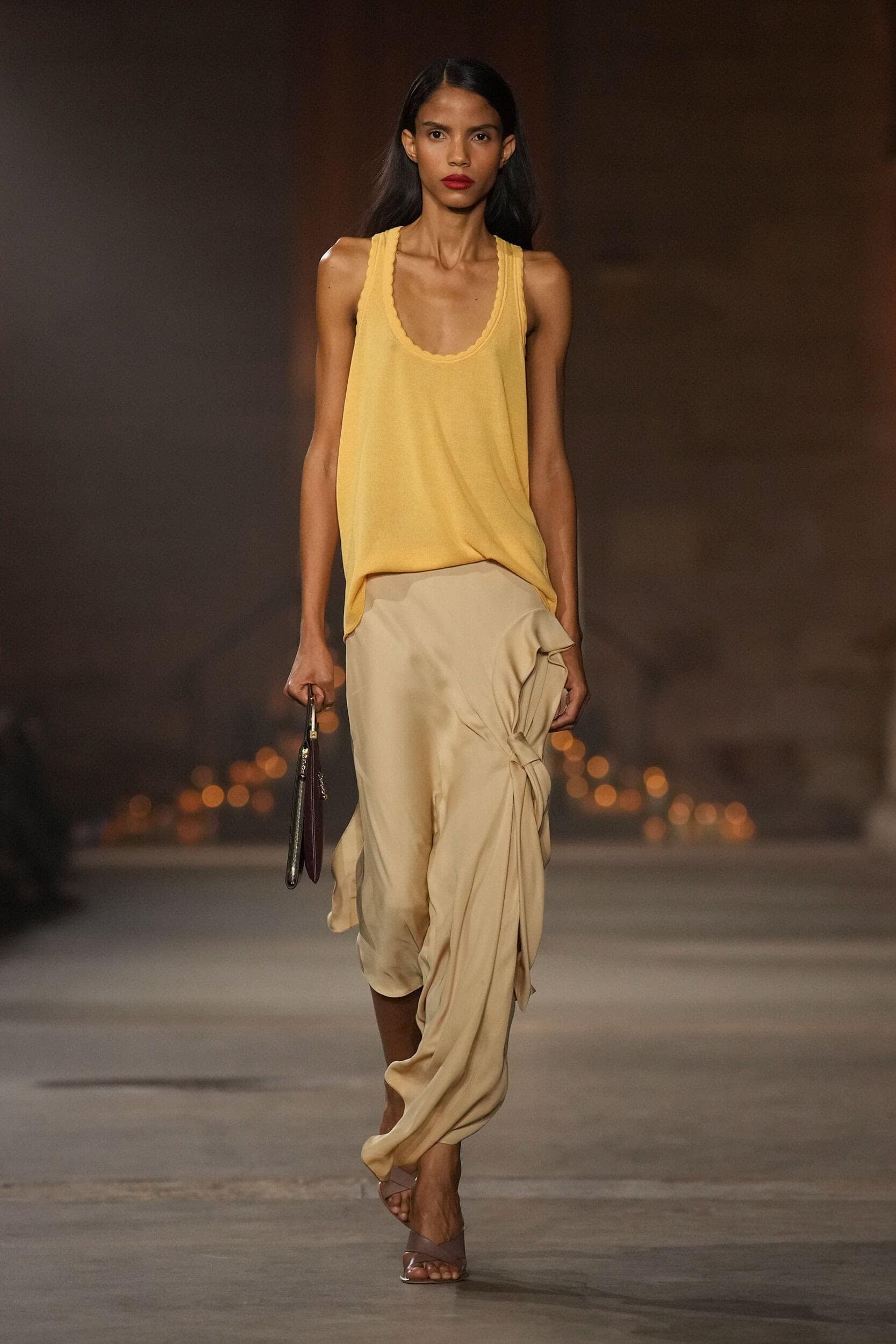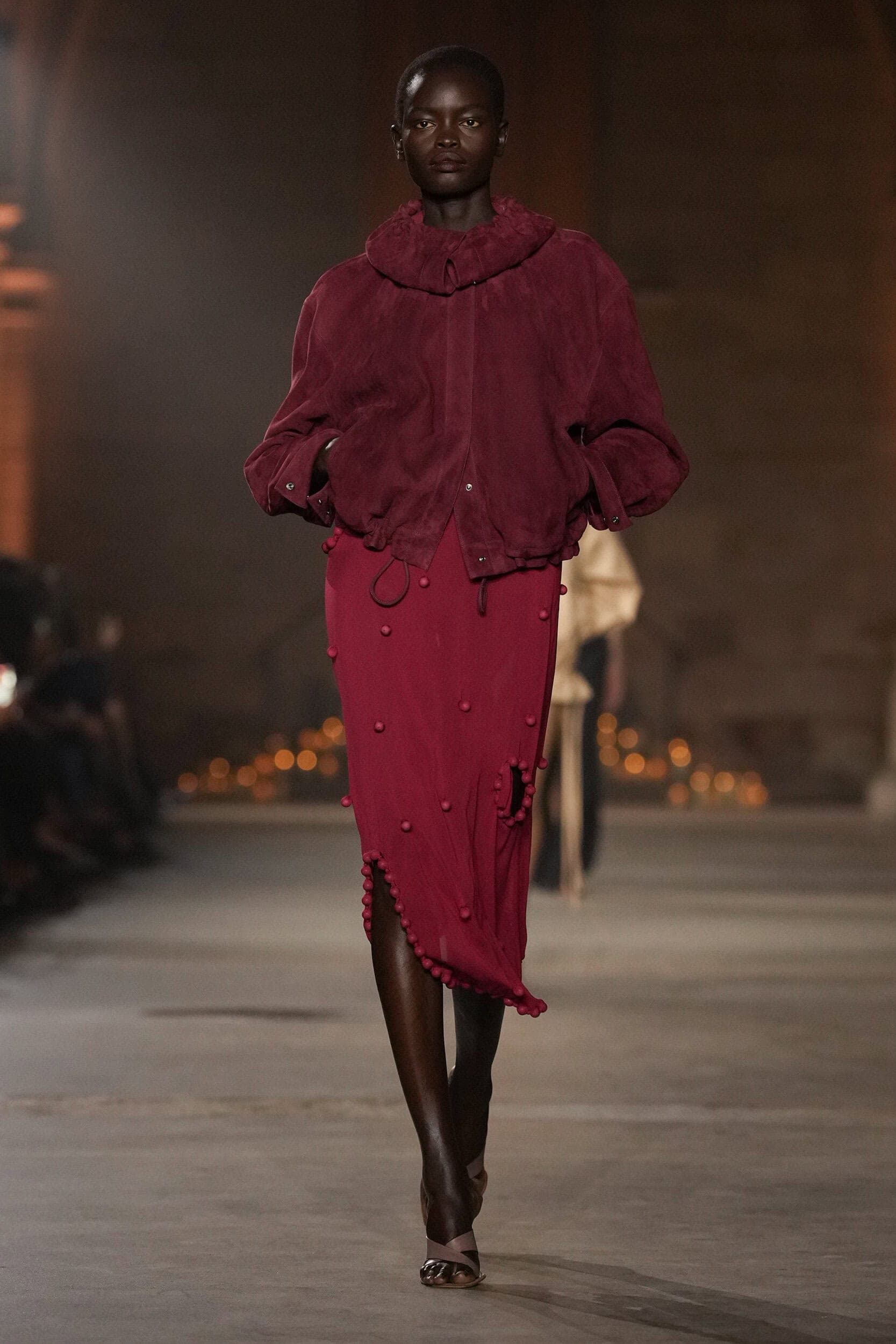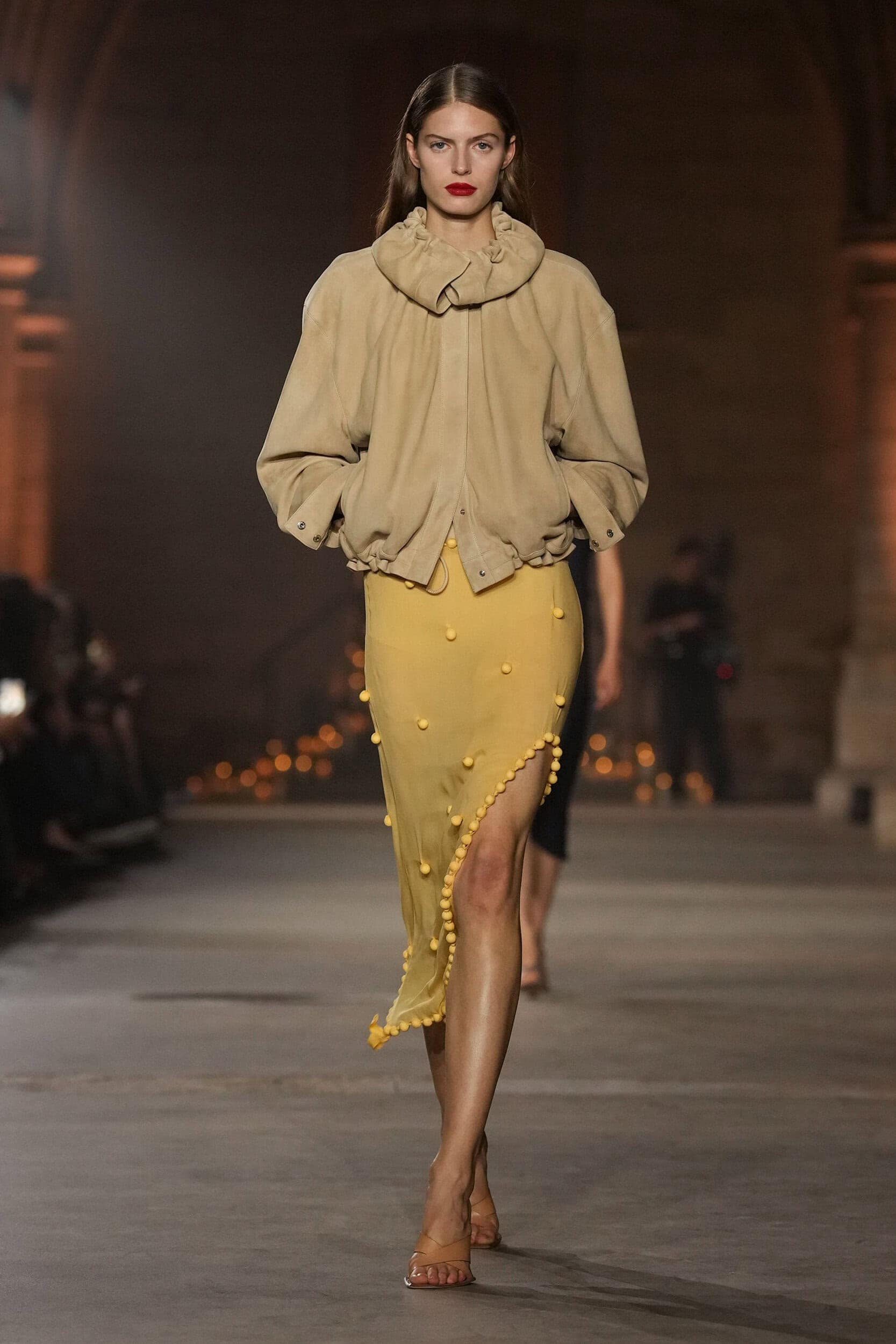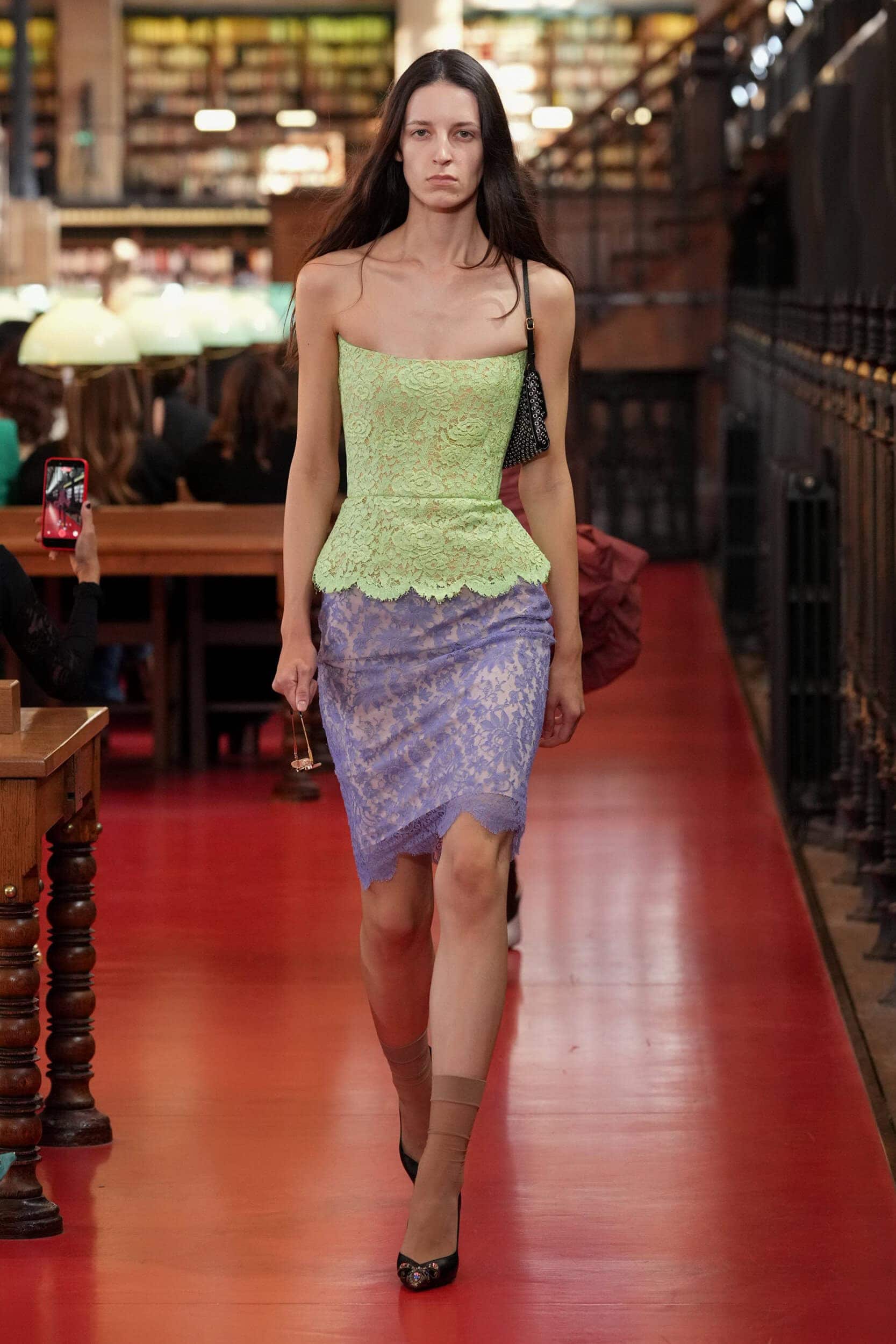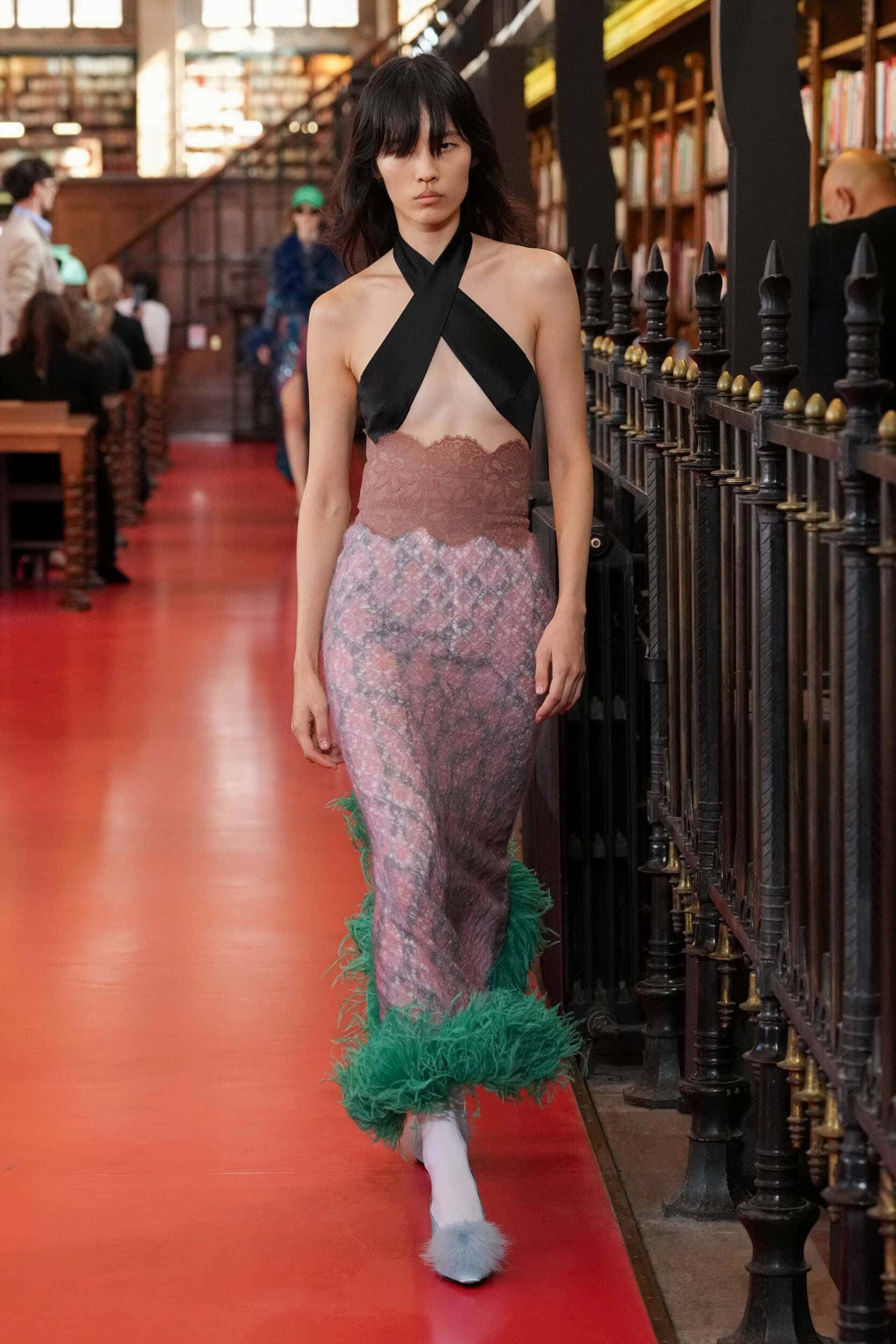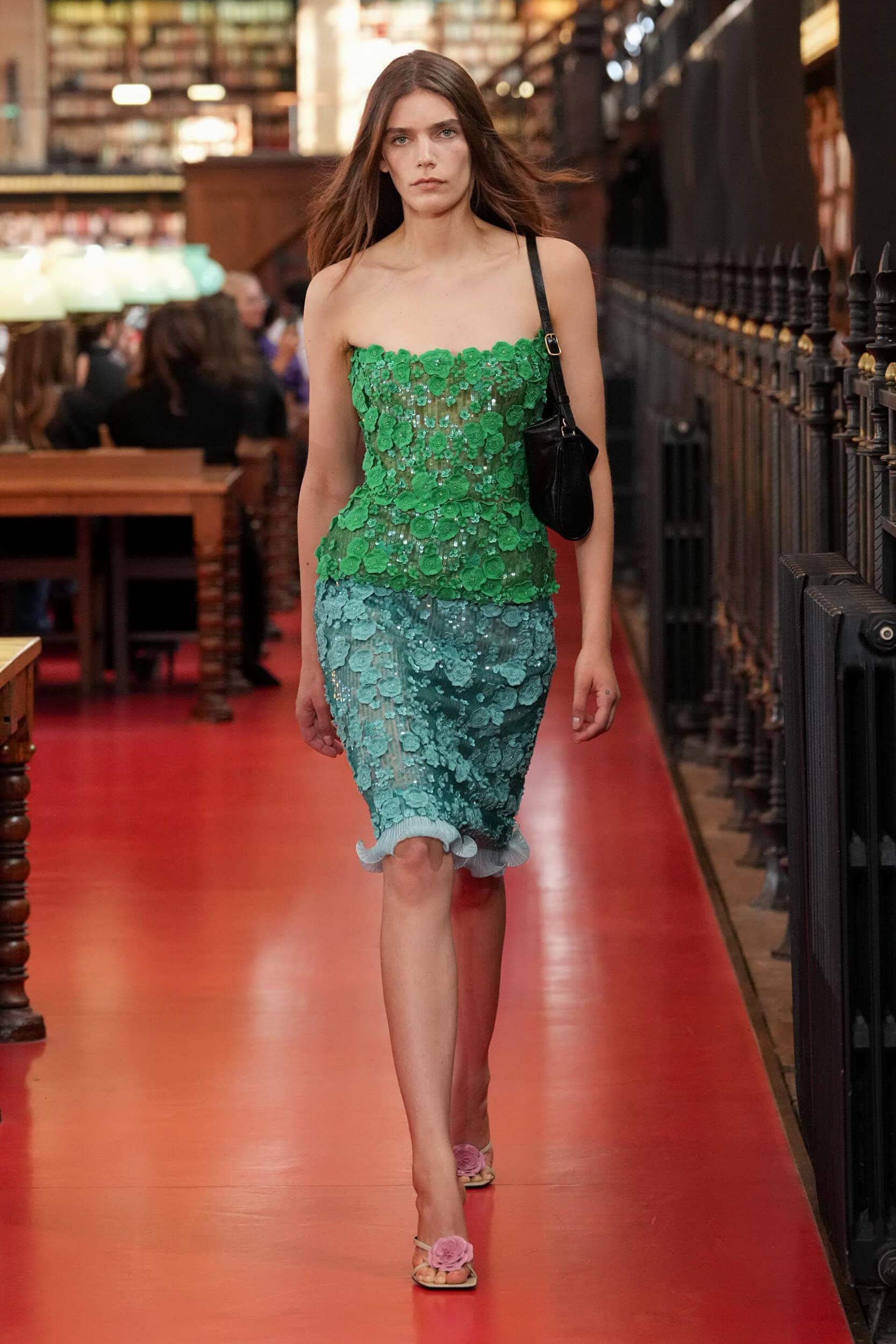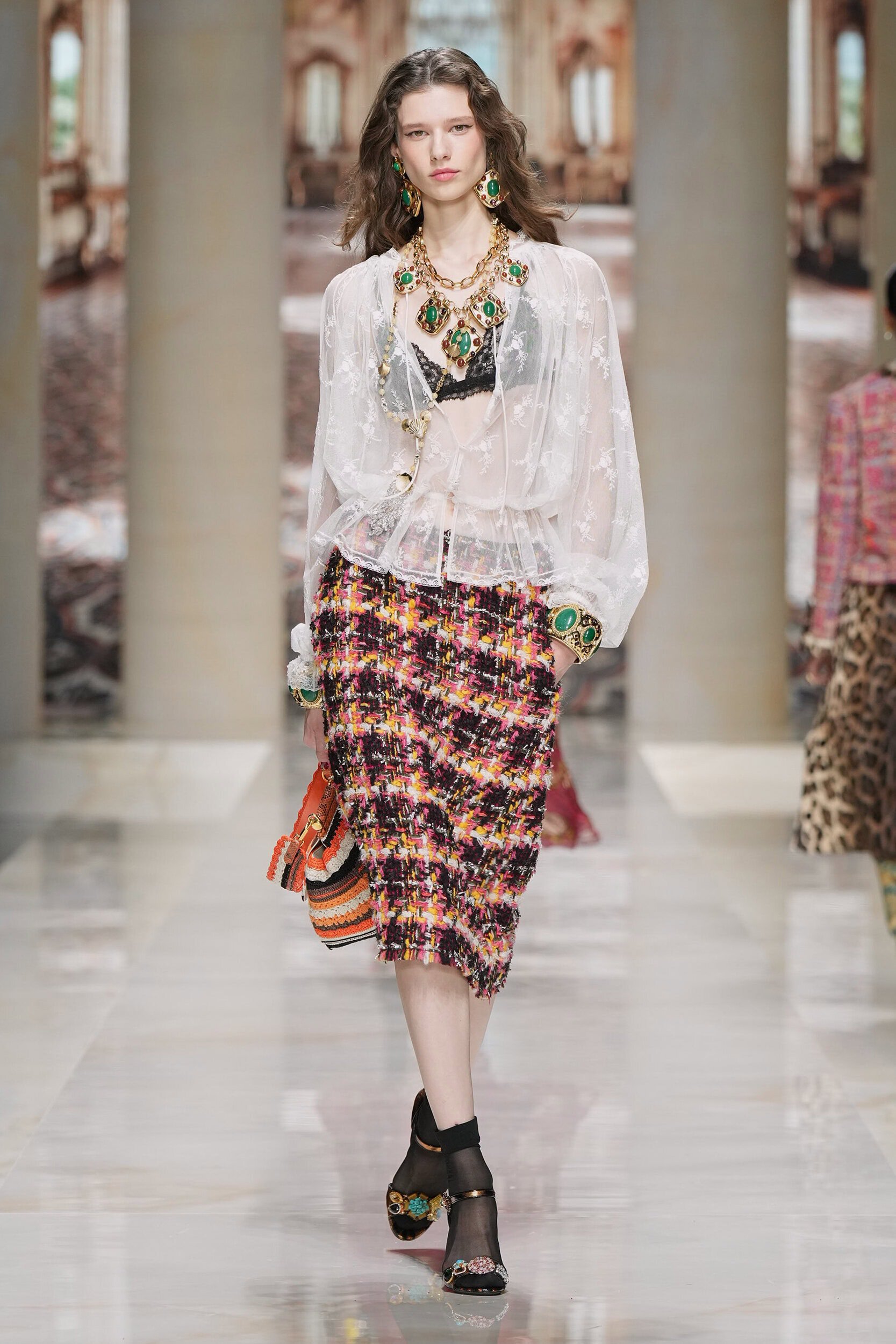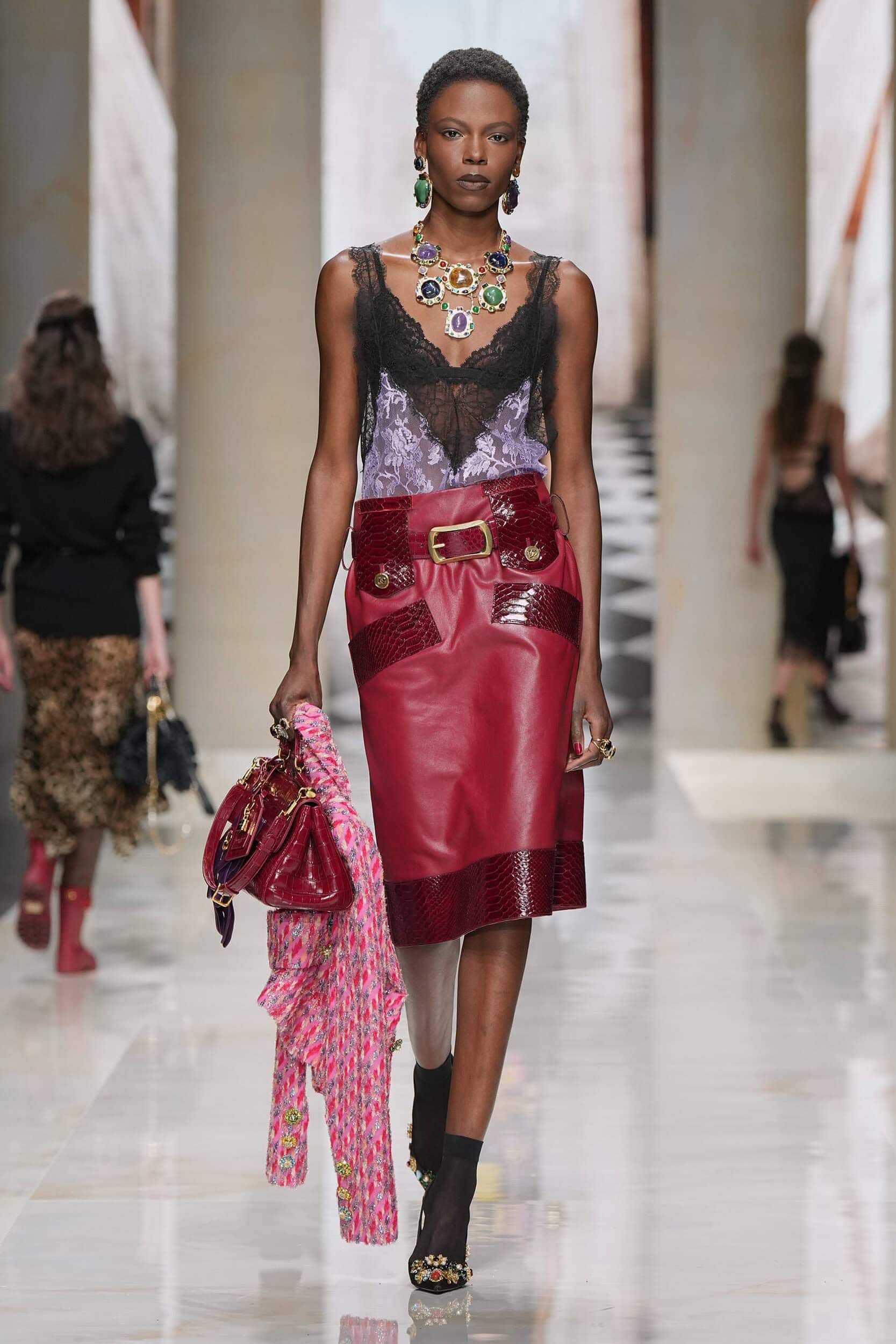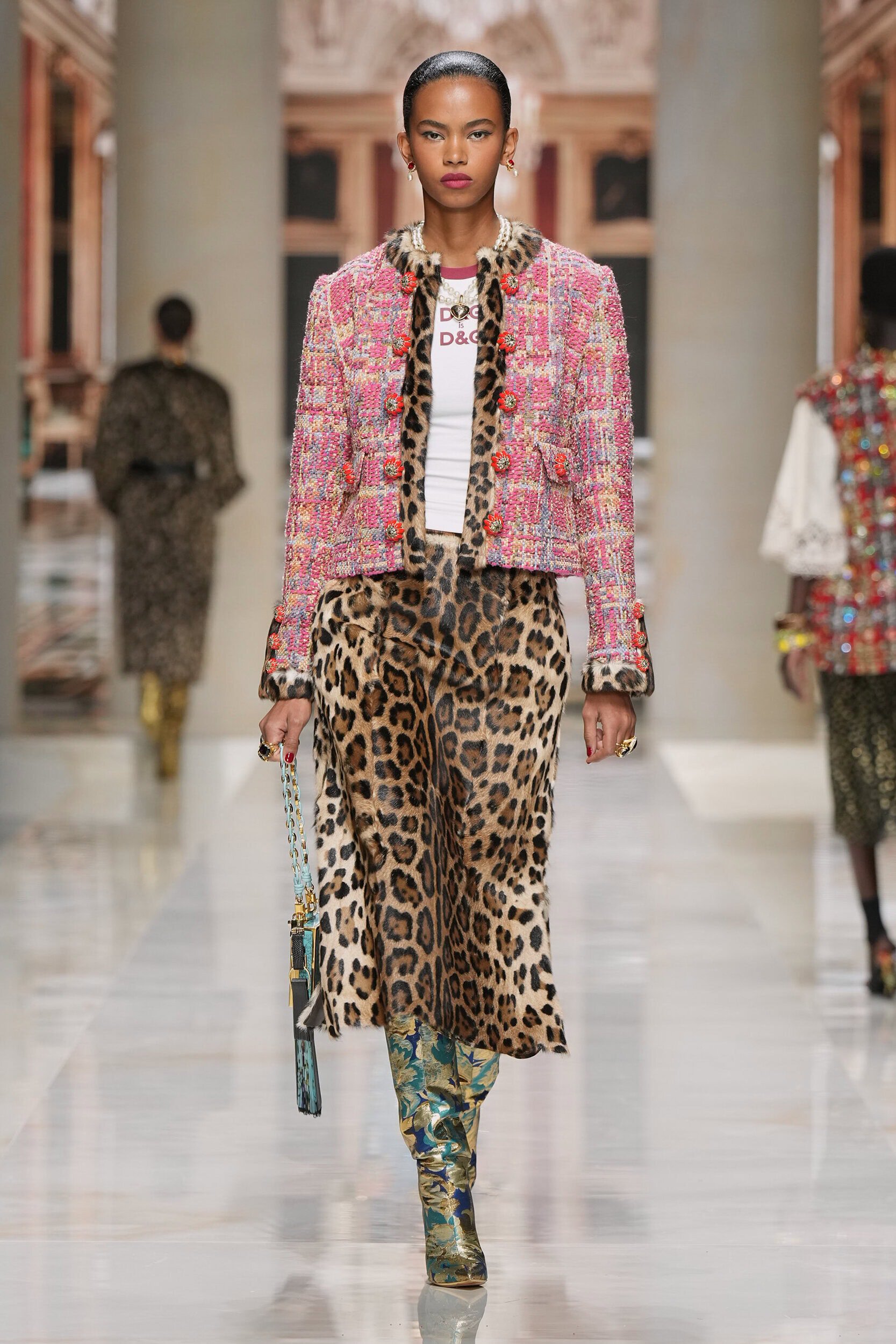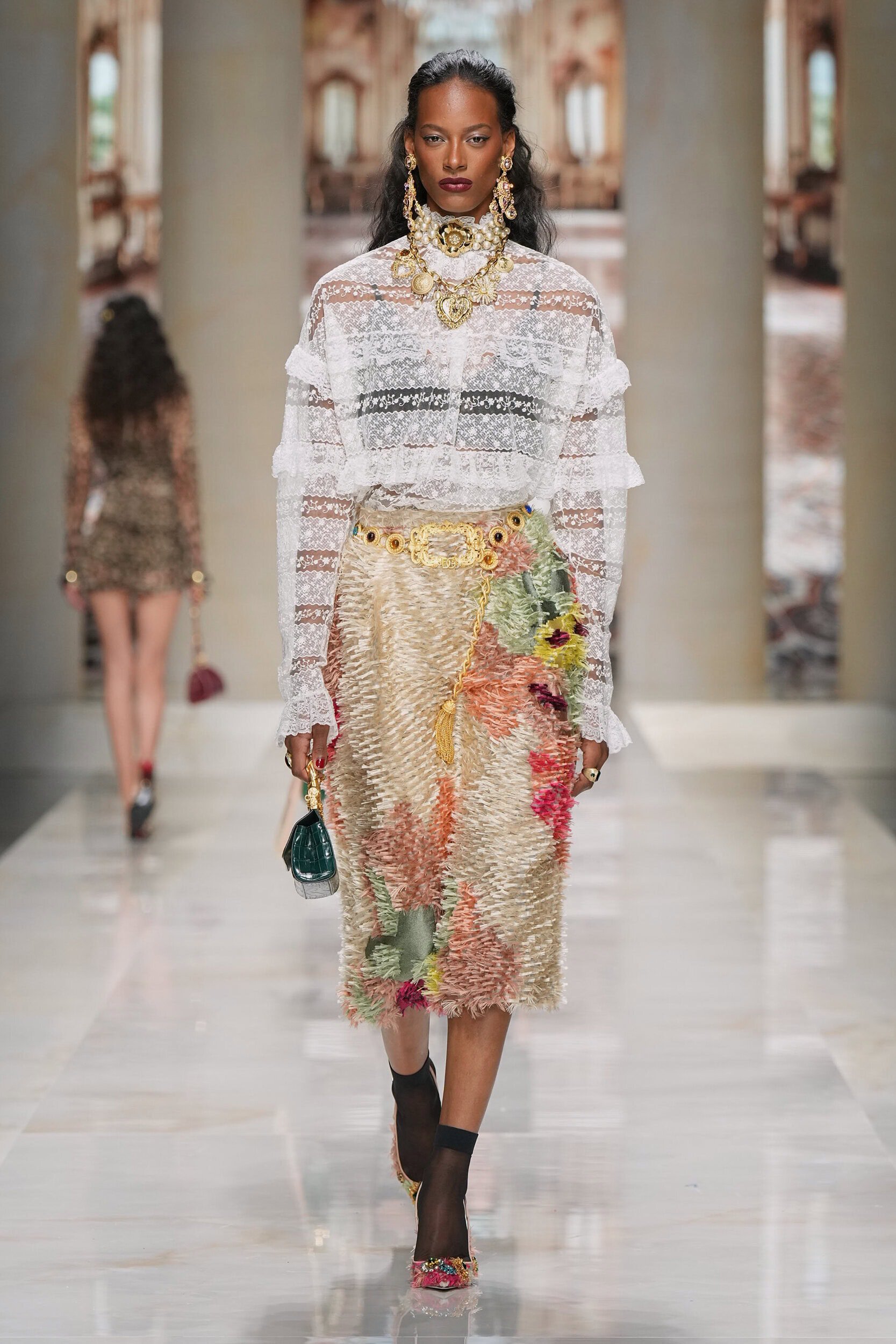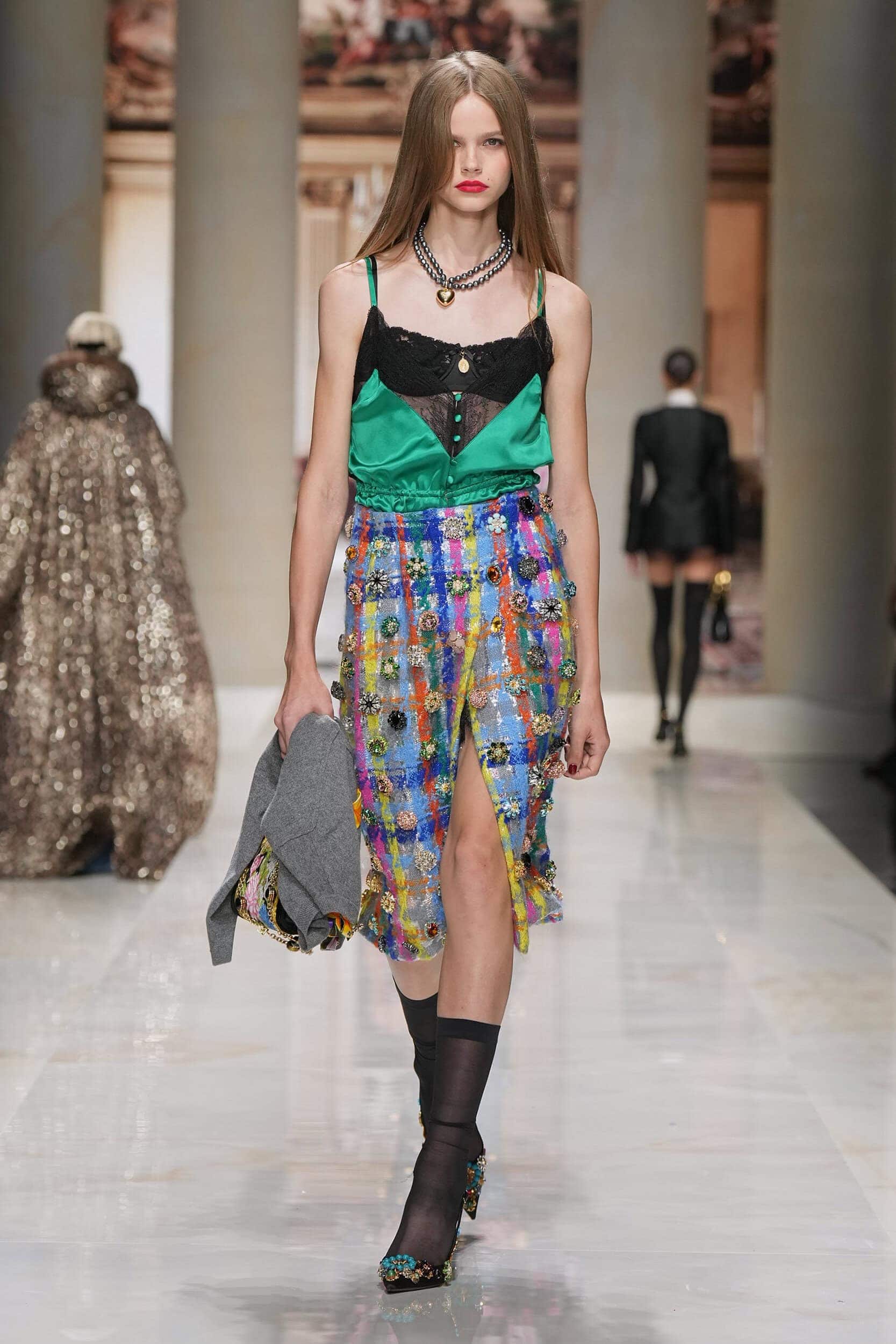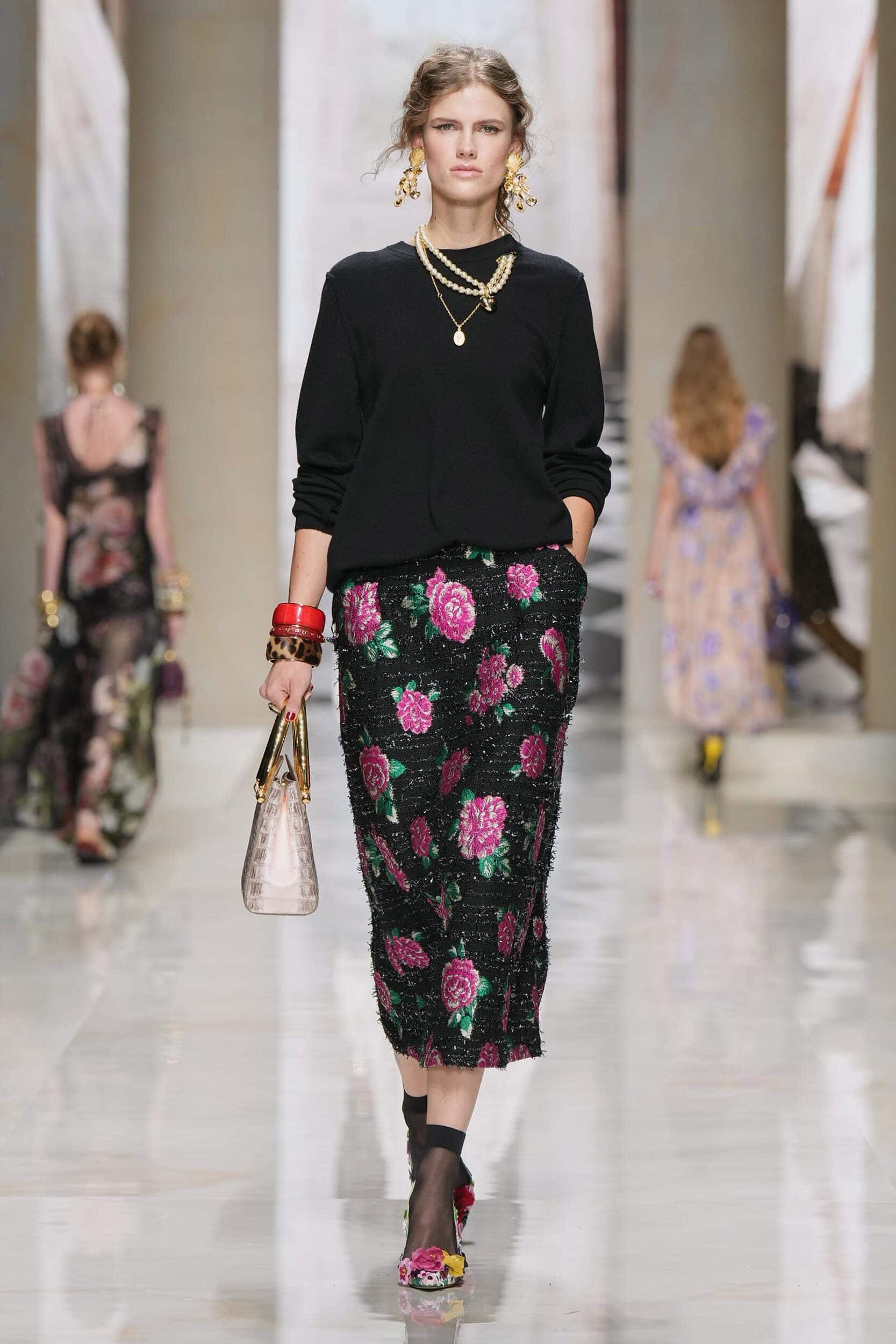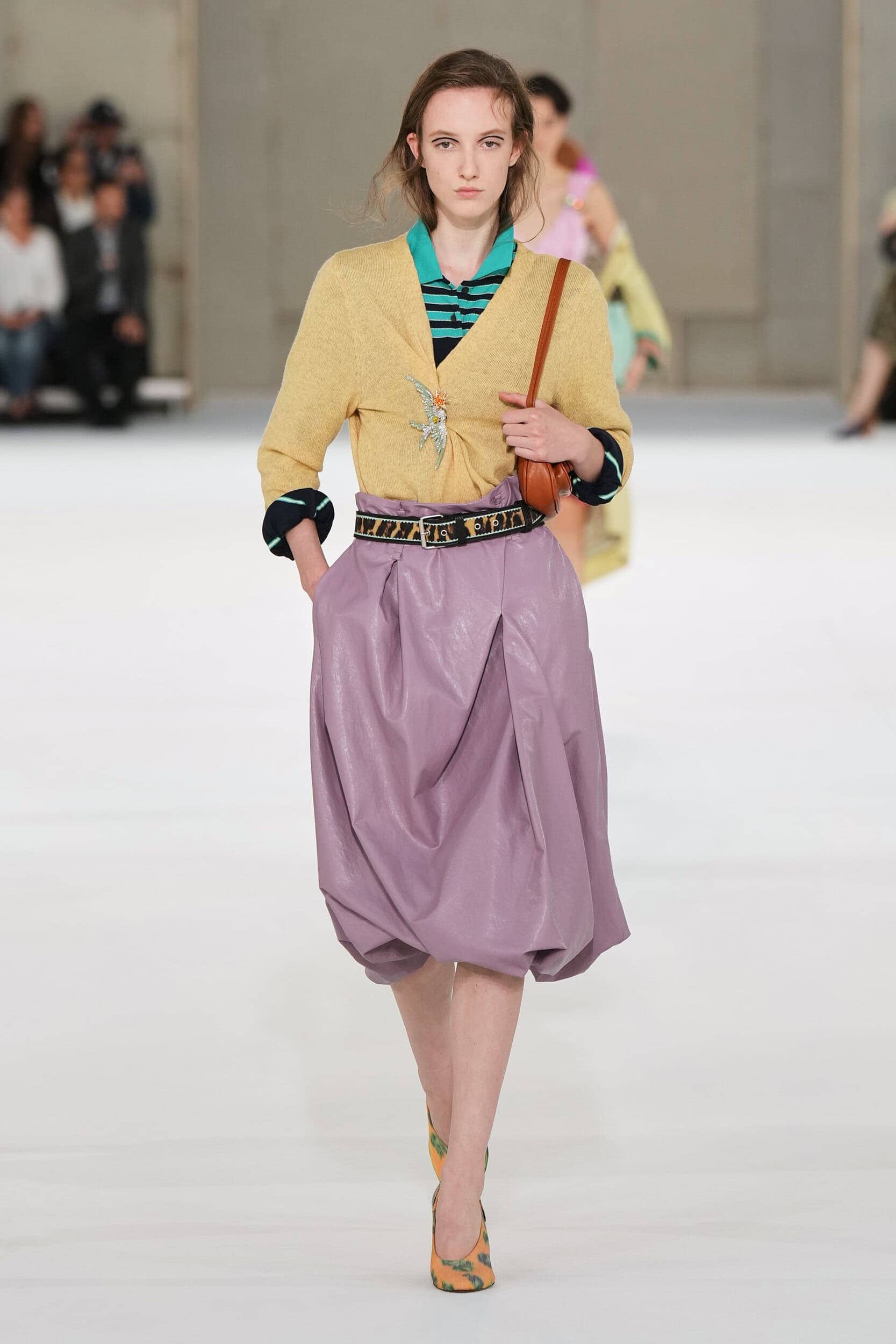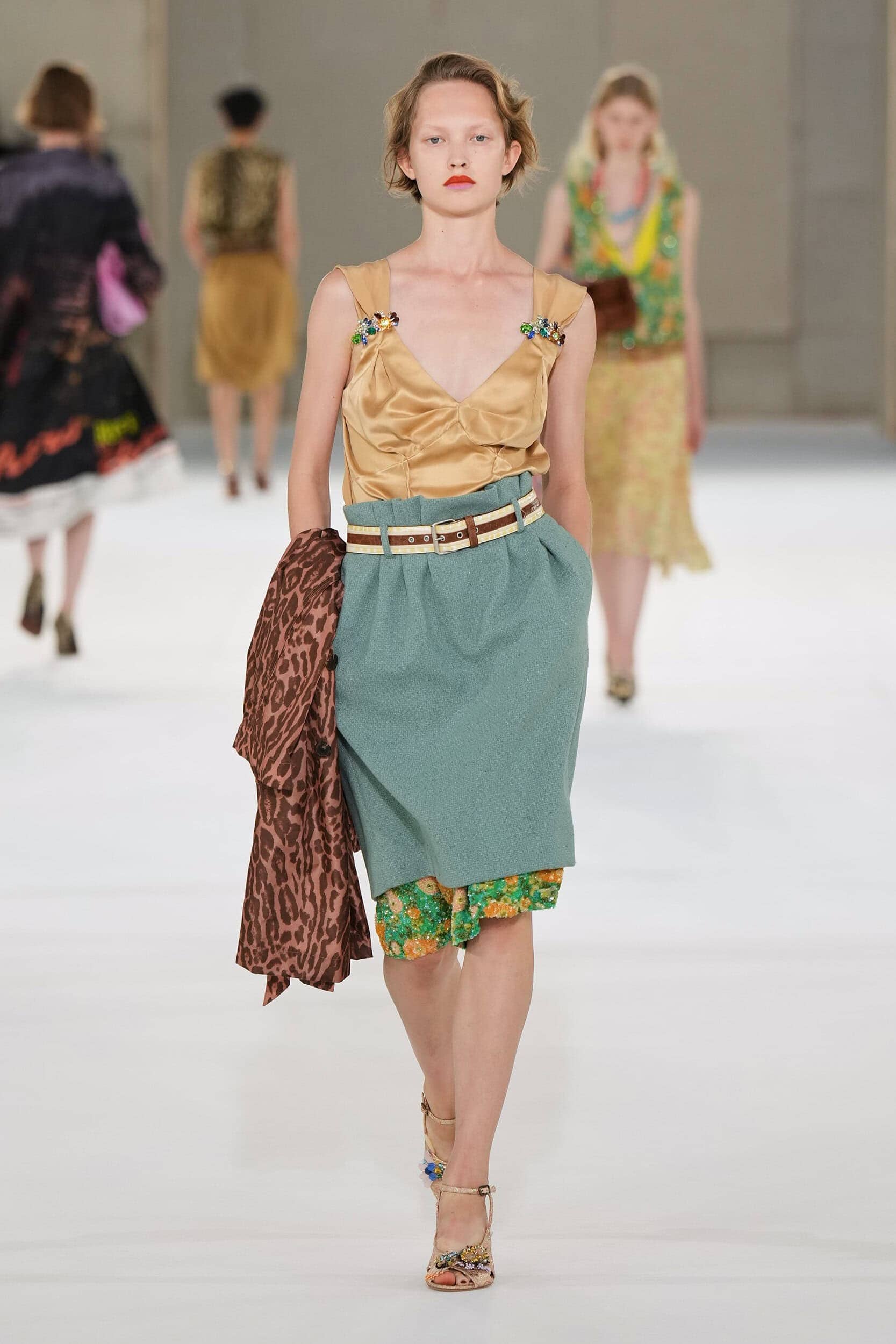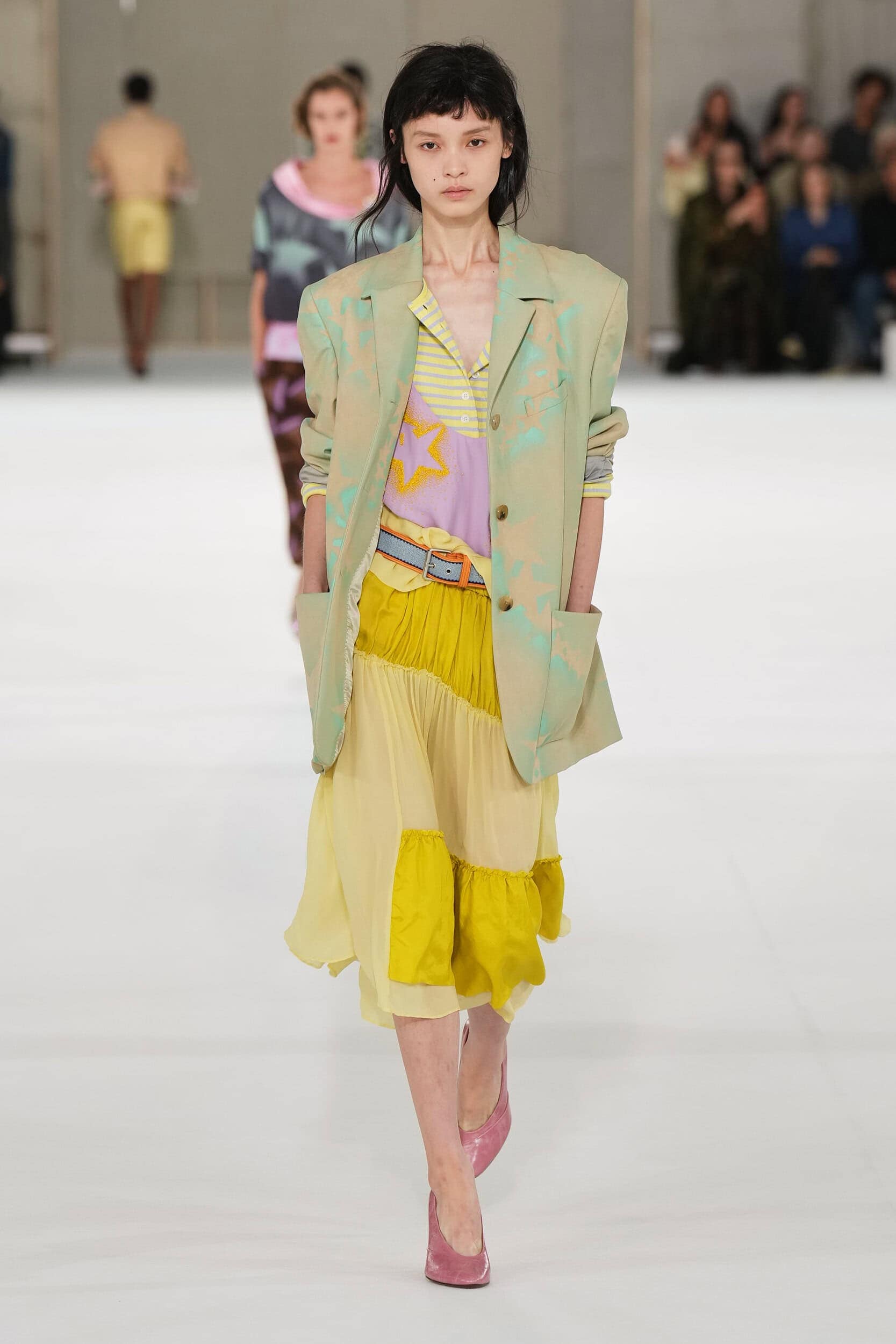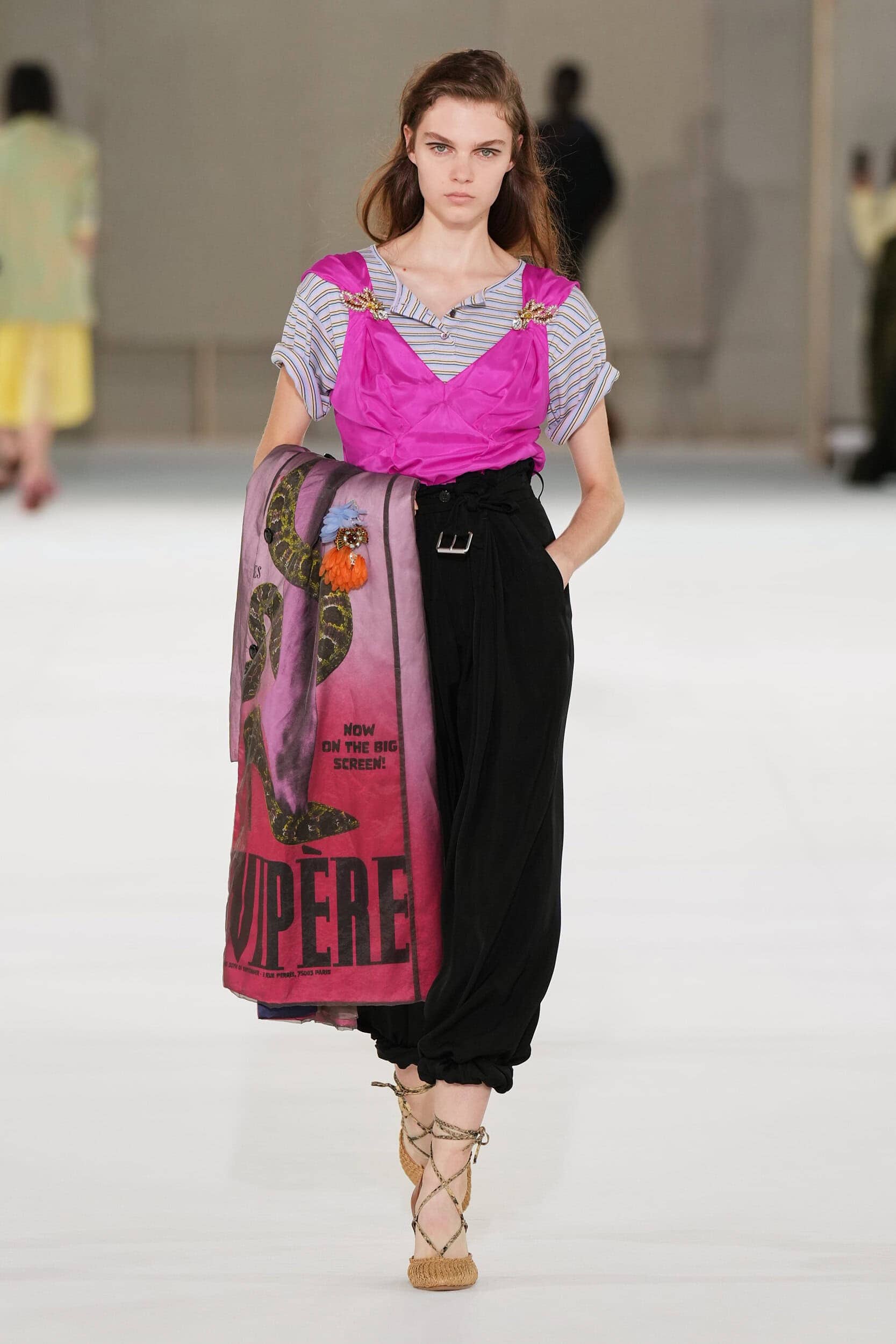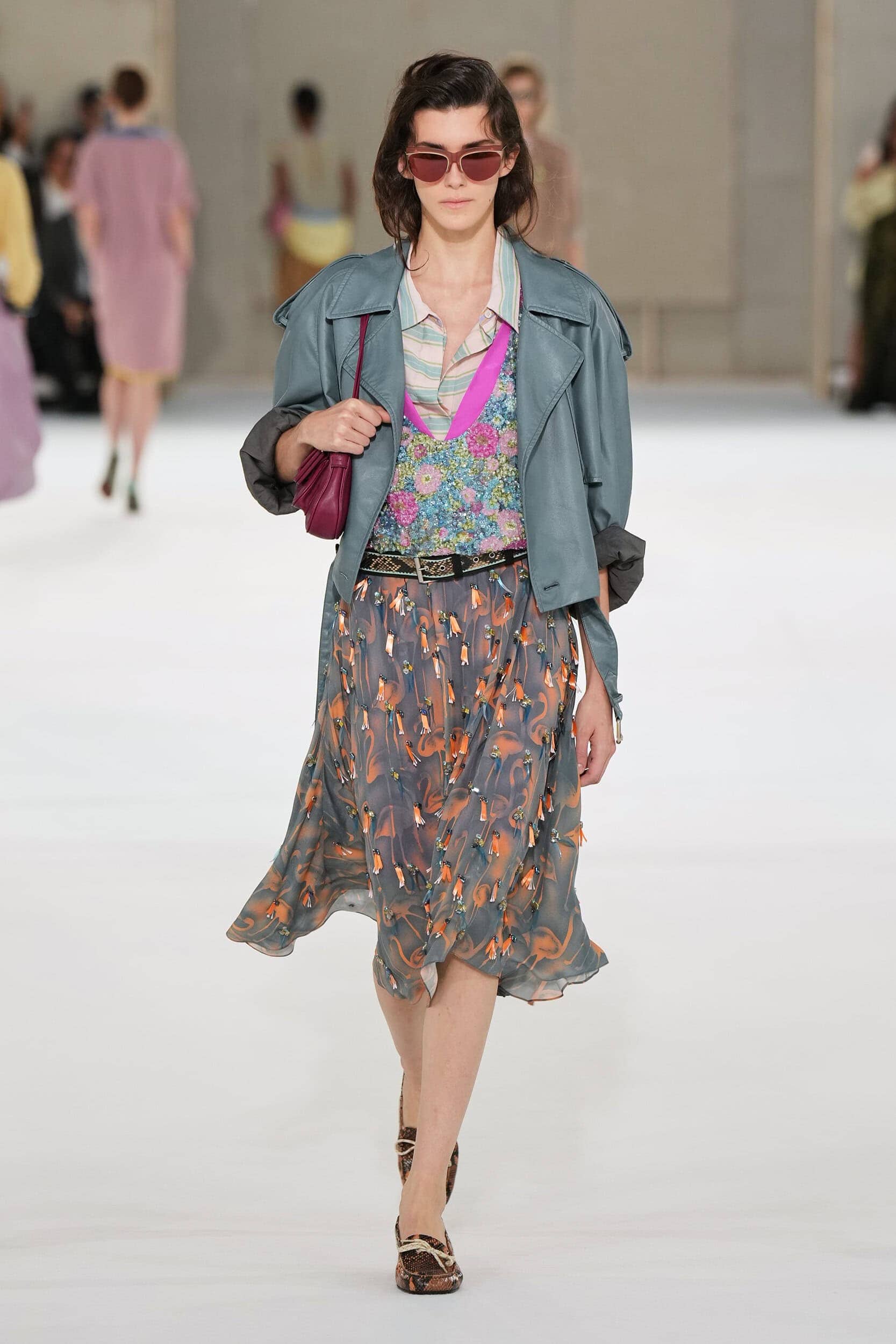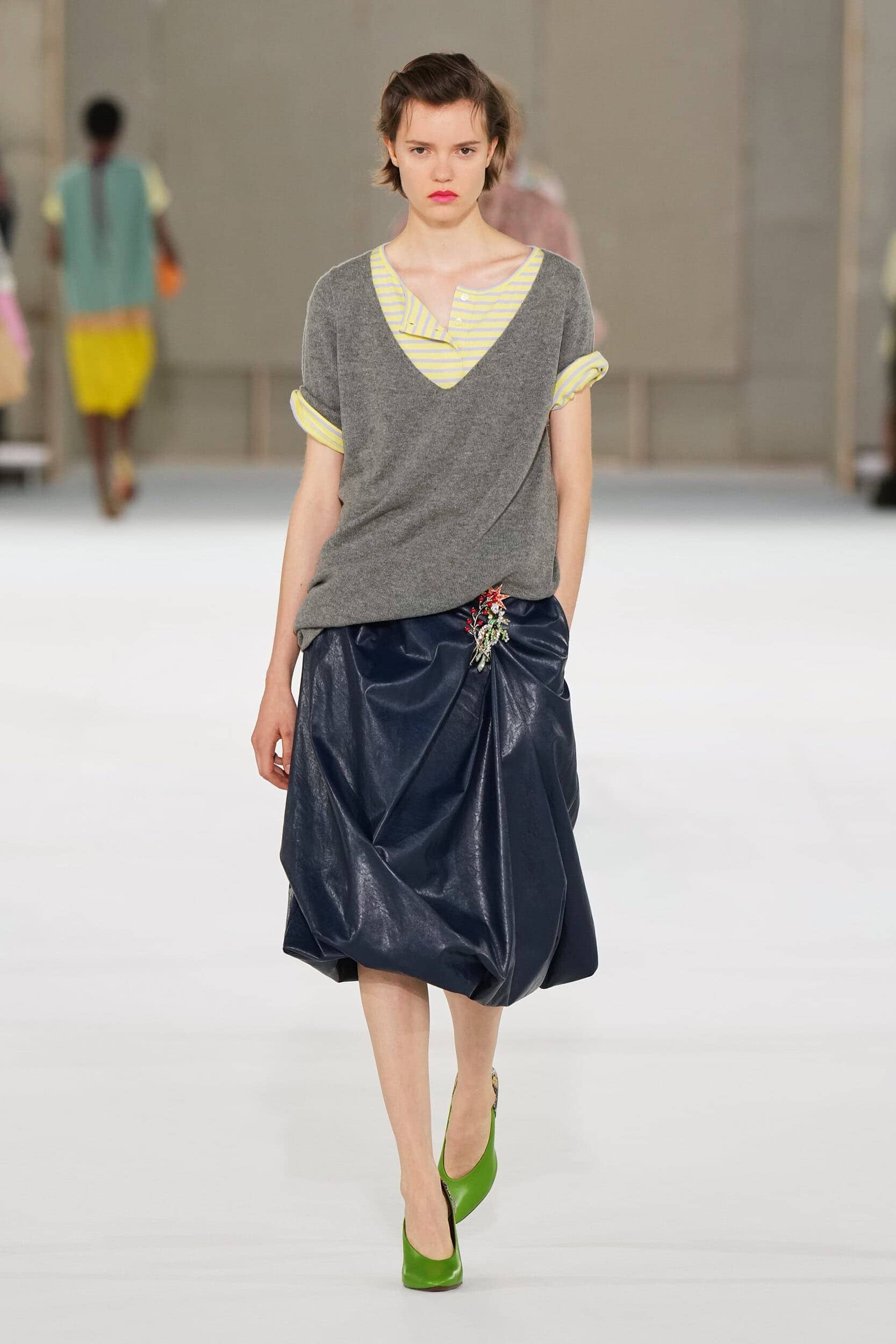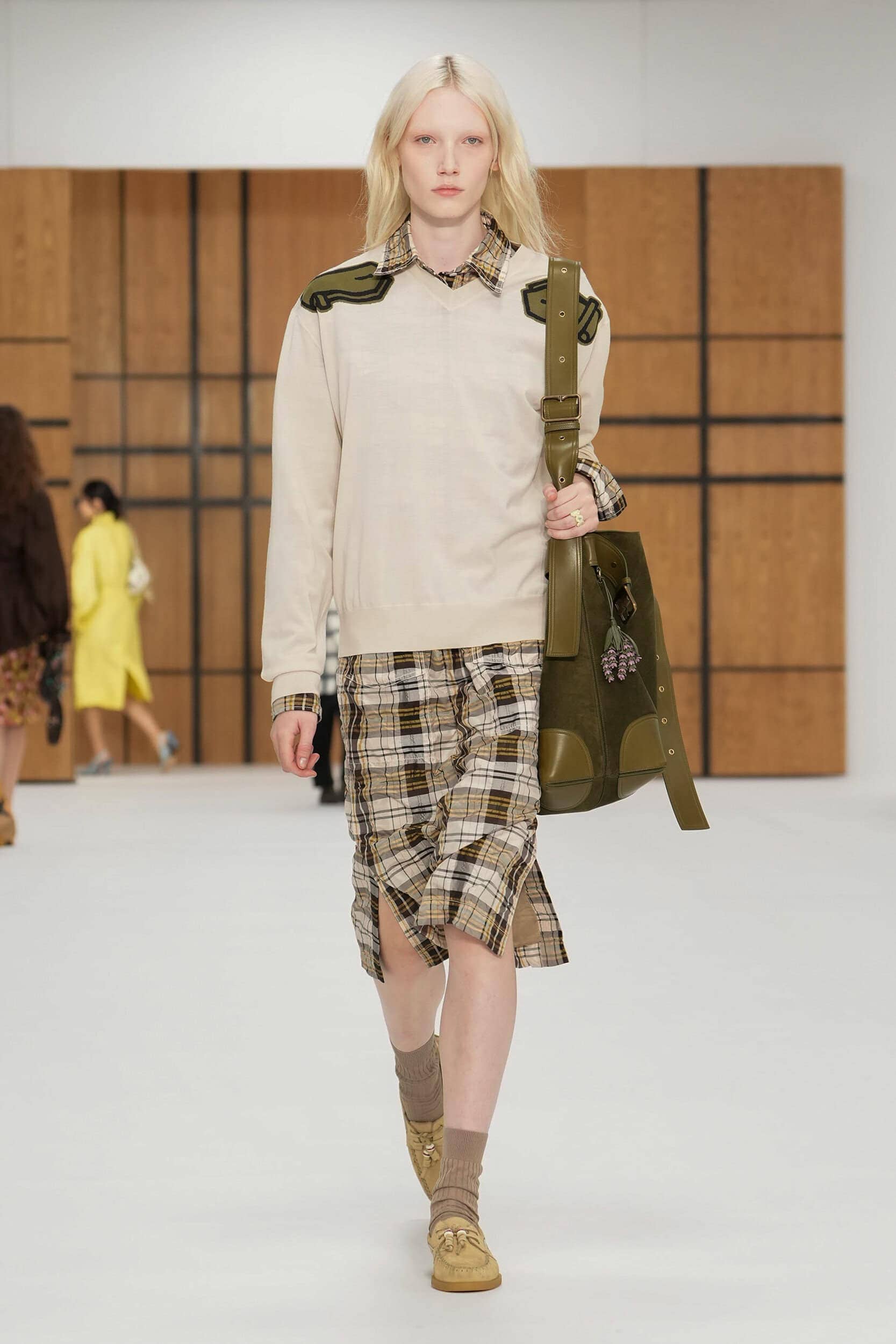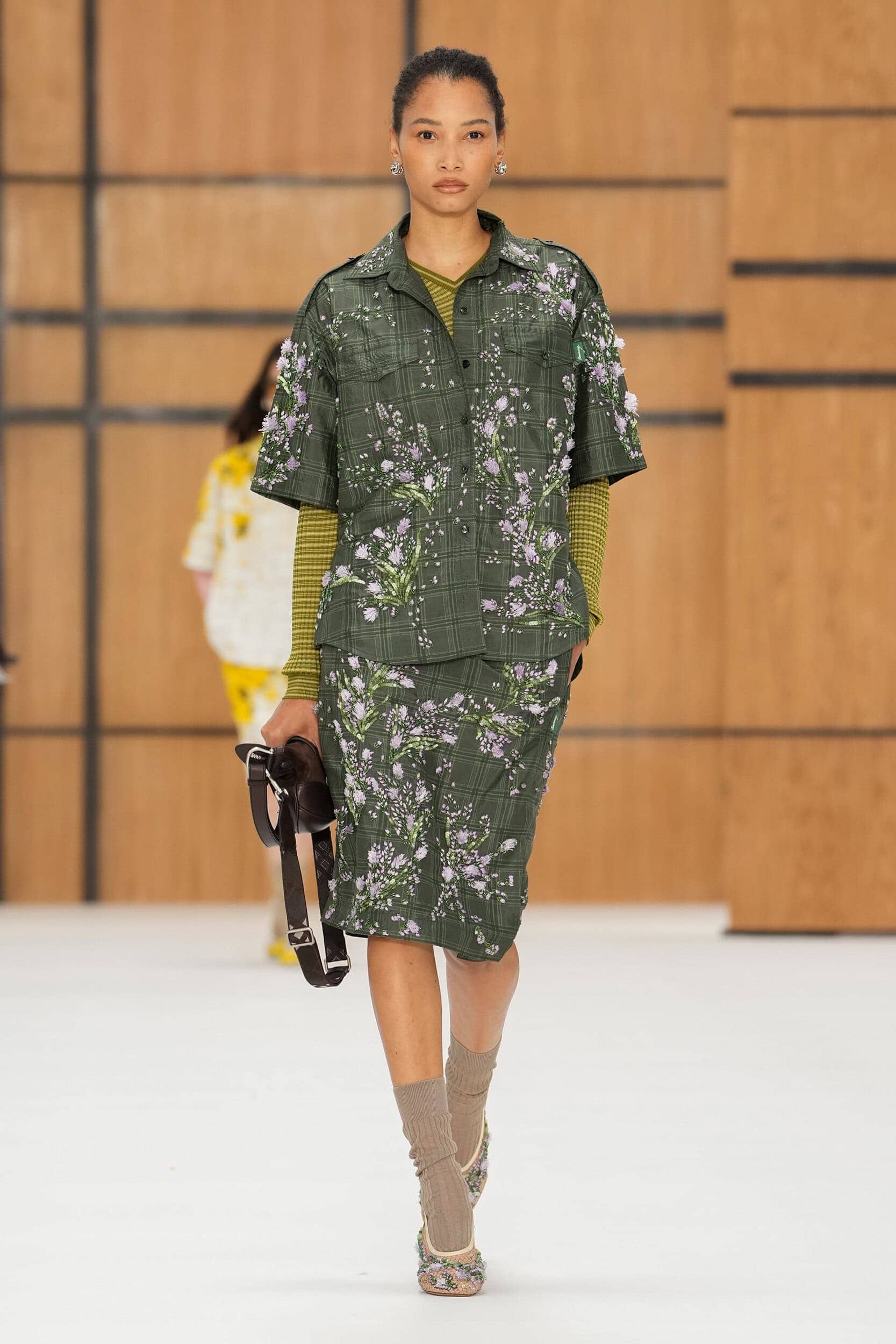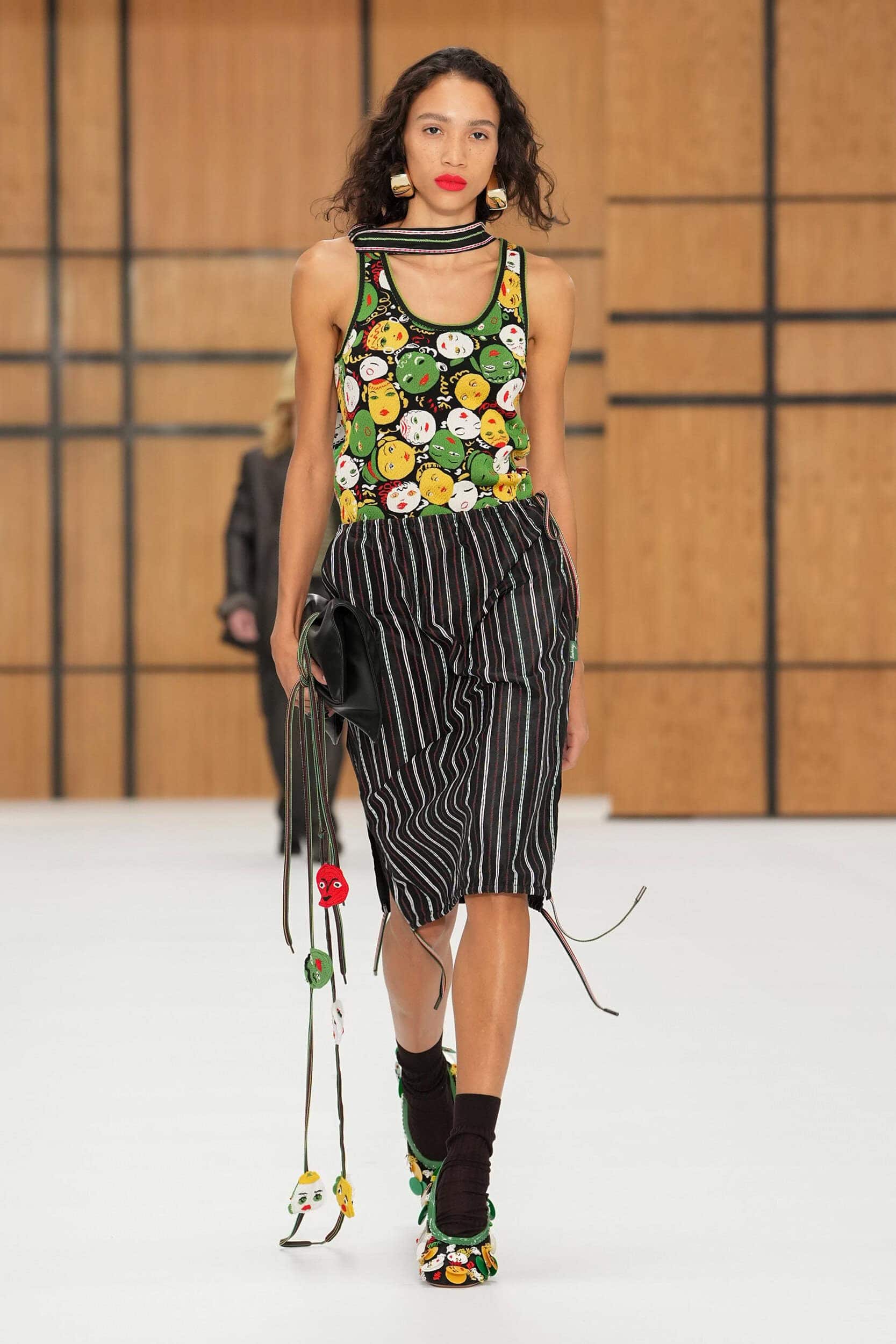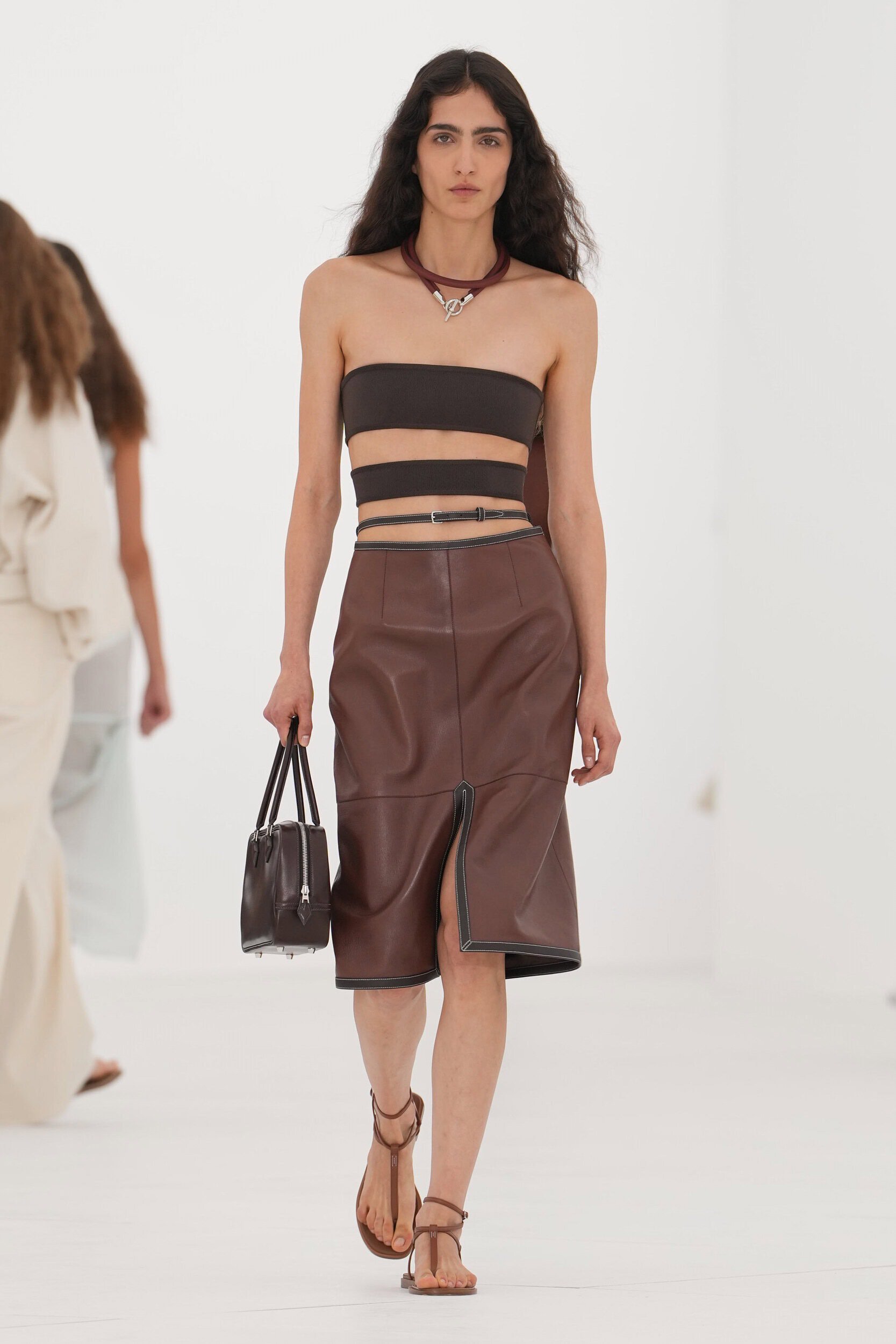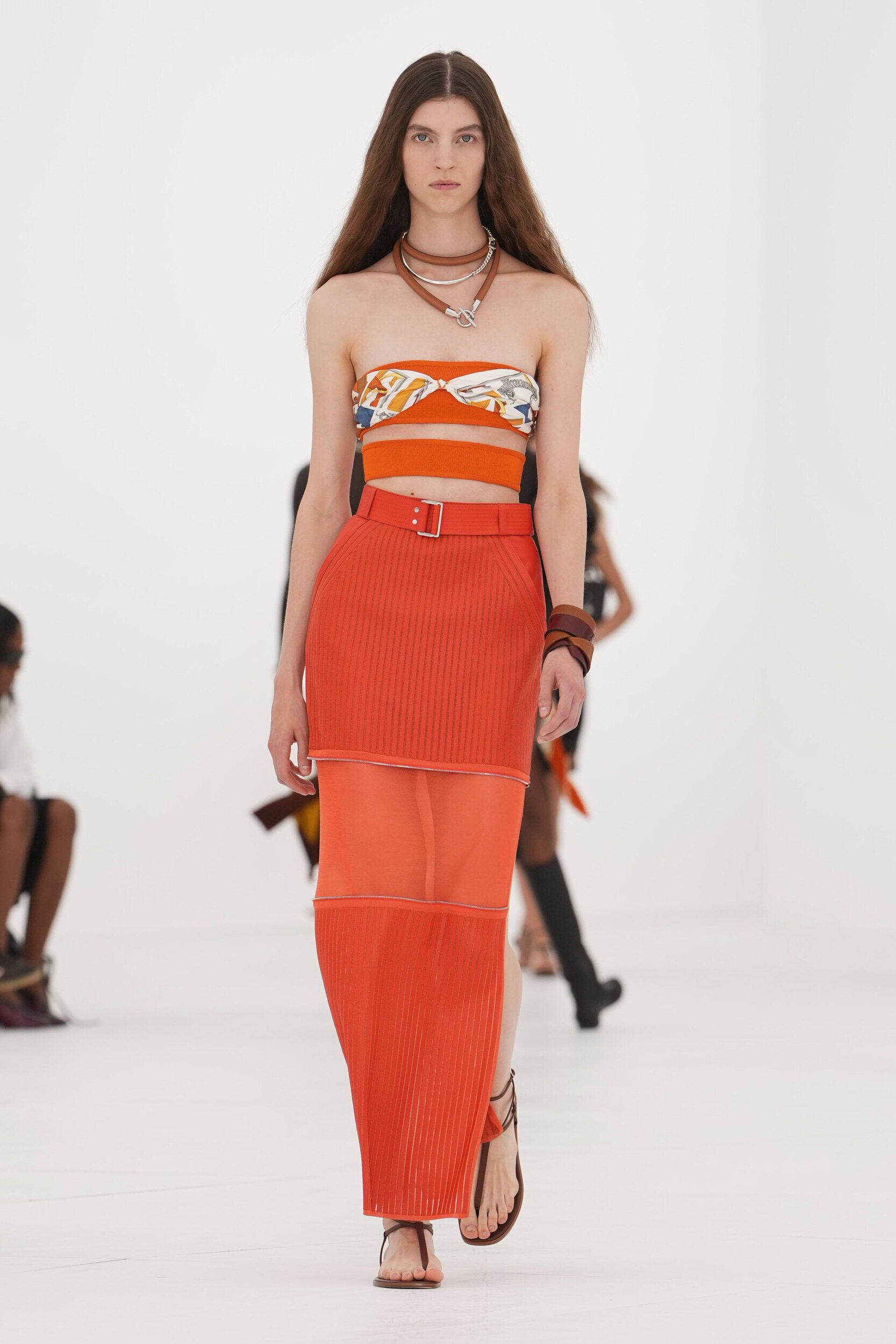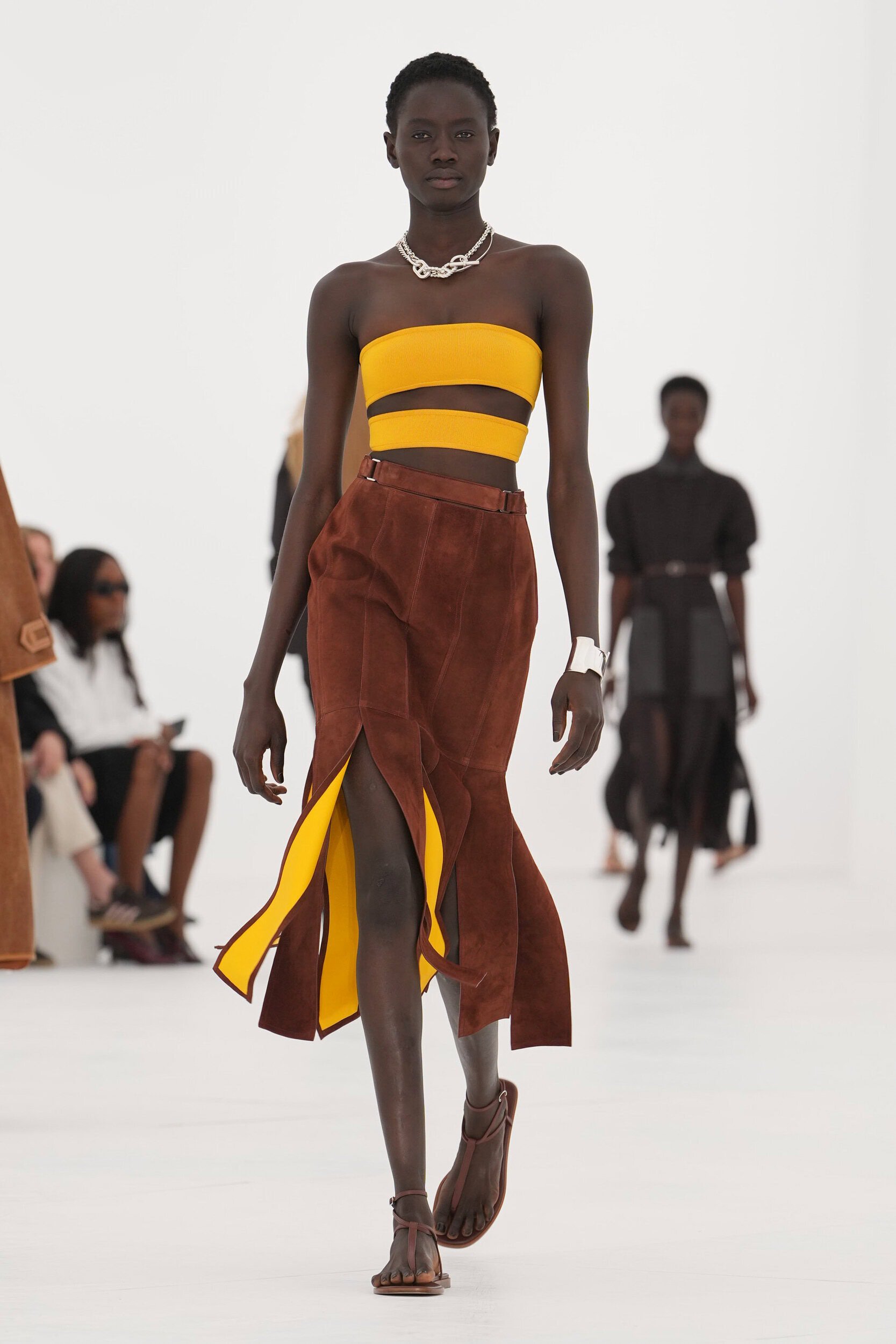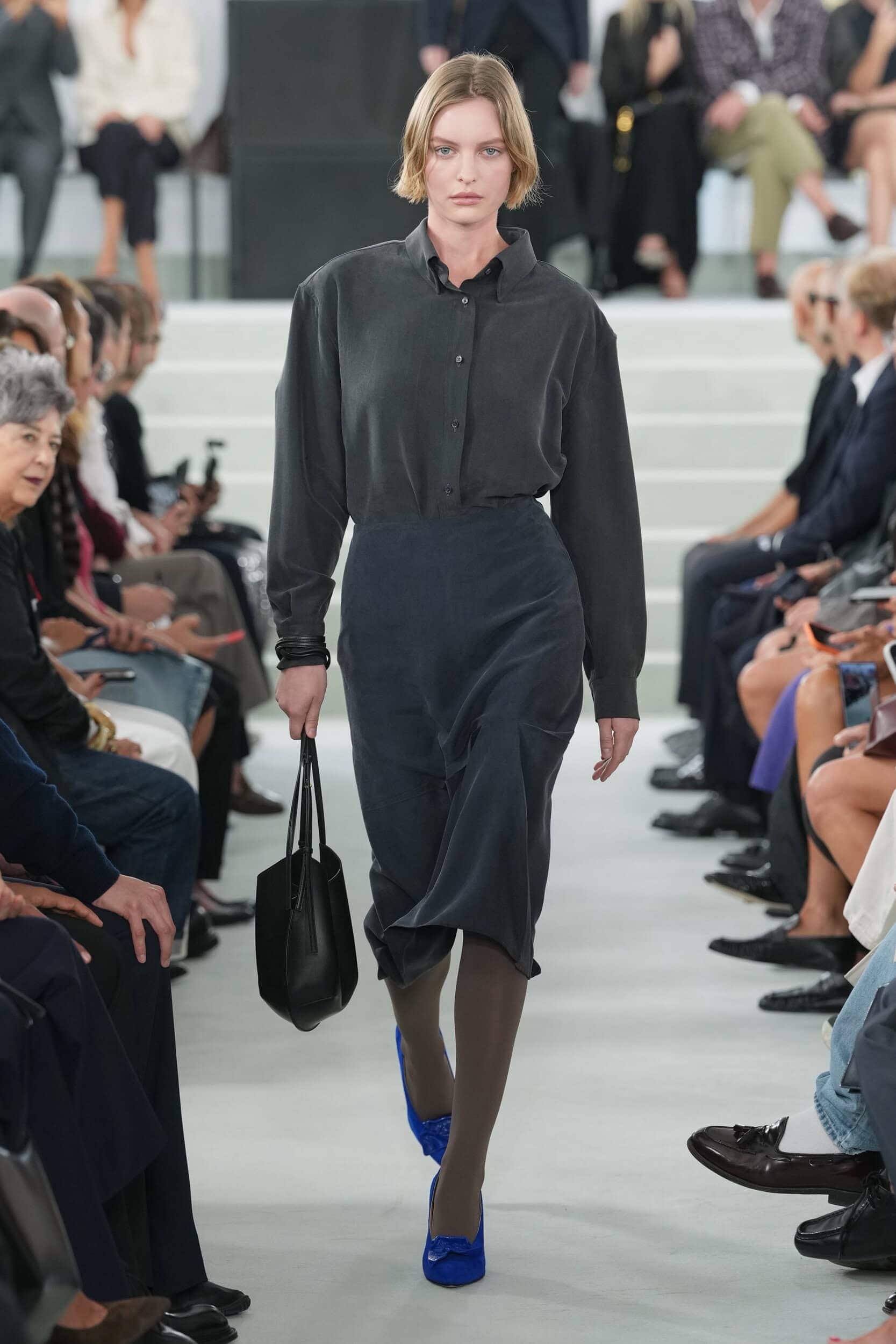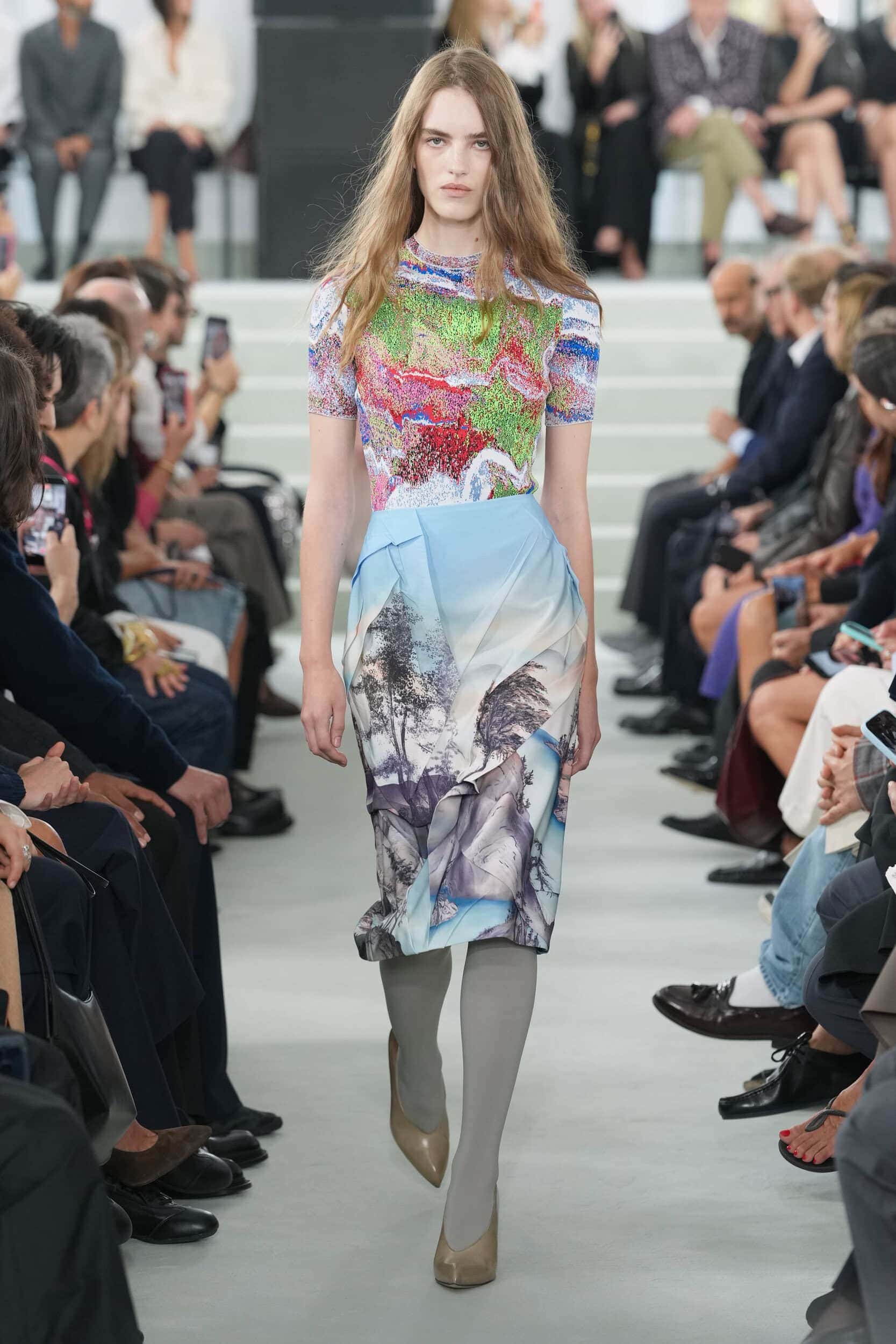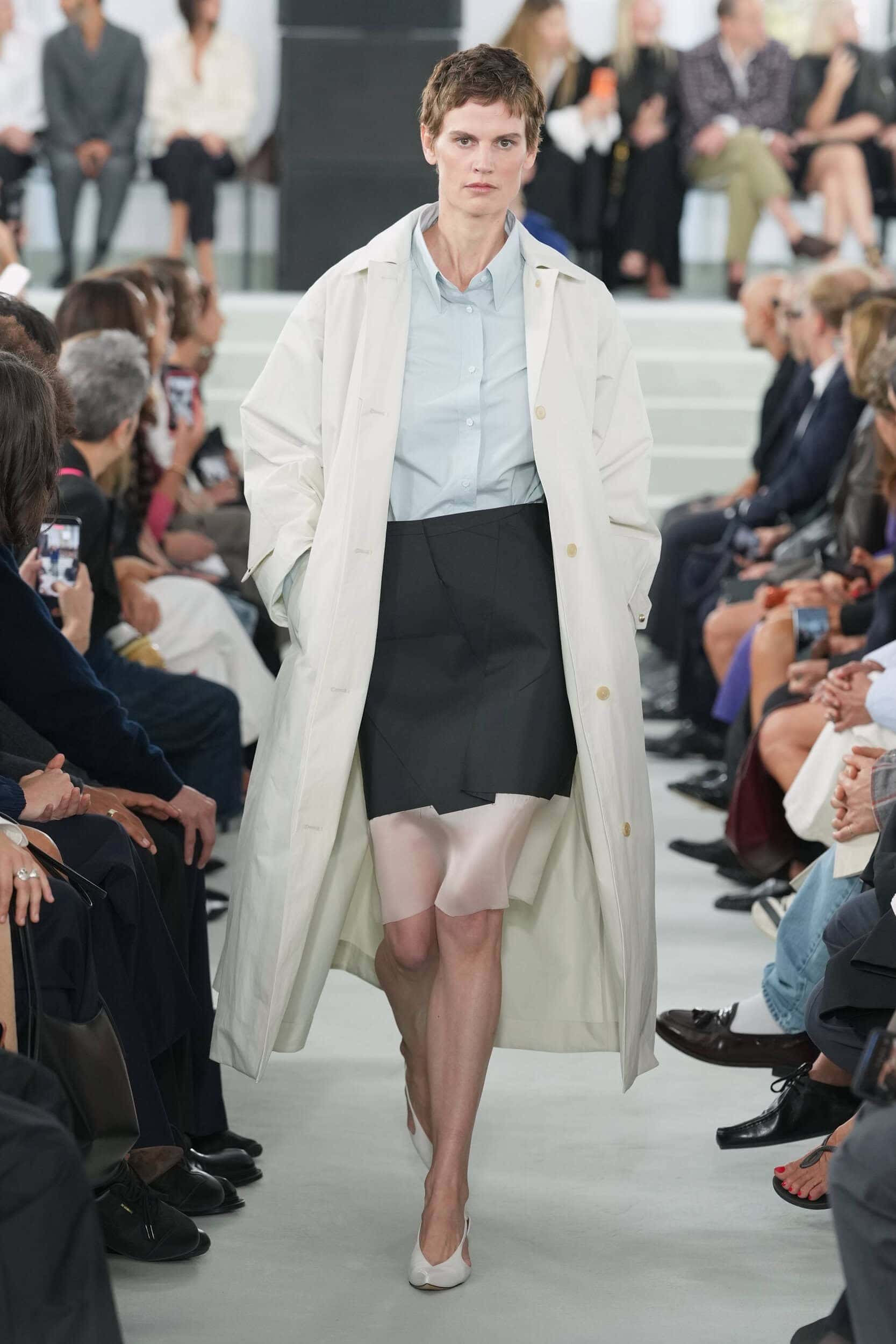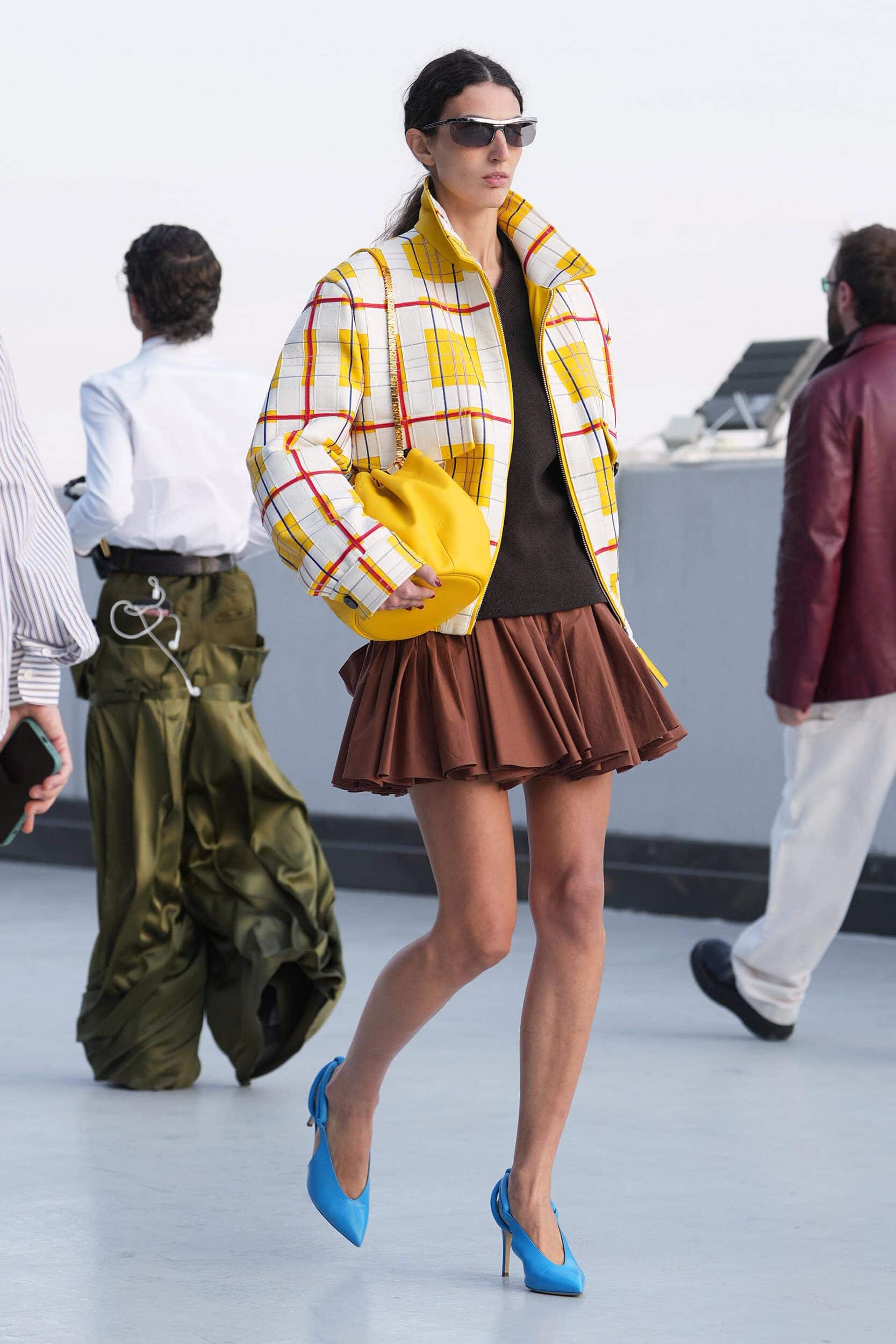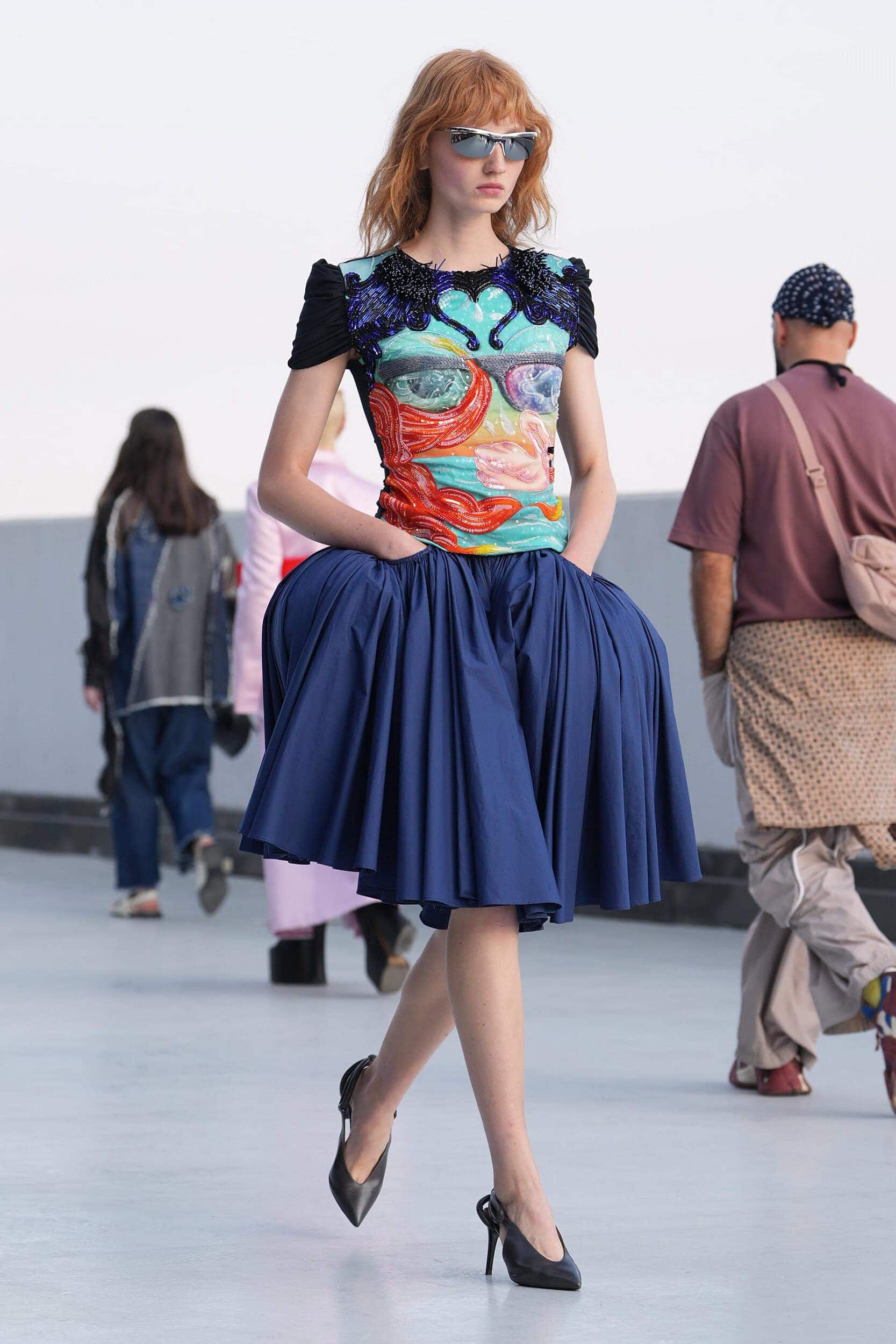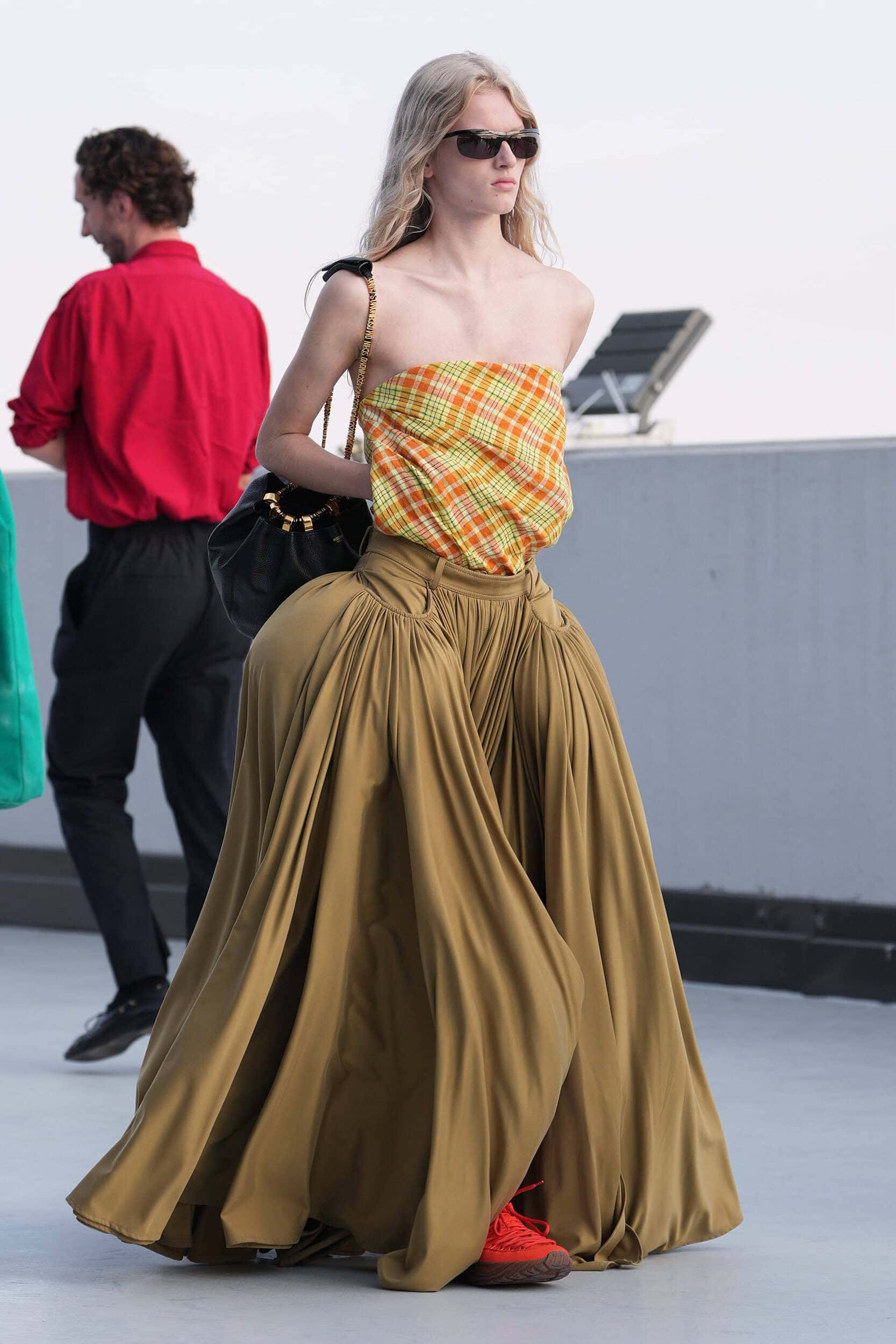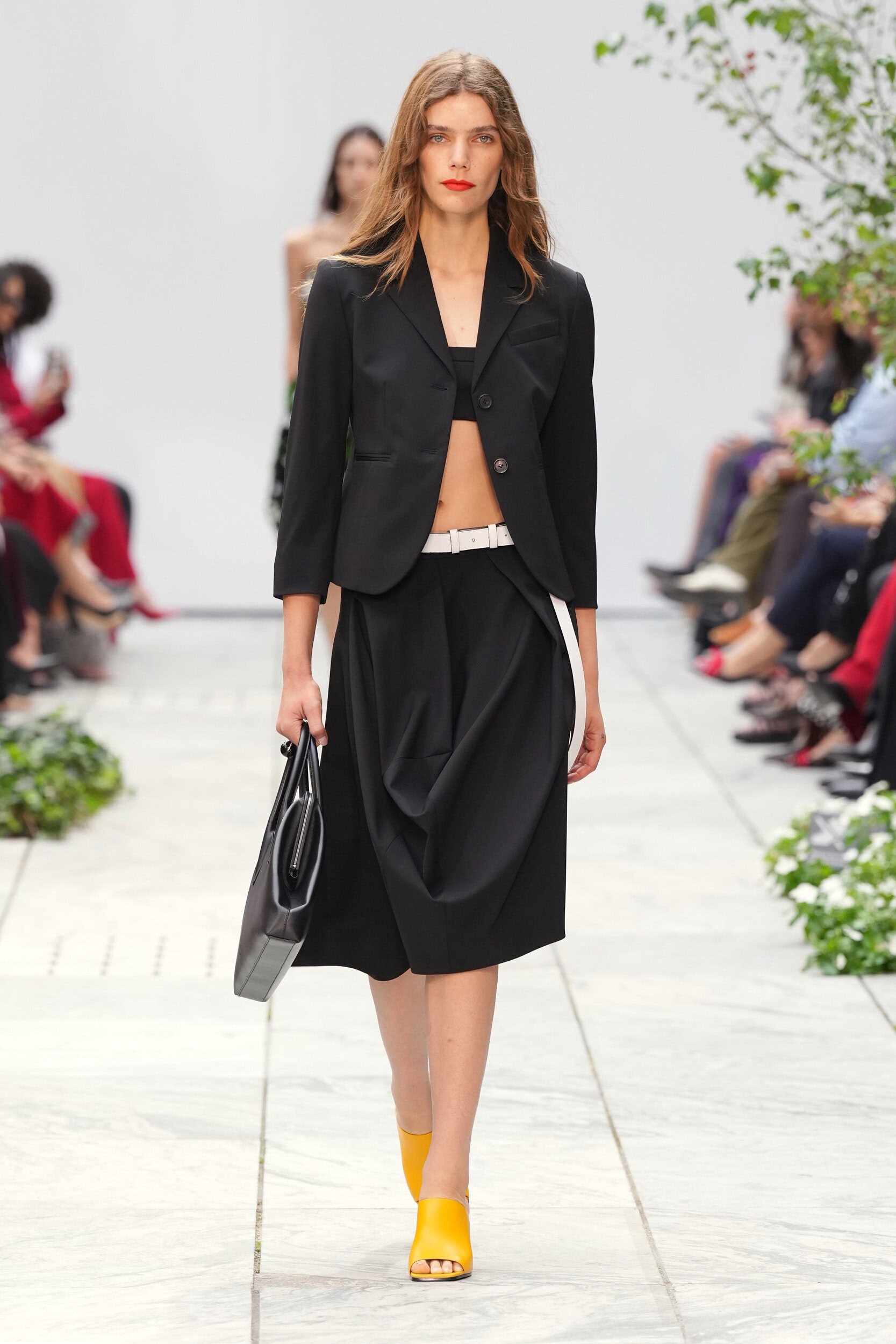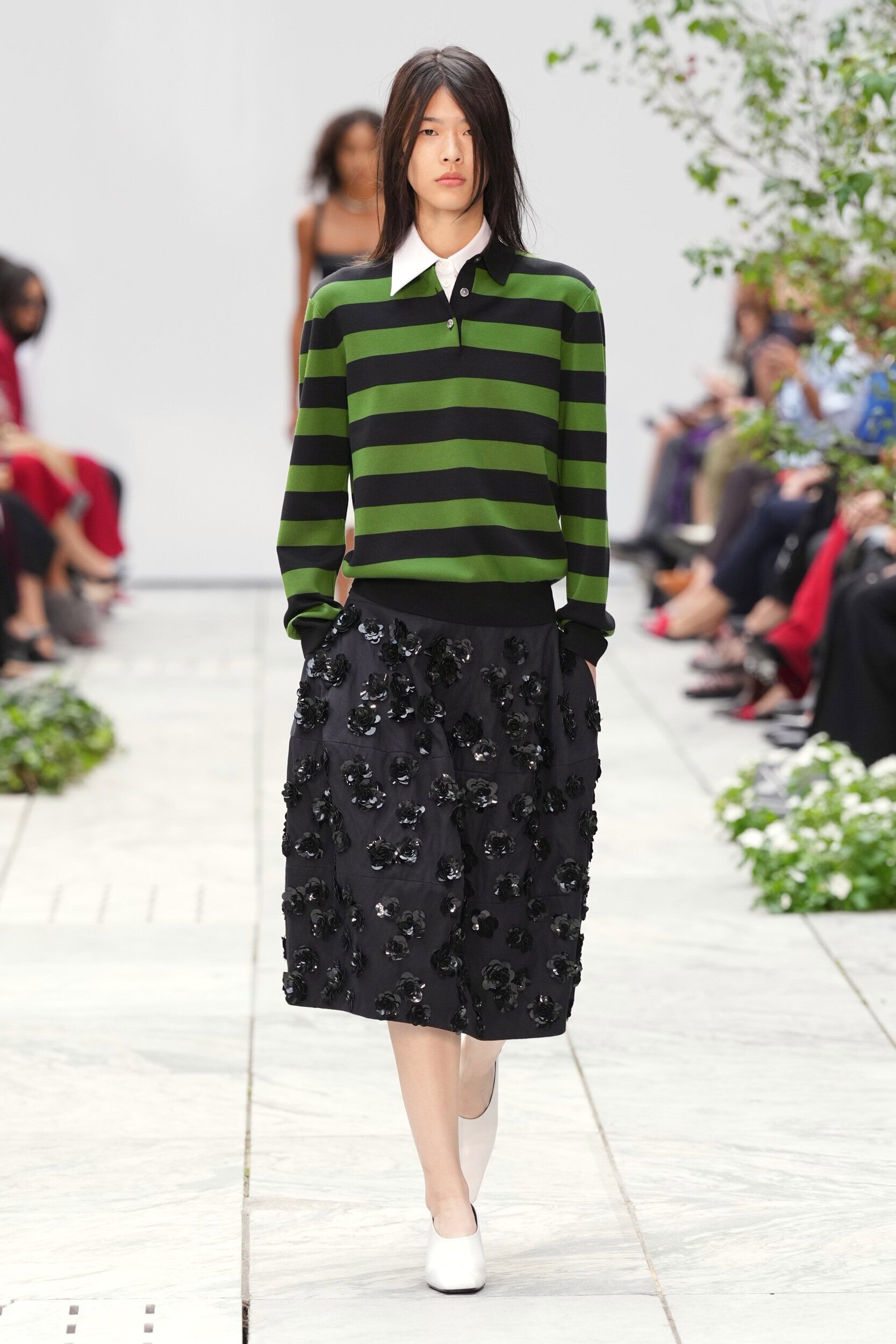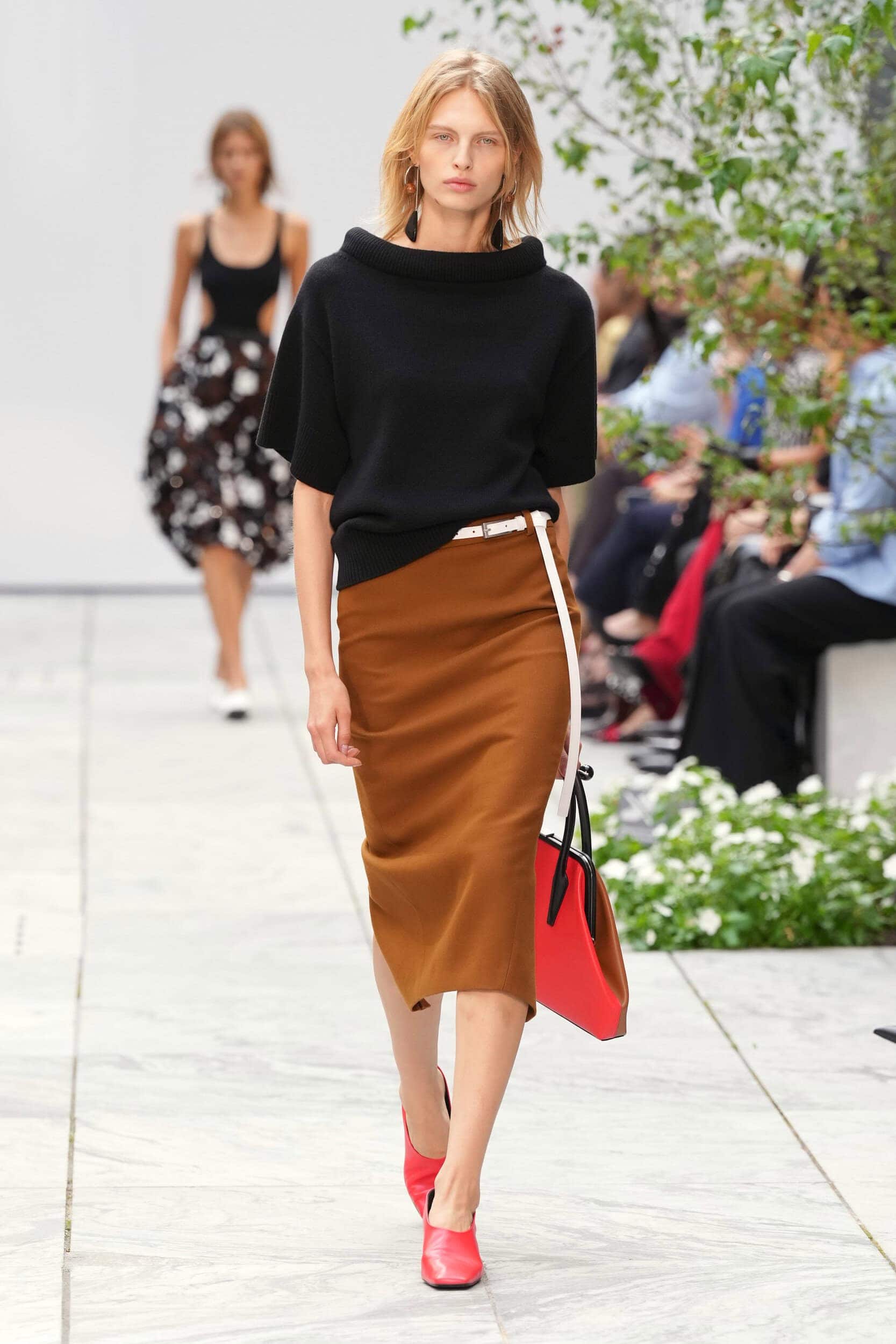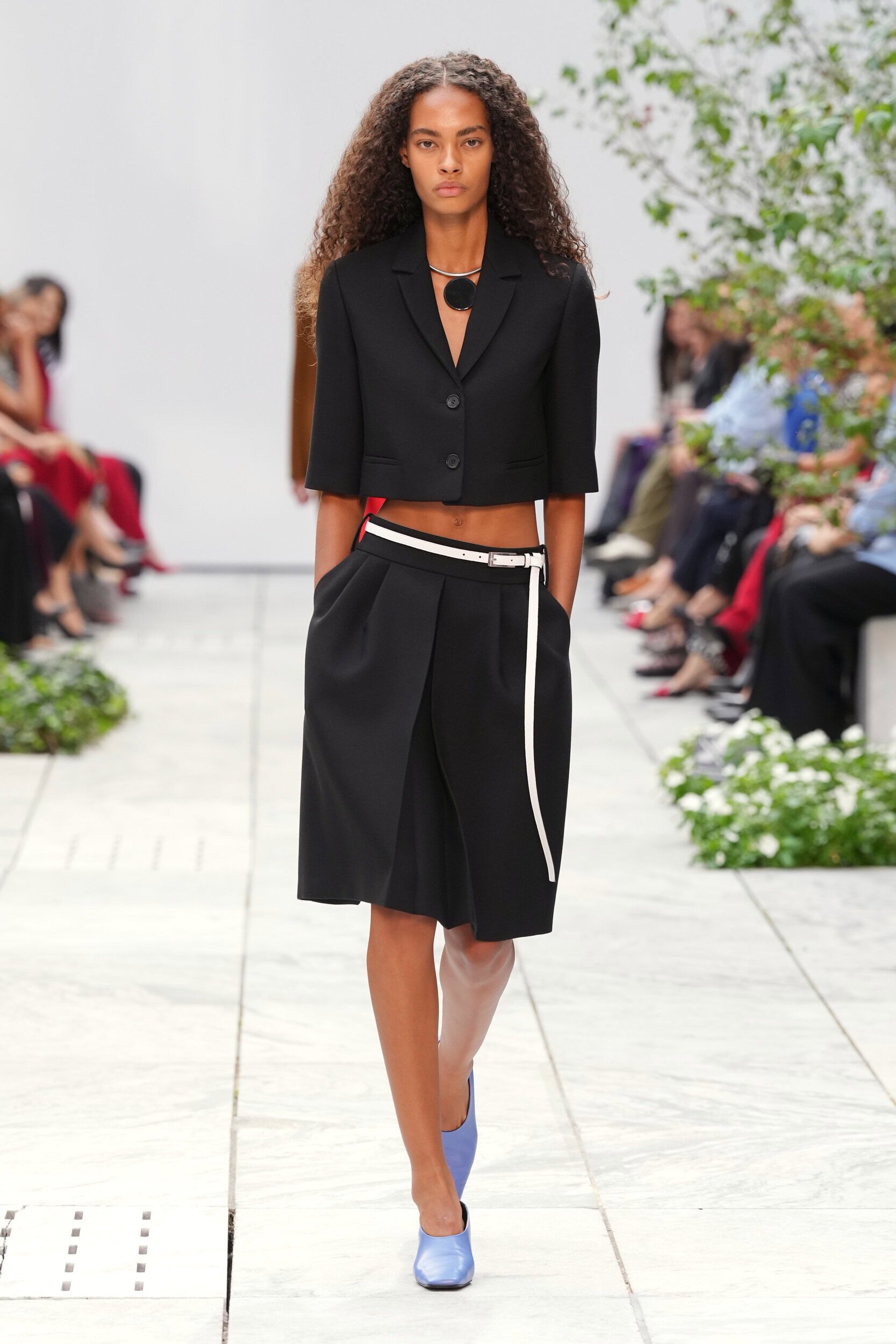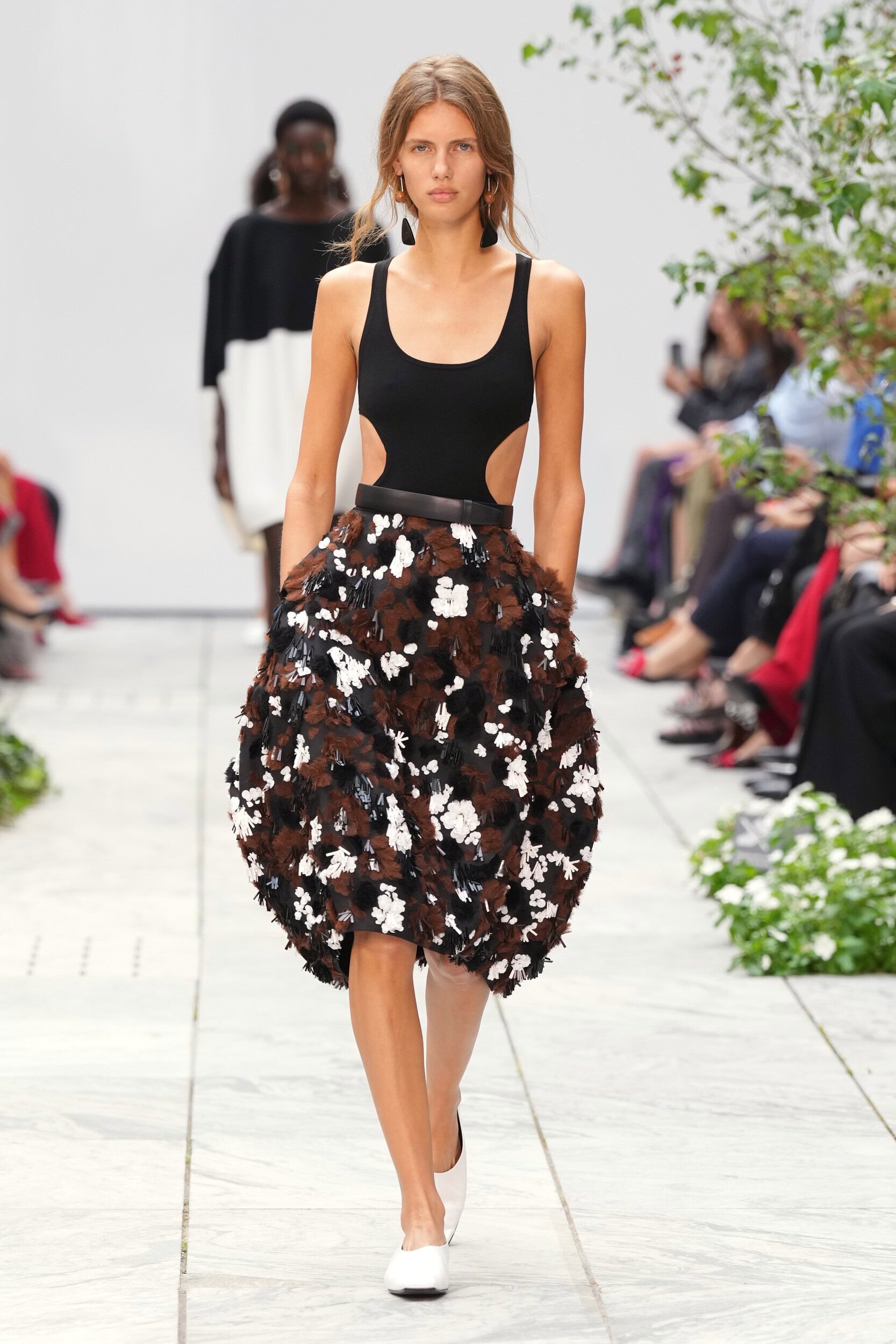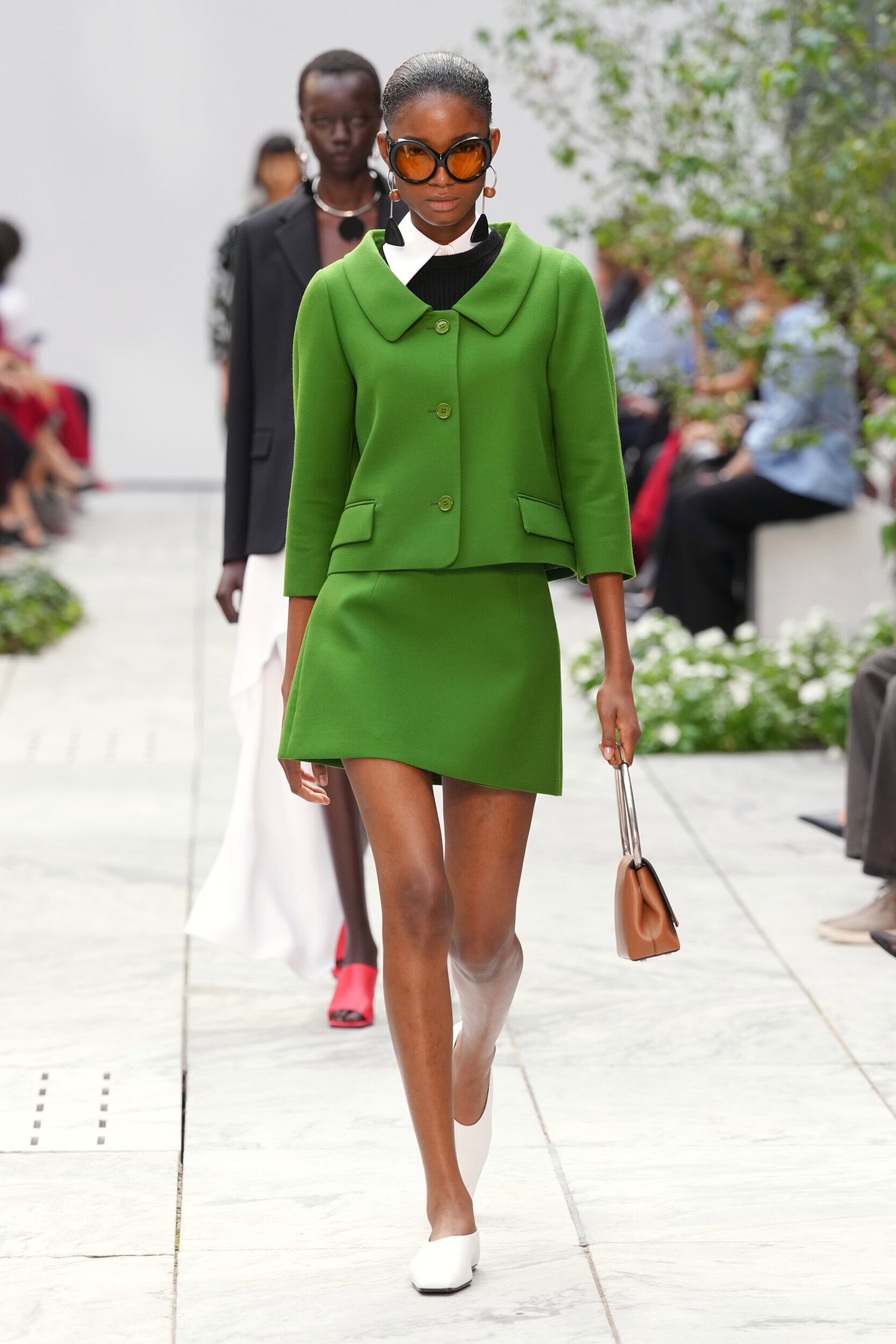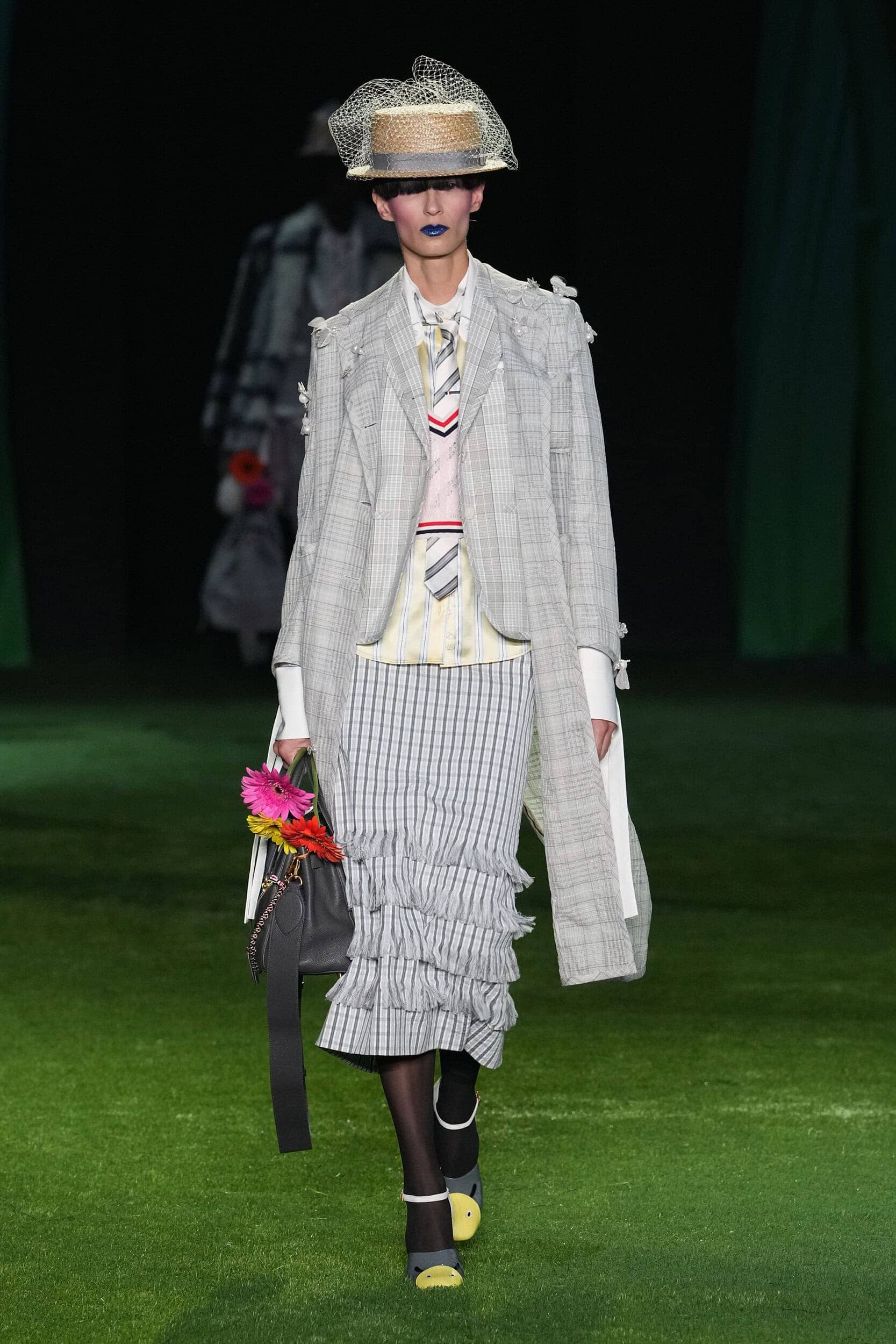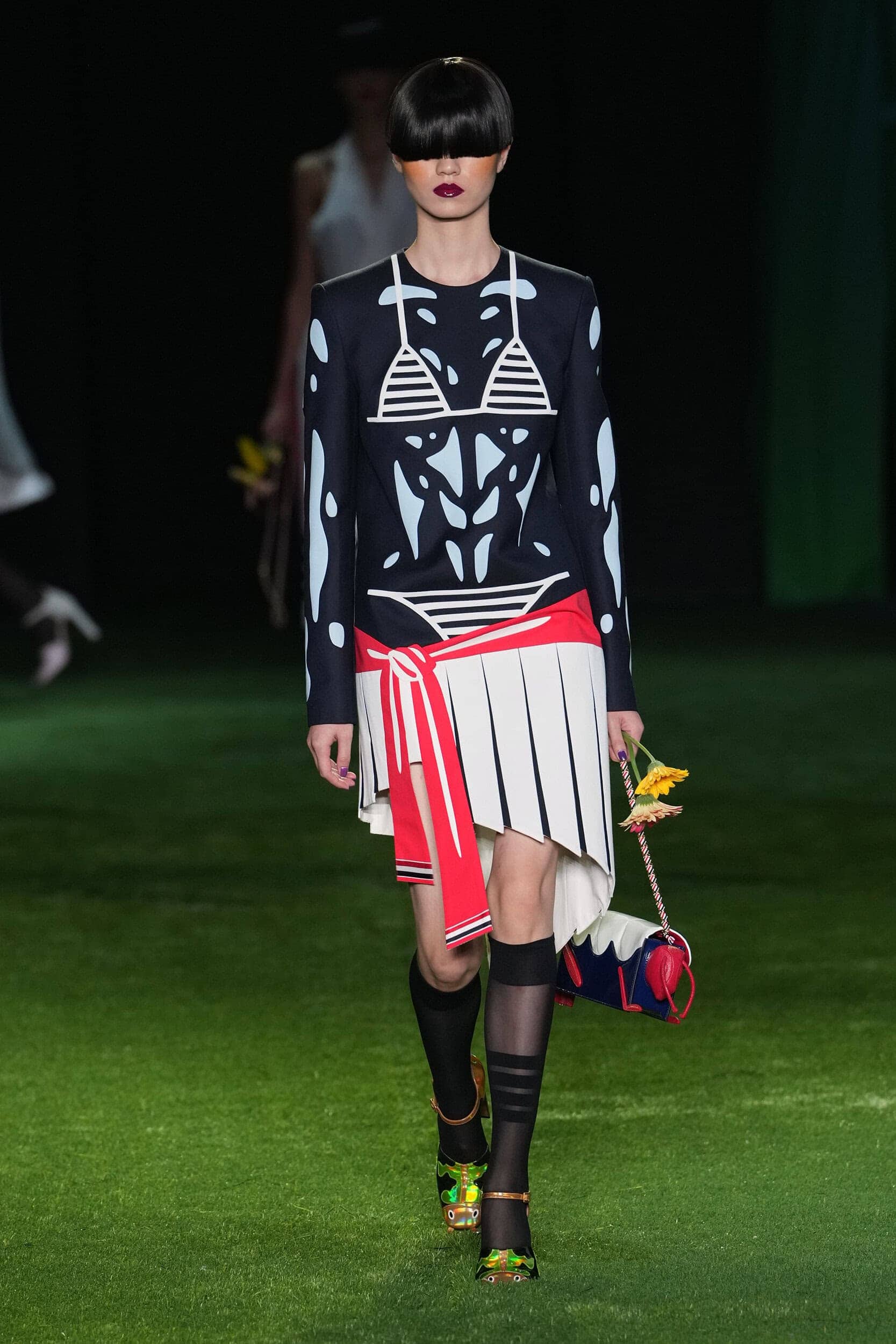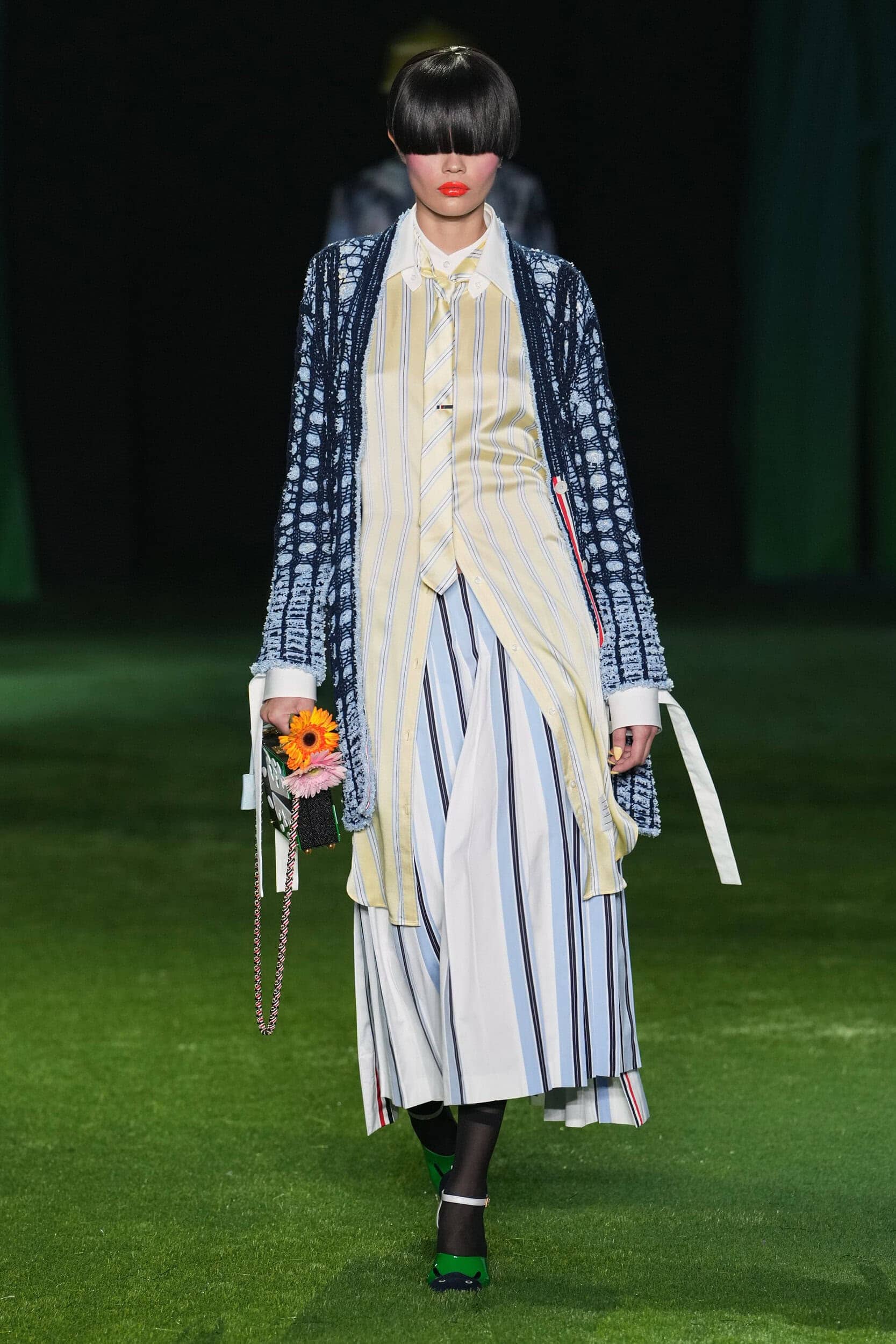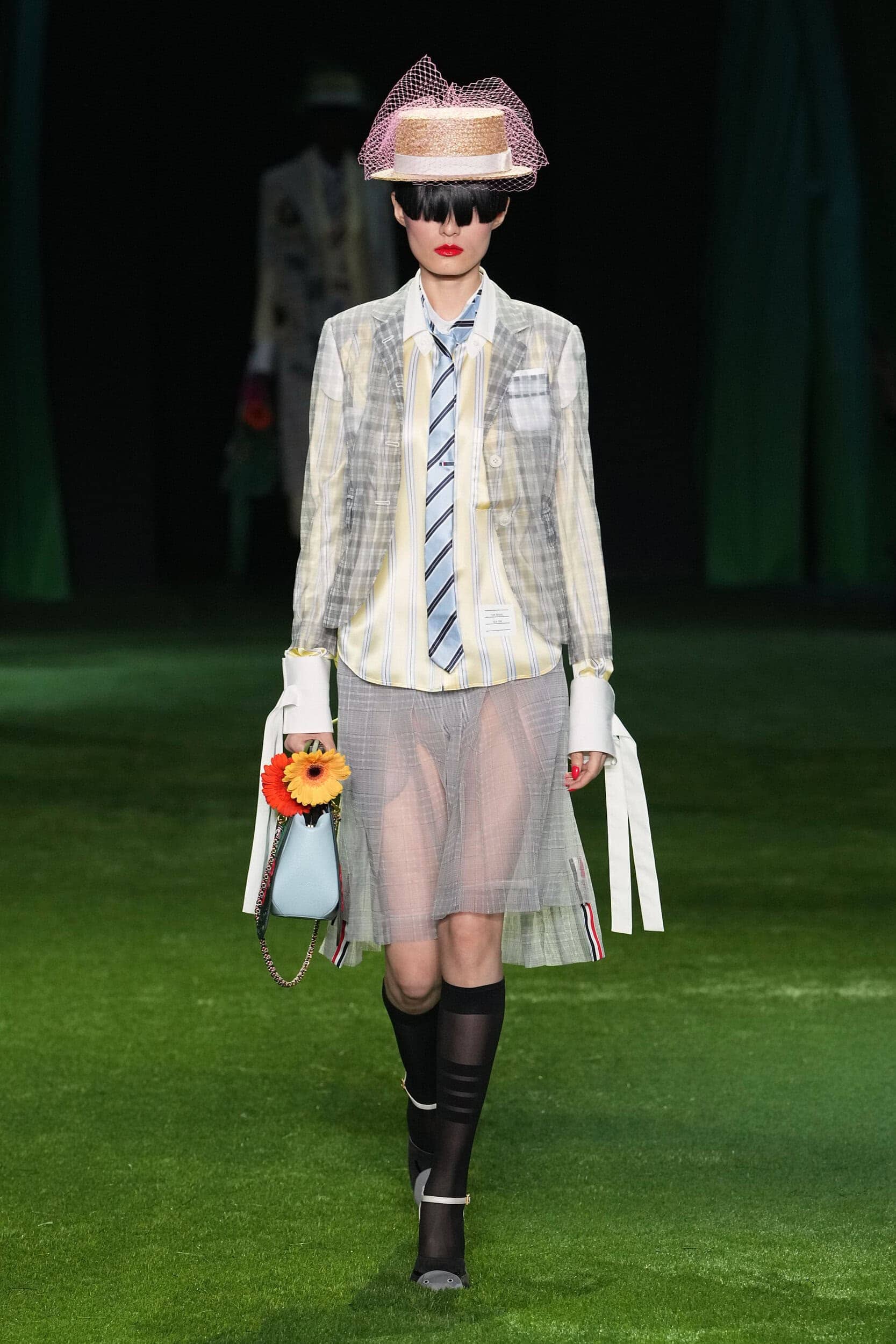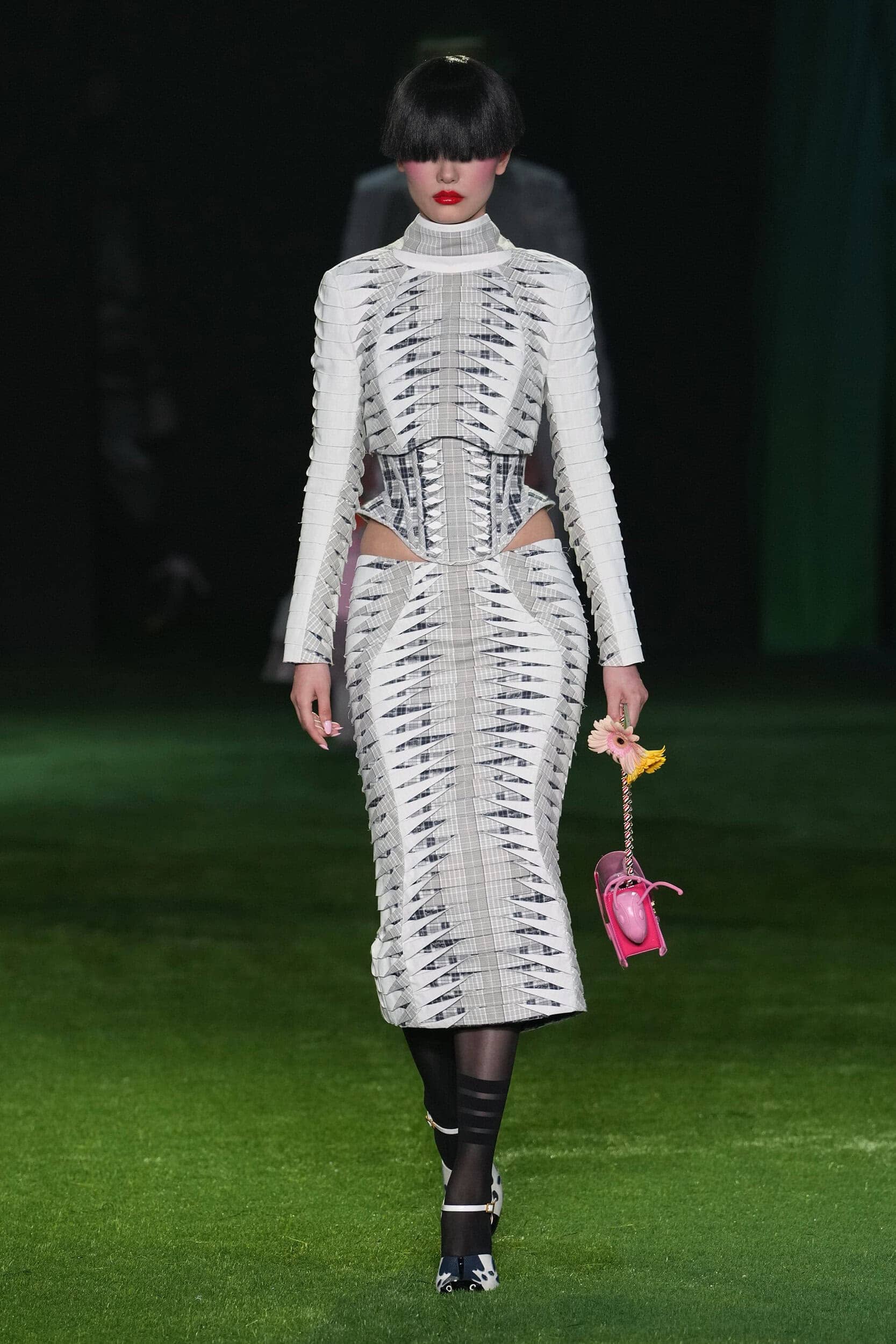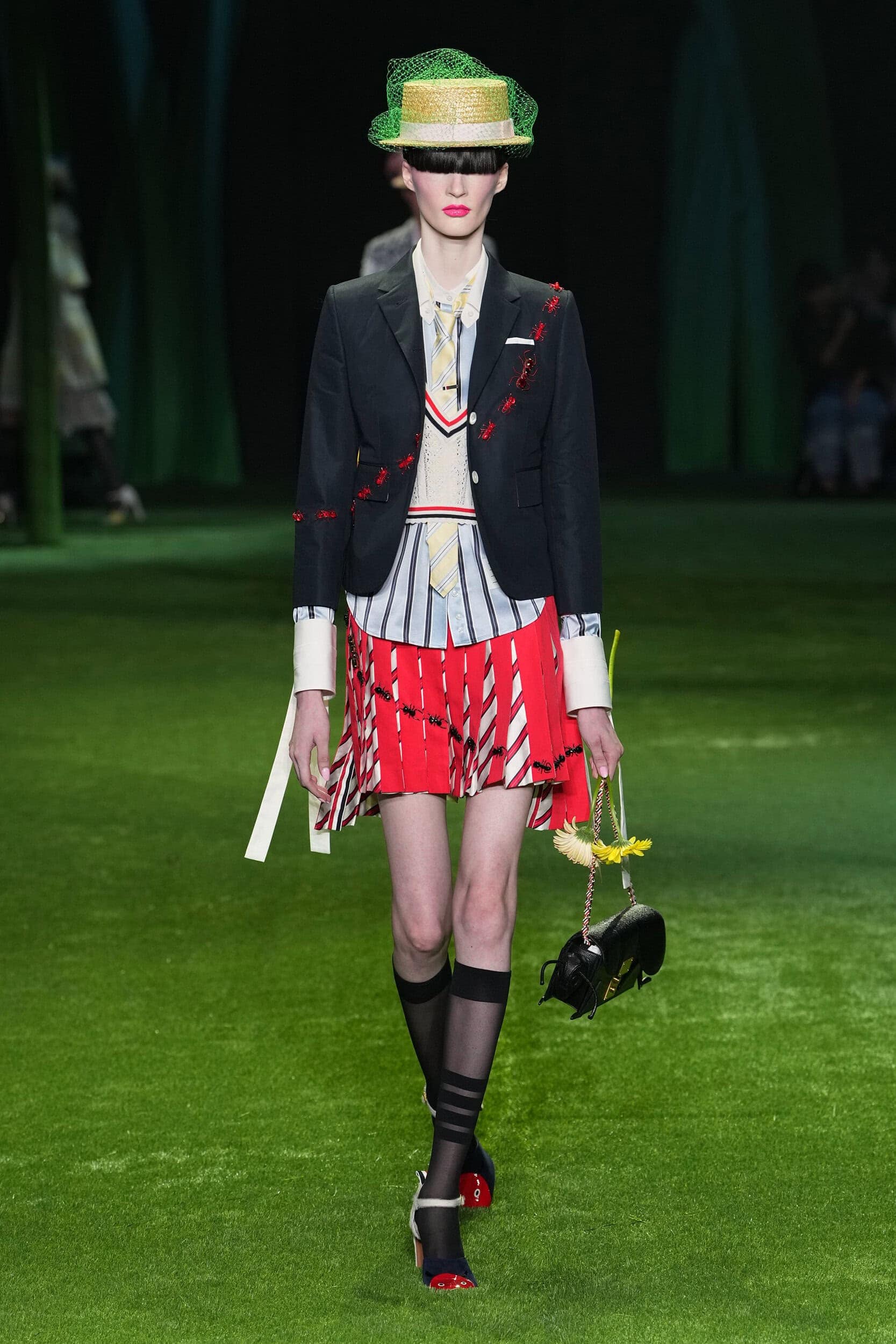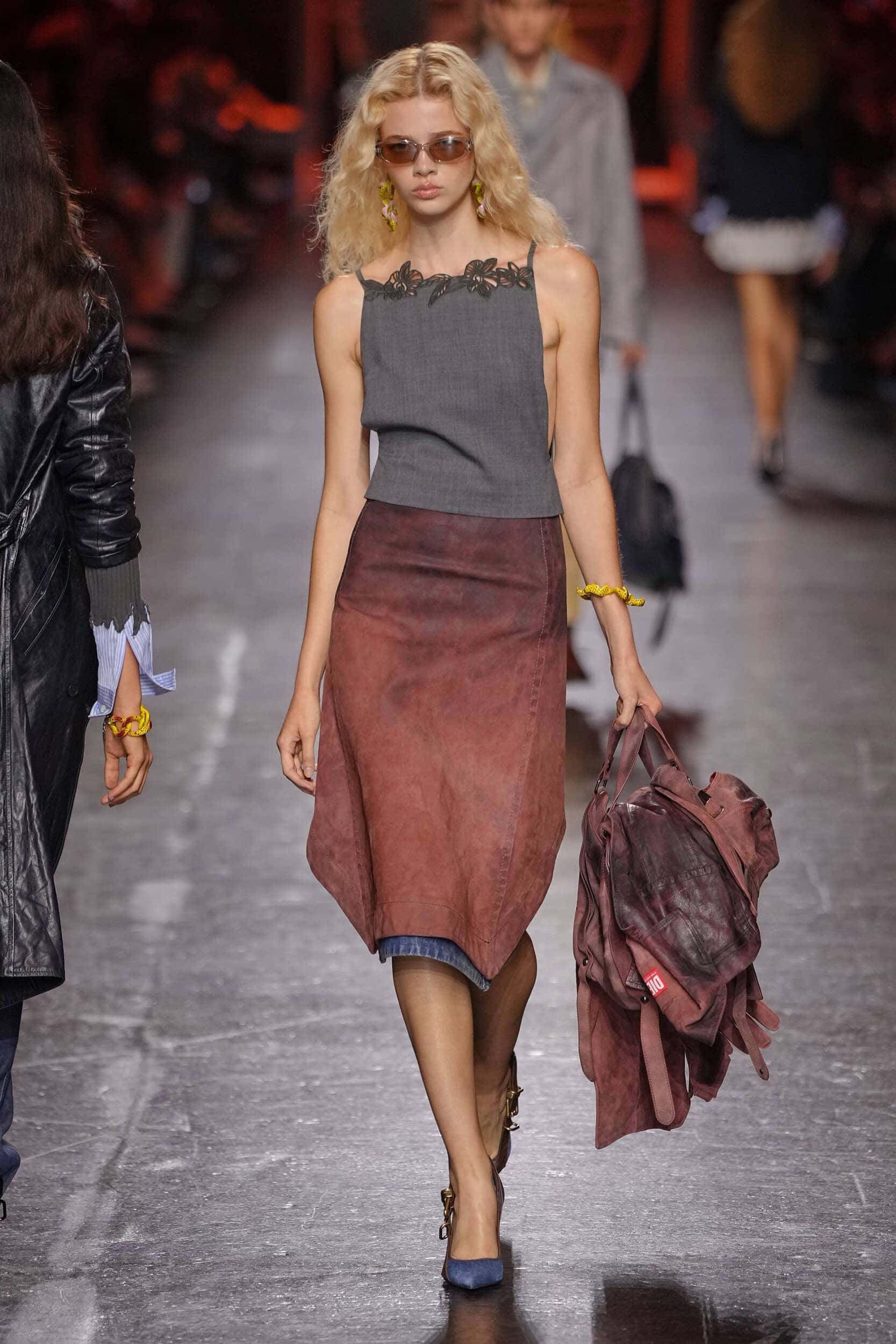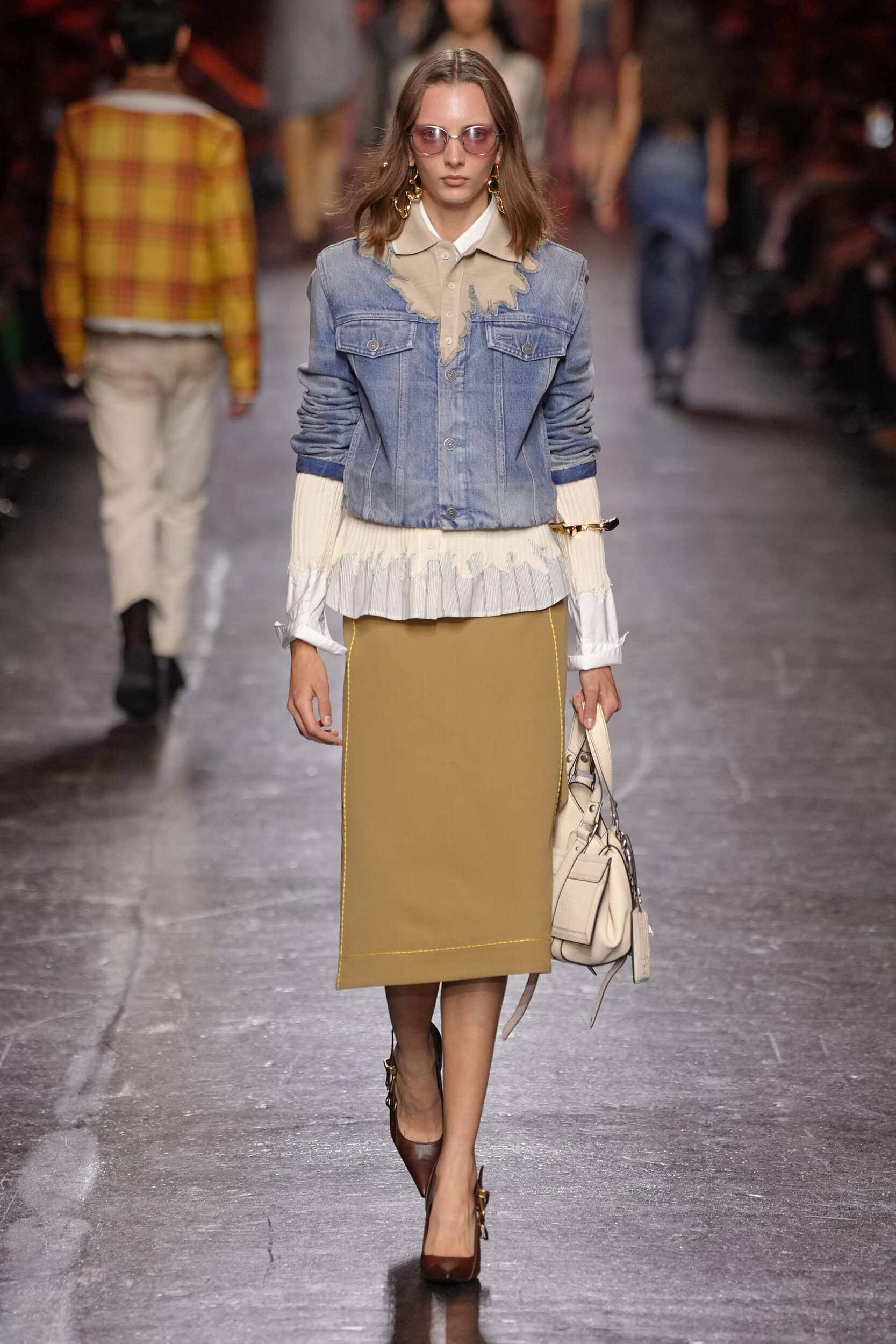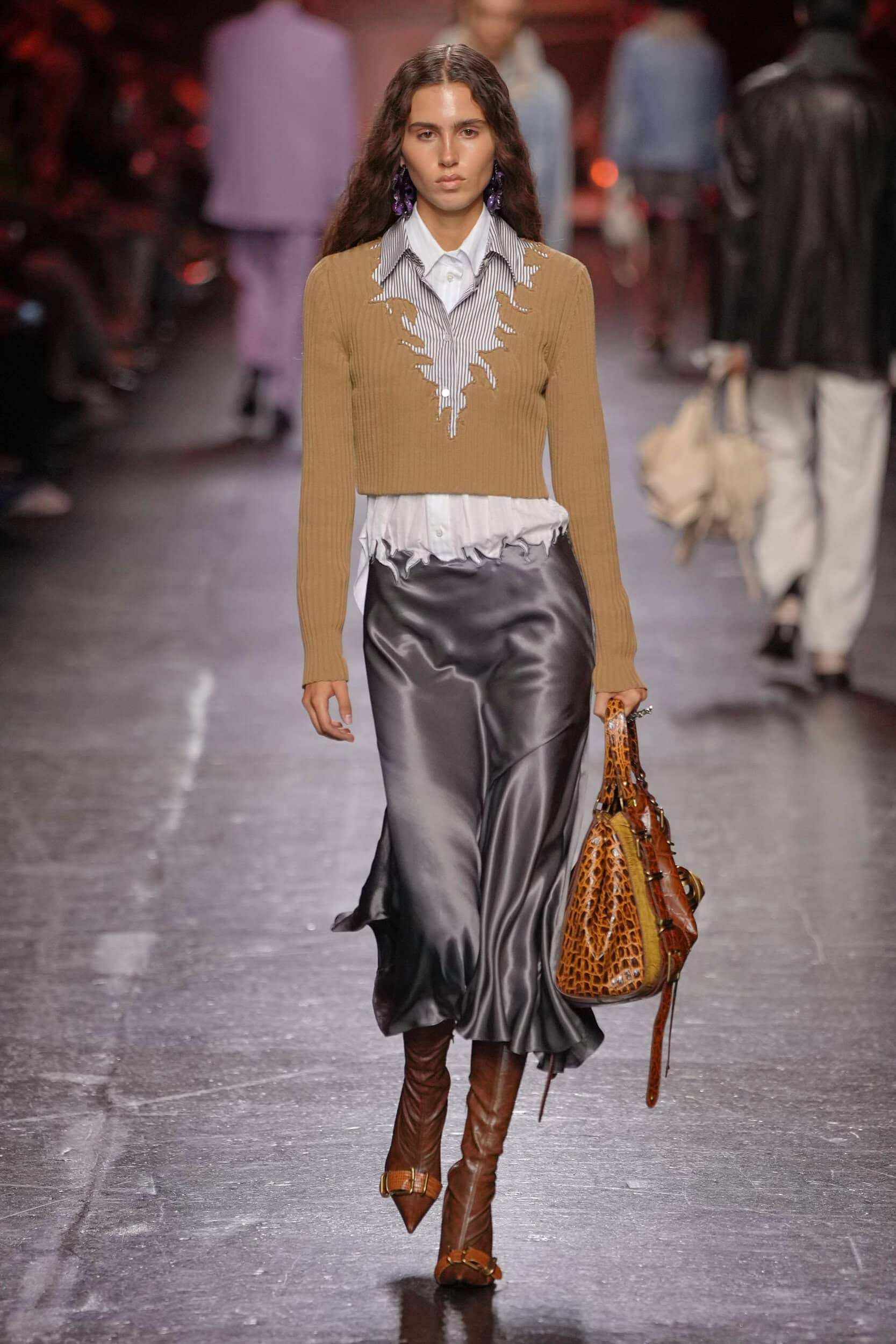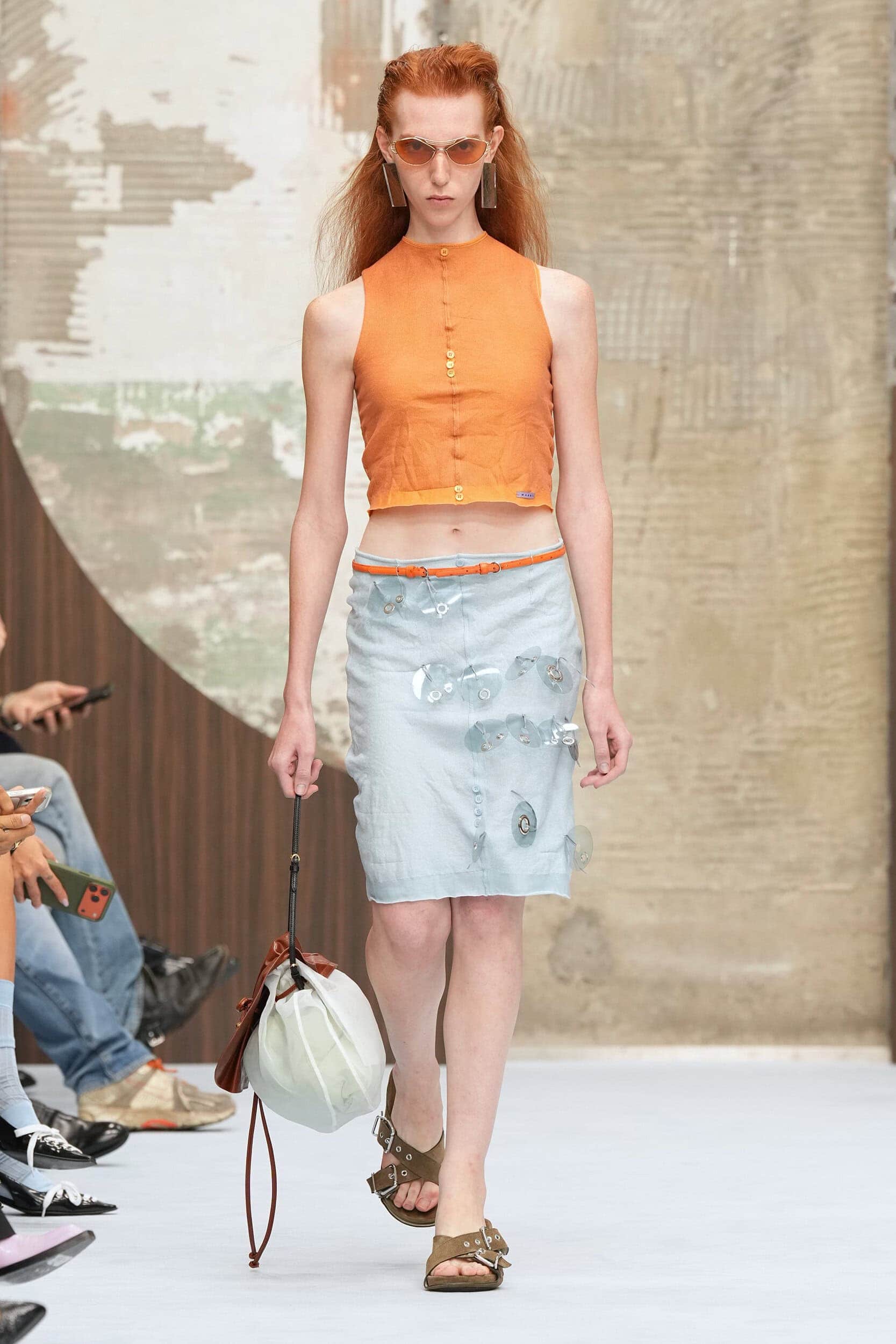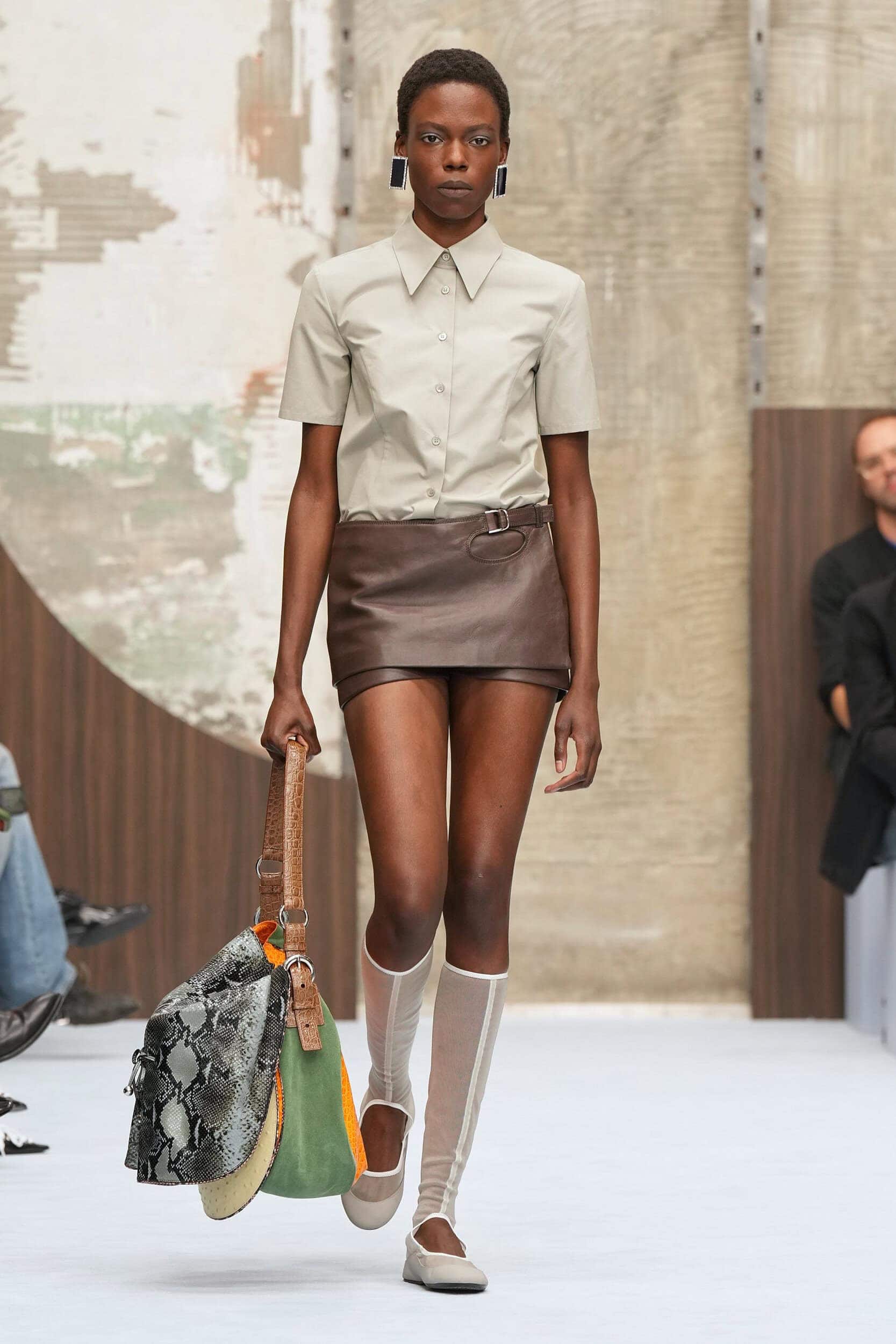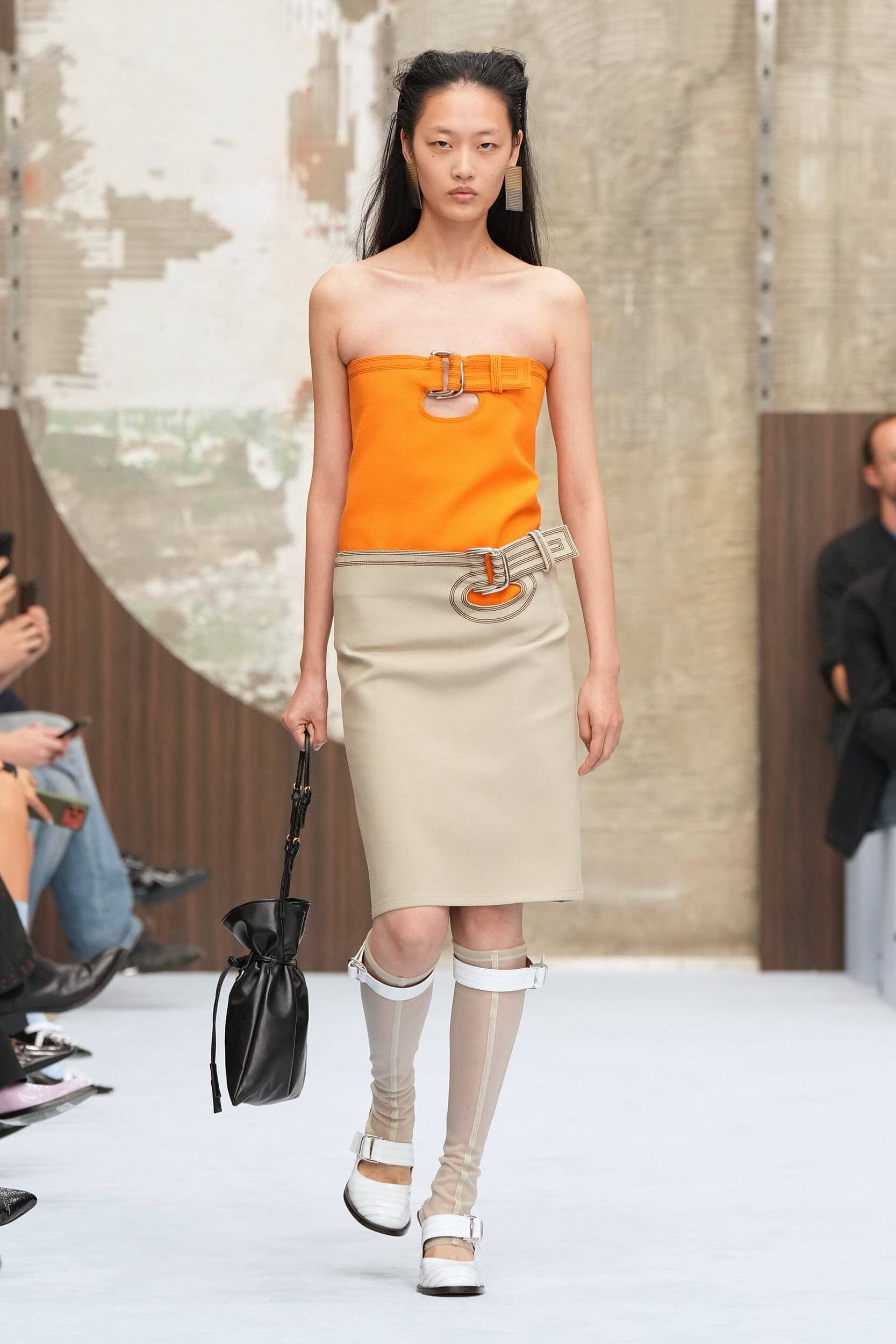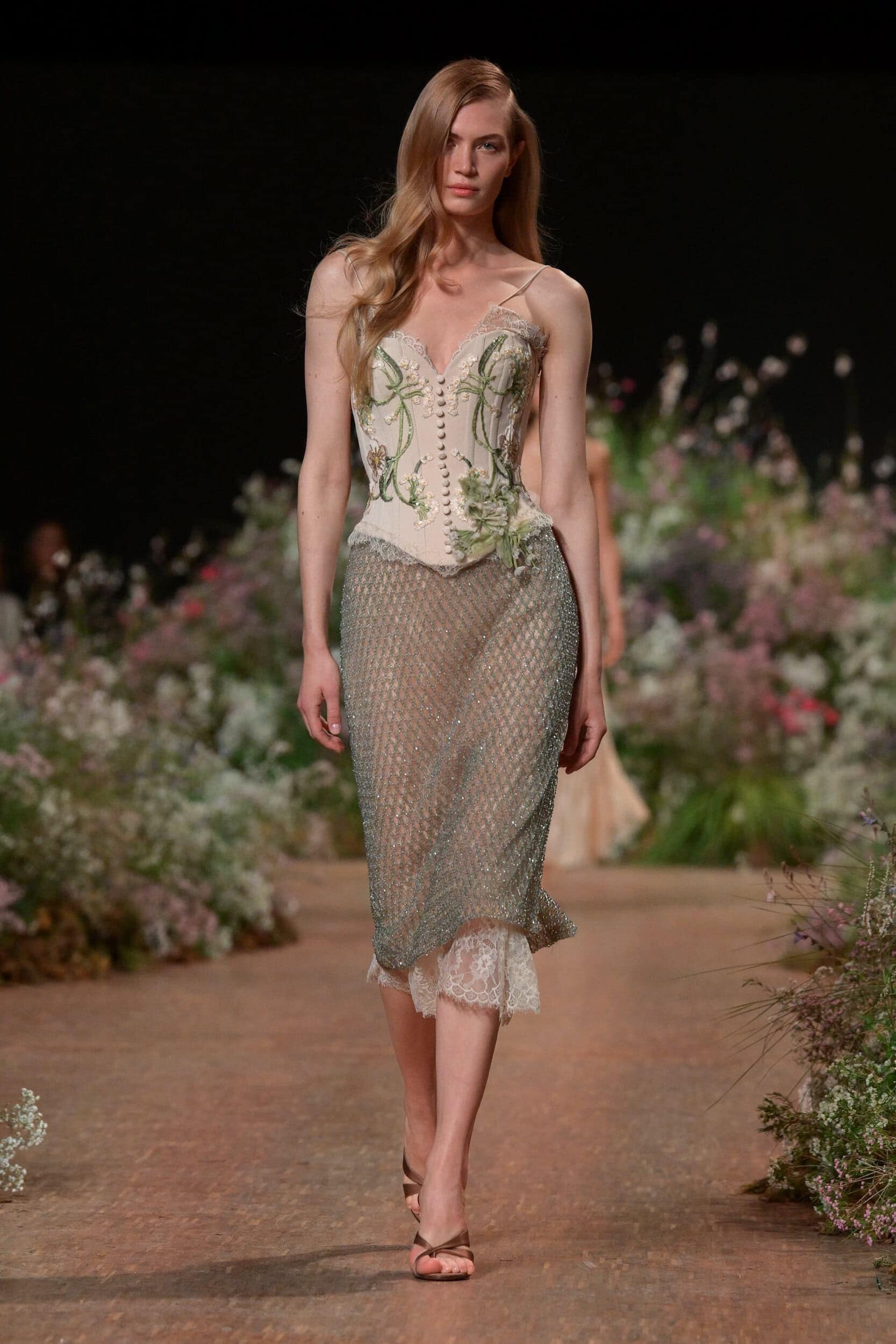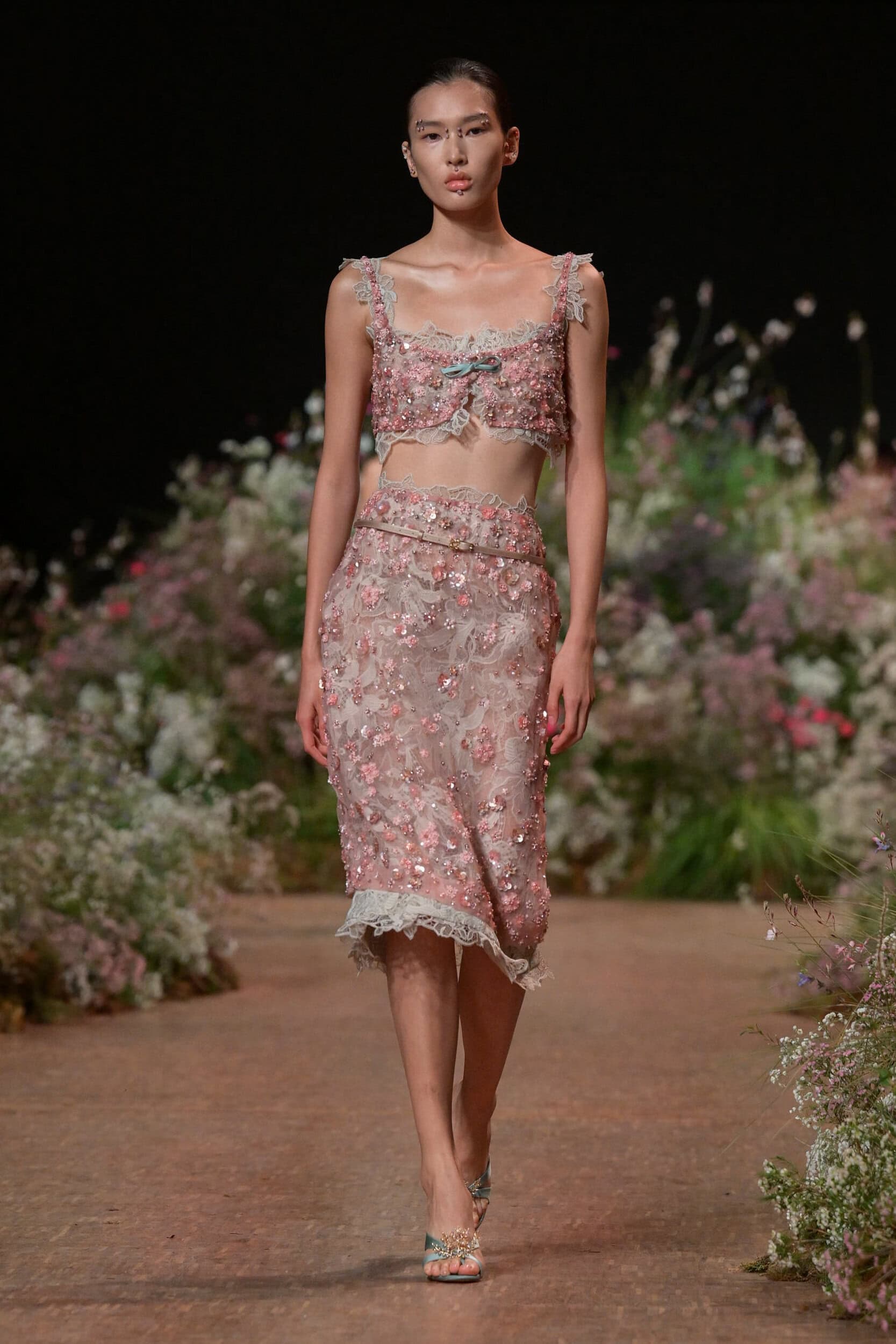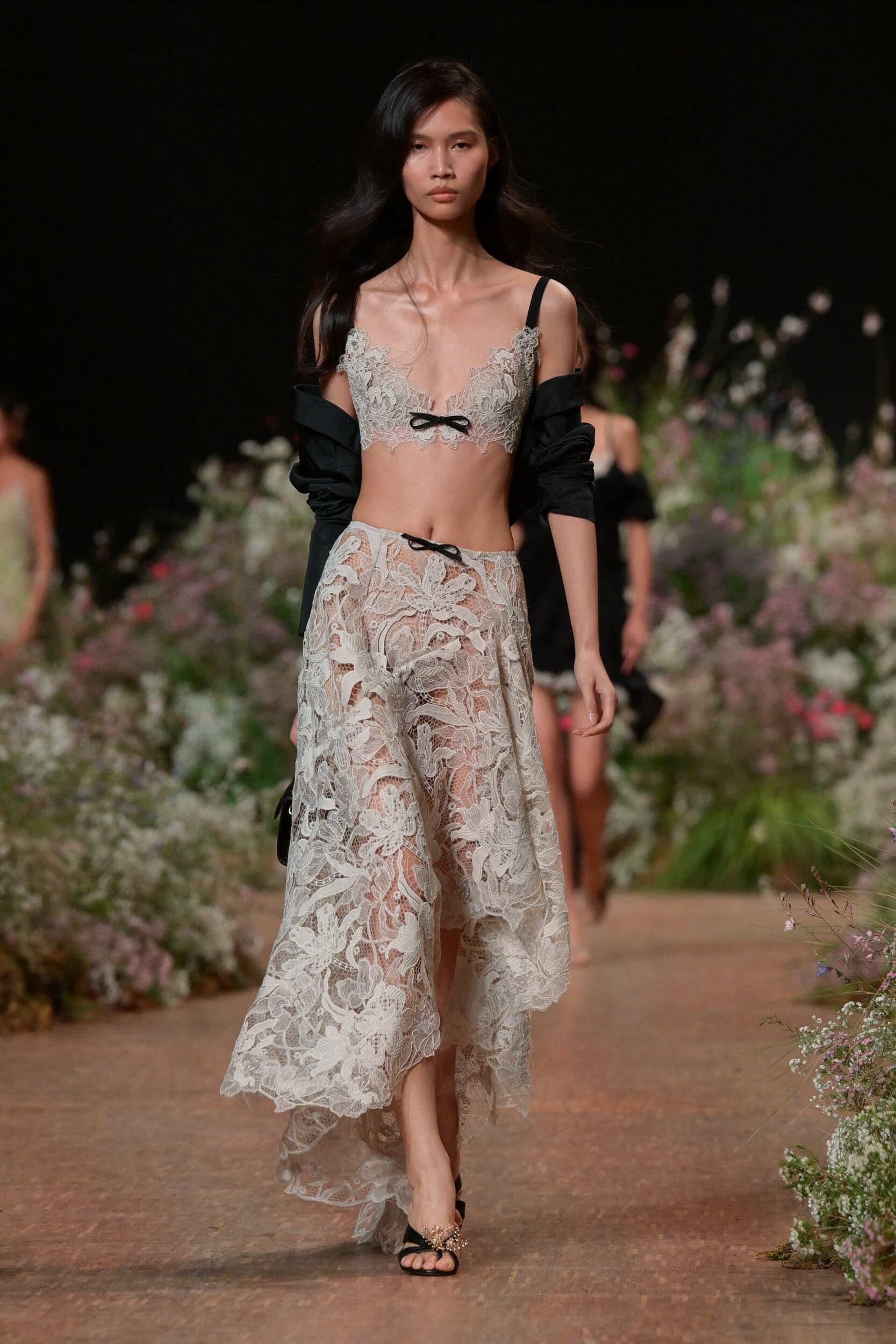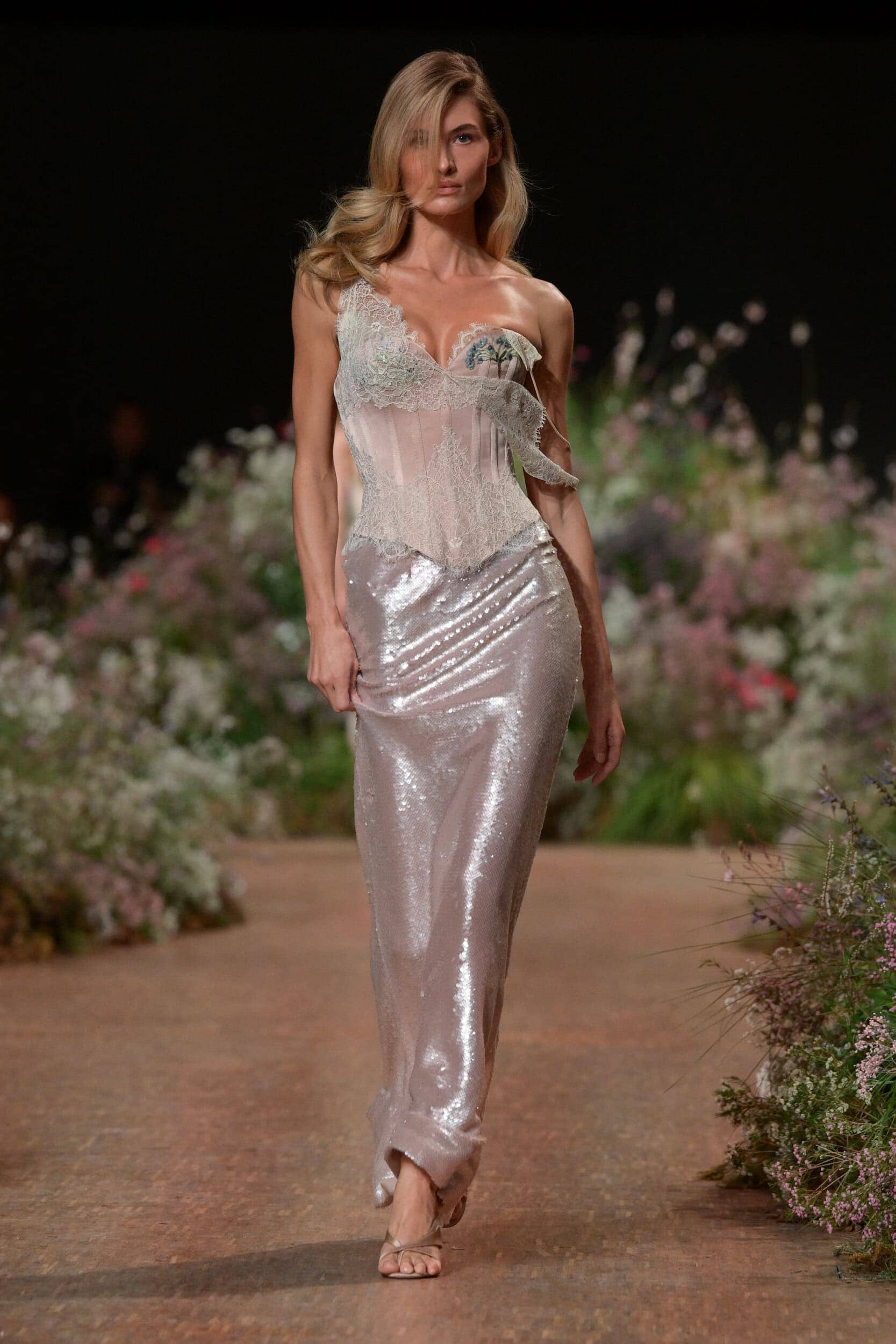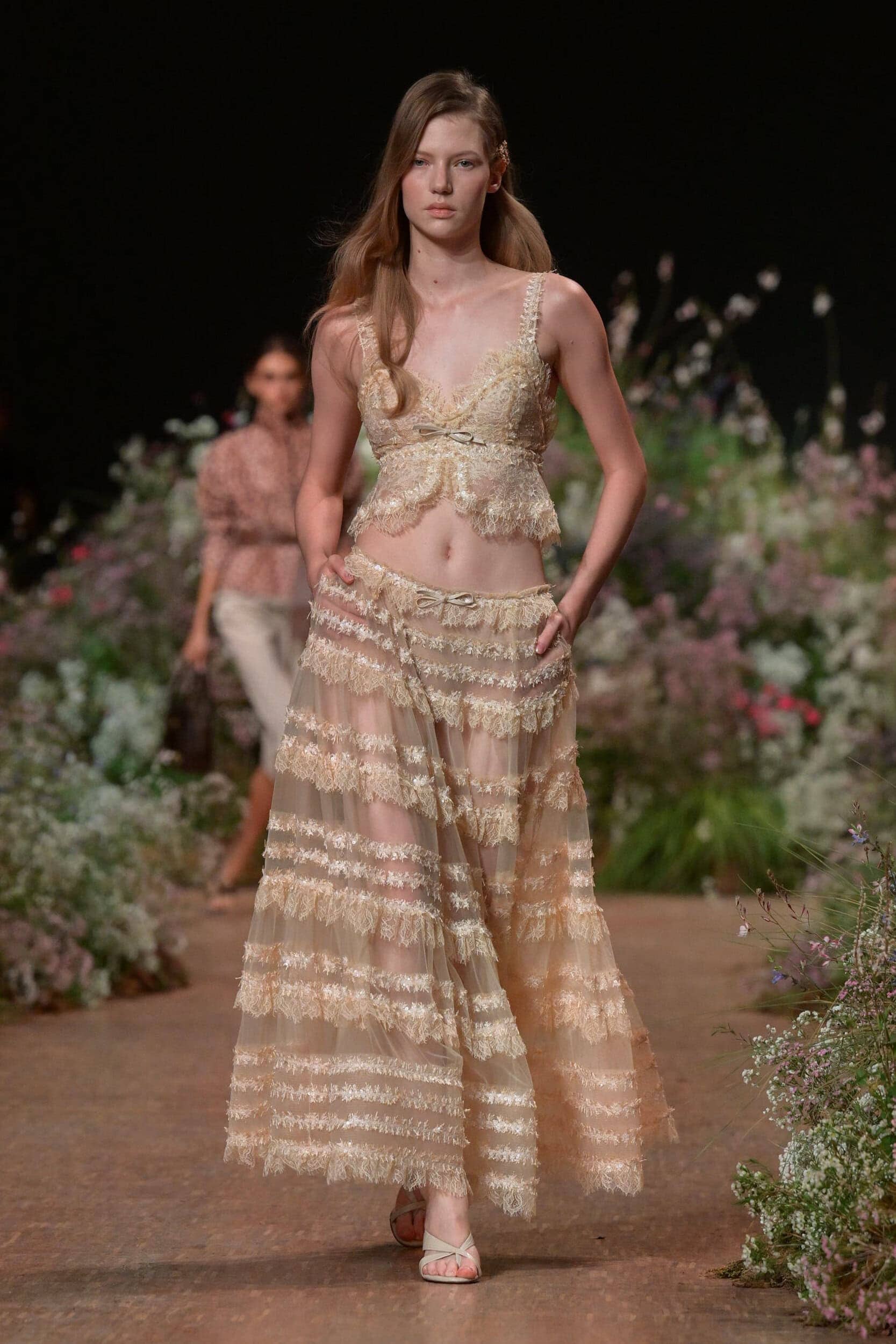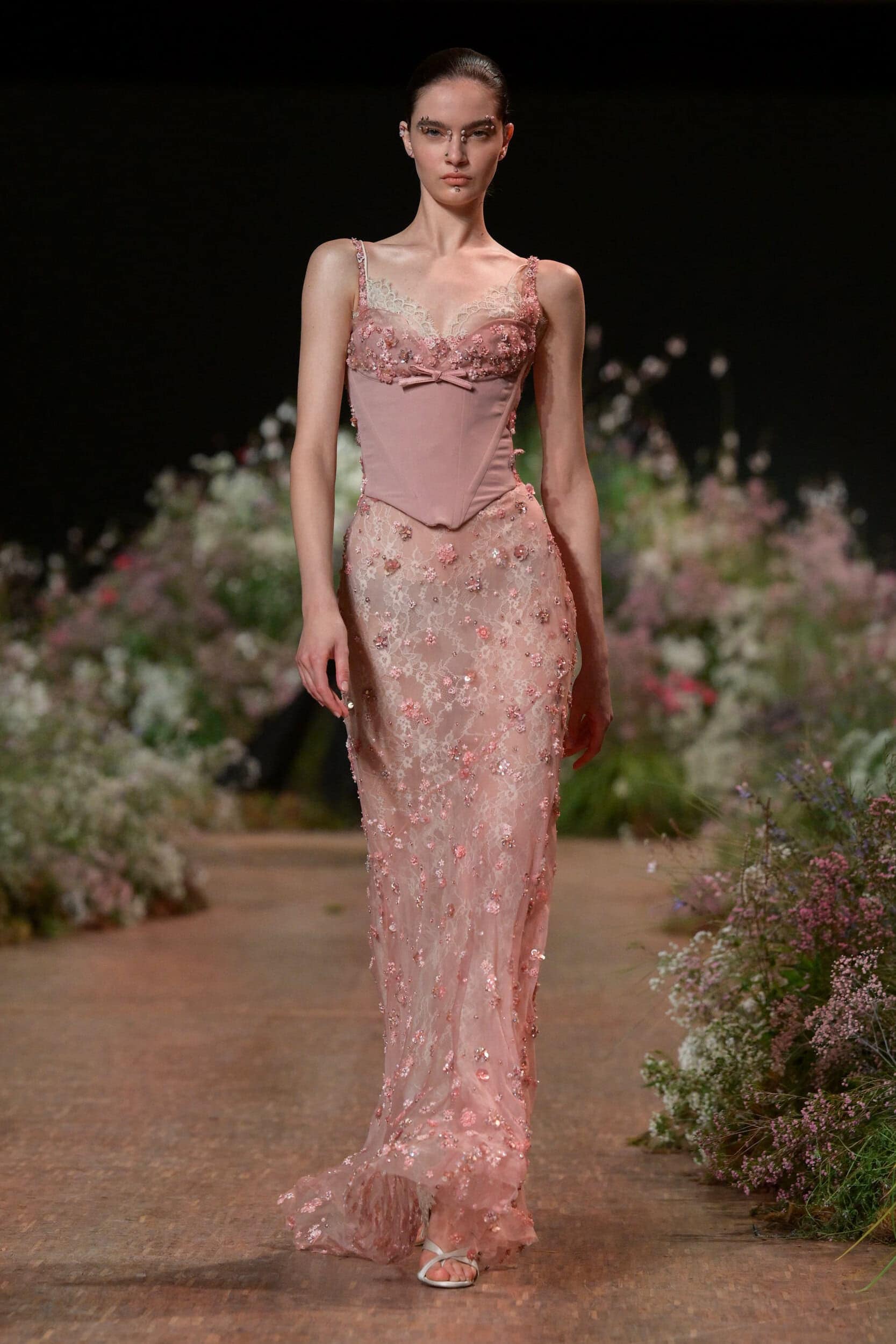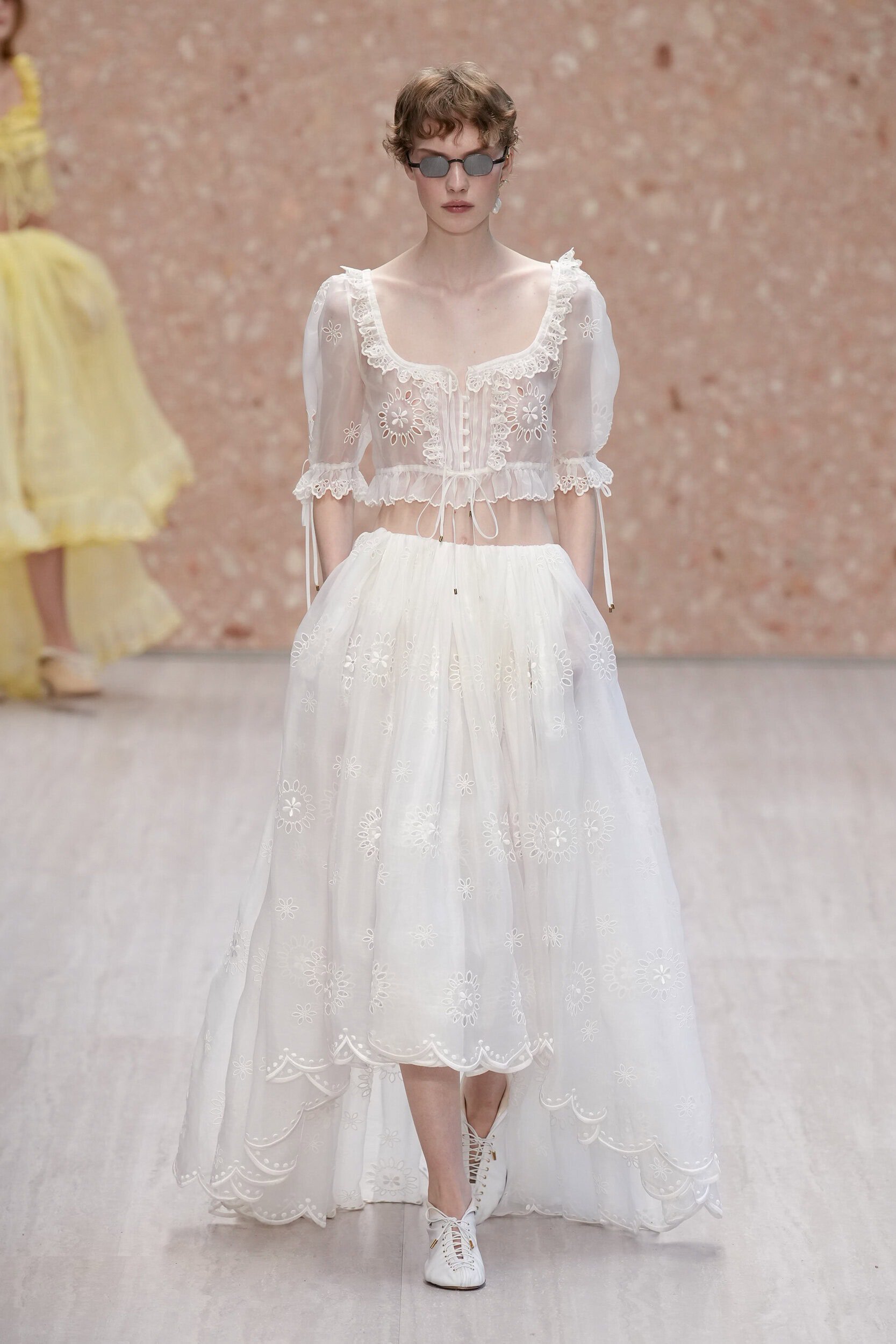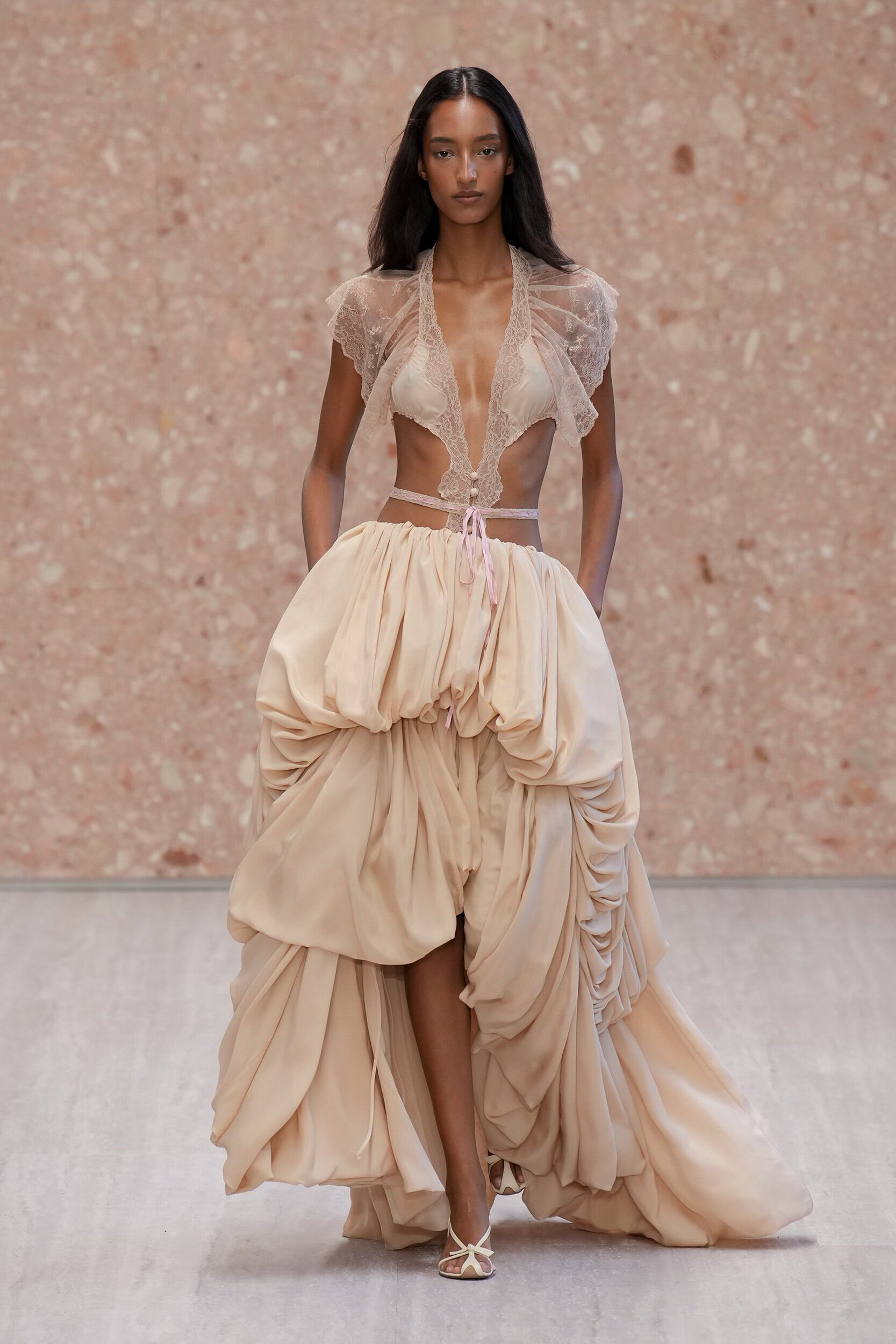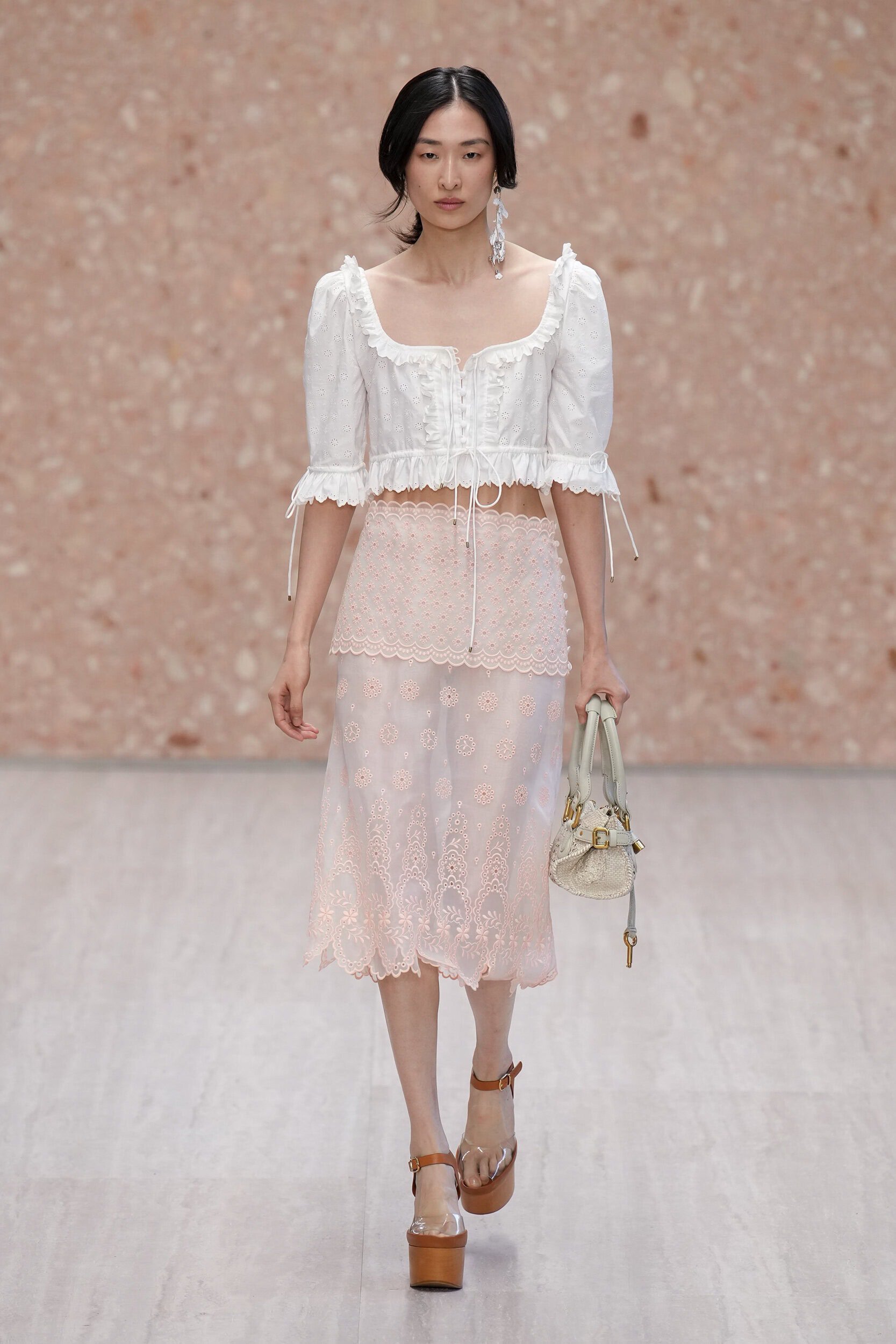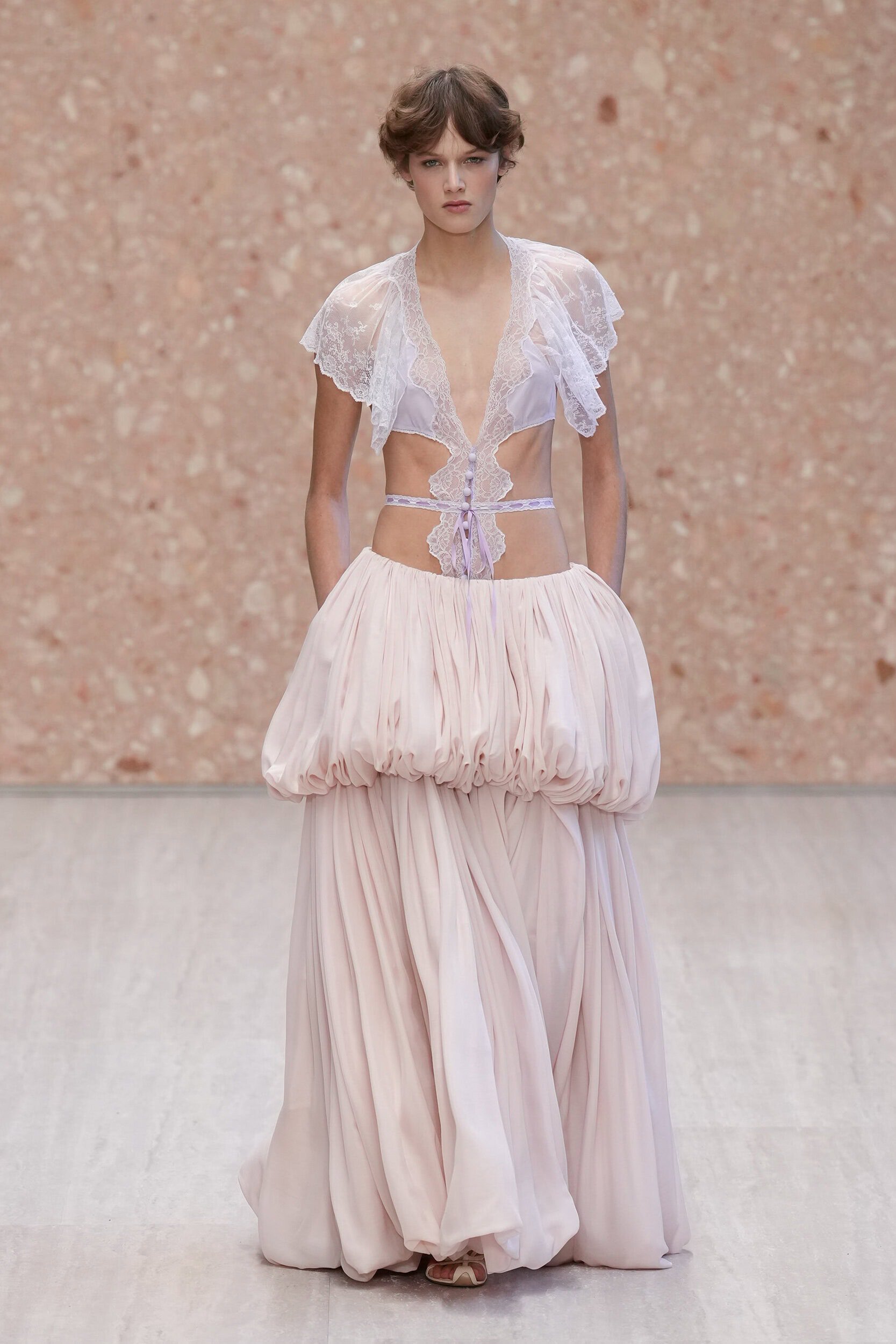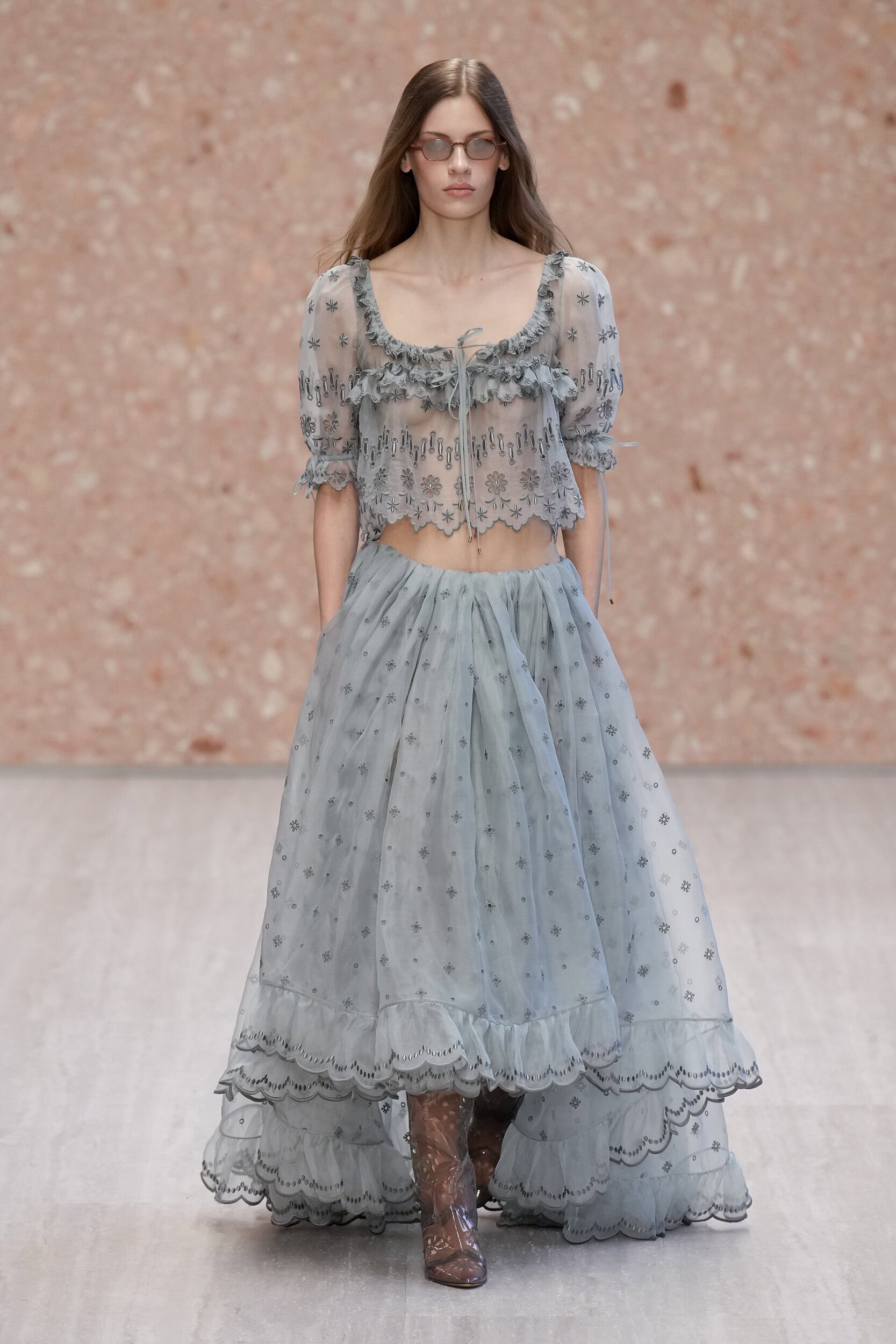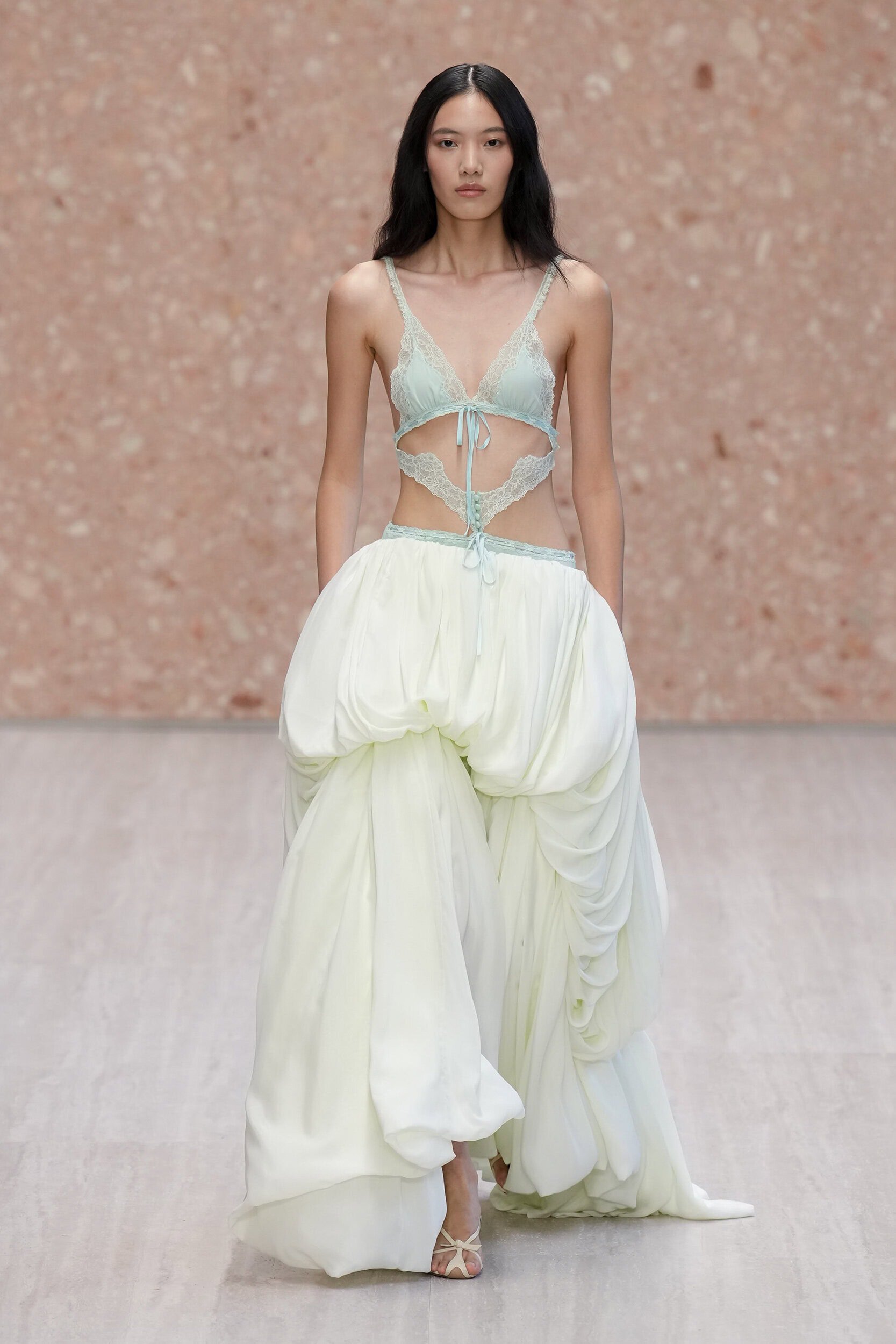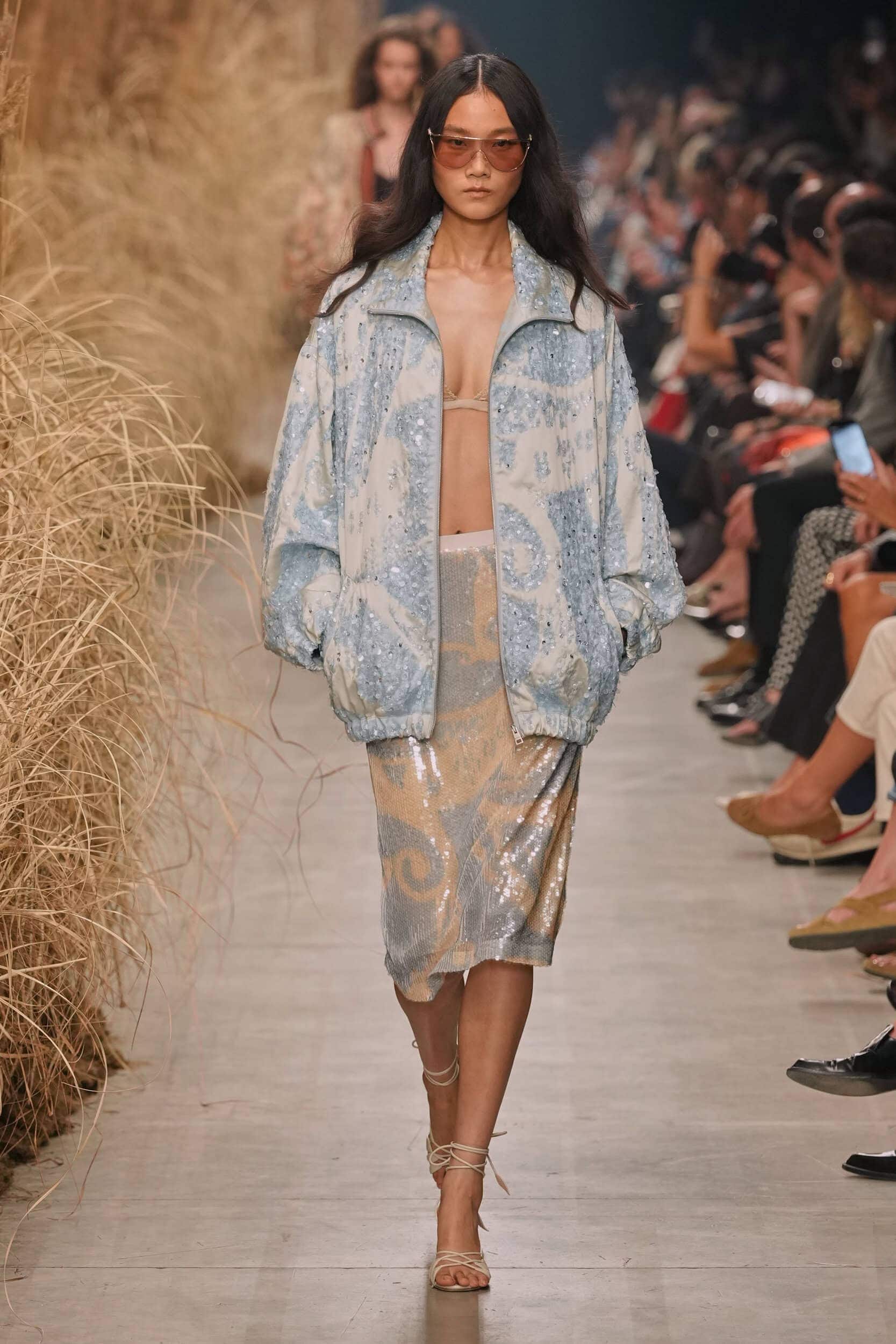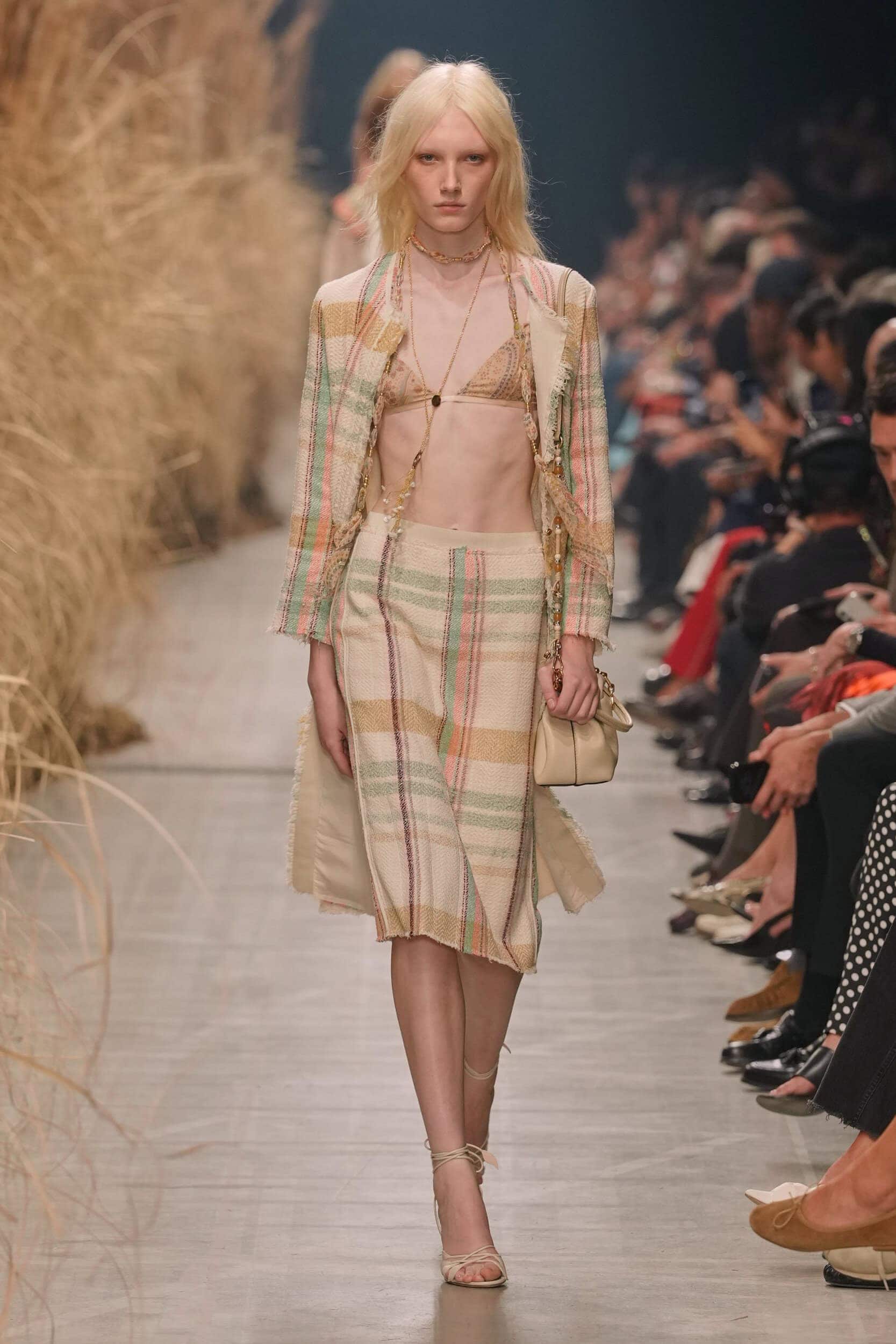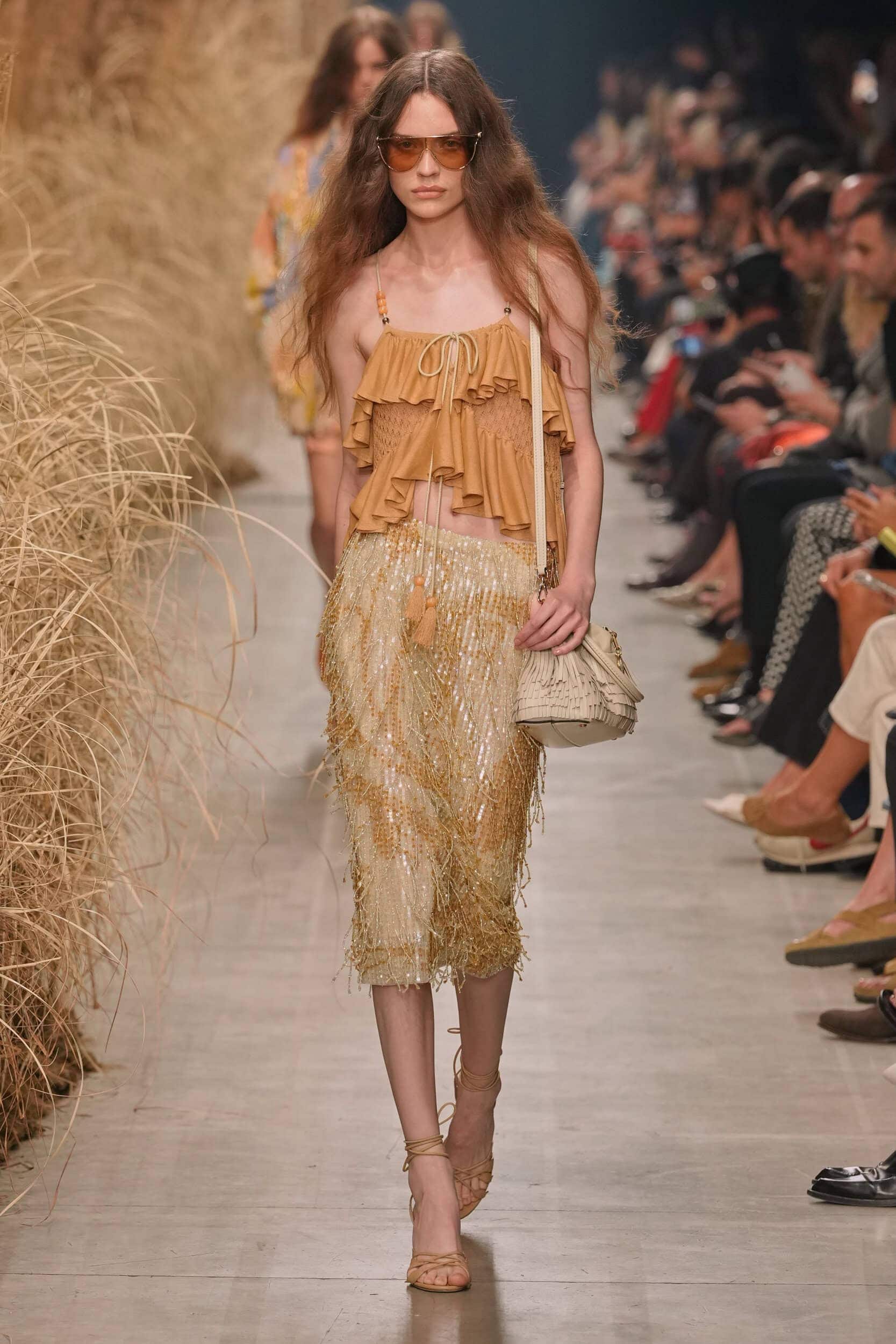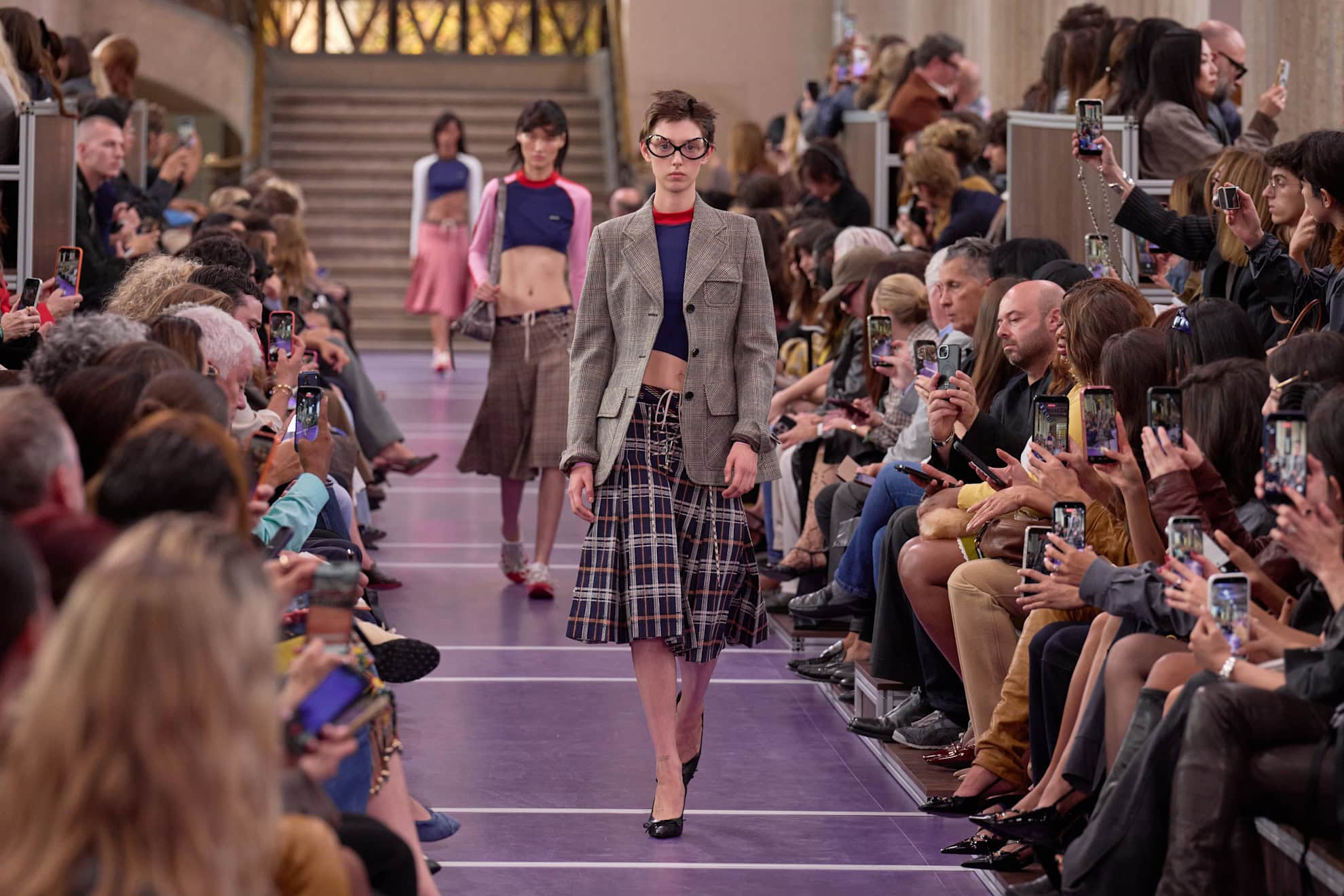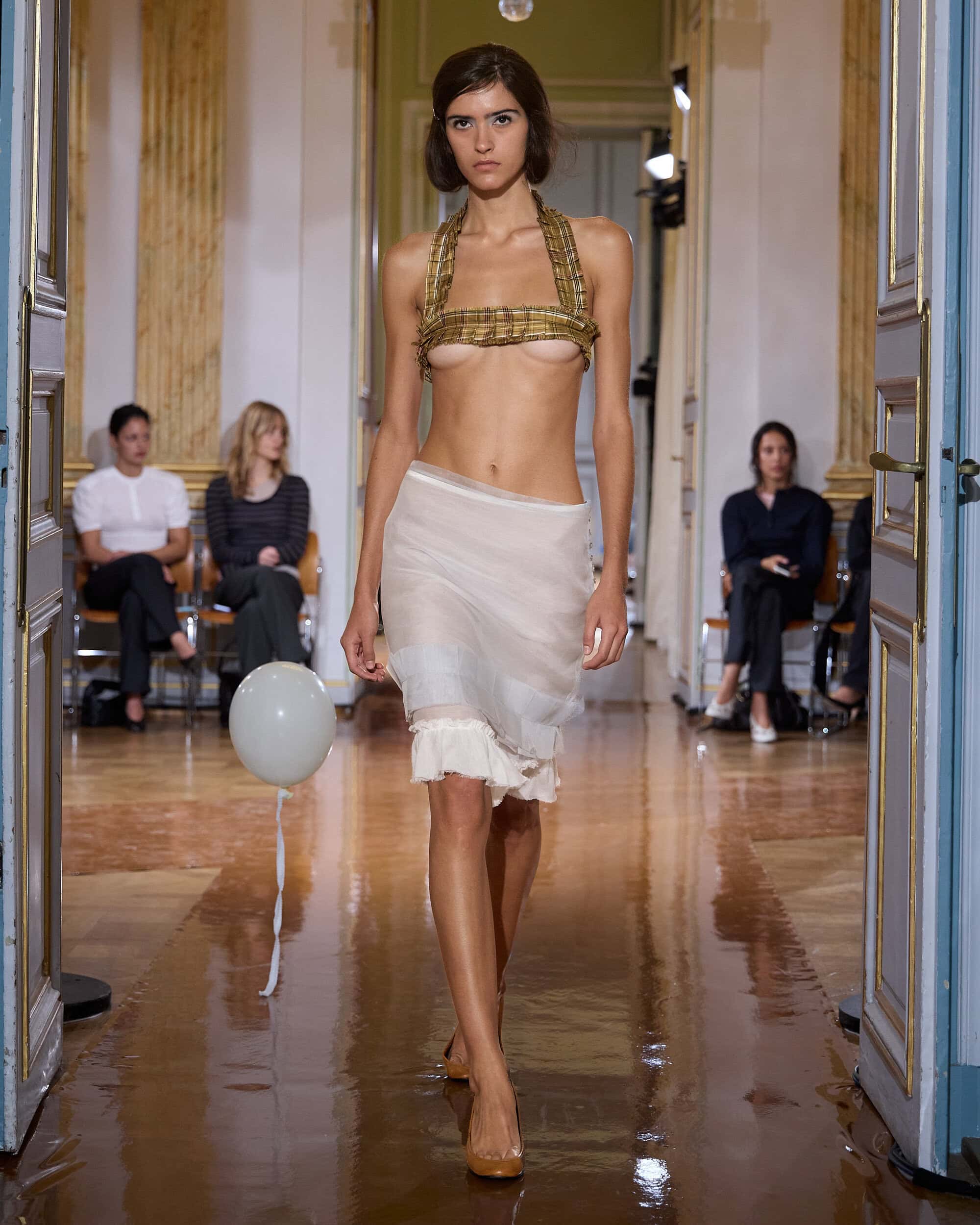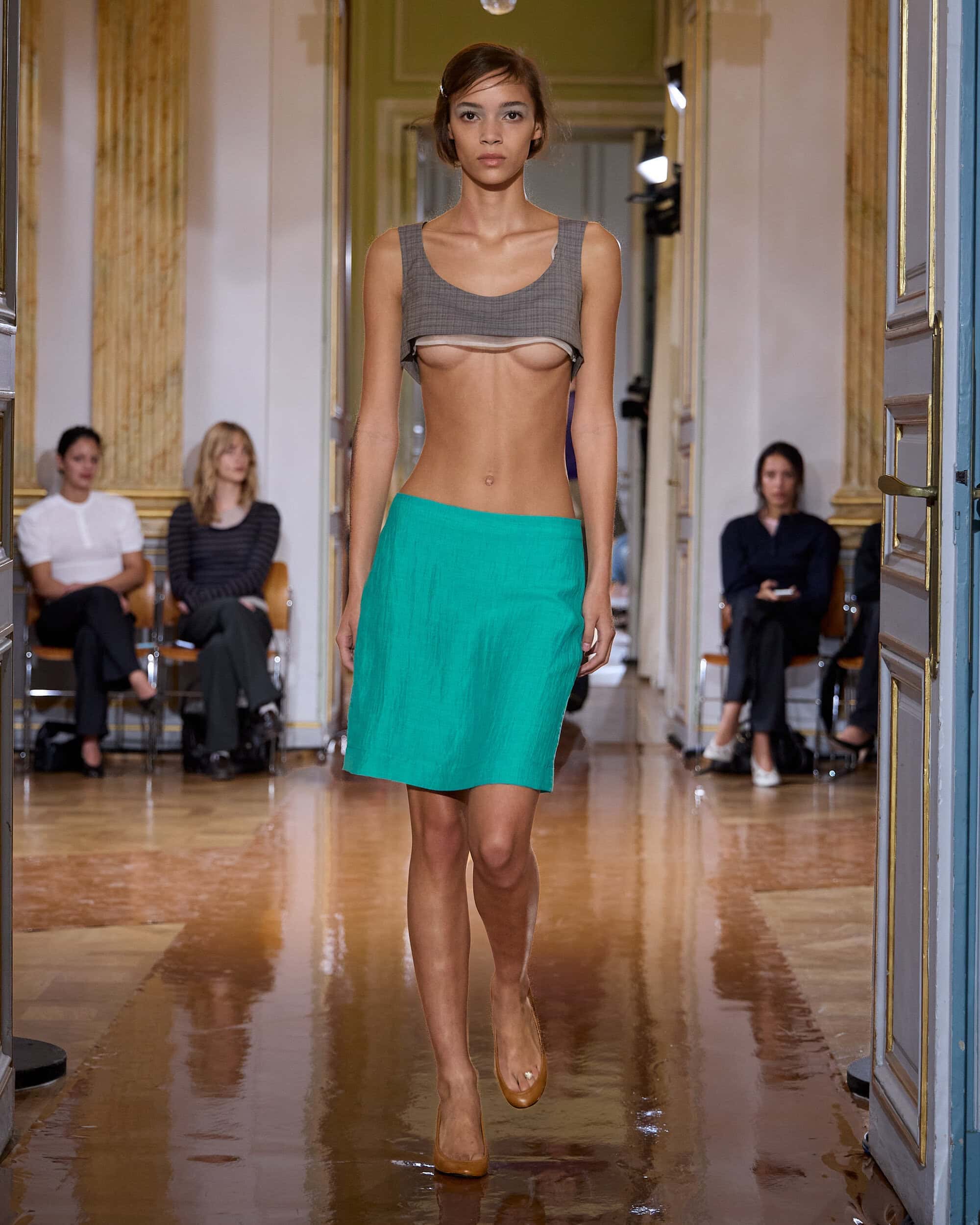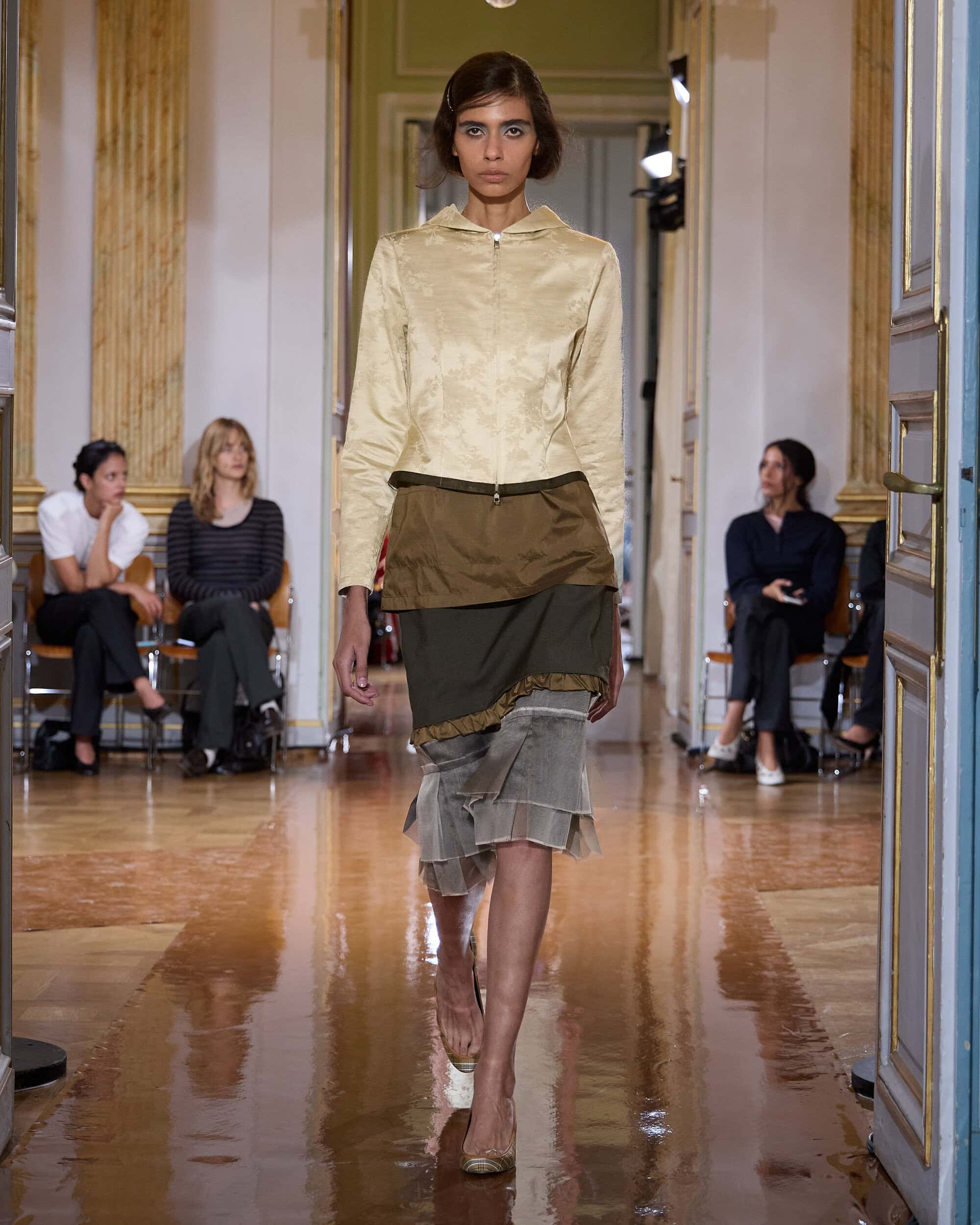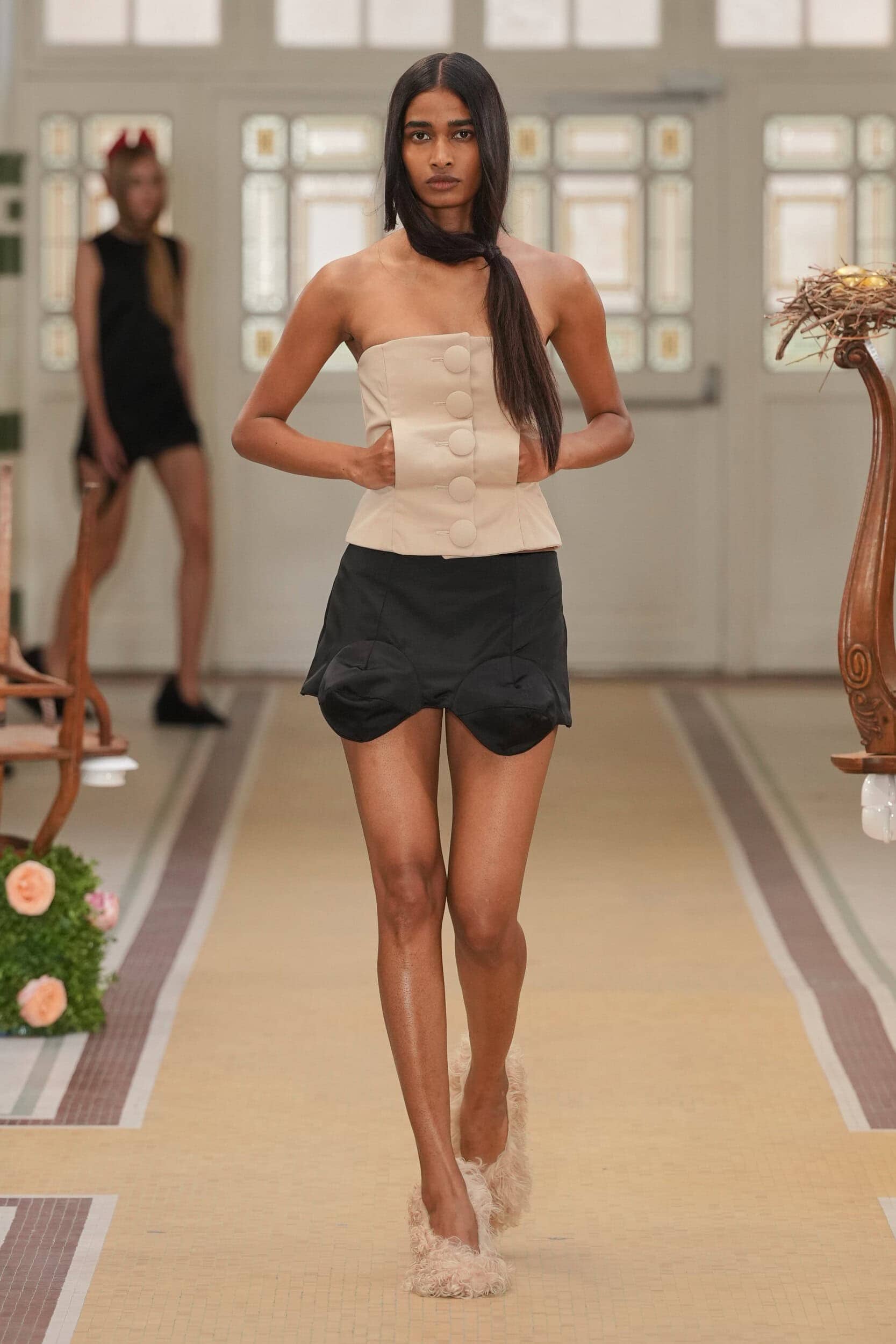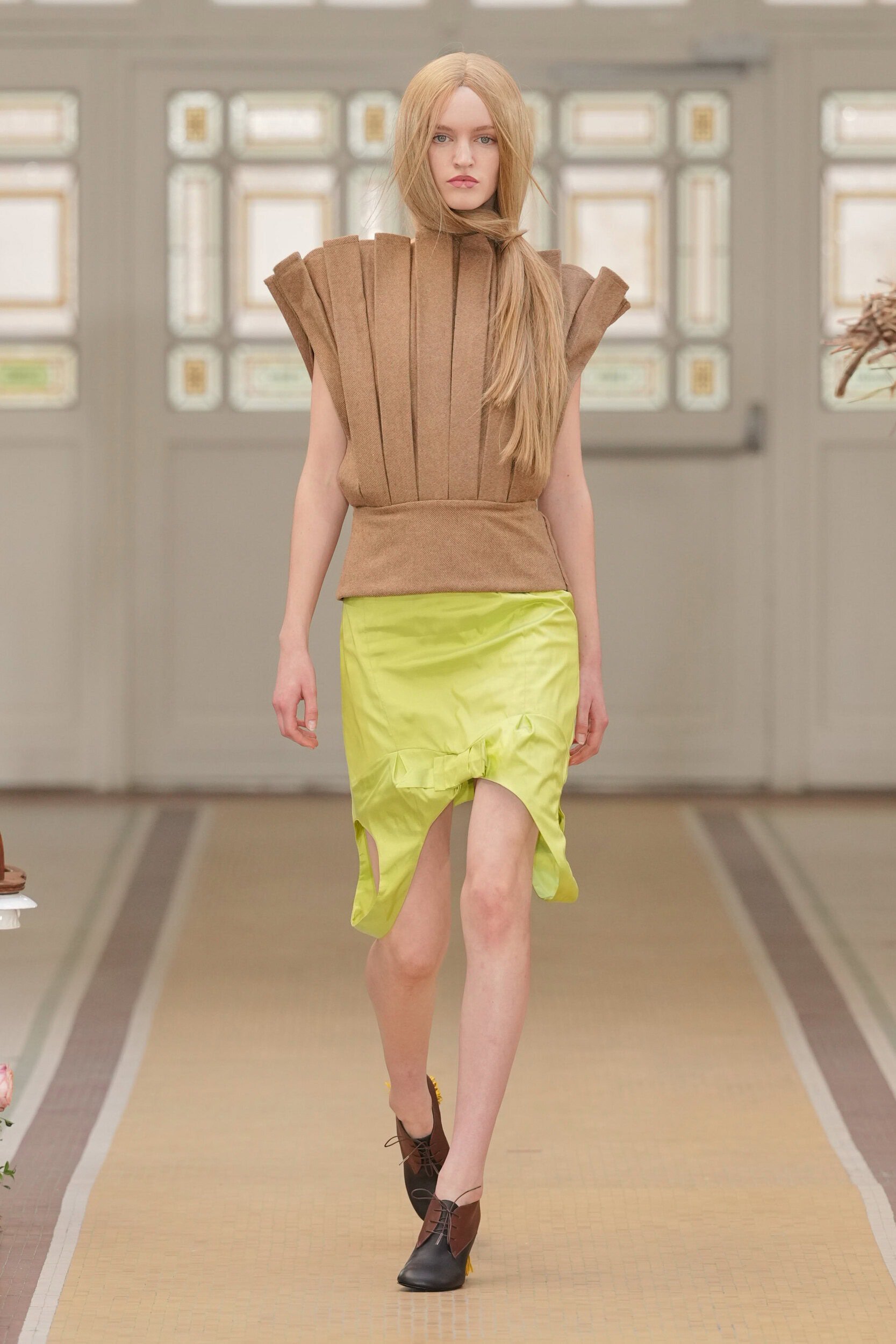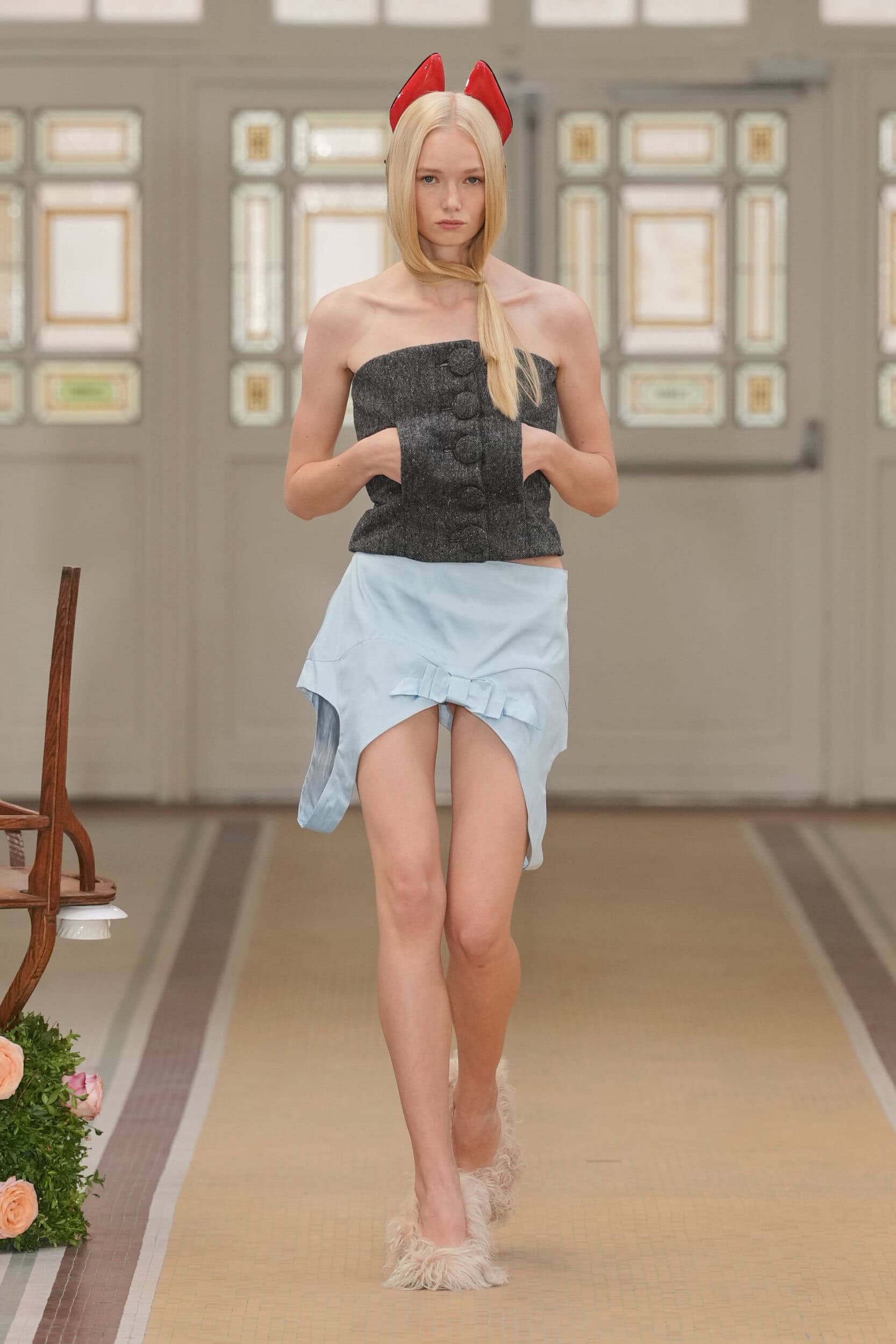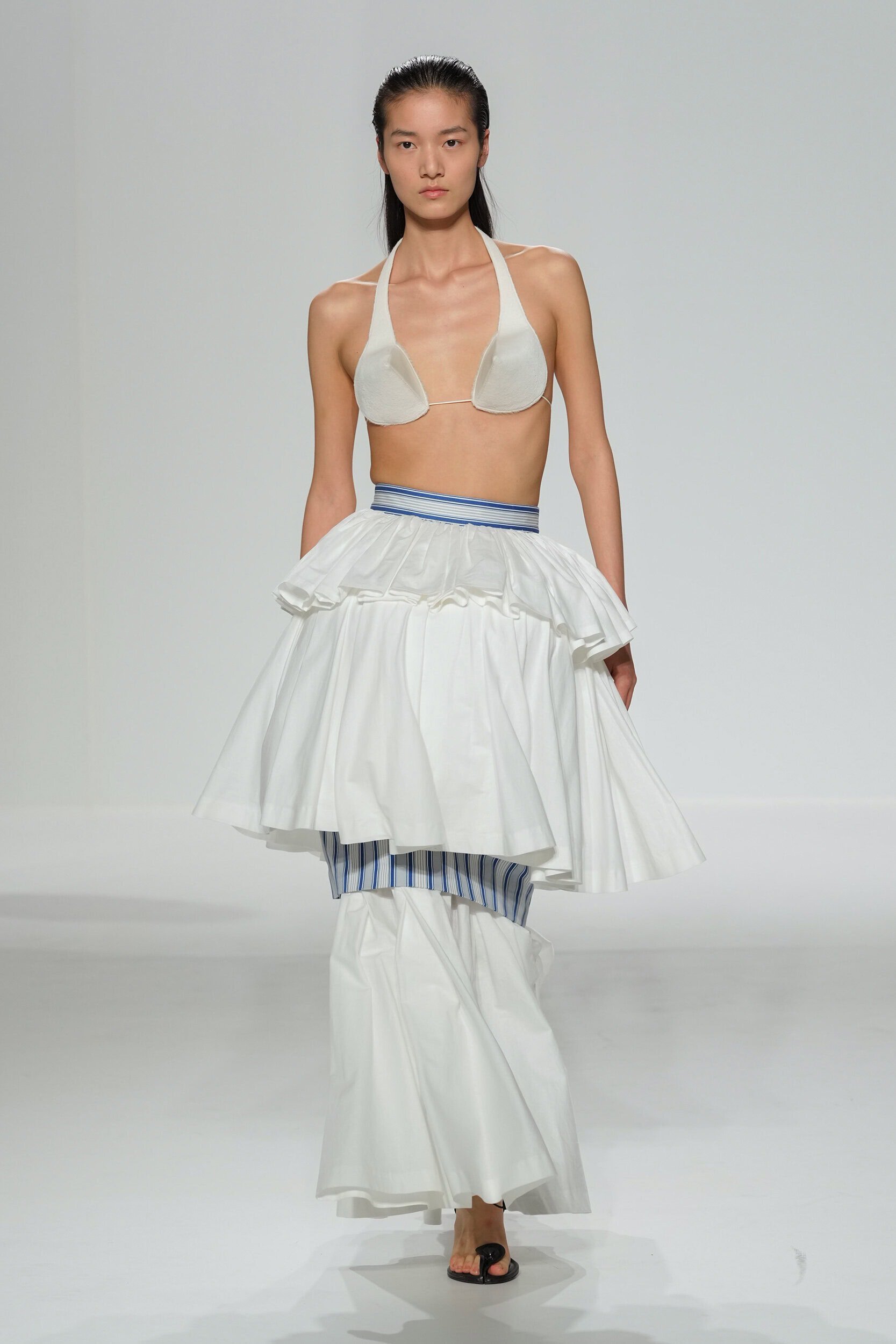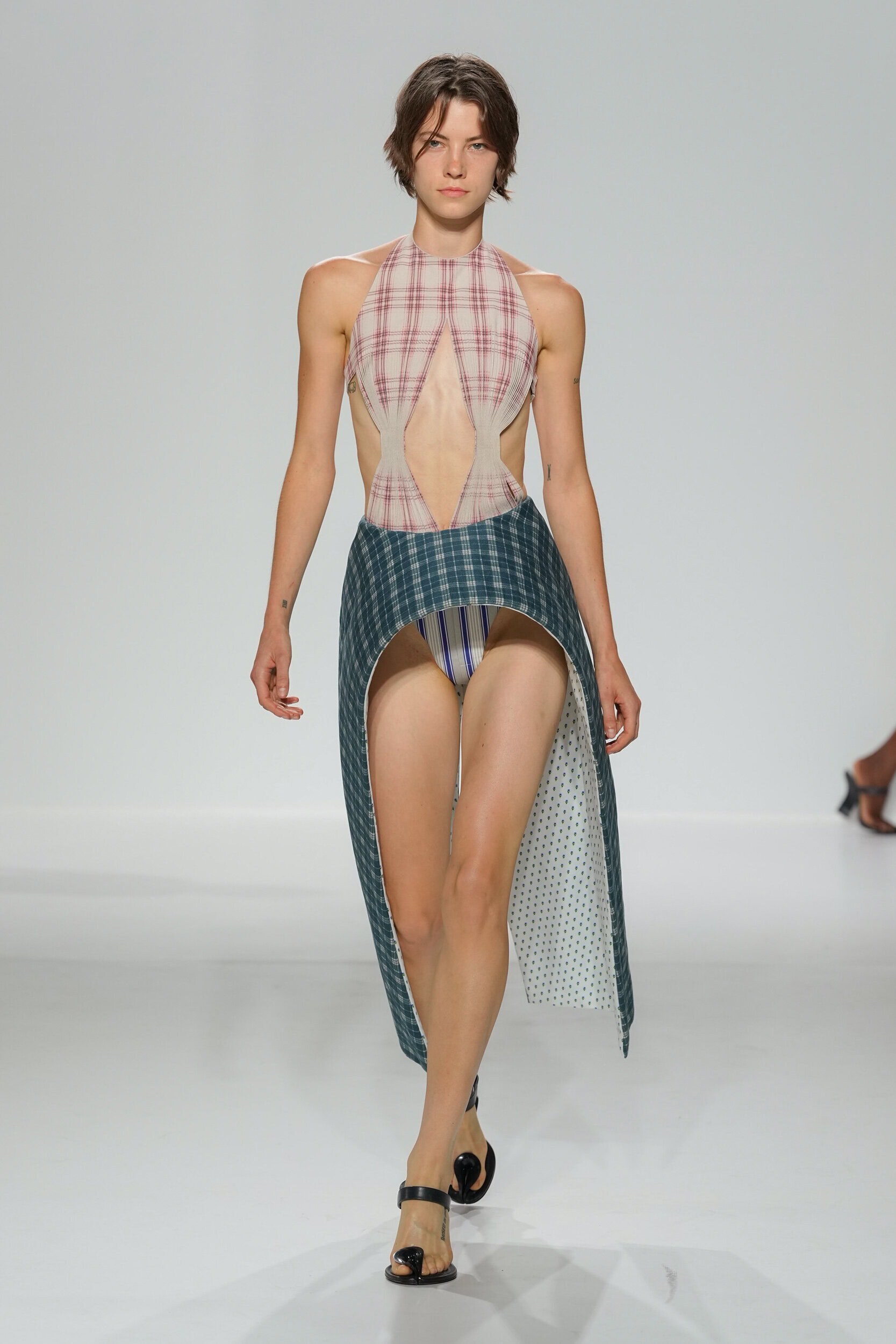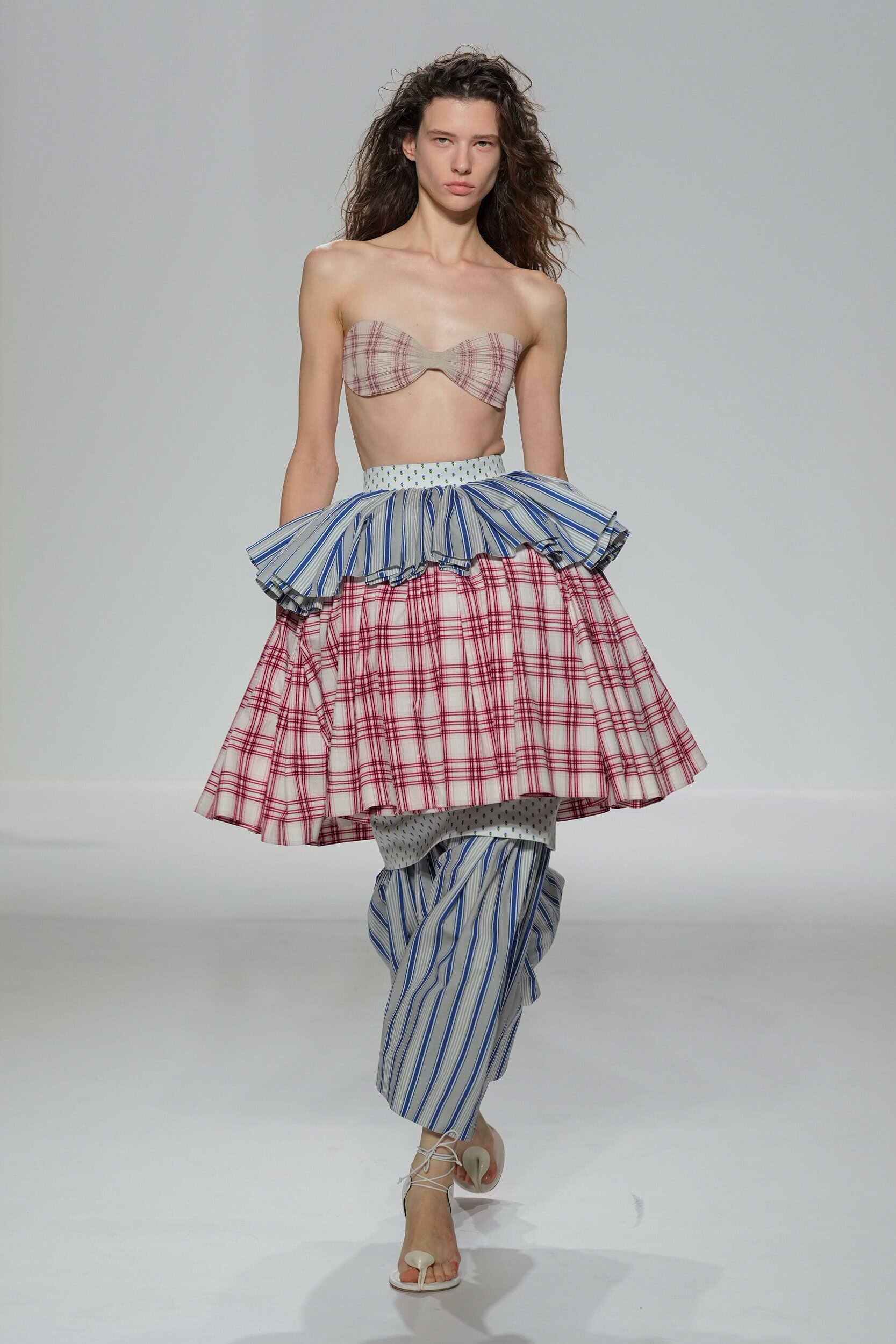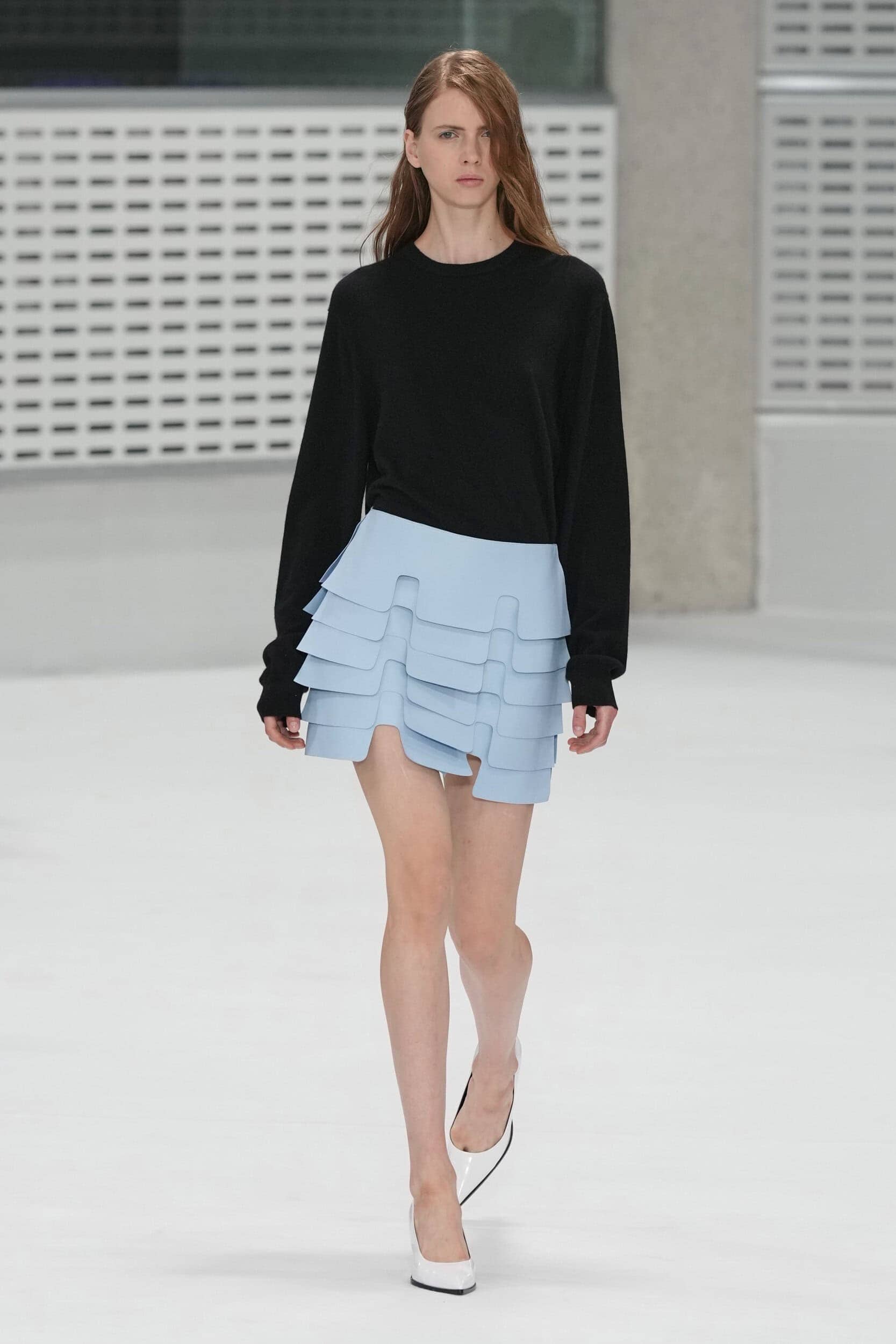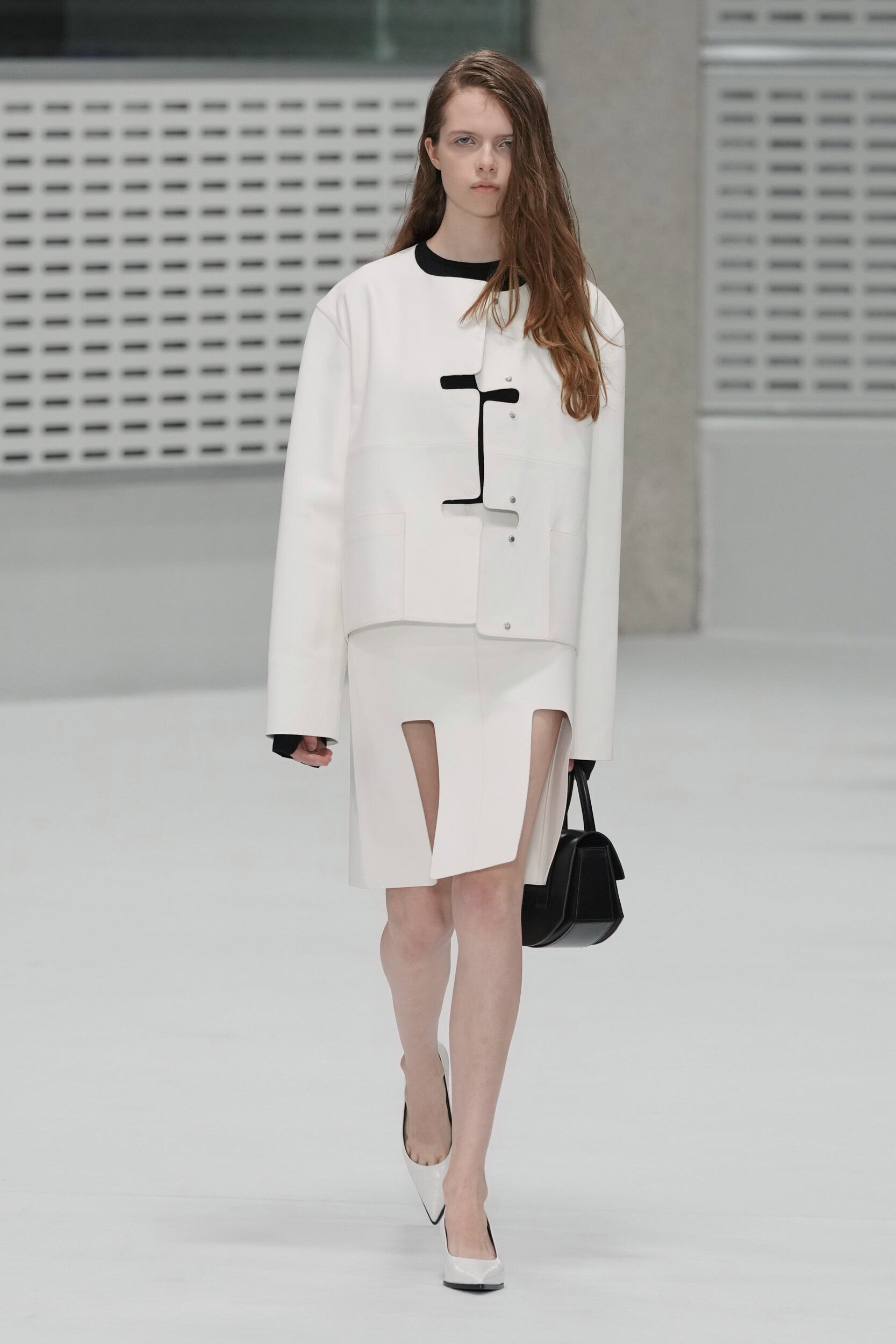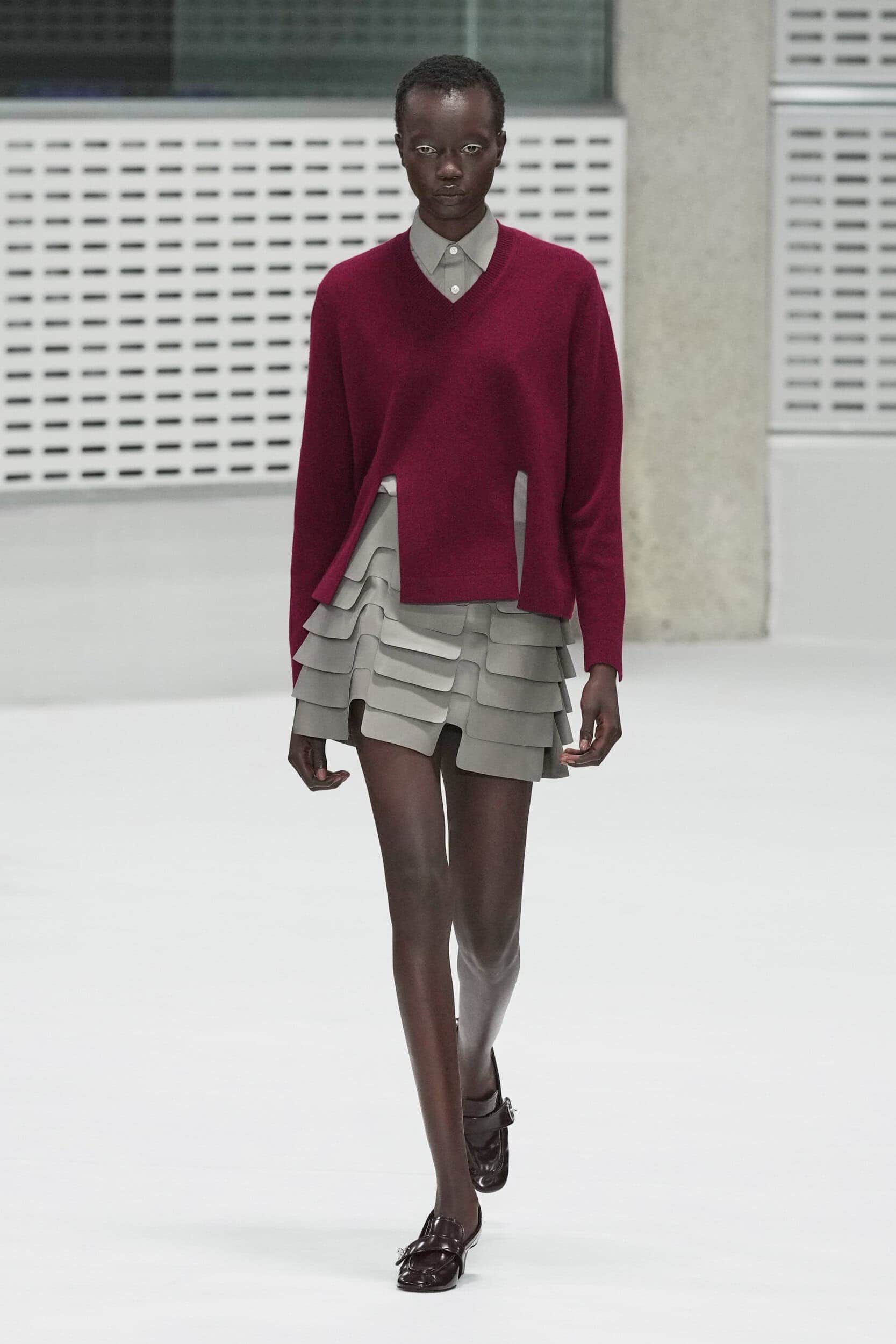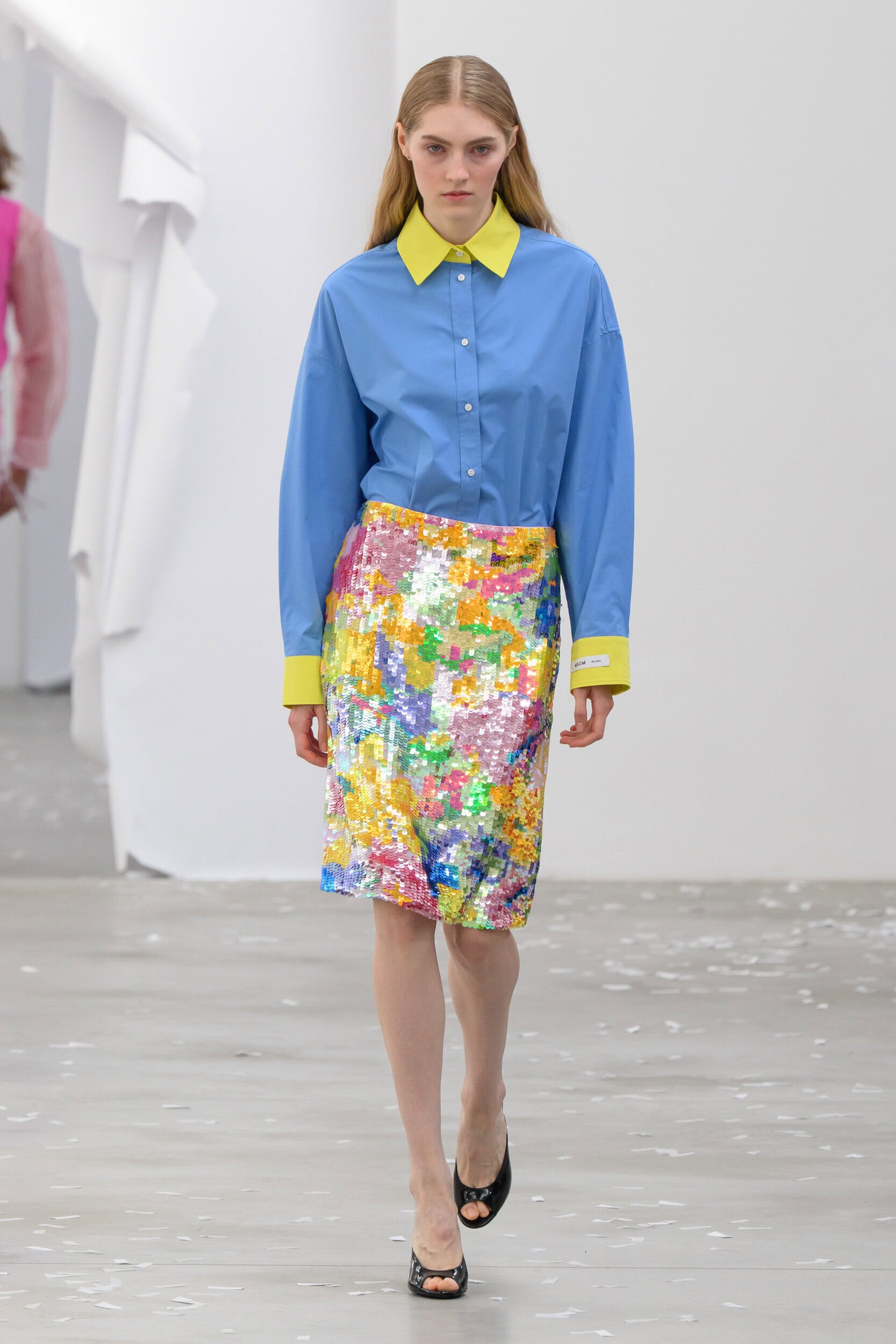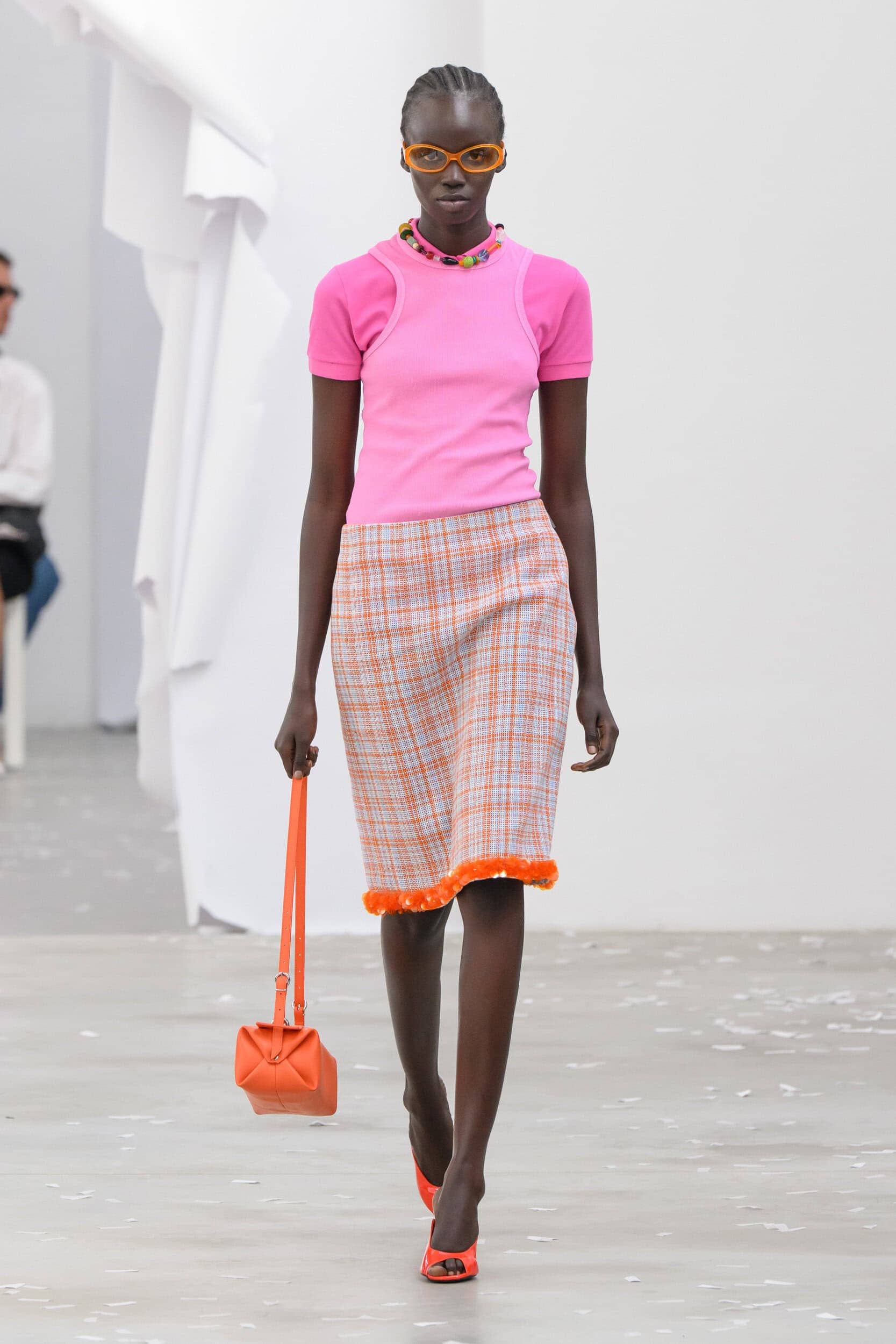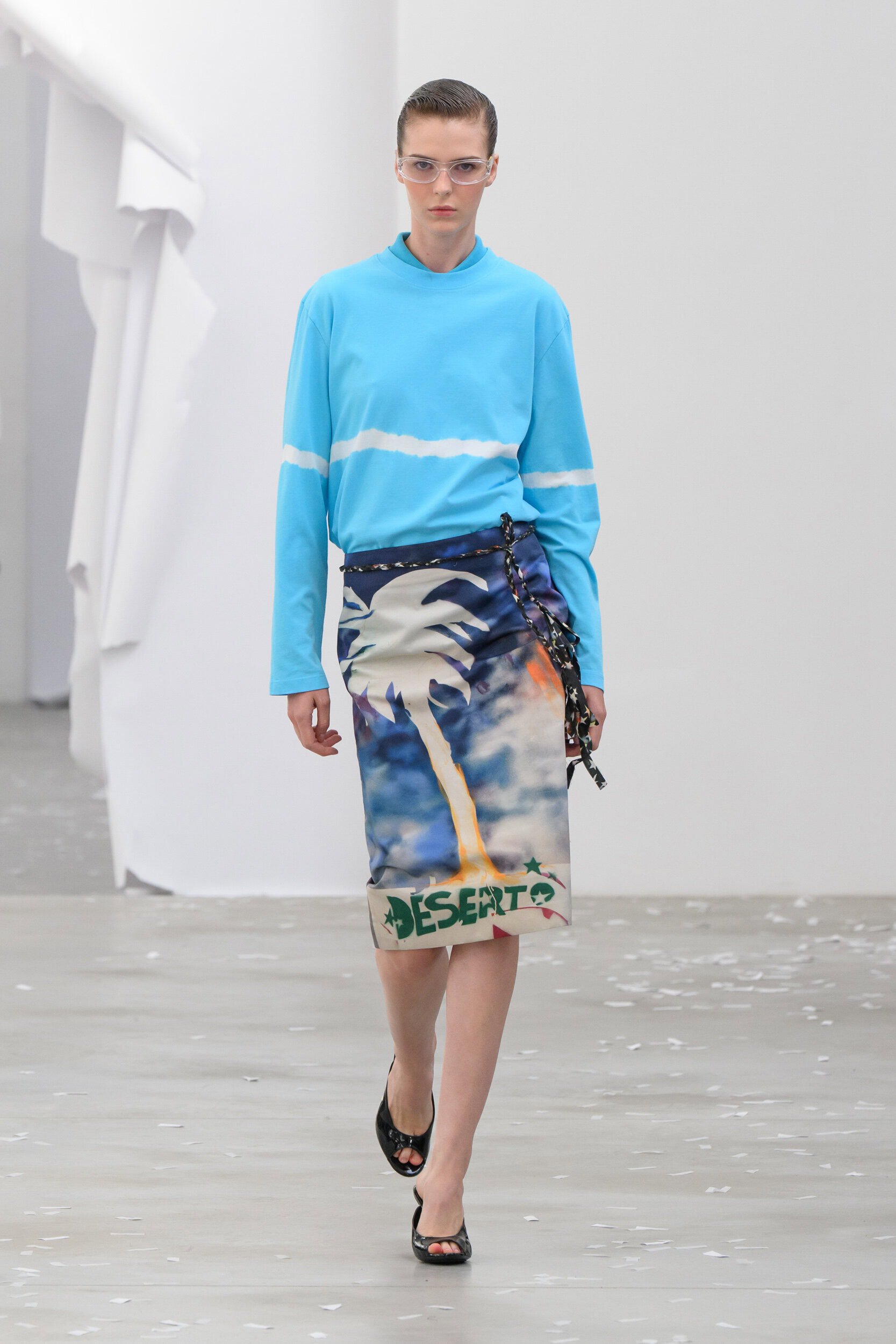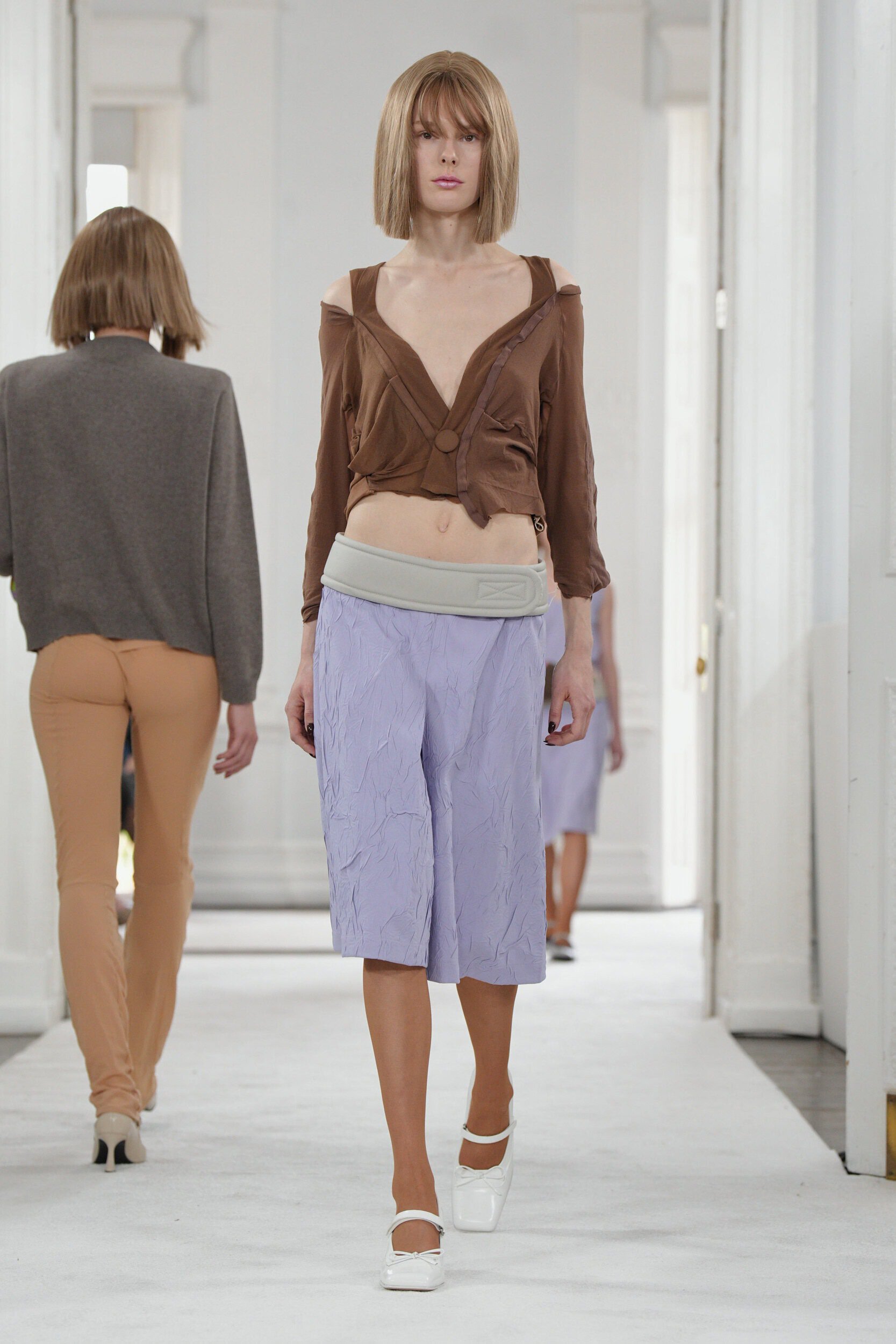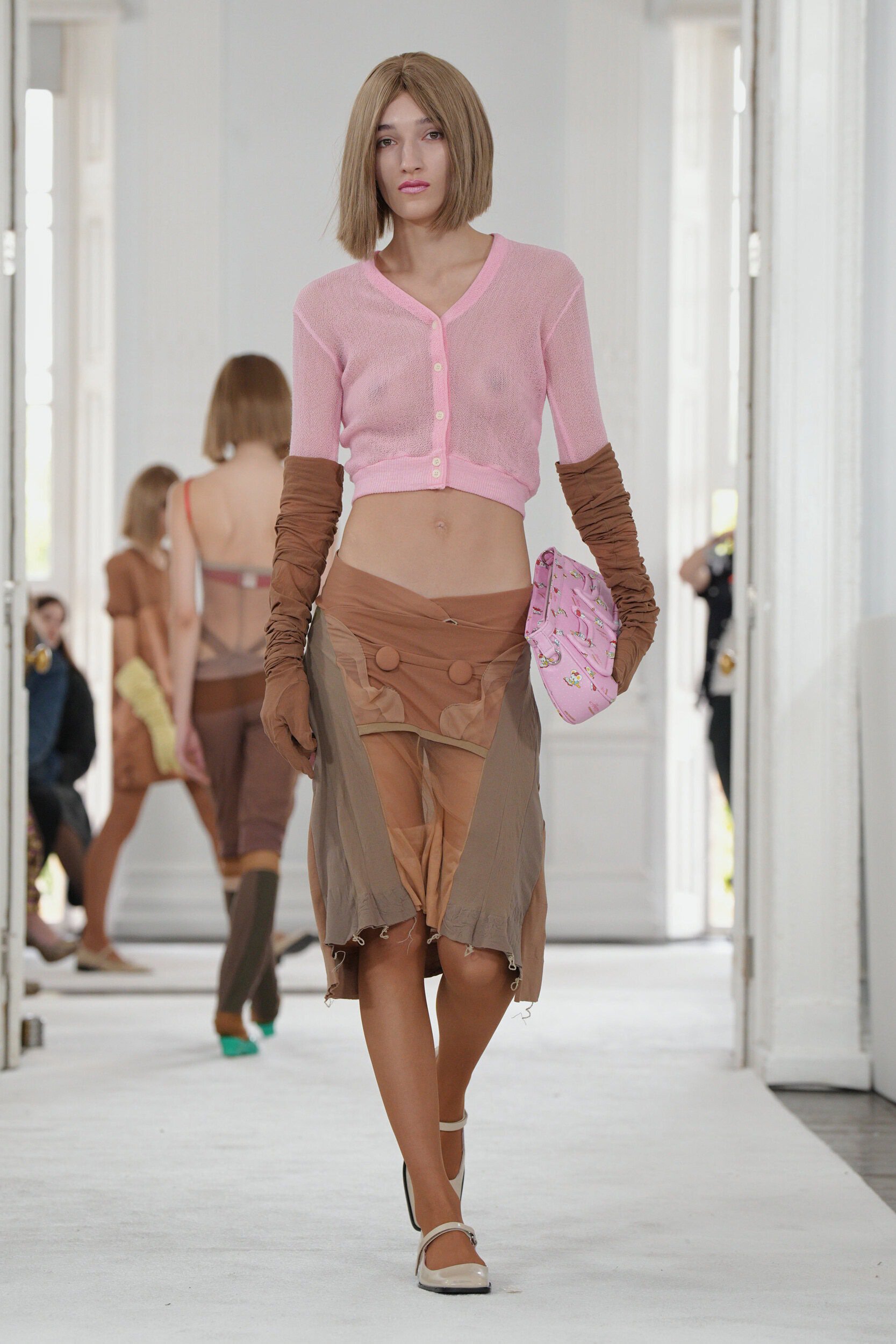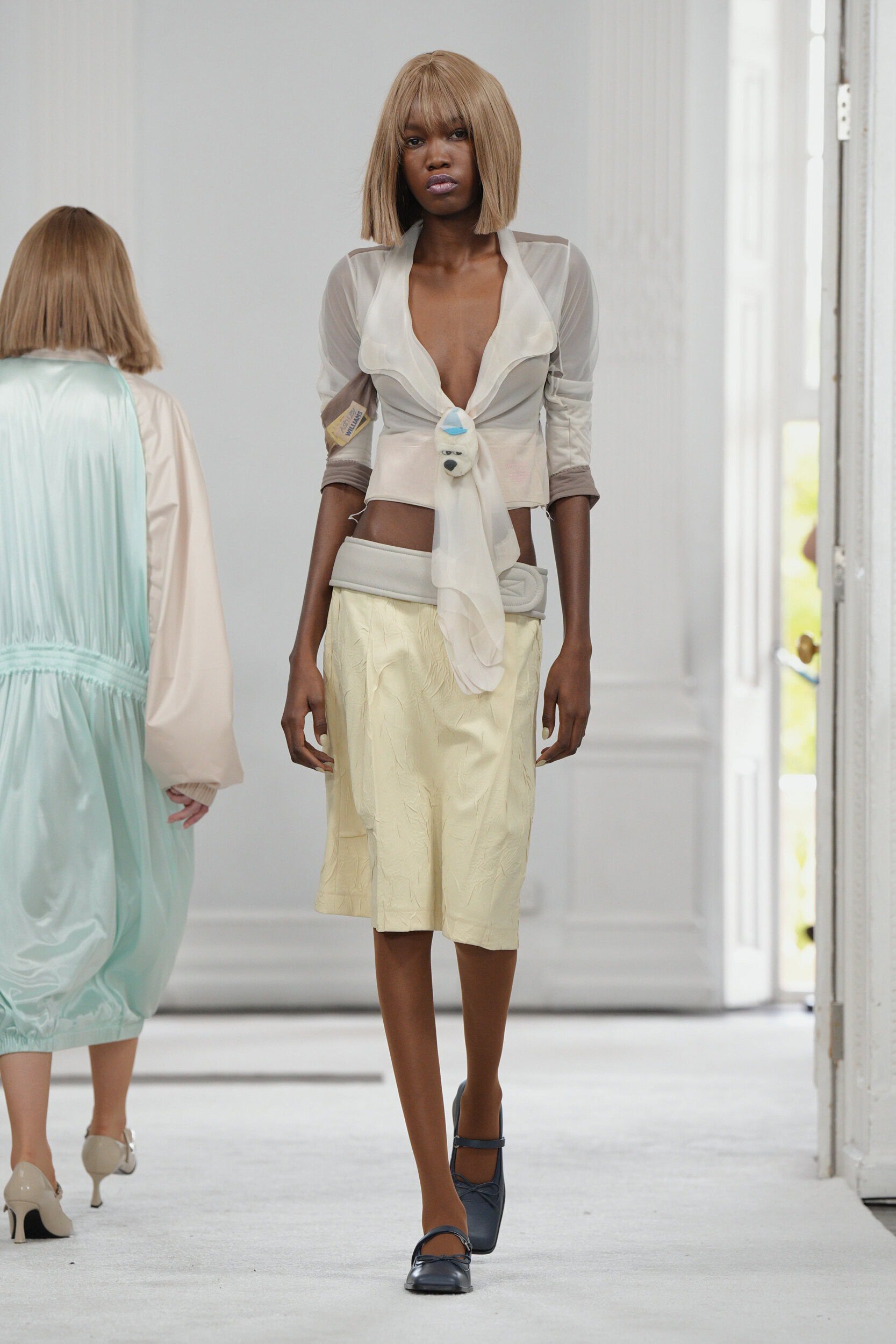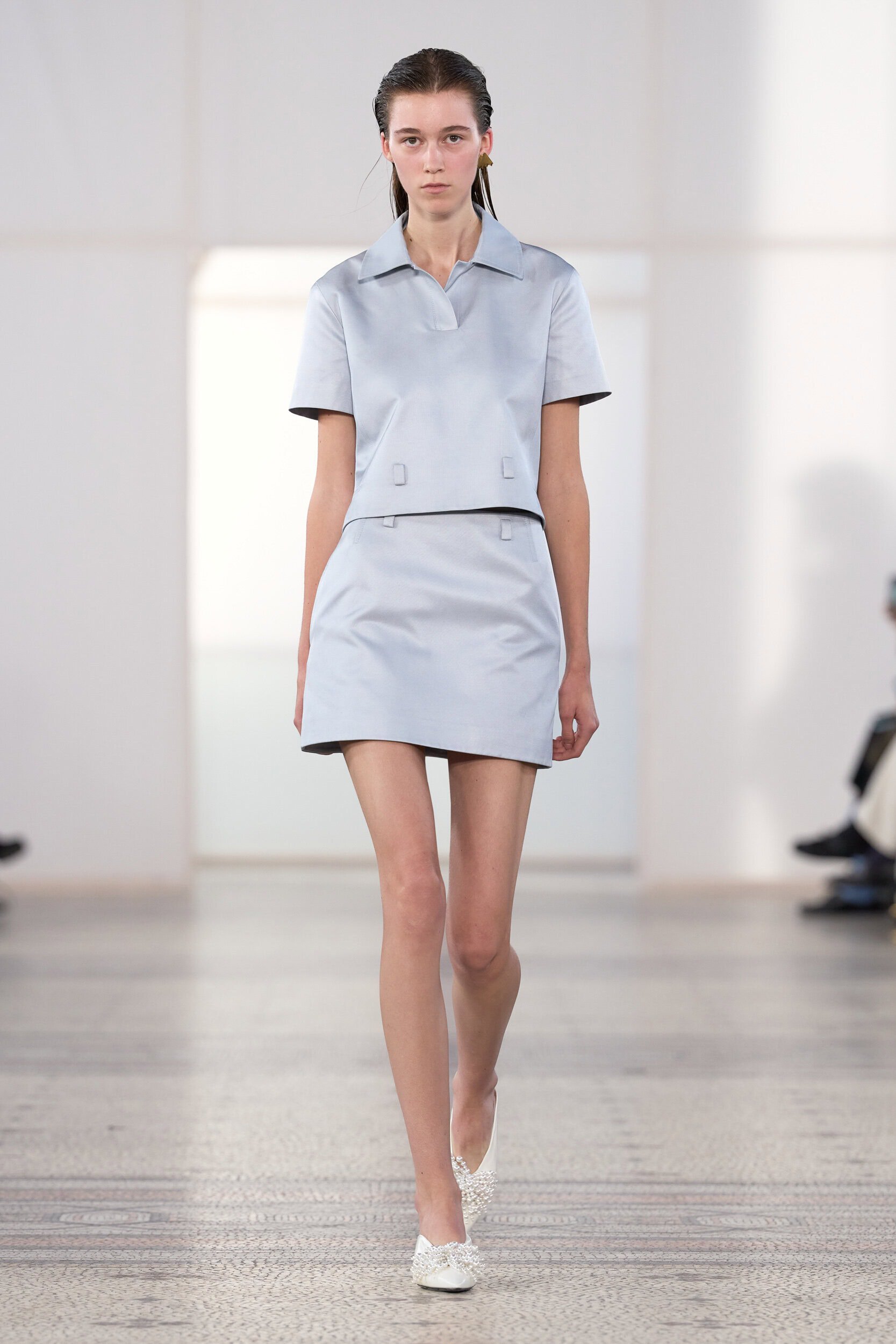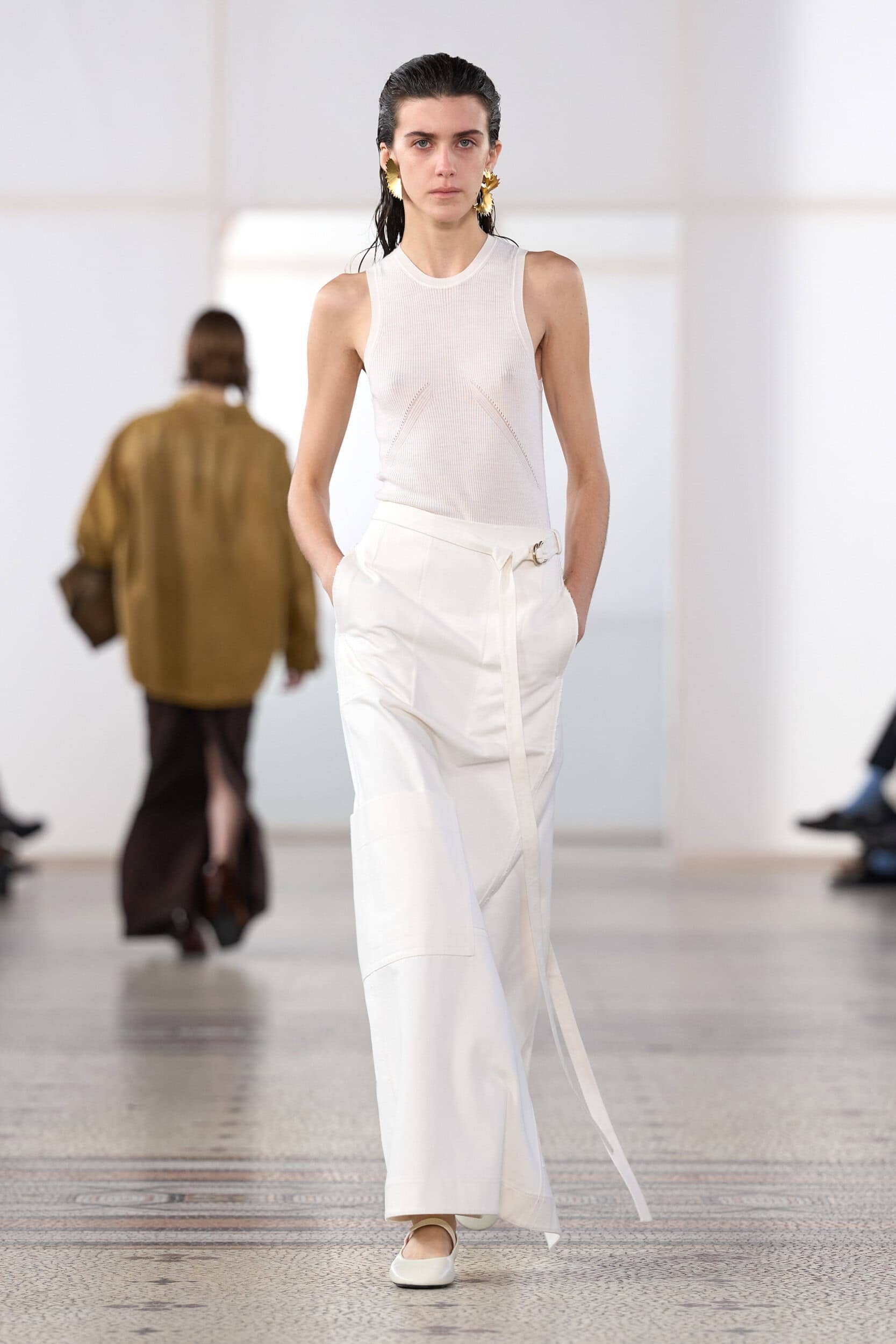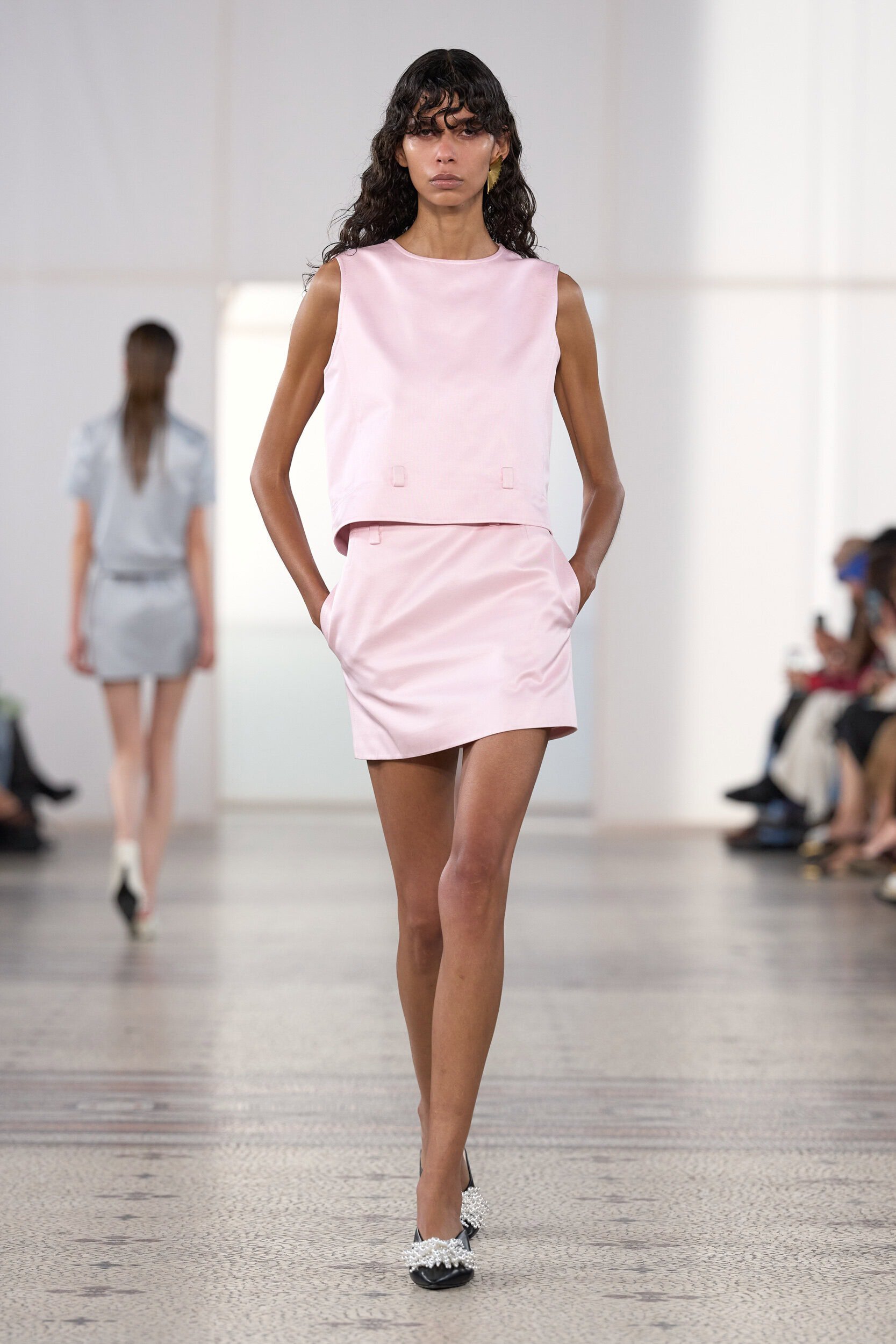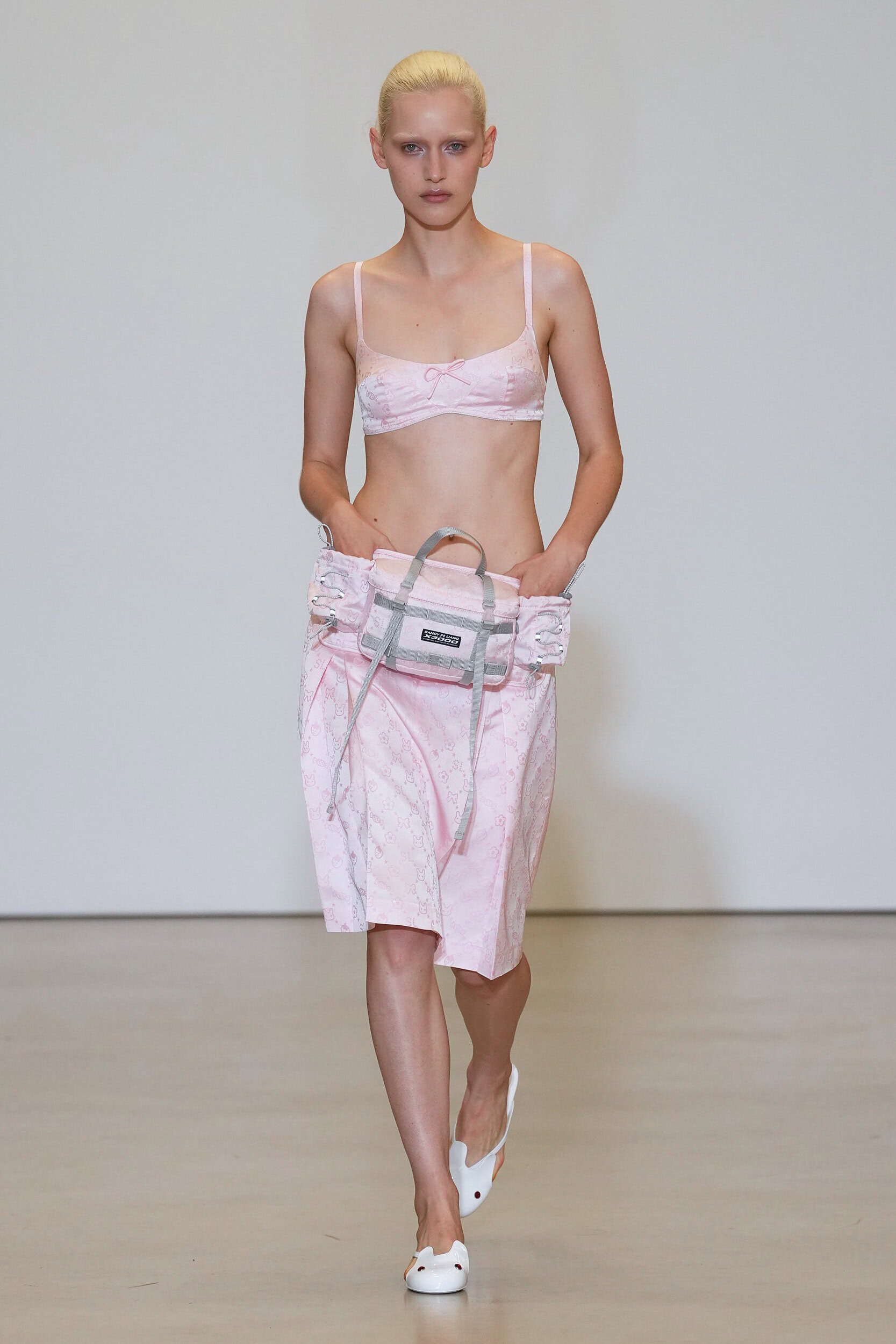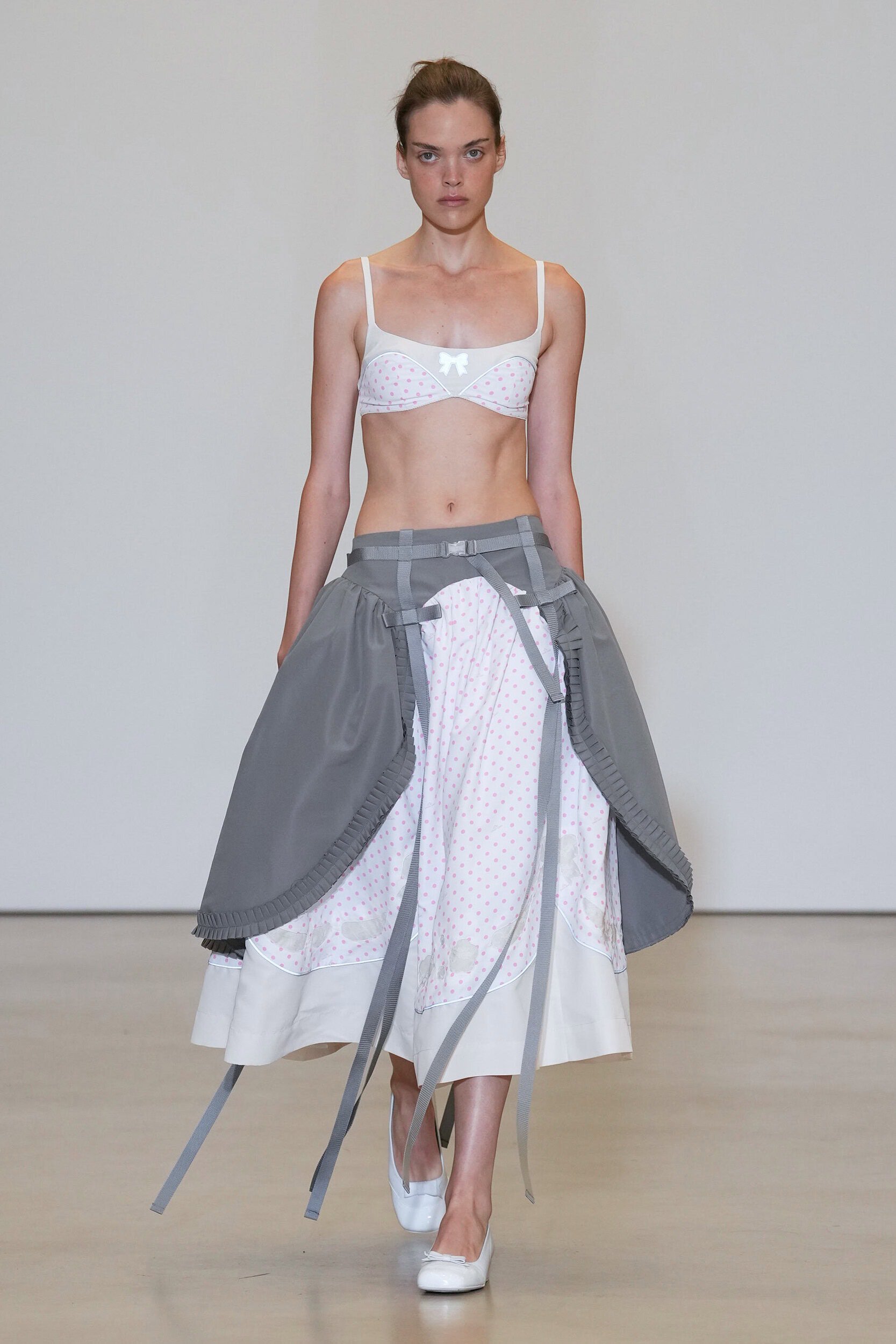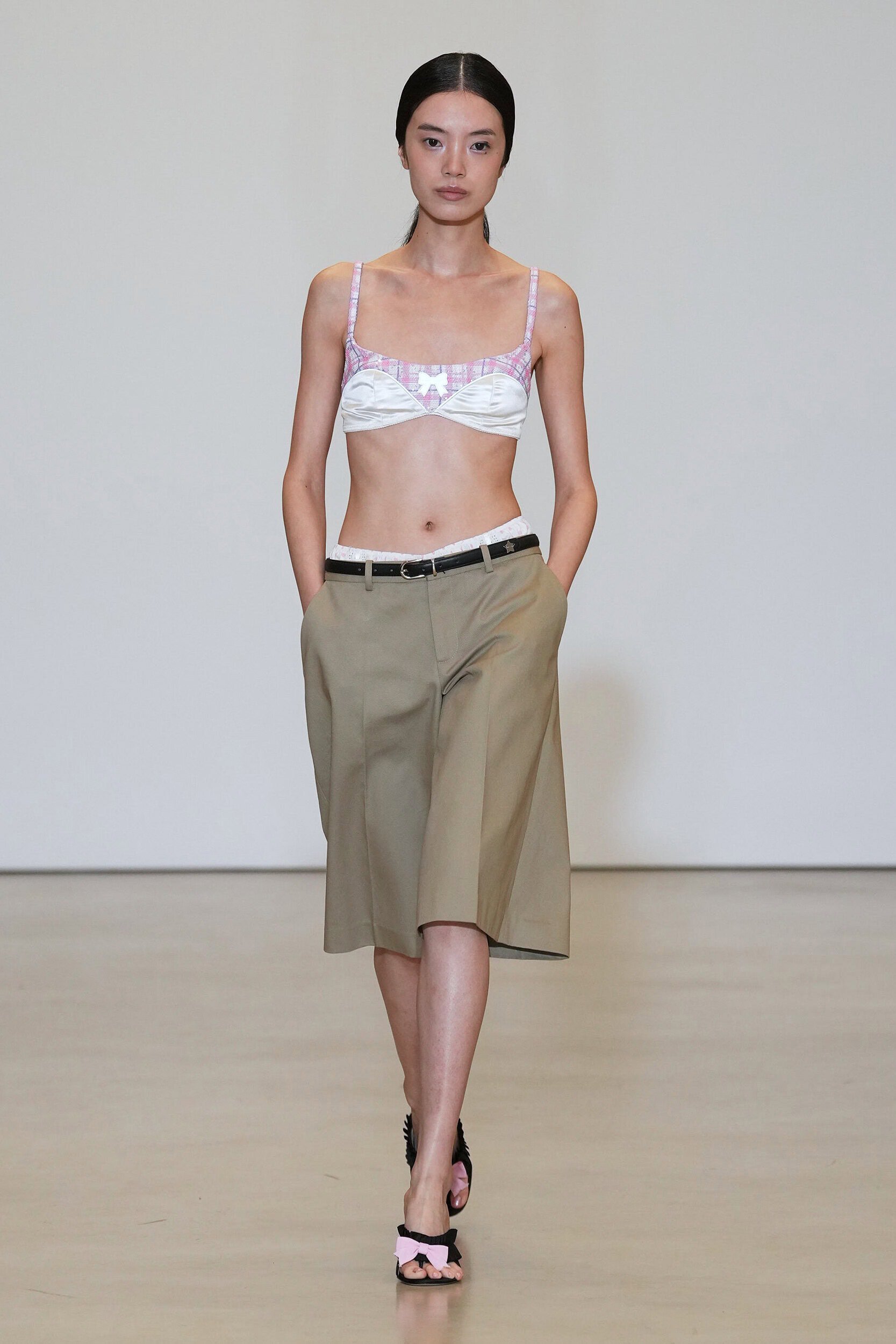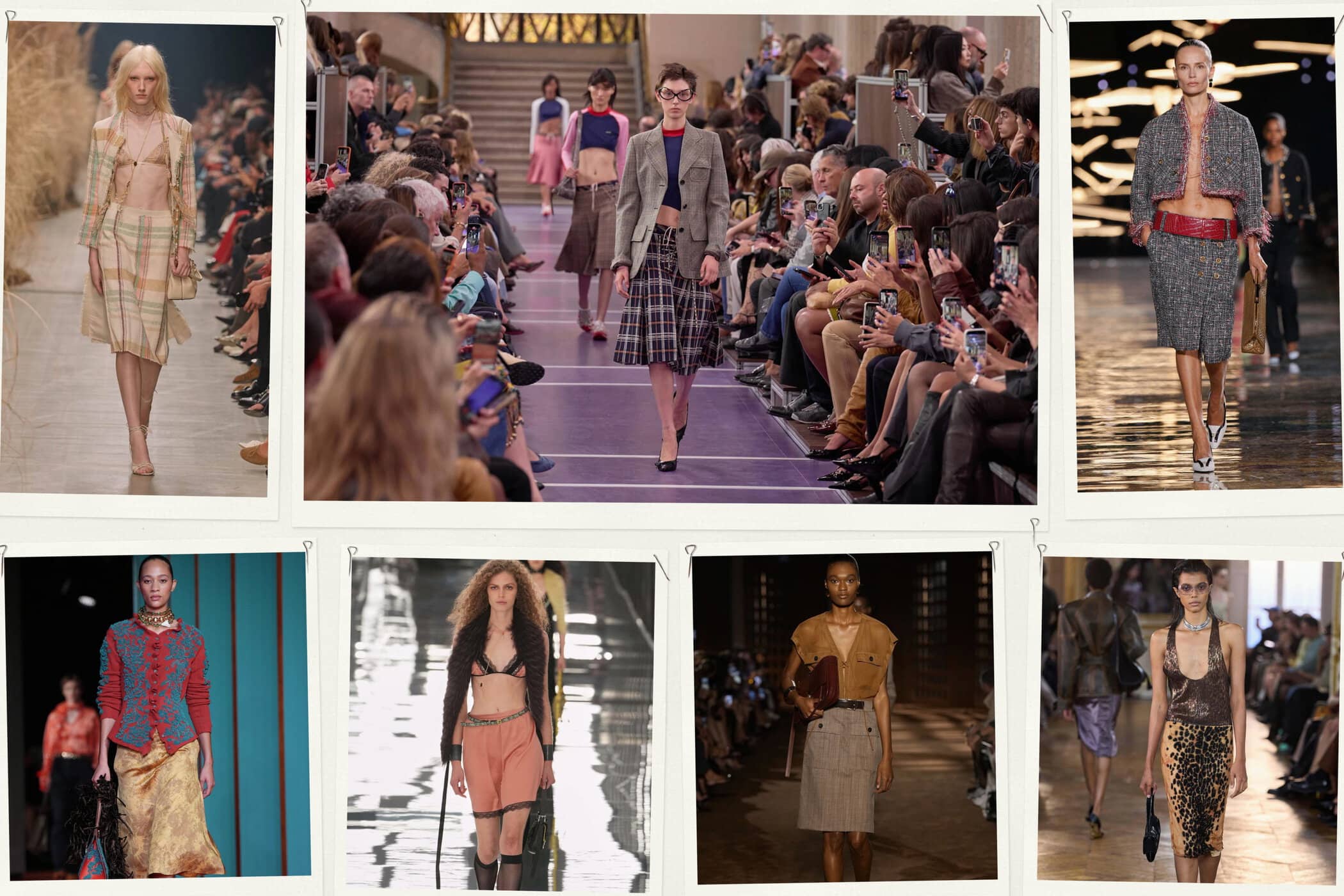
Few garments are as firmly established in the women’s wardrobe as the skirt, which makes its prominence among the Spring 2027 skirt trends all the more interesting. From New York to Paris, designers seemed particularly concerned with reconsidering its possibilities, exploring everything from familiar pencil silhouettes to exaggerated volumes, elaborate embellishments, and unexpected fabrications.
There was little consensus around any singular interpretation, yet that diversity became one of the season’s defining characteristics. After years in which relaxed trousers and oversized proportions have played such a prominent role in contemporary dressing, the renewed attention to skirts suggested an appetite for a more deliberate expression of femininity, one that could accommodate considerably more variation than its traditional associations might suggest.
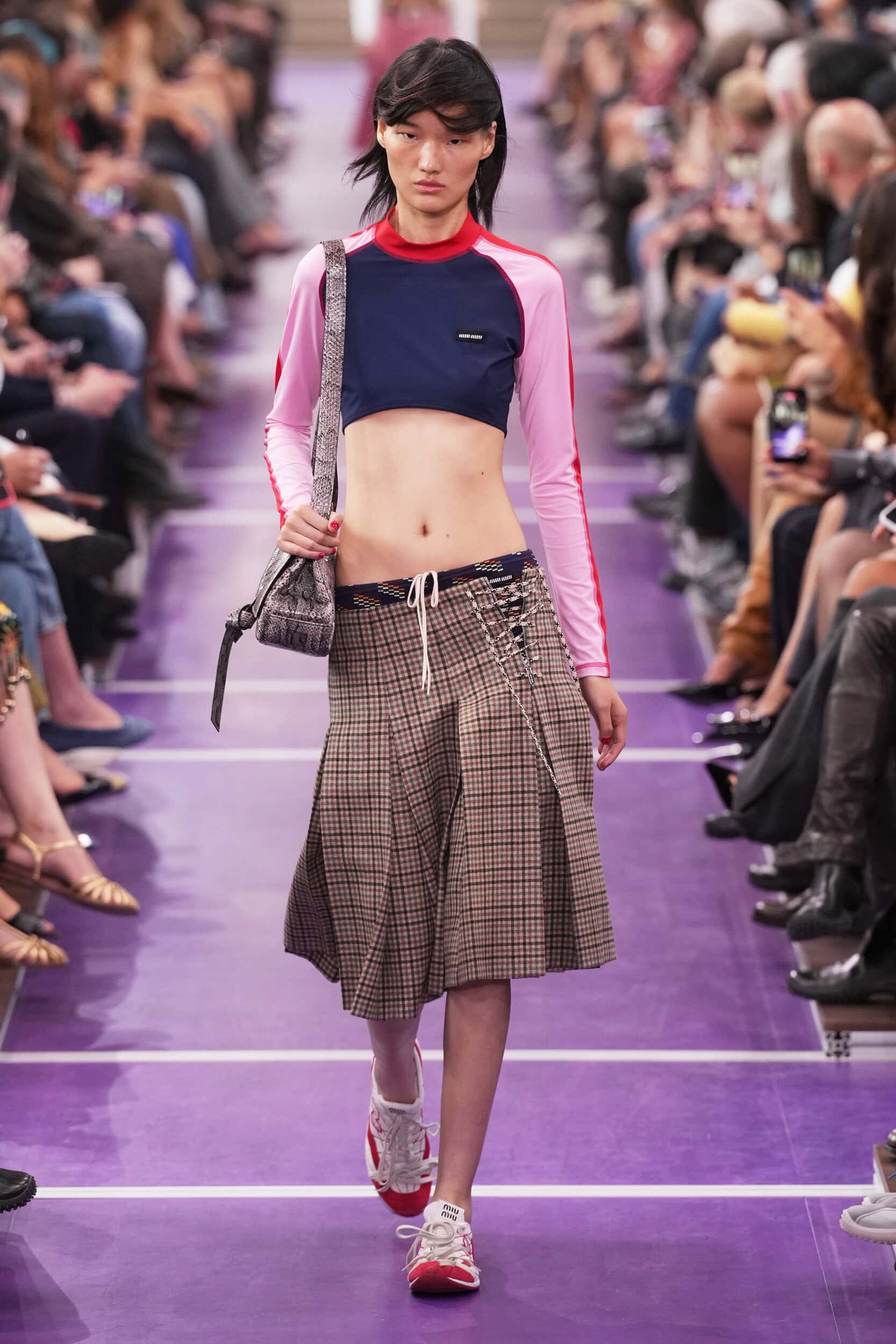
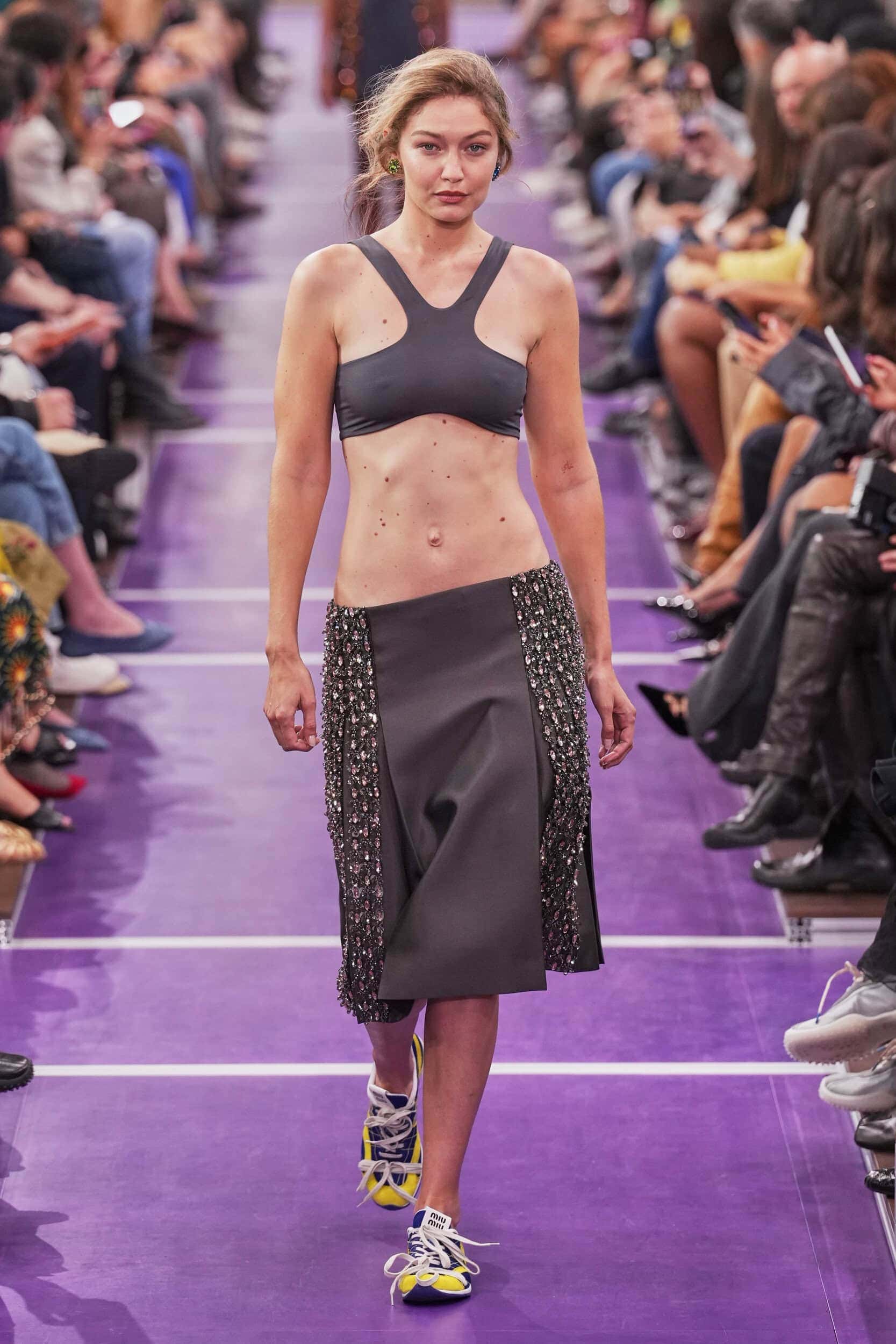
Prada offered perhaps the most compelling examination of this idea, dedicating its entire Spring 2027 collection to the skirt. Across 63 looks, Miuccia Prada and Raf Simons explored the possibilities of a garment that has long occupied a central place in Prada’s own vocabulary. Familiar knee-length silhouettes were transformed through unexpected materials, industrial fastenings, embellishments, and manipulations of proportion, while their pairing with everything from bra tops to conventional shirting introduced entirely different attitudes. What made the collection particularly interesting was its insistence that the skirt could remain recognizable while assuming an extraordinary range of identities. In Prada’s hands, its familiarity became the foundation for experimentation, demonstrating just how much creative possibility could exist within an established wardrobe staple.
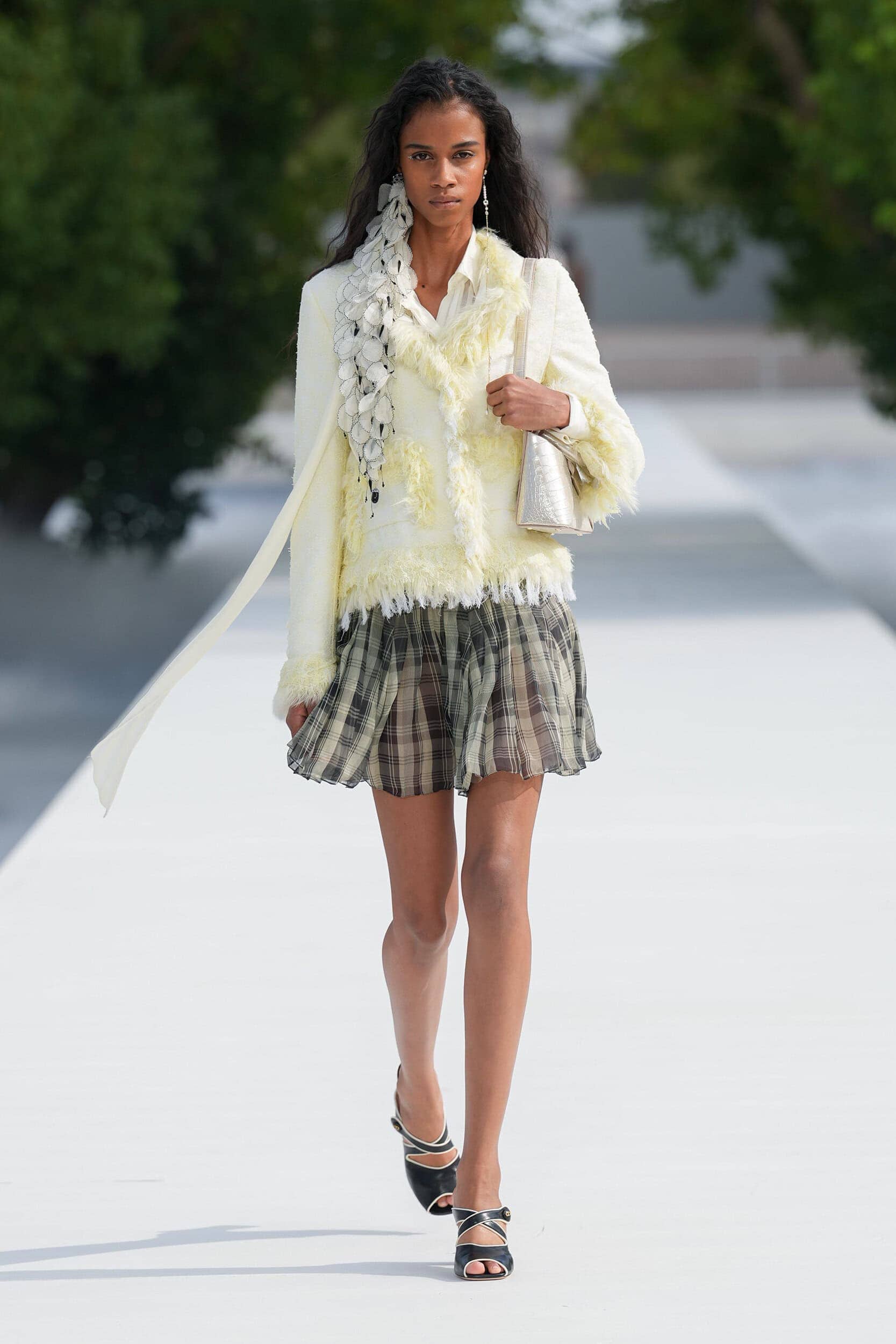
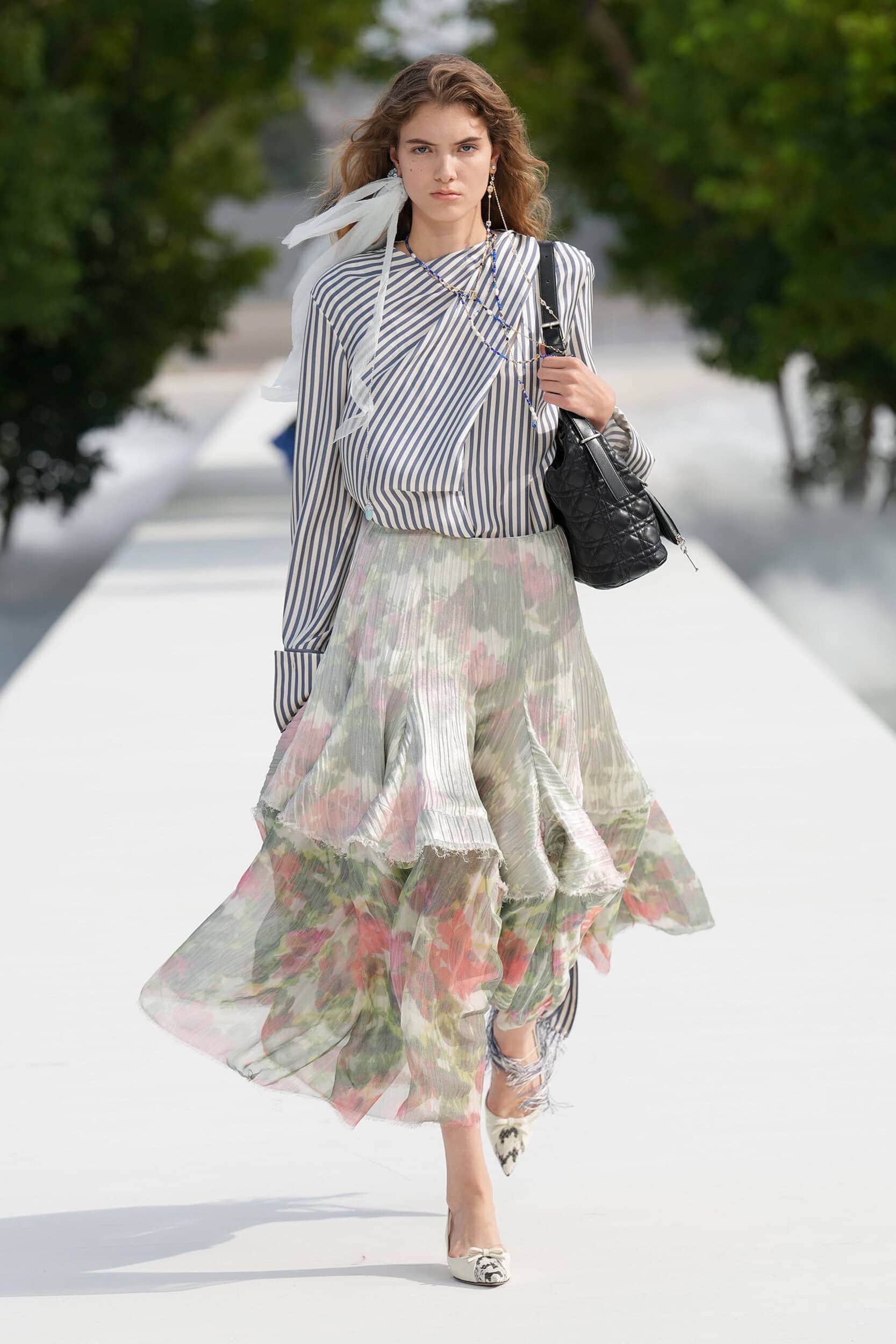
Elsewhere, designers approached the skirt with similarly varied intentions. At Tory Burch and Michael Kors, pencil skirts appeared alongside knitwear and relaxed tailoring, lending a contemporary ease to traditionally polished silhouettes. Altuzarra introduced sharper proportions and unexpected styling, while Ferragamo reconsidered the structure of classic skirt suiting. In Paris, Dries Van Noten embraced decorative surfaces, rich color, and unconventional combinations, while Valentino explored more elaborate expressions of femininity. At Chanel, Matthieu Blazy continued to loosen the house’s familiar codes through softened tailoring, unexpected textures, and playful proportions. Across these collections, the skirt became a particularly effective vehicle for expressing each designer’s individual perspective.
There’s something culturally relevant about this return to a garment whose history is so closely intertwined with shifting expectations of femininity. For much of the twentieth century, skirt lengths and silhouettes carried associations with propriety, sexuality, professional identity, and social convention. Today, those distinctions have become considerably less fixed. A pencil skirt can feel conservative or provocative, a full skirt can suggest historical romance or contemporary irreverence, and an embellished evening piece can become surprisingly casual through its accompanying garments. At a moment when personal style is increasingly defined by the ability to move between different aesthetic identities, the skirt offers an unusually adaptable means of expression. Its resurgence seems to reflect a broader interest in individuality and the freedom to interpret familiar clothing on one’s own terms.
That adaptability also has particular significance for the luxury market. With consumers becoming more selective about their purchases, designers face the challenge of creating garments that offer both a distinctive point of view and a compelling place within an existing wardrobe. Unlike a dress, which often presents a more complete proposition, the skirt leaves considerable room for personal interpretation, allowing one statement piece to be incorporated into numerous combinations. Its commercial appeal lies in that balance between novelty and versatility, where craftsmanship, material, and silhouette can justify renewed interest in something customers already understand. Perhaps that’s what makes the skirt’s prominence this season so telling: designers have found considerable creative and commercial opportunity in revisiting the familiar, suggesting that fashion’s capacity for reinvention need not depend upon introducing something entirely new.