Review of Prada ‘I, I, I, I AM… PRADA’ Spring 2026 Ad Campaign by Creative Director Miuccia Prada, Raf Simons with Photographer Oliver Hadlee Pearch with models John Glacier, Levon Hawke, Nicholas Hoult, Damson Idris, Carey Mulligan, Hunter Schafer, Liu Wen
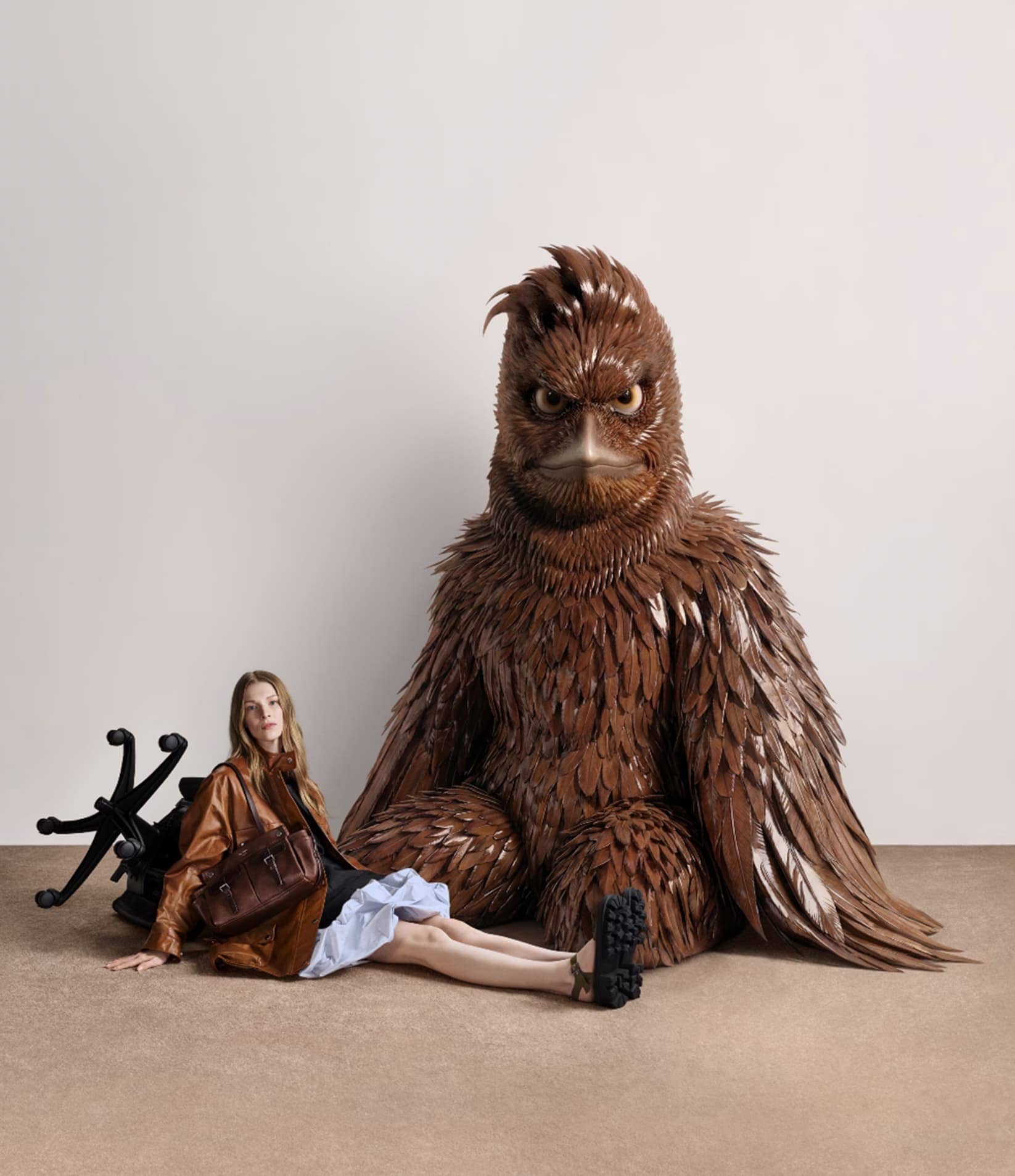
There has always been a certain intellectual tension at the heart of Prada—a brand that resists singularity in favor of multiplicity. For Spring 2026, that instinct is pushed further, almost provocatively so, in a campaign reimagined by American artist Jordan Wolfson. Under the creative direction of Miuccia Prada and Raf Simons, the project dismantles the traditional boundaries of fashion advertising, replacing clarity with fragmentation, narrative with suggestion. Its mantra—“I, I, I, I am…”—lingers deliberately unfinished. The hook is unmistakable: in a world saturated with images, who, exactly, gets to define the self?
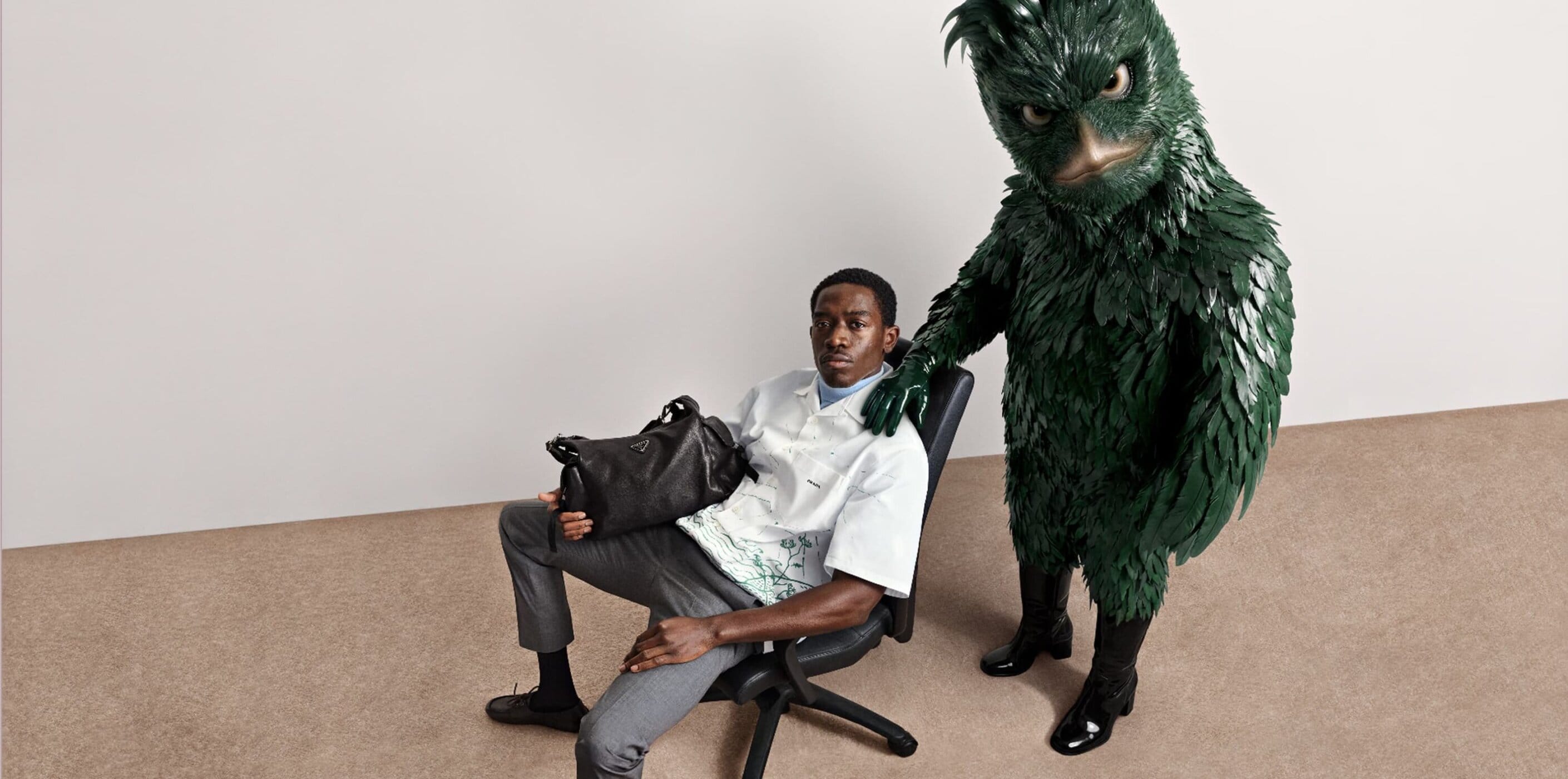
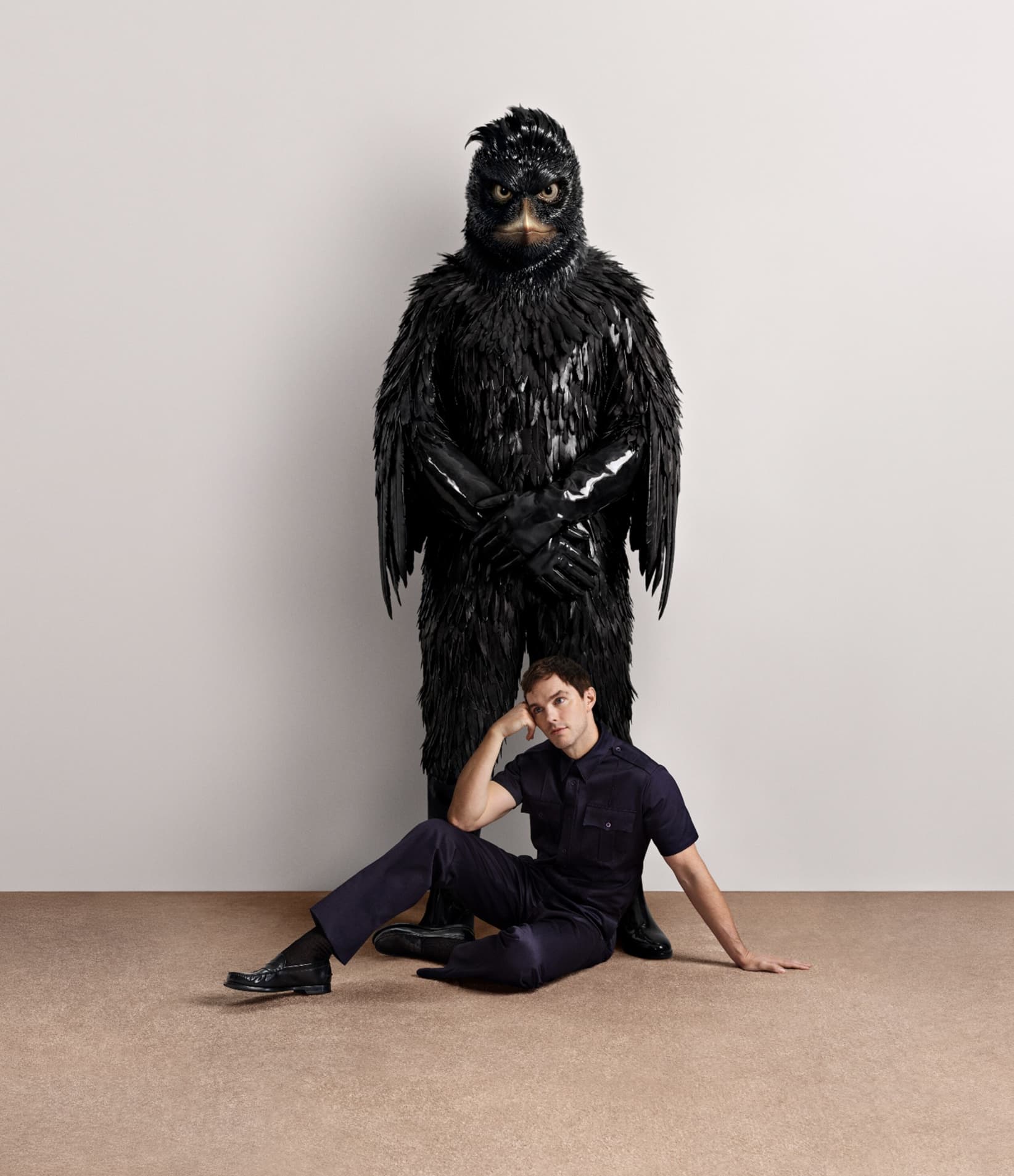
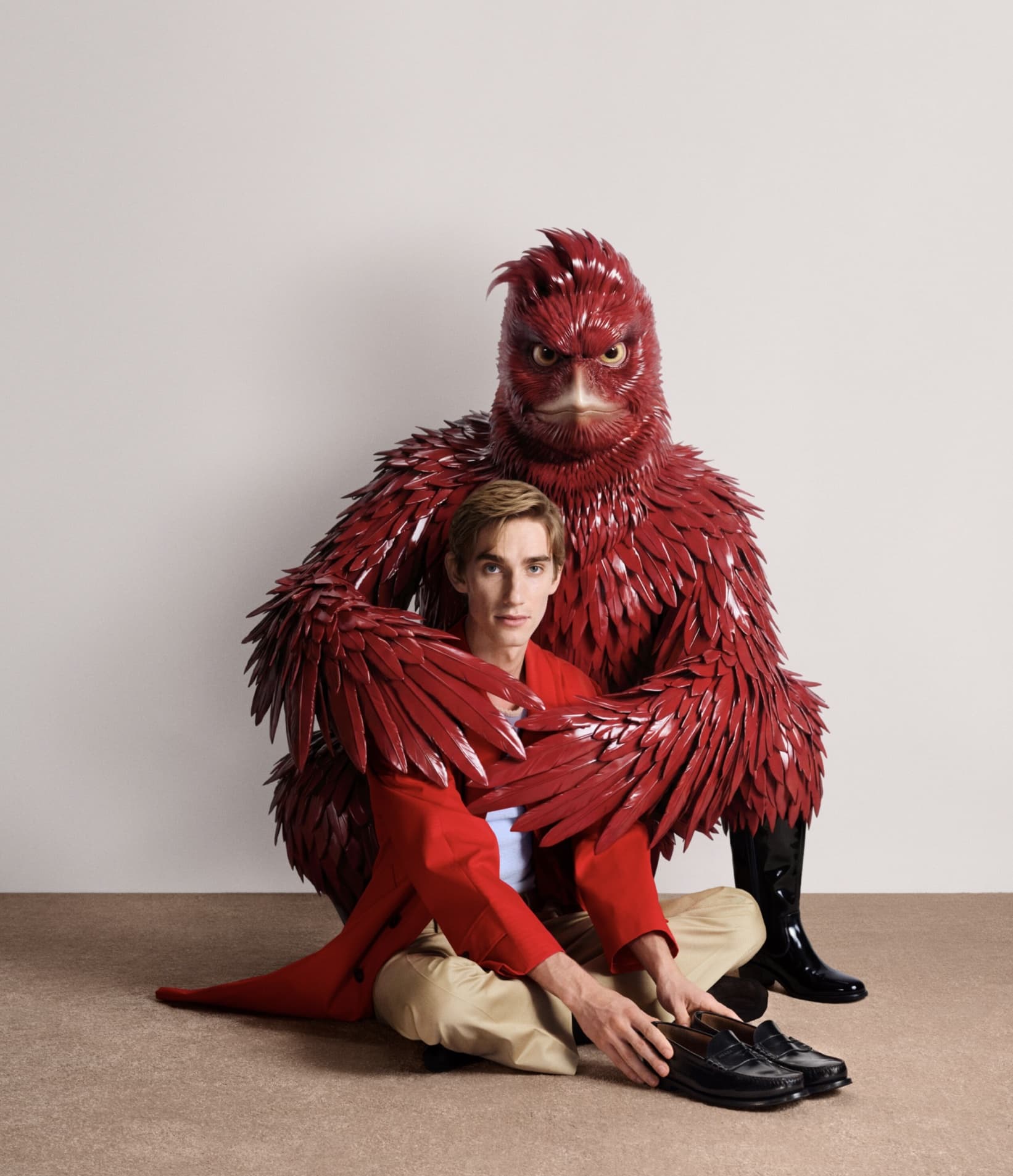
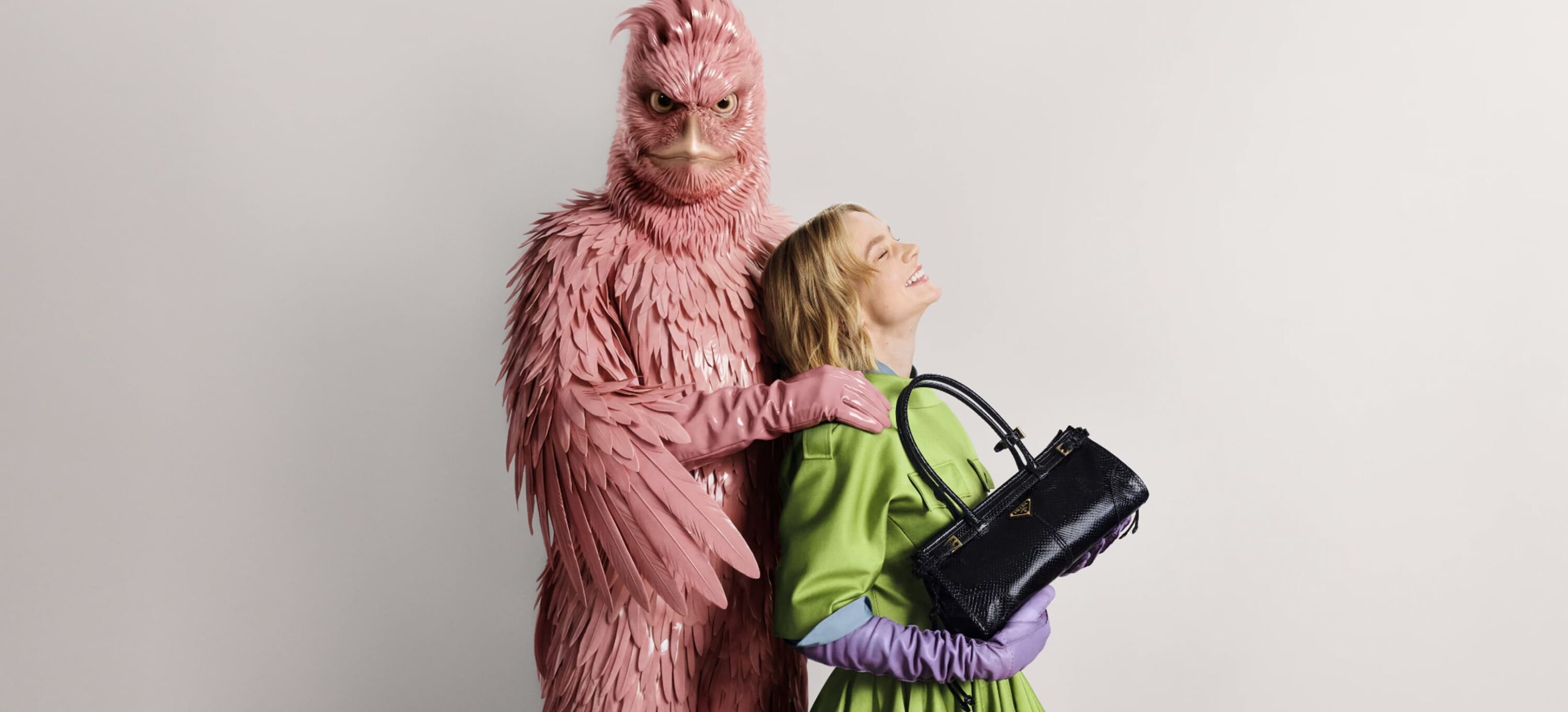
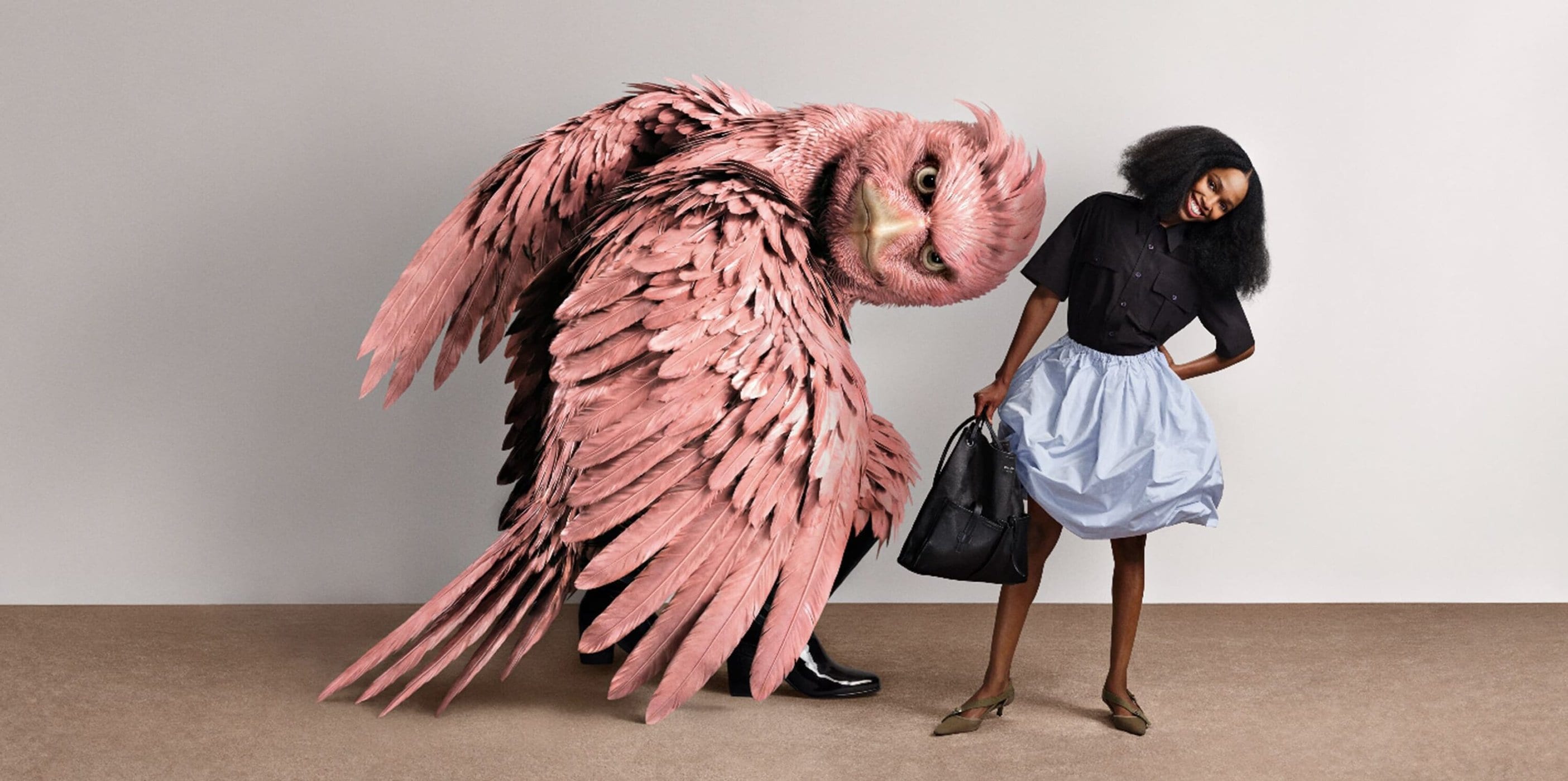
Visually, the campaign operates in a space that feels both hyper-real and entirely imagined. Familiar faces—Carey Mulligan, Hunter Schafer, Nicholas Hoult, Damson Idris, Liu Wen, alongside John Glacier and Levon Hawke—are rendered through Wolfson’s distinctly uncanny lens. Their likenesses are distorted, layered, and at times confronted by surreal, almost creature-like forms—digital apparitions that blur the line between subject and simulation. The imagery resists passivity; it asks to be decoded. Still images act as fragments, while the accompanying film introduces rhythm through repetition, the chant becoming both hypnotic and destabilizing.
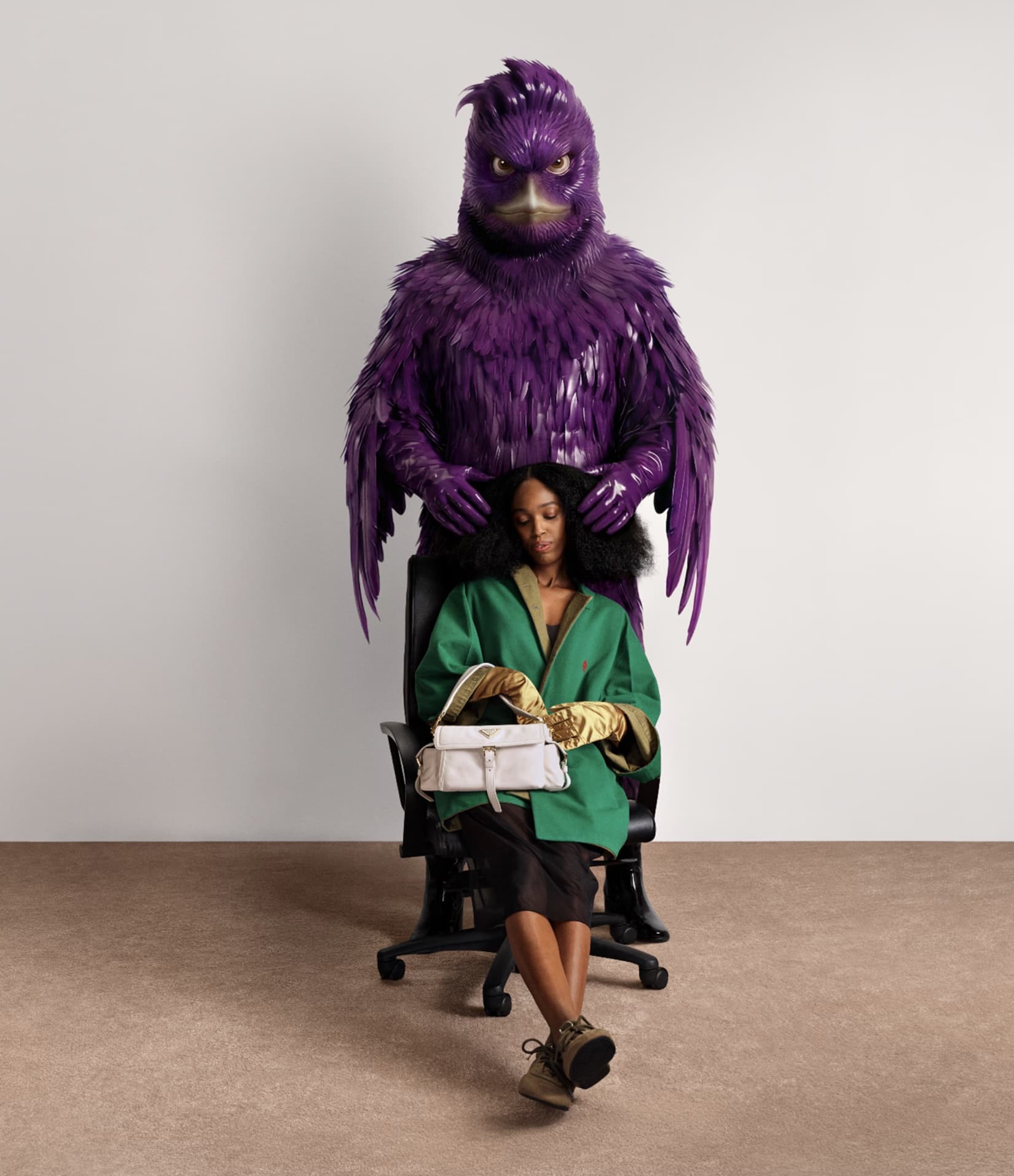
Conceptually, the campaign is deeply aligned with Prada’s ongoing exploration of identity as fluid and constructed. Wolfson’s intervention feels less like a collaboration and more like a controlled disruption—an artist stepping into the machinery of fashion and bending it toward his own language. This tension is where the campaign thrives. It acknowledges the mechanics of image-making while simultaneously undermining them, offering a layered commentary on perception, technology, and authorship. The decision to retain the same cast across iterations further reinforces this idea: identity is not fixed, but continually reframed depending on context and lens.
And yet, this same intellectual ambition may prove polarizing. The abstraction, while compelling, creates a certain distance—an emotional coolness that can feel intentionally elusive. For some, the lack of resolution may read as liberating; for others, it risks alienation. There is also a quiet question of balance: in yielding so fully to the artist’s vision, the fashion itself occasionally recedes into the background. While this may be the point, it subtly shifts the campaign from fashion communication to cultural commentary—a move that is bold, but not without trade-offs.
Still, Prada has never been a brand interested in easy answers. What this campaign offers instead is a proposition—open-ended, unresolved, and quietly provocative. It invites the viewer not just to look, but to question, to project, to participate. And perhaps that is the most Prada gesture of all: to leave the sentence unfinished, and trust that we will complete it ourselves.
Creative Director | Miuccia Prada, Raf Simons
Creative Director | Ferdinando Verderi
Artwork | Jordan Wolfson
Photographer | Oliver Hadlee Pearch
Models | John Glacier, Levon Hawke, Nicholas Hoult, Damson Idris, Carey Mulligan, Hunter Schafer, Liu Wen