Oxblood Debuts In Milan With A Model Rooted In Storytelling, Customization, And A New Form Of Intimate Retail
By Kenneth Richard
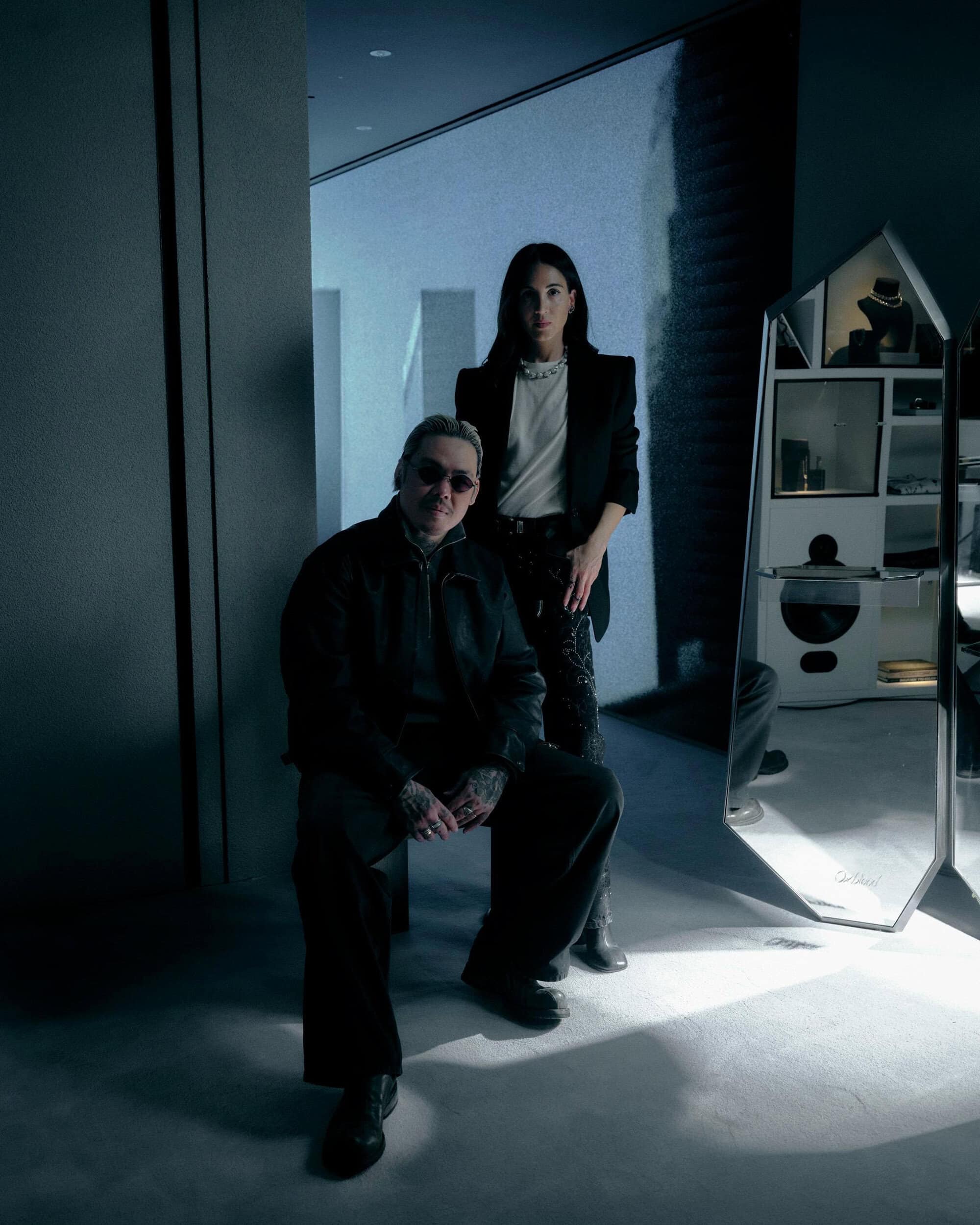
Oxblood arrives not as a conventional brand launch, but as a proposition: that luxury today lies less in acquisition than in meaning. Founded by Los Angeles–based tattoo artist Dr. Woo (Brian Woo) and Giulia Luchi, the former head of product at Off-White, the project translates the permanence of tattoo culture into a new category of objects—jewelry, garments, and artifacts designed to hold personal narratives over time.
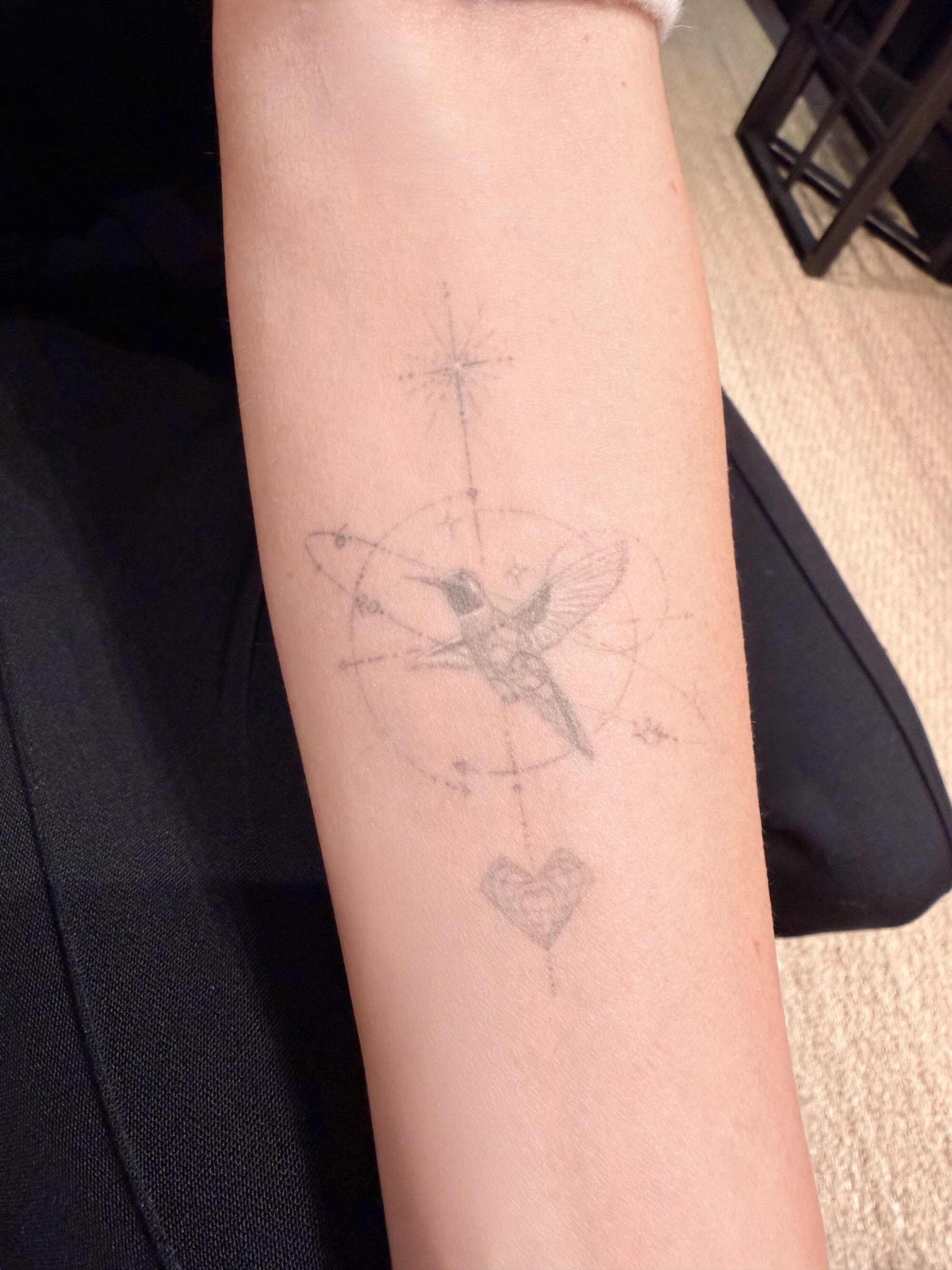
The idea traces back several years, beginning with a tattoo that became something more enduring than a single gesture. “This project began two years ago, after I met Brian five years ago to make this tattoo when my three kids were born,” Luchi explains. That encounter established a shared visual language rooted in symbolism, precision, and emotion—one that would eventually evolve into a brand. What began as a personal exchange became a creative shorthand between the two, revealing a mutual instinct for storytelling through form.
Luchi brings with her more than a decade of experience across Italian fashion, most notably her years alongside Virgil Abloh at Off-White, where she helped build the brand from its earliest stages. “For me, work has always been my own project,” she says. “So when I was in Off-White, it was like it was my own company.” The experience provided a rare perspective on growth at speed, but also on how to construct a brand language that resonates beyond product. “I saw how to grow a company from zero… from the beginning to the top.”
That foundation is evident in how Oxblood has been conceived—not as a collection-driven label, but as a system that can evolve fluidly across categories and ideas. Where Off-White expanded outward into culture, collaboration, and scale, Oxblood deliberately narrows its focus, centering on the individual and their story.
I don’t think that fashion has changed, people have changed. So we need to follow the people and listen to them.
It is a subtle but important distinction: the shift from broadcasting to listening, from designing for an audience to designing with them.
At its core is jewelry, a category deeply personal to Luchi. “I’ve always been passionate about jewelry since my mother was a jeweler, and I grew up in a female family,” she says. That lineage informs not only the product but the sensibility—an understanding of jewelry as something lived with, inherited, and imbued with meaning over time. From there, the brand expanded organically, incorporating garments, silk pieces, and objects sourced or developed through a dialogue between Milan, Los Angeles, and Japan.
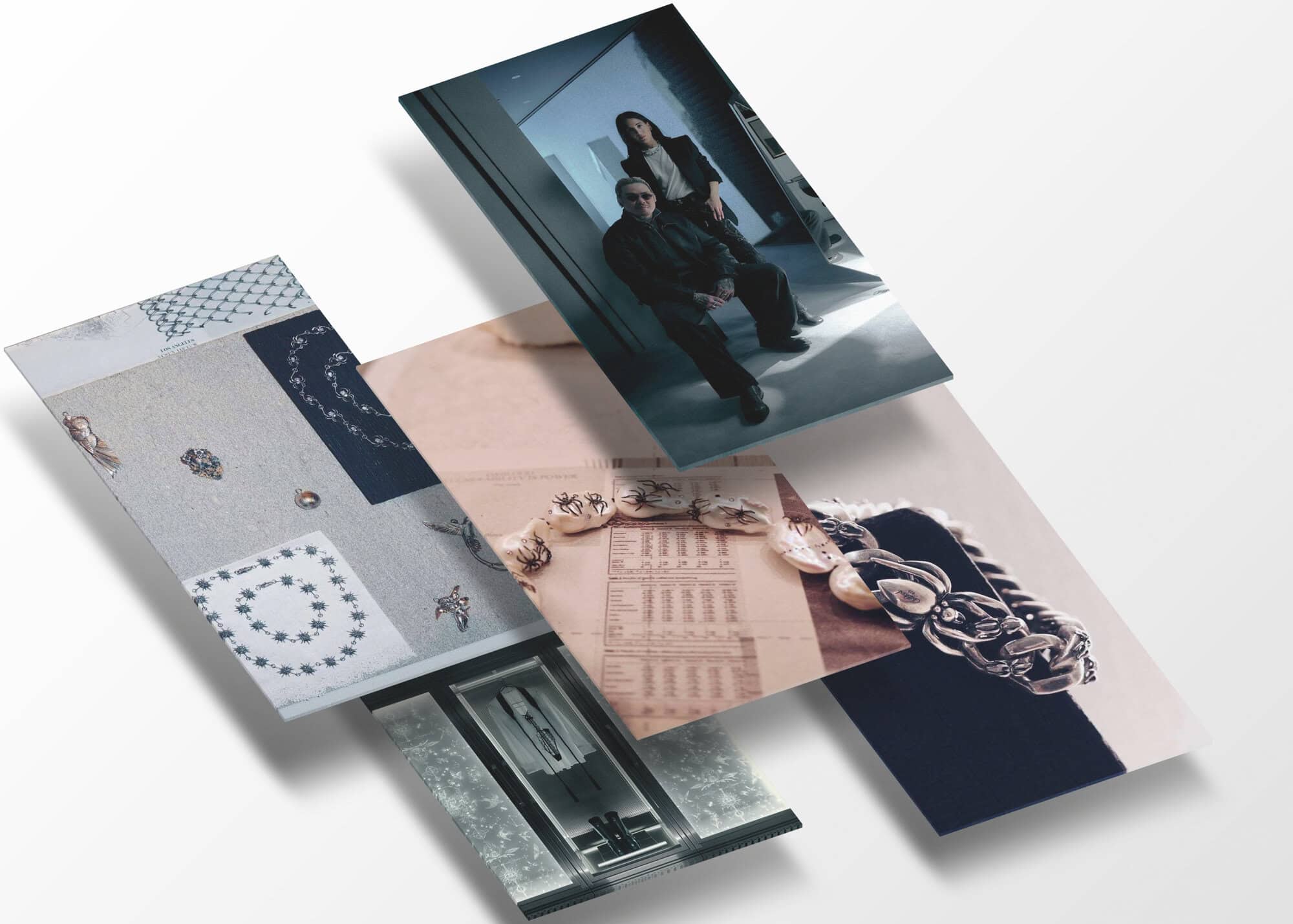
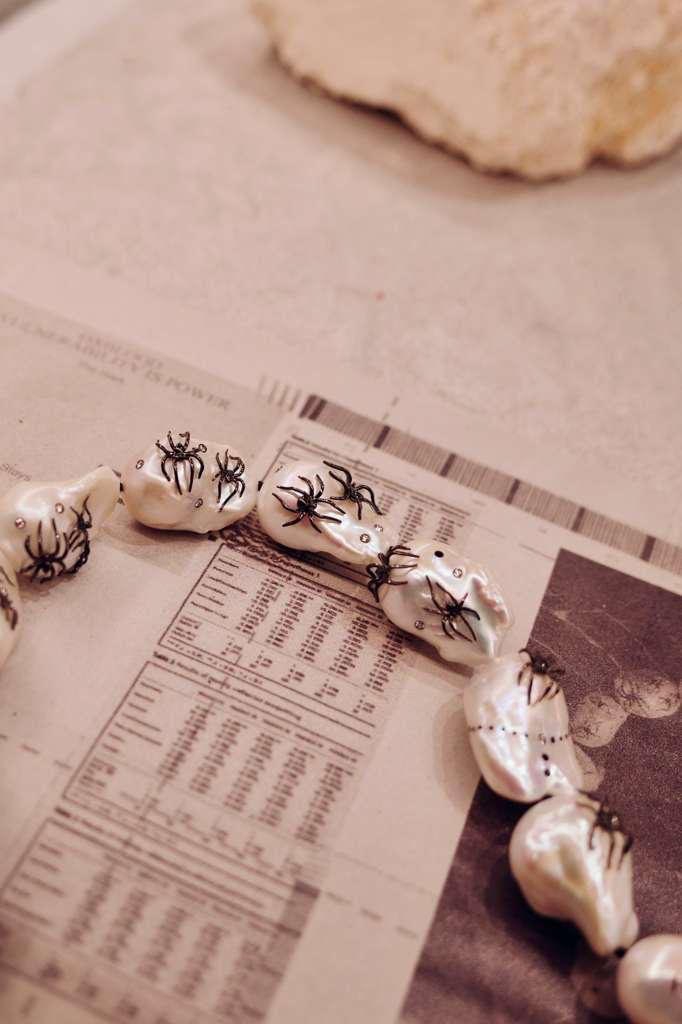
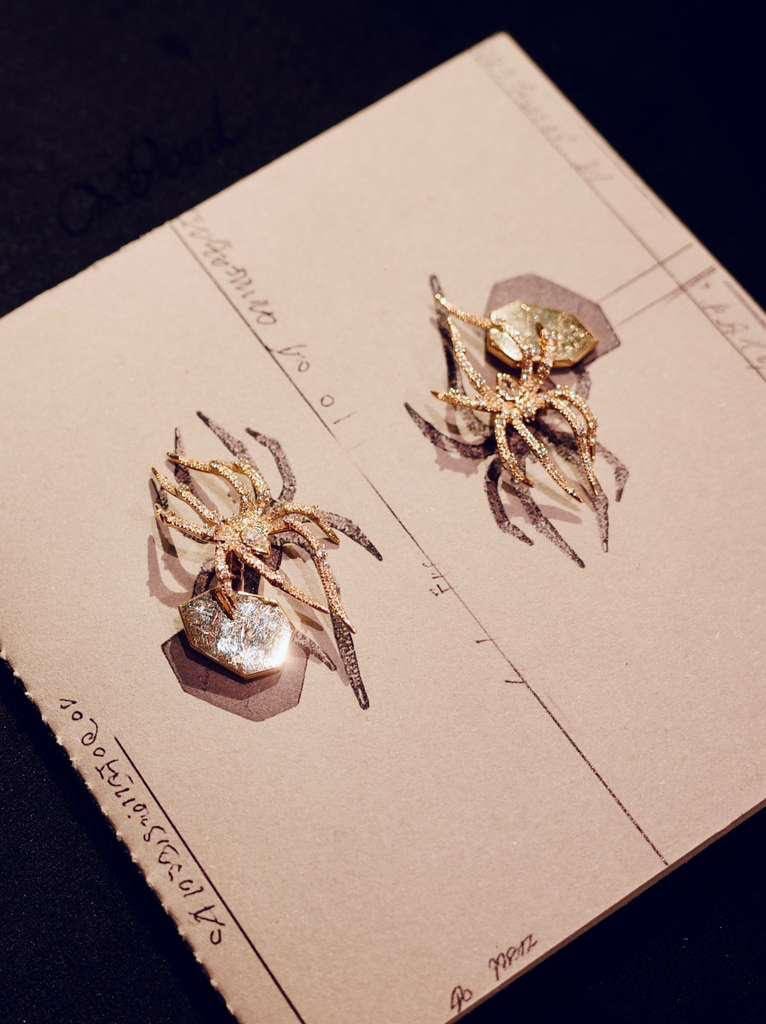
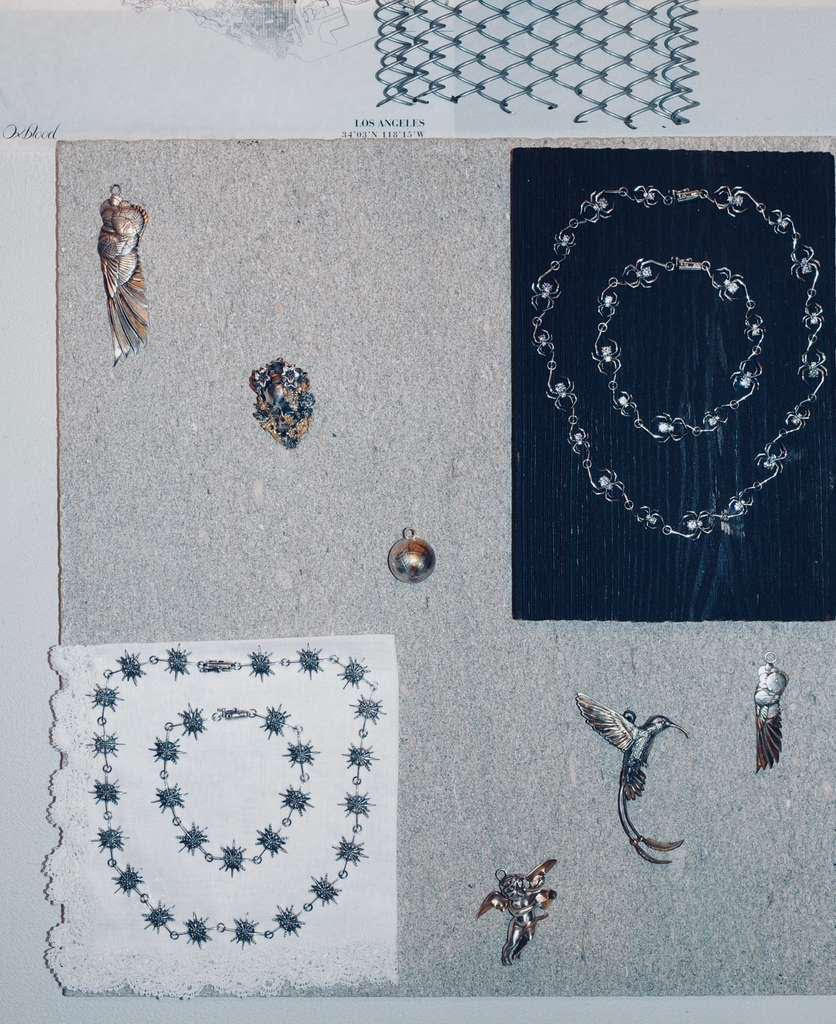
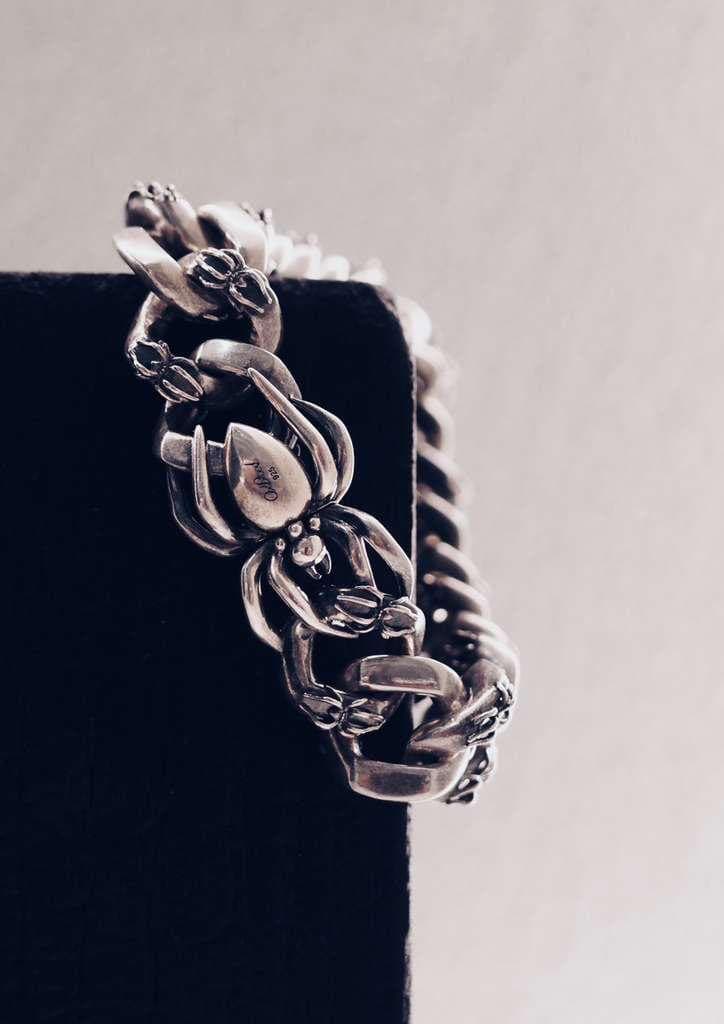
Dr. Woo’s archive of drawings—spanning more than 25 years—serves as the creative backbone. His signature language, defined by fine lines and a balance of graphic and organic forms, translates across materials with a precision that mirrors his tattoo work. The pieces themselves—whether delicate spider motifs rendered in gold and diamonds or irregular pearls punctuated with subtle engravings—carry the same sense of intimacy as a tattoo, scaled into objects.
The brand’s name, Oxblood, reflects this duality—oxidation and vitality, permanence and transformation—an idea of fixing memories and self-expression in time. It is both conceptual and literal: a way of describing how something ephemeral can be made lasting.
That philosophy finds its clearest expression in the brand’s first physical space, which opened quietly on Via Bigli during Milan’s Salone del Mobile. Rather than launching within the traditional fashion calendar, the decision to debut during design week underscores the brand’s positioning at the intersection of disciplines—closer to collectible design than seasonal fashion.
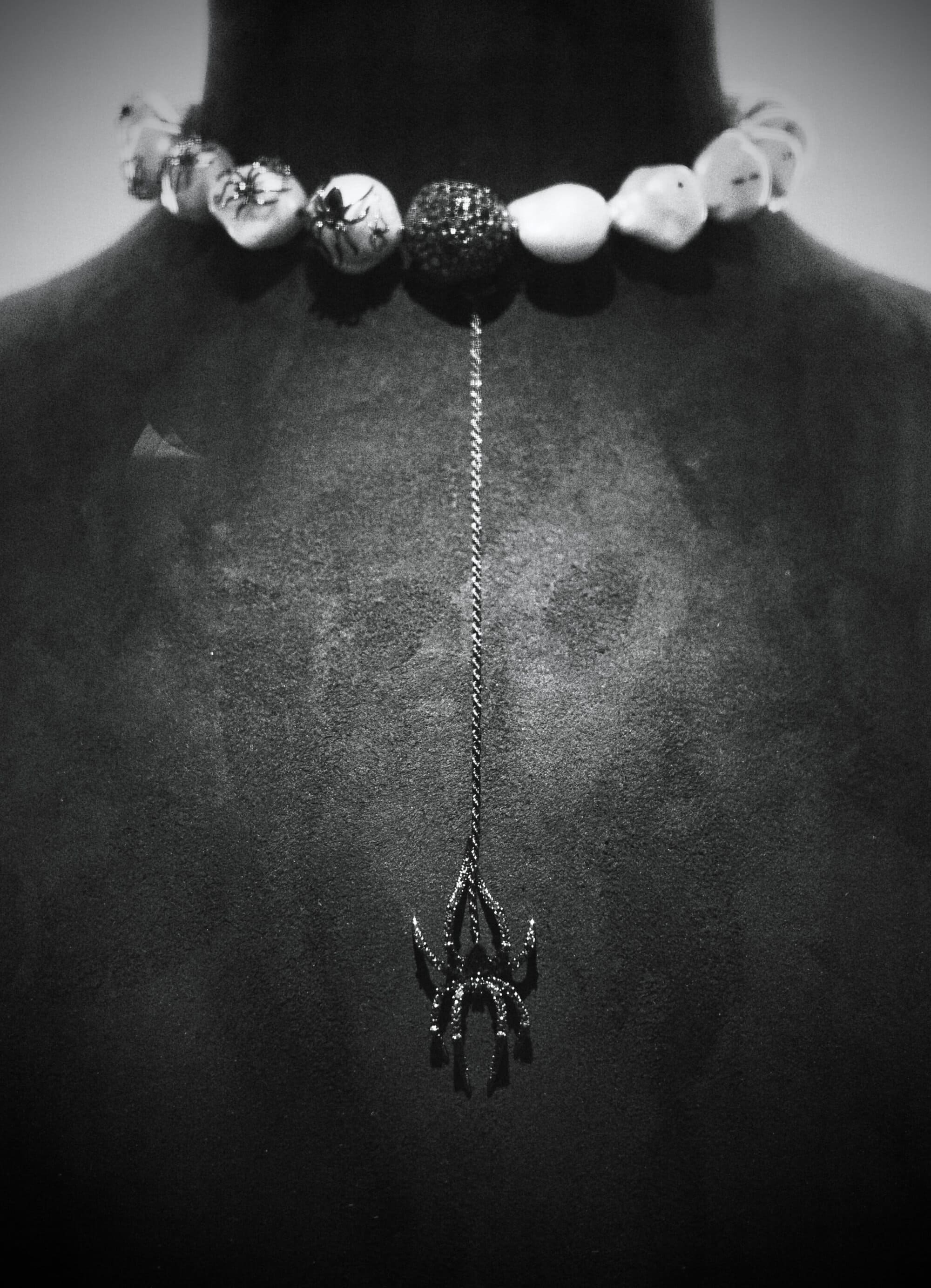
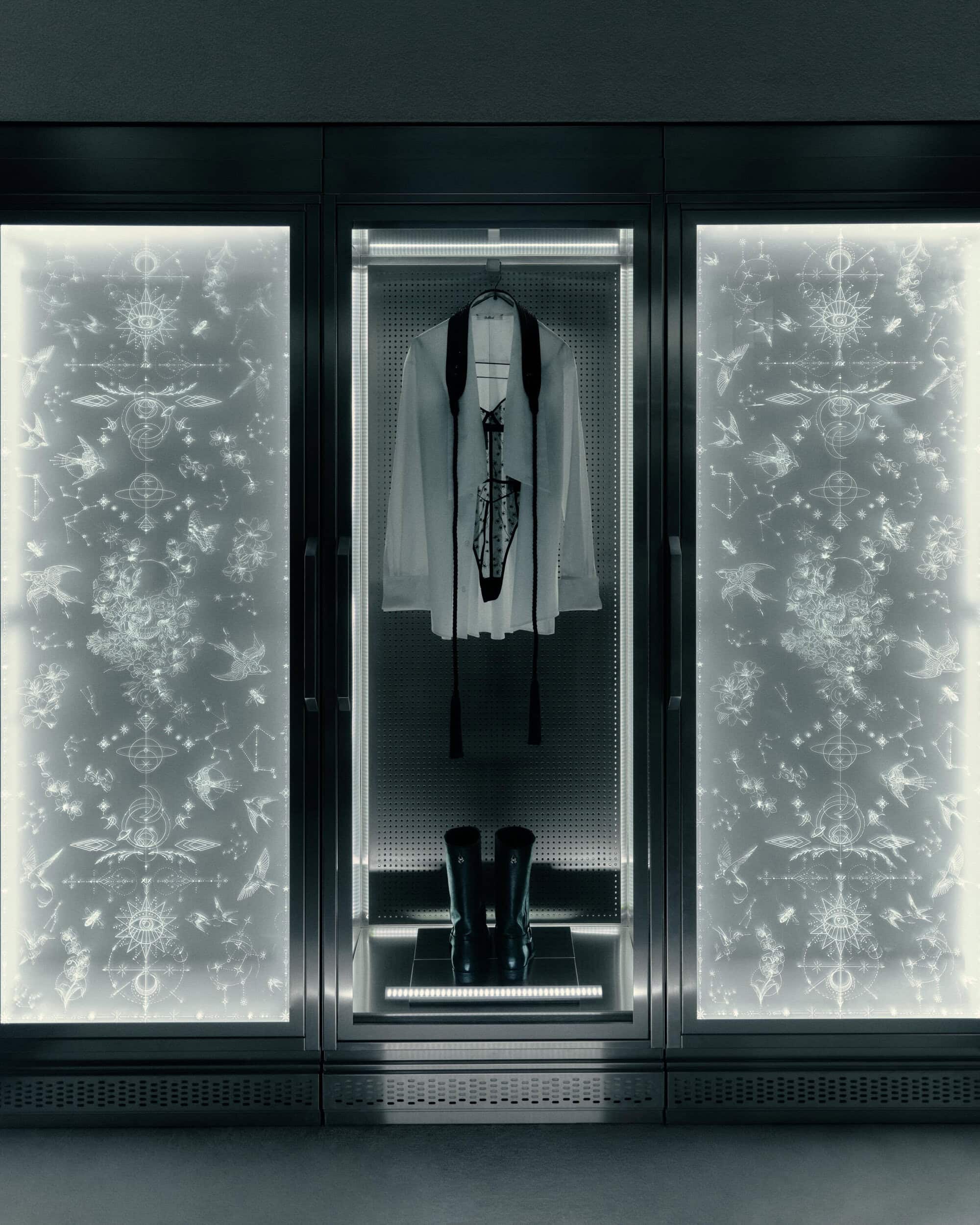
Luchi resists calling it a store. “I don’t like to call it a store. I like to call it a studio, a home.” The distinction is more than semantic. The space is conceived as an environment for exchange, where clients are invited into a slower, more considered process. There is no pressure to purchase, no expectation of immediate transaction—only the invitation to engage.
“We are like a tattooer,” she explains. “You come to us… and we help you find the right way to put your dream, not on your skin, but on your jewelry or on garments.” Upon arrival, visitors are given a form—part questionnaire, part prompt—to articulate symbols, dates, words, or references that hold meaning. These inputs become the foundation for design, interpreted by the team and, at the highest level, by Dr. Woo himself.
This process unfolds across multiple levels of personalization. Some pieces are engraved or adapted in-house, others are developed into fully bespoke works, and a select few are elevated into one-of-one commissions. In one instance, a client’s request resulted in a reworked Hermès Kelly bag—transformed into a singular object that carries the imprint of both artist and owner. The gesture underscores the brand’s ambition: to move beyond product into authorship.
The retail model reflects a broader rethinking of luxury itself.
Clients and people don’t need retail, don’t need clothes, don’t need collections, but they need to believe in a story and to be listened to.
In this context, the role of the brand shifts—from producer to collaborator, from distributor to interpreter.
That philosophy extends to how the product is structured. Rather than seasonal collections, Oxblood operates through a continuous rotation of singular pieces. “This is not a collection,” Luchi notes. “We have one or two pieces for every item, and then we replace it with something else.” The result is an ever-changing environment, where each visit offers a different perspective and reinforces the idea of rarity without relying on traditional scarcity tactics.
Production itself follows a similarly considered approach. Garments are made in Italy using primarily Japanese fabrics, chosen for their quality and depth. The emphasis is not on volume, but on integrity—ensuring that each piece, regardless of category, aligns with the broader narrative of the brand.
Despite the ambition of the project—including plans to expand into Paris, Tokyo, and Los Angeles—the communication strategy remains deliberately restrained. “At the moment, we are going to communicate by word of mouth,” Luchi explains. In an industry often driven by spectacle, the decision to move quietly feels intentional. Instead of launch events or large-scale campaigns, the focus is on direct relationships: inviting clients into the space, spending time with them, and building trust gradually.
“We are going to invite all our friends, special clients… in order to spend time with them and tell them our vision,” she says. “I think that people want to be listened to and enjoy one hour here to see something special.” It is a slower model, but one that aligns with the brand’s core belief—that connection, not visibility, is what drives lasting value.
Oxblood, in that sense, is less about building a brand in the traditional sense and more about constructing a system of meaning—one where objects function as vessels for memory, and luxury becomes a form of personal authorship.