Roman Rupture
Review of Valentino ‘Interferenze’ Fall 2026 Ad Campaign by Valentino Creative Director Alessandro Michele, Creative Directors Ezra Petronio, Lana Petrusevych of Agency Petronio Associates with Photographer /Director Glen Luchford with models Apolline Rocco Fohrer, Dario Tonin, George Anderson, Joe Bottomer, & Qiuyue Li
For Fall 2026, Alessandro Michele brings Valentino home to Rome, but not to the Rome of postcard sunsets and cinematic fountains. Conceived with art directors Ezra Petronio and Lana Petrusevych of Petronio Associates, and photographed and directed by Glen Luchford, the campaign places Michele’s richly eccentric characters inside an industrial repository of classical fragments: colossal hands, disembodied torsos, monumental heads and antiquities displaced from the architectural contexts they once inhabited. It is Rome viewed through interference, where antiquity, industry, fashion and contemporary image-making keep interrupting one another.
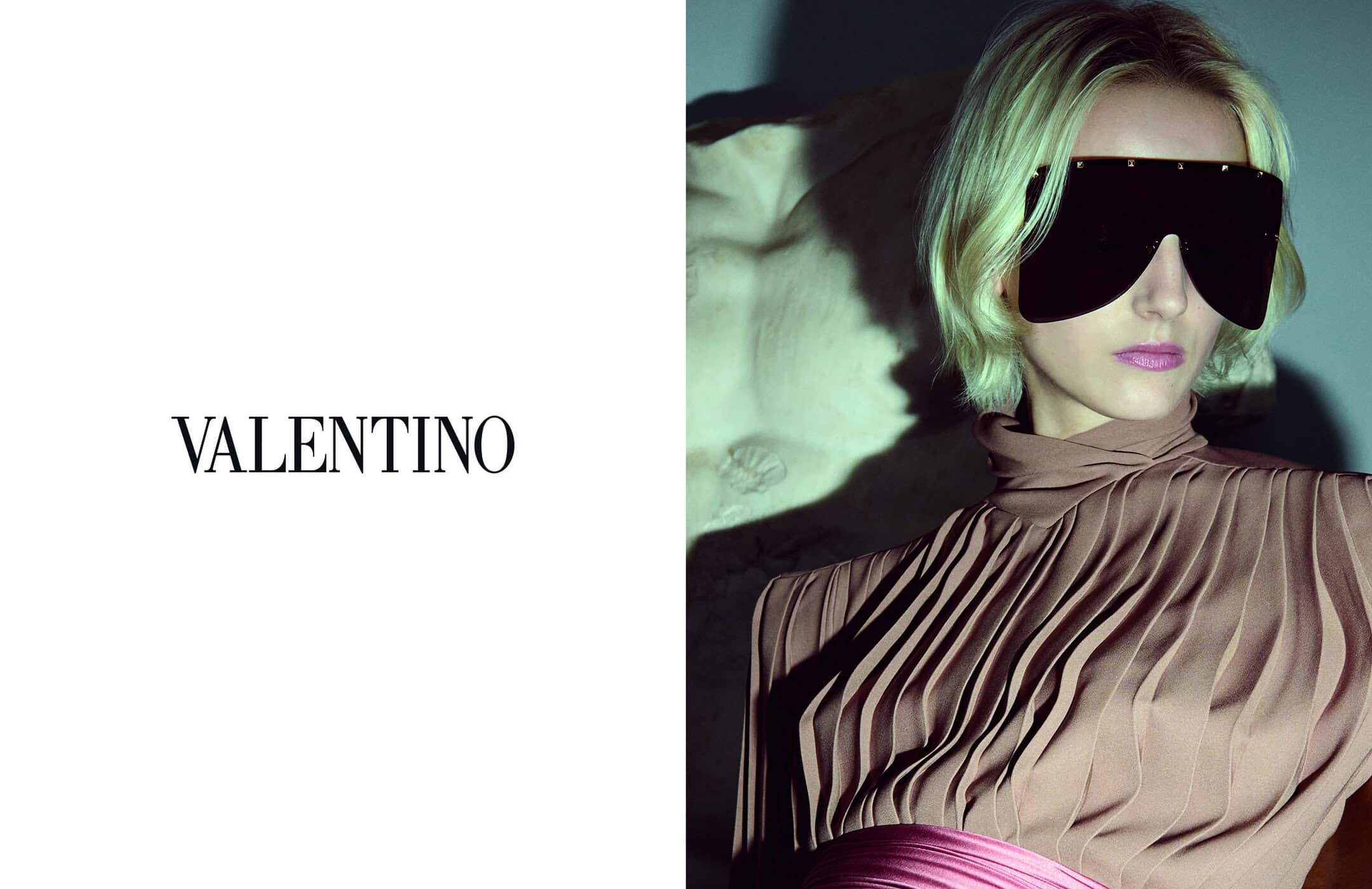
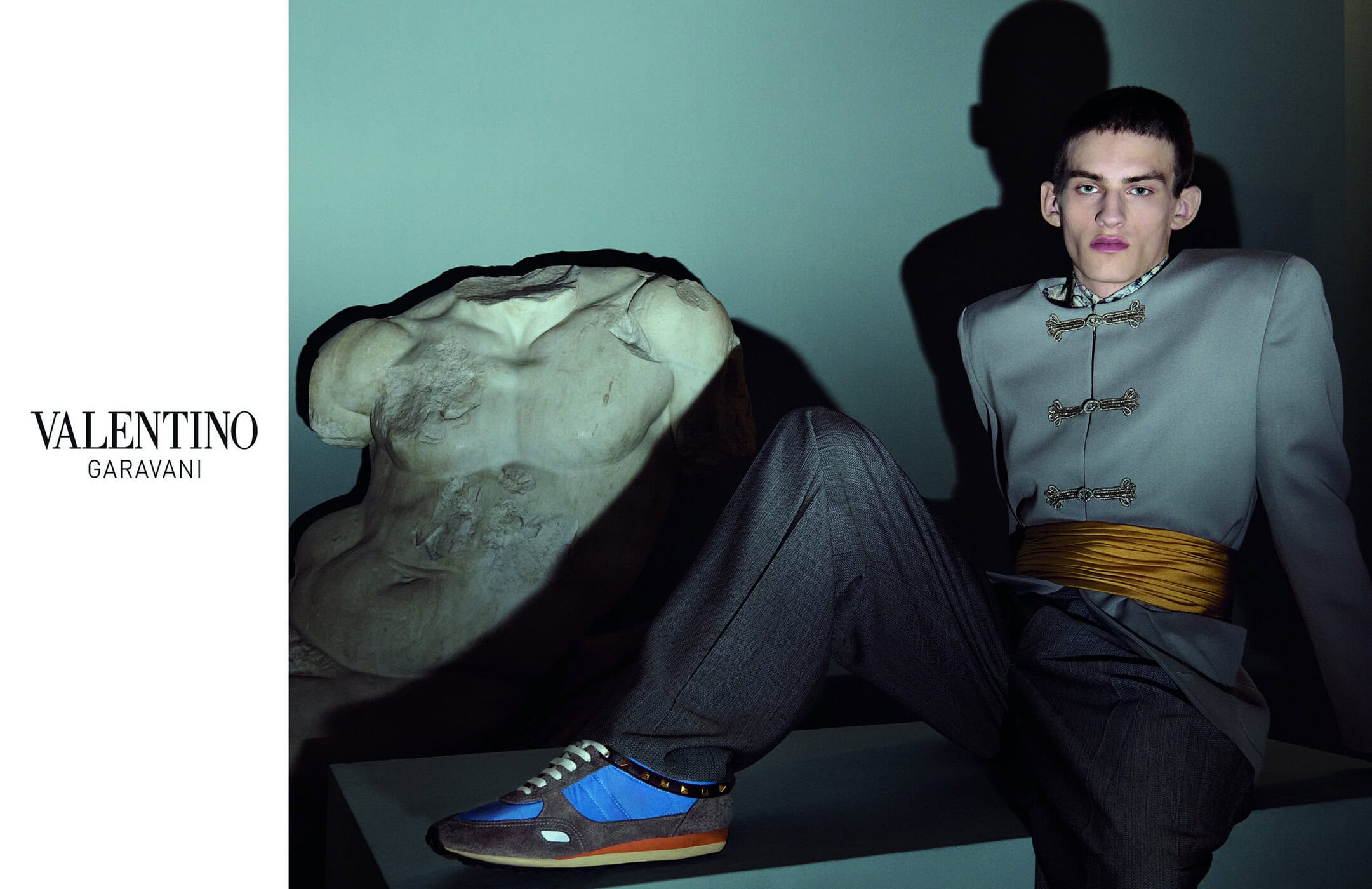
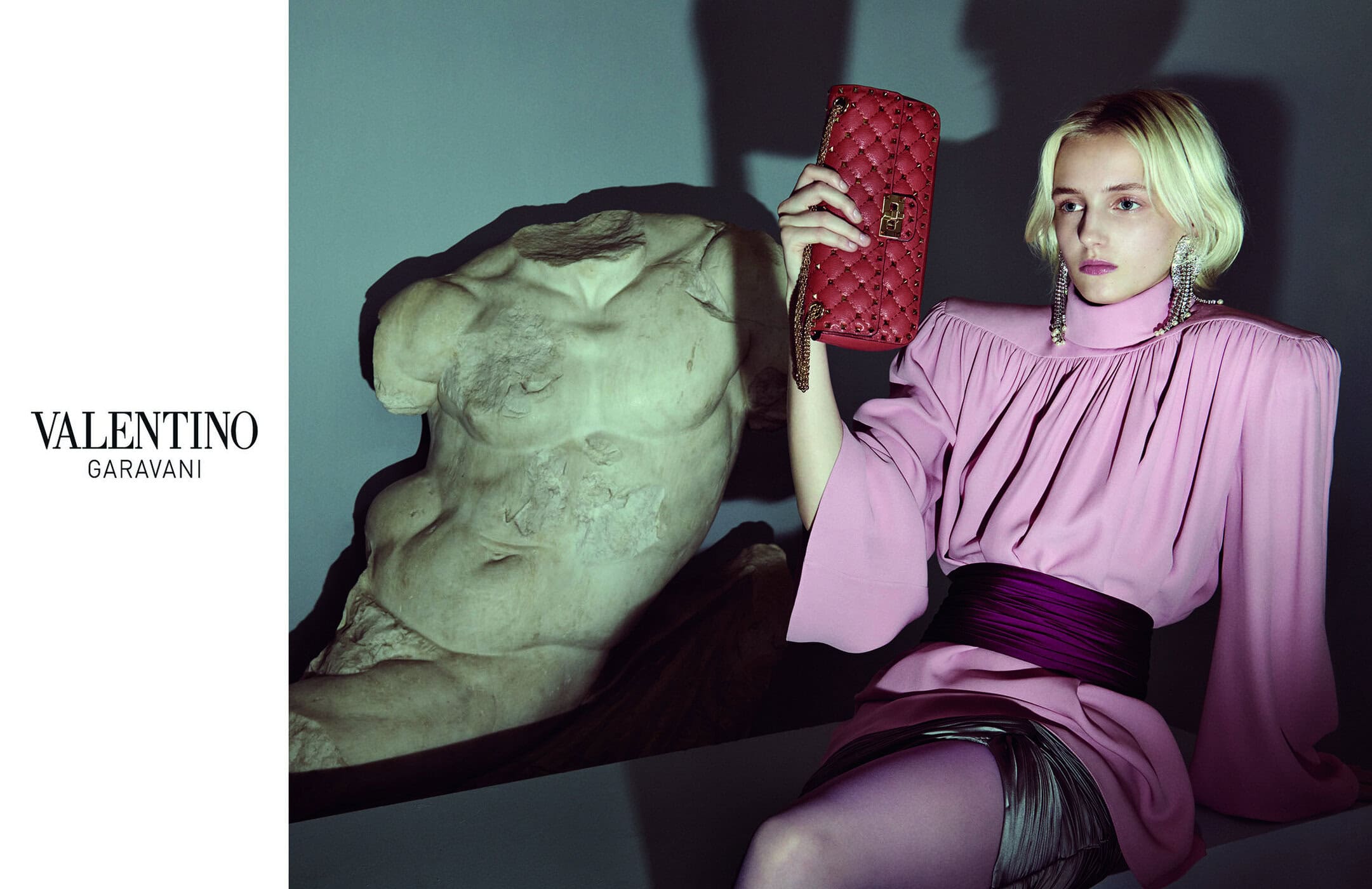
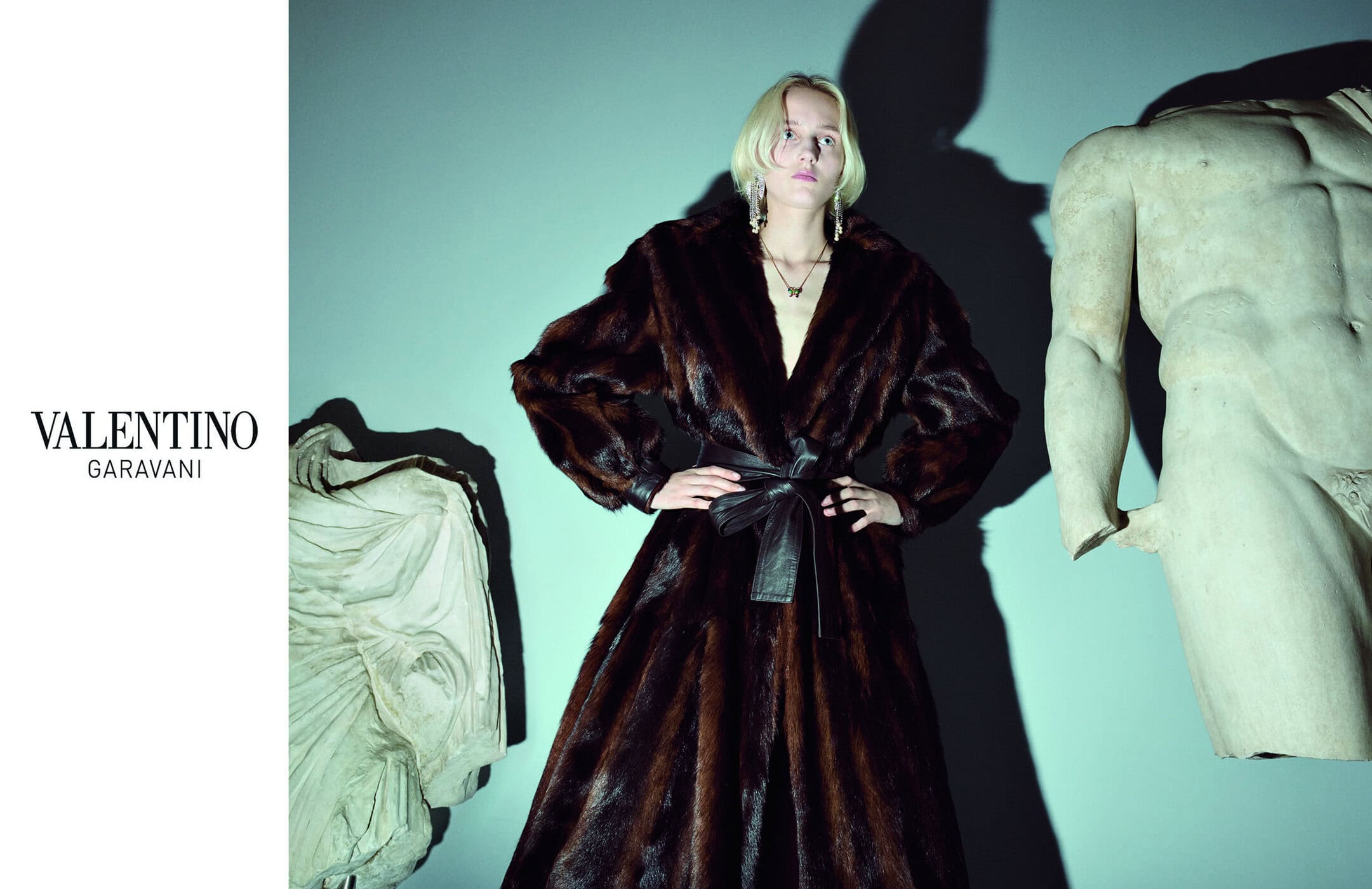
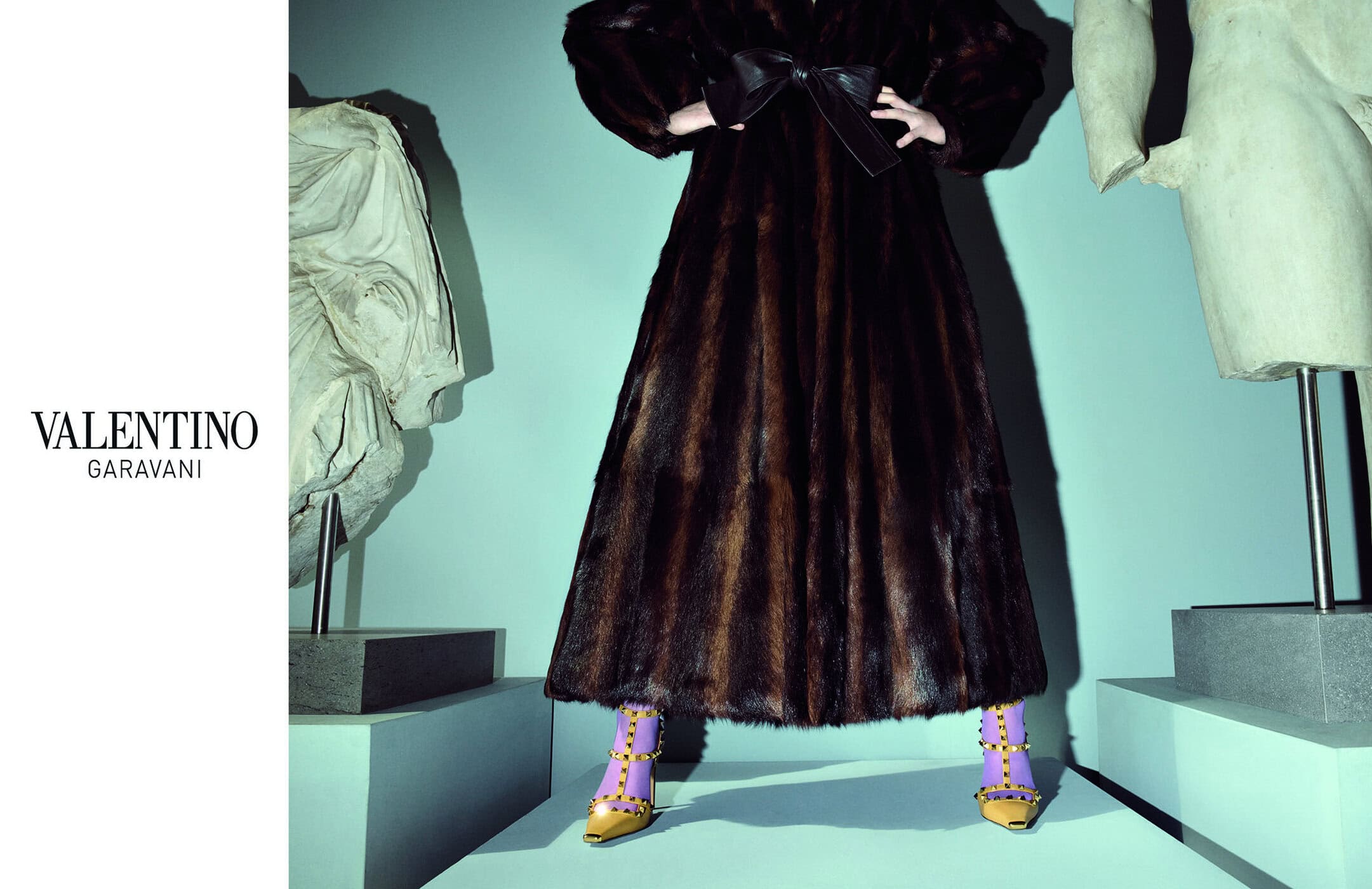
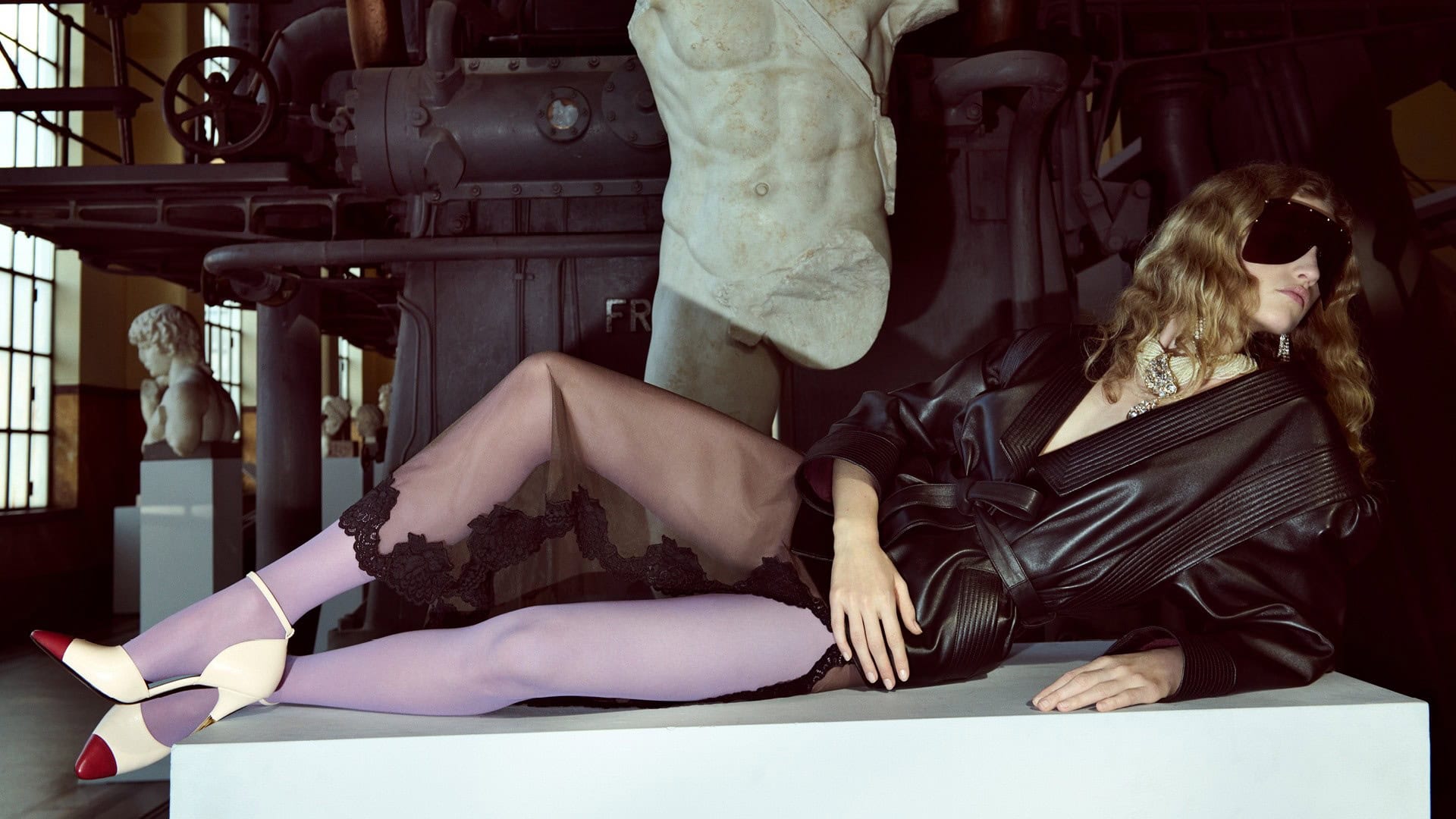
That tension is immediately compelling. The monumental sculptures could easily overwhelm the clothes, yet Luchford plays with scale rather than reverence. A model lounges beneath a gigantic stone arm as casually as though it were living-room furniture. Another sits beside a truncated male torso holding a studded Valentino Garavani bag aloft. Elsewhere a fur-clad figure stands between classical fragments while a monumental head shares the frame with an extravagant sweep of fuchsia satin. Rome’s antiquities are not treated as untouchable treasures here. They become participants, props and occasionally rather intimidating supporting actors.
The approach feels particularly right for Michele. Since arriving at Valentino, he has been less interested in preserving history behind glass than in allowing different histories to collide. Suzanne Koller’s styling makes that collision explicit: severe tailoring meets jewel-like color, lace meets leather, extravagant jewelry accompanies almost monastic silhouettes, and contemporary accessories sit comfortably beside bodies carved centuries ago. Michele’s fashion exists through accumulation, and the campaign cleverly places that philosophy within a setting that is itself an accumulation of cultural memory.
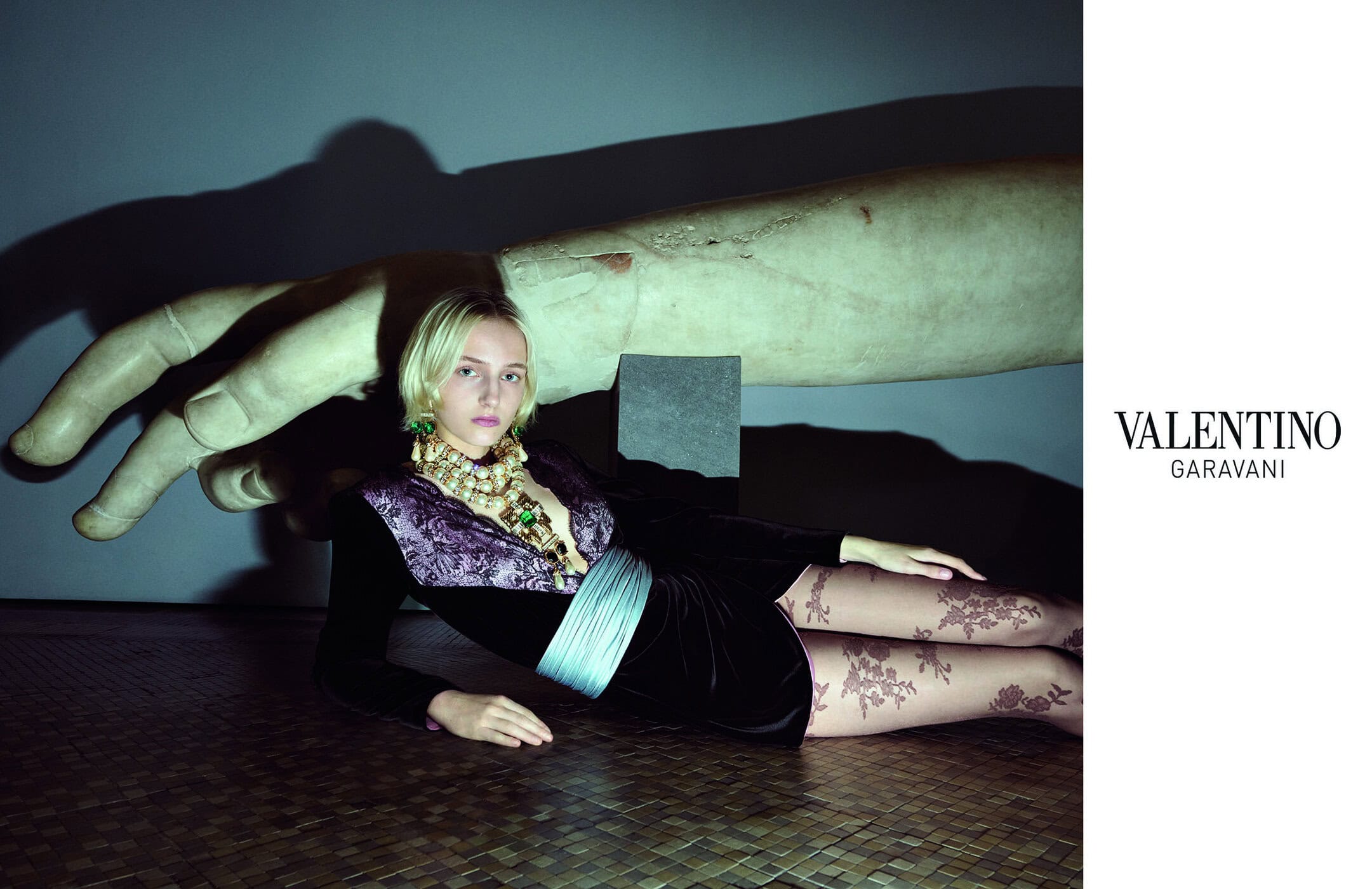
Luchford’s lighting gives the stills their peculiar psychological charge. Hard illumination throws enormous shadows against institutional blue-green walls, sometimes making the silhouettes almost as important as the models themselves. The flash has something forensic about it. These are not romanticized museum portraits bathed in flattering Italian light; they feel more like something discovered after hours, when the statues and the clothes have been left alone together and are beginning to misbehave. The coldness of the environment makes Michele’s purples, pinks, ochres and jeweled surfaces appear even more decadent.
The film pushes that sensation further. Its quick cuts and abrupt camera movements refuse the contemplative pace normally associated with looking at antiquities. Instead, Luchford makes the space flicker past us in fragments: body, statue, garment, face, shadow, object. We never quite settle. That visual restlessness is important because it prevents the classical setting from becoming a grandiose backdrop. Rome is not being presented as heritage with a capital H; it arrives as sensory information, broken apart and recombined through a contemporary camera.
And that is where the campaign feels distinctly Roman. Rome has always lived comfortably with historical contradiction. Ancient columns emerge beside apartment blocks; Baroque churches interrupt ordinary streets; fragments of vanished civilizations coexist with scooters, traffic and daily life. History there is not necessarily something one visits. It is something one walks around, leans against and occasionally complains is blocking the road. Luchford and Michele tap into that peculiar intimacy with antiquity. Their models show the statues remarkably little deference, which may be the most authentically Roman gesture of all.
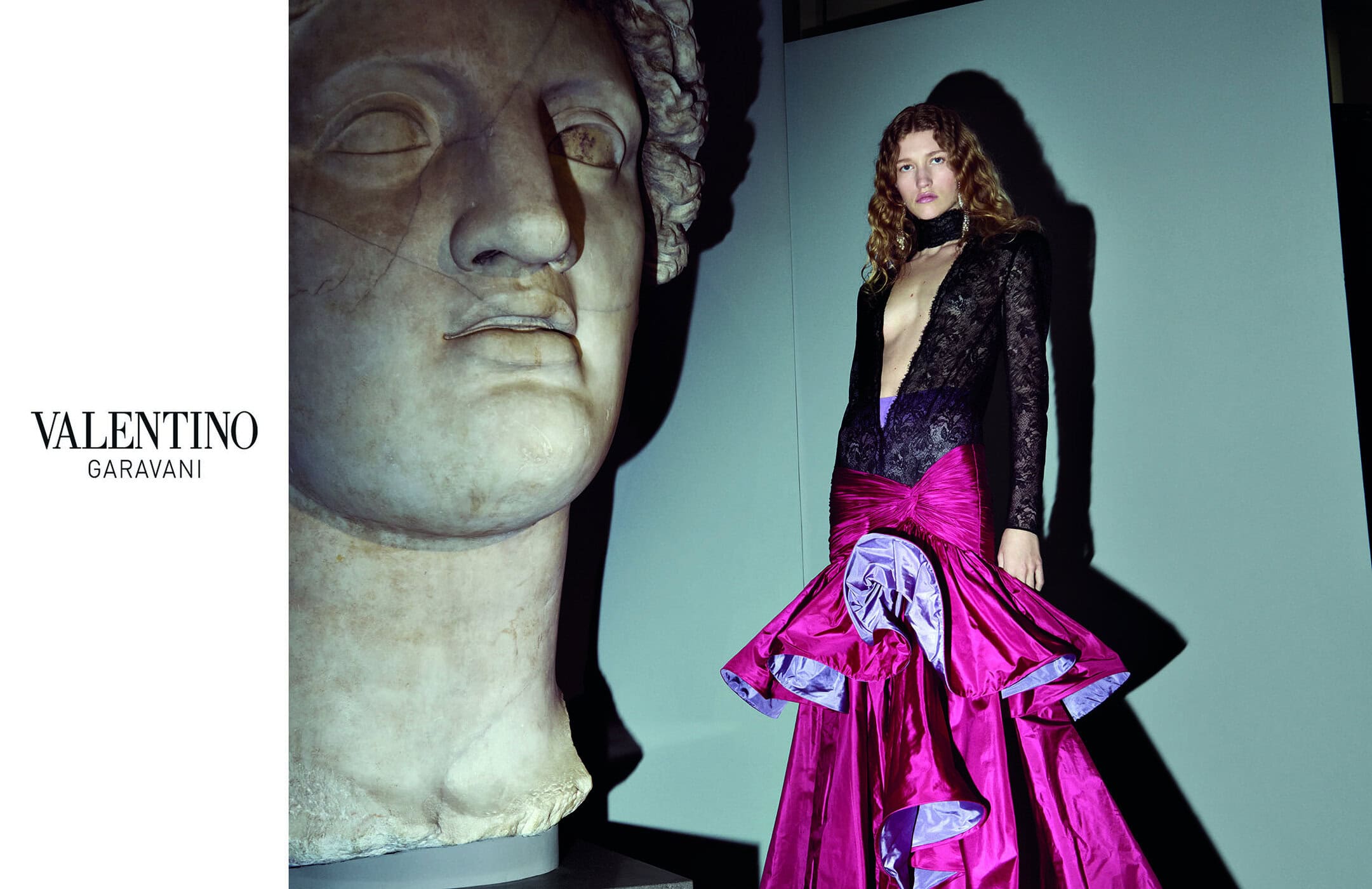
There is also a productive conceptual relationship between the human models and the sculptural bodies surrounding them. Classical sculpture established ideals of beauty that Western culture has spent centuries reproducing, questioning and dismantling. Here those supposedly eternal bodies are themselves incomplete: missing heads, arms and identities. Against them stand living figures dressed in Michele’s deliberately individualistic propositions. The old ideal has literally been fragmented while contemporary identity occupies the foreground. Whether intentional or not, it gives the campaign an intriguing philosophical undertow beneath its visual theater.
If there is an opportunity, it lies in pushing that collision even further. The strongest images are those where scale becomes strange and the relationship between model and sculpture approaches the surreal, particularly that enormous hand hovering above a reclining figure. At moments when the compositions become more conventionally model-plus-statue, some of the initial disturbance subsides. Michele’s Valentino can support considerably more visual weirdness, and Luchford is certainly capable of delivering it. A campaign built around interference might profit from allowing the signal to break down just a little more.
Still, Fall 2026 succeeds because it avoids the most obvious way for an Italian House to invoke Rome. There are no monuments presented for admiration, no golden-hour nostalgia and no insistence upon heritage as something solemn. Instead, Valentino finds Rome in its fragments, its collisions and its almost nonchalant relationship with several thousand years of beauty. In this city, history is everywhere. Michele and Luchford understand that the more interesting question is what happens when you stop worshipping it and start playing with it.
After all, when Rome gives you a giant marble hand, the least fashionable thing you can do is simply stand there and admire it.
Valentino Creative Director | Alessandro Michele
Agency | Petronio Associates
Art Directors | Ezra Petronio, Lana Petrusevych
Photographer/Director | Glen Luchford
Models | Apolline Rocco Fohrer, Dario Tonin, George Anderson, Joe Bottomer, & Qiuyue Li
Stylist | Suzanne Koller
Hair | Esther Langham
Makeup | Daniel Sallstrom