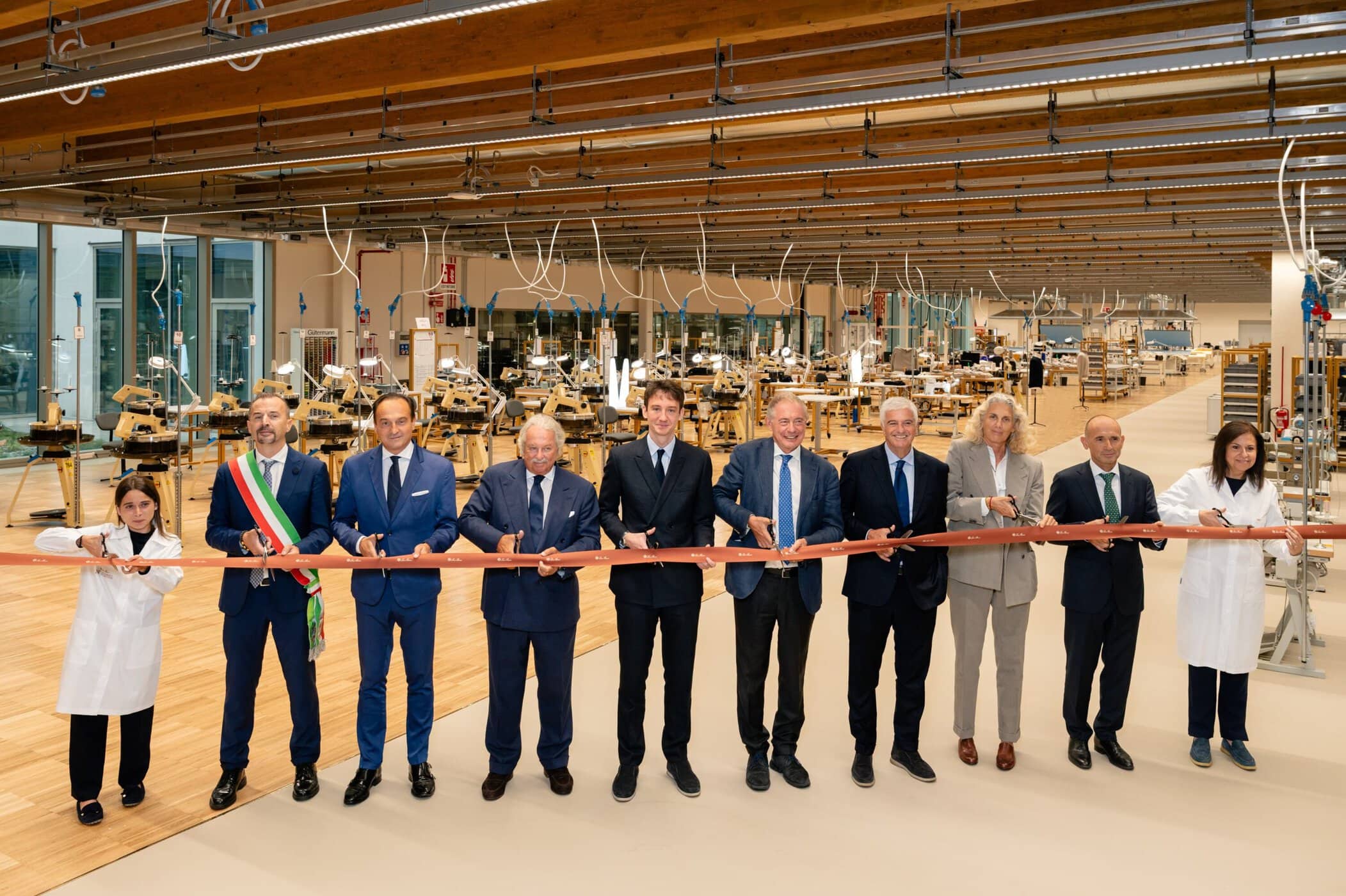
At its new knitwear centre in Ghemme, Loro Piana is preparing for growth by investing in the skills on which its quality depends. For CEO Frédéric Arnault, savoir-faire is a strategic priority.
By Mackenzie Richard Zuckerman
Morning light moves gently through Loro Piana’s new factory in Ghemme. It falls across curved wooden elements inspired by the movement of fibre and walls whose plaster has been deliberately left irregular beneath the hand. Beyond the glass, greenery remains in view. The building gives touch an architectural presence, a fitting introduction to a place devoted to the making of knitwear.
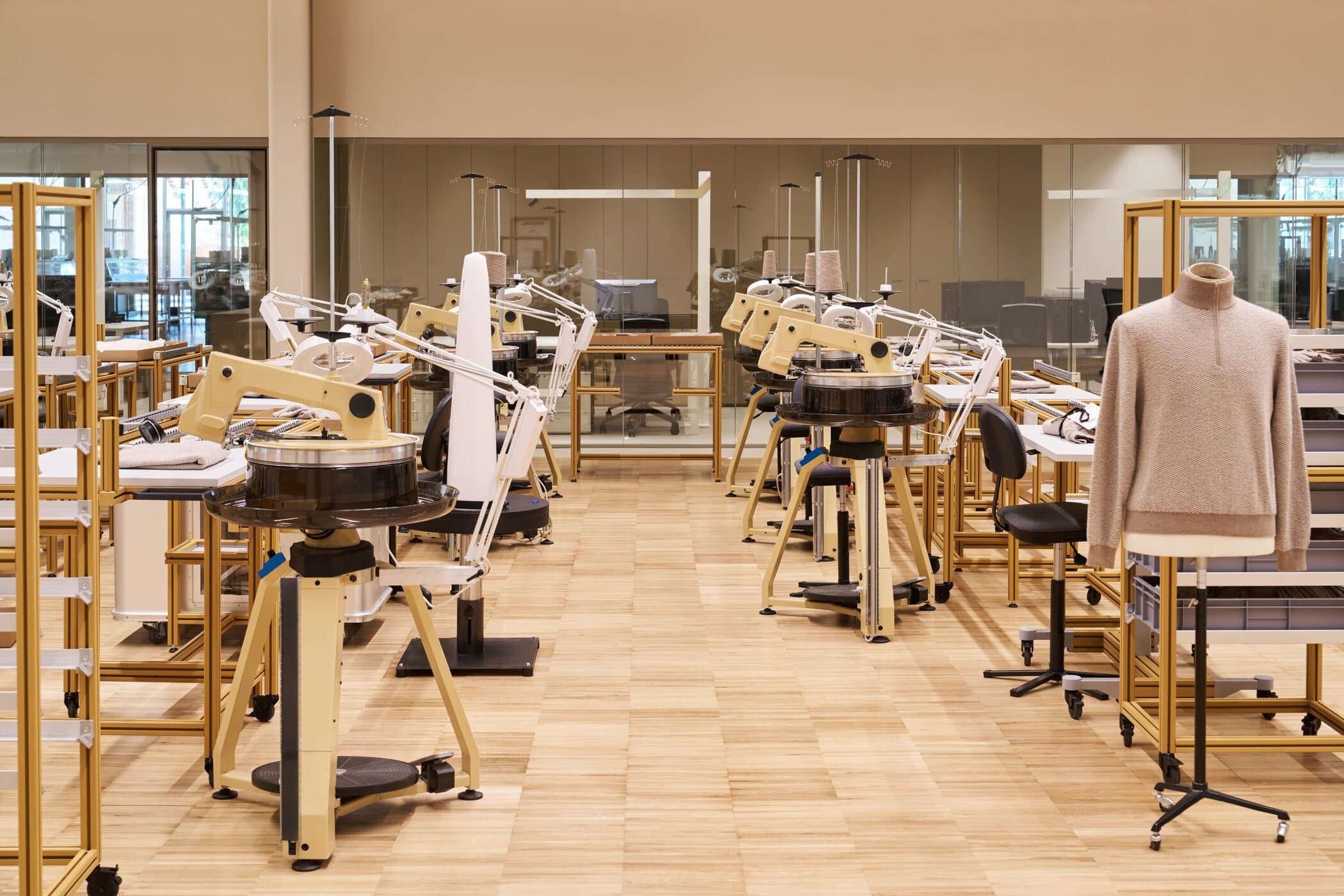
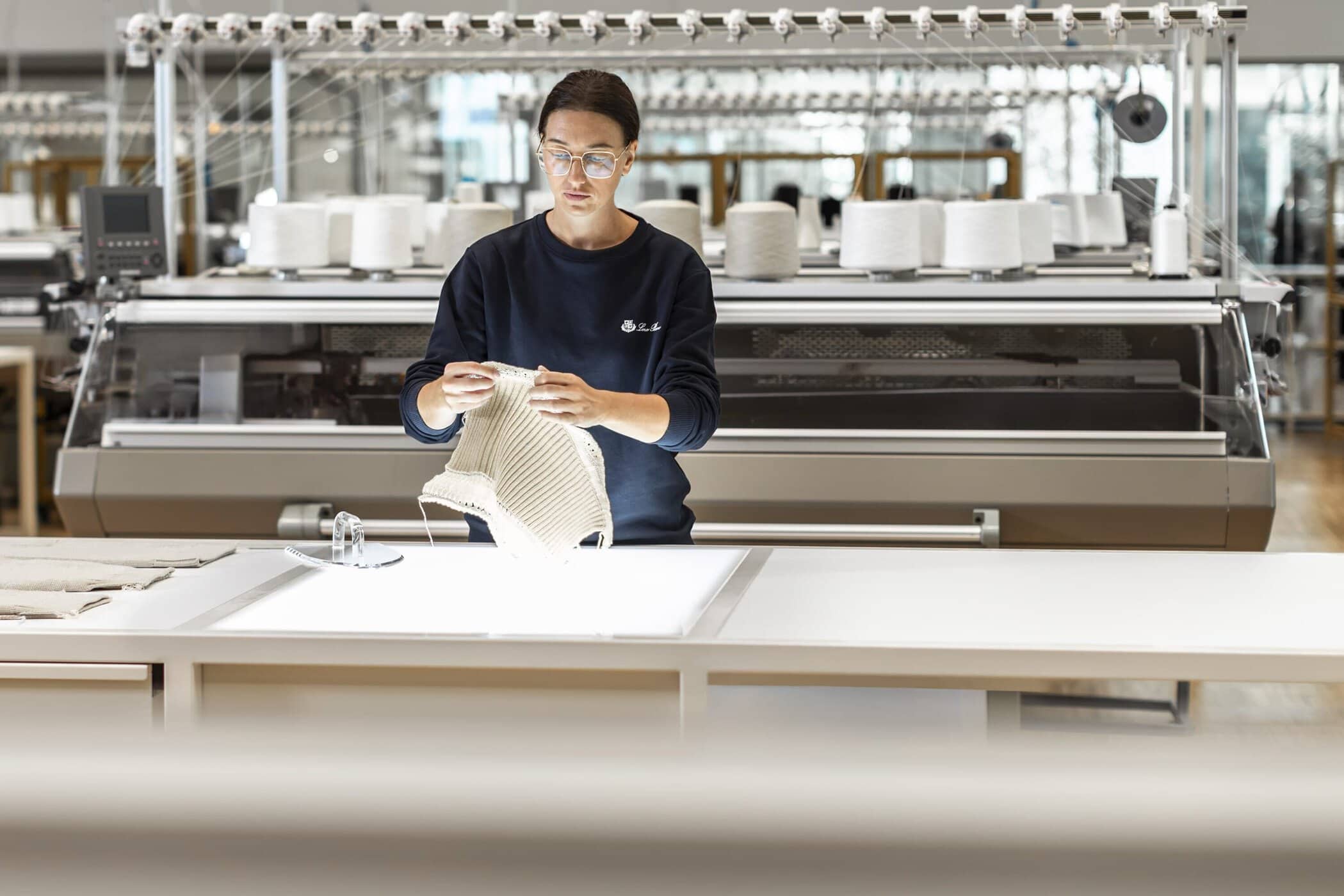
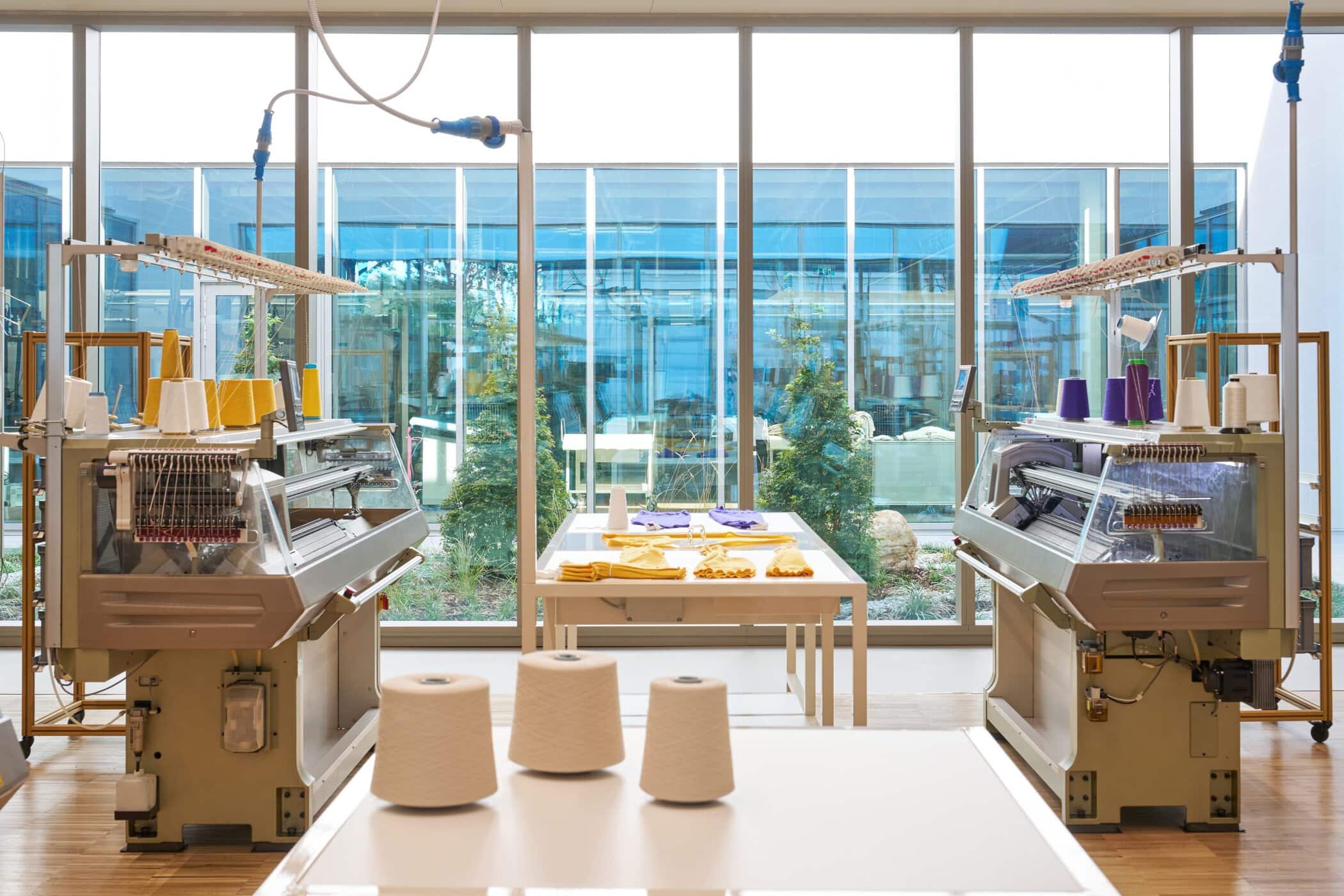
There is a softness to the space that almost disguises the precision unfolding within it. Across more than 8,000 square meters, research and development, programming, knitting, linking, mending, washing and ironing bring their respective disciplines to bear on a garment. Each stage influences how it will feel, fit and hold its shape. The quality associated with the house depends on the consistency of those decisions, repeated across its production.
Opened on September 18, Ghemme is Loro Piana’s first new factory construction since the 1990s. For Frédéric Arnault, its opening places the house’s industrial future at the centre of his agenda. The facility brings production and training together at a time when Loro Piana is preparing to expand its workforce here considerably.
Savoir-Faire as Strategy
“My strategic priority is savoir-faire,” Arnault says. “The Ghemme campus is designed entirely to strengthen our internal expertise and to secure the skills, artisans and expertise required to enhance our exceptional raw materials.”
For a house whose reputation rests on material expertise, the decision to develop more of that knowledge internally has consequences for how it grows. It commits Loro Piana to sustaining the people, facilities and research behind its products over time. Bringing development, manufacturing and finishing together also allows experience gained at one stage to inform another, keeping the knowledge accumulated through successive collections available within the business.
In his opening address, Arnault made the commercial importance clear: “Knitwear is a core category for us.” Ghemme gives the house a stronger industrial foundation in a field central to its identity. Greater oversight of that category allows decisions about design, production and future development to be made with a closer understanding of the capabilities behind them.

“Loro Piana’s new centre of knitwear excellence in Ghemme represents our largest industrial investment to date,” Arnault says. “Three years in the making, the facility unites every stage of our knitwear know-how under one roof, from research and development and prototyping to production, finishing, and talent development. Strategically positioned near our Roccapietra and Quarona factories in a region rich in textile heritage, Loro Piana Ghemme currently employs approximately 190 people, with headcount projected to reach around 300 over the next three years under a robust growth plan.”
The scale of that commitment gives savoir-faire a lasting place in the house’s planning. Alongside the ambition to expand, Loro Piana is assuming responsibility for developing the expertise that expansion will require. For Arnault, stewardship involves keeping those ambitions connected: allowing the business to advance while continuing to invest in the capabilities on which its reputation depends.
The Judgment Behind the Knit
The work begins well before a knitting machine is programmed. Relationships with herders and the selection of raw materials establish the qualities that successive stages must develop and protect. By the time a yarn reaches Ghemme, decisions about its fibre and spinning have already shaped its possibilities. Research and development explores how it can behave as a garment, moving from a sketch through stitch trials to a finished sample. The choice of material brings a corresponding responsibility to understand how it should be worked.
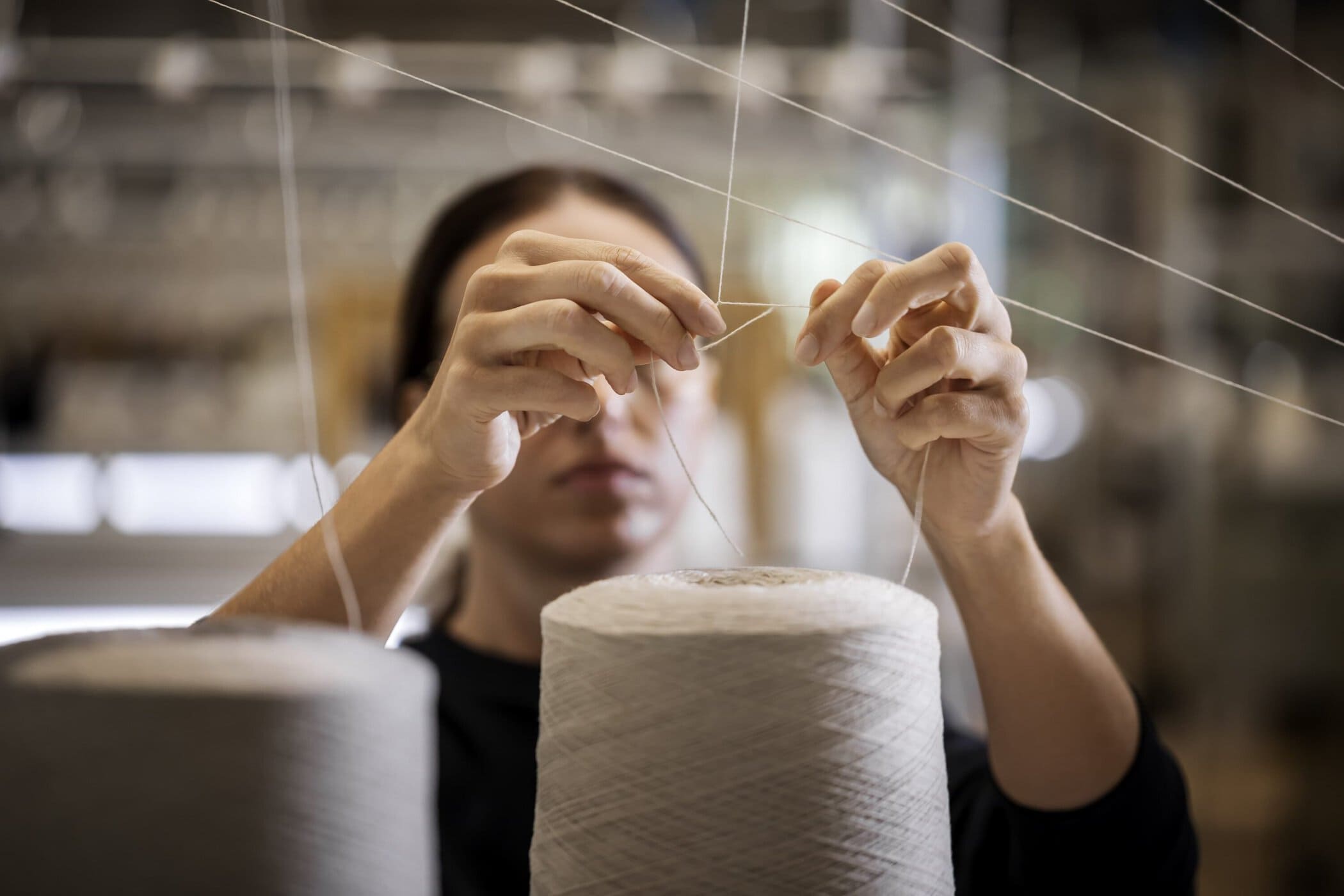
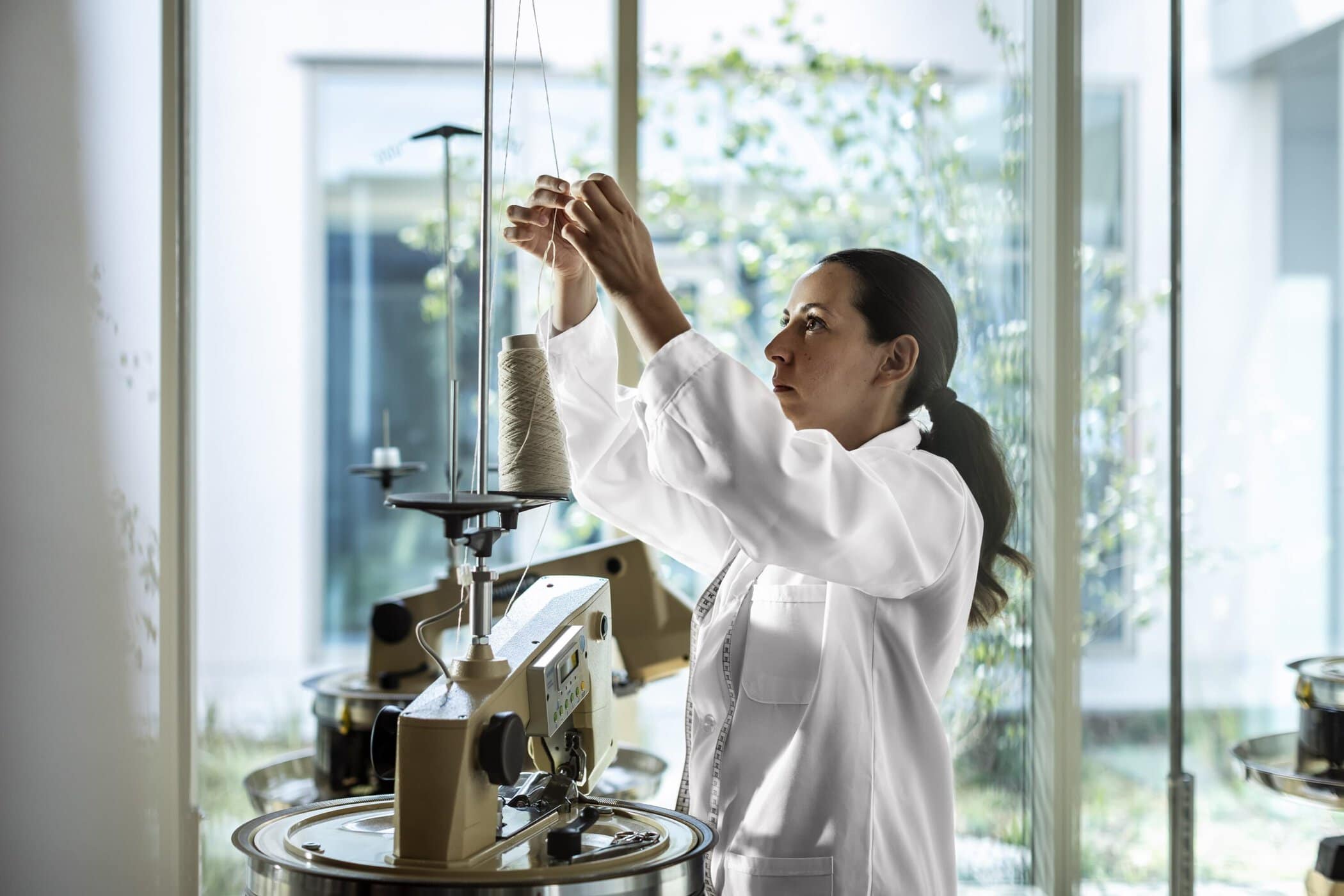
Royal Lightness makes those demands particularly clear. The yarn blends Merino wool measuring 13.5 microns with Mulberry silk. Its fineness requires precise handling to keep the threads from breaking during knitting. Pursuing greater lightness raises the technical demands of construction: the qualities sought in the finished garment depend on how sensitively its material passes through production.
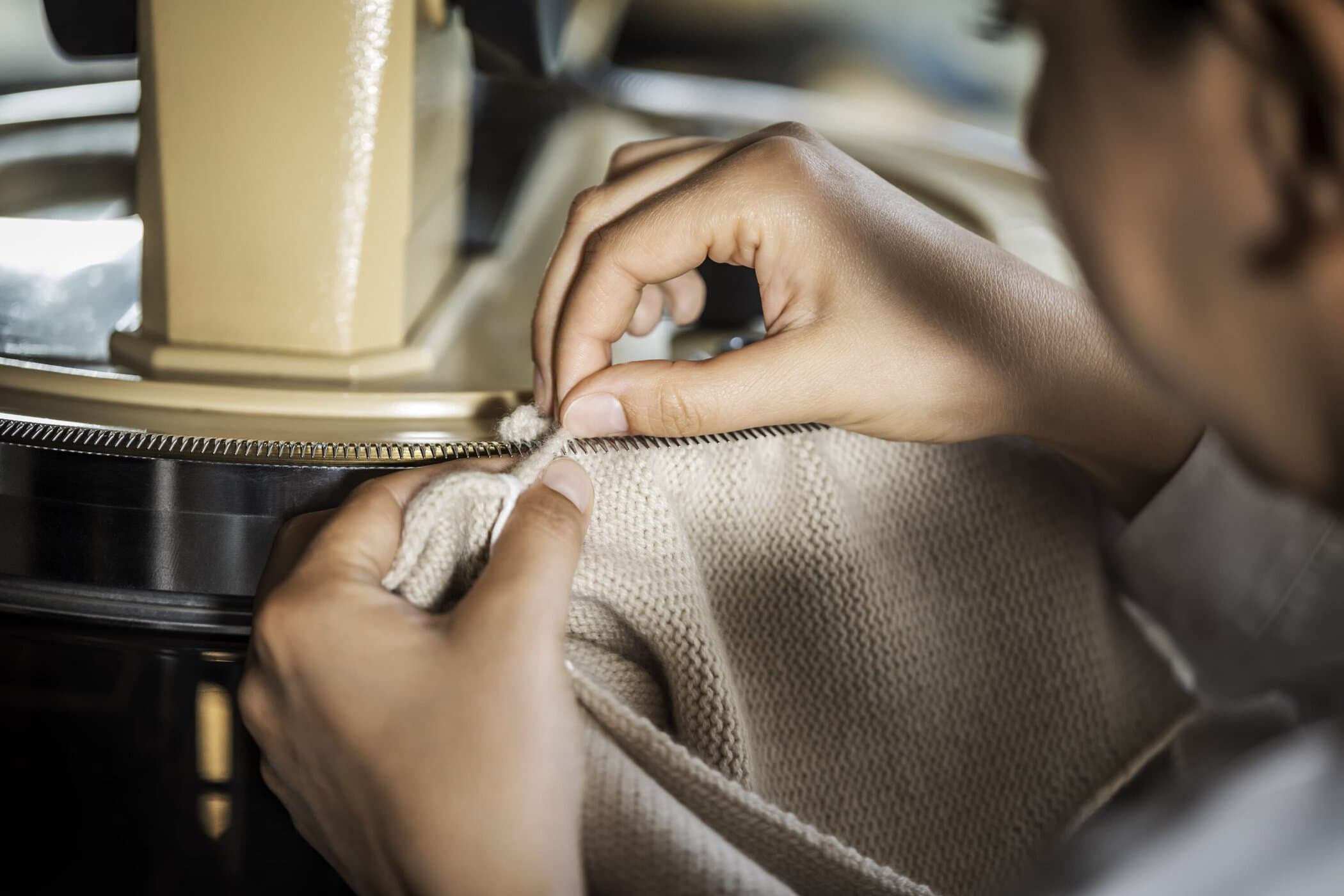
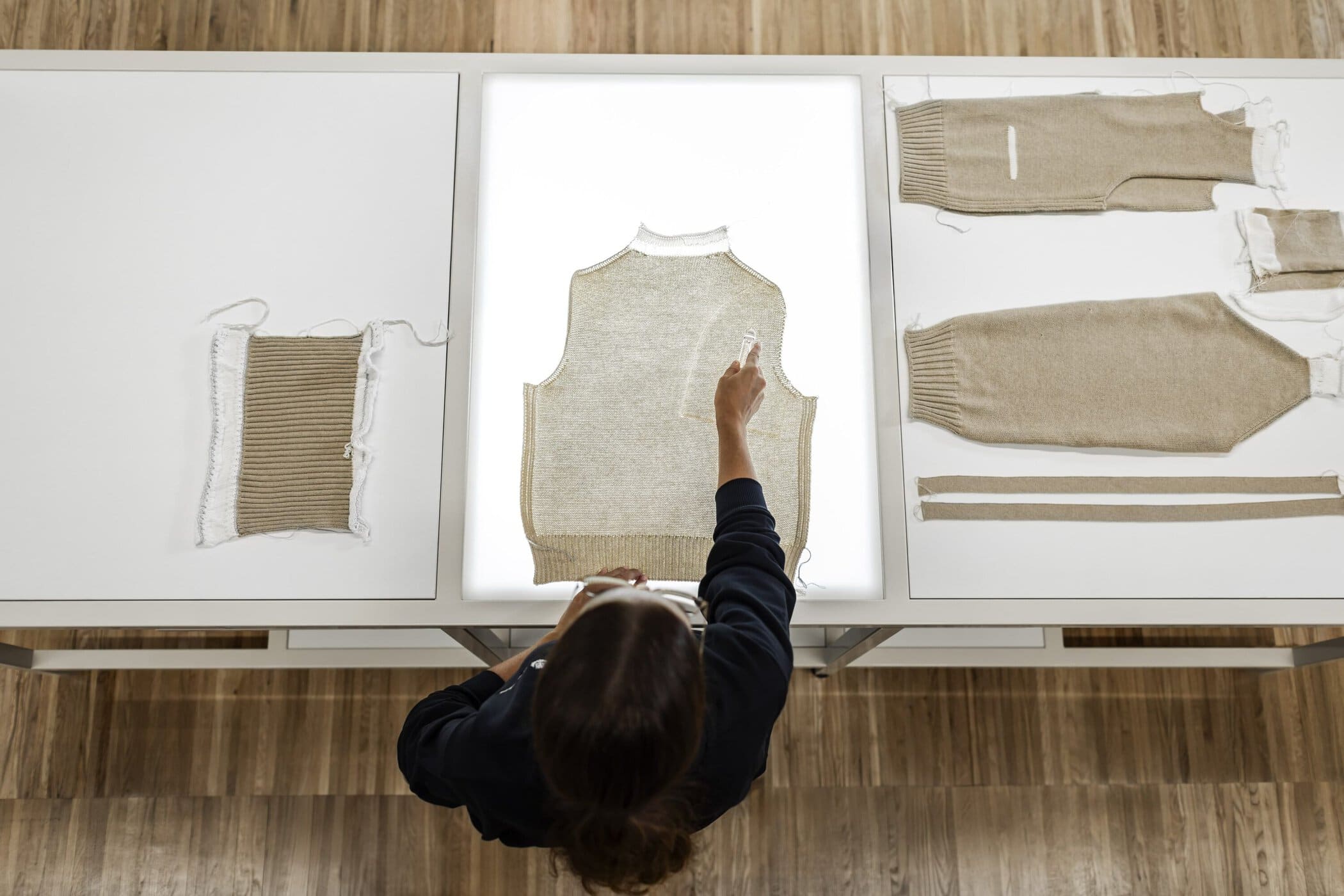
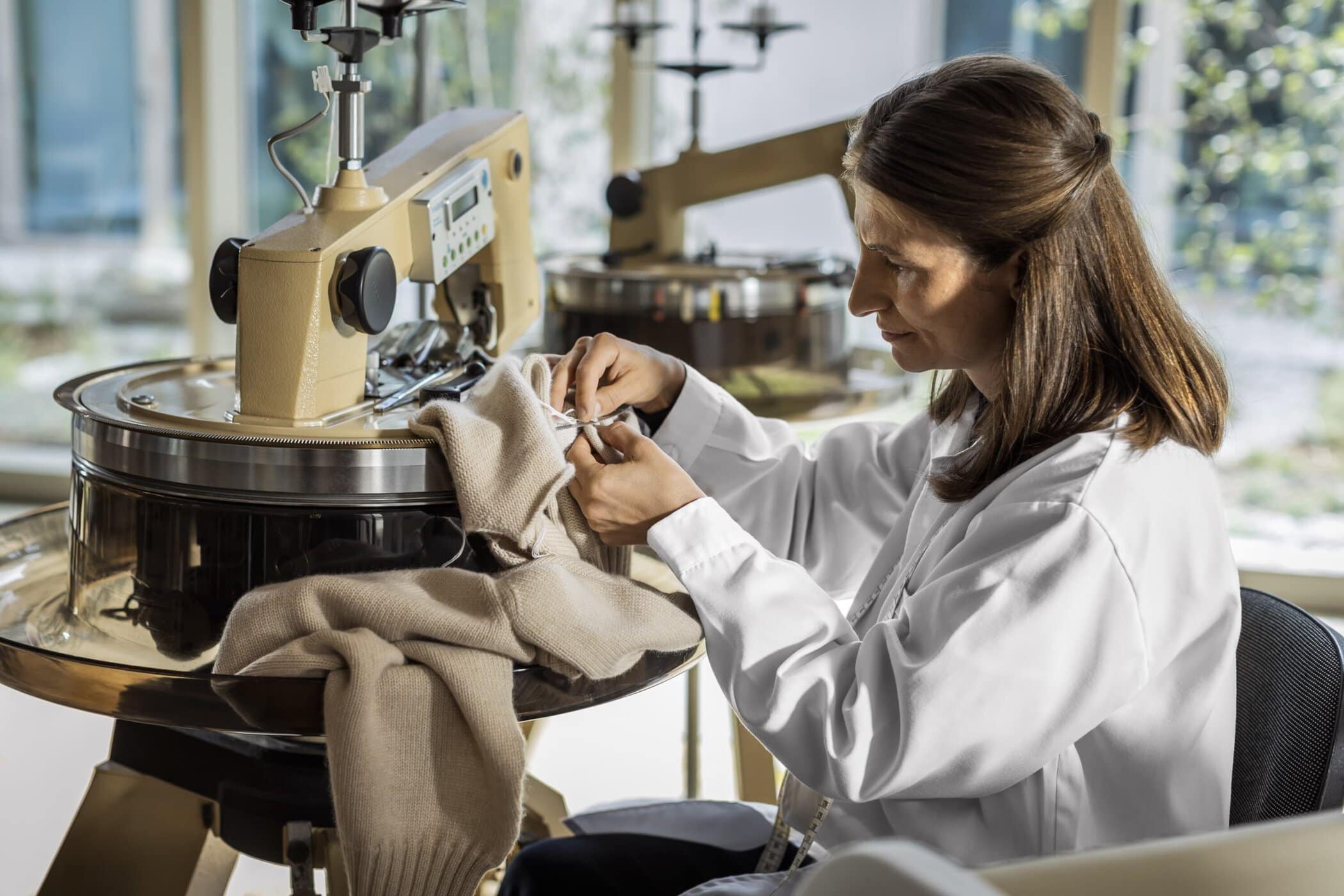
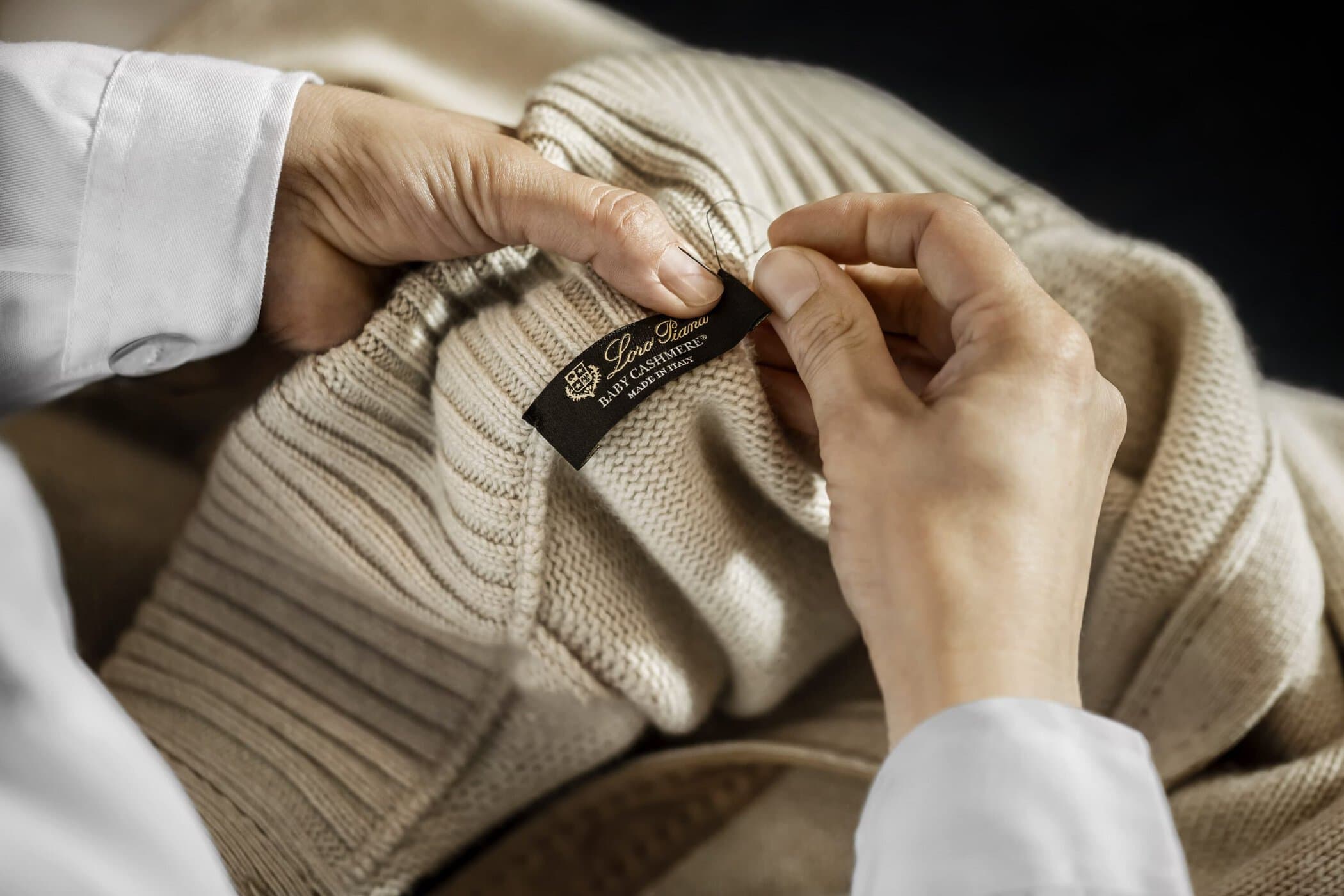
Programmers translate a design’s lines, proportions and fit into instructions for the knitting machines. In fully-fashioned knitwear, the front, back, sleeves and other components are knitted individually, then joined. Linking brings those pieces together stitch by stitch, producing the nearly invisible side seam characteristic of the house’s knitwear. Hand-finishing and mending refine the garment further, with quality checks running through production.
Each stage must carry forward the precision of the work before it.
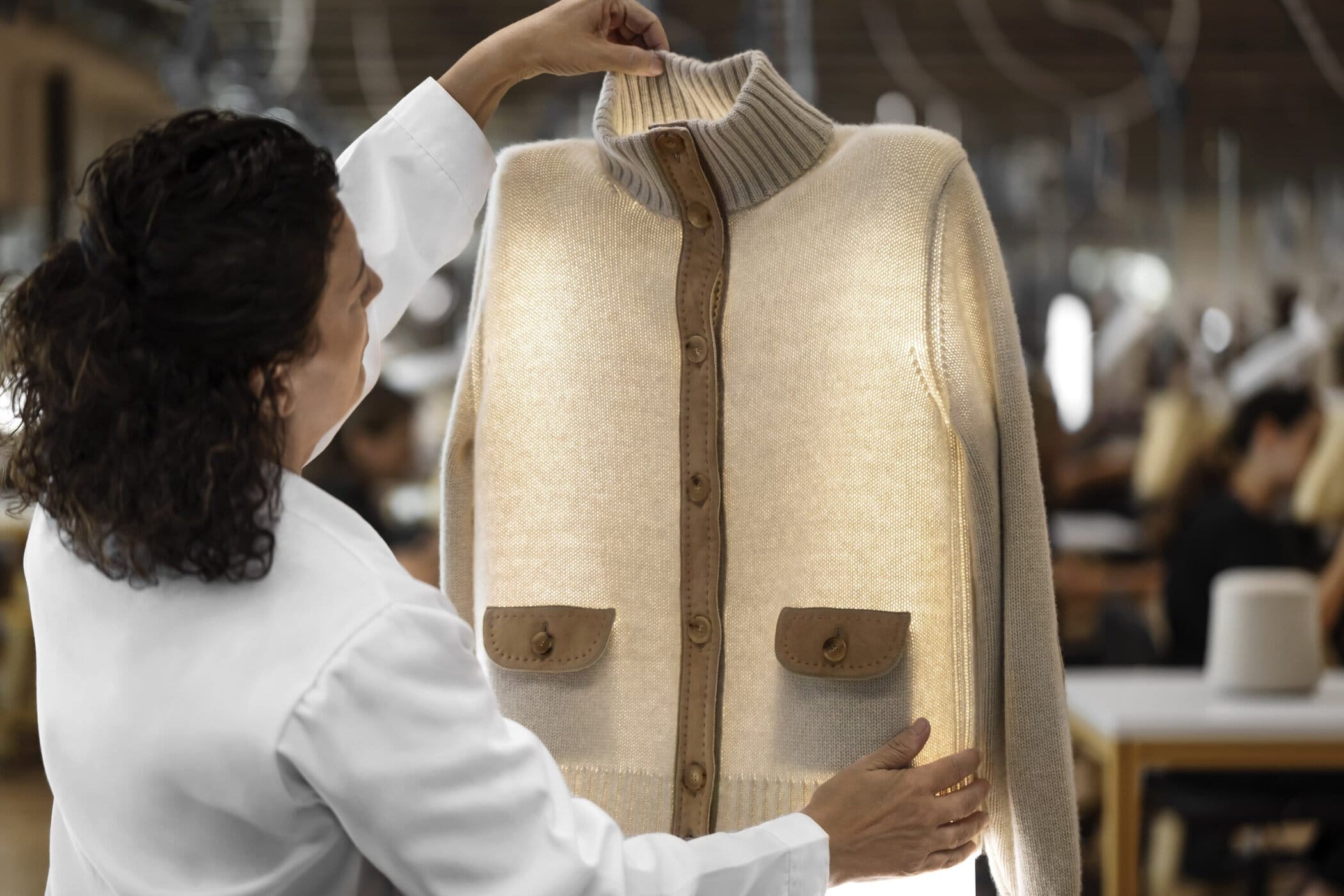
Finishing introduces another set of variables. Treatments are adjusted to the fibre, yarn, process, color and dye bath. Washing helps establish softness and stability; ironing must account for the way natural fibers respond to heat and humidity, preserving volume, texture and proportion. Even near completion, the garment remains responsive to the actions of its maker.
Consistency therefore depends on knowing where to adjust. Different materials require different treatment to arrive at the intended softness, shape and finish. The sophistication of the production process lies partly in accommodating those differences with precision. Final inspection remains entirely manual, bringing the accumulated work back to trained eyes and hands. By this point, the quality of the garment rests on a succession of decisions, each responsible for preserving something the wearer will eventually feel.
Teaching the Next Generation
The Accademia dei Mestieri occupies the renovated former caretaker’s house beside the manufacturing facility. Established in 2015, the academy has a broader remit to safeguard and transmit 59 artisanal and technical métiers across Loro Piana. At Ghemme, its knitwear school focuses on programming, linking, hand-finishing and mending, alongside tailored training to develop existing skills.
Its mission includes identifying and systematizing expertise, a demanding undertaking when so much knowledge has been acquired through practice. Teaching requires experienced practitioners to make their understanding accessible: to explain how they arrive at a decision, what they attend to, and how they recognize the need for an adjustment. Giving that process a permanent place within the house helps knowledge circulate across generations of employees. It also makes the ability to pass on a skill part of that skill’s continuing value.
Along the corridor leading towards production, one wall presents different stitches made from a single cashmere yarn; opposite, the same stitch appears in different yarns. Changing either variable alters the result. The displays offer a concise lesson in the relationship between technical understanding and creative freedom. A designer who understands how material and construction interact has more informed choices available, and a stronger basis for attempting something unfamiliar.
The Knit Design Award extends that possibility to students. Established in 2016, the competition initially asked participants to develop stitches; since 2022, its focus has shifted to complete knitted silhouettes. Past winning projects on display include École Duperré’s cashmere armour, a pleasingly improbable proposition for a material associated with softness. Moving from a stitch to a silhouette asks students to carry an experiment through the demands of an entire garment.
For Loro Piana, education creates room for future contributions to a body of knowledge built over generations.
Younger makers need the fluency to uphold an established standard and the confidence to explore what else their materials might do.
The value of transmission becomes tangible when they can use what they have learned to solve a problem, develop an idea, or find a possibility of their own.
A Long-Term Commitment to Ghemme
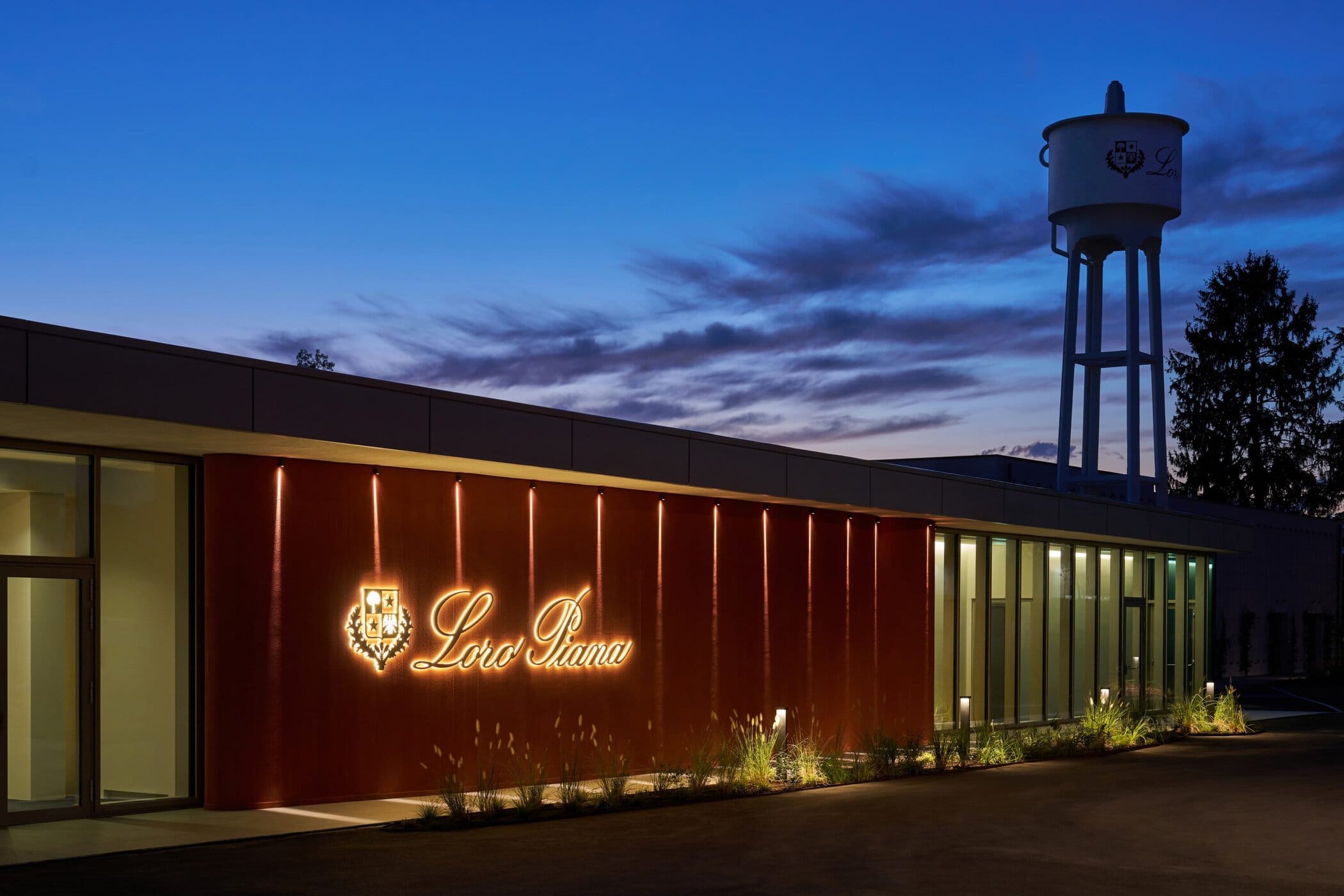
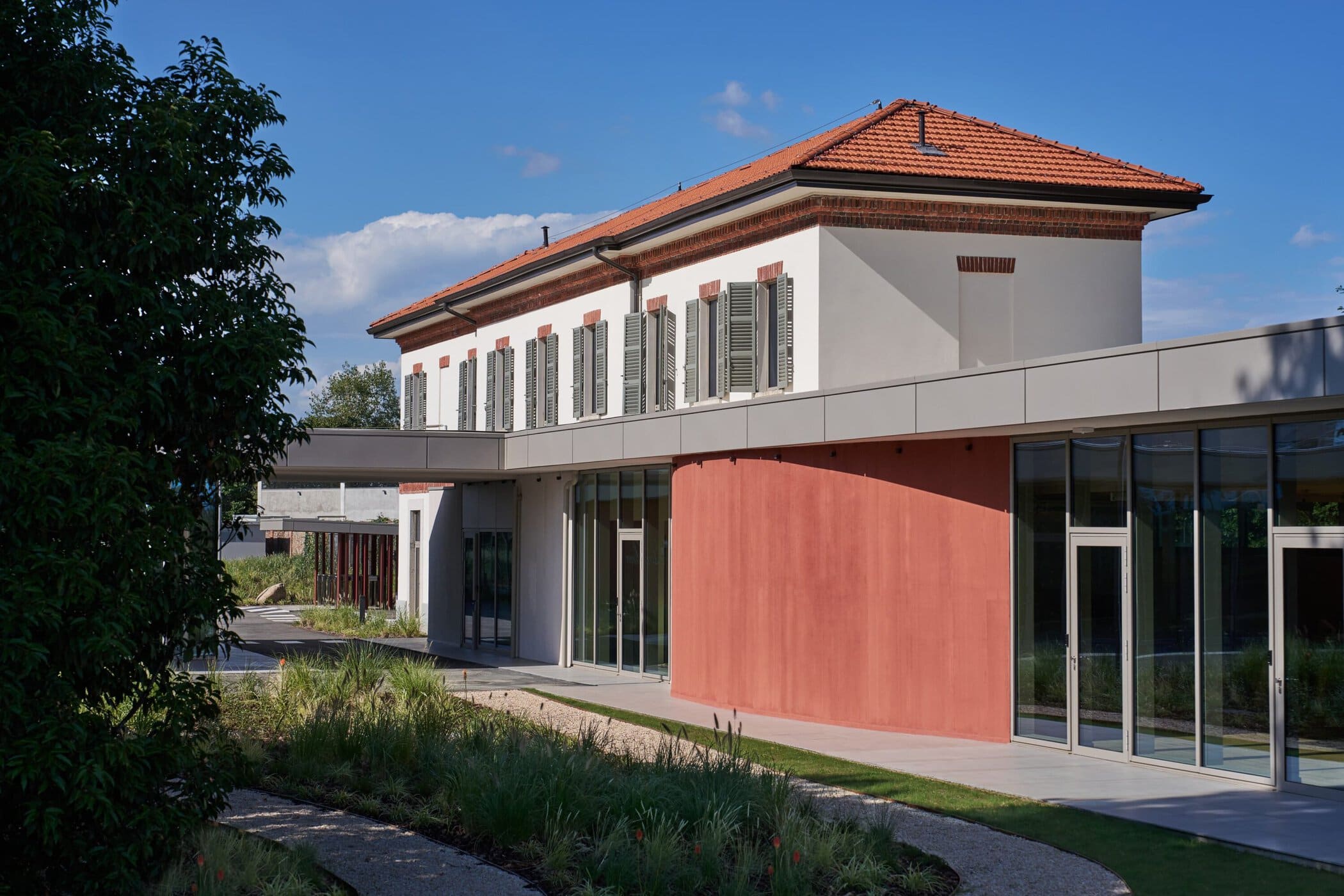
Loro Piana took over the Ghemme site in 1987, converting premises that had housed a paper mill and subsequently a cotton mill to worsted spinning. The redevelopment retains its industrial footprint, historic water tower and former caretaker’s house. Close to the house’s facilities in Roccapietra and Quarona, it builds upon an established geography of production. Investing here ties the next phase of the business to a region whose textile knowledge has helped sustain it for decades.
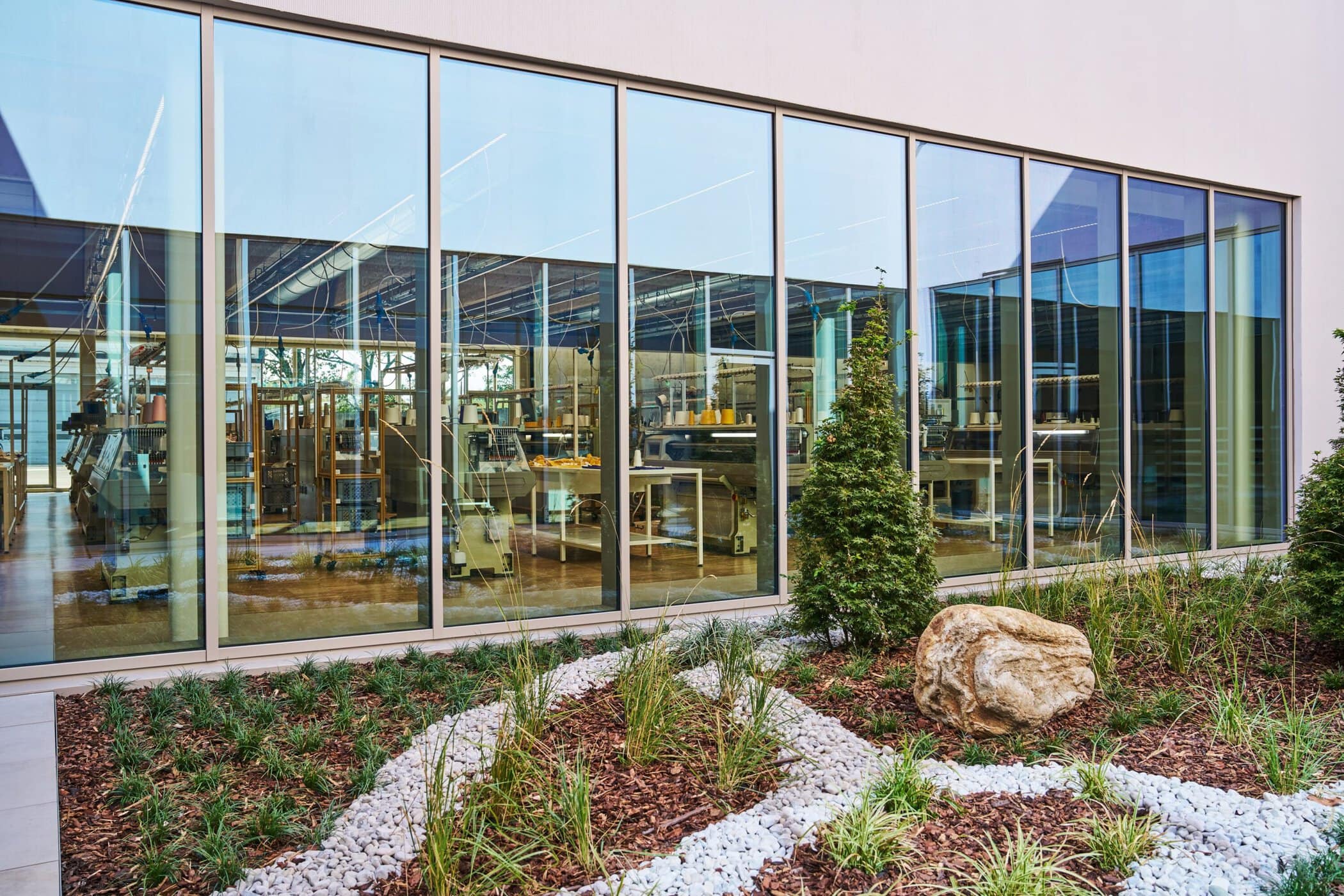
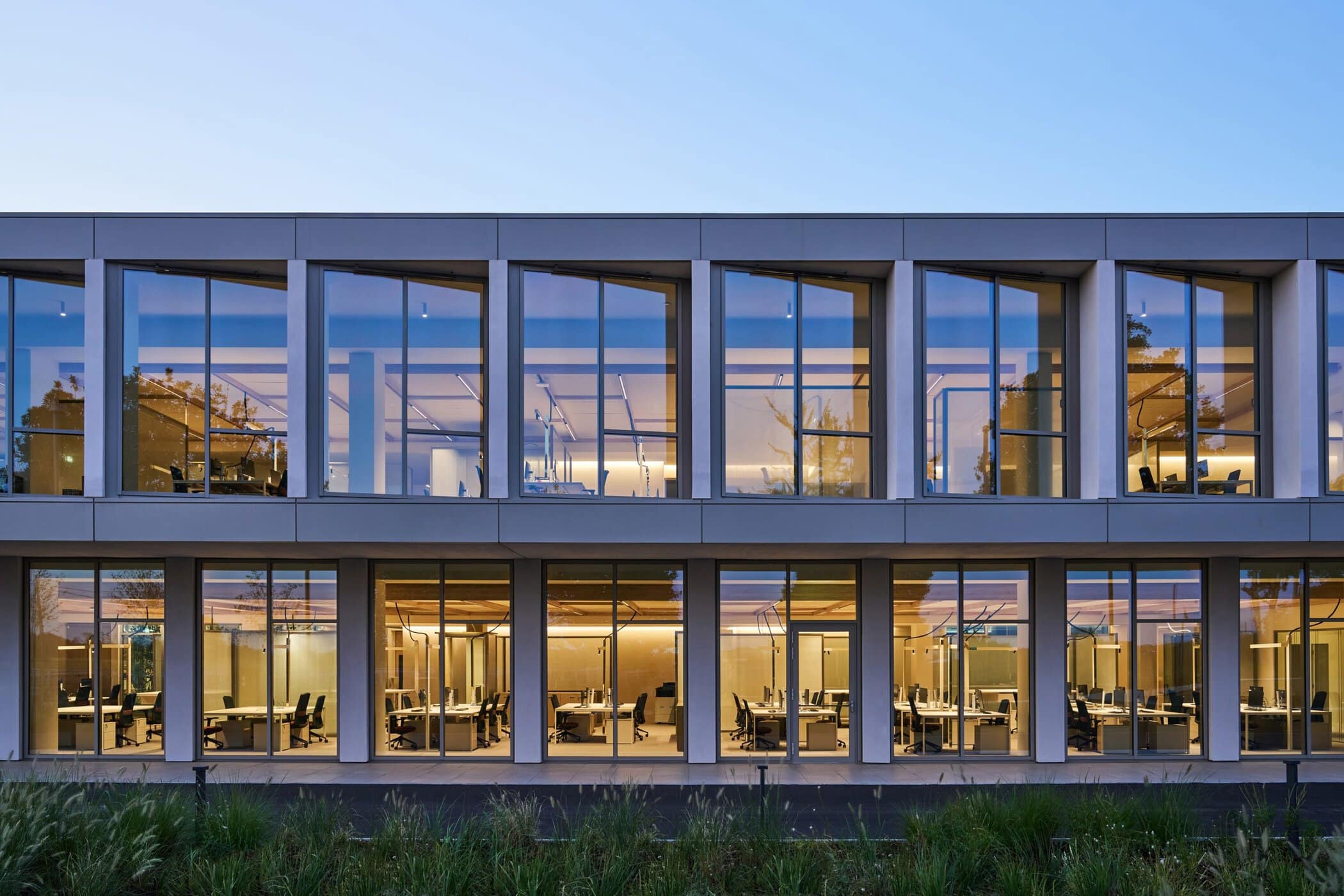
Within the factory, natural light, internal courtyards and views of greenery accompany the working day. Two glass-roofed corridors keep the changing daylight present throughout the building. In disciplines that require prolonged concentration and close observation, the environment in which people practice deserves careful consideration. These architectural choices will shape the daily experience of the people on whom the factory’s performance depends, long after the opening itself.
The building’s environmental systems carry a similarly extended horizon. Designed to meet LEED Gold requirements, Ghemme incorporates photovoltaic panels, rainwater recovery and energy-management systems. Loro Piana describes it as its first manufacturing facility designed without fossil fuels. Such decisions establish how the site is intended to operate over time, making resource use part of the planning of its industrial future.
Beyond the factory, the house is contributing to the restoration of a garden and children’s playground in the town. The project brings an element of the investment into a public space intended for residents and families. For a company approaching four decades in Ghemme, supporting the places where local life unfolds acknowledges the continuing relationship between an employer and its neighbors.
“Loro Piana’s secret recipe is to remain true to its DNA and to what the Maison has always believed in: values, craftsmanship, innovation and savoir-faire,” Arnault says.
At Ghemme, sustaining those values involves decisions about where people work, how a building uses resources, and how the house participates in the town around it. The investment commits Loro Piana to this place for the next stage of its development, with responsibilities that will continue through the ordinary life of the factory.
Carrying the Standard Forward
At Ghemme, there is something reaffirming in seeing how many people’s expertise comes together in a single piece of knitwear. A finished garment gives few clues to the extent of that collaboration. Its softness, proportions and fit are immediately apparent. Inside the factory, those familiar qualities acquire a human presence, becoming connected to the people whose decisions have brought them into being.
Craft involves a considerable intelligence. The programmer’s understanding of construction, the linker’s precision and the finisher’s sensitivity to a material each contribute something essential. Their work draws on knowledge accumulated over generations and continually refined through practice. A fibre has its own possibilities and demands; learning to recognize them requires patience, curiosity and experience. Seeing that understanding at work gives the house’s long textile history an immediate, practical meaning.
The pleasure of wearing something beautifully made can deepen with an understanding of its making.
Softness is a sensation against the skin, and also the result of many people knowing how to preserve and develop the qualities of a material. There is a connection to their work in that everyday experience, even when their names remain unfamiliar.
Ghemme makes that connection tangible. The factory reveals how much care, thought and accumulated knowledge can be taken for granted in a finished piece. Recognizing those contributions is part of valuing craft – and of understanding what deserves to be carried forward.