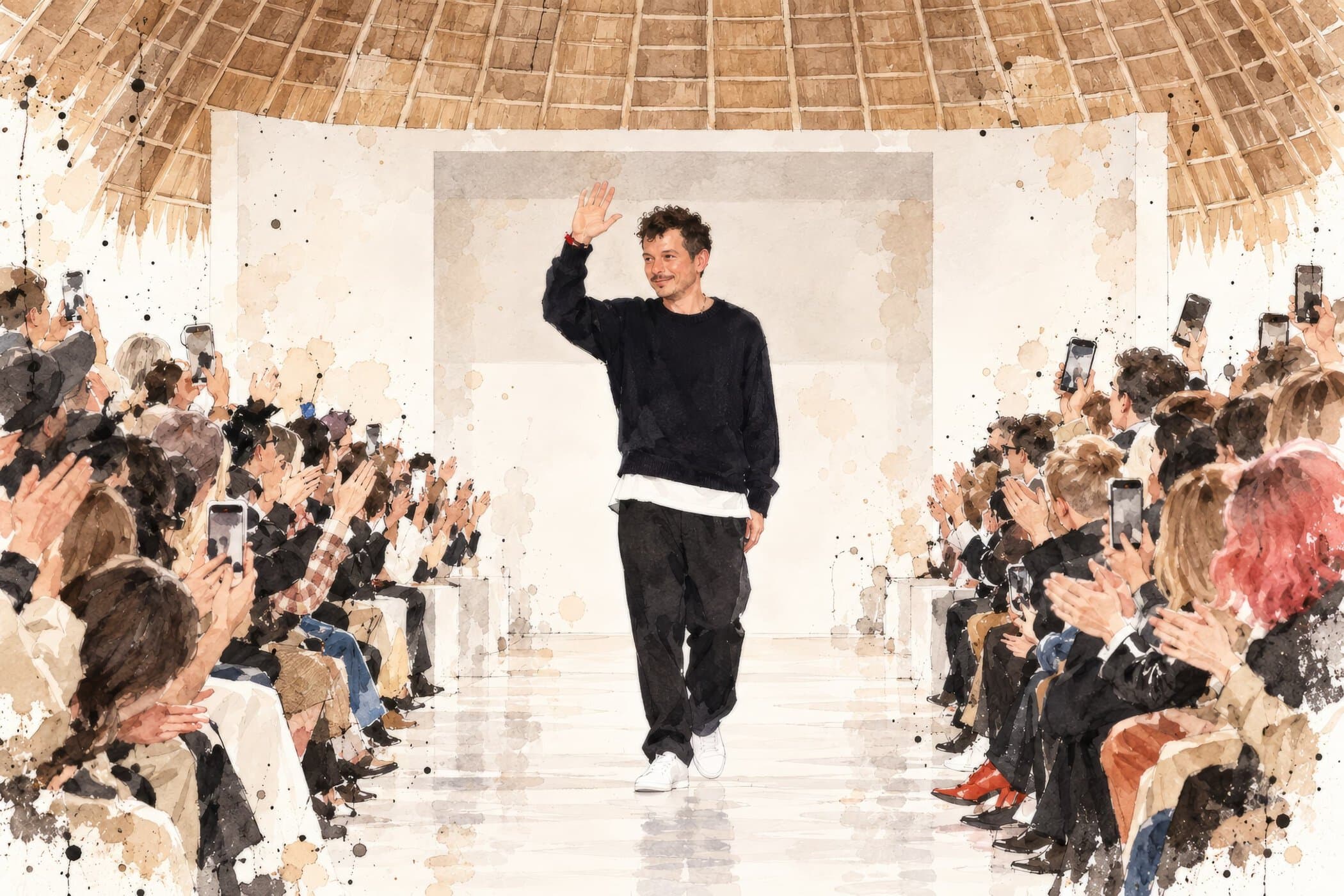
The Designer Talks Intuition, Risk, Real Clothes, And Why A Little Imperfection Can Make Everything Feel More Alive
By Mackenzie Richard Zuckerman for The Impression
In Conversation With The Impression
Speaking with The Impression, Celine creative director Michael Rider discusses trusting intuition, the relationship between the house’s men’s and women’s worlds, dressing for a hotter and more confusing world, and why creative work should involve taking a few chances.
The Impression Intelligence
Creative Director: Michael Rider
House: Celine
Interview: Mackenzie Richard Zuckerman for The Impression
Key Themes: Intuition, risk, spontaneity, real clothes, individuality, color, proportion, imperfection
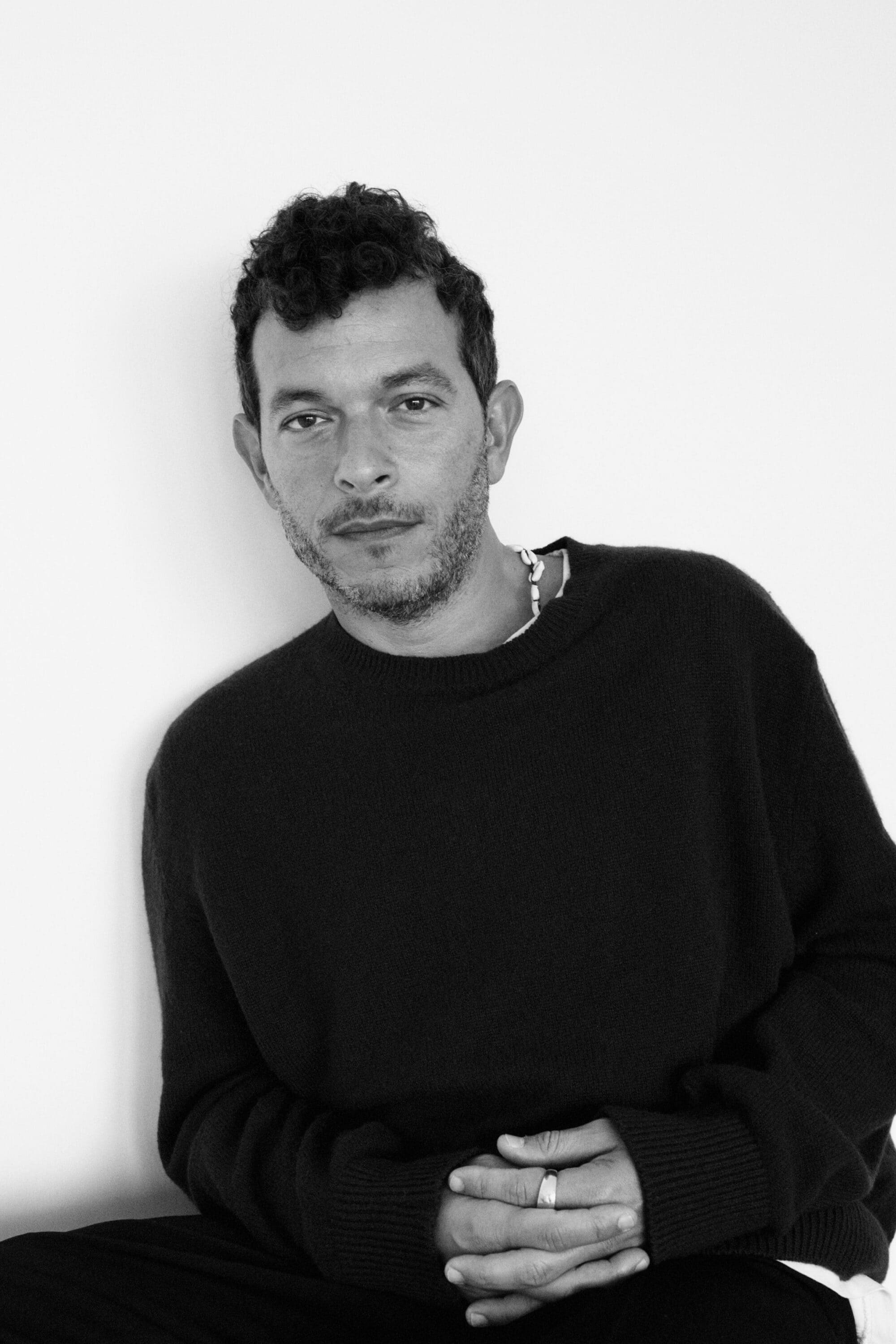
Michael Rider does not sound particularly interested in arriving at answers. This is rather convenient, because Celine under his direction is becoming increasingly interesting in the questions.
Asked whether his latest womenswear collection was, in some way, a response to the men’s collection that preceded it, Rider considered the proposition before gently refusing the neatness of it.
“It wasn’t an answer,” he said. “I don’t – I had no answers. But if anyone does, talk to me.”
He prefers “response,” a word with a little more room in it. The men’s and women’s collections operate in tandem, occasionally borrowing from one another while retaining their own identities. “I think they’re kind of the same women,” he said of the women who followed his earlier men’s proposition. “I think they wandered through the men’s show, and they enjoyed it. They took what they needed, and they kept going.”
It is an appealing way to think about a wardrobe, particularly at a house where clothes remain very much the point. Rider isn’t inventing fantasy characters who disappear once the runway lights go down. His people have somewhere to go afterward.
“They are sort of different pieces of the same puzzle,” he said.
What connects them is less a prescribed silhouette than an attitude. Rider repeatedly returns to intuition when describing the studio, almost as though too much explanation might interfere with the process.
“We’re pretty intuitive,” he said. “I think that’s how we roll, and I think that’s what hopefully people can feel and see. Hopefully more and more in the stores, and certainly in the shows, and the image, and the whole kind of life of Celine.”
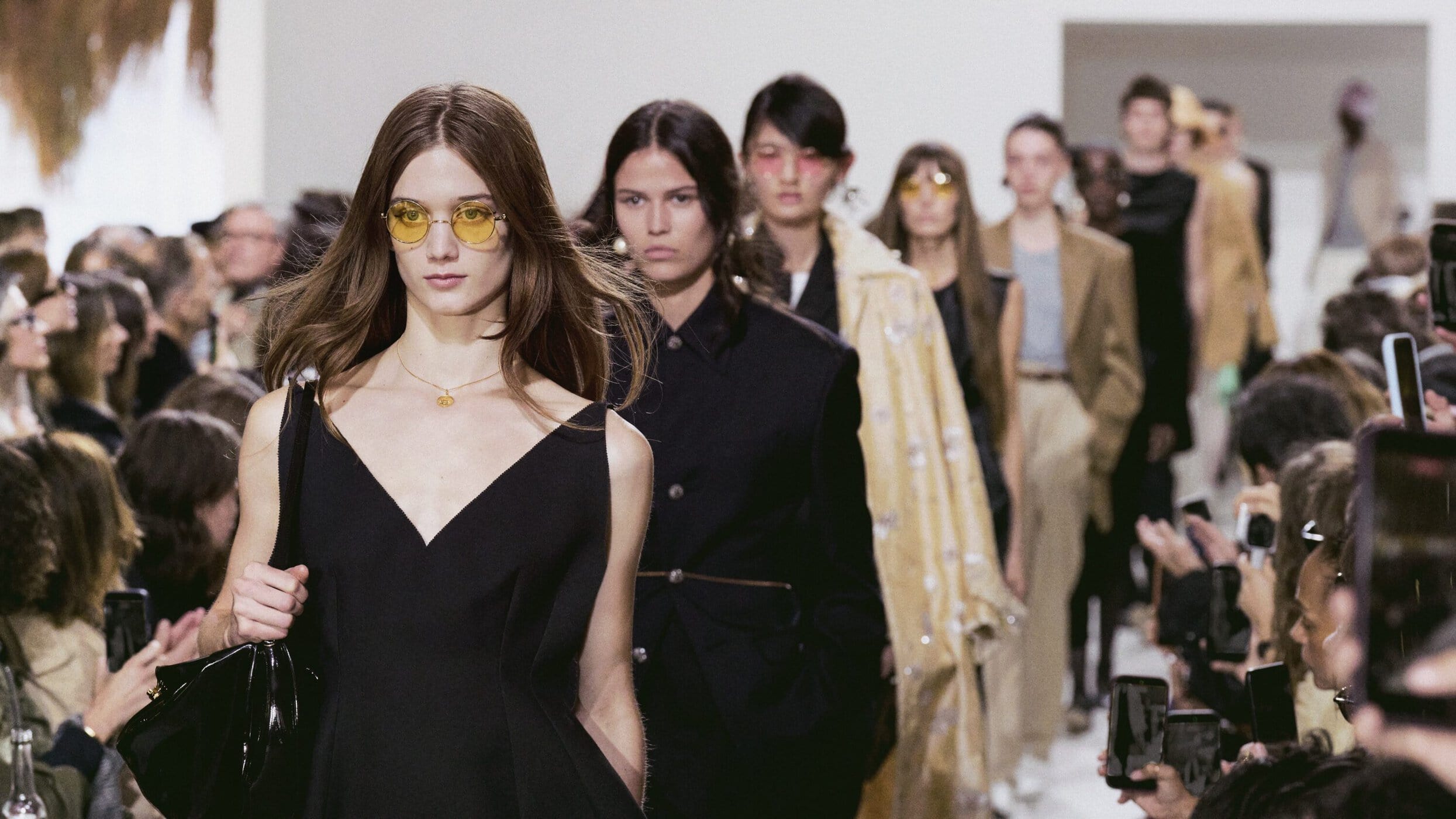
That life is also being shaped by the world outside the studio. The clothes were noticeably light, something Rider readily connected to the practical reality of getting dressed now.
“Nobody – I mean, I’m wilting,” he joked.
The humor disguises a fairly straightforward design problem. How does one maintain the pleasure of dressing up when the world is getting hotter and, as Rider put it, more confusing?
“We just had this sense that there was a way to get dressed up and to put things on and still feel, like, you know, lightness. Still live in a hotter world, and in a more confusing world.”
For all the talk of intuition, there is plenty of testing behind it. Rider and his team put the clothes on. They live with them. They see what happens. The spontaneity visible on the runway is not the absence of work; it is what happens when the work no longer announces itself.
That quality has become one of Rider’s more persuasive signatures at Celine. A look can appear assembled rather than styled within an inch of its life, as though its wearer made a few decisions in front of the mirror, liked what happened, and left the house.
“I think that’s how I am,” Rider said. “And I don’t know how not to do this. That’s what I respond to.”
He is wary of fashion becoming too fixed, too rigid, too figé. It is an interesting instinct at Celine precisely because, as Rider readily acknowledges, this is a house built on rigor.
“You know, we’re not living on the edge at Celine, and you’re coming to get real clothes,” he said. “I love that. I love when real clothes are worn spontaneously.”
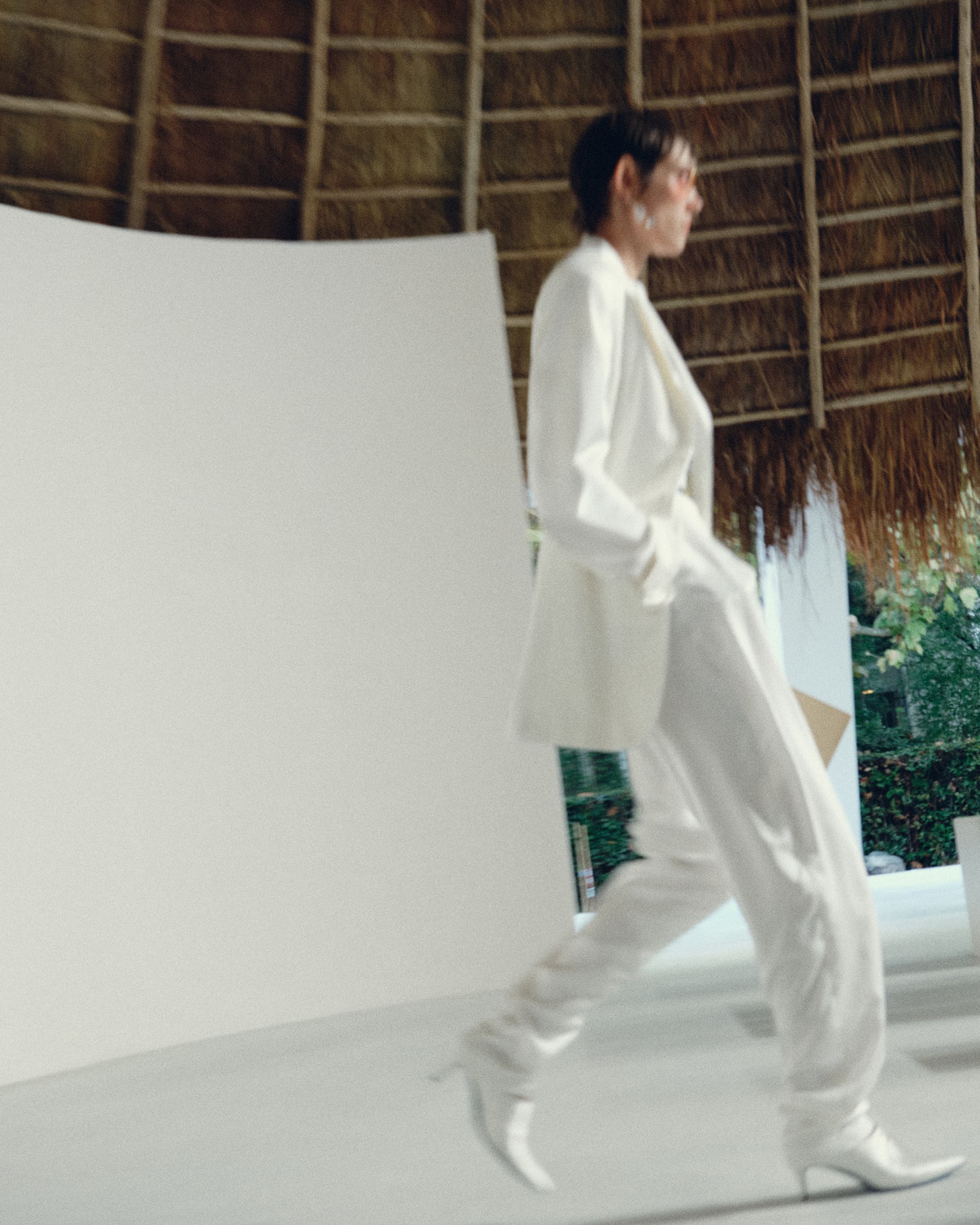
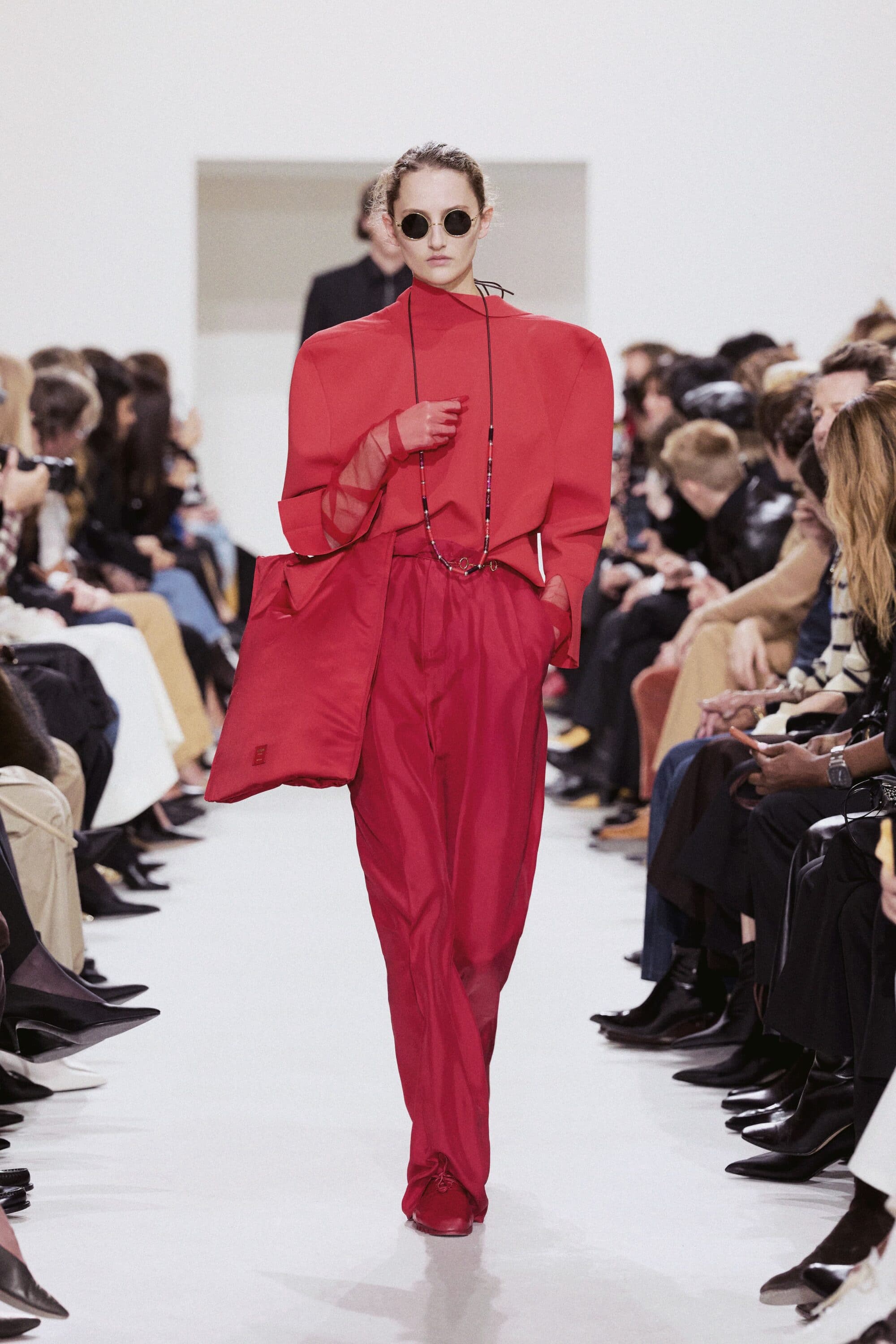
Rider does not seem interested in dismantling that discipline. He wants to see what happens once somebody actually wears it. A beautiful coat becomes more compelling with an unexpected proportion. Colors become richer when several almost-but-not-quite-matching shades collide. A proper wardrobe gets a little less proper once personality enters the room.
“I mean, I don’t plan my looks,” he said. “So I think most of us get excited when we put together something and feel kind of fabulous.”
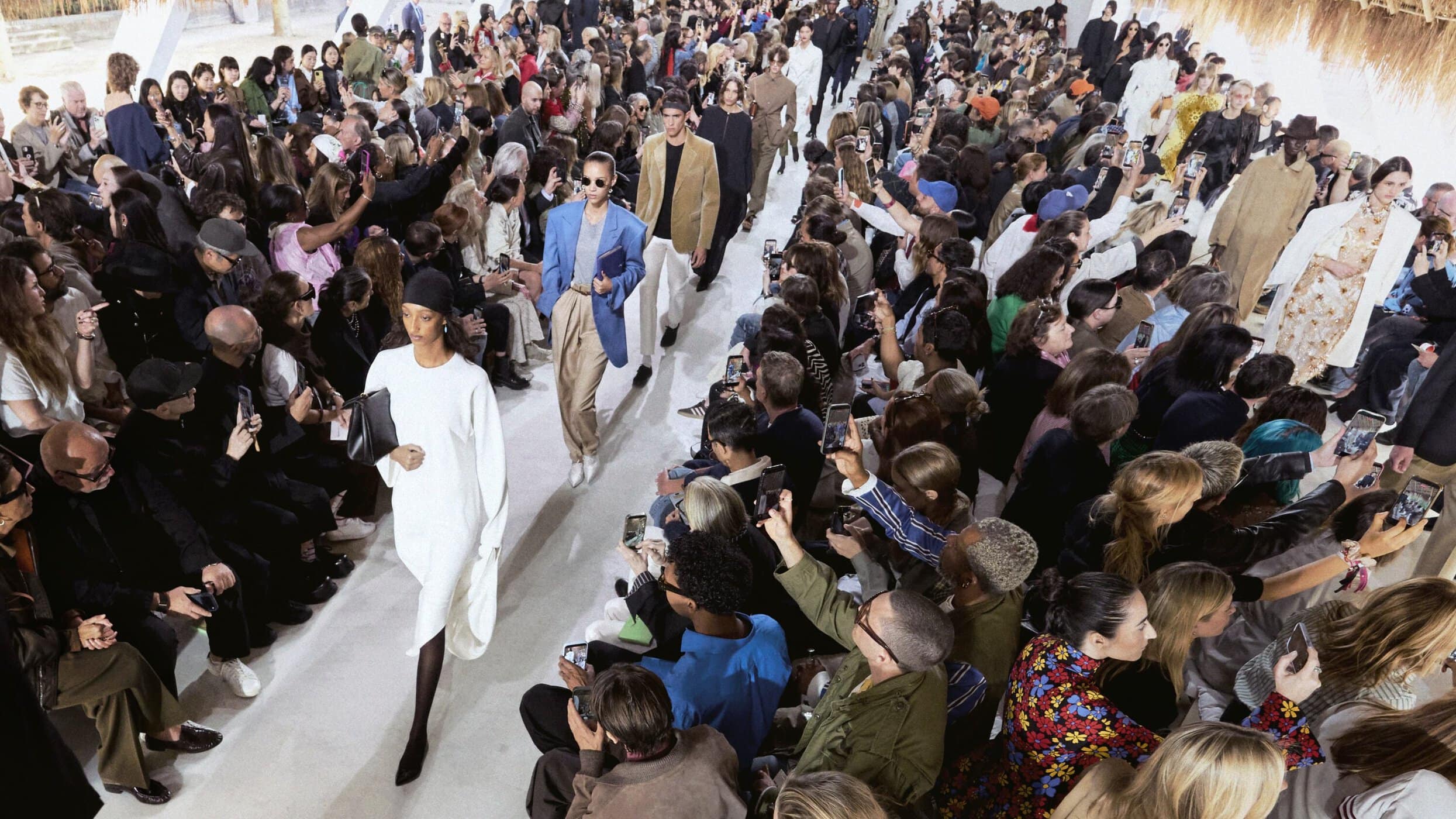
The show carried some of that irreverence into the room itself. A button placed on the chairs referenced Dorian Corey in Paris Is Burning, whose words Rider found particularly resonant: “If you shoot an arrow and it goes real high, hooray for you.”
“It feels generous and true,” Rider said.
He also liked its ability to puncture fashion’s occasional tendency toward self-importance.
“I don’t know. Deflate a little bit of the balloon – not at Celine, but just in general.”
The reference had another layer. The show took place in Paris around Pride, giving Rider an opportunity to acknowledge Corey while thinking about freedom, summer, memory, and the city itself. The set emerged through conversations with a collaborator Rider described, with characteristic self-deprecation, as “totally unbelievable and incredible and much better at any of this than I am.”
Rider thought about summer and the places he likes to be, then about bringing some of that looseness into the middle of Paris without falling into the familiar shorthand of vacation fantasy.
His eye seems naturally drawn to things that don’t quite match. Big against small. Rigorous against spontaneous. Familiar against unexpected. A giant collar on a small coat. A big bag with a discreet logo. Tiny belts and enormous ones.
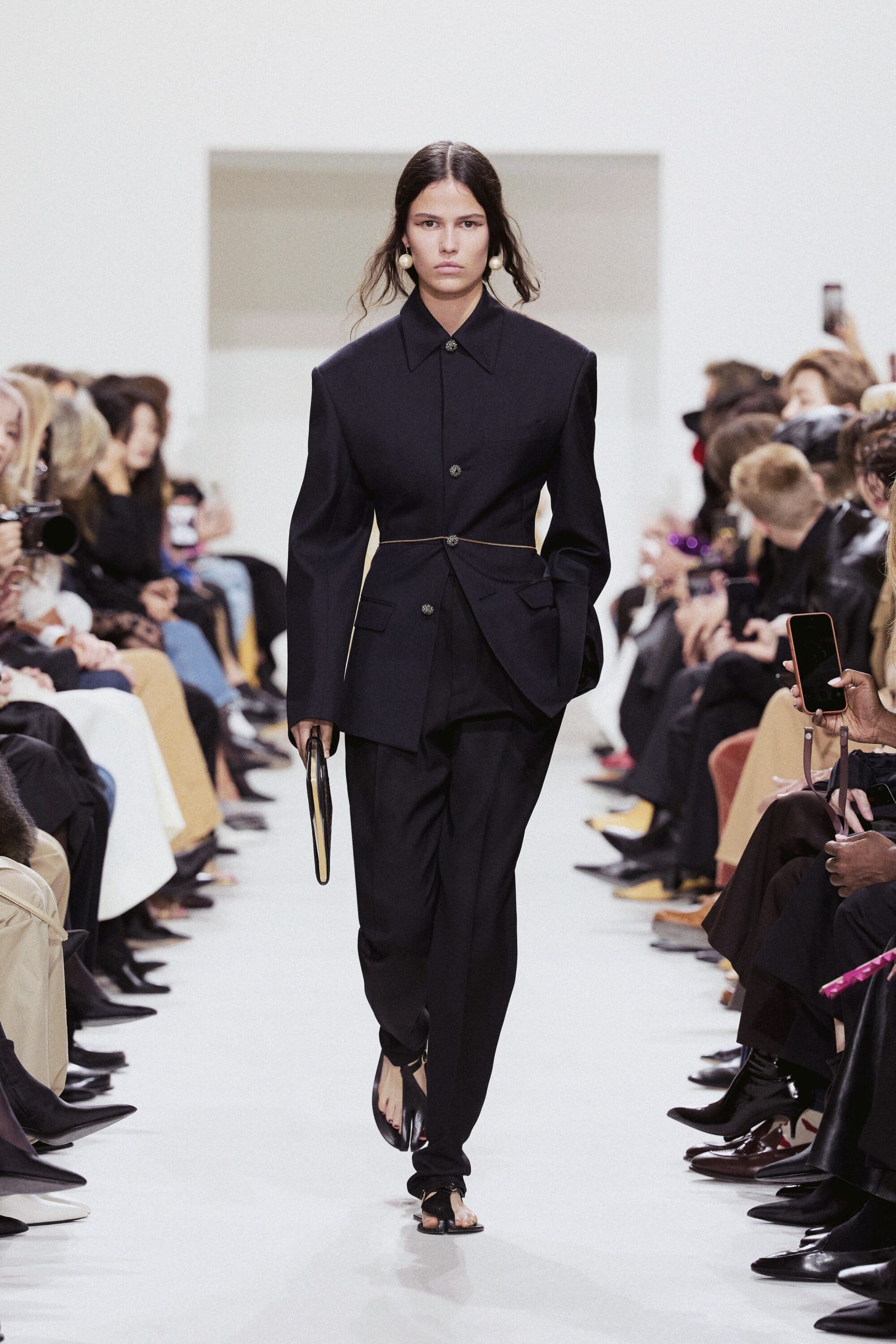
Asked to explain the attraction, Rider offered perhaps the most Michael Rider answer imaginable.
“I should probably talk about it in therapy. I don’t know what it means.”
What he does know is that sameness of scale makes him uneasy. “I’m really turned on by, I guess, tension,” he said.
Color provides another playground. Rider speaks about it less as decoration than as something almost painterly. He and the studio spend considerable time developing fabrics and combinations, sometimes building a look from colors that appear singular at a distance before revealing several related shades up close.
“I love color. And I also love black, but I’m really excited by color,” he said. “I just get very excited, like when I’m in front of a painting, about the way color can blend.”
Risk comes up almost casually, until Rider is asked whether he is actively pursuing it.
“I think it’s a life goal. For all of us,” he deadpanned.
Then he became more serious.
Fashion is operating in a period when caution can be particularly seductive. Rider knows the conversation around risk aversion in the industry, even if he says he does not necessarily feel it while working inside the studio. What concerns him more is the obligation that comes with having the opportunity to make something creative in the first place.
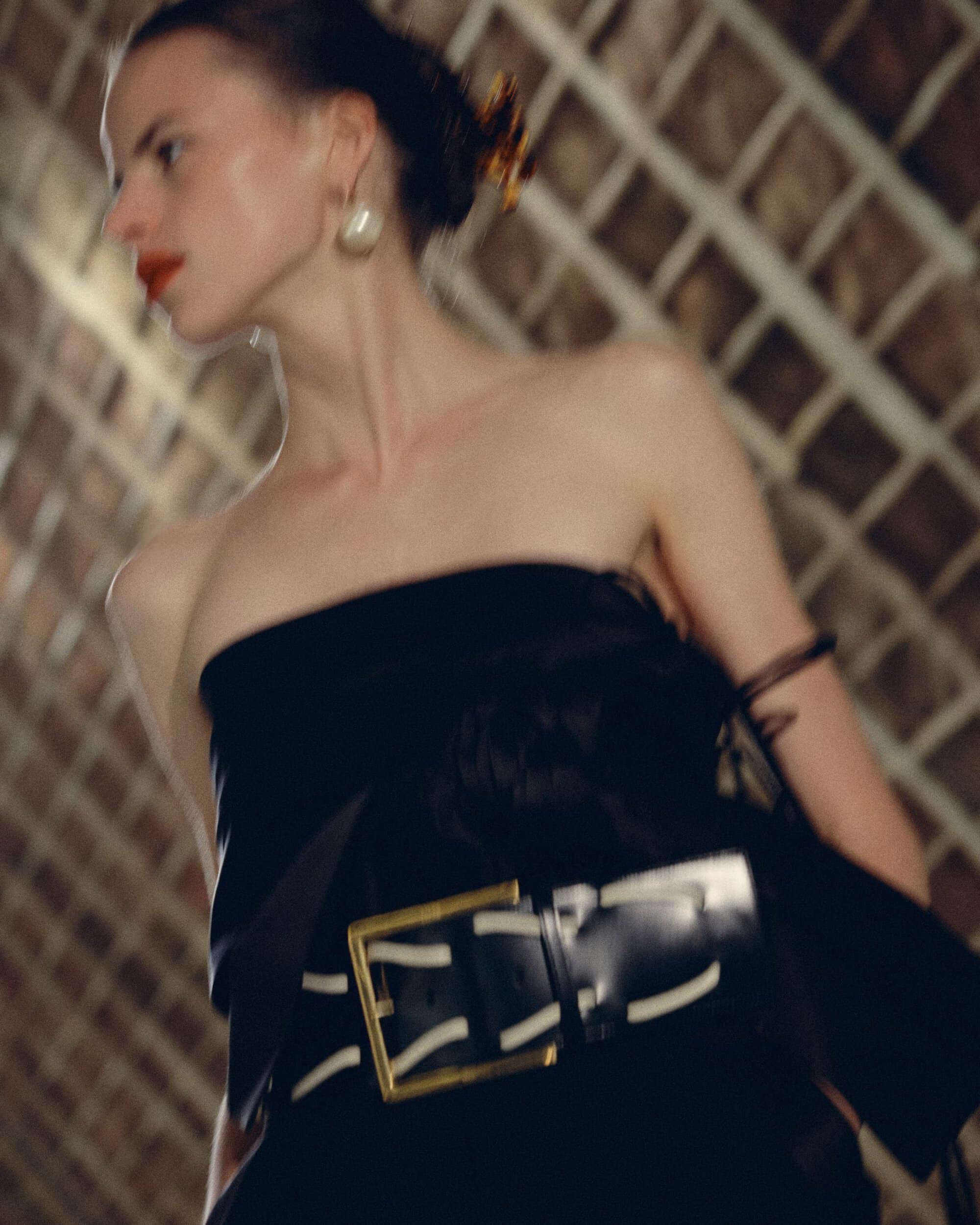
“I definitely think that doing something creative, which is a huge blessing, sort of demands that.”
A book he read over the summer about a writer who had been formative to him reinforced the thought. He declined to name either the book or the writer—one mystery Rider is apparently keeping for himself—but described her as a great risk-taker who understood risk as part of the creative process.
“We should all be raising the volume. Trying things.”
Rider has inherited a house whose precision he genuinely values. He likes its real clothes, its rigor, its expectations. What he is adding is the freedom to make those things feel personal: an unexpected proportion, three reds where one might have sufficed, a giant collar, a tiny logo, something put together because it simply felt right.
For someone who claims not to have many answers, Rider seems perfectly happy trusting his instincts. Celine is beginning to look increasingly comfortable doing the same.