The Everyday Laboratory
Review of Balenciaga Spring 2027 Fashion Show
By Mackenzie Richard Zuckerman
THE IMPRESSION TAKE
Creative Director: Pierpaolo Piccioli
House: Balenciaga
Collection: Spring/Summer 2027
Presented: Paris Fashion Week
Reviewed by: Mackenzie Richard Zuckerman
The Impression Review Score by Kenneth Richard: 9.2
View the Full Collection
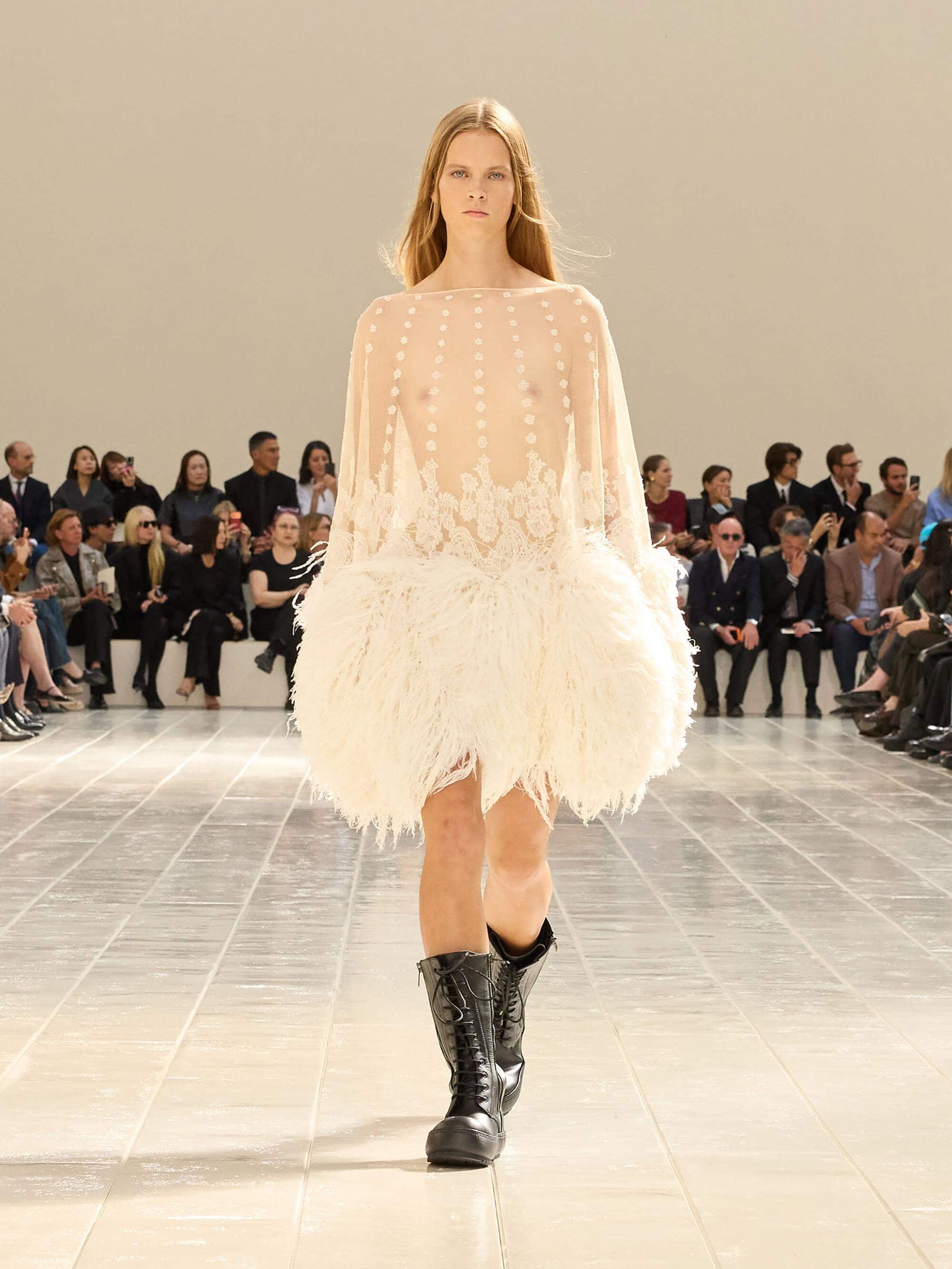
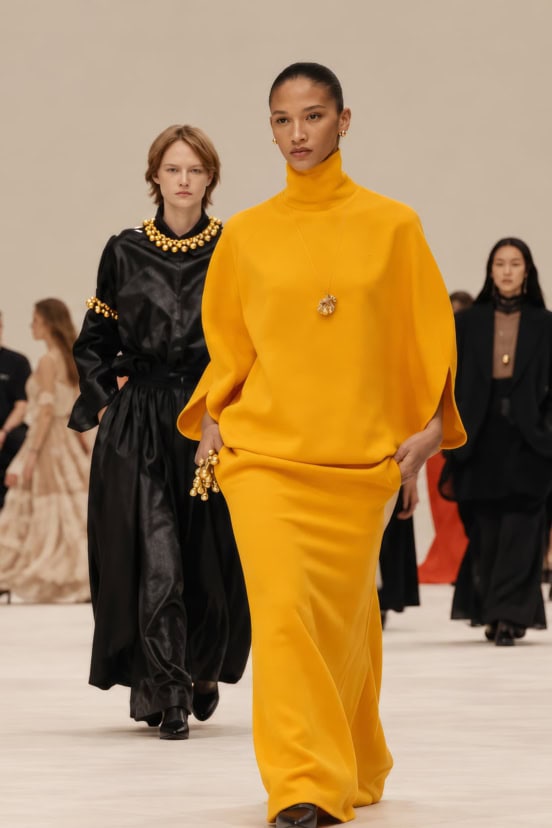
For Balenciaga Spring 2027, Pierpaolo Piccioli began with a clear and useful proposition: bring couture thinking into the everyday wardrobe. Titled Les Coraux de la Liberté, the collection treated couture less as a category of exceptional clothing than as a way of working, extending the ideas explored in his 55th Balenciaga Couture collection into jeans, shirts, T-shirts, leather jackets, bombers, shoes, and bags. The everyday became the testing ground.
That is a meaningful direction for Balenciaga. This is a house whose authority has always rested on cut, construction, volume, and the relationship between garment and body. Piccioli’s challenge is therefore increasingly specific. His own sensibility is visible: softness, color, grace, ease, and an emotional understanding of volume. Spring 2027 felt more personal and more assured than his previous season, with the designer appearing increasingly comfortable allowing those instincts to shape Balenciaga from within.
The strongest moments suggested a house moving toward touch, movement, and emotional clarity. That shift carries particular weight after years in which Balenciaga often found cultural energy through provocation. Piccioli is building a quieter kind of authority, one grounded in how clothes feel and behave around the body.
The question now is whether that philosophy can produce the repeatable codes Balenciaga will need for its next chapter. Can couture thinking transform the everyday wardrobe deeply enough to become a new source of identity for the house?
THE COLLECTION
THE VIBE
Couture Everyday, Emotional Architecture, & Softened Authority
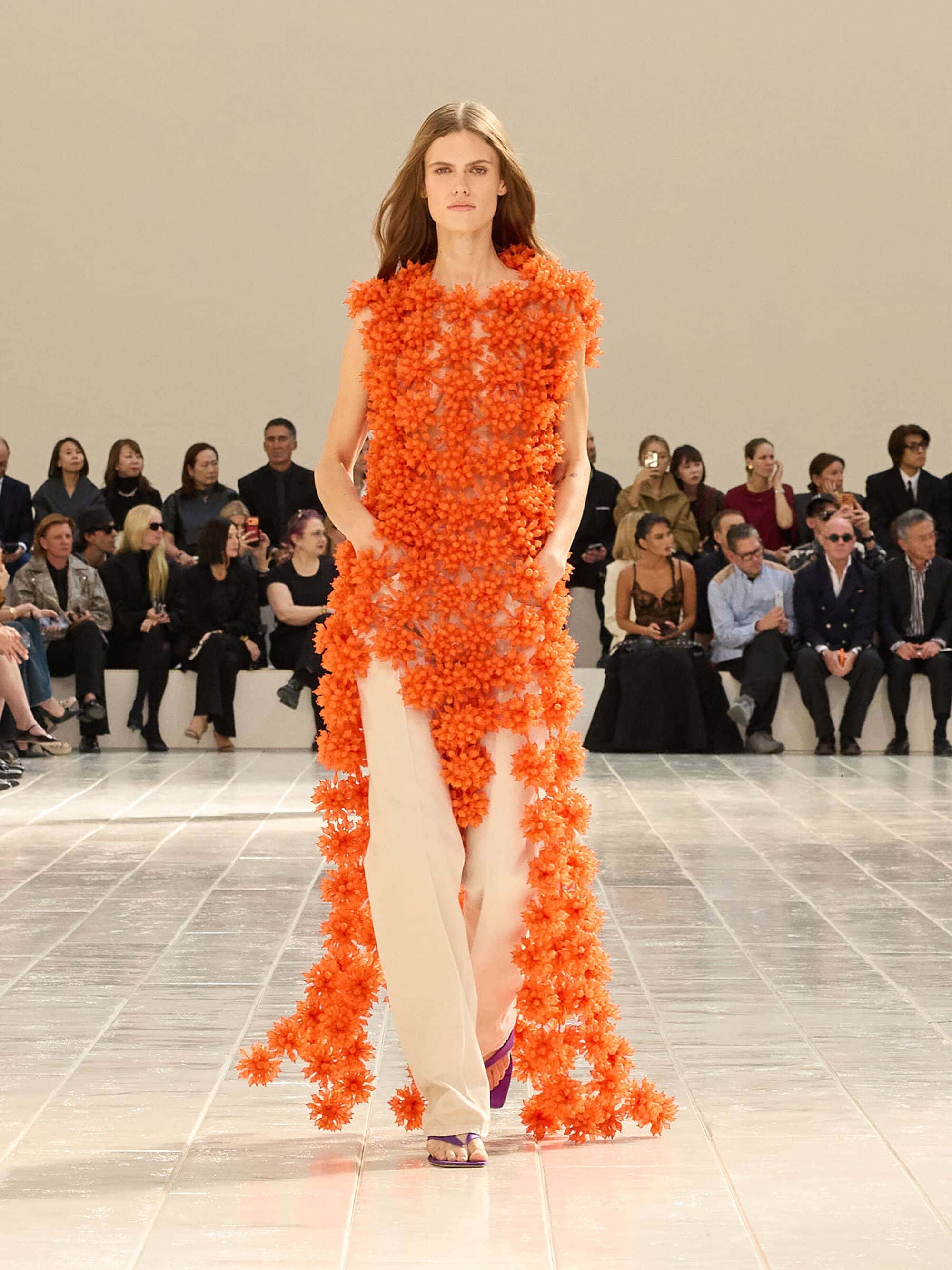
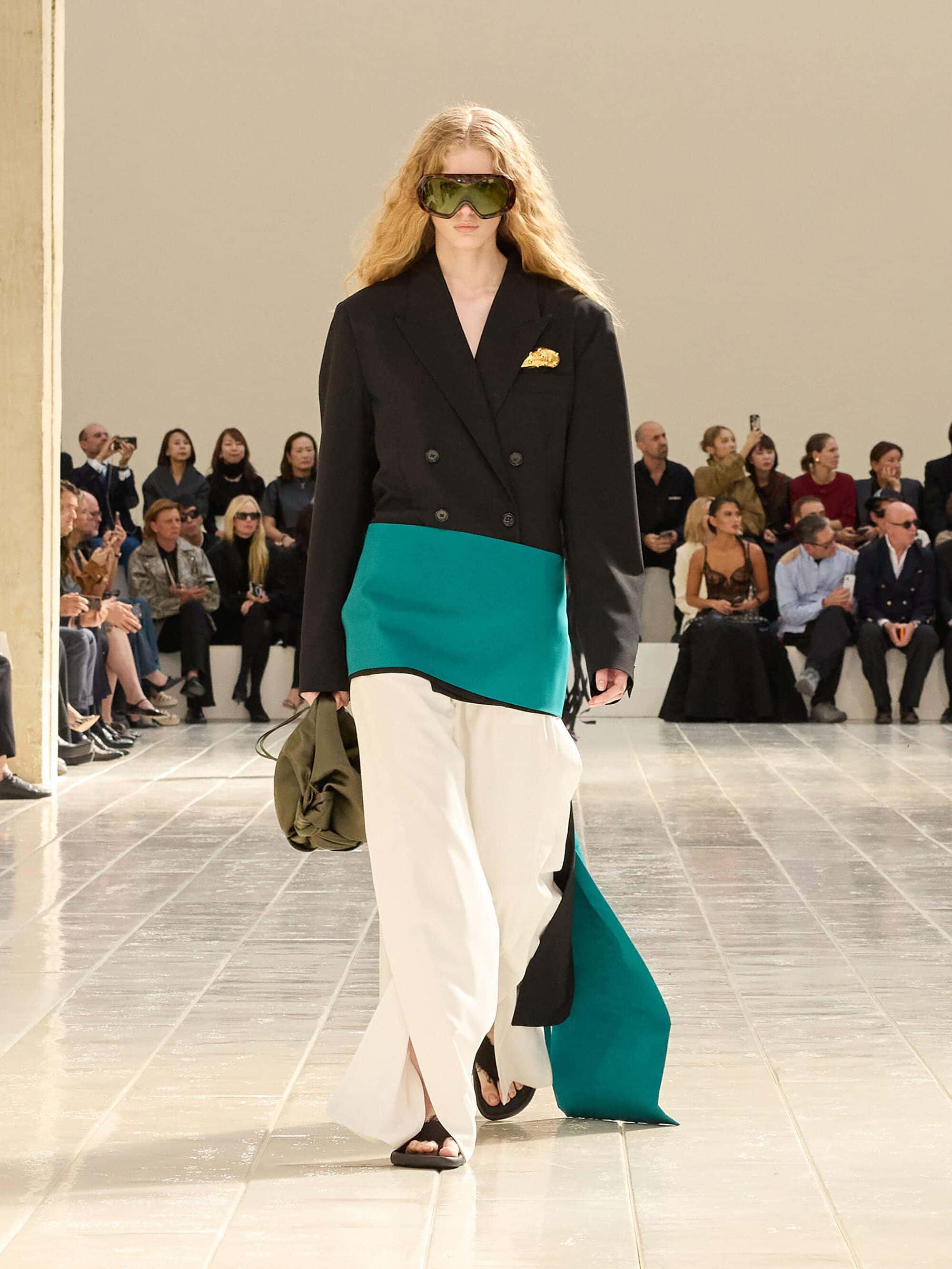
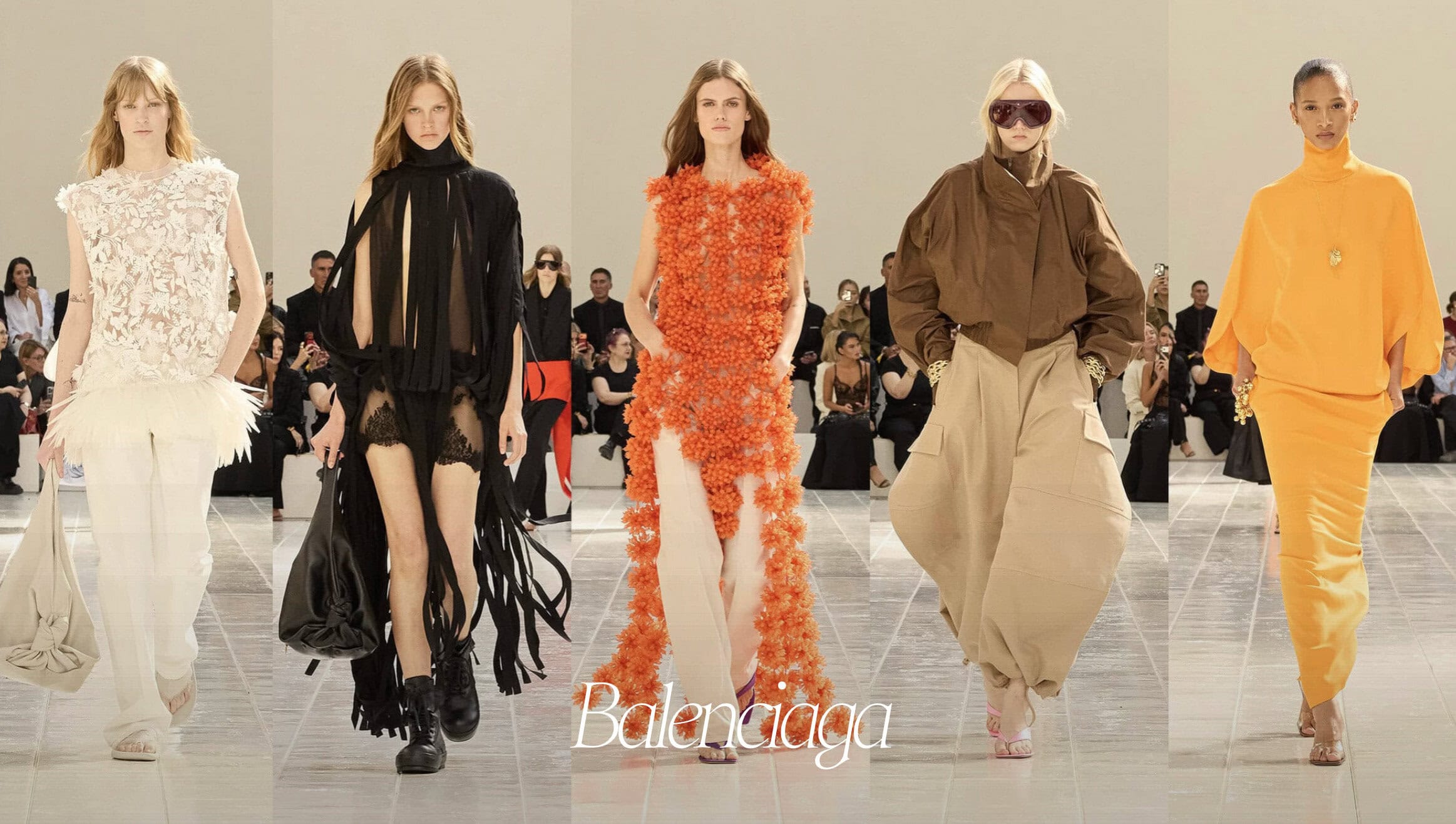
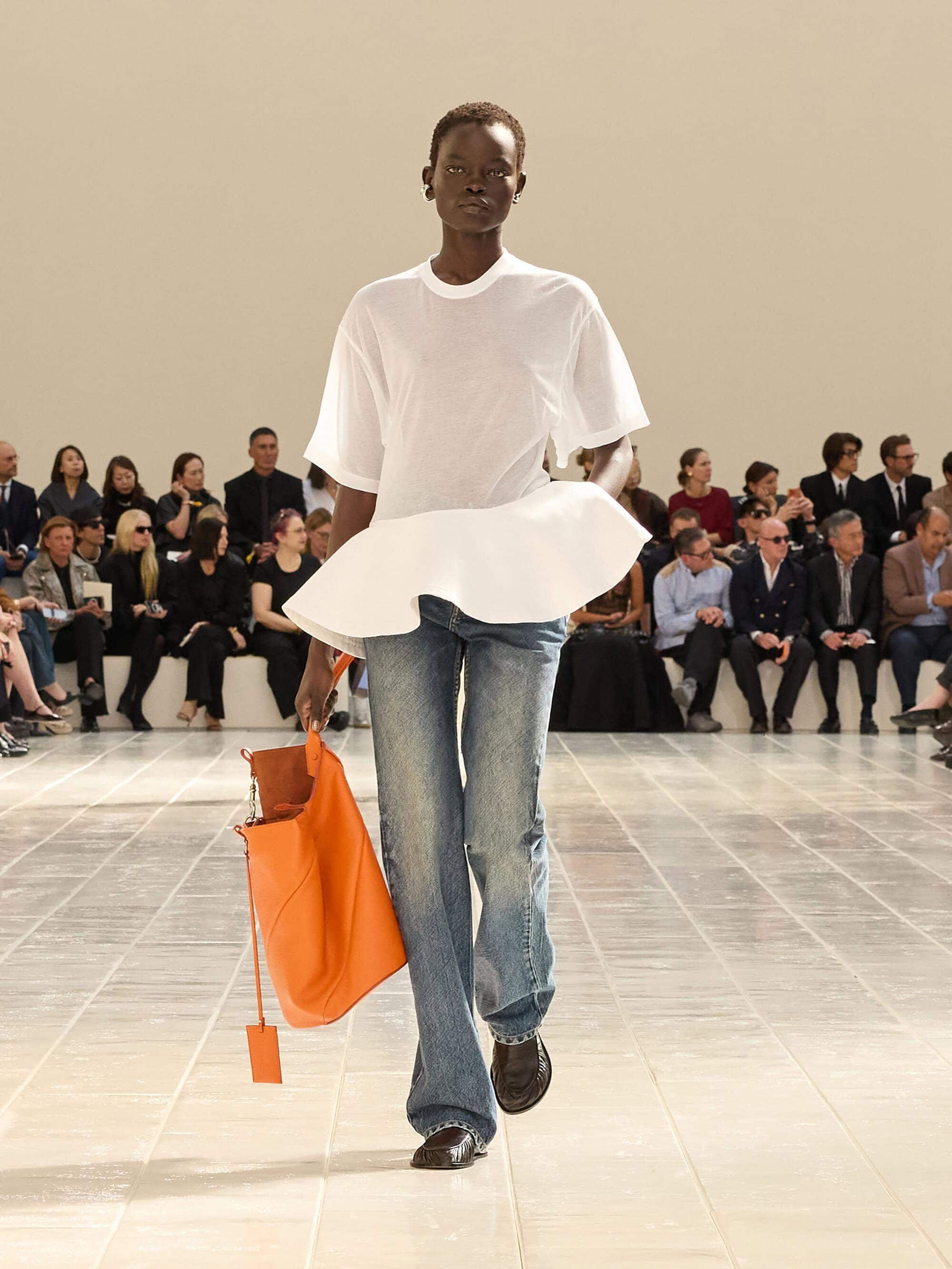
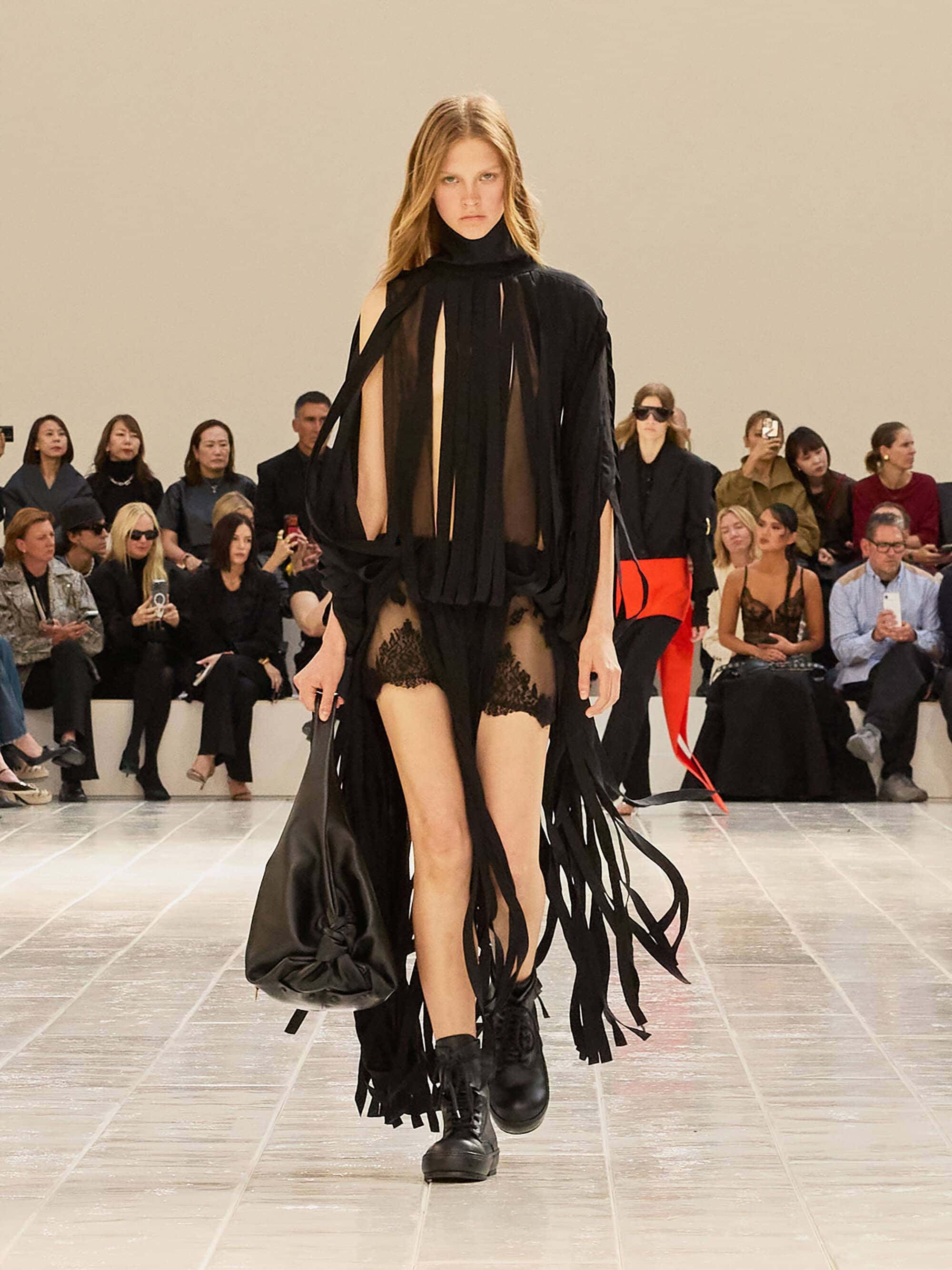
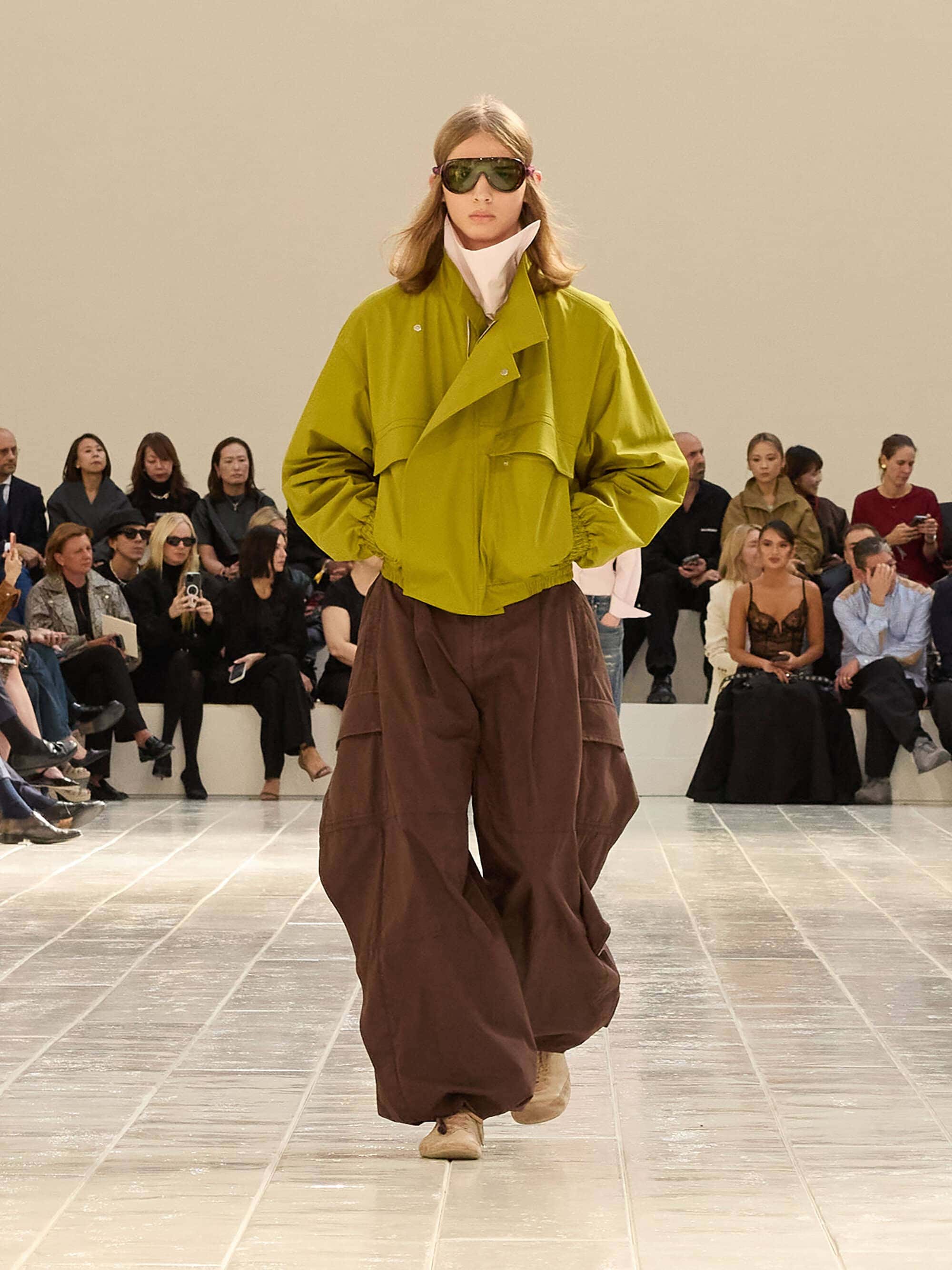
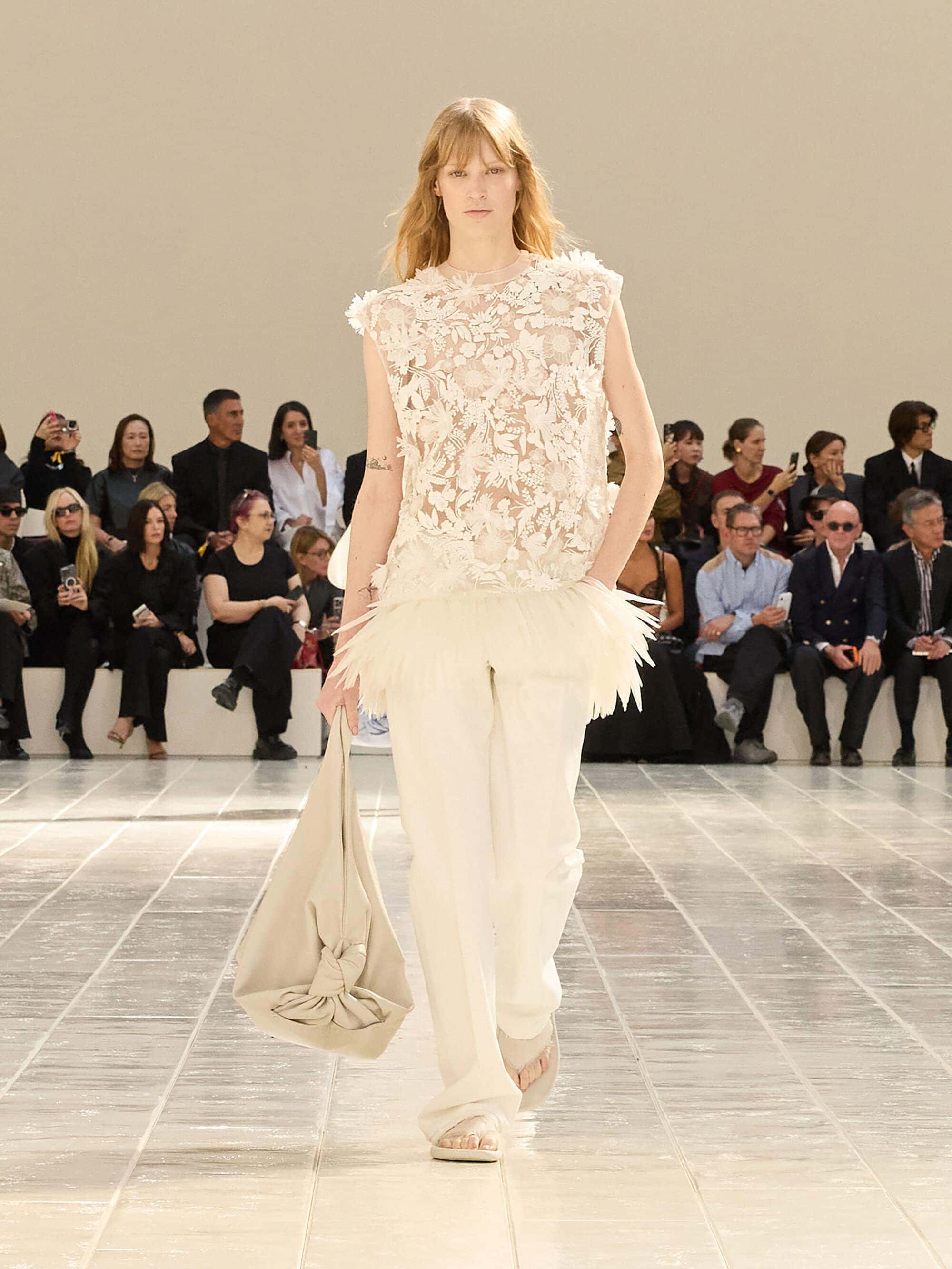
The press notes described couture as a “laboratory of possibilities,” and the collection was most convincing when that laboratory became visible in the construction itself. White shirts were reshaped around the body. T-shirts and leather jackets took on basque-like forms. Denim was loosened, lowered, and re-proportioned. Lace and cutwork opened garments through structure. Dresses and caped silhouettes carried Piccioli’s familiar airiness while engaging with a distinctly Balenciaga concern: the space between body and cloth.
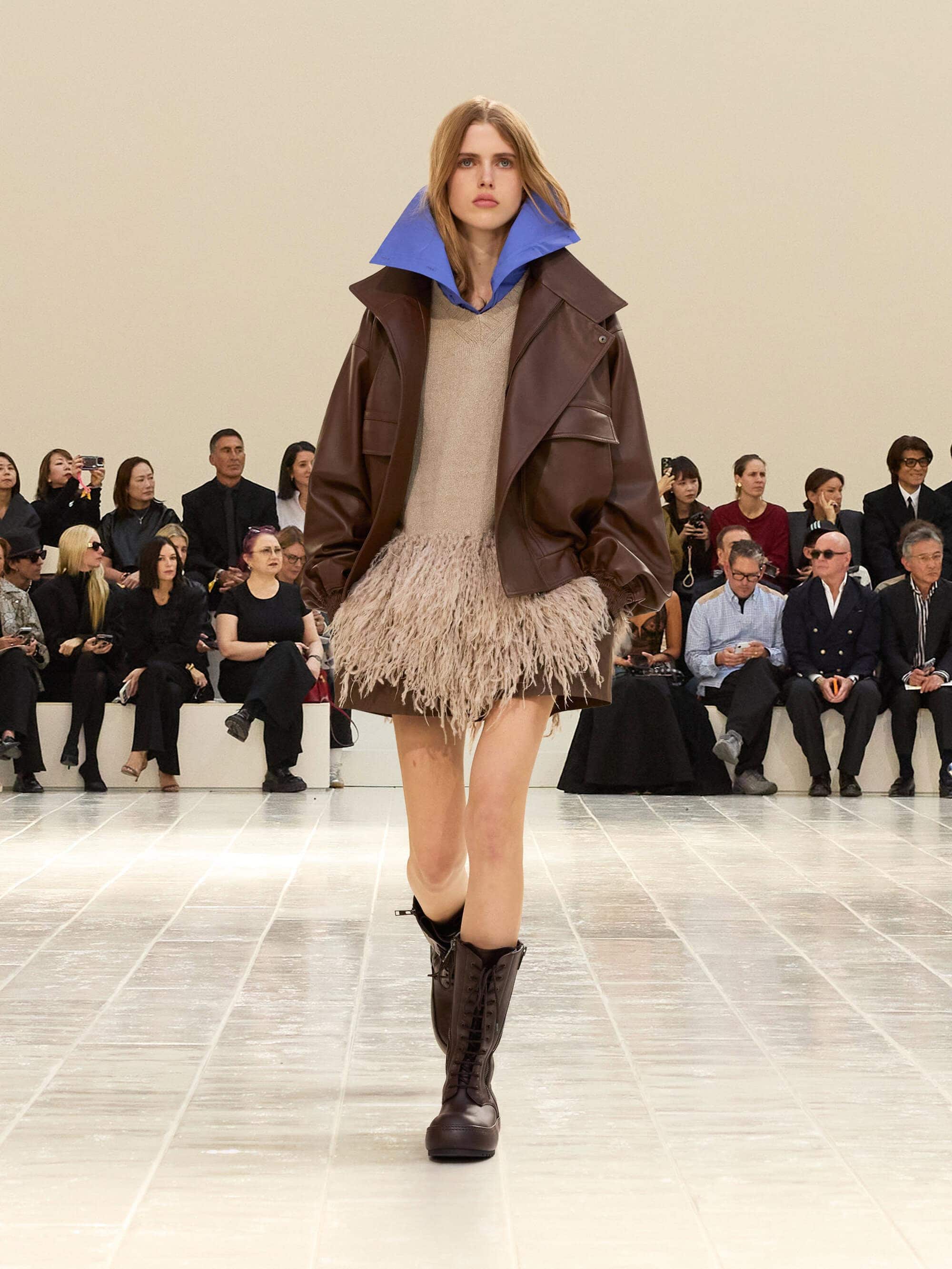
Bringing couture into everyday clothes becomes interesting when the process changes how an ordinary garment behaves. A shirt can remain immediately recognizable while its back, waist, drape, or volume alters the body beneath it. A pair of jeans can become part of a larger architectural proposition through proportion alone. A leather jacket can retain the familiarity of the category while atelier techniques reshape its silhouette.
Those were the moments when Piccioli’s approach felt most useful to Balenciaga. His natural softness encountered the house’s architectural history and created something warmer, lighter, and more approachable.
There were clear echoes of Cristóbal Balenciaga’s vocabulary throughout: cocooning forms, airy volumes, basque waists, silhouettes that stood away from the body, and an ongoing fascination with posture and movement. Piccioli handled those references with a relatively light touch. The past supplied a constructional logic that could be loosened and carried into a contemporary wardrobe.
Elsewhere, the translation felt more uneven. Some looks communicated couture primarily through color, surface, softness, or styling, while the underlying construction carried a more familiar message. At a house where architecture has historically created genuine disruption, that difference becomes important. The idea of the hand occasionally carried more force than the garment itself.
The collection’s overall harmony contributed to that feeling. Piccioli seems increasingly interested in comfort, pliancy, and an almost humane understanding of luxury. Shoes softened. Bags slouched. Tailoring relaxed. The body was given room. Coral and orange textures, sculptural white passages, black looks punctuated by color, and fluid outerwear established a visual world that was polished and coherent.
That coherence also exposed the central tension. Balenciaga still benefits from pressure: from silhouettes, products, proportions, and accessories capable of becoming immediately identifiable across seasons. Spring 2027 offered many desirable pieces and several strong design ideas, though fewer gestures felt ready to become defining codes.
The commercial possibilities are easier to see. Soft bags, low shoes, relaxed tailoring, reconstructed shirts, and reworked denim give the wardrobe a clear entry point. Piccioli is making Balenciaga easier to inhabit, which could prove significant for a house looking to rebuild desire around product.
The coral metaphor helps explain where the project currently stands. Les Coraux de la Liberté imagines the house as a living ecosystem shaped through accumulation and many hands. That idea suits Piccioli’s collaborative and emotionally generous view of fashion. It also mirrors the collection itself: growth is happening gradually, through layers, adaptation, and a structure still taking form.
THE WRAP UP
Spring 2027 represents meaningful progress for Pierpaolo Piccioli at Balenciaga. The collection felt more fluid, more personal, and more comfortable in its own skin. His language is beginning to sit more naturally within the house, particularly where softness meets construction and couture technique changes the behavior of familiar clothes.
The risk lies in allowing harmony to become the dominant message. Piccioli’s Balenciaga is building authority through grace, tactility, and ease, and those qualities offer a genuine alternative to the harder energy of the house’s recent past. They will gain greater power as the underlying codes become sharper and more immediately recognizable.
Growth will depend on product identity as much as atmosphere. A successful Balenciaga wardrobe needs ideas that can recur, mutate, and become legible over time: a proportion, a bag, a jacket, a shoe, a treatment of the waist, a particular relationship between fabric and body. Piccioli has begun laying those foundations. Spring 2027 suggests several possible directions, even as the overall system remains in development.
That measured pace may serve him well. This collection allowed more of Piccioli into Balenciaga, which feels necessary at this stage. His task now is to push those instincts until softness acquires greater tension, couture thinking generates unmistakable product codes, and the everyday wardrobe becomes something only this version of Balenciaga could produce.
Spring 2027 showed that couture can elevate and transform familiar clothes. The next chapter will depend on how decisively those transformations become the language of the house itself.