Review of Chanel Fall 2026 Ad Campaign by Photographer Julien Martinez Leclerc and Film Director Stuart Winecoff, featuring models Adeng Marial, Anne Vyalitsyna, Awar Odhiang, Bhavitha Mandava, Imane Benkaddour, Julia Morais, Lais Hames, Noor Khan, Stephanie Cavalli, Trinidad Castaño, and Xiuli Jiang
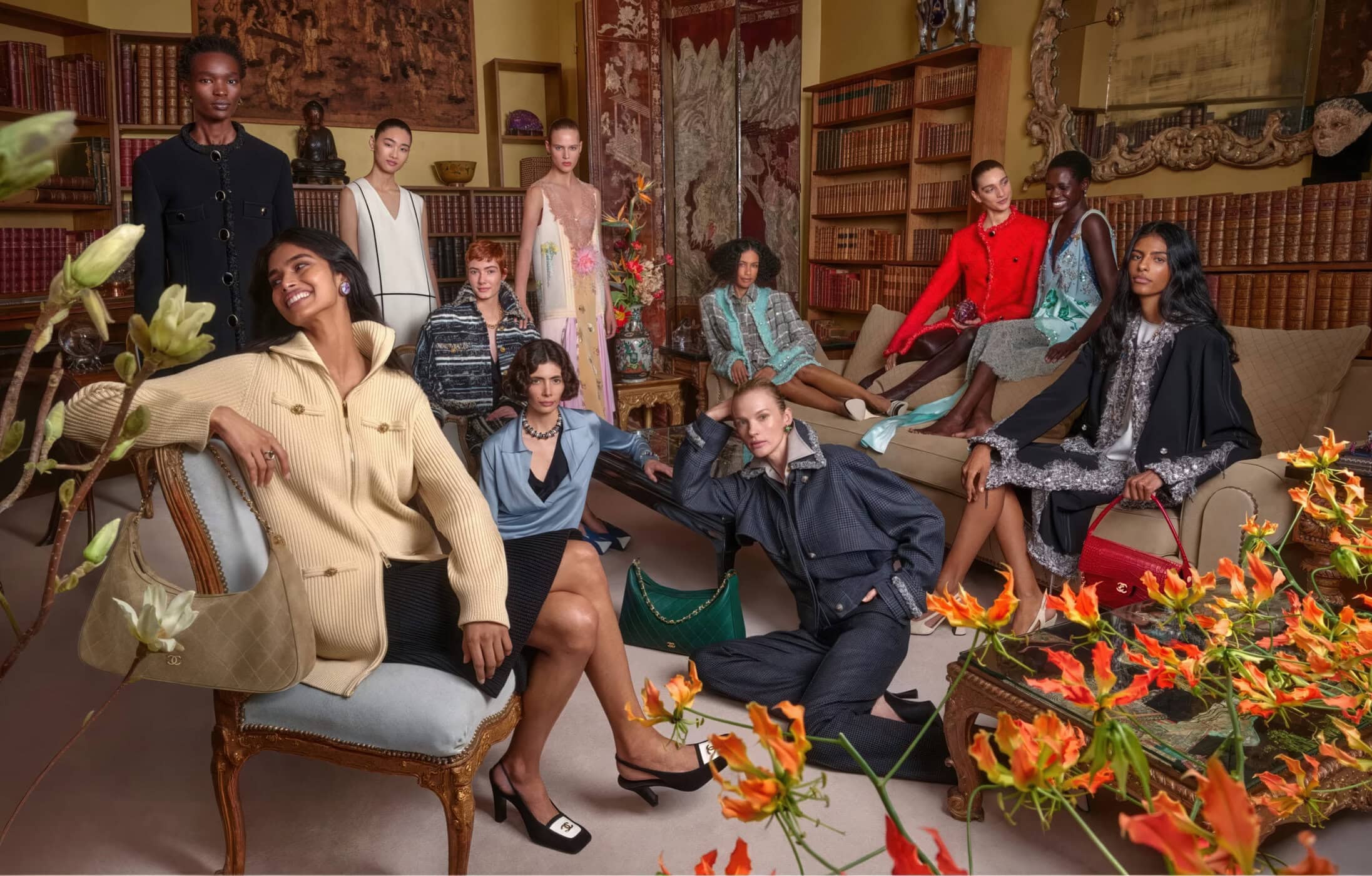
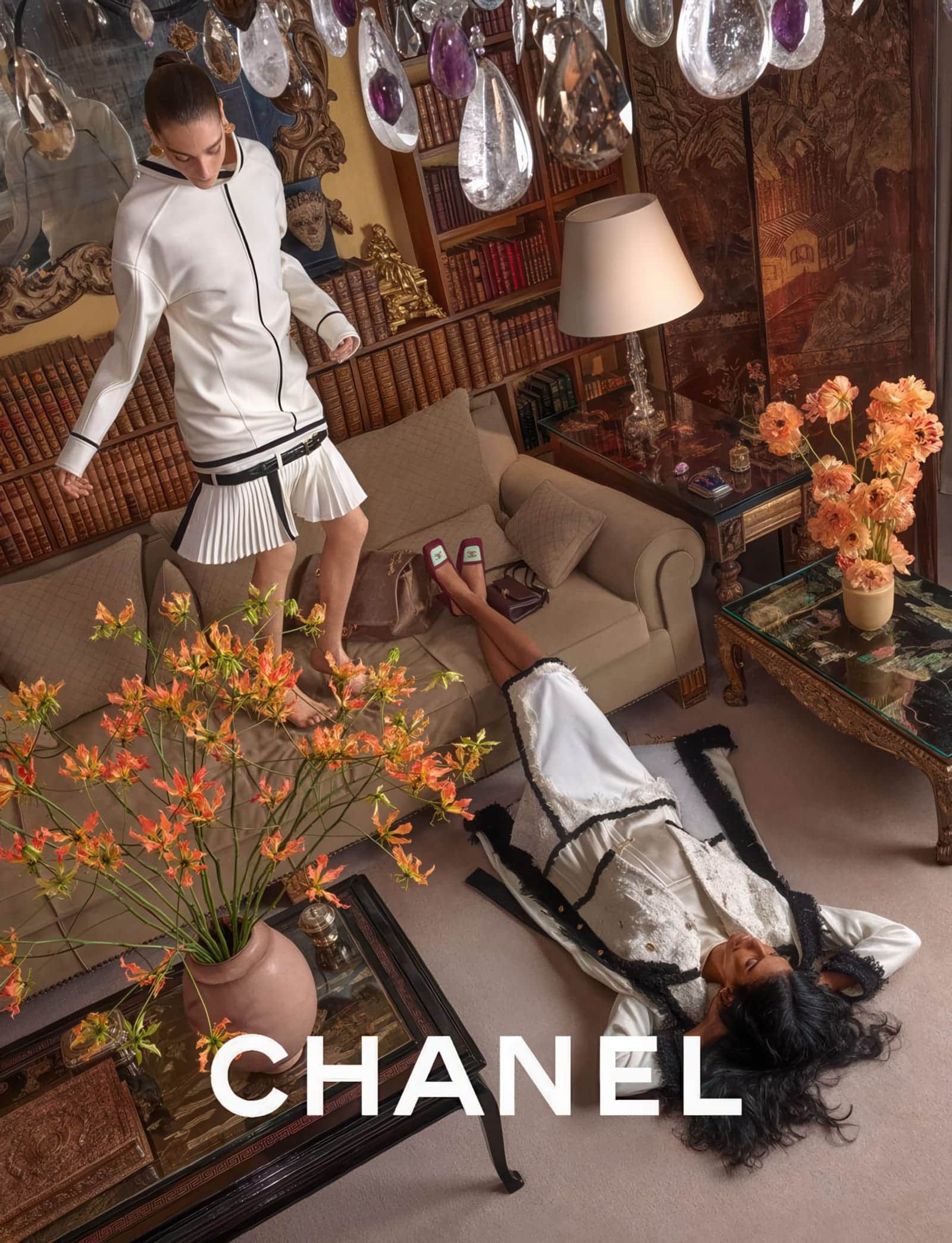
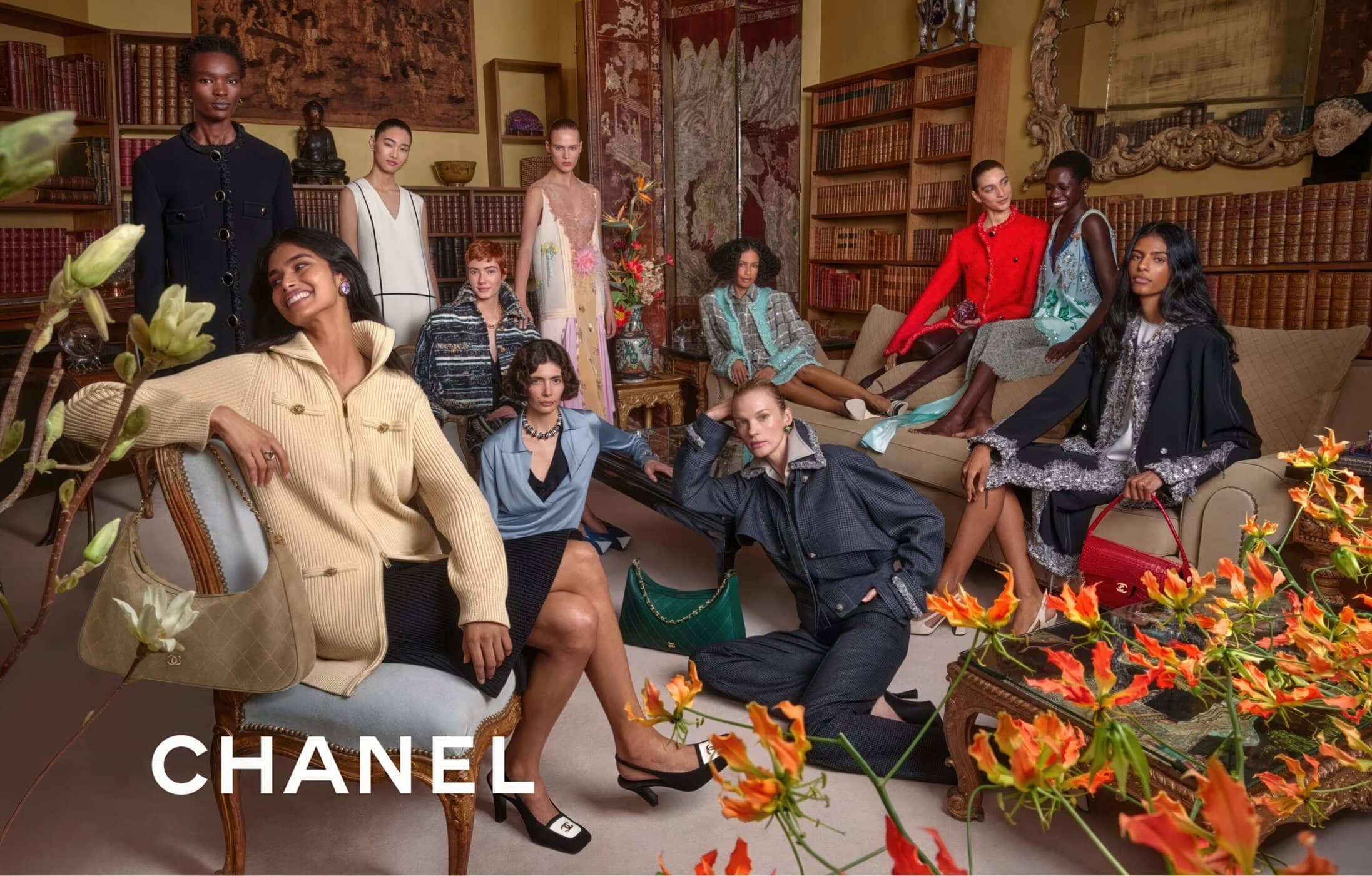
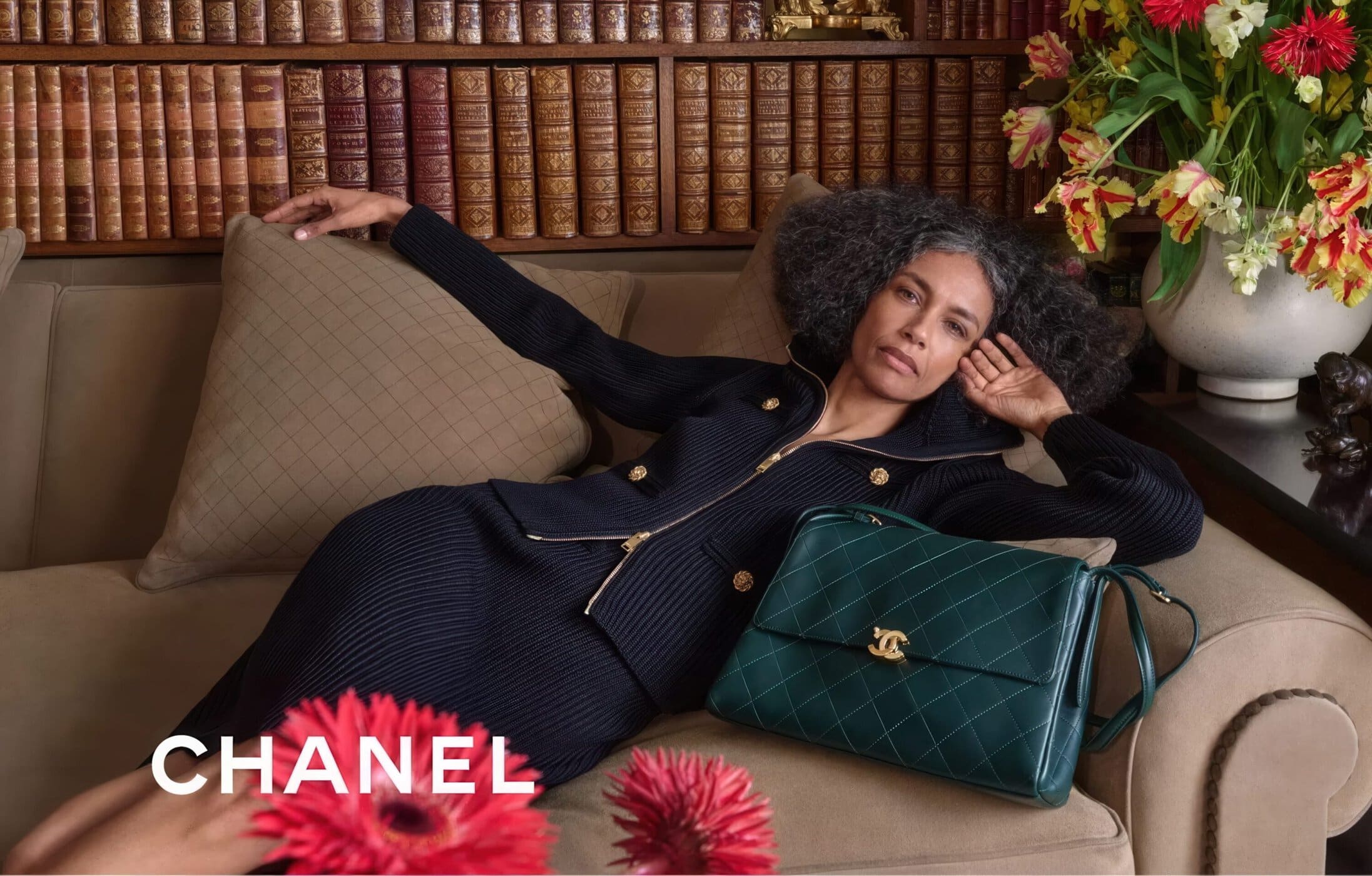
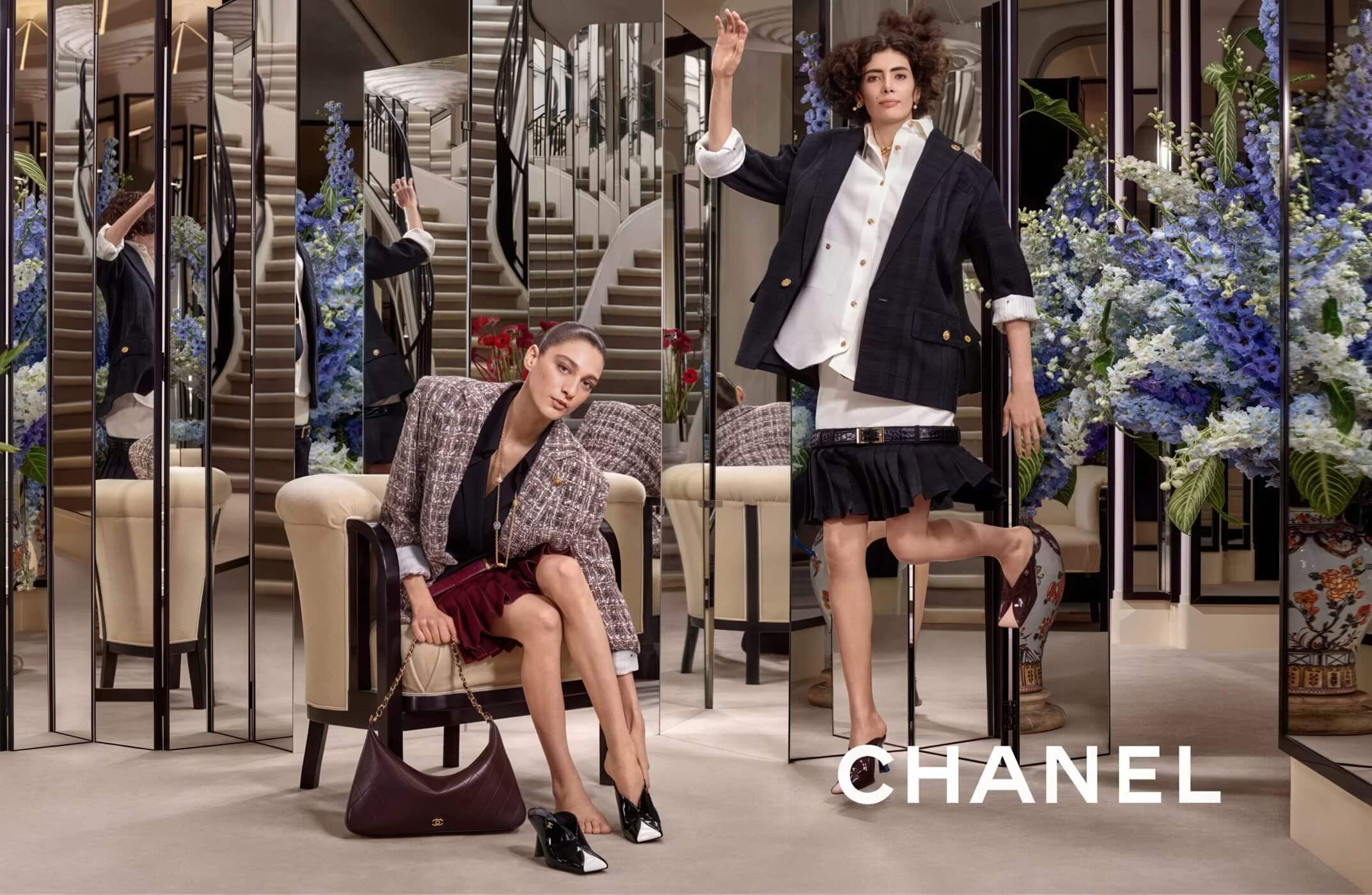
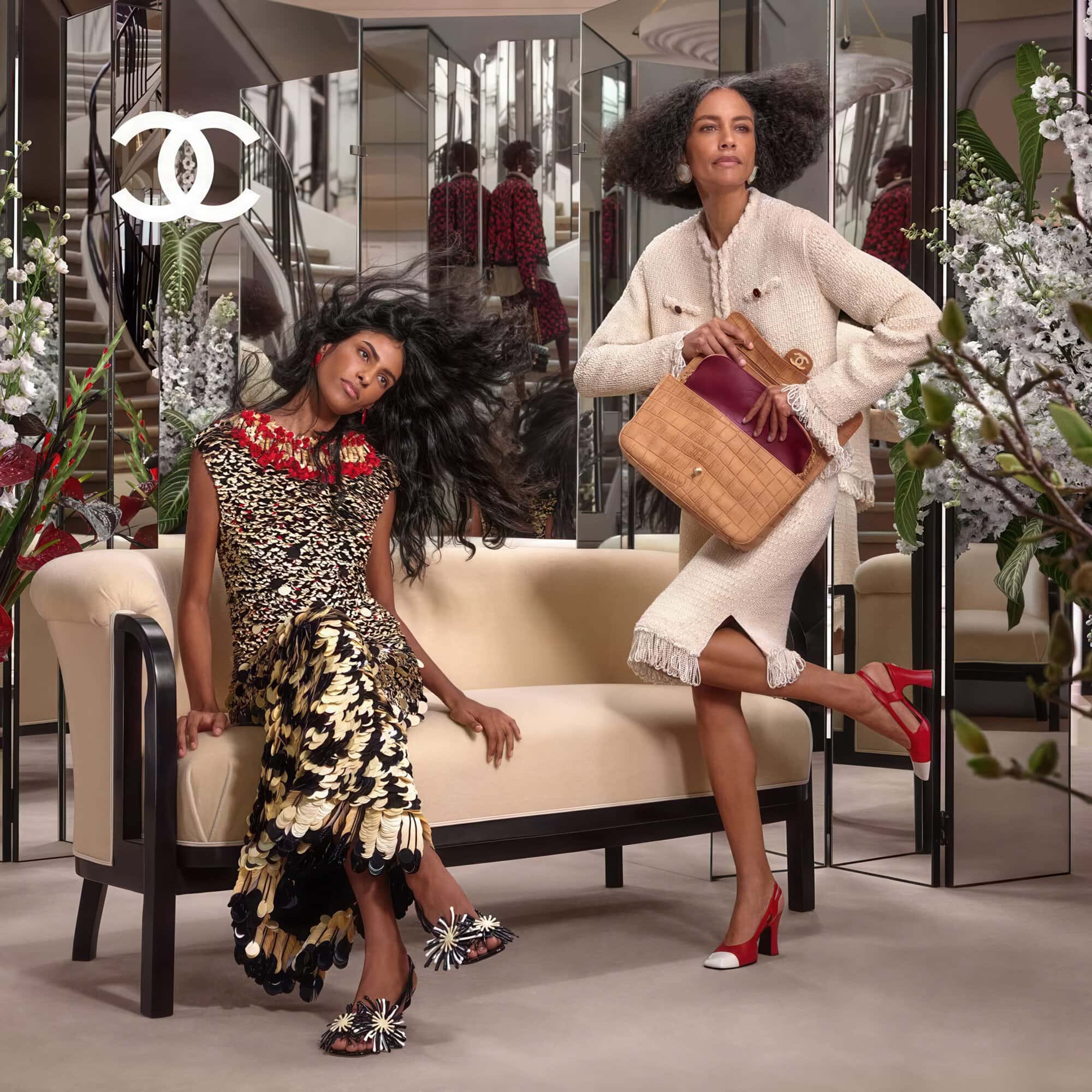
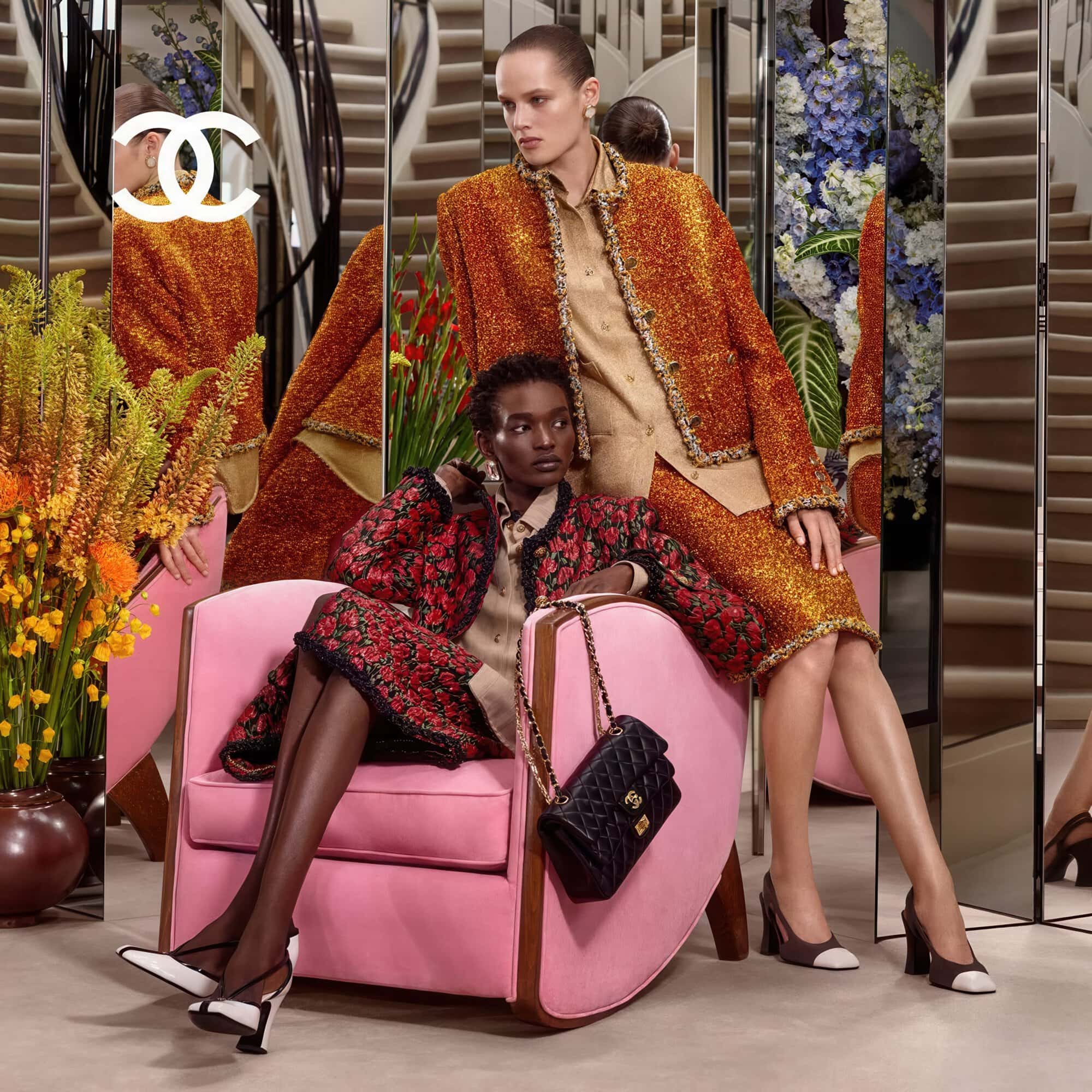
Chanel’s Fall 2026 campaign extends a particularly appealing invitation: make yourself comfortable. In Julien Martinez Leclerc’s photographs, women settle into Gabrielle Chanel’s apartment at 31 Rue Cambon with varying degrees of attention to the conventional uses of furniture. One stands barefoot on the sofa. Another lies on the carpet, her feet resting on the cushions. The clothes are beautifully considered. The seating arrangements allow some improvisation. For Matthieu Blazy, this familiarity gives his developing vision a compelling emotional dimension. Chanel becomes a world in which women have the confidence to enjoy themselves.
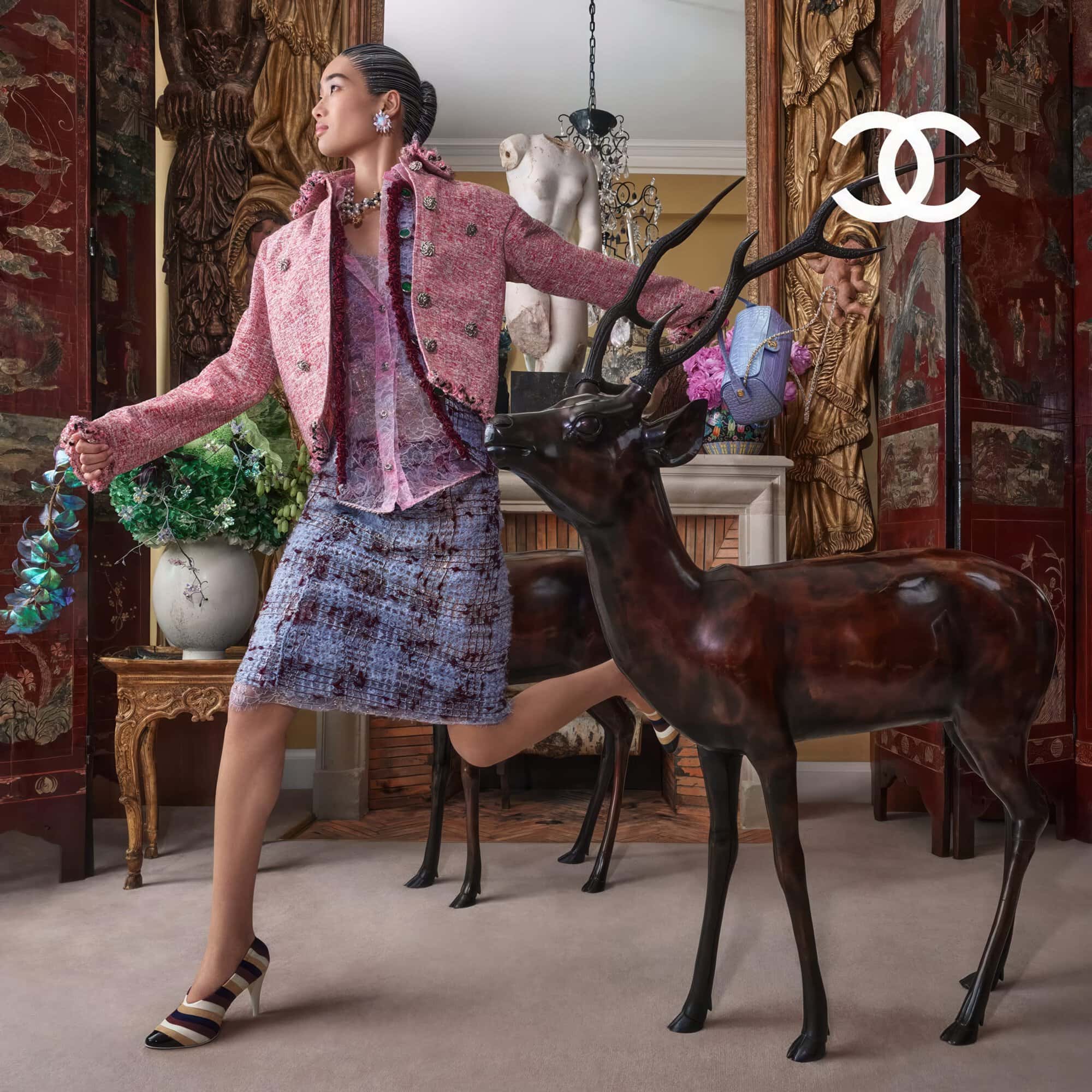
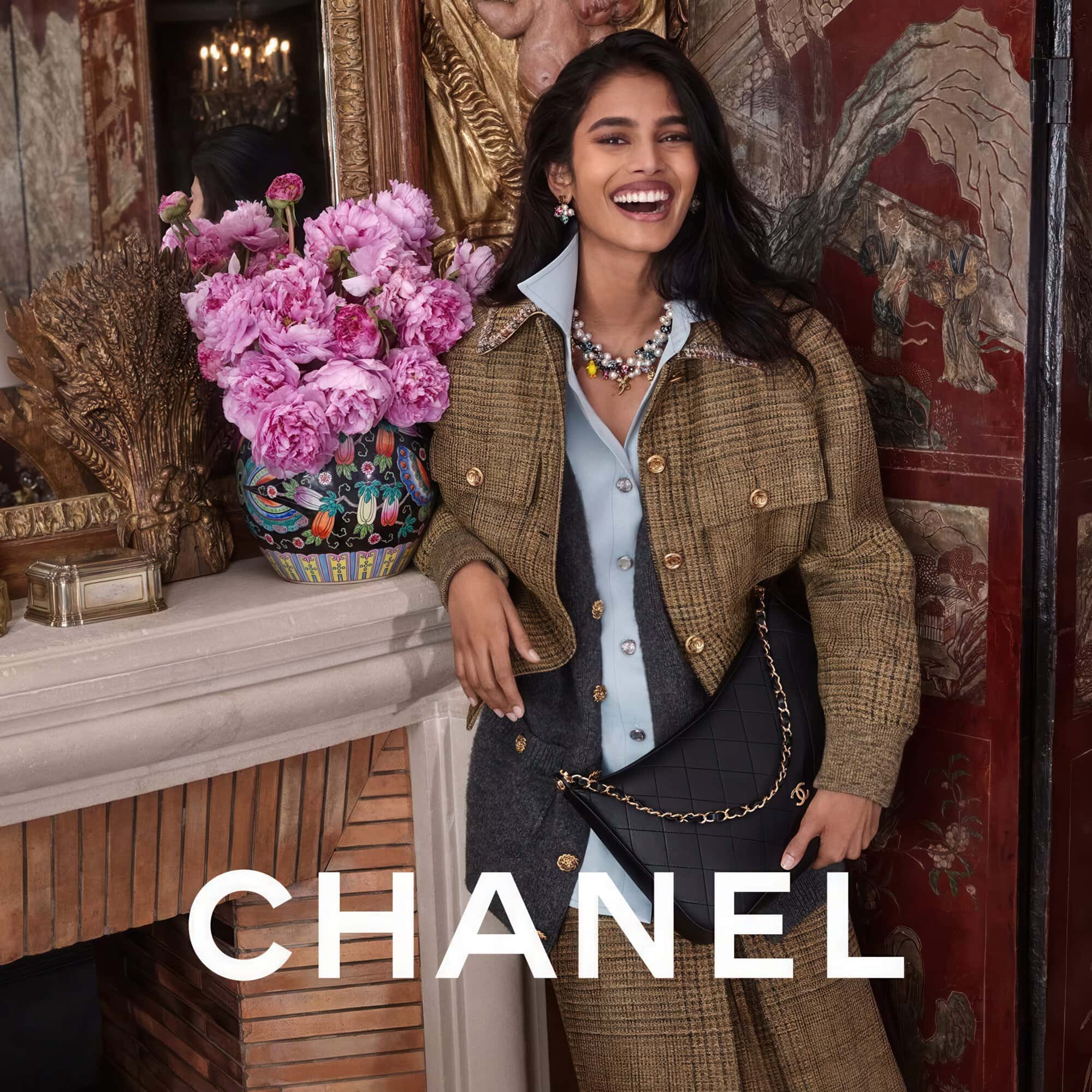
That confidence matters in rooms so dense with the house’s history. Lacquered screens, books, gilded mirrors, and sculpted animals establish an environment of accumulated taste, where each object seems to have earned its place through someone’s affection. The campaign extends that sense of personal attachment to the collection. Women lean, lounge, and move among these possessions with an ease that makes the setting feel available to them. The relationship to heritage becomes tactile and instinctive. They know how to inhabit it. There is something quietly persuasive about presenting an extraordinary wardrobe with this degree of familiarity: the pleasure of wearing Chanel begins to feel imaginable.
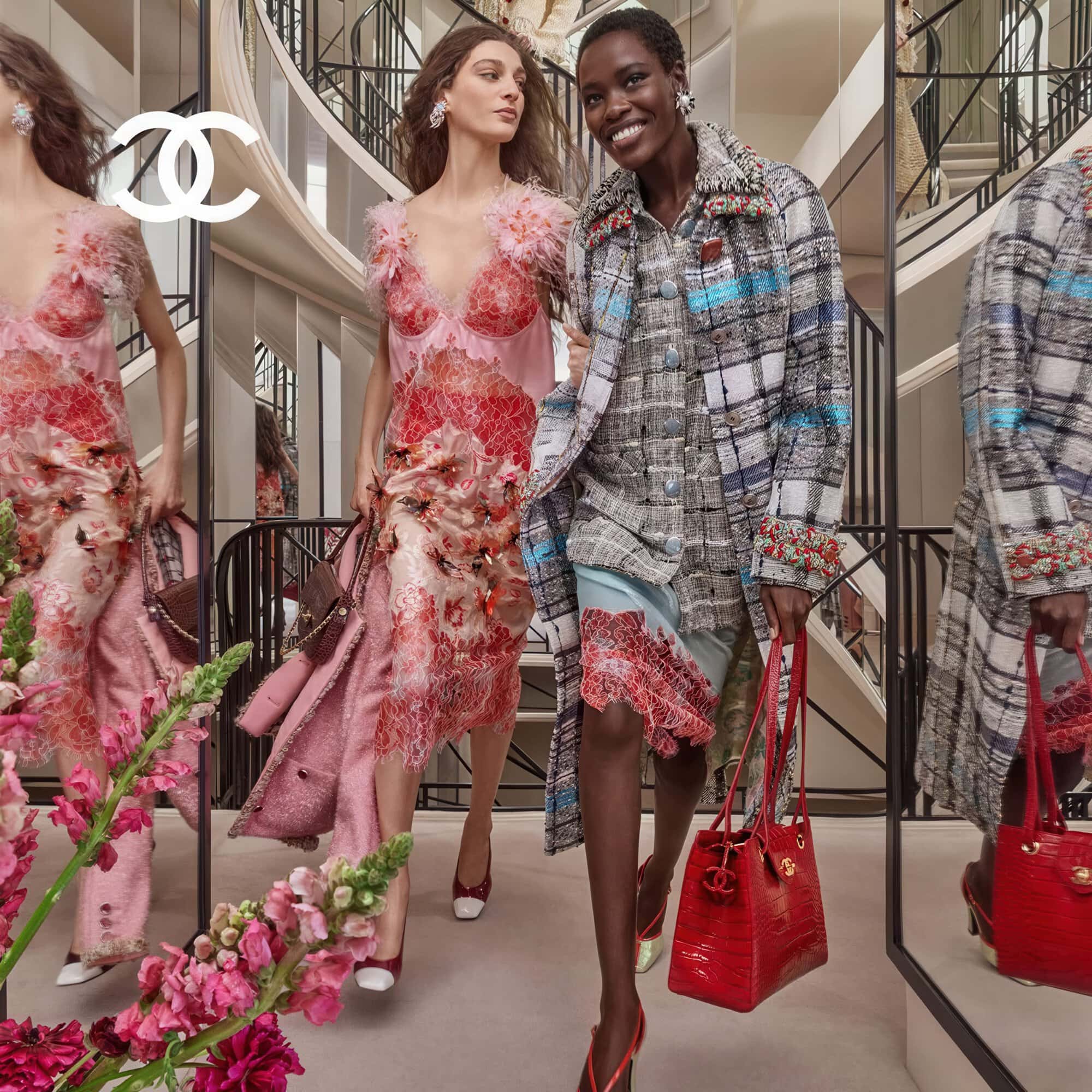
The casting gives that invitation breadth. In the group portrait, different ages, expressions, and ways of carrying the clothes create a gathering whose interest lies in its individual temperaments. A smile opens the composition outward. Elsewhere, a direct gaze or an unhurried posture holds its own. Playfulness moves across the cast, while reserve retains its appeal. This is a subtle achievement for a house with such a recognizable dress code. The women suggest several ways of belonging to the same world, each bringing a different emphasis to its vocabulary. For Blazy, that plurality helps communicate the possibilities within the clothes. A coherent house identity can accommodate considerable freedom of interpretation.
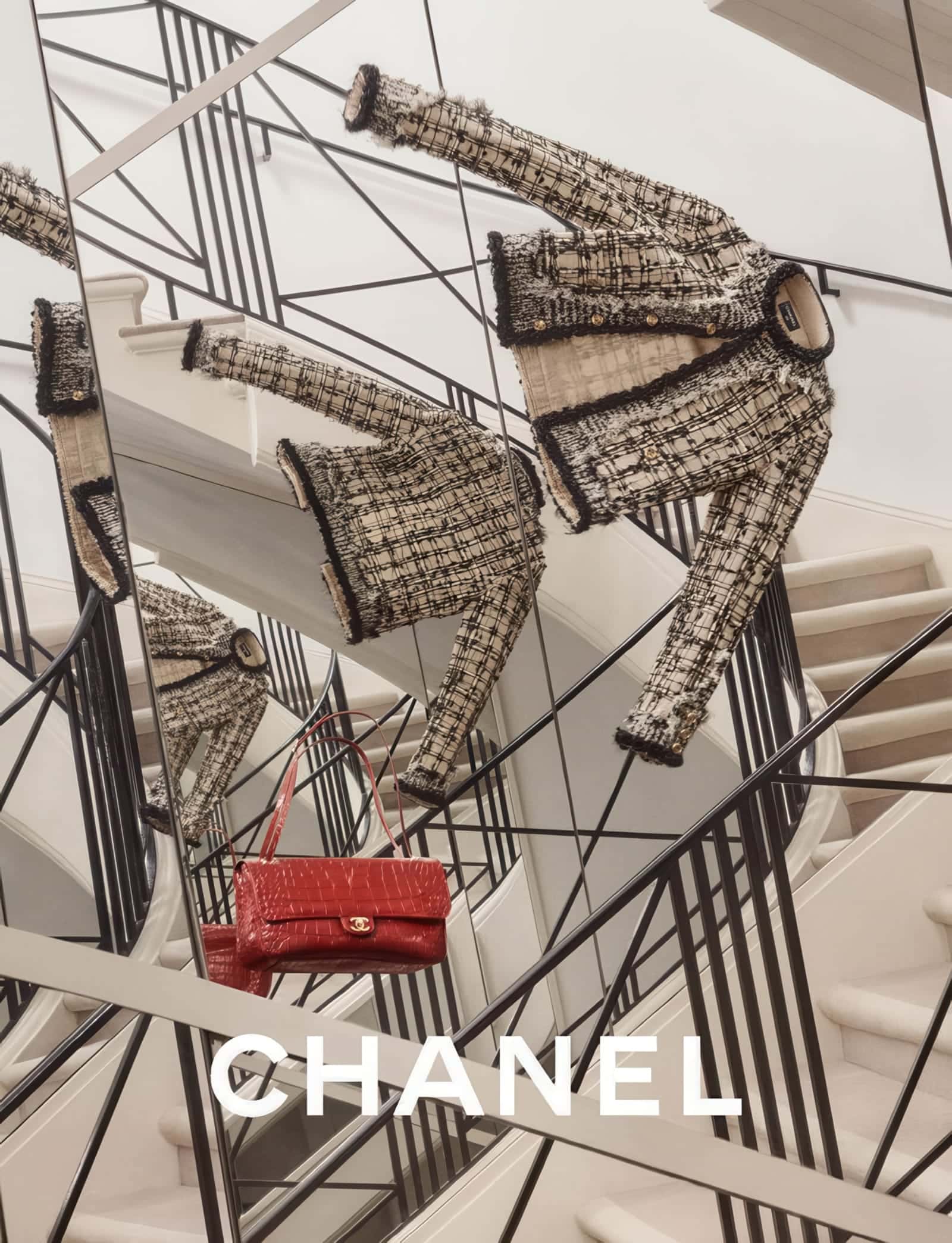
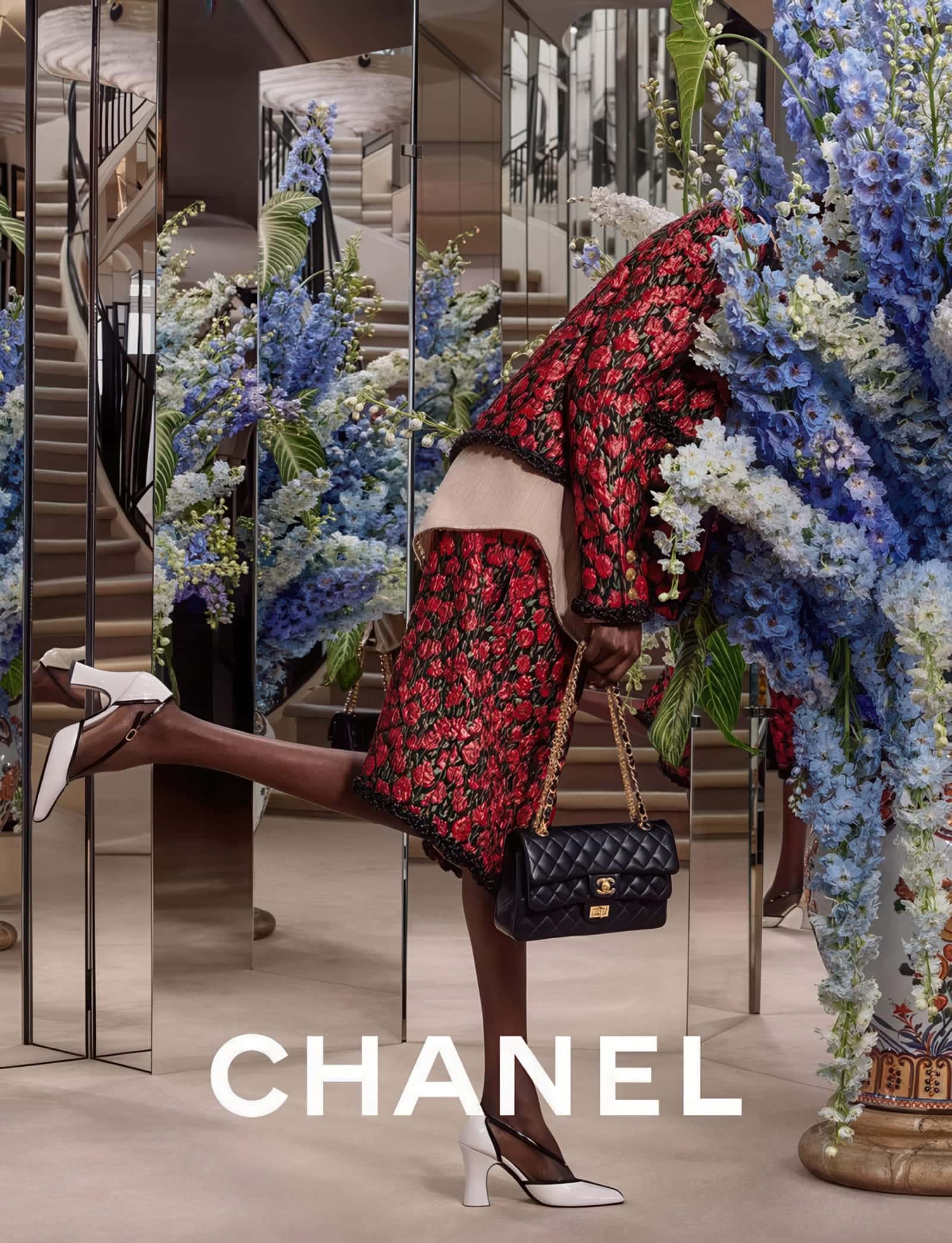
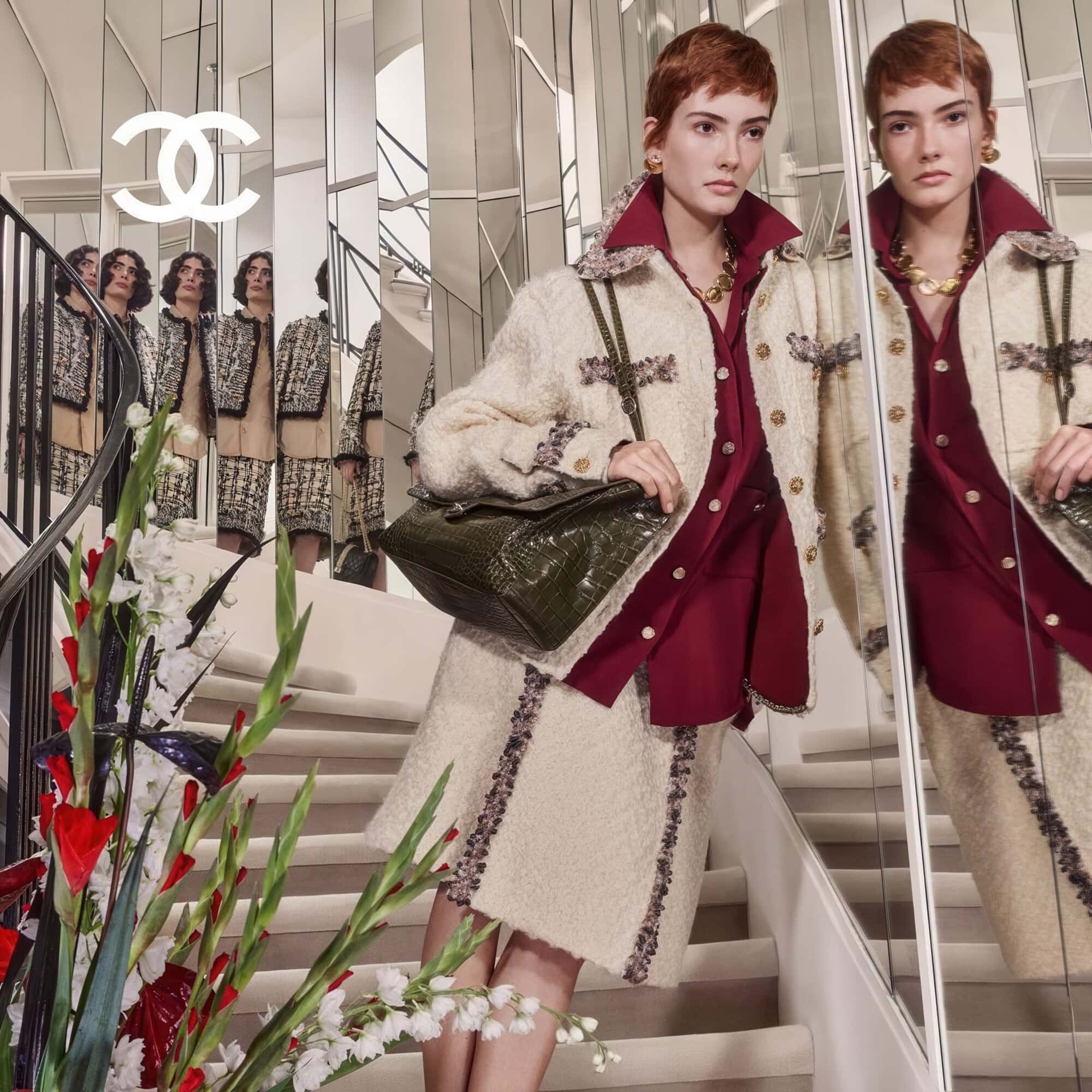
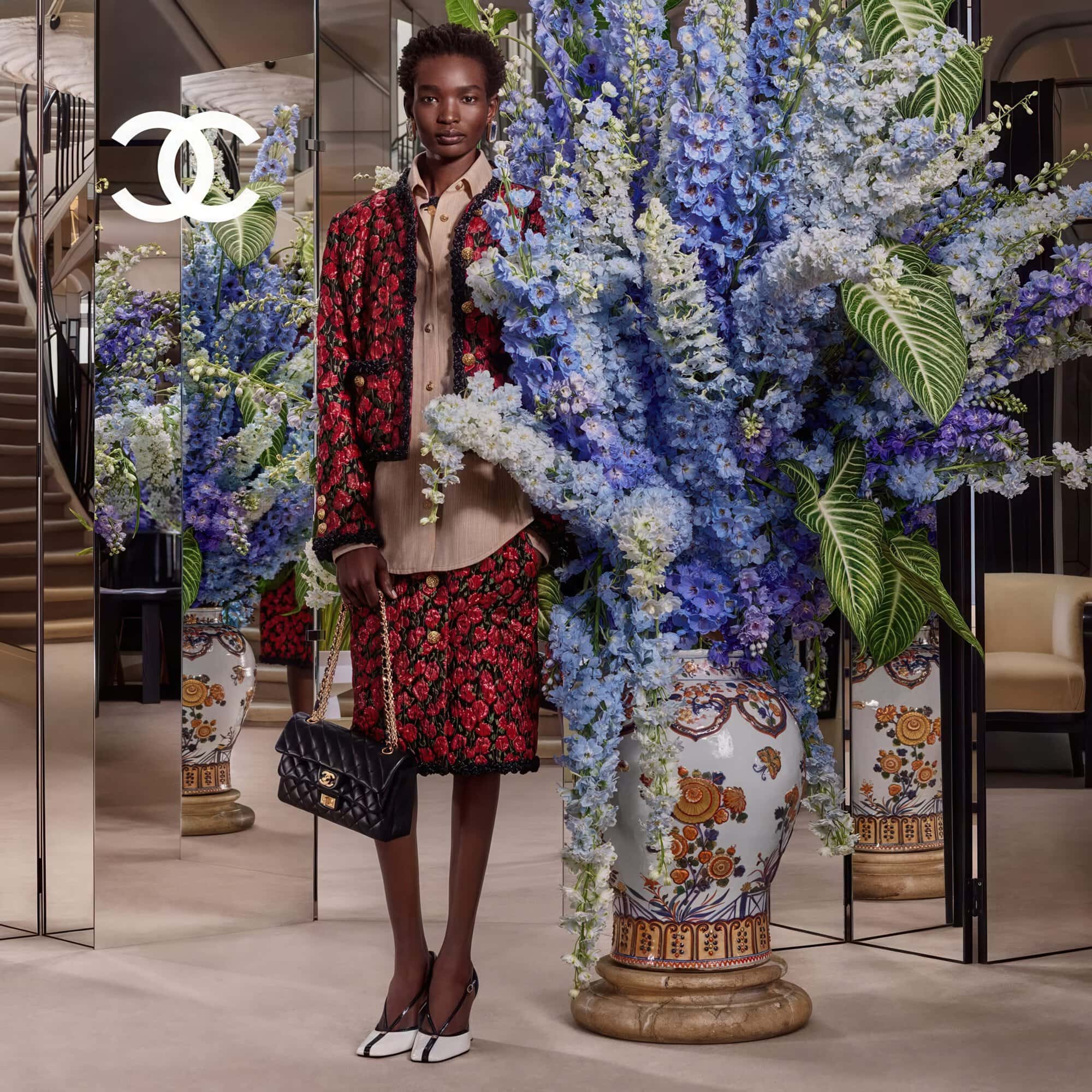
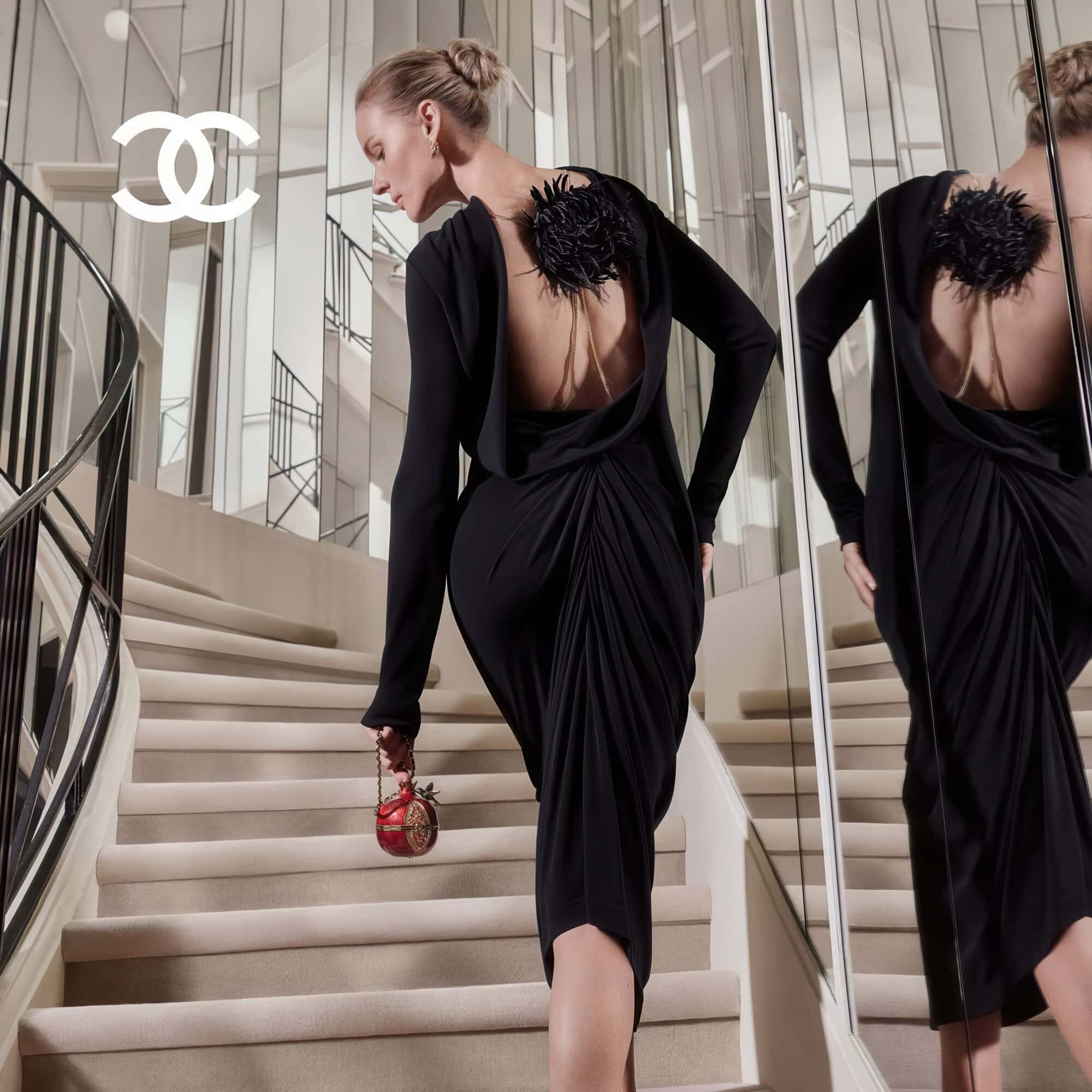
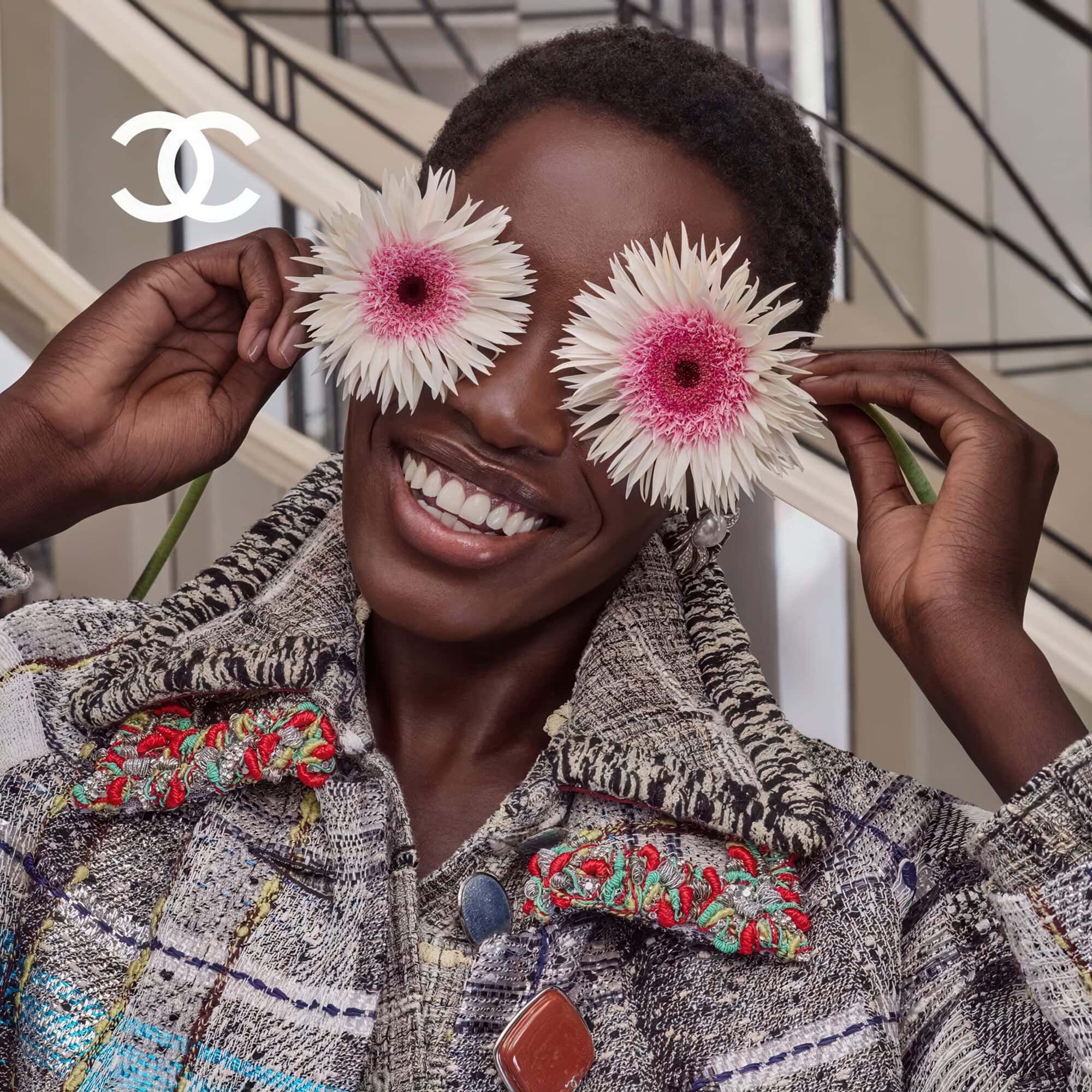
Leclerc’s compositions make that freedom feel carefully sustained. The mirrored staircase repeats gestures and silhouettes, offering several views within a single frame. Flowers introduce generous passages of color, sometimes framing a woman, sometimes obscuring her face, and occasionally becoming an accessory in their own right. Held over the eyes, two blooms turn a portrait into a small act of visual mischief. Nearby, a tweed jacket appears to float among the reflections, as though a familiar house signature has developed plans of its own. The whimsy works because the images remain attentive to proportion, texture, and the clothes’ construction. Their lightness has been designed.
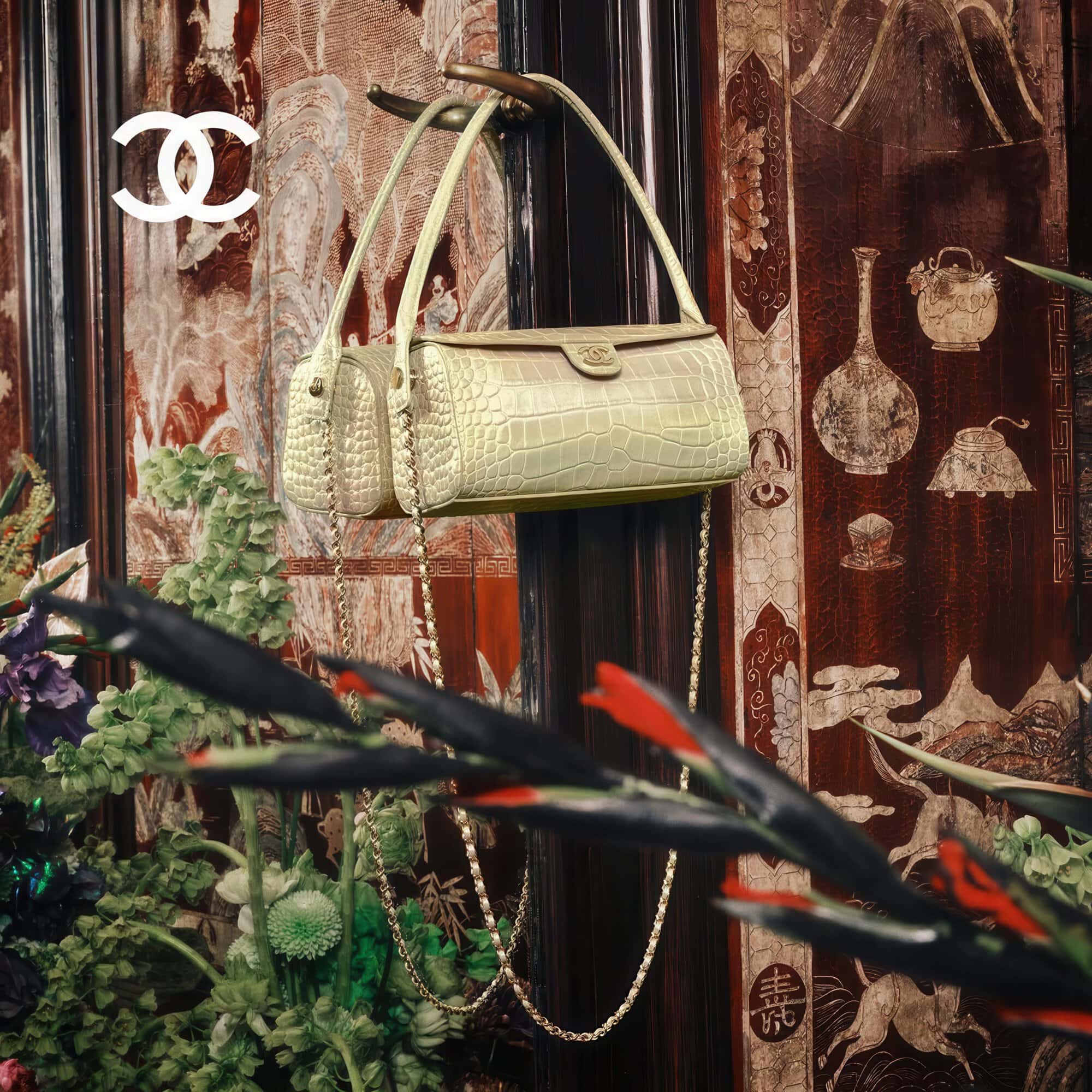
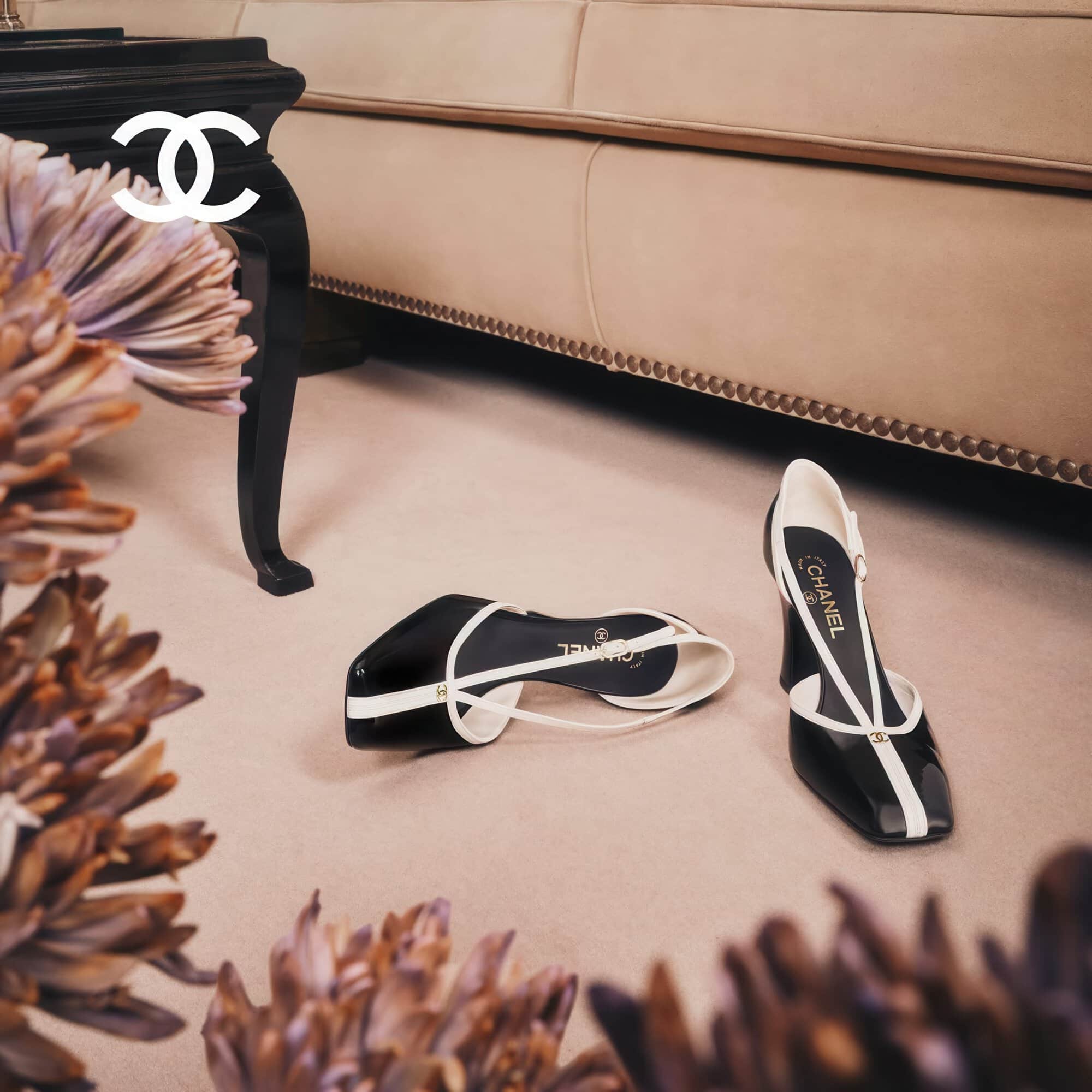
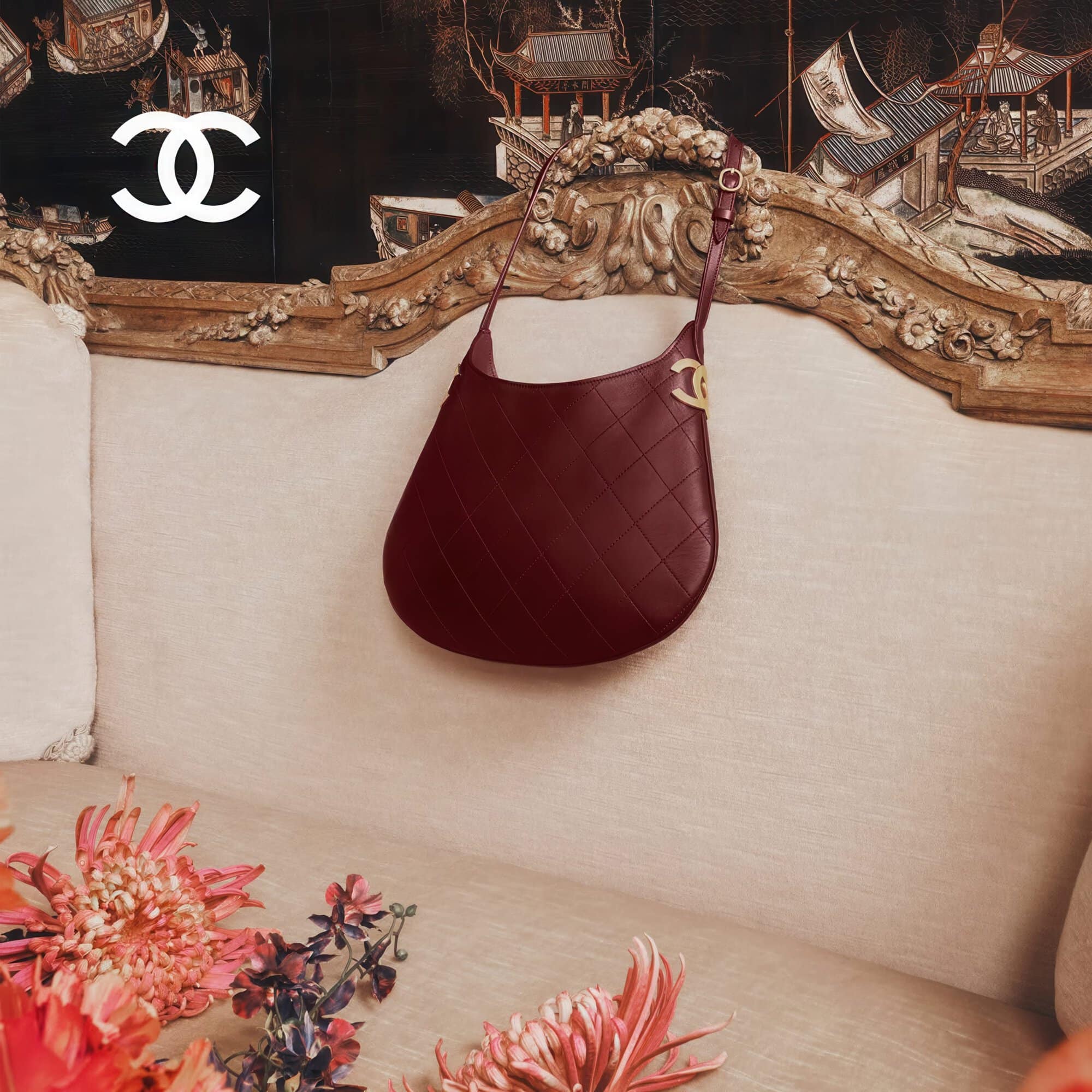
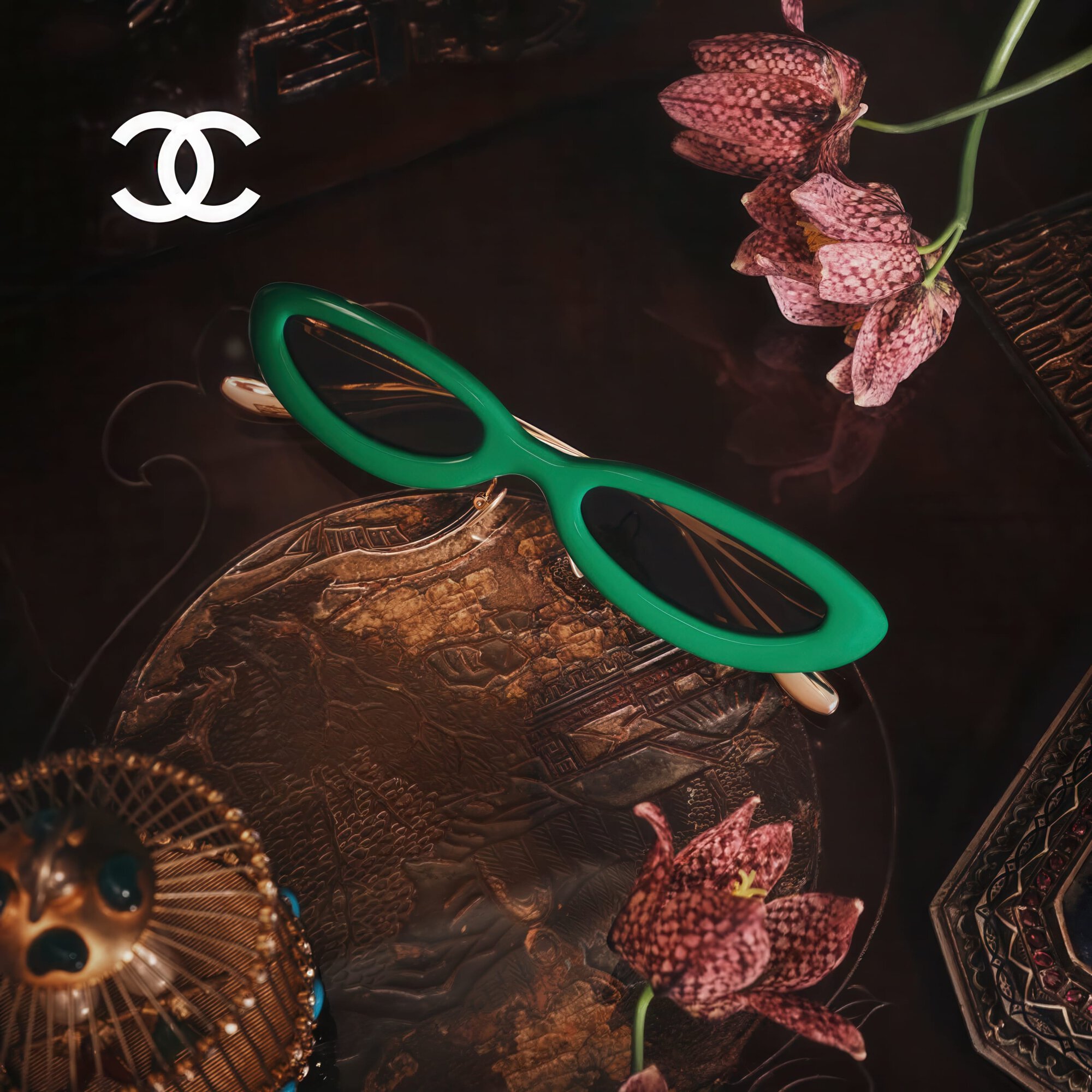
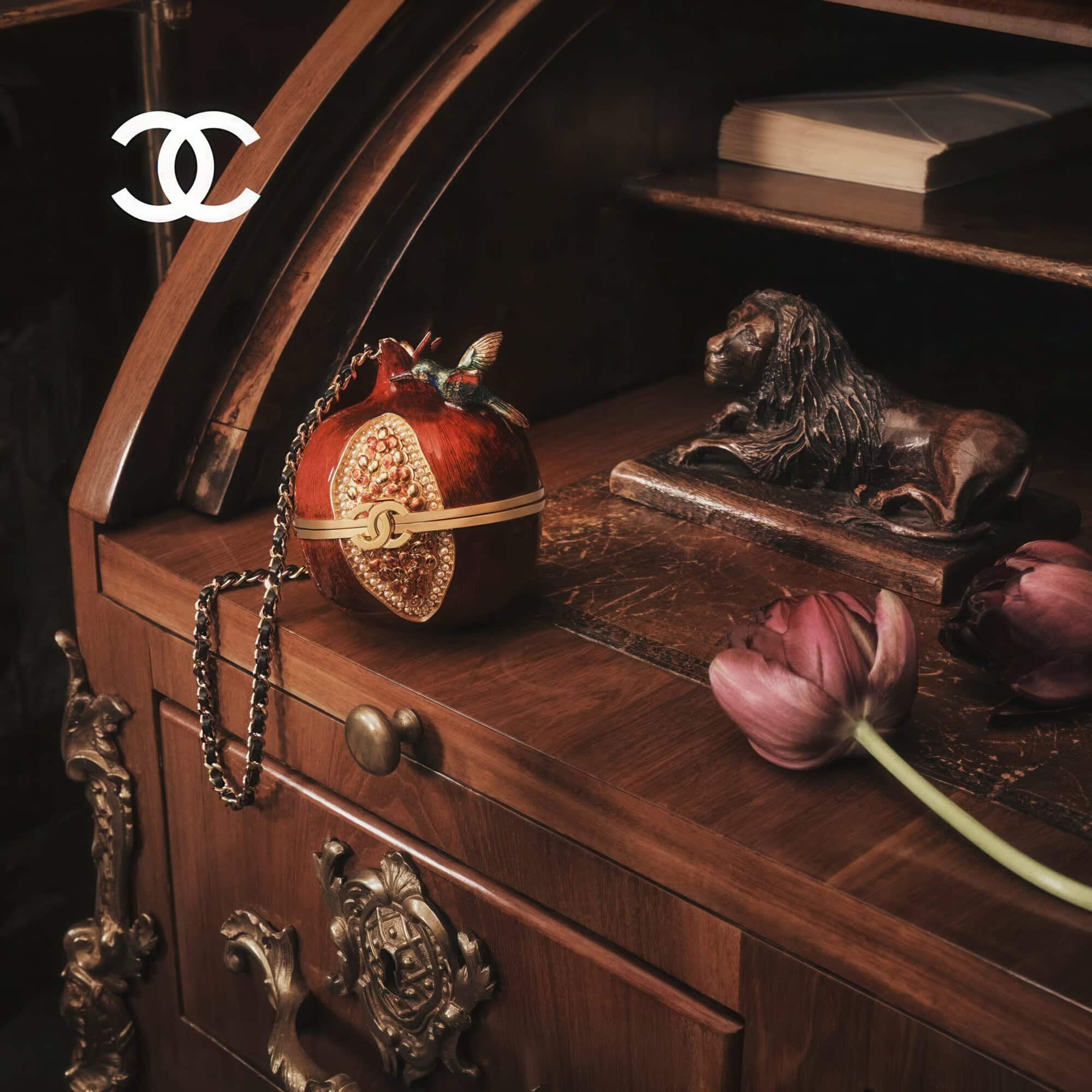
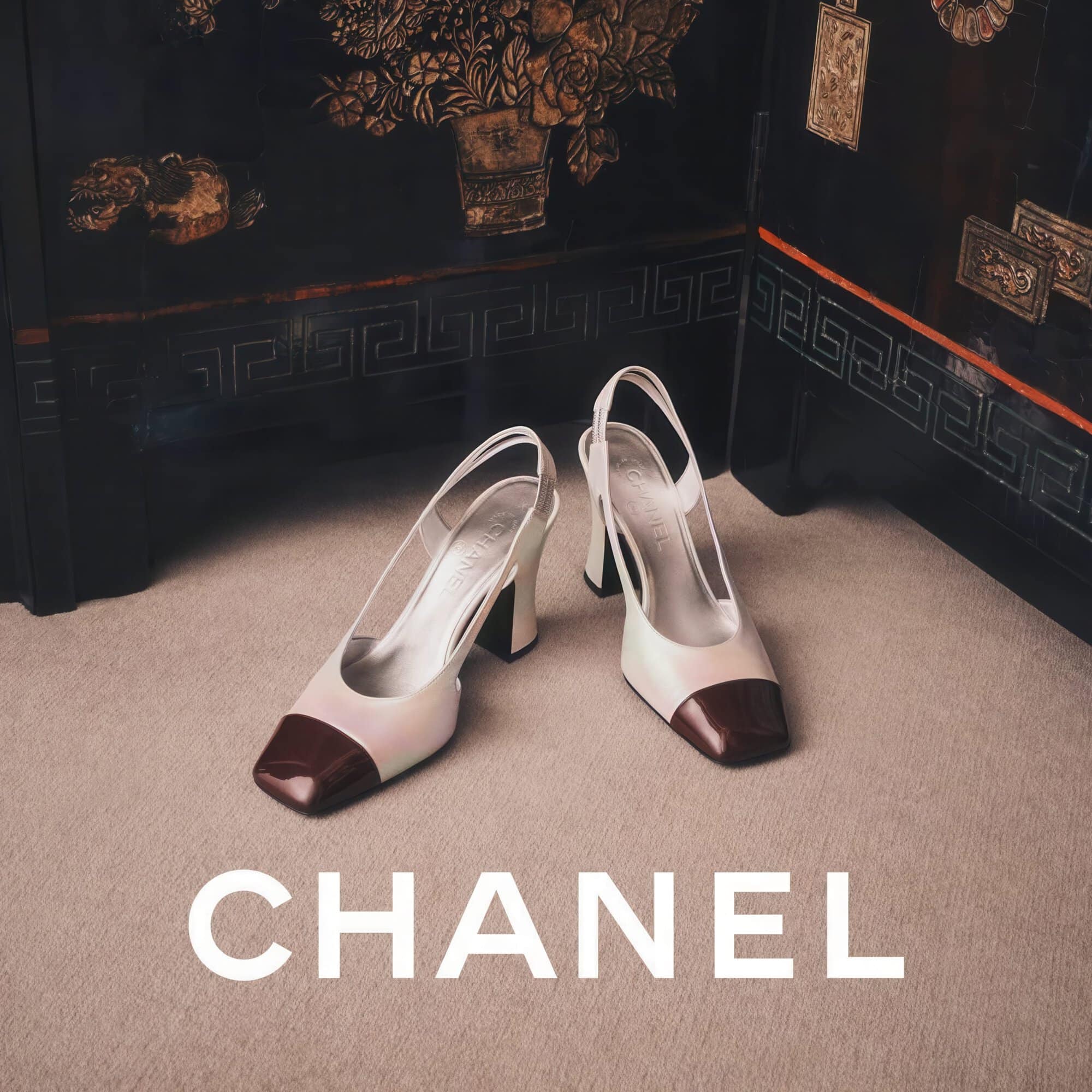
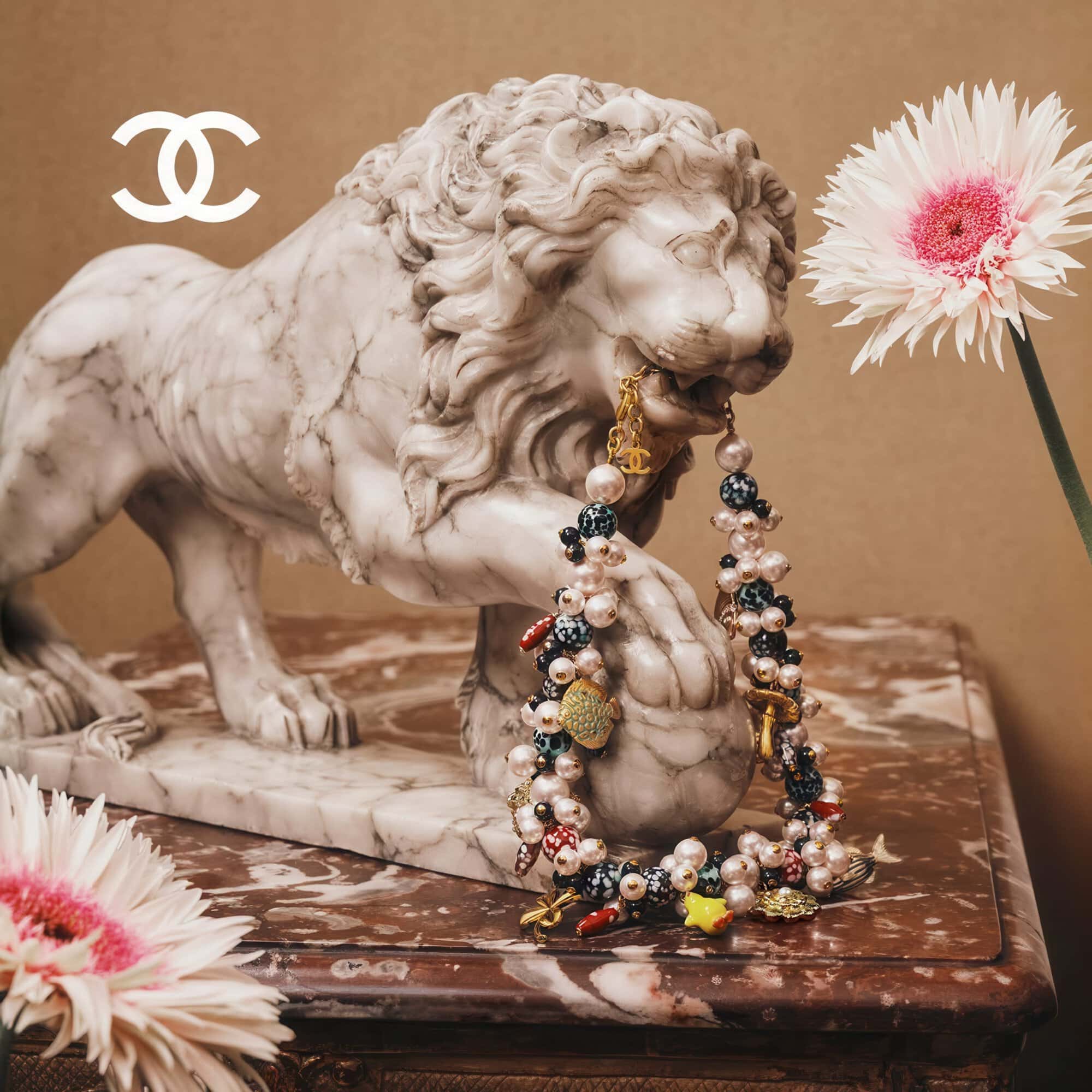
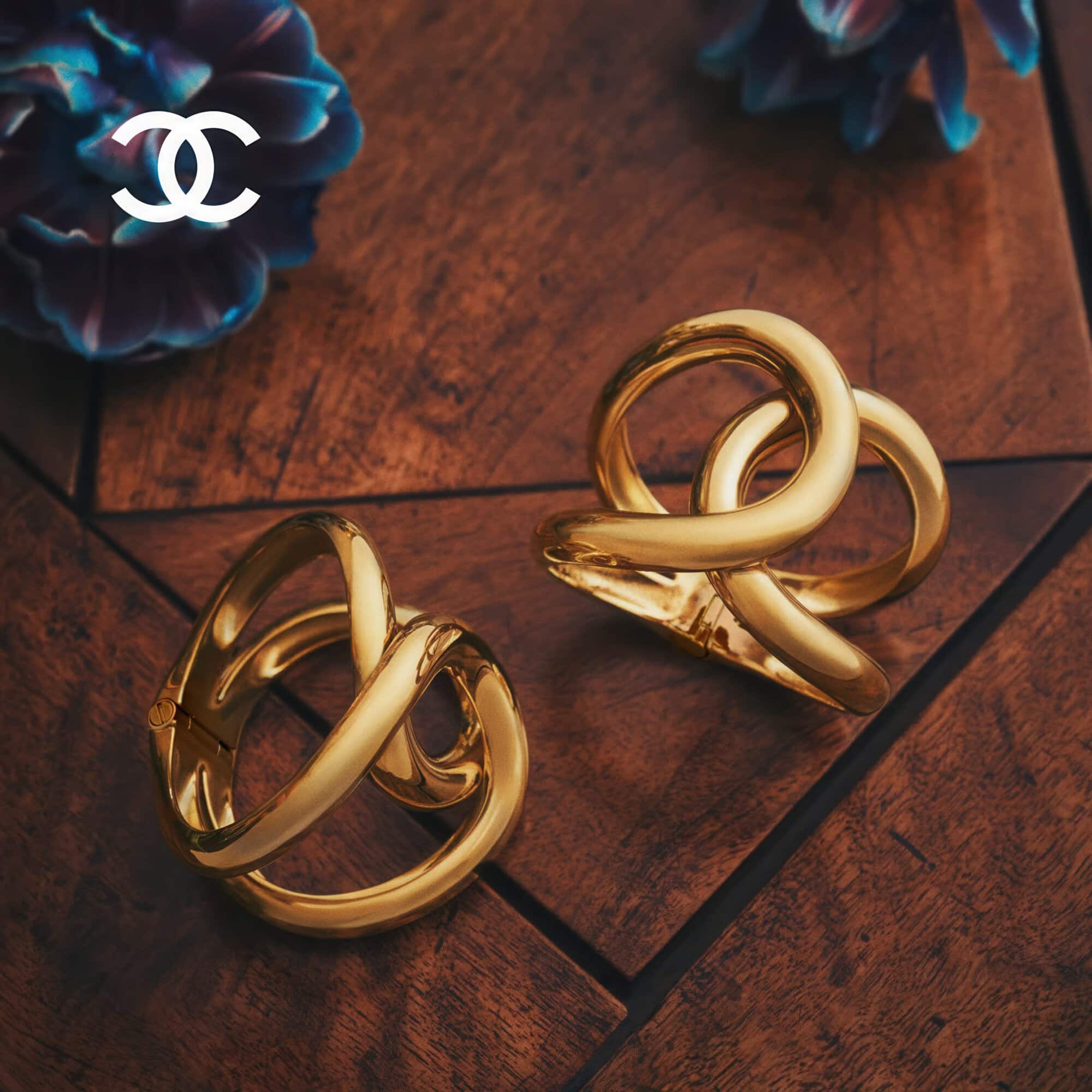
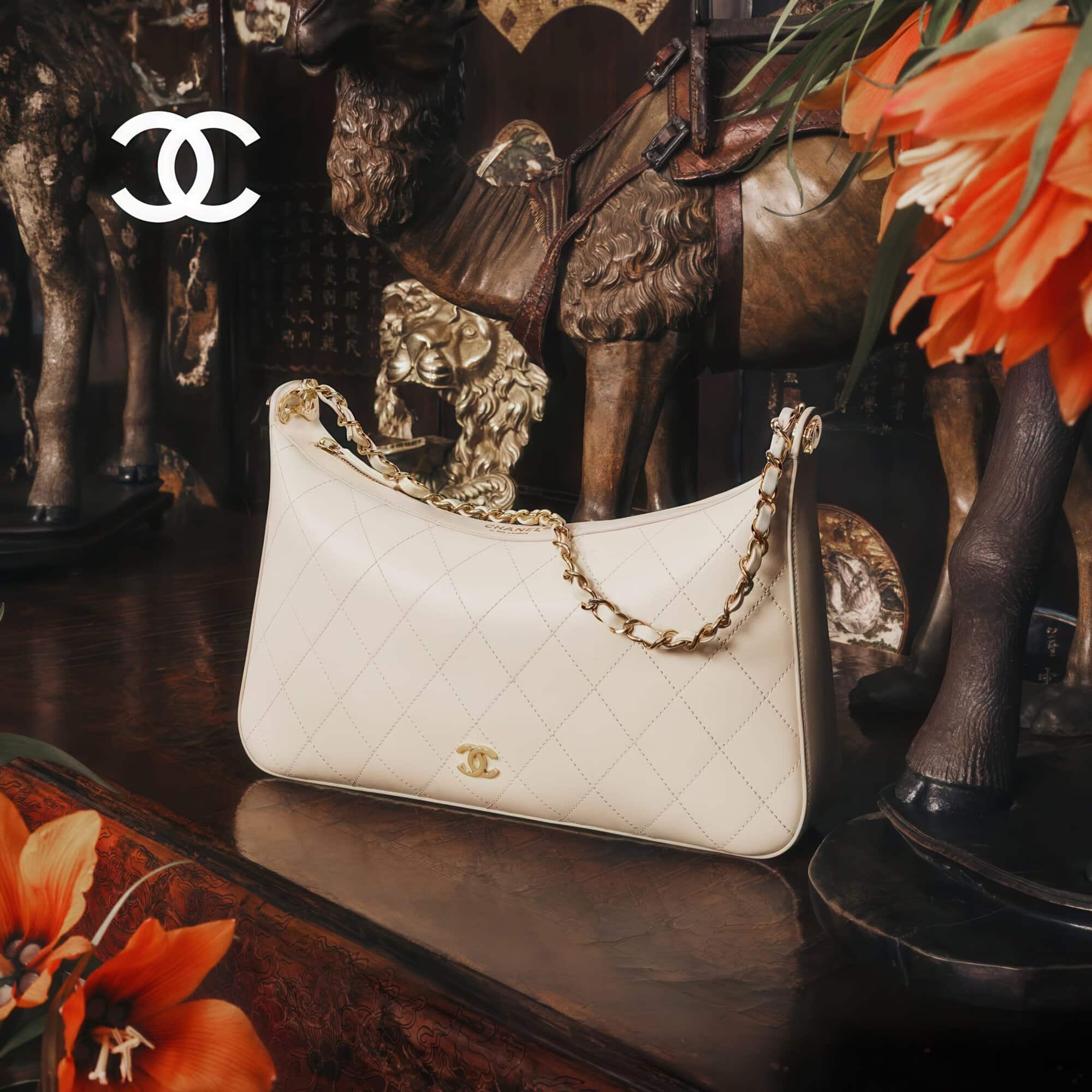
Chris Brooks’s still lifes bring the same imagination to the accessories. A necklace hangs from a sculpted lion’s mouth. A pale green bag is suspended against an intricately decorated screen, its long chain extending through the composition. The jeweled pomegranate-shaped minaudière sits beside books and a small animal sculpture, looking entirely comfortable in the company of collected curiosities. These arrangements give the products a place within the apartment’s personal world. They invite the viewer to imagine the pleasure of keeping such an object close, of finding a spot for it among other things one loves. That is an intelligent expression of desirability. The accessory has a design to admire and a life to enter.
Stuart Winecoff’s film develops these relationships through sound and sequence. The soundtrack, “Soul Of A City,” written by Anthony King, gives the campaign’s playfulness a rhythm that sits comfortably with the sophistication of the clothes. Cuts between flowers, handbags, and the women wearing the collection establish a visual conversation, allowing color, shape, and ornament to carry the eye from one subject to the next. The accessories receive considerable attention within that movement. Their appearances contribute to the film’s pleasure, making the commercial purpose feel thoroughly integrated with its character. Sound is central to this achievement, giving the succession of images an emotional continuity that the photographs establish through composition.
Together, the two media express a clear understanding of what Blazy is building. The photography allows time for the eye to appreciate an unusual button, a richly worked surface, or the easy relationship between a woman and her surroundings. The film gives that world a pulse. Across both, warmth and sophistication support each other, making the house’s visual richness feel inviting. For a developing creative direction, this is consequential work. A collection introduces possibilities through clothes. A campaign gives those possibilities a temperament and shows why someone might want to live with them. Here, Chanel’s history provides an abundance of material, and the women appear perfectly capable of deciding what to do with it.
Chanel Creative Director | Matthieu Blazy
Art Director | Sheila Single
Photographer | Julien Martinez Leclerc
Still-Life Photographer | Chris Brooks
Film Director | Stuart Winecoff
Models | Awar Odhiang, Bhavitha Mandava, Noor Khan, Trinidad Castaño, Xiuli Jiang, Imane Benkaddour, Julia Morais, Adeng Marial, Lais Hames, Stephanie Cavalli, and Anne Vyalitsyna
Hair | Duffy
Makeup | Lucia Pieroni
Manicurist | Ama Quashie
Casting Director | Anita Bitton
Location | Gabrielle Chanel’s apartment, 31 Rue Cambon, Paris
Music | “Soul Of A City,” written by Anthony King, published by Bruton Music Ltd.