After the Rain, Chloé Blooms
Review of Chloé Spring 2027 Fashion Show
By Mackenzie Richard Zuckerman
THE IMPRESSION TAKE
Chemena Kamali’s Chloé Spring 2027 collection embraced romance at the point of obsession, layering broderie anglaise, rainwear, lingerie, florals, vinyl, and tailoring into one deeply personal expression of the house’s emotional codes. The review considers how Kamali has made Chloé feel legible again through memory, softness, and utility, while asking how the house can let one idea speak more clearly as it moves forward.
Creative Director: Chemena Kamali
House: Chloé
Collection: Spring/Summer 2027
Presented: Paris Fashion Week
Reviewed by: Mackenzie Richard Zuckerman
The Impression Review Score by Kenneth Richard: 8.7
View the Full Collection
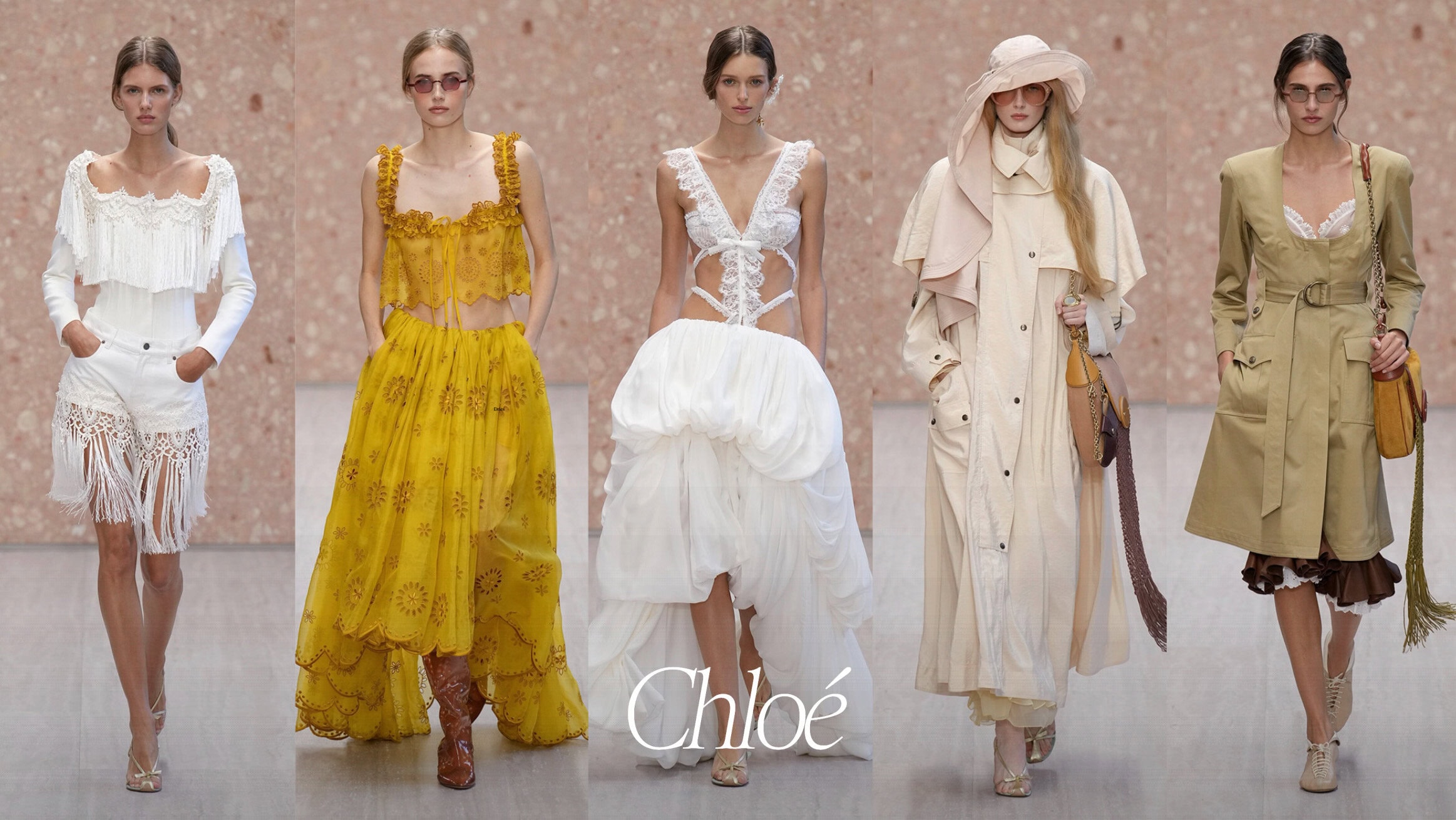
Chemena Kamali called Chloé Spring 2027 “The Obsession Collection,” and the word matters. This was not a collection built around a seasonal motif so much as a catalogue of private fixations: broderie anglaise, lingerie, 1960s floral embroidery, 1970s outerwear, fishermen’s coats, capes, sou’wester hats, transparent vinyl, heart-shaped necklines, men’s suiting, and the fragile traces of Chloé’s romantic past.
It was one of Kamali’s most personal collections for the house, and perhaps because of that, one of her most revealing. The show did not try to push Chloé into a radically new place. Instead, it asked what happens when a designer returns, obsessively and intuitively, to the things that made her fall in love with the maison in the first place.
That approach explains both the beauty and the excess of the collection. Kamali’s Chloé has always been driven by feeling: by memory, sensuality, ease, and an almost instinctive understanding of feminine codes. Here, those instincts were allowed to bloom fully. The result was emotionally sincere, deeply Chloé, and occasionally overgrown.
THE COLLECTION
THE VIBE
Protective Romance, Obsessive Femininity, & Rainwear Over Lace
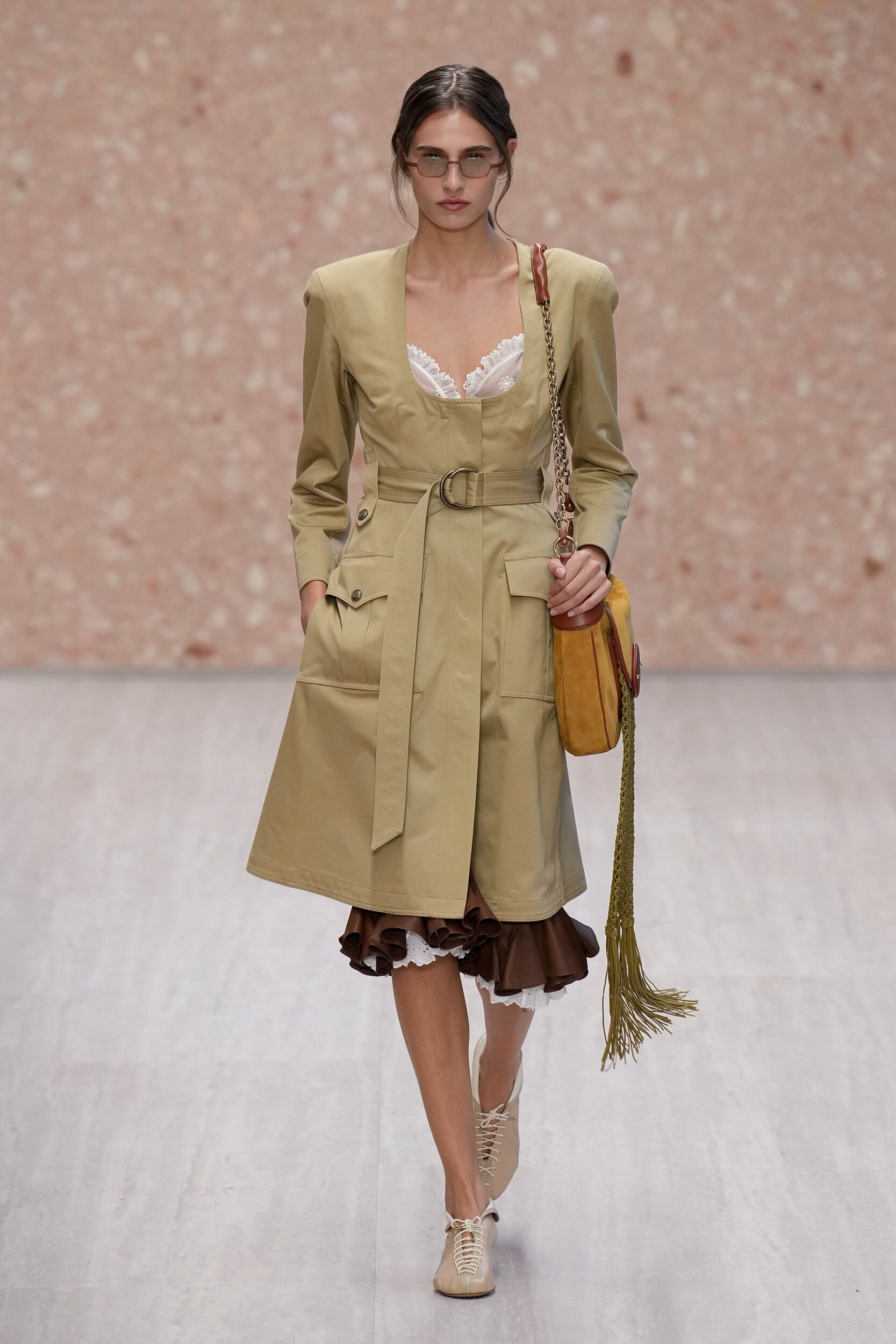
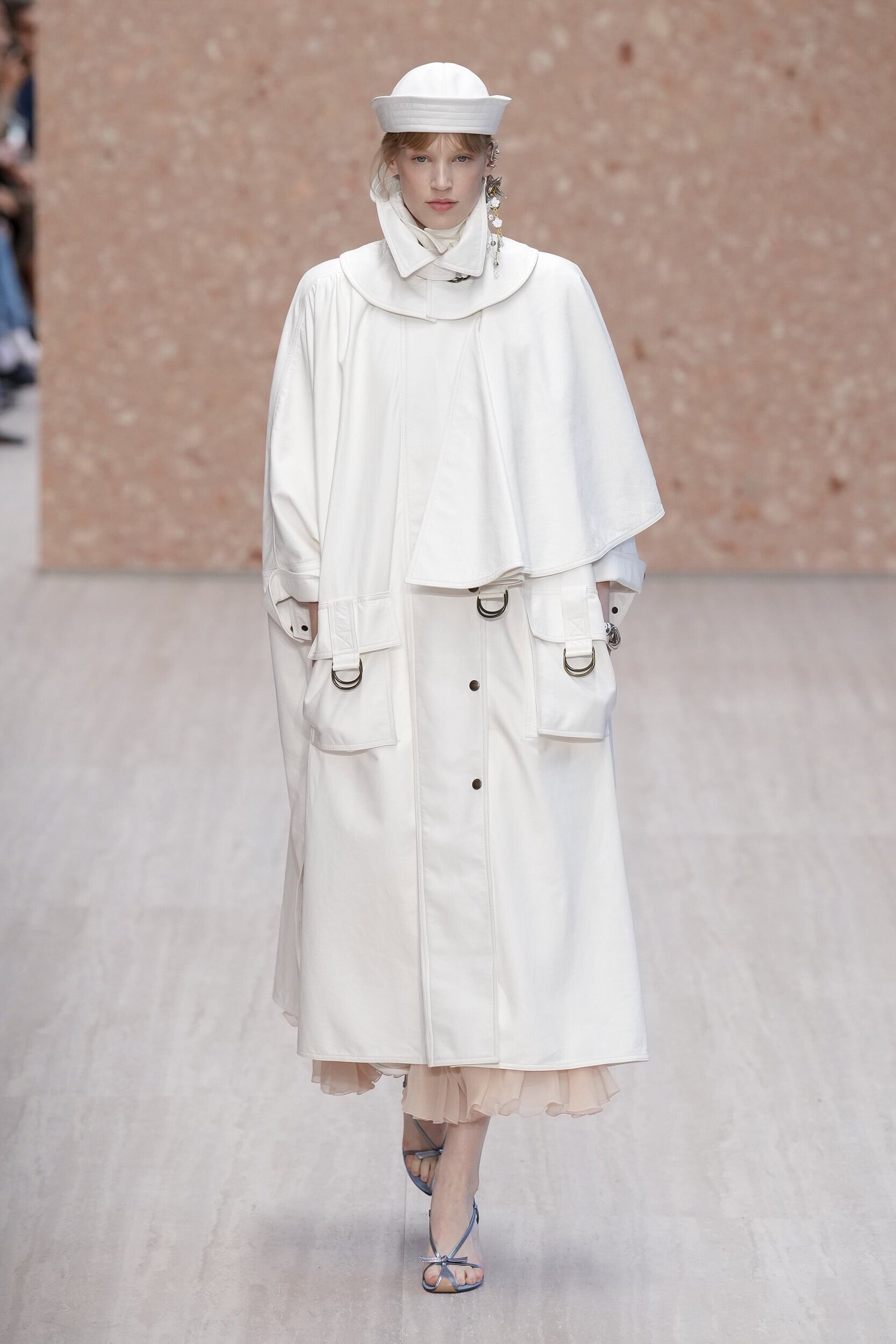
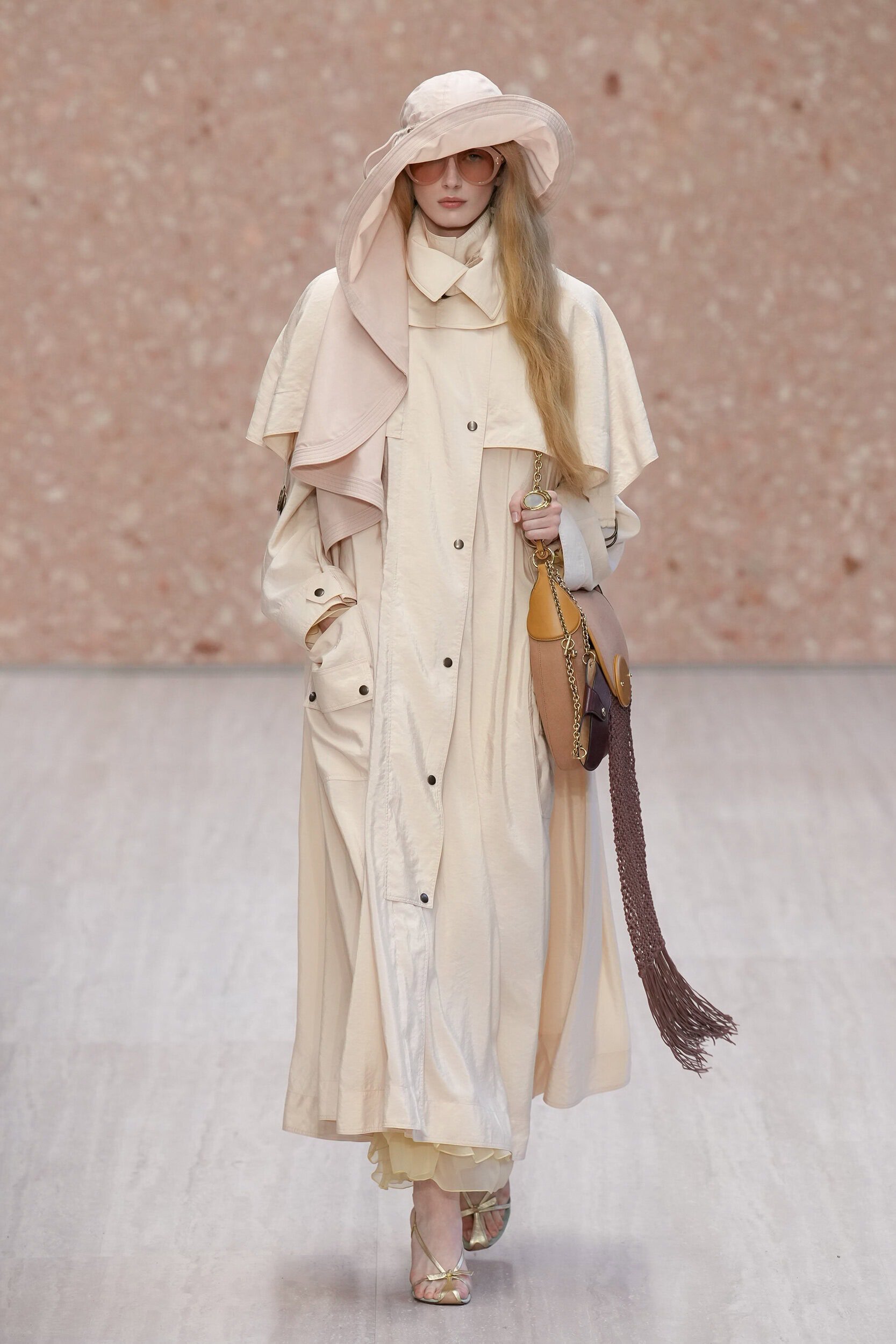
The opening outerwear was among the strongest sections. White, ivory, khaki, blush, and black coats came with storm flaps, deep pockets, caped backs, belts, and protective hats. Beneath them, lace slips and soft hems peeked out, creating the central tension of the show: protection versus exposure. Chloé’s romance was not presented as purely decorative. It had weather around it. It needed a coat, a hood, a pocket, a way to move through the world.
That is where Kamali’s Chloé feels most modern. She understands that softness becomes more interesting when interrupted by utility. A raincoat over lace, a fisherman’s cape over chiffon, a black vinyl shell over a pale ruffled hem: these were not contradictions to the Chloé fantasy, but extensions of it. They gave the woman privacy, motion, and a sense of guarded sensuality.
The press release made clear that outerwear was one of Kamali’s declared obsessions this season, particularly 1970s shapes and 1950s rainwear. That reference gave the collection some of its best silhouettes. The transparent vinyl layers, especially in smoky gray, pale pink, clear white, and deep black, brought a graphic sharpness to clothes that might otherwise have floated too far into romance.
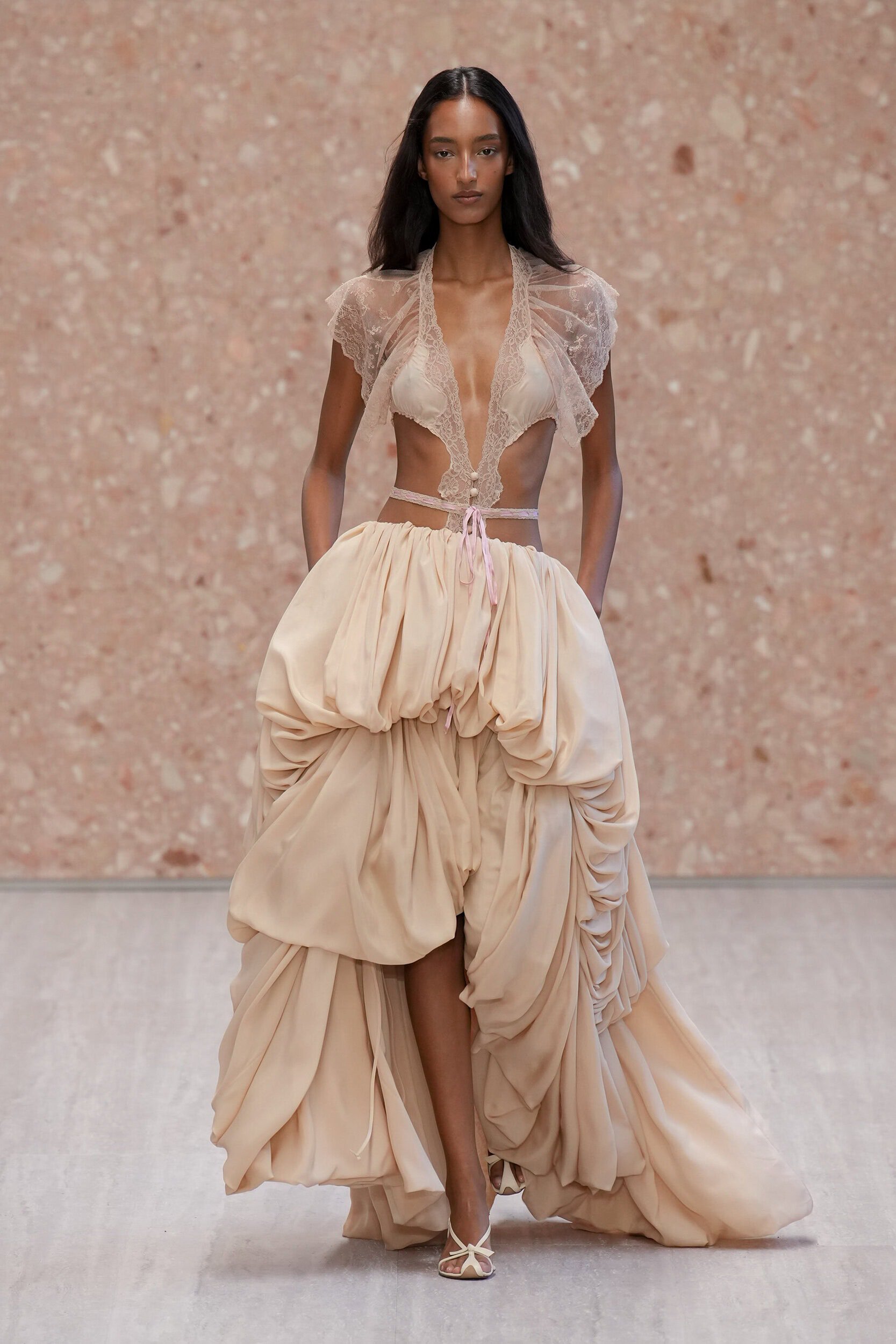
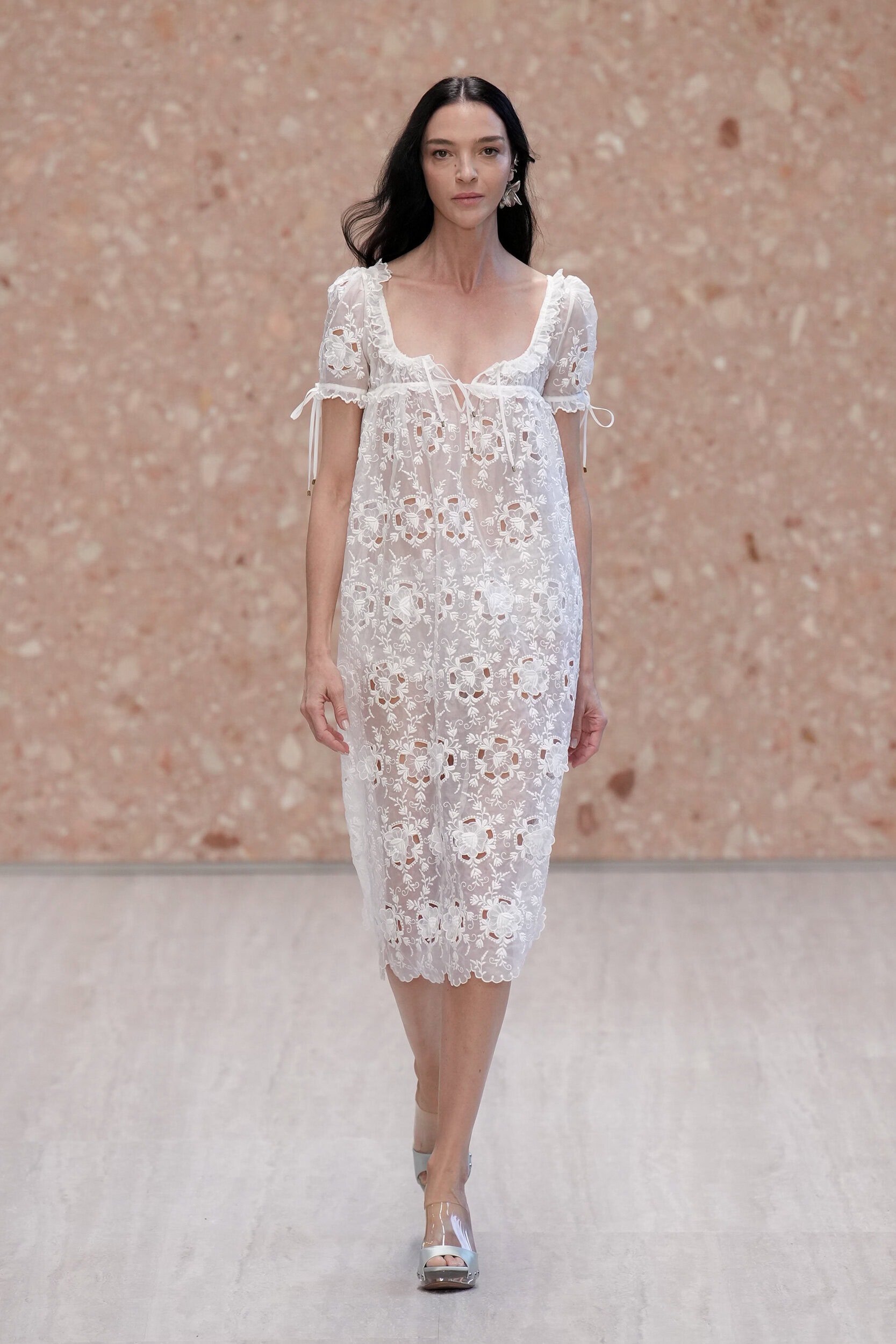
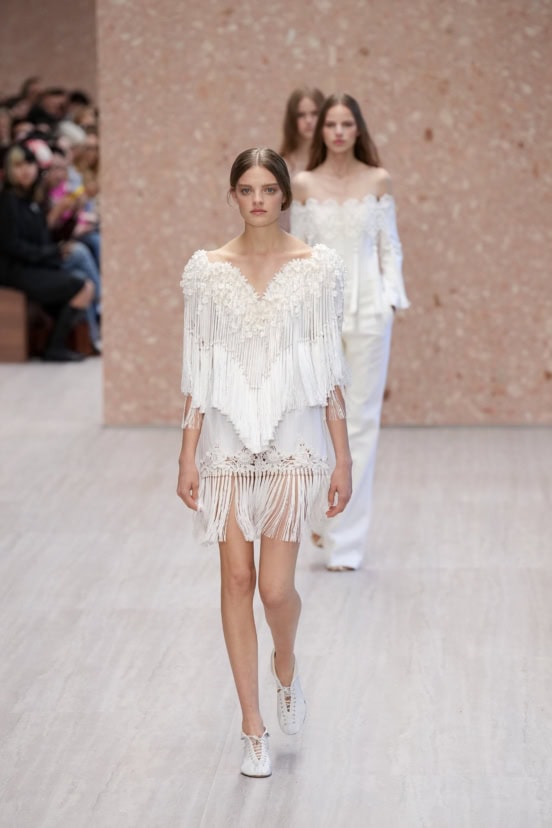
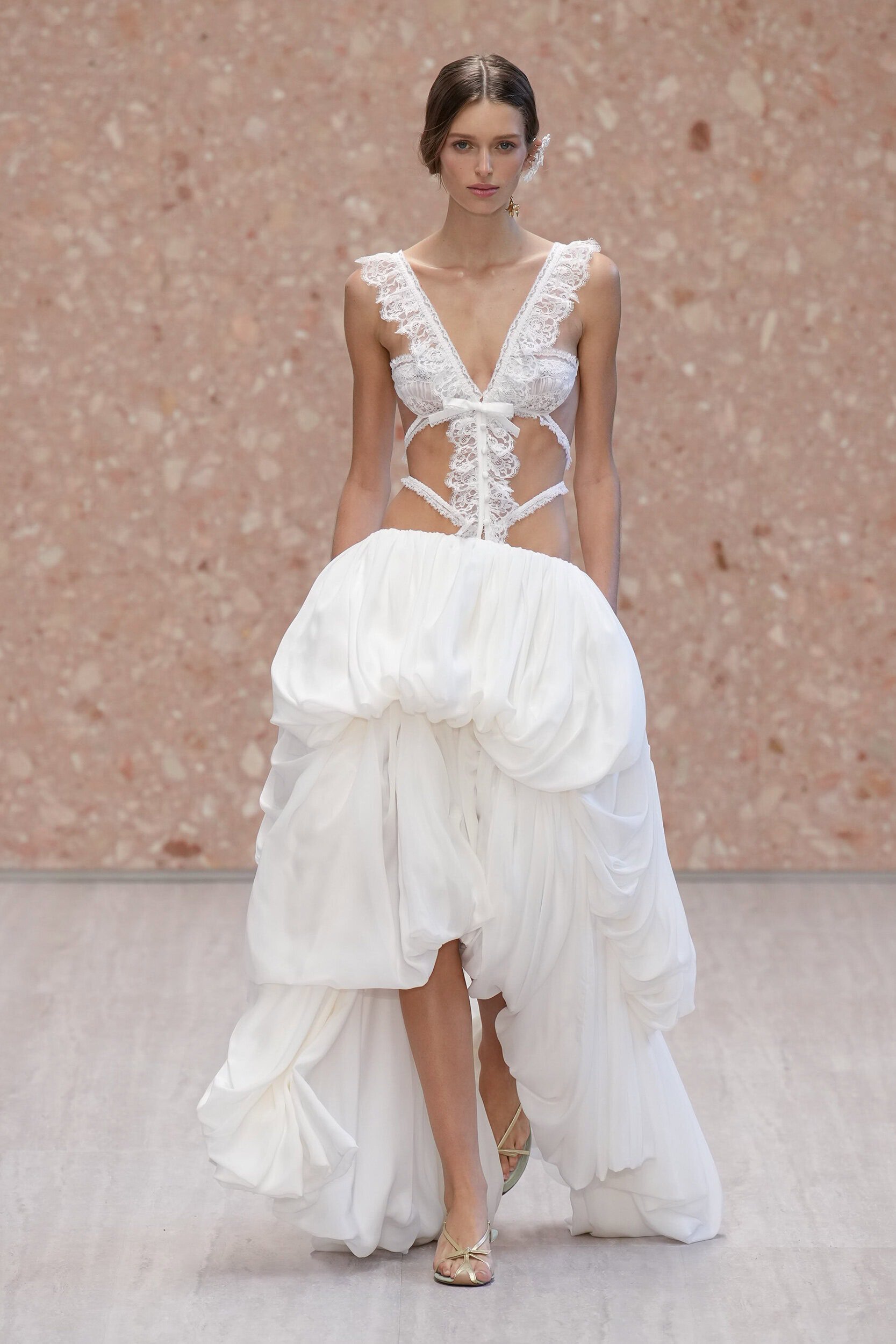
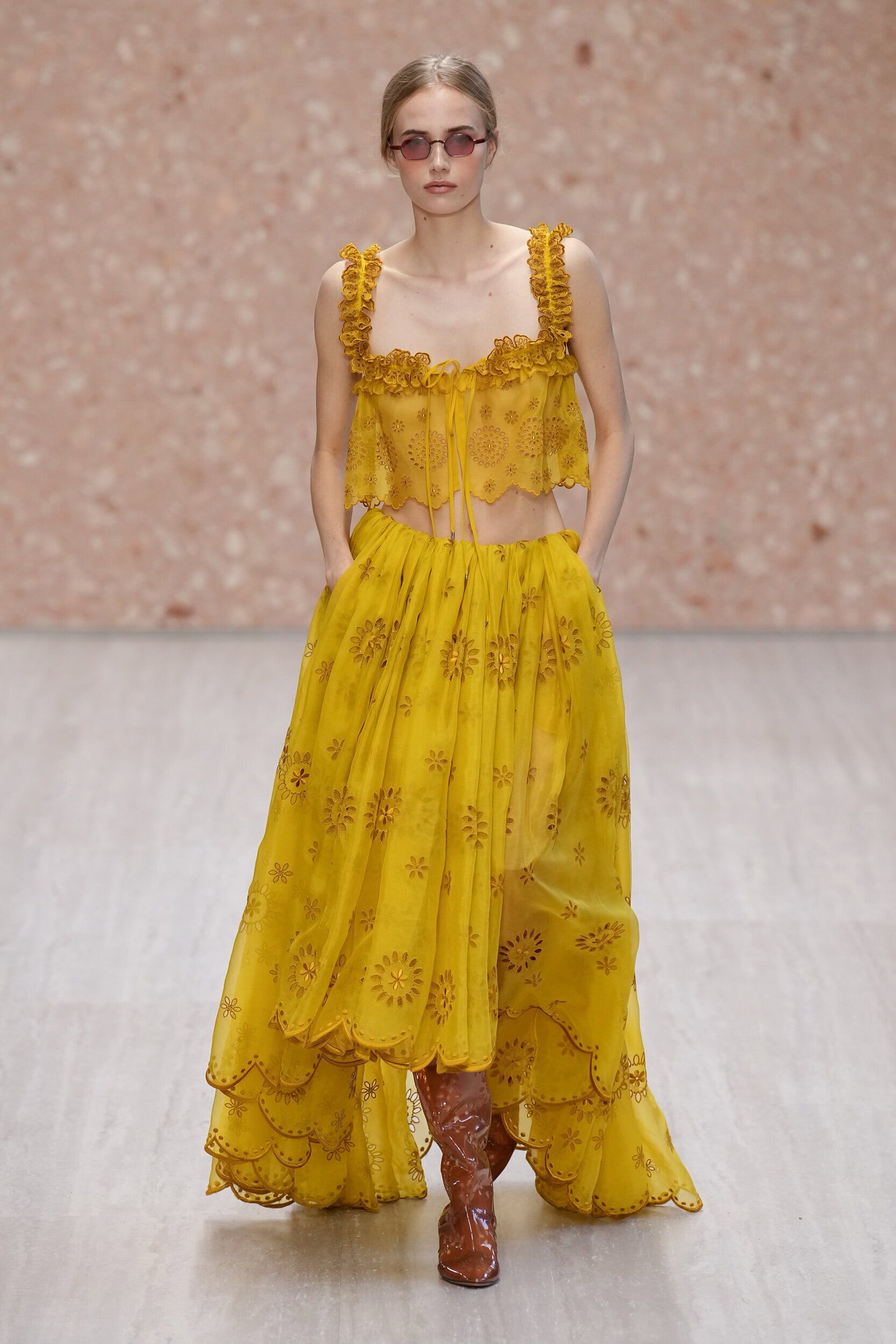
Broderie anglaise formed another major pillar. Kamali linked it to Chloé’s early “robes de jeunes filles,” and the connection felt apt. White broderie dresses, tunics, shorts, and trousers carried the innocence of the house’s past, but she often complicated them with plunging necklines, sheer layers, or tailored pairings. The best examples felt clean and fresh. The weaker ones risked becoming too loaded with heritage signifiers.
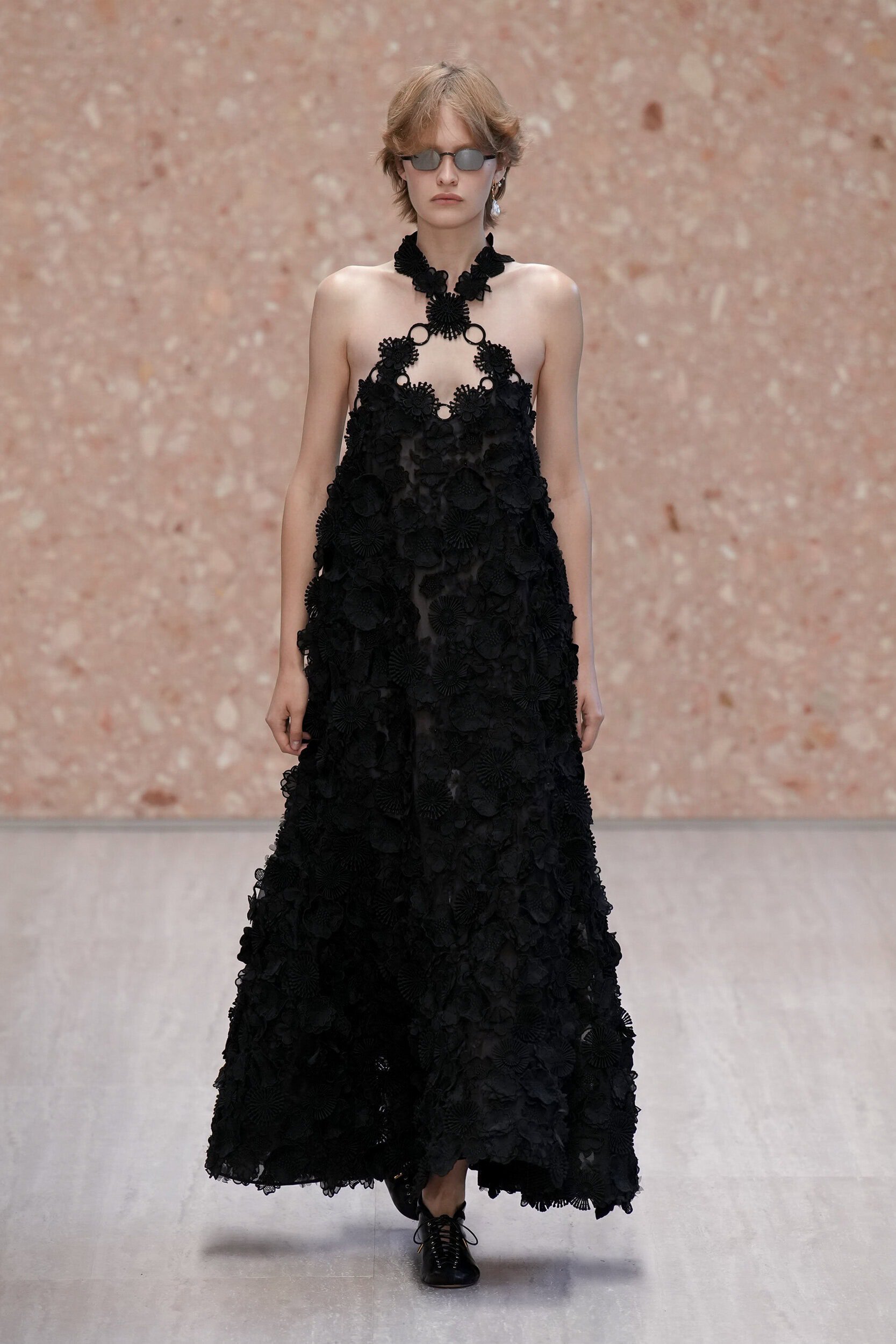
The same was true of the fringe and floral embroidery. Kamali’s interest in 1960s three-dimensional floral work gave the collection texture and tactility. Petals climbed across bodices, appliqués bloomed from swimsuits and knits, and lace tops sprouted into something between lingerie and garden architecture. At times, the effect was charming and emotionally specific. At others, the accumulation of fringe, lace, flowers, transparency, and scalloped edges became almost too literal an expression of obsession.
But that is also what made the collection compelling. It was not coolly edited into neutrality. It was romantic to the point of risk. Kamali seemed less interested in restraint than in resonance: what a neckline remembers, what a lace edge suggests, what a raincoat can hide, what a lingerie strap can reveal. The collection’s emotional charge came from that intimacy.
The strongest growth signal came through the tailoring. The black suit with a deep, scarf-framed neckline, the white tuxedo-like looks, the cream coat over pale shorts, and the cropped ivory jacket over lace all suggested a broader future for the house. Kamali referenced the archival 1972 “Noel” suit, and that felt important. It reminded us that Chloé’s femininity has never only been about softness. Women in men’s suiting are part of the maison’s history too.
That point feels crucial for Chloé’s next chapter. Kamali has successfully restored romance to the house. The challenge now is expansion. The brand does not need to become harder or colder, but it does need a fuller wardrobe: sharper tailoring, stronger daywear, more outerwear, more accessories with icon potential, and more entry points for women who want the Chloé feeling without the full ruffled dream.
THE WRAP UP
This season showed that Kamali understands this. The most persuasive looks were not always the most embellished. They were the ones where fantasy met function: lace with trousers, lingerie with suiting, broderie with clean white cotton, rainwear over flou. These combinations made Chloé feel not just beautiful, but usable.
Because of the surrounding speculation about Kamali’s future, the press release inevitably reads with extra weight. Lines about love enduring forever, returning to the things she loves, and the collection as an expression of Chloé’s “heart and soul” could easily be interpreted as valedictory. But it would be reductive to treat the show simply as a farewell. More interesting is to see it as a crystallization of what Kamali has done at Chloé: she has made the house emotionally legible again.
Her achievement is not reinvention in the aggressive sense. It is restoration with feeling. She has taken Chloé back to its core values: freedom, femininity, movement, youthfulness, and ease. But she has also given those values contemporary tension by placing them against utility, exposure, and structure.
The collection’s weakness is also its strength: it is almost too full of love. Every reference seems cherished. Every motif feels personal. That intimacy gives the work soul, but it can also blur the edit. Chloé will grow further if Kamali, or whoever carries this language forward, learns when to let one obsession speak at a time.
Still, Spring 2027 was a powerful statement of brand understanding. It showed why Kamali and Chloé have made such sense together. She does not treat the archive as content. She treats it as memory. And at its best, this collection made memory feel like clothing: soft, strange, protective, sensual, and alive.