The Belgian Artist Brings A Contemplative World To Delvaux’s Brussels Headquarters, Reflecting On Craftsmanship, Creativity, Human Connection, And The Enduring Value Of Making Things With Care
By Kenneth Richard
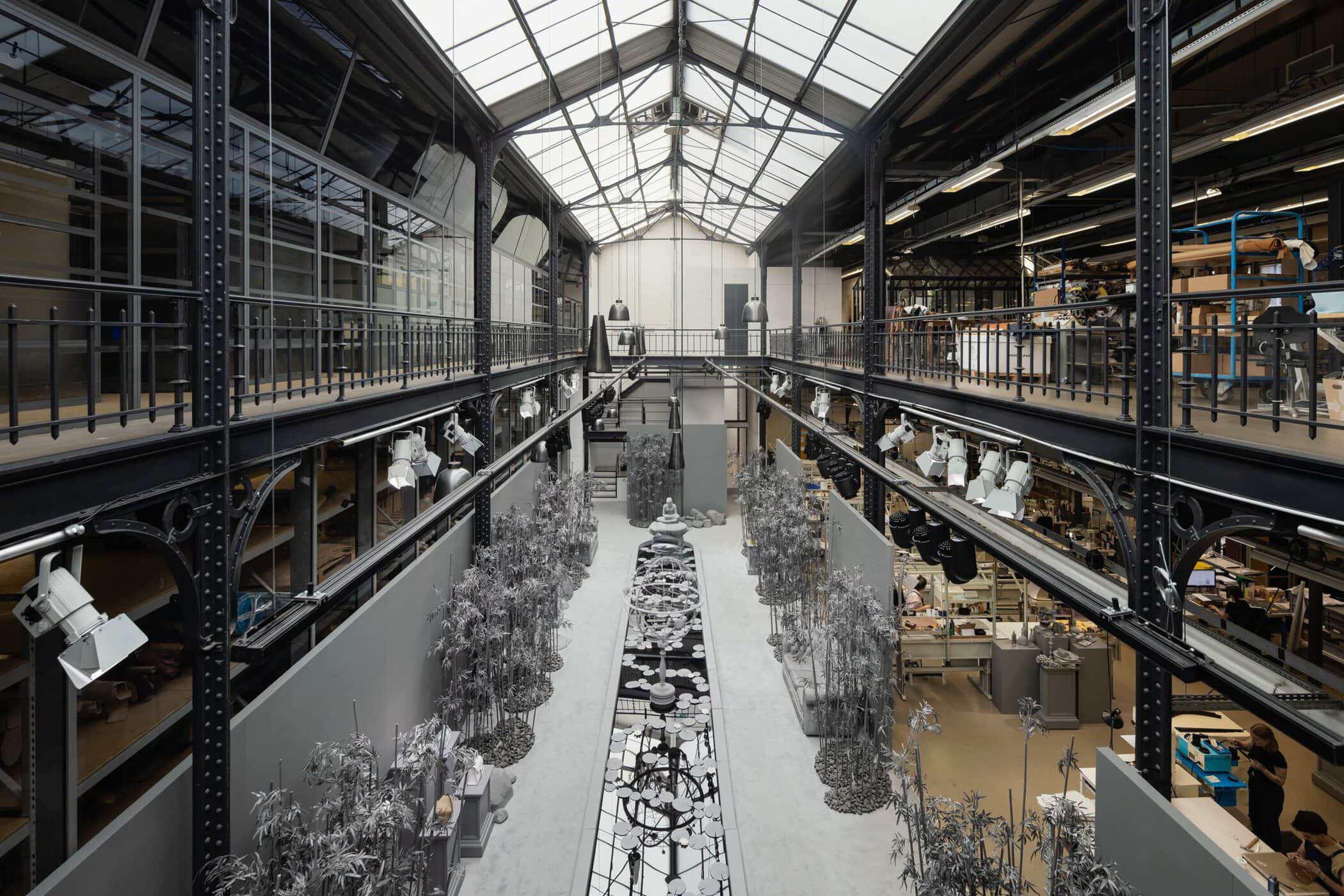
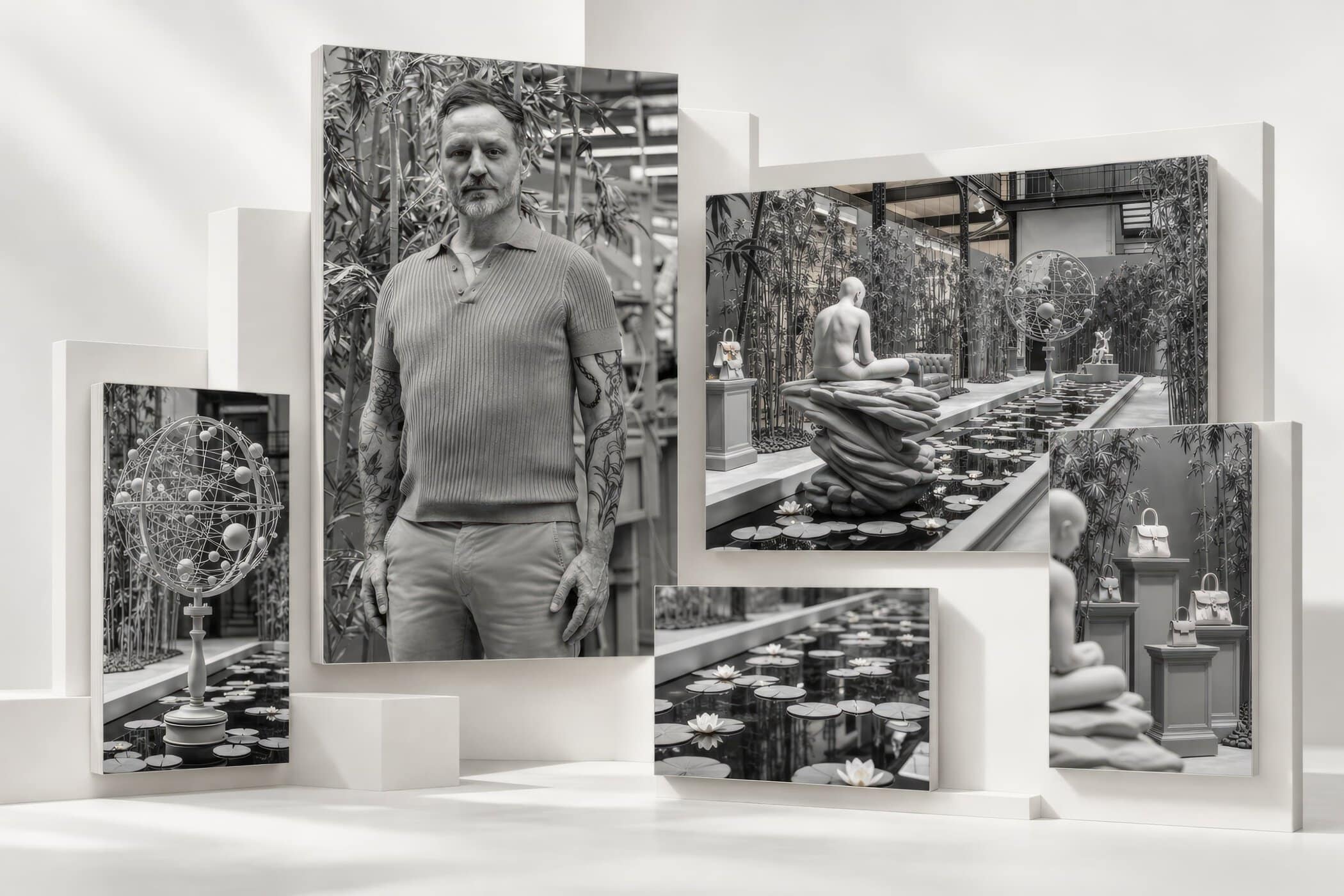
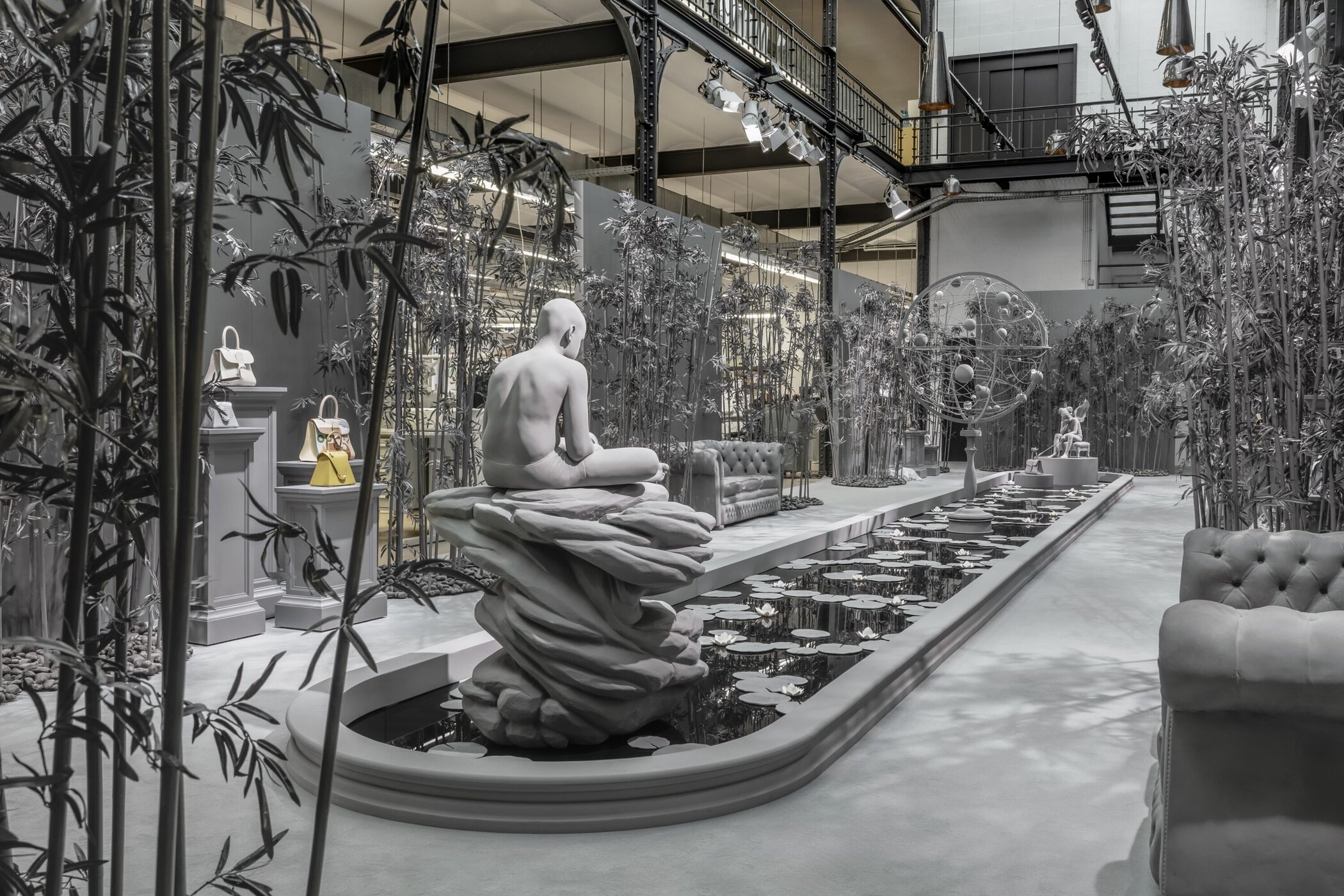
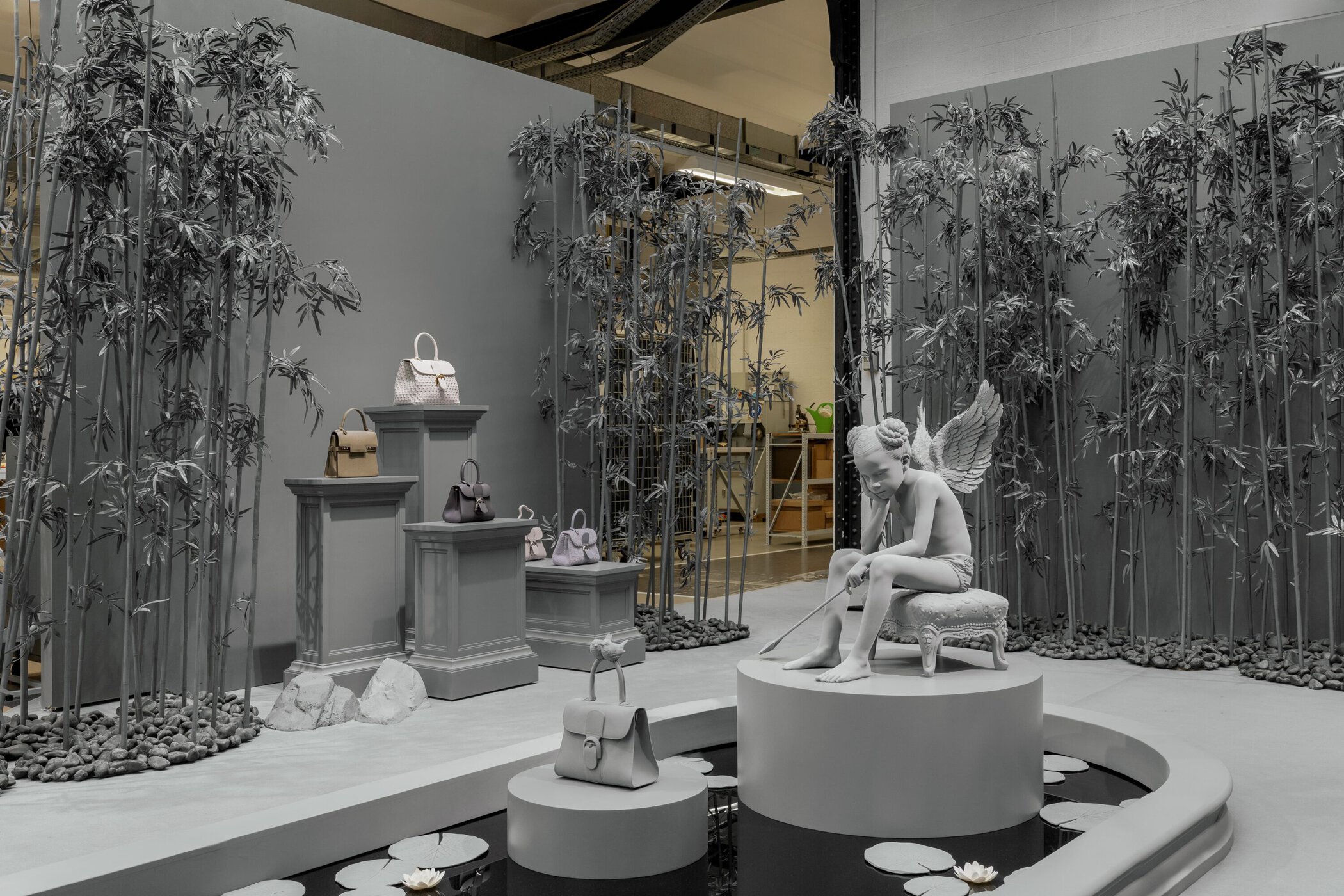
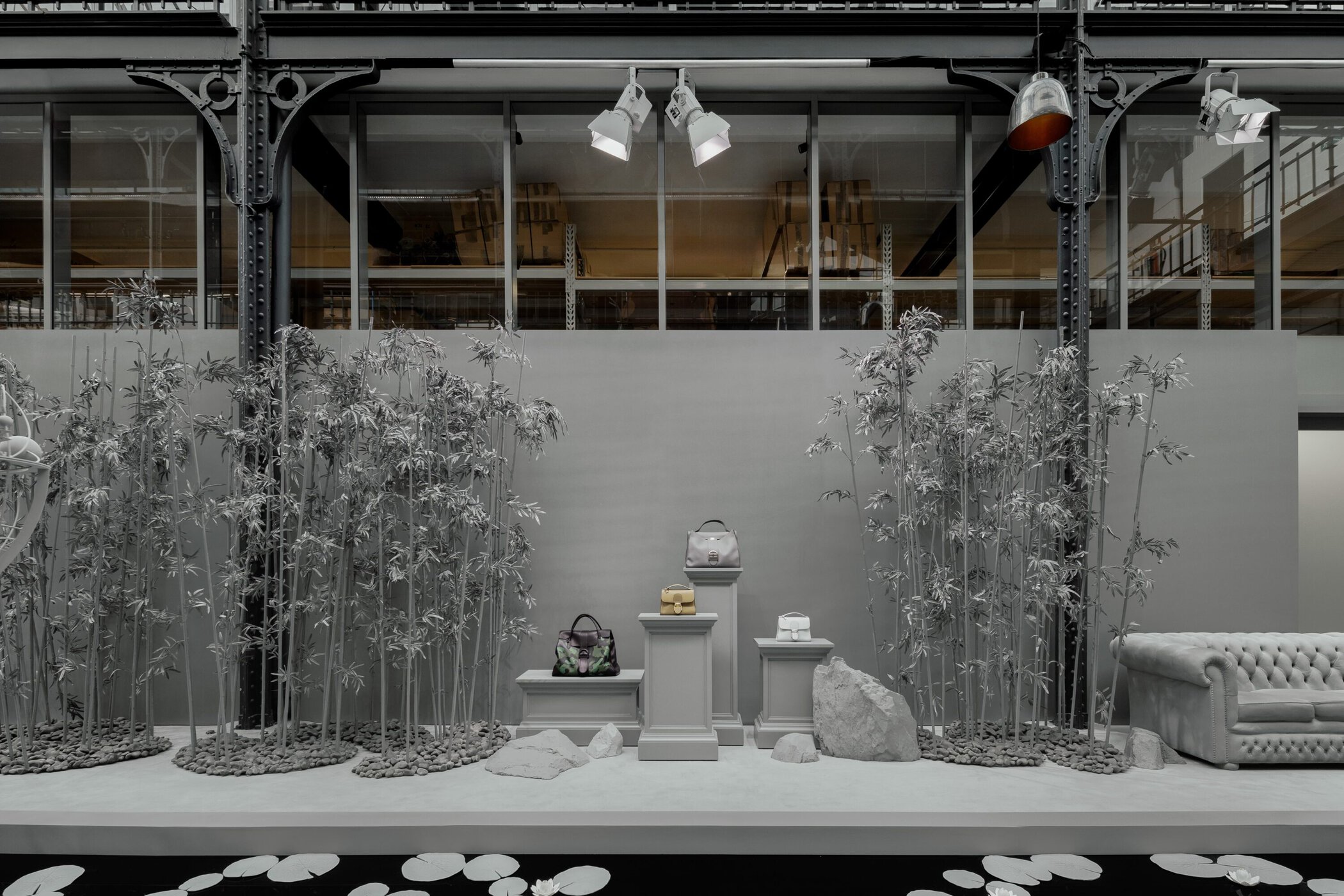
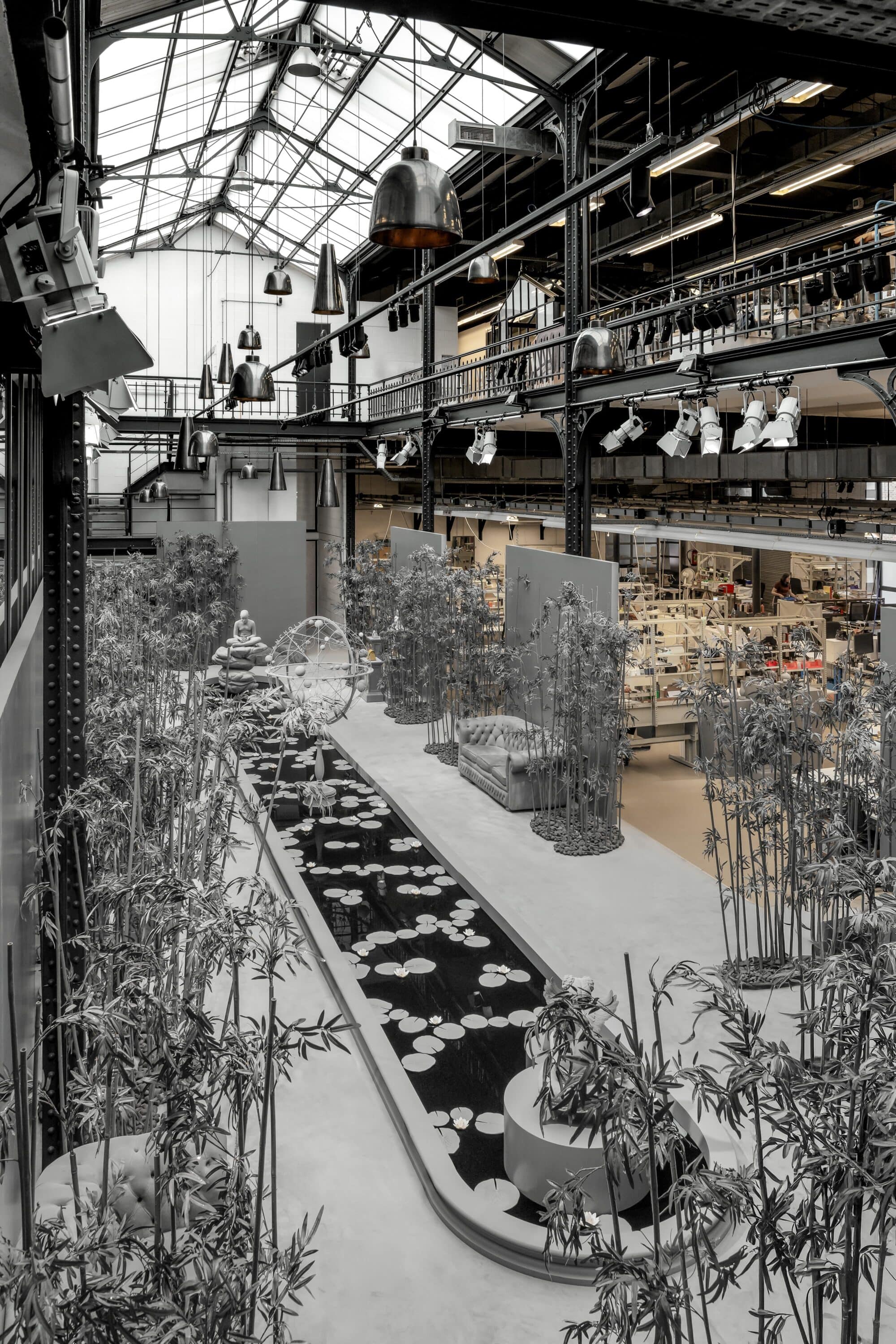
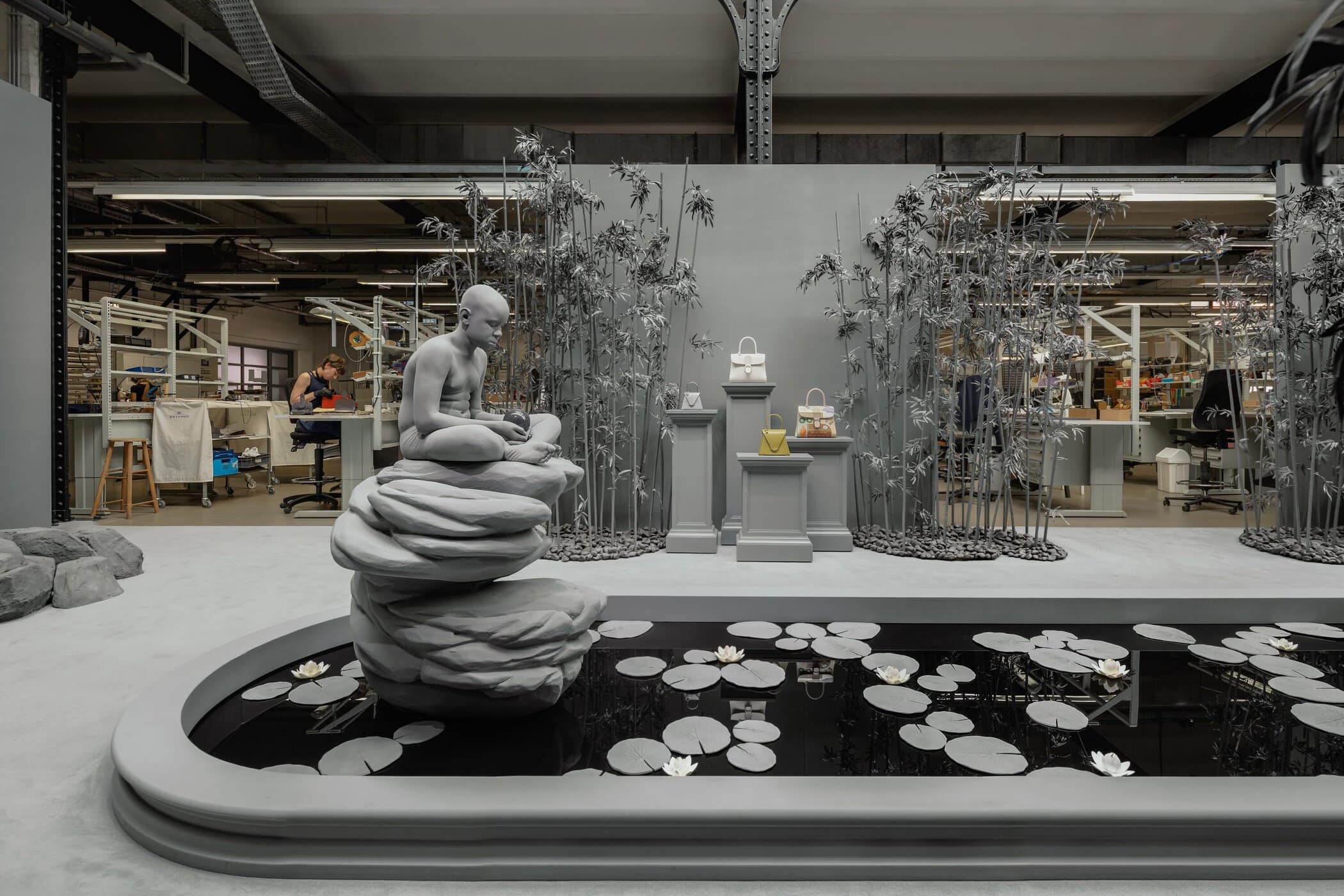
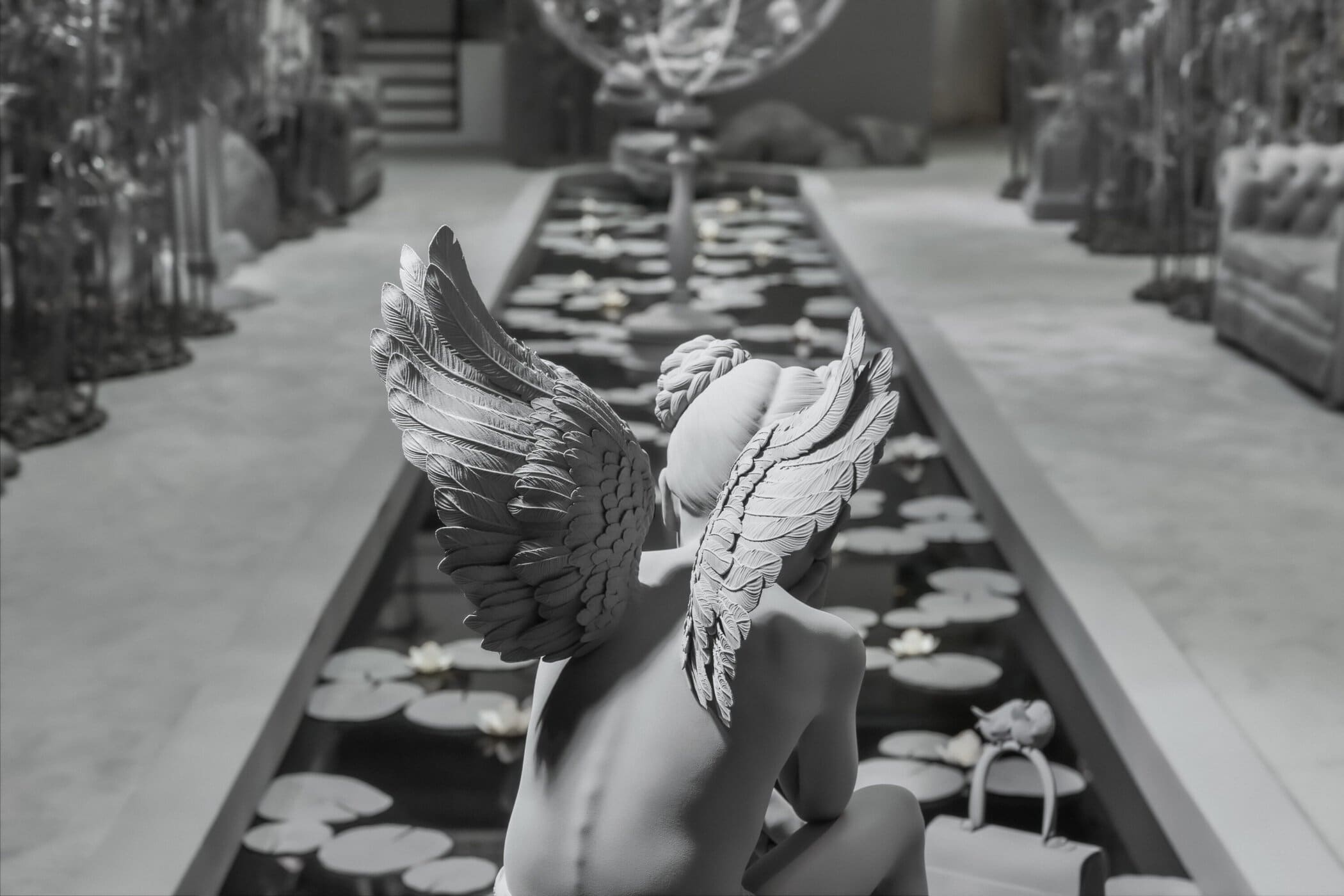
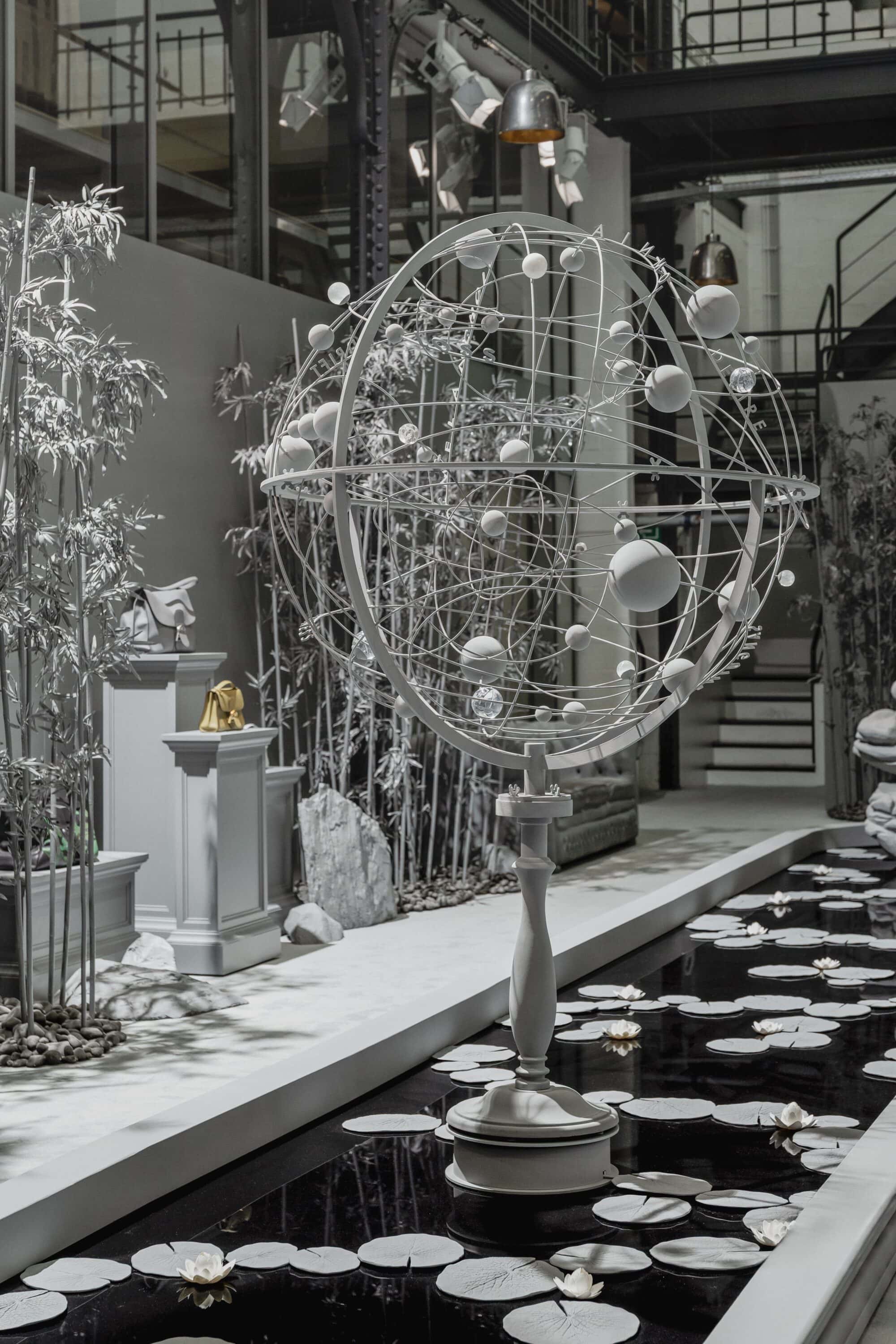
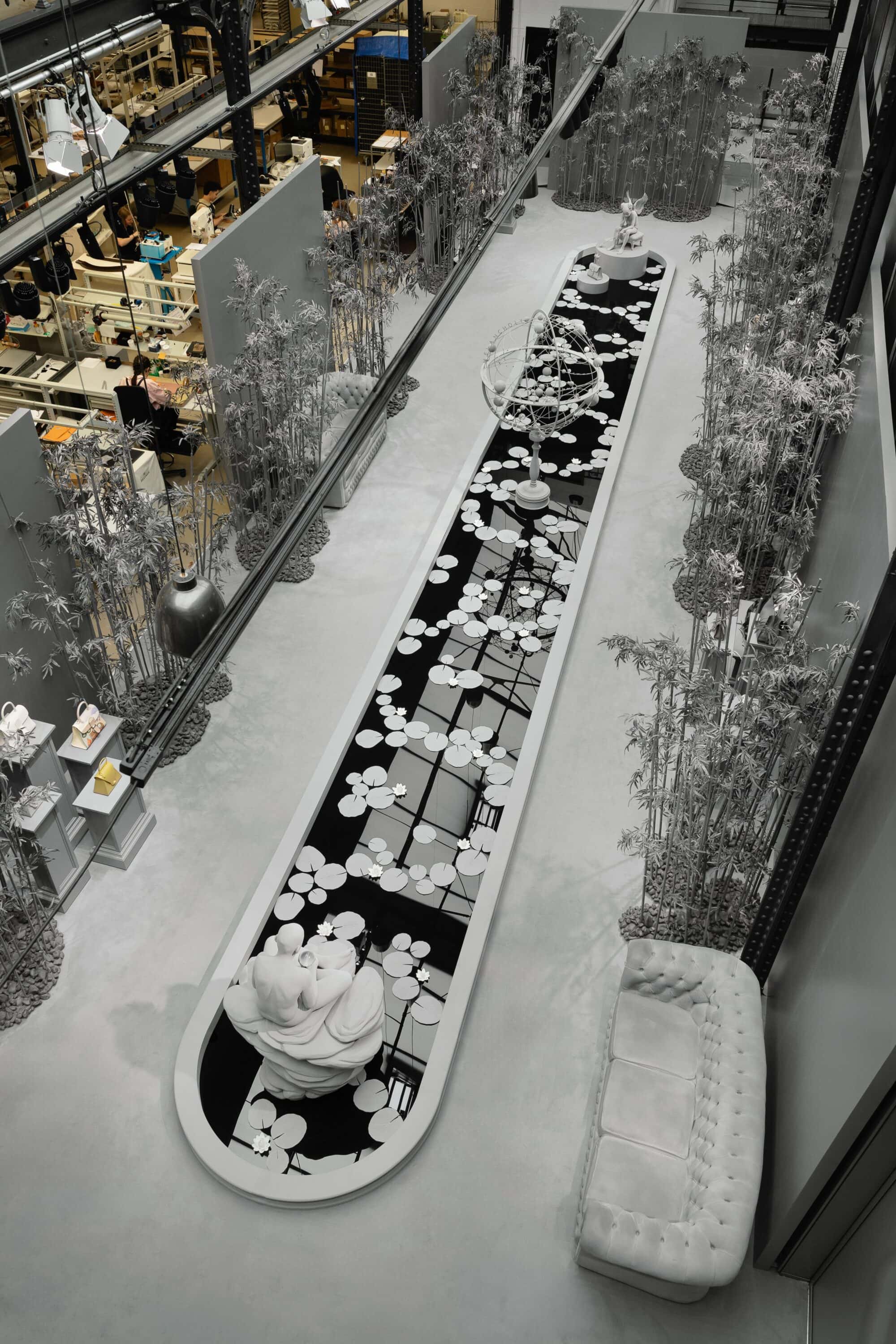
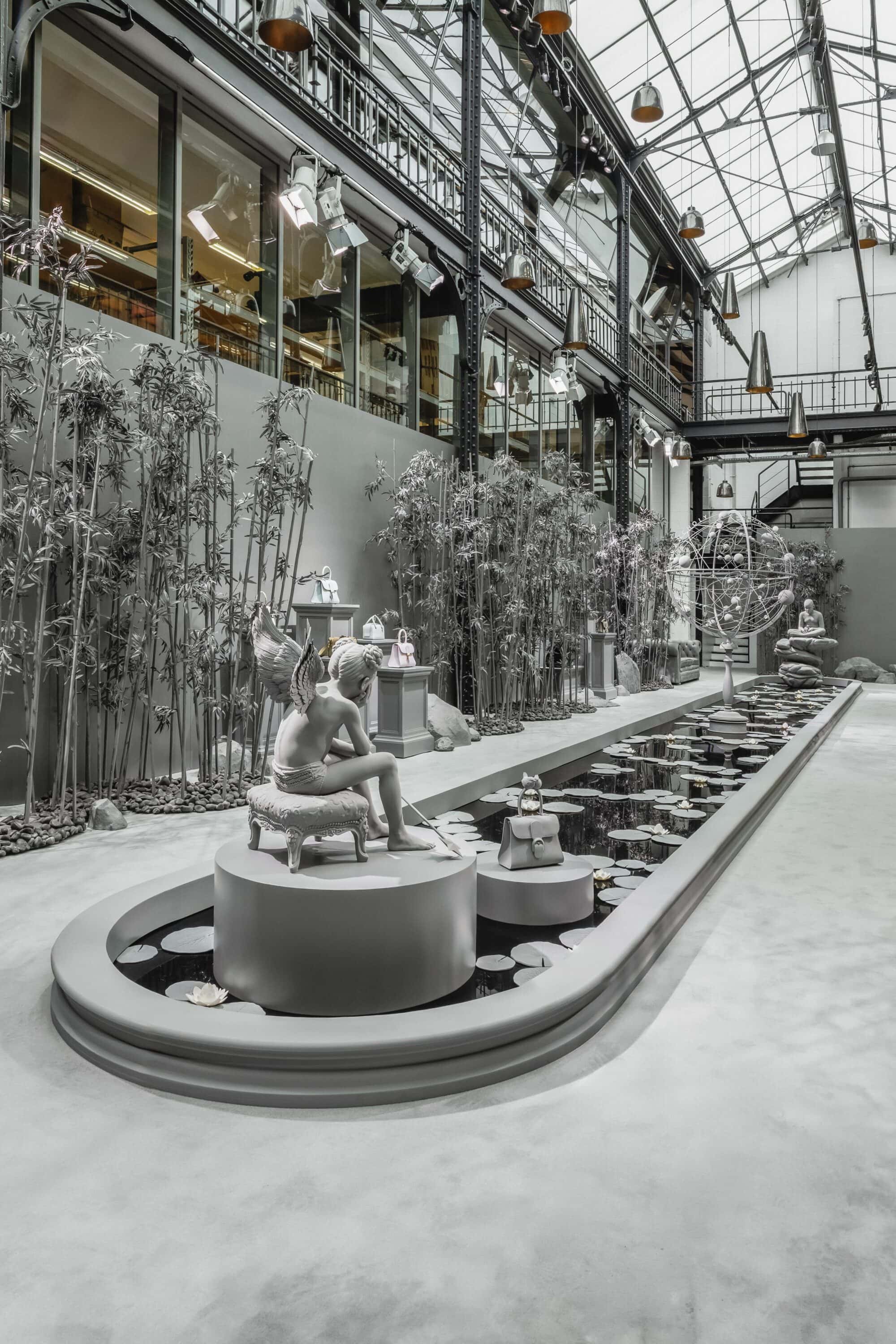
There is something quietly unexpected about placing a garden in the middle of a place where people work. At Delvaux’s historic Arsenal headquarters in Brussels, Belgian artist Hans Op de Beeck has created a monochromatic landscape that seems removed from the rhythms of the atelier surrounding it. Bamboo rises around a long, dark lily pond scattered with sculpted flowers. A celestial form occupies its center, while solitary children sit at either end, one serene and the other winged, caught somewhere between melancholy, boredom, and contemplation.
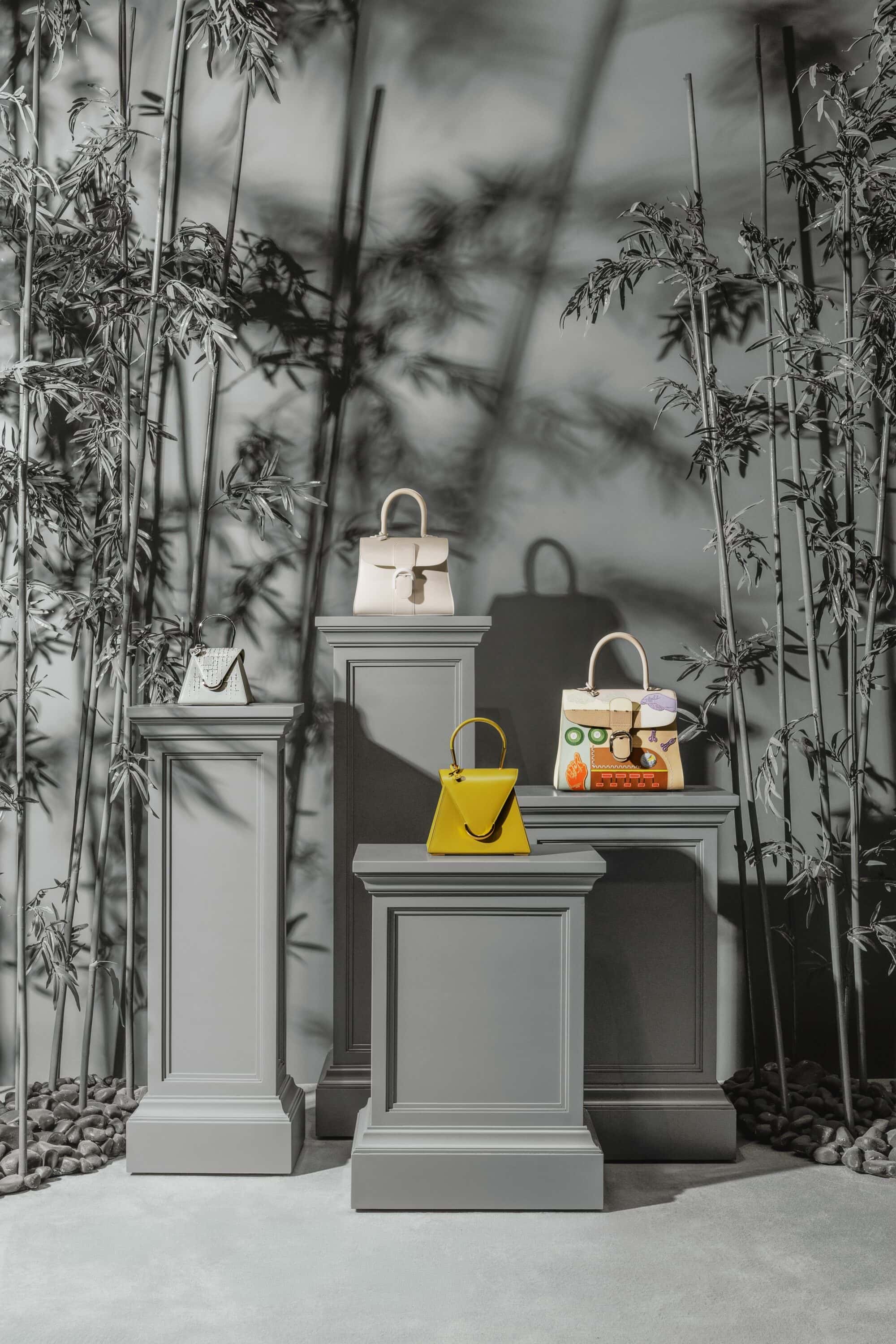
Throughout this almost entirely grey environment are Delvaux handbags, their occasional touches of color punctuating Op de Beeck’s carefully muted world. Among them is Le Brillant, the house’s architectural icon introduced in 1958, the same year Brussels hosted Expo 58 and unveiled the Atomium. Only steps away, Delvaux’s artisans continue the daily work of cutting, shaping, stitching, assembling, and finishing the house’s leather goods. The installation is not separated from that activity but placed directly within it, allowing the imagined world of the artist and the working world of the artisan to occupy the same space.
The setting offers an entry into a much larger conversation about what it means to make something with care, why beauty continues to have value, and how objects can become repositories for the lives lived around them. For Op de Beeck, the traditional separation between art and craft has never been particularly convincing.
“I don’t believe in the hierarchy between the visual arts, the autonomous arts, and crafts,” he says.
It is an idea that runs naturally through his collaboration with Delvaux. Op de Beeck recalls receiving an email asking whether he would be interested in meeting the house. The conversations that followed were “very open, very friendly, very humorous and low-key,” and he quickly recognized something familiar in the people he met.
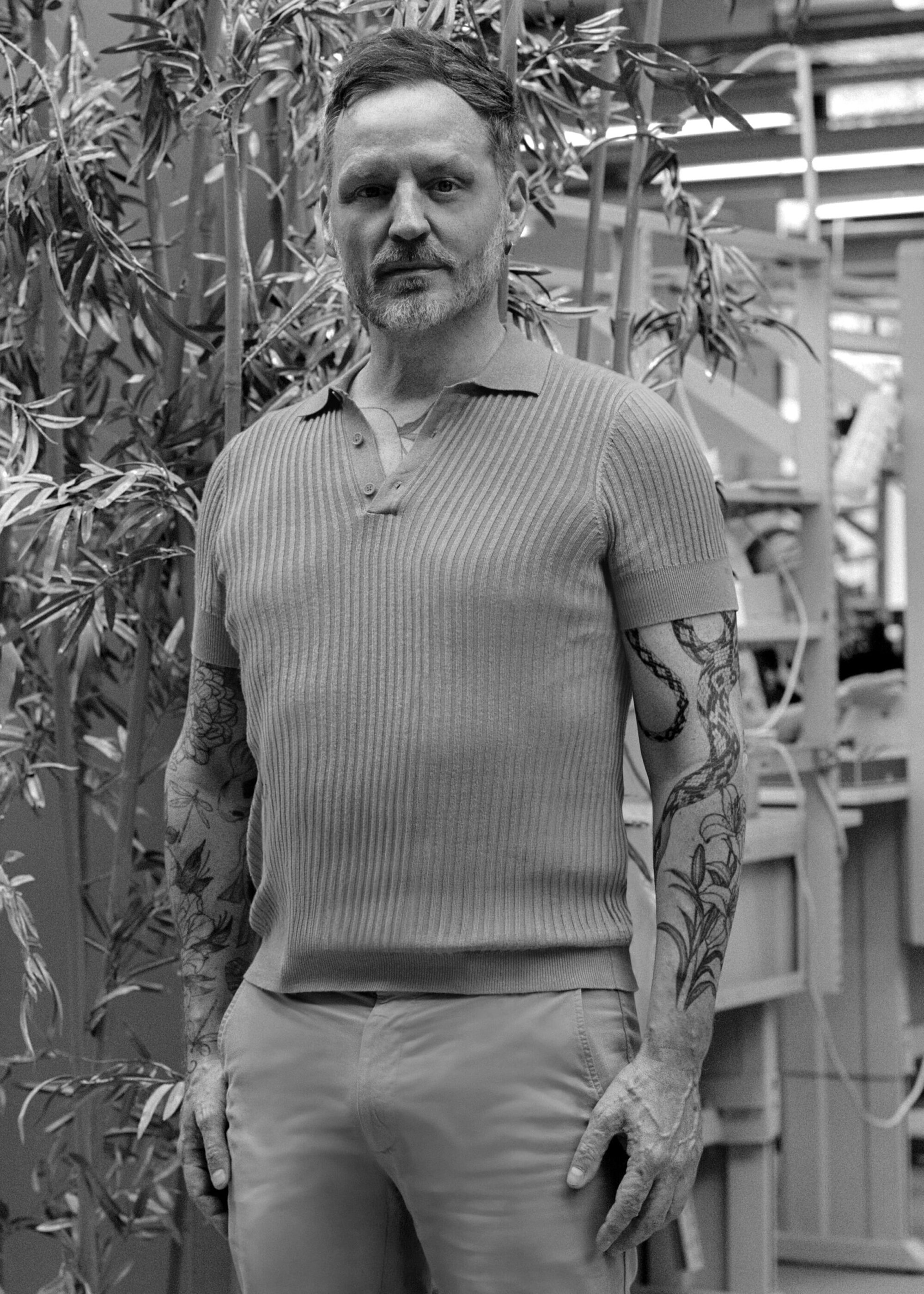
He had known Delvaux since adolescence, particularly Le Brillant. Growing up in Belgium also meant growing up within a culture he describes as relatively resistant to grandiosity. “We Belgians are not really chauvinists,” he says with characteristic understatement, describing a national tendency toward self-deprecation and humor rather than overt displays of pride.
At Delvaux, he encountered a similar temperament alongside values that already informed his own work. “Old-fashioned notions such as elegance and refinement are very important in my work,” he says. “I felt that there was something that we shared.”
The connection deepened as Op de Beeck explored Delvaux’s history and craftsmanship. He speaks admiringly of the intelligence contained within the house’s archive and of the concentration required to make its objects, returning in particular to the handbag he had known since he was young.
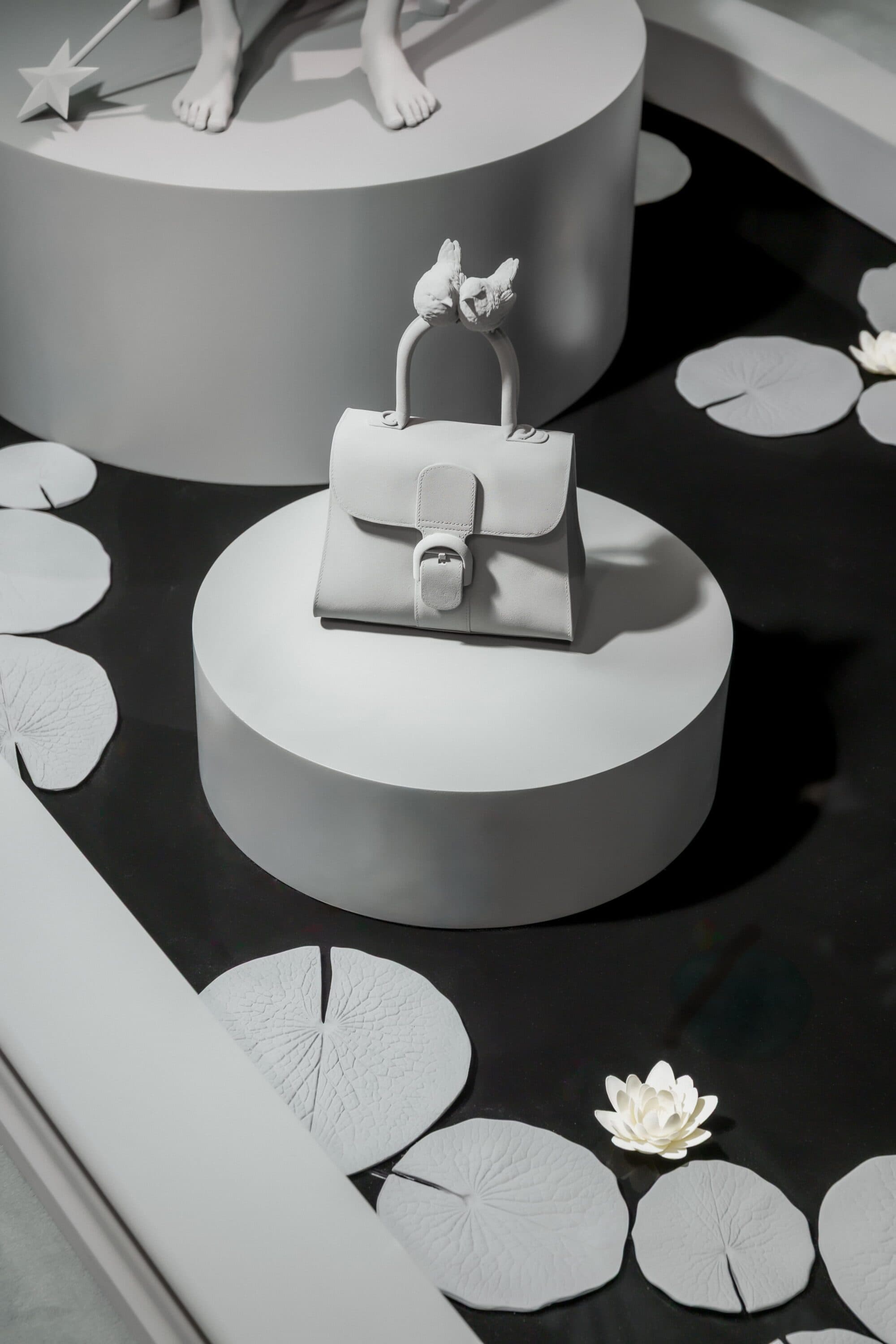
For me, Le Brillant is like a masterpiece. It is architectural. It is an iconic thing.
Introduced in 1958, Le Brillant has endured precisely because its identity is so clear. Its structured silhouette and distinctive horseshoe-shaped buckle have remained recognizable through decades of reinterpretation, and for Op de Beeck its value resides as much in the thought and workmanship behind the object as in the category to which it belongs.
His way of speaking about craftsmanship is strikingly human. Rather than measuring it only through hours of labor, rarity of materials, or complexity of technique, he repeatedly returns to the idea of attention: the finite amount of ourselves that we choose to give to making something well.
“In this ridiculously short life that we have, one can make a tiny little difference in it by doing things with dedication,” he says.
Op de Beeck extends that idea far beyond the artist’s studio or the leather-working table. Dedication can be found in telling a child a bedtime story, arranging flowers, preparing a meal, parenting, teaching, or creating something another person will eventually encounter. The scale of the gesture is less important to him than the care invested in it.
As a father of four, he also thinks about what happens to the things people make and own as they travel through time. He has seen collectors pass his watercolors and sculptures to their children, allowing an artwork to become part of a family history that extends beyond its original acquisition. He recognizes the same possibility in a beautifully made handbag.
When objects are made with great attention and dedication, even modest objects like bags can become exceptional objects that carry memories.
It offers a compelling perspective on luxury at a moment when fashion is so often organized around the arrival of the next thing. An enduring object follows another trajectory. It becomes marked by use, association, inheritance, and memory, gathering a history its maker could never completely anticipate.
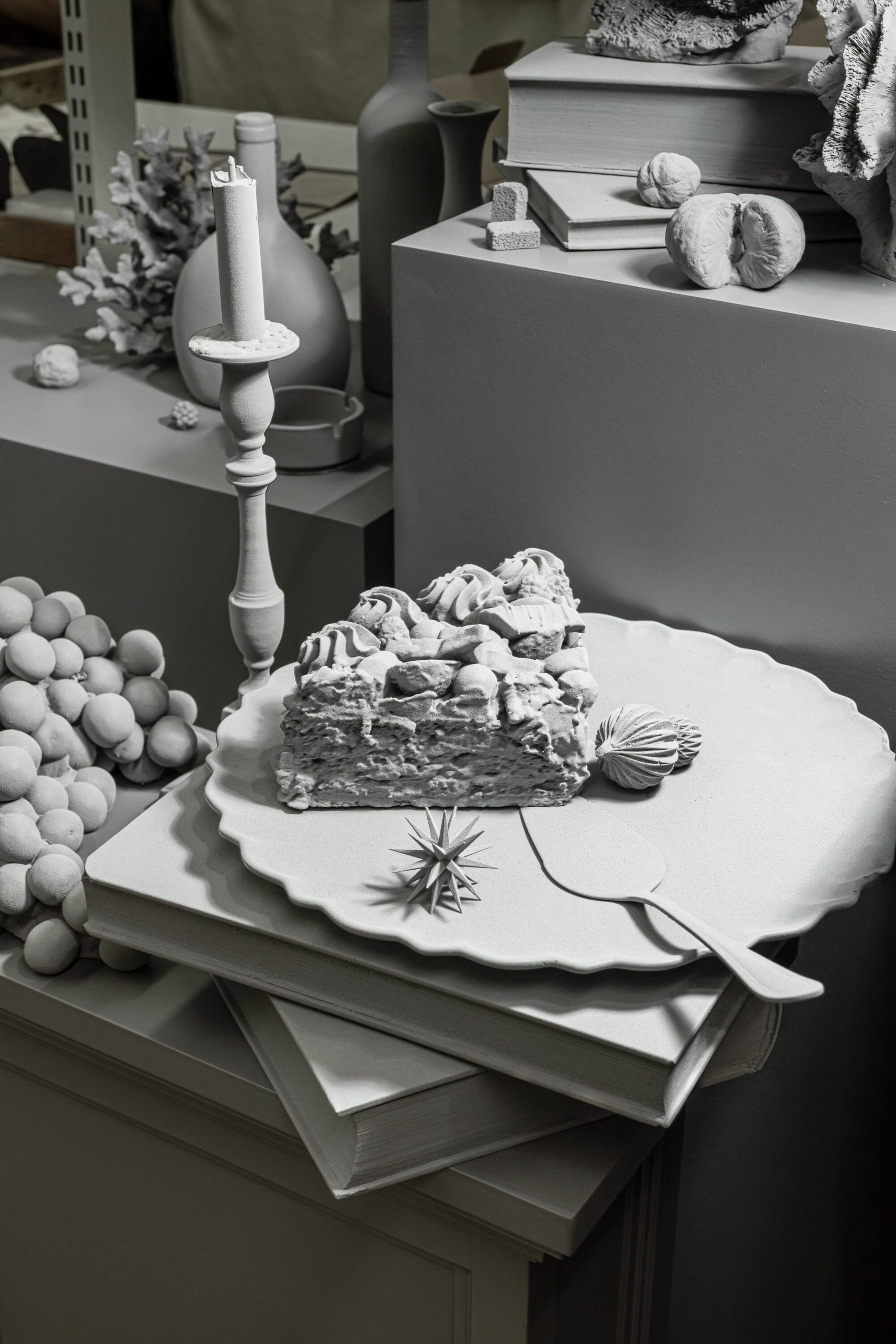
Op de Beeck’s installation gives physical form to many of those ideas. His largely monochromatic environments strip away the distraction of color, heightening awareness of surface, proportion, light, and shadow. At Delvaux, the effect creates an intriguing exchange with the house’s leather goods. A yellow, blush, green, or natural-toned handbag suddenly appears remarkably vivid against the surrounding grey, while a monochromatic interpretation of Le Brillant seems to cross almost imperceptibly from fashion object into Op de Beeck’s sculptural world.
At one end of the pond sits a young boy holding a glass sphere, seemingly absorbed in a state of complete serenity. At the other is a small winged girl, her chin resting in her hand, considerably less content with the stillness around her. Op de Beeck connects her to the contemplative figure in Albrecht Dürer’s Melencolia I, in which thought itself seems to have become a form of suspension.
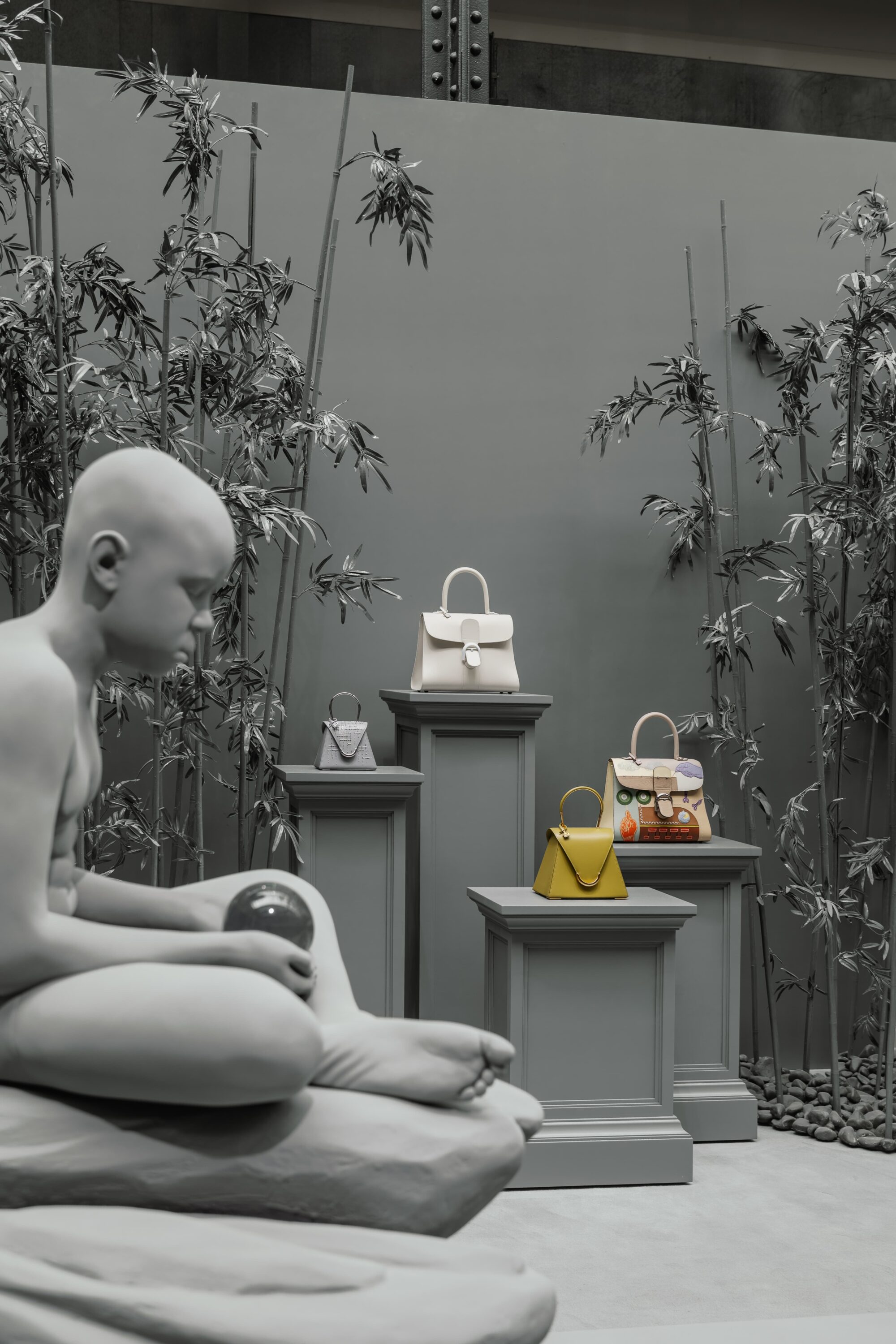
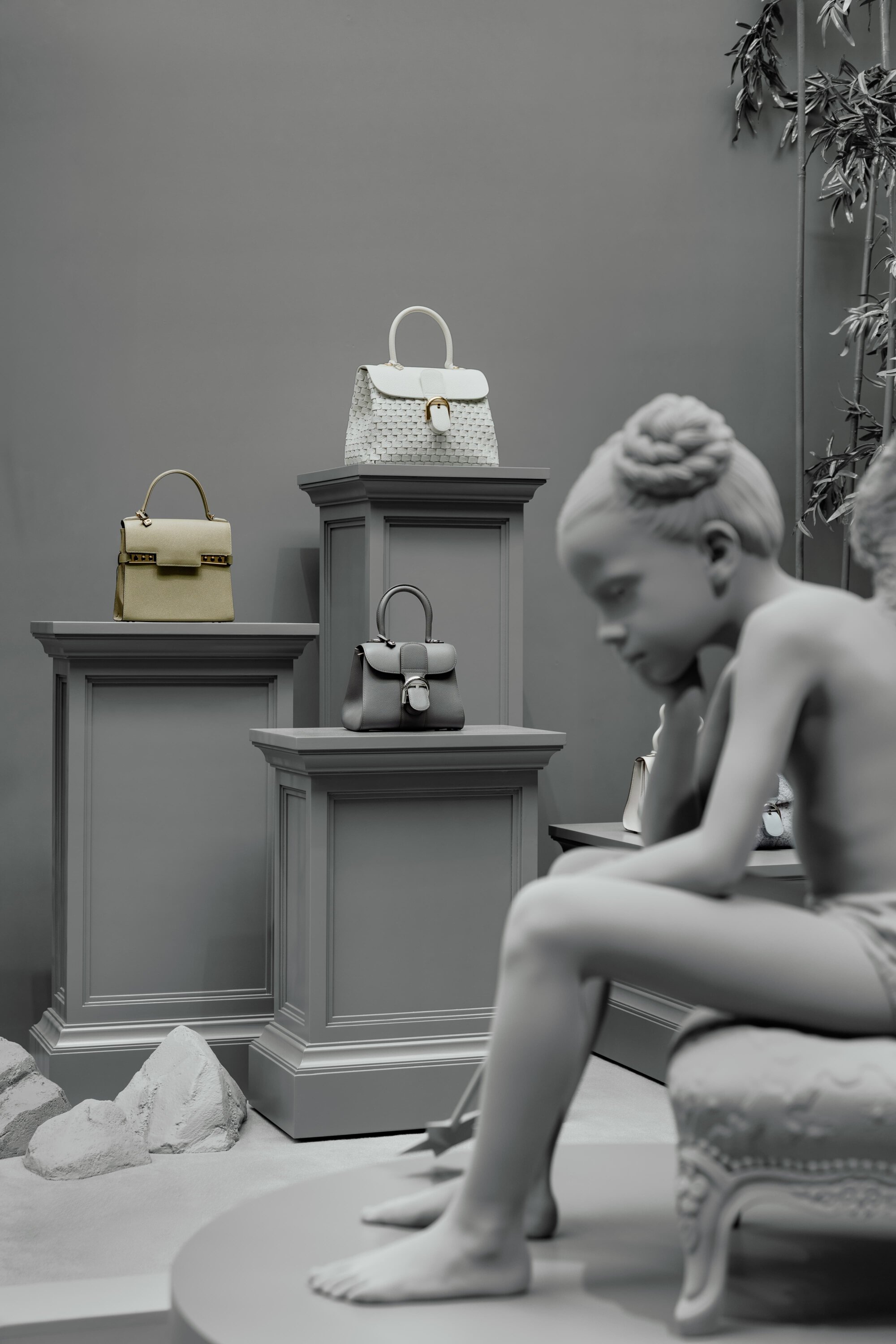
The two children embody different experiences of quiet. One has settled peacefully into it; the other appears caught within it. Op de Beeck describes his work as neither optimistic nor pessimistic but “tragicomic,” allowing sorrow, humor, beauty, and absurdity to coexist. He is interested in the finite nature of life without treating that awareness as an argument for despair. Instead, the knowledge that experiences end seems to intensify their value.
The decision to place such an ambitious installation inside Delvaux’s headquarters rather than a public-facing flagship reveals another dimension of Op de Beeck’s thinking. He is drawn to the possibility of placing art in environments where it can reach people outside the traditional cultural context.
Given the opportunity to create another permanent installation, he says he would love to make one for a hospital: a serene space intended not primarily for collectors or museum visitors but for nurses, doctors, patients, and families. A hospital, in his description, becomes a concentrated portrait of human existence, with children being born in one part of a building while people die in another and countless experiences of suffering, healing, anxiety, care, and hope unfolding between them.
“I think to insert art into a workspace, or into an environment which is not a cultural environment as such, can be extremely valuable if it works,” he says.
At Delvaux, the artisans who encounter the installation each day become part of its audience. People moving through the Arsenal can walk alongside the pond, sit within the environment, or simply catch a glimpse of it between one task and another. Op de Beeck compares the sensation he hopes to create to sitting before the sea and watching waves repeatedly arrive and disappear, or staring into a fire as flames continually change shape. For a moment, the awareness of oneself can recede and time can feel less insistent.
His belief in the ability of art to create such experiences is rooted less in art-world theory than in human connection. He speaks of a recent exhibition at the Royal Museum of Fine Arts Antwerp that attracted an unusually broad audience, including people who rarely visit museums and some who returned two or three times. He sees no reason art must be loud to reach people; authentic enthusiasm can move quietly from one person to another.
When one is receptive to beauty, when one is receptive to the arts, one can live a more profound life.
For Op de Beeck, beauty is not a means of ignoring the difficult realities of the world. His work acknowledges melancholy, mortality, conflict, and the vulnerability of human life while maintaining a belief in the capacity of creativity to offer something in response. He describes art at its best as “an arm around your shoulder,” a form of solace, healing, and sharing. Music can bring thousands of strangers together; literature can allow someone to identify with a person whose life is completely different from their own; an object made carefully by hand can outlive its original owner and acquire meaning for another generation.
His decision to work with Delvaux grew from that understanding rather than from a desire to enter fashion. Op de Beeck says other brands had approached him in the past but the circumstances never felt quite right. Throughout a 25-year career, he says, he has tried not to make such decisions strategically. He follows instinct and welcomes opportunities that take him outside familiar territory when they feel genuine. With Delvaux, he says, the connection felt almost immediately self-evident.
That approach has led him well beyond conventional visual-art practice. He has written and directed theater, worked in opera, created scenography, and continues to move between disciplines without worrying greatly about the boundaries separating them. He chose a creative life, he explains, partly because it continually pulls him out of his comfort zone.
“The core of what I do is creativity,” he says. “It’s not the arts. It’s not the art scene. It’s creating something that hasn’t been there before, and by doing so, bringing people together.”
His family has grown up around that constant process of making. His children have spent summers working alongside him on sculptures and installations, although each has pursued an independent direction. His eldest recently graduated in civil engineering and architecture, another studies computer science, and his daughter studies psychology. What he hopes to have passed to them is less a profession than a creative attitude toward life and, perhaps more importantly, empathy.
He recalls a small exchange with his eldest son after his graduation. “I’m so proud of you,” Op de Beeck told him. His son answered, “Dad, I’m so proud of you.” For an artist accustomed to exhibitions, institutions, collectors, and public recognition, the exchange carries a more intimate form of affirmation. Op de Beeck readily acknowledges that even people who have achieved success need the appreciation of those closest to them. It returns his thinking to the same intimate scale as the bedtime story, the carefully prepared meal, or the object made by hand: small expressions of attention that accumulate into a life.
Op de Beeck continues to have a remarkably full creative one. His forthcoming projects move among sculpture, installation, theater, and opera, including work for Louvre-Lens in France and scenography for Stravinsky’s Oedipus Rexand Le Rossignol in Berlin. He works with a small team and describes himself as happiest not when things become quiet, but when there is much to make, install, write, and communicate.
That temperament creates a beautiful tension with the world he has made for Delvaux. An artist who finds his own sense of calm through constant creation has constructed a place of stillness inside a house where people spend their days making things. The lily pond, bamboo, celestial forms, contemplative children, and handbags occupy the same environment as the craftspeople whose work continues around them. Rather than separating art from life, the installation allows the two to move alongside one another.
The optimism within Op de Beeck’s work does not come from pretending that life is without uncertainty, sorrow, or brevity. It comes from his belief in attention as a response to those realities: attention to another person, to an idea, to a material, to an object, to a piece of music, to a story, or simply to a moment of quiet. Delvaux, a house whose history has been built around objects intended to endure, gives that philosophy an unusually fitting home.
Op de Beeck’s garden may be rendered almost entirely in grey, but the outlook behind it is anything but. At its heart is a simple and hopeful proposition: making something with care remains one of the most meaningful gestures available to us, because every act of creation carries within it the possibility that another person, now or long into the future, will encounter it, feel something, and carry part of it forward.