Artful Company
Review of Dior Cruise 2027 Ad Campaign by Photographer Sam Rock, featuring Jennifer Lawrence, Greta Lee, Taylor Russell, and Drew Starkey
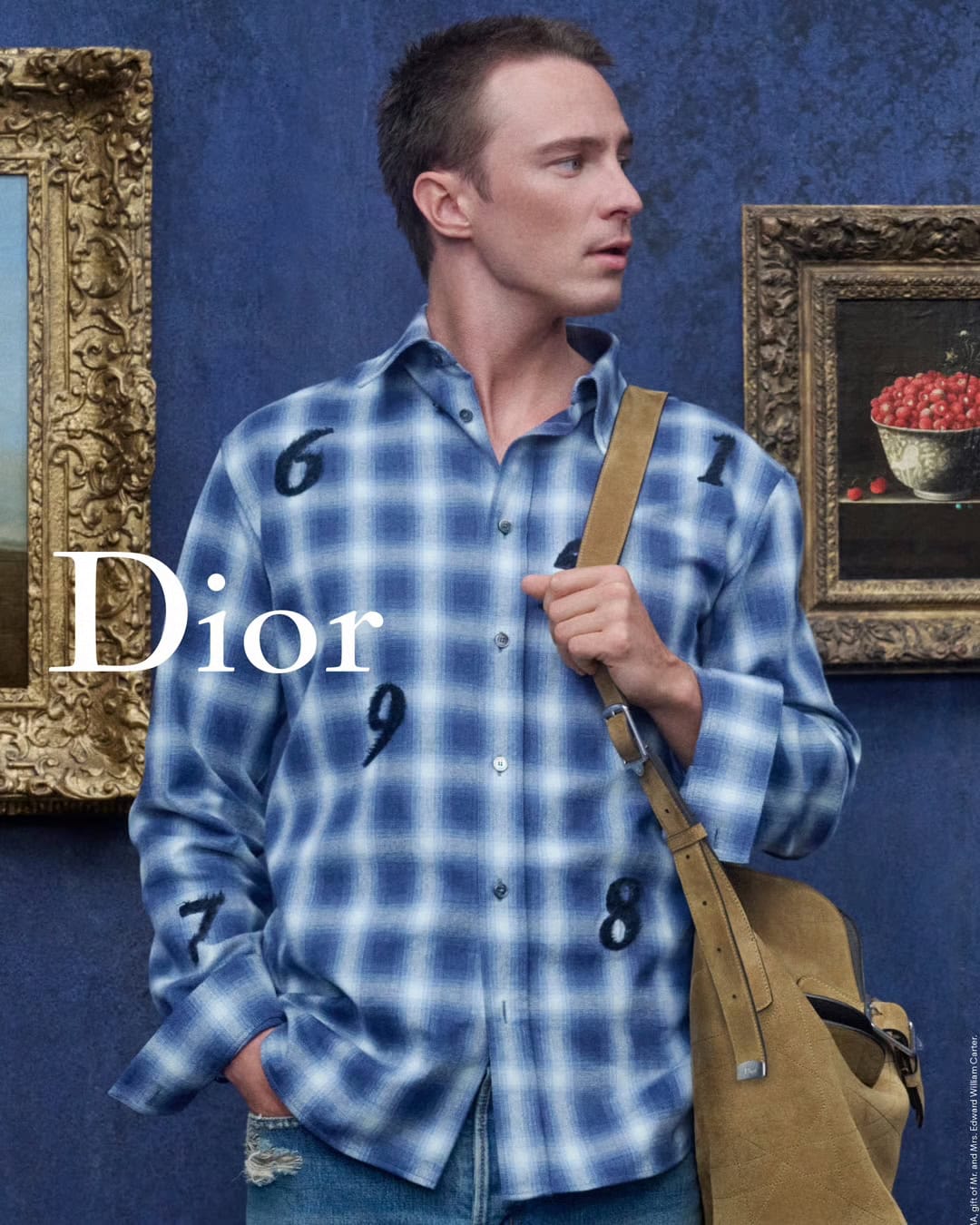
A museum visit offers several pleasures: the pictures, the company, and the possibility of having dressed particularly well for the afternoon. Dior’s Cruise 2027 campaign enjoys all three. Photographed by Sam Rock at the Los Angeles County Museum of Art, Jennifer Lawrence, Greta Lee, Taylor Russell, and Drew Starkey inhabit a world in which looking at paintings and choosing what to wear seem to belong to the same conversation. For Jonathan Anderson, that association carries growing significance. He is giving his artistic interests a social life.
The return to LACMA is an important part of the proposition. Having presented the Cruise collection at the museum, Anderson brings its clothes back into dialogue with the institution, carrying a cultural setting from the runway into the campaign. The show’s encounter between Dior, Los Angeles, and Hollywood gains a more intimate scale here. Within the galleries, the collection acquires imagined occasions, exchanges, and personalities. We begin to see how this particular Dior might be lived.
That continuity becomes more compelling when considered alongside Anderson’s couture work. For Spring 2026, Magdalene Odundo’s ceramics informed sculptural silhouettes, bringing the relationship between vessel and body into the construction of clothing. His Fall 2026 couture collection engaged with Lynda Benglis through material, volume, and the transformation of surfaces into three-dimensional forms. Across those collections, art provided ways of thinking and making. The Cruise campaign extends that engagement into the public world of taste, curiosity, and cultural participation.
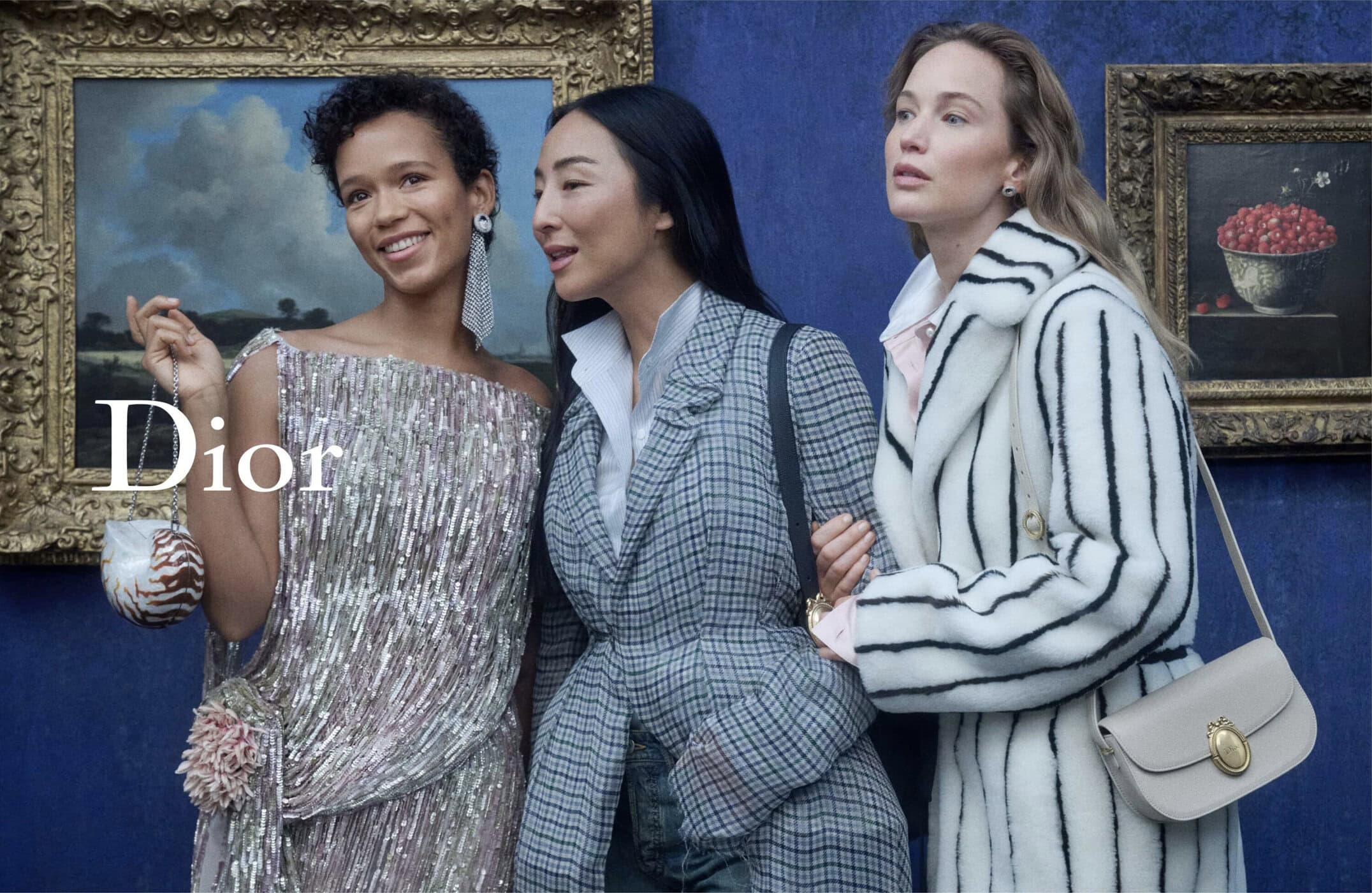
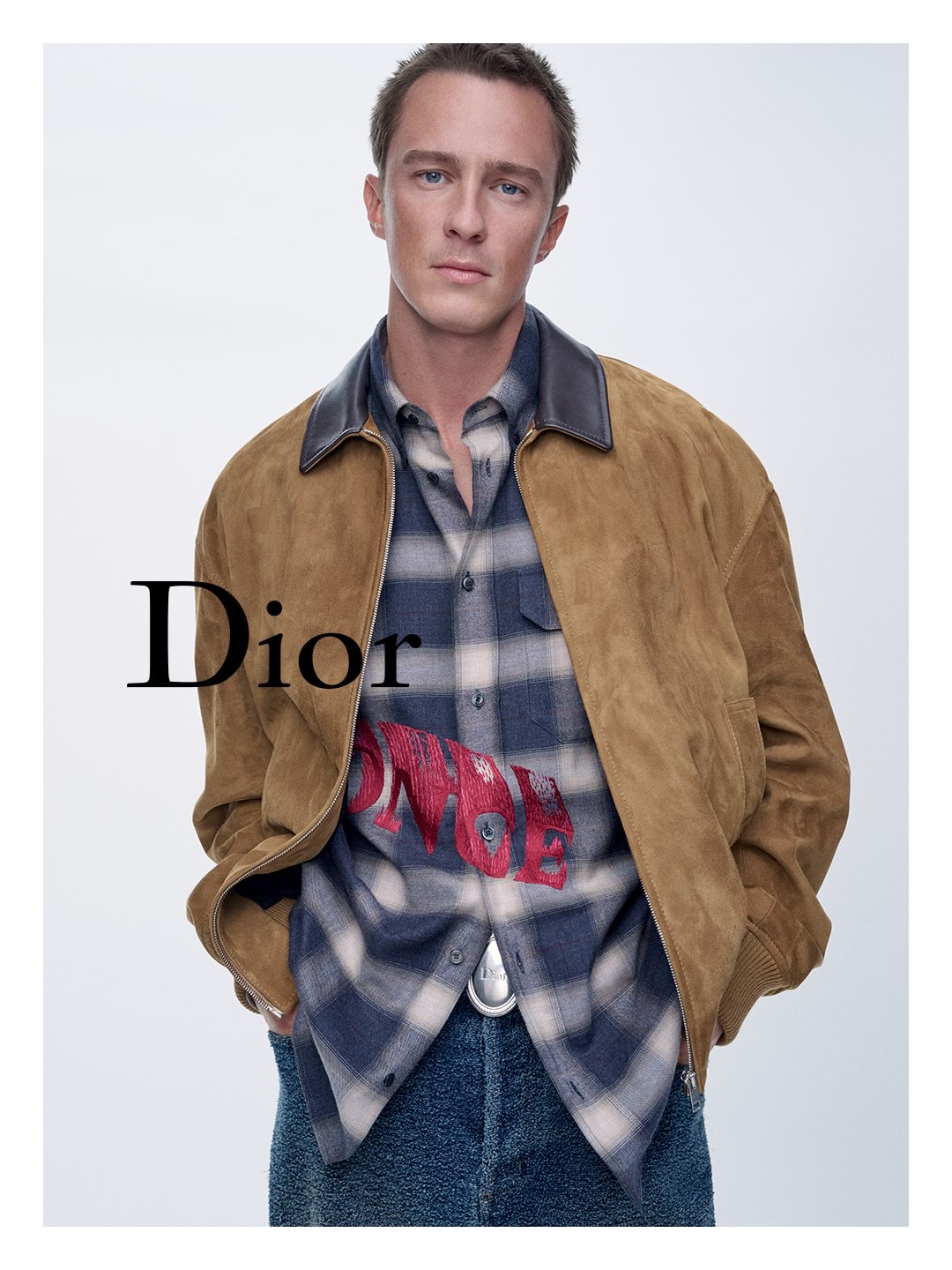
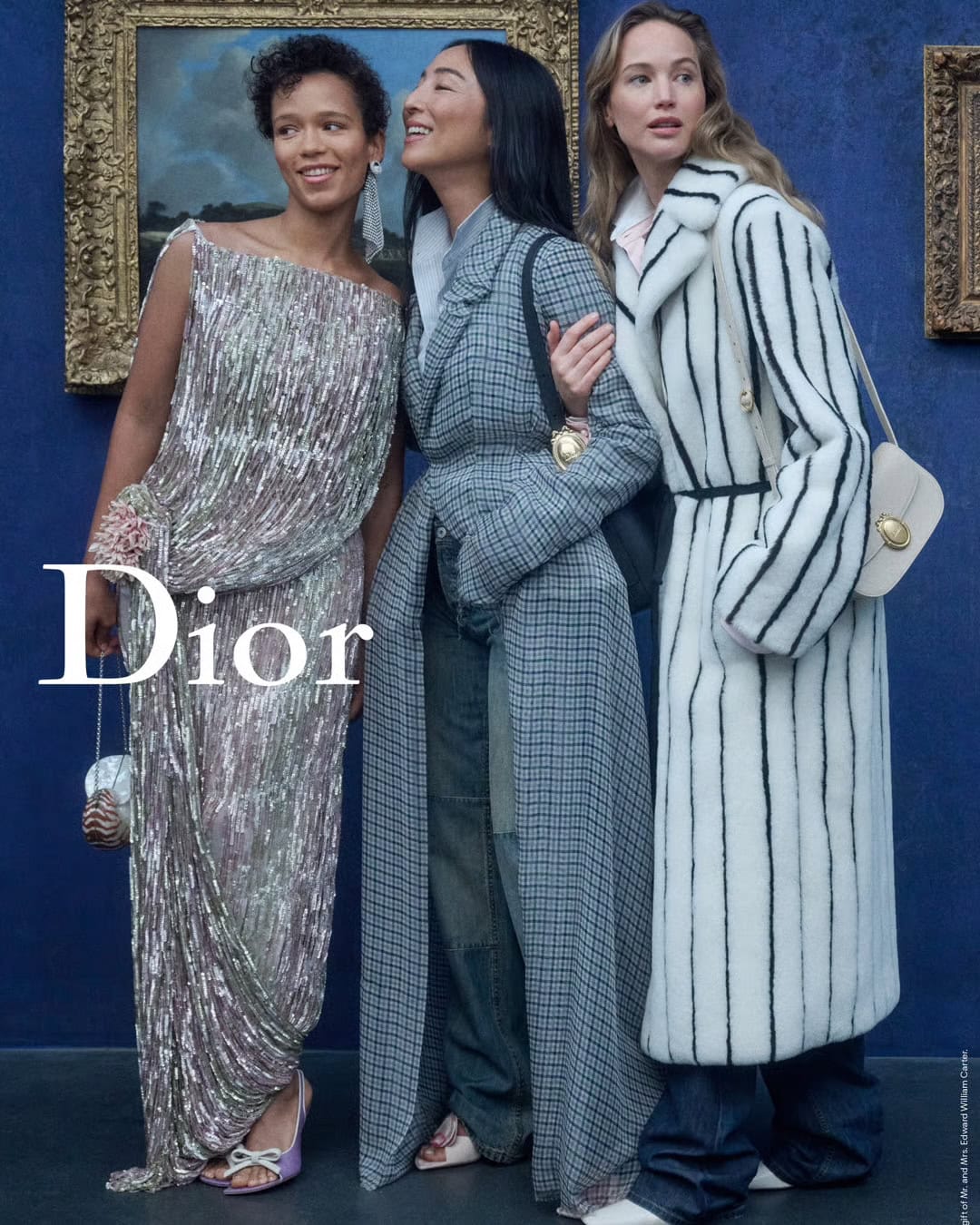
Rock’s photographs make the invitation easy to understand. Against deep blue gallery walls and substantial gilded frames, a shimmering silver dress, a gray checked suit, and a boldly striped coat establish three distinct attitudes toward dressing. The open shirt and hands tucked into pockets give the tailoring an appealing informality. The dress brings a sense of occasion. The coat supplies a graphic flourish. Together, they suggest a shared world with room for individual preferences, an important quality for a house whose expanding vocabulary needs to feel coherent across different personalities.
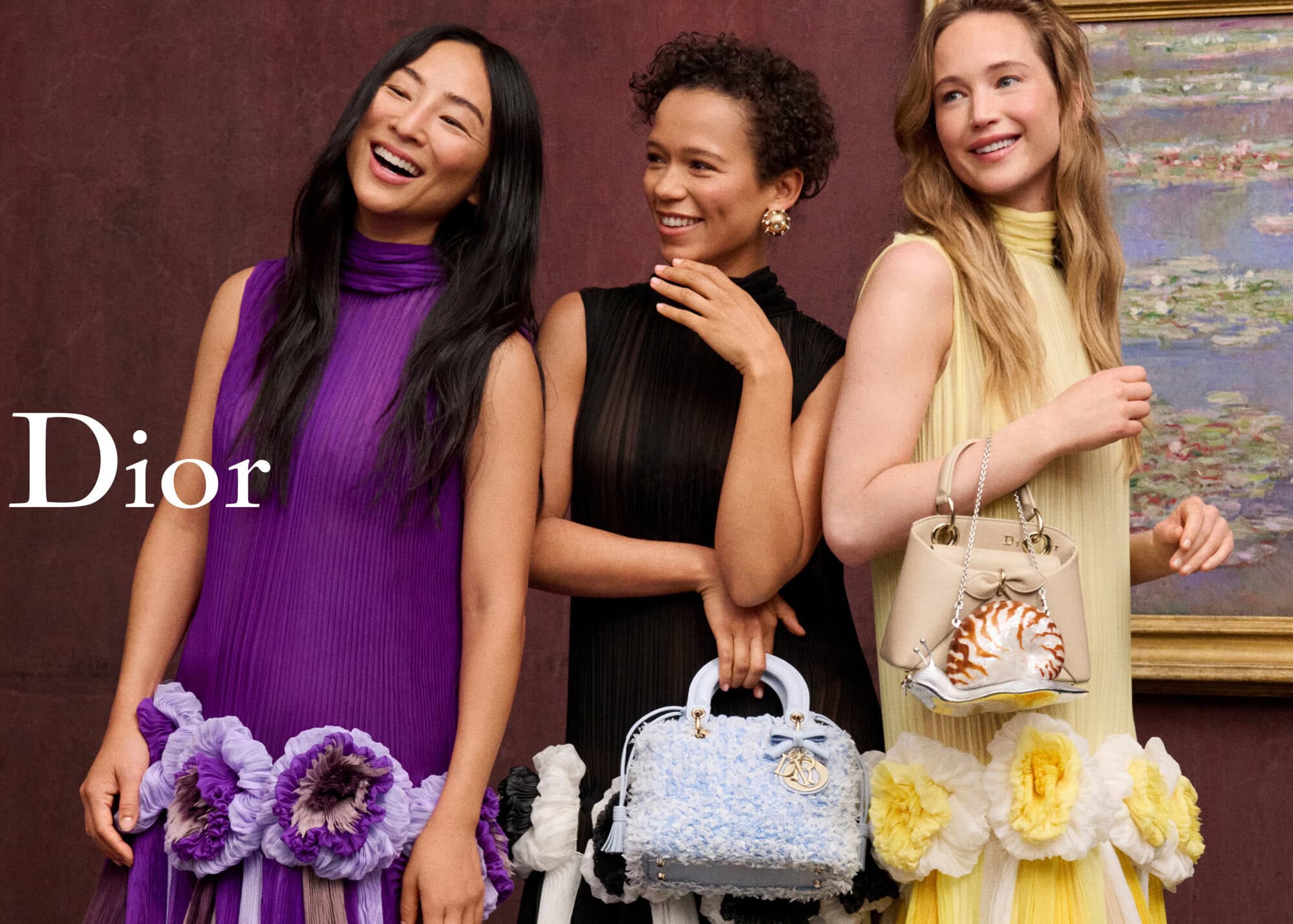
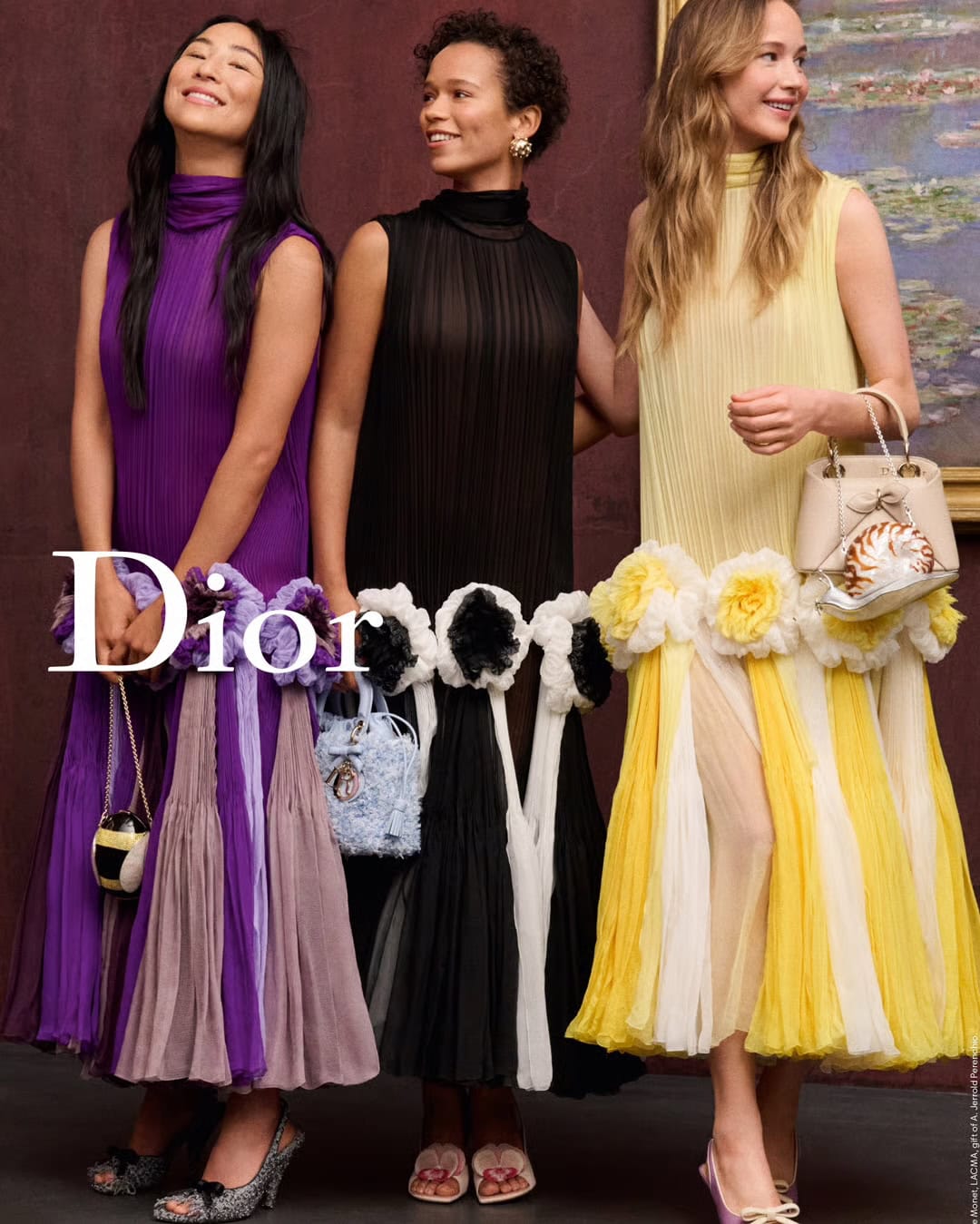
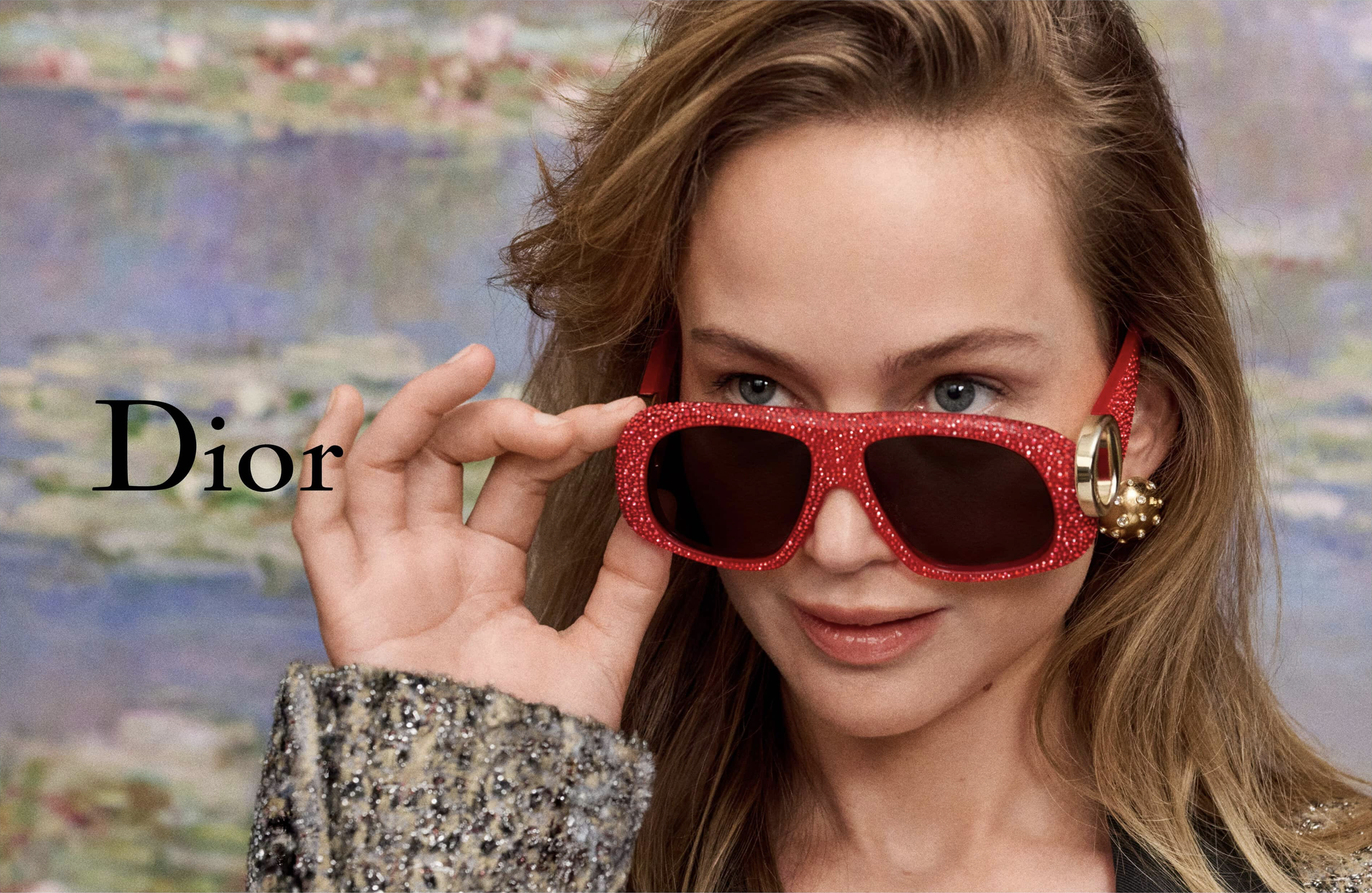
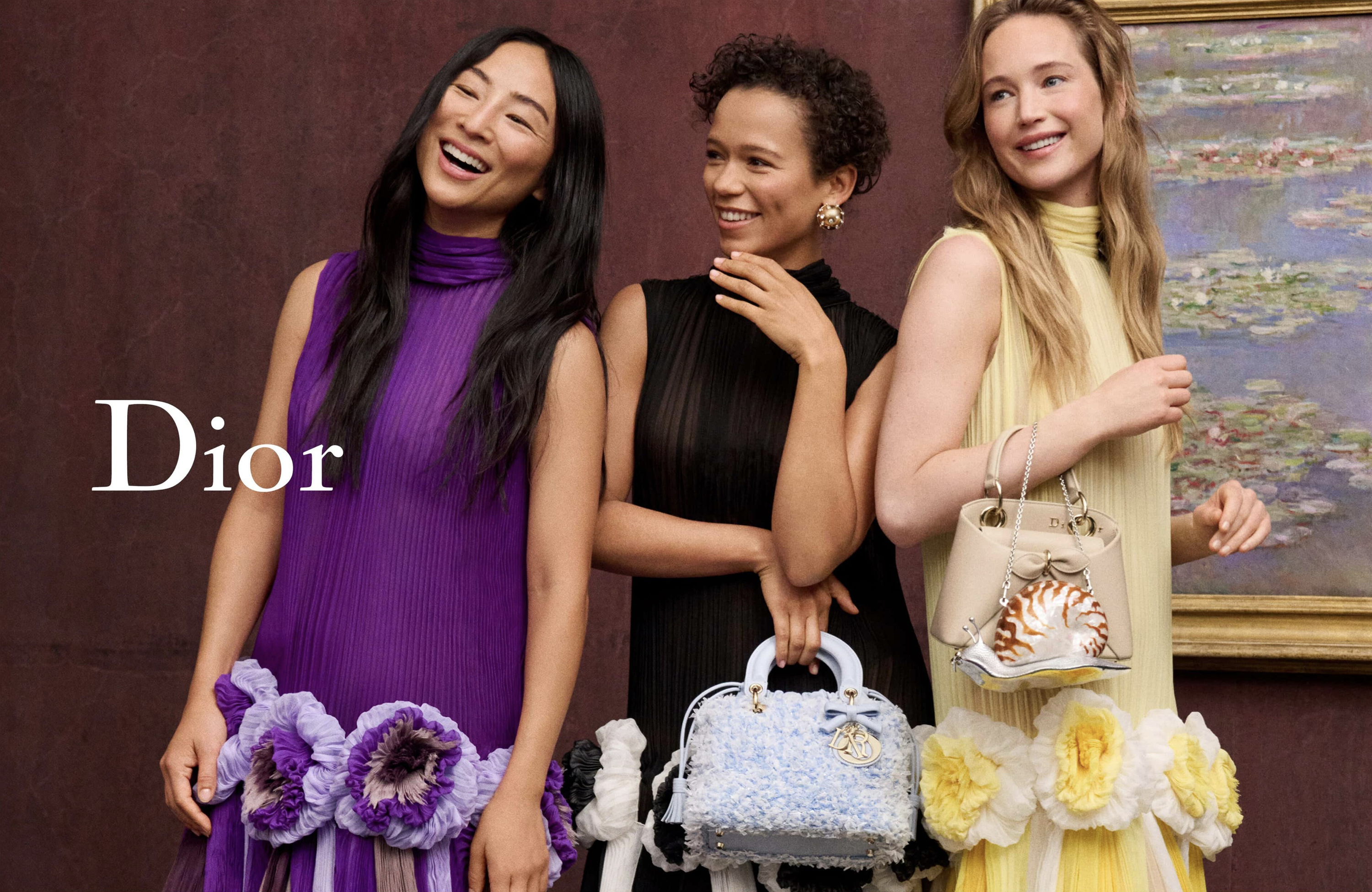
There is pleasure, too, in the relationship between the collection’s decorative exuberance and the paintings surrounding it. Pleated dresses in purple, black, and pale yellow carry oversized floral embellishments that give the group portraits their own lively foreground. Elsewhere, sparkling red sunglasses introduce a sharp punctuation mark against the softer colors of water lilies. The eyewear image is especially effective because the gesture of looking over the frames makes looking itself part of the performance. A museum does provide an excellent audience for a good accessory.
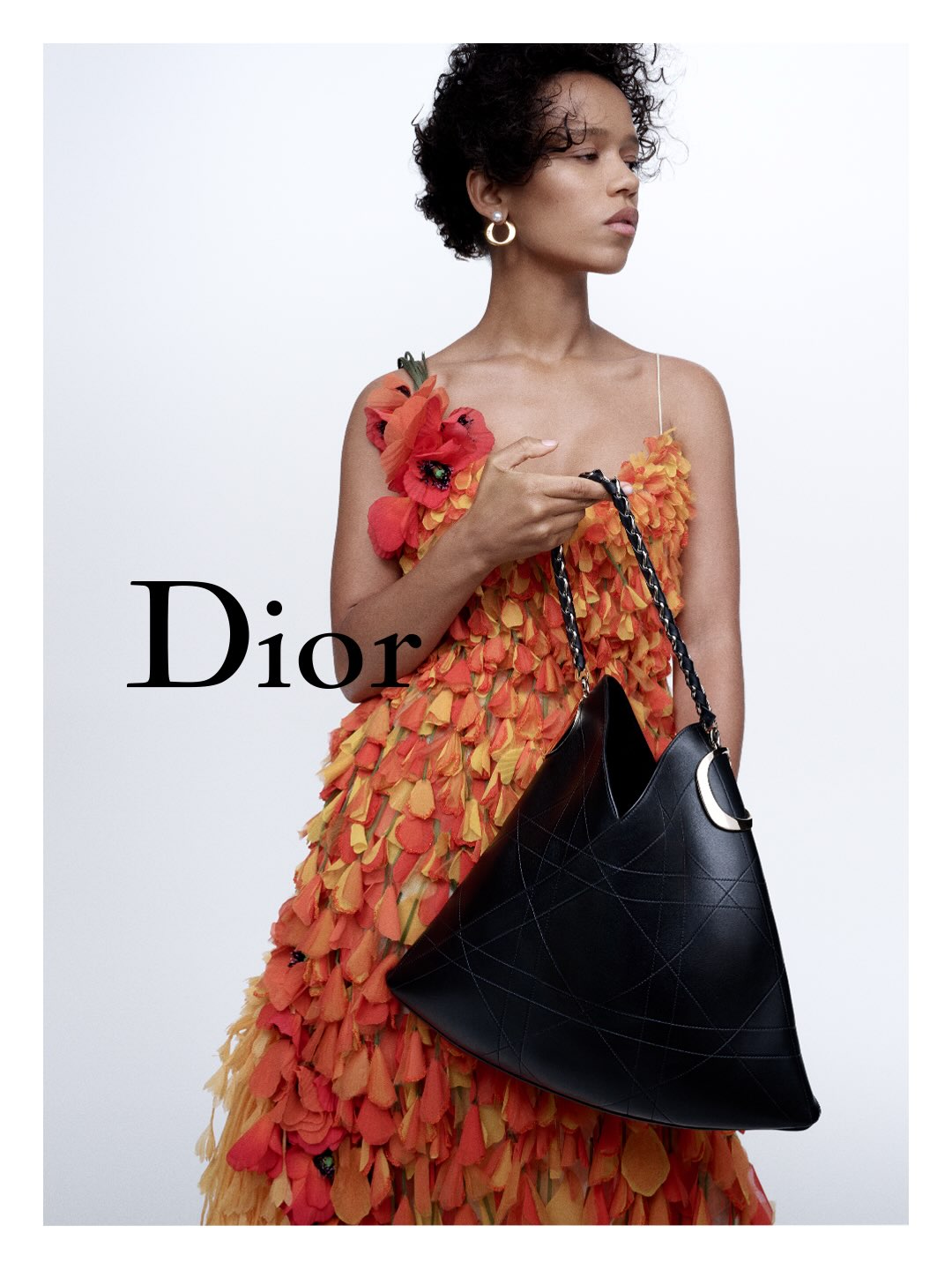
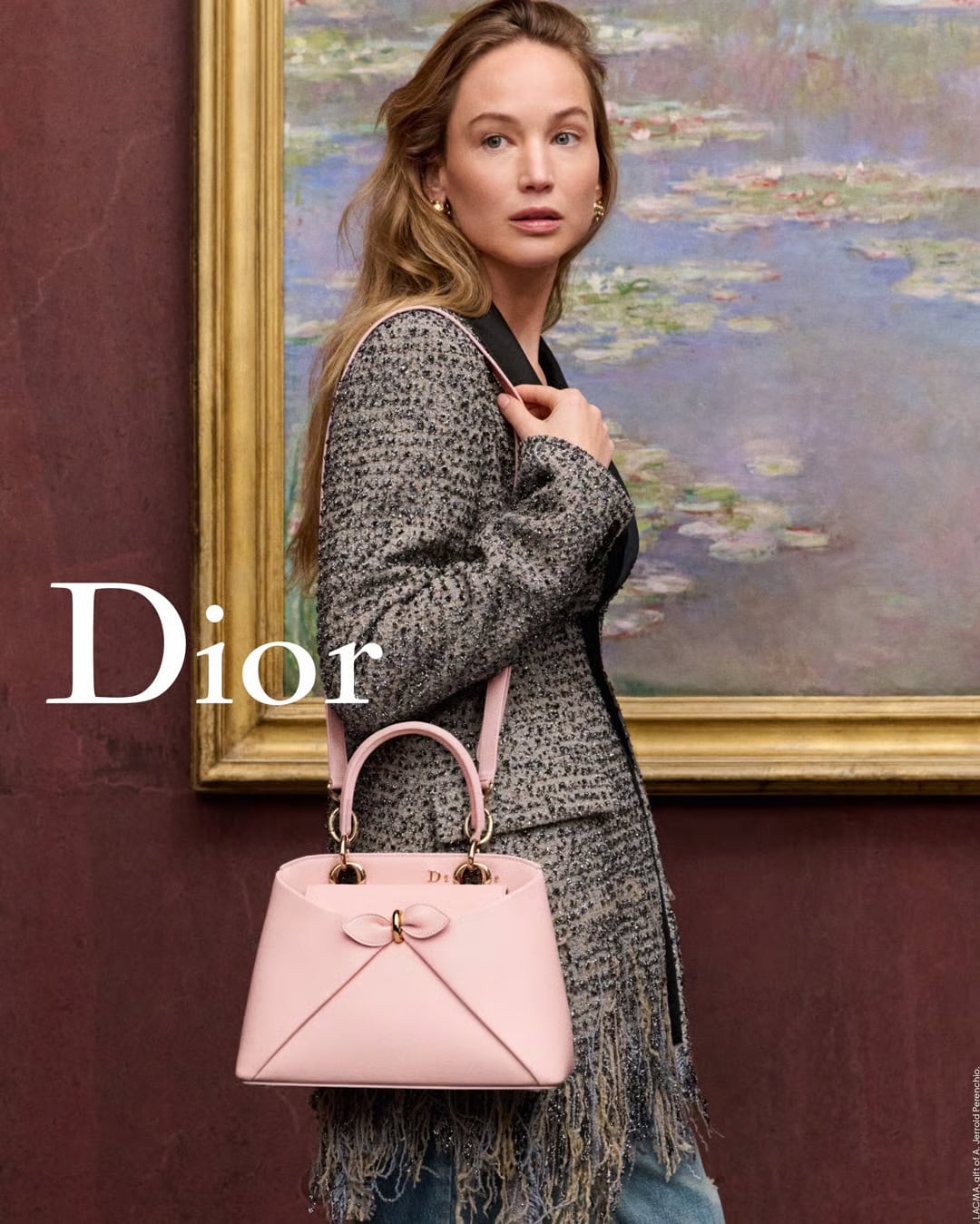
The products remain persuasive throughout. A pink structured handbag brings crisp definition to textured gray tailoring, while a generous black hobo anchors a dress covered in orange and red petal-like forms. In the group photographs, the bags retain distinct silhouettes and surface treatments even amid expressive clothes, recognizable faces, and elaborate surroundings. That clarity matters. The campaign gives the collection cultural context while allowing individual objects to make their own case for desirability. The studio portraits reinforce this confidence, giving shape, proportion, and styling enough space to hold attention.
The human relationships are a little more elusive. The smiles and shared glances suggest conviviality, although some moments feel carefully held for the camera. We understand the idea of an enjoyable afternoon together more readily than we sense the particular curiosity of each person. A more specific encounter with the art, a moment of absorption or an exchange prompted by something seen, could have given the campaign greater emotional depth. Anderson’s sustained engagement with artists makes that possibility especially interesting. His references invite attention, and there is room for the campaign’s protagonists to reveal more of their own.
Even so, the return to LACMA gives this work a clear place within the larger direction of the house. Anderson is establishing continuity between what informs a collection, where it is presented, and the life imagined around it. The campaign’s warmth and product confidence make that continuity inviting. Dior emerges as a wardrobe for people who take pleasure in looking, choosing, and keeping company. The next intriguing step is to let us discover more of what catches their eye.
Dior Creative Director | Jonathan Anderson
Photographer | Sam Rock
Models | Jennifer Lawrence, Greta Lee, Taylor Russell, and Drew Starkey
Stylist | Benjamin Bruno
Hair | Guido Palau
Makeup | Yadim Carranza
Manicurist | Ama Quashie
Set Designer | Poppy Bartlett
Production | Holmes