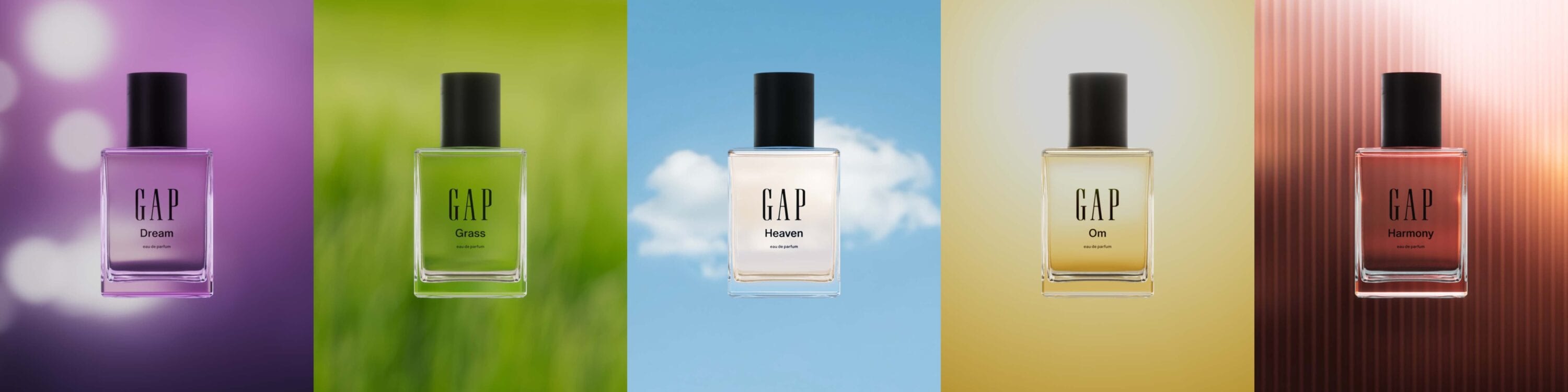
The retailer is repositioning nostalgia as market strategy, reintroducing Grass, Om and other cult-era fragrances with updated formulas as part of a broader Y2K identity push across categories.
Gap is bringing back the fragrance line that defined its identity in the 1990s, reformulating cult scents including Grass and Om for a contemporary audience as part of its return to the beauty category. The retailer has quietly tested pieces of this comeback for years through outlet channels and limited retail runs. Still, the current rollout marks a more deliberate, centrally coordinated effort tied to its broader turnaround under chief executive officer Richard Dickson.

The fragrance relaunch lands alongside Gap’s recent Hailey Bieber collaboration, a reworked version of the brand’s classic denim, giving the company two concrete signals within the same stretch of its turnaround that it is leaning into its nineties archive as a core identity rather than a single nostalgic gesture. Positioning a supermodel closely associated with the current Y2K revival alongside the return of Heaven, Dream and Grass suggests Gap is treating its original codes, denim and fragrance alike, as the foundation of its recovery rather than a one-off marketing moment.
The beauty revival gained further momentum last year when Gap brought on industry veteran John Demsey, formerly of Estée Lauder, to help oversee the category’s rebuild. His presence signals that Gap intends the fragrance return to function as a real commercial channel rather than a nostalgia marketing moment confined to social media.
The timing places Gap inside a broader industry pattern of legacy retailers leaning on archival codes to reestablish relevance with a generation that never shopped the originals firsthand. Where past attempts to revive the scents felt incidental to Gap’s business, this version arrives backed by leadership hires, a high-profile denim tie-in and positioning as part of the company’s larger commercial recovery, suggesting the brand sees its nineties identity as a genuine growth lever across categories rather than a sentimental footnote to its apparel turnaround.