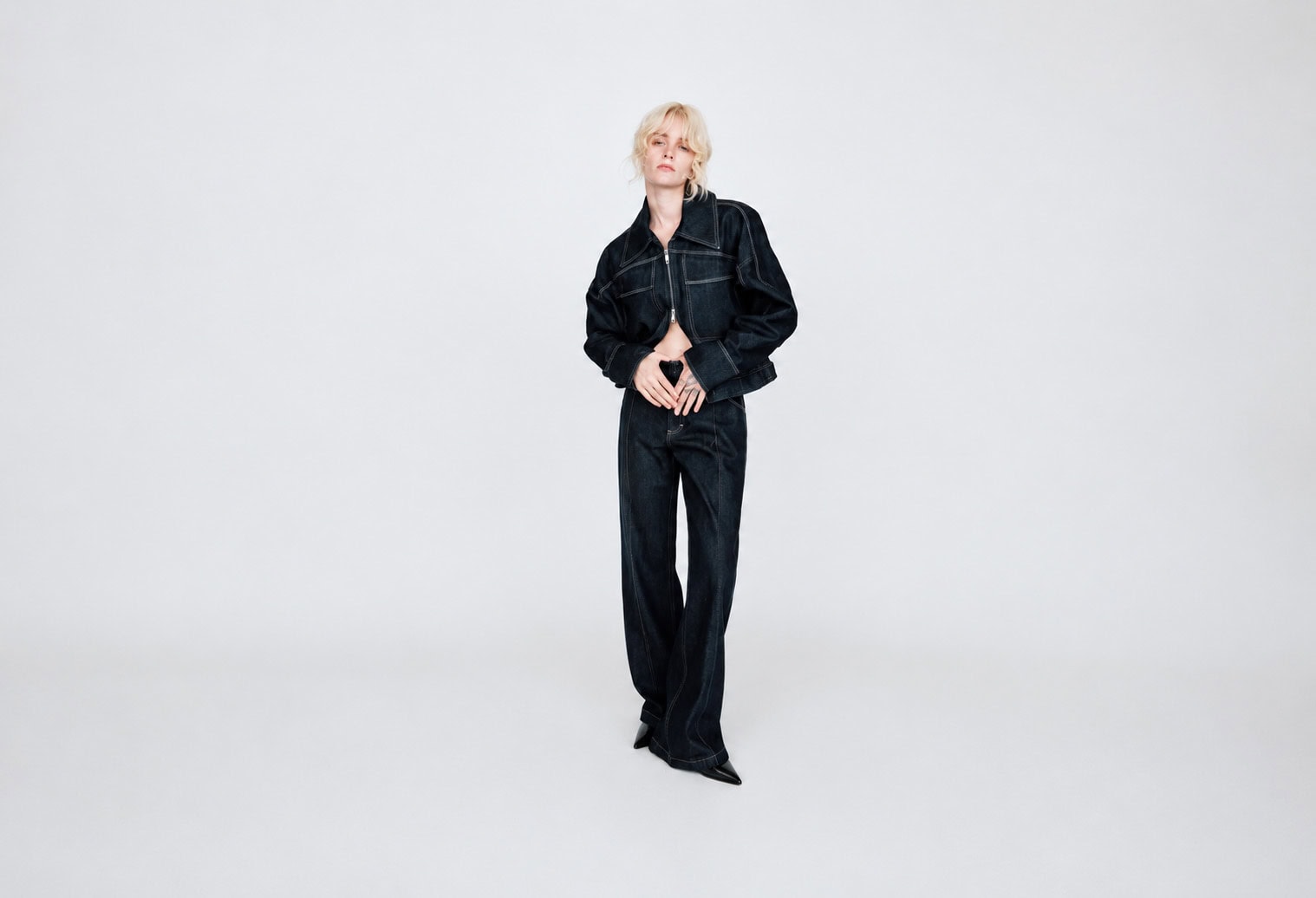
Playing It Safe
Review of Gap Studio Fall 2026 Ad Campaign by Gap Studio Creative Director Zac Posen and Campaign Creative Director Calvin George Leung with Photographer Daniel Jackson with models Esther Rose McGregor and Alton Mason
Gap Studio exists to make the familiar feel unfamiliar. Under Zac Posen, the proposition has been to take the democratic building blocks of Gap — denim, khaki, shirting, utility and the American T-shirt — and push them somewhere more considered, constructed and fashion-forward. For Fall 2026, photographer Daniel Jackson captures Esther Rose McGregor and Alton Mason in a stripped-back studio campaign under the creative direction of Calvin George Leung, with styling by Alastair McKimm. The clothes are evolving. The question is whether the campaign has evolved enough with them.
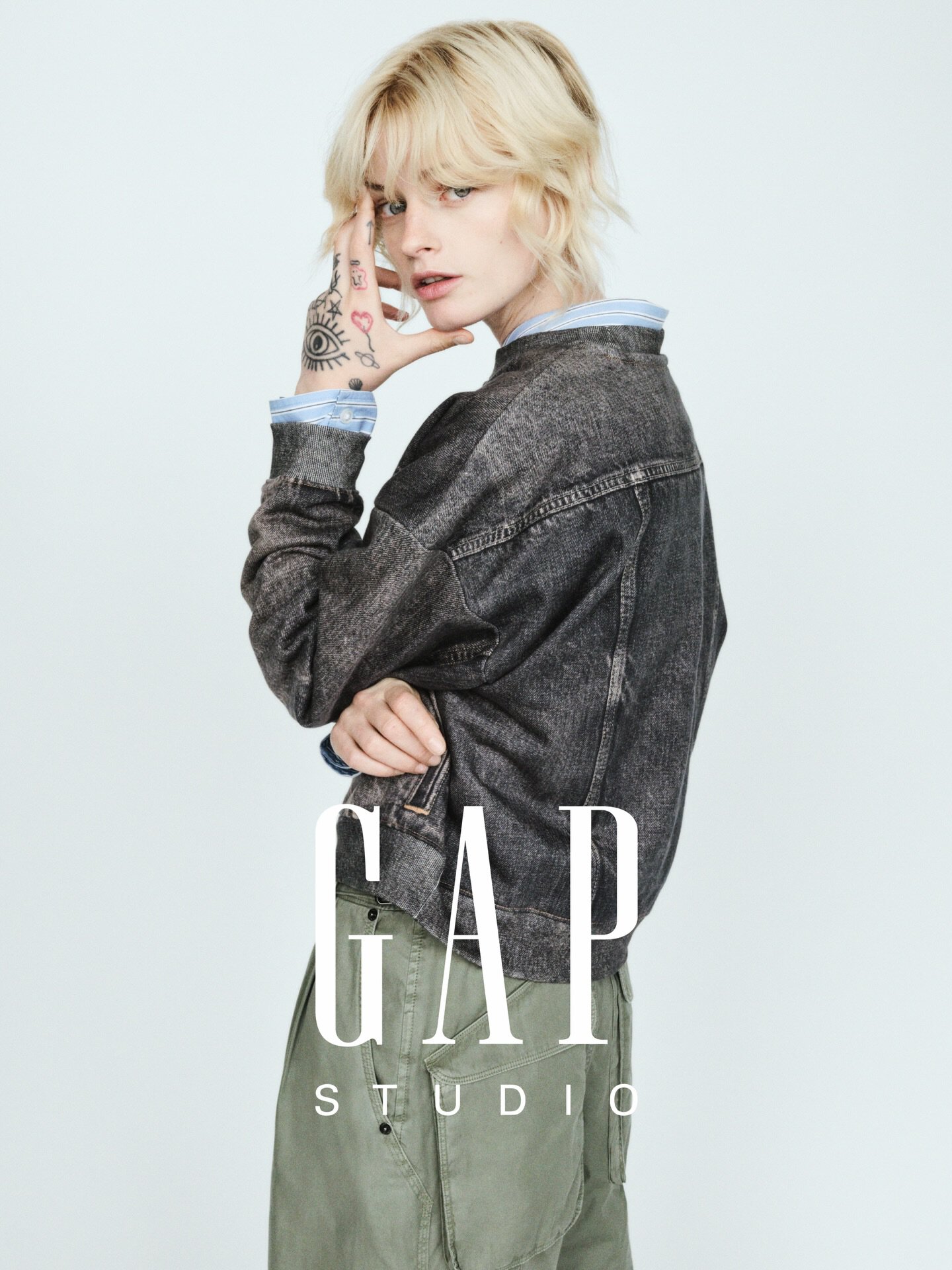
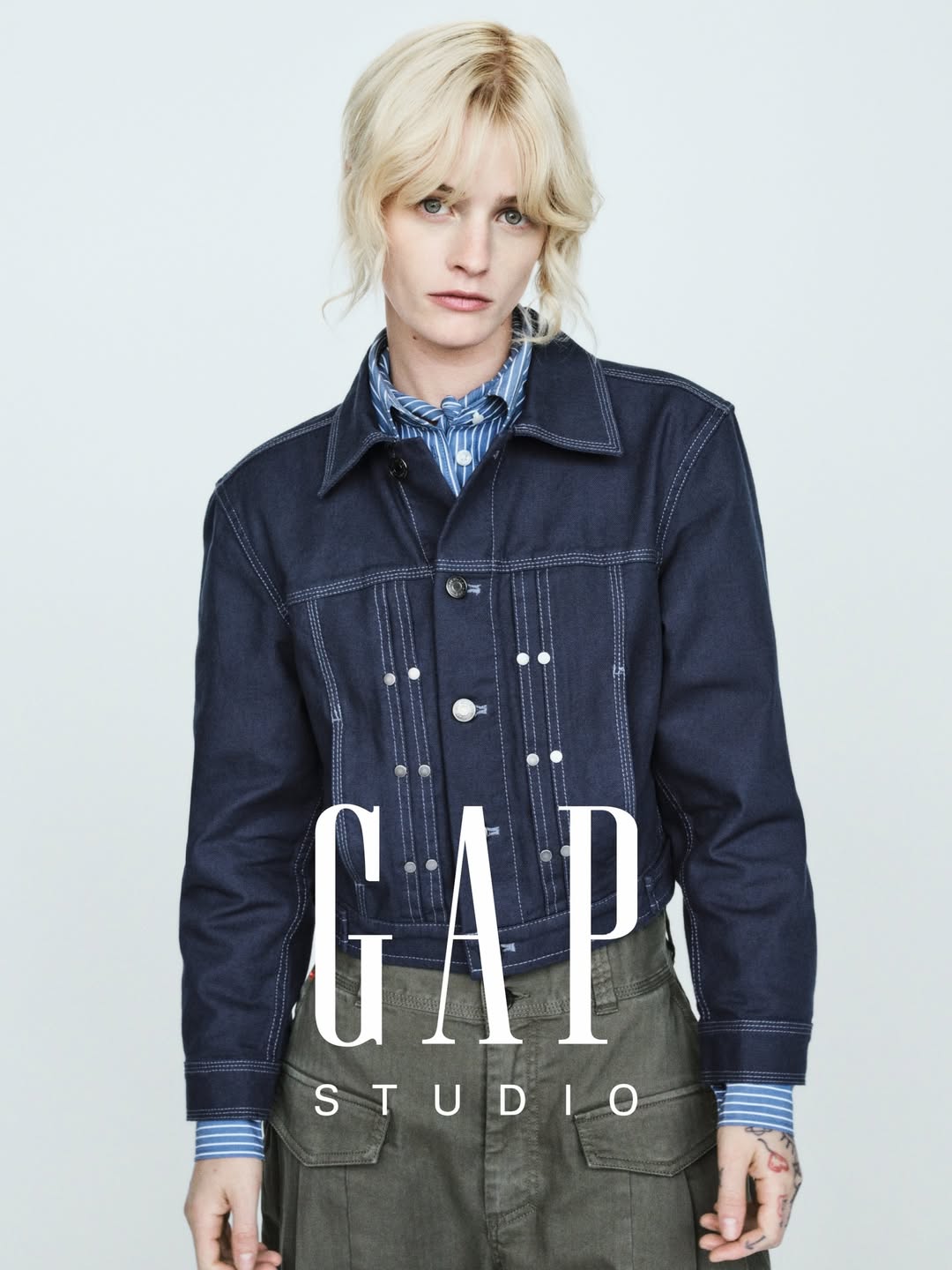
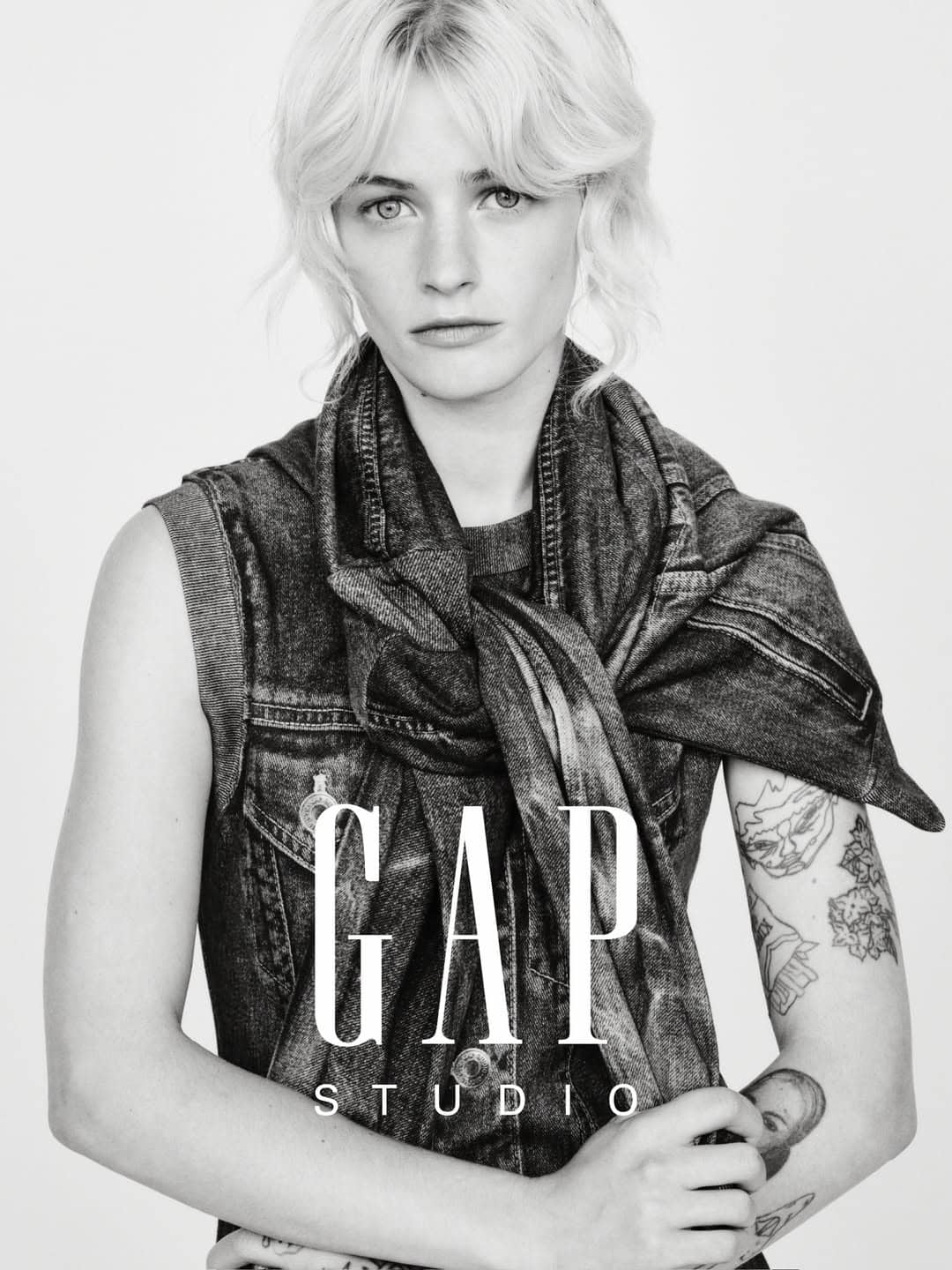
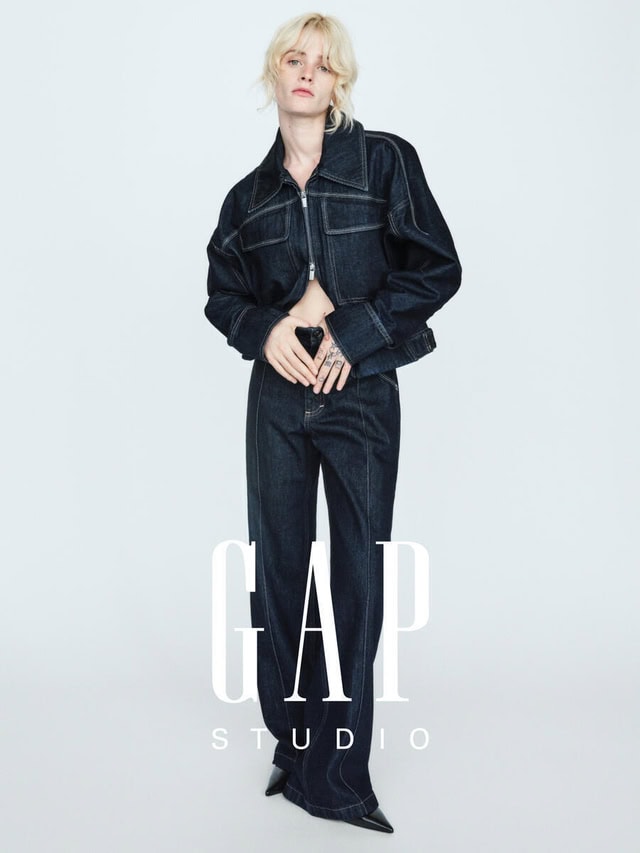
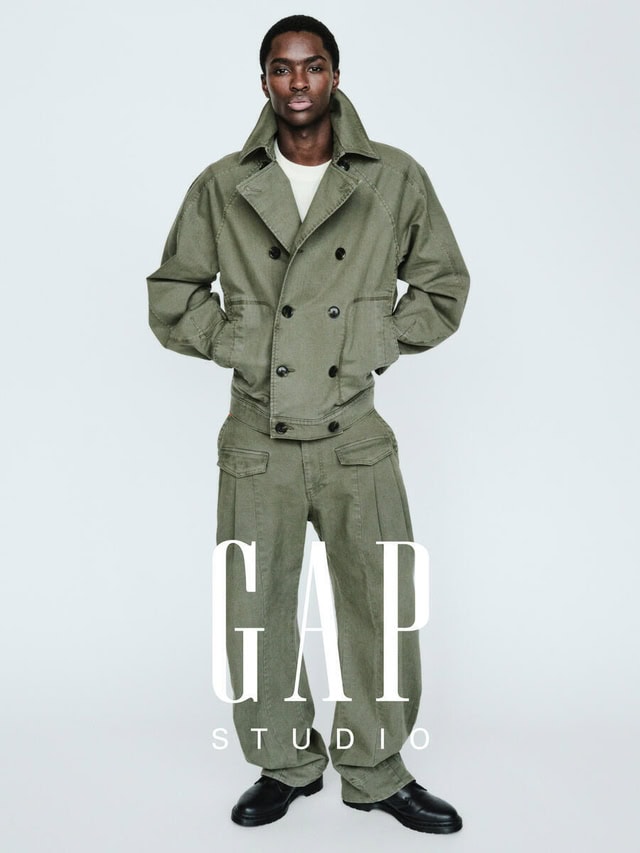
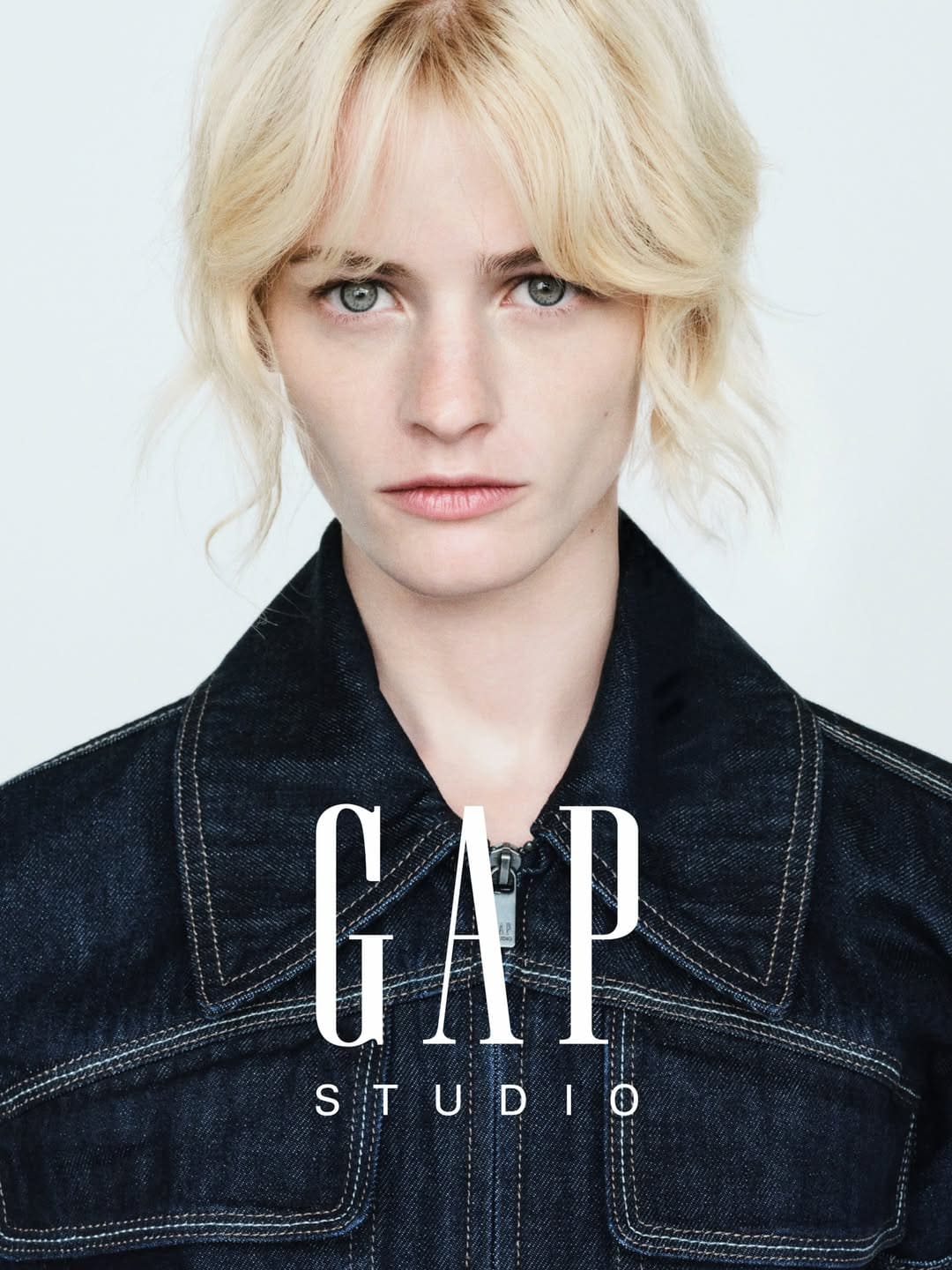
There is plenty happening in Posen’s collection. A familiar denim jacket is redrawn with an exaggerated collar and precise seamwork. Utility dressing expands into sculptural proportions. An olive workwear suit becomes almost architectural, while elongated trousers alter the body’s relationship to familiar American sportswear. On McGregor, dark denim moves between cropped jackets, long dresses and layered pieces that feel simultaneously recognizable and newly considered. Posen isn’t abandoning Gap’s vocabulary; he is changing the grammar.
That makes the campaign’s visual restraint an intriguing, if ultimately frustrating, choice. Jackson photographs everything with immaculate clarity against an almost clinical pale backdrop. The lighting is crisp, the compositions direct, the clothes completely legible. Nothing competes with the product. In commercial terms, that sounds ideal. In campaign terms, it may be precisely the problem.
Gap, of course, practically owns a chapter in the history of studio simplicity. Some of its most memorable advertising required little more than a seamless backdrop, great casting, denim and personality. But simplicity is deceptive. Remove the location, props and narrative, and the people, gesture and attitude have to do considerably more work. Minimalism is not the absence of an idea; it is an idea with nowhere to hide.
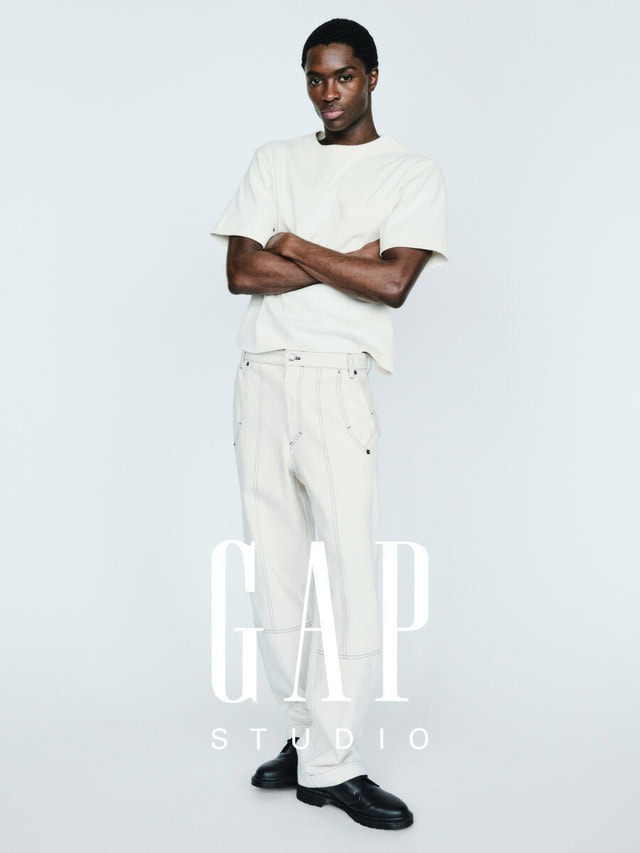
McGregor comes closest to breaking through the restraint. Her platinum hair, tattoos and slightly insouciant physicality introduce a welcome tension against the polish of the clothes. A hand drifts toward her face, a jacket slips open, denim gets wrapped around the shoulders. Mason brings a quieter composure, particularly in the olive utility look, but the campaign rarely allows either subject to develop into a character. We see them very clearly. We don’t necessarily get to know them.
And therein lies the missed opportunity. Posen describes Fall as a play between “utility and sensuality, precision and ease, and the familiar and unexpected.” Those are excellent tensions for an image-maker. Yet while the collection embodies them, the photography rarely dramatizes them. The unexpected resides almost exclusively in the construction of the clothes rather than in the world created around them.
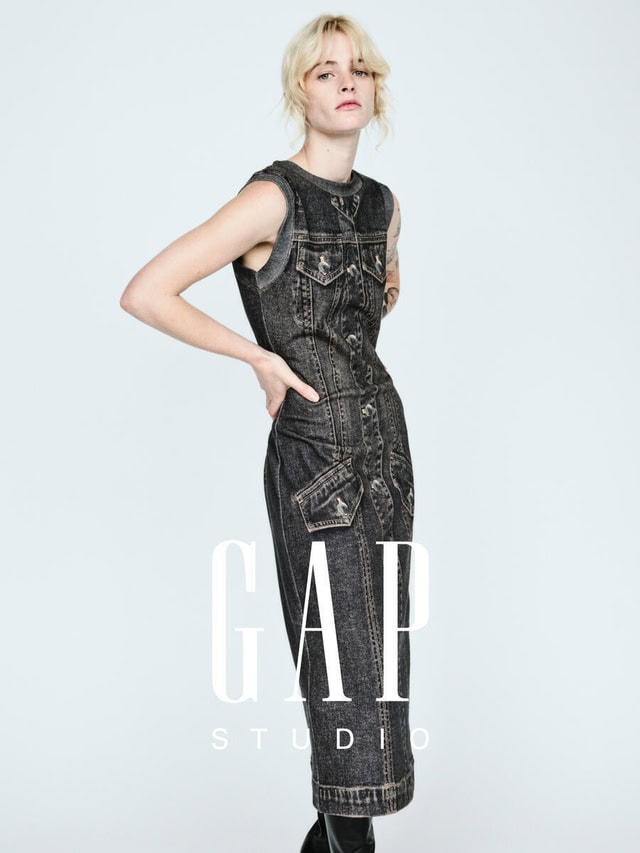
The oversized GAP STUDIO typography reinforces that product-first mentality. It provides immediate recognition and graphic impact, but repeated across the imagery it also makes the campaign feel closer to highly elevated commerce than image-making with a distinct cultural point of view. There is nothing wrong with wanting the product to be the hero. But heroes generally benefit from having a story.
That distinction matters because Gap Studio has an interesting job to do. It isn’t simply another Gap collection; it is helping reposition what the name can mean. Posen is taking recognizable wardrobe archetypes and introducing fashion-level construction, proportion and sensuality, even translating a custom denim look created for Leon Thomas’ Grammy performance into something intended for everyday life. That is an ambitious high-low conversation. The campaign could have amplified it through movement, unexpected casting interplay, sharper attitude, unusual framing, or even a more provocative use of the blank studio itself. None of those choices would require sacrificing product clarity.
Instead, the imagery feels cautious precisely when the project should feel adventurous. Jackson’s technical precision is unquestionable, McKimm gives the silhouettes room to register, and McGregor proves particularly magnetic. But the creative equation has been simplified until nearly all that remains is model plus clothes plus logo. For Gap proper, that degree of directness can be part of the magic. For Gap Studio, whose reason for being is experimentation, it feels like leaving creative territory unexplored.
Posen says the collection is about evolution rather than nostalgia. That’s also a useful challenge for the campaign. Gap Studio doesn’t need to abandon Gap’s legendary simplicity; it needs to evolve it with the same curiosity being applied to the clothes. Fall 2026 gives us a clear picture of what Gap Studio is selling. Next time, we’d like a stronger reason to stop and stare.
Gap Studio Creative Director | Zac Posen
Campaign Creative Director | Calvin George Leung
Photographer | Daniel Jackson
Models | Esther Rose McGregor, Alton Mason
Stylist | Alastair McKimm
Hair | Tomo Jidai
Makeup | Aaron de Mey