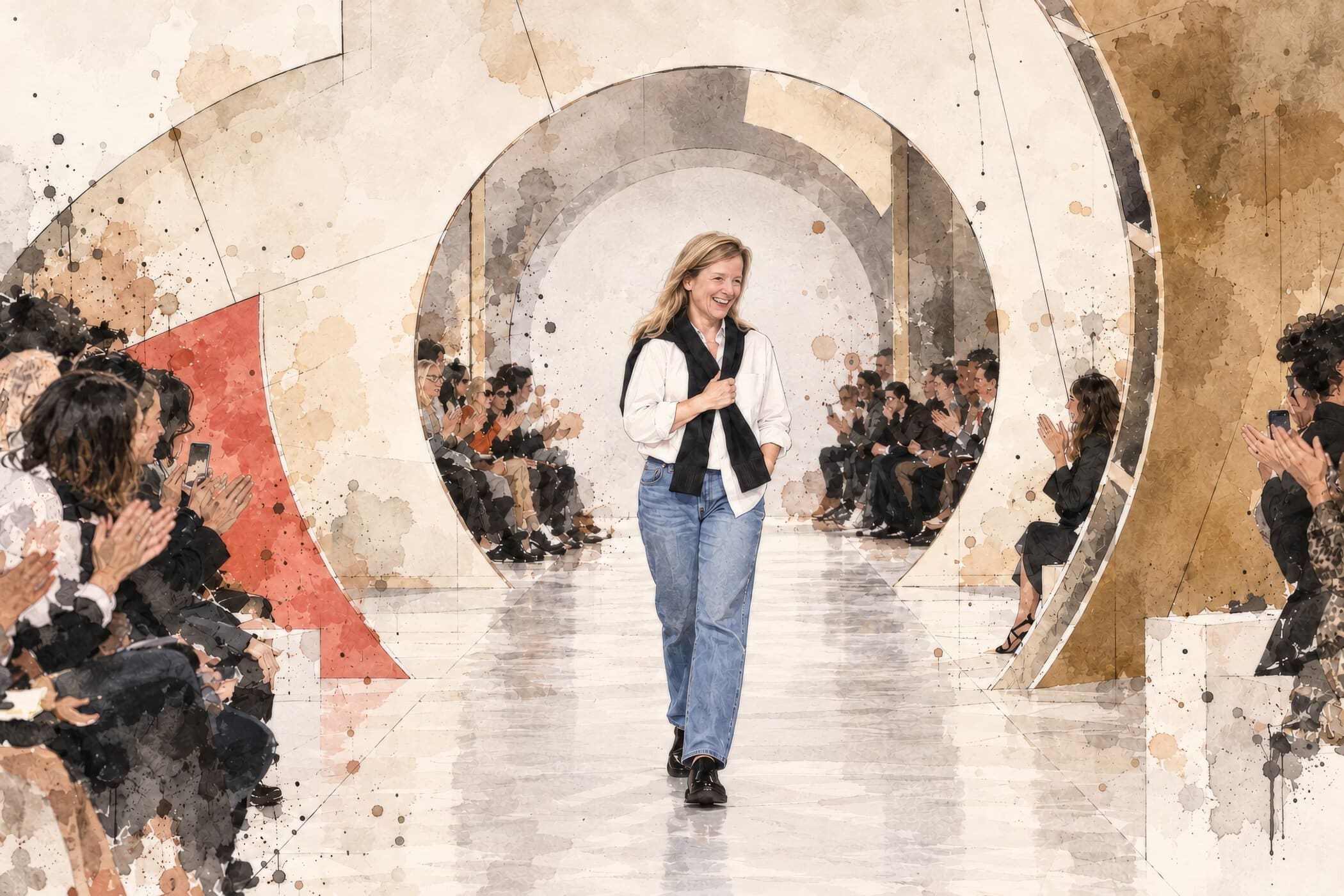
The Givenchy Creative Director Talks Cut, Sensuality, Joy, And Why One Woman Can Never Be Reduced To One Idea
By Mackenzie Richard Zuckerman
In Conversation With The Impression
Speaking with The Impression’s Mackenzie Richard Zuckerman, Givenchy Creative Director Sarah Burton discusses finding balance in a precarious world, the precision of cut, the pleasure of color, and why designing for women begins with understanding that no woman is ever just one thing.
The Impression Intelligence
Creative Director: Sarah Burton
House: Givenchy
Collection: Spring/Summer 2027
Presented: Paris Fashion Week
Interview: Mackenzie Richard Zuckerman for The Impression
Key Themes: Cut, silhouette, balance, sensuality, femininity, craftsmanship, color, individuality
See the Spring 2027 Collection
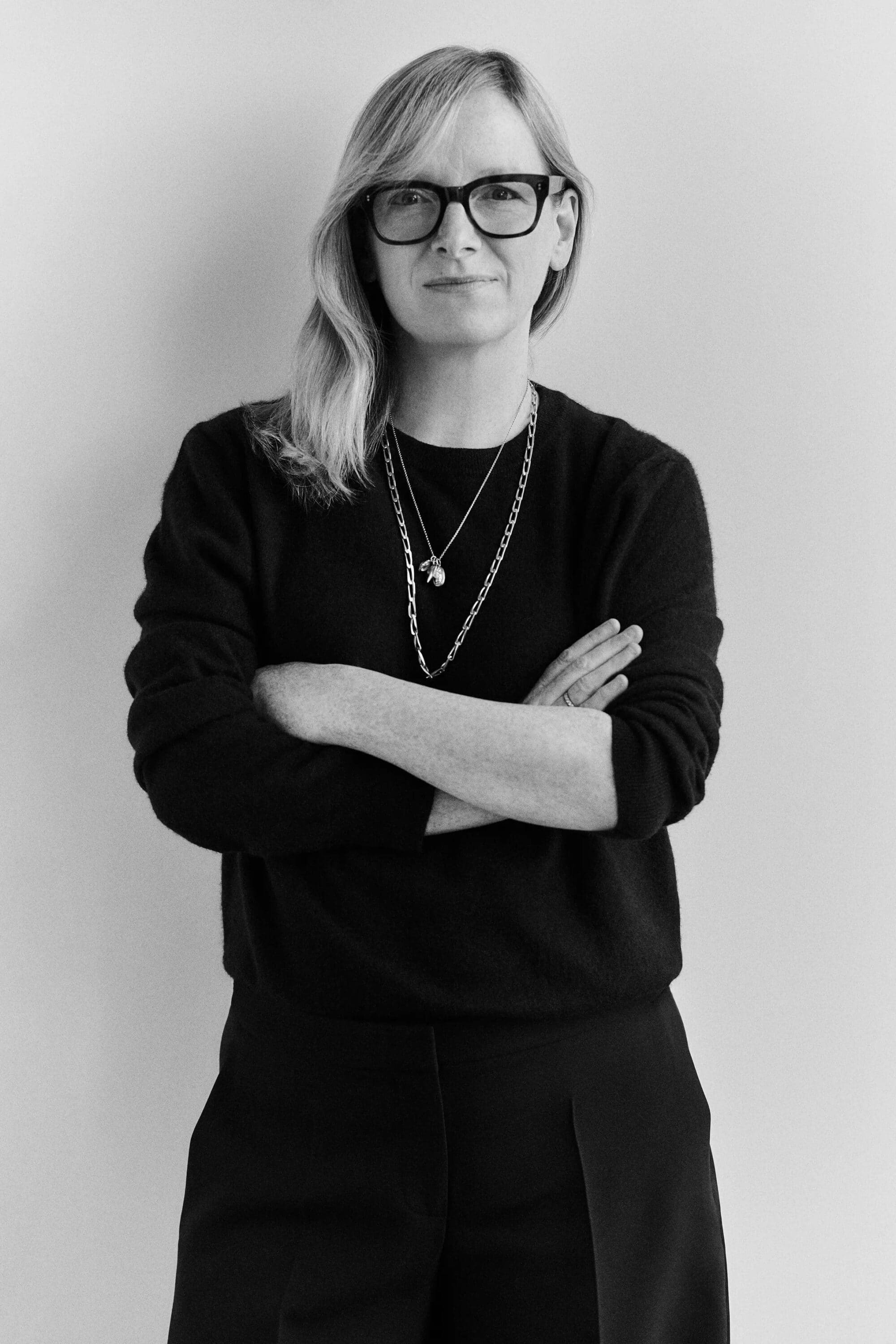
Sarah Burton has a useful response to a noisy world: cut through it.
For the Givenchy creative director, that thought is both philosophical and highly practical. Faced with a moment that can feel precarious and overloaded, Burton did not respond by adding more. She returned to one of the most fundamental tools available to a designer—the cut—and began thinking about what precision, simplicity, and balance might offer the woman wearing the clothes.
“In a world that’s very precarious, I wanted to find a balance within it,” Burton says. “How do you cut through the noise of everything that’s going on in the world? How does a woman cut through everything she has to cope with, and how do you find balance in life?”
There is something characteristic of Burton in the way an enormous question quickly finds its way back to the body. Ideas become patterns, patterns become silhouettes, and the abstract becomes something a woman can actually put on in the morning. Her answer to uncertainty is not escapism but consideration: making each piece work harder and feel clearer.
“I went back to cut,” she says. “It was really about cut and silhouette, and a sort of precise simplicity. Each piece was very considered, cut in a certain way to make the woman feel empowered, or to hold the body—to make sure she has a wardrobe that she feels she can use in the world she lives in.”
That usefulness never comes at the expense of desire. Burton’s precision has movement built into it. A trouser is sliced along its crease and swung outward until the familiar masculine form begins to drape. Sleeves derived from lapels are cut and pitched forward rather than conventionally pressed, altering the attitude of the silhouette. She takes recognizable elements of tailoring and gives them another life.
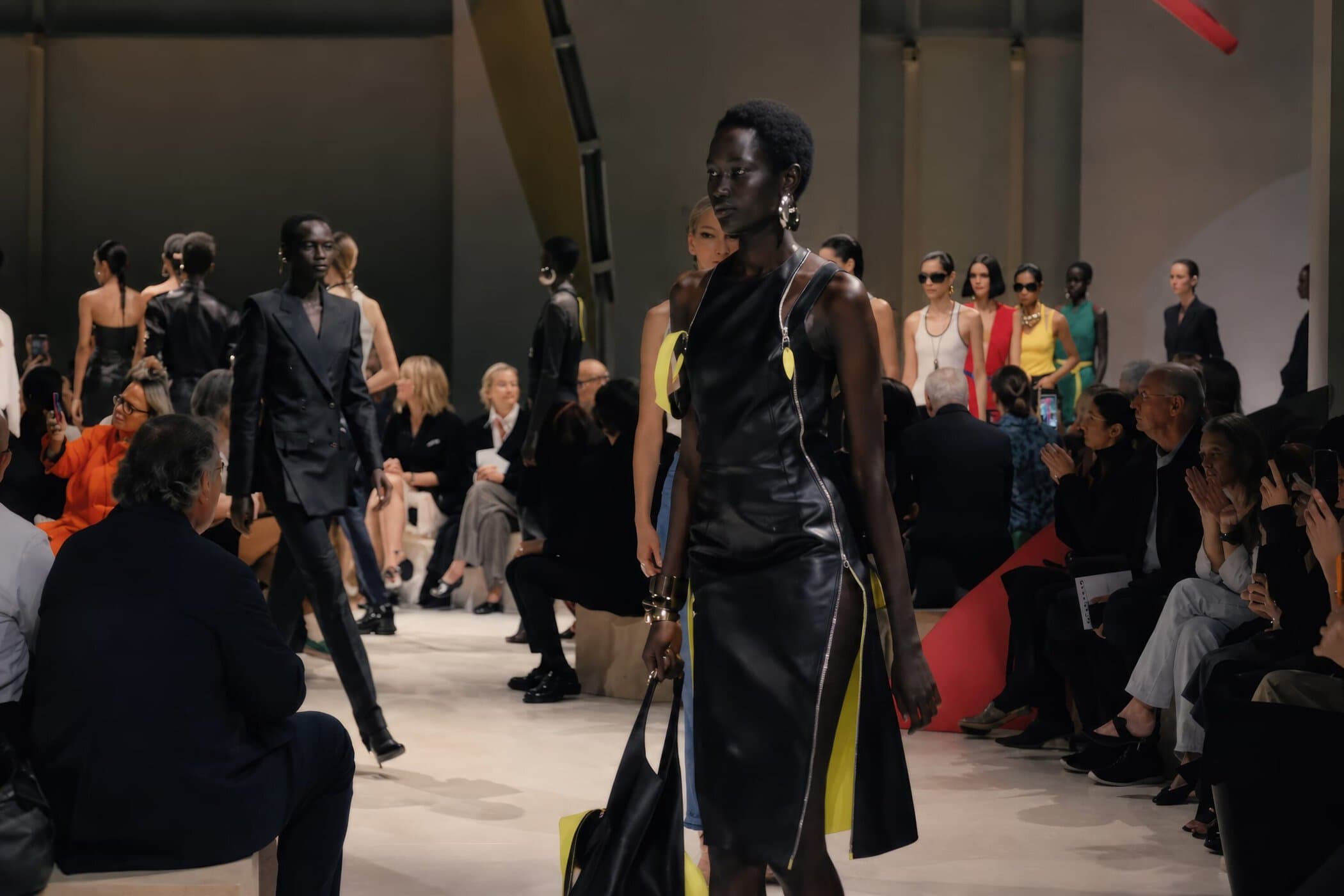
“I was taking something masculine and trying to give it a super femininity and a sense of movement,” she explains.
The phrase gets at one of the pleasures of Burton’s Givenchy. Hard and soft are allowed to coexist. Masculine construction can produce feminine movement. Leather can behave with the ease of cloth, while something seemingly delicate can be held together through exacting construction. Burton is interested in the possibilities that appear when those conventional divisions become less important.
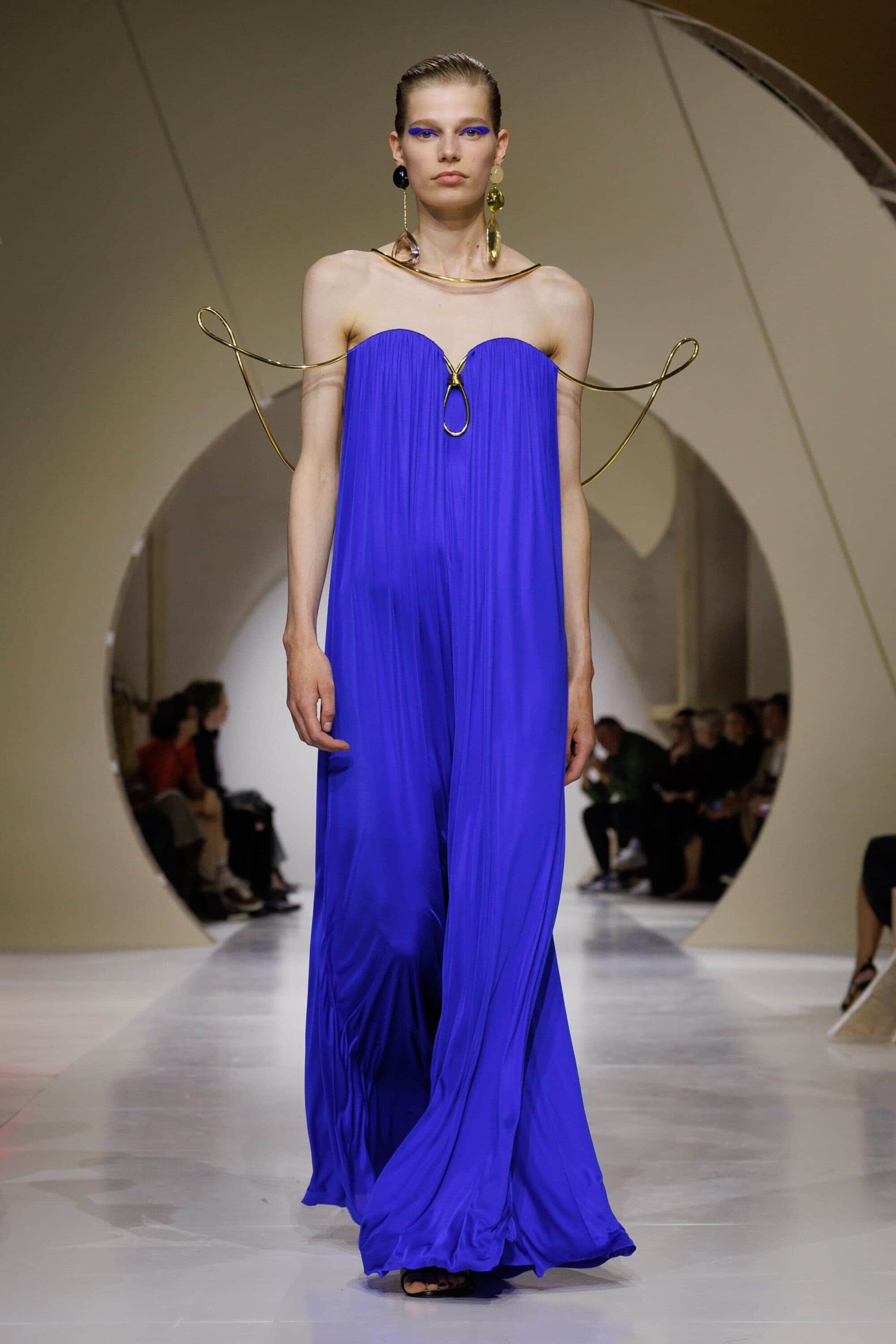
That thinking becomes particularly seductive in a remarkable dress constructed around a single piece of brass bent around the body. Fine chains hang from its structure, barely skimming the skin. It looks intricate and potentially weighty, yet Burton points out that it is extraordinarily light.
“I wanted to bend one piece of brass around the body to create almost a skeleton around it, and then hang chains in front of it so they just skimmed the body,” she says. “It was really about this idea of suspension and sensuality and fluidity.”
Burton had even considered opening the show with it before practicality intervened: such a delicate piece needed to be properly seen. The anecdote is telling. Even at her most poetic, she remains intensely aware of how a garment functions and how it will be experienced.
That sensitivity to the body continues through the accessories. A soft bag appears almost to peel away from itself, following the same vocabulary of curves that runs through the clothes. “I wanted there to be a softness,” Burton says. “There are a lot of curves, and it’s really about how everything sits against the body.”
Then there is color.
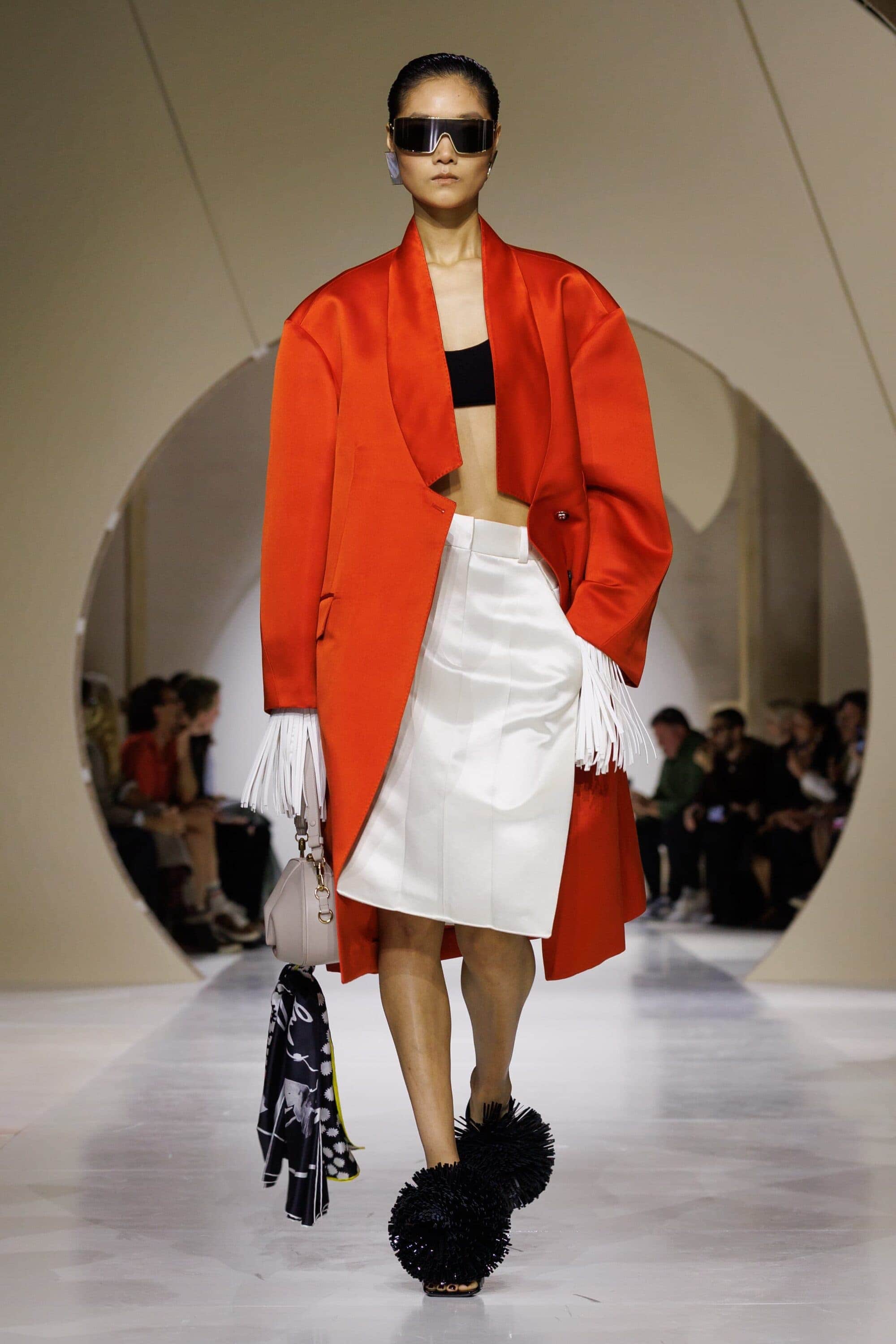
Against the precision of the cutting and the tension between hard and soft, Burton introduces vivid greens and strong, almost primary shades. The impulse behind them is wonderfully uncomplicated.
“I wanted there to be a bit of joy in the world we live in,” she says.
She describes the colors as “very English,” and there is something appealing about Burton allowing brightness to carry emotional weight without requiring an elaborate intellectual justification. Sometimes green leather can simply be sexy. Sometimes color can make you happy.
Her treatment of leather offers another window into how instinctively she resists categories. Asked about making leather behave almost like fabric, Burton explains that she does not approach design by dividing materials into their expected departments.
“I don’t like to think in terms of a leather department, a fabric department or a knitwear department,” she says. “I see women wearing clothes, and then the material usually determines where you go with it.”
It is a revealing way of working because the woman remains present throughout the process. Burton does not begin with a category and search for someone to inhabit it. She begins by imagining a person and lets the clothes develop around her.
That same openness extends to the casting, where women of different characters, attitudes, and energies become part of the creative process rather than simply the final presentation of it.
“I think very often, as a designer, the first thing you’re asked is, ‘Who is your woman?'” Burton says. “And as you can see, every one of us here is a different kind of woman.”
Burton has little interest in answering the question with a neat archetype. More interesting to her is the reality that even one woman cannot be defined by a single version of herself.
“One woman has multiple sides,” she says. “There’s a day when you want to feel a certain way, and there’s a day when you want to dress in a completely different way.”
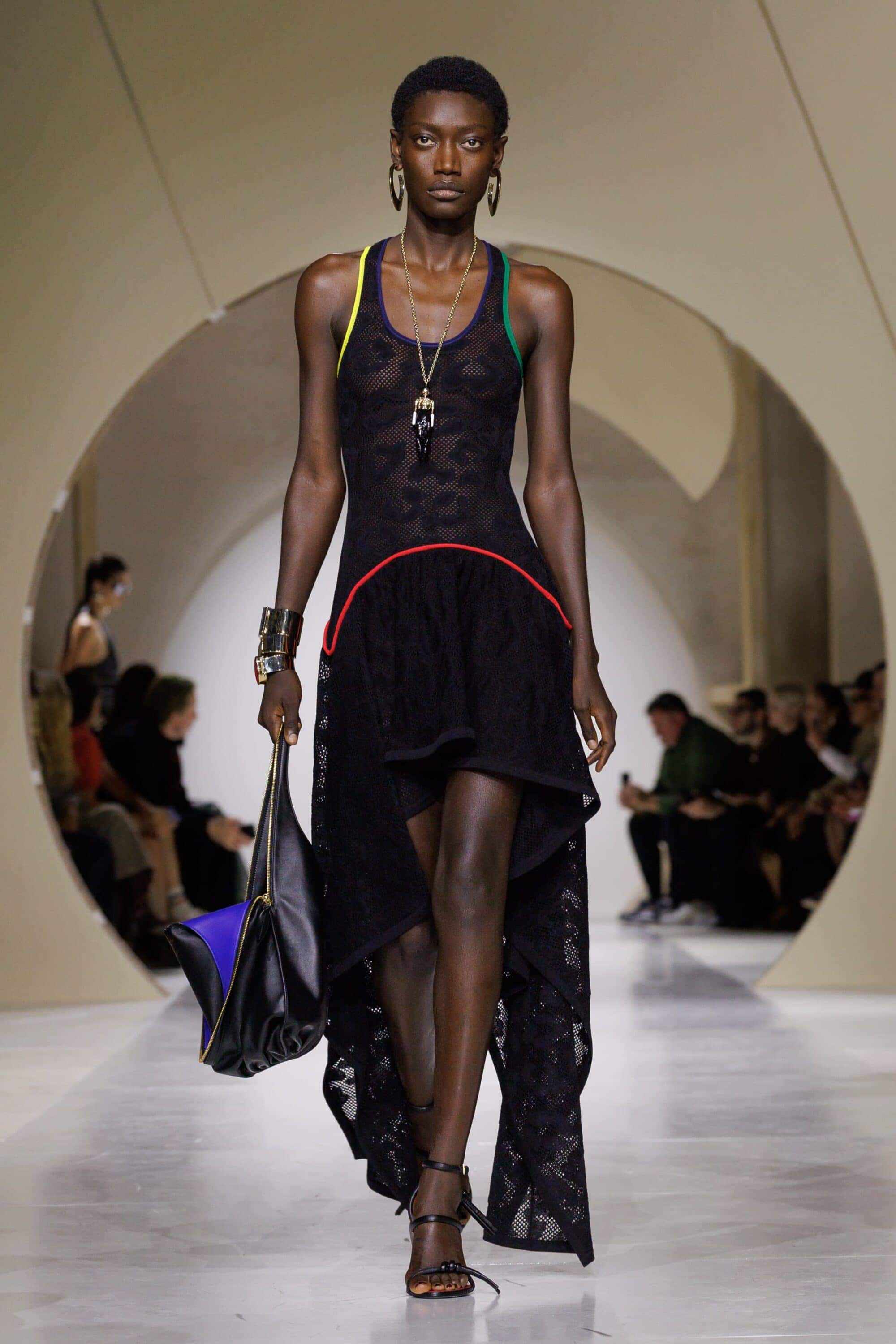
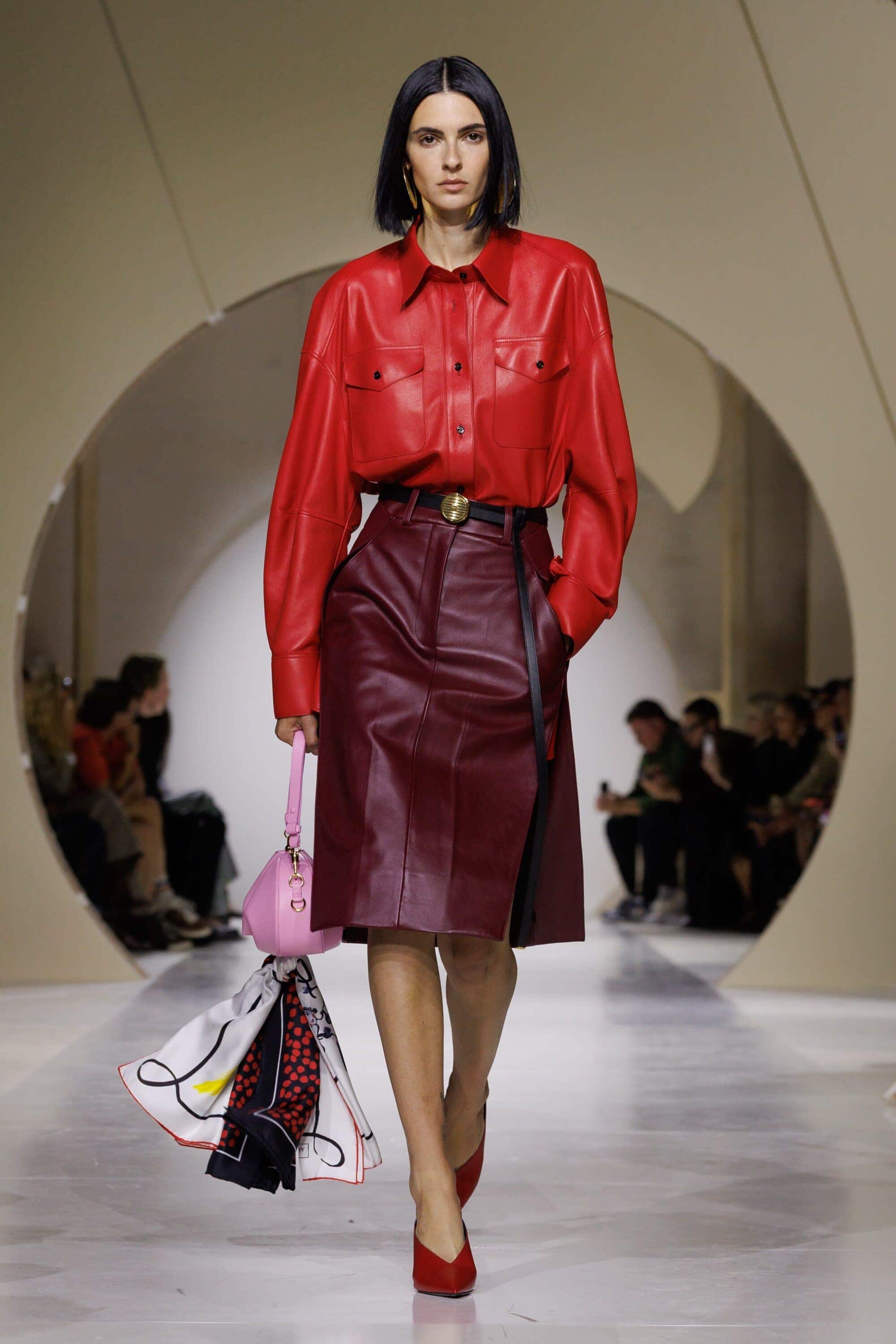
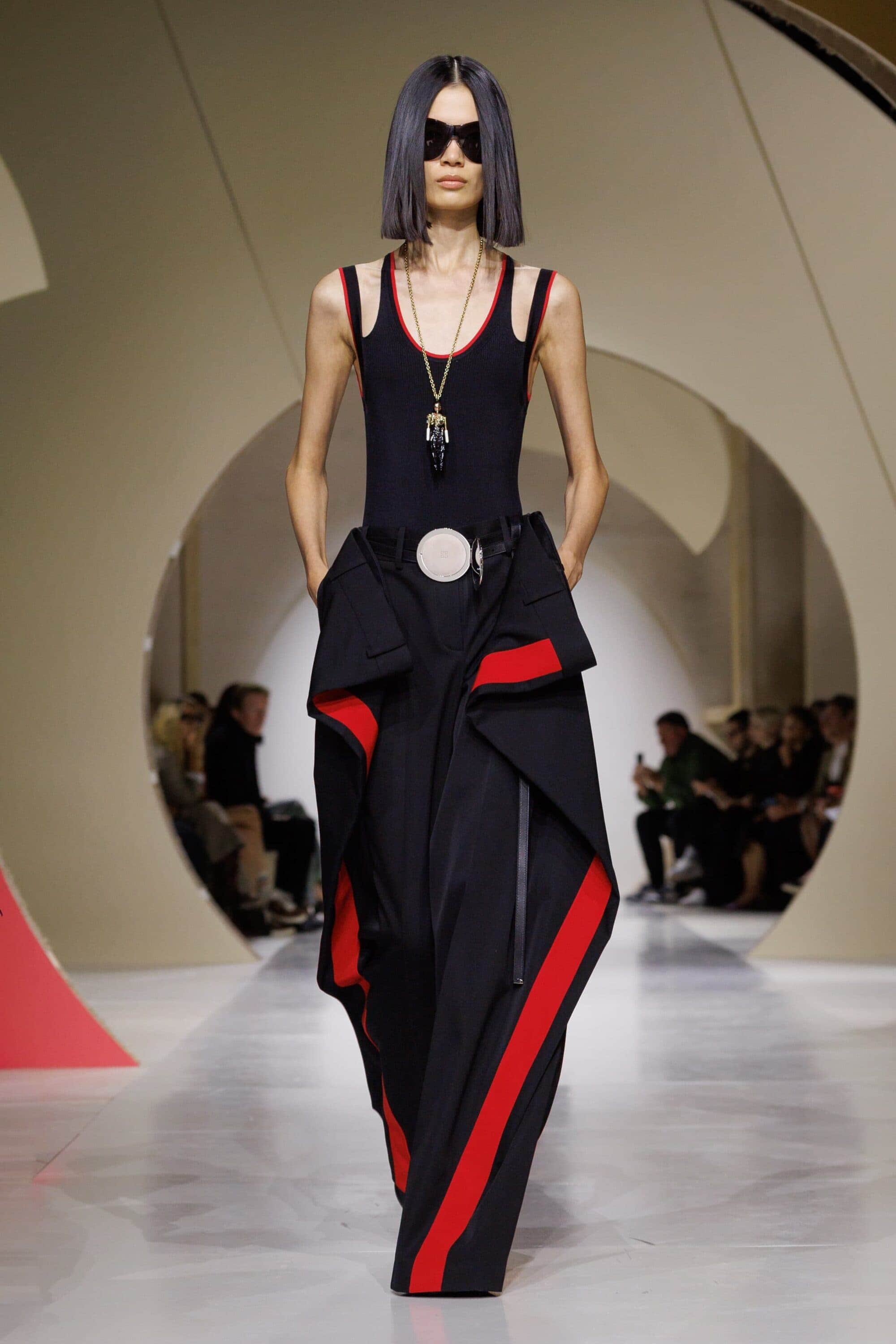
It is here that Burton’s intellectual approach becomes particularly warm. She talks about casting and fittings as conversations. When models arrive, their personalities and physical presence can change her mind about what they should wear. Someone she imagined in a dress may suddenly make more sense in a suit. Another woman might draw something entirely different out of a garment.
“I don’t have this fixed idea in my mind of what somebody has to wear,” she says. “It’s a conversation with the models and about how they’re going to feel in those clothes, rather than saying, ‘This is my idea of a woman.’ It’s much more emotional than that.”
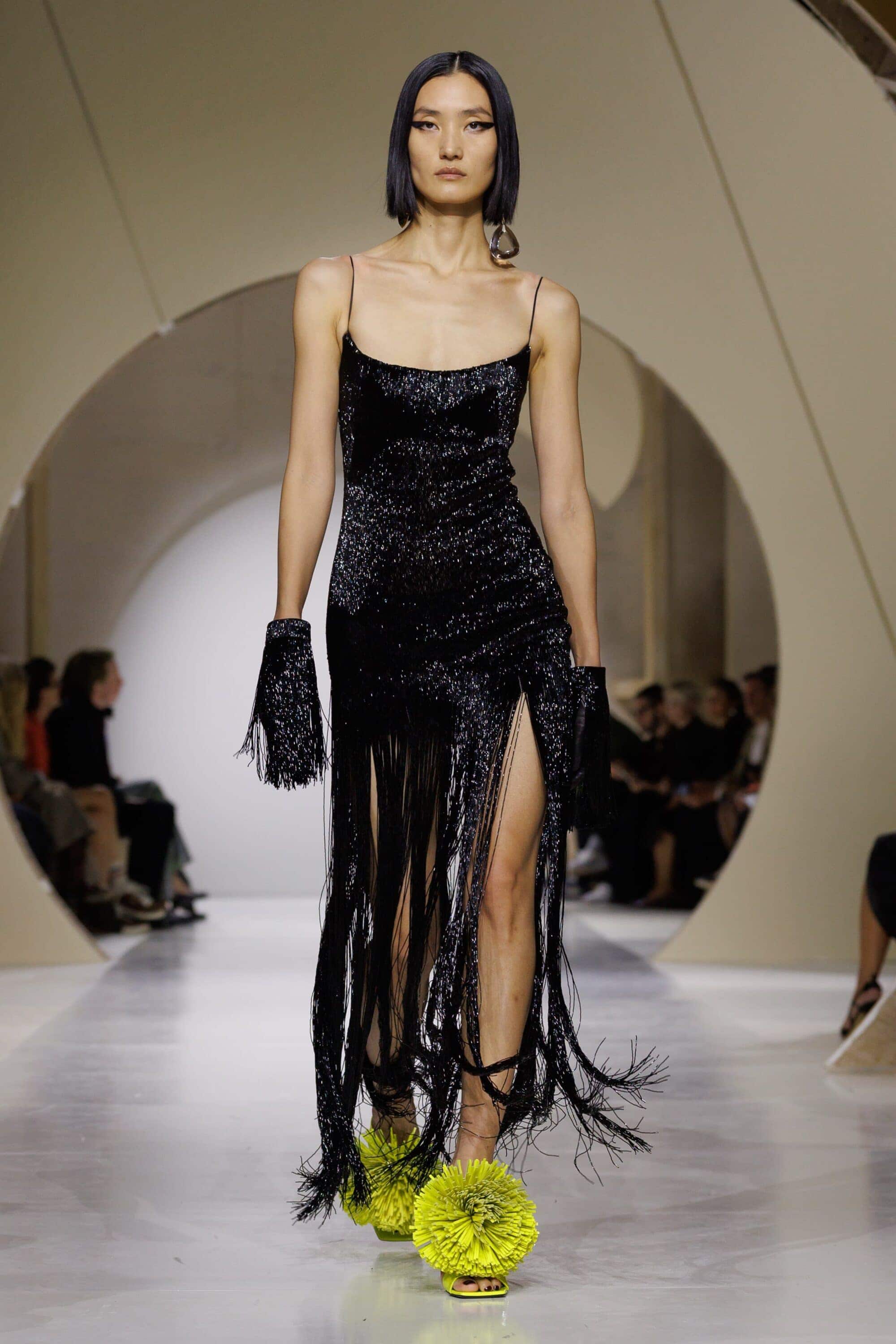
That emotional intelligence is becoming increasingly central to Burton’s Givenchy. She possesses formidable technical skill, but technique is rarely presented as the destination. Cut exists to give confidence. Structure exists to support movement. Craftsmanship brings intimacy. Sensuality belongs to the wearer. Even joy has a job to do.
The collection’s more artisanal passages deepen that feeling. Burton speaks of a woman at home around the turn of the century, of Japanese artistry, embroidery, and the history of craftsmanship within Givenchy. The references are absorbed rather than announced, emerging through panels, surfaces, and details that reward a closer look. For Burton, history seems most useful when it can be carried forward rather than preserved at a distance.
Her Givenchy is increasingly taking shape through these balances: precision and emotion, masculinity and femininity, hardness and softness, simplicity and extraordinary craft. Yet Burton herself seems less interested in resolving those oppositions than in allowing women to move freely among them.
Because a woman can want the suit and the dress. She can want restraint one morning and brilliant green leather that evening. She can feel powerful through precision, sensual through softness, or discover that tomorrow she wants the equation reversed.
Sarah Burton isn’t trying to settle on one answer to who the Givenchy woman is.
She is giving women room to answer that question for themselves.