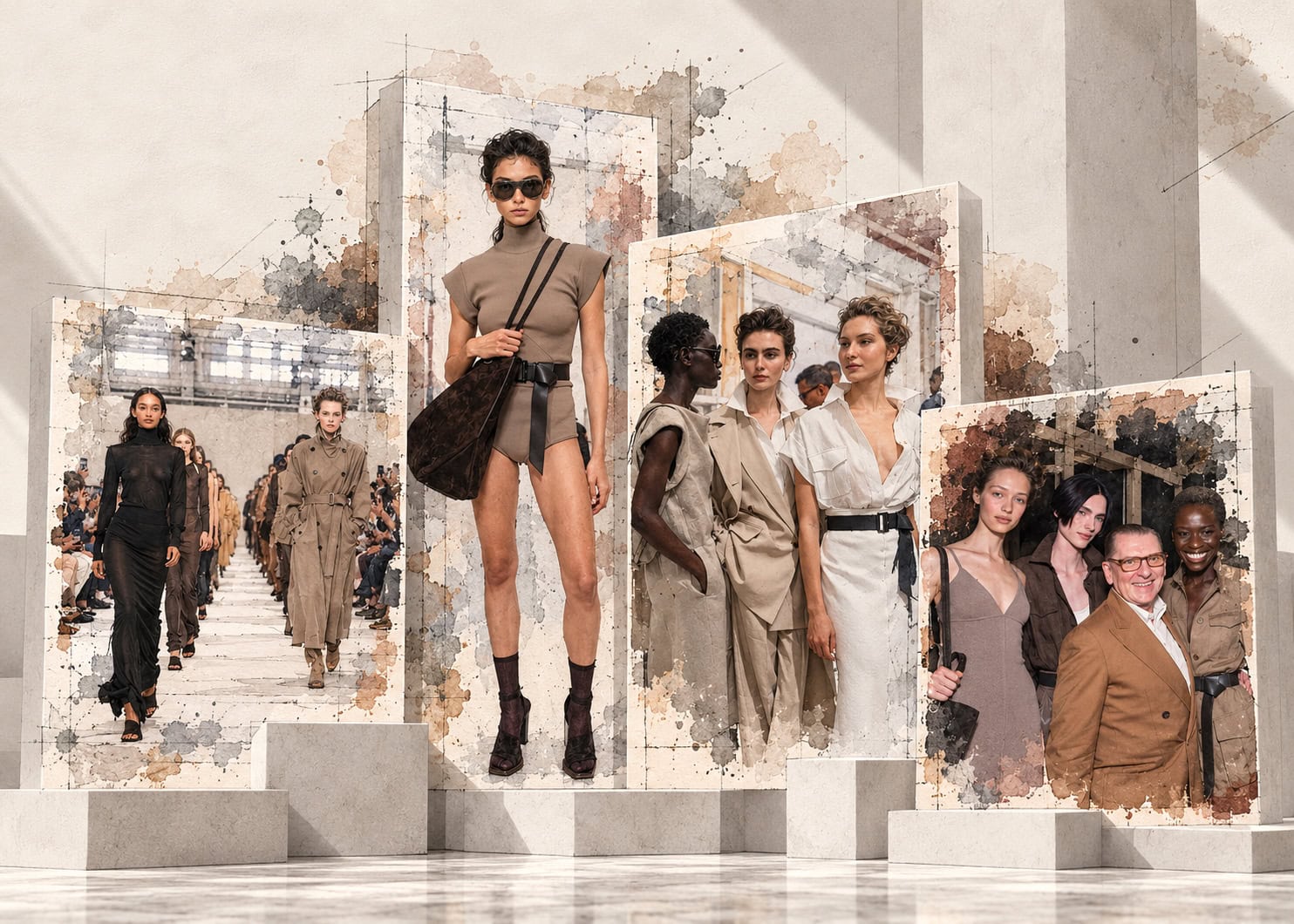
For Spring 2027, The Designer Gives Practicality a Polish, a Belt, and Somewhere Better to Be
By Kenneth Richard
There are pockets everywhere at Max Mara this season. Pockets on crisp safari jackets, on sleeveless vests, on sharply cut trousers and coats that suggest their wearer might be carrying something considerably more interesting than a phone. There are belts cinched decisively at the waist, aviator sunglasses, supple leather, immaculate tailoring and enough expeditionary spirit to make one wonder whether the Max Mara woman has suddenly developed an appetite for the wild.
Ian Griffiths has a simpler explanation. She has somewhere to go.
For Spring 2027, the designer is calling the idea “Utility Lux,” an exploration of the tension between usefulness and elegance that has quietly existed within Max Mara almost from the beginning. Griffiths may have filled his mood board with aviators, explorers and women whose wardrobes were designed around action, but his real protagonist remains much closer to home.
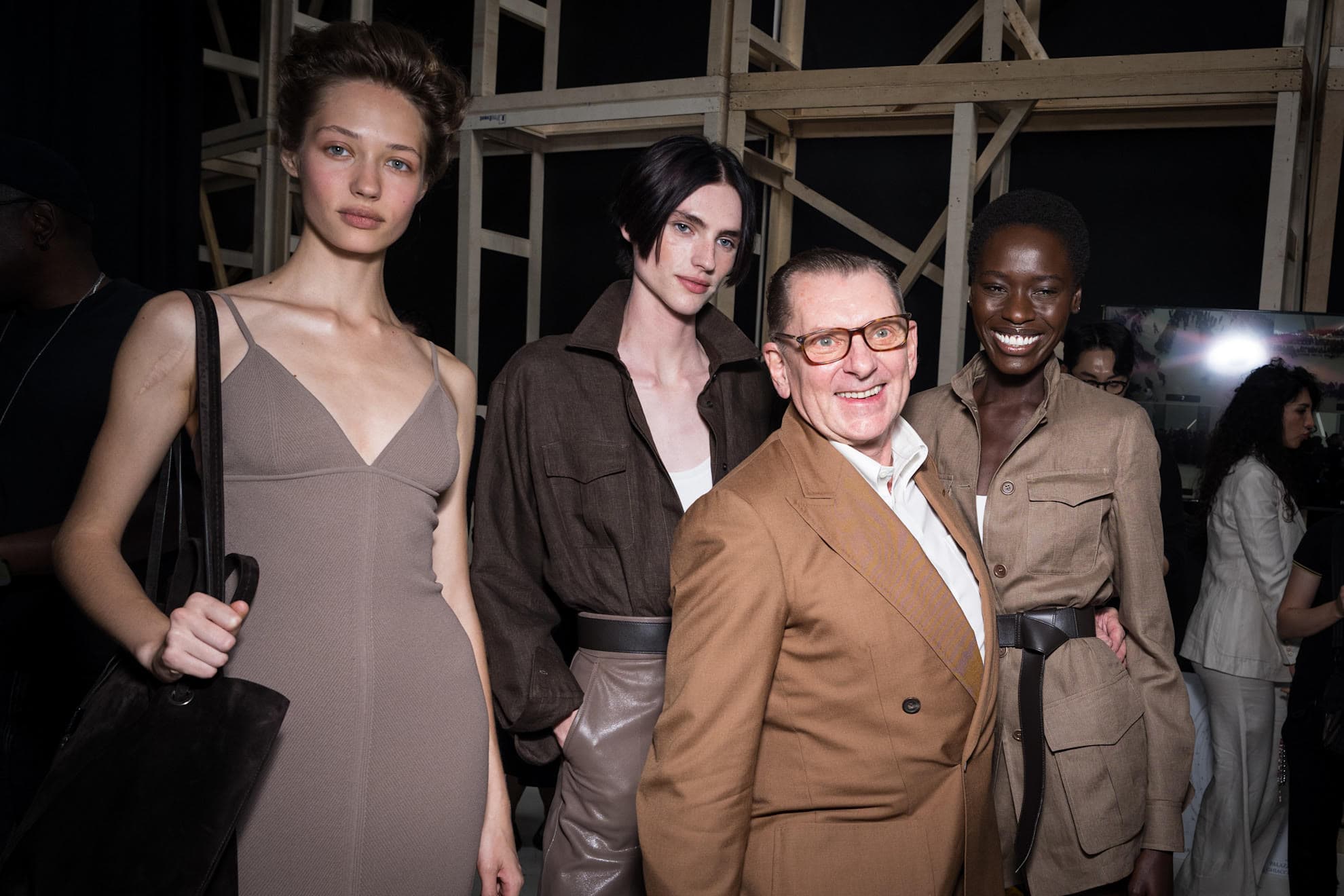
“In all sincerity, people have been asking me, you know, who the woman is, who the narrative, and it’s true that every season we we we cite a theme or a woman from history who we think is based on relevance to what’s happening now, but the recurrent theme running right through the narrative is the Max Mara woman.”
That shift feels particularly timely. Fashion has spent years constructing fantasy worlds around clothes, sometimes asking the wearer to enter the designer’s universe before she can even contemplate entering the clothes. Griffiths is interested in reversing the equation. The fantasy, in his view, should begin with the woman herself.
“In a way, this is only the prelude to the real presentation of the collection, which will be for me seeing a woman walk down the street wearing these clothes because more than ever we’re focusing on the simple mantra mantra of real clothes for real women because I mean that’s what we do.”
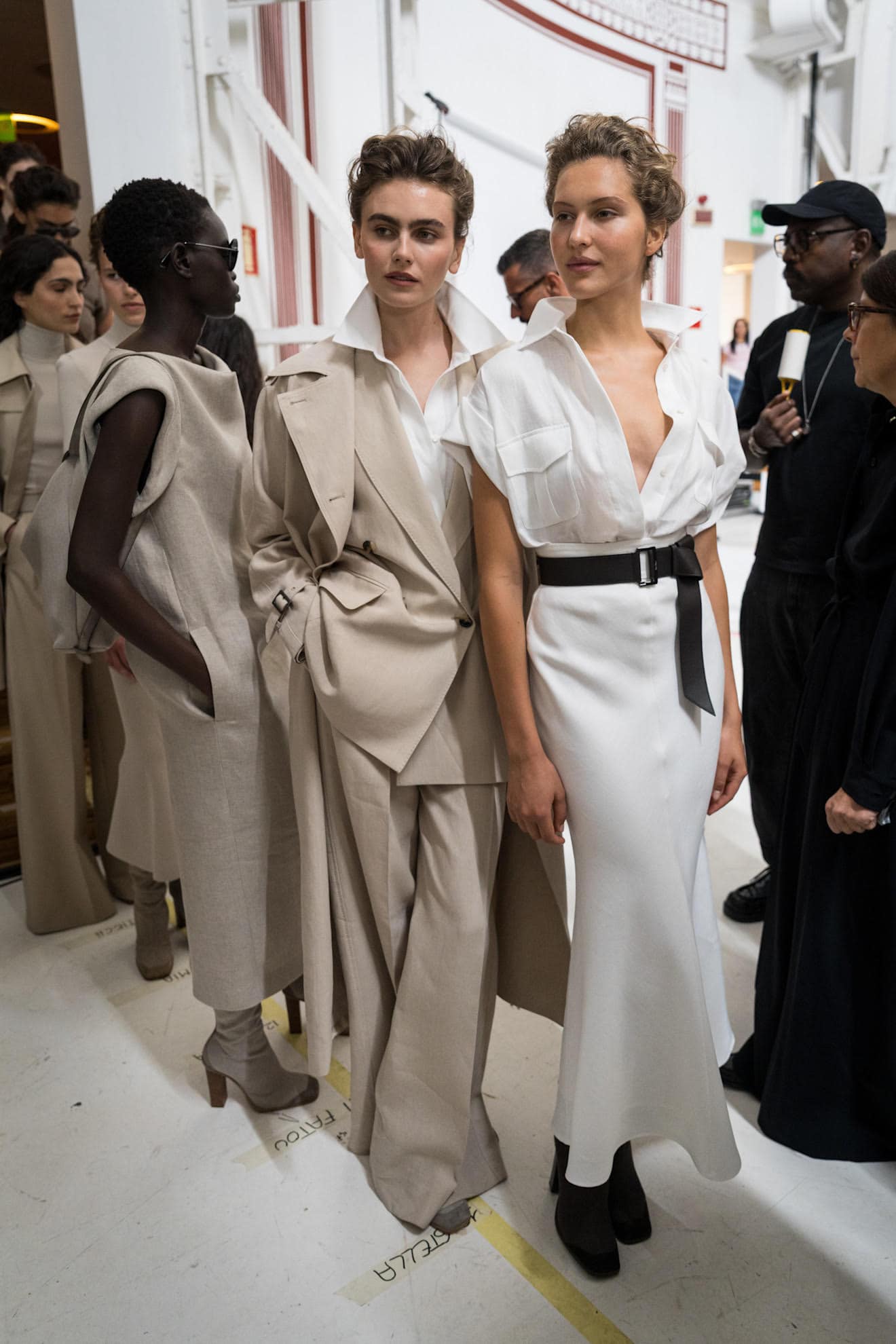
It is a deceptively straightforward proposition. Real clothes have never necessarily meant ordinary clothes, and at Max Mara practicality comes with its own highly specific form of glamour. A utility jacket is elongated until it becomes something closer to a coat. A cargo vest arrives in translucent organza. Safari references are stripped of costume and absorbed into the controlled precision of the house. Even the pockets seem less interested in storage than in attitude.
The runway underscored that duality. Monochromatic camel, tobacco and warm earth tones gave way to crisp white, blackened chocolate and flashes of deep blue. Wide-legged trousers were paired with abbreviated jackets; lean skirts sat beneath belted outerwear; sheer pieces exposed the architecture beneath them. There was a deliberate sensuality to the way the collection balanced coverage and exposure, toughness and softness.
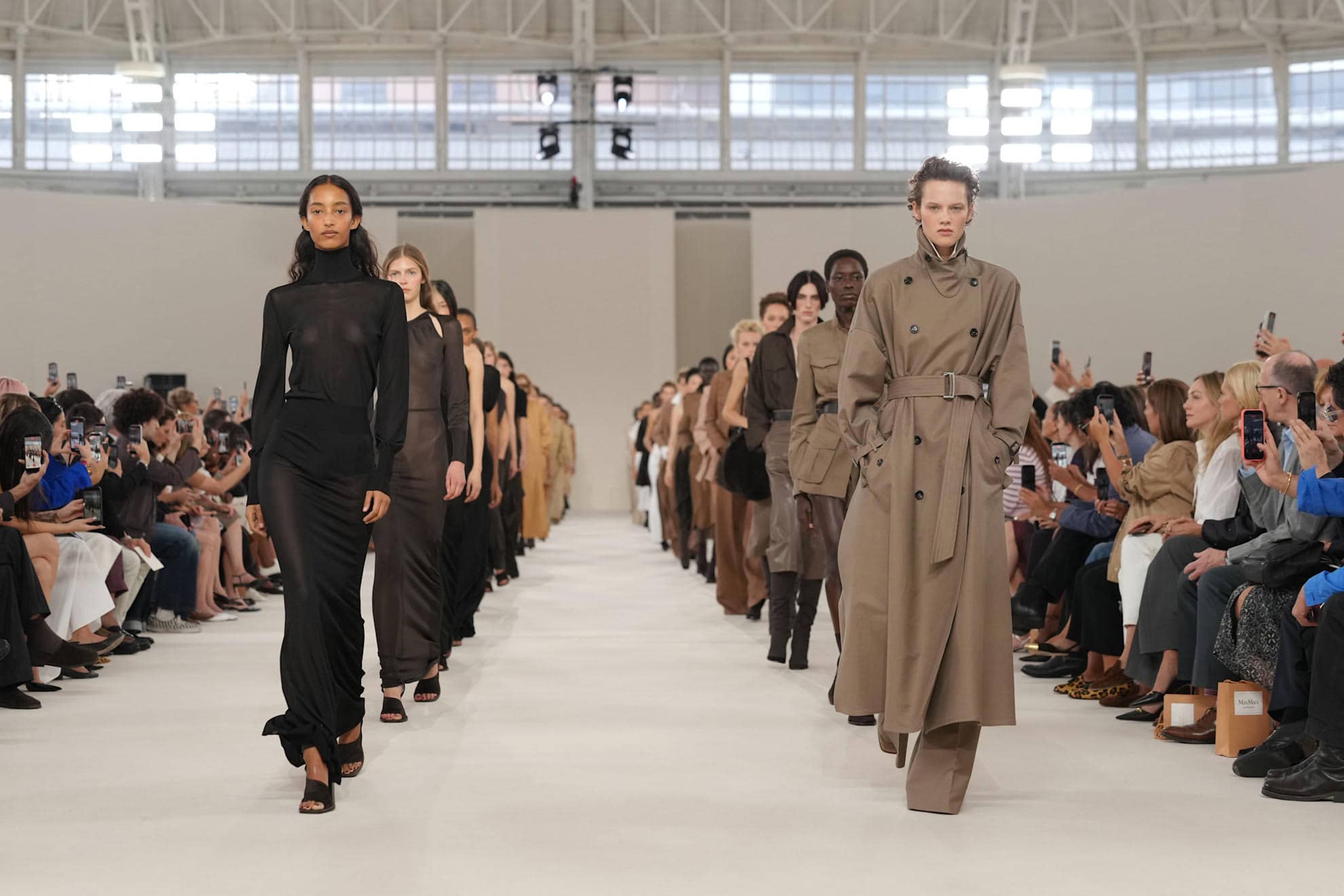
Griffiths sees that practicality as part of a much longer fashion history. Sporting and expedition clothes, he points out, once carried their own social signals: hunting jackets suggested country estates; safari jackets implied distant travel. Utility could communicate privilege precisely because it suggested a life that extended beyond the formalities of the city.
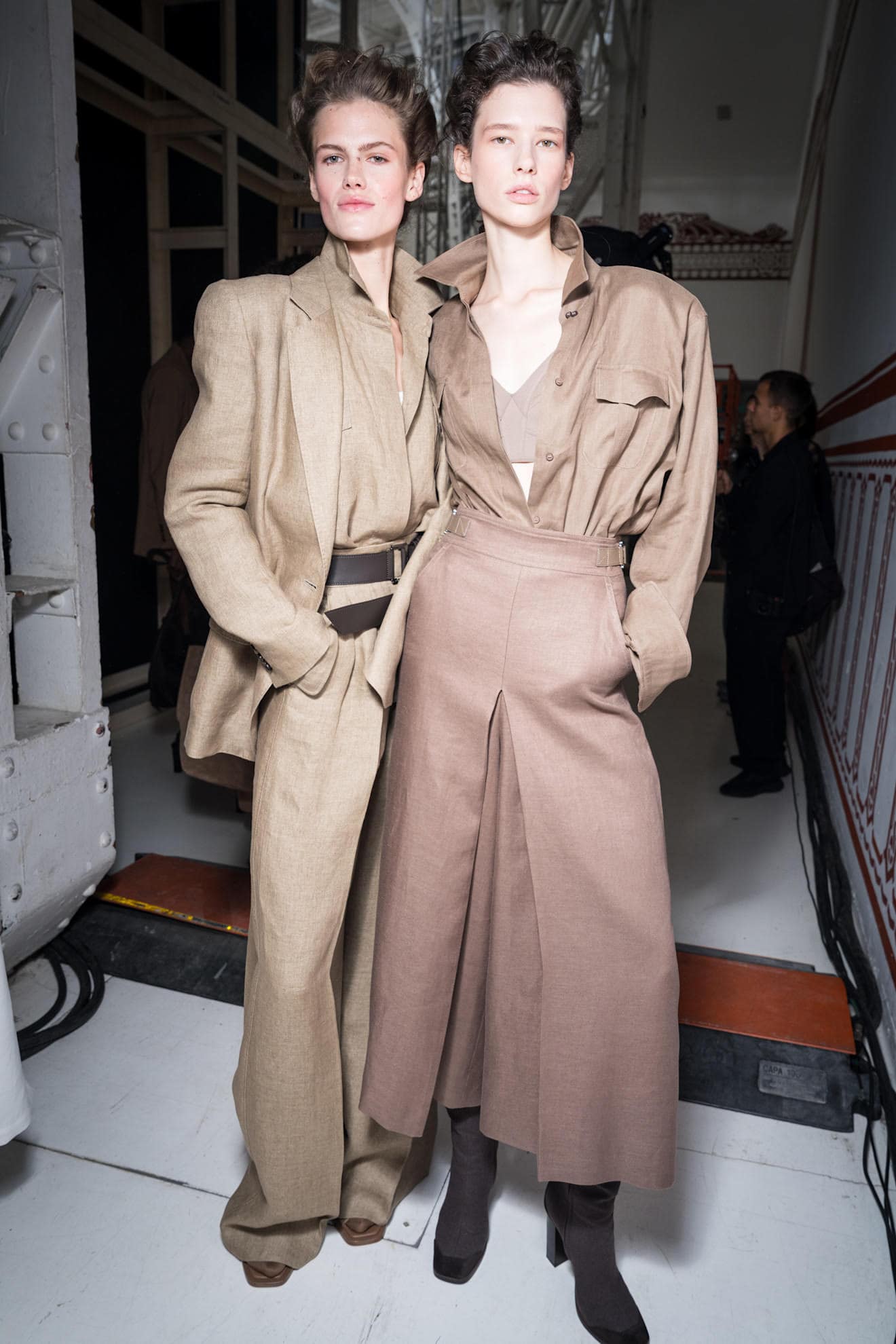
That history gave Griffiths plenty to play with. Amelia Earhart appeared on his research board, her aviator wardrobe translated into bomber jackets, flight-inspired outerwear and sunglasses that referenced goggles. Elsewhere, images of women explorers and adventurers provided a language of clothing designed for movement rather than display.
“The women we looked at were-they’re all, you know, very, very audacious women,” he explained. “They were all like pioneers of their time, all noted for wearing very, very stylish but practical clothes.”
The Max Mara archive supplied another layer. Griffiths pointed to Carolyn Murphy photographed by Steven Meisel in 1993, a reminder that this tension between polish and purpose is hardly a new arrival at the house. What changes is the context around it. In 2027, utility no longer needs to imply roughness, and elegance no longer requires preciousness.
That may be the collection’s smartest proposition. Griffiths understands that there is something faintly ridiculous about imagining a woman loading compasses and notebooks into an organza cargo vest. He is in on the joke. Utility here is emotional as much as functional: clothes that make getting dressed easier, that help someone feel composed, capable and prepared before she steps out the door.
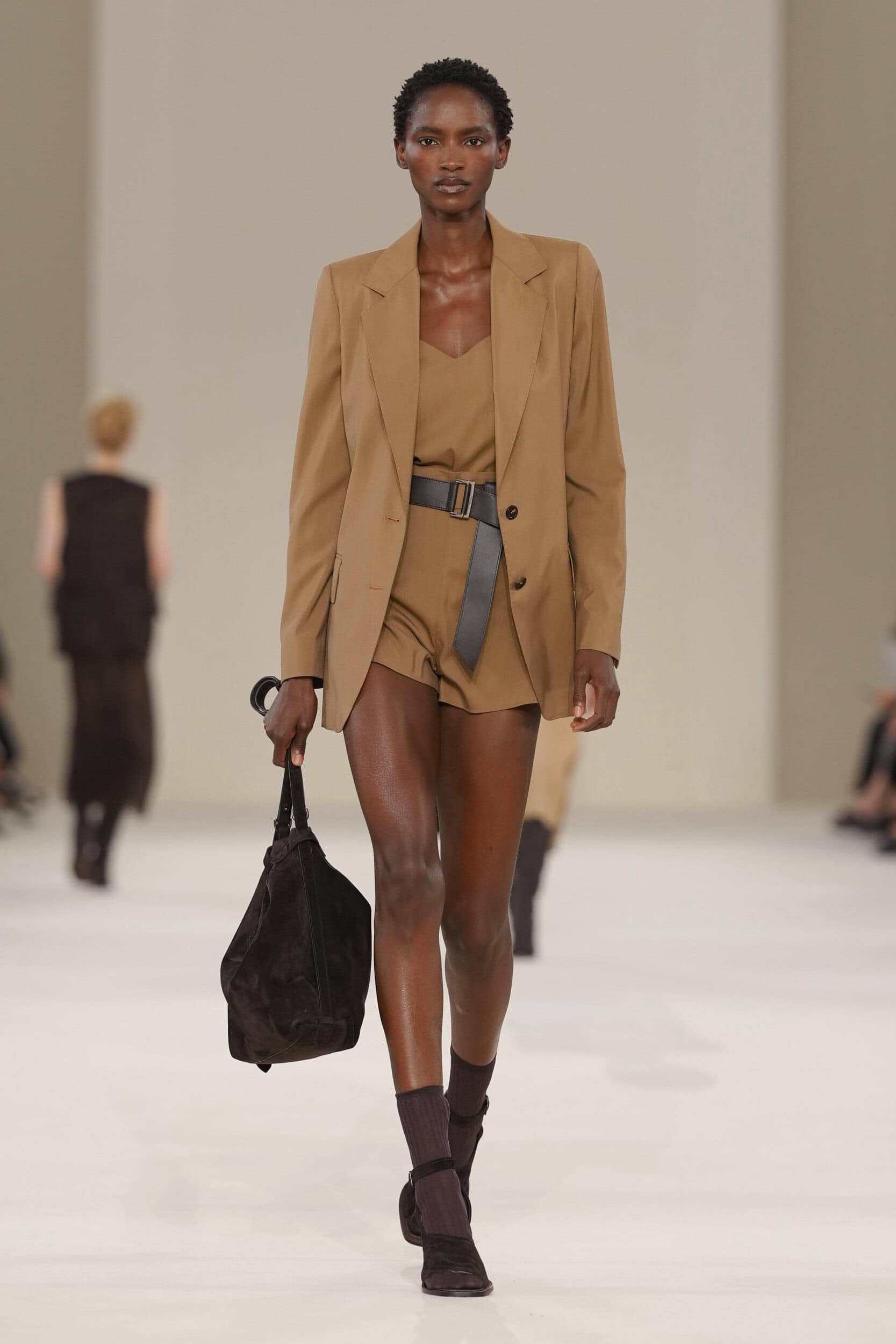
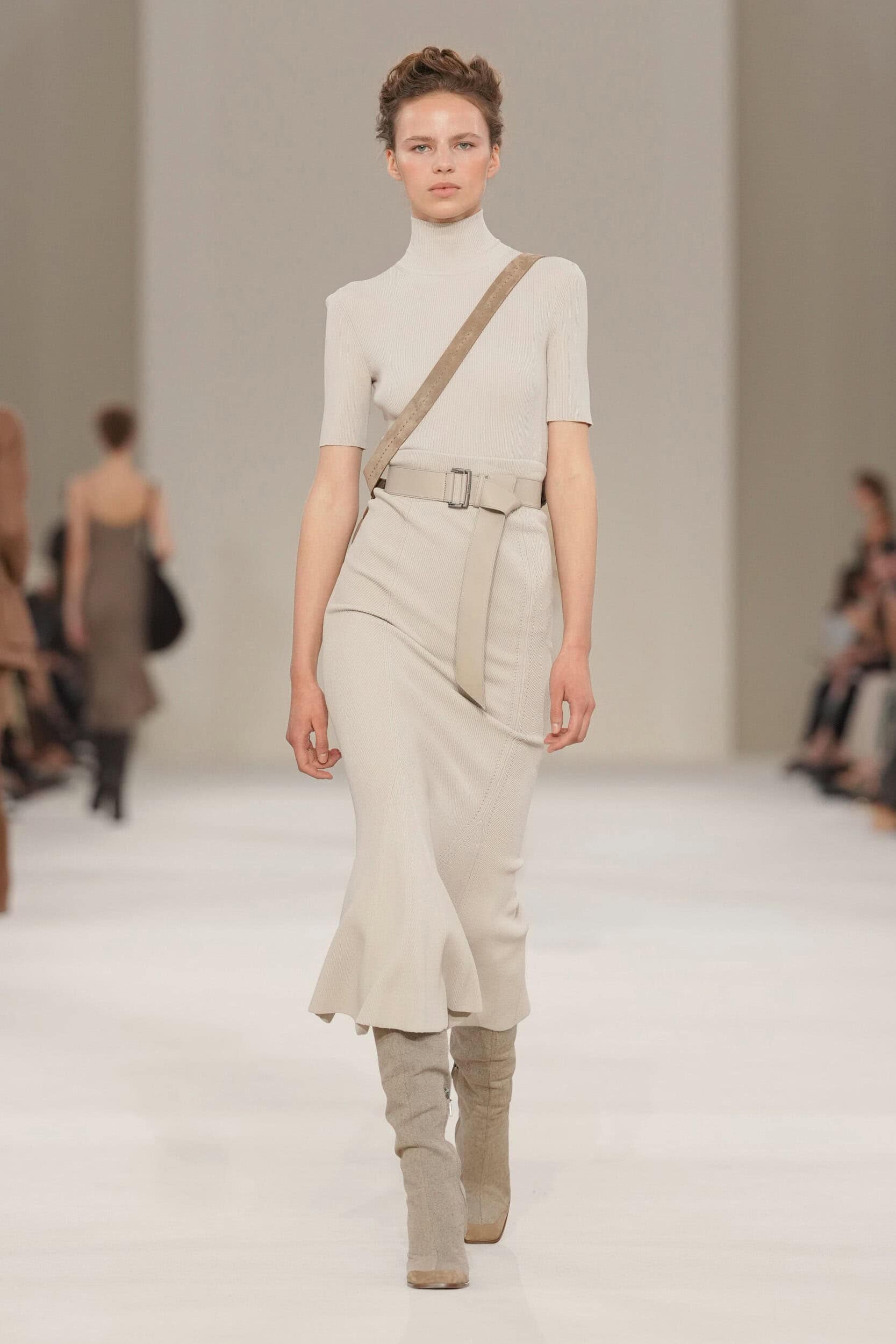
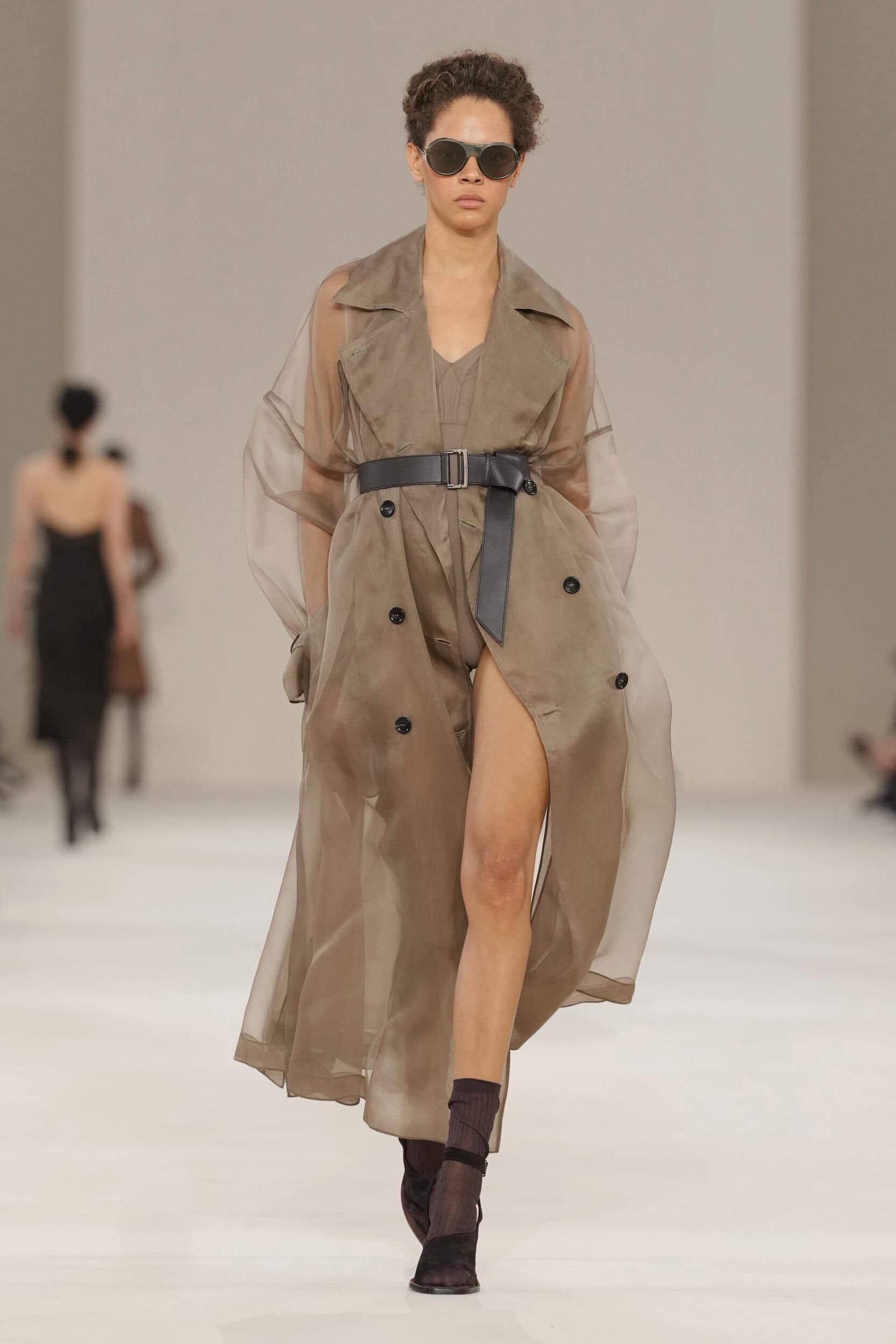
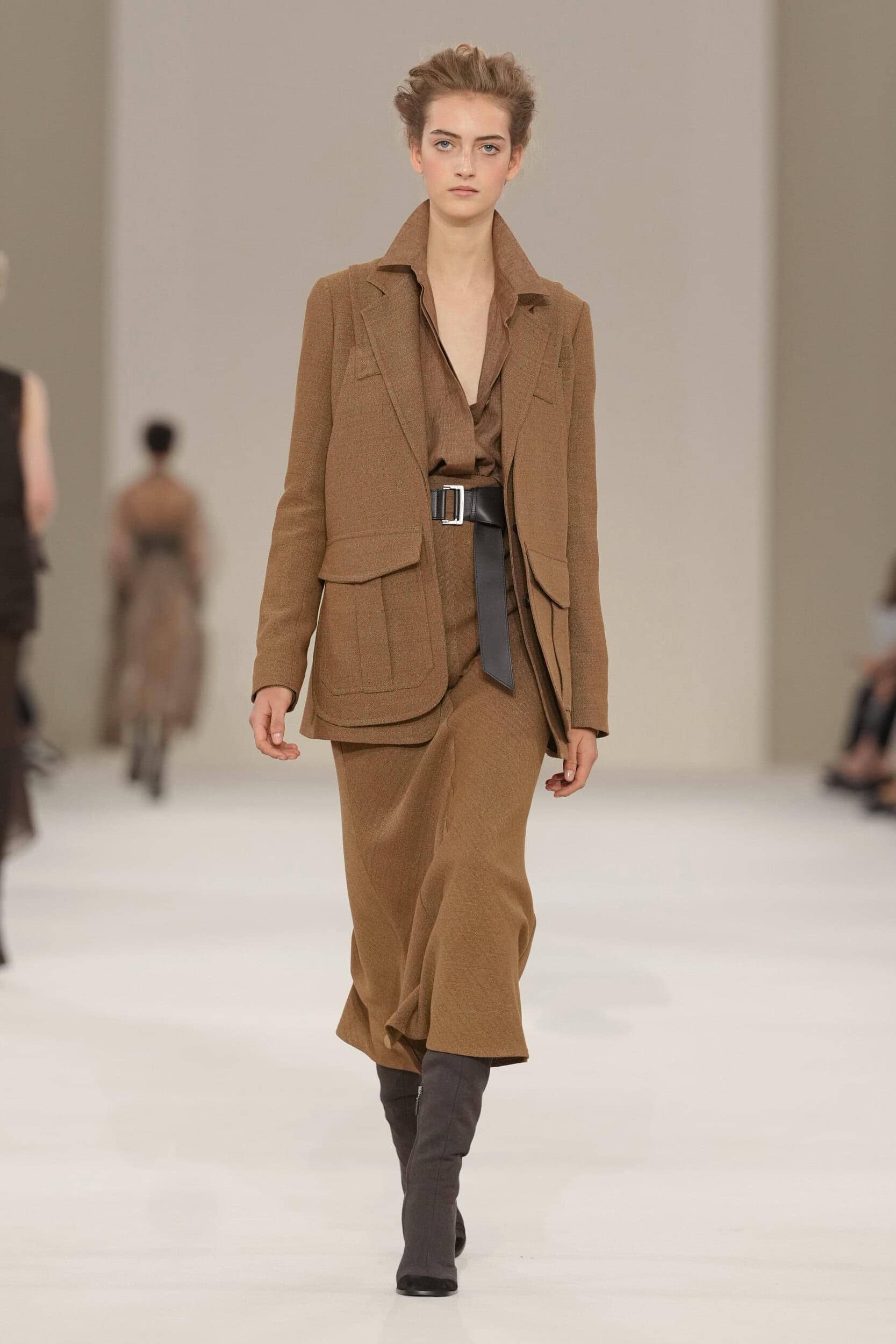
It is also why the collection avoids becoming a parade of perfectly coordinated total looks. Griffiths deliberately introduced contrast, acknowledging that most women are unlikely to organize their lives around making sure every garment matches perfectly each morning. The dark chocolate and white combinations, the interplay of neutrals and sharper accents, and the mix of textures all give the clothes more room to exist independently.
The phrase Griffiths repeatedly returns to is “grown-up elegance.” It may sound almost radical at a moment when so much fashion is preoccupied with novelty, youth or provocation. For Max Mara, however, adulthood has never been something to disguise. It is part of the appeal.
“I think it’s really important to hold up a mirror, and I hope that everybody watching the show can sort of recognize an aspect of themselves, or is someone that they could be that’s within reach.”
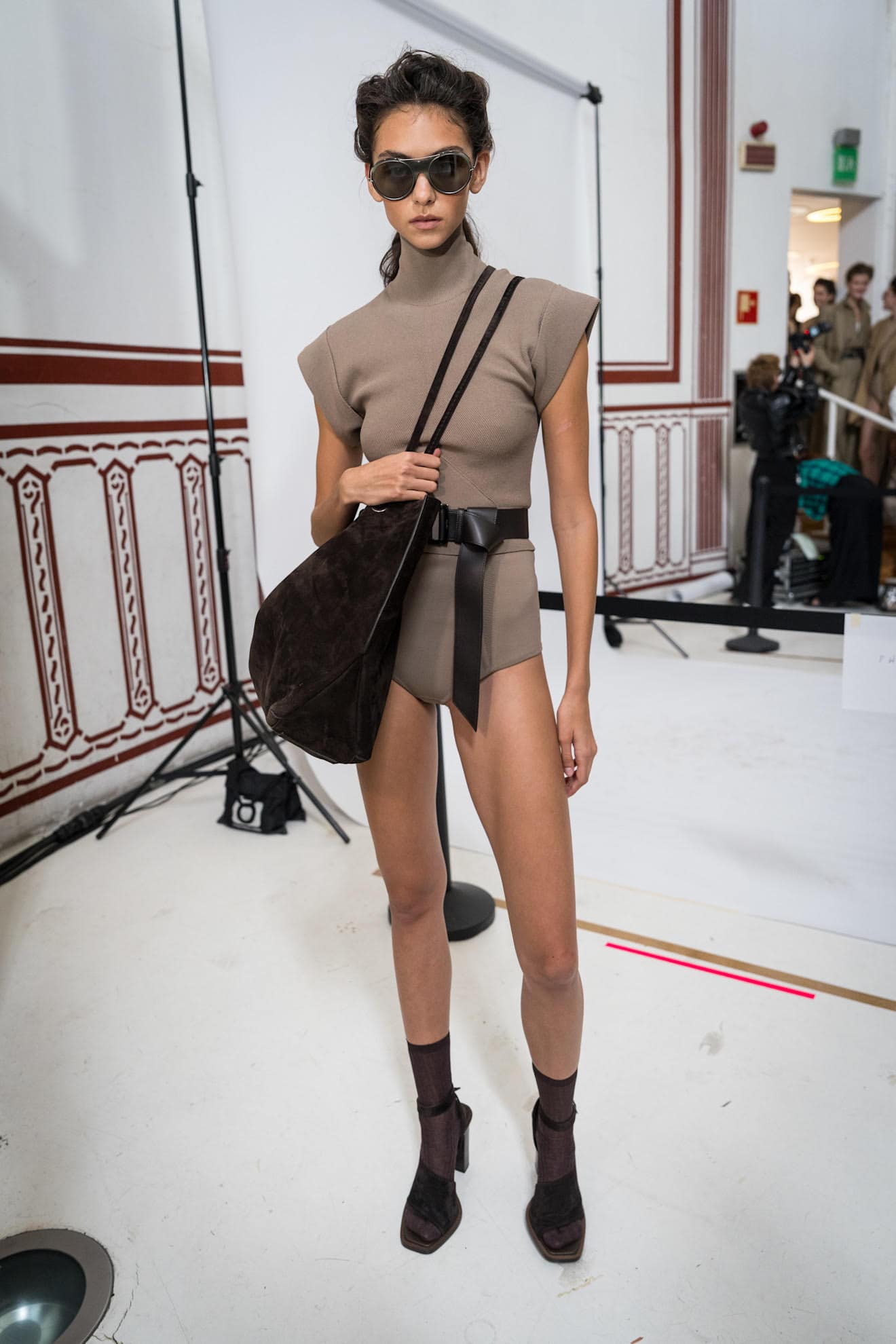
That idea of being “within reach” is perhaps more revealing than anything else Griffiths says. Max Mara’s fantasy has always worked because it does not ask women to become someone entirely different. It proposes a slightly more assured version of themselves: better coat, better trousers, sharper sunglasses, perhaps a belt pulled a little tighter before heading out the door.
Even Griffiths’ imagined campsite comes with caveats. Asked about a tent pictured on his board, he laughed at the thought of the Max Mara woman actually pitching one.
“I don’t know. Maxwell woman wouldn’t normally expect it to find her on a campsite.”
Then came the inevitable evolution of the joke: perhaps a camel tent. Perhaps somewhere near Bond Street.
Which is precisely where the collection lands. Somewhere between Amelia Earhart and a woman hailing a taxi; between expedition gear and immaculate tailoring; between the romance of going somewhere extraordinary and the very real requirement to simply get through the day looking good.
At Max Mara, practicality has rarely looked so prepared for adventure.