Jacques Marie Mage Revisits Its Icons Through Time
Review of Jacques Marie Mage Fall 2026 Ad Campaign with Photographer Horst Diekgerdes
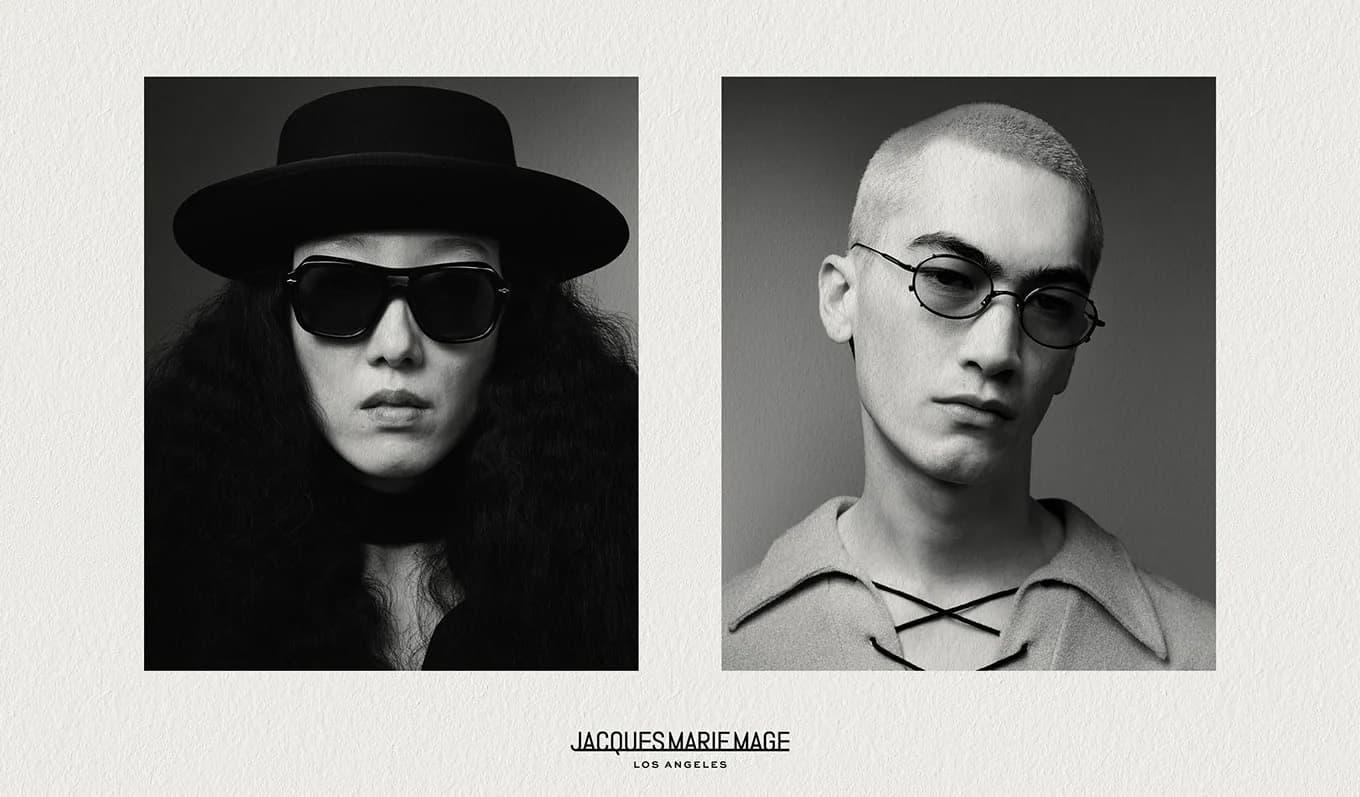
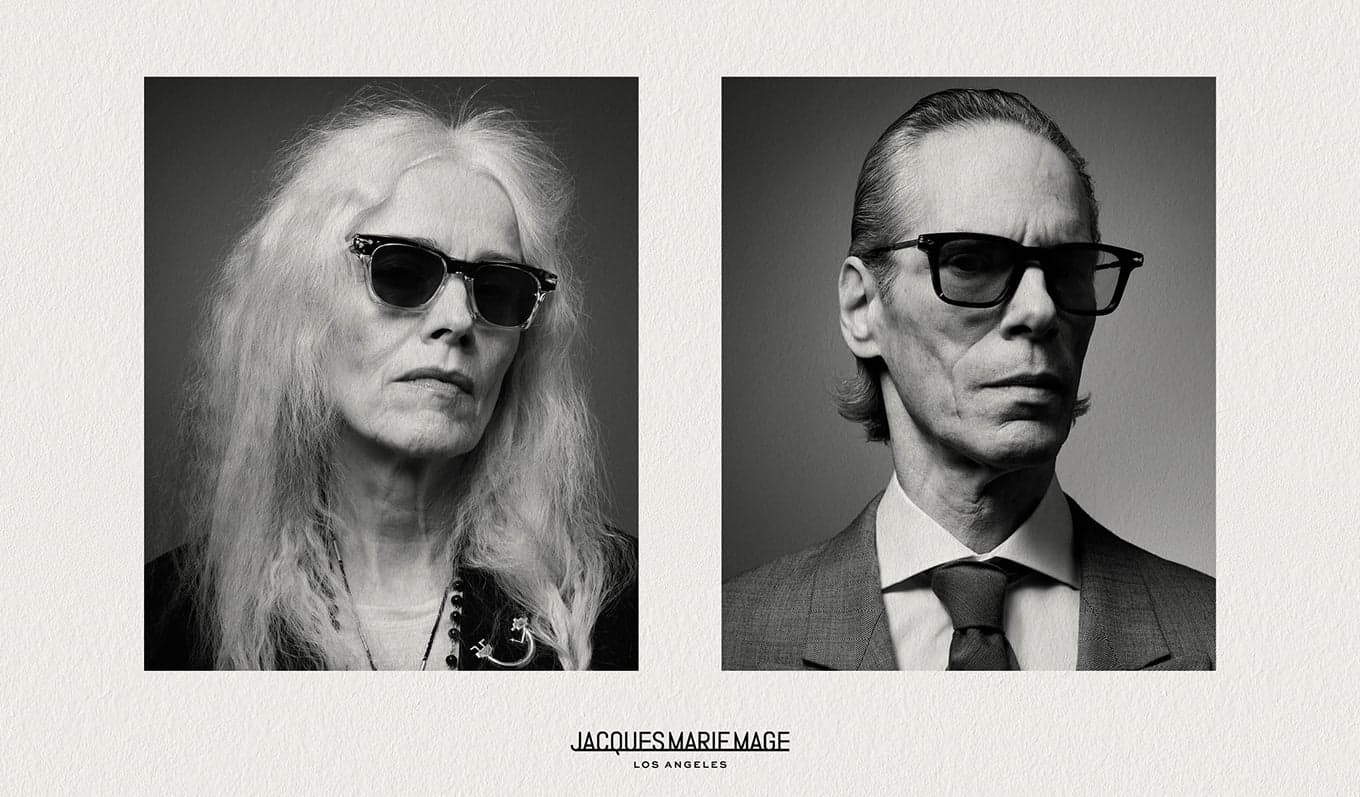
Jacques Marie Mage has built its identity around the idea that eyewear can carry the weight of an entire aesthetic attitude. For Summer 2026, the independent luxury eyewear house revisits that proposition with “Iconographies,” a campaign celebrating the silhouettes and cultural references that have shaped its visual language over the past decade. Photographed by Horst Diekgerdes, the portraits bring together a diverse cast styled through the distinct sensibilities of midcentury refinement, 1970s excess, and early-2000s minimalism. The premise is familiar territory for a brand rooted in archival influence, but familiarity, as JMM suggests, need not mean standing still.
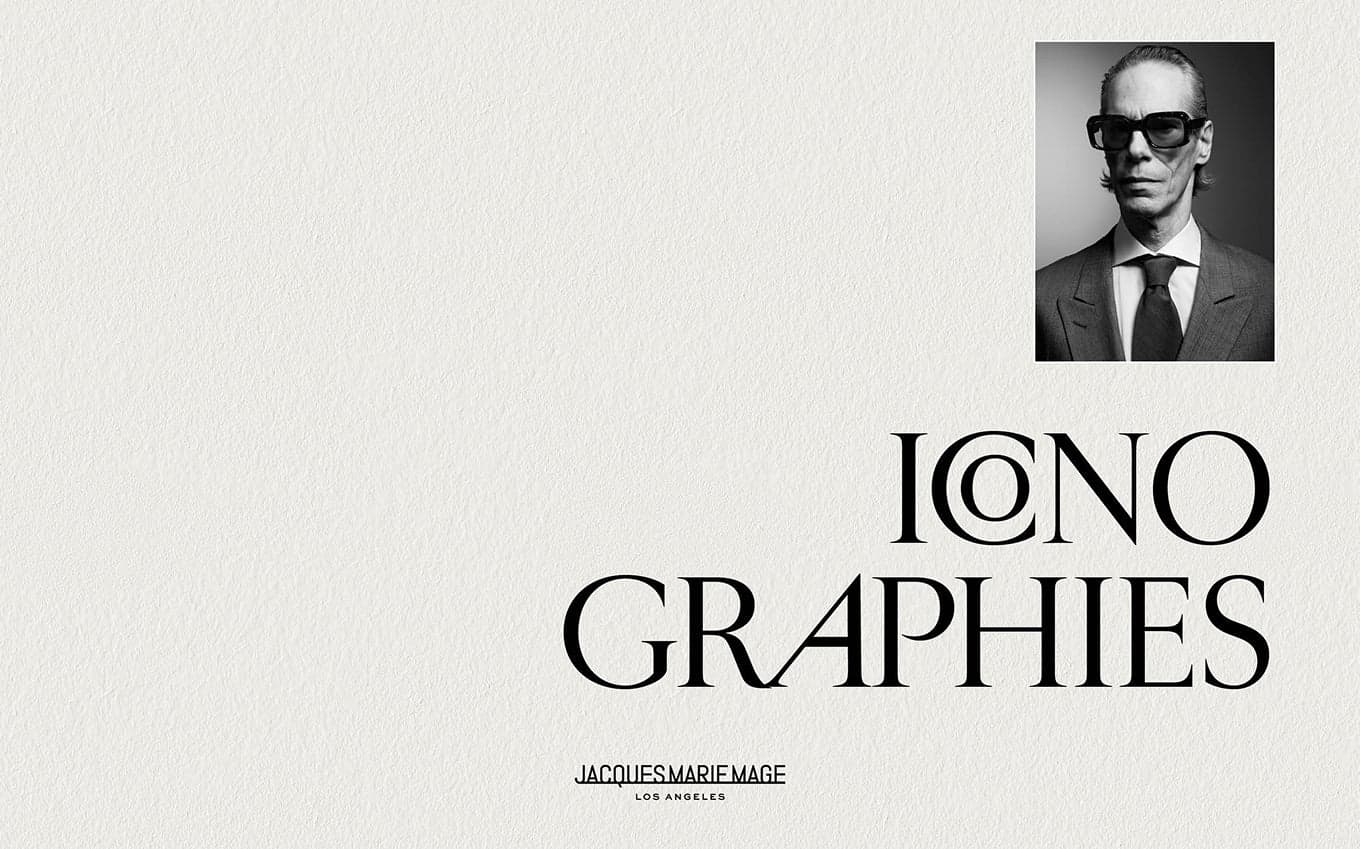
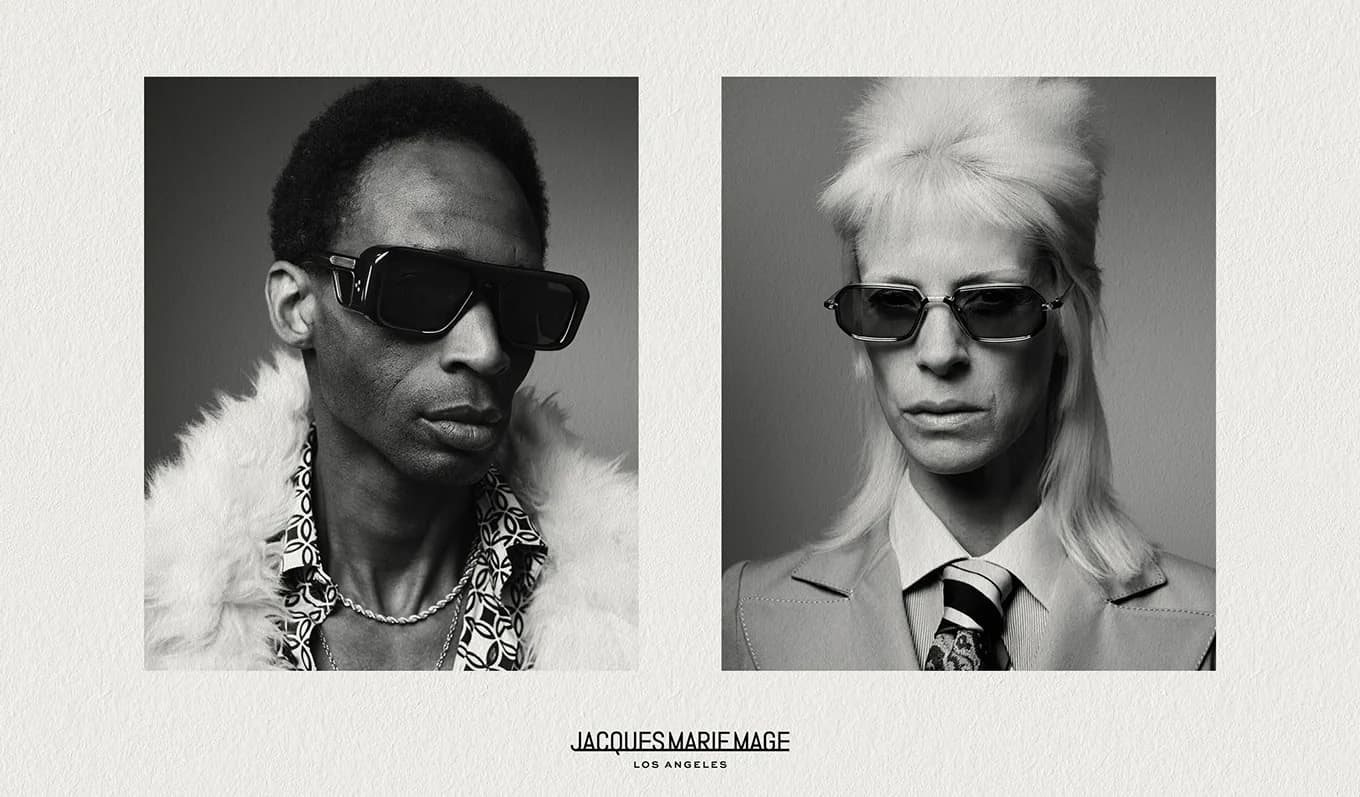
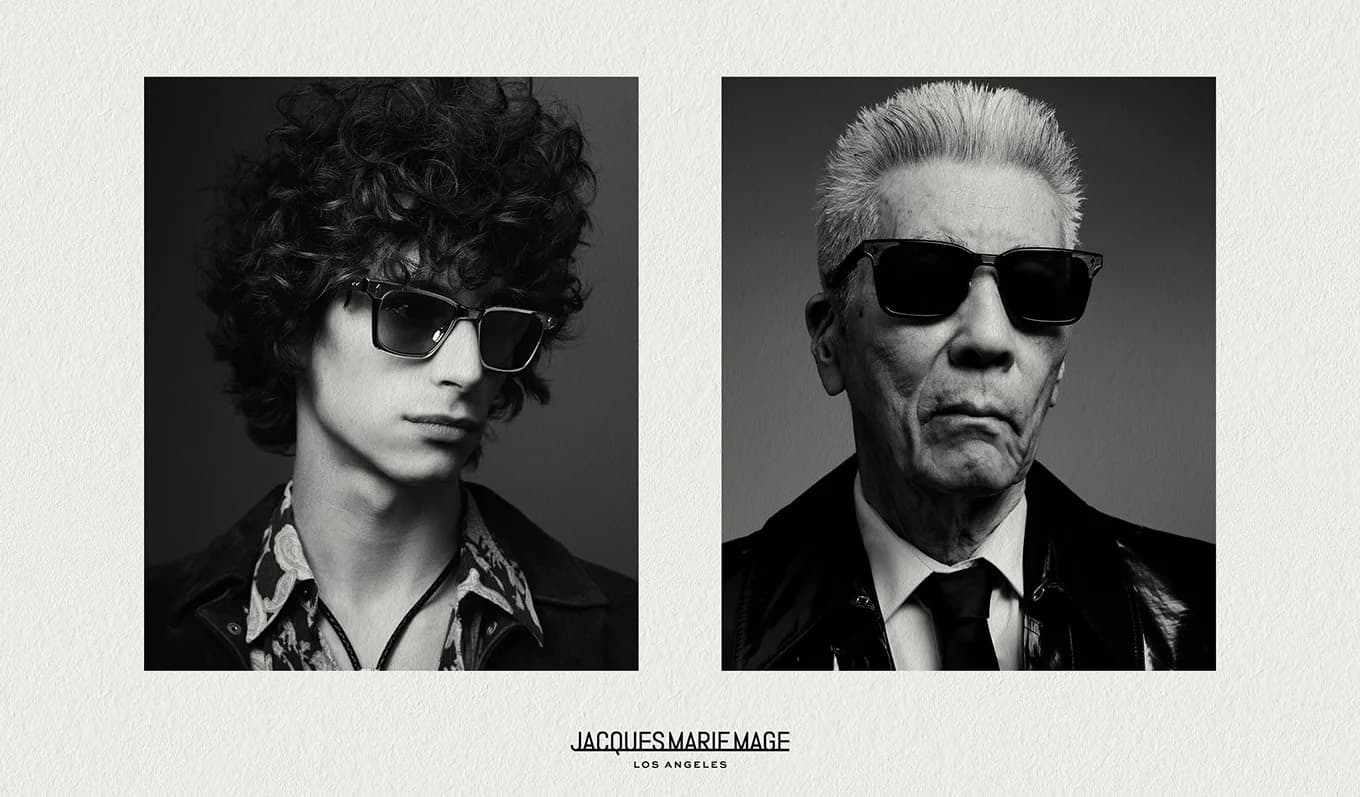
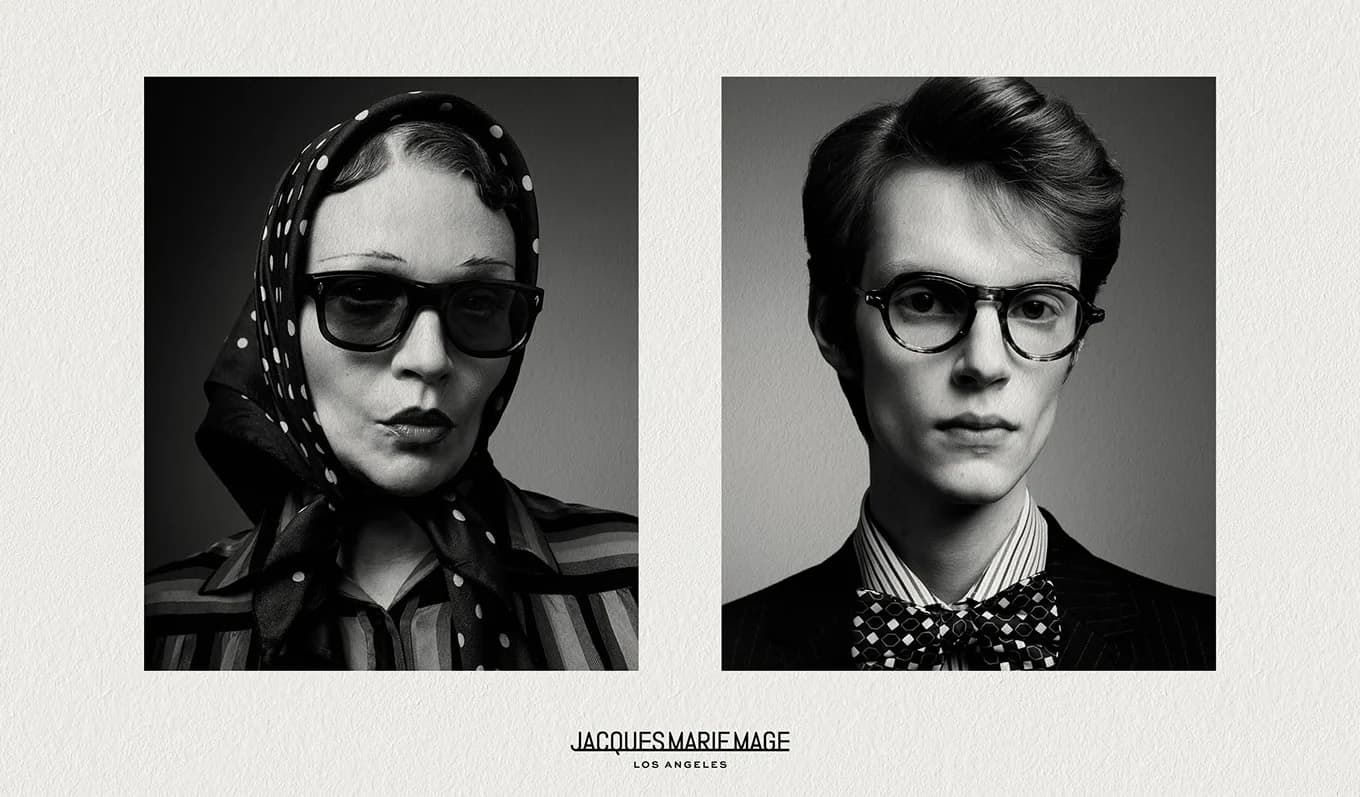
Rendered in black and white, the imagery takes the form of a series of tightly composed studio portraits against understated backgrounds. Each subject adopts a distinct character through eyewear, tailoring, and styling, from sculptural sunglasses and patterned headscarves to oversized frames, sharp suiting, and expressive proportions. The result feels less like a conventional eyewear advertisement and more like an editorial study of personal identity. Diekgerdes gives the portraits a distinctly cinematic quality, allowing the frames to become defining features of each character rather than accessories competing for attention.
The campaign’s strongest idea is its treatment of eyewear as a cultural signifier. Its three visual directions trace different relationships between fashion and design: the intellectual restraint of midcentury modernism, the mechanical glamour of 1970s motorsport, and the pared-back sensuality of the late 1990s and early 2000s. Rather than presenting these references as isolated historical exercises, JMM brings them together through a shared language of individuality and craftsmanship. The styling is particularly effective in suggesting how a pair of frames can alter not only an appearance but an entire attitude.
Beyond the visual nostalgia, the collection introduces a significant technical development through its TI Series. Three established silhouettes, DEALAN, ZEPHIRIN, and TORINO, are reengineered in beta titanium, marking a new chapter in the house’s approach to material innovation. Developed over more than three years, the frames are made using Grade 6 titanium, with fronts formed from six-millimeter sheets through a specialized 700-ton press before undergoing precision milling, hand-polishing, and two-tone metal plating. Paired with cured cellulose acetate temples, the designs bring together industrial engineering and the meticulous finishing associated with traditional eyewear craftsmanship.
There is, however, an opportunity to bring this technical achievement further into the campaign’s visual storytelling. The portraits communicate character and historical influence with conviction, but the considerable engineering behind the TI Series remains largely a supporting narrative. More detailed product imagery or closer attention to the frames’ construction could have strengthened the connection between the collection’s visual identity and its material innovation. Still, the restraint of the photography gives the campaign a cohesive editorial presence, avoiding the temptation to turn a technically ambitious collection into an overly literal demonstration.
With “Iconographies,” Jacques Marie Mage makes a compelling argument for the longevity of design through reinterpretation. Its references may belong to different decades, but the underlying appeal is less about looking backward than understanding why certain forms endure. After all, an icon does not need to announce its arrival; sometimes, the right pair of glasses does the talking.
Photographer | Horst Diekgerdes