Sole Occupants
Review of JW Anderson X Ugg Holiday 2026 Ad Campaign by Jonathan Anderson with Photographers Tanya and Zhenya Posternak with models Kaia Gerber and Dev Hynes
JW Anderson’s collaboration with Ugg makes a persuasive case for getting dressed without getting very far. Photographed by Tanya and Zhenya Posternak, with creative direction by Jonathan Anderson, the campaign finds Kaia Gerber and Dev Hynes occupying sofas, chairs, and a bed with the loose-limbed assurance of people whose afternoon has no pressing appointments. The shoes combine the familiar grammar of a penny loafer with Ugg’s sheepskin-lined comfort, introducing a small identity crisis at ground level. Are we going out or staying in? Anderson appears perfectly happy to leave both options open.
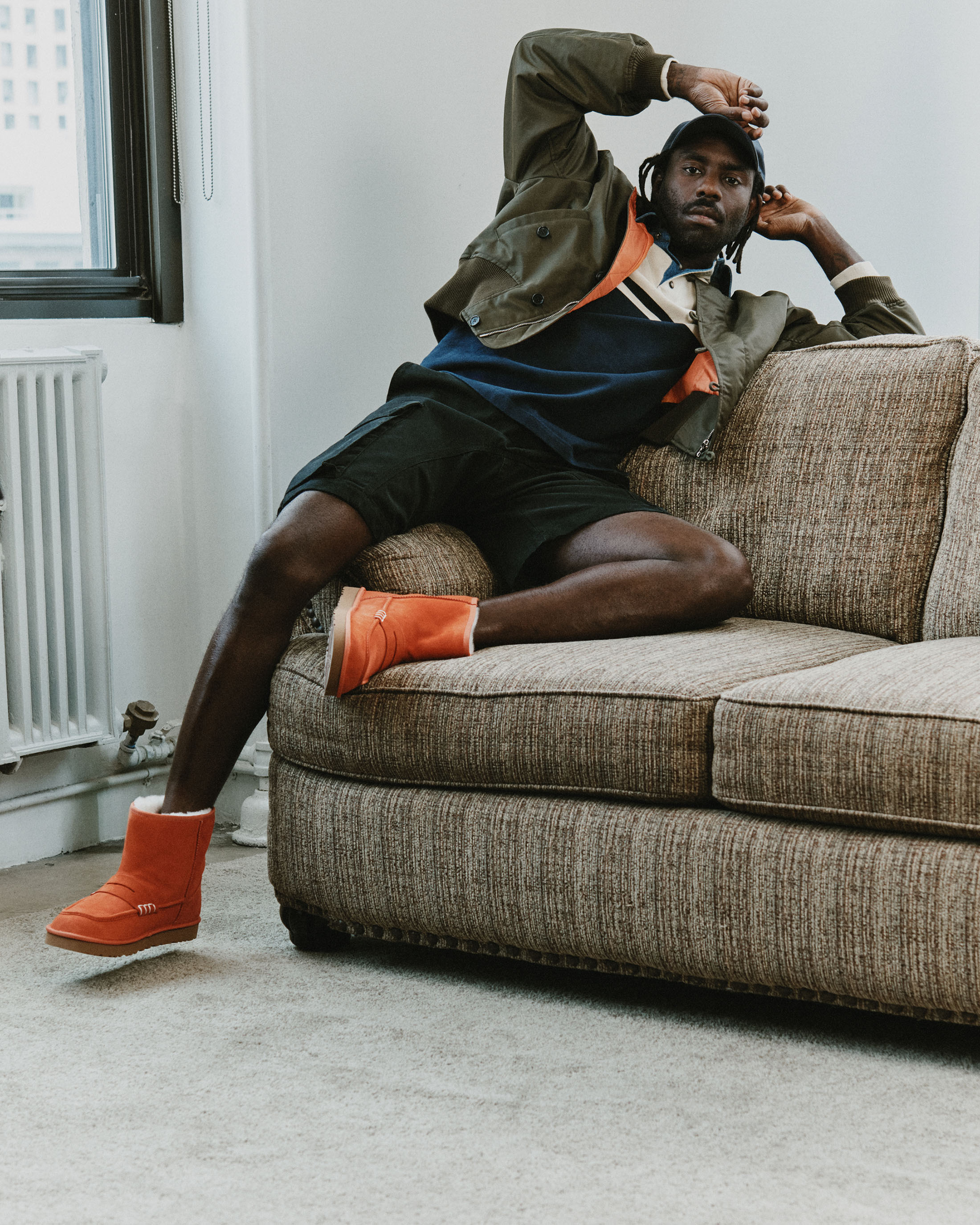
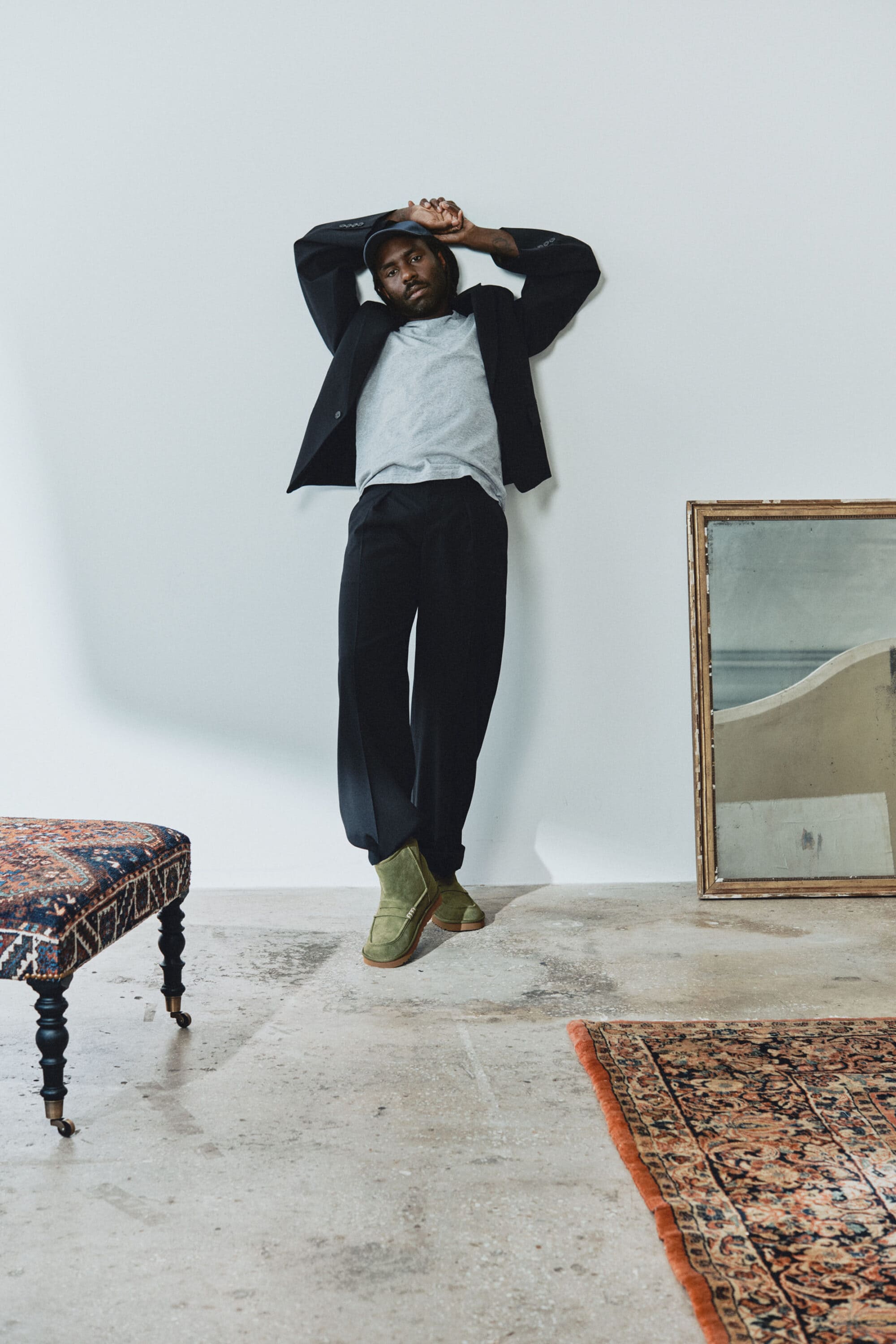
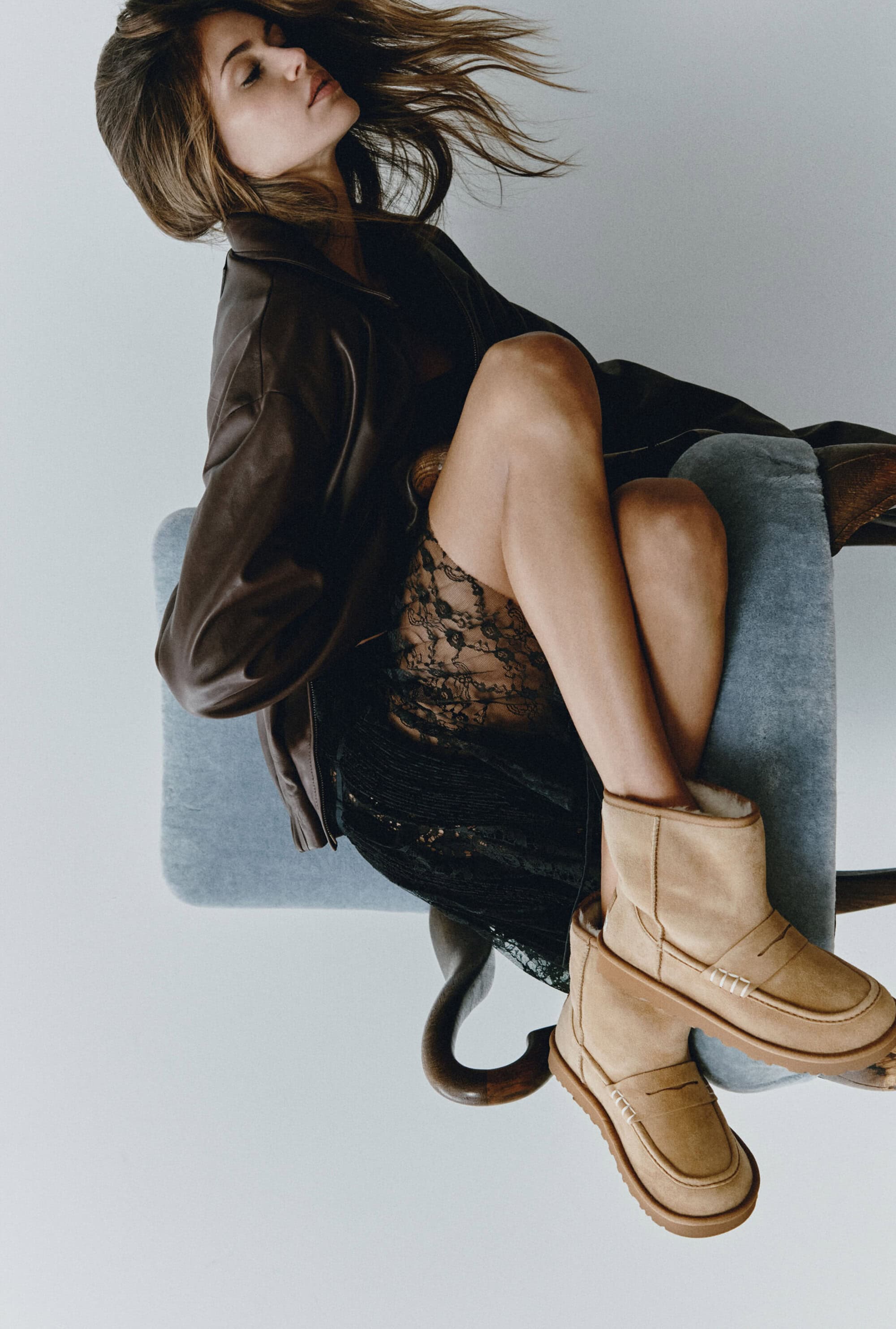
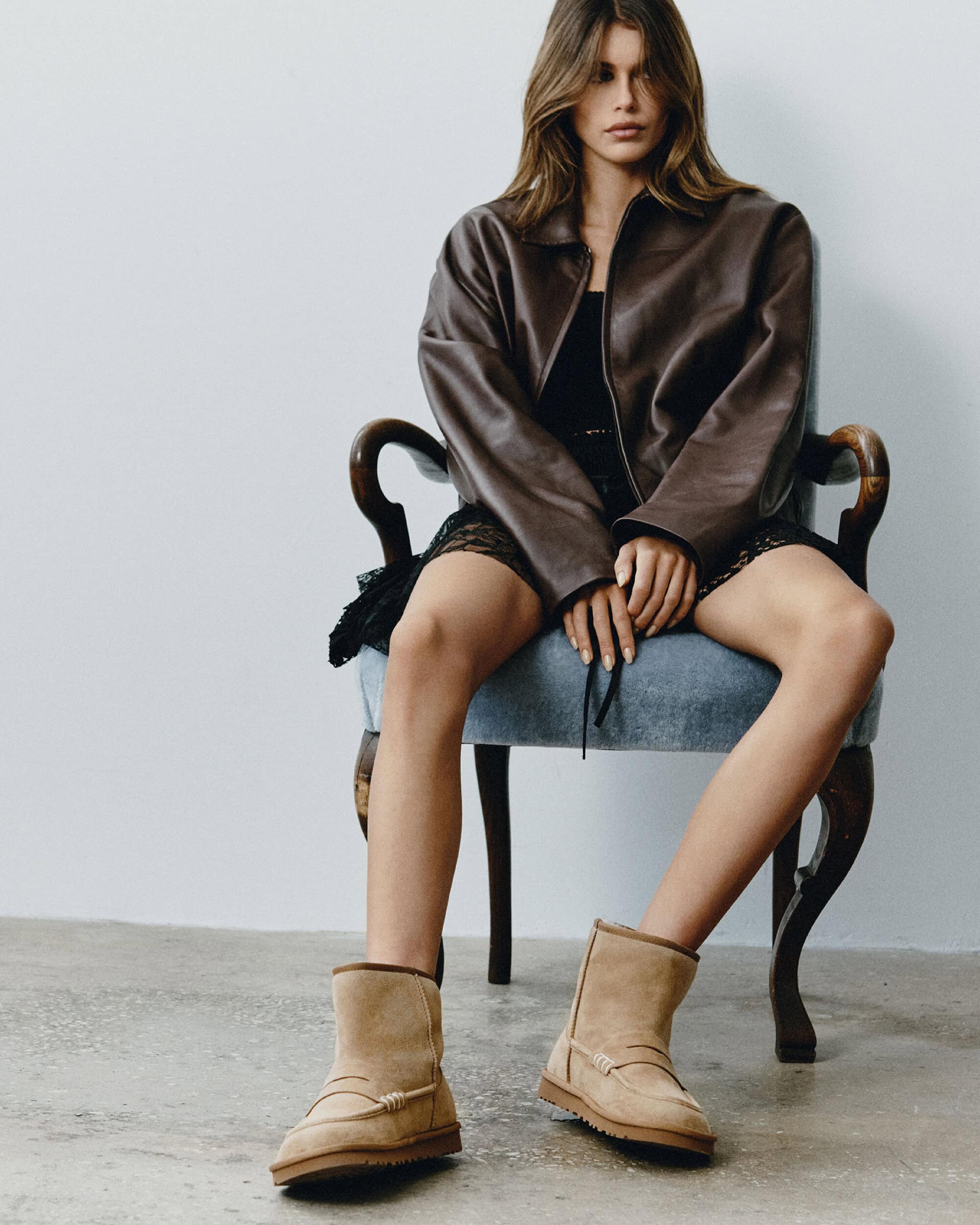
The domestic setting gives that uncertainty somewhere convincing to live. Pale walls, a radiator, worn flooring, patterned upholstery, and rumpled white bedding establish a home through modest particulars rather than a grand architectural statement. Julia Wagner’s set design leaves enough room around the furniture for the bodies to supply the composition. Hynes stretches against a wall between a patterned stool and a leaning mirror; Gerber folds herself into a blue upholstered chair. These rooms accommodate their occupants rather than advertise their taste, a useful distinction for a campaign selling comfort with fashion credentials.
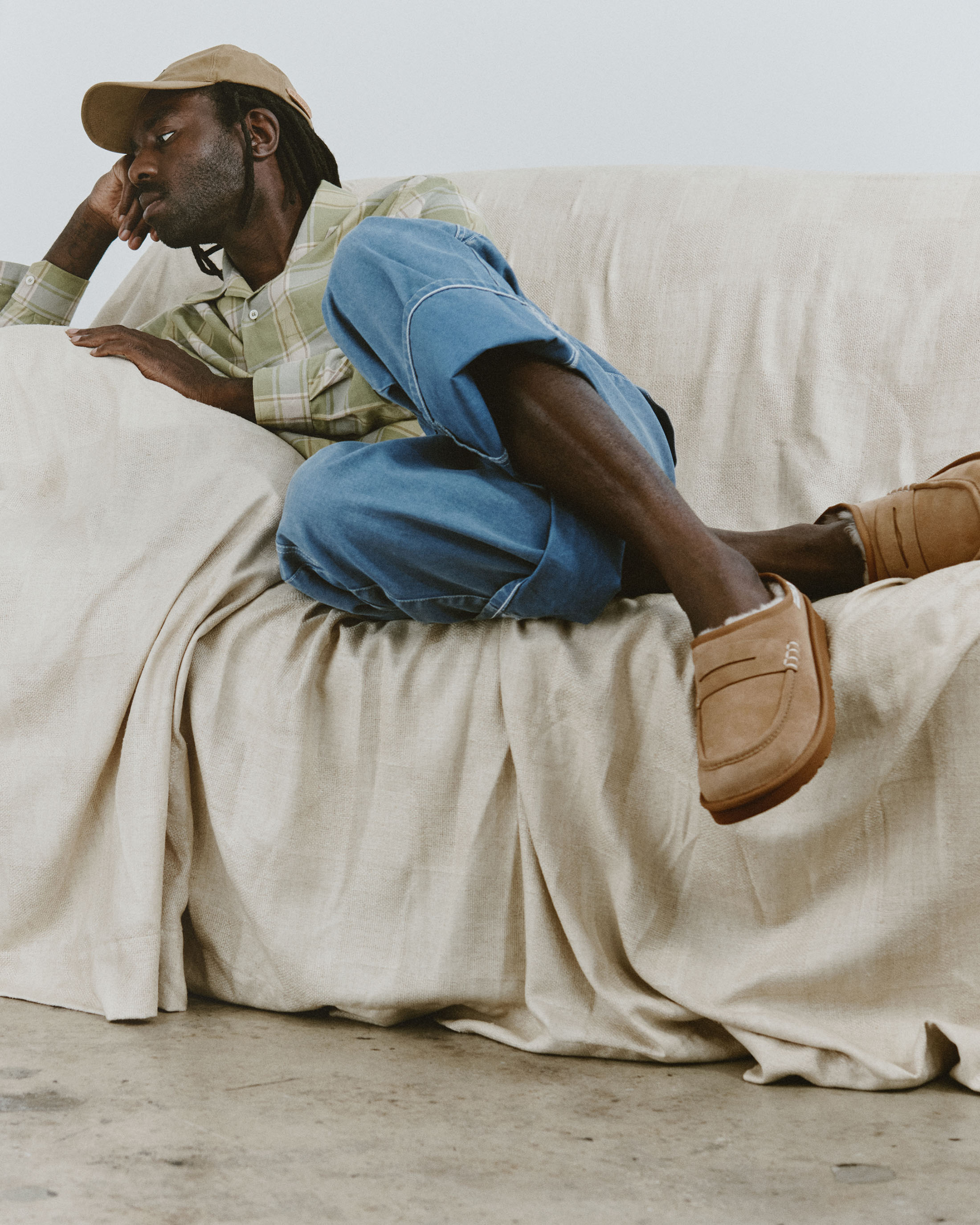
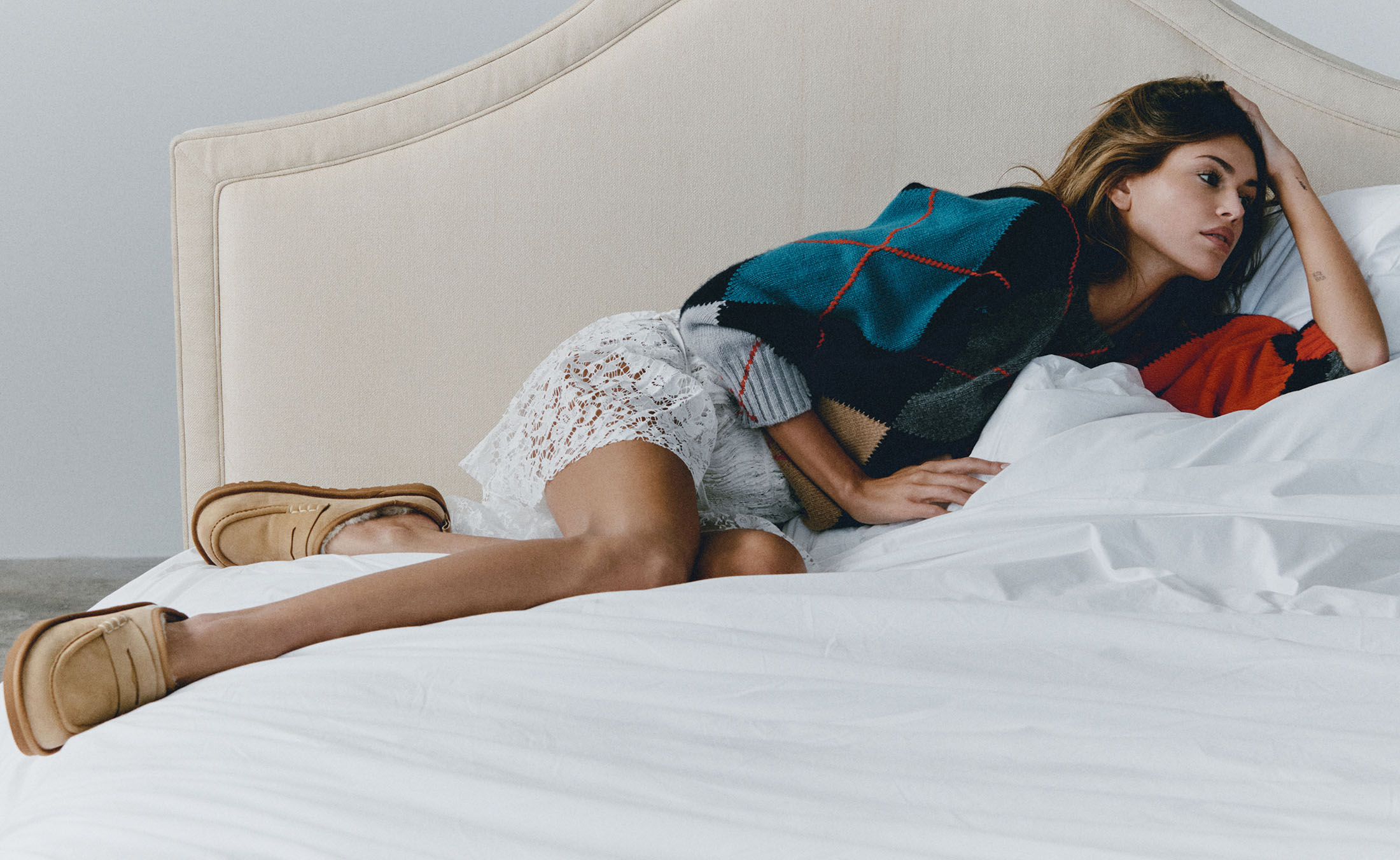
The Posternaks’ strongest contribution is their handling of proportion. In the portrait of Hynes curled on a slipcovered sofa, his bent denim-clad knee and tan loafer advance toward the lens while his face retreats toward the upper corner. The shoe becomes prominent through the logic of his posture. Elsewhere, Gerber’s legs extend across white bedding, carrying the eye from an argyle sweater and lace skirt toward the footwear at the opposite edge. Product placement is carefully calculated, but the photographs allow it to feel like a consequence of someone making themselves comfortable.
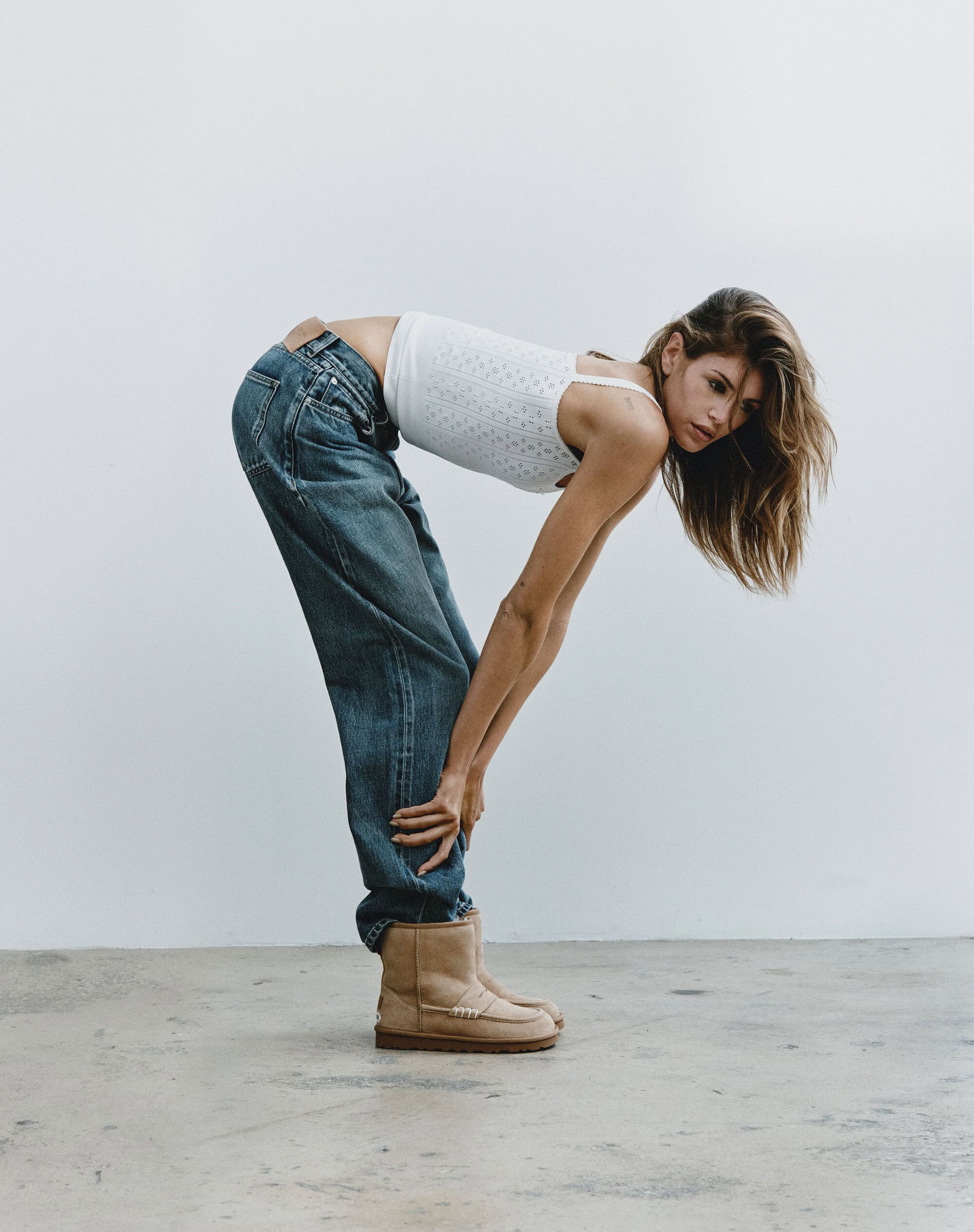
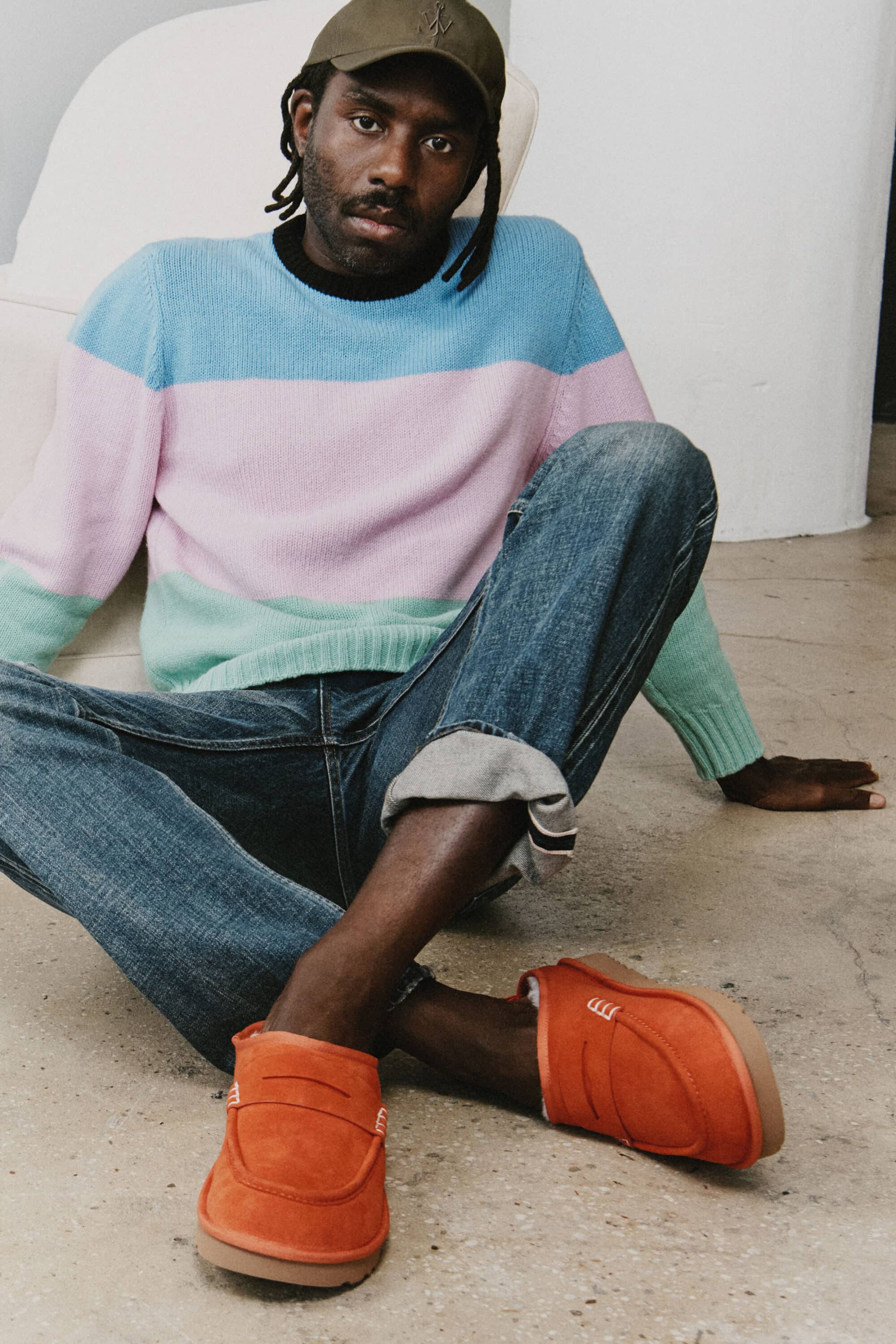
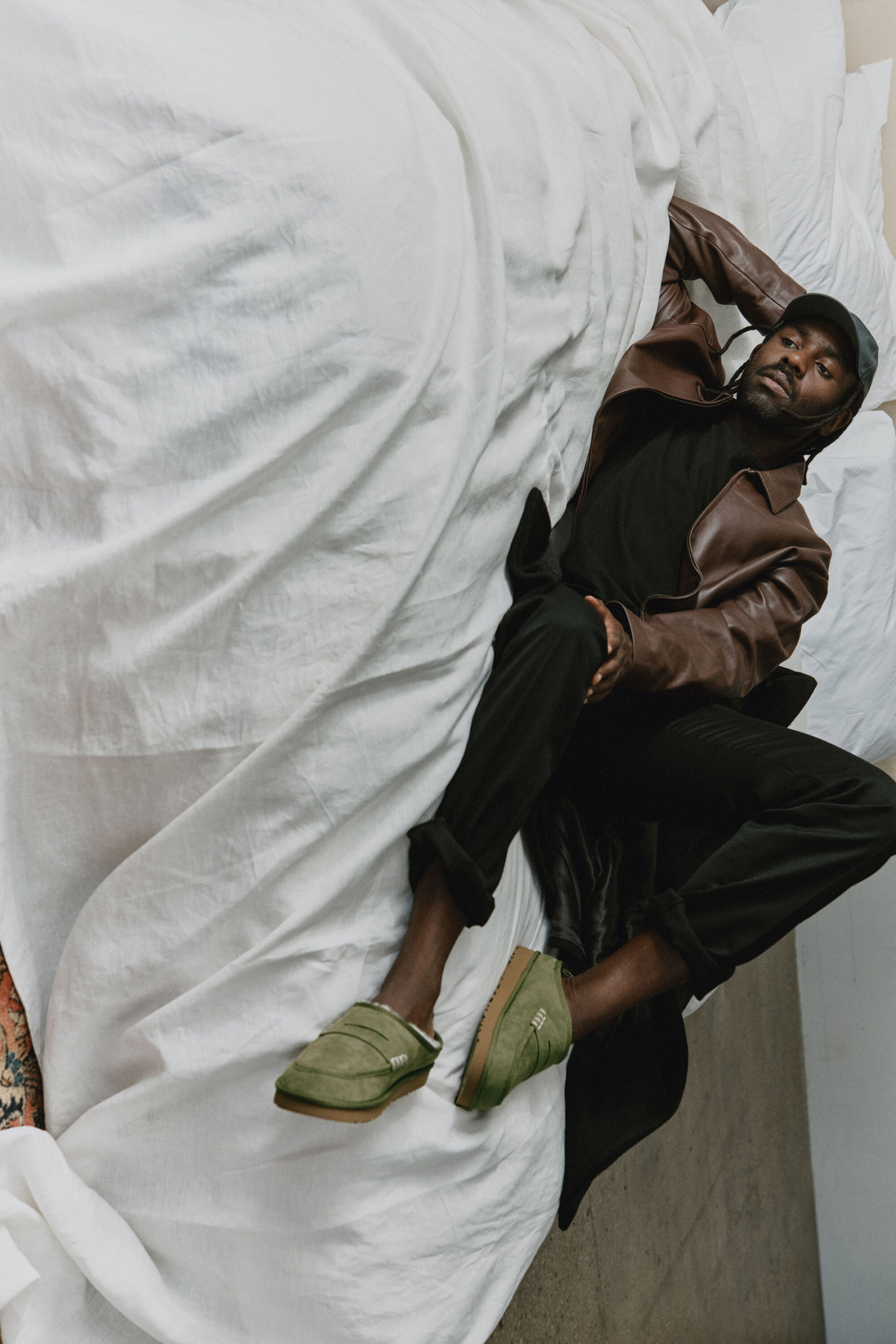
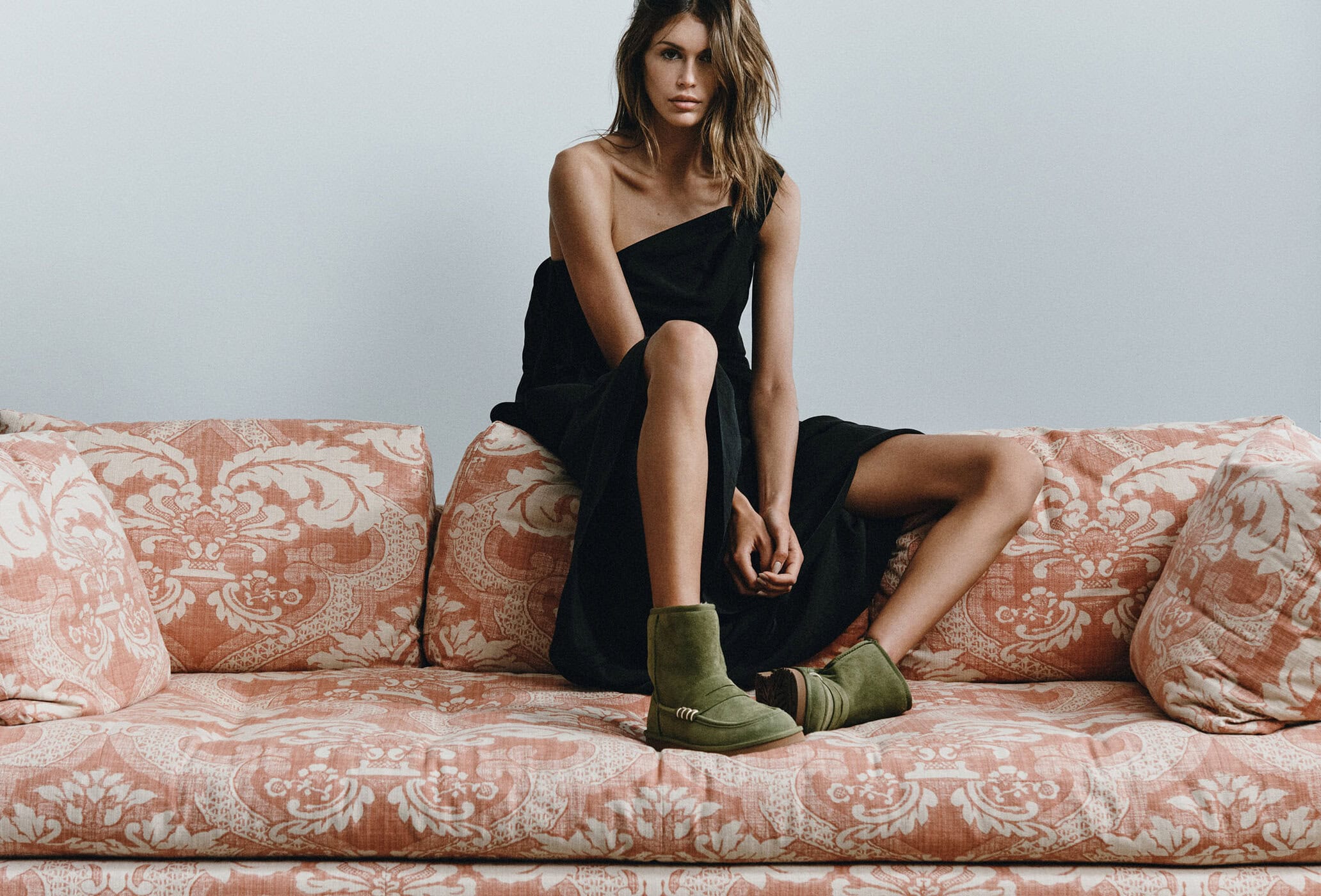
Benjamin Bruno’s styling keeps that comfort from becoming an entirely predictable exercise in softness. Gerber’s brown leather jacket and black lace introduce a little friction around the tan boots, while an asymmetric black dress lends the green pair an unexpectedly dressed-up companion. Hynes wears orange suede with faded denim and a pastel striped sweater, then brings green boots into the company of dark tailoring. These combinations give the collaboration a purpose beyond novelty. The footwear can interrupt a look, soften it, or make its formality seem faintly absurd. A loafer that has acquired a sheepskin boot shaft is already in on the joke.
That is also where the campaign feels most recognizably Anderson. Familiar objects become interesting through a shift in construction or context, while the styling lets apparently incompatible things settle into an easy relationship. The footwear carries this idea particularly clearly: the loafer’s neat apron and slotted strap suggest social preparedness, while the lining proposes very little exertion whatsoever. The photography respects the oddness without circling it in red. Against the restrained interiors, orange and moss green provide enough emphasis; there is no need to furnish the room with additional eccentricity.
Gerber and Hynes make complementary occupants, although the campaign offers parallel portraits rather than a relationship between them. Hynes’s sideways glances and sprawling poses give his pictures a sense of private distraction. Gerber brings a more deliberate fashion presence, especially when folded over in jeans or facing the camera from the blue chair. Both are visibly posing, and the images are more convincing when they acknowledge that fact. Their physical ease makes the shoes desirable without requiring the viewer to believe that a photographer has somehow wandered unnoticed into an ordinary afternoon.
The limitation lies in how little that afternoon develops. The release invokes domestic rituals, but the supplied photographs give us repose more readily than ritual. Beyond sitting, reclining, and stretching, there is little activity to distinguish these interiors from fashion’s well-established idea of an intimate home. A more particular gesture or unexpected interaction might have given the casting greater narrative purpose. As it stands, the campaign’s personality comes chiefly from the styling and the shapes its subjects make, while the promise of access to their everyday lives remains lightly sketched.
Still, this is an intelligent setting for a product that makes being slightly overdressed and thoroughly comfortable seem compatible. The Posternaks give the suede a tactile presence, Bruno finds persuasive reasons to wear it, and Anderson lets the hybrid design supply the wit. The campaign may not tell us much about what Gerber and Hynes do at home, but it makes a compelling argument for what they might keep on their feet. Getting up can wait.
JW Anderson Creative Director | Jonathan Anderson
Photographer | Tanya and Zhenya Posternak
Models / Talent | Kaia Gerber, Dev Hynes
Stylist | Benjamin Bruno
Hair | Hos Hounkpatin
Makeup | Jamal Scott
Manicurist | Yukie Miyaka
Set Designer | Julia Wagner
Production | Studio Boum