When Khaite Blooms
Review of Khaite Spring 2027 Fashion Show
By Mackenzie Richard Zuckerman
THE IMPRESSION TAKE
Catherine Holstein used Spring 2027 to search for new emotional territory within Khaite’s now instantly recognizable language of strength, sensuality, leather, sculpted silhouettes, and New York cool. Rather than abandoning the codes that built the house, the collection asked how an established Khaite woman might soften, evolve, and reveal another side of herself.
Creative Director: Catherine Holstein
House: Khaite
Collection: Spring/Summer 2027
Presented: New York Fashion Week
Reviewed by: Mackenzie Richard Zuckerman
The Impression Review Score by Kenneth Richard: 9.1
View the Full Collection
Success creates its own creative problems. Few New York houses have built a visual language as quickly or as convincingly as Khaite, but with that recognition comes a more difficult question: once an audience knows exactly what your woman looks like, how do you keep discovering something new about her?
That has increasingly felt like Catherine Holstein’s challenge. Khaite has established an extraordinarily clear vocabulary around strength, sensuality, and a particular kind of New York cool: leather, sculpted shoulders, narrow silhouettes, denim, and clothes that often treat femininity almost architecturally. The Khaite woman is immediately recognizable: self-possessed, ambitious, sensual, perhaps slightly aloof. But the clearer that image becomes, the more important it is to keep finding new emotional territory within it.
Going into Spring 2027, then, the most interesting questions were not whether Holstein understood her own codes, but how far she could open them. Could Khaite become softer without becoming less powerful? Could romance, vulnerability, and imperfection enter the picture without diluting the authority that made the house so compelling in the first place?
Spring 2027 suggests Holstein is finding the answer.
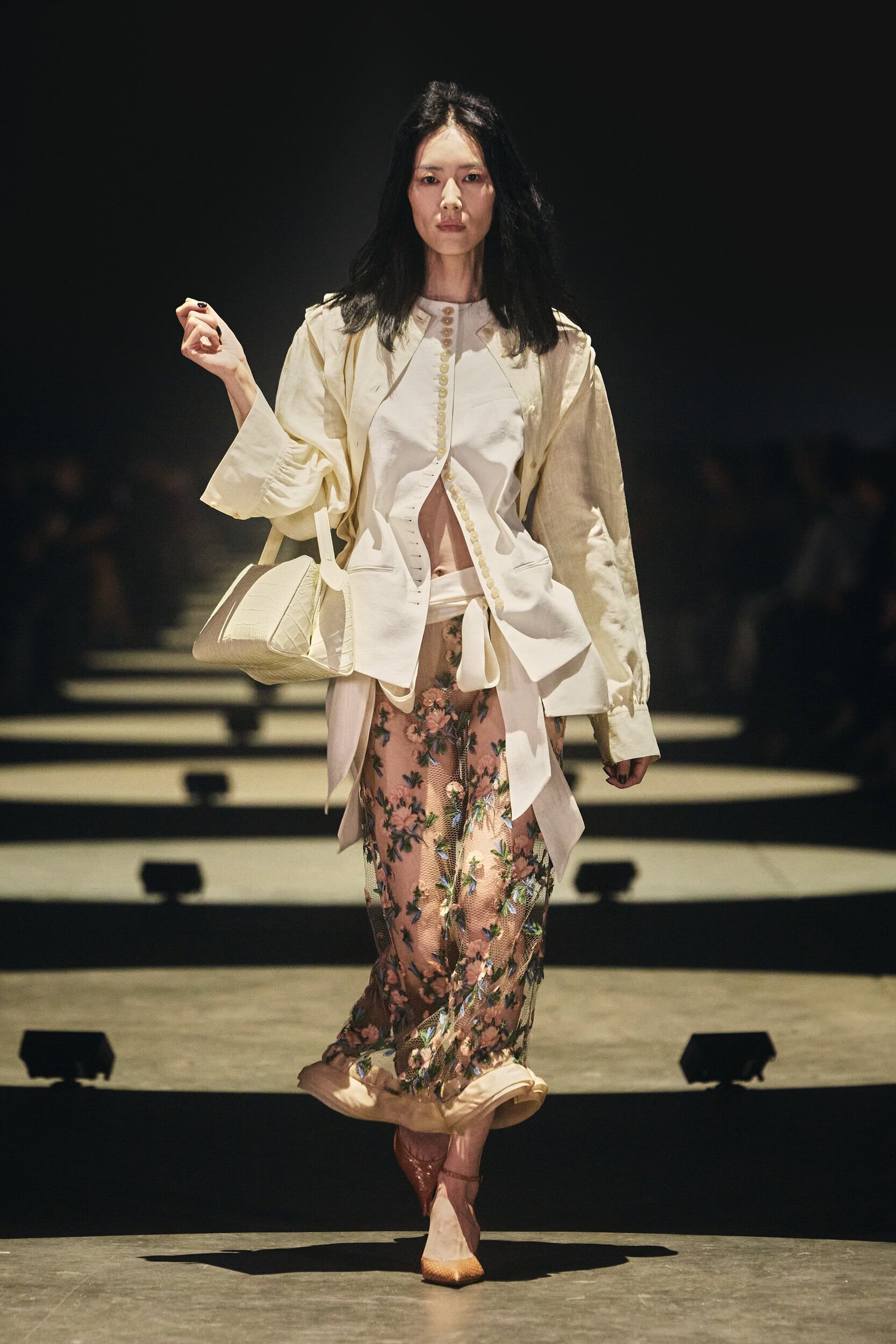
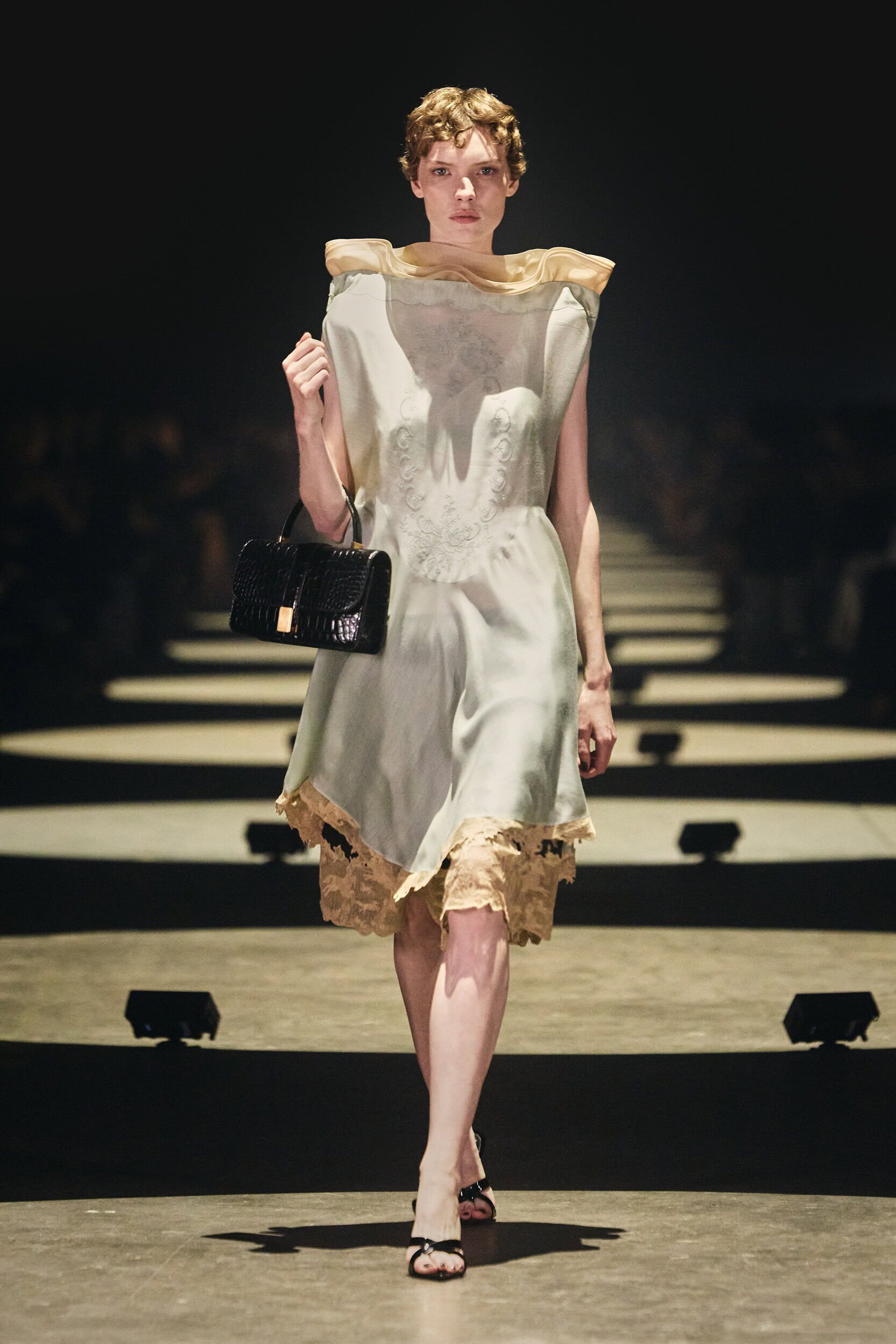
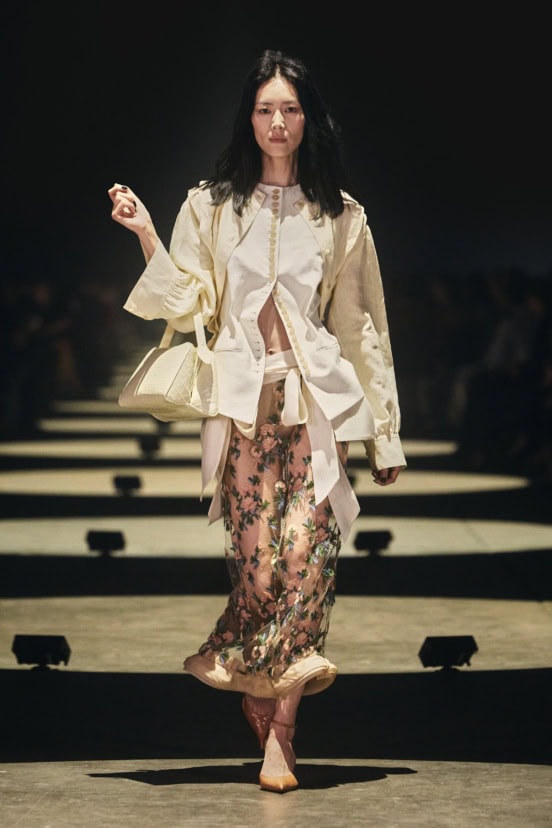
Rather than abandoning the woman she has spent the past decade defining, she expanded her. Lace, florals, lingerie constructions, softened volumes, and dresses that seemed suspended somewhere between being finished and coming undone brought an unexpected tenderness to the collection. Yet none of it felt like an escape from Khaite. Instead, it felt like Holstein testing just how much more her existing language could hold.
THE COLLECTION
THE VIBE
Softened Authority, Romantic Architecture, & New York Cool Undone
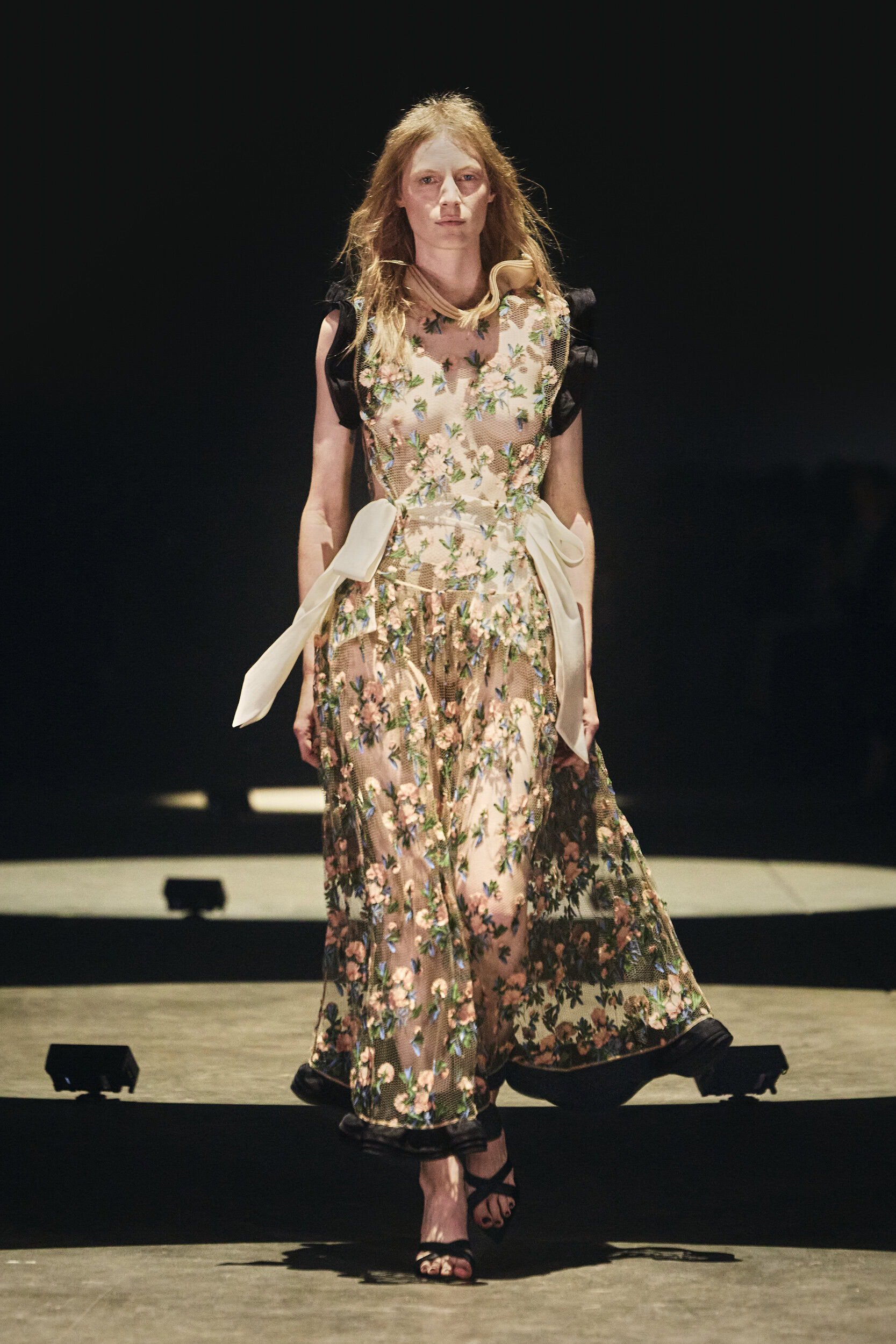
Perhaps the clearest evidence of that shift was the prominence of dresses. Khaite collections have often been anchored by the harder elements of Holstein’s vocabulary: leather, denim, tailoring, substantial outerwear. Dresses have frequently operated as counterpoints. Here, they became essential to the collection’s identity.
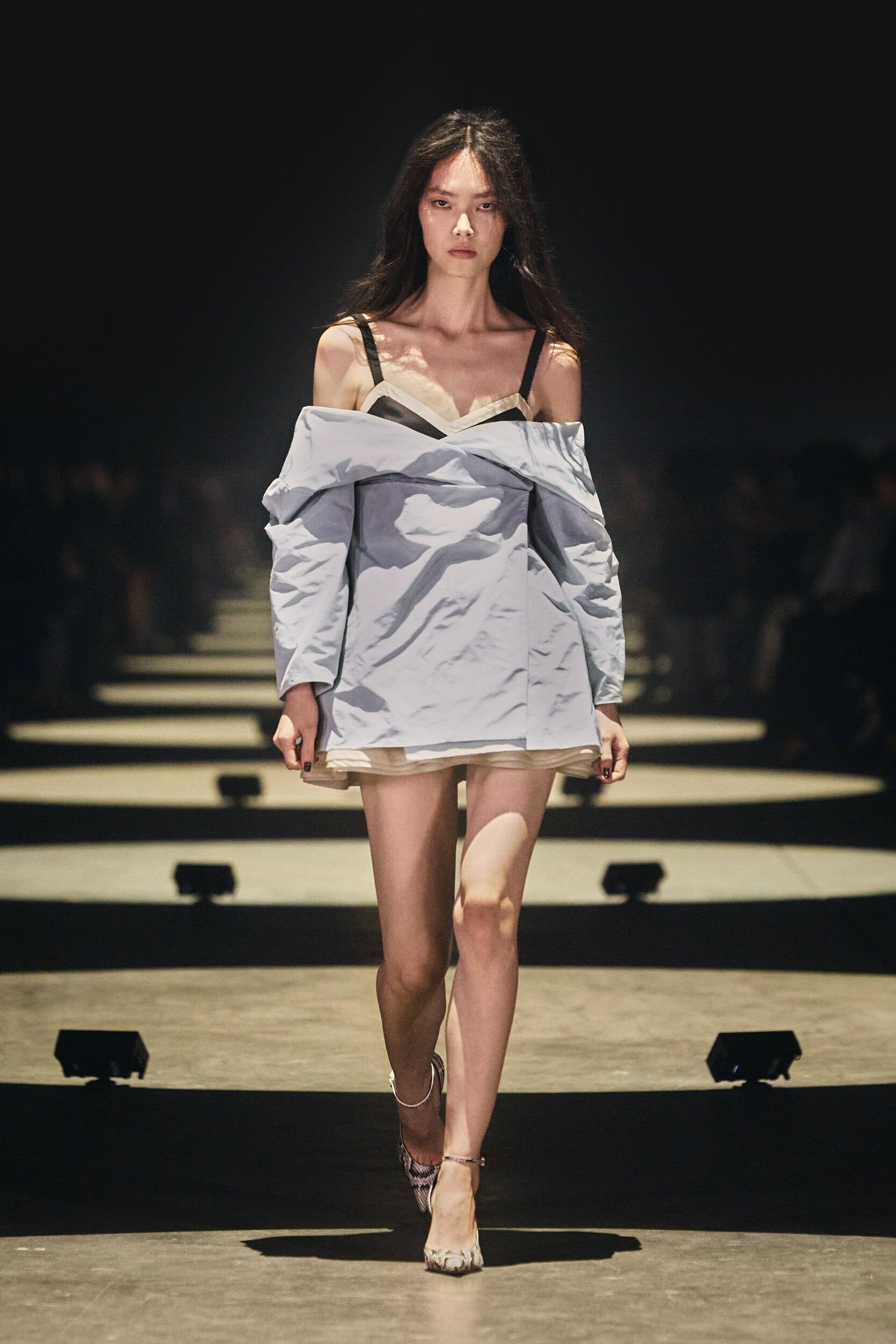
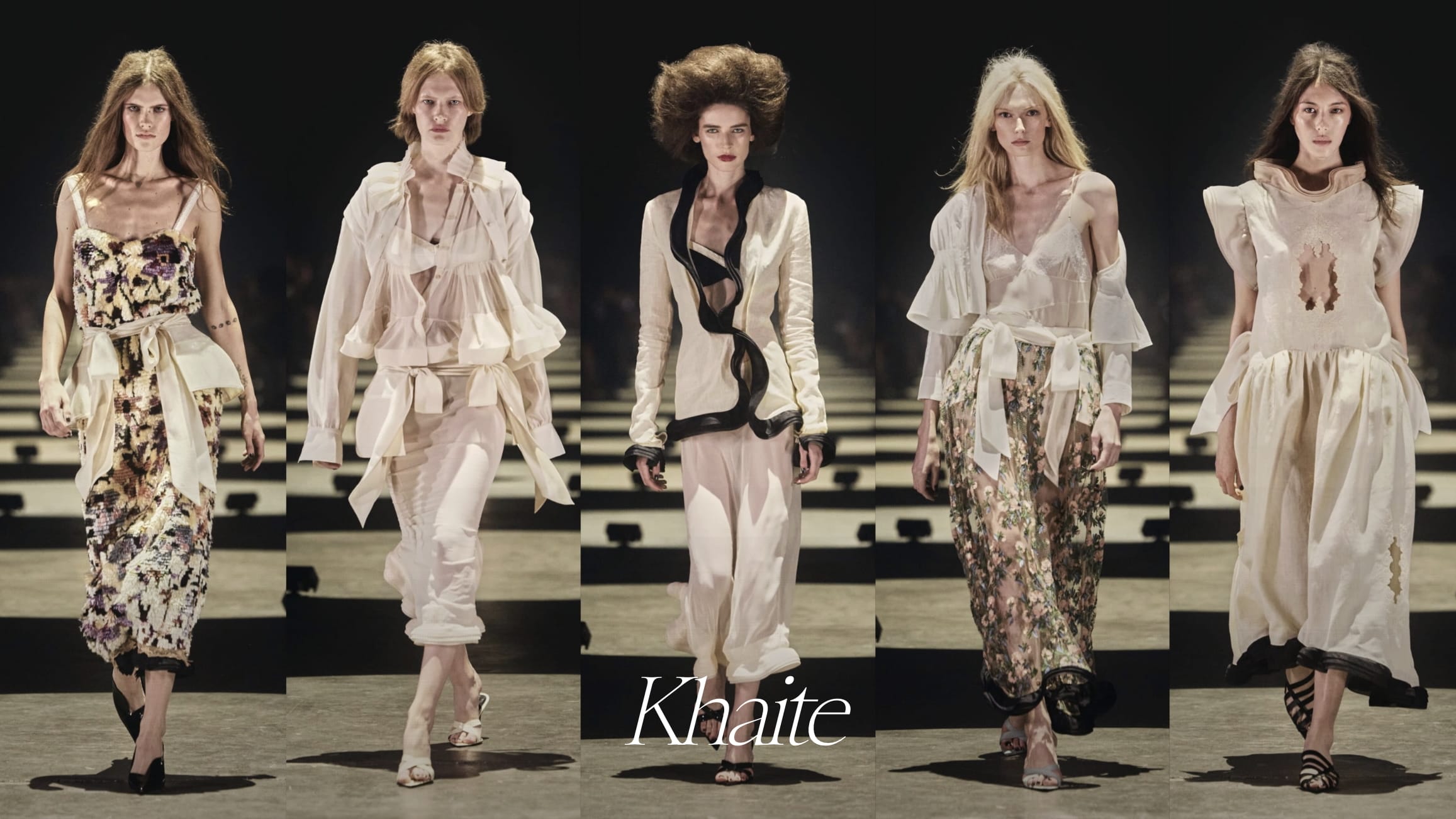
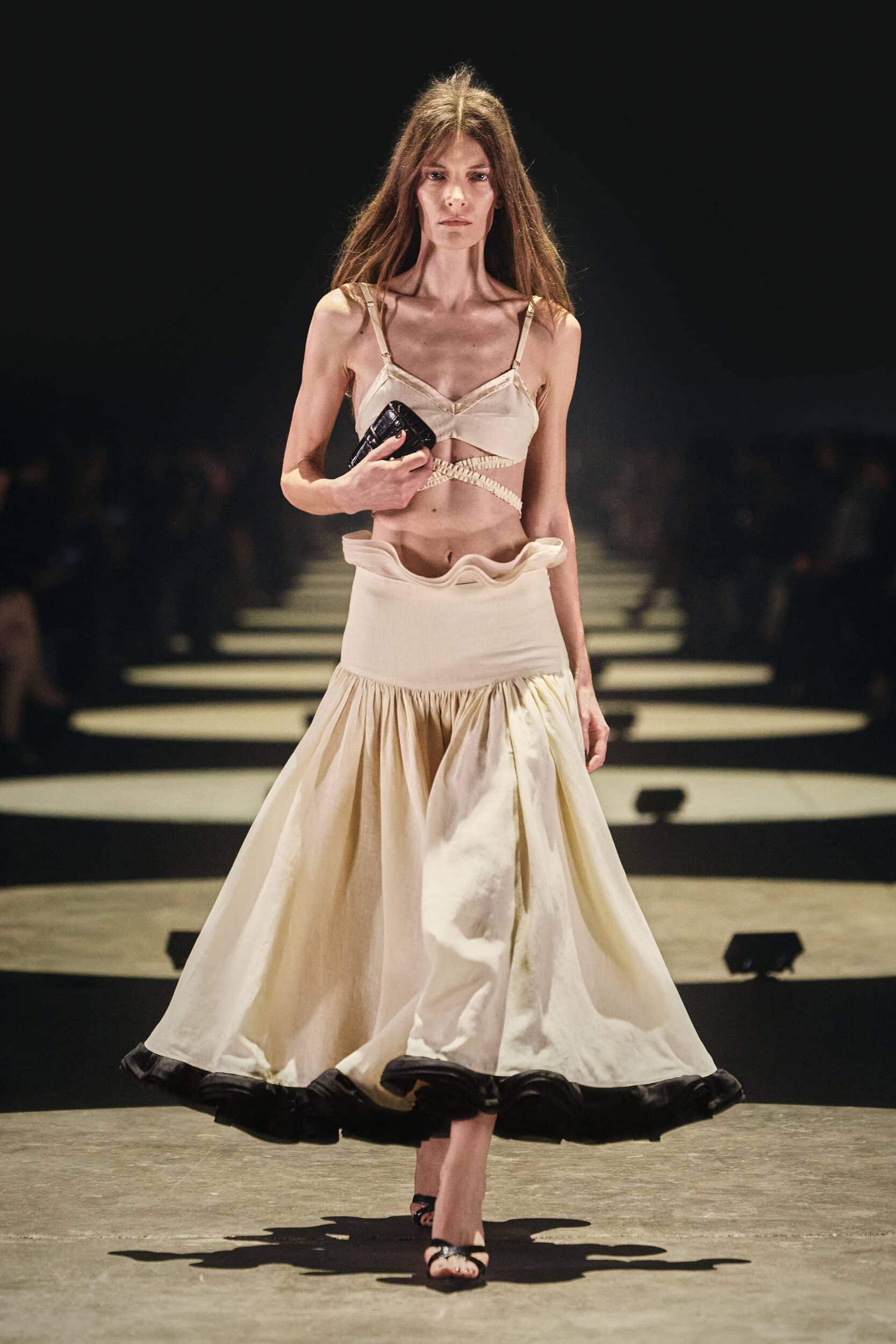
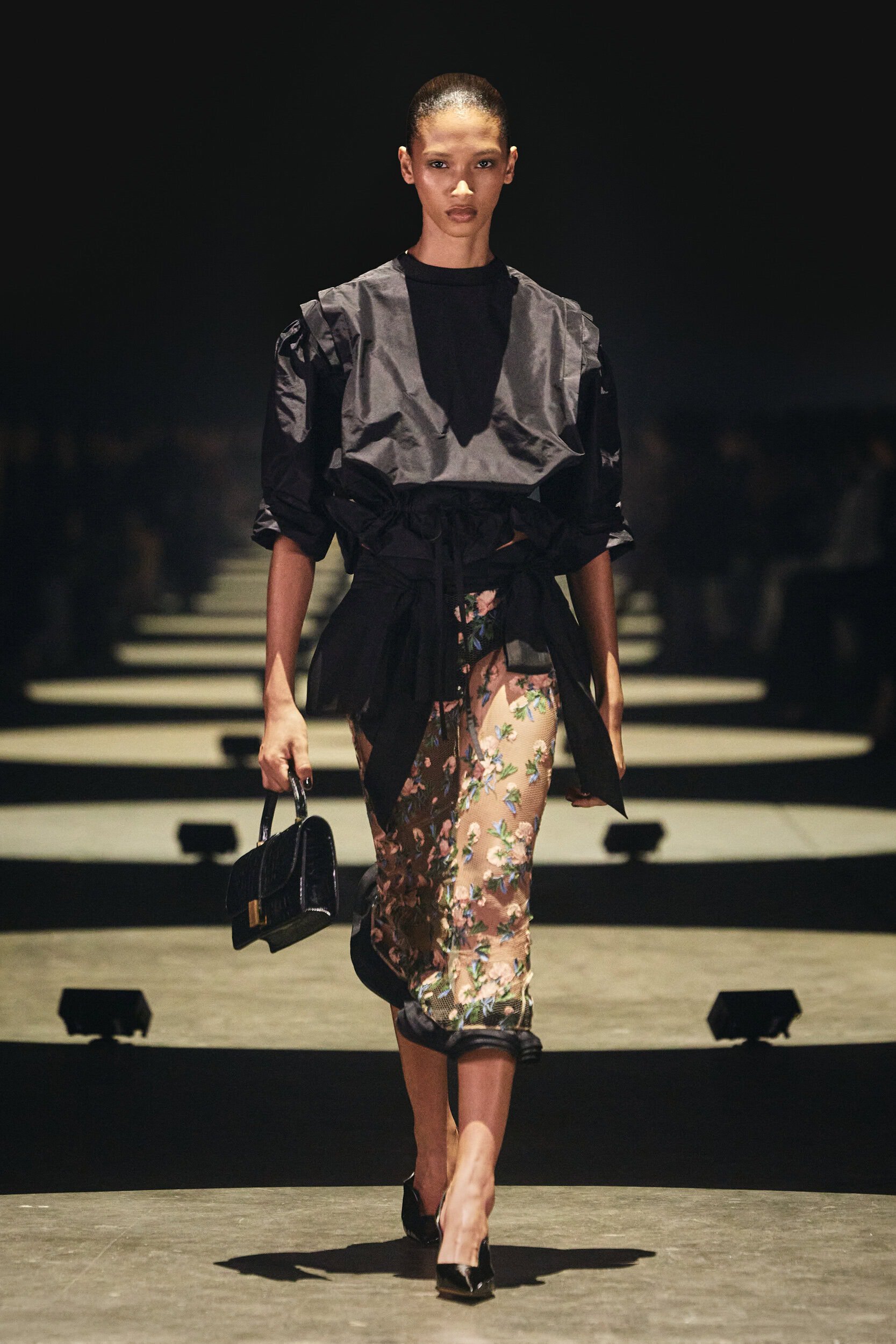
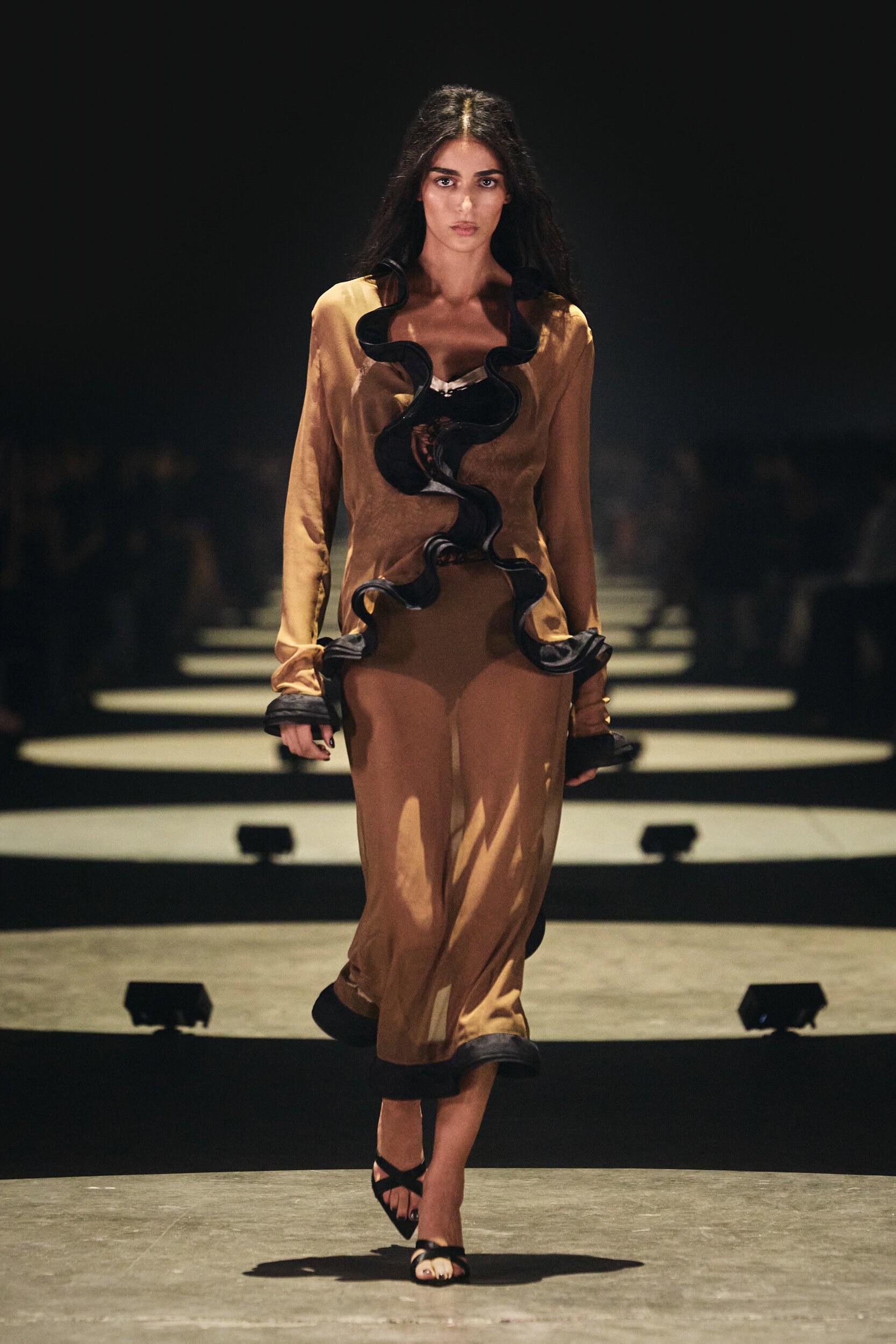
There were spare slip-like forms in black and cream, corseted constructions that revealed their own architecture, sheer dresses embroidered with small flowers, and longer silhouettes whose fabrics seemed to gather, collapse, and move around the body rather than discipline it. Elsewhere, fuller skirts, dropped waists, bows, ruffles, and softly structured peplums created volume without the aggressive geometry Khaite has often favored.
The effect was not simply more romantic. It was a more complicated consideration of femininity.
Holstein has always understood that strength and femininity need not be opposing qualities, but Khaite has traditionally articulated that relationship through control. This season allowed femininity to become less guarded. A woman could be authoritative without appearing armored; sensual without being sharply body-conscious; romantic without becoming precious.
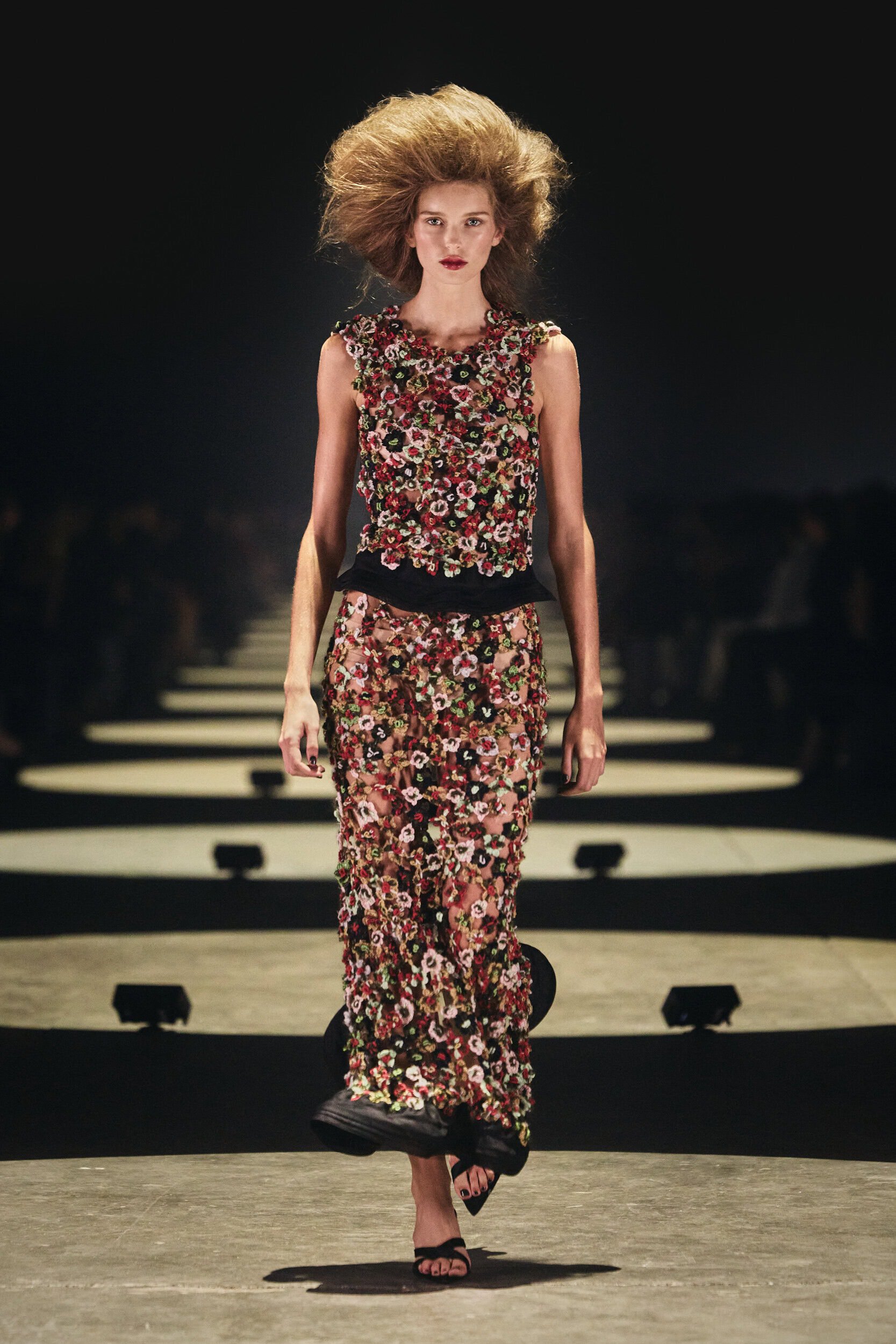
Even the florals carried more significance than their seasonal familiarity might suggest. Florals for spring hardly constitute radical territory, but within Khaite’s world they felt almost transgressive. Dense botanical embroideries covered translucent skirts and dresses, while smaller bursts of color interrupted a palette still grounded in black, ivory, and brown. Holstein has flirted with this decorative instinct before, but here she gave it enough room to become part of the collection’s central argument.
What kept the shift convincing was the continued presence of the house’s harder codes. Cropped leather jackets, severe black separates, strong shoulders, and flashes of glossy leather prevented the romance from drifting into nostalgia. Rather than replacing one Khaite woman with another, Holstein allowed seemingly contradictory versions of her to occupy the same collection.
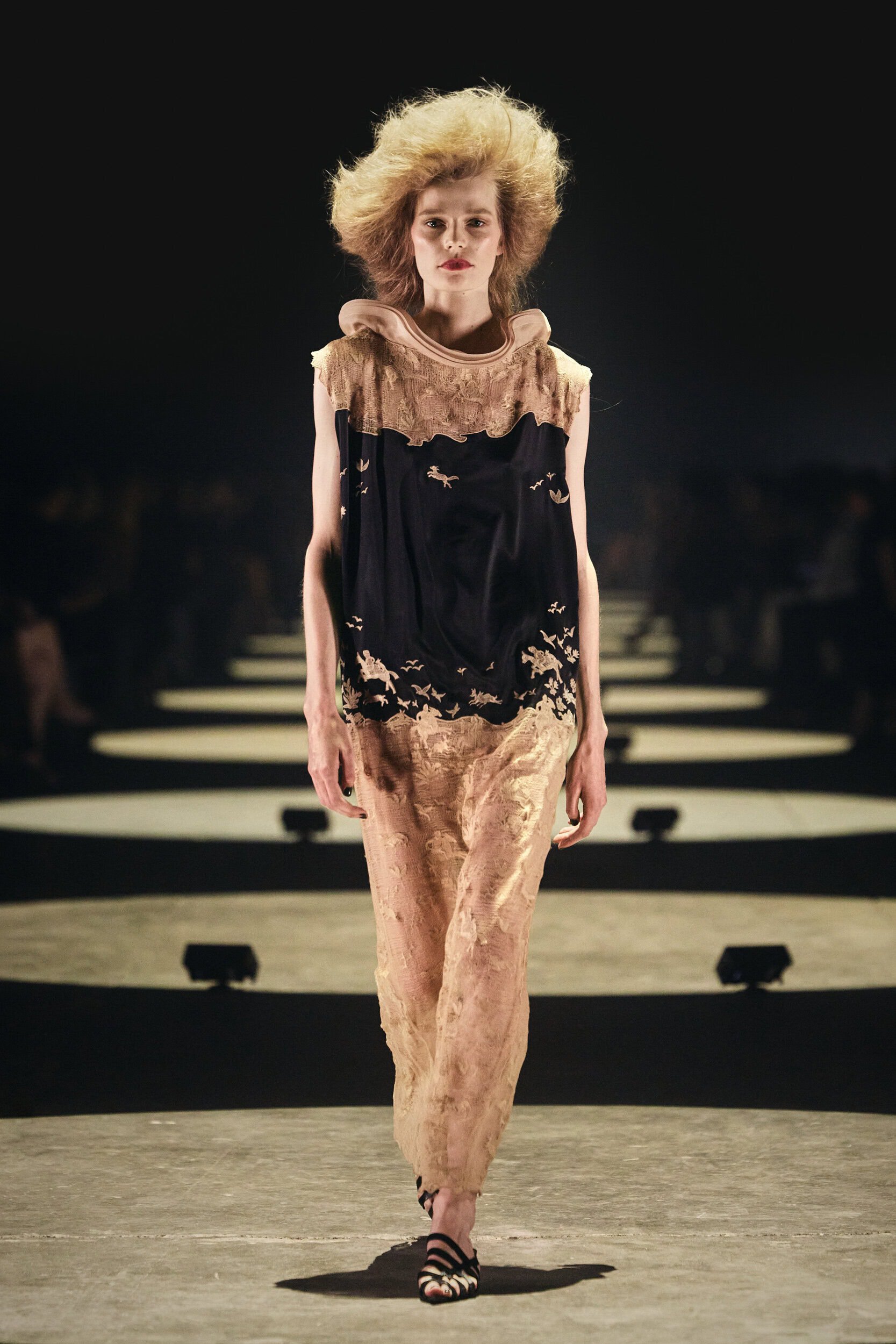
That tension extended into the styling. Hair was teased, windswept, and purposefully imperfect, at times approaching the exaggerated volume of a beehive before collapsing into something less controlled. Against the hyper-curation associated with Khaite’s image-making, that slight disorder felt meaningful. These women did not appear polished into submission by the clothes. They looked as though they had lived in them.
There was also a quiet but meaningful broadening of the relationship between clothing and body. Khaite has sometimes relied heavily on a narrow, elongated silhouette, making its sensuality feel tied to one particular physical ideal. Spring offered more possibilities. Full skirts, fluid trousers, looser jackets, softened waists, draping, and dresses that skimmed rather than strictly traced the body created silhouettes that could flatter different forms.
It need not become the defining statement of the collection, but it does suggest something important about Holstein’s evolution. A broader conception of femininity has seemingly led to a broader conception of the woman herself.
THE WRAP UP
The greatest challenge for a house with such clearly established codes is knowing how to keep consistency alive. Spring 2027 demonstrated that evolution does not require Holstein to dismantle the world she has built.
She simply needed to open it.
The leather and severity remain, as do the sensuality, authority, and unmistakable cool that have made Khaite one of New York’s most recognizable brands. But romance, ornament, vulnerability, imperfection, and even sweetness now have permission to exist beside them.
Khaite’s next chapter will likely depend less on making its codes more recognizable than on discovering what else they can express. Spring 2027 felt like an important step in that direction: not a reinvention of the Khaite woman, but a fuller, more nuanced understanding of who she can be.
For perhaps the first time, softness did not feel like the opposite of her strength. It became another expression of it.