Dior’s creative reset and Vuitton’s destination retail return LVMH’s largest division to growth as jewelry and Sephora accelerate.
Key Takeaways
- Fashion & Leather Goods grew 1% organically in the second quarter, its first quarterly increase since Q2 2024, ending seven consecutive declines.
- Reported second-quarter fashion revenue was €8.899 billion. First-half revenue fell 5% as reported and 1% organically to €18.146 billion.
- Group revenue rose 3% organically in the quarter, with the US up 6%, Japan up 14% and Asia excluding Japan up 4%. Europe was flat.
- Currency pressure kept first-half reported group revenue 3% lower and contributed to a 4% decline in recurring operating profit.
- Watches & Jewelry led the portfolio with 11% organic growth in the quarter, followed by Selective Retailing at 6% and Wines & Spirits at 5%.
LVMH’s Fashion & Leather Goods division returned to organic growth in the second quarter of 2026, advancing 1% at constant currency and scope. The increase ended seven consecutive quarterly declines and marked the division’s first gain since the second quarter of 2024.
Reported quarterly revenue came to €8.899 billion, down 1.2% from €9.006 billion a year earlier. Underlying demand improved modestly, while unfavorable exchange rates continued to reduce the value of sales translated into euros. LVMH’s results showed Fashion & Leather Goods revenue down 1% organically and 5% as reported for the first half, at €18.146 billion.
The shift carries strategic weight for the group. Based on LVMH’s segment figures, Fashion & Leather Goods generated roughly 47% of first-half revenue and more than 70% of recurring operating profit. Its performance remains central to the earnings power of the wider portfolio.
At group level, second-quarter revenue reached €19.524 billion, essentially level with the €19.499 billion recorded a year earlier. Organic growth accelerated to 3%. LVMH estimated growth would have reached 4% excluding disruption related to the conflict in the Middle East.
The regional picture strengthened during the quarter. Organic revenue grew 6% in the United States, 14% in Japan and 4% across Asia excluding Japan. Europe was flat. The figures position the US as an immediate growth engine and extend the improvement in Asian demand that began during the second half of 2025.
For the first half, group revenue reached €38.644 billion, up 2% organically and down 3% as reported. Exchange-rate movements reduced growth by five percentage points, with changes in the group’s consolidation scope accounting for another one-point drag.
Currency pressure also reached the income statement. LVMH’s first-half presentation attributed a €686 million reduction in recurring operating profit to exchange rates, erasing a €341 million organic improvement. Recurring operating profit declined 4% to €8.691 billion, and the operating margin held close to the prior-year level at 22.5%, compared with 22.6%.
Group-share net profit was stable at €5.697 billion. Operating free cash flow increased 2% to €4.1 billion, while net financial debt fell 19% year over year to €8.245 billion, giving management continued room to support store investment and creative transitions.
Within Fashion & Leather Goods, recurring operating profit declined 7% to €6.195 billion. The division’s operating margin narrowed to 34.1% from 34.7%, retaining a high level despite the currency drag and the cost of ongoing brand investment.
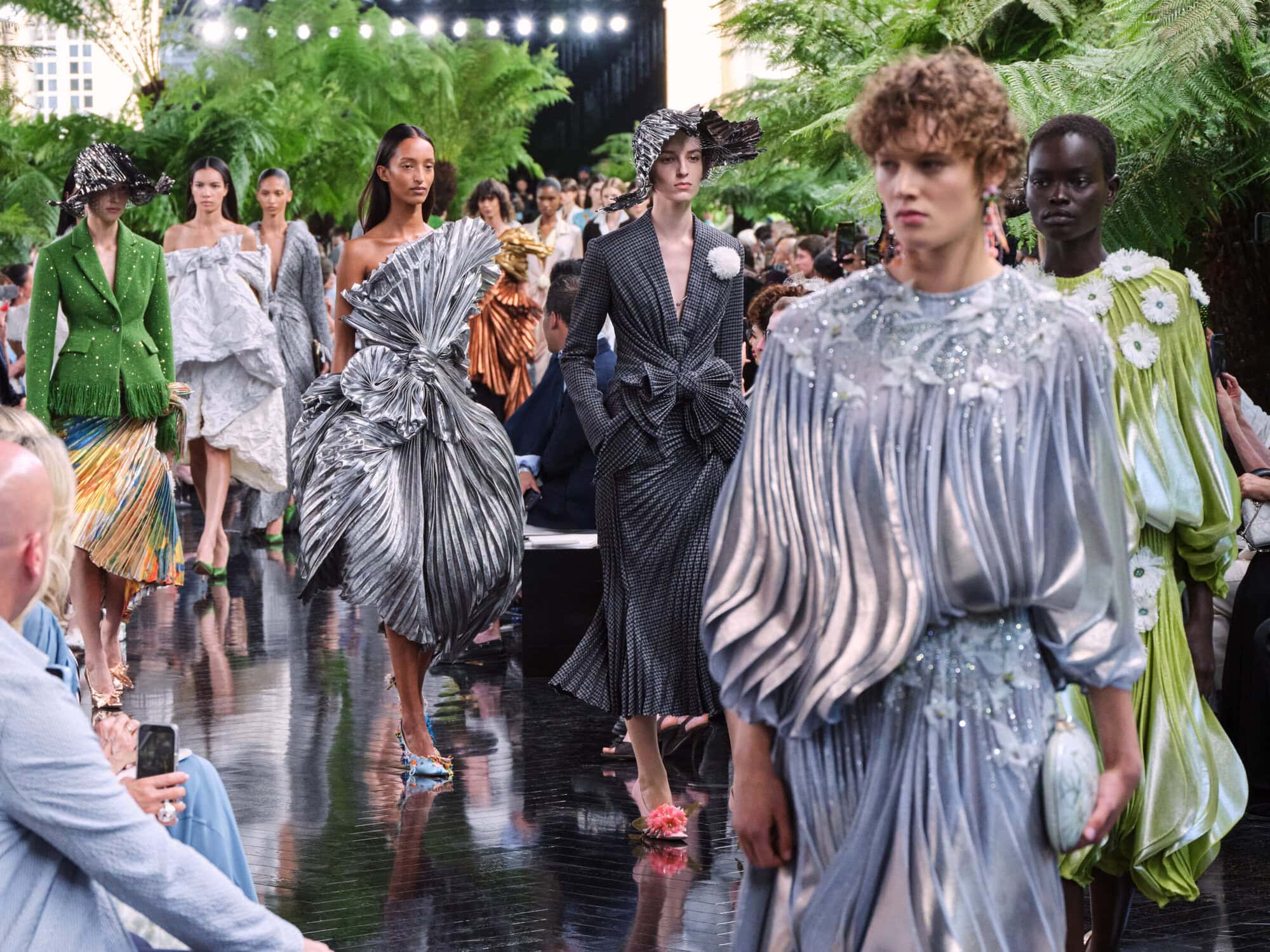
LVMH linked the division’s second-quarter improvement to the early reception of Jonathan Anderson’s first products for Dior. Management highlighted ready-to-wear, leather goods and the new Cigale bag, alongside the performance of new Louis Vuitton flagships in Beijing and Seoul. The company withholds brand-level revenue figures, leaving its Dior assessment qualitative at this stage.
The creative renewal extends across much of the portfolio. Michael Rider is advancing his work at Celine, Jack McCollough and Lazaro Hernandez are reshaping Loewe, Sarah Burton is leading Givenchy, and Maria Grazia Chiuri is developing her first collections for Fendi. Loro Piana and Rimowa also recorded strong first-half performances, according to LVMH.
This breadth of change underscores the group’s strategy: increase the pace of product newness while using destination stores and cultural programming to deepen engagement at its largest maisons. The second-quarter improvement offers an early commercial read on that investment cycle.
Hard luxury supplied the group’s strongest category performance. Watches & Jewelry grew 11% organically in the second quarter and 9% across the first half. Recurring operating profit increased 9% to €831 million, lifting the division’s margin to 15.9% from 15%.
LVMH attributed the category’s momentum to Tiffany’s Knot and HardWear lines and Bvlgari’s Eclettica high-jewelry collection. The results reinforce the value of recognizable product franchises and concentrated investment in established icons.
Selective Retailing grew 6% organically in the second quarter, supported by Sephora, while Wines & Spirits advanced 5% as champagne and cognac improved. Perfumes & Cosmetics declined 1%.
Portfolio pruning continued alongside the creative investment. LVMH completed the sale of DFS’s Greater China business and reached agreements covering airport concessions in Los Angeles, San Francisco and Okinawa. The group also entered an agreement to sell Marc Jacobs to WHP Global.
The quarter establishes a meaningful inflection point for luxury’s largest group. Its durability remains open: Fashion & Leather Goods exited the period at 1% organic growth, and its first-half revenue and profit remained below the prior year. Sustained full-price demand, stronger sell-through and margin stability will determine the commercial reach of LVMH’s creative reset during the second half.